
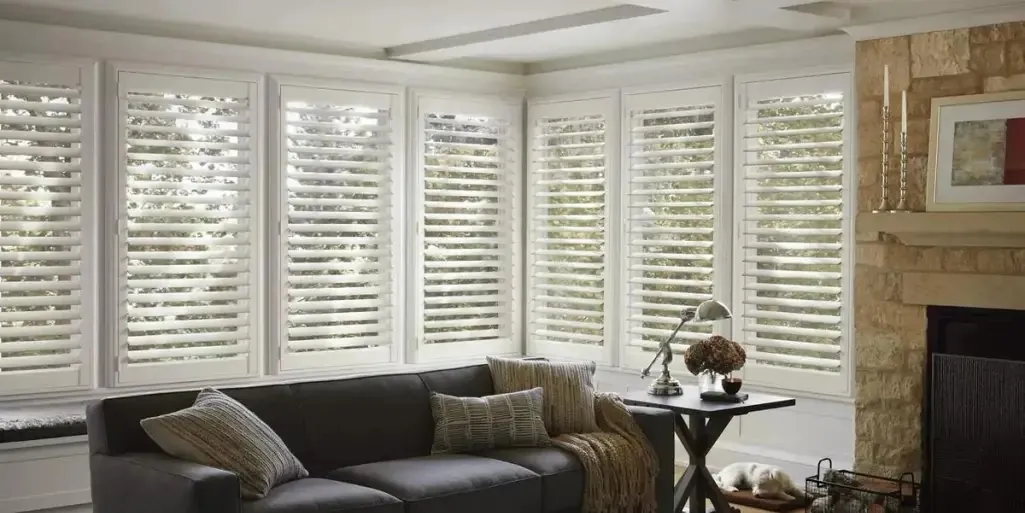
Harbor rooms built around the view
Scituate’s shingled houses line the harbor and run out along the shore to Minot and Peggotty Beach, and in many of them the main rooms were planned around one thing: the water. A living room faces the moorings, a kitchen looks across the inlet, a bedroom upstairs catches the lighthouse or the open sea. Inland, the town’s newer colonials sit on quieter streets with no water in sight. For plantation shutters in Scituate, MA, the harbor rooms set the tone, because any covering there has to give the view back the moment you want it.
This is also one of the most exposed stretches of the South Shore. Storms come in hard off the Atlantic, salt spray reaches well back from the beach, and the light off the water can be fierce. A shutter has to put up with all of that and still feel effortless to open on a calm morning.
The good news is that shutters are well suited to this kind of house. Their louvers control light precisely, their panels swing completely clear of the glass, and the right material handles damp, salty air without complaint.
Plantation shutters in Scituate, MA, that keep the view
Three features do most of the work in a harbor room. We bring working samples of each to the visit.
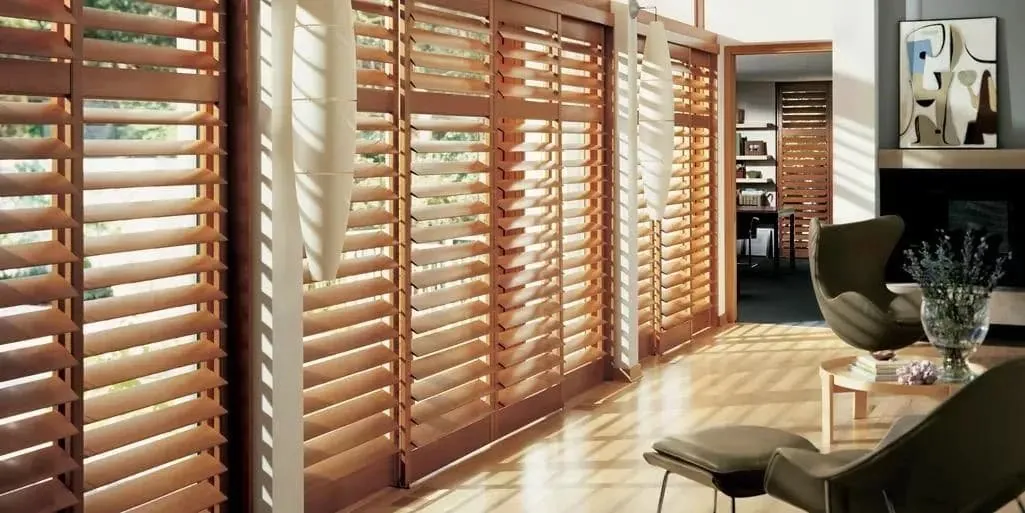
Generous louvers
Wider blades mean fewer slats across the glass and bigger gaps between them, so the water stays in sight even when the louvers are only part open.
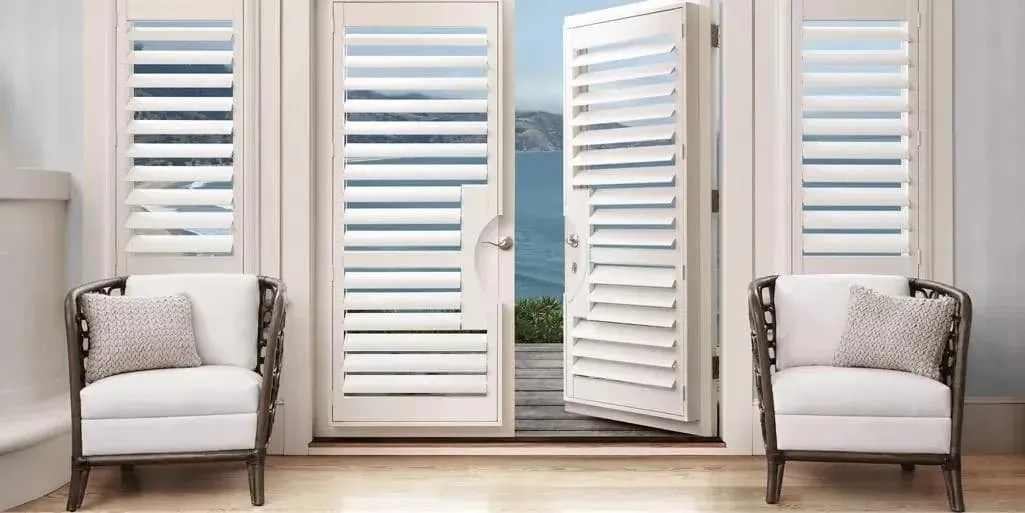
Panels that fold clear
Hinged and folding panels stack tight against the wall when opened, leaving the whole pane bare for a clear evening.
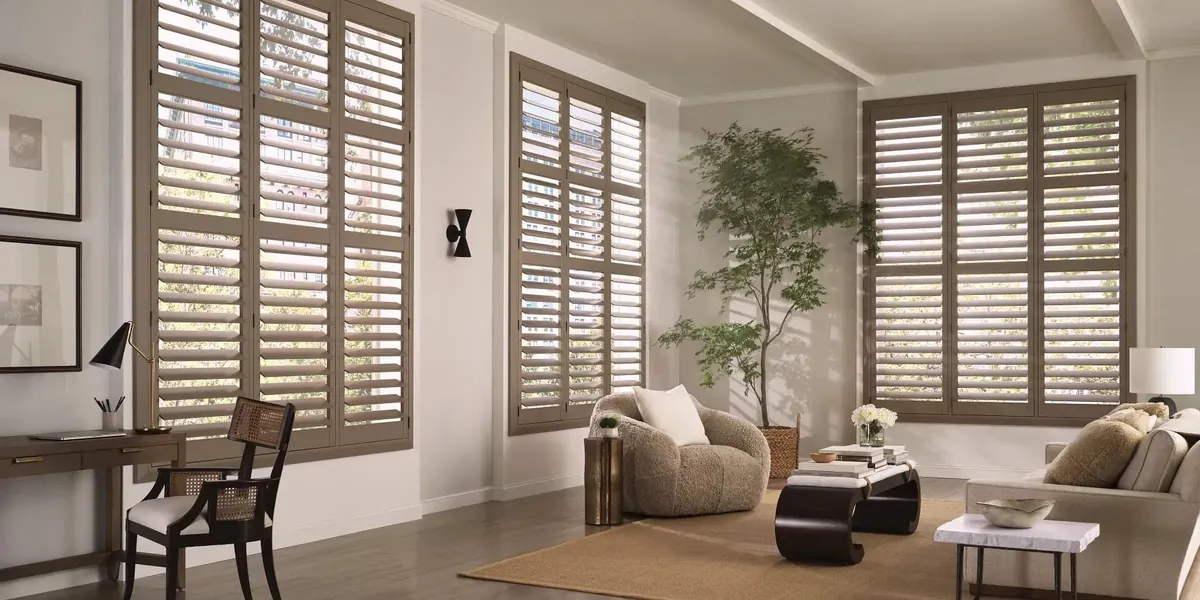
A rail for sky and privacy
A divider rail lets the upper louvers stay open to the sky and the horizon while the lower ones screen the room from the harbor walk.
Shingled houses along the harbor
The houses that ring the harbor are mostly shingled, many of them older, with the irregular windows that come from additions and changes over the years. A front room might have a broad window facing the water flanked by narrower ones; an upstairs bedroom might have a dormer on one side and a small gable window on the other. Few of these windows match each other exactly.
That is no obstacle for a shutter, which is built to its own opening. What it does mean is careful measuring. We take the width and height in several places, check how deep the opening is and look for hardware, cranks or storm-window tracks that might catch a louver. Older openings that have settled get a frame that gives the panels a straight edge to close against, even if the wall around them is not quite true.
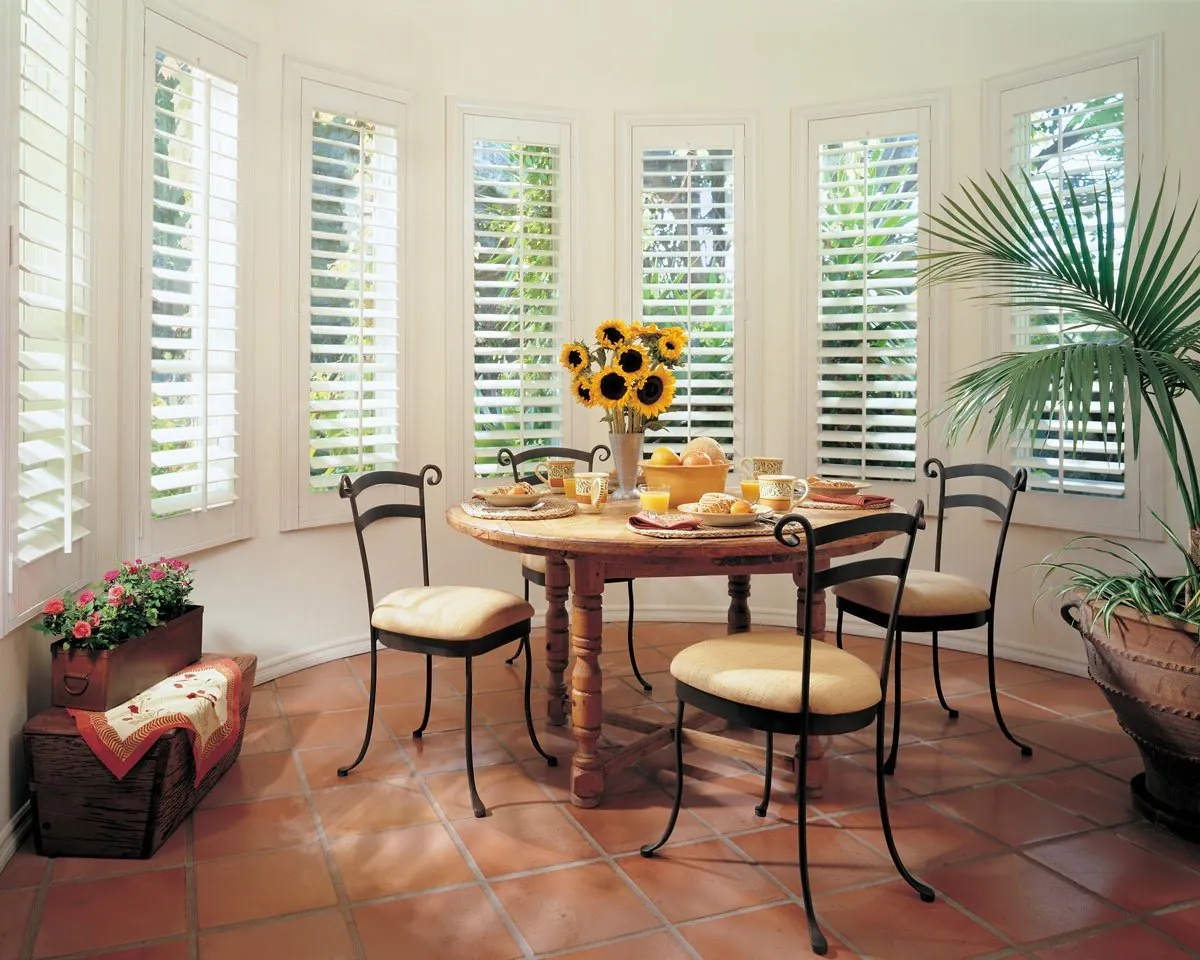
The harbor windows themselves usually take a wide louver and a panel layout that clears the glass completely. On a broad window, several narrower panels folding to each side work better than two big ones, because they stack into a slimmer bundle and leave more of the pane open.
Minot and the open coast
Out toward Minot the houses face the open Atlantic rather than the sheltered harbor, and the exposure is greater. Wind drives rain against the glass, spray carries inland on a stormy day, and the light reflects off a wide stretch of water and rock.
For rooms on this side of town, material is the first question. Palm Beach is the collection we suggest most often. It is made from polysatin, which contains no wood, so the damp sea air that can make timber swell or shift has no effect on it. Salt film that settles on the louvers after a blow comes off with a damp cloth.
A shutter also gives a sense of shelter on a wild night. Closed panels put a firm layer between the room and a rattling window, and they cut the glare of passing headlights or a neighbor’s floodlight. On a clear day, they open fully, and the sea is right there.
Peggotty Beach and the summer rooms
Around Peggotty Beach the houses sit close to the sand, and their porches, sunrooms and front rooms are built for long summer days. These rooms take sun from morning to evening, and the glare off the beach can make them hard to use at midday.
Tilt the louvers upward and the sunlight goes to the ceiling instead of across the floor, so the room stays bright without the harsh patch of light on the furniture. Tilt them down and the room cools a little while you still see the beach. Because a shutter has no fabric, nothing fades in the strong summer sun, and nothing needs to come down and be washed at the end of the season.
Sunrooms with windows on three sides can be set wall by wall: closed on the side where the sun sits, open toward the water.
The view, louver by louver
Keeping the view comes down to a few decisions.
Blade width is the biggest. A wider louver leaves more open space between slats, which is why we lean that way for harbor and beach rooms. A narrower blade looks finer and suits small windows, but it puts more lines across the glass.
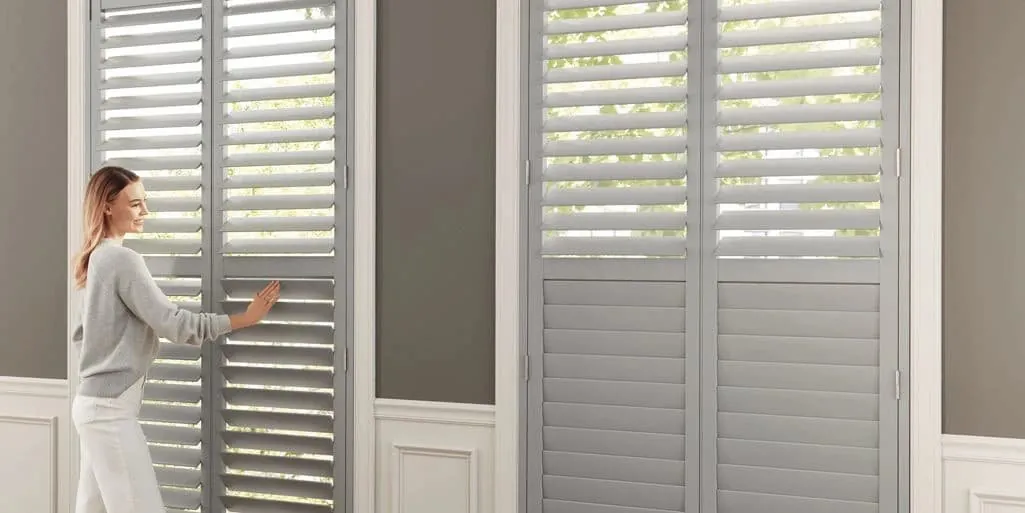
Panel layout is the next. Panels that fold back in pairs or folding sets stack against the wall and clear the glass. For a long run of windows or a slider to a deck, bypass panels on a track slide past one another and stack to one side.
Tilt style matters a little too. A hidden tilt, worked from inside the panel edge, leaves no rod running down the face of the shutter, so there is one less line across the view.
Finally, the frame. A slim frame mounted inside the opening covers the least glass. On shallow openings, a frame fixed to the face of the trim keeps the panels clear of the sash.
Decks and sliders on the water side
Most harbor and beach houses have a deck or patio on the side facing the water, reached through a slider or a pair of French doors. In summer those doors stand open half the day, and anything covering them has to move out of the way without fuss.
On a slider, bypass panels ride on a track across the opening. Slide them to one side and the doorway is clear; slide them back in the evening and the louvers can be tilted to cut the low sun coming across the water. On French doors, panels are fixed to each door so they swing with it, and the louvers are set back far enough to miss the lever handle. Palm Beach is the sensible choice for these doors, since they let in more sea air than any other opening in the house. Fitted this way, plantation shutters in Scituate, MA, deck doors match the windows beside them and still let you step outside in a second.
Window seats and bays
Shingled houses love a window seat, tucked into a bay or a dormer, often looking straight at the harbor. They are favorite spots, and they need a shutter that works around the cushion and the people sitting there.
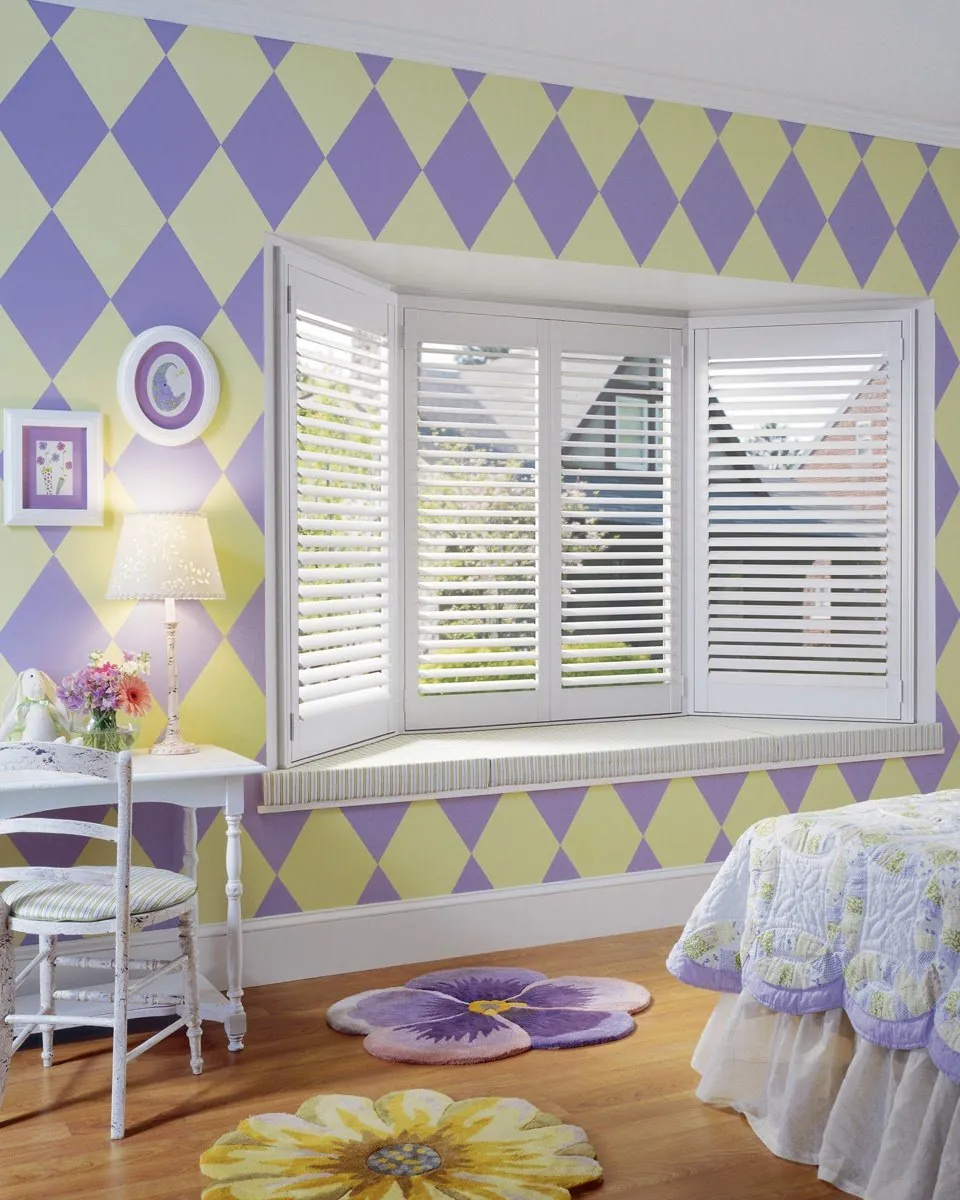
Each window in a bay is measured on its own, along with the angles where they meet, so the panels close without a gap at the corners. Above a seat we check how far a panel will swing and whether it would hit the cushion or a person’s head. If space is short, bi-fold panels or fixed panels with tilting louvers solve it. With a divider rail, you can close the lower louvers for shade on the seat and leave the upper ones open to the sky, which is about as pleasant a place to read as a house can offer.
Newer colonials inland
Away from the water, Scituate’s newer colonials sit in quieter subdivisions with woods and lawns around them. Their openings are square and modern, two floors of matching windows at the front, and bigger windows or French doors at the back.
These houses call for consistency. We plan the front windows as a set so they show the same blade and color from the street. Inside, NewStyle is a popular choice for living rooms and bedrooms; it is a composite with the look of painted wood and an even finish from room to room. Palm Beach handles the kitchen, bathrooms and laundry room. Kept in one color and blade width, nobody can tell them apart from outside.
For a dining room or study, Heritance offers genuine hardwood, painted or stained, and it is well suited to the drier interior rooms of an inland house. French doors to a deck get panels mounted on the doors, and upstairs bedrooms get shutters that close tightly enough to keep the morning light out.
Choosing material room by room
In a Scituate house the collection often changes with distance from the water. A harbor-front living room, a beach-side porch and every bathroom take Palm Beach. An inland bedroom or family room might be NewStyle. A study with wood floors could be stained Heritance.
The trick is to keep the color and blade width the same, so the house looks unified from outside. We plan the whole house together, even if you install a few rooms now and the rest later, so every window matches when the work is done. For many shoreline houses, plantation shutters in Scituate, MA, end up as a mix of two collections that look like one.
Color against shingle and sea
From the water, a shingled house shows its windows as dark openings in weathered cedar, and whatever sits behind the glass becomes part of the view of the house. White shutters read crisply against gray shingle and white trim, which is why they are so common along the shore. A soft off-white can look gentler if the trim is cream rather than bright white.
Inside, the color also changes the light. A white louver bounces sunlight around the room and keeps a harbor room airy on a gray day. A stained Heritance shutter in an inland study warms the room instead. We bring finish samples so you can judge them against your own trim, both in daylight and with the lamps on.
Upstairs bedrooms and dormers
The shingled houses often put their bedrooms upstairs under the roof, with dormer and gable windows. These rooms catch early light off the water and can be bright long before anyone wants to be awake.
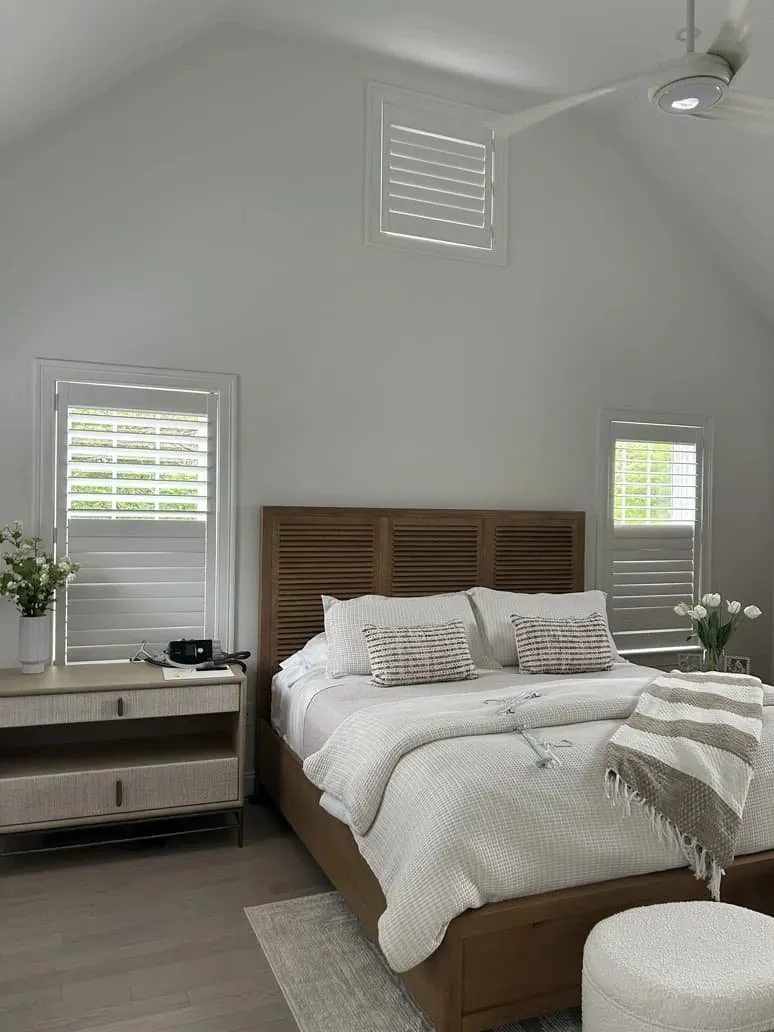
Dormers leave little room around the window, so an inside mount is usually best, with bi-fold panels that need less space to swing. Gable windows with angled tops can take a shutter cut to their shape, with fixed louvers if they are out of reach. With the louvers closed, a well-fitted shutter darkens a room far better than most soft coverings, and opening it gives you the harbor in one easy movement.
Kitchens and baths by the water
A kitchen looking over the harbor is a fine place to cook, and a hard place for a window covering. Steam from the stove, splashes from the sink and salt air through the open window all add up. Palm Beach handles all three.
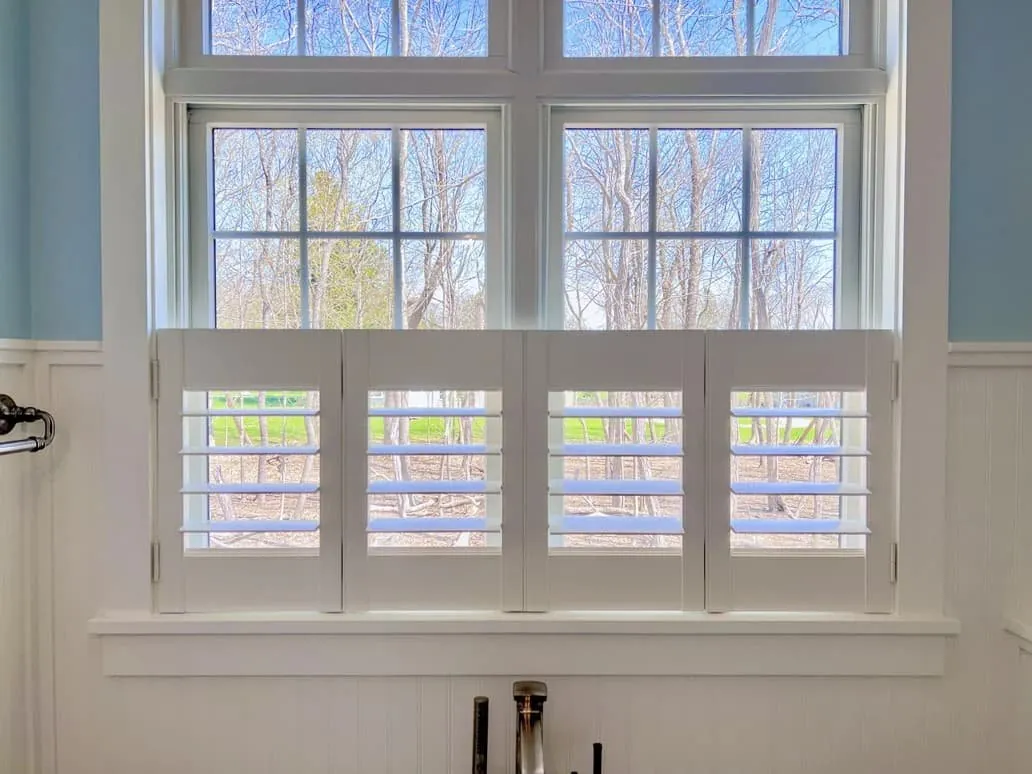
Over a sink, cafe-height panels on the lower sash give privacy from the harbor walk and leave the top of the window clear for the view and the light. In a bathroom, full-height panels with the louvers angled up keep the room private while letting in daylight. A damp cloth keeps them clean.
Care through the seasons
Near the water, a little attention keeps a shutter looking its best. After a stormy spell, wipe the louvers on the seaward windows with a damp cloth to lift any salt film. Through the rest of the year a soft duster is enough. The hinges and the tilt are made to be used every day, so open and close the panels as often as you like.
If something ever needs attention later, such as a louver that slips after years of use or a panel knocked out of line, we repair window coverings our customers already own.
A consultation at your house
In a town where the view matters this much, we always start at your house. Our vans carry samples of all three collections, the blade widths and the frames, so we bring the showroom to you. The visit usually follows this order.
- You request a consultation online or with the call button, and we set a time.
- We start in the rooms that face the water and talk about how much view, light and privacy you want in each.
- You hold samples up to your own windows and see how each blade width frames the harbor or the beach.
- We work out panel layouts that clear the glass, and frames that suit each opening.
- We measure every window and give you a free estimate, with no pressure to decide that day.
- Certified Hunter Douglas installers fit the shutters and set every panel and louver so it closes square.
We can also look at fabrics and the rest of the room in an interior design consultation at the same visit.

Why a Gallery dealer for a shoreline house
Blinds & Designs is a Hunter Douglas Gallery dealer, so every shutter collection, finish and frame option is available through a single consultation. On an exposed coast, that lets us match the material to each room rather than making one product fit them all.
Our installers hold Hunter Douglas certification. On older shingled houses with irregular openings, their care is what makes the panels hang true and the louvers close evenly. We also carry Hunter Douglas shades, blinds and motorized coverings, and we handle blind and shade repairs.
For other rooms, see cellular shades in Scituate or motorized blinds in Scituate, or every service on our Scituate page. Our main plantation shutters page shows the full range.
The Sagamore showroom
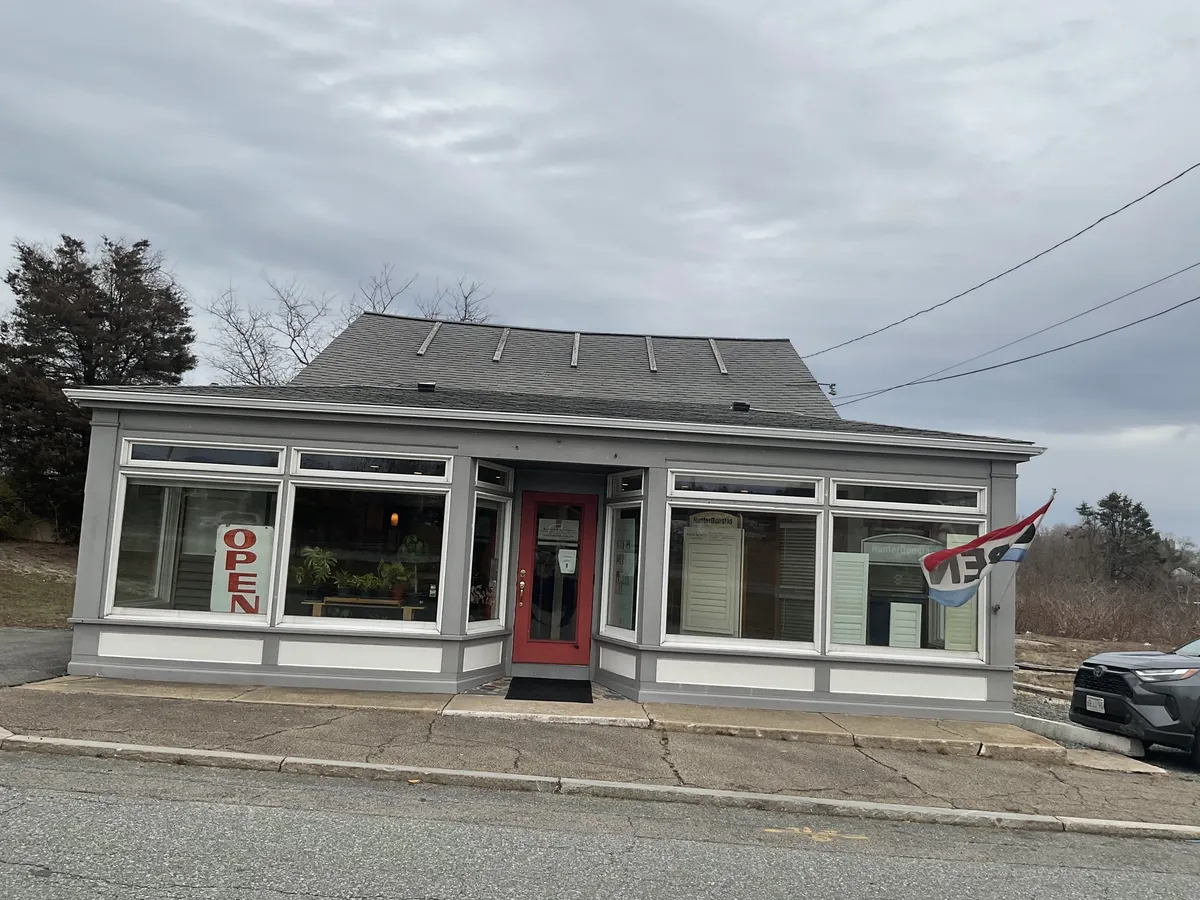
Our Sagamore showroom is the nearest Blinds & Designs location to Scituate. Stop in if you would like to talk about shutters before a visit.
For a harbor room, though, nothing replaces seeing the samples against your own window with the water behind them. That is where most of our Scituate work begins.
Questions from Scituate
Will shutters spoil my harbor view?
No. With wide louvers tilted level you see straight through, and the panels fold flat against the wall when you want the window completely clear.
Which shutters suit an exposed spot near Minot?
Palm Beach. It is polysatin with no wood inside, so damp, salty air does not make it swell or shift, and it wipes clean after a storm.
Can a sunroom near Peggotty Beach have shutters on every wall?
Yes. Each window gets its own panels, so you can close the sunny side and leave the water side open, adjusting through the day.
What works in a small dormer bedroom?
An inside mount with bi-fold panels usually suits a tight dormer best. Closed, the louvers keep early light off the water out of the room.
Is the estimate free?
It is. Once every window is measured, you get a free estimate to look over in your own time.
See them against your view
The surest test of plantation shutters in Scituate, MA, is to hold them up in front of your own harbor or beach window. Request a consultation and we will bring all three Hunter Douglas shutter collections to the house, measure each opening and leave a free estimate. If you would rather talk first, use the call button or drop in at the Sagamore showroom.