
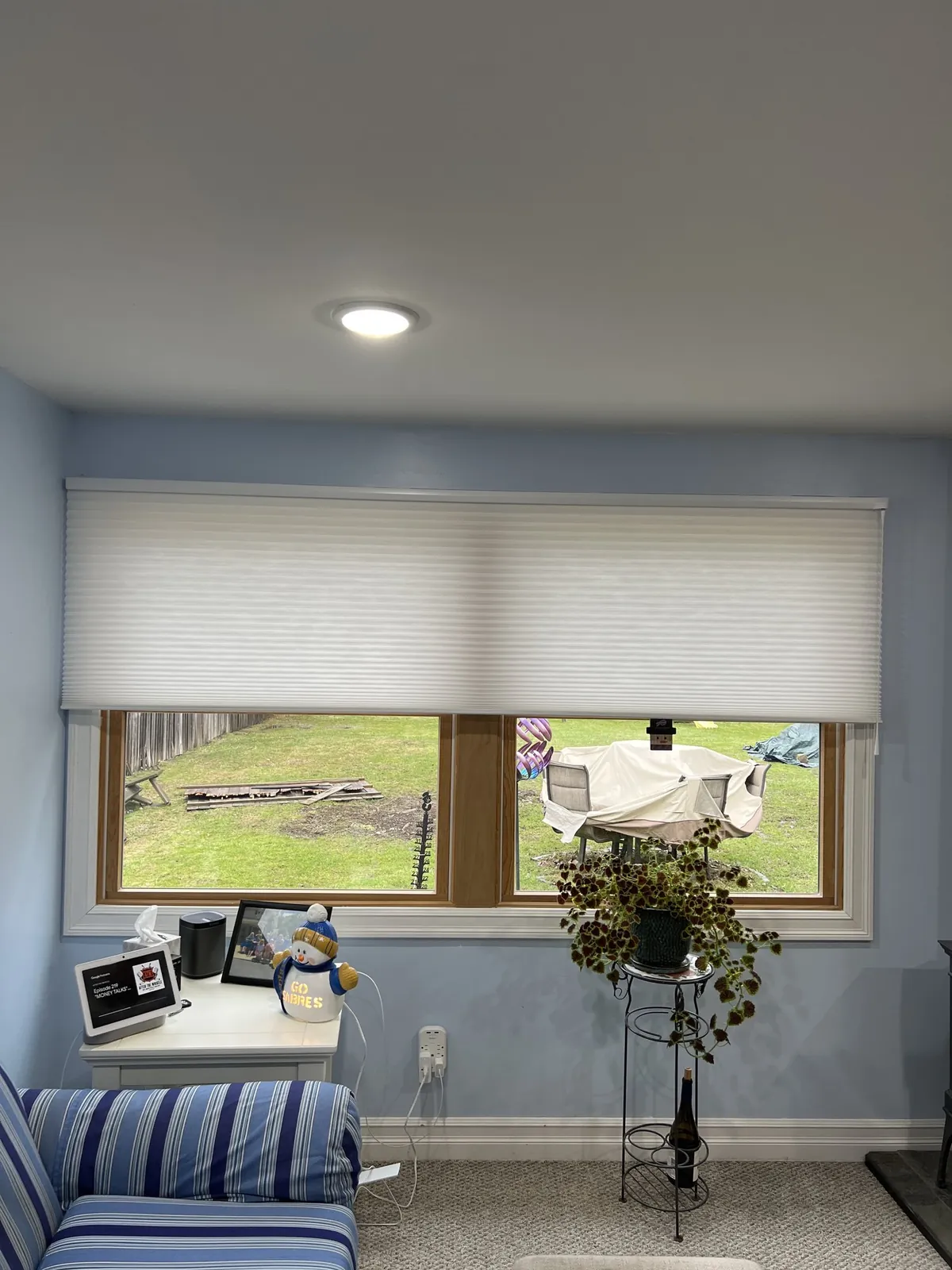
Tiny antique panes and tall walls of glass
Norwell asks two very different things of a window covering. Along Main Street the antique colonials still have their small original sash, often only a few panes wide, set in thick walls with deep wooden jambs. A short drive away, off Route 123, the larger newer houses sit back on wooded lots with modern glass that can climb two stories in a front hall or a family room. When we plan cellular shades in Norwell, MA, we are usually solving one of those two problems, and sometimes both in the same house.
What the two have in common is the cold. A small antique opening is thin, single glass with a frame that has moved over the years. A big modern window is better glass, but there is a great deal of it. Either way, the pane is where a room loses its warmth on a winter night.
A honeycomb shade answers that with its shape. Each pleat is a hollow cell that holds a layer of still air between the glass and the room. Lowered in the evening, it turns a chilly window seat or a draughty corner of a great room into a place you can actually sit.
Honeycomb shades we bring to Norwell houses
Hunter Douglas makes two honeycomb lines and a motorized option that suits tall glass. These three cover nearly every window we see in town.
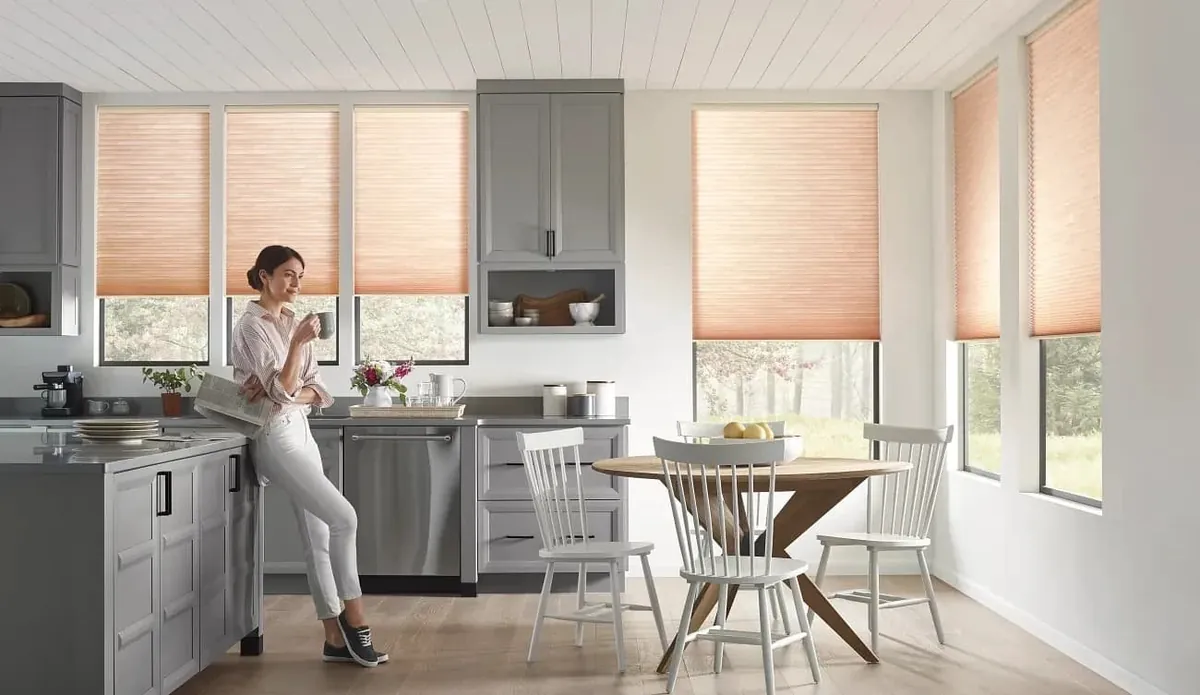
Duette honeycomb shades
The widest choice of fabrics, pleat sizes and lift systems, with very narrow widths for small antique sash and very large ones for modern glass.
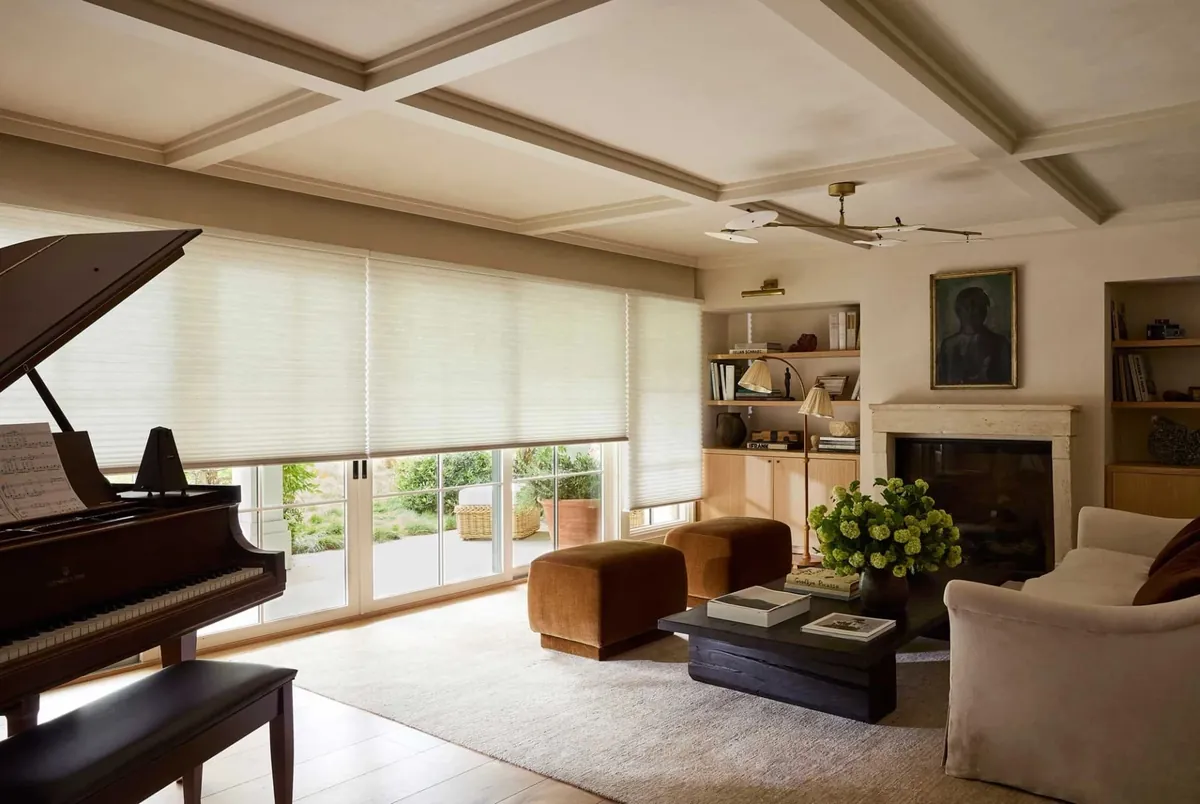
Applause honeycomb shades
The second Hunter Douglas honeycomb line, with its own palette and cell choices. A natural pick for bedrooms, kitchens and the rest of a whole-house order.
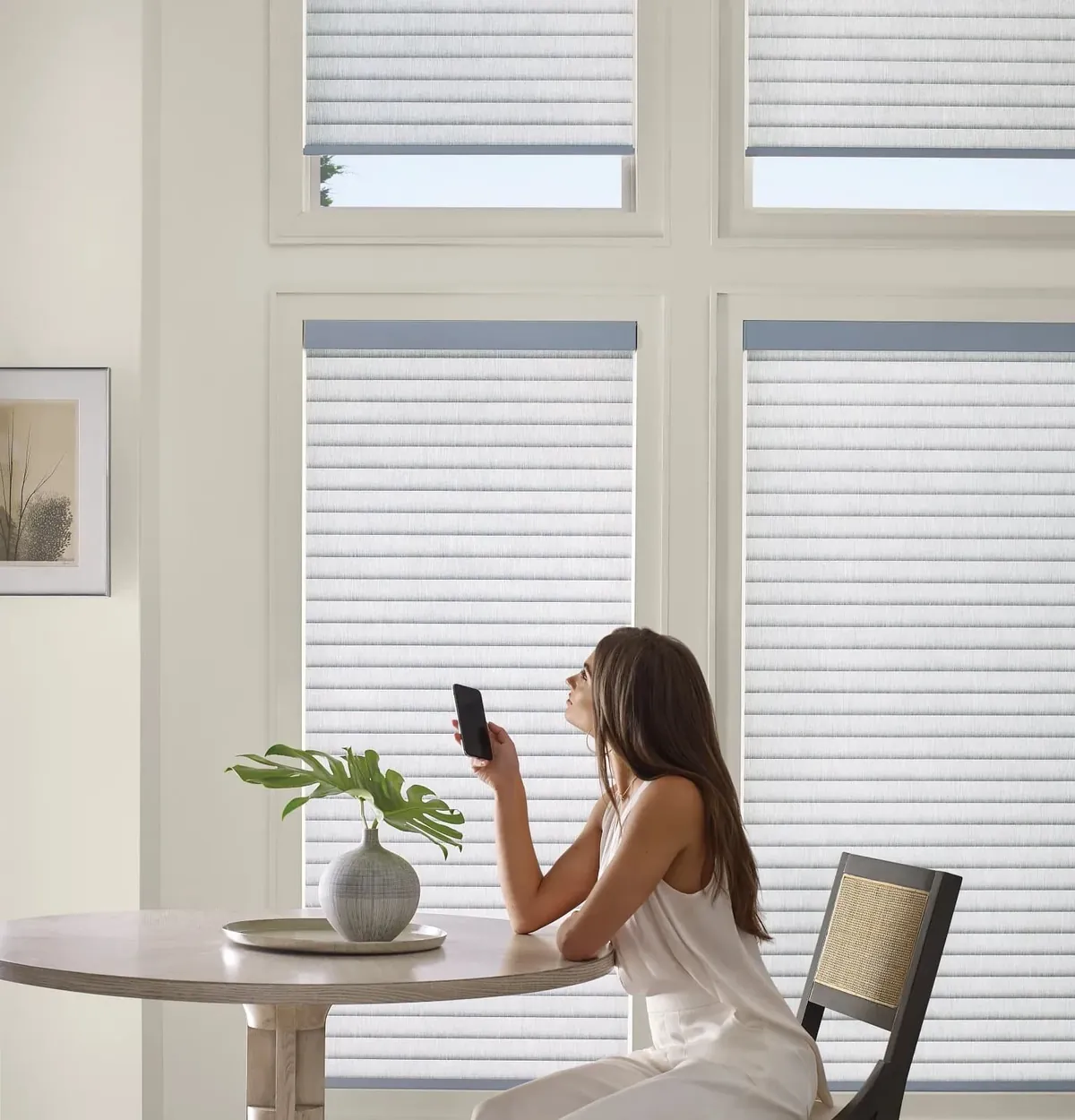
Motorized shades for high glass
PowerView lets you raise and lower shades you could never reach by hand, from a remote, your phone or a schedule you set once.
The colonials along Main Street
The oldest houses in town were built around the size of glass that was available when they went up. That means many small windows, each with a deep reveal, often with interior shutters long gone and only the old pulleys and stops left in the frame. Owners of these houses usually want two things from a shade: warmth, and as little visual change to the room as possible.
An inside mount does both. The headrail tucks up inside the opening, and when the shade is raised it folds into a stack only a few fingers deep, so the woodwork around the window stays in full view. Honeycomb shades suit this well because the stack is so compact. A bulky shade on a small window can block a third of the glass even when it is open. A slim honeycomb stack hardly shows.
Antique openings bring their own measuring problem. After a couple of centuries, very few of them are square. The top may be wider than the bottom, or one side may lean. Before we suggest an inside mount we check the width at several heights and the depth at both sides, because a shade made to the widest point of a crooked frame will rub and catch. Where a frame is too shallow or too far out of square, we recommend a mount on the face of the casing instead, and we explain why at the window.
Why a deep setback changes the conversation
Most Norwell houses sit well back from the road. On a generous lot with trees between you and the street, nobody is looking in at your living room from the pavement. That shifts the reason for a shade. In a village house close to the sidewalk, privacy comes first. Here the questions are more about warmth, glare and sleep.
So we tend to talk less about blocking views and more about light. A sheer or light-filtering honeycomb fabric lets a room stay bright while still holding air in its cells. You keep the trees in view, soften any direct sun, and still have the shade working against the cold when it is down. For bedrooms, a room-darkening fabric does the opposite job: it shuts out the early light that pours through bare branches in winter.
A deep setback also means long driveways and houses that face every direction. One family room might get afternoon sun across the whole back wall while the front rooms stay shaded all day. We look at which way each room faces before we suggest an opacity, so the bright rooms and the dim rooms each get the fabric that suits them.
Two stories of glass off Route 123
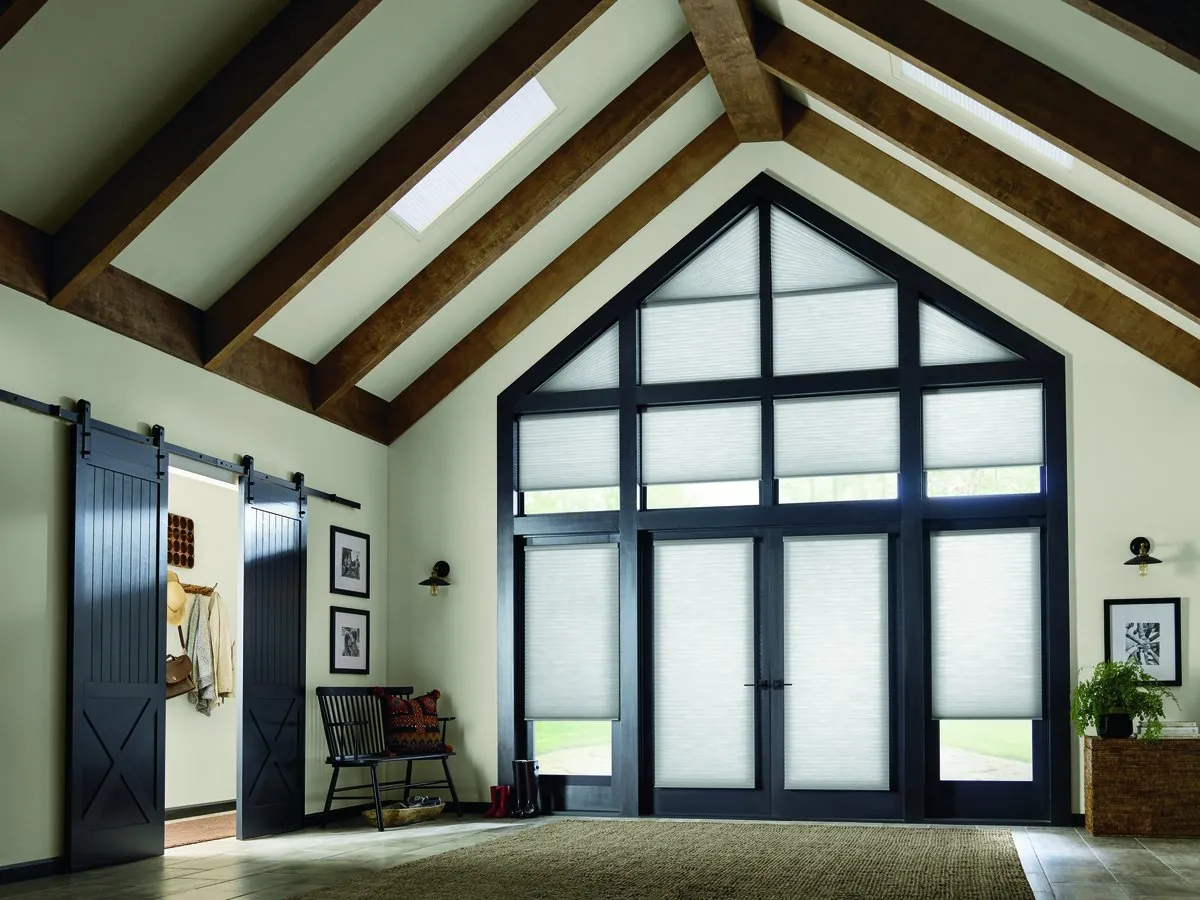
The newer houses on the wooded lots tend to have the opposite of the antique sash: big openings, tall foyers, family rooms with a row of windows topped by another row above. Those upper windows are beautiful and almost impossible to reach. They also let in a lot of heat on a summer afternoon and lose a lot on a January night.
Honeycomb shades are one of the few soft treatments that can cover that glass well. They come in large sizes, they stay light even when wide, and they can be specially shaped for some angled tops. On a tall wall we often pair a lower run of shades that you lift by hand with an upper run that is motorized, so the whole wall can close together at the touch of a button.
That pairing also helps the look. When every shade on the wall uses the same fabric and the same pleat size, the room reads as one design rather than a patchwork, whether the shades are open or closed.
Light through the trees, summer and winter
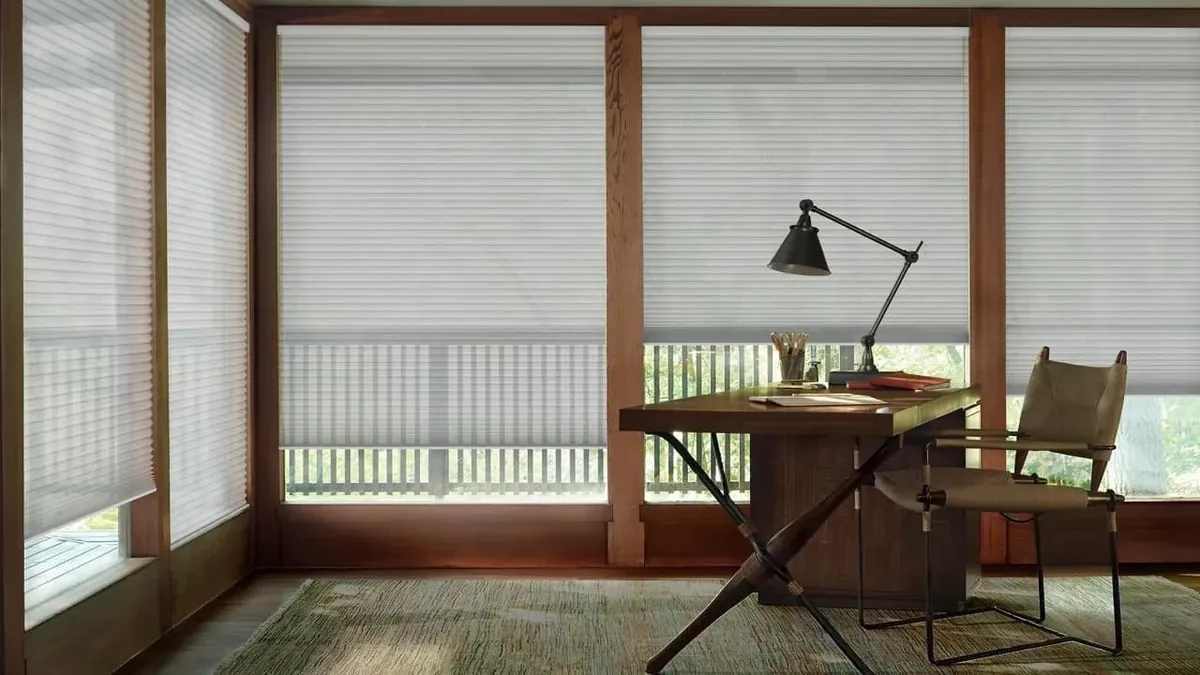
Living under tall trees changes the light through the year. In summer, a wooded lot keeps many rooms in green shade, and you may want every bit of daylight you can get. In winter, once the leaves come down, low sun reaches deep into rooms that were dim a few months earlier, and the glare off snow can be sharp.
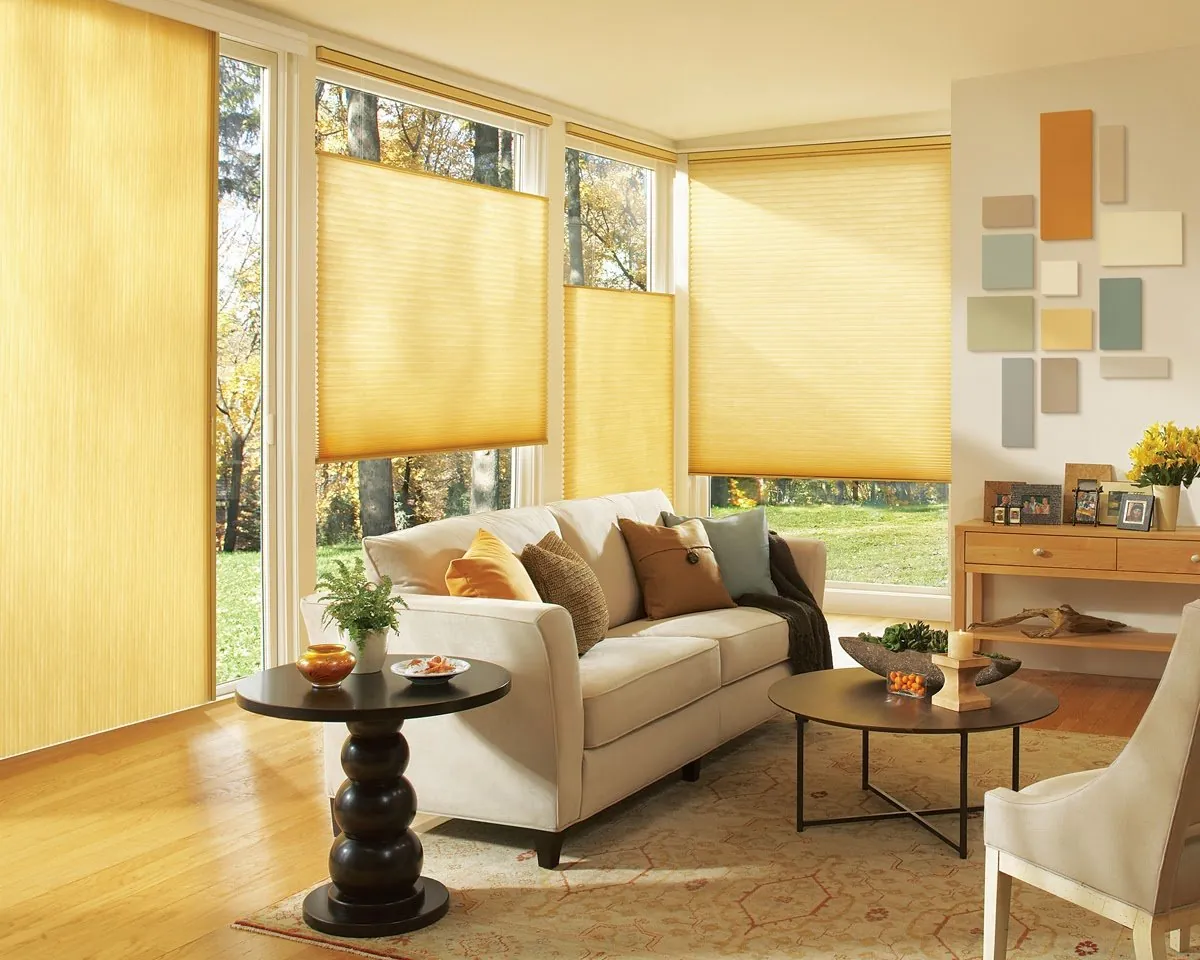
A top-down, bottom-up shade copes with both seasons. In summer you can raise it fully and keep the room as bright as possible. In winter you can lower it from the top just far enough to block the low sun, while the rest of the window stays open to the view. It is a simple feature that does a lot on a house surrounded by trees.
Fabric choice matters here too. A lighter fabric reflects more sun back toward the glass on a bright winter day, while a deeper color can make a big room feel cosier at night. We bring both so you can see each one against your own walls and floors.
Measuring the smallest openings
Small antique sash rewards patience with a tape. A window that looks plain from across the room can hide a frame that tapers, a sill that slopes and a jamb packed with old paint. This is our routine for an opening like that, so the finished shade sits as though it had always belonged there.
- Three widths first: across the head of the opening, across its waist and just above the sill. The tightest of the three sets the shade.
- Three heights next, down each side and through the center, because old frames rarely drop evenly.
- A look at jamb depth on both sides, where old pulley wheels, stops or thick paint can steal room from a headrail.
- A step back into the room to decide whether the shade should hide inside the frame or sit on the face of the trim.
- A final read-through of every figure and every mount with you before the order goes in.
Made to those figures, cellular shades in Norwell fill even a crooked little opening snugly, which matters for warmth as much as looks: a narrow gap at the edges means less cold air slipping around the fabric.
Summer on a big wooded lot
Cold gets most of the attention, but the tall glass in the newer houses can make a family room uncomfortable on an August afternoon too. Trees help, yet a west-facing wall often clears the canopy late in the day, and sun through a two-story window heats the whole open space below it.
The same cells that hold warmth in during winter slow heat coming through the glass in summer. Lowered on the sunny side through the hottest hours, a light-filtering shade keeps the room bright enough to use without lights while taking the edge off the heat. With PowerView you can set the shades on that wall to close on a schedule each afternoon and open again in the evening, so the room stays comfortable whether or not anyone is home.
Cords, children and pets
Many of the houses we visit have young children or dogs, and loose cords near a window are something most parents now want gone. Honeycomb shades are available with cordless lifts: you raise or lower the bottom rail by hand and it stays where you leave it. Motorized shades have no cord at all. For tall windows that are hard to reach, motorization is often the tidiest answer for safety and convenience at once.
The sliding door out to the deck is the other window families use most. A vertical honeycomb shade travels sideways across it and stacks neatly at one edge, so the door opens freely and the dog can come and go, yet the glass still gets the same cellular layer as the windows beside it. On a house where the back of the family room is mostly glass, that one door can make a noticeable difference to how warm the room feels in the evening.
How a visit to your house runs
Most people choosing cellular shades in Norwell start with a consultation at home, because the light in a wooded lot is hard to picture anywhere else. Our vans carry samples, so we can bring the showroom to you.
- You request a consultation online, or use the call button, and we find a time that works.
- We arrive with honeycomb samples in a range of colors, textures and opacities, plus the lift systems.
- We go room by room, starting with the windows you are most concerned about, cold, bright or hard to reach.
- You hold the samples against your own glass, so you can see how each fabric changes the light in that room.
- We measure every window and talk through mounts and lifts.
- You receive a free estimate for the shades you are considering, and you take your time deciding.
If you want help tying a room together, we also offer interior design consultations, and can look at fabric and color across the house at the same visit.
Single cell, double cell and how much light you want
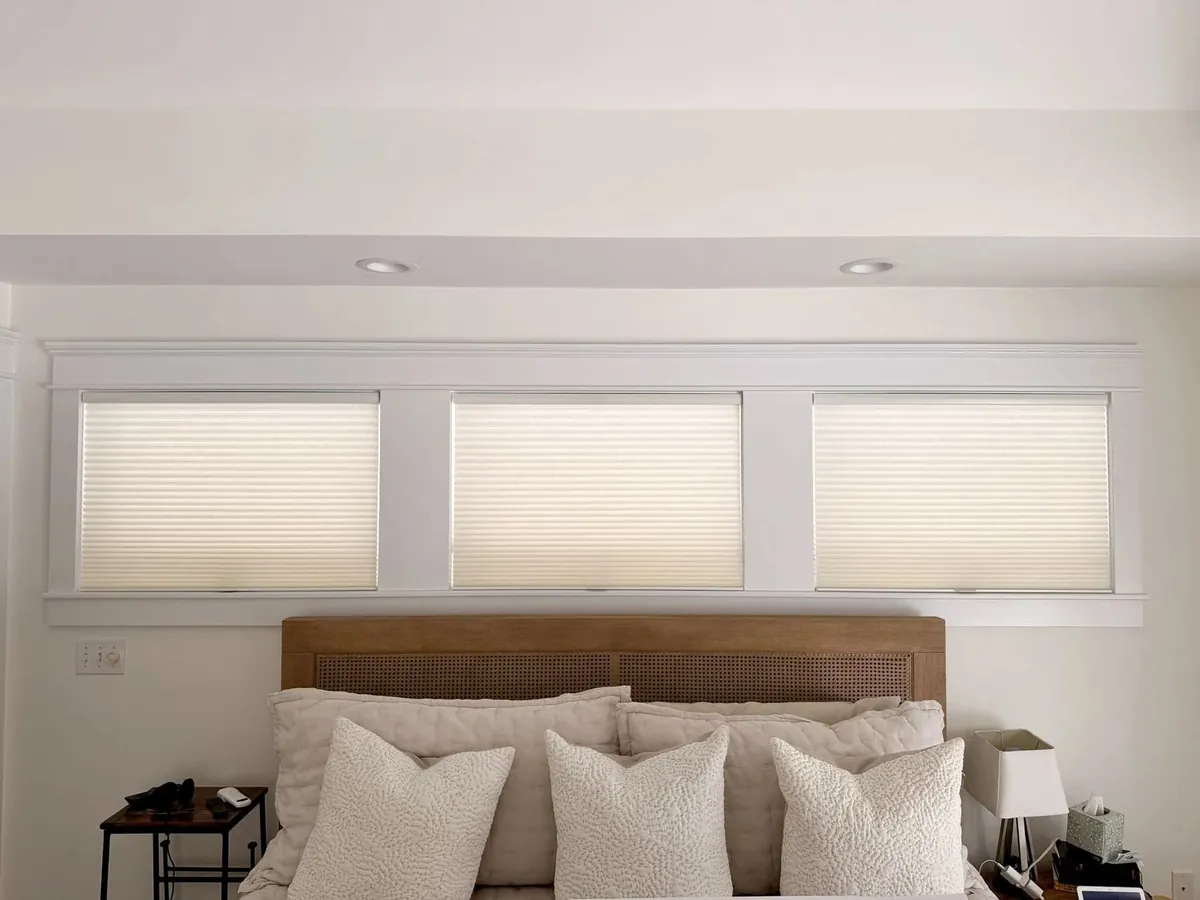
Inside every honeycomb shade is at least one row of cells. Some Duette fabrics have a second, smaller cell tucked inside the first, and some shades stack two full rows. More layers give the air more places to stay still, which is why double-cell shades are often chosen for the coldest rooms, such as a north-facing bedroom in an antique house.
Opacity is a separate choice. Sheer fabrics let in the most light and keep a soft view outside. Light-filtering fabrics give privacy and a warm glow. Room-darkening fabrics block most of the light for sleeping or for a media room. We usually recommend a mix: light-filtering on the living spaces, room-darkening in the bedrooms, and something in between for a home office where screen glare matters.
Duette or Applause, room by room
Both lines are true Hunter Douglas honeycomb shades and hold air the same way, so the choice between them for cellular shades in Norwell, MA, comes down to fabric, size and shape. The difference is in the range: Duette has the widest selection of fabrics, sizes and shapes, including the very narrow and very large shades a Norwell house can call for. Applause has its own palette and works well on many standard windows.
It is common for one house to use both. A Main Street colonial might put Duette in the front parlor, where the small windows need narrow shades, and Applause in the bedrooms upstairs. A newer house might use Duette on the tall family room wall and Applause on the regular windows elsewhere. Our main cellular shades page describes the whole range.
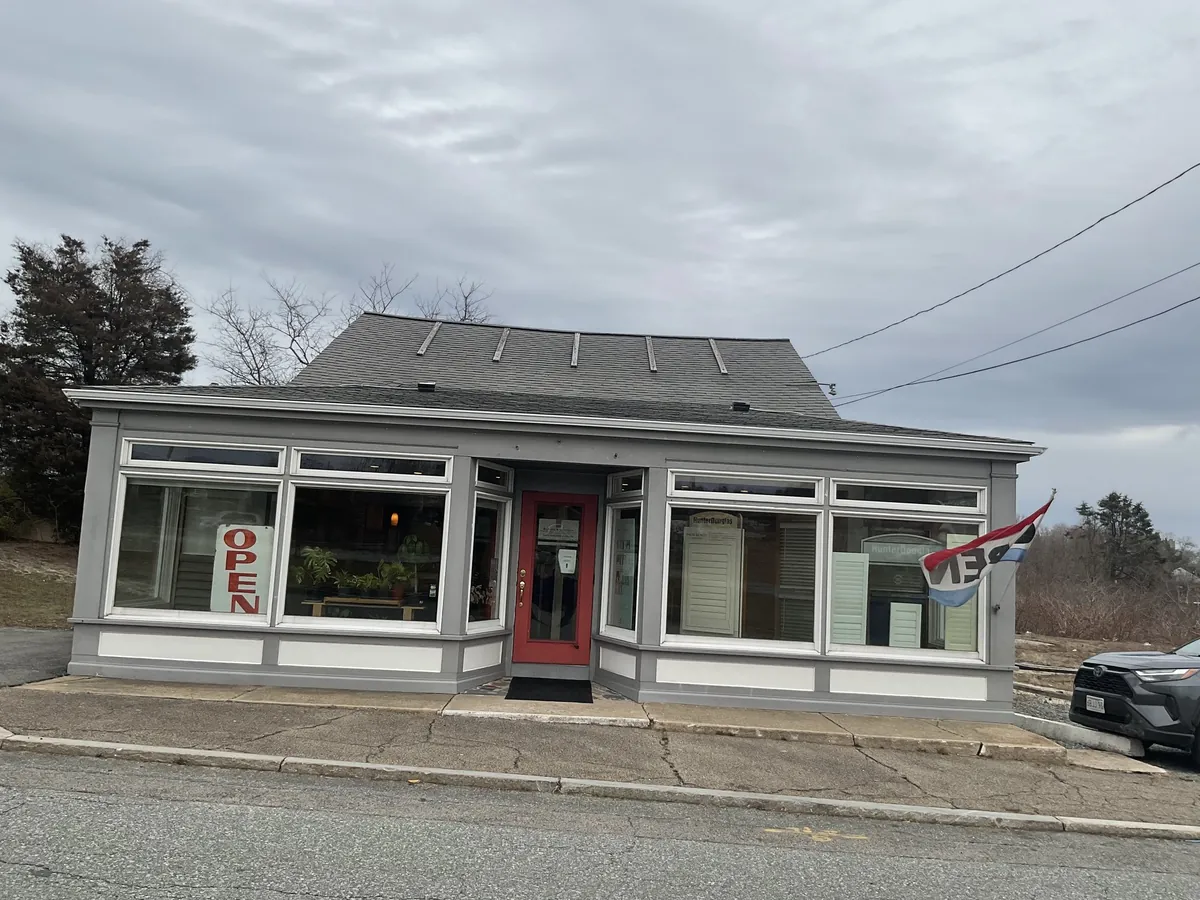
Our nearest showroom is in Sagamore
For Norwell, the closest Blinds & Designs showroom is the one in Sagamore. The showroom page has its address, hours and directions.
Plenty of our Norwell customers never make the drive, because the consultation comes to them with the samples in the van. If you would rather begin in person, the Sagamore team can talk through honeycomb options with you and book the home visit from there.

A Gallery dealer for the whole house
Blinds & Designs is a Hunter Douglas Gallery dealer. For you, that means one source for every honeycomb fabric, lift system and specialty shape Hunter Douglas offers, plus PowerView motorization.
Our installers are certified by Hunter Douglas, so the shades go up the way the maker intends, level and secure. We also handle blind and shade repairs on window coverings you already own.
If other rooms need something different, we carry Hunter Douglas blinds, shutters, roller and roman shades and drapery too. See our plantation shutters in Norwell, our roman shades in Norwell, or everything we offer in town on the Norwell page.
Questions from Norwell
Can honeycomb shades fit the very small windows in an antique colonial?
Yes. Honeycomb shades can be made quite narrow, and the raised stack is slim, so a small window does not lose much glass when the shade is up. The deciding factor is the depth and squareness of the old frame. We measure in several places and recommend an outside mount where an inside mount would not sit well.
How do you cover windows high up on a two-story wall?
Usually with PowerView motorization on the upper shades. They open and close from a remote, a phone or a schedule, so nobody needs a ladder. The lower shades can be motorized too, or lifted by hand, in the same fabric so the wall looks consistent.
Our house is set far back in the trees. Will shades make it darker?
Not if you choose the right fabric. A sheer or light-filtering honeycomb lets daylight through while still holding air in its cells. A top-down, bottom-up shade lets you keep the top or bottom of the window open as the light changes through the seasons.
Do double-cell shades make a real difference?
A second layer of cells gives the trapped air more places to stay still. It is a common choice for the coldest rooms in an older house. We bring both kinds so you can compare them at your own window.
What do I pay for an estimate?
Nothing. After we measure, you get a free estimate for the shades you are considering, with no obligation.
When you are ready to start
The easiest way to judge cellular shades in Norwell, MA, for your house is to see the fabrics at your own windows, in your own light. Request a consultation and we will bring the honeycomb range to you, measure every opening and leave you with a free estimate. You can also use the call button to talk it over, or visit our Sagamore showroom.