
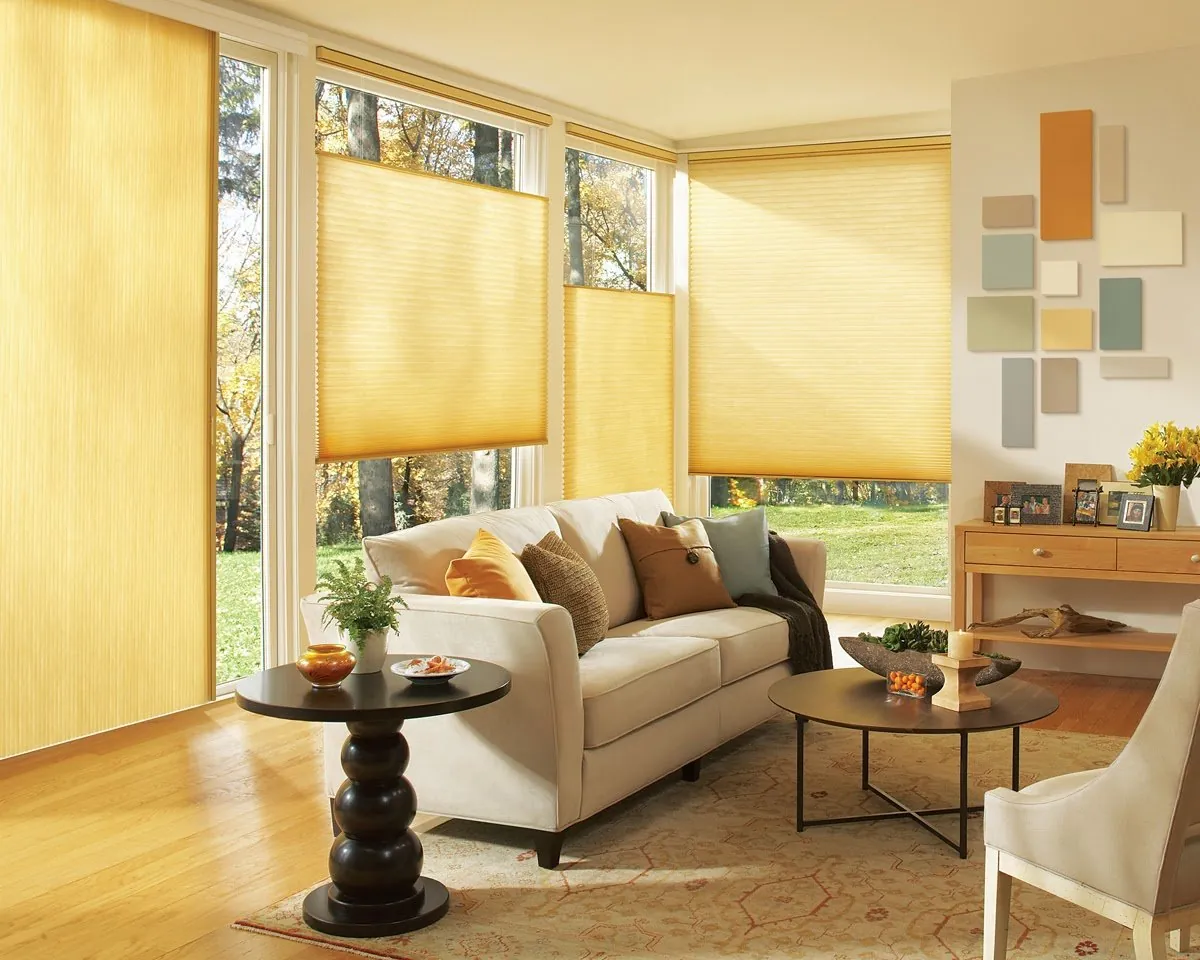
Glass facing the harbor, salt on the breeze
Marion’s houses were built to look at the water. The shingled captains’ houses around Sippican Harbor and the village put their best rooms on the harbor side, and the newer houses out toward Converse Point take that idea further, with whole walls of glass turned to the bay. Living behind that much glass is wonderful in June and hard work in February. Choosing cellular shades in Marion, MA, is usually about keeping the view while making those rooms livable in every season.
Glass that faces open water collects everything the weather can throw at it: low winter sun bouncing off the harbor, a north-east wind pressing cold against the panes, and salt carried in on every breeze. A room with three walls of windows can lose its warmth fast once the sun goes down.
A honeycomb shade is the soft window covering that does the most about that. Its pleats are hollow cells, and each one holds still air between the cold glass and the room. Lowered at dusk, the shades turn a glassy sunroom back into a room you want to sit in after supper.
Three honeycomb answers for Marion houses
Between the village and the point, these are the three situations we plan for most. We bring samples for every one of them to the house.
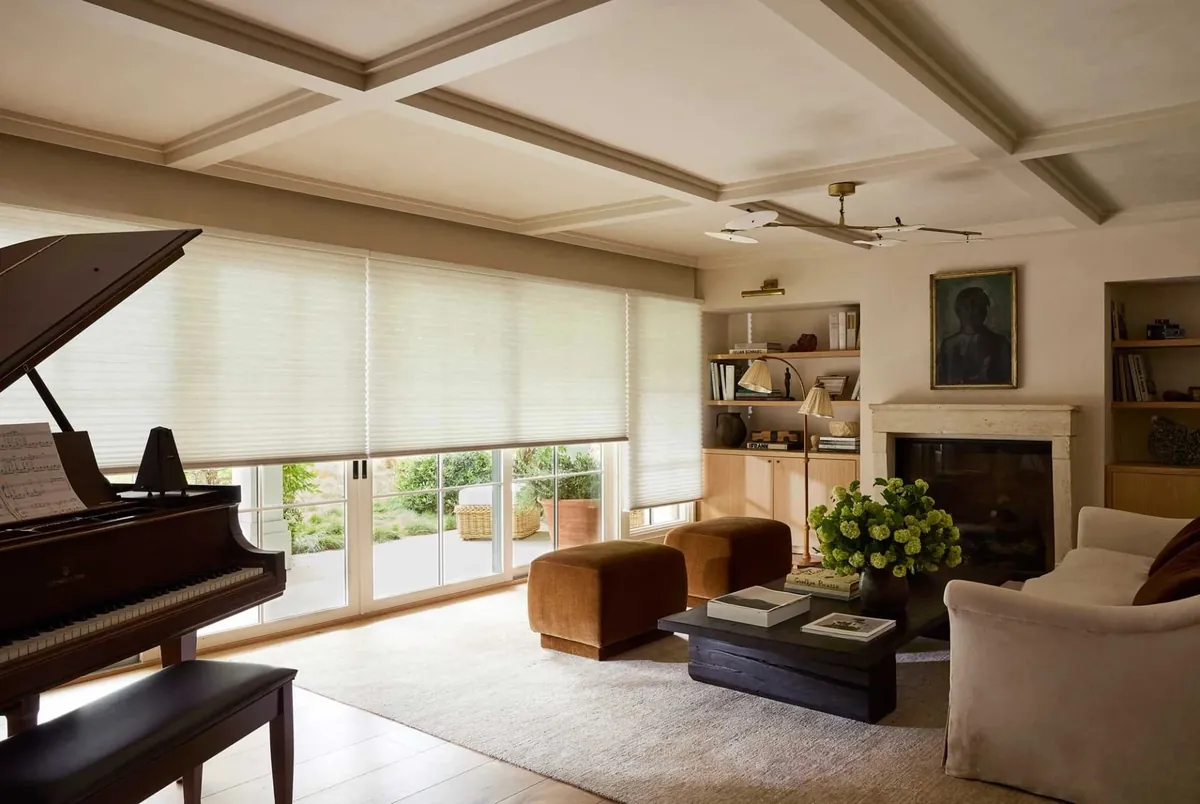
Duette shades for wide harbor glass
Large Duette shades, and shades ganged on one headrail, across a run of harbor-facing windows and doors.
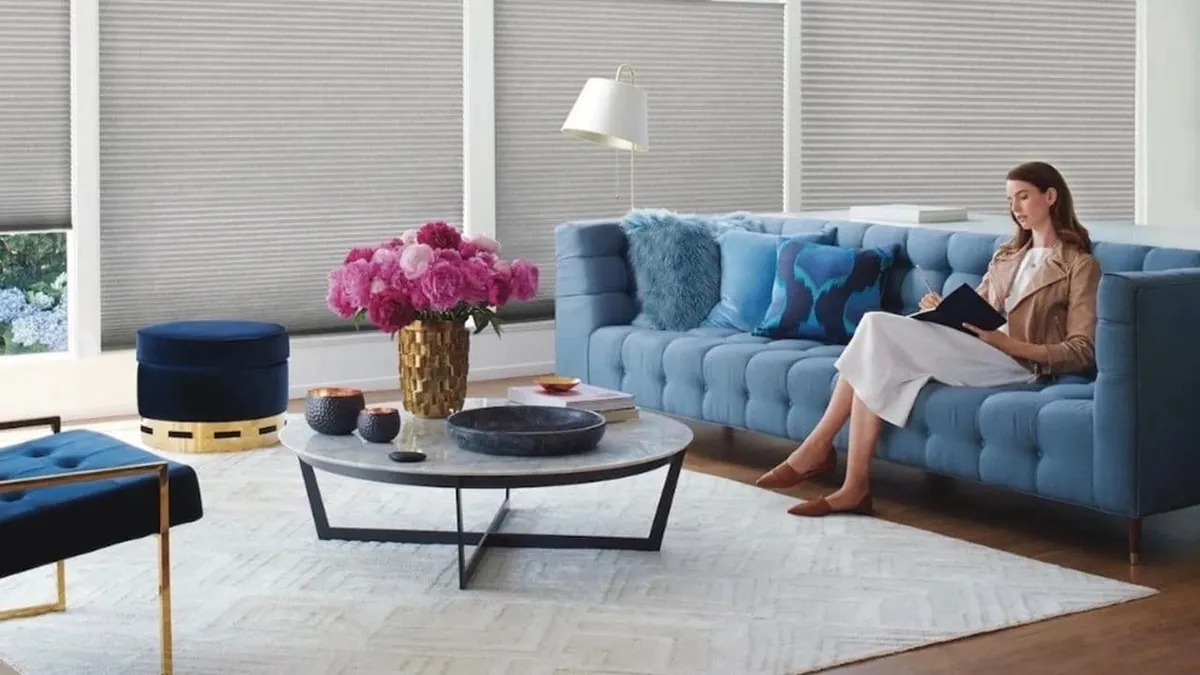
Beneath drapery in a village house
A slim inside-mount honeycomb shade that does the insulating work quietly behind formal drapery.
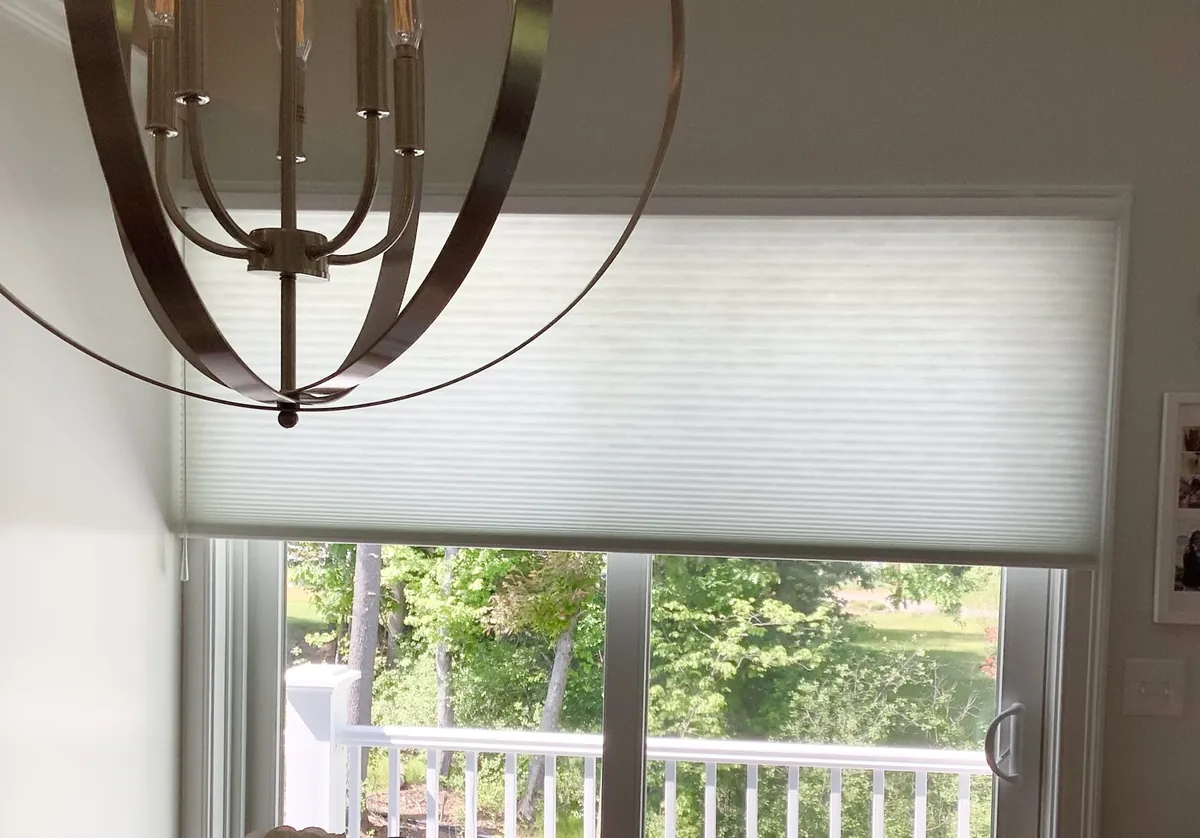
Cordless lifts for salt air
Lift systems with no cord or cord lock hanging at the side, and almost every working part inside the headrail.
Captains’ houses around the village
The older houses near the harbor were built by and for people who made their living on the water. Their shingled walls have weathered silver, and inside they keep tall, narrow windows with deep painted trim, many still with original glass. These are formal houses at heart, with front parlors and dining rooms that were meant to be dressed properly.
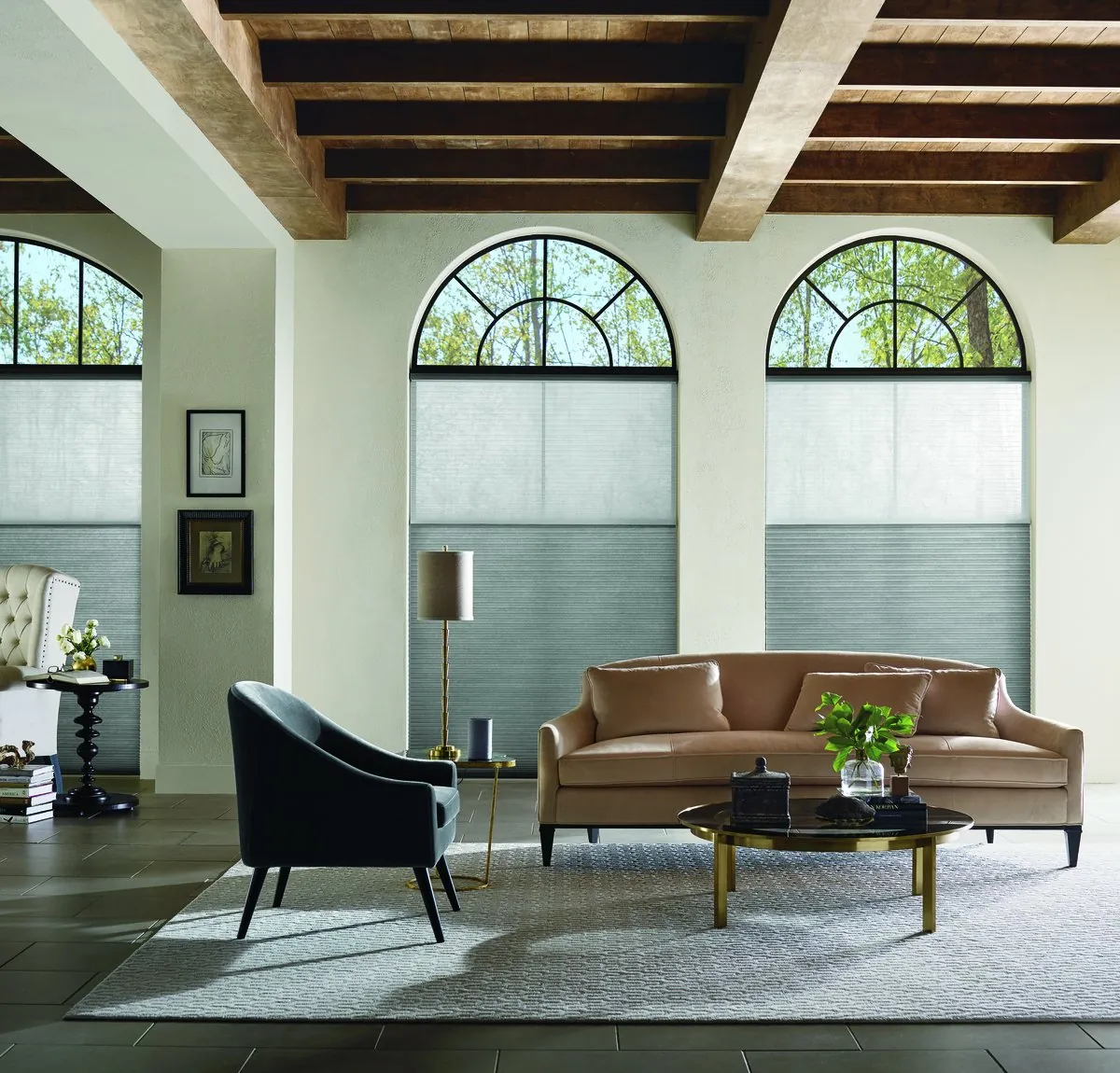
In a room like that, drapery is often expected. Long panels at each window frame the view and suit the proportions of the room. Drapery on its own, though, leaves the glass exposed whenever the panels are open, and does relatively little against the cold that comes off an old pane. That is where a honeycomb shade earns its place. Mounted inside the window frame, behind the drapery, it is almost invisible from the room, yet it puts a layer of still air right against the glass.
The combination works well. The drapery handles the look and the frame of the window. The honeycomb shade handles warmth, privacy and glare. In the daytime you can raise the shade into its slim stack and leave the drapery open, so the room shows off the harbor. At night you lower the shade and draw the panels, and the room is warm and private.
Measuring old frames near the water
The windows in these houses have lived through a great many winters, and salt air has done its work on the wood. Frames settle. Paint builds up. A window that looks perfectly rectangular often turns out to be a little narrower at the top than the bottom.
We measure each one carefully: the width at several heights, the height at both sides and the center, and the depth where the headrail would sit. An inside mount behind drapery needs to clear the drapery hardware too, so we look at where the rod or track is, or will be, before we commit to a mount. Where the frame is too shallow or too uneven, we suggest mounting the shade on the face of the casing and setting the drapery out a little to clear it.
Close quarters in the village
Around the village center the older houses sit nearer one another and nearer the lanes than anything out on the point. A front parlor may be a few steps from people walking down to the harbor, and side windows can look straight across a narrow yard into the house next door. Here privacy matters as much as warmth.
A light-filtering honeycomb fabric solves most of it in daylight: the room stays bright, the fabric glows softly, and passers-by see the shade rather than the room. After dark, with lamps on, a heavier light-filtering or room-darkening fabric keeps the room private. For a side window that faces a neighbor, a top-down, bottom-up shade lets you cover the lower half and still see sky through the top. These small choices let cellular shades in Marion, MA, do their insulating job in the village without making the old rooms feel shut in.
Rooms built around the bay toward Converse Point
The newer houses out on the point reverse the old pattern. Instead of small windows and a formal front room, they have open plans with large windows, sliding doors and sometimes floor-to-ceiling glass looking across Buzzards Bay. The view is the reason the house exists. Nobody wants a window covering that hides it.
A top-down, bottom-up honeycomb shade is a natural fit. You can lower the top edge just enough to cut the sun as it comes in low over the water, and leave the lower part of the window open to the view. Or, if a neighbor’s deck is close, you can raise the bottom for privacy and keep the top open to the sky. Either way the room keeps its outlook.
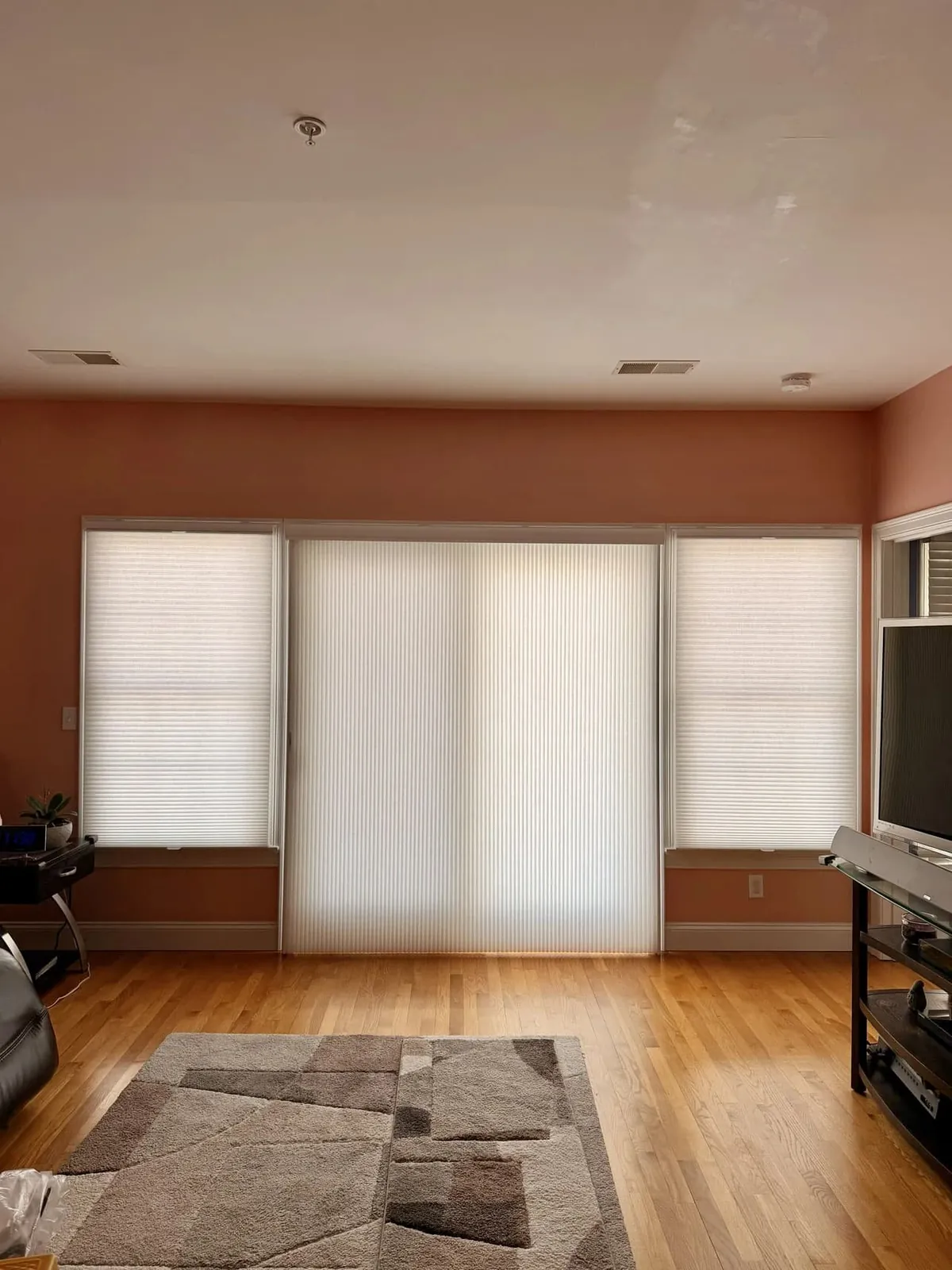
For a long run of windows, we often join several shades on a shared headrail so they move as one, or motorize the whole run so a single button closes the room for the evening. On sliding doors to the deck we use a vertical honeycomb shade that draws sideways and stacks at one edge.
Sun off the water
Morning and late-day sun reflect off the harbor and the bay with real force. Rooms facing the water can be almost too bright to use at certain hours, and strong daily sun is hard on fabric color and on furniture placed near the glass.
A light-filtering honeycomb fabric softens that glare and spreads the light evenly through the room, so you are not squinting at the breakfast table. In bedrooms, a room-darkening fabric keeps the early light out. Lighter, neutral fabric colors tend to hold up best against constant sun, and the side of every honeycomb shade that faces the glass is a neutral color regardless, so the house looks consistent from the water.
Color against gray shingle and blue water
From the harbor, a Marion house is seen as weathered shingle, white trim and rows of glass. Whatever hangs in those windows becomes part of the view from the water and from the street. Shades in mixed colors, or some up and some down at odd heights, show more than you might expect against a plain silver wall.
With cellular shades in Marion there is a simple answer: every honeycomb shade has a neutral side facing the glass, so from outside the whole house reads as one even color while each room inside can have its own. Inside, the light off the water changes how a fabric looks through the day: a warm ivory can turn cool and gray at dusk, and a pale blue can almost disappear at noon. We bring a spread of colors so you can see them at the times of day you use each room, and we set every shade to raise to the same line, so the house stays tidy from the harbor.
Living with salt air
Every Marion house near the harbor lives with salt in the air. It settles on metal hardware near any window that is opened in summer and, over time, can make exposed parts stiff or unsightly. That is one of the reasons honeycomb shades suit a coastal house: almost all of their working parts sit inside the headrail, out of the air.
Cordless lift systems go further. With no cord hanging at the side and no cord lock to seize up, there is very little left to corrode. You simply lift or lower the bottom rail by hand. For windows that are hard to reach, or for a long run of glass, PowerView motorization means nobody has to touch the shades at all. We plan how each motor is powered at the visit, taking account of where outlets are and how close the window is to the water.
A house that is closed up part of the time
Some houses near the harbor are lived in year round. Others are opened for the season and closed for part of the winter, or left empty during the week. Either way, a house full of glass facing south and west collects a great deal of sun while nobody is there, which fades floors and furniture and heats the rooms.
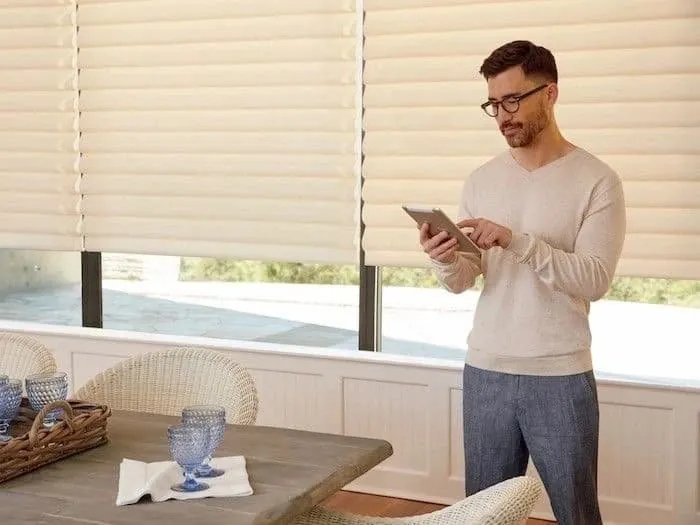
PowerView can lower the shades on a schedule, every day, whether anyone is home or not. Set the harbor rooms to close in the brightest hours and open again in the evening, and the house looks lived in from the water while the furniture is protected. Through the app, you can check and adjust the shades from wherever you are.
How a consultation at your house works
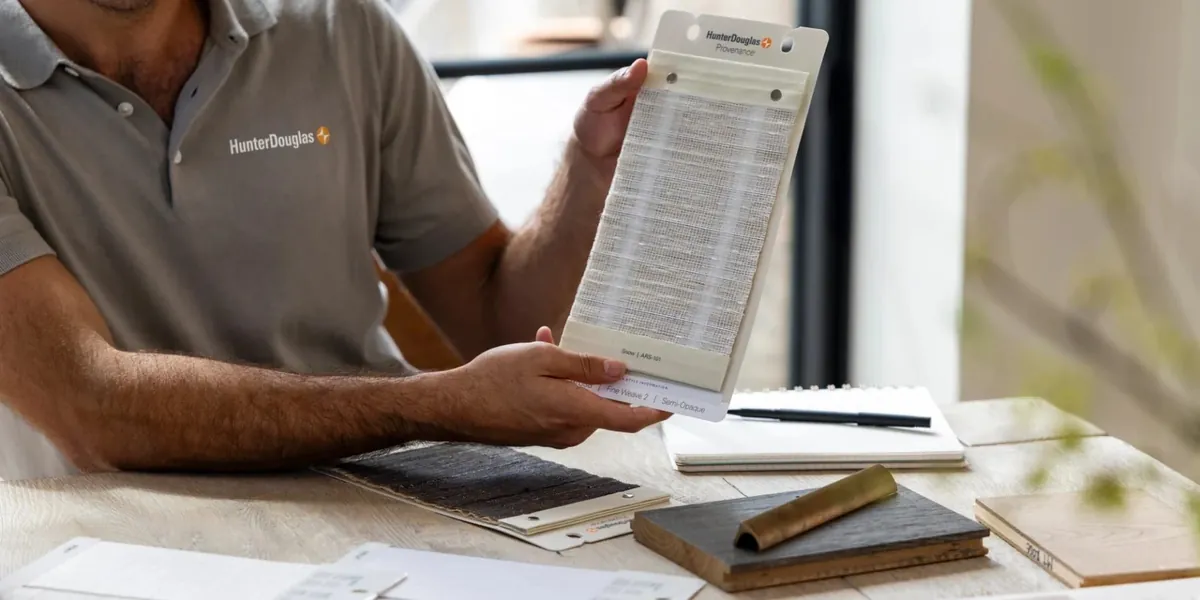
Choosing fabric for a room full of reflected light is almost impossible from a sample chip in a shop. That is why most decisions about cellular shades in Marion are made in the room. Our vans carry samples, so we can bring the showroom to you.
- You request a consultation online, or use the call button, and we agree a time.
- We bring honeycomb samples across a wide range of colors, textures and light levels, and the different lift and motor options.
- We start with the rooms facing the water and work through the house, talking about how each room is used at different times of day.
- You hold samples against your own windows, so you see how each fabric handles the light off the harbor.
- We measure every opening and check for any drapery hardware.
- You receive a free estimate for the shades you are considering.
If you are also planning drapery or reworking a room, our interior design consultations can cover fabric and color across the house at the same visit.
Kitchens and the morning side
Kitchens in the older houses tend to sit at the back, often facing east, where the first sun comes in hard. In the newer houses the kitchen is usually part of an open plan with glass on two sides. Either way, the window over the sink and the breakfast table by the glass take the brunt of the morning.
A light-filtering honeycomb shade over the sink can be raised fully when you want to look out and lowered just enough to take the glare off the counter. A cordless lift is easy to reach across a counter, and where the window sits behind a deep sink or a range, a motorized shade saves stretching. Because the cells hold air, the same shade also takes the chill off the corner of the kitchen on a winter morning before the heating catches up.
Choosing between Duette and Applause
Both are Hunter Douglas honeycomb shades, and both hold air in their cells the same way. Duette offers the widest choice: more fabrics and textures, very large sizes, specialty shapes and the vertical shade for doors. It is usually the line we suggest for the big harbor-facing glass in the newer houses and for very narrow windows in the old ones. Applause has its own fabric collection and suits standard windows in bedrooms, kitchens and baths.
A Marion house often uses both. The Duette page covers that line in detail, the Applause page covers the other, and the main cellular shades page describes the whole range.
Single or double cells for a coastal winter
A standard honeycomb shade has one row of cells. Some Duette fabrics place a second, smaller cell inside each one, and some shades stack two rows. The extra layer gives the air even more places to stay still, which makes a difference in the coldest rooms: a north-facing parlor in a captain’s house, or a glass-walled room that takes the full force of a winter wind off the bay.
The trade-off is light and thickness. A double-cell shade is a touch fuller when raised and, in the same opacity, can let a little less light through. We put single and double cells side by side at your window so you can judge for yourself.
Fitting the shades
- We confirm the fabric, color, lift and mount for every window with you before ordering.
- When the shades arrive, our certified Hunter Douglas installers fit them, setting brackets into solid wood so they stay level on frames that have moved over the years.
- Each shade is levelled, every lift is tested and any motorized shades are set up with you.
- We show you how everything works before we leave.
The Sagamore showroom is our nearest
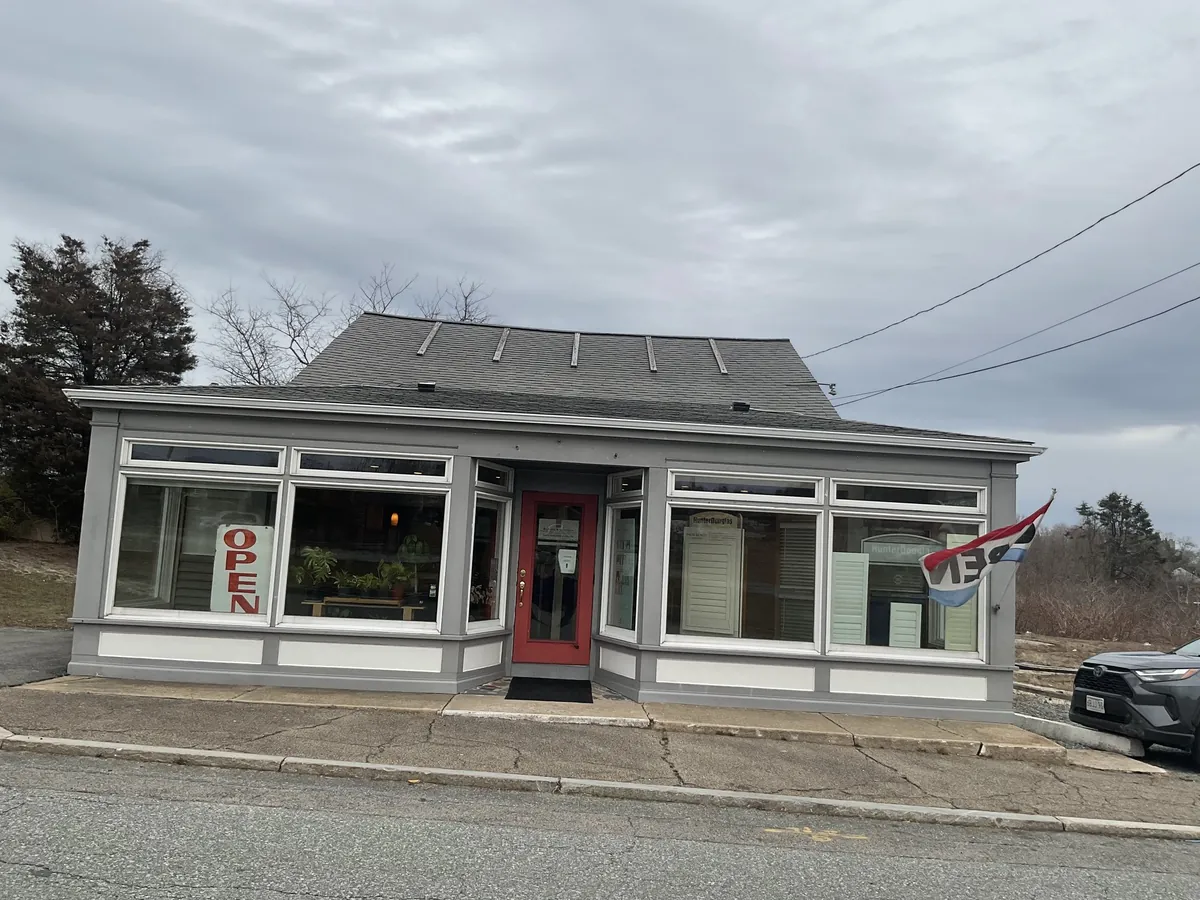
For Marion, the nearest Blinds & Designs showroom is in Sagamore. Its page lists the address and hours.
Many customers in harbor houses prefer to start at home, because the light off the water is the thing they most need to see the fabric against. Others like to begin in person and book the home visit from the showroom. Both routes lead to the same choice of honeycomb fabrics.
What a Gallery dealer brings to a harbor house
Blinds & Designs is a Hunter Douglas Gallery dealer. That status gives you the full honeycomb range, including the very wide shades, specialty shapes and PowerView motorization that glass-heavy coastal houses so often need.
Every shade we sell is fitted by our certified Hunter Douglas installers, and we also repair blinds and shades you already own, which matters near the water, where hardware works hard.
If other rooms call for something different, look at our roman shades in Marion, plantation shutters in Marion, or every service in town on the Marion page.
Questions from Marion
Can a honeycomb shade go behind my drapery?
Yes, and in the village houses it often does. A slim inside-mount honeycomb shade sits within the window frame behind the drapery, nearly out of sight, and handles warmth and privacy while the drapery frames the window. We check the drapery hardware when we measure so the two do not clash.
Will I lose my view of the harbor?
No. A top-down, bottom-up shade lets you lower the top edge to cut the sun while the view stays open below, and a raised honeycomb shade folds into a very slim stack at the top of the window.
How do the shades stand up to salt air?
Almost all of the working parts sit inside the headrail, away from the air. A cordless lift removes the cord and cord lock altogether, and PowerView motorization means you never handle the shade at all.
Can I close the shades when the house is empty?
With PowerView, yes. Shades can follow a daily schedule, and you can adjust them from the app while you are away.
Is there a charge for the estimate?
No. Once we have measured, the estimate for your shades is free.
Plan your shades with us
The best way to judge cellular shades in Marion, MA, is with the samples in your own hand, against your own windows, in the light off the harbor. Request a consultation and we will bring the honeycomb range, measure every opening and give you a free estimate. You can also talk it through with us using the call button, or visit our Sagamore showroom.