
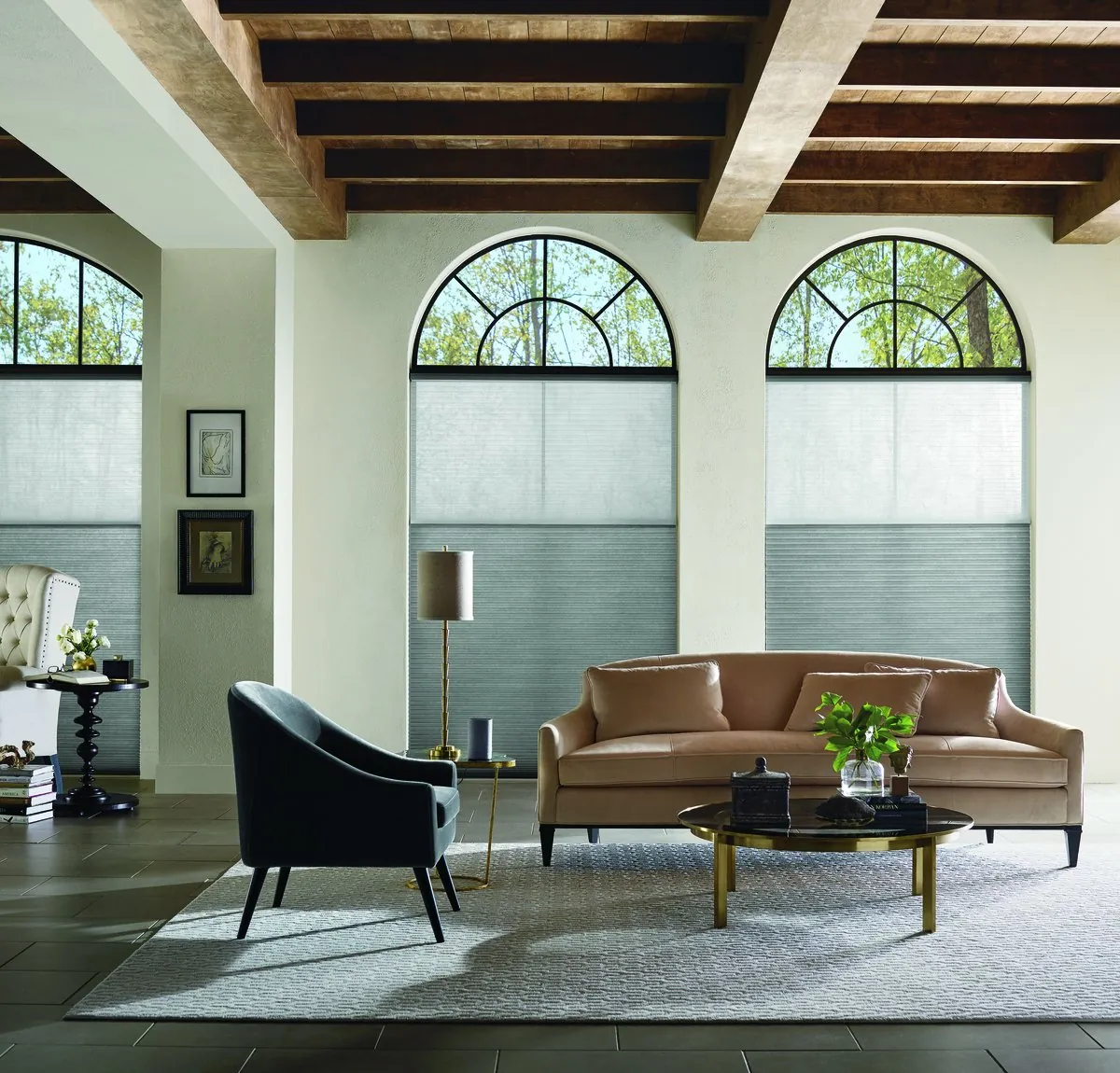
Tall sash, close neighbors and cold glass
The streets around the center of Milford are lined with houses from the town’s granite-quarrying era: Victorians and two-families built tight to one another, with tall, narrow double-hung windows on every floor. Step out of the center and the picture changes to post-war ranches and then newer colonials with more room around them. When we plan cellular shades in Milford, MA, the house tells us most of what we need to know before we open the sample case.
In the center, two problems arrive together. The tall old sash lets cold in, and the house next door is close enough that a side window looks straight into a neighbor’s kitchen. Street-facing rooms on the first floor are only a few steps from the sidewalk. Warmth and privacy have to be solved at the same time.
Honeycomb shades handle both. Each pleat is a hollow cell that holds still air against the glass, slowing the cold, and the fabric can be chosen to let light in while keeping the room out of view. Few window coverings do both jobs as well.
Six ways honeycomb shades fit Milford homes
From a second-floor flat in a two-family to a ranch on a quiet side street, these are the options we find ourselves suggesting most. All of them come in the van as samples.
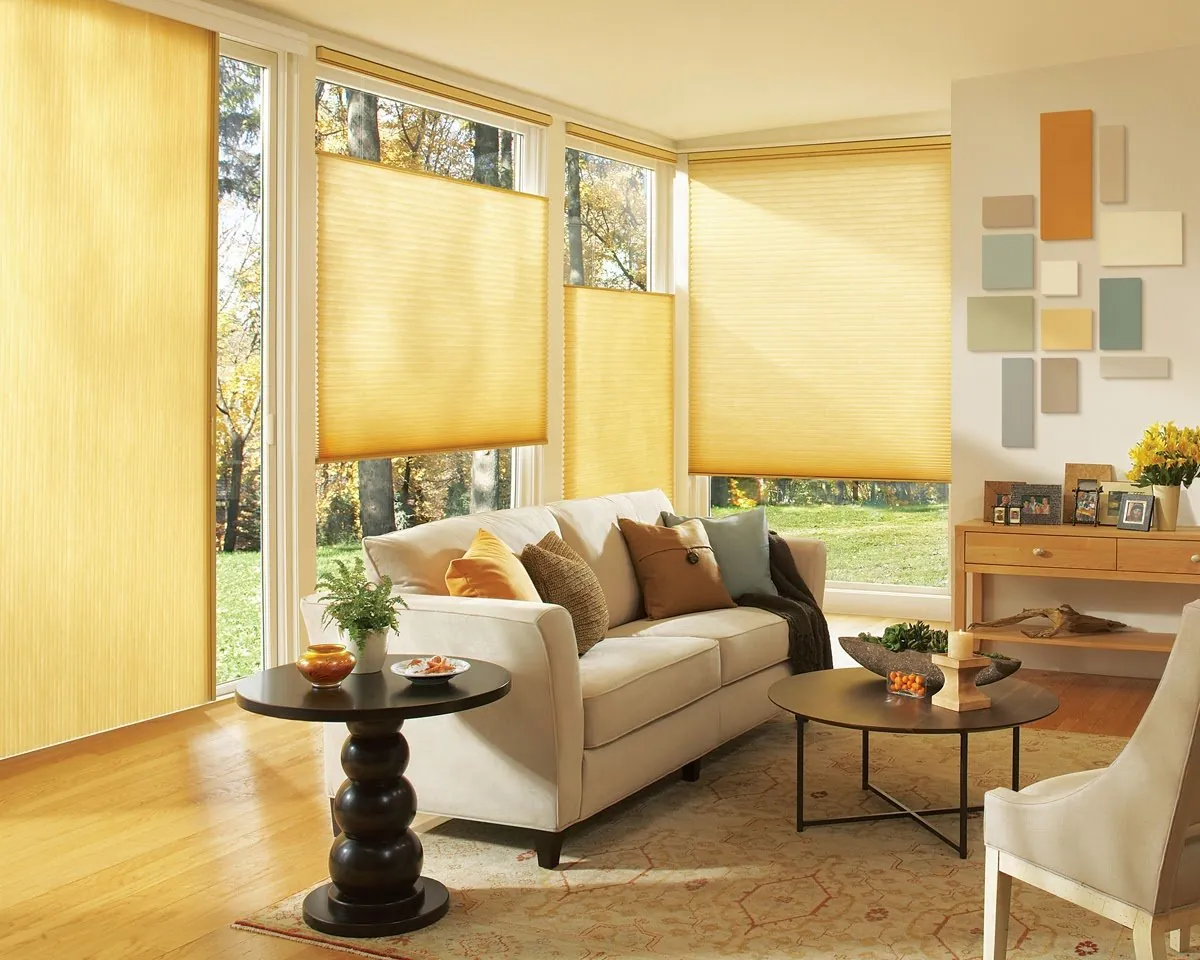
Top-down for close neighbors
Cover the lower half of a side window and still see sky through the top.
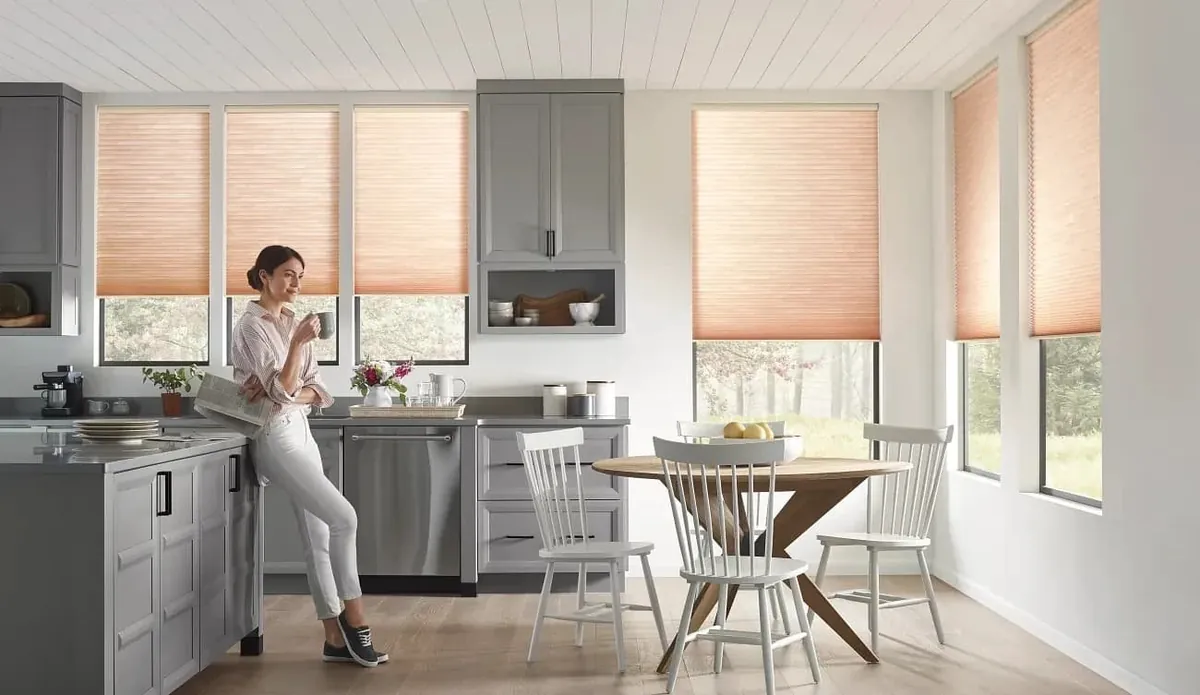
Light-filtering for street rooms
Daytime privacy with a bright room, because the fabric glows instead of showing what is inside.
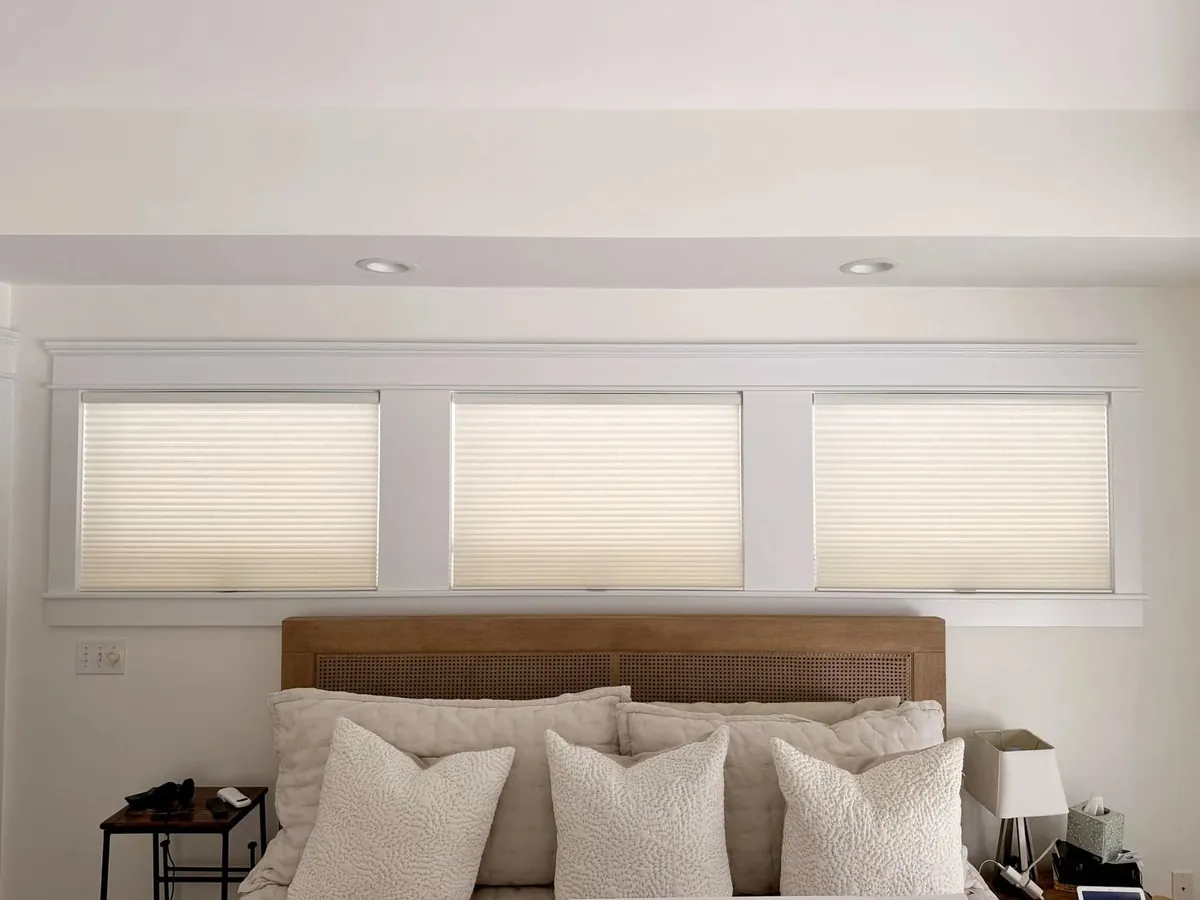
Room-darkening upstairs
For bedrooms that face a streetlight or catch the early sun.
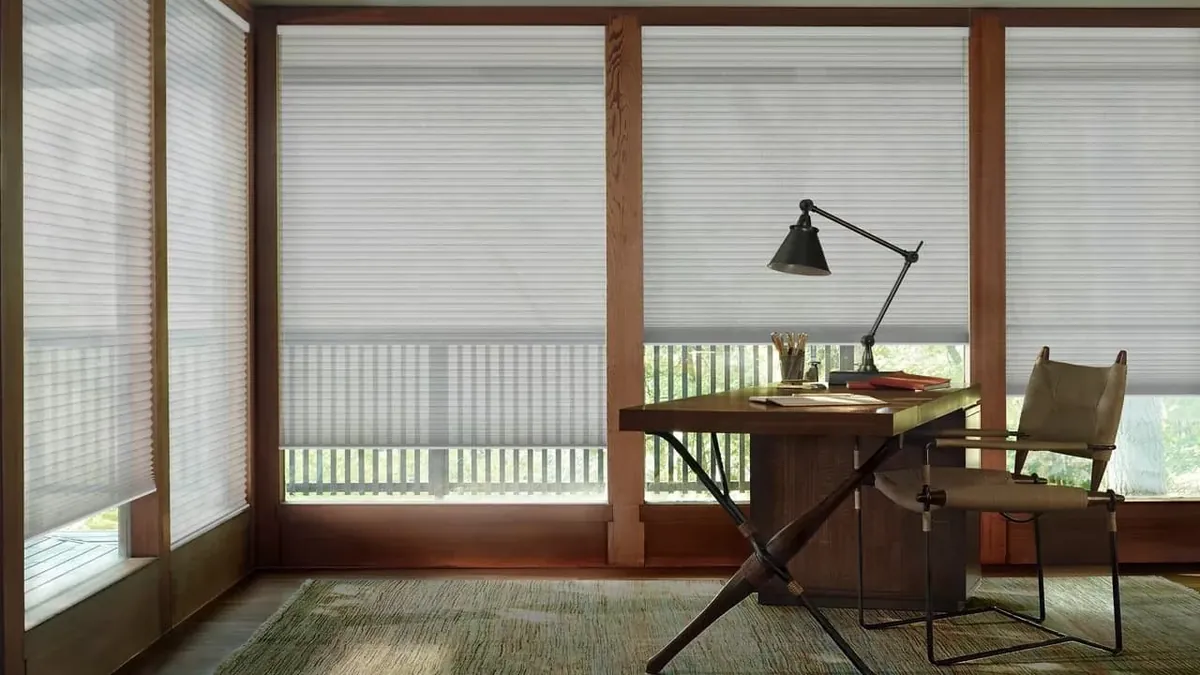
Duette shades for tall, narrow sash
Honeycomb shades made slim and tall, to fit Victorian openings neatly.
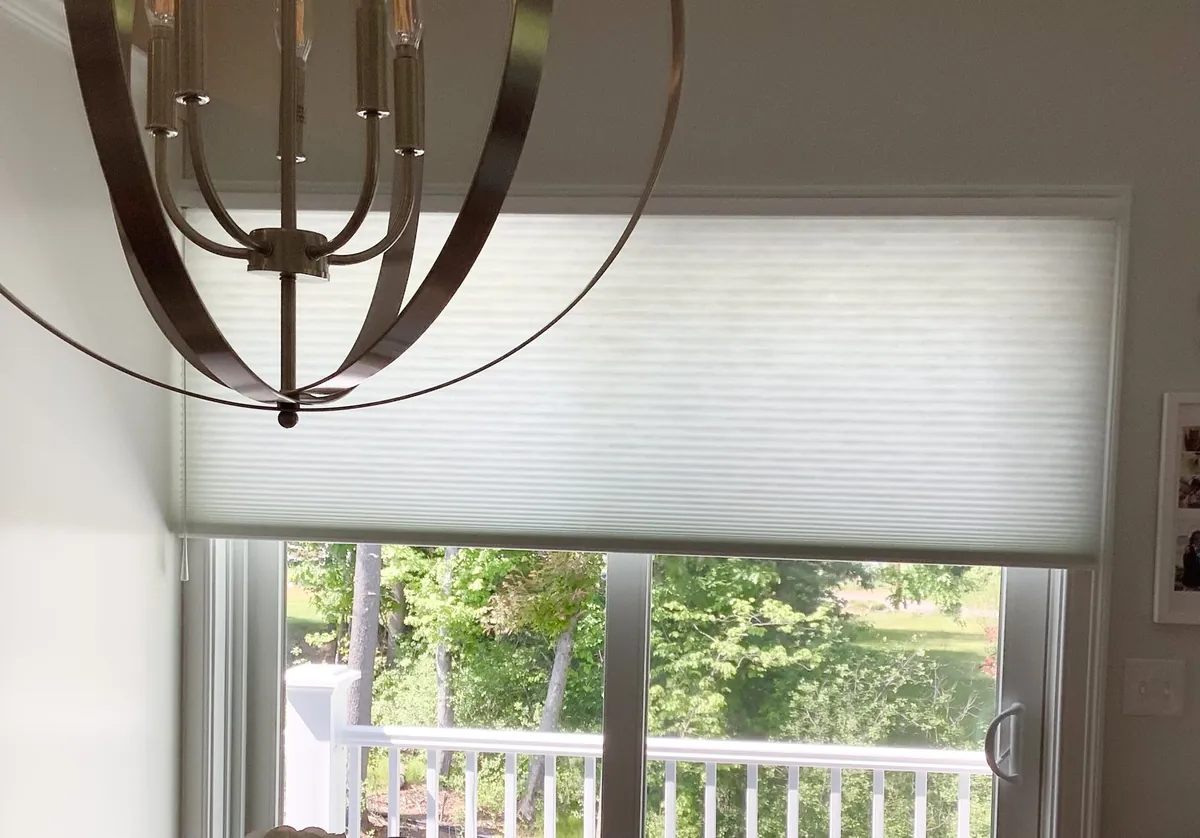
Sliders in the newer houses
A vertical honeycomb shade that draws across the patio door and stacks to one side.
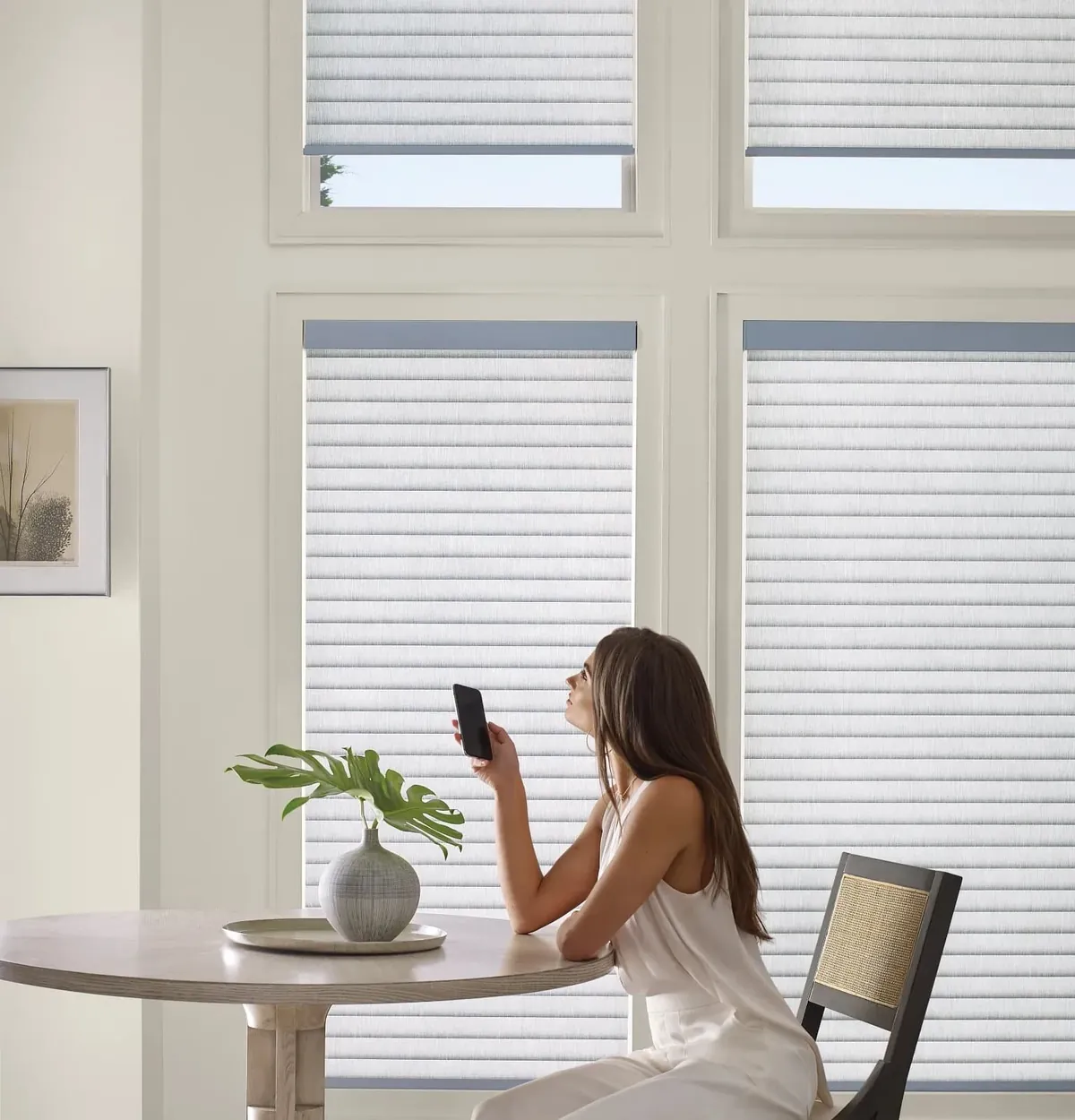
PowerView for hard-to-reach glass
Stairwell and attic windows that open and close from a phone, a remote or a schedule.
Victorians and two-families near the center
The older houses in the center were built when the quarries and factories were busy, and they were built to house a lot of people on modest lots. A typical two-family has one flat over another, each with its own front room, kitchen and bedrooms, and windows on all four sides. The Victorians share the same proportions: tall ceilings, tall windows, and narrow side yards.
The windows in these houses are the real character of the place. A tall double-hung with its original casing makes a room feel grand even when the room is small. The challenge is that the same window is thin, and on a winter night the cold pours off it. Many of these sash still have their weights and pulleys, and some have been replaced with newer units that fit the old opening.
Honeycomb shades suit tall, narrow sash because they can be made in slim widths with a long drop, and because the raised stack is so compact. When the shade is up, the top of the window stays almost fully clear, which matters on a window where the upper sash is the part that brings the light in. Mounted inside the frame, the shade leaves the casing in full view.
Privacy on a close-set street
On a dense street, privacy is not a nice extra. It is the reason most people call. A first-floor living room sits a few steps from the sidewalk. A dining room’s side window faces the neighbor’s dining room across a driveway. On the upper floor of a two-family, the bedrooms may look out over a porch roof toward the house across the street.
Each of those windows wants something slightly different, and honeycomb shades are flexible enough to give it.
- A light-filtering fabric on the front windows lets daylight in while the room stays private. From the street, you see a soft, even glow.
- A top-down, bottom-up shade on the side windows covers the lower part of the glass, where the neighbor’s window is, and leaves the upper part open for light.
- A room-darkening fabric in bedrooms keeps the glow of streetlights and passing headlights out at night.
With cellular shades in Milford there is a bonus here too: because the side of every honeycomb shade facing the glass is a neutral color, the house looks tidy and uniform from the street, even if each flat or each room has chosen its own color inside.
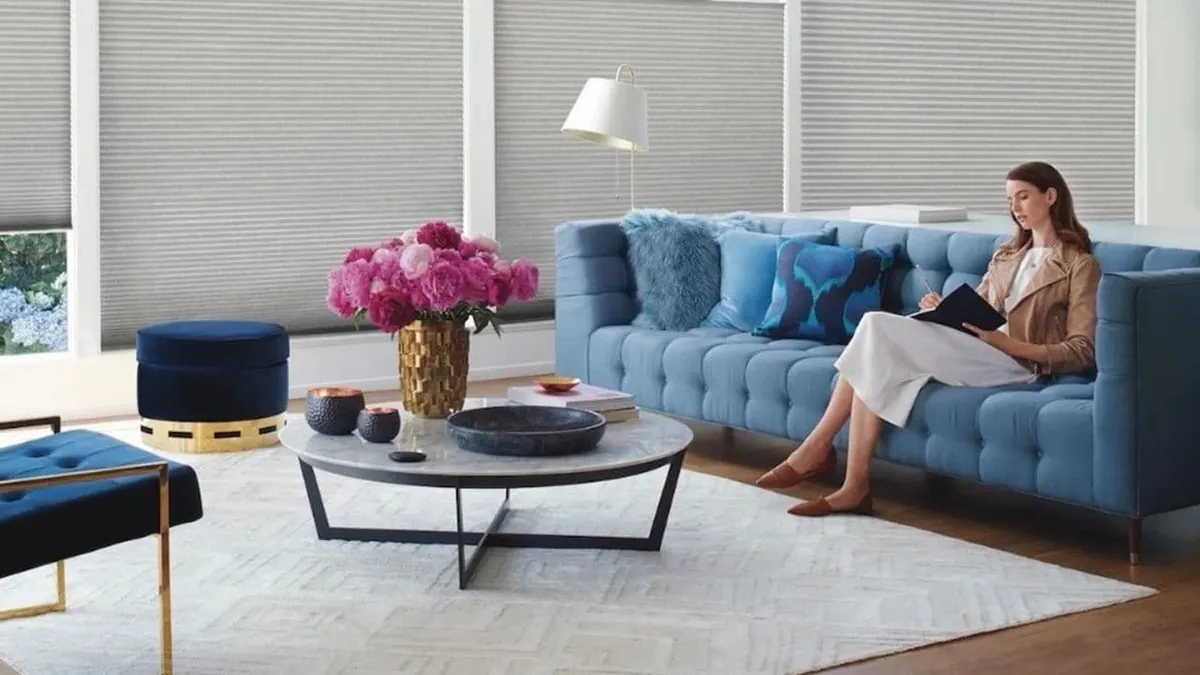
Upstairs and downstairs in a two-family
A two-family can be one household or two. Some owners live in one flat and rent the other. Some families use both, with grandparents downstairs. Either way, the two floors often need different things from their window coverings, and both benefit from the same honeycomb insulation.
The downstairs flat usually has the most privacy concerns, being closest to the sidewalk and the driveway. The upstairs flat tends to get more light and more heat, especially in summer, when the sun hits the top floor and the roof above it. A light-filtering fabric downstairs and a room-darkening or double-cell fabric upstairs is a common plan. If you are fitting out a rental unit, a durable, neutral fabric with a cordless lift is a sensible, low-fuss choice.
We are happy to measure and plan both flats in a single visit, and to give a separate estimate for each if that helps.
Ranches and colonials further out
Outside the center, the houses spread out. Post-war ranches sit on their own lots with a picture window at the front and a slider at the back, and the newer colonials have more space again, with two stories of regular windows. The openings in these houses are mostly standard, square and consistent, which makes an inside mount straightforward.
Privacy is less pressing here, but comfort is not. A ranch’s picture window is a large area of glass that loses heat on winter nights and gains it on summer afternoons. Several honeycomb shades sharing one headrail cover it neatly and can move together or separately. The slider gets a vertical honeycomb shade. In a colonial, the same fabric across the front windows keeps the house looking orderly, while each room inside can choose its own opacity.
Why a hollow pleat keeps a tall room warm
A tall Victorian window is a long column of cold glass, and in a room with high ceilings the chill that slides down it gathers along the floor. Anyone who has sat on a sofa under one of those windows in January knows the draught it makes, even when the sash is shut tight.
A honeycomb shade interrupts that. Its pleats are hollow tubes that run side to side across the window, and when it is lowered, every tube holds air that hardly moves. Air that stays put is slow to pass heat along, so the glass cools the room less and the radiator’s warmth stays on your side of the shade. The window itself is untouched, which matters to anyone who has kept original sash.
Some Duette fabrics tuck a smaller tube inside each cell, and some shades stack two rows of cells. On the top floor of a two-family, where the north bedroom gets the worst of the wind, that extra layer is often the one we suggest. A snug fit adds to it: the smaller the gap at each side of the shade, the less room air has to sneak around the edges.
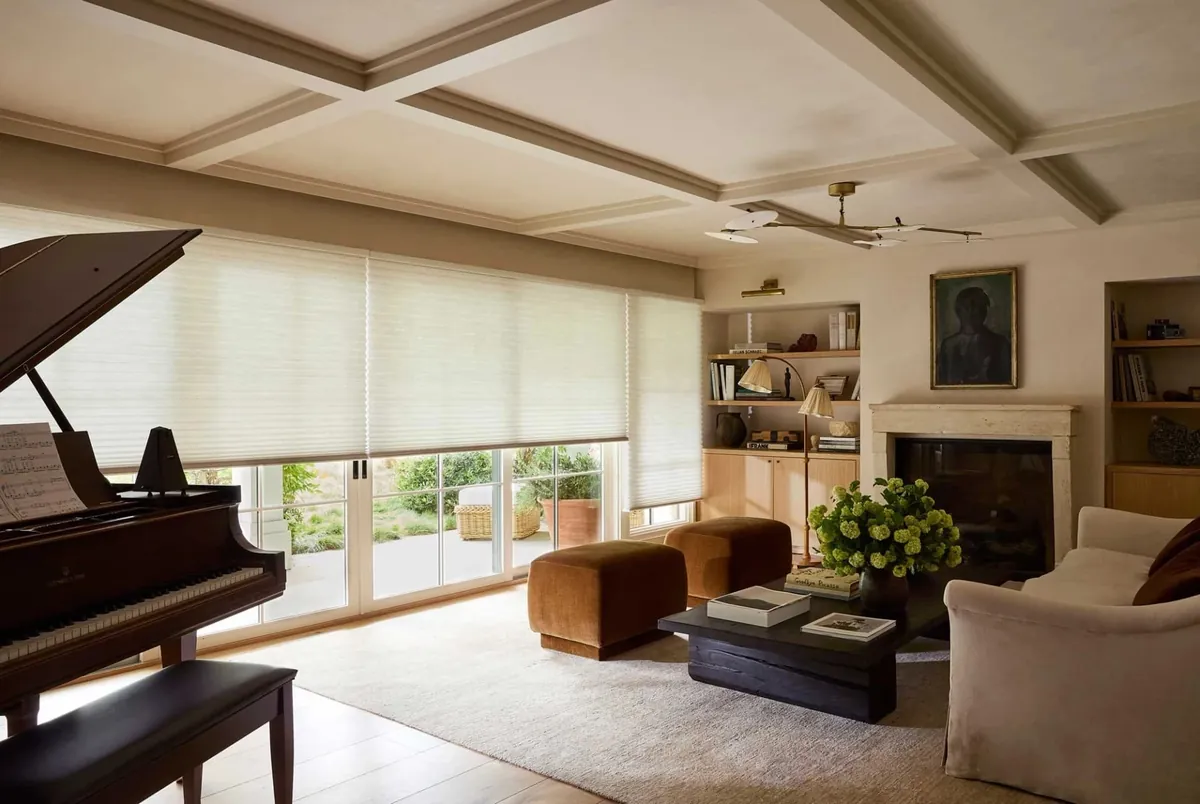
Measuring tall, old windows
Long sash that has been painted, repainted and pushed up and down through countless summers seldom stays true. A frame can lean, bow in the middle or narrow toward the head, and the difference may not show until a shade is made to sit inside it. So we treat every opening near the center as its own case.
- Tape across the opening near the head, again at mid-height and again near the sill. The shade is made to the tightest reading.
- Tape down the left jamb, the right jamb and the middle, since a settled window may drop unevenly.
- Check how much flat wood the head jamb offers for the headrail, and whether old sash weights, pulley wheels or stops crowd it.
- Decide with you between a mount tucked inside the frame, which leaves the casing on show, and one fixed to the face of the trim, which covers more glass and suits a shallow frame.
- Read back every figure and mount choice with you before we place the order.
The ranches and colonials farther out have truer frames, but they get the same care, because a shade that fits inside an opening has very little room for error.
Your consultation, step by step
Choosing cellular shades in Milford is easiest in your own rooms, where you can see how much privacy each fabric gives against your own street. Our vans carry samples, so we can bring the showroom to you.
- You request a consultation online, or use the call button, and we set a time.
- We arrive with honeycomb samples in a range of colors, textures and light levels, along with the lift options.
- We walk through the house or flat with you, front to back and floor by floor, and talk about what bothers you in each room.
- You hold samples against your own glass, in daylight, and see how each one handles privacy and glare.
- We measure every window.
- You get a free estimate, with no pressure to decide on the spot.
If you live upstairs in a two-family, tell us when you book: we will plan the visit so we can see the front rooms in daylight, which is when privacy from the street is easiest to judge, and every tall sash gets measured right up to its head jamb, where the shade will hang.
If you want a hand with color and fabric across the whole house, ask about our interior design consultations.
Duette, Applause and the house you live in
Hunter Douglas makes two honeycomb families. Each holds air in its cells in the same way, so the choice rests on what each family offers. Duette goes furthest: the deepest fabric collection, very slim and very long shades for Victorian sash, extra-wide panels for a ranch picture window, and the sideways shade for a patio door. Applause is a more compact collection that covers ordinary windows handsomely.
Plenty of Milford houses end up with a bit of each. In a two-family, one flat might choose Duette for its tall front windows while the other picks Applause throughout. In a ranch, Duette might go on the picture window and the slider and Applause in the bedroom wing. The Duette and Applause pages explain each family, and our cellular shades overview covers the range as a whole.
Porches, bays and the front door
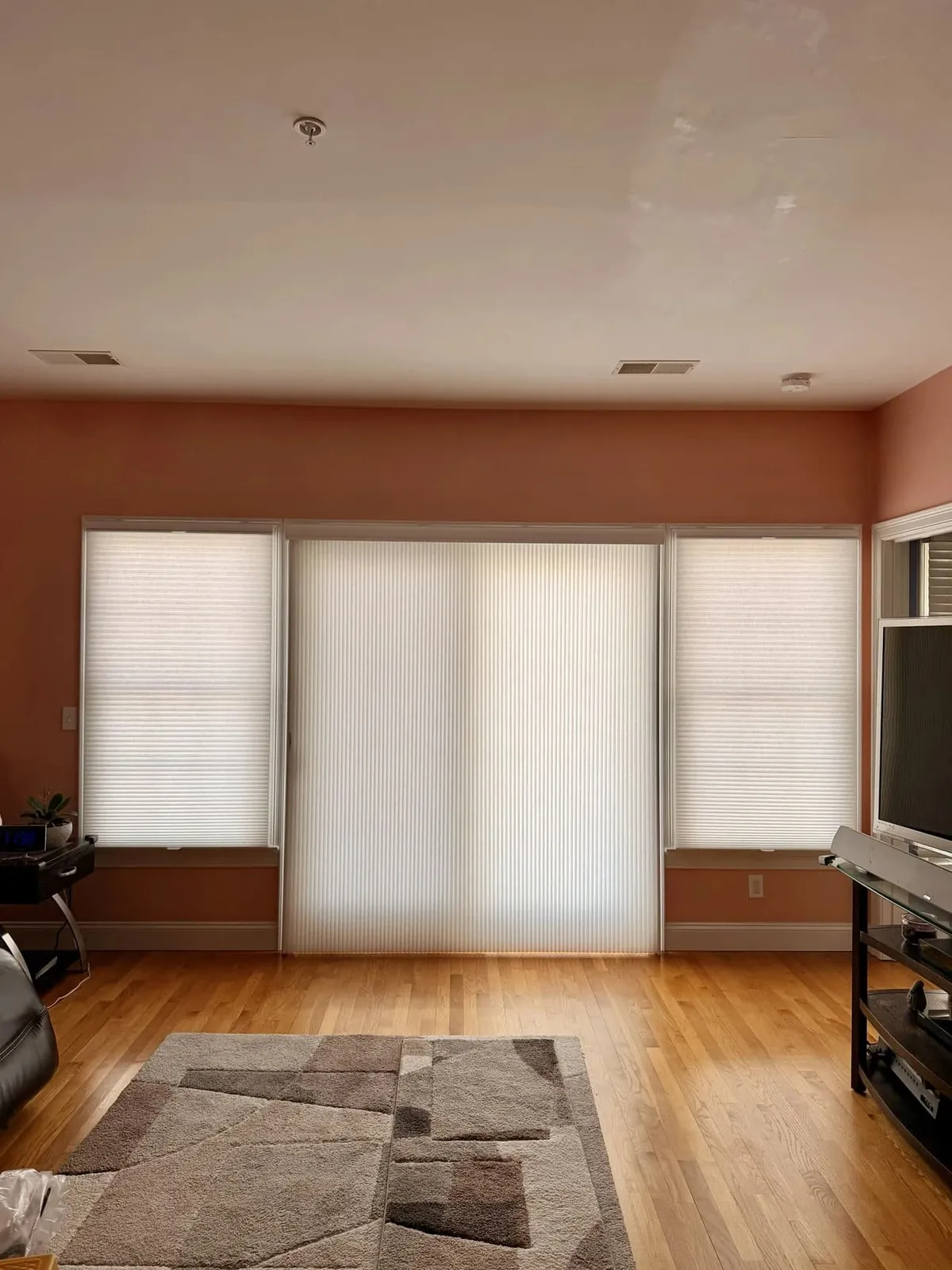
The older houses near the center rarely stop at plain rectangular windows. Many Victorians have a bay on the front or side, with three or more narrow windows set at angles, and most two-families have a front door with glass panels or narrow side lights beside it. Enclosed front porches, glazed on three sides, turn up on a good number of streets too.
Each of those is a job honeycomb shades handle well. In a bay, every window gets its own shade, made to its own measurements, and all of them can be set to the same height so the bay looks even from inside and out. Side lights take very narrow shades that hold privacy at the front door without blocking all the light into the hall. On a glazed porch, a run of light-filtering shades turns a space that is only usable on mild days into a sunny room for more of the year, and takes the glare off in summer. These are the details that make cellular shades in Milford, MA, look as if they were made for the house, because they were.
Cords, children and rentals
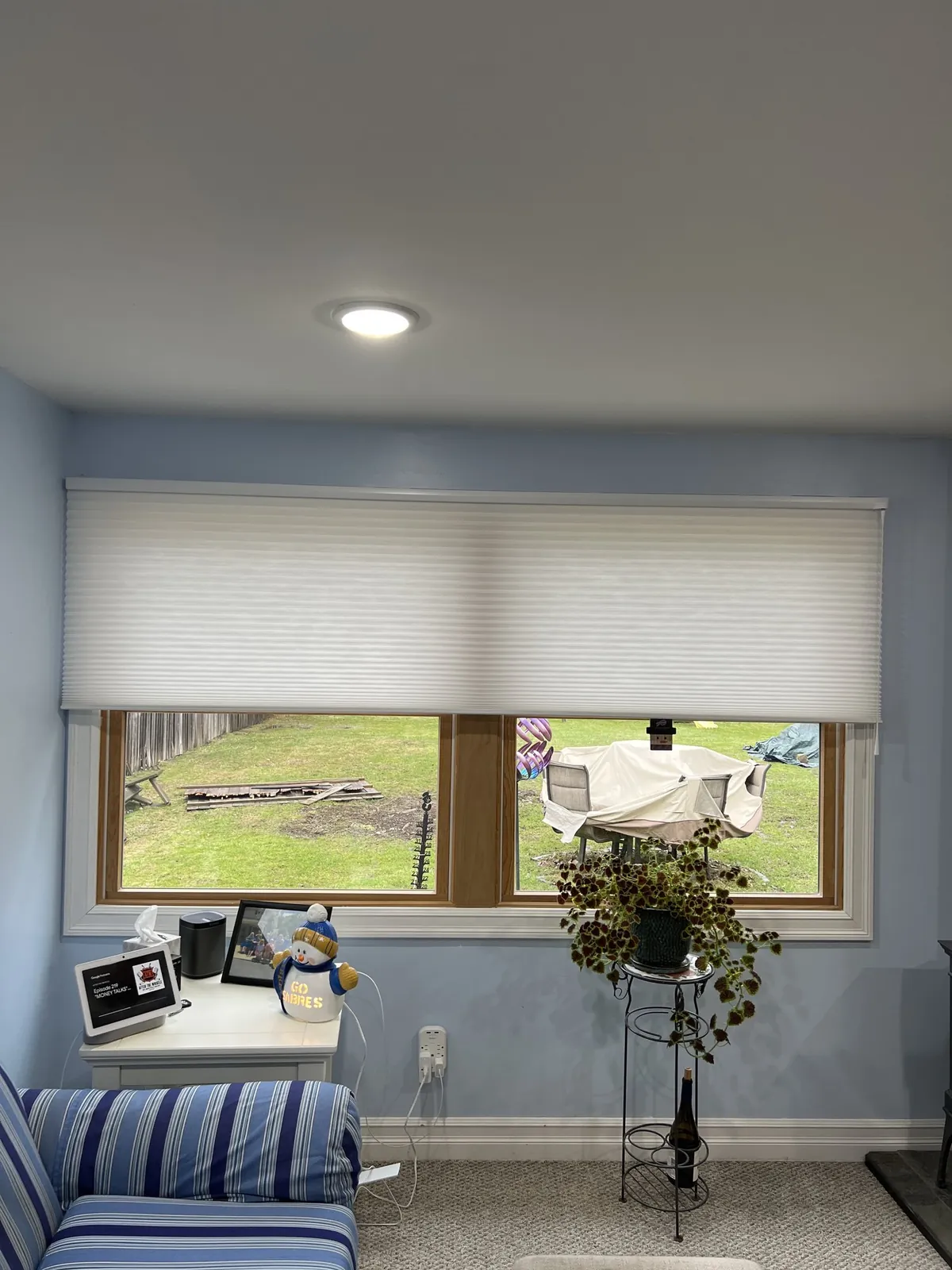
Loose cords are something most families want away from windows, and landlords want shades that tenants cannot easily damage. A cordless lift does both. You lift or lower the bottom rail by hand, and the shade stays where you leave it. There is nothing hanging to tangle or break.
For tall windows, or windows over a stairwell, PowerView motorization removes the cord entirely. You can run the shades from a phone or remote, or set them to open and close on a schedule. We plan how each motor is powered at the visit.
Fitting day
When your shades arrive, our certified Hunter Douglas installers fit every one. On old frames we set the brackets into solid wood so the shades sit level and stay put on windows that are opened often. We level each headrail, test every lift and show you how everything works. If you choose PowerView, we set up the remote, the app and any schedules with you before we leave.

Our Franklin showroom is the closest
The nearest Blinds & Designs showroom to Milford is in Franklin. Its page has the address, hours and directions.
Some customers like to start there and book the home visit afterwards. Many more simply ask us to come to the house, because the privacy question on a close-set street is easiest to judge at the window itself.

Why buy from a Hunter Douglas Gallery dealer
Blinds & Designs is a Hunter Douglas Gallery dealer. That status means the whole honeycomb range is available to you: every Duette and Applause fabric, the slim widths for tall sash, the vertical shades for sliders and PowerView motorization.
Our installers are certified by Hunter Douglas, and we fit everything we sell. We also repair blinds and shades you already own.
For other rooms, see our custom blinds in Milford, roman shades in Milford, or every service we offer in town on the Milford page.
Questions from Milford
My neighbor’s window faces mine across the driveway. What helps?
A top-down, bottom-up honeycomb shade. Lower it from the top and raise it from the bottom so the lower part of the window, the part level with the neighbor’s window, stays covered, while daylight still comes in through the top.
Will honeycomb shades fit tall Victorian sash?
Yes. They can be made slim and long, and the raised stack is compact, so the upper sash stays clear when the shade is up. We measure each window in several places, because older frames are rarely square.
Can you fit both flats of a two-family in one visit?
Yes. We can measure and plan both floors at once, and give a separate estimate for each flat if you prefer.
Do light-filtering shades really give privacy?
In daylight, yes. The fabric glows rather than showing the room behind it. At night, with lamps on, a heavier or room-darkening fabric gives fuller privacy, and we can help you choose room by room.
Do you charge to measure and quote?
No. We measure your windows and give you a free estimate for the shades you are considering.
Take the next step
The quickest way to see what cellular shades in Milford, MA, will do for your windows is to hold the samples up in your own rooms. Request a consultation and we will bring the honeycomb range, measure every opening and leave you with a free estimate. You can also use the call button, or visit our Franklin showroom.