
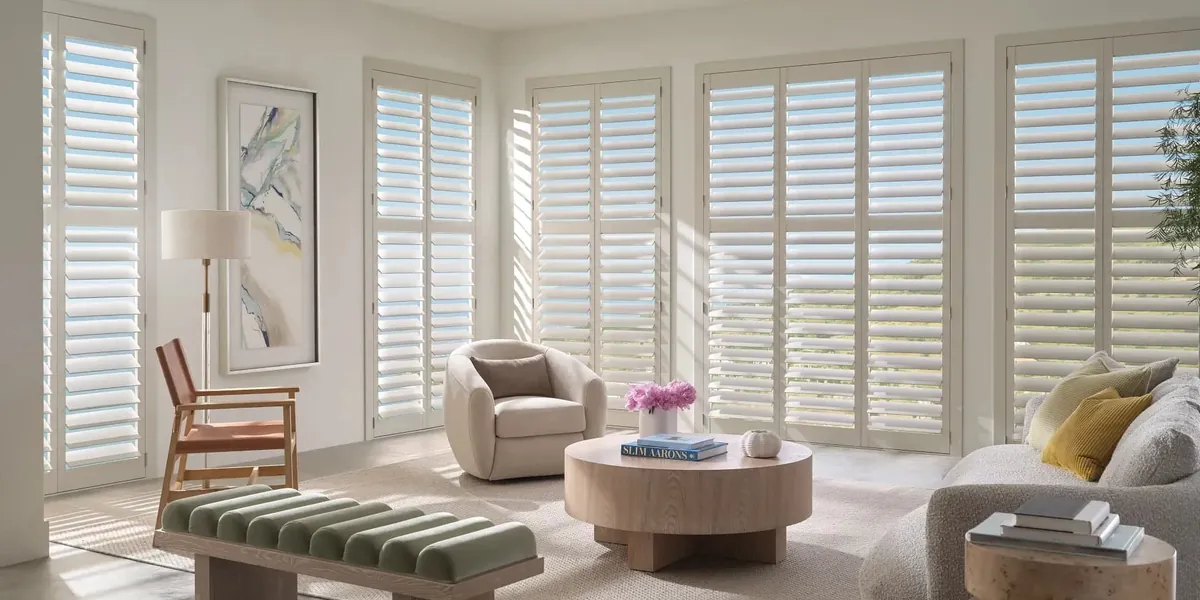
Single-hung sash, sliders and modest lots
Along Route 106 and South Street, most of the houses are post-war capes and ranches on modest lots, with a scattering of newer colonials between them. Their windows are mostly standard single-hung sash, where only the bottom half moves, and horizontal sliders, where one pane glides sideways past the other. Those two window types shape how we plan plantation shutters in Plainville, MA, more than anything else, because the shutter has to work with the way each window opens.
Modest lots matter too. A side window can sit only a short walk from the neighbor’s wall, and the living room looks out at the road across a small front yard. Screening the view in matters every day in a bedroom, a bath or a front parlor, but nobody wants to sit in the dark to get it.
The good news is that standard modern openings are about the easiest windows a shutter can be fitted to. They are usually square, with enough depth inside the jamb to take the frame, and matching sizes across the house make a whole-house order look tidy and consistent.
Plantation shutters in Plainville, MA, room by room
These are the rooms we are asked about most in Plainville capes, ranches and colonials. Each card links to the collection that usually suits the room.
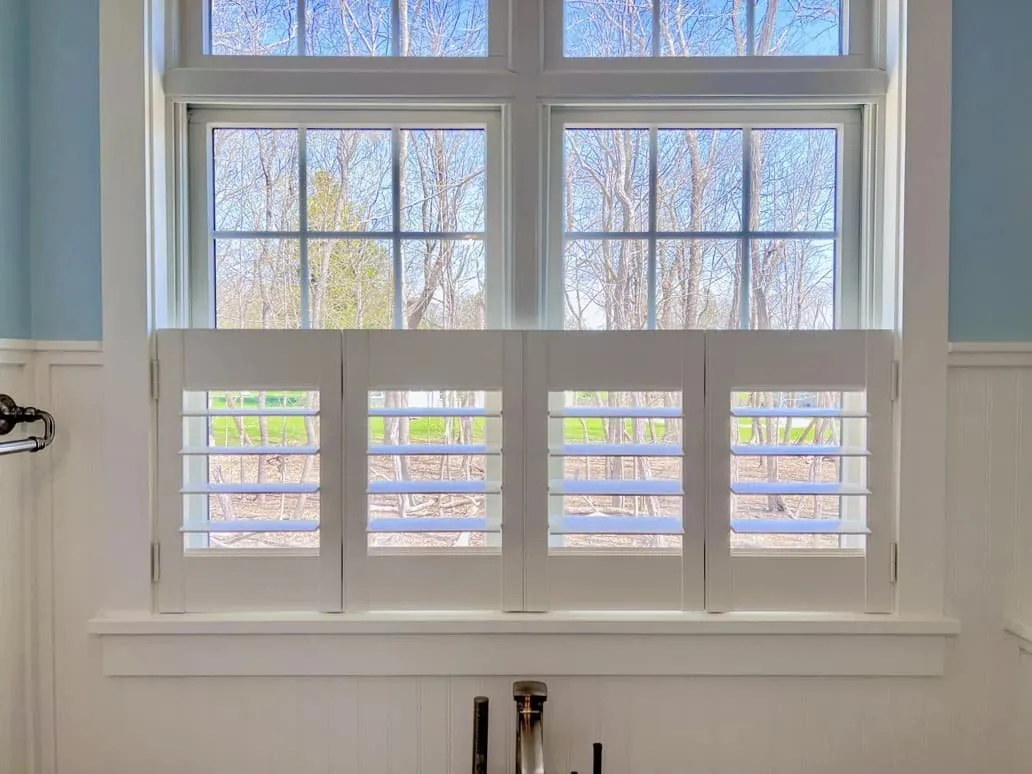
Over the kitchen sink
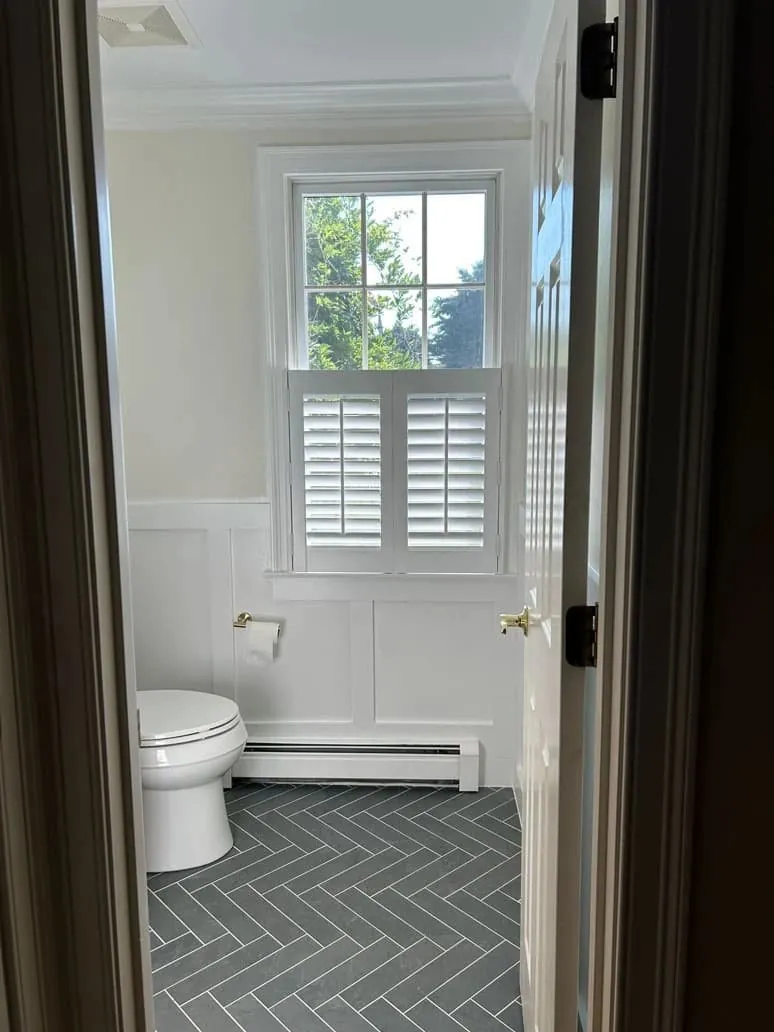
Cafe-style panels on the lower half screen the counter from the side yard and leave the top clear for daylight. Splashes make polysatin the sensible pick.
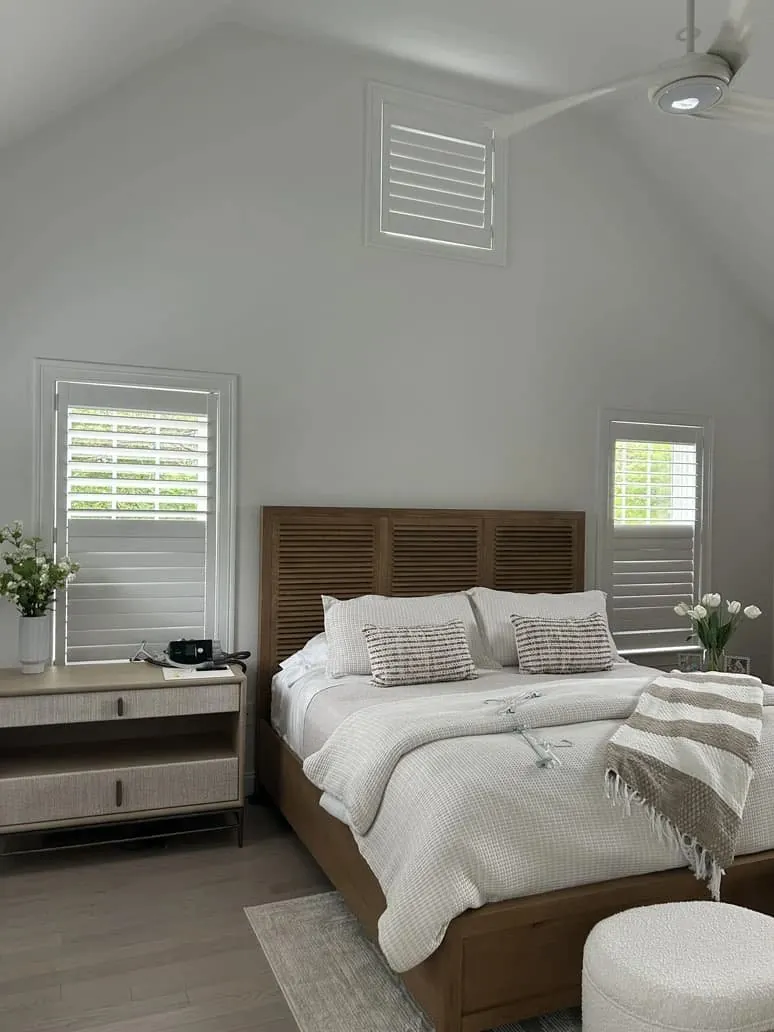
Bedrooms facing a neighbor
Closed louvers give privacy and real darkness, and a divider rail lets the top half open for morning light. NewStyle is the usual choice here.
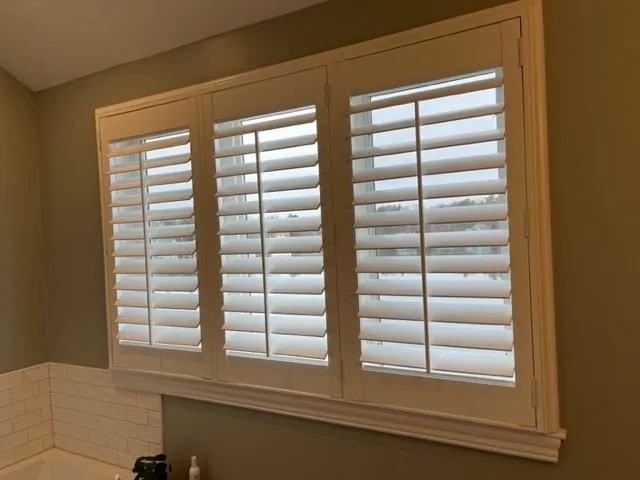
The bathroom window
Daily steam is no trouble for Palm Beach, which has no wood inside. The louvers stay closed for privacy and still let light through.
Doors to the back yard
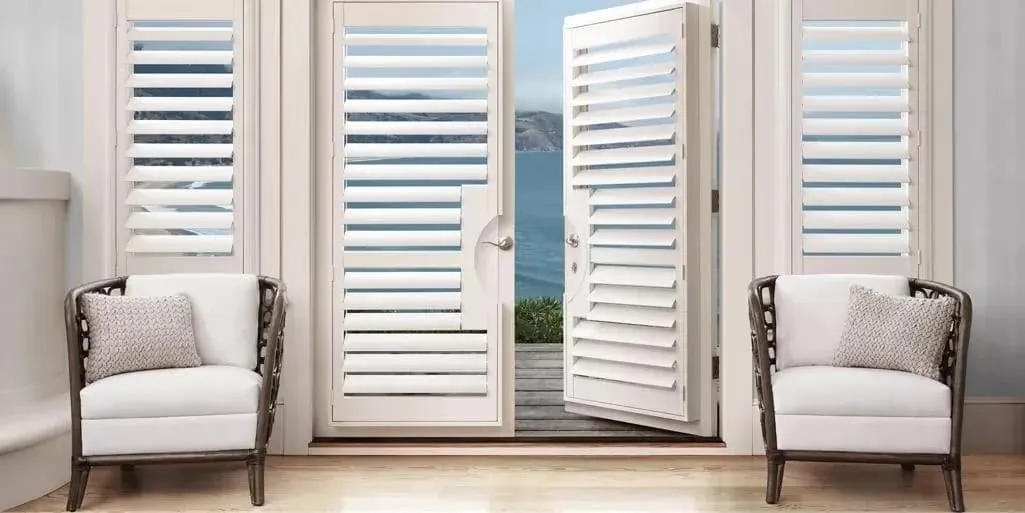
French doors carry their own panels, which swing open with the doors. A slider can take panels on a track instead.
The dining room bay
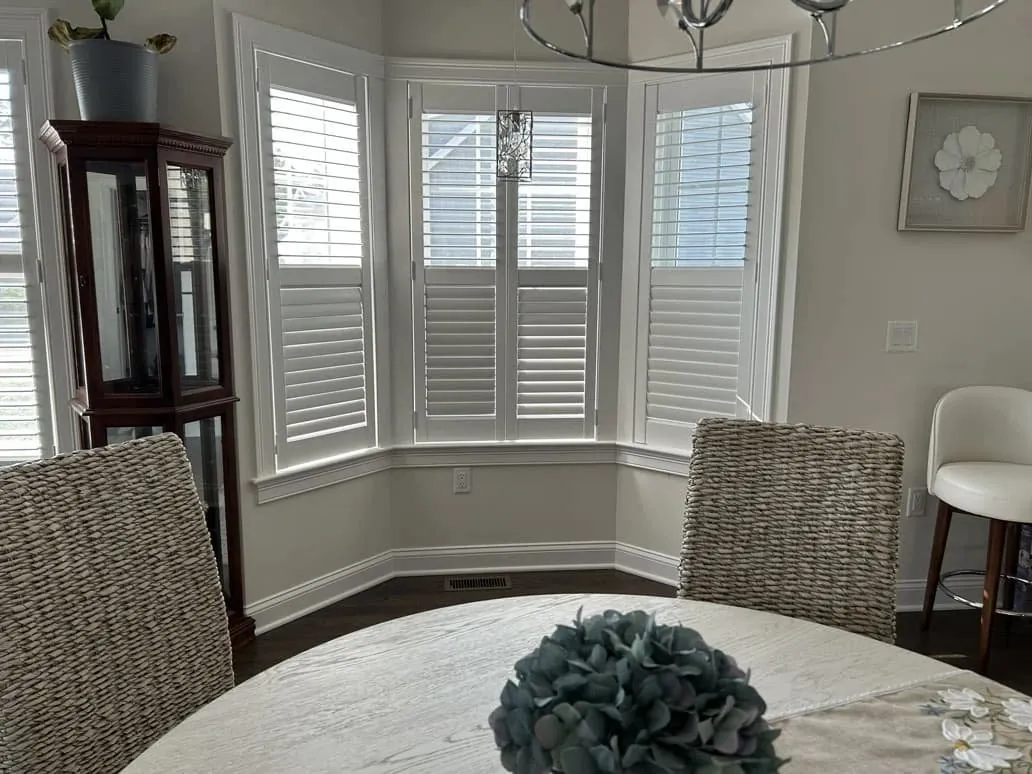
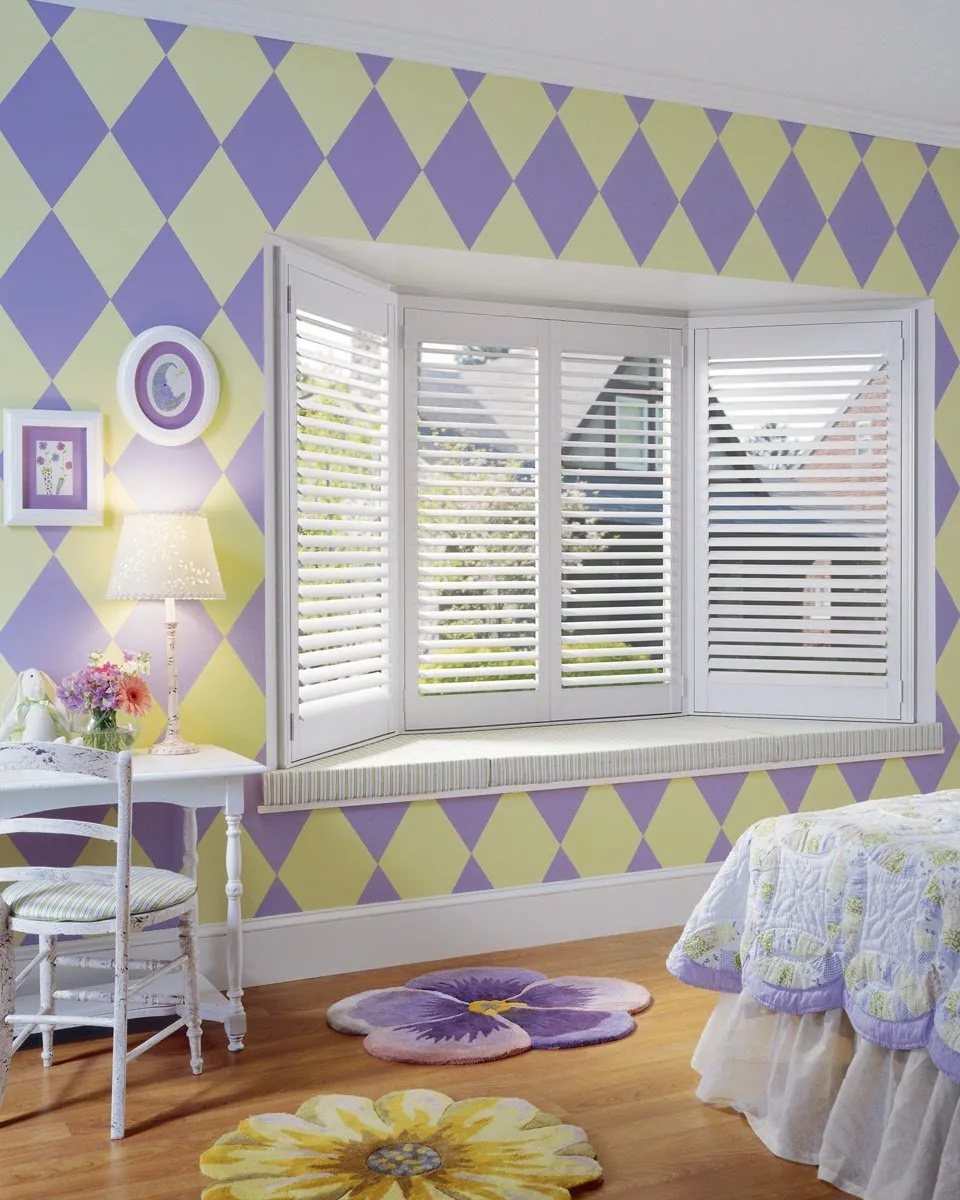
Every face of a bay is measured and shuttered separately. Half-height panels low on the glass keep a dining room bright while screening the table from the road.
A formal front room
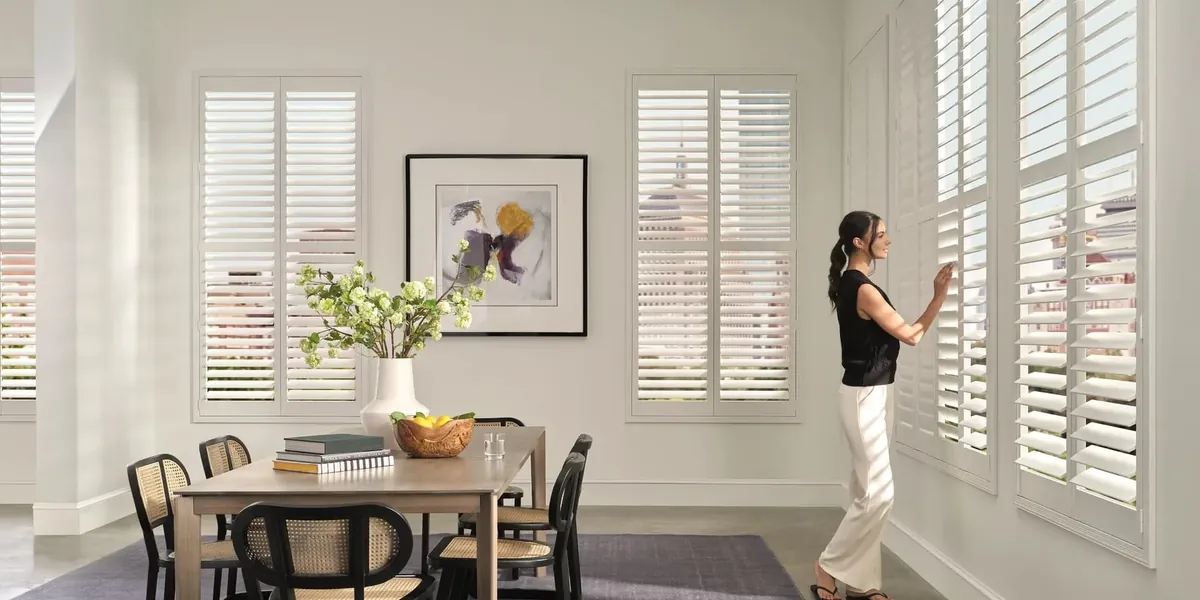
In a newer colonial’s front room, real hardwood brings warmth, painted to match the trim or stained to suit the floor.
Working with single-hung windows
A single-hung window has a fixed upper sash and a lower sash that slides up. That simple fact helps a shutter plan. Most of the time we set the shutter’s divider rail level with the point where the two sashes meet, so the horizontal line of the shutter and the line of the window become one. With the lower louvers closed and the upper ones open, you get privacy at eye level and light from above, which is exactly what a bedroom or front room on a modest lot needs.
Because the lower sash opens upward, the shutter panels need to swing clear of it for you to open the window. Hinged panels do that easily: you swing them open, raise the sash, and swing them closed again with the window open behind. With the louvers tilted open, the breeze comes through.
Single-hung windows in post-war houses usually have shallow sills and a reasonable jamb depth. We check the depth at every opening before suggesting an inside mount, because the louvers must be able to tilt without touching the sash lock or the window handles. Where a lock sits proud of the frame, a slightly deeper frame or a small spacer solves it.
Fitting shutters to horizontal sliders
Horizontal sliders are common in ranches, especially in bedrooms and kitchens, and they are often wider than they are tall. One pane slides past the other on a track, so the window opens sideways rather than up.
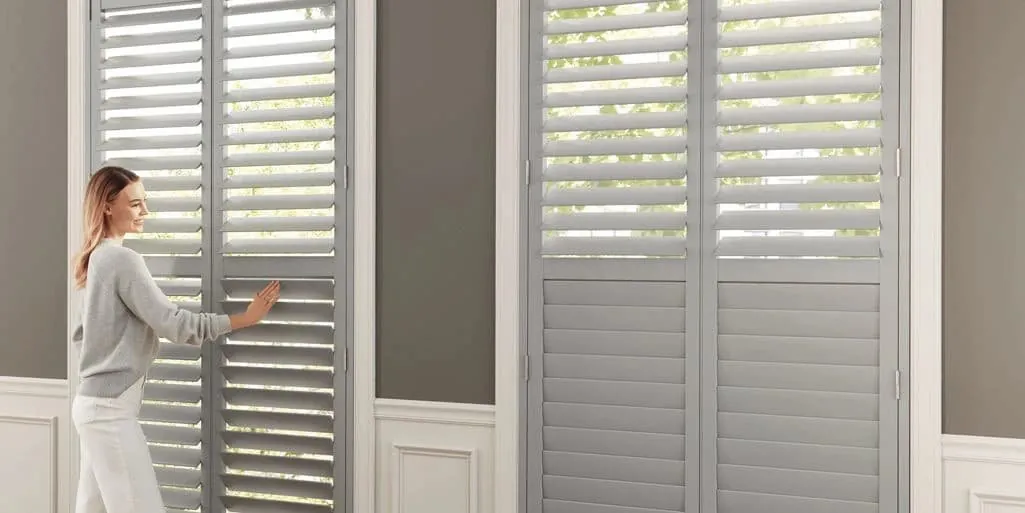
A shutter on a slider works best as a pair of panels, or a set of panels on one frame, split to suit the width. Hinged panels swing open so you can reach the window to slide it, then close again. On a wide slider, bifold panels that stack back against the wall take up less room when open. Because sliders are low and wide, medium or wide louvers usually look best; slim louvers on a short, wide window can look busy.
A slider’s frame is often slimmer than a double-hung’s, and the latch sits on the inside face. We check that the louvers will clear it when they tilt and that the panels will swing without catching. Each frame is made to the measured opening, so the shutter fits snugly even if the window is a slightly unusual size.
Capes along South Street
The capes in this part of town follow the classic form: a steep roof, dormers upstairs, a central front door with a window either side. Downstairs, the front windows face the street at a modest distance, so privacy matters in the living room and any front bedroom. Upstairs, the dormer windows are short and deep.
On the front windows, a divider rail with closed lower louvers keeps the street out while the room stays bright. In the dormers, medium louvers and a frame set inside the dormer let the panels fold back against the dormer walls when they are open. Upstairs rooms under the roof gather heat in summer, and closed louvers on a sunny afternoon help keep them comfortable.
Ranches along Route 106
A ranch puts everything on one floor, close to the ground. The bedrooms are along a hall at one end, often with windows facing the side yard and the house next door. The living room has a picture window or a pair of windows facing the street.
With bedrooms only a step above the lawn, screening counts day and night, and shut louvers give both cover and a dark room for sleep. A ranch’s big front window is broken into a run of hinged panels that follow its own divisions, and wide blades keep the outlook generous once tilted flat. Matching color across every window keeps the house tidy from the street.
Kitchens, eating areas and the back door
In a post-war cape or ranch the kitchen is usually at the back, with a window over the sink, a small eating area beside it and a door out to the yard. These rooms get busy, wet and bright, often all before breakfast is over, so a shutter has to be practical first and pretty second.
Over the sink, half-height panels on the lower sash are hard to beat: the counter is screened from the yard next door, the top of the window stays bare, and you can still open the sash for air. Polysatin is the sensible material there, because it takes splashes and steam from the kettle without swelling. In an eating area with a slider or a single-hung window, a matching pair of full-height panels lets you shade the table at lunchtime and swing everything open on a gray afternoon.
A back door with a glass panel can take a slim shutter mounted to the door itself, so it moves with the door and never blocks the way out. These back rooms are a sensible place to begin plantation shutters in Plainville, because that is where the sun and the neighbors are closest.
Screening a window without darkening it
On these lots, a shutter often has to do two jobs at once: keep a neighbor’s line of sight out and let daylight in. That is where louvers beat a covering you raise and lower. A shade gives privacy only by covering the glass, and the light goes with it. A louver can be angled so the room is shielded from outside while the sky still shows between the blades.
The angle you choose depends on where the view in comes from. If it is the sidewalk or the driveway, tilting the top edge of each blade toward the glass sends your line of sight downward and blocks anyone standing outside. If it is a second-floor window across the side yard, the opposite tilt closes off the view from above. With a divider rail, the bottom half of a panel can be shut tight while the top half sits wide open, and after dark the whole panel closes. When we plan plantation shutters in Plainville, MA, for a ranch bedroom wing, those settings are worked out window by window, yet every frame, louver and color stays the same so the house looks uniform from the road.
Colonials mixed in with the capes
Here and there along these roads a newer two-story colonial stands among the smaller capes and ranches. Its windows usually repeat across both floors of the front, which makes it a satisfying house to shutter: identical openings, identical panels, one tidy elevation. The family room at the back tends to have the biggest glass and a door to a patio, and a wider blade there keeps the yard in view.
A colonial also brings a staircase, and with it a landing window. Two hinged panels with a mid rail work well: shut the bottom louvers so the stairs are not on show after dark and leave the top louvers angled for light.
A visit from start to finish
Shutters are hard to judge from a brochure. You need to see a real panel against your trim, in the light your rooms actually get, which is why our vans travel with samples of every collection, blade size and paint or stain. In short, we can bring the showroom to you.
- Book online with Request a Consultation, or tap the call button, and pick a time.
- We tour the rooms together, beginning wherever the sun or the neighbors are the bigger problem.
- You hang sample panels on your single-hung and slider windows and try different tilts.
- We take measurements at every window, confirm squareness and record jamb depth, locks and latches.
- We match a collection and blade size to each room with you.
- A free estimate follows, and the decision stays yours, on your own timetable.
The in-home consultations page explains the visit in more depth.
Blade sizes for ordinary openings
How wide the louvers are decides how open the shutter looks and how the window reads from across the room.
- Medium blades sit comfortably on most single-hung bedroom and bath openings and rarely look out of place.
- Wide blades suit sliders, picture windows and the family room, where fewer blades mean a clearer outlook.
- Slim blades are worth considering only on a narrow window, such as a side light beside the front door.
A single blade size through the house gives a consistent look. Going wider in the family room alone is common and hardly noticed if the paint color carries through.
Mounting and the way the louvers move
Most openings in these houses take an inside mount, with the frame tucked into the jamb so the casing shows. If a window’s depth is shallow, or a latch would catch the blades, the frame moves forward onto the face of the opening and becomes a neat border of its own.
To move the louvers you can have a classic rod running down the panel, which turns every blade in a section together and suits the look of a cape. The alternative is a concealed mechanism on the panel’s side edge, which keeps the face clear and suits a family room built around the view. Either one pairs with a mid rail.
Paint, stain and choosing color
Most people land on white, and within white the choice is wider than it sounds: bright and cool for a newer colonial’s crisp trim, softer and warmer for a cape whose woodwork has been repainted many times. Darker walls often suit an off-white or a pale gray, and a front room with oak floors may suit a stain. Heritance has the broadest stain selection, while NewStyle and Palm Beach are painted.
Color shifts with the light, so we hold the samples up on your own windows, in daylight, before you decide.
Keeping shutters looking good
Day-to-day upkeep is light. Run a dry cloth or a feather duster across the blades now and then, and use a lightly damp cloth for fingerprints. In a kitchen or bath, Palm Beach copes with more water than a wood shutter would.
And if a shade, blind or shutter you already own needs mending, bring it to us. We repair window coverings whether or not we supplied them.

Why buy from a Gallery dealer
Hunter Douglas reserves the Gallery title for dealers who meet its standards, and Blinds & Designs holds it. In practice that means every shutter the brand makes, in every blade size and color, chosen with help from people who measure and fit them as their everyday work.
Installation is by our certified Hunter Douglas installers, who square the frames on single-hung and slider openings so each panel closes evenly. Interior design consultations are available when a room needs a wider plan, and shades, blinds and drapery are all part of our range.
Our Plainville page lists every service we offer in town, and custom blinds in Plainville is worth a look for rooms where a simple slat will do.

Visit Franklin, or let us come to you
Closest to Plainville is the Franklin showroom, a good stop if you want to handle shutters before booking a visit. Even so, the decision usually gets made at home, where the samples meet your real windows.
However you begin, we take the measurements and fit the shutters in your house.
Questions from Plainville
Will shutters suit a single-hung window?
They suit it well. The mid rail on the shutter is set level with the point where the sashes meet, so the bottom blades can stay shut while the top blades let light in. The panels swing open whenever you want to raise the sash.
Can you shutter a sliding window?
Yes. Hinged pairs, or folding panels on a wide slider, open out of the way so you can slide the glass. Medium or wide blades suit the low, wide shape, and we confirm the blades clear the latch before anything is ordered.
Our side windows look straight at the neighbors. What helps?
Shut the bottom half and leave the top half open, or angle the blades so the view from outside is cut off while light still enters. After dark you close the panel completely.
What is the right shutter for a bathroom?
Palm Beach. Its polysatin has no wood core, so bath steam is no concern, and it can be painted and sized to match the shutters elsewhere in the house.
Do you charge for the estimate?
No, the estimate is free. We measure first and then write up an estimate for the shutters you have in mind. Book a consultation and we will come by with samples.
Getting started
Hanging a real panel on your own window is the quickest way to know whether plantation shutters in Plainville, MA, are right for each room. Request a consultation and we will arrive with samples from all three collections, take every measurement and leave a free estimate. If you would rather talk first, the call button reaches us, or call in at the Franklin showroom. You can also compare the collections on our plantation shutters page.