
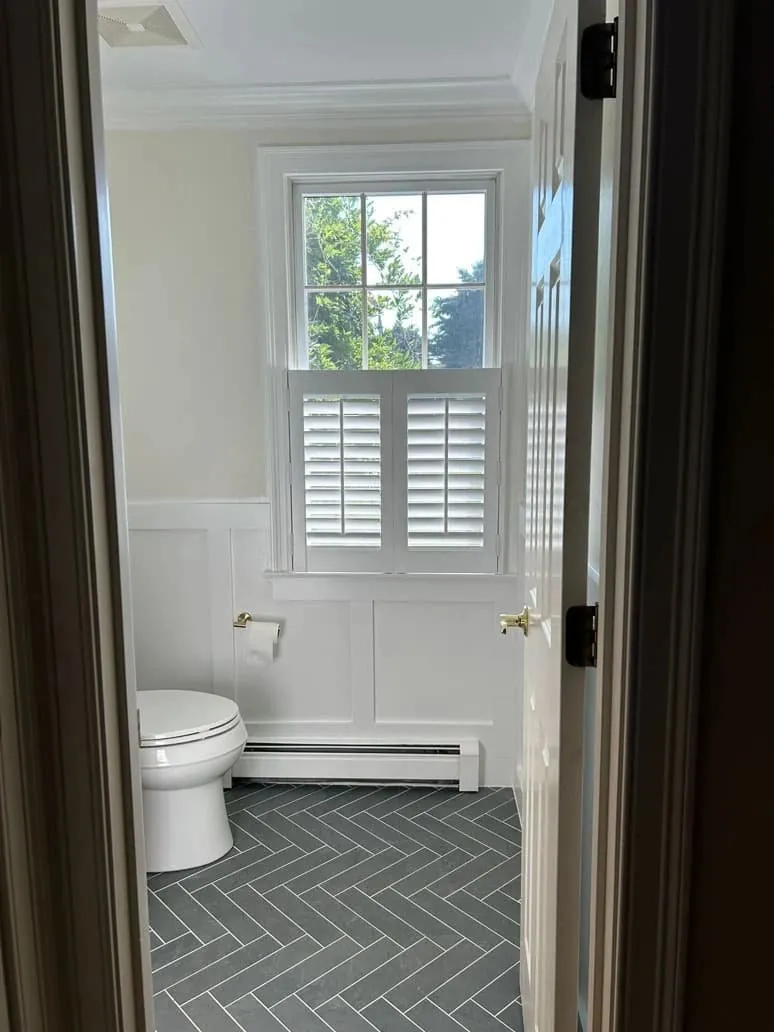
Two kinds of window on one Main Street
Millville is a small town, and its houses fall into two clear groups. The older stock is mill housing, much of it still fitted with the original narrow sash. Beside it, and along the side roads off Main Street, are post-war capes on modest lots, with windows in the standard sizes of their day. As a Hunter Douglas dealer in Millville, MA, we often cover both kinds in a single week, and sometimes in a single house where an older home has had a newer addition.
The two groups ask for different things. A narrow mill-house opening has to be measured closely, and the covering has to suit a slim, tall frame without crowding it. A cape’s standard window will take almost anything in the Hunter Douglas range, so the decision there is about how each room is used, not what will fit.
Modest lots tie them together. On both kinds of house, the neighbors are near enough that a side window needs some thought about privacy.
Hunter Douglas products for Millville homes
These are the families we bring to the house as your Hunter Douglas dealer in Millville. Each card leads to the Millville page for that product.
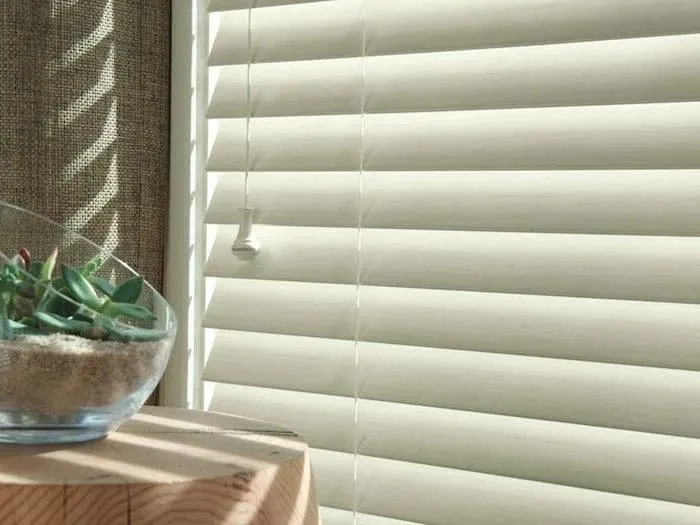
Custom blinds
Wood, faux wood, metal and vertical blinds. We start from the material that suits the room and the way you want the slats to tilt and lift.
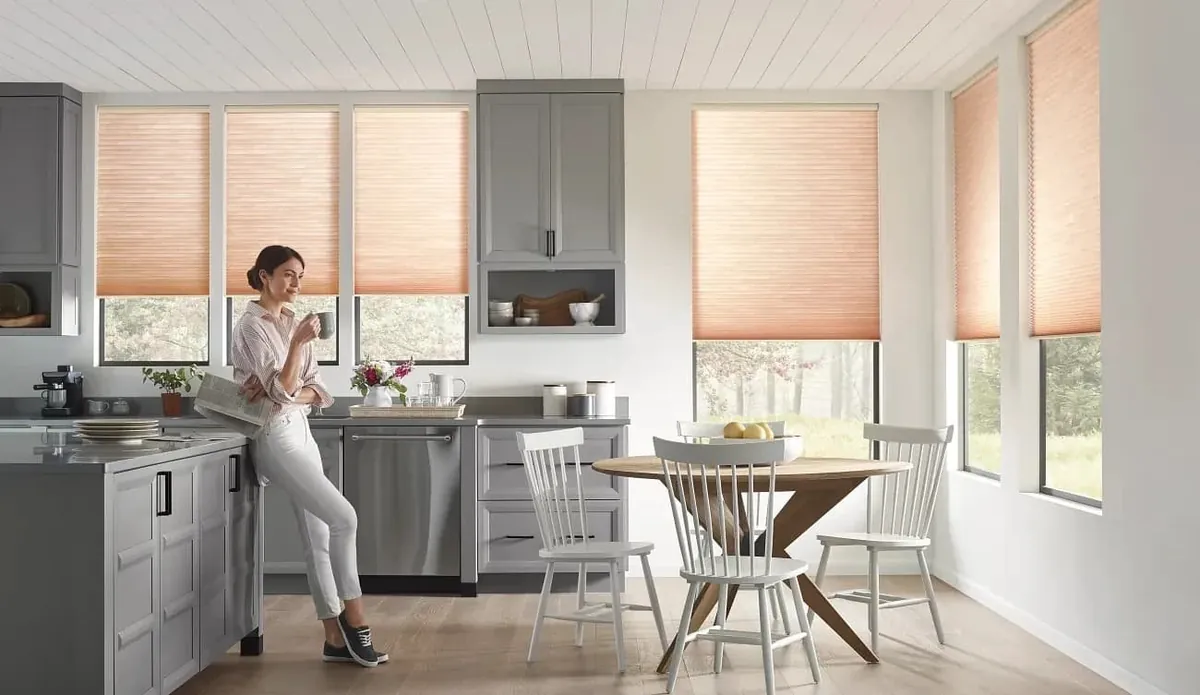
Cellular shades
Duette and Applause honeycomb shades. Because each cell holds air, a room with these shades keeps its heat better when they are down.
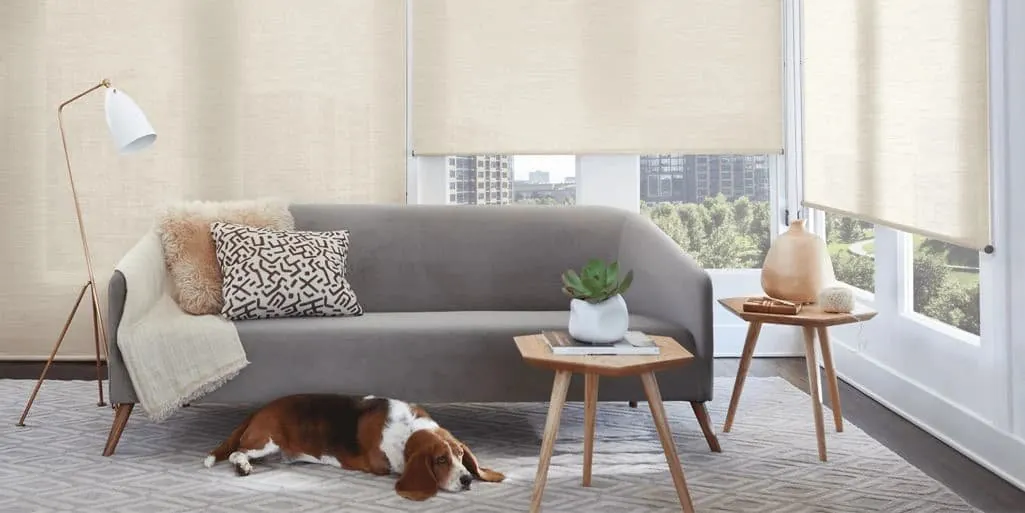
Roller shades
Designer and Alustra rollers and solar screens. Fabric openness is about how much view you keep and how much glare you stop.
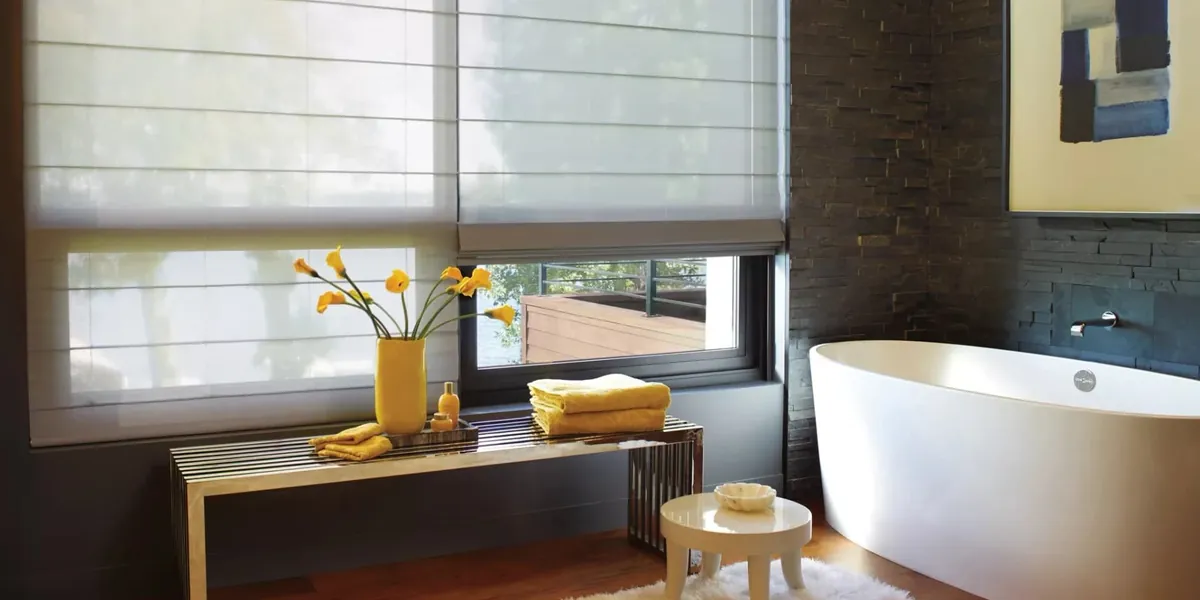
Roman shades
Vignette and Carole Roman shades in flat and folded styles, a soft fabric choice for living rooms and bedrooms.
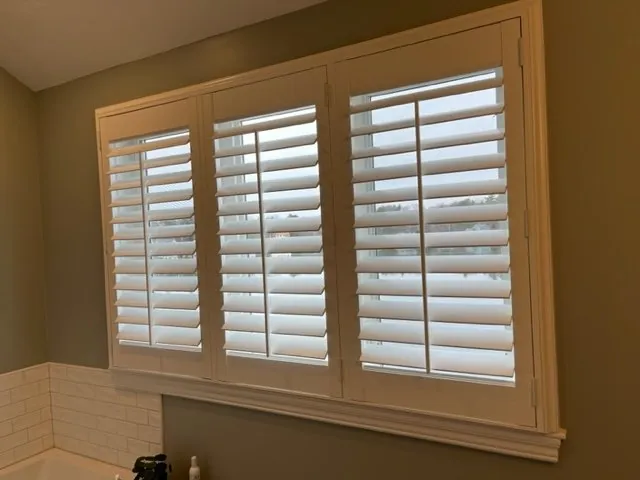
Plantation shutters
Palm Beach, NewStyle and Heritance shutters, planned around louver size and frame style for each window.
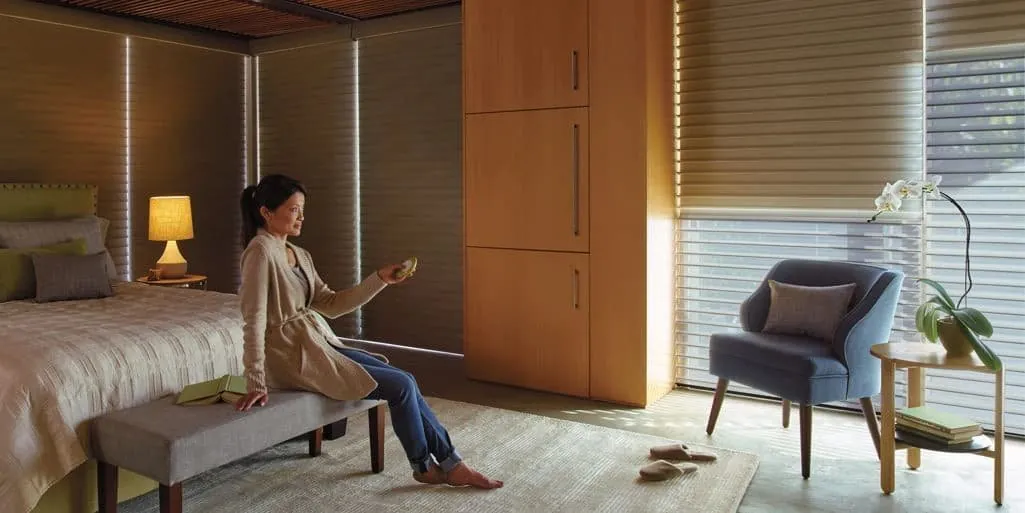
Motorized blinds and shades
PowerView: raise and lower shades from a remote or an app, or let a schedule do it for you.
The original sash in Millville’s mill housing
Millville’s mill houses kept a good deal of their first sash, and those slim openings are where a job here needs the most patience. There is not much room in a frame that narrow, and after such a long time standing, very few of them are still square.
A single width and a single height would be a guess, so we take a set. The top, the middle and the bottom of the opening, side to side. Both sides and the center, top to bottom. The depth in front of the glass. And a check for old latches, lifts or pulley covers that could stop a rail sitting flat.
That set of numbers tells us where each covering belongs. Tucked inside the frame, it leaves the old casing in plain view and keeps a small room uncluttered. Fixed to the face of the casing, it has more room to work and can make a slim window look broader. Two windows side by side in the same mill house can end up mounted differently, and that is fine.
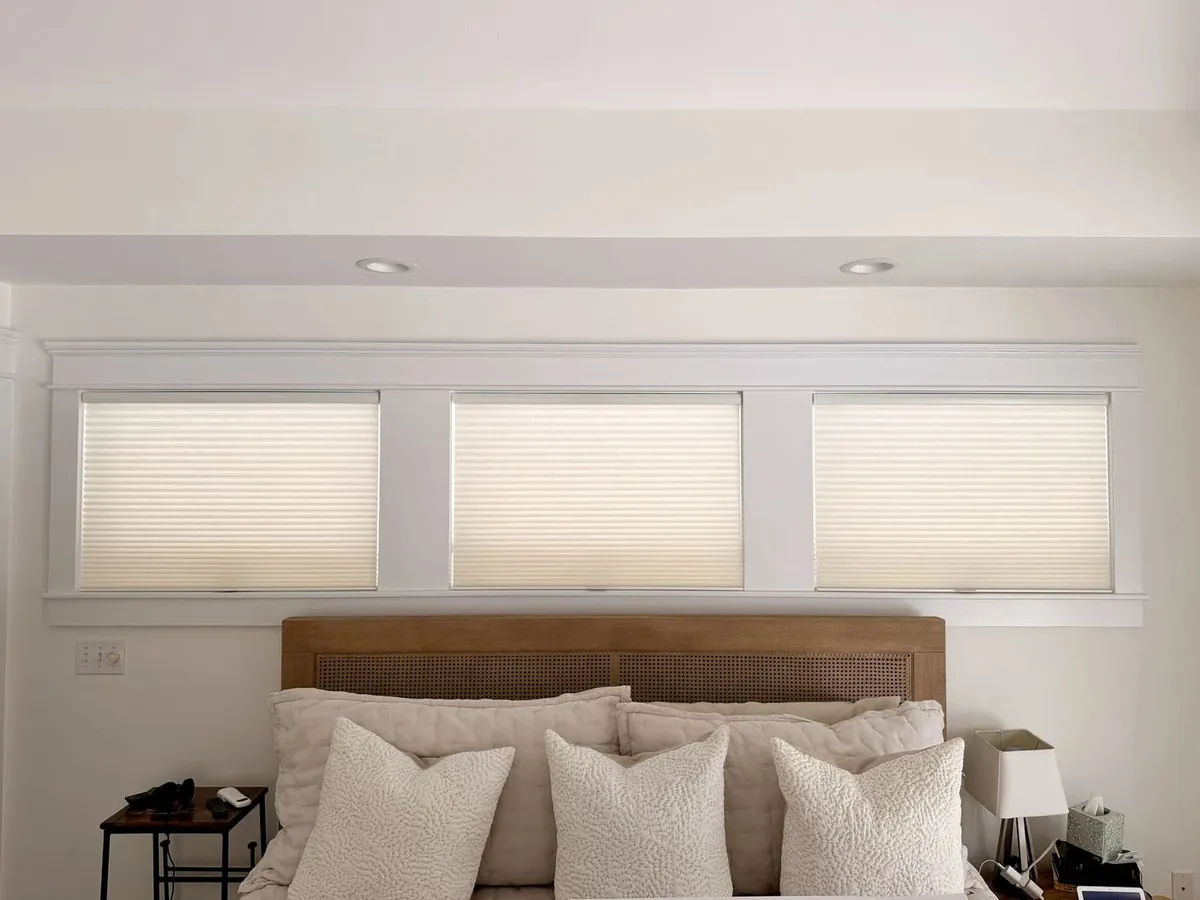
Standard sizes in the post-war capes
The capes are much simpler to measure, because their windows were built to the stock sizes of the time and their frames are usually square and reasonably deep. That opens up the whole range: honeycomb, sheer, roller, Roman and woven shades, blinds of every material, and shutters.
With the fit settled, the conversation turns to the room. Is it a bedroom that needs to go dark? A living room with a television opposite the window? A kitchen that wants all the daylight it can get? Each answer points to a different family, and a cape often ends up with two or three of them across its rooms.
A cape also tends to show the same face to the street on both sides of the front door. Many owners like the two front windows to match exactly from outside, even if the rooms behind them are quite different. Standard openings make that easy to arrange.
The cape’s front room
Most of Millville’s post-war capes have the same front room: a window or two facing the street beside the front door, and often a larger window that lights the whole room. It is the room where the house is most on show from the road.
In that room, the choice usually comes down to how you want the street side to look and how much light you want in the day. Shutters give a crisp, even face from the road and angle control from inside. A light-filtering honeycomb gives a softer look and a bright room. Wood or faux wood blinds suit a cape well too, and they tilt to cut the view while letting light in. If the front room has two street windows either side of the door, we keep both identical from outside so the front of the cape stays balanced, even when the room behind one of them is used quite differently. We bring samples of each so you can compare them in the room itself.
Houses that face Main Street
For a Hunter Douglas dealer in Millville, Main Street is a big part of the job. A fair number of the town’s houses, old and newer, have their fronts on Main Street itself. That gives the front rooms two things to deal with: passing traffic by day, and headlights sweeping across the walls after dark.
By day, a light-filtering fabric lets the room stay bright while the street sees only a soft glow. Shutters work well on a Main Street window too, because the louvers can be tipped to cut the view from a passing car while leaving the sky visible above. After dark, headlights are best handled with something that closes completely, such as a room-darkening honeycomb or a layer of drapery over the shade.
If a bedroom faces the road, that is the room where we most often suggest a room-darkening fabric. The rest of the front of the house can stay lighter, and the color facing the street can still match across every window.
Side and back windows on a modest lot
The lots in Millville are modest, so the house next door and the yards behind are never far off. Side windows often look straight at a neighbor’s wall or window, and the back windows look across small yards at the back windows of other houses.
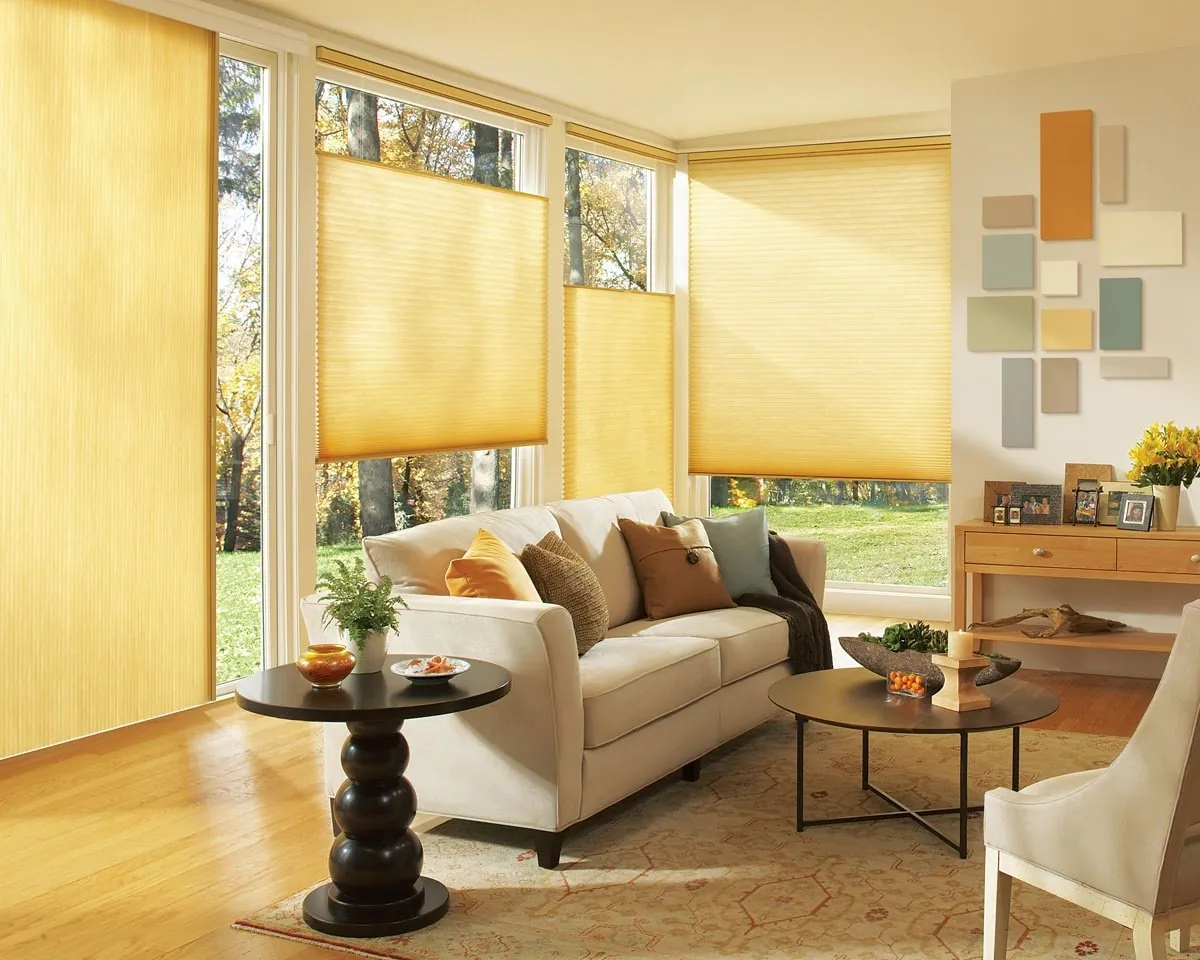
Side windows usually want privacy at every hour without being sealed off. A light-filtering honeycomb, or a sheer such as Silhouette, lets daylight through while softening the view. Shutters let you choose the angle, closing off the neighbor’s line of sight while you still see sky.
Back windows are often more relaxed, at least during the day. Many face a yard you use yourself, and the main concern there is sun on a hot afternoon rather than privacy, so a screen shade or a simple roller can be the better fit. After dark, a lit back room shows across the yards as clearly as a front one, so a fabric that closes the window for the evening is still worth having.
Dormer bedrooms upstairs
Upstairs in a Millville cape, the bedrooms sit under the roof and get their light from dormers. A dormer window sits at the back of a small recess, often with the ceiling sloping down towards it, and the room behind can feel warm on a summer evening and cool on a winter morning.
A honeycomb shade fitted into the dormer recess is the covering we suggest most often. In a room-darkening fabric it keeps the room dim for sleep, and the cells hold a layer of air against the glass to help with the cold. Shutters can work in a deeper dormer, but only if the panels can swing open without touching the slope, which we check at the visit.
Narrow sash or standard size: what changes
It helps to see how the two kinds of Millville window differ when it comes to choosing a covering.
- Room to mount. A standard cape window usually has depth to spare. A narrow mill-house sash may have very little, which can push the covering onto the face of the casing.
- Proportion. On a standard window most products look balanced. On a tall slim one, anything that gathers into a deep stack at the top can make the window look stunted.
- Squareness. A standard frame is usually close to square. An old one often is not, which is why we measure it several times.
- Choice. A standard window will take almost any Hunter Douglas family. A narrow one still has plenty of options, but fewer, and we will show you which.
Where one house has both, perhaps an old mill house with a newer addition, we size each covering to its own opening and keep the colors and headrails matched so the rooms still look like one house.
How we work at your house
Choosing at home makes particular sense in Millville, where one room may have a slim old sash and the next a standard window, and a fabric looks different in each. The van brings samples from right across the Hunter Douglas range, so we bring the showroom to your kitchen table.
- Use Request a Consultation, or press the call button to talk with the Franklin showroom.
- Together we choose a day, and we turn up with samples for the rooms you mention.
- Room by room, you tell us what the window does wrong: too bright, too cold, too open to the road.
- You try the samples against your own glass, morning light or afternoon.
- We measure, giving the mill-house sash its full set of readings.
- You get a free estimate and no pressure to decide on the spot.
- Hunter Douglas makes the order to our measurements and our certified installers put it up.
The in-home consultations page has more about that first visit, and the free estimates page explains the estimate. An interior design consultation is available if you want help bringing a room together.
Keeping a small mill-house room bright
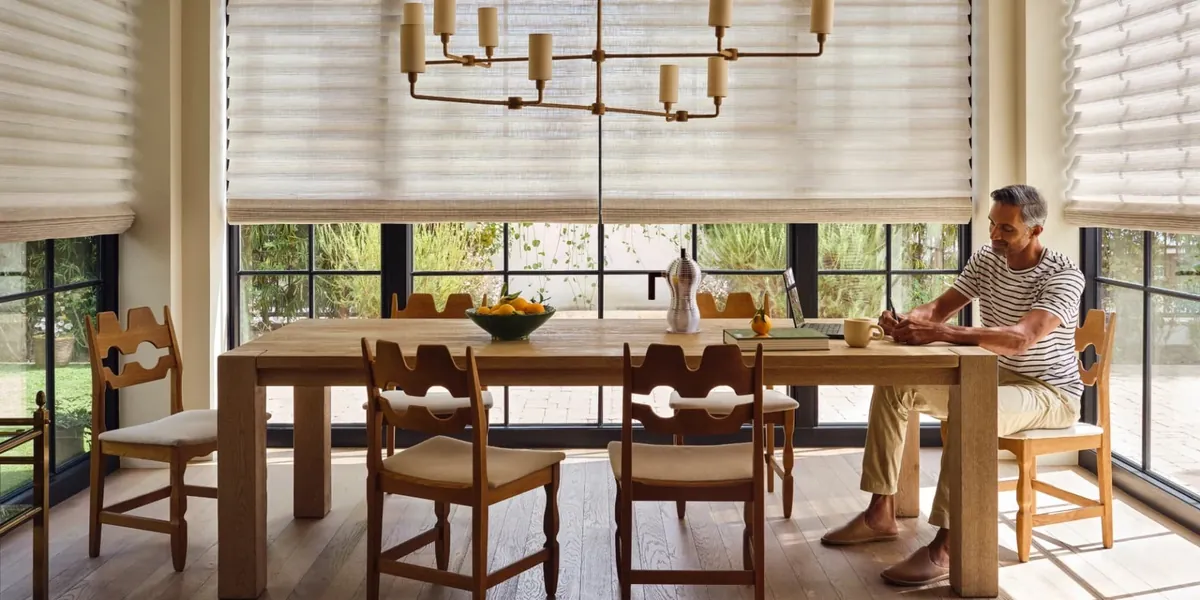
Rooms in the mill houses are compact, and a small room with one slim window leans on it for nearly all its daylight. A heavy covering there makes the room feel smaller and darker than it needs to.
The trick, and a big part of our work as a Hunter Douglas dealer in Millville, is privacy that still lets light through. A light-filtering fabric does it when lowered. A sheer turns the light into a soft glow. When the frame has the depth, mounting inside it keeps the wall around the window clear, so the room loses no space to a bulky rail.
Bedrooms and stairs in a mill house
Mill-house bedrooms are small, often with one slim window looking at the house next door. The usual plan is a room-darkening fabric for sleep, fitted inside the frame if the depth allows so that the covering takes up no wall space. A child’s room may get a brighter pattern on the room side while the street side stays plain.
The stair in a mill house is typically narrow, with a small window on the landing or at the top. A light, simple covering there keeps the stairs bright, and a slim inside mount means nobody catches it on the way past.
Cold glass and warm rooms
Old sash can make the chair by the window the coldest seat in the house come January. A honeycomb shade is the covering that helps most, because its cells hold a layer of air between the glass and the room, and that still air is why the room keeps its warmth when Duette or Applause shades are down. In a cape’s dormer bedroom, one in a room-darkening fabric deals with the cold and the early light together.
PowerView in a Millville house
PowerView earns its keep where a window is hard to reach, such as behind the kitchen sink or above the stairs, and on Main Street, where a schedule can close the front shades at dusk every evening without anyone remembering to do it.
You run it from a remote, an app or a schedule, and we plan how each motor is powered at the visit. There is more on the motorized blinds in Millville page and the window covering automation page.
Starting with the worst window
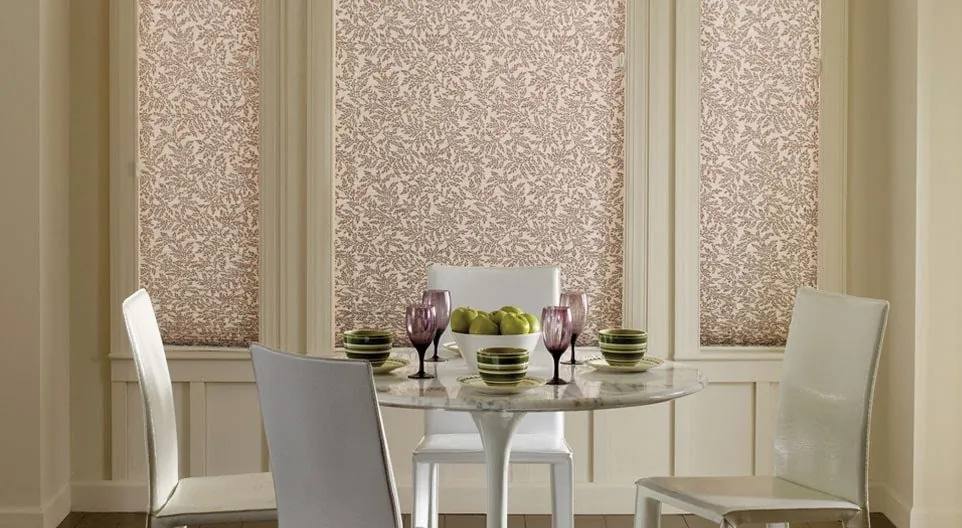
Plenty of Millville projects begin with one window that has been bothering someone for a while: the Main Street bedroom lit up by headlights, or the side window that looks into the neighbor’s kitchen. That is a perfectly good place to start, and it often tells us a good deal about what the other rooms in the house will need later.
We bring samples for that window and the ones around it, so if you carry on later, the next room matches. Every piece is made to measure and each stage has its own free estimate.
What a Gallery dealer brings
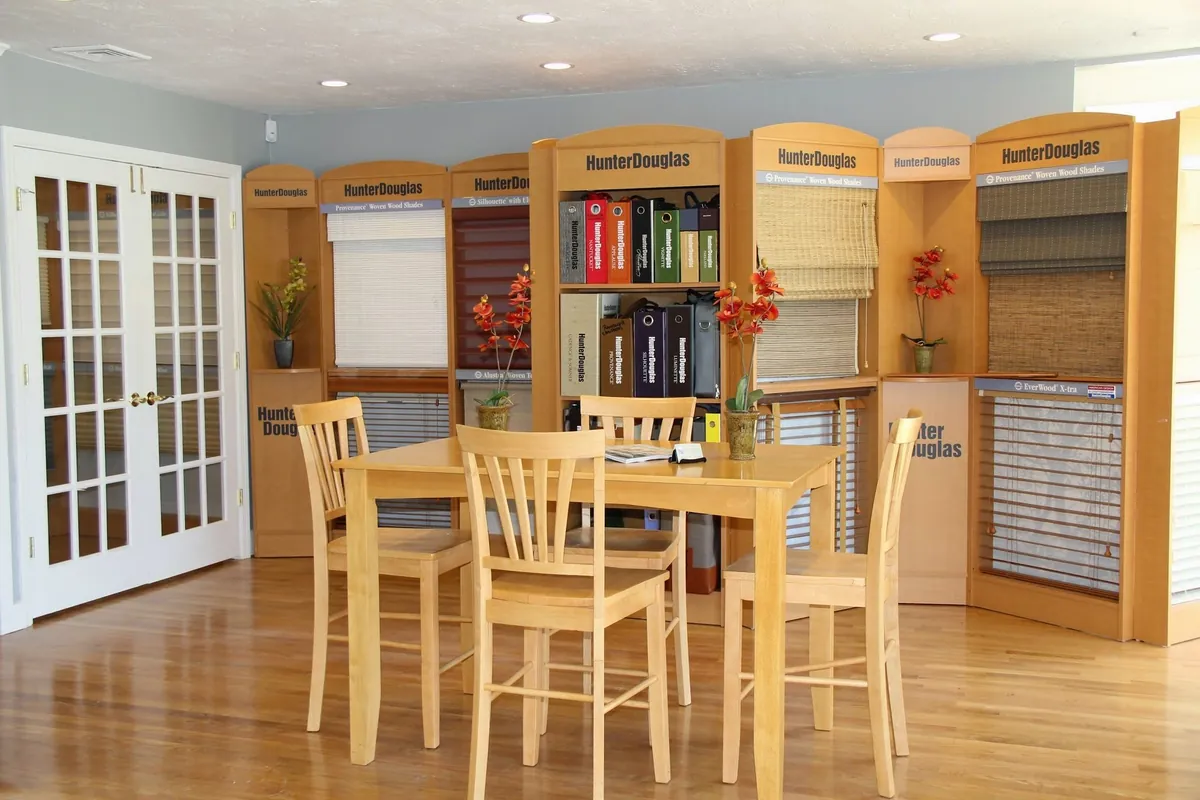
As a Hunter Douglas Gallery dealer we carry the complete family: honeycomb, sheer, roller, Roman, woven and vertical shades, blinds in wood, faux wood, metal and vertical styles, shutters from Palm Beach, NewStyle and Heritance, drapery and PowerView.
Fitting is done by our own installers, who are Hunter Douglas certified. In a slim mill-house frame, they square up each bracket, work round the old latches and run every product before they call it done.
Read more on the main Hunter Douglas page, or look through the Hunter Douglas online catalog.

The Franklin showroom for Millville
Franklin is home to our nearest showroom, and you are welcome to stop in to talk through a Millville project in person.
Most of the deciding still happens at home in your own light, and once every window is measured you get a free estimate.
The address and hours are on the Franklin showroom page. For everything we offer in town, see the Millville page.
Questions from Millville
Can you cover the narrow original sash in a mill house?
Yes. We measure each frame in several places and check its depth, then suggest an inside or outside mount so the covering sits neatly and suits the slim shape.
My cape has standard windows. Does that limit what I can choose?
No, it widens it. Standard openings take almost every Hunter Douglas family, so the choice comes down to how you use each room.
My bedroom faces Main Street. What stops the headlights?
A covering that closes completely: a room-darkening honeycomb, or drapery over a lighter shade. By day you can keep a light-filtering fabric for brightness.
Can an older room and a newer room match?
Yes. We size each covering to its own opening and match colors and headrails, so a narrow original window and a standard one look as if they belong together.
Is there a fee for the estimate?
There is not. The estimate is free, and the fitting is done by our certified installers when you order.
Start with a consultation
Request a consultation with a Hunter Douglas dealer in Millville and we will come to the house with samples, measure every window from the narrowest old sash to the plainest standard cape opening, and leave you a free estimate. If you want a word first, the call button connects you to the Franklin showroom.