
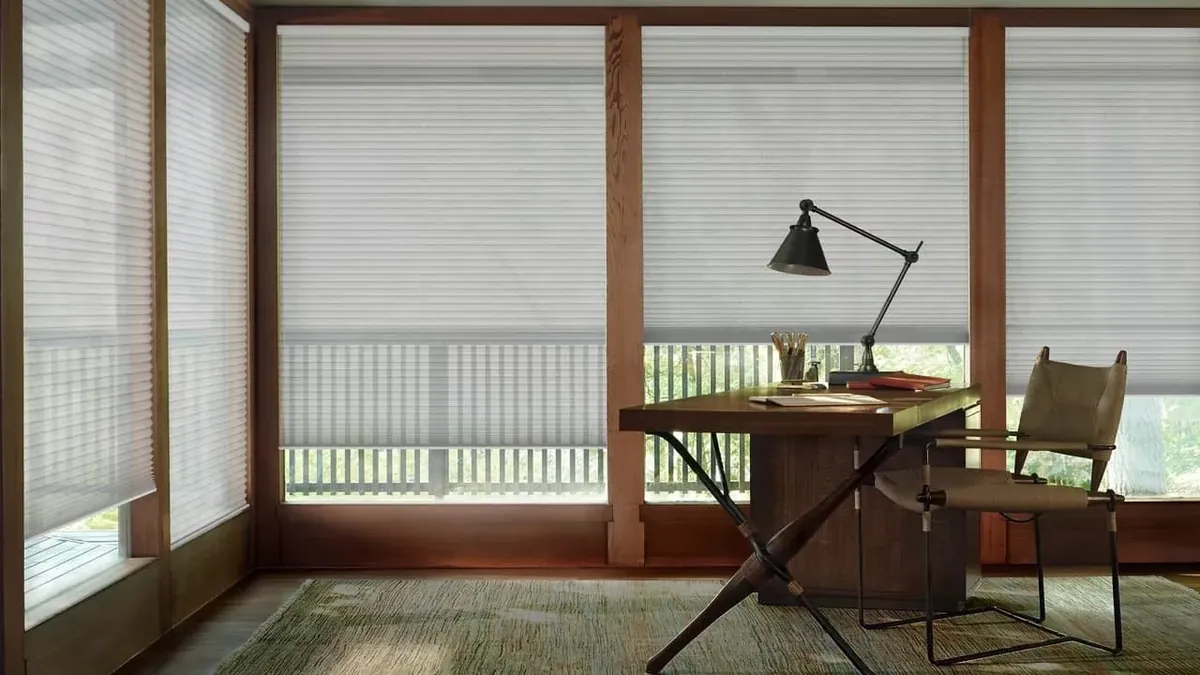
Old sash set deep in thick walls
East Bridgewater still has a lot of open ground. Antique colonials and farmhouses sit on larger lots, often with fields or long yards around them, and the newer building, post-war capes and more recent colonials, is gathered off Route 18 and Central Street. The density is low, and that changes the usual conversation about window coverings. Privacy from the house next door matters less here than in a tighter town. Warmth, light and keeping the view matter more.
The older houses bring one feature in particular: small sash set deep into thick walls. In an antique colonial or farmhouse, the window sits well back from the face of the interior wall, framed by a deep reveal and a wide sill. Those windows are beautiful and a little drafty, with thin old glass and frames that have shifted over a long life. They are also, as it happens, an excellent match for a honeycomb shade mounted inside the opening.
That is where most of our work on cellular shades in East Bridgewater, MA, begins: a shade tucked into a deep frame, holding a layer of still air against an old pane, so a farmhouse room that used to feel cold at the window holds its warmth into the evening.
What we fit in East Bridgewater
The older houses and the newer ones each lead to a different first choice. These three come up most.
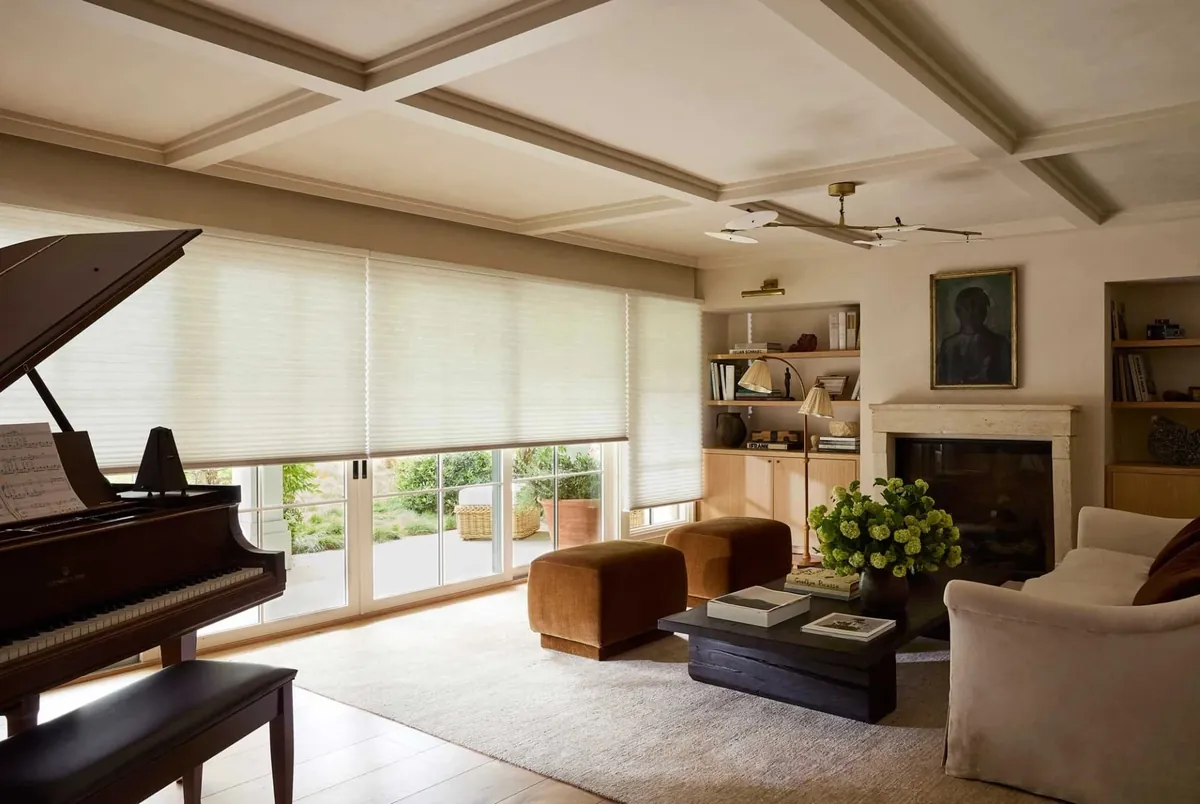
Inside-mounted Duette for deep sash
Duette’s broad range of sizes and fabrics suits the small, deep-set windows of an antique colonial or farmhouse, mounted within the reveal.
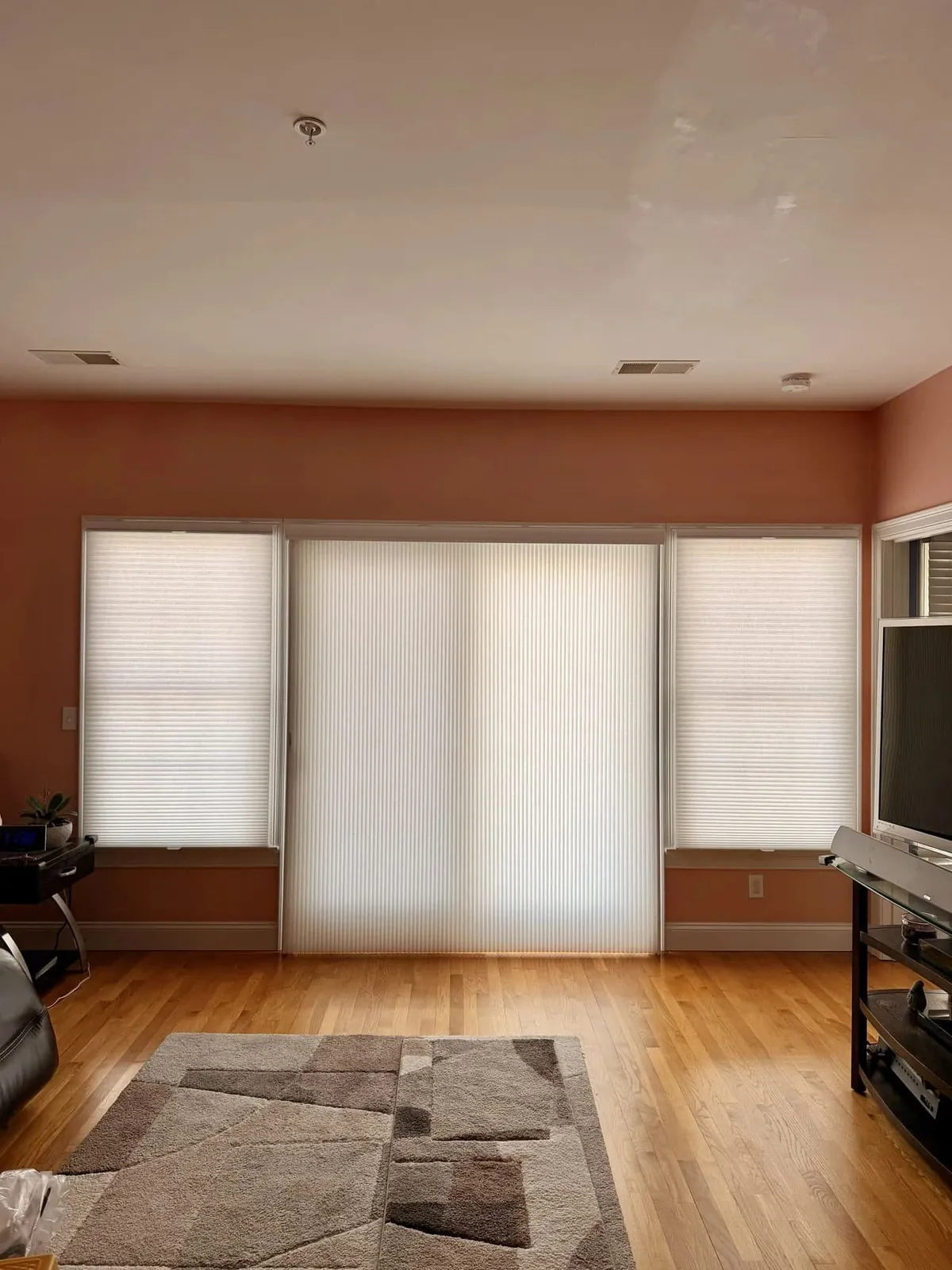
Applause for capes and newer colonials
Standard openings off Route 18 and Central Street suit Applause’s own palette, room by room or across the whole house.
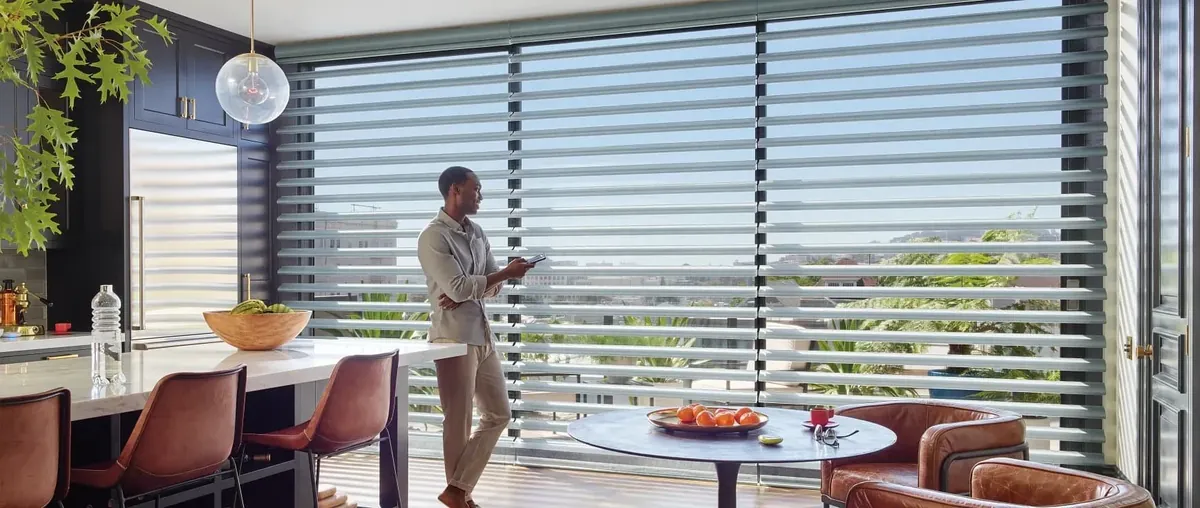
Motorized shades for awkward windows
Motorized honeycomb shades you can move from a remote, an app or a schedule, for windows behind furniture or high on a stair.
Why the old house feels cold at the window
An antique colonial or farmhouse was built to keep the weather out with thick walls and small windows. The walls still do their job. The windows, after a very long time, often do less. The glass is thin, sometimes the original wavy panes, and the frames have shrunk and moved, leaving small gaps where the sash meets the frame. On a windy February night, you can feel the cold air drift off the window and across the floor.
Many owners of these houses want to keep the old sash, rightly, because it is a large part of the house’s character. A honeycomb shade is one of the least intrusive ways to make that possible. Lowered at dusk, it sets a layer of still air across the inside of the window, slowing the heat leaving the room through the glass and taking the bite out of the drafts that come off it. Raised in the morning, it folds away into the top of the opening and leaves the old window in full view.
Farmhouse kitchens and front parlors, which tend to have the most windows, are usually where the difference shows first. So is the bedroom on the windward side of the house, which in an open landscape takes the wind with nothing to break it.
A deep frame makes for a clean fit
On most houses, the question with an inside mount is whether there is enough depth. On the older houses of East Bridgewater the answer is very often yes, with room to spare. The deep reveal of an antique window lets the headrail sit well inside the opening, so the shade is nearly invisible when raised and fills the opening neatly when lowered.
That deep reveal also suits the way a honeycomb shade works. Mounted inside, the shade sits close to the glass, with the reveal on either side of it, which helps the trapped air do its work. The wide sill and casing remain fully visible, and from outside the house the window looks as it always has.
The one thing deep old windows rarely are is square. A frame that has moved over a long life may be wider at the top than the bottom, or slightly out of plumb. So we measure each opening at the top, middle and bottom, and check the depth on both sides, before anything is ordered. Each shade is made to the opening it is going into. If one particular window is too far out for an inside mount to look right, we will tell you, and suggest mounting that shade on the face of the casing instead.
Keeping the view on a larger lot
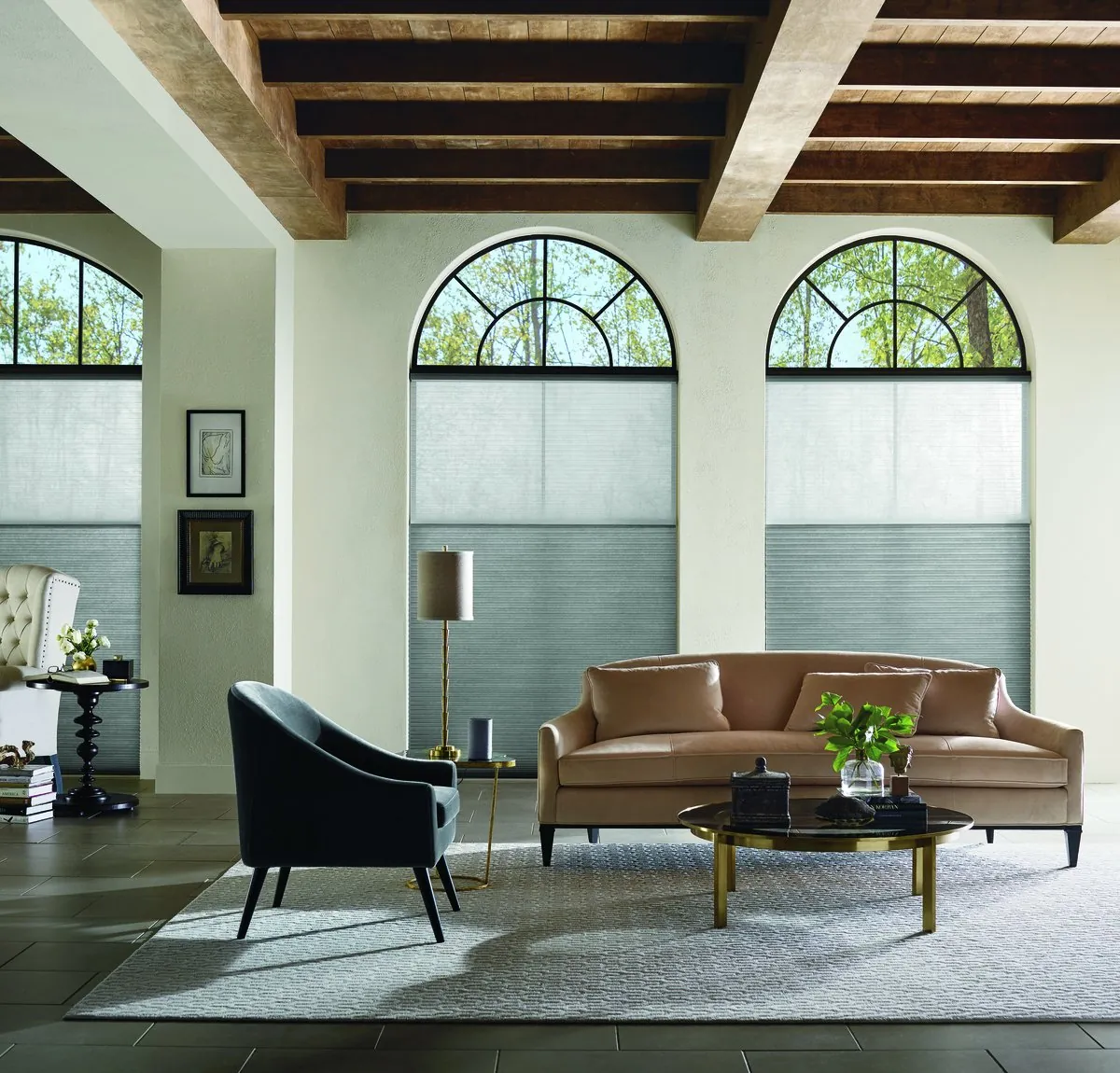
With neighbors further away, many East Bridgewater rooms look out on a yard, a field or a stand of trees rather than another house. That view is worth keeping, and it changes what we suggest. Privacy is often a secondary concern during the day, so lighter fabrics, which let plenty of light through and keep a sense of the outdoors, are a natural fit in living rooms and kitchens.
When the shade is up, the view should be as open as possible. Honeycomb shades fold into a slim stack, and on a deep-set window mounted inside the reveal, that stack sits tucked into the top of the opening and takes very little of the glass. On a newer house where the window is larger, the same is true at a different scale.
At night the situation changes, even on a big lot. A lit room on a dark road is visible from a long way off, and bedrooms still want darkness and privacy. That is why most houses end up with a mix: lighter fabrics in the rooms used in daylight, heavier ones in bedrooms and in any room you sit in after dark.
Wide sills, plants and window seats
A deep-set window comes with a wide sill, and in an old house that sill usually has a job. It holds a row of plants, a lamp, a stack of books, or it has been built out into a window seat. Any shade we suggest has to work with that, not against it.
Mounted inside the reveal, a honeycomb shade comes down to the sill, so whatever sits there needs a little room. On a window where the sill is in daily use, we look at where in the depth of the reveal the headrail should go: close to the glass leaves more of the sill free in front of the shade, which suits a row of plants that want the light. Set further forward, the shade covers more of the reveal, which suits a window seat you would like to tuck behind the fabric on a cold evening.
These are small decisions, but in an antique colonial or farmhouse they make a big difference to how the room feels day to day. Talking them through, window by window, is part of planning cellular shades in East Bridgewater, MA, for an older house. A newer cape or colonial, with standard sills, rarely needs the same thought, and there the planning moves quickly.
Post-war capes off Route 18 and Central Street
The post-war capes gathered off Route 18 and Central Street are a different proposition from the antique houses. Their windows are standard sizes, regular and square, and many have been replaced over the years. That makes them straightforward to fit, and it makes it easy to give the whole house a consistent look.
A cape’s upstairs bedrooms, under the slope of the roof and lit by dormers, are where honeycomb shades often help the most. Those rooms gather heat in summer and lose it fast in winter. A shade sized to the dormer window, in a fabric dark enough for sleep, helps with both the heat and the early light.
On replacement windows, we check depth on every frame, because locks and tilt latches sometimes sit close to the front. Where an inside mount will not clear them, the shade goes just above the opening, sized a little wider so it covers the edges. Each window is measured on its own even when they all look the same, and every shade is made to its own measurement.
Newer colonials: more glass, bigger rooms
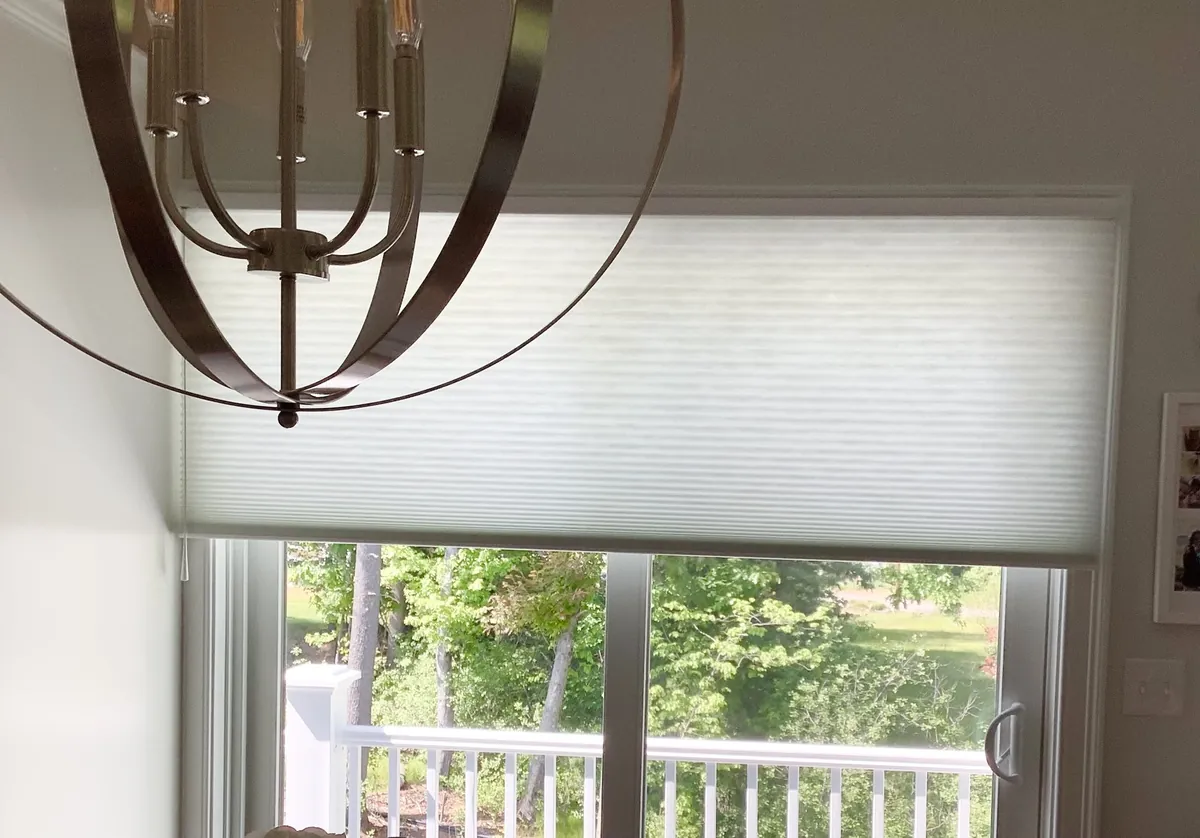
The newer colonials in town tend to be larger, with two full floors, bigger windows and more of them, and often a family room across the back with a slider out to a deck. On a larger lot, that family room can take sun from two or three directions.
More glass means more heat lost in winter and more heat gained in summer, and that is where cellular shades in East Bridgewater, MA, show their worth in a newer house. In a family room, lighter fabrics keep the room bright while softening glare across the floor and the television. Upstairs, darker fabrics in the bedrooms help with sleep. A slider gets a covering planned around how you use the door, so it never gets in the way.
Bigger houses also bring more windows that are awkward to reach, such as a window on a stair landing or a high window in a two-story entry. With PowerView, those shades answer to a handheld remote, an app or a timetable you set, and how each motor gets its power is something we work out window by window on the day. A colonial with many windows often benefits most from a schedule that opens the house in the morning and closes it at dusk.
A blanket of air at the glass
Turn a honeycomb shade on its side and the name explains itself: a row of hollow, six-sided pockets, side by side across the width of the shade. Lowered, every pocket fills with air that has nowhere to go.
Still air is slow to carry heat. So the shade lays a light blanket of it across the inside of the window. Warmth from the room stays on the room side longer; cold from the glass stays on the glass side. On an old farmhouse window with thin glass, or a big family room window in a newer colonial, that blanket is what makes the room feel warmer at the window on a winter night.
Come July, the same pockets hold back some of the heat of the sun. Lowering the shades on the south and west sides through the hottest part of the day keeps the rooms more comfortable by evening, and a light-filtering fabric means you are not sitting in the dark to do it. Whatever the age of the house, this is the reason cellular shades in East Bridgewater, MA, are the first thing we suggest for a room that feels cold.
Duette, Applause, or both
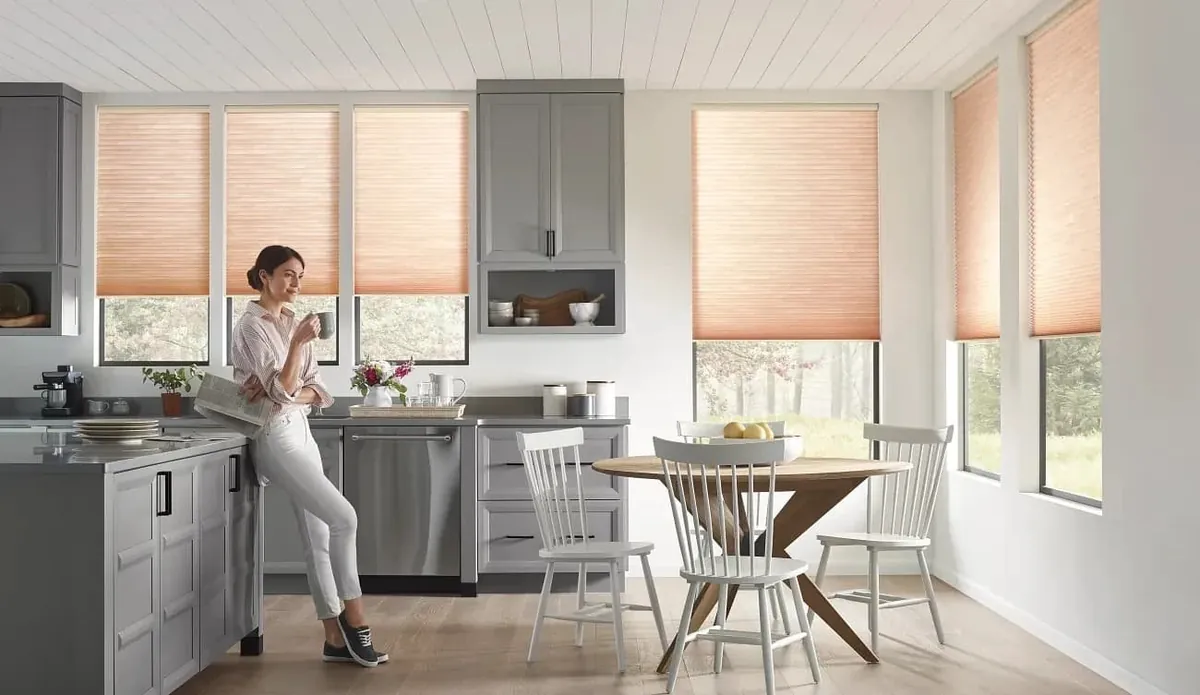
Duette and Applause are both Hunter Douglas honeycomb shades, and both rely on air held in their cells. The difference is in the range each offers. Duette is the broader line, with the most fabrics, textures and sizes, which helps on the odd-sized openings of an antique house. Applause has its own palette and suits standard windows very well.
In East Bridgewater it is common to see both in one house. An antique colonial with a later addition might take Duette in the old front rooms with their deep sash and Applause in the newer kitchen and family room. A post-war cape might use one line throughout. We set the swatches side by side at your window so you can compare them in your own light, and the main cellular shades page describes both lines.
A Hunter Douglas Gallery dealer for old houses and new
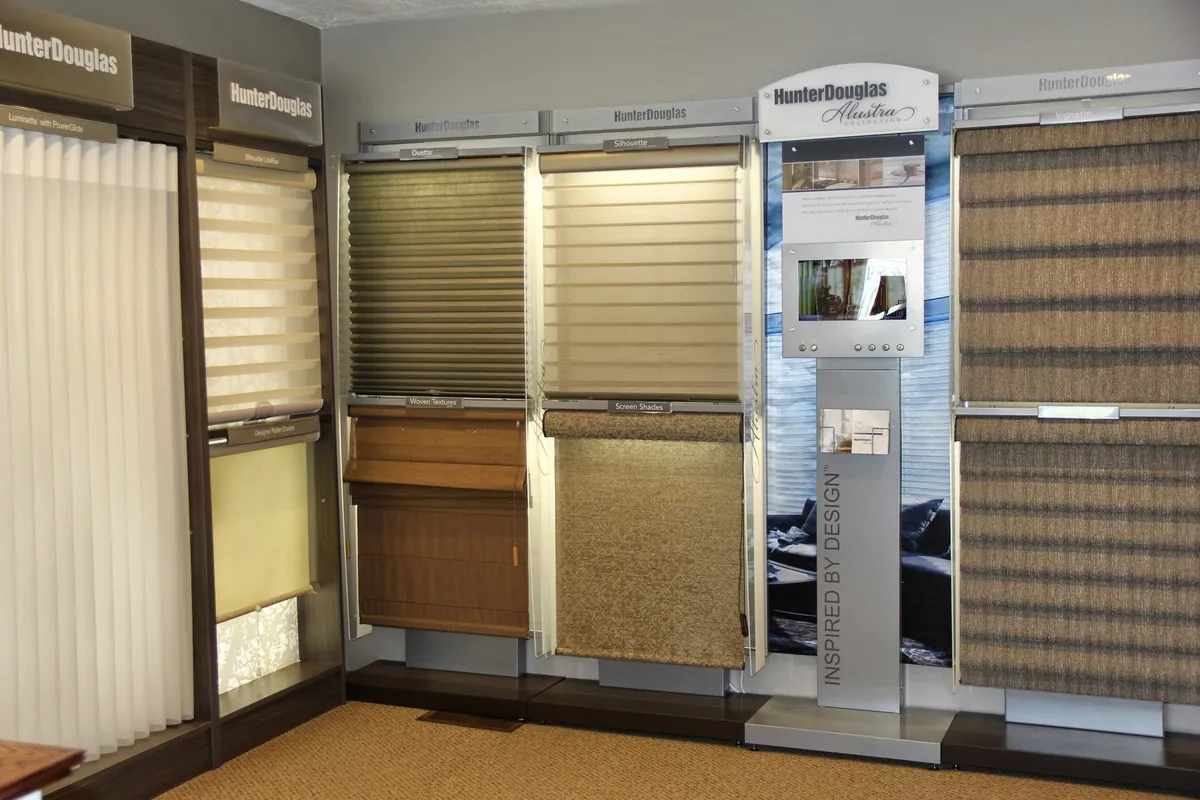
Blinds & Designs is a Hunter Douglas Gallery dealer, so the full honeycomb range is open to you: every Duette and Applause fabric, and PowerView motorization for the windows you cannot easily reach.
Our installers are certified by Hunter Douglas. On an antique house that matters, because fixing a headrail into an old, deep frame takes care. Each shade is leveled, tested and demonstrated before the installers leave. If a shade or blind you already own needs attention later, we handle blind and shade repairs as well.
For other rooms, see plantation shutters in East Bridgewater, which suit the deep reveals of an older house, roman shades in East Bridgewater, or custom blinds in East Bridgewater. Everything we do in town is on our East Bridgewater page.
Booking a visit to your house
East Bridgewater is covered by our shop-at-home service from Canton, so the consultation happens at your house, where you can judge the fabrics against your own windows. Our vans carry samples, so we can bring the showroom to you. You can read about it on our shop-at-home from Canton page. The visit usually runs like this:
- Request a consultation online or with the call button, and we fix a time.
- A consultant arrives with honeycomb samples in a range of colors and fabric weights.
- We walk through the house with you, starting with the coldest rooms and the windows you most want to keep open to the view.
- You hold fabrics against your own glass, morning side and afternoon side, to see how each one changes the light.
- We measure every window, checking the depth of the old reveals and the newer frames alike.
- You receive a free estimate for the shades you are considering, with no pressure to decide that day.
If you would like a hand with color and fabric for the room as a whole, ask about our interior design consultations, which can be part of the same visit.

Seeing the shades first
On an antique house, a fabric can look very different against old trim and deep sills than it does anywhere else. That is why we start at home, with the samples in your hands at your own windows.
If you would also like to see the shades in a store, the Franklin showroom is our nearest to East Bridgewater.
Questions from East Bridgewater
Will a honeycomb shade hide the trim on my antique windows?
Not if it is mounted inside the opening. The deep reveals of older houses usually have plenty of room for the headrail, so the shade folds up into the top of the frame and the casing and sill stay in full view.
My old farmhouse windows are drafty. Will shades help?
A honeycomb shade lowered at night sets a layer of still air across the inside of the glass, which slows the heat leaving the room and takes the edge off the cold air coming off an old window.
We have no close neighbors. Do I still need privacy fabrics?
In daytime, often not, and lighter fabrics keep the view and the light. At night a lit room is visible from a long way off, so bedrooms and evening rooms usually still take a heavier fabric.
Our house has an old part and a newer addition. Should the shades match?
They do not have to. Many houses use Duette in the older rooms and Applause in the addition, or one line throughout with the same outward-facing color so the house looks consistent from outside.
Where can I see the shades before ordering?
Right at your own windows: the consultant brings the swatches with them. For a look in a store too, Franklin is the closest of our showrooms.
Start with one room or the whole house
Whether it is a cold farmhouse parlor or every window in a newer colonial, cellular shades in East Bridgewater, MA, are easiest to choose at home, with the fabric held up against your own glass. Request a consultation and we will bring the samples, measure each window and give you a free estimate. If you have a quick question first, the call button reaches us.