
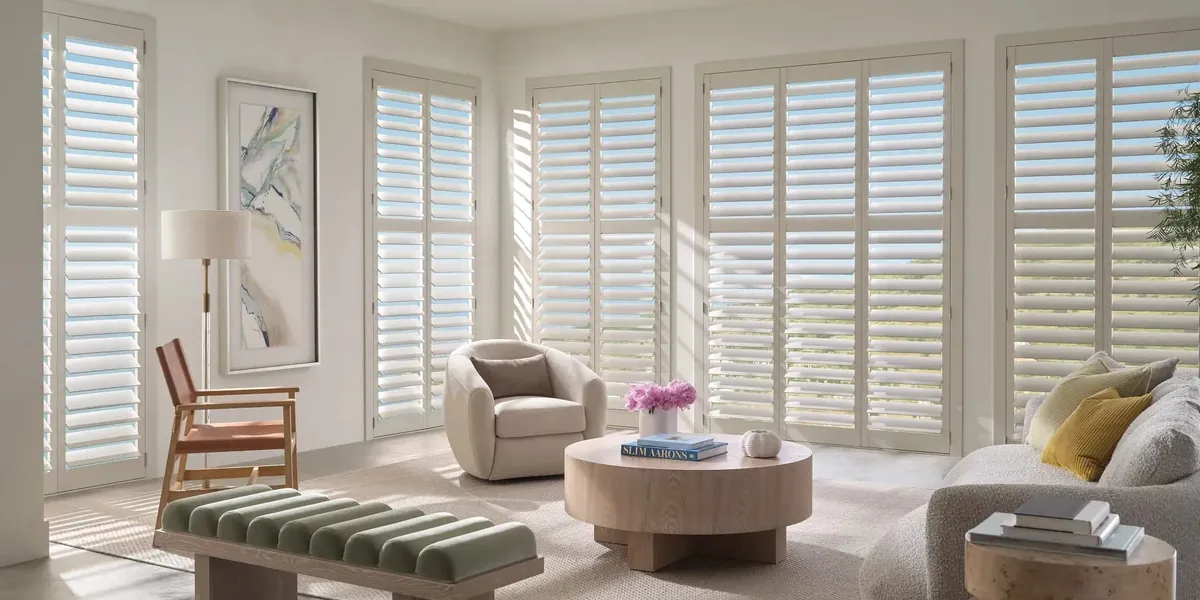
Big rooms, tall glass, paired openings
Around Milton Village and up the slopes toward the Blue Hills, the houses are large colonials and Victorians with formal rooms and tall sash. Windows are often paired, two units side by side in one double-width opening, and the living and dining rooms are big enough to carry full-length drapery. Down in the lower village, post-war houses bring smaller, simpler openings.
Planning window treatments in Milton, MA, therefore starts with scale. A covering sized for a cape window looks lost in a formal parlor with a lofty ceiling, and a double-width opening raises questions a single window never does: one shade or two, one panel or a pair, an outside mount across both units or separate inside mounts in each.
We work through those questions in the rooms themselves, with samples big enough to judge against big windows.
The services we bring to Milton
These cards cover the window treatments in Milton we offer. Choose one to see that service’s page for the town.
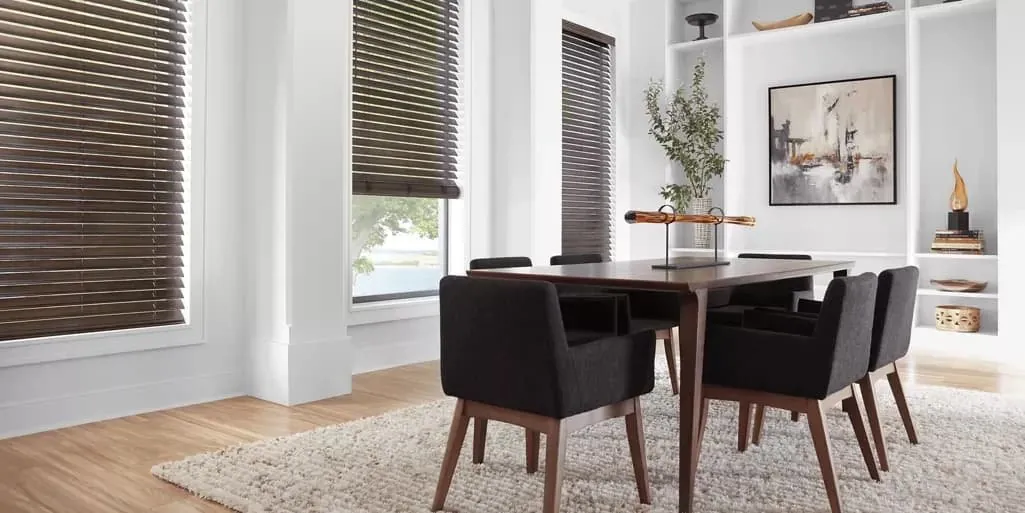
Custom Blinds in Milton
Slatted blinds in real wood, faux wood or metal, plus verticals. Deep-toned wood looks at home in a paneled study.
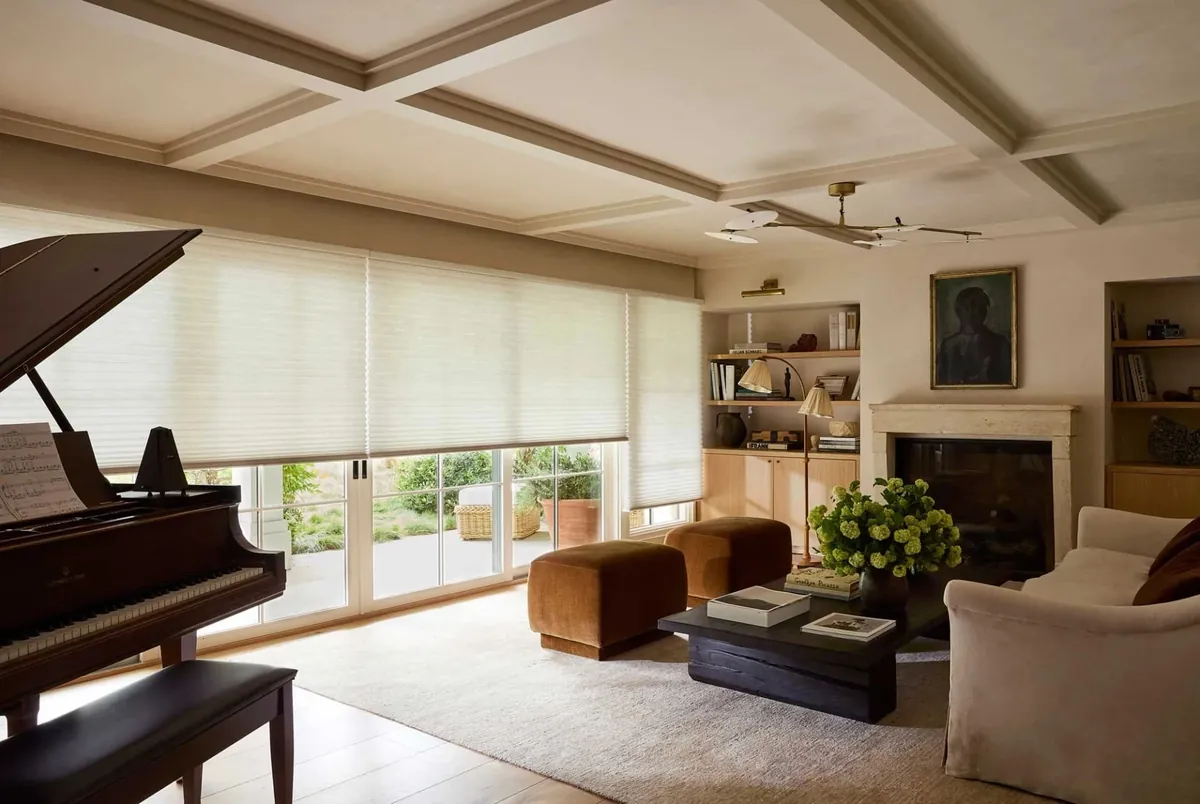
Cellular Shades in Milton
Honeycomb shades from the Duette and Applause lines, built wide for a paired opening or long for high sash.
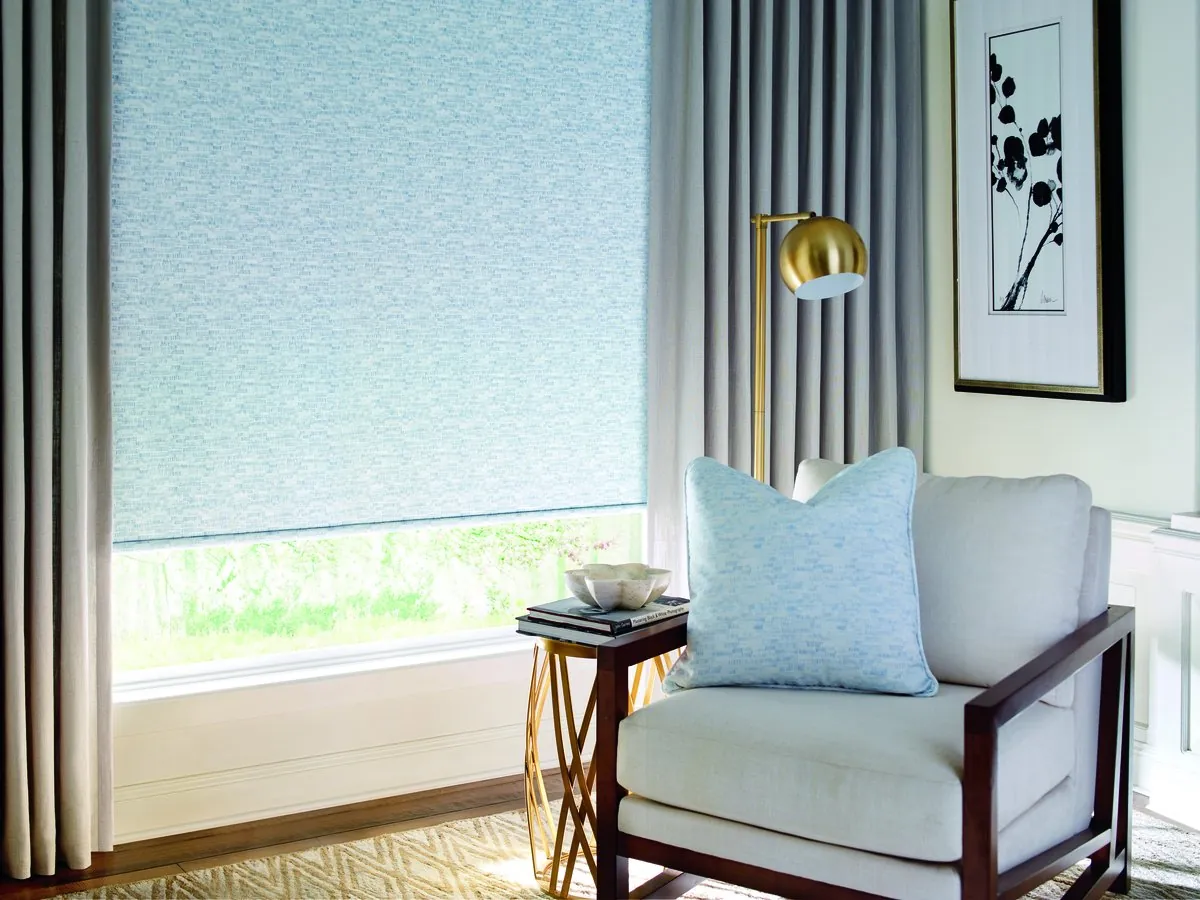
Roller Shades in Milton
Rollers and solar screens, Designer or Alustra, that sit tidily behind side panels in a formal room.
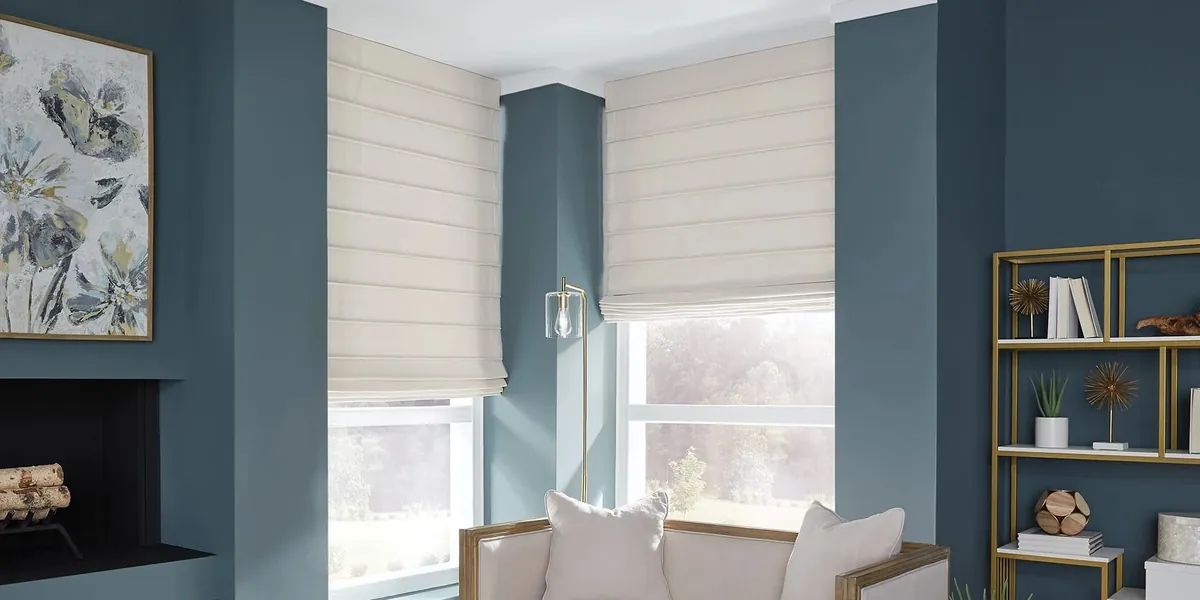
Roman Shades in Milton
Flat and folded romans in Vignette and Carole fabrics, at ease in a bay or against a deep wall color.
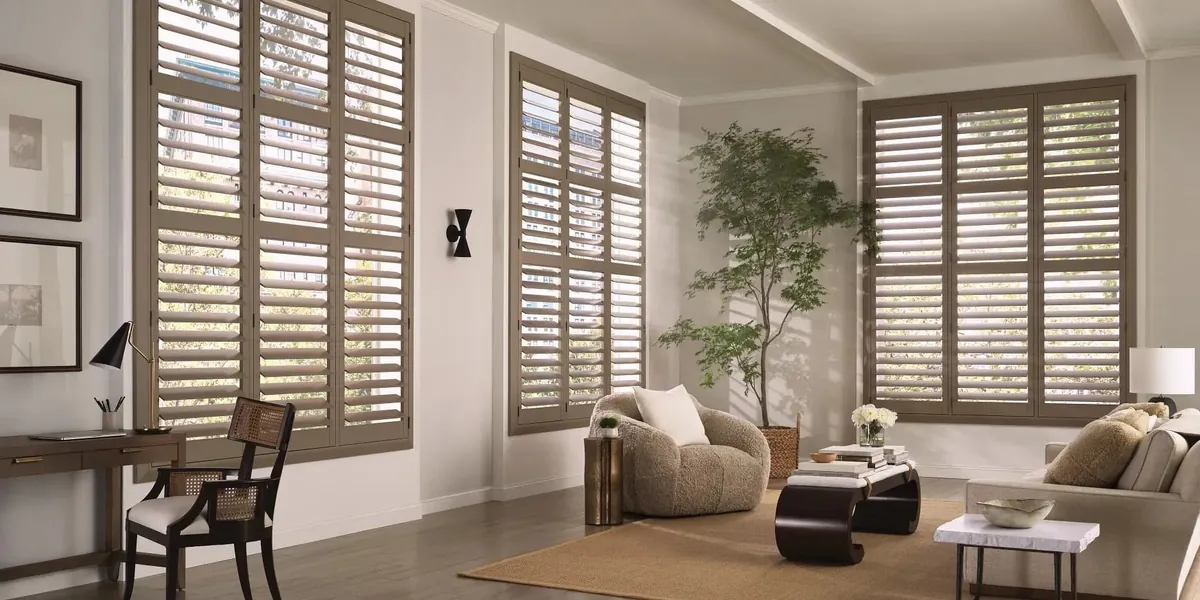
Plantation Shutters in Milton
Shutters from the Heritance, NewStyle and Palm Beach collections, framed and louvered to suit tall formal glass.
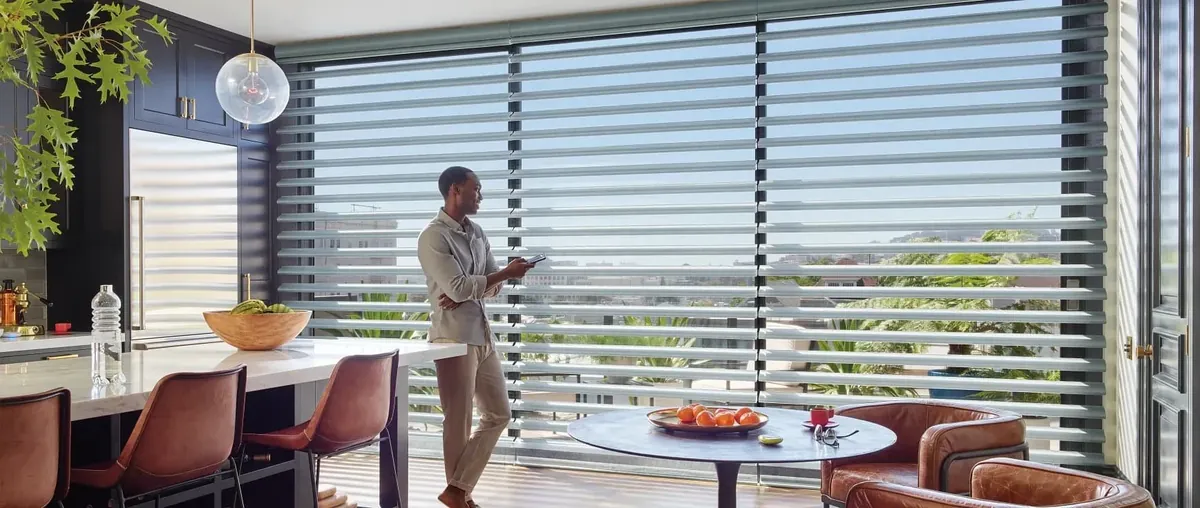
Motorized Blinds and Shades in Milton
PowerView lets a house with dozens of windows be run by room or floor, from a handset, a phone or a timetable.
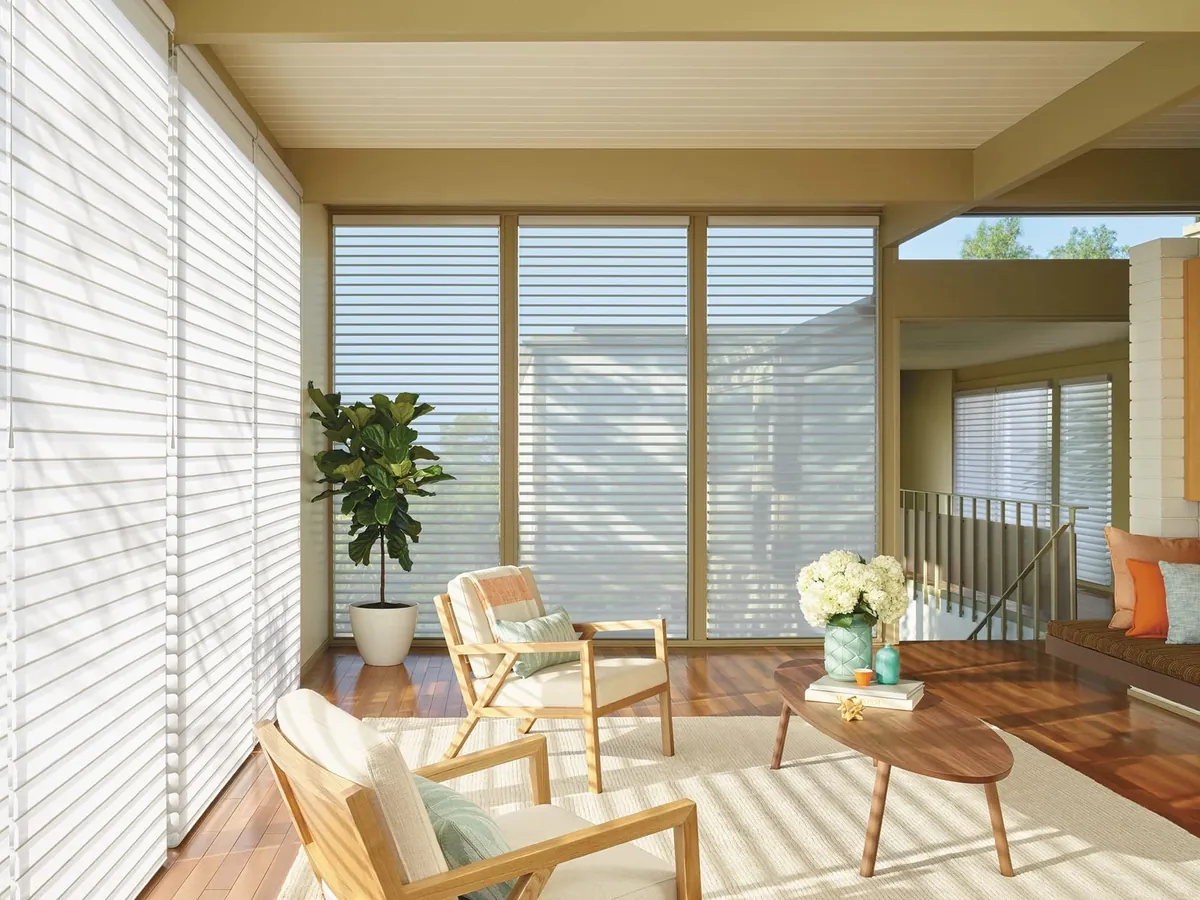
Hunter Douglas Dealer in Milton
Gallery dealer standing opens the complete Hunter Douglas catalog, and certified installers hang every piece.
Double-width openings: one covering or two
A double-width opening, two windows sharing one frame with a mullion between them, is one of the most common features of the larger houses here. It gives a room a generous band of light, but it asks you to decide how the covering should behave.
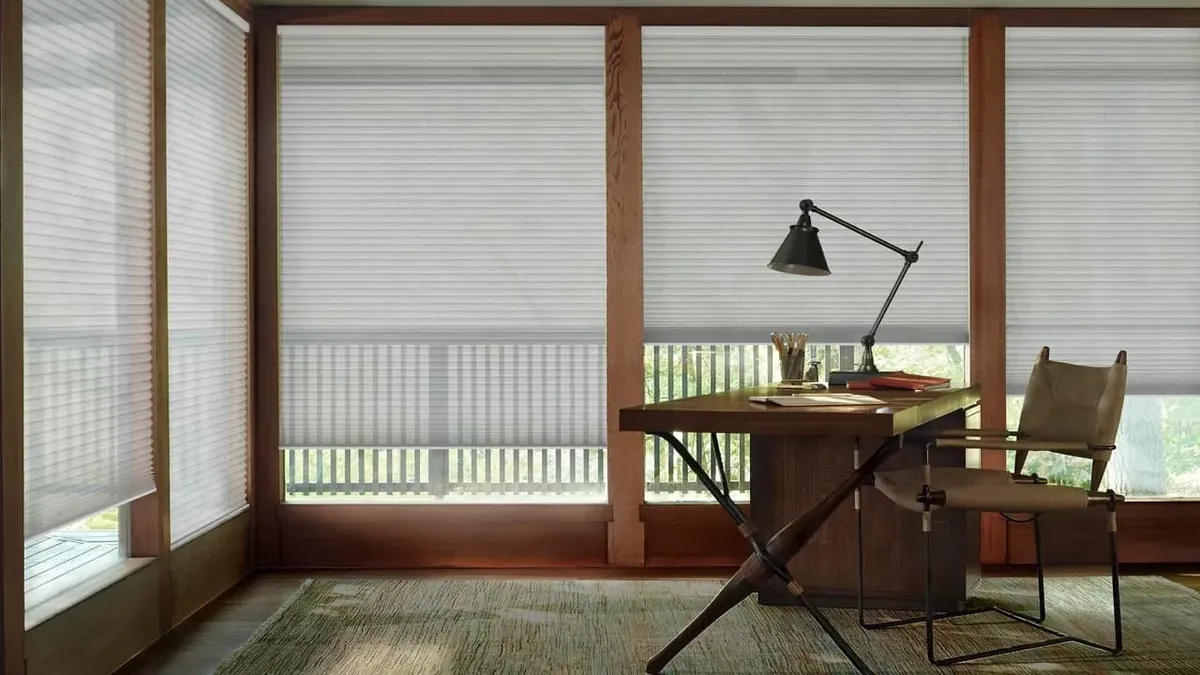
One covering across both. A single honeycomb or roller shade, mounted outside the frame, covers the whole opening in one piece and raises in one movement. It looks simple and hides the mullion when lowered. On a very wide opening it gets heavy, so a motor helps.
Two coverings sharing a headrail. Each half raises independently, yet from across the room they read as one. You can open one side for the view and keep the other down against glare. This is often the happiest compromise.
Separate inside mounts. Each window gets its own shade or shutter set inside its frame, and the mullion stays visible. Where the trim is handsome, this keeps the woodwork in view and respects the original design.
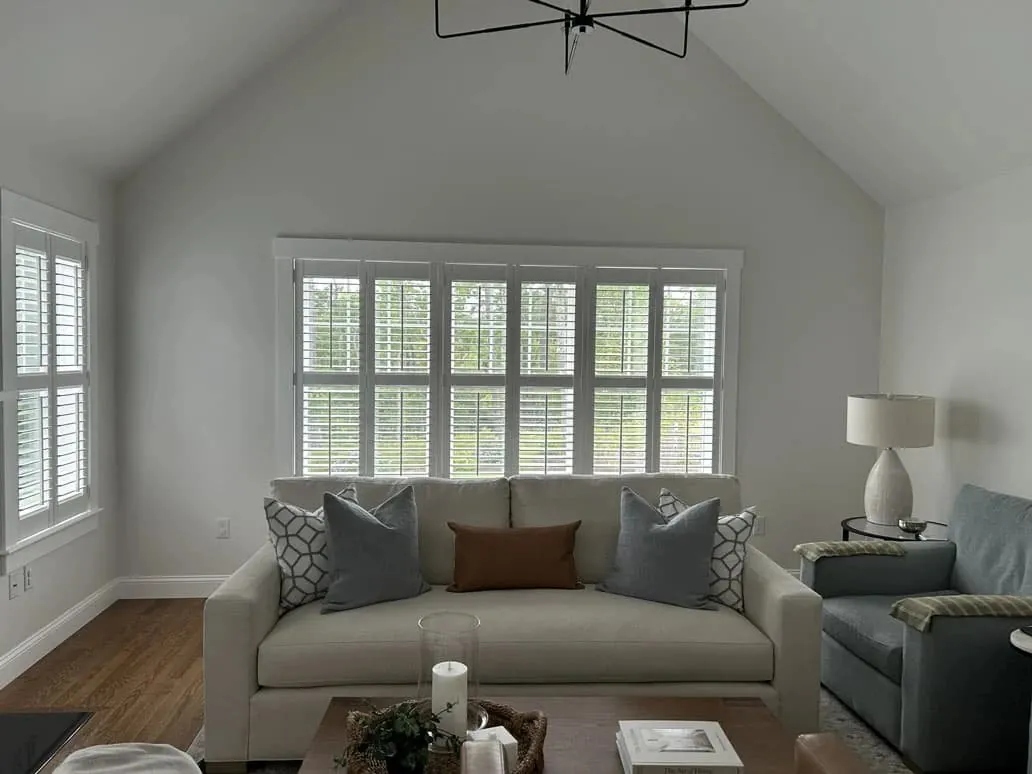
Shutters bring a fourth option: panels sized to each window, with a divider rail that lines up across both, so the louvers form one continuous pattern.
Rooms scaled for drapery
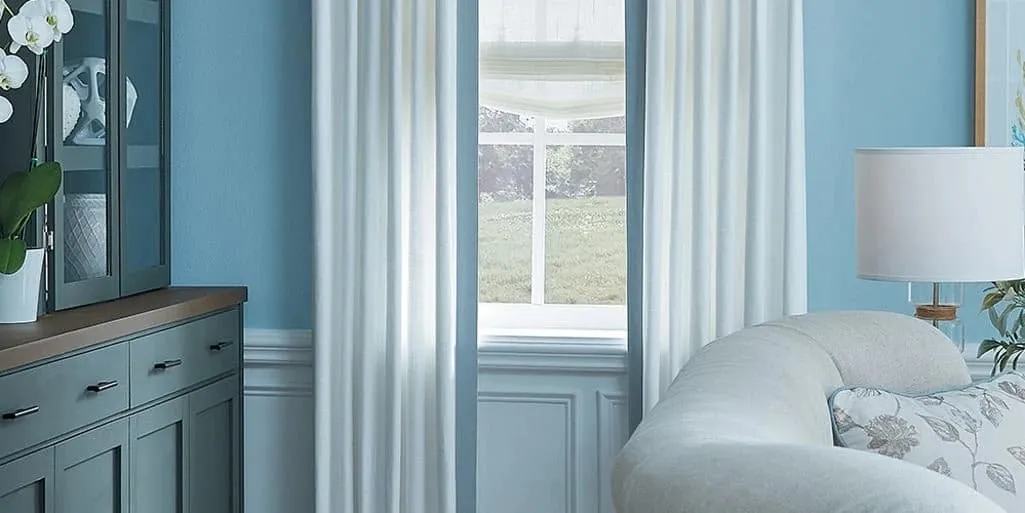
Formal living and dining rooms in the older houses often have high ceilings, wide walls and windows that run nearly to the floor. In rooms like these, a shade alone can look sparse. Drapery panels either side add height and softness and give the windows a presence that matches the room.
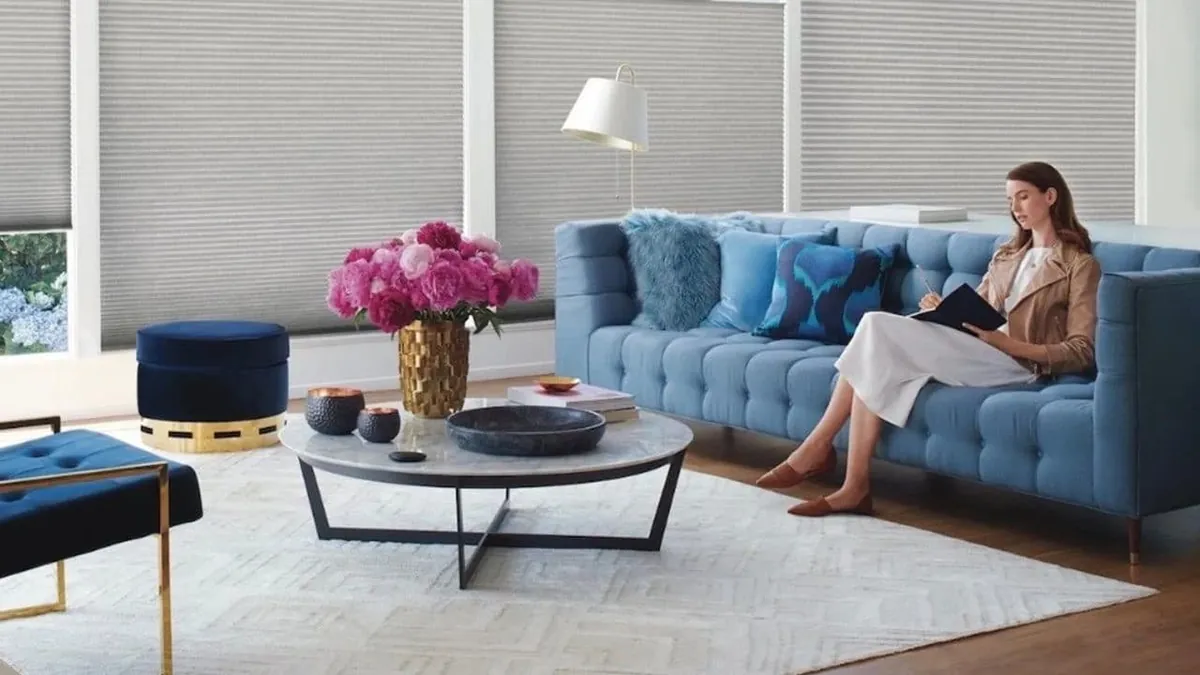
The usual approach is to layer. A shade or a sheer shading inside the frame handles daylight and privacy, and drapery panels hung outside it frame the window and draw closed for the evening. Hanging the rod well above the window, with the panels extending past the frame, makes the window look larger and lets the panels gather clear of the glass when open, so no daylight is lost.
We coordinate the drapery with the shade behind it so the whole window reads as one design. Drapery suits a paired opening too, with panels on the outer sides and the shade or shades between.
Tall sash in the colonials and Victorians
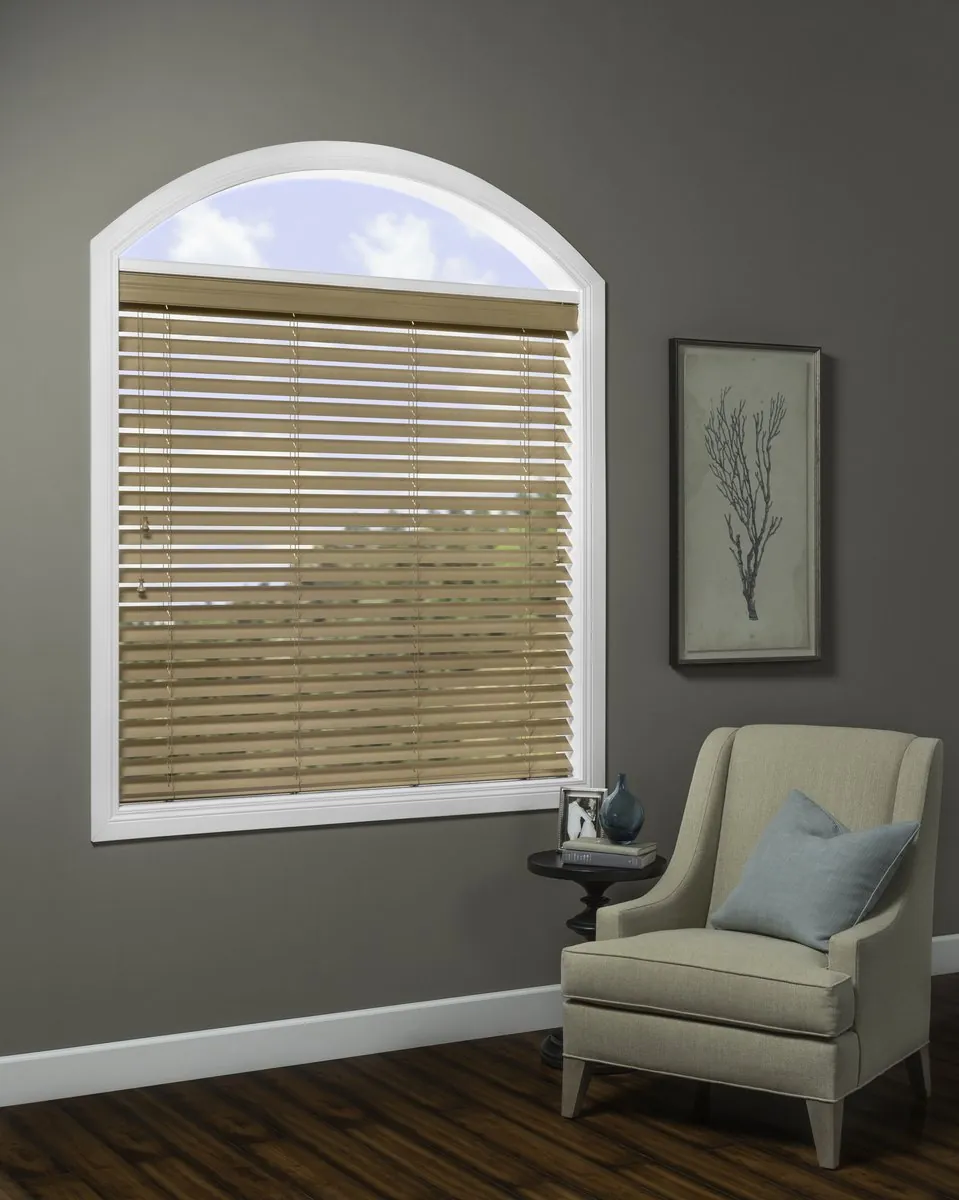
Even where windows are single, the sash in the older houses is usually tall, sometimes with a transom or an arched top. Tall glass is beautiful, but it brings practical choices about how far down the shade comes and how high the stack sits.
For very tall windows, a honeycomb or roller with a slim stack keeps the most glass open when raised. Top-down, bottom-up shades are useful in rooms facing the road, where the lower glass can stay covered while daylight pours in overhead. An arch can be left bare above a shade on the square part, or given a shutter cut to its curve. Shutters with larger louvers suit tall windows well, because the wider slats keep their proportion against the height.
Bays, window seats and corner rooms
Many of the Victorians, and plenty of the larger colonials, have a bay somewhere: three or five windows angled out from a parlor or dining room, sometimes with a seat built beneath. A bay is really several small windows working as one, so the coverings need to be planned together.
Separate shades on each window keep the angles crisp, and setting every one to the same stack height keeps the bay looking whole. Roman shades are a favorite here, because their folds soften the hard angles, though shutters suit a bay just as well and keep a window seat clear when the panels fold back. Where a seat sits beneath, an inside mount keeps the covering from catching on cushions.
Corner rooms, common in large houses, take light from two directions. The two walls often need different fabrics, a sheer on the street side and a light-filtering honeycomb on the sunnier side, chosen in the same color so the room still reads as one.
Formal rooms that ask for a finished look
The front of a large colonial or Victorian often runs in a sequence: hall, living room, dining room, perhaps a library. Each deserves a tailored treatment, and they should feel related as you walk through.
In a dining room, a roman shade in a fabric that picks up the wallpaper or upholstery, framed by drapery, gives warmth for evening meals. In a library with dark woodwork, wood blinds or stained shutters can look as if they were always there. In the living room, sheer shadings give a soft, glowing light by day and full privacy once closed. Formal window treatments in Milton houses share one thread, usually color: every outward-facing backing kept in one tone, and the room side allowed to change.
Next to the Blue Hills
Houses up against the Blue Hills often have trees close to the windows on one or more sides. Those rooms can be shaded much of the day, while the side facing open ground gets full sun. Window treatments in Milton houses on the hill side often need two plans in one: coverings that give up as much glass as possible in the shaded rooms, and something with real glare control where the sun lands.
Rollers that wind fully away and honeycomb shades with a slim stack keep shaded rooms bright. On the sunny side, a light-filtering honeycomb or a solar screen cuts glare while keeping the view. Pale fabrics help in the shaded rooms by reflecting light back in; richer colors are easier to live with where the light is plentiful.
The seasons shift that balance. A room that sits in green shade through the summer can be flooded with low winter sun once the leaves drop, so a hillside room that needs almost nothing in July may want a light-filtering shade it can lower on a bright January afternoon. We look at which trees are evergreen and which are not when we plan those rooms.
Post-war houses in the lower village
The lower village has a different stock of houses: post-war capes, colonials and ranches with standard openings and more modest rooms. The choices here are simpler, and a single product carried through the house often looks best.
Honeycomb shades suit almost every room, with a room-darkening fabric in the bedrooms. Kitchens and baths commonly take faux wood blinds or cafe shutters. A front living room can take shutters for a finished look from the street, and a back slider takes a vertical honeycomb or vertical blinds. Because the openings are standard, everything can be inside mounted for a clean line.
Halls and stair landings
Large houses tend to have generous front halls, with a window beside or above the door and another on the stair landing halfway up. These windows are seen by every visitor, yet they are easy to leave until last.
Sidelights next to a door usually take a slim honeycomb or a sheer fixed top and bottom, so it stays put when the door swings. A transom over the door is often left clear. The landing window is the awkward one: you reach it from the stairs, over the banister, sometimes from a step that is too narrow to stand on comfortably. A motorized shade there is a practical choice rather than a luxury, and a shutter that is opened once in the morning and left alone is another.
Kitchens, pantries and back stairs
Behind the formal rooms, the working end of a large old house is usually a warren of smaller spaces: a kitchen that has been opened up and modernized, a butler’s pantry, a mudroom, a back stair. The windows here vary in size and age, and none of them face the street, which leaves more freedom.
A renovated kitchen with new windows often suits crisp rollers or banded shades that look current, while a pantry window can take a simple cafe shutter. Over a sink, think about reach: a covering you can raise with one push saves leaning across a counter. A mudroom door to the drive is best served by a shade mounted to the door itself, held at the foot so it stays put as the door swings. Because these rooms are seen together as you move through them, keeping them to two products at most stops the back of the house feeling pieced together.
Doing a large house in stages
Few owners fit every window of a big colonial at once. More often the formal rooms are done first, the bedrooms the following season, the kitchen end after a renovation. That works well as long as the first decisions are written down. With the fabrics, colors and mounts noted room by room, a shade ordered later sits beside the earlier ones without looking like an afterthought. It also means a paired opening upstairs can follow the approach already settled for the paired openings below.
A consultation in your rooms
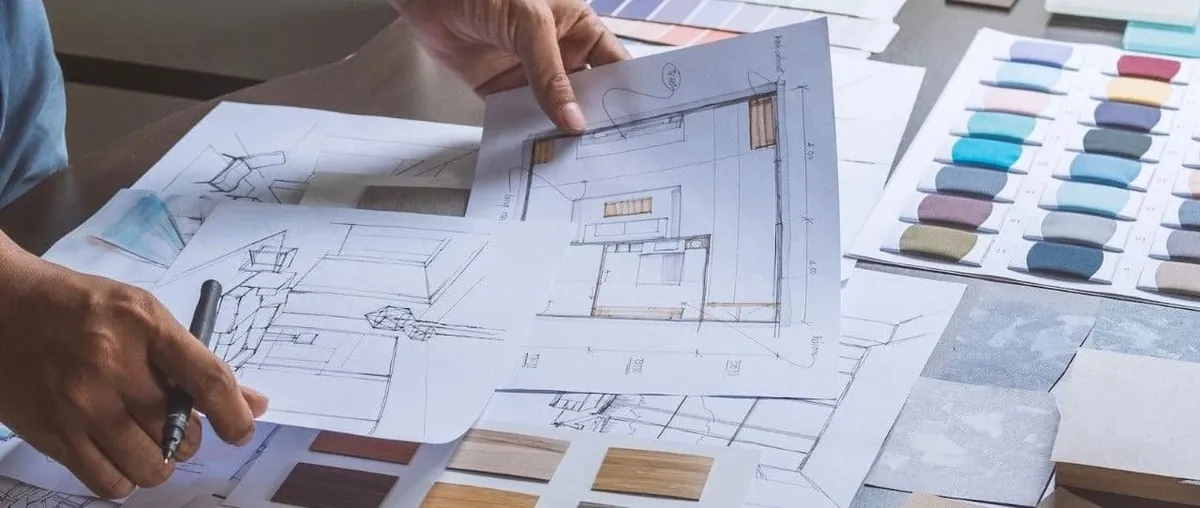
Big windows, paired openings and formal rooms are hard to judge from a small swatch, so we bring the large sample books into the house. Canton is a shop-at-home territory rather than a store, which means every Milton visit happens at your address, with the consultant’s van stocked so the showroom comes to you.
- Ask for a visit with Request a Consultation, or use the call button.
- Fabric books, drapery cuttings and shutter samples come in with the consultant, along with a PowerView remote to try.
- We begin in the largest formal room, since its scale and color tend to steer the rest of the plan.
- Each paired opening gets its own decision: one covering, two sharing a headrail, or separate mounts.
- Measurements are taken window by window, transoms, arches and bays included.
- You get a free estimate to consider at your own pace.
Read how the Canton shop-at-home service works, or look at our interior design consultations for help pulling color and fabric together across a whole floor.
Many windows, one handset
A big house can have dozens of windows, and walking round to set every shade morning and evening becomes a chore. PowerView groups shades by room, by floor or by side of the house and runs each group from a handset, a phone app or a timetable. High sash and landing windows are obvious candidates. How each motor gets its power is worked out with you during the visit. See motorized blinds and shades in Milton for more on control.
Bedrooms in a big house
Bedrooms in the larger houses are often spacious, with two or three windows, sometimes a paired opening, and a dressing area or bath attached. For sleep, room-darkening honeycomb shades or blackout rollers are the starting point, and drapery over them closes the small gaps at the edges while softening the room.
Children’s rooms and guest rooms can follow a simpler plan in the same fabric family, so the upstairs feels consistent. A primary bath with a large window usually wants a top-down shade or cafe shutters, giving privacy at the tub while letting daylight in above.
Fixing good coverings that have stopped working
Large older houses sometimes come with quality shades or shutters that only need attention: a tilt mechanism that has seized, a cord worn through, a shade that drops on one side. Before replacing them, it is worth asking whether they can be put right, and we will give a straight answer either way. Details are on blind and shade repair.
Gallery standing, Milton scale
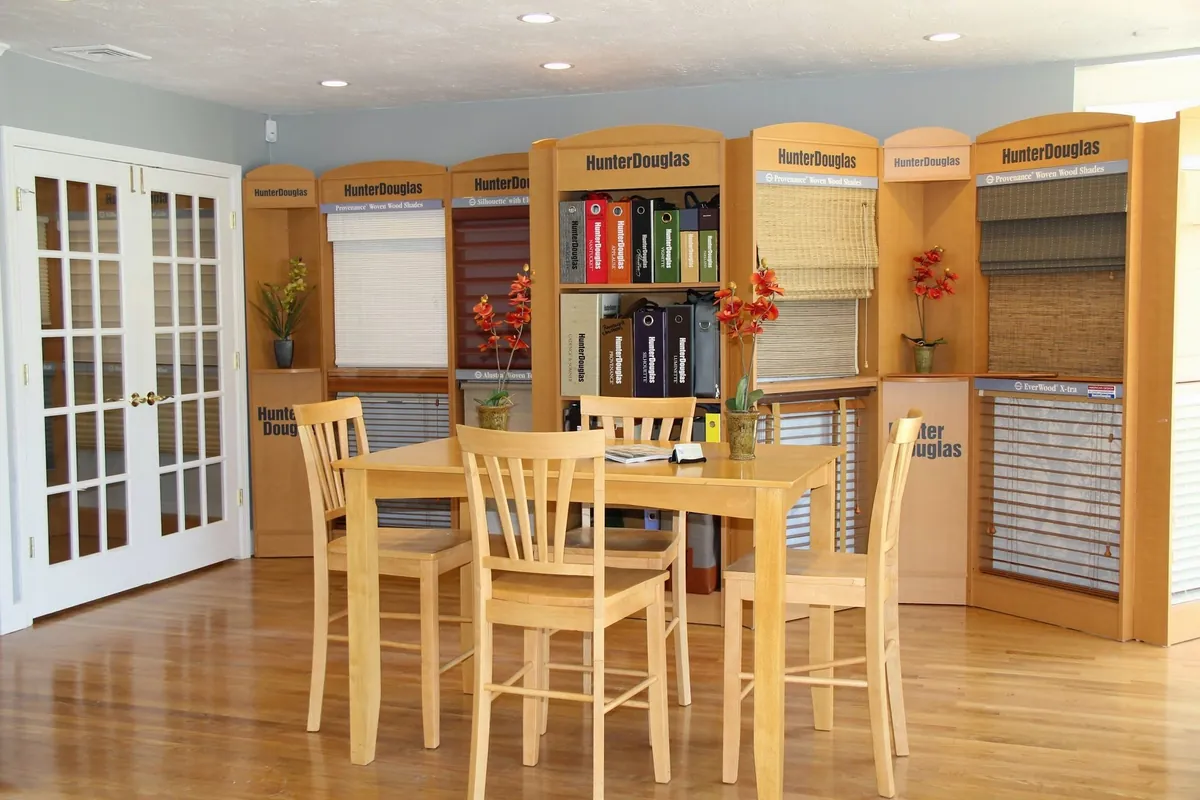
Blinds & Designs is a Hunter Douglas Gallery dealer. A formal colonial, a tall-sashed Victorian or a lower-village cape can choose from every Hunter Douglas product line we carry, from honeycomb and sheer shadings to shutters, drapery and PowerView.
Certified Hunter Douglas installers hang everything, from wide paired openings to layered shade and drapery treatments. Estimates cost nothing, and design consultations, automation and repairs sit alongside the products. Our closest showroom to Milton is Franklin, whose page lists the address and hours.
Questions from Milton
Should a double-width window have one shade or two?
It depends on how you use it. One shade across both is simplest; two sharing a headrail let you open each side separately; separate inside mounts keep the center mullion and the trim in view.
Do I need drapery as well as shades in a large formal room?
Not always, but in a room with high ceilings and wide walls, drapery panels beside a shade often bring the windows into proportion. The shade handles light and privacy, and the drapery adds softness and closes at night.
What suits a very tall window with an arched top?
Many owners leave the arch bare and fit a shade below it. A shutter shaped to the curve treats the whole window if you prefer it fully covered.
Can you motorize just the hard-to-reach windows?
Yes. Plenty of owners motorize only the high sash, the landing and the widest paired openings, and operate the rest by hand.
What does the estimate cost?
Nothing at all. We measure, write up the plan and hand it over, and the decision is yours whenever you are ready.
Talk to us about your house
A paired opening in a front parlor, a bay with a window seat, or every window of a post-war house in the lower village: new window treatments in Milton, MA, are worth choosing where they will hang. Ask for a consultation and the samples come to you, every window gets measured, and a free estimate stays with you afterward. Questions before booking go quickest through the call button.
To compare everything we carry side by side, see our window treatments page.