
Fifties houses, narrow side yards
Much of Holbrook was built in one burst after the war, largely through the fifties, and its streets still show it: capes and ranches on small lots, one after another, with standard openings throughout. The setbacks between houses are very short. Step out of a side door and the neighbor’s wall may be only a few strides away, with their kitchen window looking toward yours.
Window treatments in Holbrook, MA, are shaped by that closeness more than by anything unusual in the windows themselves. Fitting is simple, because the frames are regular. Deciding what to fit takes more care, because almost every window has a neighbor in view, and the aim is to keep each room bright without feeling watched.
The clearest way to choose is to look at what each kind of product does well in a house like this, then match it to the rooms.
Holbrook services at a glance
This is the full list of window treatments in Holbrook we handle, with a card for each and a link to its own town page.
Custom Blinds in Holbrook
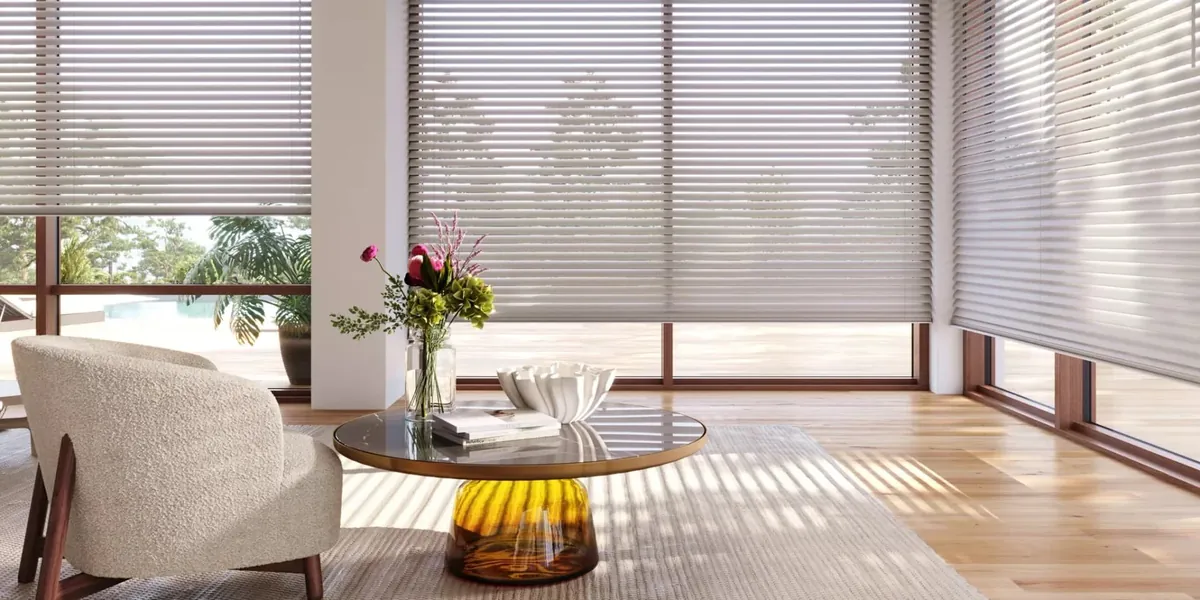
Horizontal blinds in wood, faux wood or metal, and verticals for a slider. The tilt is the privacy control a side window needs.
Cellular Shades in Holbrook
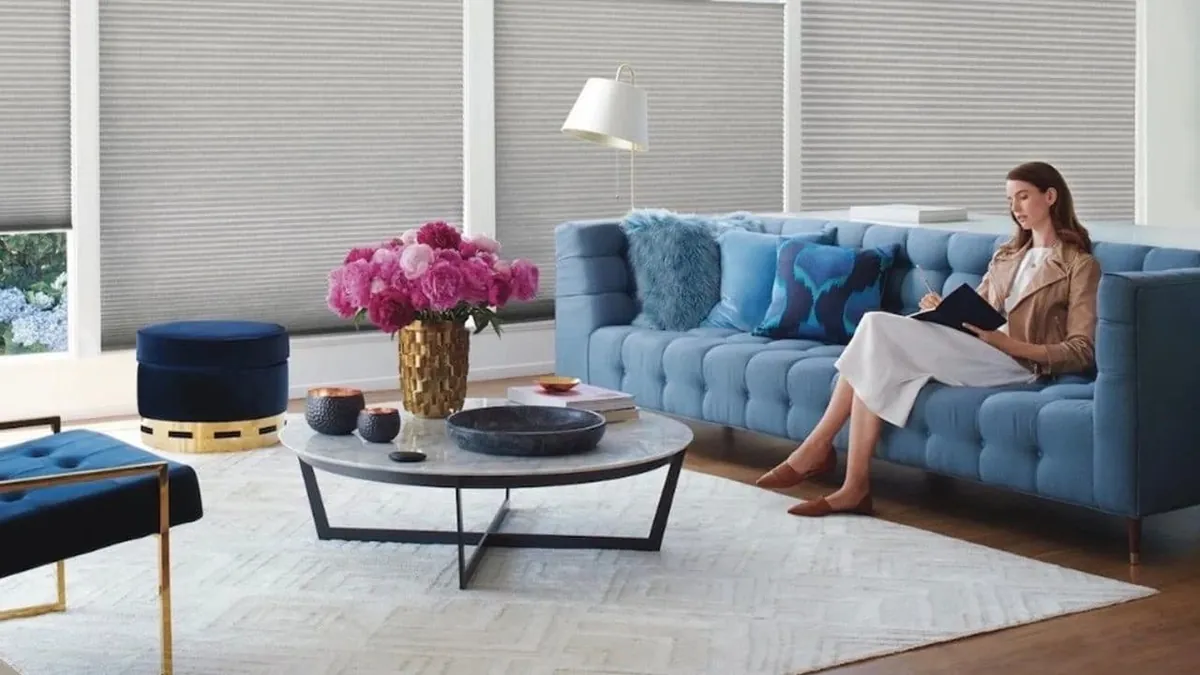
Duette and Applause cells in light-filtering or room-darkening fabric, with top-down, bottom-up versions for close quarters.
Roller Shades in Holbrook
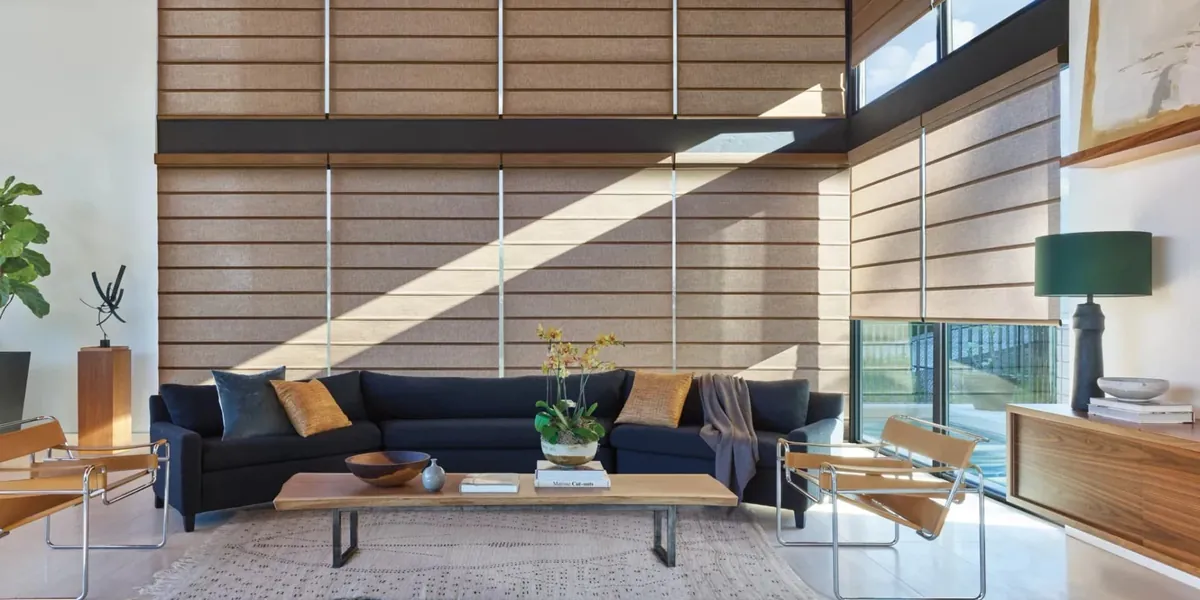
Roller shades and solar screens from Designer and Alustra, from sheer weaves that keep a view to blackout for bedrooms.
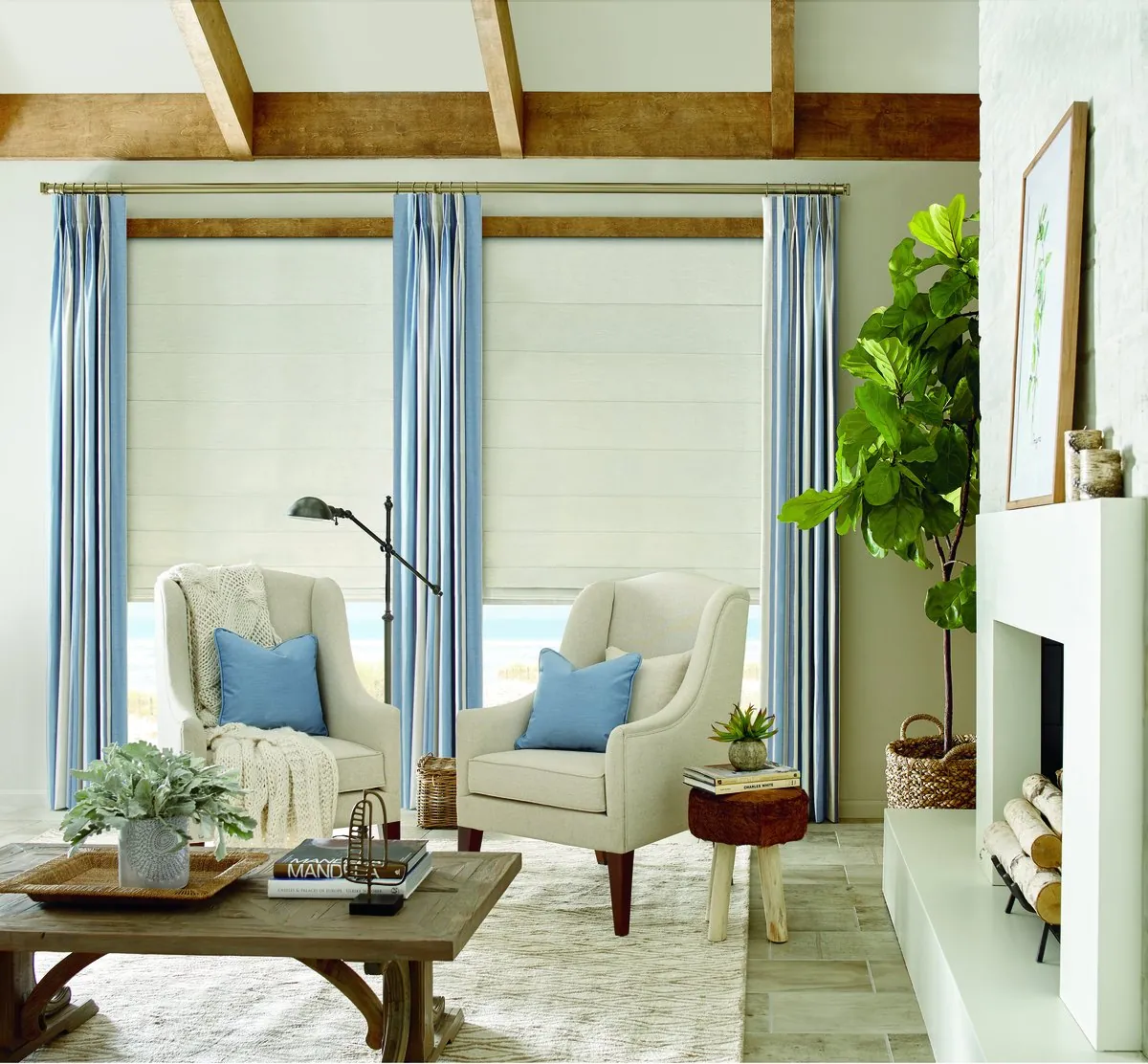
Roman Shades in Holbrook
Fabric romans by Vignette and Carole, flat-faced or folded, to soften a fifties living room.
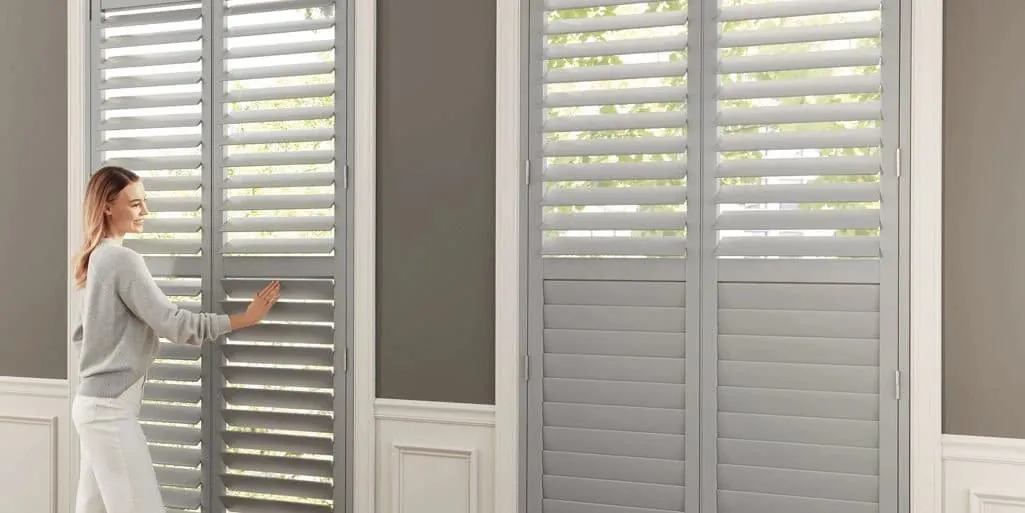
Plantation Shutters in Holbrook
Shutters from Palm Beach, NewStyle and Heritance, sized by louver and frame to standard cape and ranch openings.
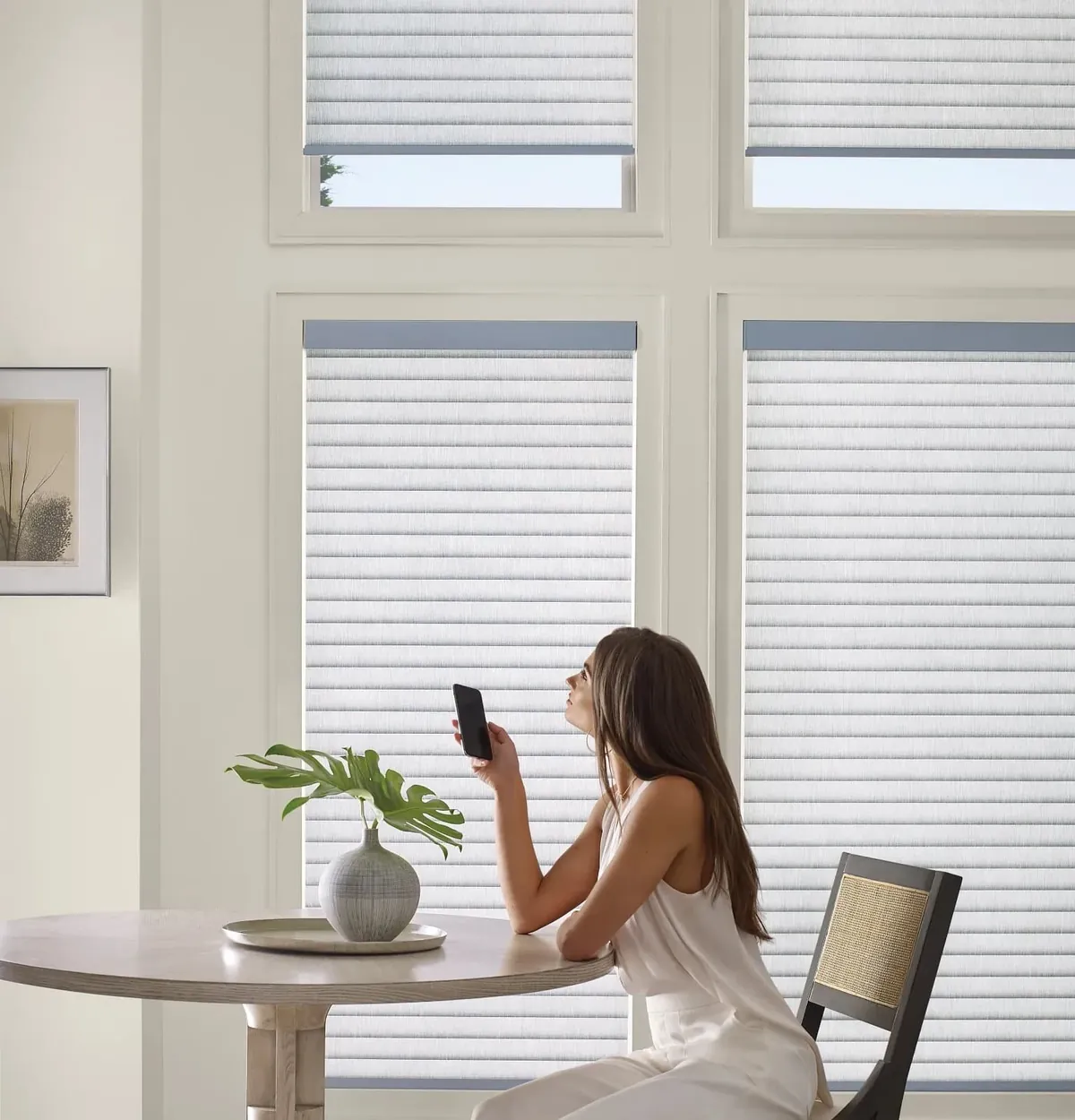
Motorized Blinds and Shades in Holbrook
PowerView motors, worked by remote, phone or schedule, for shades behind furniture or a whole house at once.
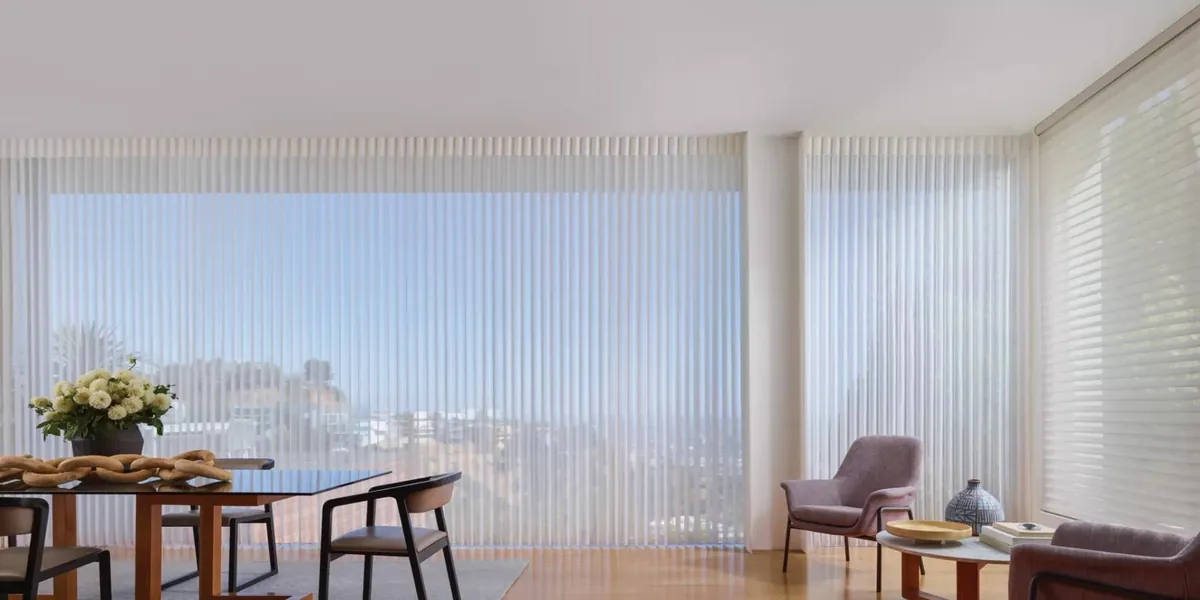
Hunter Douglas Dealer in Holbrook
Gallery dealer for Hunter Douglas: the complete range on offer, with certified Hunter Douglas installation.
The side-yard problem
On a small lot with a very short setback, the side windows are the hard ones. A bedroom, a bathroom, a kitchen and sometimes a dining corner all look out at the house next door, which may be close enough that you can see into each other’s rooms with the lights on.
The trick is to separate light from view. Daylight mostly comes from the sky, above the line of the neighbor’s windows; the view that bothers you is at eye level. A covering that blocks the lower glass while leaving the upper part open gives you both. That is why top-down, bottom-up shades, cafe shutters and blinds with tilted slats come up again and again in houses like these. Each one handles the same problem a slightly different way, and the product sections below explain how.
The front windows have their own version of the problem. With short setbacks, the sidewalk is not far from the living room, so the front of the house needs daytime privacy too, not just a covering for the evening.
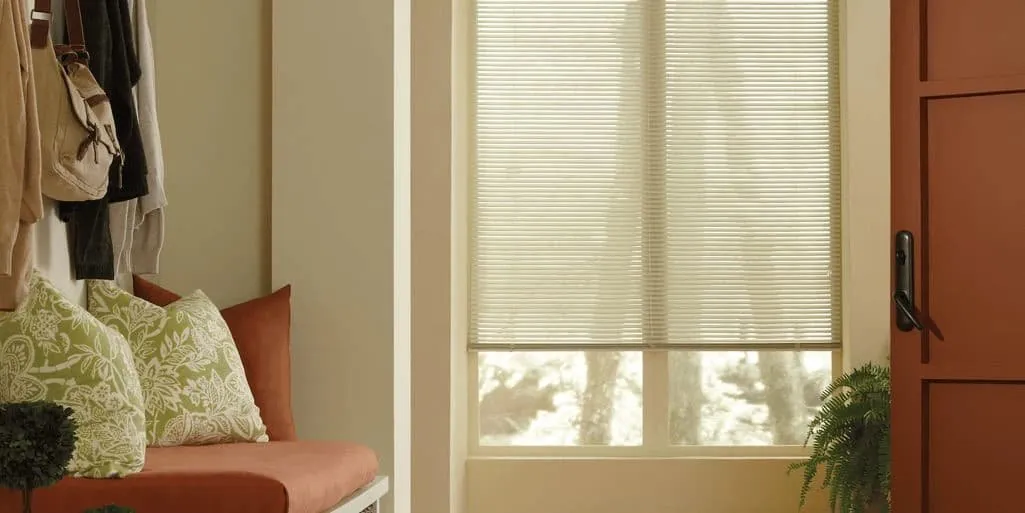
Blinds: control with a twist of the wand
Horizontal blinds are one of the most practical answers to a close neighbor. Tilt the slats upward and you see the sky while anyone outside sees your ceiling. Tilt them level and you get light and a view out. Close them and the room is private. You can do all of that without raising the blind at all, which keeps the room tidy.
Faux wood blinds are a common pick for kitchens and baths in a fifties house, and real wood blinds give warmth to a living room or a den. Metal blinds suit a small entry or a utility window. On a back slider, vertical blinds draw to one side so the door opens fully. For window treatments in Holbrook houses with plenty of side windows, blinds often end up on more of them than any other product.
Honeycomb shades: soft light, close neighbors
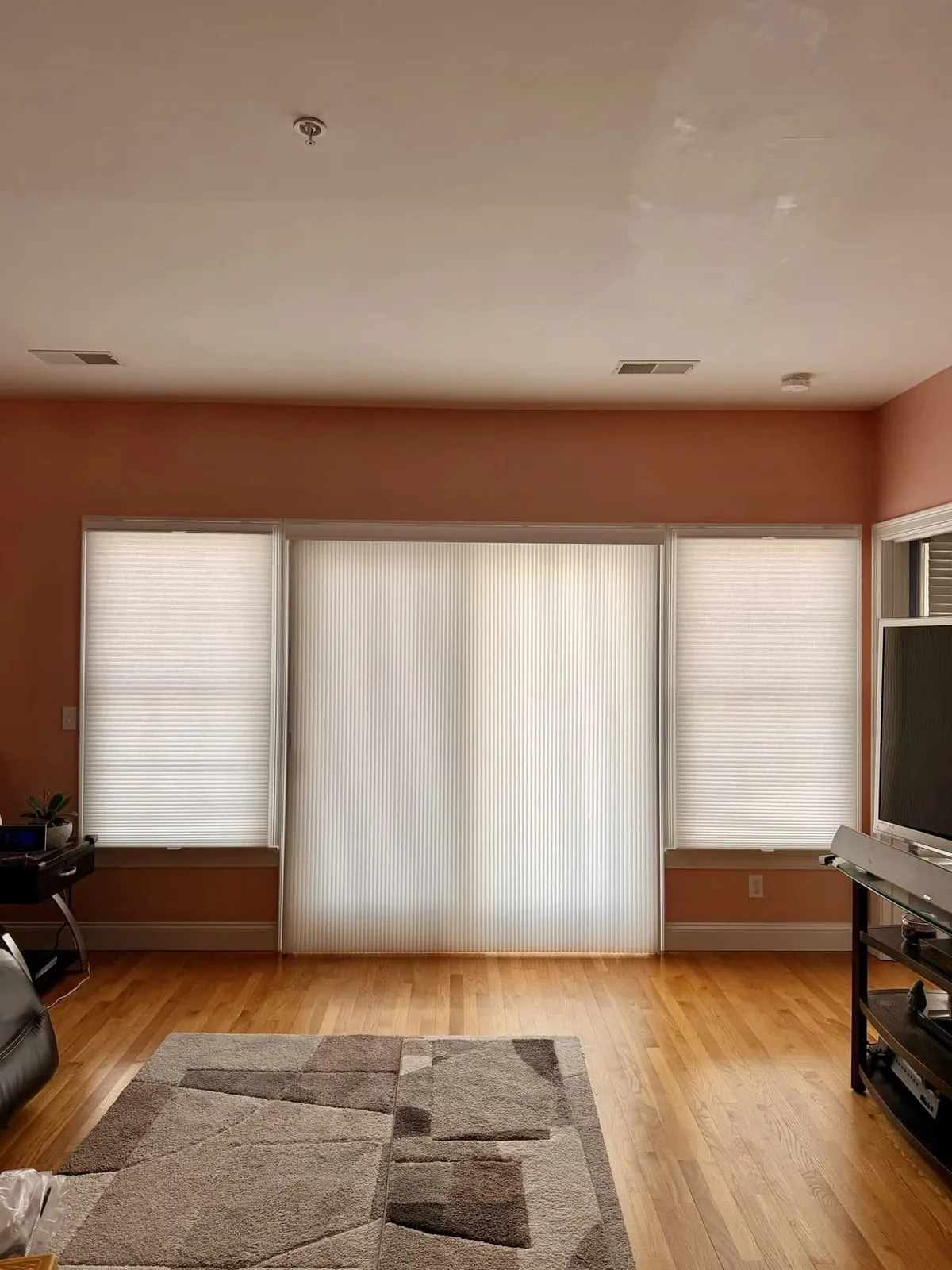
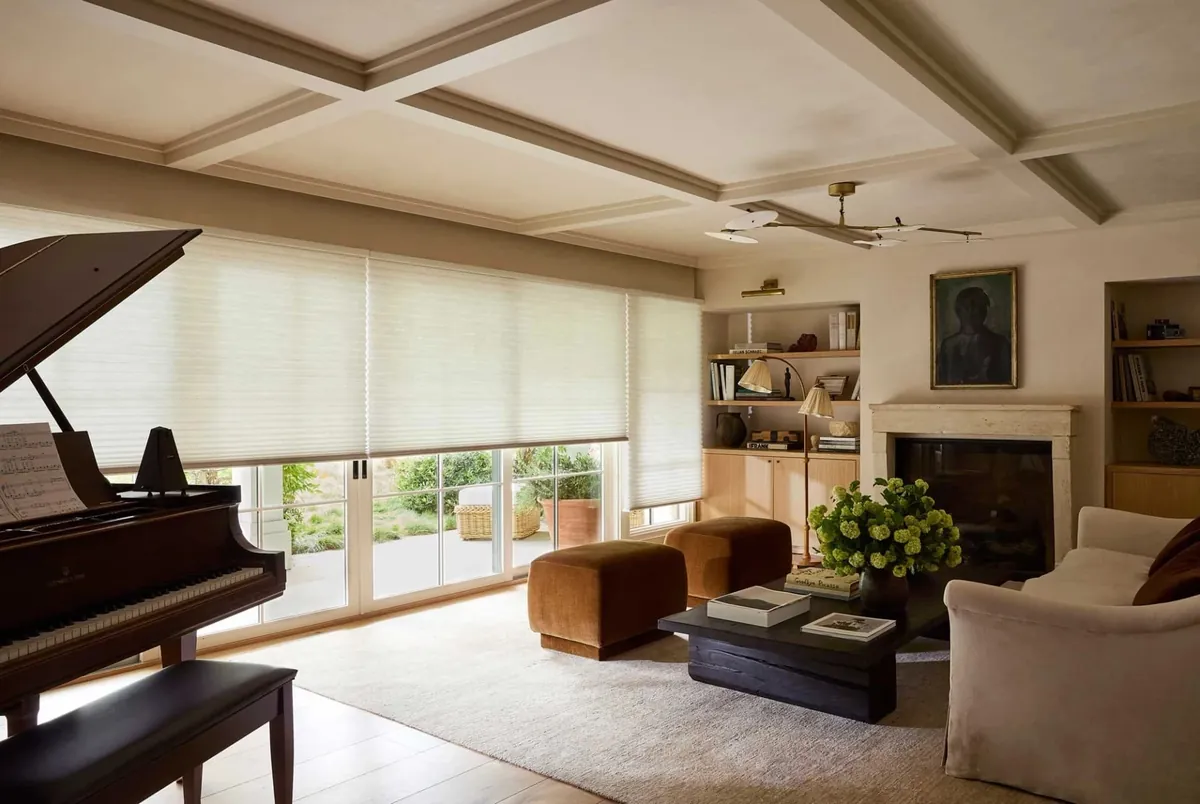
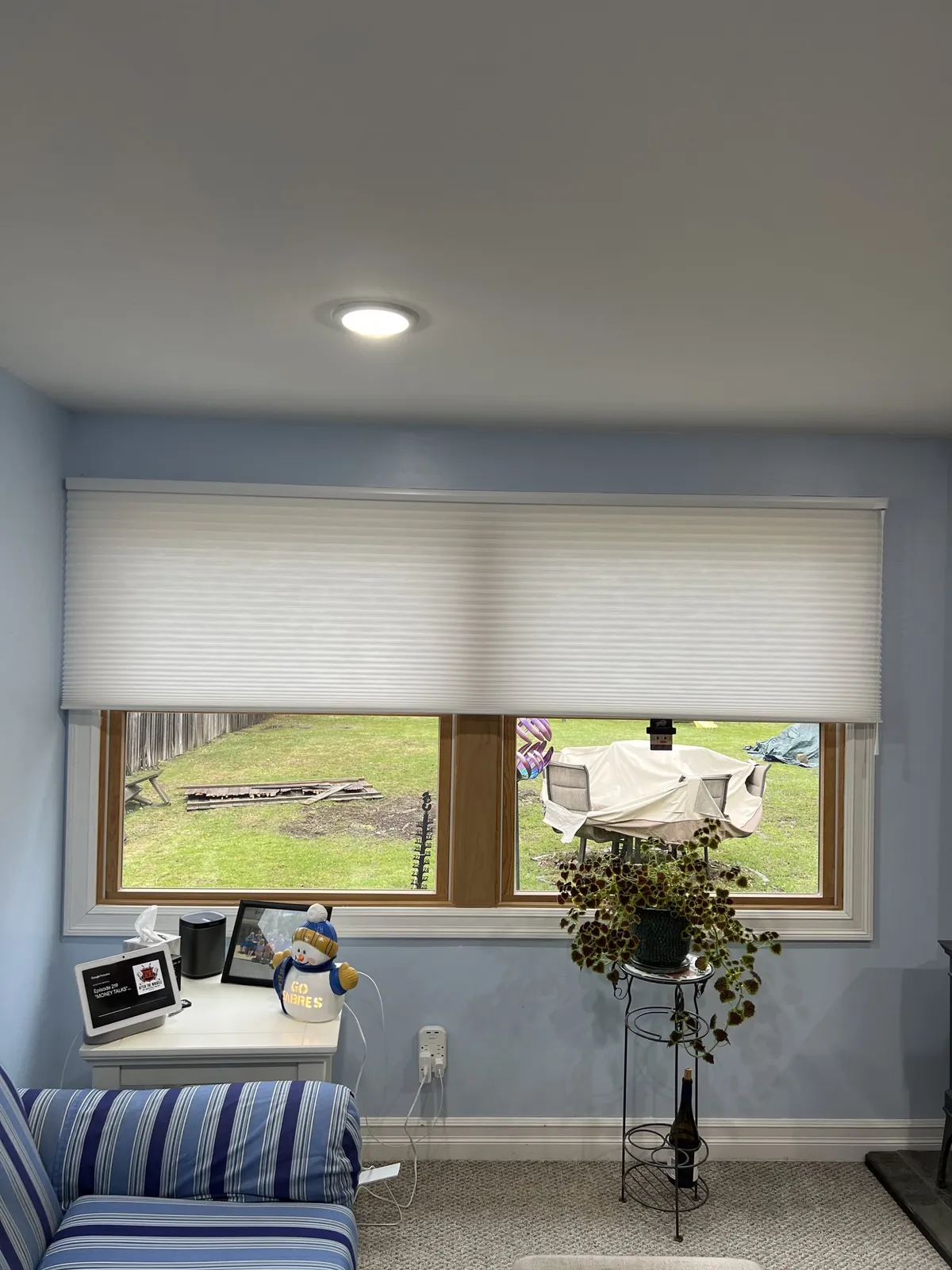
Duette and Applause honeycomb shades are fabric, which gives a softer look than blinds, and they come in light-filtering and room-darkening versions. A light-filtering honeycomb on a side window lets daylight through while blurring shapes, so the neighbor’s house becomes a soft glow rather than a clear view. A room-darkening one closes the view completely, which is what most bedrooms need.
The top-down, bottom-up style is the one to know about on a small lot. Lower the shade from the top and the lower glass stays covered, while the upper part of the window opens to the sky. In a side bathroom or bedroom, that one feature solves most of the privacy question without giving up light. Honeycomb shades also fold into a slim stack, so a short ranch window keeps nearly all its glass when the shade is up.
Roller shades and screens: simple, clean, flexible
Roller shades suit the plain lines of a cape or ranch. They wind onto a slim tube above the window and disappear when raised, leaving the glass fully clear. The fabric choice does the work: a sheer weave keeps some view out while softening the light, a light-filtering fabric blurs the view, and a blackout fabric darkens a bedroom completely.
Solar screens are worth a look for a west-facing living room, where the late sun can be harsh. Their openness decides the balance between view and glare, so a more open screen keeps more of the outlook and a tighter one cuts more glare. On a close street, a tighter screen also gives a little more daytime privacy.
Roman shades: a softer front room
A fifties living room with plain walls and standard windows can feel a little bare, and a roman shade is one of the easiest ways to soften it. Vignette and Carole fabric shades come in flat styles that look tailored and folded styles that look relaxed.
On the front of the house, a roman shade can face the room with a pattern while showing a plain, neutral back to the street. On a close street, a top-down roman is a good choice for a living room, giving privacy from the sidewalk and light from above. In a bedroom, a room-darkening roman looks warmer than a plain roller while still keeping out the early light.
Shutters: built in, close by
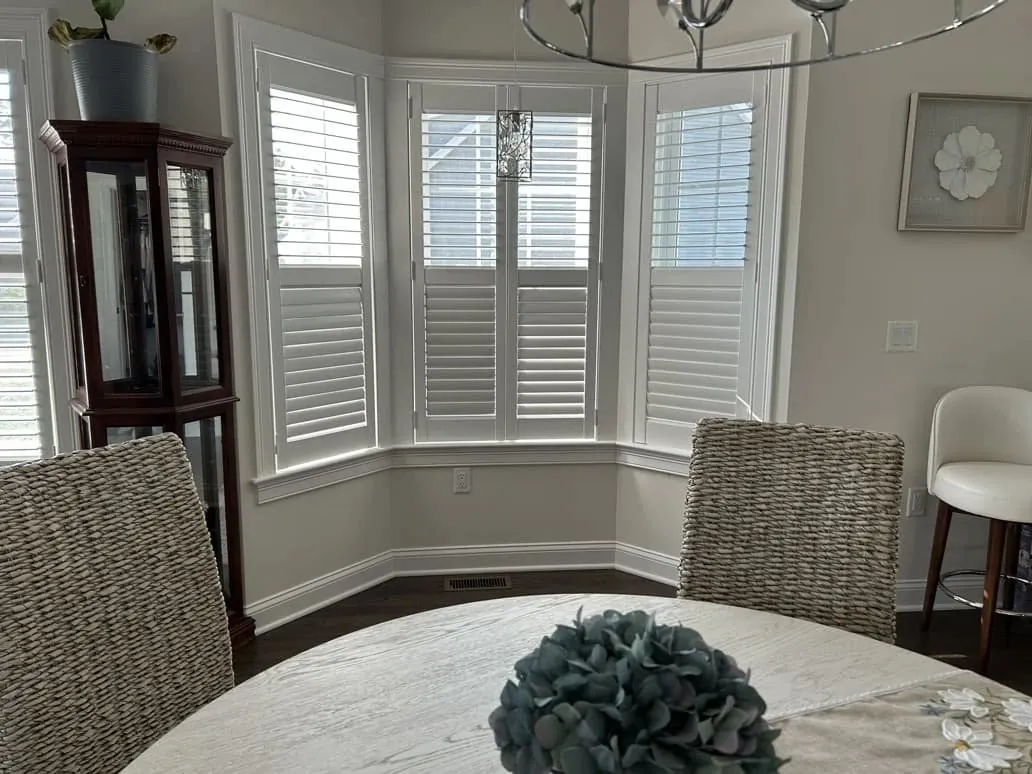
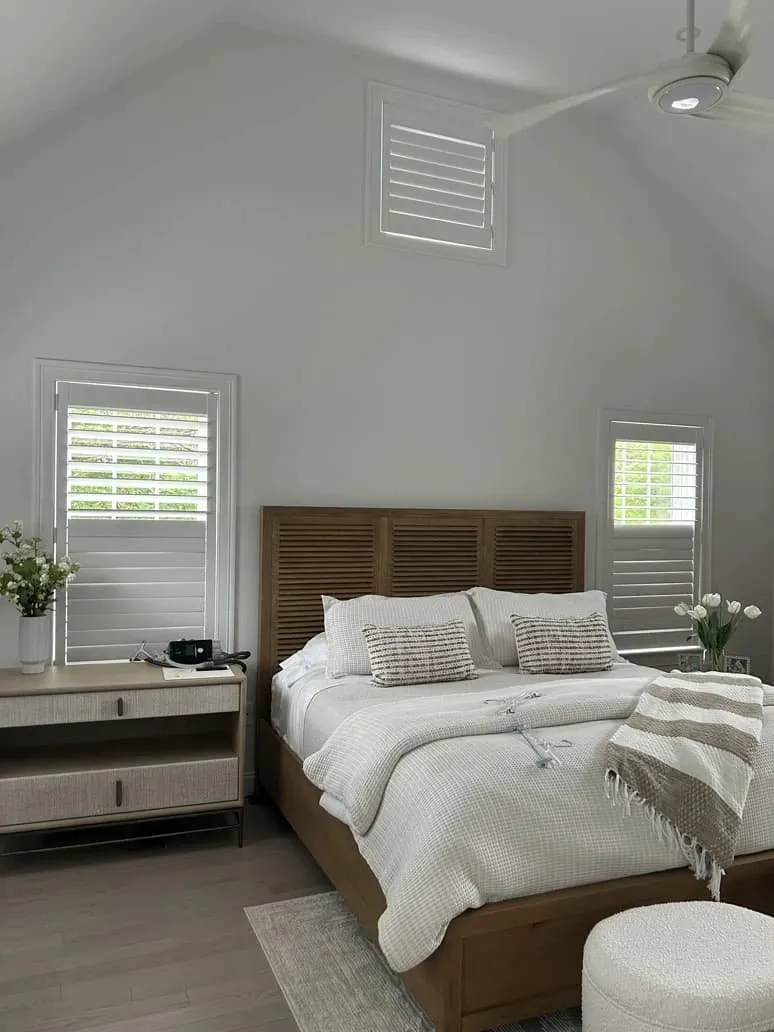
Shutters mount inside the frame and look like part of the house, which suits a cape or ranch where the trim is simple. On a close street they are especially useful, because they give fine privacy control: tilt the louvers down and passers-by see nothing while light still slips in, or swing the panels open to clear the glass completely.
Cafe shutters cover only the lower part of the window, which makes them a classic choice for a kitchen or bathroom facing next door. Full-height shutters work in living rooms and bedrooms. Palm Beach, NewStyle and Heritance shutters come in different louver sizes and frame styles, and on the short, standard windows typical here, a medium louver usually keeps the proportions right.
Sheer shadings: a filtered view in daytime
Sheer shadings have soft fabric vanes that open and close. With the vanes open, you look out through a gentle veil, and from outside the room is hard to make out in daylight. Turn the vanes closed and the shade becomes opaque for full privacy. In a front living room close to the sidewalk, that combination is very useful: daylight and a softened view of the street by day, complete cover once the lamps are lit.
They suit a wide ranch front window particularly well, where a single shading can cover the whole run. On side windows, the closed position deals with a neighbor’s view at any hour, while the open position lets you enjoy the light when nobody is around.
Woven shades: texture for plain rooms
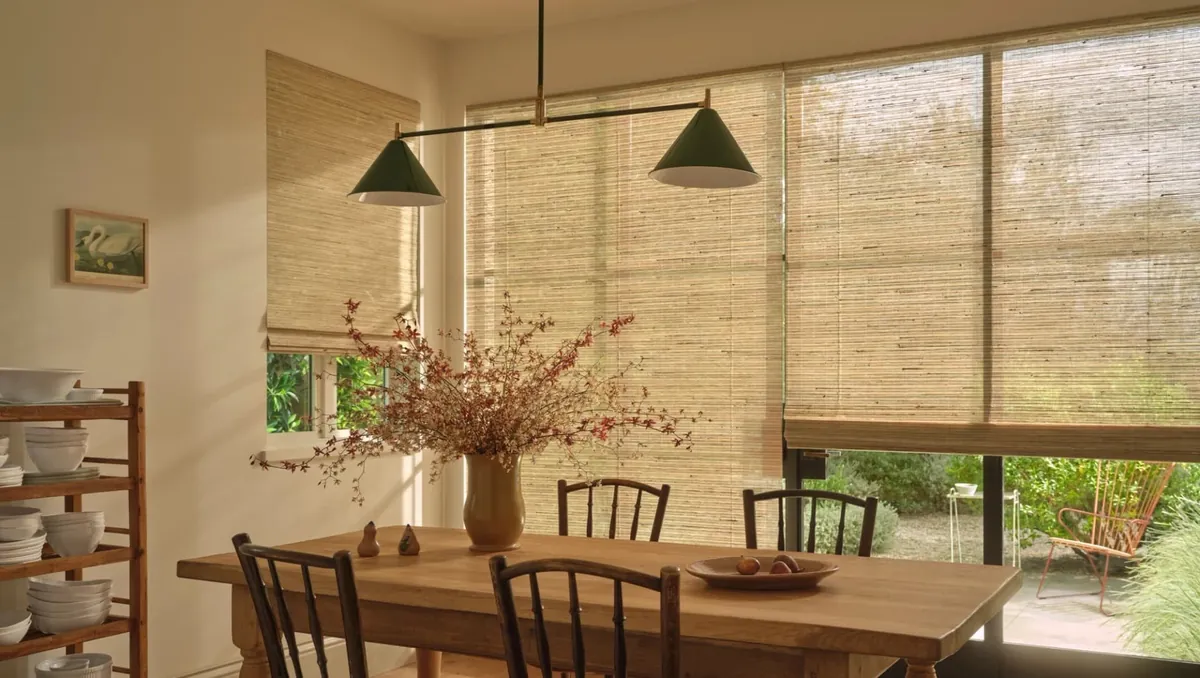
A fifties cape or ranch tends to have plain walls, simple trim and standard windows, which can make a room feel a little flat. Woven shades add texture and warmth with their natural look, and they work well in a den, a dining corner or a sunny back room facing the yard.
On a close street, keep in mind that a loose weave lets some view through, especially at night with the lights on. So they are best used where privacy matters less, such as a back room facing the yard, a dining corner seen only from your own garden, or an upstairs window above the neighbor’s sightline. On the front and the close sides, another product usually does the job better. On the street side, their natural color sits comfortably with almost any siding.
Drapery for a finished living room
Drapery panels at the sides of a window add height and softness, and in a fifties living room with a standard window they can make the room feel more generous. Hung a little above and beyond the frame, the panels make the window look larger and gather clear of the glass when open. Closed at night, they add another layer of privacy over a shade. Hunter Douglas drapery is part of what we offer, and we can coordinate it with the shade or shutters behind it.
Room by room in a Holbrook house
Putting the products together, window treatments in Holbrook capes and ranches often follow a pattern like this:
- Front living room. Shutters or a top-down honeycomb, for privacy from the sidewalk and light from above.
- Kitchen. Cafe shutters or faux wood blinds over the sink, with the upper glass open.
- Bathroom. A top-down shade or cafe shutters, keeping the side window private at every hour.
- Bedrooms. Room-darkening honeycomb shades or blackout rollers, with a white back facing out.
- Back slider. Vertical blinds or a vertical honeycomb shade that stacks to one side.
- Upstairs in a cape. Slim honeycomb or roller shades sized to the dormer windows.
The street side of every covering stays in one color, so the house looks consistent from outside even with several products in use.
Ranches and capes: what is different
A ranch puts every room on one level, often with the bedrooms along one side of the house, where they are likely to face a neighbor. It also tends to have a wide front window in the living room. A single honeycomb or roller across that front window looks clean; two shades on one headrail handle a very wide one.
A cape splits the house across two floors. Downstairs, the front rooms sit close to the street. Upstairs, the bedrooms under the roof have smaller windows set in dormers or gable ends, which are usually higher above the neighbor’s sightline and may need less privacy than the ground floor. A light-filtering fabric is often enough upstairs on the sides, with room-darkening fabric for sleep.
After the lamps come on
Daytime privacy on a close street is mostly about blocking a view at eye level. Evening privacy is a different matter, because a lit room is visible from outside through any fabric that lets light through. A light-filtering shade that hides you perfectly at noon will glow at night and show shapes moving behind it.
So for the rooms used after dark, it pays to pick with evenings in mind: a room-darkening fabric in the living room as well as the bedrooms, shutters that close tight, or blinds turned fully shut. Kitchens and back rooms facing only the yard can often stay with lighter fabrics, since nobody is watching from that side.
Planning the visit
Even with standard openings, the right choice depends on how close each window is to the next house and which way it faces, which is easiest to see on site. Our shop-at-home service is run from Canton, where there is no shop to visit, so your consultation takes place in your own house. We bring the vans full of samples, which means the showroom comes to you.
- Pick a time on the Request a Consultation page, or use the call button to book.
- Samples come in with the consultant: fabrics, slats, shutter louvers and a PowerView remote.
- We stand at each side window and look at it from the neighbor’s angle as well as yours.
- Product options are compared side by side, blinds against honeycomb against shutters, in your own rooms.
- Each opening is measured and noted.
- We leave a free estimate for you to look over without any pressure.
Read about the Canton shop-at-home service, and see free estimates for what the estimate includes.

Motorized shades on a close street
PowerView is handy in a small house where furniture often sits in front of windows and where privacy changes with the time of day. Shades are grouped and run from a remote, a phone app or schedules: the side bedroom shades stay lowered from the top through the day, the front room closes as evening comes on, and everything opens together in the morning. The way each motor is powered gets decided with you on the day of the visit. Our motorized blinds and shades in Holbrook page goes into control.
Putting older coverings right
Fifties houses have often been through several sets of blinds over the years. If yours have a broken cord, a tilt that has stopped or a shade that sags at one end, it is worth having them looked at before replacing anything. We are happy to take a look at window coverings you already own and give an honest view. Our blind and shade repair page has more.
A Gallery dealer on your street
Gallery is a level of Hunter Douglas dealership, and Blinds & Designs holds it. That opens the full Hunter Douglas range to a Holbrook cape or ranch: honeycomb, roller, roman, sheer and woven shades, blinds, shutters, drapery and PowerView motorization.
Hunter Douglas certified installers fit everything we sell, from a single side bathroom shade to every window in the house. We also offer free estimates, interior design consultations, automation and repairs. If you would like to visit a showroom, Franklin is our nearest to Holbrook; the address and hours are on its page.
Questions from Holbrook
My neighbor’s house is very close. Which product gives the most privacy without losing light?
A top-down, bottom-up honeycomb shade lowered from the top, cafe shutters, or blinds with the slats tilted up. All three cover the glass at eye level while letting daylight in from above.
Blinds or shades for a fifties ranch?
Both work well. Blinds give fine control with a tilt and suit kitchens and baths; honeycomb and roller shades give a softer look and room-darkening options for bedrooms. Many houses use both.
Can shutters fit standard ranch windows?
Yes. Standard, square openings are ideal for inside-mounted shutters, and a medium louver usually suits the window size.
How do I keep the outside looking neat with different products in each room?
Keep the street-facing side of every covering in one color. White or soft neutrals suit almost any house.
Do estimates cost anything?
No. Every estimate is free, and you can take as long as you like to decide.
Take the first step
A side window facing next door, a front room near the sidewalk, or every opening in a fifties cape: new window treatments in Holbrook, MA, are best chosen in the house they are for. Request a consultation and we will come with samples, measure every window and leave you with a free estimate. If you would like to talk first, the call button is the quickest way to reach us.
To compare everything we carry side by side, see our window treatments page.