
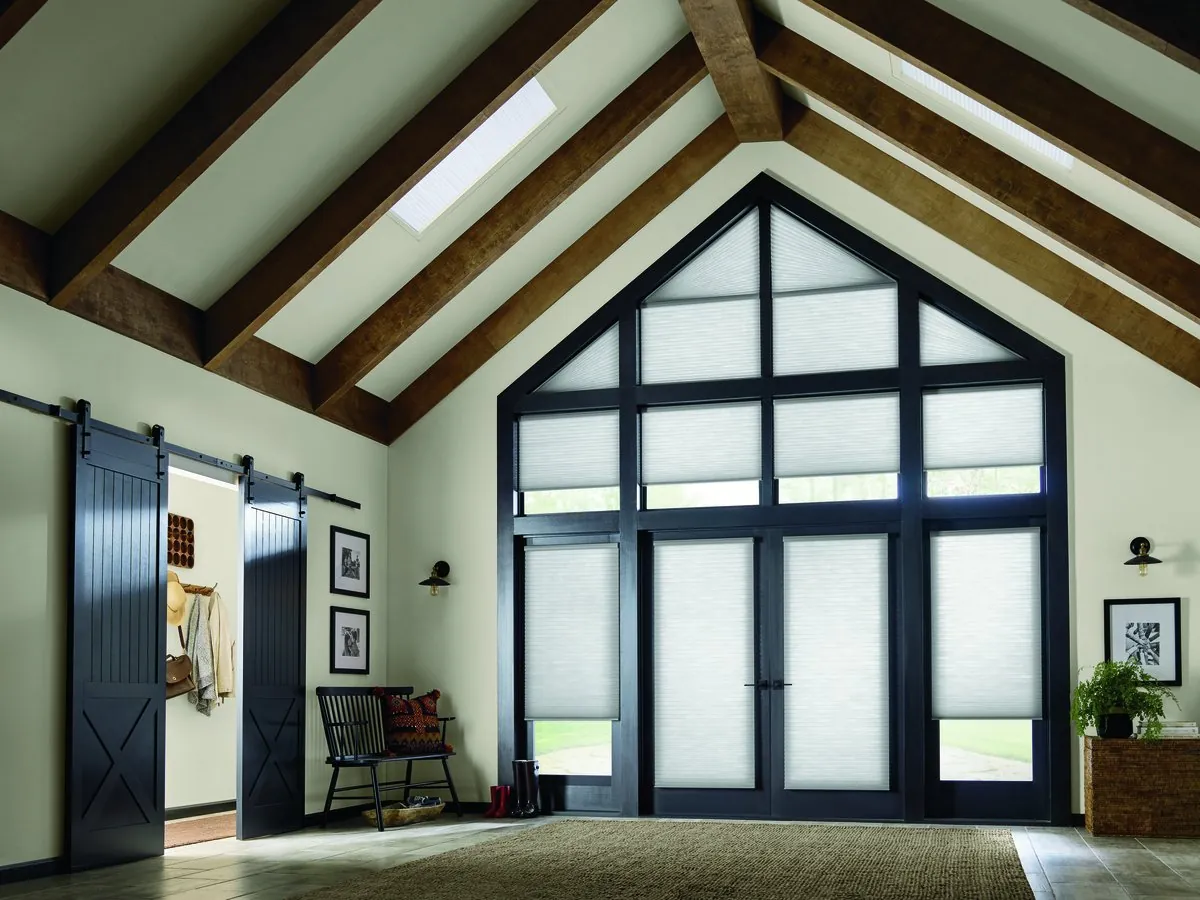
From standard sash to a two-story foyer
The housing here runs in three broad groups. Post-war colonials line many of the streets, with regular, standard-sized windows. Large newer houses sit on wooded lots, and the biggest of them open with a two-story foyer where a tall stack of glass rises over the front door. Near Needham Center, older Victorians bring taller sash, bays and decorative trim.
Planning window treatments in Needham, MA, depends on which of those houses you live in, and sometimes on which room. Most openings in the newer stock are standard sizes that take almost any product cleanly. The foyer is the exception: windows set high above the floor, seen from inside and out, and hard to reach without a ladder.
We look at each room on its own terms, and then make the house read as one.
Our Needham services
Every service below has its own page for the town. Choose a card to go there.
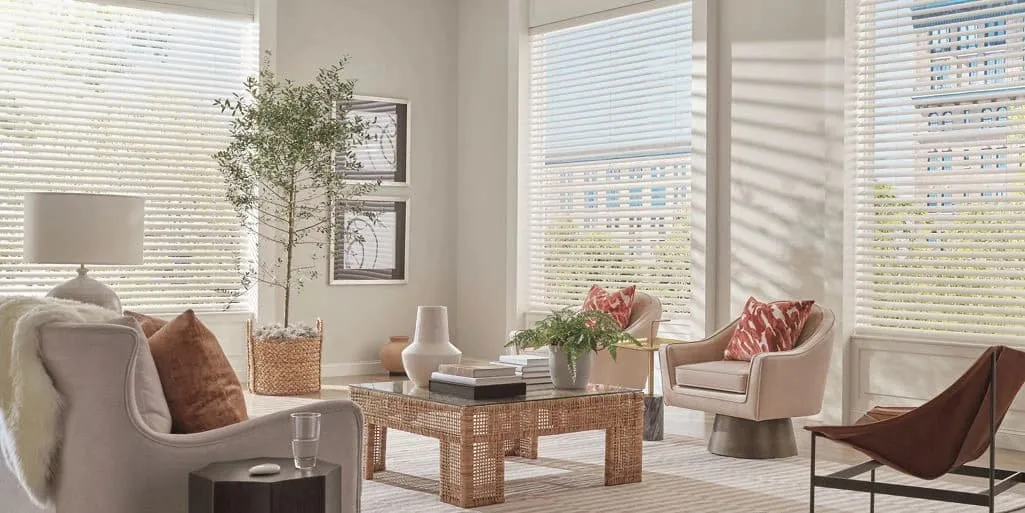
Custom Blinds in Needham
Wood, faux wood, metal and vertical blinds, chosen for material and how you want them to operate.
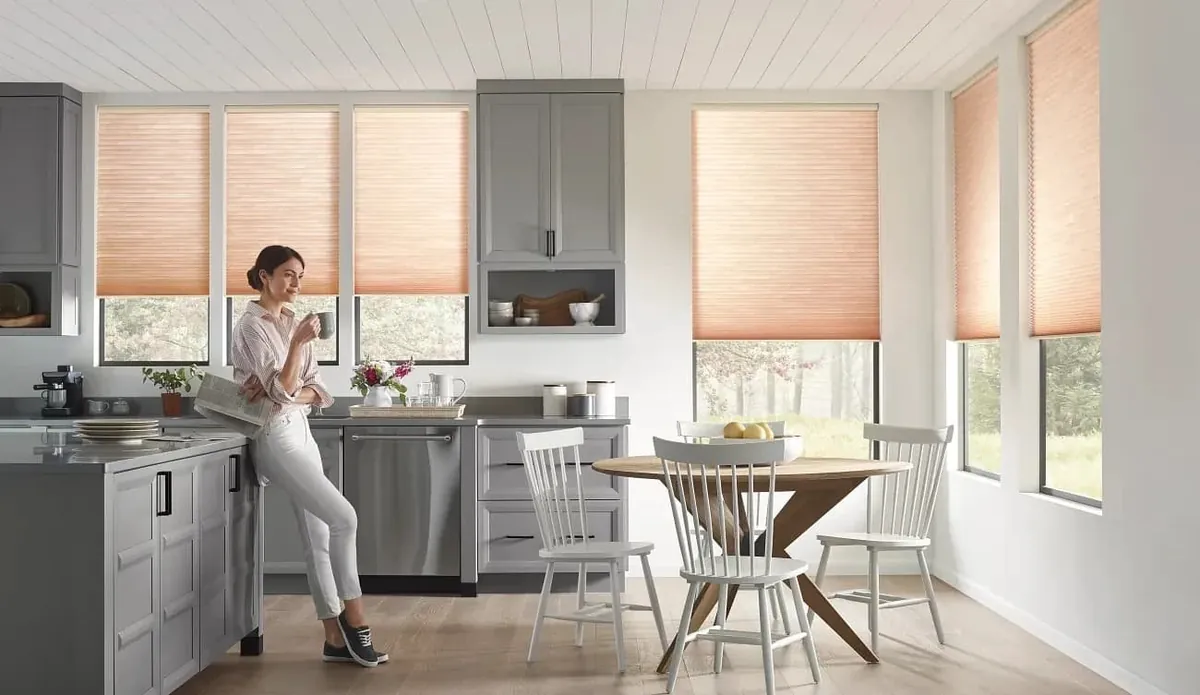
Cellular Shades in Needham
Duette and Applause honeycomb shades that fit standard colonial openings neatly inside the frame.
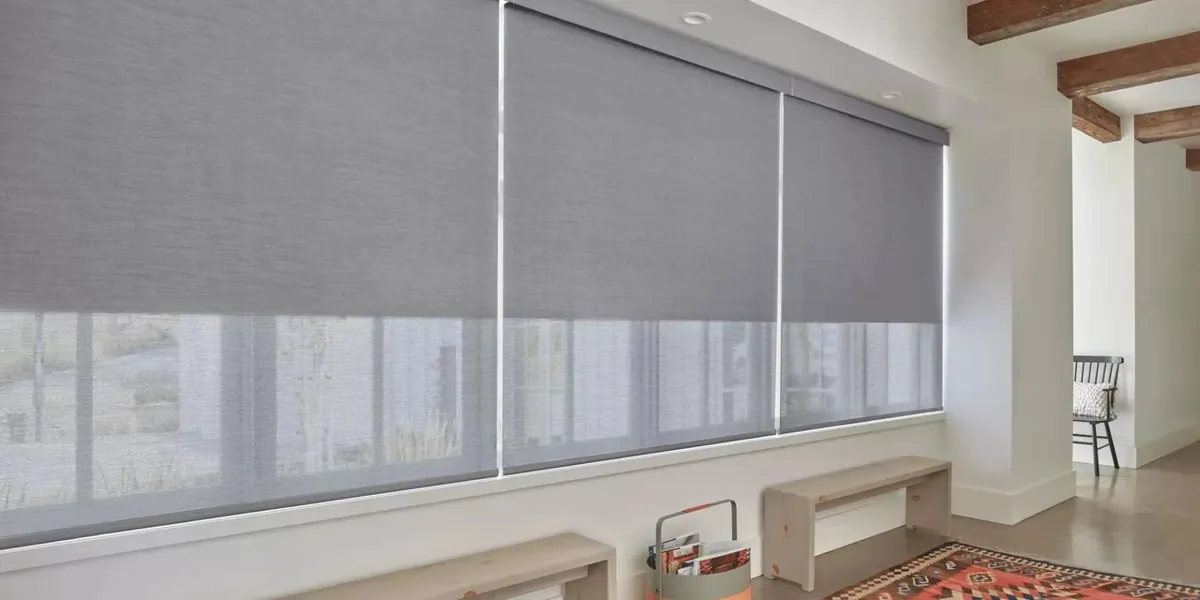
Roller Shades in Needham
Designer and Alustra rollers and screens, simple lines for a modern kitchen or a long run of windows.
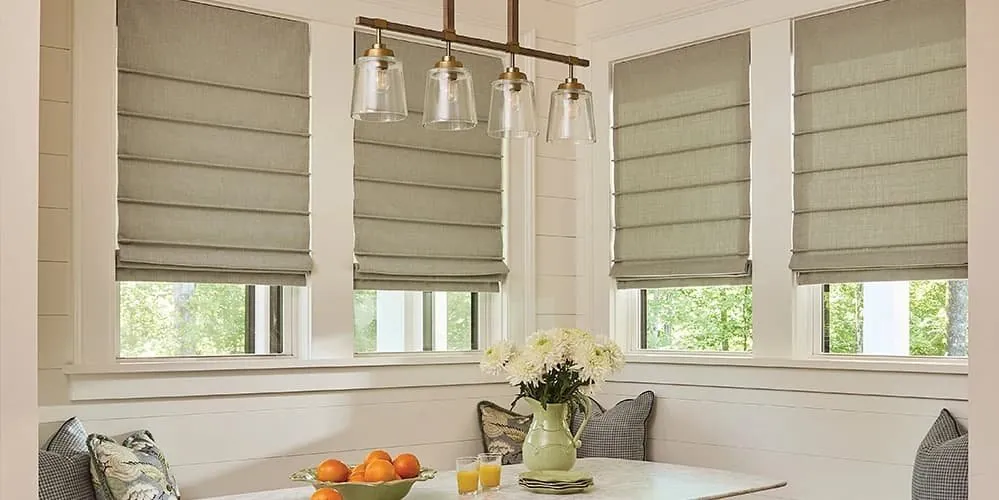
Roman Shades in Needham
Vignette and Carole fabrics, flat or folded, for a breakfast nook, a Victorian bay or a bedroom.
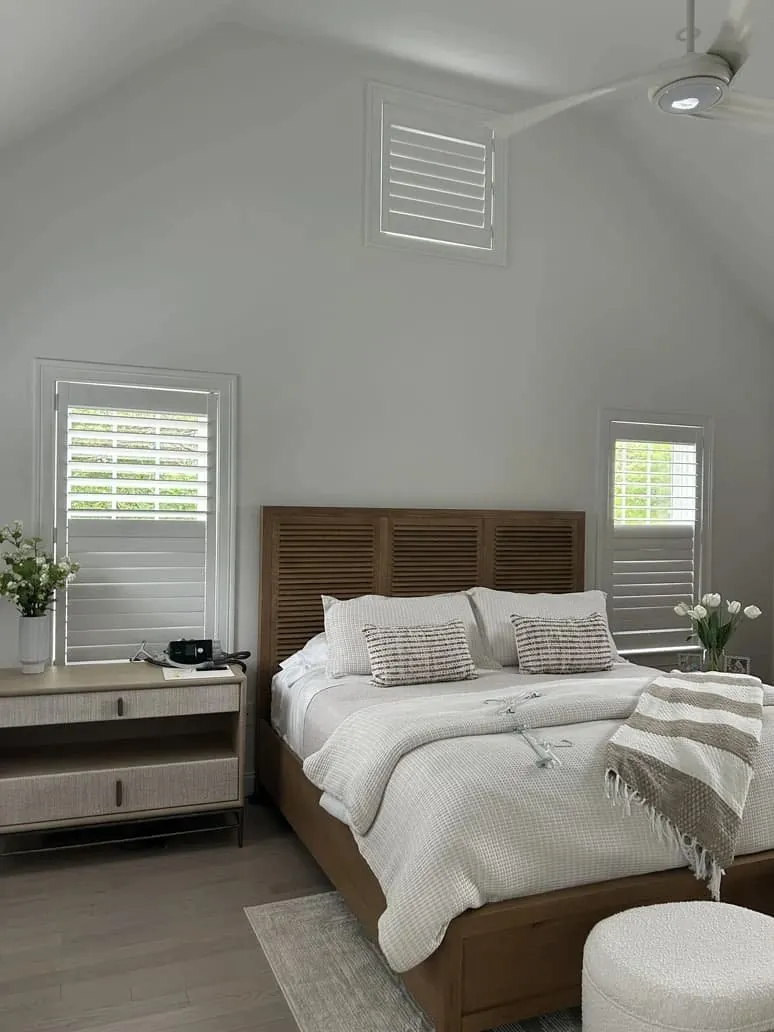
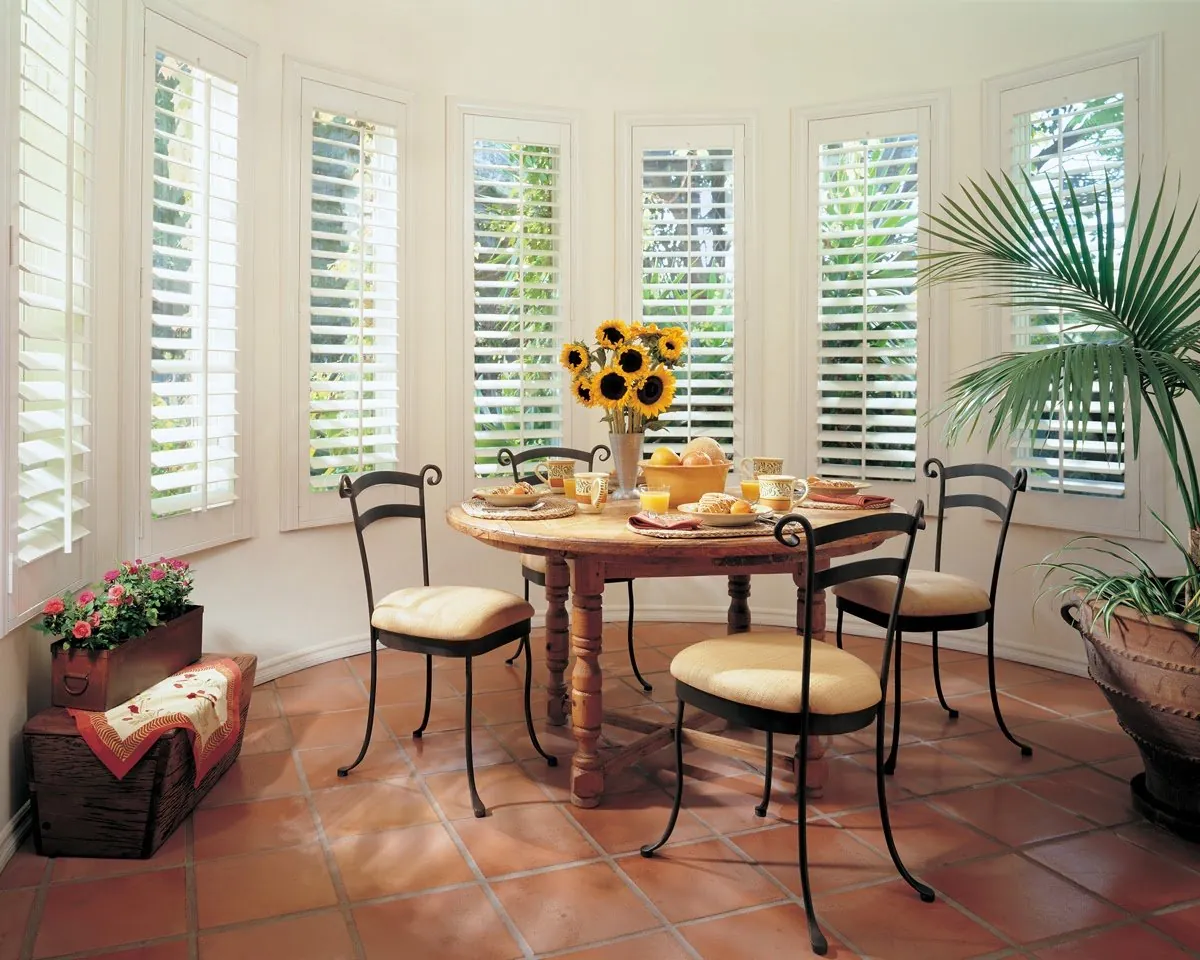
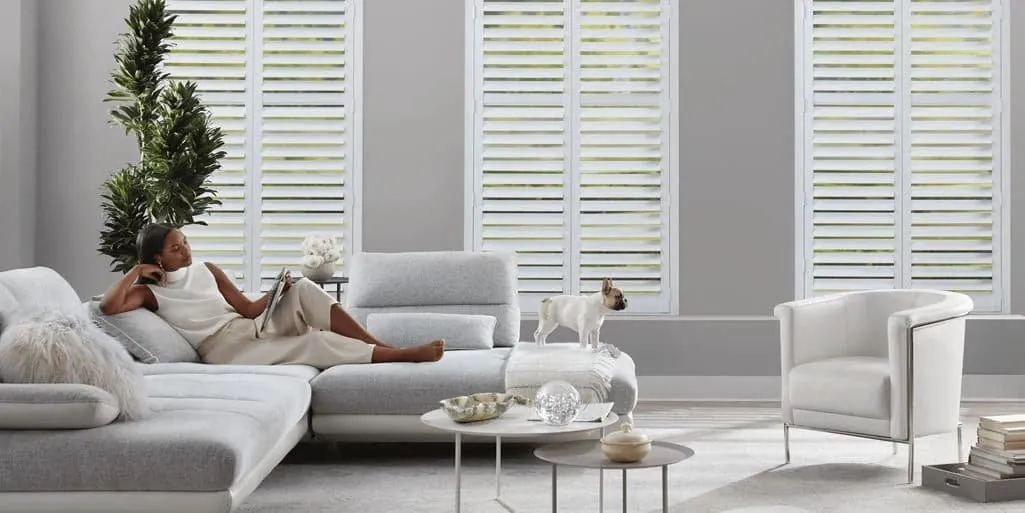
Plantation Shutters in Needham
Palm Beach, NewStyle and Heritance, from classic colonial fronts to shaped panels for an odd window.
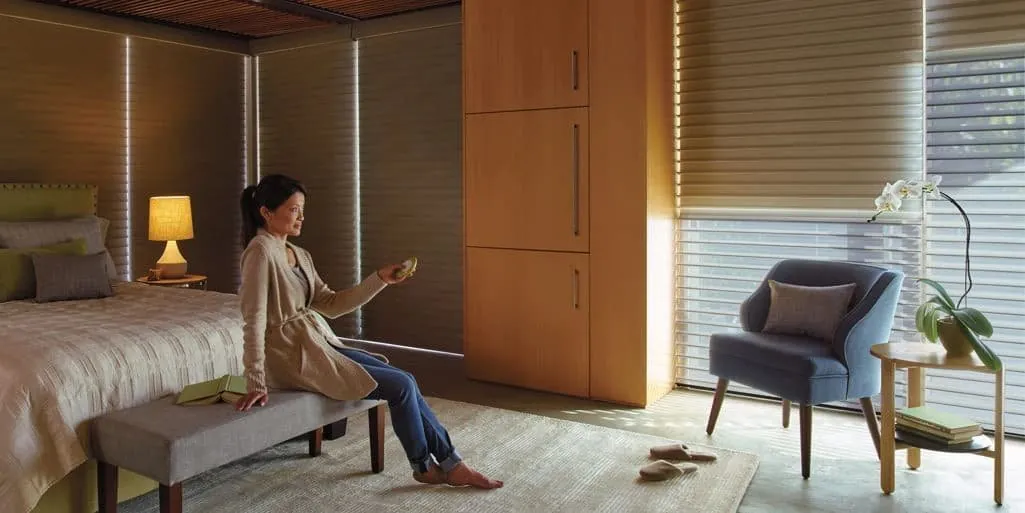
Motorized Blinds and Shades in Needham
PowerView for the foyer glass nobody can reach, run from a remote, an app or a schedule.

Hunter Douglas Dealer in Needham
Our Gallery dealer standing opens the full catalog, and certified Hunter Douglas installers do the fitting.
The two-story foyer
The largest newer houses tend to open with a dramatic entry: a front door with sidelights, a transom above it, and a second tier of windows near the ceiling, sometimes topped with an arch or a half-round. From the street, that stack of glass is the face of the house. From the landing upstairs, it is the brightest view in the hall.
Foyer glass raises three questions. First, does it need covering at all? Many owners leave the upper tier bare, because it lets daylight flood the stairs and sits too high for anyone to see in. Second, if it faces south or west, does the sun on the stairs and the floor become a problem in the afternoon? And third, if it does need covering, how will anyone reach it?
That last question usually decides the product. A shade on a window high above a stair is only useful if it can be raised and lowered without a ladder, which is where motorized shades earn their keep. Shapes matter too: a half-round or an arch can be left open above a shade on the rectangle below, or fitted with a shaped shutter. For the sidelights, a slim shade fixed top and bottom stays put when the door swings.
Night changes the picture again. With the hall lights on, a tall foyer window shows the stair, the landing and anyone crossing it to the whole street, and the house can feel exposed even though nobody sees in by day. Some owners cover only the lower tier and the sidelights for that reason, leaving the high glass open, and lower a shade on the upper tier only on evenings when the hall is lit late.
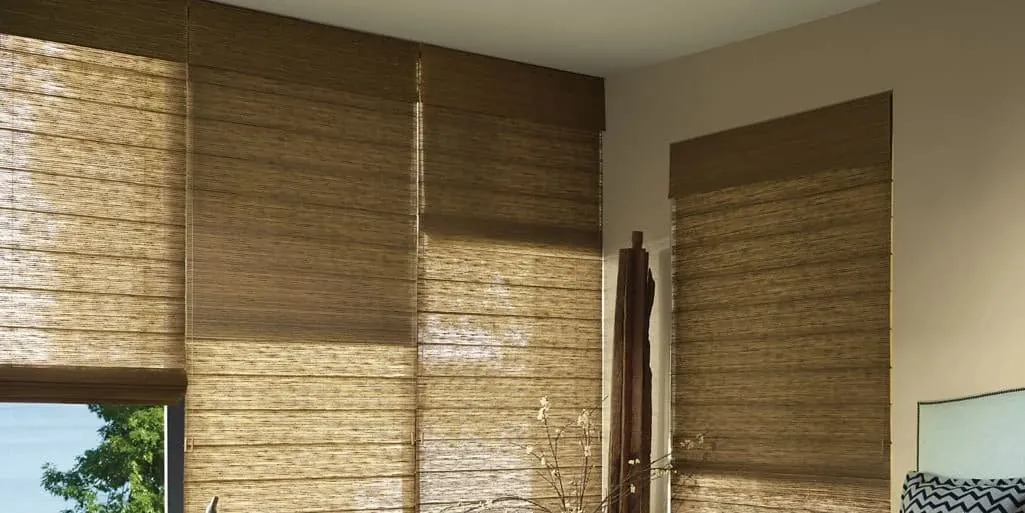
Post-war colonials with regular openings
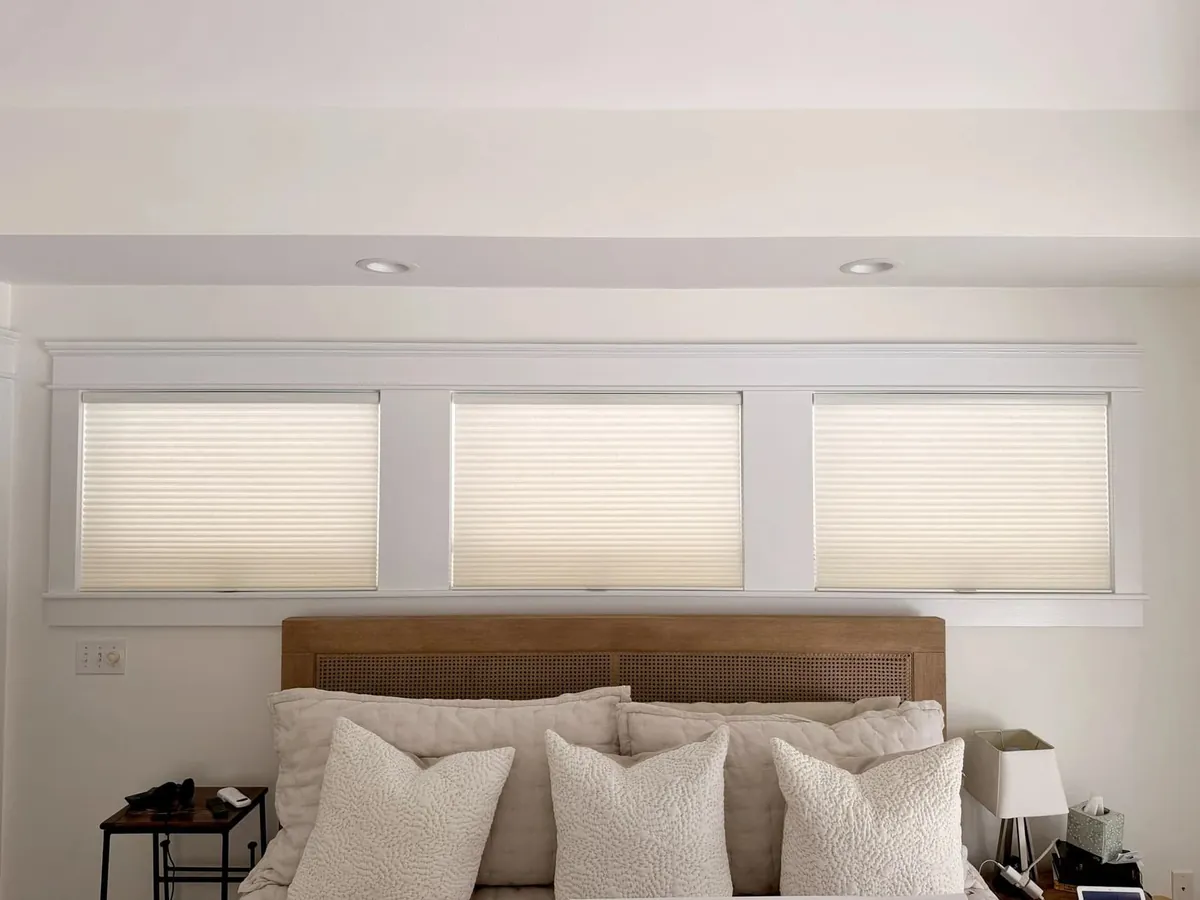
The post-war colonials are among the easiest houses to plan for. Their windows tend to be a consistent size from room to room, set in plain trim, so a single product can run through the house and inside mounts give a clean, even line.
Window treatments in Needham, MA, for a colonial often follow a familiar pattern. Honeycomb shades in the bedrooms, light filtering in the living rooms and room darkening where people sleep. Shutters on the front windows, where they give the house a finished look from the street. Faux wood blinds or cafe shutters in the kitchen and bath. A vertical honeycomb shade or vertical blinds on a back slider to the yard.
That pattern is only a starting point. A family room added on the back of a colonial often has bigger windows than the rest of the house, and a converted attic bedroom may have a knee wall and a small gable window. We plan those along with the original rooms so nothing looks tacked on.
Victorians near Needham Center
Around the center, older Victorians have a different character: taller, narrower sash, deep window trim, sometimes a bay at the front and a stained or leaded pane on the stair. These houses reward coverings that respect the woodwork.
Inside mounts work well where the trim is handsome, so the casing frames the shade. A bay of three or five angled windows needs each shade set to the same height when raised, so the bay looks whole. Roman shades soften the angles of a bay, while shutters with a divider rail can line up across all its windows. A decorative pane on the stair is usually best left uncovered.
The tall sash in these older houses also sits higher off the floor than in a newer house, and the top rail can be well above easy reach. When a shade has to clear that much glass, how compact it stacks when raised matters, because the stack sits across the brightest part of the window. We hold a sample at the head of the sash to show you how much light stays open before you choose.
Lots under the trees
Many of the newer houses sit on wooded lots, set back from the road with tall trees close to one or two sides. That means some rooms stay dim through the summer while others, facing a clearing or the back lawn, get plenty of sun.
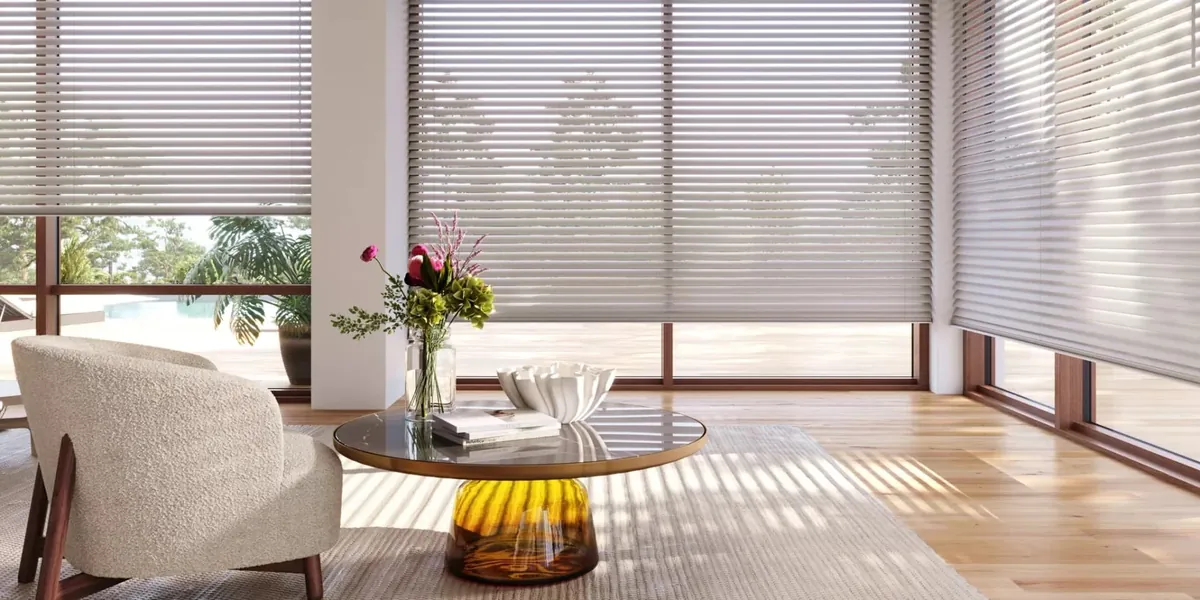
In a room shaded by trees, the aim is to keep every bit of daylight. Pale fabrics, light-filtering honeycomb shades and rollers that wind fully away leave the most glass open. On the sunny side, a solar screen or a light-filtering shade handles glare. A woodland outlook also lowers the privacy need in back rooms, so many owners choose a covering mostly for evening.
Big kitchens and open family rooms
The larger newer houses usually have an open kitchen and family room across the back, with a wide run of windows and a slider or French doors to a deck or patio. Because these rooms are seen together, their coverings should match.
A roller or a honeycomb shade carried across the windows and a vertical shade on the slider keep the space calm. Over the sink, choose something easy to raise with one hand. A breakfast nook with a bank of windows suits roman shades in a fabric that picks up the cushions on a banquette.
Mudrooms and the door from the garage
The newer houses, and many enlarged colonials, come in through a mudroom from an attached garage rather than through the front door. That room sees boots, bags and dogs, and often has a window over a bench and a glass-paneled door to the yard.
A covering here needs to be simple and sturdy in use. A metal or faux wood blind tilts for light and privacy without being raised, and a roller in a plain fabric keeps the room tidy. A glass-paneled door is best served by a shade fixed to the door itself, held at top and bottom so it moves with the door. Because the mudroom is usually the first room you see each day, keeping it in the same color family as the kitchen next to it makes the back of the house feel finished.
Colors for green, filtered light
Light coming through tall trees has a green cast in summer and a cool, flat quality in winter, and it changes how fabrics look. Warm whites, soft creams and light linen tones tend to brighten a tree-shaded room, while a stark white can look gray in that light. On the sunny side of the house, where daylight is plentiful, there is more room for deeper colors and patterned roman fabrics.
Choosing window treatments in Needham, MA, under trees is one of the best reasons to see samples at home: a swatch picked under store lighting can look quite different at your own window on a leafy July afternoon. We bring enough fabric to compare a few tones side by side in the rooms that matter.
Home offices and screen glare
Many houses now have a room set aside for work, often a spare bedroom or a den off the foyer. Glare on a screen is the usual complaint. The best answer depends on where the sun falls during working hours: a light-filtering honeycomb or a solar screen softens direct sun while keeping the room bright, and sheer shadings let you tilt the vanes as the sun moves across the day.
If video calls are part of the job, think about what is behind you. A shade that evens out the window light in the background looks far better on camera than a bright, bare window.
Bedrooms in colonials and newer houses
Bedrooms in the colonials are modest, with two or three standard windows, while the primary suite in a newer house may be large, with a sitting area, a walk-in closet with a window and a bath with a tub under the glass.
Room-darkening honeycomb shades or blackout rollers make a good start for sleep. Inside mounts in standard openings sit tight to the frame and keep light leaks small. In a primary bath, cafe shutters or a translucent shade give privacy at the tub while daylight comes in. Children’s rooms can follow the same plan in a lighter fabric, so the upstairs feels consistent.
Dressing the formal rooms
Both the colonials and the larger newer houses usually keep a formal living room and dining room at the front. These are the rooms where a fuller treatment makes sense.
A roman shade or a sheer shading inside the frame, with full-length panels outside it on a rod set close to the ceiling, adds height to standard windows and warmth to a big room. Painted shutters are the cleaner choice and match the front of the house to the rest of the street. In the larger houses, a formal dining room may have a tray ceiling or tall windows that can carry more fabric.
How a home consultation works
We serve the town through our Canton shop-at-home territory, which means the consultation comes to you rather than you going to a store. A consultant arrives with a van of samples, so we bring the showroom to your house and you see each fabric against your own walls and light.
- Use Request a Consultation to pick a time, or reach us through the call button.
- The consultant walks the house with you, starting where the light or the reach is hardest, often the foyer.
- Samples are held up at the windows in the rooms that matter most.
- Each opening is measured, foyer tiers, bays and sliders included.
- You get a free estimate to weigh up when it suits you.
To learn more, see how the Canton shop-at-home service works, or ask about interior design consultations if you would like help with color and fabric across the whole house.

Motorizing the windows you cannot reach
The foyer is the obvious place, but most larger houses have other awkward windows: a transom over a family room slider, a window above a tub, a high gable in a vaulted bedroom. PowerView lets you motorize just those, grouped and run from a remote, an app or a schedule, while the rest of the house stays manual.
A schedule can raise the bedroom shades in the morning and lower the west-facing ones in the late afternoon. How each motor is powered is planned at the visit. More on motorized blinds and shades in Needham.
Stairs, landings and the upstairs hall
Beyond the foyer, the stairs in a colonial usually turn at a landing with one window, and the upstairs hall may have another at the end. These windows are easy to forget but are seen every day. A simple honeycomb shade matching the bedrooms keeps the hall consistent. In the Victorians, a stair window with original trim often looks best with a shade mounted inside the casing.
Mixing old and new in one house
Many colonials and Victorians have been added to: a new family room, a primary suite over the garage, larger windows at the back. The old front and the new back can look like two houses if the coverings change completely between them.
The fix is to keep one thing constant. That might be a single color facing outward on every window, a shutter style used at the front and in the new family room, or one fabric family carried through the bedrooms old and new. Window treatments in Needham, MA, can then vary room by room on the inside without the house losing its thread.
Repairing what you already have
If your house came with good shutters or shades that have stopped working, it is worth asking whether they can be fixed before replacing them. A worn cord, a slipping tilt or a shade that sits crooked can often be put right. We welcome that work and will say plainly what makes sense. Details are on blind and shade repair.
A Hunter Douglas Gallery dealer for every room
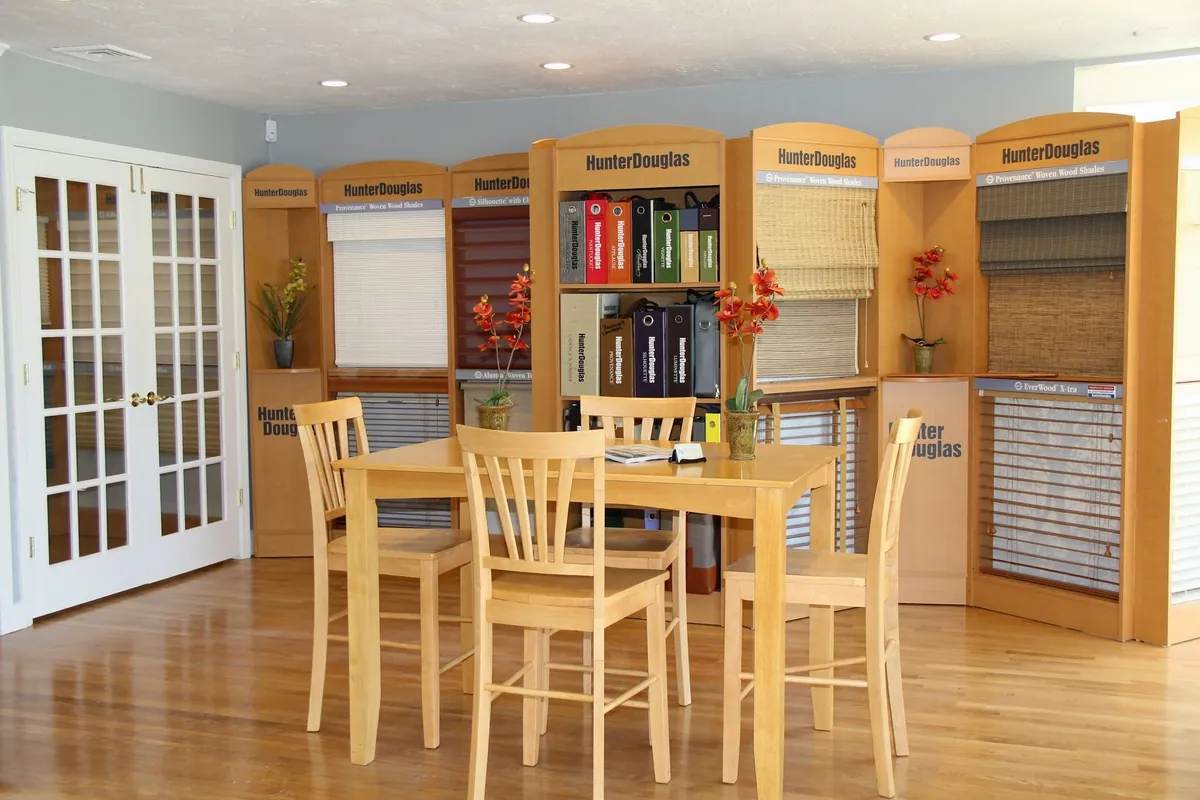
Blinds & Designs is a Hunter Douglas Gallery dealer. A post-war colonial, a Victorian near the center or a large newer house with a two-story foyer can draw on the whole range we carry: honeycomb, sheer and roman shades, rollers and screens, shutters, blinds and PowerView.
Certified Hunter Douglas installers hang every order, including shaped and high foyer windows. We also provide free estimates, interior design consultations, repairs and window covering automation.
Questions from Needham
Should the upper windows in a two-story foyer be covered?
Not always. Many owners leave them bare for light. If the sun on the stairs is a problem, or the glass faces a neighbor, a motorized shade is the practical way to cover a window that high.
Can one product work through a whole colonial?
Often, yes. Standard openings suit honeycomb shades or shutters throughout, with a different choice for the kitchen, bath or slider where it makes sense.
What suits a bay in an older Victorian?
Roman shades or shutters, with every window in the bay set to the same height so it reads as one piece.
How do I keep a tree-shaded room bright?
Choose pale, light-filtering fabrics and coverings that clear the glass fully when raised.
Where is your nearest showroom?
The town is served from our Canton shop-at-home territory, so we come to you. The nearest showroom you can visit is Franklin.
Book your home visit
A foyer window two floors up, a bay in a house near the center, or every standard window of a post-war colonial: the best window treatments in Needham, MA, are chosen in the rooms they will hang in. Request a consultation and we will bring samples, measure each window and leave you with a free estimate. To see products on display first, the Franklin showroom is the nearest.
Every product line we offer is gathered on our window treatments page.