
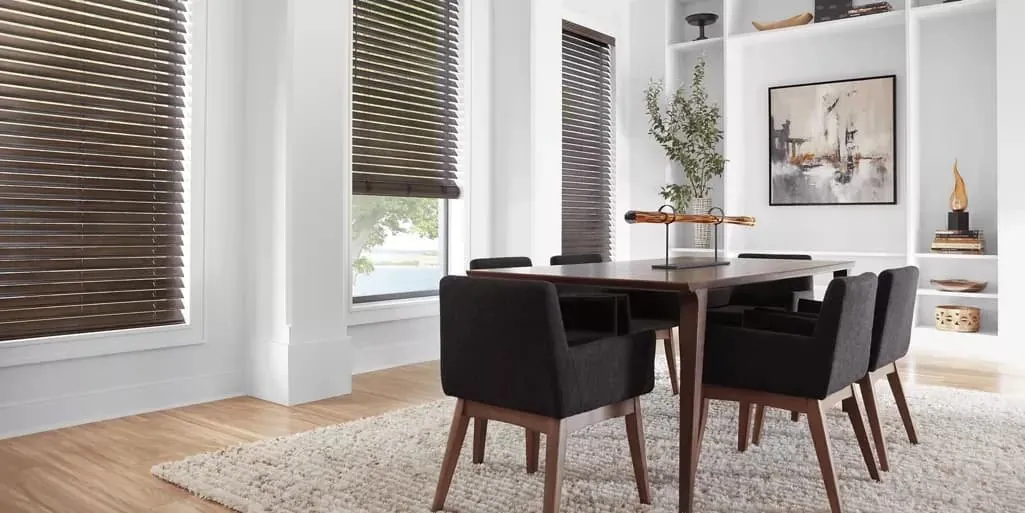
Real wood for older trim and newer rooms
Parkland wood blinds are the line we reach for when a room wants genuine timber at the window. Around our North Dartmouth showroom, that is often a Padanaram colonial or shingled cape with painted casings and old floorboards, where a stained slat picks up the tones already in the house. It works just as well in the ranches off Faunce Corner Road and Slocum Road, where a real wood blind gives a plain picture window some character.
The nineteenth-century farmhouses out toward Russells Mills have sash set deep in the wall, so Parkland can sit inside the opening and leave the trim clear. In South Dartmouth’s rooms that look over Apponagansett Bay, the slats tilt to cut afternoon glare while you keep an eye on the water.
What you choose on a Parkland blind
Parkland is made to order, so you decide how it looks and works. These are the three choices that shape it most.
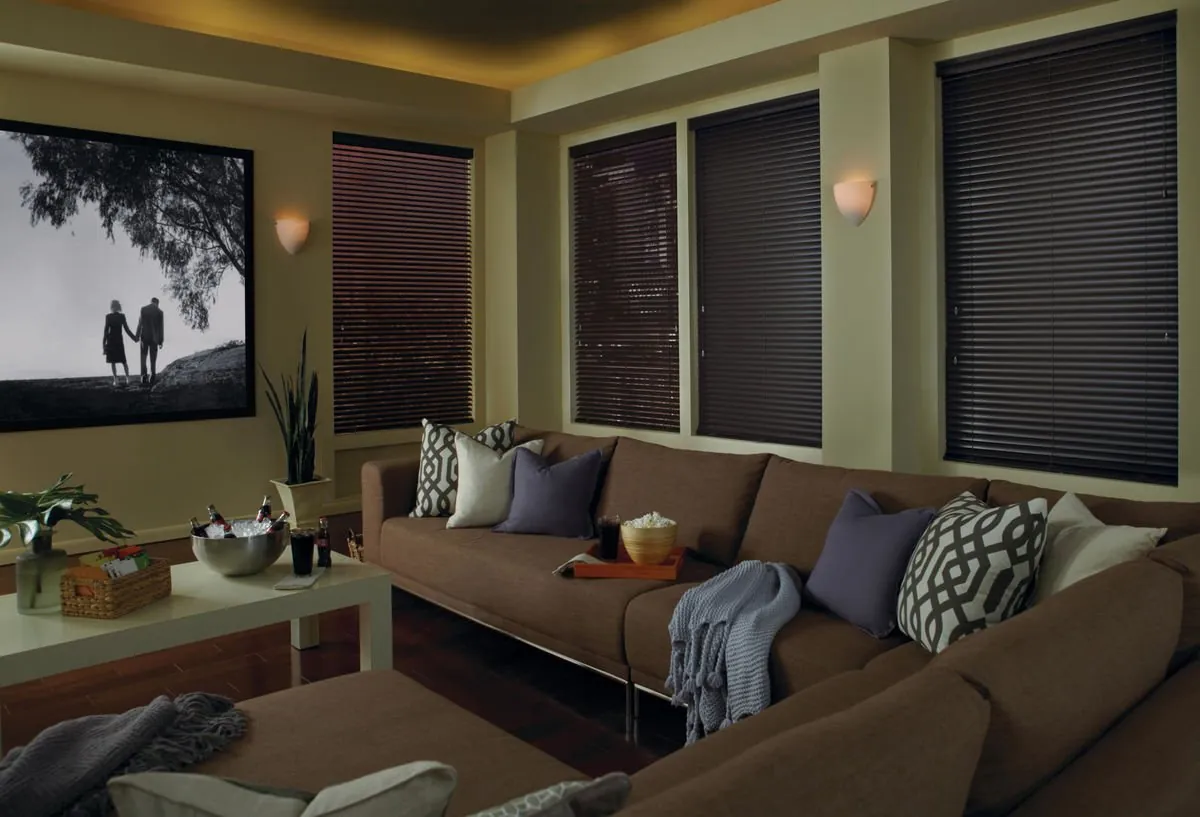
A stained finish
Stains let the grain show, from pale honey tones to deep browns. A good match for dark furniture, stained trim or a den with a fireplace.
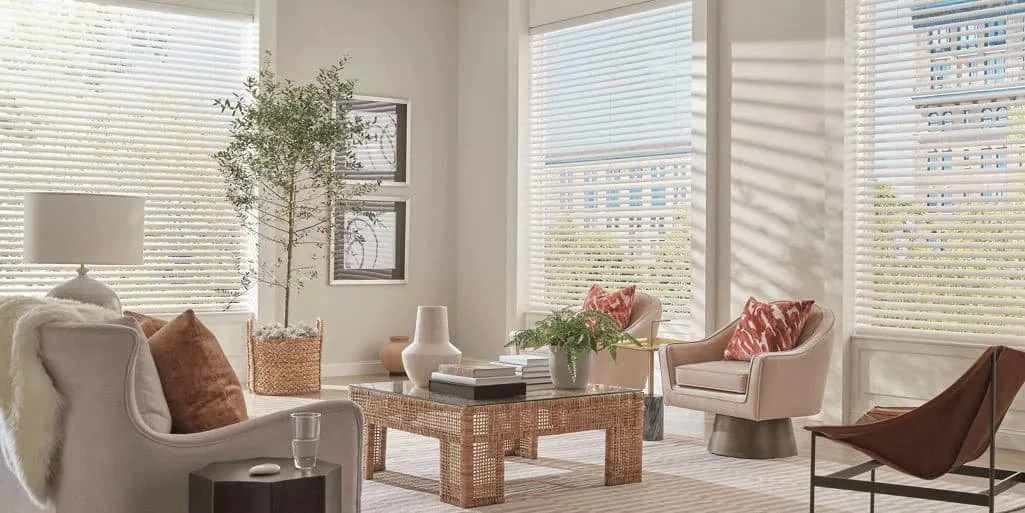
A painted finish
Solid paint colors, most often whites and creams, chosen to match painted casings so the blind blends into the window.
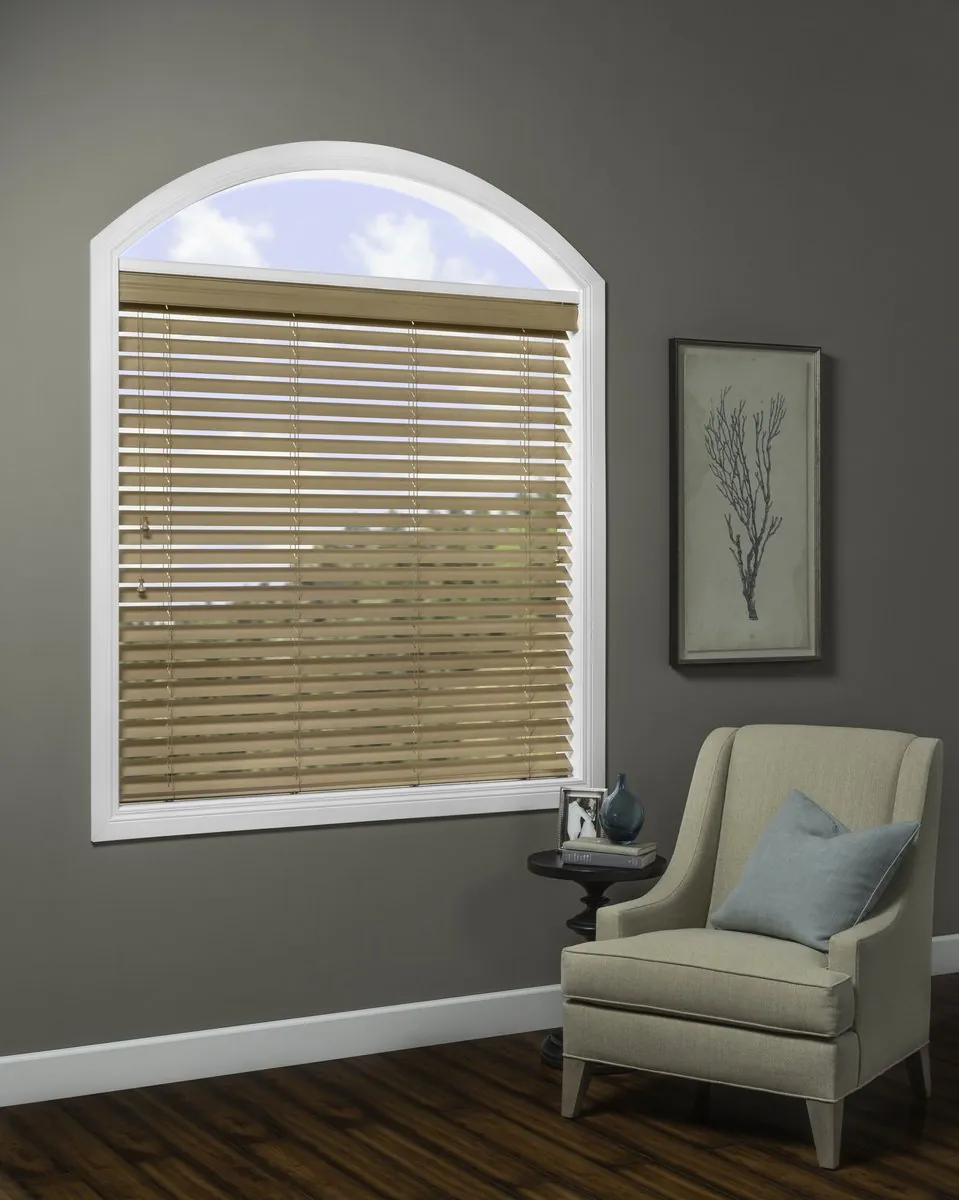
Unusual windows
Tall, wide and arched openings all take a made-to-measure blind. We plan how each one mounts and lifts at the visit.
Why real wood rather than a look-alike
Real wood is lighter than composite slats, which makes a wide Parkland blind easier to raise and kinder to the headrail. It also has a natural grain that changes slightly from slat to slat, the way a wood floor does. That is the quality people notice when they run a hand along a sample.
Real wood is not the right answer everywhere. Over a bathtub, beside a shower or above a busy kitchen sink, steam can make natural wood move. In those rooms we suggest EverWood alternative wood in a matching color, so the house still looks consistent from room to room.
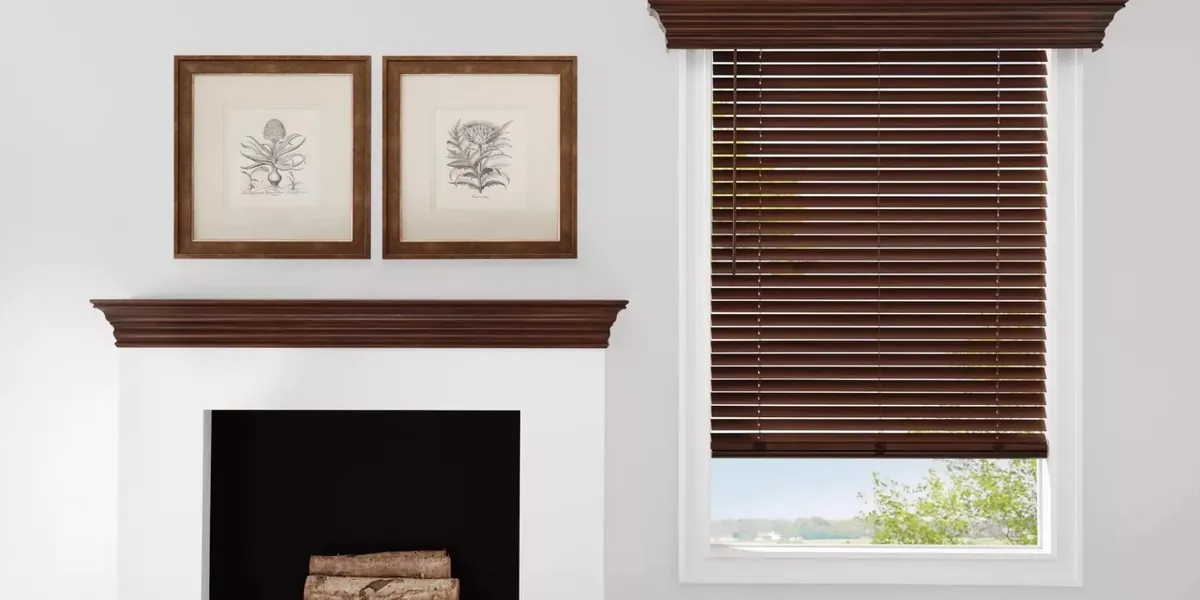
Tapes, cornices and other details
The small options are what make Parkland wood blinds look finished:
- Decorative tapes. Cloth tapes run down the front of the slats and cover the route holes the lift cords pass through. They come in colors and patterns, and they also cut the pinpoints of light that come through those holes.
- Cornices and valances. A wood cornice across the top hides the headrail and gives the window a more tailored look, which suits formal dining rooms in the older colonials.
- Inside or outside mount. Deep sash lets the blind sit within the frame; shallow frames often look better with the blind mounted on the wall above, wider than the glass.
- Lift choices. Depending on size and style, you can choose a cord, a cordless lift, or PowerView motorization on some models. We will tell you what is available on the blind you pick.
Using the slats through the day
Tilted level, Parkland wood blinds let you see out while still taking the edge off bright sun. Tilted up, they bounce light toward the ceiling and keep it off your screens and upholstery. Closed, they give you privacy at night. Raise the blind completely and it stacks neatly at the top of the window.
Choosing a color in your own light

A stain that looks warm in a catalog can look orange next to old pine floors, and a white can look gray beside bright trim. That is why we bring finish samples to the house. You can hold them against the casing, check them in the morning and again later in the day, and compare them with the floors and furniture that will stay.
Here is how a Parkland order usually goes:
- You request a consultation and we arrange a visit.
- We look at each window, its depth and how the room is used.
- You compare stains and paints against your trim.
- We measure every opening and give you a free estimate.
- Certified Hunter Douglas installers fit the blinds and check each one before they leave.

Parkland from a Hunter Douglas Gallery dealer
As a Hunter Douglas Gallery dealer, Blinds & Designs takes care of every step of your order: choosing, measuring, ordering and certified Hunter Douglas installation. We offer in-home consultations with sample vans, free estimates and interior design consultations, and we repair blinds and shades you already own.
Look through the Parkland colors in the Hunter Douglas catalog, then ask us to bring your favorites over. To compare Parkland with the other wood styles, see our wood blinds page.
Where we fit Parkland wood blinds
We visit houses across the South Coast from North Dartmouth, and our Franklin and Sagamore showrooms cover the areas further north and east. Town pages for blinds include Dartmouth, Fairhaven, Freetown, Little Compton and Tiverton.
Questions about Parkland wood blinds
Is Parkland real wood?
Yes. The slats are natural wood with a stained or painted finish, which is what sets it apart from EverWood alternative wood.
Which rooms suit real wood best?
Living rooms, dining rooms, studies and bedrooms. For bathrooms, kitchens and laundry rooms we suggest EverWood instead.
Can Parkland match my existing trim?
We bring stain and paint samples to the house so you can match them to your casings and floors in your own light.
What is a cornice for?
A cornice covers the headrail and the light gap at the top of the window, and gives the blind a finished, furniture-like look.
Can Parkland be motorized?
PowerView motorization is available on some models and sizes. We will confirm what applies once you have picked a size and finish.
How should I clean real wood slats?
Dust with a soft cloth or a vacuum brush. Avoid soaking real wood; a dry or barely damp cloth is enough.
Bring the samples home
Request a consultation and we will bring Parkland stains and paints to your windows, or visit the North Dartmouth showroom to see the slats first.
Every Hunter Douglas line we carry is on our Hunter Douglas Gallery dealer page.