
Tall, narrow windows and high ceilings
Walk up from the waterfront through the historic district, or along the blocks of the North End and the West End, and the windows tell you a lot about the houses behind them. Mill-era triple-deckers stack the same tall, narrow double-hung window on three floors. Federal houses have even taller sash, set into rooms with high ceilings and generous plaster walls. When we plan roman shades in New Bedford, MA, those proportions are the starting point.
A tall window with a narrow width is exactly where a folded shade looks its best. The fabric runs the full height of the glass in one clean panel, and when it is raised the folds sit in a neat band at the top. Drapery can do the same job, but in a triple-decker flat with radiators under the windows and furniture close to the walls, a shade that lives inside the frame is far more practical.
Two things govern how the shade can go up. The first is the depth of the window reveal, which varies a great deal from house to house. The second, in the historic district, is how the window looks from the street. Both are things we check before we suggest a single fabric.
Three ways to hang a folded shade
Before fabric comes into it, the mount decides how roman shades in New Bedford houses look and work. These are the three options we talk through at nearly every visit.
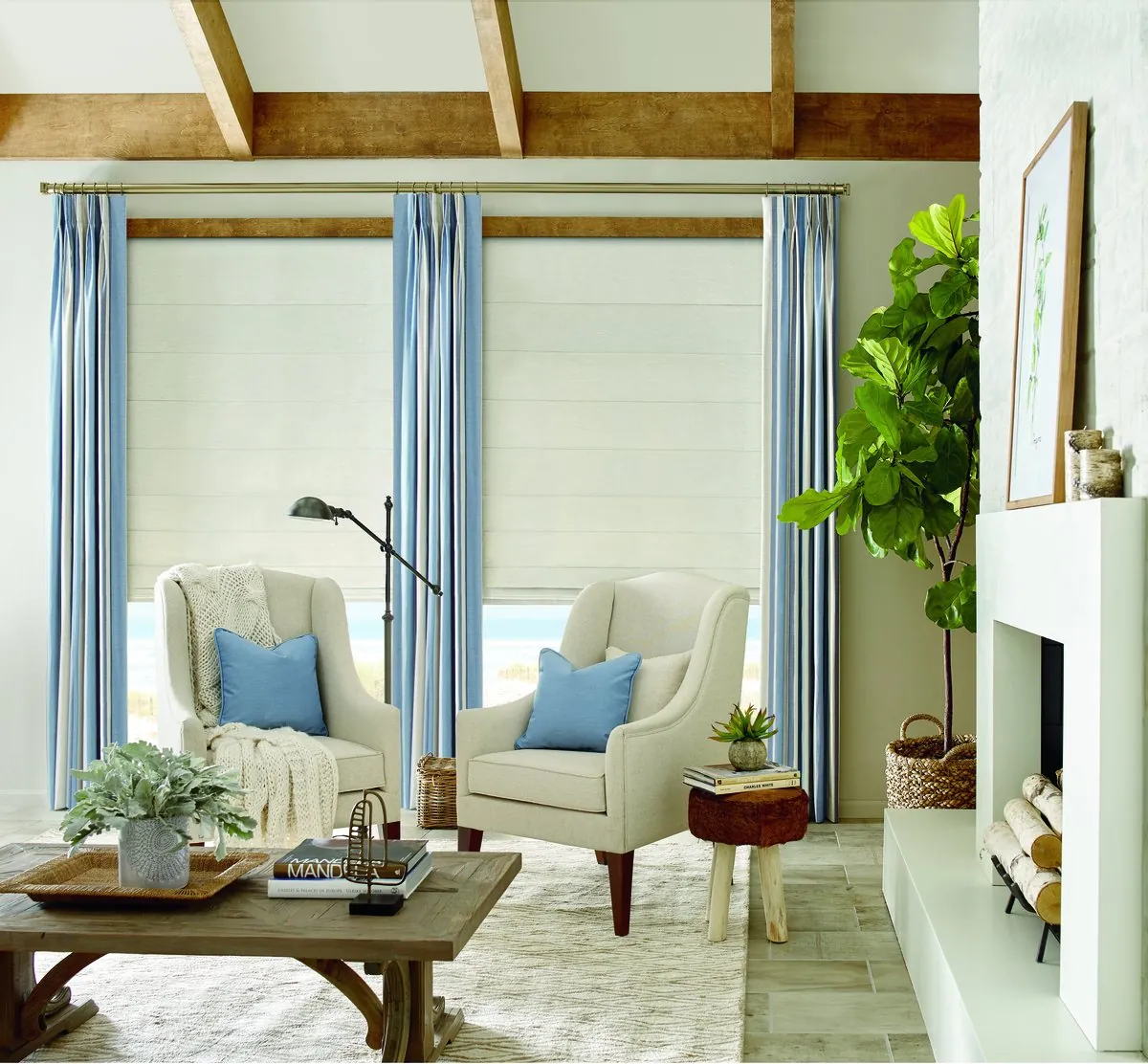
Inside the frame
The headrail sits within the window opening, so the casing and trim stay in full view. The first choice wherever the reveal is deep enough.
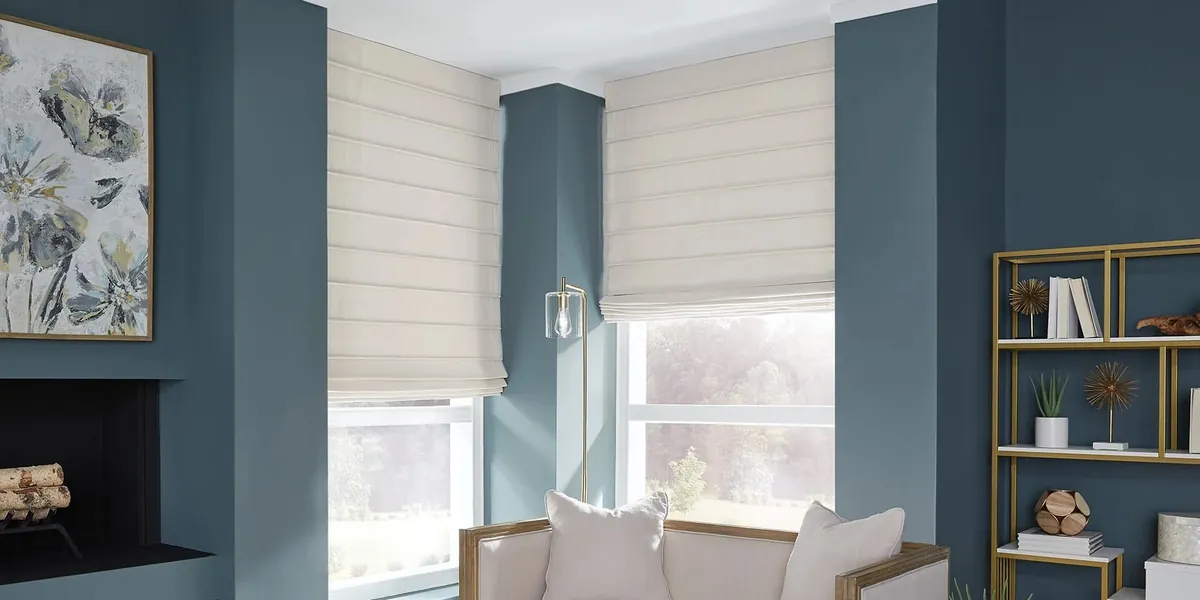
Above the casing
Mounted on the wall over the trim, the shade can stack above the glass when raised. Useful in a high-ceilinged room where you want every inch of daylight.
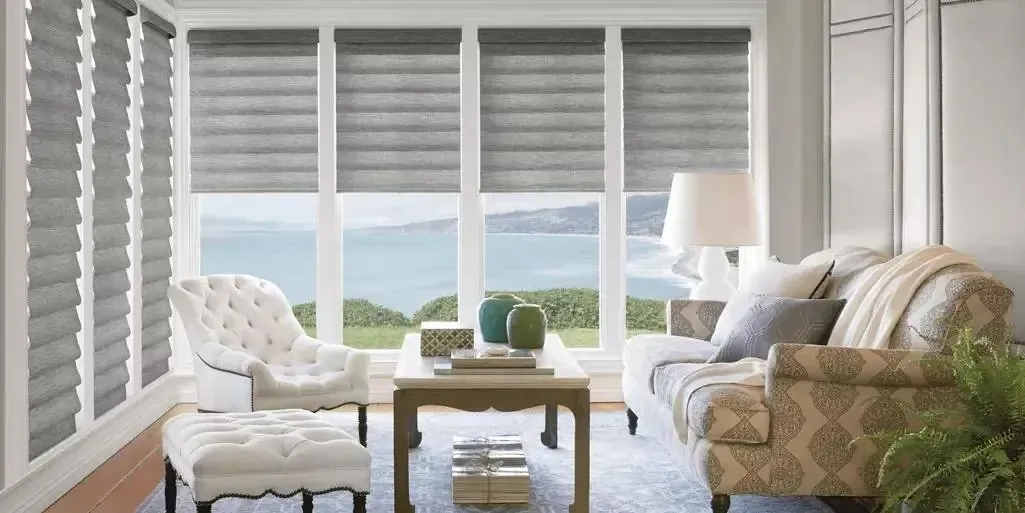
Vignette for shallow reveals
A modern roman shade that rolls its folds into the headrail. Its compact stack makes it a good option where a sewn shade would hang low across the window.
Triple-deckers in the North End and the West End
The triple-decker is the most common house in large parts of the city. Each floor is usually one flat with a front room, a dining room, a kitchen at the back and bedrooms along the side. The windows are tall and fairly narrow, often in pairs, and on the side of the house they can face the neighboring building only a short distance away.
That closeness makes privacy the first thing a shade has to solve. A light-filtering fabric gives daytime privacy while keeping the room bright, because the fabric glows rather than letting anyone see in. In a bedroom facing the house next door, a lined fabric or a room-darkening lining keeps the room private at night and dark in the morning.
Radiators sit under many of these windows, which is another reason a shade beats long curtains. The shade stops at the sill, clears the radiator completely and lets the heat rise into the room. A cordless lift keeps the window clean of cords, which matters in a flat where children and pets share every room.
If you own the whole triple-decker, you may want the street side to look consistent from top to bottom. Choosing the same fabric, or at least the same lining color, on all three floors makes the front of the house look cared for, even when each flat chooses its own fabric on the room side.
Federal houses and high ceilings
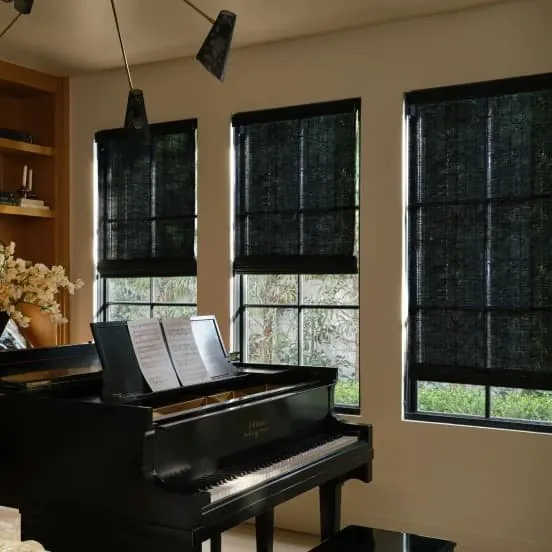
The Federal houses on the hill above the waterfront were built for tall rooms. Their windows can run from not far above the floor to well up toward the ceiling, with deep wooden casings, panelled reveals and sometimes interior shutters still in place. In rooms like these a roman shade has to look as though it belongs to the architecture rather than fighting it.
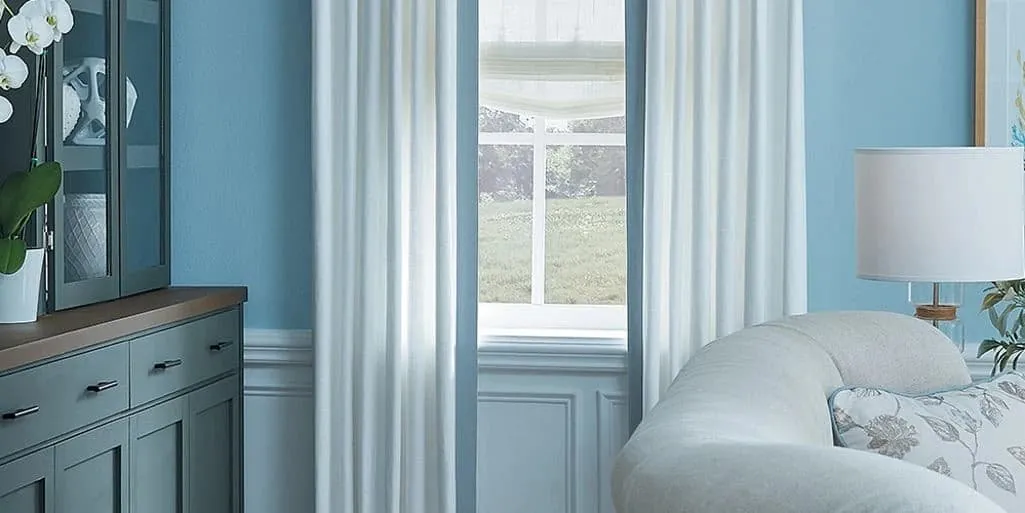
A Carole Fabrics flat fold in a plain linen or a quiet stripe does that well. It hangs as one smooth panel down the long window and folds neatly at the top. For a formal front room, it can be paired with drapery panels on the wall either side, which adds height and softness without covering the trim. If the house still has working interior shutters, we look at whether the shade can sit in front of them or between the shutters and the glass, depending on the depth.
High windows bring one practical question: reaching the shade. On a window whose top is well above head height, a cordless lift can still work, but PowerView motorization is often the easier choice. You raise and lower the shades from a remote or your phone, and you can group a run of tall windows so they move together and stop at the same height.
The historic district and how a window looks from the street
In the historic district, how a house presents to the street matters. A roman shade is seen from outside as well as from inside, and the side facing the street is usually the lining, not the face fabric. A neutral white or ivory lining gives every window the same calm look from the sidewalk, whatever fabric you have chosen for the room.
The way the shade is mounted affects the street view too. An inside mount keeps the shade within the window opening, so from outside the frame and sash read just as they always have. A shade mounted on the wall above the casing can be visible above the window head from outside, which is fine in many houses but not always right for a carefully kept Federal house. We talk through what each choice will look like from the street before anything is ordered.
None of this is about rules we enforce. It is about making a choice that suits the house, and we would rather raise the question at your kitchen table than after the shades are up.
Reveal depth decides the mount
Window reveals across the city are anything but uniform. A Federal house with thick walls may have a deep reveal with plenty of room for a headrail. A triple-decker may have a shallow frame, sometimes made shallower by aluminum storm windows fitted on the outside or by later replacement sash. The same street can have both.
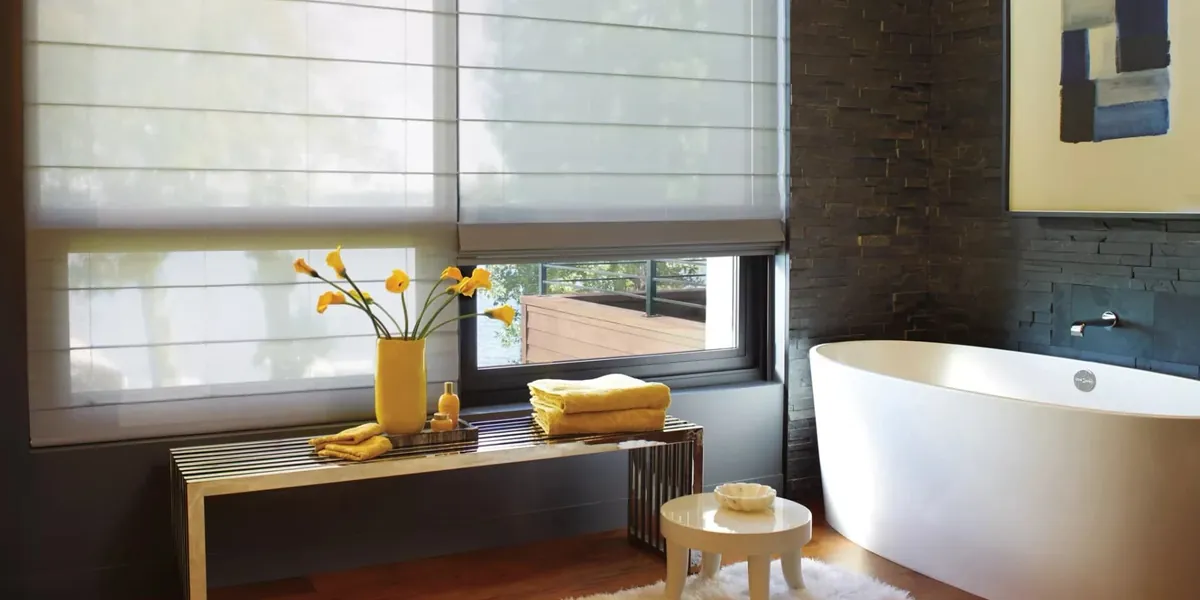
Depth matters because a roman shade needs room for its headrail and for the fabric to fold without rubbing the sash locks or the window glass. Where a reveal is deep, an inside mount gives the cleanest result. Where it is shallow, we look at Vignette, whose compact headrail and rolled folds need less room, or at an outside mount on the casing.
We also check whether the frame is square. Older windows settle, and a reveal that is wider at the top than at the bottom affects how the shade hangs. We measure at several points and size the shade so it clears the tightest part of the opening.
Back rooms, kitchens and the rear of the house
The front of a triple-decker gets the attention, but the rooms at the back are where daily life happens. Kitchens usually sit at the rear of each flat, with a window over the sink and often a door out to a back porch. Bedrooms run along the side, and their windows can look straight across a narrow gap at the next house.
A kitchen window over a sink is awkward to reach, so a cordless lift you can push up with one hand, or a motorized shade, saves leaning across the counter. Moisture and cooking are part of kitchen life too, so we suggest fabrics that are easy to live with in that room and keep the more delicate decorator fabrics for the front parlor.
Side bedrooms need privacy above everything. Because the neighboring window may be level with yours, a top-down, bottom-up option is worth asking about where the fabric and style allow it, so you can let light in at the top and keep the lower glass covered. When we plan roman shades for New Bedford flats, we treat the back rooms as carefully as the front, because those are the windows you use most. A glass door to the porch is usually better served by a different product, and we can show you options for it on the same visit.
What happens at a home visit
Choosing a fabric for a tall city window is far easier when you can see it on the window itself. Our vans carry samples, so we can bring the showroom to you. Here is how a visit usually goes.
- You request a consultation online or use the call button, and we arrange a time.
- We bring Vignette and Carole Fabrics samples, with flat and soft folds and a range of light-filtering and room-darkening fabrics.
- We go through the flat or the house with you, room by room, and talk about privacy, light and how each room is used.
- You hold the fabrics against your own windows, so you see them in the light you live with.
- We measure every window, check the reveal depth and look at how each mount would look from inside and from the street.
- You get a free estimate for the shades you are considering, with no pressure to decide on the day.
If you are redoing the room, our interior design consultations can help with color and pattern at the same visit.
Choosing between Vignette and Carole Fabrics
The two families we offer for roman shades in New Bedford suit different houses and different rooms.
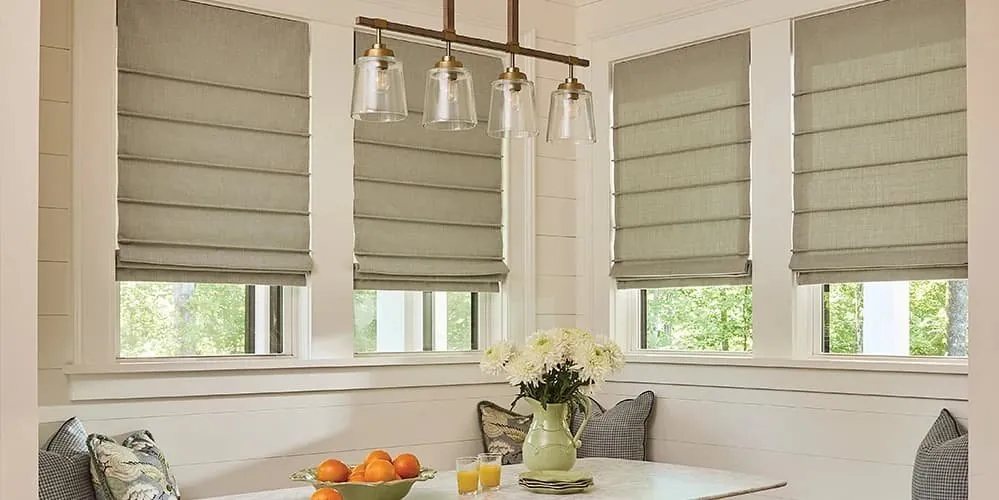
Carole Fabrics shades are sewn one at a time. You choose a fabric from a large decorator library and then a fold: flat for a crisp, tailored look, soft for loops of fabric down the full length, or relaxed for a gentle curve at the hem. They are the natural choice for a Federal front room where the shade is part of the decoration, or a dining room where it should match the chairs or the drapery.
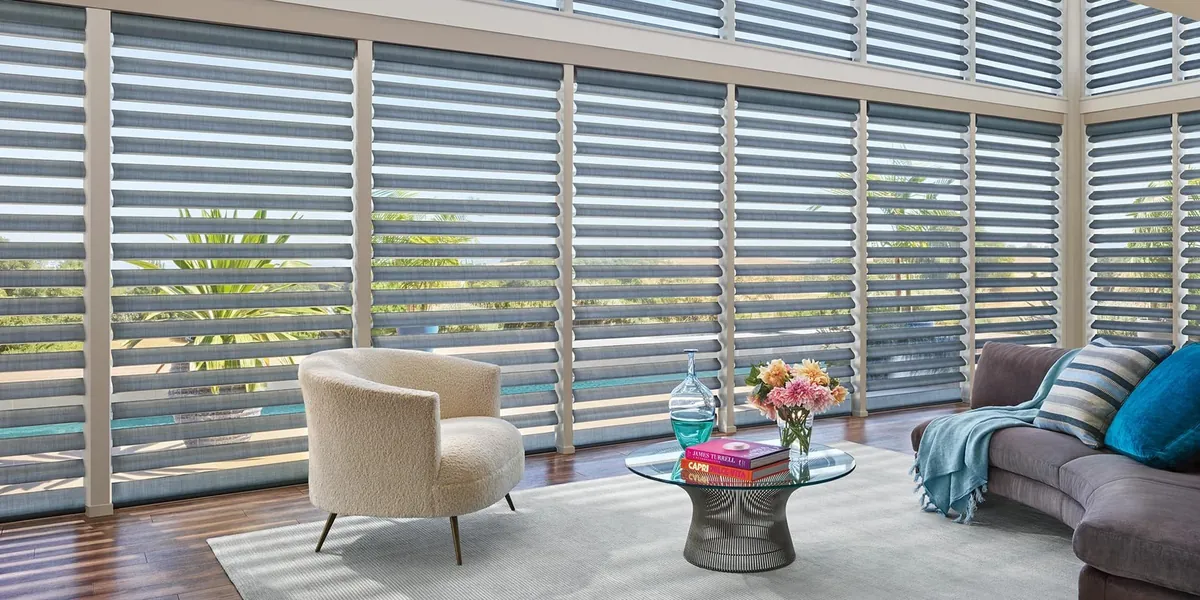
Vignette is engineered rather than sewn. The folds are built into the fabric at an even depth, and the shade rolls up into its headrail rather than stacking. There are no cords down the back, so the street side looks smooth. In a triple-decker kitchen or bedroom with a shallow reveal, it often fits where a sewn shade would struggle.
Many houses use both. Our Vignette roman shades and Carole Fabrics roman shades pages explain each family, and the main roman shades page shows the full range.
Fabric and light for city rooms
A city flat often has light from only one or two directions, so how a fabric handles daylight matters. On a north-facing front room, a light-filtering fabric in a warm color keeps the room bright. On a south-facing kitchen, a lining protects the fabric from fading as well as softening the sun.
Bedrooms close to a street light or a neighboring window often need a room-darkening lining. A sheer fabric suits a bathroom where you want daylight through the top of the window and privacy below it. We bring all of these so you can compare them side by side.
Color is worth thinking about in rooms with high ceilings. A tall window covered in a dark fabric becomes a strong vertical block on the wall, which can look striking in a Federal parlor with deep paint colors but heavy in a small triple-decker bedroom. A fabric close to the wall color lets the window recede, while a contrasting one turns it into a feature. Texture changes things too: a slubbed linen or a woven cotton catches the light along each fold and gives a plain color some life, which suits a long window where a flat fabric can look a little stark. We hold both kinds against the glass so you can see the difference in your own room before choosing.
Certified installation, done carefully
Old plaster and tall frames need a careful hand. Our certified Hunter Douglas installers fix brackets into solid wood rather than plaster alone, so each shade stays level on a window that is opened often. They check every lift, make sure the fabric clears the sash locks, and show you how the shades work before they leave.
If a window turns out to be out of square once the old treatment is down, they adjust the fitting so the shade hangs straight against the frame.
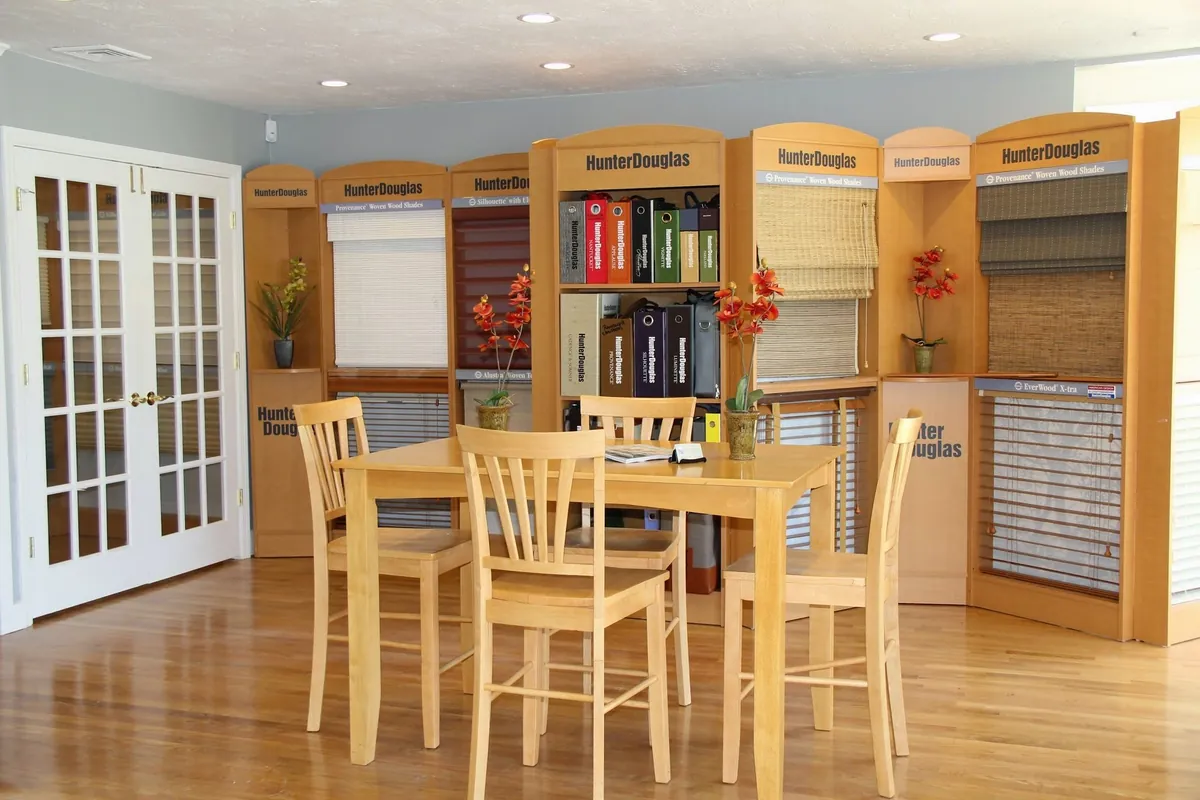
Why a Hunter Douglas Gallery dealer
Blinds & Designs is a Hunter Douglas Gallery dealer, the designation Hunter Douglas gives dealers who meet its standards. You see the whole roman shade range at one appointment, Vignette and the full Carole Fabrics library together, and every option for lift and mount.
Our installers are certified by Hunter Douglas, and we handle blind and shade repairs on coverings you already own. We also carry honeycomb, roller and sheer shades, blinds, shutters and drapery, so a whole flat or a whole house can be planned at once. See our cellular shades in New Bedford, plantation shutters in New Bedford or our New Bedford page.

Close to the city
Our North Dartmouth showroom is the nearest to New Bedford, a short drive west of the city. Come in if you want to see a folded shade raised and lowered before you choose.
Most people find it easier to choose at home, though, and we are happy to come to you. A sample held against your own tall sash, beside your own radiator and trim, tells you more than any display.
Questions from New Bedford
My triple-decker windows are shallow. Can I still have a roman shade?
Often, yes. We measure the reveal depth at each window. Where it is shallow, Vignette’s compact headrail may fit inside, or we mount the shade on the casing just above the opening. We show you how each choice will look before you order.
Will the shades look right from the street in the historic district?
The side facing the street is usually the lining, so a neutral white or ivory lining keeps every window calm and consistent from outside. An inside mount keeps the frame and sash looking as they always have.
How do I reach the shade on a very tall window?
A cordless lift works on many tall windows. Where the top is well above head height, PowerView motorization lets you raise and lower the shades from a remote or your phone.
Do roman shades work over a radiator?
They work better than long curtains. The shade stops at the sill, clears the radiator and lets warm air rise into the room.
Is there a charge for the estimate?
No. After we measure, you get a free estimate for the shades you are considering.
Start with a visit
Seeing a fabric on your own tall windows is the easiest way to choose. Request a consultation and we will bring the samples to you, measure every window and give you a free estimate for roman shades in New Bedford, MA. To talk it over first, use the call button, or visit our North Dartmouth showroom.