
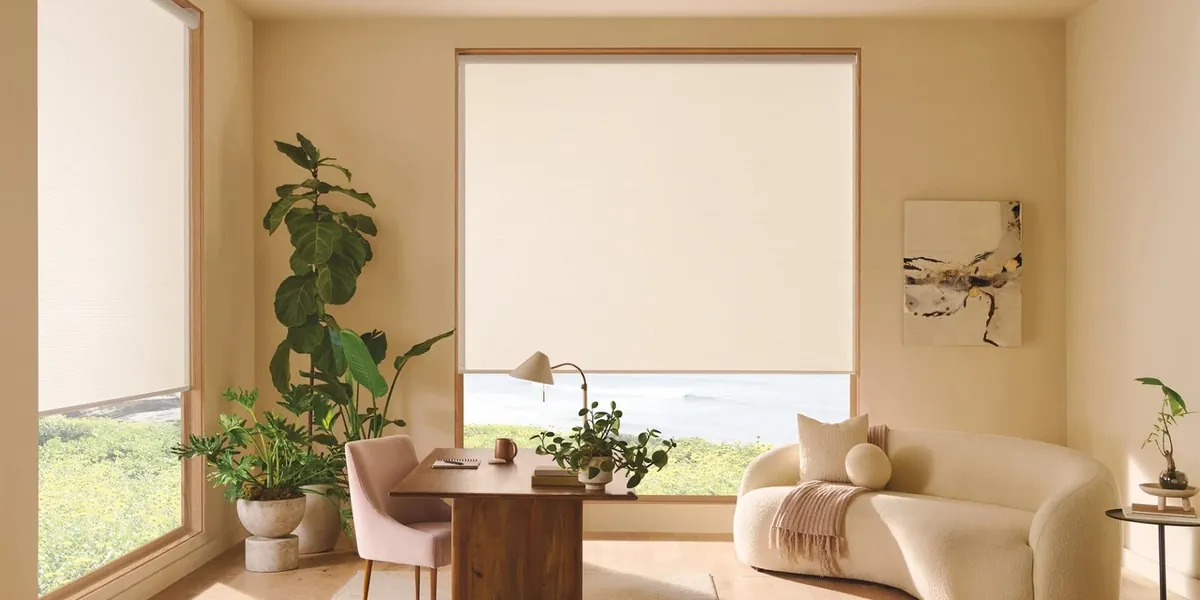
Salt air is the first thing to look at in Westport
On the Westport coast, the air does most of the damage. A blind that hangs a few feet from an open window near Horseneck or the Westport River breathes salty, damp air all summer, and the small metal parts inside it pay for that long before the slats or fabric do. Blind and shade repair in Westport, MA, therefore starts with corrosion: a cord lock that no longer bites, a tilter that grinds, a bracket screw ringed with rust.
That is good news in one way. The parts that fail first are small, and replacing them is a modest job compared with a whole new window covering. Restringing, a new cord or wand, a headrail that has been reset or replaced, a tilt mechanism swapped for a fresh one: those four repairs cover most of what we see here.
The houses shape the rest. Along Main Road the shingled capes and older farmhouses have smaller, older sash with their own quirks, while the larger, newer houses on the harbor are built around big expanses of glass that look out over the water. Each asks something different of a blind or shade, and of a repair.
Blind and shade repair in Westport for coastal windows
Three groups of problems account for nearly everything we are asked to look at near the water.
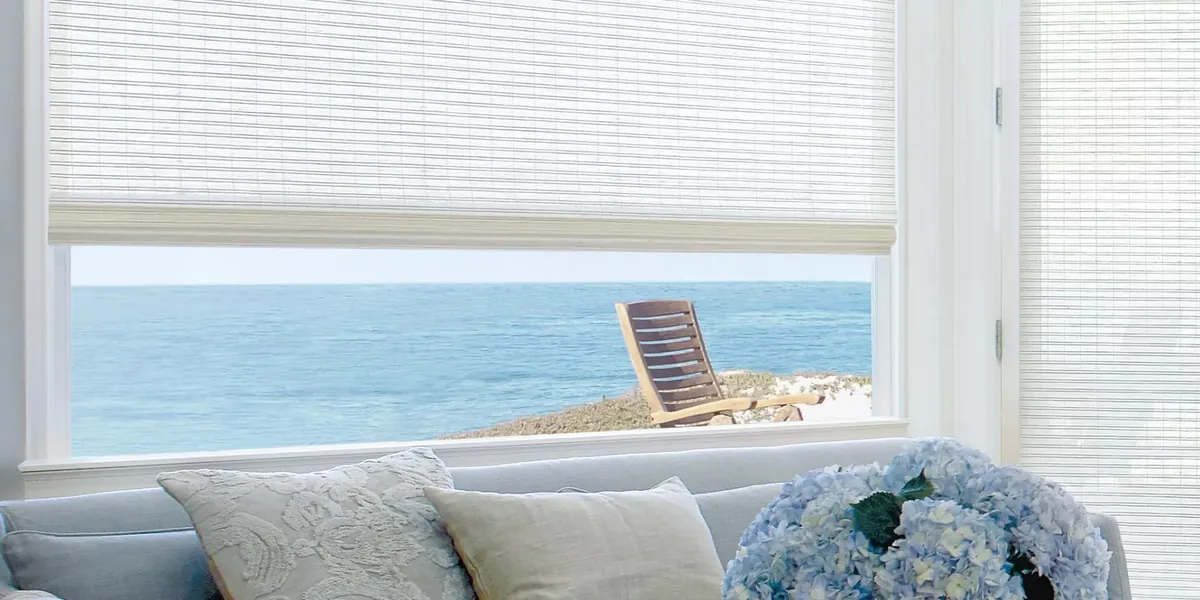
Seized or slipping hardware
Cord locks that slip, tilters that stick and bracket screws that have rusted loose. Replacing the corroded part usually restores the product.
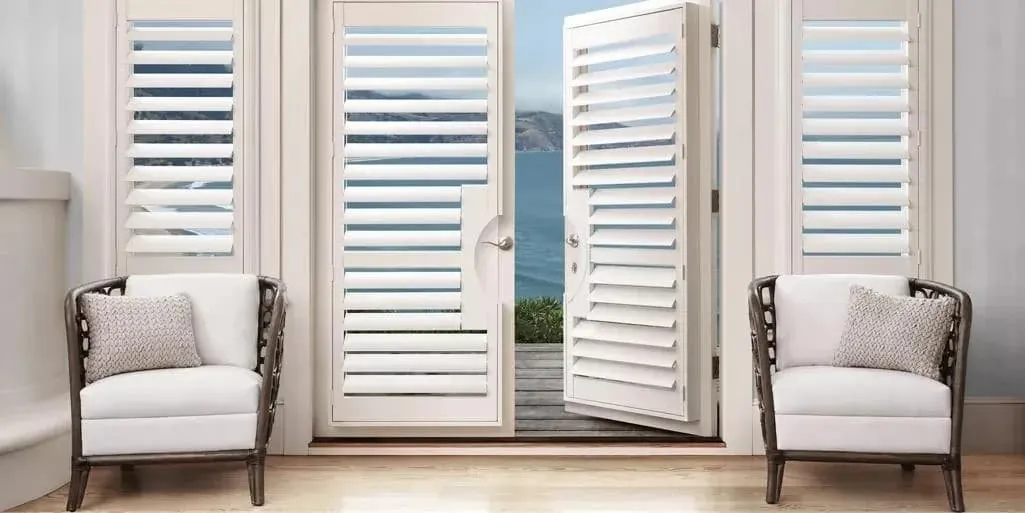
Worn cords and wands
Lift cords dried out by sun and salt, ladder tapes gone brittle, and tilt wands that have cracked or lost their hook. Restringing and new wands are routine fixes.
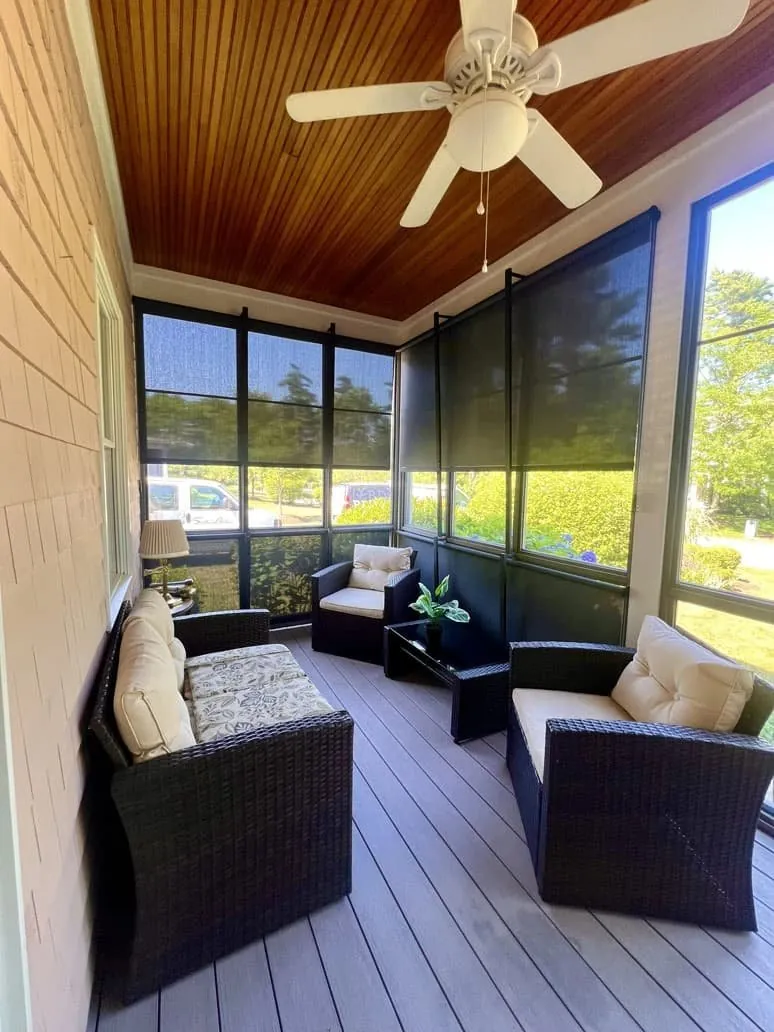
Shades on big view windows
Wide roller, solar screen and honeycomb shades whose headrails have bowed, clutches that slip, or motorized shades that have stopped answering.
A part by part look at what salt does
Most window coverings have more metal in them than you would guess. Knowing where it sits explains why coastal blinds fail the way they do.
At the top, the headrail holds a cord lock on one side, a tilter in the middle or at one end, and small pulleys or guides where the cords turn down. The brackets that hold the headrail to the window are usually steel, held by steel screws. Down at the bottom, the rail may carry weights, end caps and, on cordless shades, a spring system. Every one of those parts can corrode.
A cord lock works by pinching the cord between a toothed cam and a housing. When salt crystals build up in the cam, it no longer grips cleanly, and the blind creeps down after you let go. A tilter is a small gearbox; corrosion stiffens it until the wand needs real force to turn, and eventually the plastic gears inside strip under the strain. Bracket screws rust, swell and lose their hold in the wood, so the headrail begins to shift.
None of that means the blind is beyond help. Each of those parts can usually be replaced on its own. What matters is catching the problem before a seized tilter snaps a wand stem, or a slipping cord lock lets a heavy blind drop and bend its slats.
Harbor houses built around the view
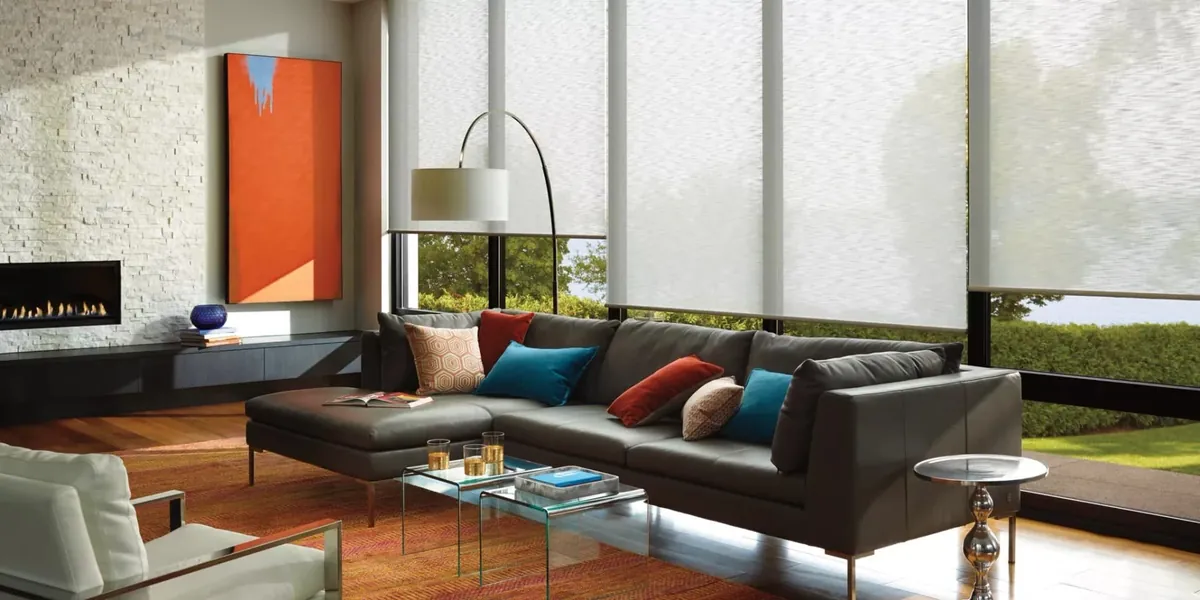
The newer homes on the harbor are designed to face the water, and their main rooms often have walls of glass: tall picture windows, wide sliders, corner windows that wrap the view. Window coverings on those openings are big, and big products put strain on headrails and lifts in a way smaller ones do not.
A wide roller or solar screen shade carries a lot of fabric on a single tube, and the clutch that holds it takes the full weight every time the shade stops partway. Over the years the clutch can start to slip, so the shade drifts down, or the beaded chain jumps its teeth. A wide honeycomb shade has long lift cords running through many cells; when one breaks, the shade drops at one end across a big opening, which is hard to miss.
Width also means headrails long enough to bow if they are not supported along their length. A bowed rail pulls the lift unevenly and the shade will not sit level, however carefully you raise it. The fix is a straight rail and the right brackets in the right places, put up by installers certified by Hunter Douglas.
Rooms designed around a view are also rooms where the shade gets raised and lowered most, so the light can be managed through the day without losing the outlook. That heavy use is part of why the lift is usually the first thing we look at.
Sliders to the deck and the water
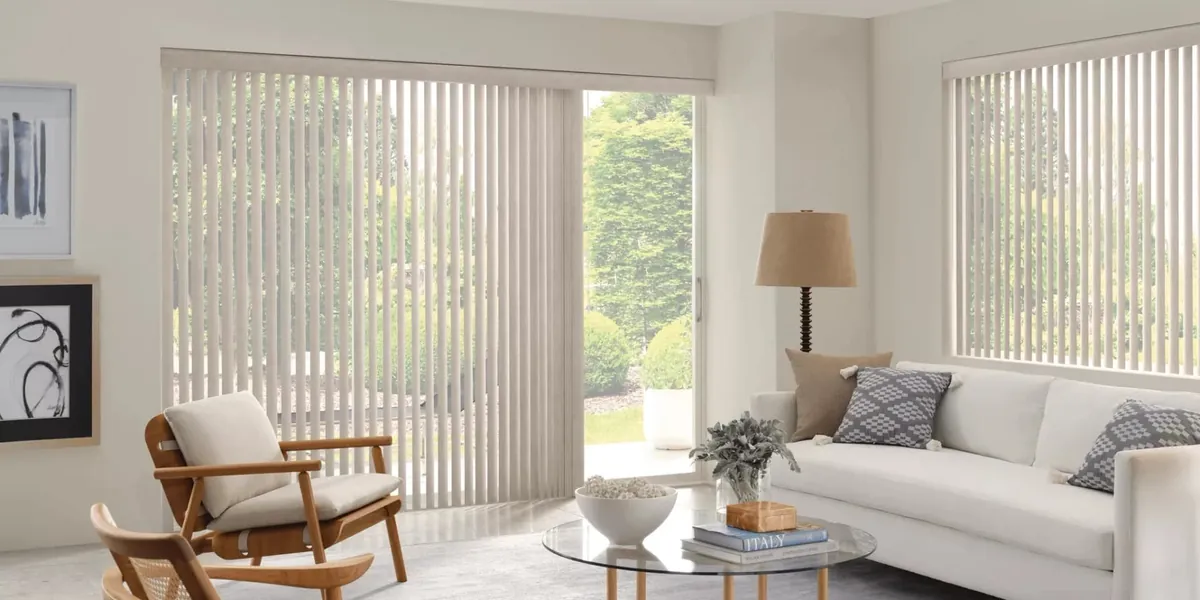
Harbor houses nearly always have at least one big slider opening onto a deck or patio, and it is usually covered by a vertical blind or a vertical shade that travels to one side. Those products move sideways along a track rather than up and down, and their parts fail in a pattern of their own.
Each vane hangs from a small carrier that rides in the headrail track. Every time the door is used, the vane nearest the opening gets brushed, and sometimes caught, so its carrier cracks or the vane drops out. Salt in the track makes the carriers drag, and a drag on the cord or wand that draws them across is enough to snap a worn part. Fabric vertical shades have similar carriers behind their soft vanes.
The good news is that single carriers and single vanes can often be replaced without changing the whole product. If the track has become stiff with salt and grit, cleaning it and replacing the worst carriers usually brings back a smooth glide. Blind and shade repair in Westport, MA, on a slider is usually a short job when it is caught early, before broken carriers start to bend the track itself.
Farmhouses along Main Road
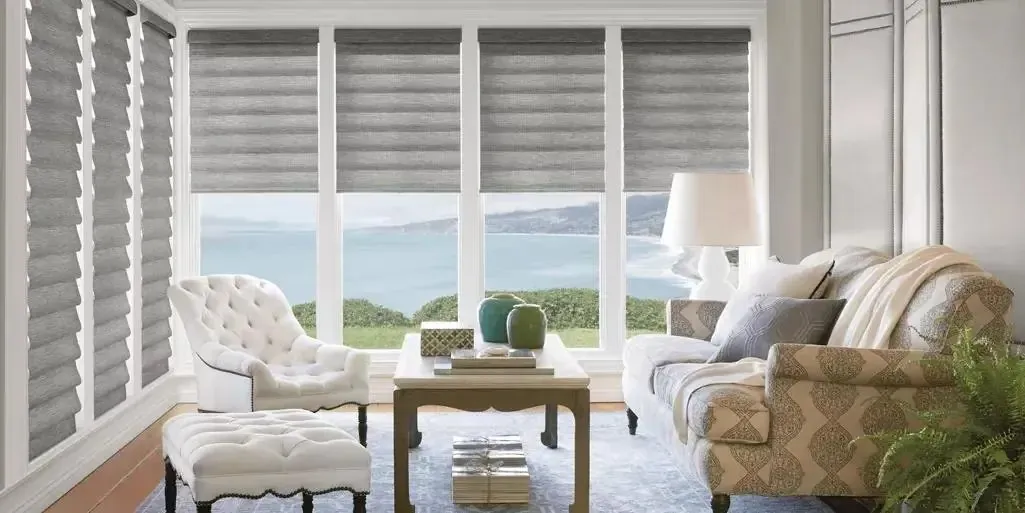
Inland along Main Road, the older farmhouses have windows of a different era: smaller double-hung sash, often deep in the wall, and rarely perfectly square after so many seasons. Blinds and shades mounted inside those openings live with whatever shape the frame has taken.
On an out-of-square window, one end of the headrail usually ends up a touch tighter than the other. That end carries more of the load, its bracket loosens first in the old wood, and the product tips. Once it tips, the cord on the low side drags against the headrail edge and wears through sooner. A sound repair here is two things at once: new cord, and a mounting adjusted so the product hangs true and the wear stops repeating.
Some very old wood will not hold a screw however carefully it is set. When that happens the bracket needs firmer wood nearby, and we show you where before anything is moved. Our guide to shutters for older windows touches on the same kind of opening if you are curious how older sash affect a window treatment.
Shingled capes and their smaller rooms
The shingled capes along the road and toward the river tend to have compact rooms, low eaves upstairs and small dormer windows. Blinds and shades there are smaller, but they are handled constantly, because in a small room the window is never far away and the light changes quickly as the sun moves.
Small blinds wear in their own way. The tilt wand is short and gets grabbed in passing; the hook at its top wears or the stem snaps. The cord lock sees the same short length of cord pinched over and over until it flattens and slips. In a dormer, where the window sits in a deep recess, a blind that is raised at an angle drags along one side of its opening and wears unevenly.
These are small, satisfying repairs: a new wand, a new cord lock, a restring. They also tend to come in groups, since the blinds in a cape were usually fitted at the same time and have aged at the same pace. If one has gone, it is worth mentioning the others when you get in touch.
Wood blinds in damp sea air
Real wood blinds look handsome in an older farmhouse or a cape, and plenty of them hang along Main Road. Wood does react to its surroundings, though. In a house close to the water, with damp summers and dry, heated winters, slats can swell and shrink a little through the year. Over time a few may warp or crack along the grain.
A single damaged slat can usually be swapped on its own, keeping the rest of the blind. The ladder tapes that hold wood slats carry more weight than those on lighter blinds, so they are worth checking whenever a wood blind is opened up for any other repair. Where many slats have twisted, that is a sign the blind has had its run, and we will be honest about it.
Wind through open windows
Coastal exposure is not only salt. On a breezy afternoon near Horseneck, an open window lets the wind push a lowered blind against its frame, over and over. Slats get bent at the bottom, wands swing and knock against the trim, and the bottom rail of a shade can be blown hard enough to tug its cords sideways.
Bent slats on a horizontal blind can usually be replaced one at a time. A wand that has been battered may need a new hook or stem. A shade whose cords have been yanked repeatedly may need restringing and a check of its cord lock. Blind and shade repair in Westport, MA, often turns up a mix of wind and salt damage on the same blind, and it makes sense to deal with both while the product is down.
There is a simple habit that helps: raise a blind or shade on a window you are leaving open on a windy day, or close the slats fully so they sit flat. Less flapping means far less wear.
How we approach a coastal repair
Every repair is a little different, but the order of things rarely changes.
- You tell us what the product is, where it hangs and what it is doing, through Request a Consultation or by the call button.
- A picture helps, especially of the headrail and any rust you can see on the hardware.
- We let you know whether it sounds repairable and what a closer look would involve.
- We look at the whole product, not just the part you mentioned, because on the coast one corroded part is rarely alone.
- If repair does not make sense, we say so straight away and leave the decision with you.
Nobody needs to commit to anything new to have a repair looked at.
Motorized shades on the big glass
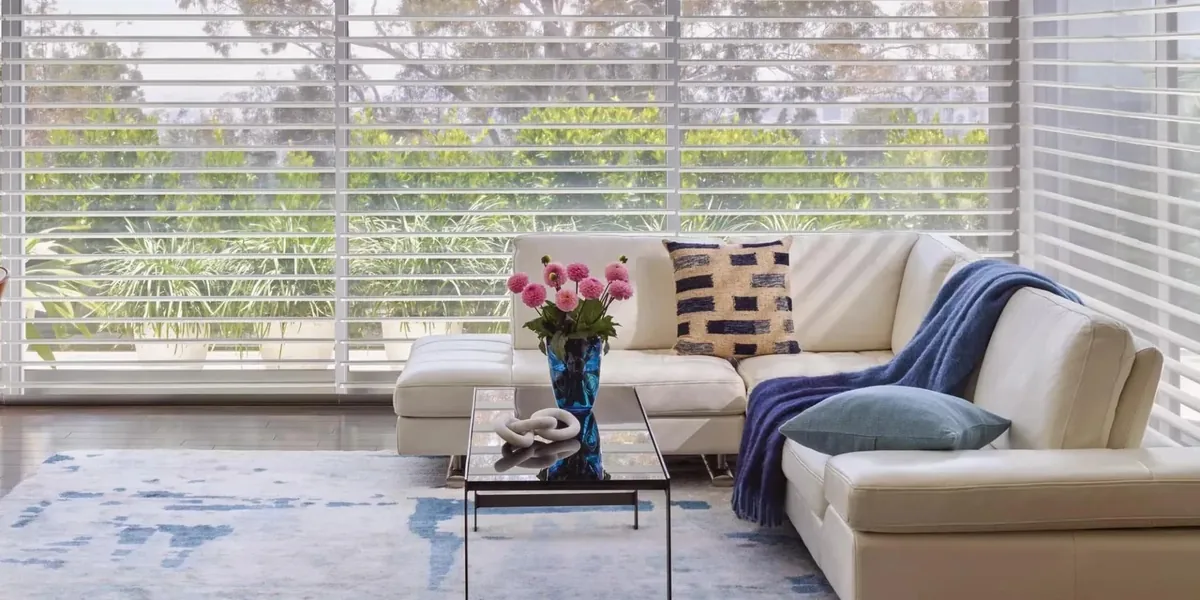
Big windows that face the water are where motorized shades earn their keep, since lowering a row of tall shades by hand several times a day is a chore. Hunter Douglas motorized shades run on PowerView, with remote, app and scheduled control. They can also be repaired.
A motorized shade that has stopped moving is not always a mechanical fault. It may have lost its pairing, dropped out of a scene or schedule, or simply run low on power. Salt air can also affect small electrical contacts near an open window, so a shade that powers up only now and then is worth mentioning. Some of these problems are solved by resetting and re-pairing; others need a closer look at the motor or the shade itself.
If one shade has stopped and the rest still respond, the issue is probably in that shade. If they all stopped together, it is more likely the control side. Tell us what you see. Our motorized blinds in Westport page explains how PowerView works day to day.
Keeping coastal hardware going
A few small habits make a real difference near salt water:
- Every so often, wipe the visible hardware, the cord lock, the wand hook, the bracket faces, with a dry cloth to lift salt before it builds up.
- Keep blinds raised or fully closed on windows left open on windy days.
- Pull cords straight down, never off to one side, so they do not saw against the headrail edge.
- Tilt slats open before raising a blind; lifting closed slats strains the ladder tapes.
- Stop turning a wand when the slats stop, rather than forcing it.
For fabric shades, our guide to caring for fabric shades covers cleaning without harming the fabric.
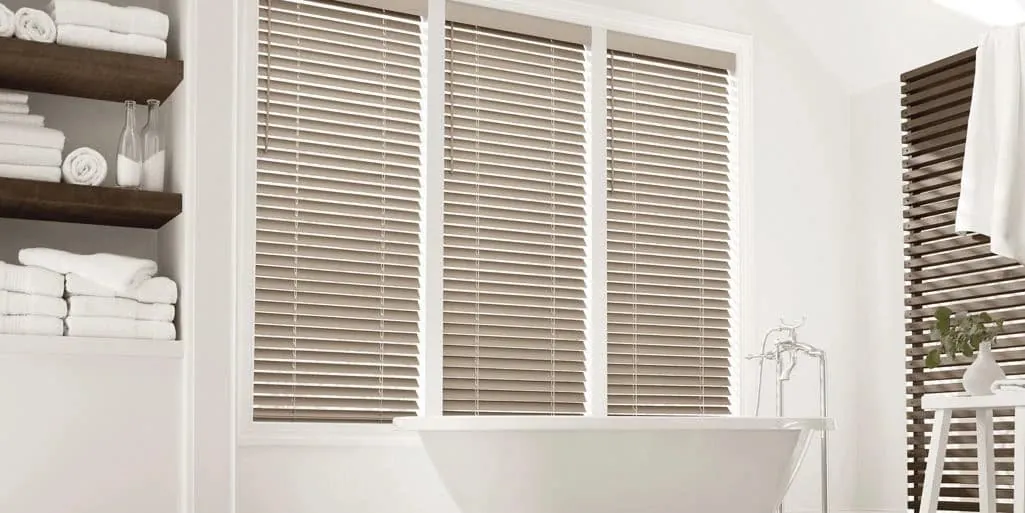
When a coastal blind is past saving
Salt and sun together are hard on fabric and slats as well as hardware. After many seasons facing the water, a shade’s fabric can fade or turn brittle, and wood slats can warp or split. When the part you see every day is worn out, replacing a cord or a tilter will not make the product look right again.
We will tell you plainly when we think that is the case. The decision stays yours: have the repair done if it is possible, or leave it. If you would like to look at something new, our in-home consultations bring samples to your house, and the Westport page lists everything we offer in town.

Repairs backed by Hunter Douglas know-how
Blinds & Designs is a Hunter Douglas Gallery dealer, and installation is certified by Hunter Douglas. For a repair, that means knowing how a Duette shade is strung, how a roller clutch should feel, and how the brackets for a big shade ought to be placed.
We welcome repairs on window coverings you already own, from a shade we fitted to one that came with the house. Mended properly and set back on its window as designed, a product keeps doing its job.
The main blind and shade repair page has more on how repairs work. For new coverings elsewhere in the house, our roller shades in Westport page is a good place to start on view windows.
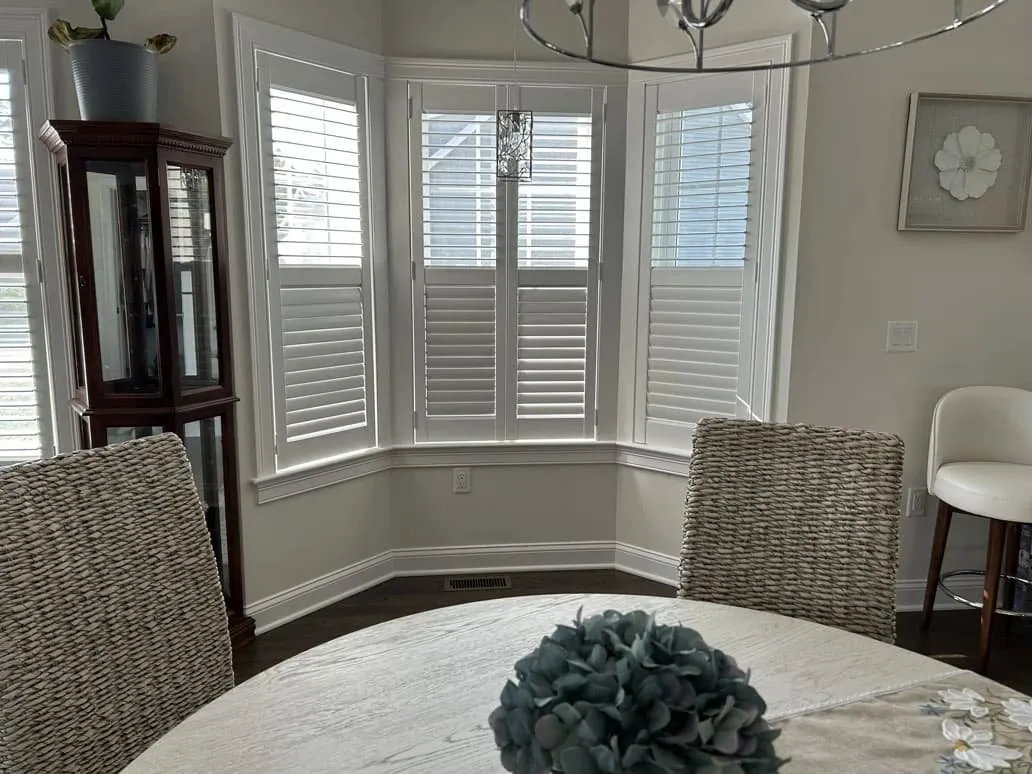
North Dartmouth is our closest showroom
Of our showrooms, North Dartmouth sits closest to Westport. It is an easy place to bring your photos and questions about a repair and talk them through.
If the product is awkward to take down, or you would prefer we saw it on the window, say so when you get in touch. Seeing a blind in its own opening, with the wind and the light it lives with, often explains the fault quickly.
Questions from Westport
My cord lock has rust on it and the blind keeps sliding down. Can it be fixed?
Usually. The cord lock is a separate part and can be replaced. On coastal windows it is often the first thing to fail, while the slats and headrail are still in good shape.
The wand on my blind is very stiff. Should I keep forcing it?
Please do not. A stiff wand usually means the tilter inside the headrail has corroded. Forcing it can snap the stem or strip the gears. Replacing the tilter is a simpler job if it is done before that happens.
My big roller shade drifts down on its own. What is wrong?
On a wide roller, that usually points to the clutch, which carries the full weight of the fabric. A slipping clutch can often be replaced while keeping the shade.
Can you repair shades on a window that faces the harbor all day?
Often, yes, as long as the fabric itself is still sound. Strong sun off the water can fade or weaken fabric over the years, and we will tell you honestly whether it is worth new cords.
Is a repair visit a sales visit?
No. A repair is about the product you already have. If you later want something new, that is a separate conversation, and only if you ask.
What to do next
Blind and shade repair in Westport, MA, begins with a short note. Use Request a Consultation to tell us what is wrong, ideally with a picture of the hardware, and we will come back with our view. You can also talk to us through the call button, or call in at the North Dartmouth showroom.