
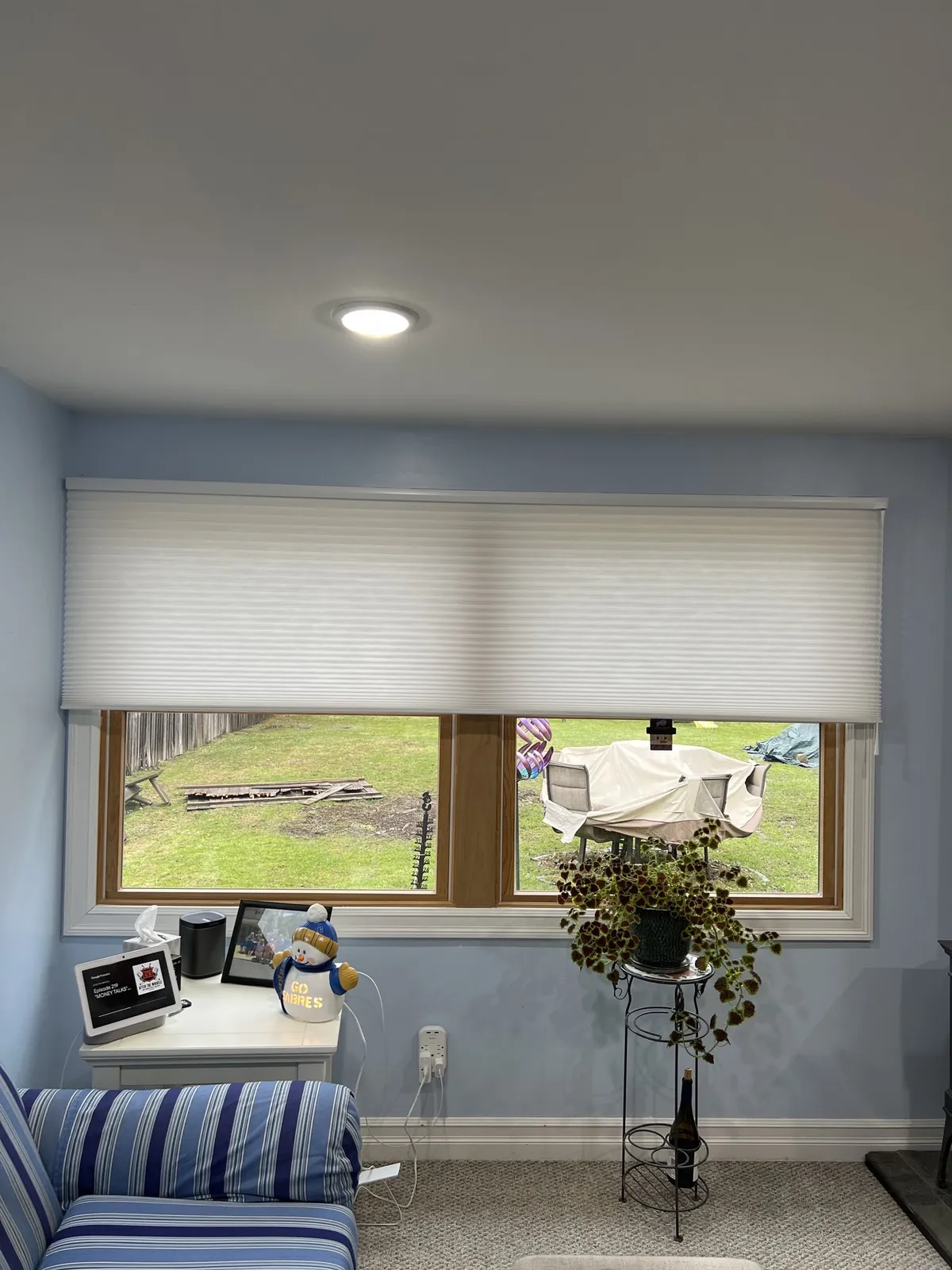
What Bellingham houses ask of their blinds
Drive along Hartford Avenue or South Main and most of what you pass is post-war: capes and ranches, close to the road, with newer colonials built on the lots in between. Those are working houses, and their blinds and shades work hard too. Kitchen blinds are tilted a dozen times a day, bedroom shades go up every morning, and the slider to the back yard is opened through every warm month. Blind and shade repair in Bellingham, MA, is mostly about keeping those everyday window coverings going.
The good news is that most of the openings are standard modern sizes. A blind that fits one of them well can usually be repaired and rehung exactly where it was, with nothing about the window to fight against.
The exception is the older village houses, where the original sash is small. Those windows bring their own quirks, which we cover further down.
How a repair request works
You do not need to know what is wrong inside the headrail. You only need to tell us what you see.
- Describe the window covering and the problem, and send a photo if you can. A shot of any label on the headrail is useful.
- We tell you whether it sounds like a repair worth making.
- If it does, we set up a time to take a proper look.
- We explain what the fix involves before any work is done.
- If repair turns out not to be the sensible choice, you hear that plainly, with no push toward anything new.
The faults we see most
Nearly every request for blind and shade repair in Bellingham lands in one of three groups.
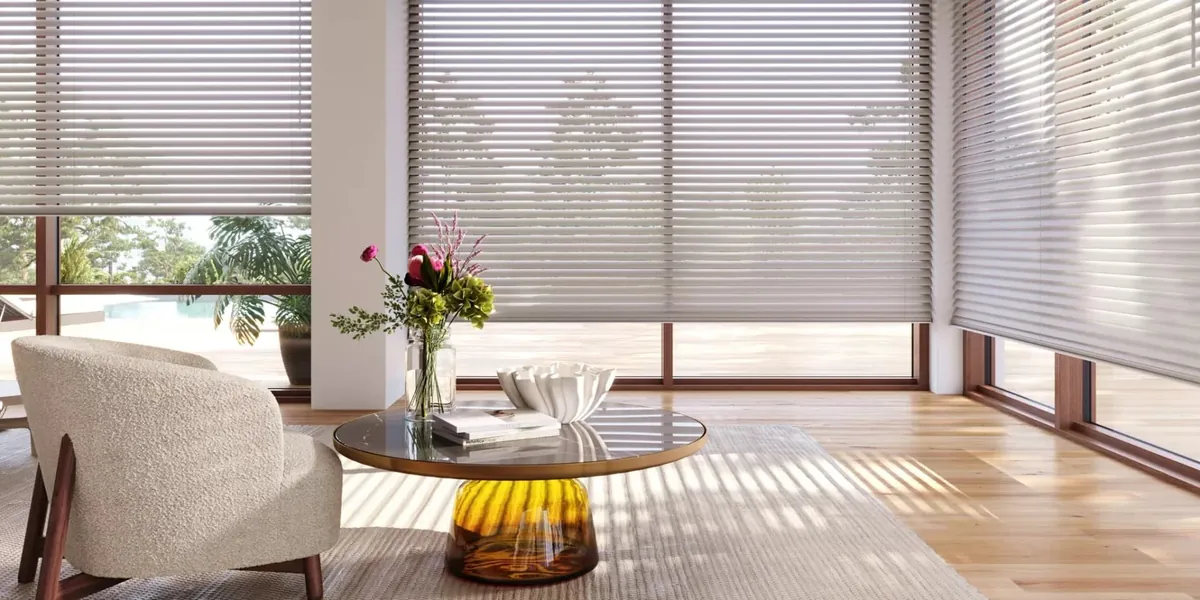
Restringing and broken cords
A lift cord that has frayed, snapped or stretched so the blind hangs crooked. Restringing runs fresh cord through the whole blind so it rises level again.
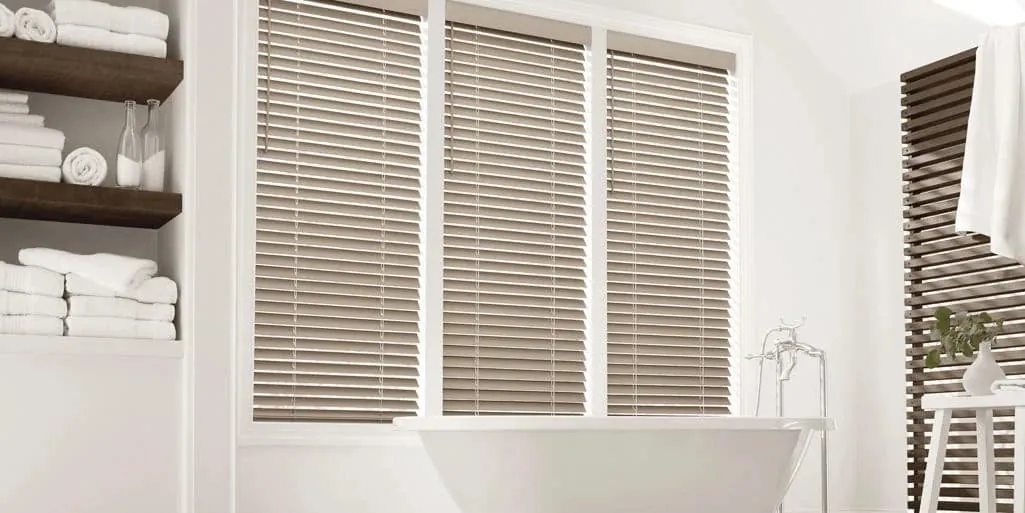
Wands and tilt mechanisms
A wand that has worked loose or cracked, or a tilt gear that no longer turns the slats. Both are common on blinds that are opened and closed all day.
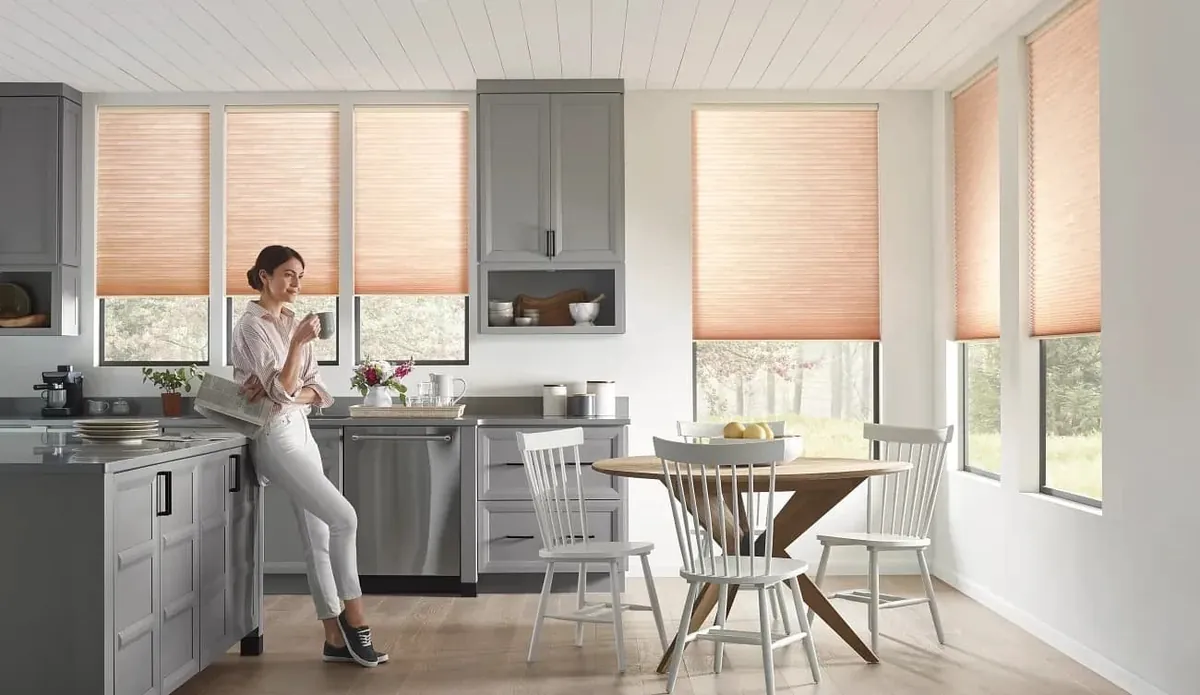
Headrails
A headrail that has slipped off its brackets, bent under the load or jammed inside, so the shade sticks halfway or will not come down at all.
Capes along Hartford Avenue
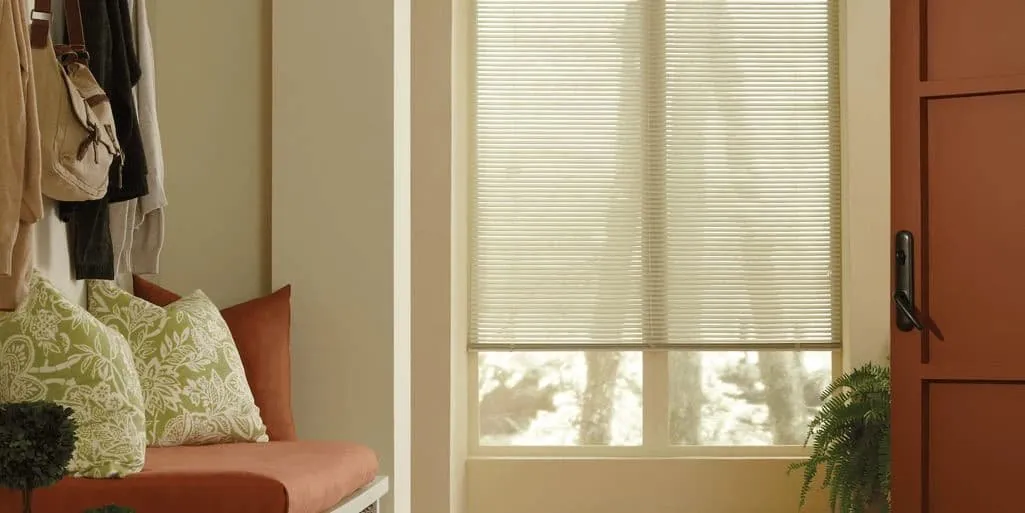
A post-war cape is a compact house, and almost every window in it is in a room that gets daily use. Downstairs there is usually a living room facing the street, a kitchen at the back and a small dining area. Upstairs, under the roof, the bedrooms have lower ceilings and windows set into dormers or gable ends.
That compactness means a lot of handling. In a small kitchen the blind over the sink gets splashed, bumped and tilted constantly, and its wand and tilt gear take the brunt. In the front room, a blind that faces the road is closed every evening and opened every morning. Over time the cord that does all that lifting thins where it runs through the lock, and eventually one side lets go.
Upstairs, dormer windows are often small and deep. A shade there is easy to tug at an angle because you are reaching into a recess, and an angled pull is exactly what wears a lift unevenly. Many of the cords we restring in capes have worn on one side only, for that reason.
The fixes are modest. A new cord, a new wand, a reset bracket. Blind and shade repair in Bellingham very often comes down to a small part on a product that is otherwise in perfectly good shape.
Ranches on South Main
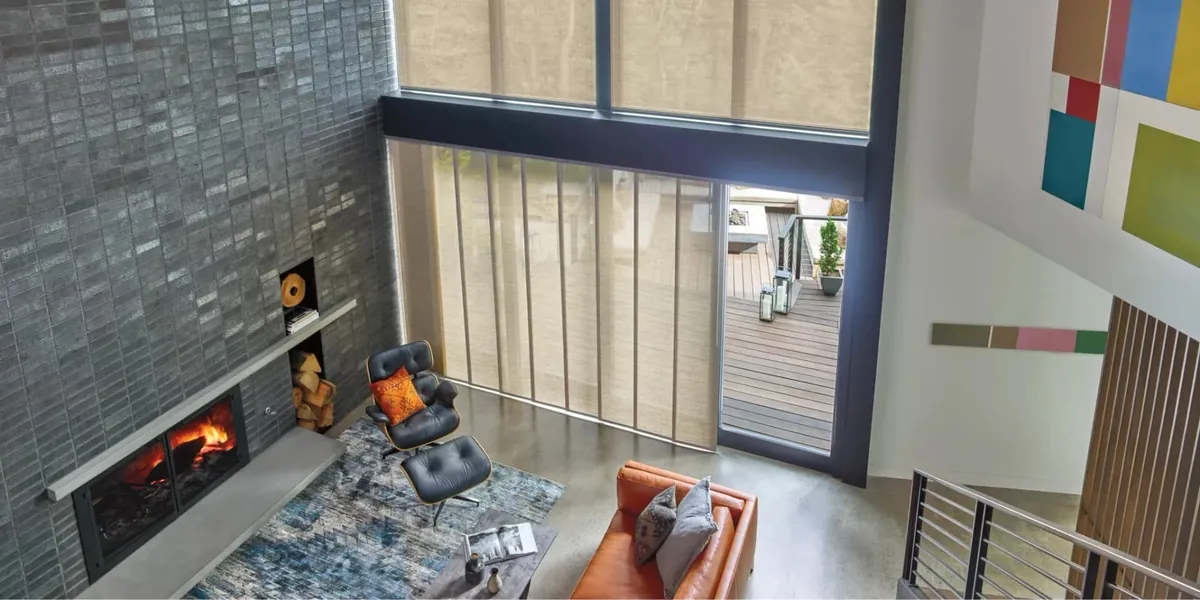
A ranch puts everything on one floor, and its windows tend to be wide rather than tall. The living room usually has a picture window, the bedrooms have broad horizontal openings and many ranches have a slider out to a patio or deck.
Wide windows mean wide blinds, and a wide blind is a heavy blind. The headrail carries all that weight across a long span, and the tilt gear has to turn many slats at once. Those are the two places a wide blind usually fails first: a headrail that starts to sag in the middle, or a tilt that turns the slats at one end while the far end lags.
The slider is a story of its own. Vertical blinds on a patio door are drawn back and forth every time someone steps outside, and the wand that does the work gets knocked by the door, by feet and by the dog. A cracked wand or vanes that no longer rotate together are among the most frequent requests from ranch houses. Most of the time the track and vanes are sound and only the control has worn.
Newer colonials between them
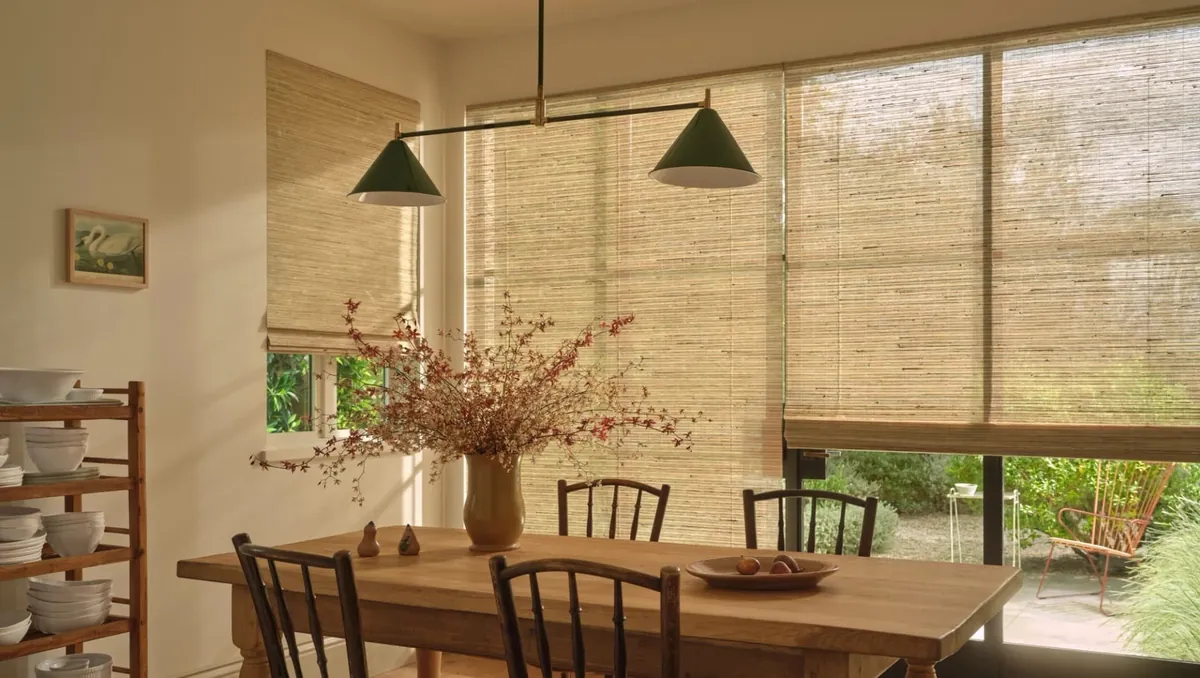
The colonials built on the lots between the older houses are larger, with more windows and more of them at standard sizes. In a house like that, it is common to have a whole set of matching blinds or shades bought at the same time. When one starts to fail, the others are often not far behind.
That is worth thinking about. If one blind in a matching set has a worn cord, it can make sense to have the others checked at the same visit, so you are not calling again in a few months for the next window. We are happy to look at the set and tell you which ones need attention and which are fine as they are.
A colonial also tends to have at least one window that is awkward: a landing window halfway up the stairs, or a tall window in a two-story family room. Those coverings are touched less, but when they fail they are the hardest to deal with yourself.
A landing window is a good example. It sits over the turn of the stairs, so you reach it from a step rather than from the floor, and a shade there is often left at one height for weeks. When it is finally moved, a cord that has sat in one position can bind, or a bracket that has quietly loosened lets the headrail tip. Those are small repairs, but nobody enjoys doing them while balanced on a stair tread, which is why so many landing shades end up left half-down.
Shades in ranch bedrooms
Bedrooms in a ranch sit at the same level as the yard, often facing the street or a neighbor a short way off. The shade in a room like that is pulled down every night for privacy and raised every morning for light, without fail. Honeycomb shades, roller shades and roman shades all turn up in those rooms, and each has its own weak spot.
A corded honeycomb shade wears its lift cords where they pass through the headrail, and when one side stretches, the bottom rail hangs at an angle. A roller shade depends on the spring or clutch at one end of its tube; when that wears, the shade will not stay where you leave it or will not roll back up. A roman shade has cords running up the back of the fabric through small rings, and if one of those rings lets go, a fold drops out of line.
These are different repairs, but the approach is the same: find the worn part, replace it, and check the shade lifts square before it goes back up.

The cord lock and the sudden drop
One fault deserves a mention of its own, because it can be startling. You raise a blind, let go of the cord and the whole thing drops back to the sill. That usually means the cord lock in the headrail is no longer gripping.
A cord lock is a small part with teeth that pinch the cord when you let it swing to one side. After years of use the teeth wear smooth, or the cord itself thins until there is nothing for them to catch. Either way, the fix is to replace the worn piece, and often the cord as well, since a worn lock and a worn cord usually go together.
It is worth dealing with promptly. A blind that keeps dropping tends to get yanked harder each time, and that strain spreads to the rest of the lift.
Small sash in the village houses
Not everything in Bellingham is post-war. The older houses in the village carry small original sash, sometimes with deep frames and trim that has been painted many times. A blind or shade mounted inside one of those openings has very little room to spare.
Tight openings change the repair. A headrail that fits snugly can rub against the frame as it lifts, wearing the cord or the edge of the fabric. Paint build-up can narrow the opening a little more each time the trim is redone, until a blind that once fitted easily starts to catch. Part of the job on these windows is checking the clearance and adjusting how the headrail sits, so the repaired blind runs freely.
Small sash also tends to mean small, light blinds, which is good news. A cord or tilt on a narrow blind is a simpler fix than the same job on a wide ranch window.
Why standard openings help
Because most Bellingham houses have standard modern openings, the original blind usually fitted the window well, and a repaired blind goes back up exactly as it was. There is no awkward framing to work around and no settled, out-of-square opening throwing the headrail off level.
It also means that when a product is genuinely past saving, replacing it is uncomplicated. That is not something we push. But it is honest to say that on a standard opening the choice between repairing and replacing comes down only to the product’s condition, not to any difficulty with the window.
Worth saving, or near the end
A few signs help you judge before you even get in touch.
Worth saving: the slats are straight, the fabric is clean and unfaded, the headrail is solid and the problem is one thing, such as a single broken cord or a wand that has come off.
Probably near the end: fabric that has gone brittle or split from sun, several slats cracked or warped, a headrail that has bent, or more than one fault at once.
Most blinds sit somewhere in between, and that is where a proper look helps. We tell you what we see. If a repair is the right call, we make it. If it is not, and you then want to see new options, our pages on custom blinds in Bellingham and roller shades in Bellingham cover what we offer, and our Bellingham page lists every service we bring to town.
Inside the headrail, in plain words
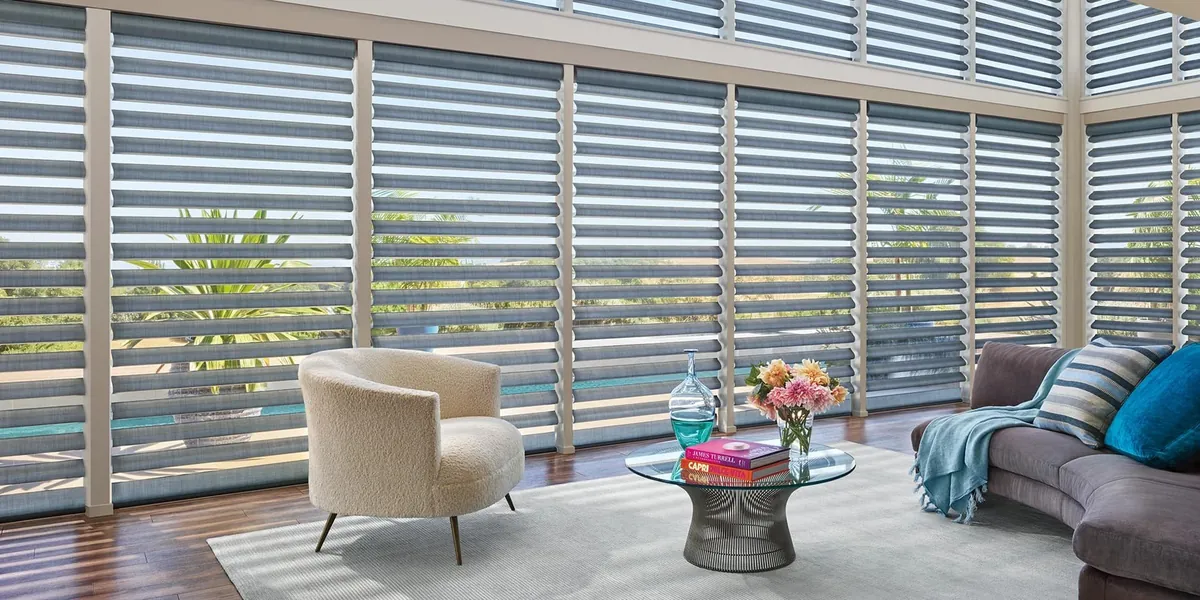
Most of the faults on this page come back to the long box across the top of the blind. It is worth knowing what is in there, because it explains why a repair is often smaller than it looks from the floor.
- The tilt gear. A small gearbox turned by the wand or tilt cord. It rotates a rod running the length of the headrail, and that rod turns every slat at once.
- The lift drums or pulleys. The lift cords wind around or pass over these on their way down the blind. A cracked pulley frays a cord quickly.
- The cord lock. The piece that holds the blind at the height you choose.
- The brackets. These hold the headrail to the window frame or wall. If one loosens, the whole blind can tip or drop out.
When one of these parts fails, the others are often still in good order. That is why replacing a single part so often brings a whole blind back to life, and why we look inside before deciding anything.
A visit on the day
When we come to look at a repair, there is not much for you to do. It helps to clear the sill and move anything fragile from beneath the window, since the blind may need to come down while we work. If the window is high, let us know beforehand so we bring the right ladder.
We look at the product, tell you what we find and explain what the fix involves before going ahead. Once the work is done, we rehang the blind or shade, check it lifts and tilts properly and run it up and down with you so you can see it working.
If we find something else on the way, such as a second blind in the room with a fraying cord, we point it out and leave the decision with you.
Small habits that make a repair last
The way a blind is used decides how long a repair holds. Pull the lift cord straight down rather than off to the side, especially on dormer windows where you reach in at an angle. Stop turning the wand when the slats are closed; forcing it further strains the tilt gear. On vertical blinds at the slider, rotate the vanes open before you draw them, so they slide instead of dragging.
Cleaning matters less than people think, but dust does build up on slats and in fabric. A soft brush or a vacuum on low lifts most of it. Our guide to caring for fabric shades has more detail.
A short drive from the Franklin showroom
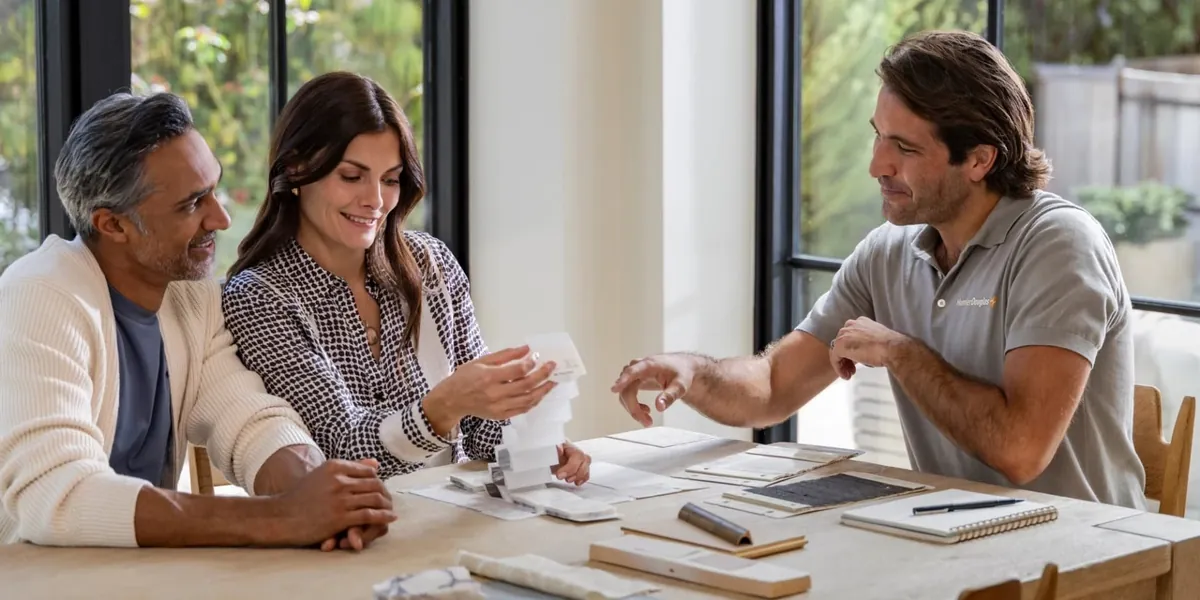
Our nearest showroom to Bellingham is in Franklin, just over the town line. If you want to talk a problem through in person, bring a photo of the blind or shade and of any label on its headrail.
You do not need to come in, though. A description and a photo sent with a consultation request are usually all we need to give a first view on blind and shade repair in Bellingham, MA.
Repairs by a dealer that knows the product
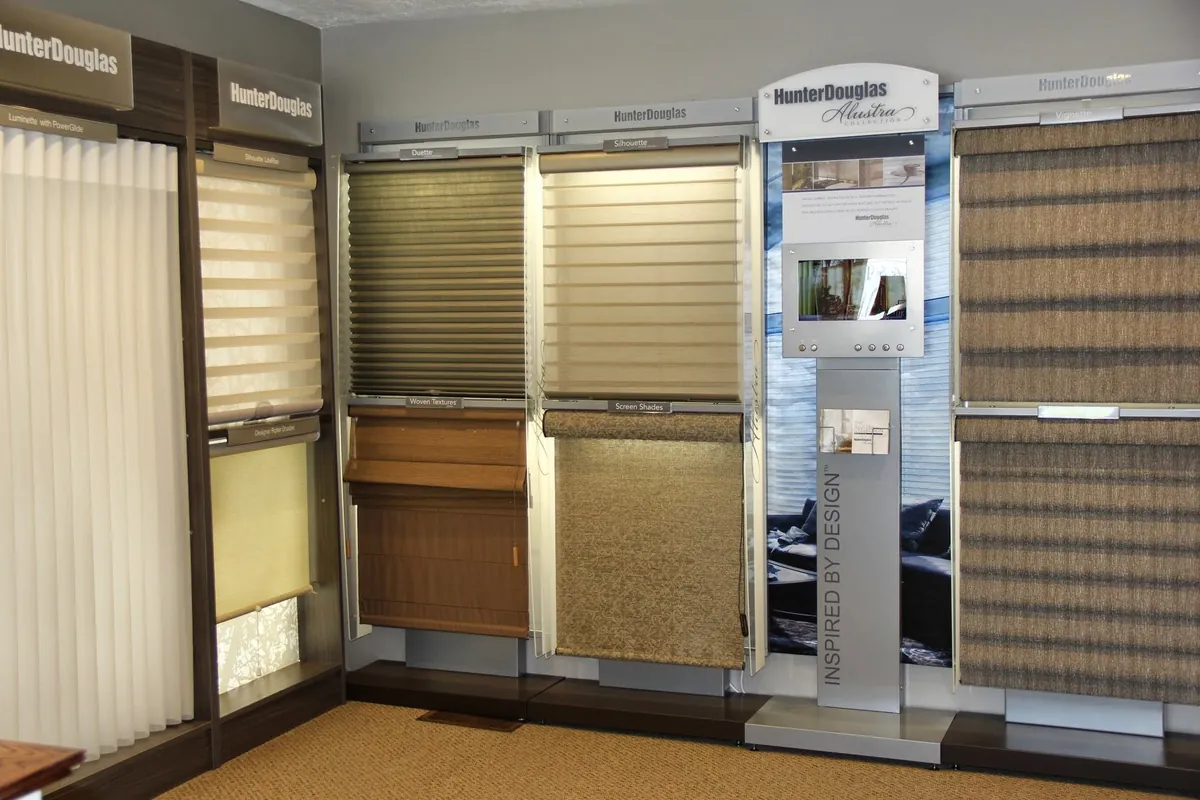
Blinds & Designs is a Hunter Douglas Gallery dealer with certified Hunter Douglas installers. We know how these shades and blinds are put together, so a repair puts the product back the way it was built to work, not just patched until the next fault.
Repairs are part of a bigger picture for us. We also offer in-home consultations with sample vans, interior design consultations and window covering automation. The main blind and shade repair page explains how repairs work across all the areas we cover.
Bellingham repair questions
The vertical blinds on my slider will not turn. Can you fix them?
Usually. When the vanes stop rotating, the cause is most often the wand, the tilt mechanism in the track or a broken carrier. If the vanes and track are in good shape, the worn part can often be replaced.
One blind in my matching set broke. Should I worry about the others?
Blinds bought together wear at a similar rate, so it can be worth having the rest checked at the same visit. We will tell you which ones need attention and which are fine.
My cape’s dormer shade lifts crooked. What causes that?
Usually a cord worn more on one side, often because the shade is pulled at an angle from inside the recess. Restringing levels it again.
Can a blind in a small old window be repaired?
Yes, as long as the blind itself is sound. We also check the clearance in the frame, because a tight fit can wear the cord or catch as it lifts.
Will you try to sell me new blinds?
No. If a repair makes sense, we make it. If it does not, we tell you, and new window coverings are only discussed if you ask.
Getting a repair started
Tell us what has gone wrong. Request a consultation and describe the blind or shade, use the call button to reach the Franklin showroom, or take a photo along to the showroom itself. Blind and shade repair in Bellingham, MA, starts with a few lines and a picture.