
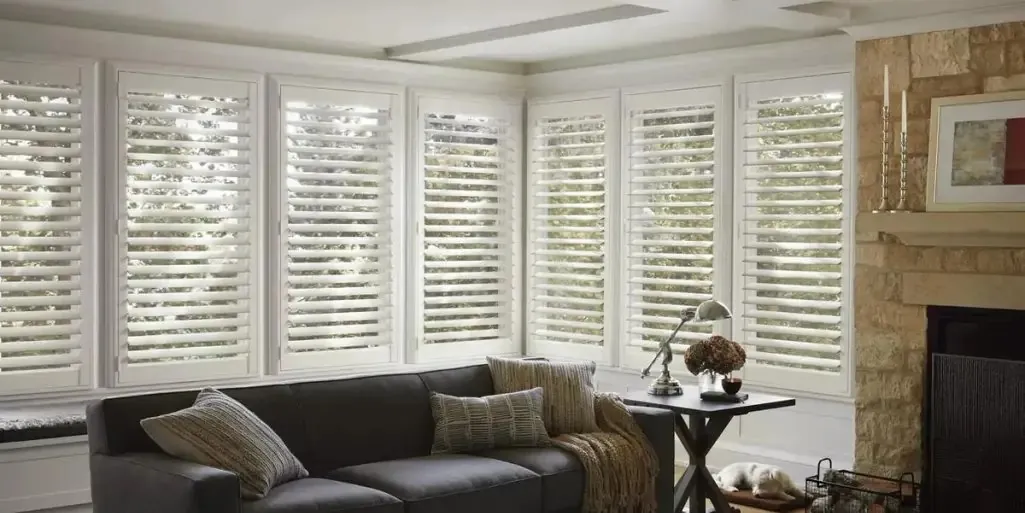
Three kinds of house in one town
Canton is our shop-at-home territory, so every shutter we fit here is chosen in the house it goes into. That suits the town, because its houses vary a great deal from one part to the next. Near Canton Center, Victorians and colonials keep their tall sash and their deep, detailed casings. Through the middle of town, post-war capes and ranches line street after street. And on the Blue Hills side, larger newer houses sit up on lots that climb steeply from the road. Plantation shutters in Canton, MA, need to work for all three.
Each brings its own question. The tall sash near the center asks how to keep long panels in proportion and the old trim on show. The capes and ranches ask how to treat a whole house simply and well. The hillside houses ask how to handle big windows that look out over the road and the trees, and down onto the street below.
We bring samples of every collection to the door, so those questions are answered at your own windows.
Plantation shutters in Canton, MA, by house type
These are the starting points we use most often in town. Every one of them is adjusted window by window once we have measured.
Tall sash near Canton Center
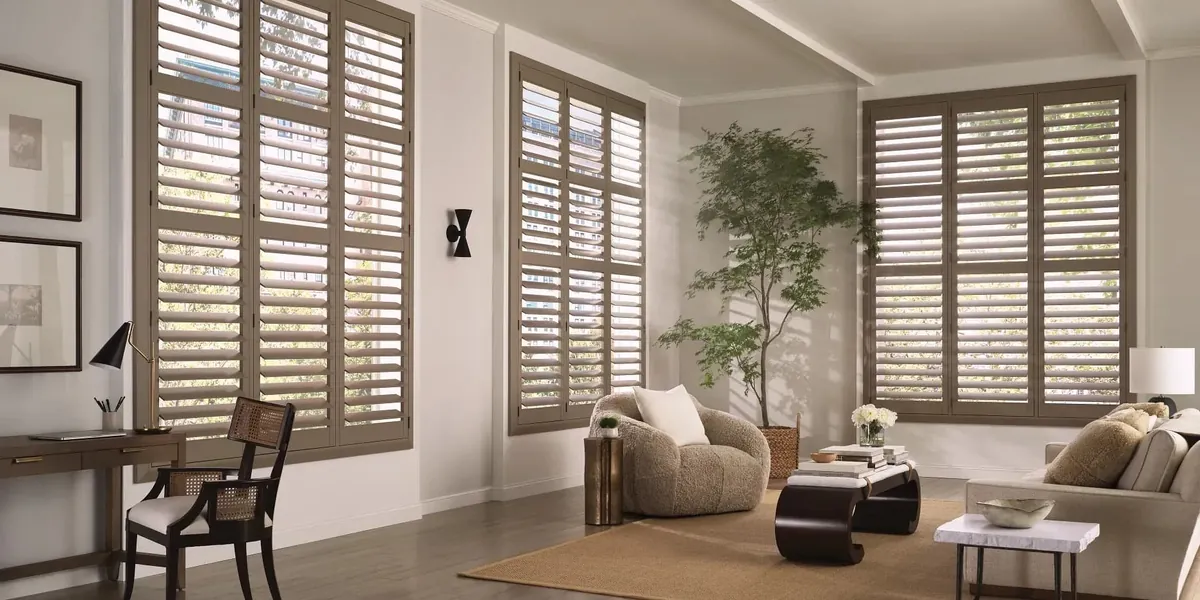
Long panels with a divider rail, a medium louver, and an inside frame where the reveal allows, so the casings stay on show.
Capes and ranches mid-town
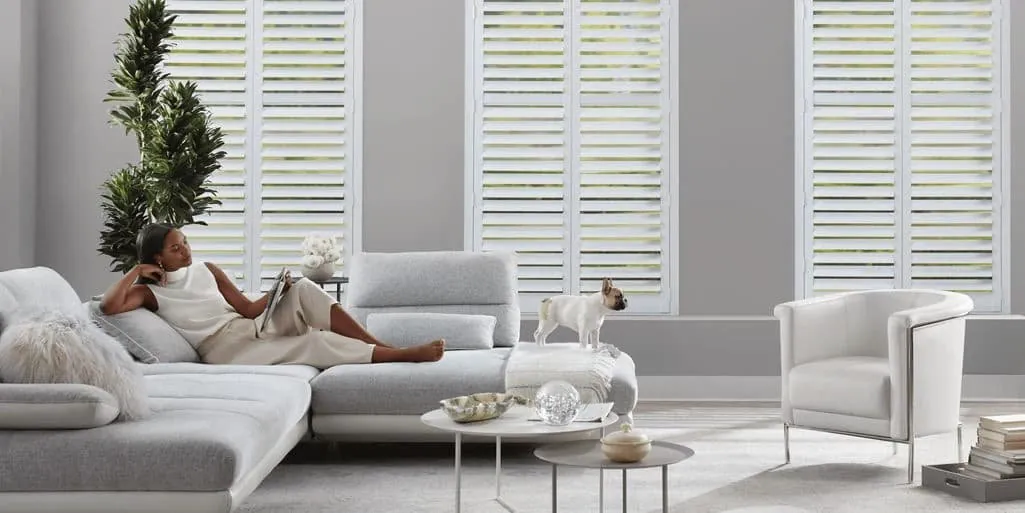
One louver size and one finish through every room, with dormers, picture windows and the slider all planned to match.
Hillside houses on the Blue Hills side
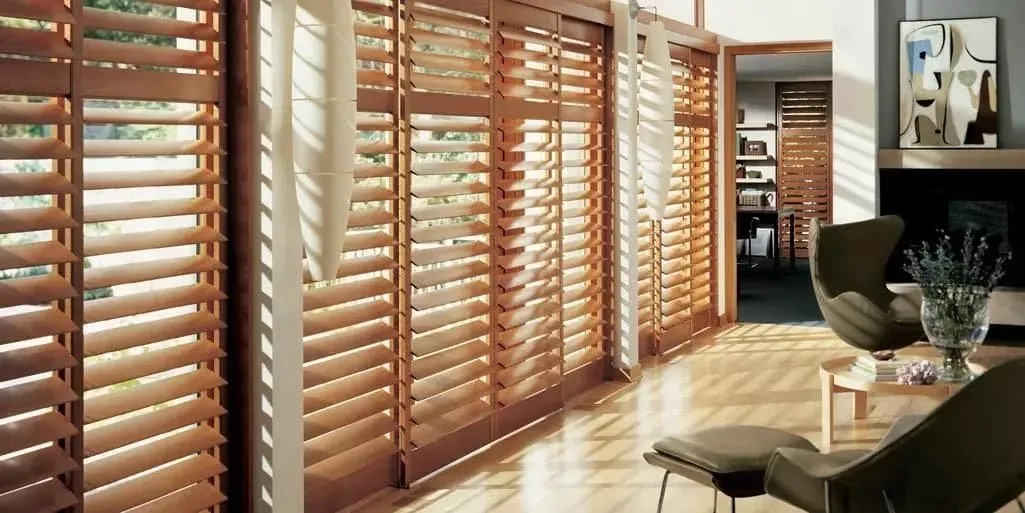
Wide louvers and hidden tilt for big modern glass, so the view over the trees stays clear when the blades are open.
How shop at home works for shutters
There is no storefront to visit in Canton. Instead, the showroom comes to you. Our vans carry shutter samples in all three Hunter Douglas collections, the louver sizes, the frame styles and the finishes, and we lay them out where they will actually hang. You can read more about it on our shop at home in Canton page.
For shutters, that is the best way to choose anyway. A louver that looks right in a catalog can look heavy on a slim antique sash, and a white that looks crisp under shop lights can look stark beside old cream-painted trim. Seeing the samples against your own casings, in the light each room actually gets, settles those questions quickly.
A visit usually runs like this:
- You request a consultation online or with the call button, and we agree a time.
- We walk the house with you and start with the rooms that matter most.
- You compare Palm Beach, NewStyle and Heritance samples against your trim, and try louver sizes and tilt styles by hand.
- We check each opening for depth, squareness and anything in the louvers’ way, and agree a frame.
- We measure every window you are considering.
- You receive a free estimate and take whatever time you need to decide.
If you would like help with colors, fabrics or the other windows in a room, ask about our interior design consultations during the same visit.

Tall sash in the Victorians and colonials near Canton Center
The older streets around Canton Center hold Victorians and colonials with tall, narrow windows. The sash is often original, the casings are deep and sometimes carved, and the ceilings are high enough that the windows run well above head height.
A shutter on a window like that needs a divider rail. Without one, the louvers run the full height of the panel and look stretched; with one, they split into two groups that tilt on their own. That is useful as well as tidy. In a front parlor facing the street, the lower louvers can stay closed while the upper ones open to the sky.
A medium louver usually suits the tall sash best. It is wide enough to look generous on a long window and slim enough to stay in proportion with its narrow width. Two panels per window, hinged at the sides, fold back fully when you want the whole window clear.
Mounting is where an older house needs care. These windows have often settled, and the reveal may be shallower in places than it looks, especially where stops have been painted over many times. We measure each one at several points, check the diagonals and decide between an inside frame that hides in the reveal and a slim frame mounted on the casing. The aim is always the same: shutters that look as if they belong, with the trim around them fully on show. Our guide to shutters for older windows explains how we make those calls.
Victorians bring bays and the occasional arched top as well. A bay takes a shutter on every face, joined so the angles stay tight. An arched top takes a shaped panel above the working shutter, following the curve.
Capes and ranches through the middle of town
Between the center and the hills, much of Canton is made up of post-war capes and ranches. They are practical houses with honest windows: double-hungs either side of the front door, dormers upstairs in the capes, picture windows and long runs of bedroom windows in the ranches, and a slider or a pair of doors to the back yard.
These houses are where a whole-house shutter order looks best. One louver size, one color and one frame style running through every room gives a modest house a finished, consistent look from the street and from inside.
The cape’s dormers are the windows to think about. They are usually short and set deep into the dormer, under a sloping ceiling, so a slimmer louver and an inside frame keep the shutter neat in the alcove. The ranch’s picture window is the opposite: wide, and best divided into three or four panels hinged in pairs, with a wider louver so the view of the yard stays open. A slider takes panels on a track that glide to the side.
Most of these houses have had their windows replaced at some point, often with vinyl units that are shallower than the wood windows they replaced. That affects whether an inside frame fits, so we check every opening’s depth rather than assuming.
Hillside houses on the Blue Hills side
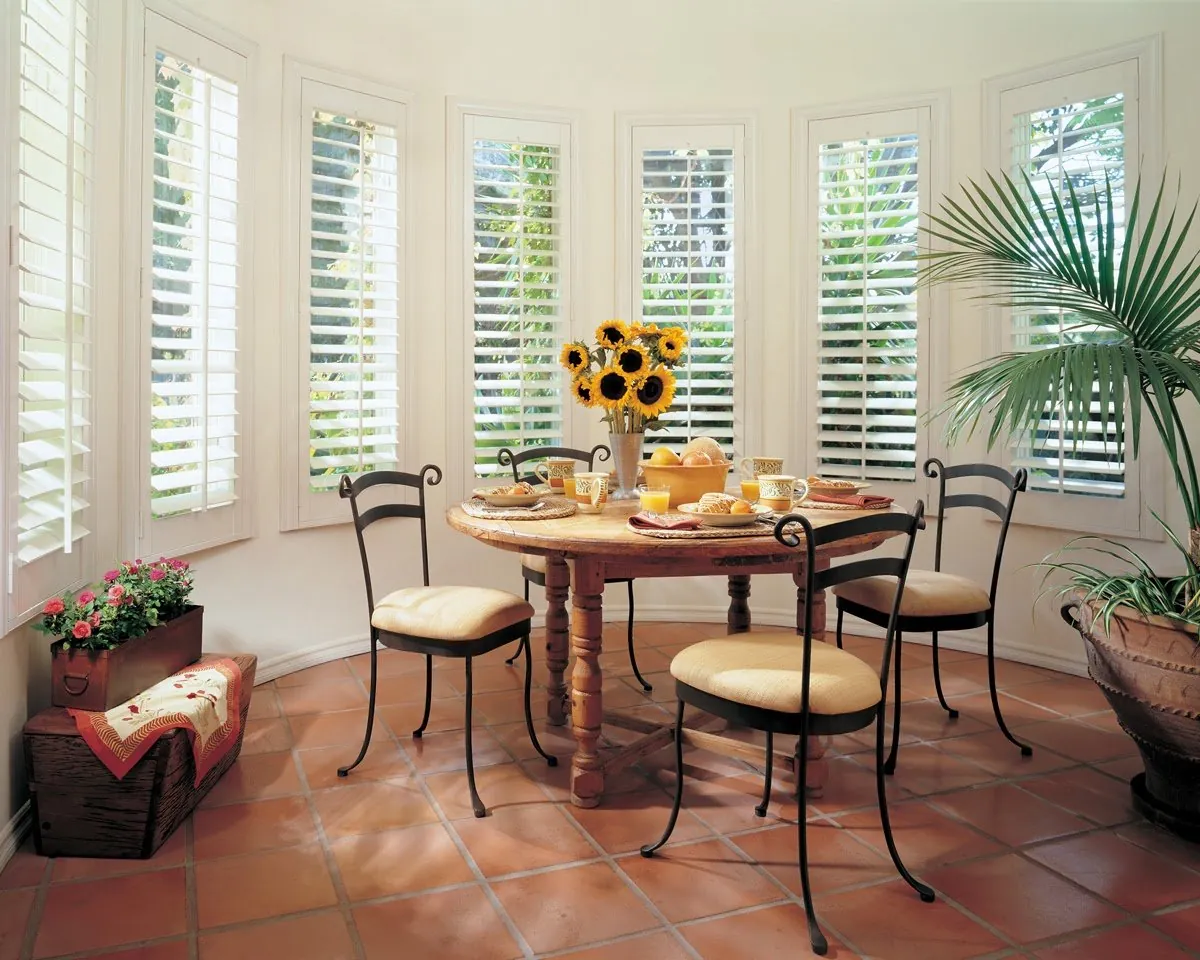
On the Blue Hills side of town the land rises, and the larger newer houses there sit on lots where the driveway climbs steeply up from the road. The houses look out over their own sloping yards, over the road, and often over the treetops.
That position changes how shutters are used. From a hillside living room, you often look down at the street, and at night a lit room is visible from below even though the house is set high. Tilting the louvers up sends the lamplight to the ceiling and blocks that upward view, while still letting you see out a little. In the day, the same rooms take strong light over the trees, and angling the blades down cuts the glare while keeping the outlook.
The windows themselves are usually large modern units, sometimes in long runs, sometimes rising two stories in a great room or foyer. Wide louvers and a hidden tilt suit them, because when the blades are open flat you look through as little as possible. Tall openings are divided into tiers of panels, with the bottom row working by hand and the upper rows either hinged or set with fixed louvers.
Where a house is built into the slope, some rooms sit partly below grade on one side and open to the yard on the other. Those lower rooms often have sliders or French doors, which take shutters on a track or mounted on the doors themselves.
Sun, view and privacy, room by room
Plantation shutters in Canton, MA, are usually chosen for a mix of reasons, and they change from room to room.
- Front rooms near the center want privacy from the sidewalk without losing daylight. A divider rail lets the lower louvers stay closed while the upper ones open.
- Bedrooms in the capes and ranches want a darker room in the morning and air in the afternoon. Closed louvers darken a room well, and the panels swing open when you want the window up.
- Living rooms on the hillside want glare control and a clear view. Wide louvers tilted against the sun keep the outlook and soften the light.
- Kitchens and baths everywhere want something that shrugs off water, which is where Palm Beach comes in.
Louver size and frame style
Two choices shape the look of a shutter more than any other.
Louver size should follow the window. Slim louvers keep a small dormer or a narrow antique sash in scale. Medium louvers are the everyday choice for standard double-hungs. Wide louvers suit big modern glass and picture windows, because you look through fewer blades. It is fine to mix sizes in one house as long as the finish matches.
Frame style decides how the shutter meets the wall. An inside frame sits within the opening and leaves the casing completely visible, ideal for the deep reveals of an older house. A frame mounted on the casing solves a shallow or crowded window and can make a small opening look a little larger. A frame with a decorative edge adds profile around a modern window whose builder left very plain trim.
Tilt style is the last detail. A classic tilt rod down the front suits a traditional room. A hidden tilt, worked from the edge, keeps the face of the panel clean and the view clear.
Baths, kitchens and the laundry
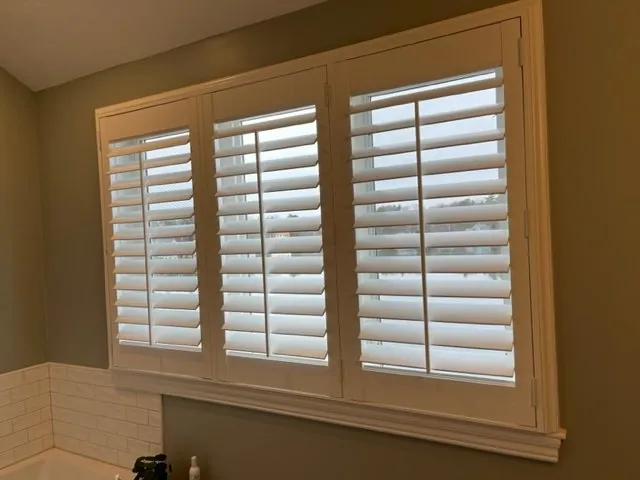
Every house in town has a few rooms that are hard on window coverings. In a Victorian near the center, the bathroom may have been fitted into an old bedroom, with a tall window now facing a shower. In a cape, it is usually the single upstairs bath, small and steamy. In a newer hillside house there may be a large primary bath with a wide window over the tub, a hall bath, a laundry room and a mudroom.
Those are the windows for Palm Beach. It is made from polysatin with no wood inside, so steam and splashes do it no harm and it wipes clean with a damp cloth. Painted to match the shutters elsewhere, with the same louver size, it looks like part of one set.
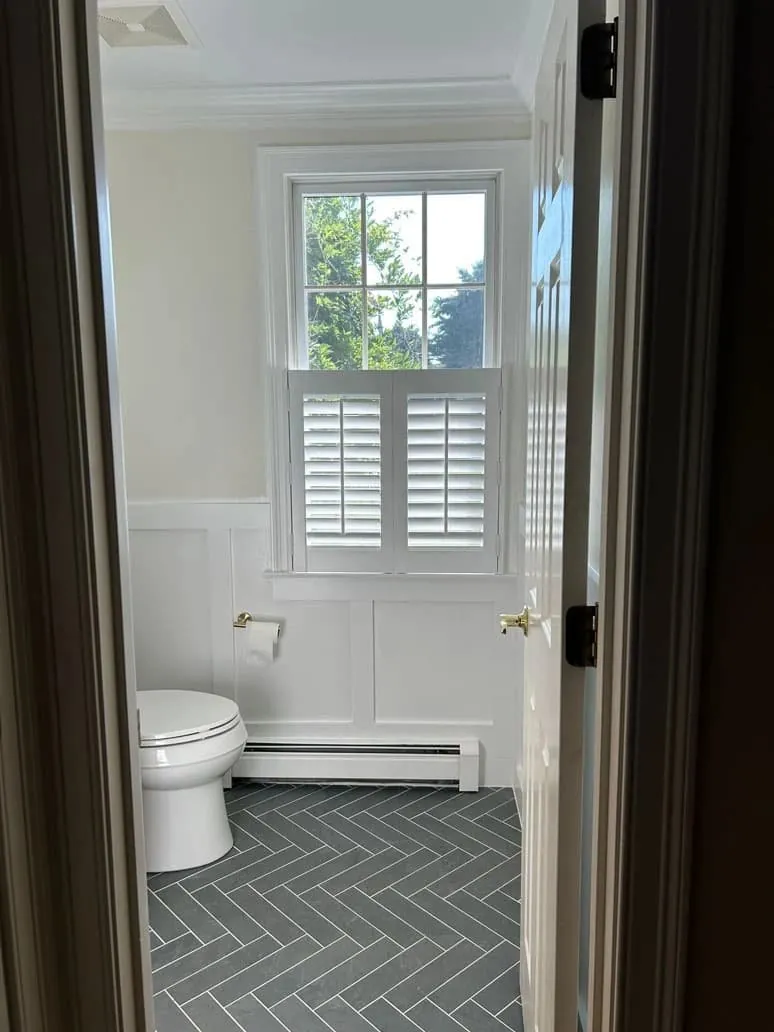
A cafe layout, covering only the lower half of the window, is worth considering in a bath or kitchen that faces the street or a neighbor. The lower glass is private, the upper glass lets in daylight, and the window can still be opened for air.
Choosing between Palm Beach, NewStyle and Heritance
If a room gets wet, choose Palm Beach. Its polysatin will not swell or warp in steam, which makes it the shutter for baths, laundries and the kitchen sink window.
If a room is a bedroom, family room or office, NewStyle is usually the answer. It has the look of painted wood, holds up well on wide panels and keeps a whole house consistent.
If a room has natural wood trim, or you want real wood where guests sit, Heritance is solid hardwood that can be painted or stained to match. It is often the choice for the front rooms of a Victorian near Canton Center.
Most houses use two of the three, painted the same color so nobody can tell them apart. Our main plantation shutters page compares them in more depth.
Picking a color in your own light
Color is one of the decisions that really benefits from shop at home. Near Canton Center, many Victorians and colonials have trim that was painted long ago and has softened to a warm cream. A stark white shutter beside it can make the woodwork look dingy, while a warm white or off-white blends in. Where the casings are natural wood, a stained Heritance shutter chosen against the trim itself can pick up the same tone.
In the capes and ranches, most trim is a plain white, and a matching white shutter makes the windows look larger and the rooms brighter. On the hillside, the larger newer houses sometimes have darker walls or a more modern style, and soft grays or taupes suit them well.
We bring finish samples and hold them against your casings at different windows, because a north-facing room and a south-facing room can make the same white look like two colors. Getting the finish right is what makes plantation shutters in Canton, MA, look like part of the house rather than something added to it.
Starting small or doing the whole house
Some people want every window done at once. Others start with the room that bothers them most, perhaps a bedroom on the hillside that catches the first sun, or a front parlor near the center that faces the sidewalk, and add more rooms later.
Both approaches work. If you start small, we choose the louver size, finish and tilt style with the rest of the house in mind. When you are ready for the next room, new plantation shutters in Canton, MA, can be ordered to match the first ones exactly.
On installation day
When the shutters arrive, our certified Hunter Douglas installers come to the house to fit them. They check each frame against its window, set it square and plumb even where the opening has settled, hang the panels and adjust the hinges until each pair meets cleanly. Every louver is tilted through its full range to make sure it moves freely and closes flush. Before they leave, they show you how to work the tilt, swing the panels open for cleaning and look after the finish.
On the hillside houses with tall glass, the upper tiers are fitted from proper ladders or staging, and fixed louvers are set to the angle you chose during the consultation.

Certified installers and the full Hunter Douglas range
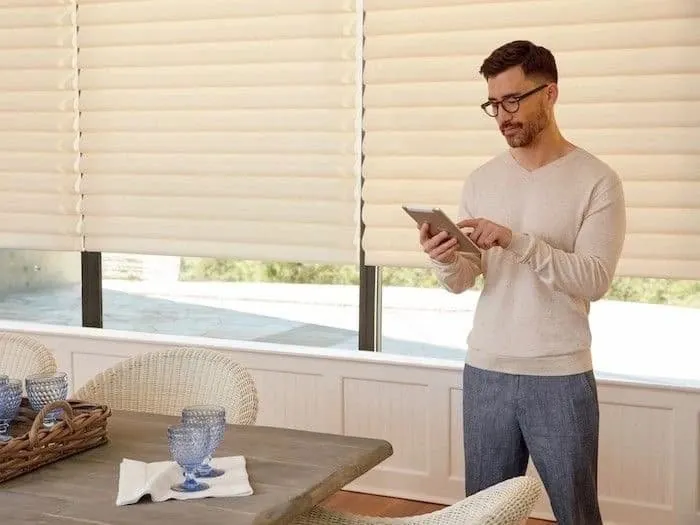
Blinds & Designs is a Hunter Douglas Gallery dealer, the brand’s own title for dealers who meet its standards. For shutters, that means every collection, louver size, frame and finish is open to you, and we bring samples of them to your house.
Our installers are certified by Hunter Douglas, so the shutters are fitted the way they are designed to be. If you have glass nobody can reach, we also handle PowerView motorization for Hunter Douglas shades, and we repair blinds and shades you already own.
For other rooms, see our roman shades in Canton or motorized blinds in Canton, or everything we offer on our Canton page.
Questions from Canton
Is there a showroom I can visit in Canton?
Canton is a shop-at-home territory, so the showroom comes to you. Our vans carry shutter samples in every collection, louver size and finish. If you would like to visit a showroom as well, the Franklin showroom is the nearest one.
Will shutters work on the tall sash in my Victorian?
Yes. A divider rail keeps long panels in proportion and lets the upper and lower louvers tilt separately. We check every opening’s depth and squareness before choosing between an inside frame and one on the casing.
Our house sits high above the road. Can people still see in at night?
A lit room can be visible from the street below. Tilting the louvers upward blocks that view while still letting light in, and closing them shuts the room off completely.
Can one house have different louver sizes?
Yes. Slim louvers on dormers and narrow sash, wider ones on picture windows and modern glass, all in the same color, look deliberate rather than mismatched.
How much does the estimate cost?
It costs nothing. After we measure your windows, you get a free estimate and there is no obligation to order.
Book your home visit
The easiest way to choose plantation shutters is with the samples in your own rooms. Request a consultation and we will bring them to you, measure every window and leave you with a free estimate. If you would rather talk it through first, use the call button.