
Where Stoughton repairs come from
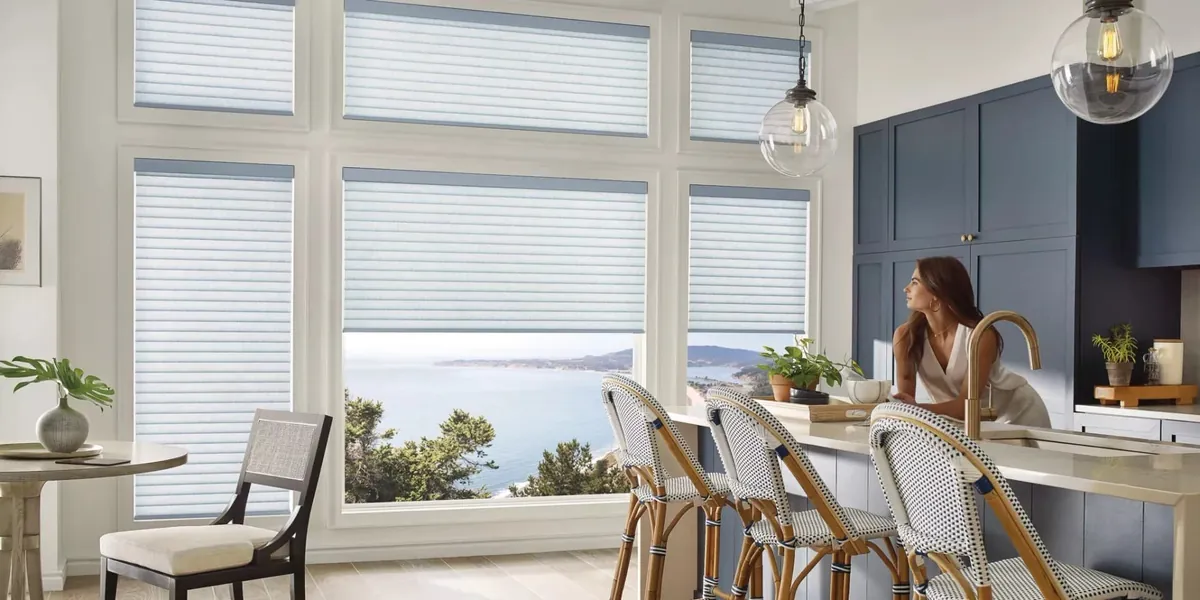
Stoughton’s streets are full of hard-working houses: capes, ranches and two-families on modest lots, with older Victorians gathered near the center. Most of the windows are standard modern openings, and most of the blinds and shades in them are used every day, often by more than one household under the same roof. That steady use is what drives blind and shade repair in Stoughton, MA.
On a modest lot the house next door is never far away, so window coverings do real work. They are closed for privacy every evening and opened for light every morning. When a blind will not close properly, or a shade will not come down, it is not a small annoyance; it is a window you cannot cover.
Near the town center the picture changes. The Victorians there have tall, narrow sash, and coverings that travel a long way with every lift. Those wear in their own way, which we come to below.
Three kinds of repair
Most blind and shade repair in Stoughton fits one of these groups. If yours does not, tell us about it anyway.
Restringing and new cords
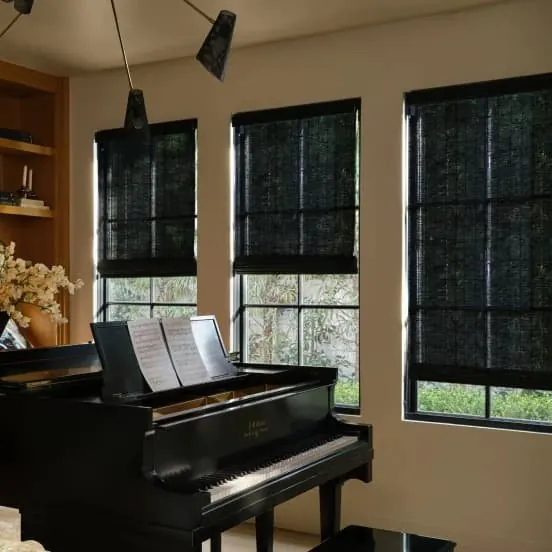
New lift cords for a shade that hangs crooked or has snapped a cord, and a new cord where the old one has frayed at the lock.
Wands and tilting
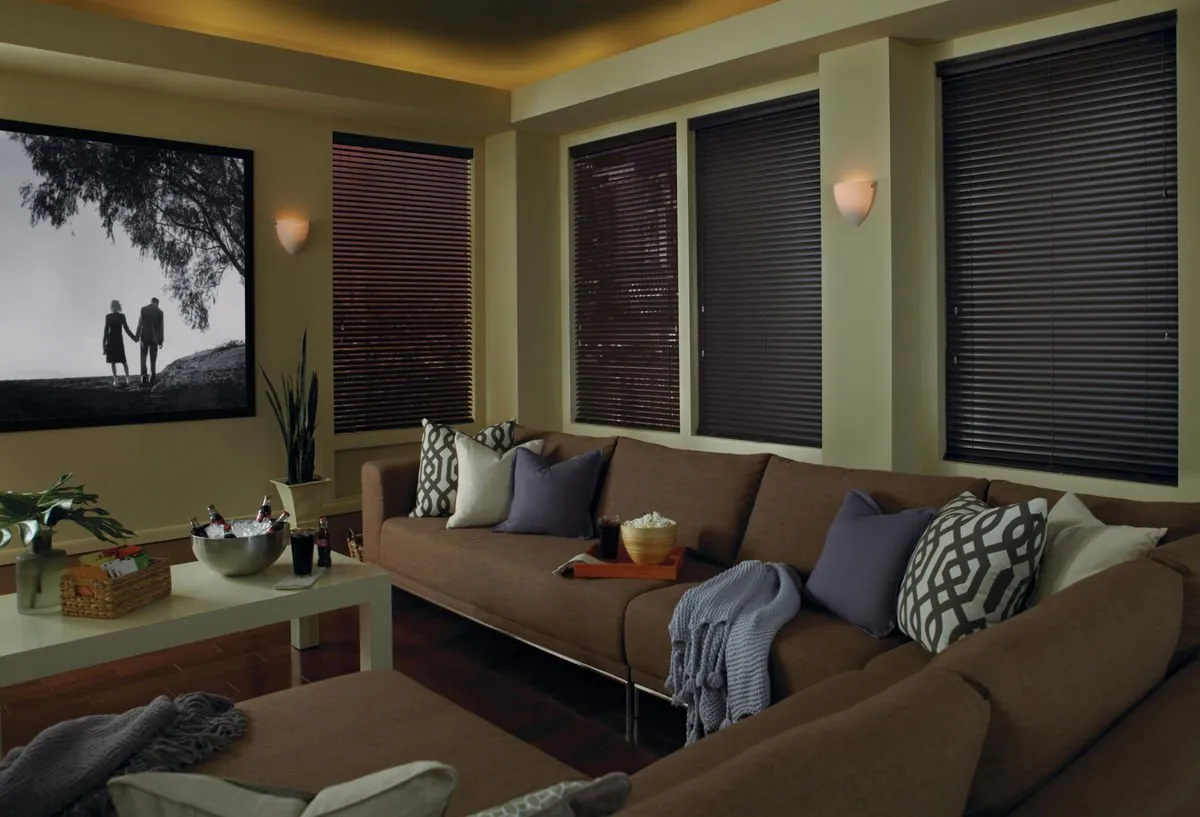
A wand that has cracked or slipped off, or a worn tilt mechanism that leaves the slats stuck partly open.
Headrails
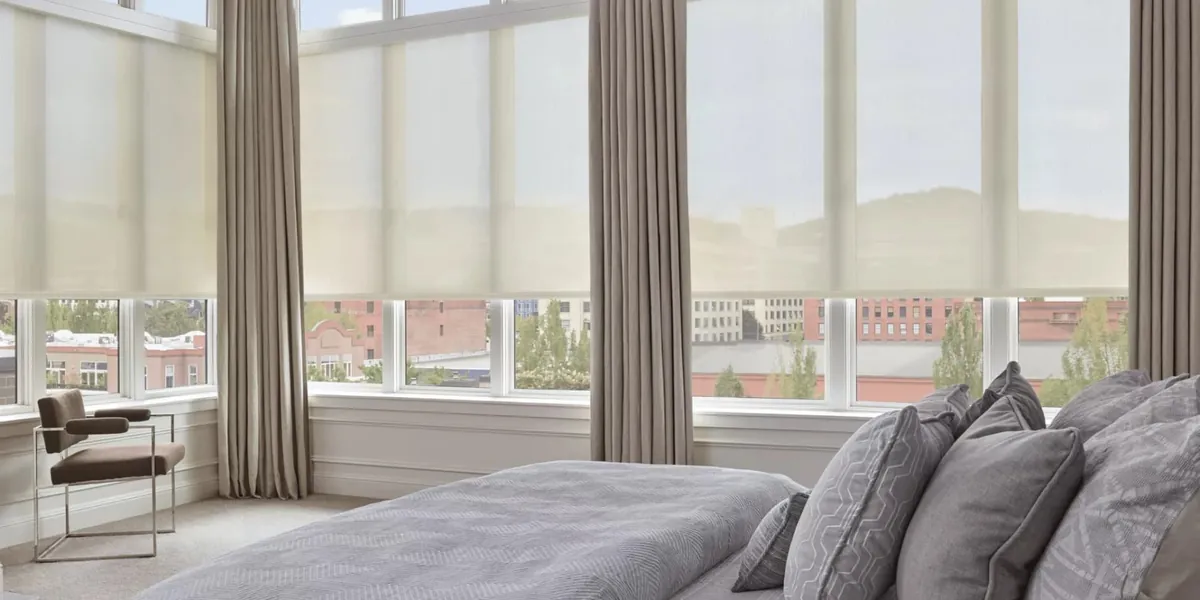
A headrail that has dropped from a bracket, bowed, or jammed inside so the shade will not go up or down.
Two-family houses: two of everything
A two-family house is really two homes stacked on one lot, and that means two kitchens, two living rooms, two sets of bedrooms and a lot of windows. In many of them the blinds were bought in one go and are the same throughout, so they age together. When the kitchen blind upstairs gives out, the one downstairs is often showing the same wear.
The pattern of use is heavy, too. Each unit opens and closes its own blinds on its own schedule, and the coverings facing the street or the house next door are moved at least twice a day. The parts that get handled most, the cords, the wands and the tilt gears, are the ones that fail first.
Repairs in a two-family can be planned rather than done one panic at a time. If one blind has a cord fraying at the lock, it is worth checking its neighbors at the same visit. We will tell you which need attention now and which are fine, and you decide how much to do. For a house with this many windows, that kind of planned blind and shade repair in Stoughton saves a string of separate calls.
Two-families often have a shared stair as well, with a window on the landing or at the turn. Nobody in either unit thinks of that blind as theirs, so it tends to be the one left broken longest. It is usually an easy fix once somebody mentions it, and worth adding to the list when we are already there.
Close neighbors on modest lots
When houses sit close together, a side window can look straight into the window next door. Those are the windows where a working blind matters most. A tilt mechanism that has stripped, leaving the slats stuck partly open, means a view in both directions. A shade that will not come down past halfway leaves a bedroom uncovered at night.
That is why so many Stoughton repair calls are about tilt and lift rather than looks. The blind may be perfectly presentable from across the room. It just will not do the one thing it is there to do. Replacing the worn tilt gear or restringing the lift puts it back to work, usually on a blind that has plenty of life left in it.
Modest lots also mean modest windows, mostly standard sizes. A repaired blind goes back into an opening that fits it well, with nothing about the frame to fight.
Shades on the street side
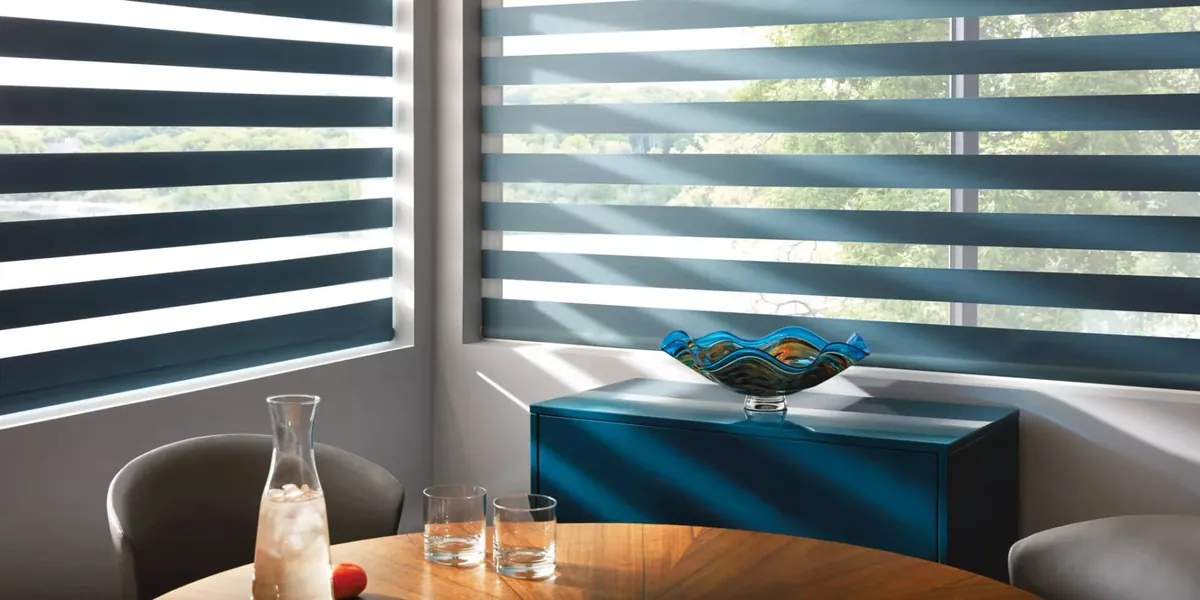
On a modest lot, the front room is only a short walk from the sidewalk. Its shades come down at dusk and go back up in the morning, every day of the year, and that rhythm is hard on the lift. Roller shades, honeycomb shades and roman shades are all common in Stoughton front rooms, and each fails in its own spot.
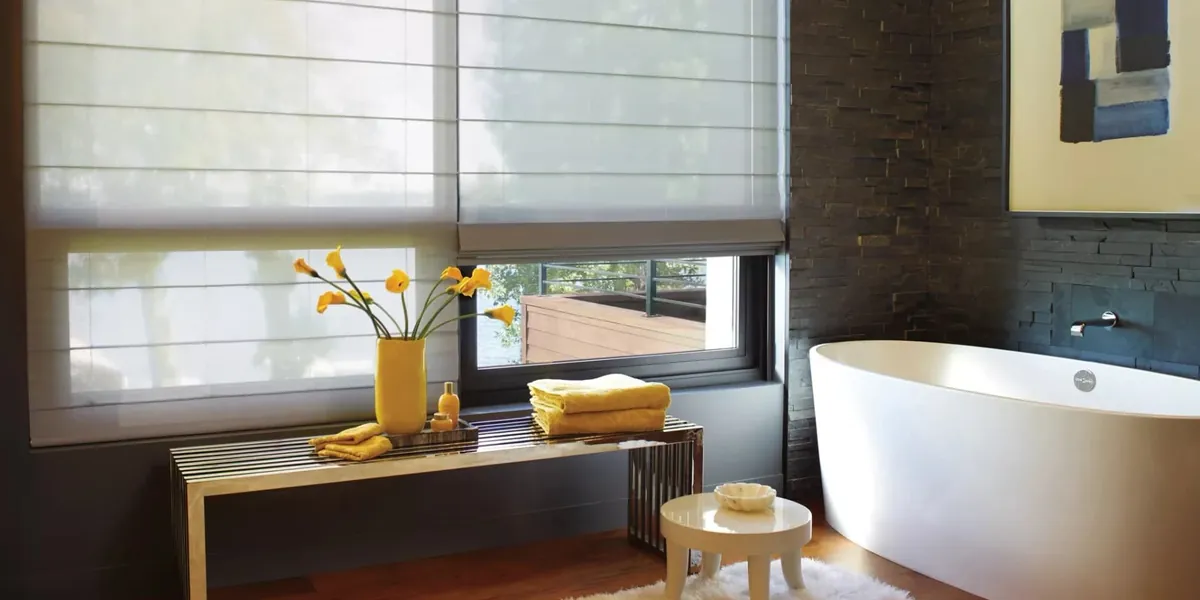
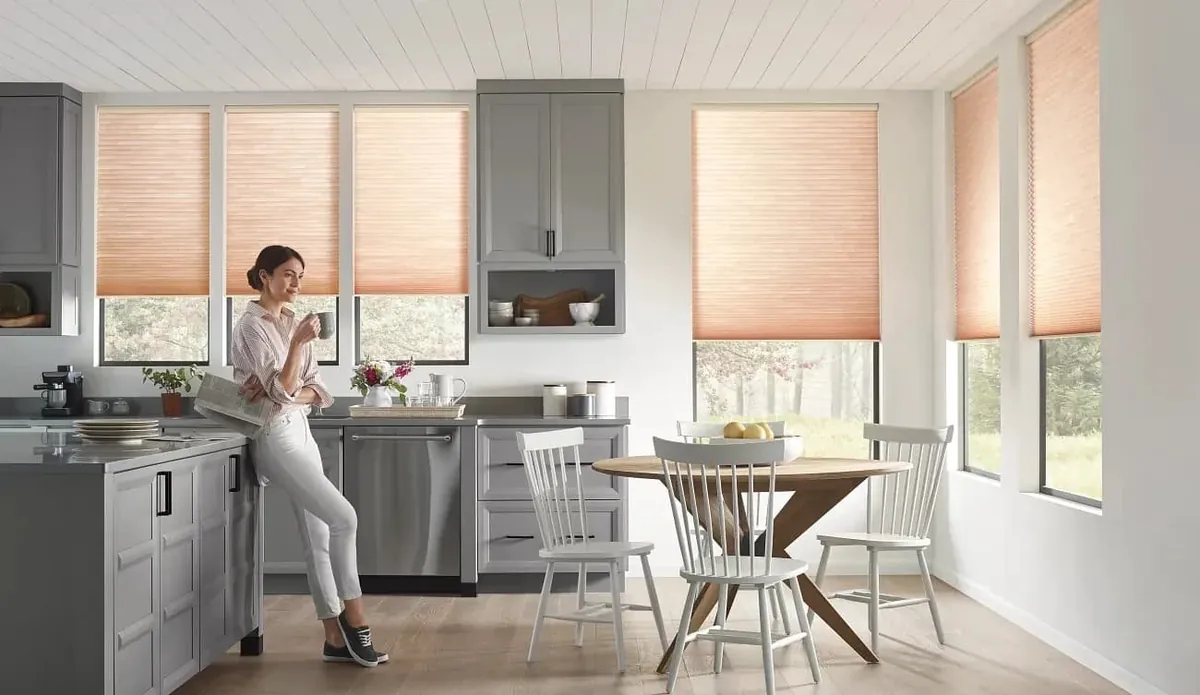
A roller shade relies on the clutch or spring at the end of its tube. When that wears, the shade will not hold its place or will not roll back up. A honeycomb shade lifts on cords threaded through its cells; once one stretches, the bottom rail sits at a slant. A roman shade has cords running up through rings sewn to the back of the fabric, and if a ring comes loose, a fold hangs out of line.
These are different repairs, but each one is about a single worn part, and the fabric itself is often still in good condition.
Capes and ranches across town
The capes and ranches that make up much of Stoughton have the same busy rooms as anywhere: a kitchen blind over the sink, bedroom shades, a front room facing the road. In a cape, the upstairs bedrooms are tucked under the roof with smaller windows, often in deep dormer recesses. In a ranch, the windows are wider and every room is on the ground floor.
Each shape brings a typical fault. In a cape dormer, a shade pulled at an angle from inside the recess wears its lift on one side. In a ranch, a wide blind across the living room puts extra strain on its headrail and tilt gear, and both can start to fail before the slats show any wear at all. Bathroom blinds in either kind of house live with steam, and the cords and ladder tapes on those take a beating.
All of these are ordinary, contained repairs. We find the worn part, replace it and check the covering lifts and tilts as it should.
Victorians and tall sash near the center
The older houses around Stoughton’s center were built with tall, narrow windows. A covering on that kind of sash has a long journey every time it goes up, and its lift cord carries the full weight of the stacked fabric or slats over that height. Over time the cord thins where it turns at the head, and one side gives before the other.
The tell-tale sign is a bottom rail that climbs at an angle. Left alone, it gets worse until the shade catches on the frame. Restringing both sides brings it back to level and takes the strain off the fabric.
Tall old frames may also have settled out of true over the years. When we restring a shade in one, we look at the brackets too and level them if the frame has moved, so the new cords wear evenly. Paint built up on old casings can also narrow an inside-mounted opening, and a small adjustment keeps the repaired covering from rubbing.
How a home repair visit runs
Stoughton is served from our Canton shop-at-home territory, so repairs start at your house rather than at a store counter.
- Tell us what is wrong through Request a Consultation or the call button. A photo of the covering, and of any label on its headrail, saves a lot of guesswork.
- We let you know whether it sounds repairable.
- If it does, we agree a time to come and look at it where it hangs.
- We show you which part has failed and explain the fix before starting.
- After the repair, the covering goes back up and you try it for yourself.
- If repair is not the sensible choice, we tell you so, and nothing further happens unless you ask.
You can read how the territory works on our Canton shop-at-home page.
When the slats will not close
On a horizontal blind, a small gearbox in the headrail turns a rod, and the rod tilts every slat through its ladder tapes. Turn the wand and the slats rotate together. When the gearbox teeth wear, the wand turns but the slats do not, or they turn only partway and stop.
In Stoughton’s close-set houses, this is the fault that matters most, because a blind stuck partly open gives no privacy. The usual cause is simple wear, often hastened by turning the wand past the closed position. A replacement gear restores the tilt, and the blind works as it did.
Sometimes the gear is fine and the problem is the ladder tapes, which can stretch or fray with age, especially in a steamy bathroom. Then the slats tilt unevenly, the bottom ones lagging behind the top. We check the tapes at the same time so the repaired blind closes fully from top to bottom.
Cords that fray at the lock
The lift cord on a blind passes through a toothed catch in the headrail every time you raise or lower it. That is where it wears. First the outer weave fuzzes, then it thins, and one day it parts. Or the catch itself wears smooth and the blind slides back down whenever you let go.
Either problem is fixed by replacing the worn piece, and usually both, because a worn catch frays cord and frayed cord wears a catch. On a two-family’s matching blinds, if one cord has gone, the others bought at the same time may be close behind.
Headrail problems you can spot from the floor
You do not need to open a headrail to tell something is wrong inside it. These are the signs worth mentioning when you get in touch.
- The blind hangs lower at one end than the other, even when the cords look even. A bracket may have loosened.
- The headrail bows down in the middle on a wide window. It may be missing a center support.
- The shade jams partway and will not move either way. A part inside has likely seized.
- You hear a click or grind when you turn the wand. The tilt gear is probably worn.
Each of those usually points to a single part or bracket rather than a ruined blind.
Wands and the slider
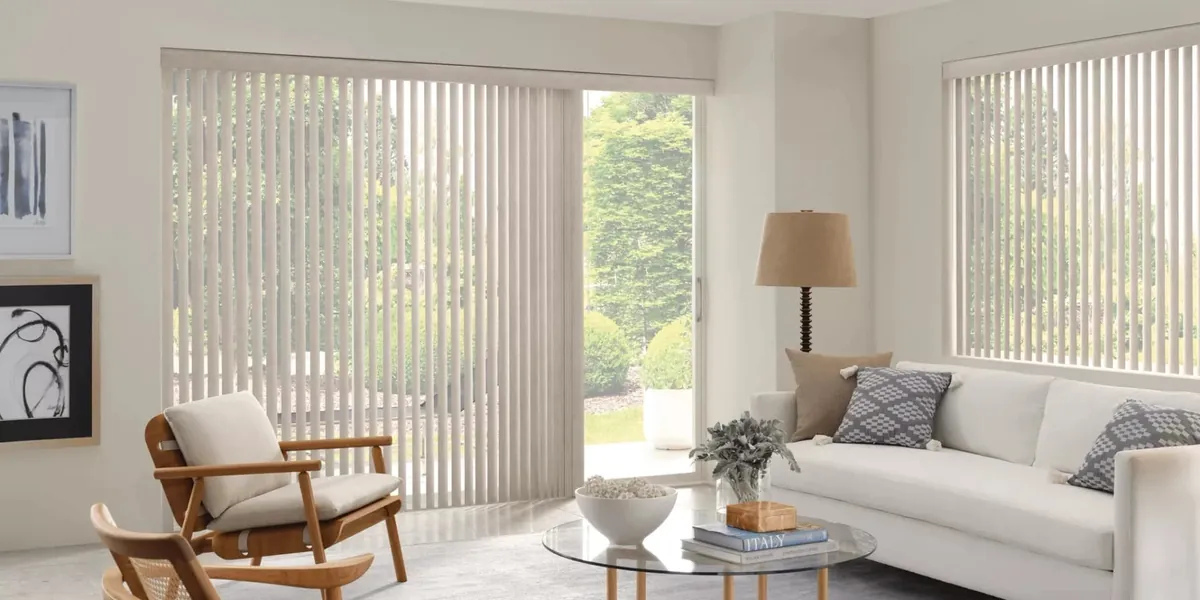
Many Stoughton capes and ranches have a slider or patio door with vertical blinds, and the wand on those works hard. It draws the vanes across the door and rotates them open and closed, sometimes many times a day in warm weather. Doors catch it, feet kick it, and eventually the wand cracks or the mechanism in the track stops turning every vane.
A new wand is a simple repair. If the vanes no longer rotate together, a carrier in the track may have broken, and that too can usually be replaced without changing the vanes.
Kitchens and bathrooms
Two rooms in every Stoughton house are harder on window coverings than the rest. Above a kitchen sink, a blind is splashed, tilted with wet hands and pushed aside to reach the window latch. In a bathroom, it sits in steam every morning. In a two-family there are two of each, so double the exposure.
Moisture gets into cords and ladder tapes and shortens their life. Faux wood blinds stand up to it far better than real wood, but even they rely on cords and tapes that wear. The common repairs in these rooms are restringing, new ladder tapes where they have frayed and a new wand where the old one has cracked from being grabbed.
When a kitchen or bathroom blind is repaired, it helps to keep the slats tilted open after a shower or while cooking, so they dry quickly, and to wipe splashes from the bottom rail rather than letting them sit.
While we work on it
A repair visit is no great upheaval. It helps to clear anything fragile from the sill and the floor beneath the window, since the covering usually has to come down. In a tight room, moving a chair or a lamp out of the way gives room for a ladder.
We lay the covering out, find what has failed and talk you through it before starting. When it is done, it goes back up, we check it lifts, lowers and tilts as it should, and we tidy up after ourselves. If we notice something else on the way, such as another blind in the room with a fraying cord, we mention it and leave the decision to you.
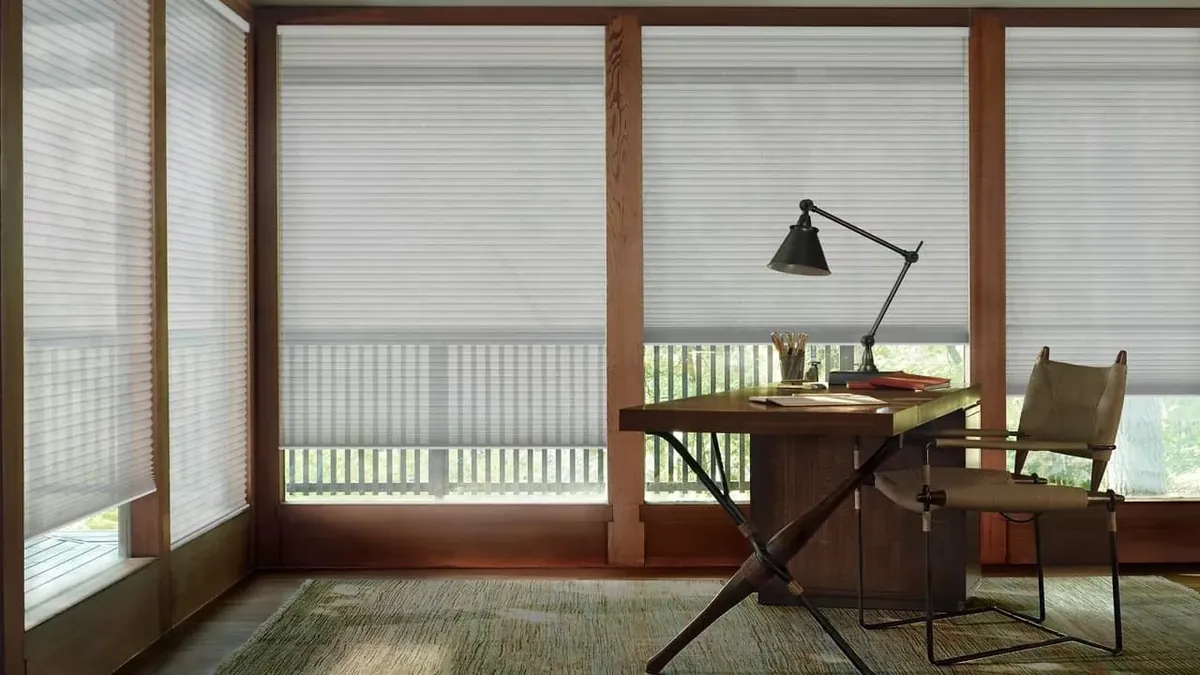
Is it worth repairing?
Usually, if the covering has one problem and is otherwise in decent condition. A blind with straight slats and a solid headrail, or a shade with clean, unfaded fabric, is worth a new cord, wand or gear.
It is a different story if the fabric has gone brittle or split, several slats are broken, the headrail is bent or several things have failed together. We will tell you honestly when that is the case. If you then want to see what would replace it, look at custom blinds in Stoughton or roller shades in Stoughton, and our Stoughton page shows every service we offer in town.
Habits that help a repair last
Close a blind’s slats with the wand and stop when they meet; going further strips the gear. Pull lift cords straight down, not to the side. Let a raised shade settle onto its catch rather than dropping it. On vertical blinds, open the vanes before drawing them across. And wipe the dust from the top of headrails now and then, since grit that reaches a pulley wears through cord. Our guide to caring for fabric shades has more.
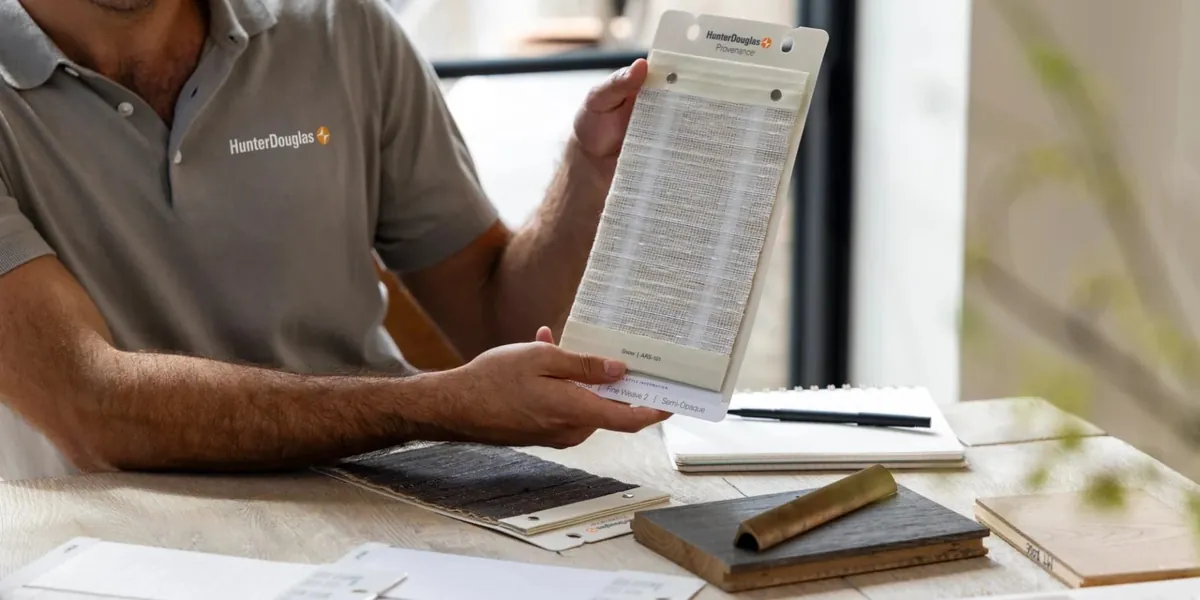
We come to Stoughton houses
Stoughton is part of our shop-at-home territory. Our vans carry samples, so if a repair ever turns into a conversation about new coverings for a room, we bring the showroom to your house rather than asking you to travel.
For a repair, that simply means we come and see the covering in the window where it hangs. Blind and shade repair in Stoughton, MA, never needs you to take a blind down and carry it anywhere.
Gallery dealer know-how on every repair
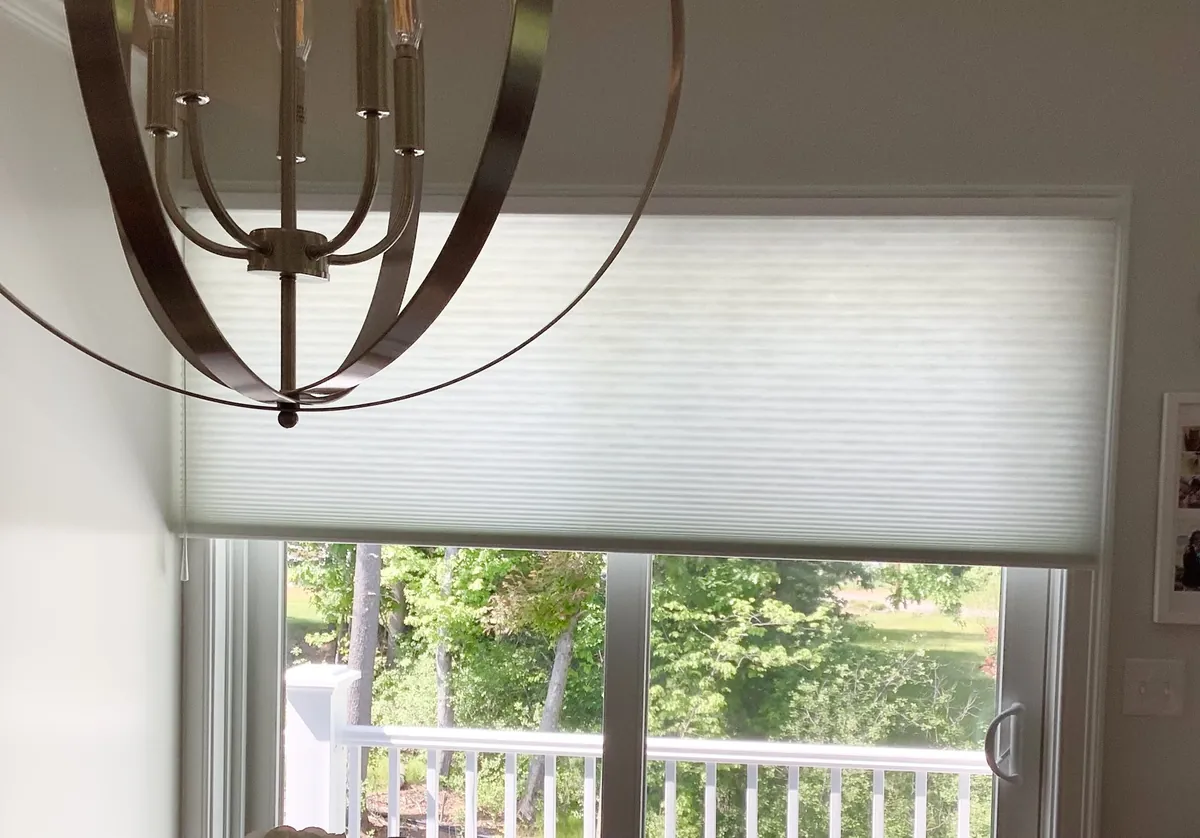
Blinds & Designs is a Hunter Douglas Gallery dealer, and our installers carry Hunter Douglas certification. Knowing how these blinds and shades are put together is what lets us find the worn part and fit the replacement properly.
The aim of every repair is a covering that works as it should, not one that limps along until the next fault. The main blind and shade repair page explains how repairs work across all our areas.
Stoughton repair questions
My blind is stuck partly open and the neighbors can see in. Can it be fixed?
Very likely. A blind stuck partly open usually has a worn tilt gear or stretched ladder tapes. Both can normally be replaced, and the blind closes fully again.
We own a two-family and several blinds are failing. Can you look at them all?
Yes. Blinds bought together tend to wear together. We can check as many as you like at one visit and tell you which need work now.
The shade on my tall Victorian window hangs crooked. What is wrong?
Usually one lift cord has worn more than the other. Restringing both sides levels it, and we check the brackets in case the old frame has shifted.
Do I have to take the blind down and bring it in?
No. Stoughton is served by our shop-at-home team, so we come to the house to look at it.
Is there any obligation to buy new window coverings?
None at all. We repair what needs repairing. If you ever want something new, our in-home consultations come with a free estimate.
The next step
Tell us which covering has stopped working and what it is doing. Request a consultation with a photo if you can, or talk to us through the call button. Blind and shade repair in Stoughton, MA, begins at your house, with no trip to make.