
Why Westwood coverings are so often worth fixing
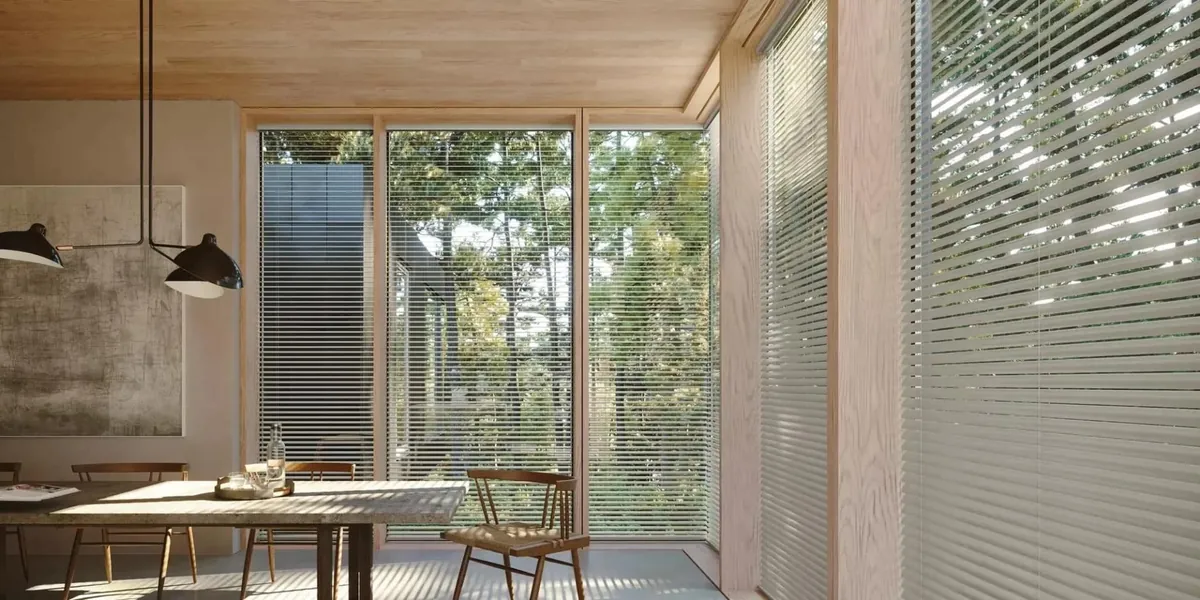
Most of Westwood sits under trees. Post-war colonials and larger newer houses stand on wooded lots with generous setbacks, and for much of the year the light reaching their windows has come through leaves first. That filtered light is kind to fabric and slats, which is why blind and shade repair in Westwood, MA, so often makes good sense: the covering has aged gently, and only a working part has worn out.
In a town with less shade, sun-faded fabric is a common reason to give up on a covering. Under a canopy, a honeycomb or roman shade can keep its color and its body for a long time, and wood or faux wood slats stay straight. When a cord frays or a tilt gear strips on a covering like that, a repair keeps a good product in use.
Openings here are mostly standard modern sizes, so a repaired covering goes back into a window that suits it, with nothing to fight against.
The repairs we carry out in Westwood
Blind and shade repair in Westwood takes in four kinds of job, restringing, new cords and wands, headrail work and tilt gears, and they fall naturally into three groups.
Restringing the lift
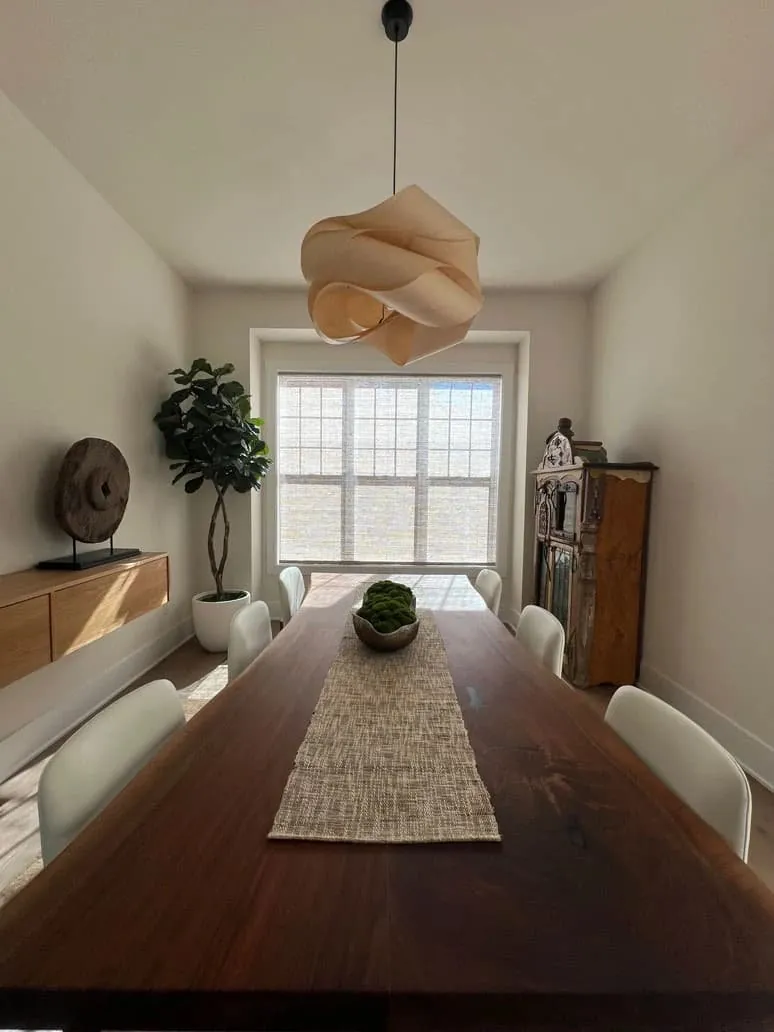
For the shade whose bottom rail climbs at a slant, refuses to stay raised or has lost a cord altogether.
Cords, catches and wands
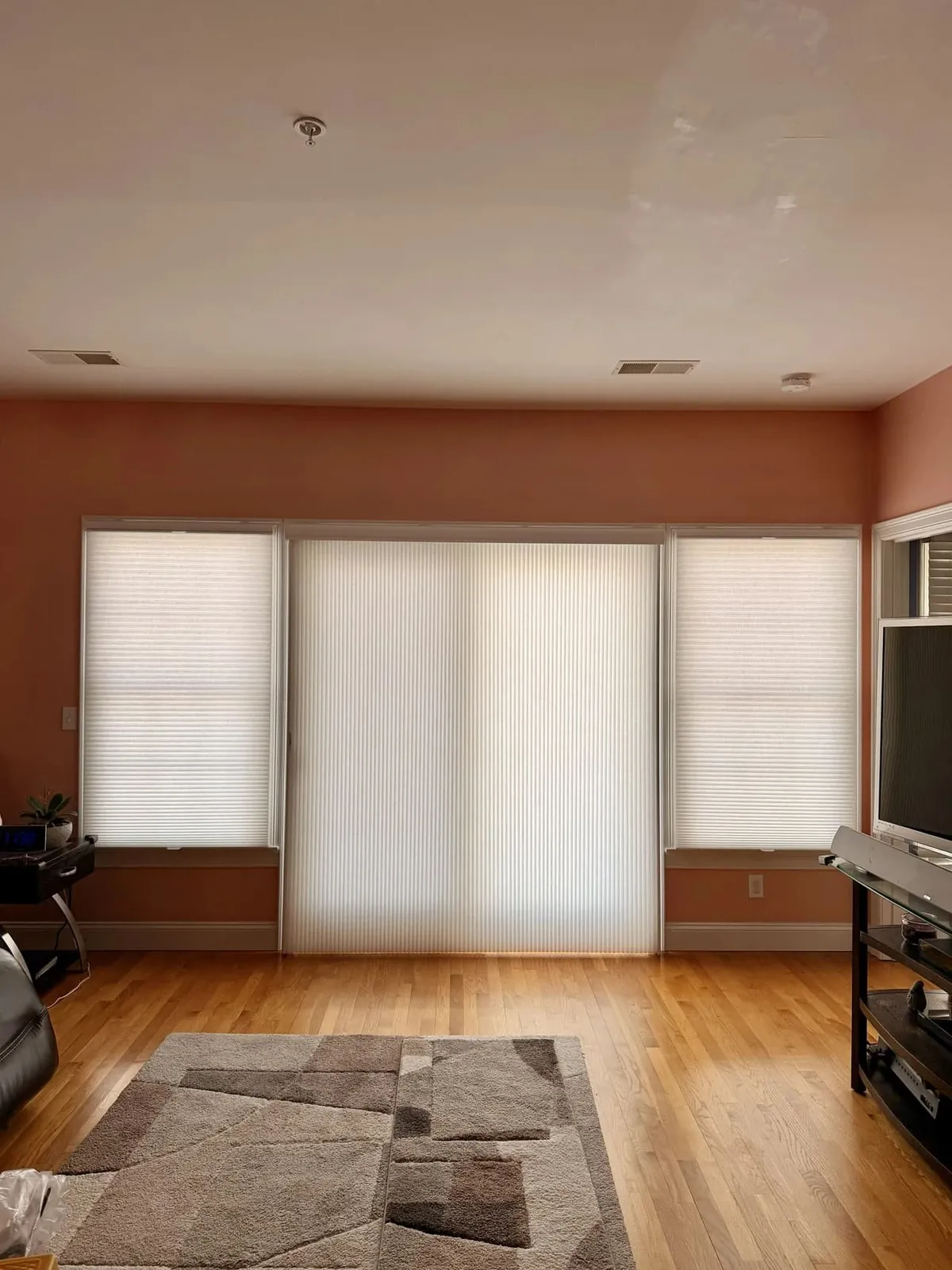
A frayed cord, a catch that no longer grips, or a wand that has split or slipped off its hook.
Headrails and tilt
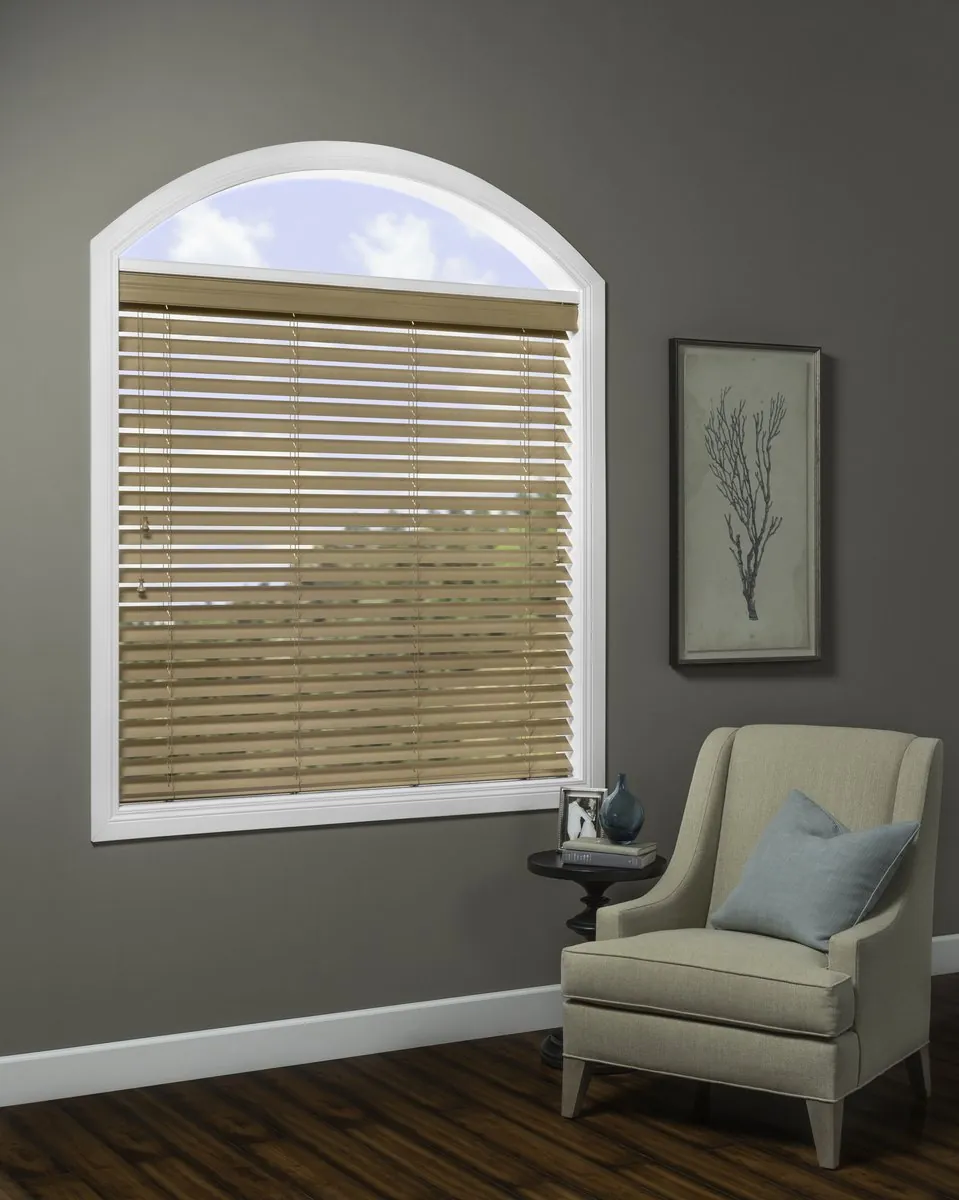
A headrail that has dropped, bowed or jammed, or a worn gear that has stopped the slats turning.
Dim rooms and shades raised all the way
Heavy tree cover has a second effect, and it is the one that wears out lift cords. In a room shaded by tall trees, every bit of daylight counts, so shades are pulled all the way up in the morning and lowered all the way at night. A covering in a sunny room might spend the day half-down; one under a canopy makes the full trip, top to bottom and back, every single day.
That full daily journey puts the most wear on the cord where it turns at the head of the shade, and on the catch that holds it once raised. Over time the cord thins at those points and one side stretches more than the other. The first sign is usually a bottom rail that tilts as it rises. Left alone, the tilt gets worse until the shade jams under the headrail.
Restringing deals with it. Fresh cord on both sides, evened up so the rail hangs level, and a new catch where the old one has worn. On a shade with fabric that has held up well under the trees, it is an easy decision.
Post-war colonials
Westwood’s post-war colonials are orderly houses: a center hall, rooms either side and windows set in neat, matching rows front and back. Coverings in houses like that were often bought as a set, the same blind or shade in every room, and so they tend to age together.
When one blind in a set of matching windows gives out, its neighbors may be close behind. It can be worth having the rest of the set checked at the same visit. We will tell you which ones need attention now and which are fine, and you choose how far to go.
These colonials also tend to have a window on the stair landing and smaller windows in bathrooms and back halls. The landing blind is easy to forget and often the first to fail from neglect: its cord dries out, or its tilt seizes from never being turned.
Bathrooms in these houses are usually small, with one window and a blind that lives in steam every morning. Damp air shortens the life of cords and ladders, and faux wood slats, though they resist moisture well, still hang from strings that do not. A bathroom blind with frayed ladders or a lift cord gone limp is a very ordinary repair, and keeping the slats tilted open after a shower helps the new strings last.
In the front rooms, the matching blinds facing the street are usually tilted rather than raised, opened by day and closed at dusk. That puts the wear on the tilt gear and the wand rather than the lift, so front-room blinds in an older colonial are where we most often replace a stripped gear.
Larger newer houses on wooded lots
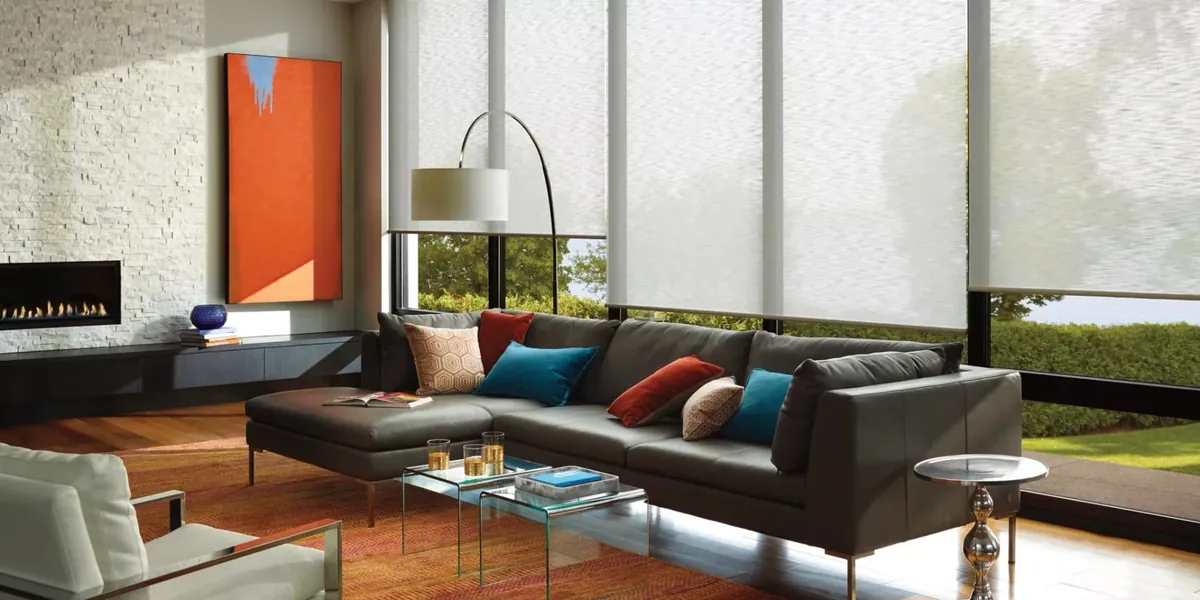
The larger newer houses in Westwood have more glass and bigger rooms, often a family room facing the back of the lot with a wide run of windows looking into the trees. Wide windows call for wide blinds and shades, and wide coverings put more strain on their working parts.
A wide blind carries a long row of slats on one headrail, and its tilt gear must turn every one of them at once. A wide shade hangs a lot of fabric from its lift cords. Those are the parts that fail first on a big window: the gear strips, the cords stretch or the headrail starts to sag in the middle where support is thin.
None of that usually touches the fabric or slats, which under tree cover may still be in fine condition. That makes these coverings strong candidates for repair.
Generous setbacks, lighter use for privacy
With generous setbacks and a screen of woods around many lots, plenty of Westwood windows face nothing but trunks and branches, and do not need covering for privacy at all hours. Some shades are lowered only at night, some only in bedrooms, and some barely at all.
That has two effects on repair. Coverings used mainly for light wear differently from those closed for privacy: the lift works hard but the tilt on a blind may be turned rarely. And a covering that almost never moves grows reluctant, so the day someone finally yanks it is the day a cord parts or a gear gives. A blind that resists you is better looked at than wrestled with.
Leaves, pollen and dust
Wooded lots bring something else to the window: a steady supply of pollen in spring, leaf litter in autumn and fine dust whenever windows are open. Some of that settles on top of headrails and on the upper slats of blinds, and a little works its way inside.
Grit inside a headrail is hard on cords. It sits on the pulleys and wears the cord each time it passes, like fine sandpaper. That is one reason we look inside the headrail as well as at the broken cord when we restring. A cord replaced on a gritty pulley will not last as long as one running clean.
Keeping the tops of headrails dusted makes a real difference. A soft brush or a vacuum on low, now and then, is enough.
Rooms that face the woods
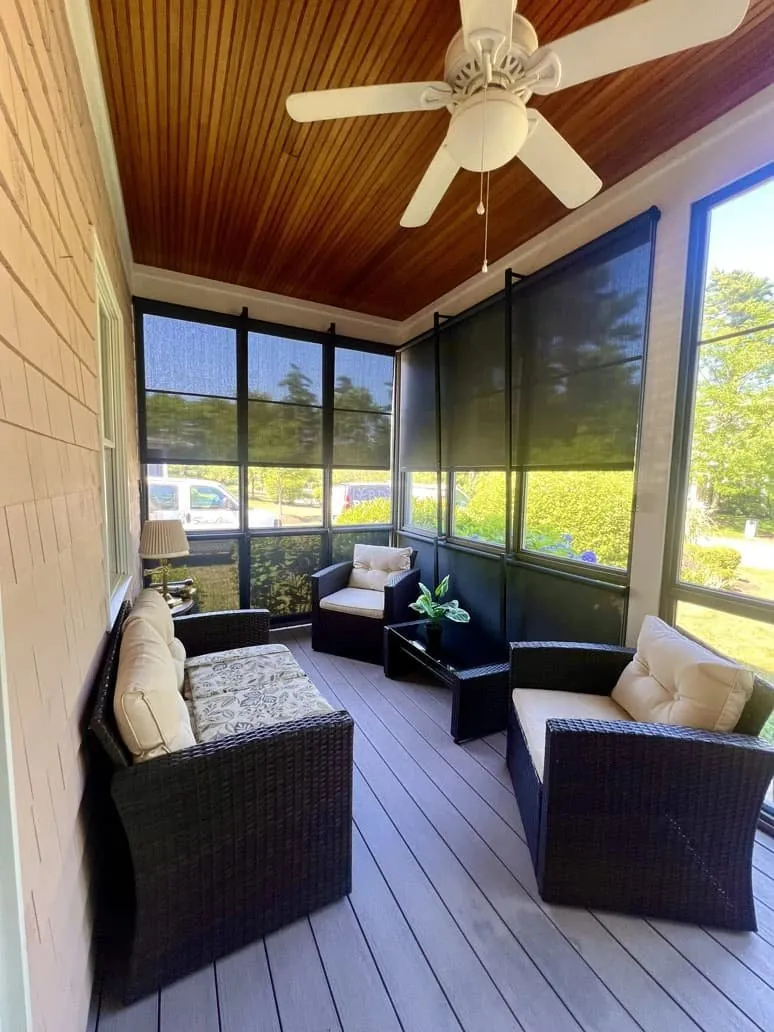
The back of a wooded Westwood lot is often the best view the house has, and the rooms that face it are where people spend their days: a kitchen and breakfast area, a family room, a sunroom or a screened porch. Those rooms tend to have the most glass, and their coverings are moved more than any others, raised for the view of the trees and lowered when evening comes.
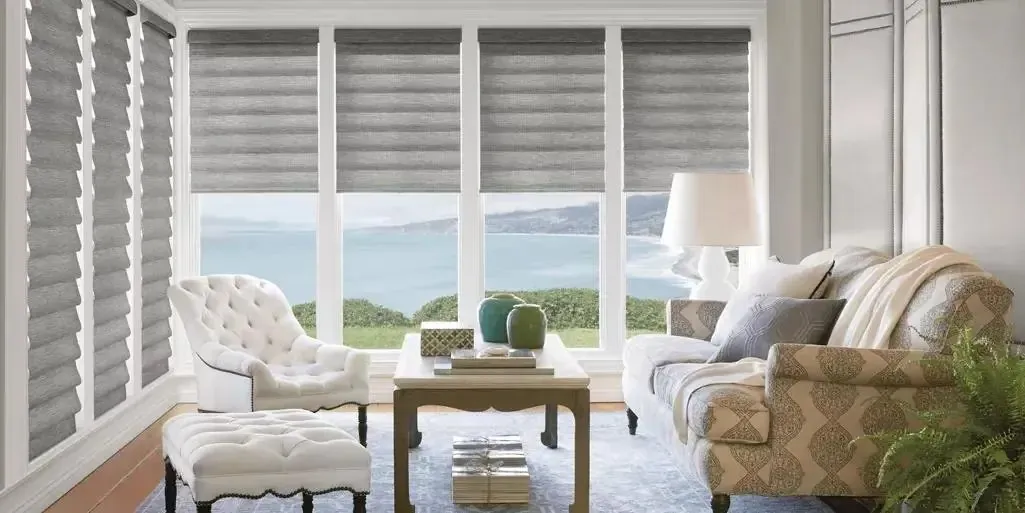
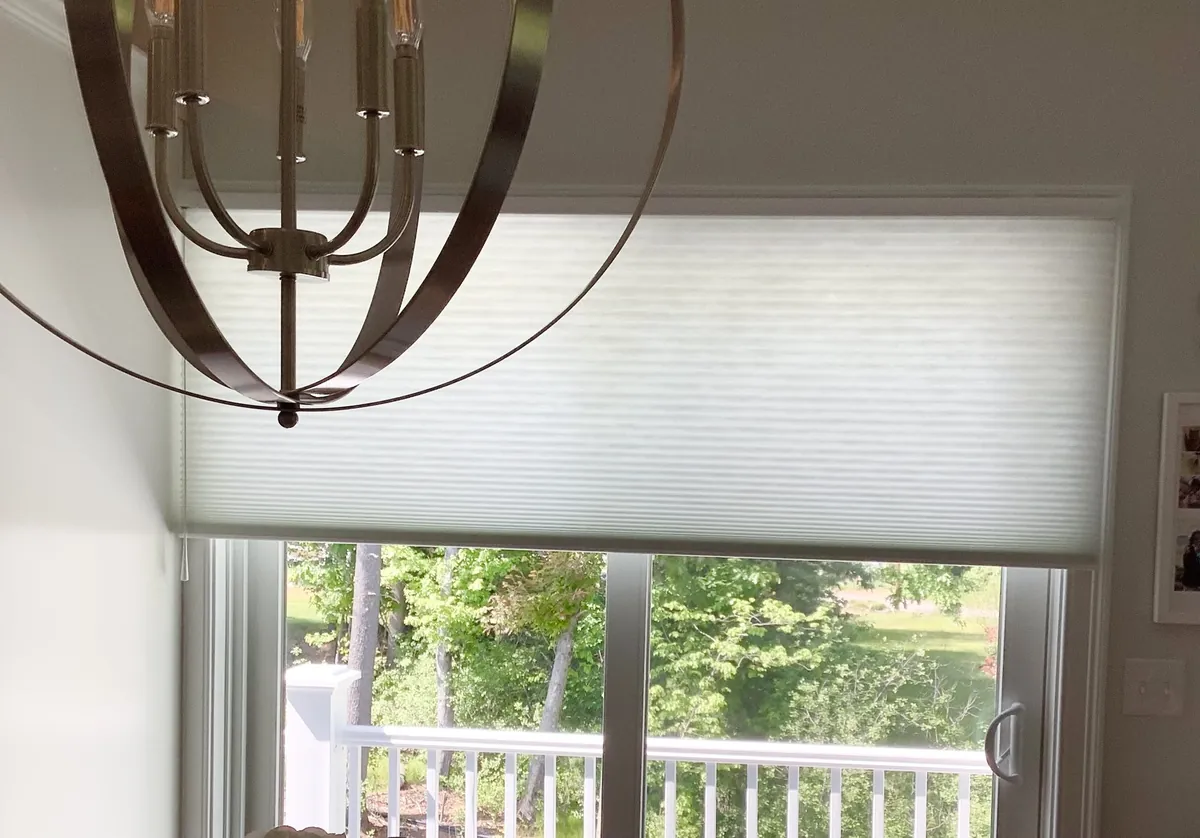
Because those windows face greenery rather than a street, the coverings on them are chosen for light more than privacy, and many are light-filtering fabrics or open-weave woven shades. Woven shades are lifted on cords running through rings on their backs, and once a ring loosens, the shade gathers unevenly. Honeycomb shades on wide kitchen windows lift on cords threaded through the cells, and a stretched cord tips the rail. Both are restringing jobs at heart, and both are common in these rooms.
A sunroom or screened porch adds the weather. Coverings out there see damp air and temperature swings that indoor rooms do not, and their cords and bottom rails age faster as a result. We look closely at the fabric on a porch shade before recommending a repair, because a porch can be hard on materials as well as parts.
Standard openings, simple fits
Most Westwood openings are standard modern sizes, set in square frames with sound wood around them. That makes blind and shade repair in Westwood refreshingly uncomplicated on the window side. The original covering fitted properly, its brackets sit in solid framing and nothing about the opening works against the repair.
So the only question is the covering itself. Is the fabric sound? Are the slats straight? Is it one worn part or several? Under tree cover the answers are often encouraging, which is why so many repairs here are straightforward.
How a Westwood repair goes
Westwood is covered by our Canton shop-at-home territory, so a repair begins with us coming to the house.
- Describe the fault on our Request a Consultation form, or by phone using the call button. Snapshots of the covering and its headrail sticker give us a head start.
- We come back with a first view on whether a repair makes sense.
- If it does, we book a time to see the covering where it hangs.
- You see what has failed and hear what fixing it involves before anything is done.
- After the repair, the covering is rehung and run through its full travel with you watching.
- If a repair turns out not to be worth it, we tell you plainly and leave it there.
How the territory works is set out on our Canton shop-at-home page.
Restringing, explained
A corded shade or blind is lifted by two or more strings anchored in its bottom rail. They climb up through the fabric or the slats, turn over small wheels inside the headrail and meet at the cord grip at one end. Pulling gathers the rail upward; releasing the grip lets it fall.
Replacing those strings means bringing the covering down and laying it flat. Every length of old cord is drawn out, not only the snapped one, because the survivors are usually just as tired. The new strings take the same route, get knotted into the bottom rail and are trimmed so left and right are exactly equal, which is what keeps the rail level. Back up on its brackets, the covering is then worked from fully lowered to fully raised a few times to be sure.
Slatted blinds have a second set of strings, the woven ladders that space the slats and tilt them in unison. A stretched or fraying ladder makes a blind look wonky even with perfect lift cords, so ladders get inspected at the same time.
Catches and wands
A cord catch is a small part in the headrail with ridged jaws. Swing the cord aside and the jaws close on it; let it hang and they open. On a shade raised fully every day under a dark canopy, those jaws work constantly, and in time they wear smooth. Then the covering slips down after you raise it, or drops all the way. A new catch, usually with a new cord, sets it right.
Wands are the other part hands touch every day. On a blind, the wand hooks onto the tilt gear; on a vertical treatment across a patio door, it both draws and rotates the vanes. Doors, furniture and passing feet all knock it, until the hook wears or the stem cracks. A replacement wand is about as simple as a repair gets.

Headrails and tilt gears
The headrail is the box across the top that holds everything else. On a slatted blind, a small gear inside turns a rod along the whole width, and that rod tilts every slat through its ladders. When the gear’s teeth wear, the wand turns and the slats do not, or the slats move a little and stop. Turning the wand past fully closed is the usual way gears are worn out.
Headrails also depend on their brackets. A bracket that has loosened lets one end drop, tipping the whole covering. On a wide family room window, a headrail without a middle bracket can sag. Resetting the brackets, adding support where it is missing and checking the headrail is level are often part of a repair.
Sometimes a part inside simply jams, and the shade sticks halfway or refuses to lower. In most cases one component is at fault, and replacing it brings the covering back to life.
When a repair is the right call
Under Westwood’s trees, the answer is yes more often than in most places, because the fabric and slats tend to have held up. A covering with sound fabric, straight slats and a solid headrail, with one worn part, is well worth repairing.
There are still cases where it is not. Fabric that has gone brittle, a run of broken slats, a headrail bent along its length or several faults at once usually point to replacement. We will tell you honestly. If you want to see new options, our pages on roman shades in Westwood and custom blinds in Westwood are a good start, and our Westwood page lists every service we offer in town.
Keeping it working afterwards
Under the trees, the habits that help most are simple. Raise shades with one even pull from the middle of the cord. Lower them onto the grip gently. Stop twisting the wand the moment the slats meet. Give seldom-used coverings a full run up and down every so often. And after the spring pollen and the autumn leaf dust, wipe off the headrail tops. For fabric care, see caring for fabric shades.

We come to you in Westwood
Our Canton-based shop-at-home team covers Westwood, so the first look at a broken covering happens in your own room, at the window it hangs in. You never have to unhook a blind and drive it somewhere.
Those same vans travel stocked with samples. Should a worn-out shade ever prompt thoughts of something new, choosing happens at home too. Blind and shade repair in Westwood, MA, works the same doorstep way.
Repairs backed by Gallery dealer knowledge
Gallery dealer status is the designation Hunter Douglas gives dealers who meet its standards, and our installers hold the brand’s certification. In practice that means familiarity with how each covering goes together, which shortens the hunt for a fault and makes the fix a proper one.
For repairs elsewhere in our area, visit blind and shade repair.
Questions from Westwood
My shade’s fabric looks almost new but the cord has snapped. Is it worth fixing?
Usually, yes. Under heavy tree cover, fabric often holds up well while the cord wears from daily use. A covering with sound fabric and one broken cord is a good candidate for restringing.
Why does my shade tilt as it goes up?
One lift cord has stretched or worn more than the other, often from being raised fully every day. Restringing both sides brings the rail back to level.
Pollen gets everywhere here. Can it damage a blind?
Over time, yes. Fine grit on top of a headrail can work onto the pulleys and wear the cord as it runs. Dusting the headrail tops after pollen season helps, and we clean grit out of the headrail when we restring.
Is the visit at our house, or do we bring the covering in?
At your house. Our shop-at-home team handles Westwood and comes to see the covering on its window.
Will a repair visit turn into a sales pitch?
It will not. We are there for the repair. If you ever want new coverings, that is what our in-home consultations are for, and each one ends with a free estimate.
When you are ready
A broken cord or a frozen tilt is usually a modest job under all that shade. Describe it on the Request a Consultation form, attaching a picture of the window if possible, or reach us on the call button, and blind and shade repair in Westwood, MA, gets under way.