
When the neighbors are a few steps away
Buzzards Bay village sits at the western end of the canal, and its houses were built close together. Older homes line the side streets with only a driveway between them, cottages have been converted for year-round living, and above the shops on Main Street many buildings have apartments looking out over the street. The windows in these buildings are usually the small originals, and the sightline from one house into the next can be very short. So when we plan window treatments in Buzzards Bay, MA, privacy is almost always the first problem we are asked to solve.
The trick is to solve it without making a small room dark. A heavy blind kept closed all day gives privacy, but it also turns a modest living room into a cave. The better answers let light in while keeping eyes out, and there are more of them than most people expect.
Our vans carry samples, so we can bring the showroom to you and try each option on the window that faces the neighbor.
Window treatments in Buzzards Bay, MA: the full list
Each service links to its own Buzzards Bay page with the detail.
Blinds for the village
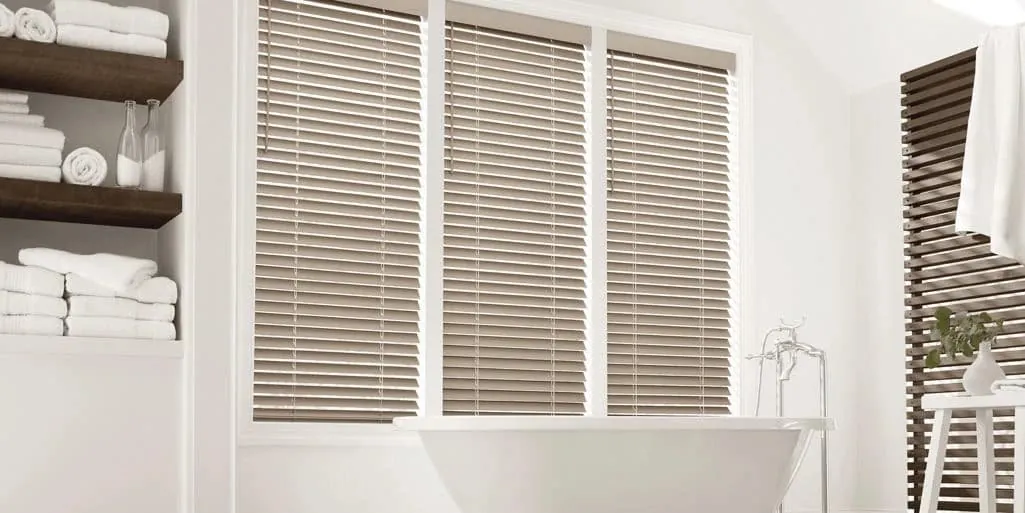
Wood, faux wood, metal and vertical blinds. Tilt the slats up and daylight reaches the ceiling while the view in from next door is cut.
Honeycomb shades
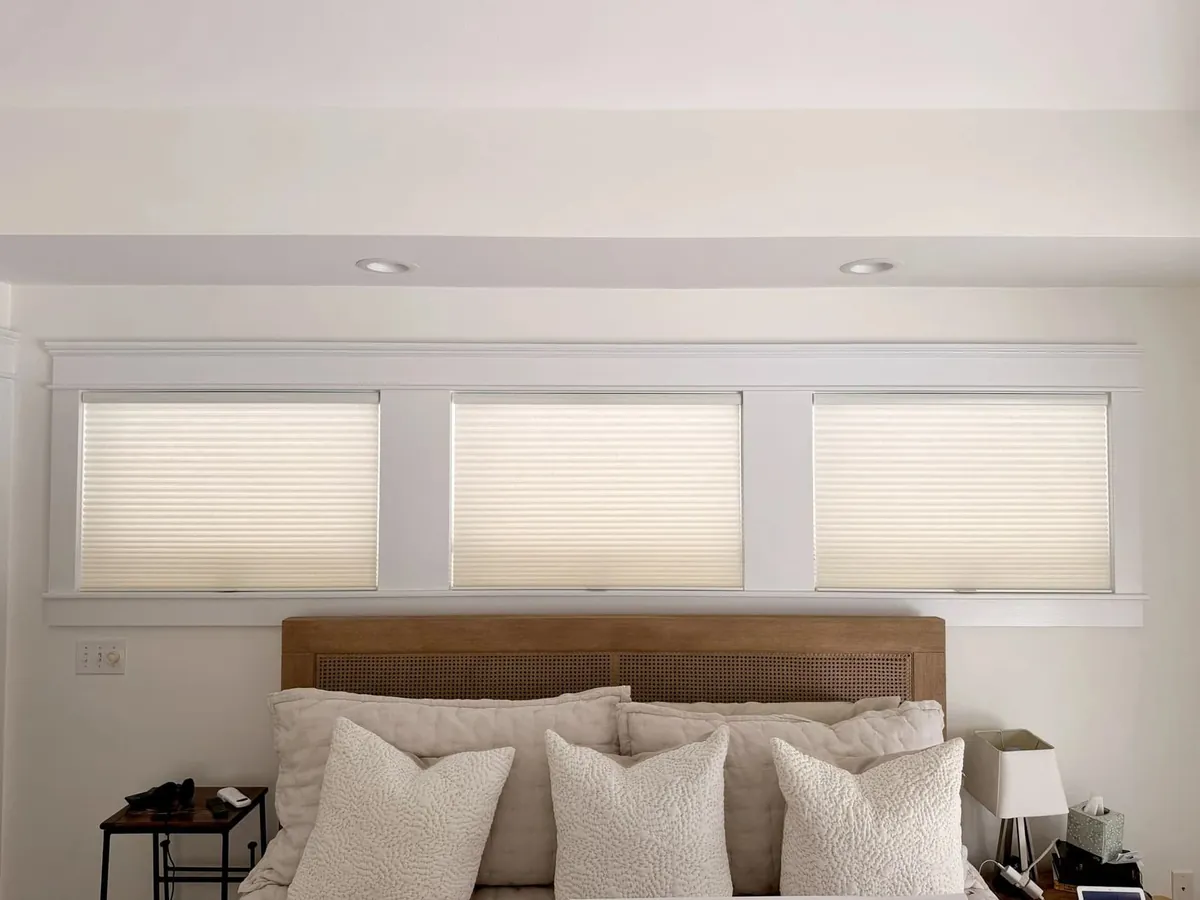
Duette and Applause cellular shades with a top-down, bottom-up option that covers the lower pane and leaves the sky.
Roller shades
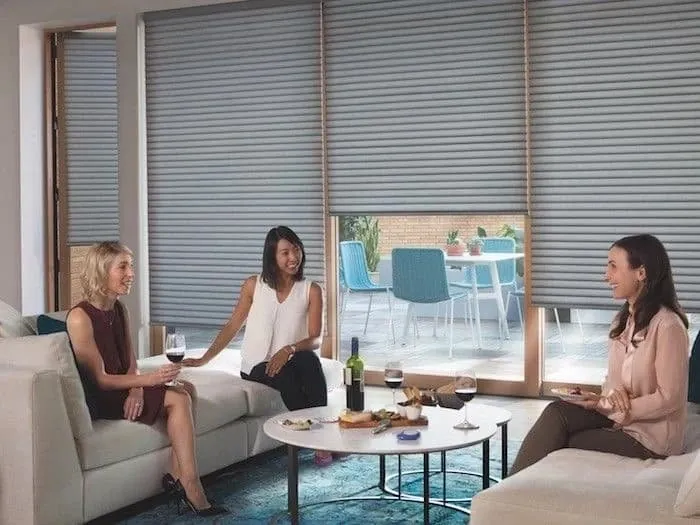
Designer and Alustra rollers in light-filtering fabric, a simple fit for small original openings.
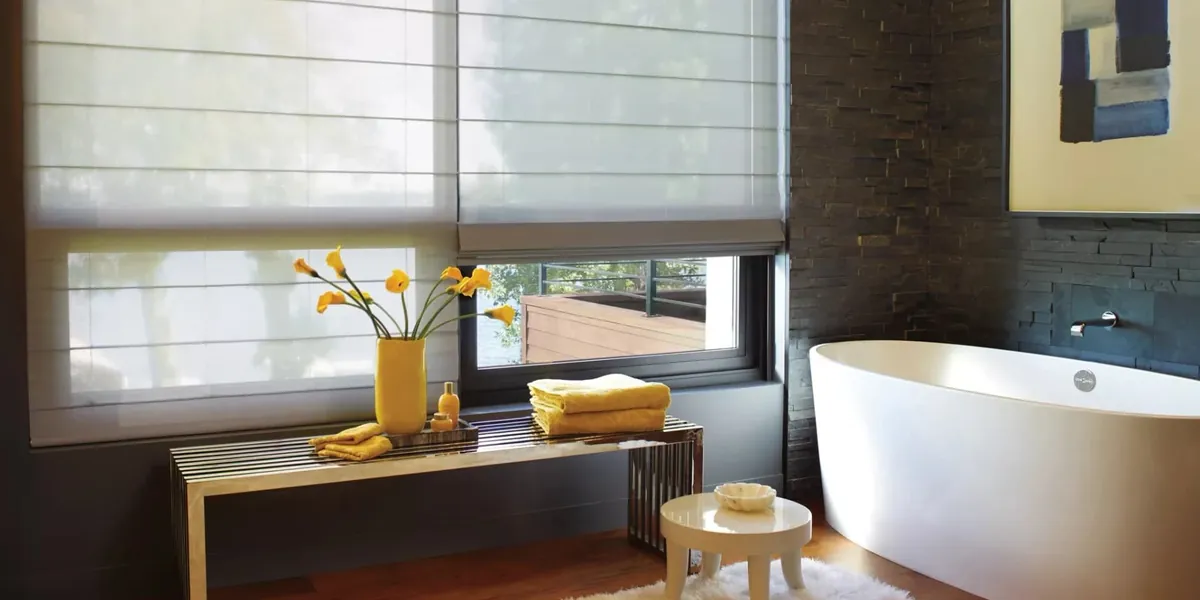
Romans for small rooms
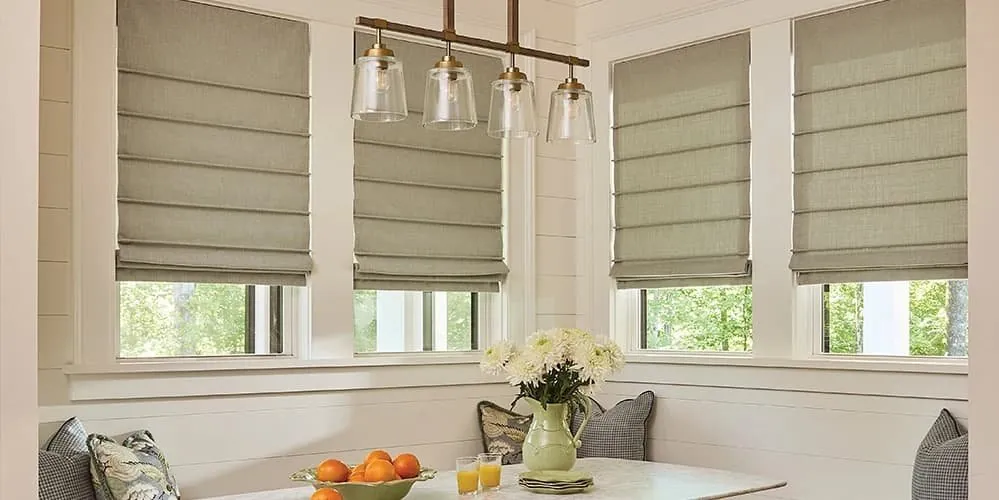
Vignette and Carole Fabrics roman shades, including sheer fabrics that soften a street view without blacking it out.
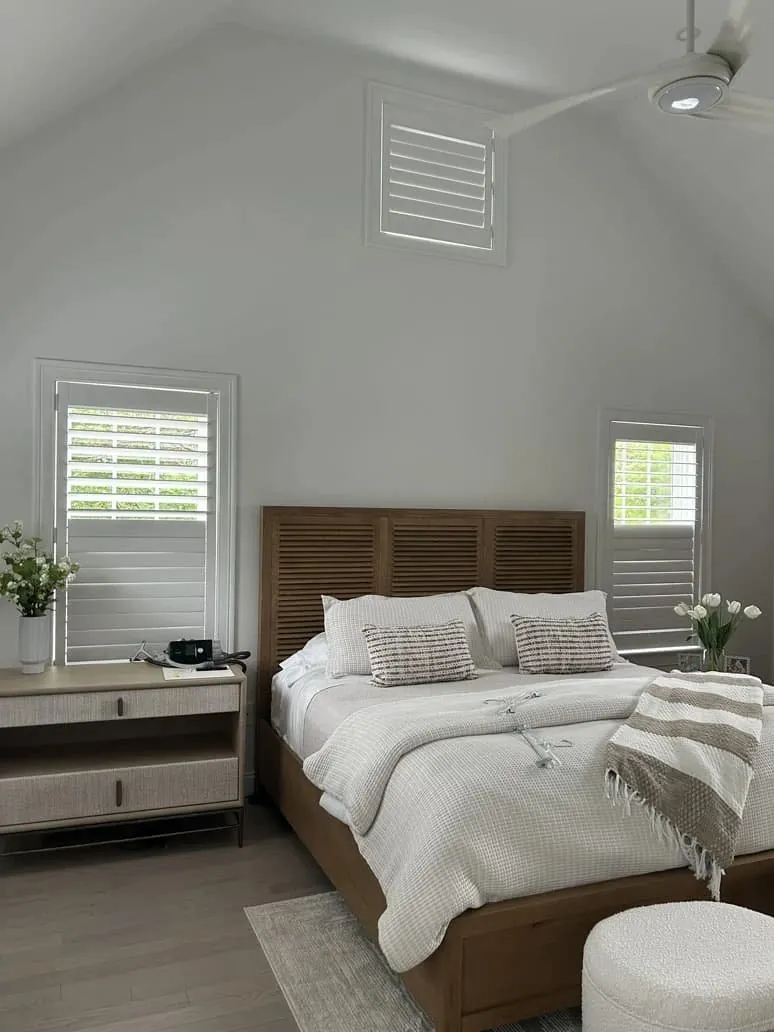
Cafe and full shutters
Palm Beach, NewStyle and Heritance plantation shutters, full height or cafe style over the lower sash only.
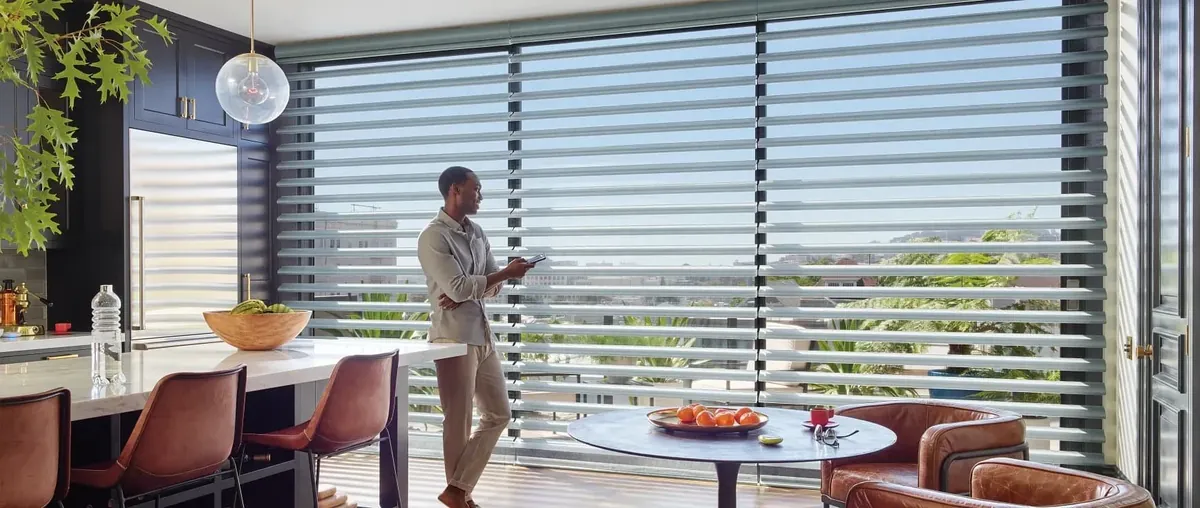
Motorized options
PowerView shades that close at dusk on a timetable, before the lights go on and the room shows to the street.
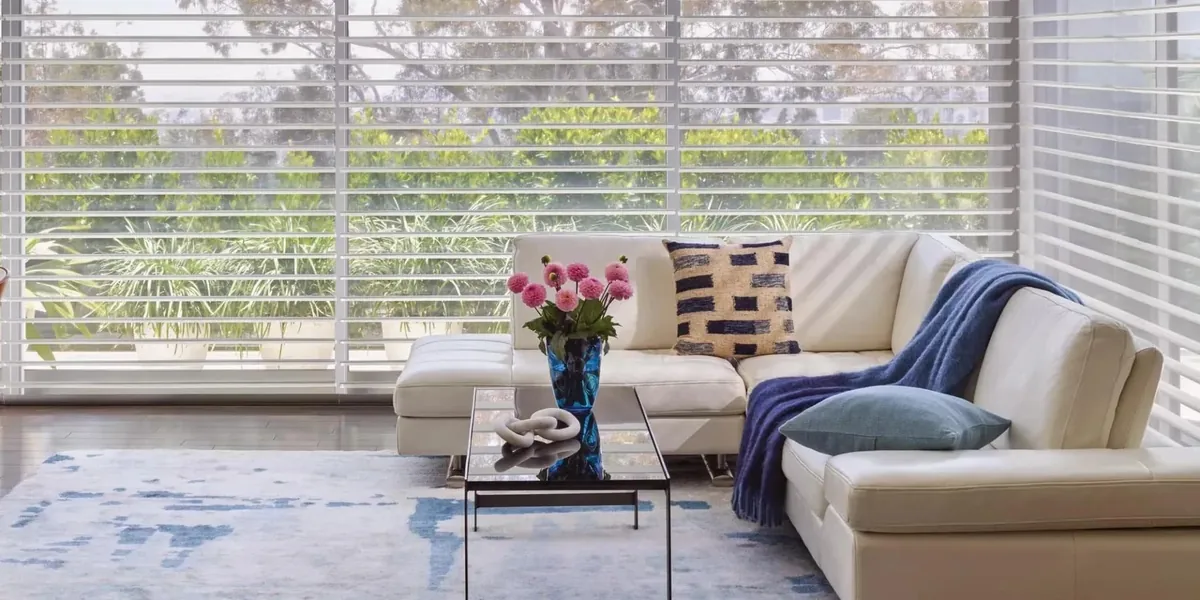
A Gallery dealer
Hunter Douglas products from a Gallery dealer, put up by certified Hunter Douglas installers.
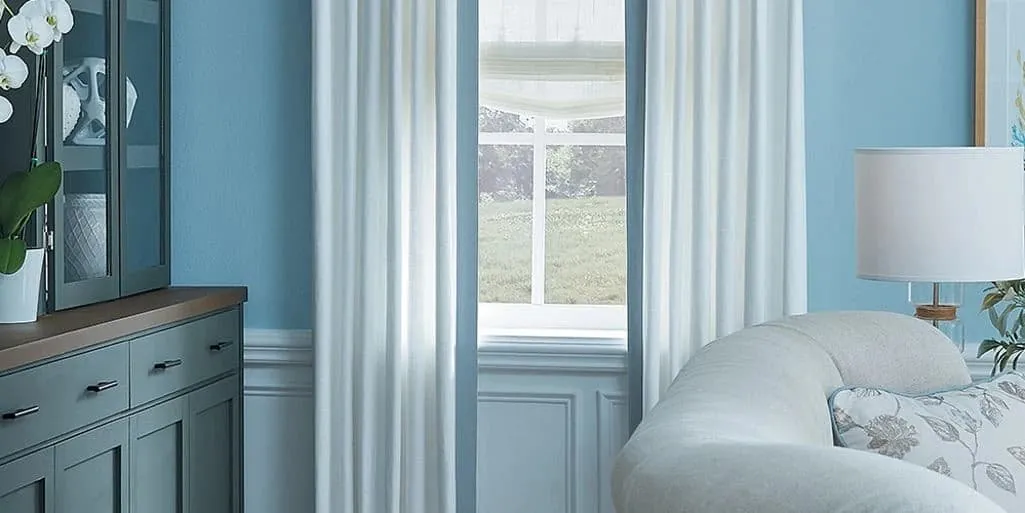
Drapery panels
Hunter Douglas drapery, drawn at night for full privacy and pulled back by day to open up a small room.
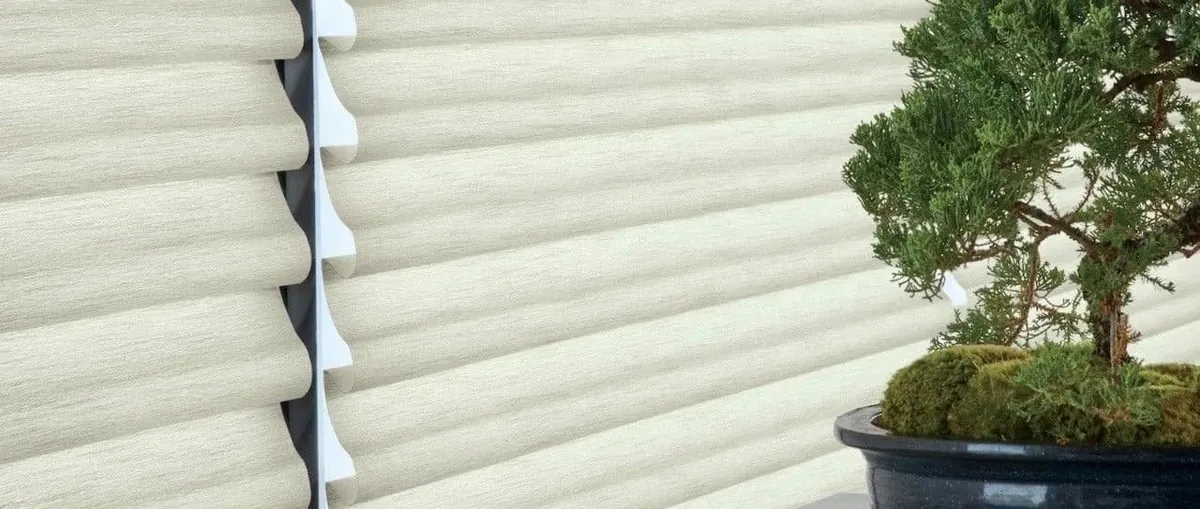
Fixing what you have
A broken lift or a frayed cord on a covering you already own is worth a look before anything is replaced.
Privacy without living in the dark
There is a whole range of ways to stop someone seeing in while still letting the light through. It helps to know what each one does before deciding.
Light-filtering fabric is the simplest. A honeycomb, roller or roman shade in a light-filtering fabric glows when the sun is on it and shows only a soft shape from outside. In daytime it gives full privacy and a bright, even light. The thing to know is that at night, with the lamps on inside, a light fabric can show silhouettes. That is where a heavier fabric, a second layer or drapery comes in.
Top-down, bottom-up shades split the window. Lower the shade from the top and the upper part of the window lets in sky and light while the lower part, the bit at eye level with the neighbor, stays covered. In a close-set village house it is often the most useful single feature you can choose.
Sheer shades with tilting vanes, such as Silhouette and Pirouette, give a soft view out and a blurred view in when the vanes are open, and full privacy when they are closed. Blinds and shutters do the same with harder edges: angle the slats or louvers upward and the light goes to the ceiling while anyone looking in from level sees only the slats.
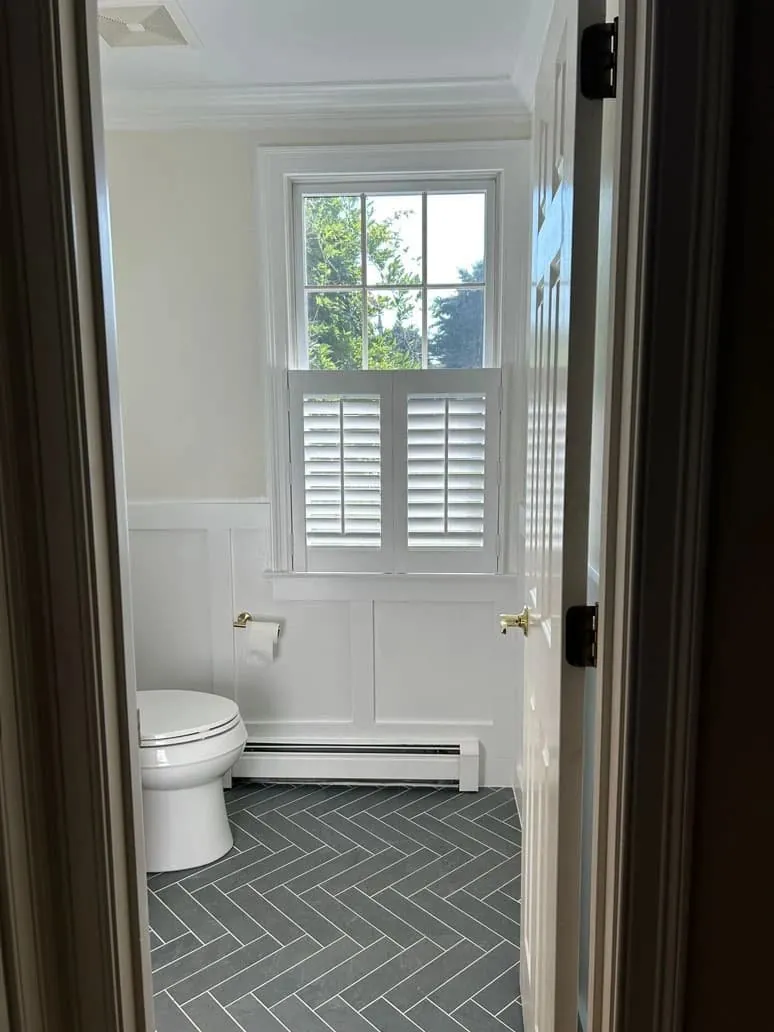
Cafe shutters cover only the lower sash. They are a classic answer on a ground-floor window near the sidewalk, and they suit the older houses here.
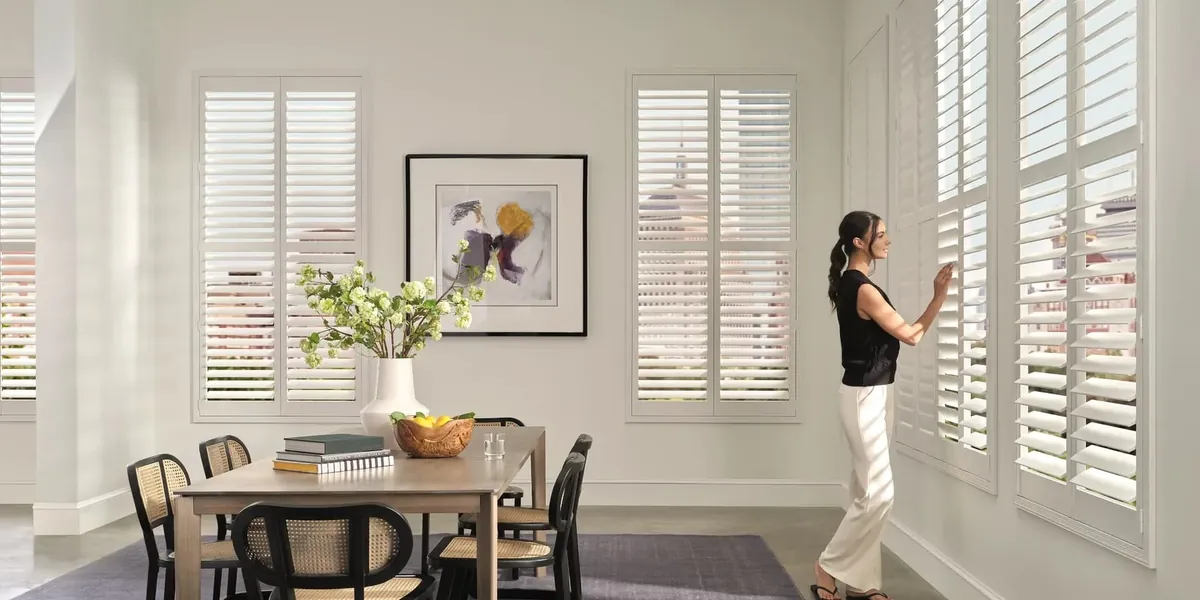
Small original openings
Many of the older houses and cottages in the village still have their original window openings: narrow double-hungs, small cottage casements, little bathroom windows, and attic windows tucked under the eaves. They are charming but small, and in a small window every inch of glass counts.
That means choosing treatments that take up as little of the glass as possible when they are open. A honeycomb shade stacks into a very slim band at the head. A roller rolls up almost out of sight. Shutters can be swung completely clear of the window. Roman shades, with their deeper folds, are often mounted a little above a small opening so the stack sits on the wall rather than across the top of the glass.
Small windows can also be hard to fit. Old frames are rarely square, and an inside mount on a narrow opening leaves little room for error. We measure each window in several places and size each shade to the tightest point. Where the frame is too shallow or too uneven for an inside mount, an outside mount that overlaps the casing gives a neater edge and closes the light gaps at the sides, which also helps privacy.
Attic rooms deserve a word of their own. Under the eaves of an older house the windows are often tiny, sometimes set low in a knee wall or high in a gable, and they can face straight into the attic window of the house next door. A small honeycomb or roller shade made to the exact opening, with a cordless lift so nothing hangs down, covers them neatly. Where a gable window is shaped rather than square, a fixed shutter or a specialty shade can follow the outline, so even the oddest opening ends up private and finished.
Apartments above Main Street
The upper floors of the older buildings on Main Street hold apartments with windows straight onto the street and the buildings opposite. They tend to be tall-ish windows for their width, sometimes with original trim, and they face a lot of activity below.
Privacy here is about the angle as much as the distance. From the sidewalk, people look up into a lit room; from the building opposite, they look straight across. A top-down, bottom-up shade handles the view from below by covering the lower part of the window. Light-filtering fabric handles the view from across the street in daylight. For evenings, a second layer, such as a room-darkening shade on a double bracket or drapery, closes the window completely.
Street noise and light are the other part of the story. A honeycomb shade’s cells soften sound a little as well as holding warmth, and a room-darkening fabric blocks the glow of the street lamps in a bedroom. These upper floors can also catch a lot of afternoon sun off the canal, so a screen shade on the brightest window is worth considering.
If you own the building and are fitting out several apartments, we can plan the windows together so the street front looks consistent from outside.
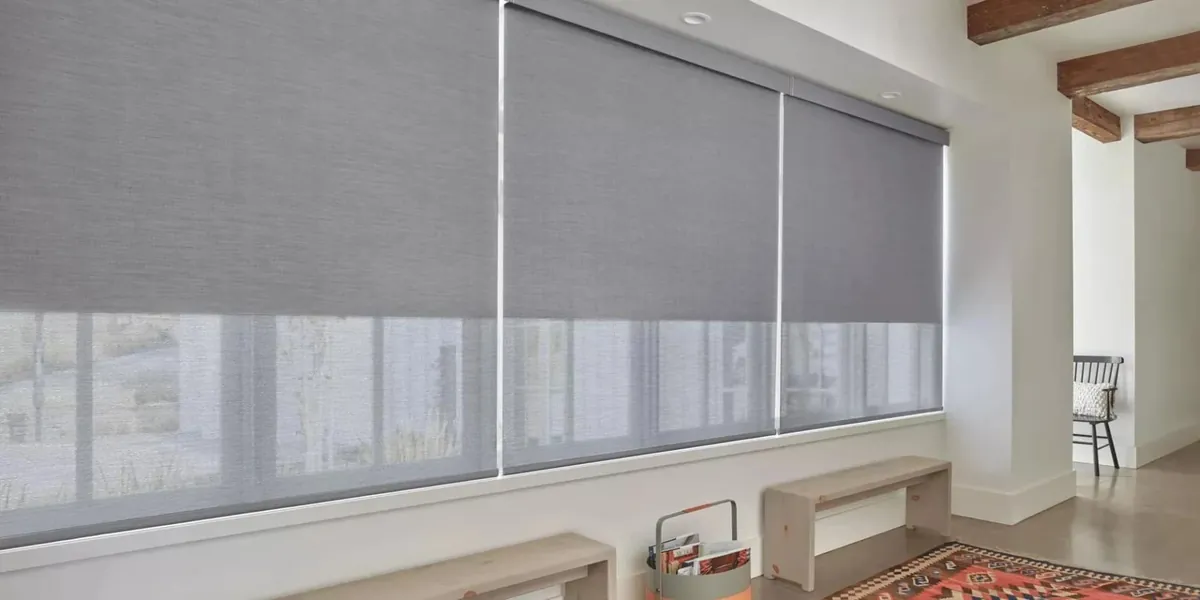
Converted cottages
Some of the village’s houses began as summer cottages and have been insulated, extended and lived in year round. They often keep their cottage windows in the original rooms and gain larger, newer windows in the additions.
A converted cottage asks for two things at once: warmth, because the original walls and windows were never meant for a Cape Cod winter, and privacy, because the lots are small. Honeycomb shades handle both. The cells hold still air against cold glass, and a light-filtering fabric keeps the room private in daylight. A top-down, bottom-up honeycomb shade adds the option of keeping the sky.
The newer windows in an addition are usually larger, sometimes a slider to a small deck or patio. A vertical honeycomb shade or gliding panels on the slider, with matching honeycomb shades on the windows, keeps the old and new rooms consistent. Window treatments in Buzzards Bay cottages like these work best when the same fabric runs through the whole house, even when the windows change.
Front doors, porches and side lights
On a village street the front door is often only a few steps from the sidewalk, and many of the older houses have a glass panel in the door, side lights beside it, or an enclosed front porch with windows on three sides. These are some of the most exposed windows in the house, because anyone walking past is looking straight at them.
A door panel can take a narrow honeycomb or roller shade mounted on the door itself, with hold-down brackets so it does not swing when the door opens. Side lights suit slim sheer or honeycomb shades, or narrow shutter panels that match shutters elsewhere on the front of the house. A light-filtering fabric lets the hall stay bright while hiding what is inside.
An enclosed porch is a room in its own right, often used as a mudroom, a reading spot or a place for plants. Glass on three sides makes it the brightest room in a small house and the least private. Top-down, bottom-up shades are the natural fit, keeping the lower glass covered from the street and the top open to the sky. Cafe shutters do a similar job with a more traditional look. In winter, honeycomb shades help a porch hold the warmth it gathers during the day.
How a visit works
A small house with close neighbors is exactly where seeing the samples on site pays off, because what matters is how the fabric looks from the window opposite as well as from the room. Our vans let us bring the showroom to you.
- Ask for a consultation with the Request a Consultation form or the call button, and settle on a time.
- A consultant comes over with sample books, sheer and light-filtering fabrics, blind slats and shutter samples.
- We look at each window together and talk about who can see in, when, and from where.
- You try the samples at the window, and we can step outside to see what a fabric shows from the street.
- We measure each opening, checking the depth and squareness of the frame.
- You receive a free estimate and decide when you are ready.
- Once the order comes in, our certified Hunter Douglas installers fit it and show you how everything works.
For help with color and fabric choices across a whole house or apartment, ask about our interior design consultations. There is more about the visit on the in-home consultations page.

Bathrooms and bedrooms on a tight lot
In a close-set house the bathroom window is often the one that faces the neighbor most directly. It needs full privacy at all times without making the room dark. Cafe shutters, top-down, bottom-up shades and sheer romans are all good choices, and faux wood blinds or polysatin shutters cope with the steam. A light-filtering honeycomb shade lowered fully gives privacy and a soft glow.
Bedrooms want privacy at night and, often, darkness. A room-darkening honeycomb shade or a blackout roller does both, and drapery drawn across it closes the light gaps at the edges. For a bedroom that faces the street, a double bracket with a light-filtering shade in front and a darkening shade behind gives a private, bright room by day and a dark one at night.
The light off the canal is worth thinking about too. On a bright afternoon the water reflects a lot of light into rooms on that side, and a screen shade or a light-filtering fabric keeps it comfortable without losing the brightness.
Keeping the street front tidy
In a village where houses face each other across a narrow street, the outside view of your windows matters. A mix of different blinds, shades and colors behind each window can look untidy from the sidewalk.
The simplest fix is to keep the color facing the glass the same across the front of the house, typically a white or soft neutral, even if the room side changes. Matching the mount style and the height at which shades rest also helps. Shutters across the front windows give a particularly orderly look. We plan the front windows together so the house looks consistent from outside. For more on the neighboring town, see our Bourne page.
Kitchens that look into the next yard
Kitchens in close-set houses often face sideways, straight across a driveway into the neighbor’s kitchen or yard. You want the light while you cook and the view of the garden while you wash up, but not the feeling of being on show.
A cafe shutter over the lower sash is a long-standing answer: the top of the window stays open, and the louvers on the lower half can be tilted to let light in while blocking the view across. A top-down, bottom-up honeycomb or roman shade gives the same split with a softer look. Faux wood blinds, tilted up, send daylight to the ceiling and keep the view from next door out, and they wipe clean after a splash at the sink.
Over a sink or a counter, a cordless lift keeps things simple, with no cord to reach across the taps for. For a breakfast nook with windows on two sides, roman shades in a light-filtering fabric make the corner feel cosy and private without darkening it. We plan window treatments for Buzzards Bay kitchens around where the neighbor’s windows actually are, which is why we like to see the room before suggesting anything.

Why a Hunter Douglas Gallery dealer
Blinds & Designs is a Hunter Douglas Gallery dealer. That gives you every Hunter Douglas solution to the privacy question in one visit: light-filtering and room-darkening honeycomb shades, top-down, bottom-up options, sheer shades, rollers, romans, blinds, cafe and full-height shutters, drapery and PowerView motorization.
Hunter Douglas has certified our installers, so each piece is fitted to the maker’s standard. We also offer interior design consultations and repairs to coverings you already own.
More about the brand is on our Hunter Douglas page, and every product is on the window treatments page.

The Sagamore showroom nearby
Our Sagamore showroom is the closest to Buzzards Bay, at the other end of the canal. Come in to see the range, or let us bring the samples to your door, where the neighbors’ windows are part of the picture.
Questions from Buzzards Bay
How do I get privacy from the house next door without losing light?
Top-down, bottom-up shades, light-filtering fabrics, sheer shades with tilting vanes, and blinds or shutters angled upward all keep the view in blocked while letting daylight through. We can try each one at the window that faces the neighbor.
Will a light-filtering shade show my silhouette at night?
It can, when the lamps are on inside. A heavier fabric, a room-darkening shade on a double bracket or drapery drawn across solves it for the evening.
My windows are small and not quite square. Can they still take an inside mount?
Often, yes. We measure each opening in several places and size the shade to the tightest point. Where the frame is too shallow or uneven, an outside mount over the casing gives a neater edge and better privacy.
What suits a second-floor apartment window over Main Street?
A top-down, bottom-up shade covers the view from below, light-filtering fabric covers the view across the street by day, and a second layer or drapery closes the window at night.
Do you charge for the estimate?
No. The estimate is free. We measure, go through the options with you and leave an estimate to think over.
Your next step
The best way to sort out window treatments in Buzzards Bay, MA, is to stand at the window that faces the neighbor with the samples in hand. Request a consultation and we will come to you, measure and leave a free estimate. You can also use the call button or visit the Sagamore showroom.