
Set back from the road, under heavy trees
Westwood’s houses sit well back from the road on wooded lots, under the heavy tree cover that spreads across most of town. Post-war colonials line the older streets, and larger newer houses stand on bigger parcels further in, almost all of them with standard modern openings. That combination turns the usual question about window treatments in Westwood, MA, on its head. In many rooms the problem is not too much sun but too little, and privacy from the street hardly comes into it.
So the planning here starts with daylight. Which coverings give back the most glass when they are open? Which fabrics brighten a shaded room instead of dimming it? Where are the few spots, a clearing at the back or a south-facing deck, where the sun does break through and needs controlling?
Standard openings make the fitting itself straightforward, so the whole Hunter Douglas range is open to you. Samples come to your door, and each card underneath opens the page for one service in town.
Services for Westwood houses
These are the window treatments in Westwood, MA, that we offer. Pick the card that matches the room on your list, or ask for a visit and compare them all at your own glass.
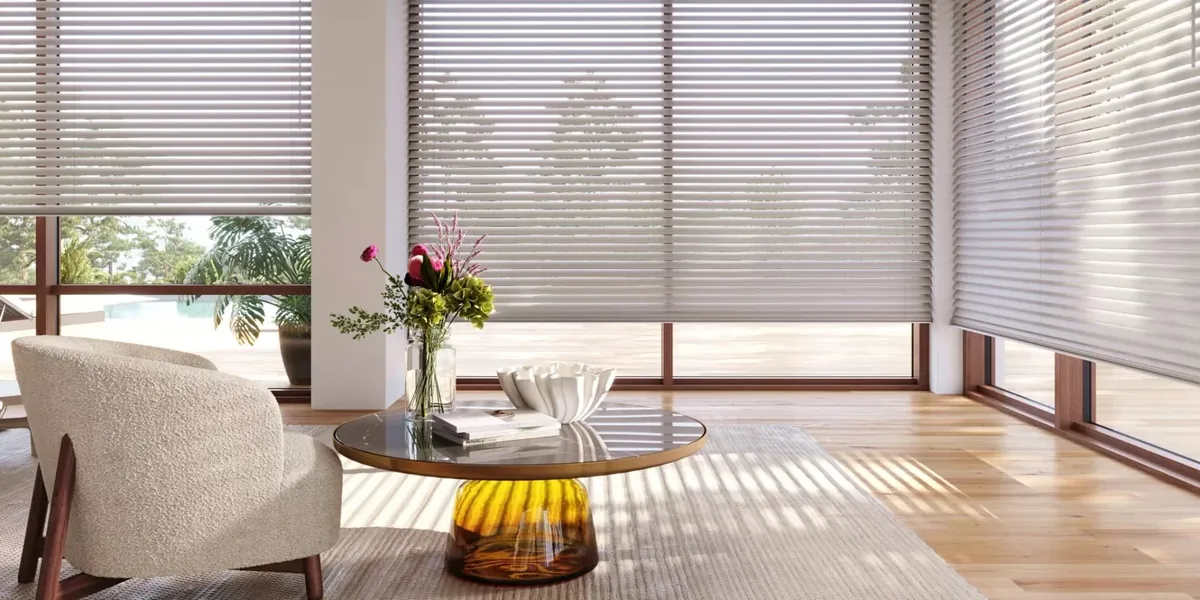
Custom Blinds in Westwood
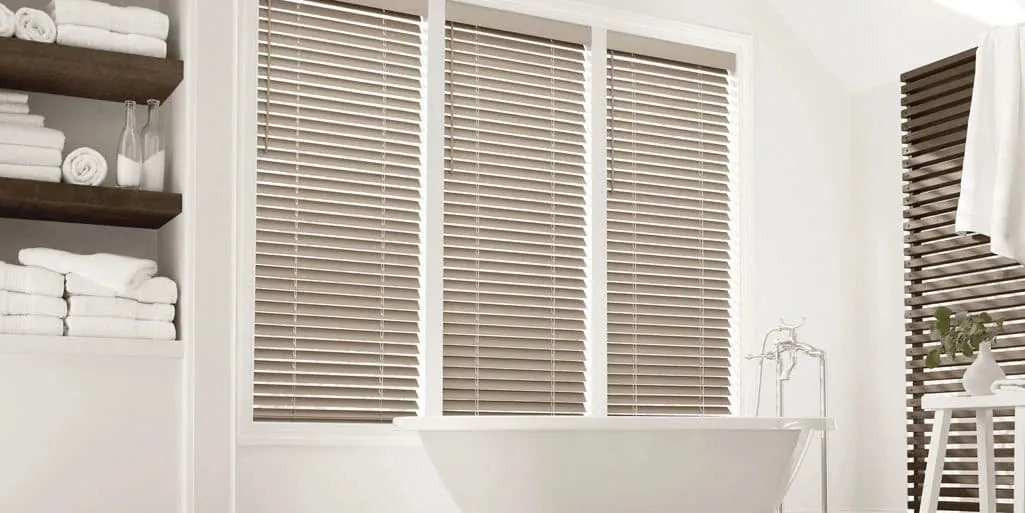
Blinds in wood, faux wood or metal, and verticals for a slider. Upturned slats send scarce daylight bouncing off the ceiling.
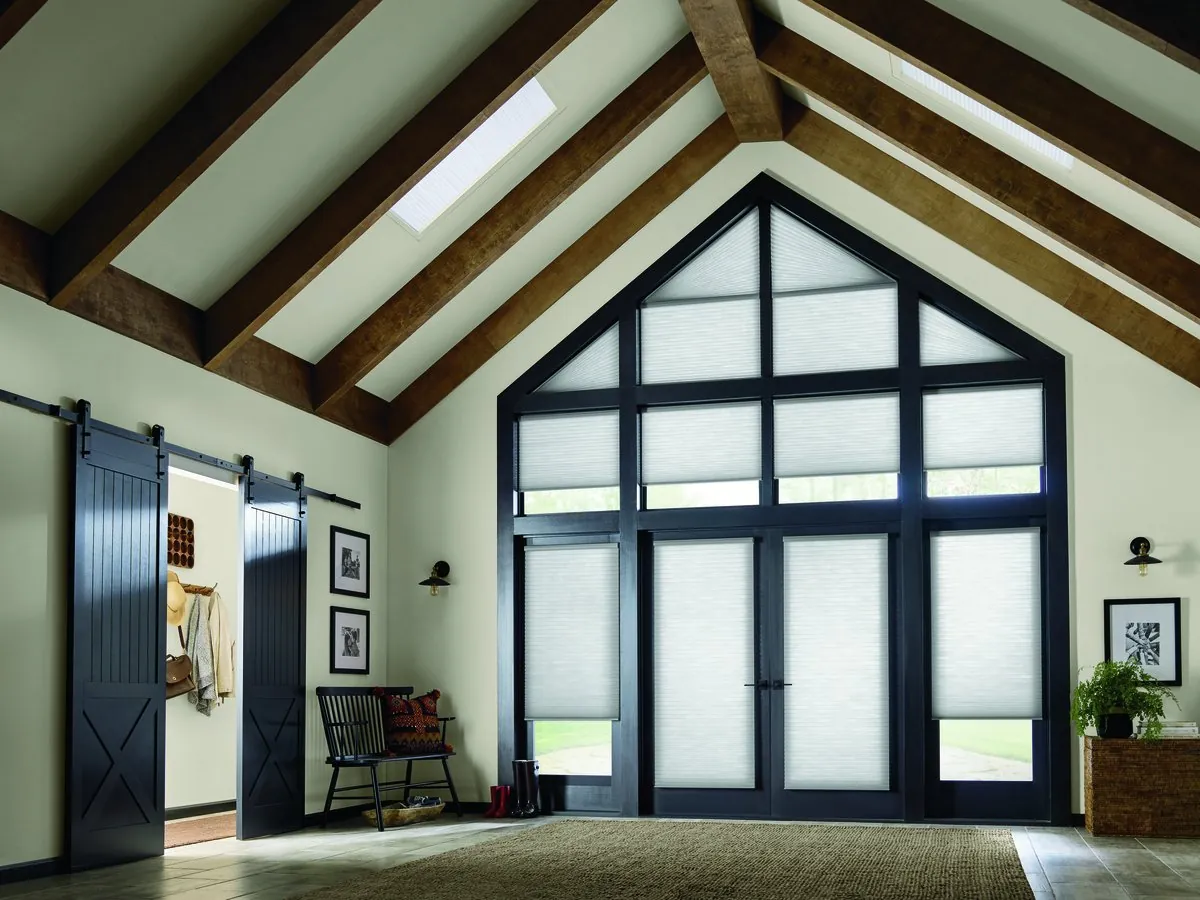
Cellular Shades in Westwood
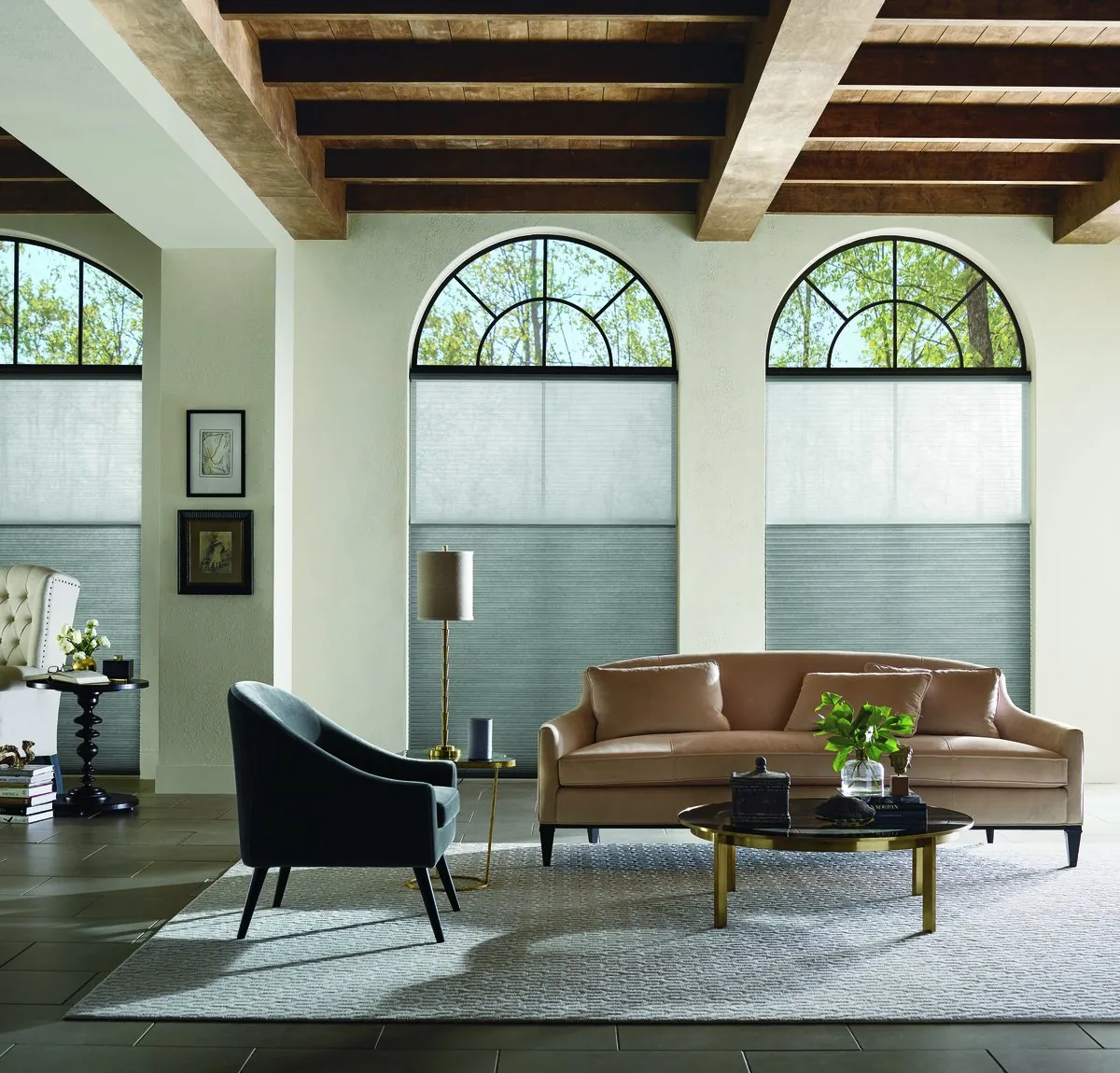
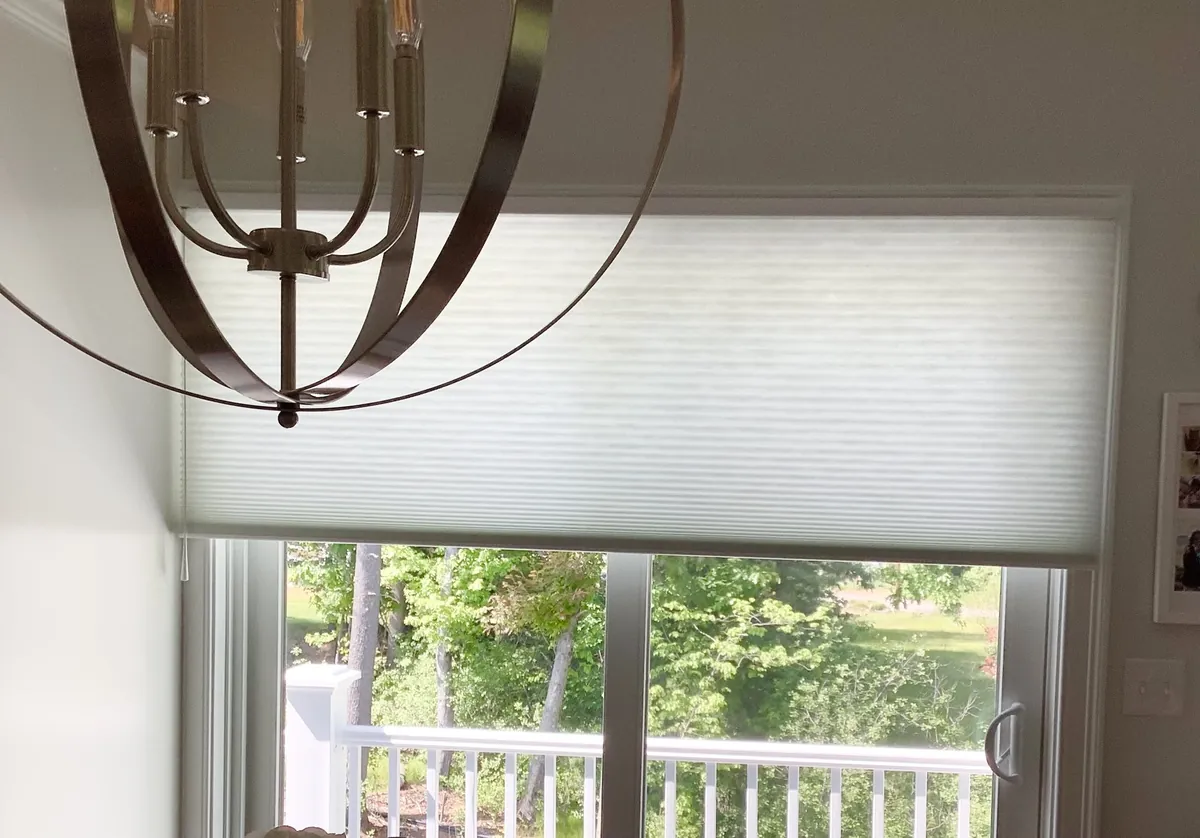
Duette and Applause honeycomb shades stack slim when raised, so a shaded room keeps nearly all its glass in daytime.
Roller Shades in Westwood
Designer and Alustra rollers and banded shades that roll fully clear of the glass, for family rooms and tall newer windows.
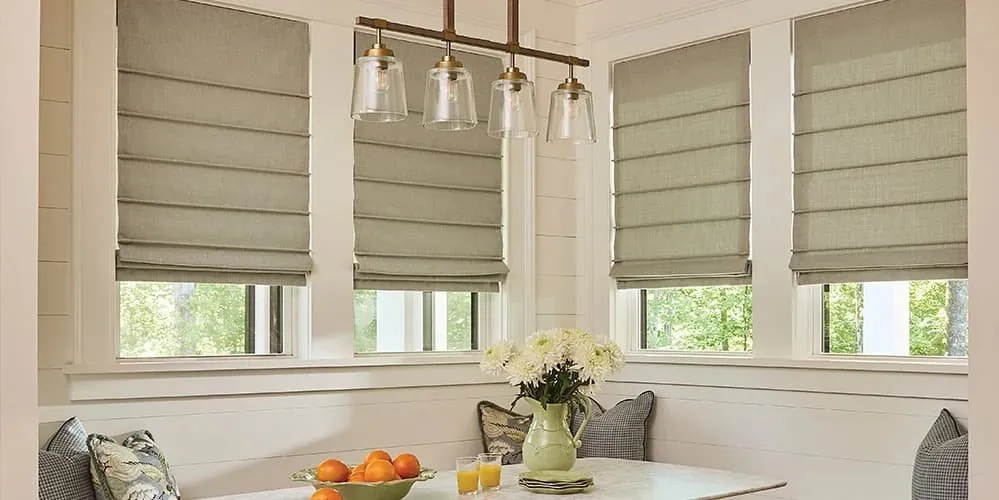
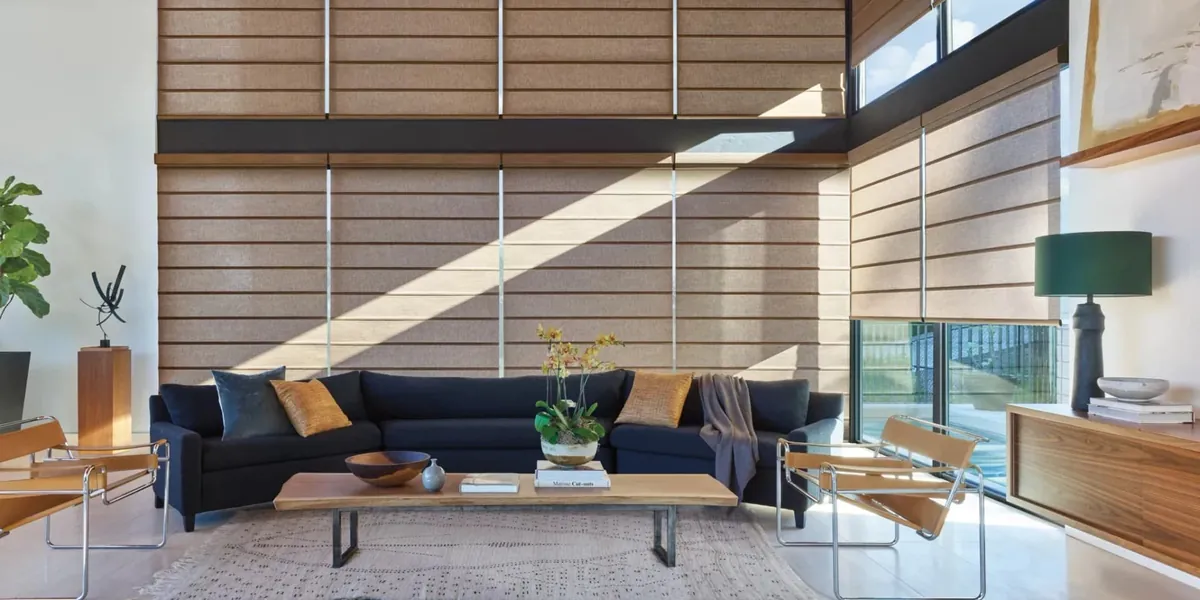
Roman Shades in Westwood
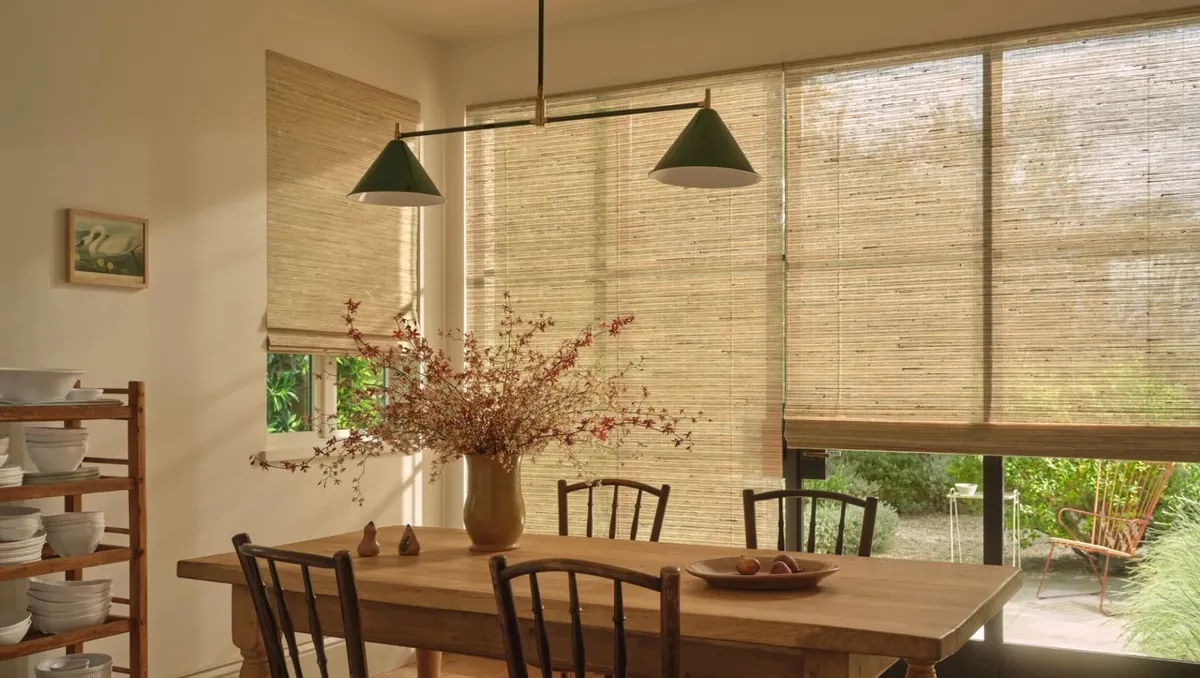
Soft folds in pale, light-friendly cloth from the Vignette and Carole ranges, for a dining room or breakfast nook.
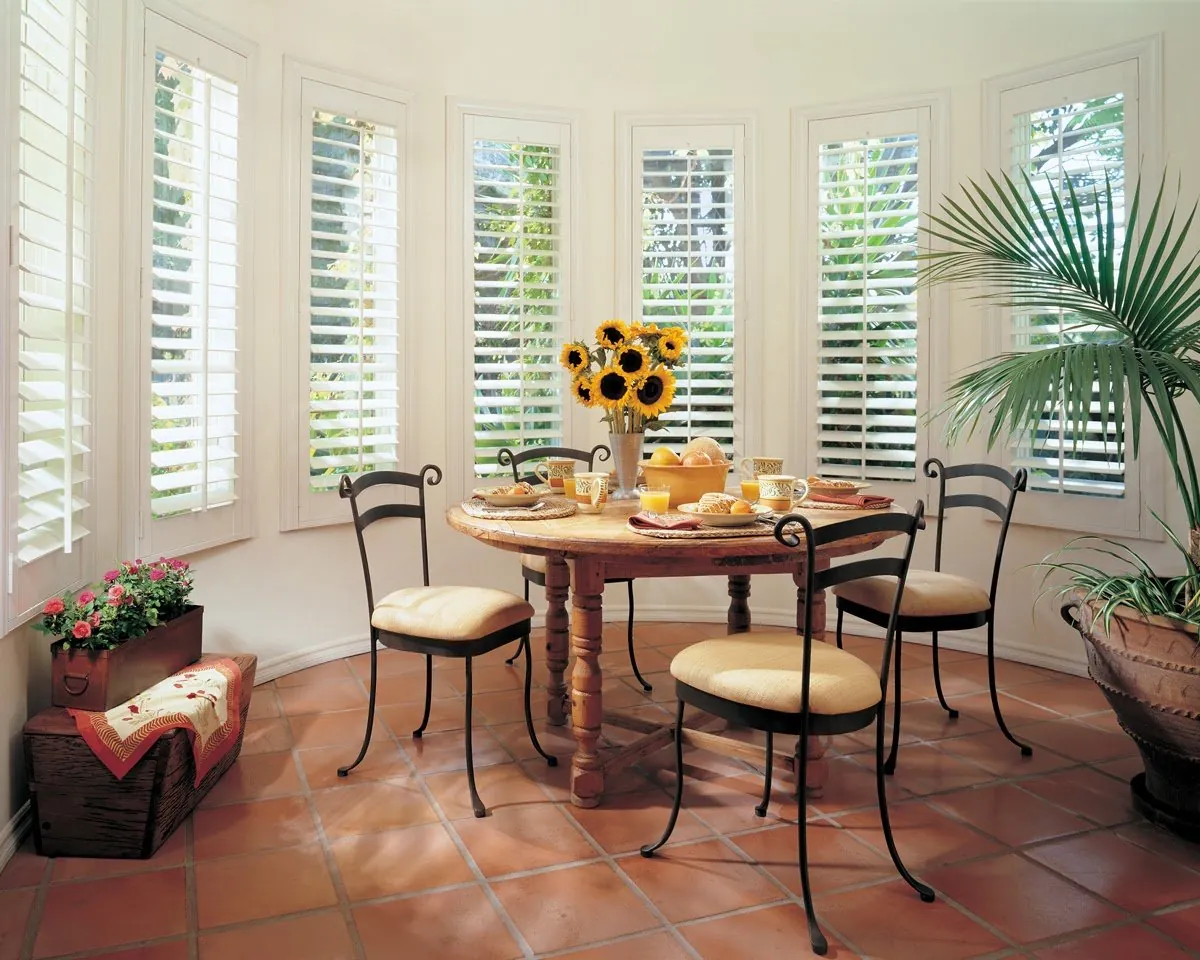
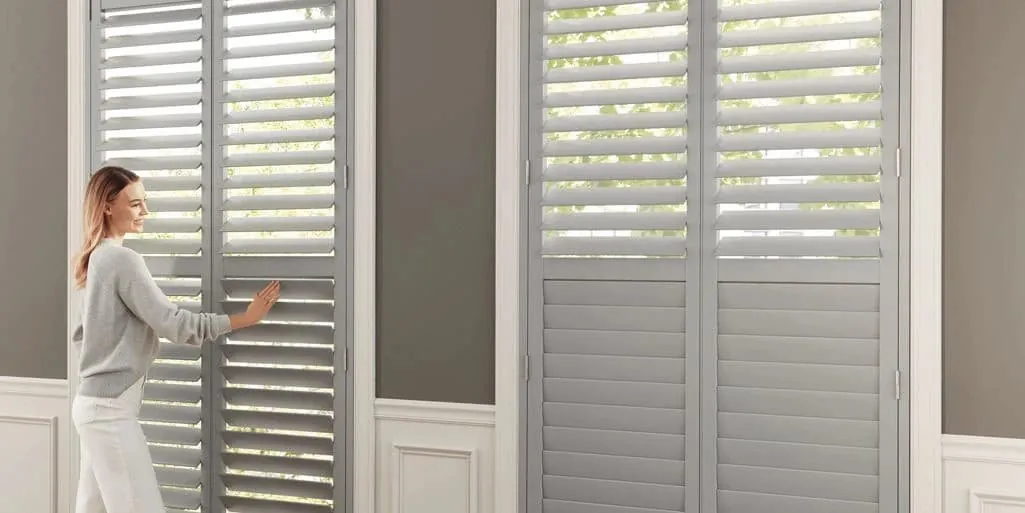
Plantation Shutters in Westwood
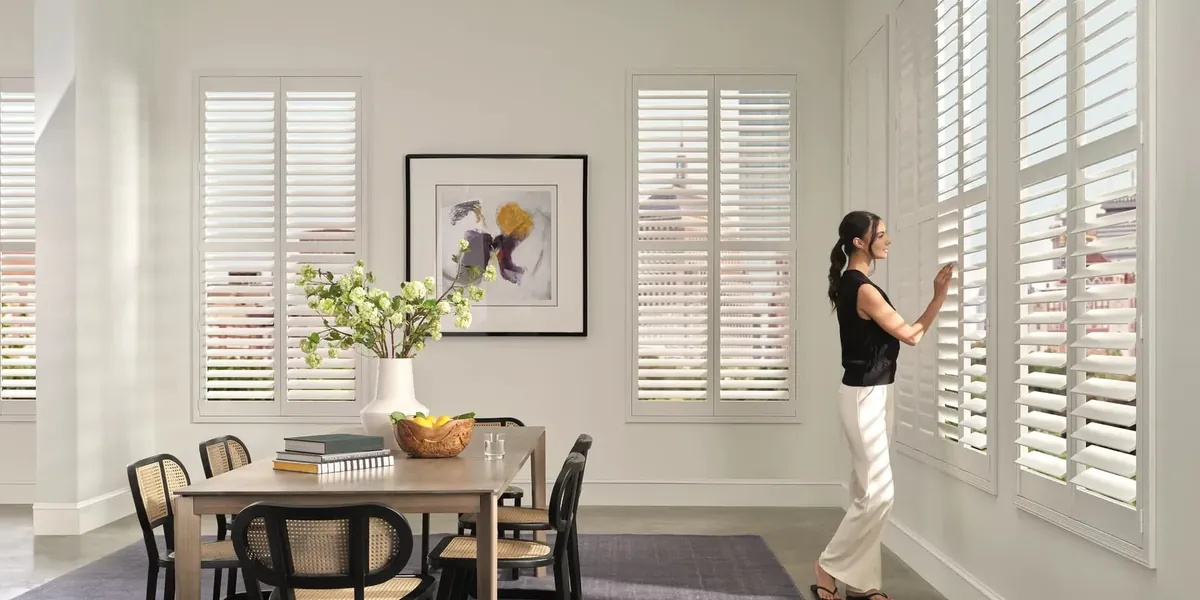
Heritance, NewStyle and Palm Beach shutters in white or soft colors that bounce light back into the room.
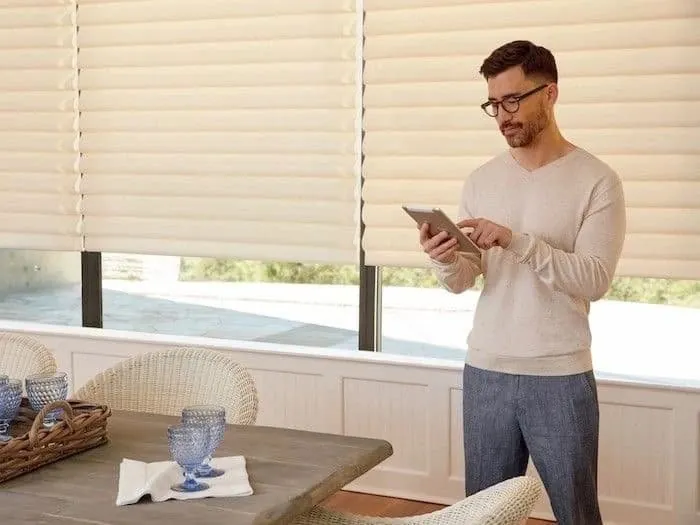
Motorized Blinds and Shades in Westwood
PowerView control by remote, app or schedule, for big houses with many windows and rooms you want to set once and forget.
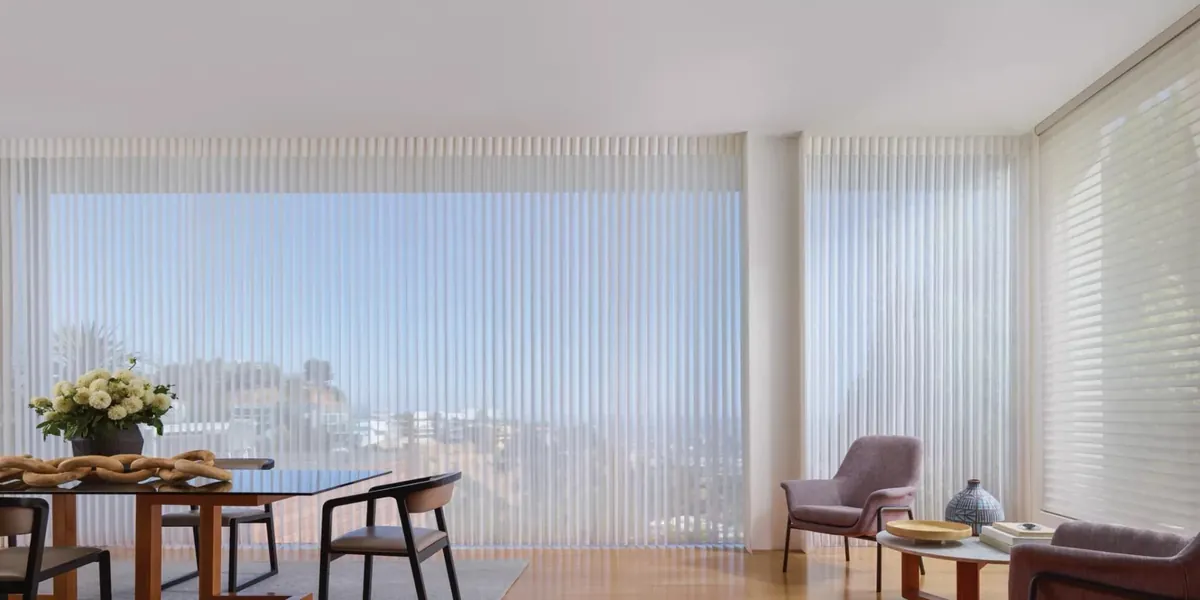
Hunter Douglas Dealer in Westwood
Our Gallery dealer status brings the full Hunter Douglas line, sheers included, with certified installation.
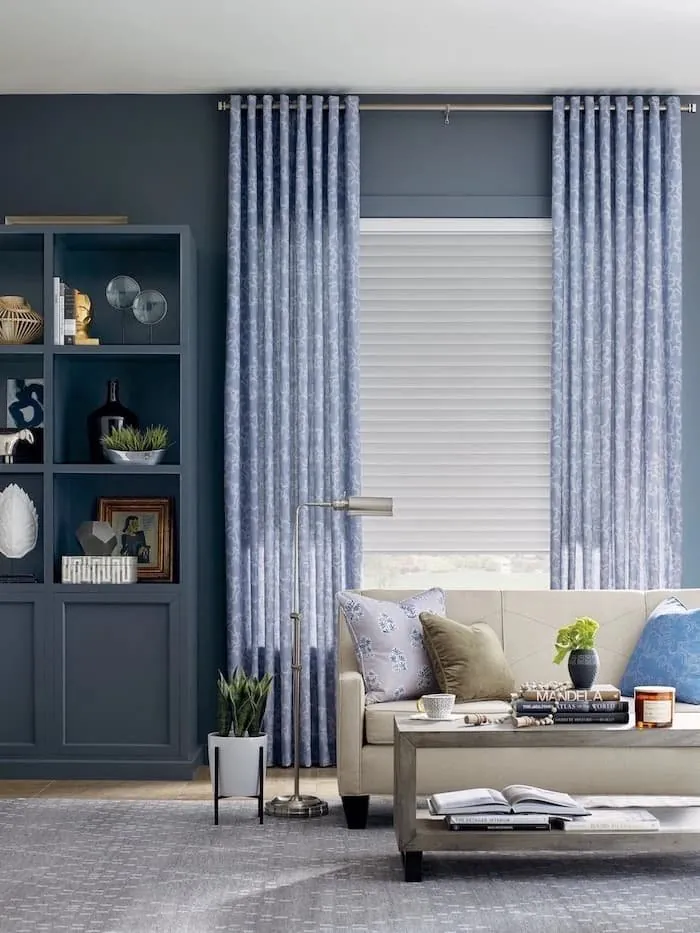
Custom Drapery in Westwood
Made-to-measure panels for a formal living room, a large family room or a bedroom that needs extra darkness.
Blind and Shade Repair in Westwood
Blinds and shades you already own that are not working as they should. We are happy to have a look.
Getting daylight into shaded rooms
Under a dense canopy, a north- or east-facing room can stay dim even at midday, and in those rooms the window covering has one main job: to get out of the way. Anything that hangs over the glass when it is meant to be open, or stacks deep at the top, steals light the room cannot spare.
Some coverings give back more glass than others:
- Roller shades wind onto a tube above the opening and leave the glass completely clear when raised.
- Honeycomb shades fold into a very slim stack, so almost none of the window is lost.
- Sheer shadings let soft light through even when lowered, so the room stays bright while still having some privacy.
- Shutters never cover the glass when the panels are swung open, and with the louvers tilted they direct light toward the ceiling.
- Blinds can be tilted upward to bounce daylight off the ceiling and deeper into the room.
In the darkest rooms, an outside mount set a little above the frame can lift the stack clear of the glass altogether, which is worth doing on a window that already struggles for light.
Colors that brighten a dim room
Color matters more under trees than in an open setting. A dark fabric in a shaded room absorbs what light there is and makes the room feel smaller; a pale one reflects it back. White and soft neutral fabrics, painted white shutters and light wood finishes all help a shaded room feel brighter.
That does not mean everything has to be white. A warm cream, a pale gray or a soft natural linen can sit comfortably with the green outside while still reflecting light. Where you want a color, a roman shade or a drapery panel in a light-toned pattern adds personality without darkening the room. We bring samples in a range of tones and hold them at the glass, so you can see how each one changes the light under your own trees.
Post-war colonials on the older streets
The post-war colonials on Westwood’s older streets tend to follow a familiar plan: a center hall, a living room on one side and a dining room on the other, bedrooms above, and a row of matching double-hung windows across the front. Many have had their windows replaced over time, so the openings are standard and square.
Those matching front windows are the first thing anyone sees from the drive, so it pays to keep them consistent. That might mean shutters across every front window, or a single honeycomb color from room to room, with different products only on the sides and back. Inside, the formal living and dining rooms suit shutters or roman shades, the bedrooms above take room-darkening honeycomb or roller fabrics, and the kitchen at the back usually gets faux wood blinds or shutters that cope with steam.
Larger newer houses further in
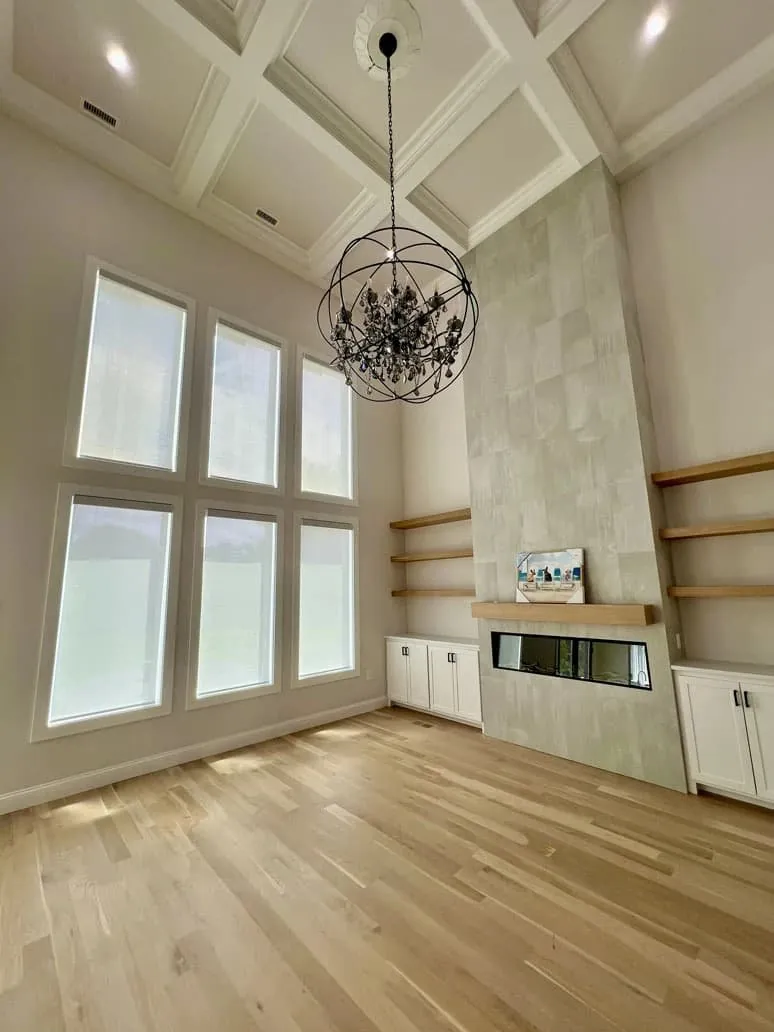
The larger newer houses on the bigger wooded lots bring more rooms and more kinds of window: a two-story family room, a home office or two, a finished basement or media room, a sunroom off the kitchen and a primary suite with a wall of glass. Each of those rooms has a different job, so a single product rarely suits them all.
A tall family room window takes a roller or a sheer shading that hangs flat over a long drop, usually with PowerView so it can be lowered from the floor. A media room needs real darkness, which means a room-darkening fabric or a blackout roller, sometimes behind drapery. A sunroom, often the brightest room in a wooded house, may be the one place that needs proper glare control. And a primary suite wants something that looks calm by day and goes fully dark at night.
Privacy when the street is far off
With generous setbacks and trees between the house and the road, very few Westwood windows face anyone directly. That changes the priorities for the front of the house: rather than choosing fabrics to hide the room, you can choose them for light, warmth and look, and leave the windows open most of the day.
Bedrooms and bathrooms still need privacy, of course, and any window that faces a neighbor through a gap in the trees deserves a second look. Evening is the other exception. Once the lights are on, a house set among dark trees is visible from further away than you might expect, so most people want something to lower at dusk. A PowerView schedule that follows sunset handles that automatically through the year.
Damp shade and the materials that suit it
Houses that sit under trees all day stay cooler and can feel a little damper than houses in the open, especially on the north side and in finished basements. That is worth keeping in mind when choosing materials. Faux wood blinds, polysatin shutters and synthetic shade fabrics cope well with humidity and will not warp or mark, which makes them good choices for a lower-level family room, a mudroom or a bathroom on the shaded side.
Real wood blinds and natural woven shades look beautiful in a dry, well-heated living room or dining room, where they bring the outdoors in. In a basement media room or a damp corner, we would usually steer you toward a synthetic alternative that gives a similar look without the risk.
Windows that rarely see the sun also stay cleaner and fade less, so a richer color that might bleach on a south window will hold up well on a shaded one. That opens up some choices in Westwood rooms that would not be wise in a sunnier town.
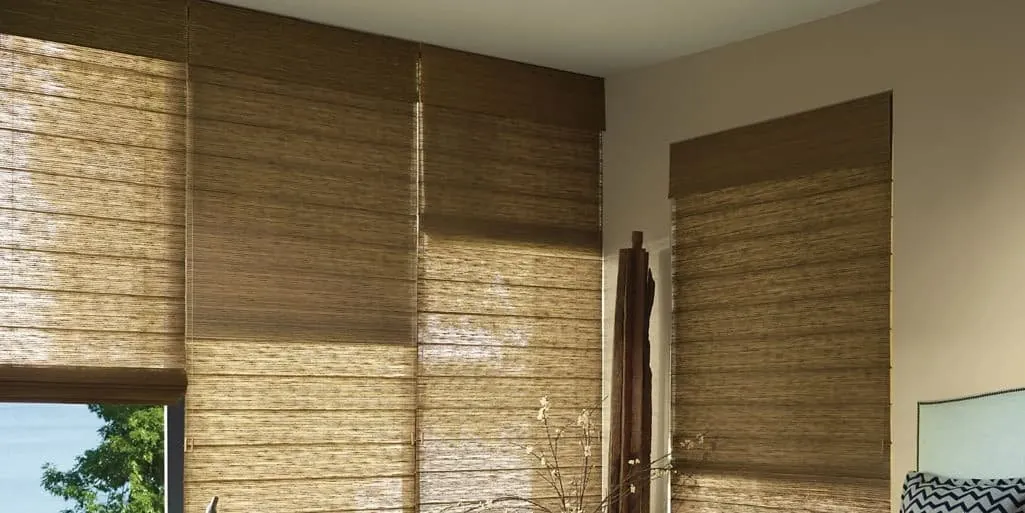
Where the sun does break through
Even under heavy cover, most lots have a few places where the sun gets in: a clearing behind the house, a deck facing south, a sunroom built out past the tree line or a second-floor window above the canopy. In those spots the light can be strong, and it often lands on the rooms you spend the most time in.
A light-filtering honeycomb or a solar screen tames glare there without making the room feel shut in, while a top-down, bottom-up shade can block the low sun in the late afternoon and leave the upper glass open. Because these sunny rooms are often next to dim ones, we pick fabrics that look consistent across both, so the change from shade to sun does not show from inside. Planning window treatments in Westwood usually means treating these few bright windows quite differently from the rest of the house.
Sliders, decks and the view into the woods
Most houses on wooded lots open to the back through a slider or a pair of French doors onto a deck or patio, and that is where the view of the trees is best. The covering on those doors should move fully out of the way, so the view and the light are not interrupted when you step outside.
Vertical honeycomb shades travel sideways and stack neatly at one edge, giving the same warmth as the honeycomb shades on the windows beside them. Gliding fabric panels and vertical blinds do a similar job with a different look. On French doors, a shade mounted on each door, held at the bottom so it does not swing, keeps the doors easy to use. Because the deck is often the sunniest spot on the lot, a light-filtering fabric there earns its keep on summer afternoons while leaving the trees in view.
Bedrooms and the summer dawn
A shaded house can still wake you early. On a June morning the sky brightens long before the sun clears the trees, and a pale light-filtering fabric in an east bedroom lets that glow straight in. Room-darkening honeycomb shades or blackout rollers are the answer for anyone who wants to sleep past dawn.
On the street side, a room-darkening shade can have a white or neutral back, so the front of the house still looks consistent from the drive. For the darkest result, drapery over a room-darkening shade closes the small gaps at the edges.
Home offices in a wooded house
Many larger houses here have a home office, often in a corner room with windows on two sides. Under the trees, the light is usually soft enough that glare on a screen is not a constant problem, but a bright patch of sky behind the monitor can still be tiring. A light-filtering roller or honeycomb shade lowered just far enough to cut that patch keeps the room bright and the screen readable.
If the office looks into a clearing or faces west, a solar screen is worth considering, because it reduces glare while keeping the view of the woods.
Your home visit
Light filtered through a canopy is greenish, shifting and soft, and it changes every swatch you hold up to it. That alone is reason enough to decide inside the house rather than anywhere else. The shop-at-home service runs out of Canton, and with vans full of samples we can bring the showroom to you.
- Pick a slot through Request a Consultation, or press the call button.
- Up the long drive comes the consultant, carrying fabric books, slat and louver samples, drapery cuttings and a PowerView remote to try.
- The tour starts in the dimmest room, then moves to whichever room the sun actually reaches.
- At each window, two or three fabrics are compared side by side so you can see which keeps the room brightest.
- Openings are measured one by one, and family room windows too high to reach are flagged for a motor.
- A free estimate follows, and you choose in your own good time.
Bringing color and fabric together across a whole floor is the work of our interior design consultations. How the home service is organized is set out on the Canton shop-at-home page.
Setting a large house on autopilot
In a bigger house with a great many windows, walking round to raise and lower every shade is a real chore. PowerView groups shades by room or by side of the house and runs each group from one remote, a phone or a timetable: everything up at breakfast, the sunroom down in the early afternoon, the whole house closed at dusk. Control and power options are explained on the motorized blinds and shades in Westwood page.
Drapery, installation and repairs
In a formal living room or a tall family room, side panels of drapery give the windows softness and a sense of scale, and pulled closed after dark they hold in warmth and close off the view from the woods. Hung in front of a shade, they split the work between daytime and evening. Panel styles are on the custom drapery in Westwood page.
When the order lands, Hunter Douglas certified installers return to put it up: brackets into framing, headrails levelled, motors paired, and a walk through how each piece works. High family room glass is reached with proper equipment, not a kitchen chair.
Mending is part of the service as well. Lift cords that slip, wands that have stopped tilting, a honeycomb shade sagging at one corner: quite often these can be fixed, and if fixing is the poorer bet we will say. See blind and shade repair in Westwood.

Samples at your own windows
A swatch under the trees and the same swatch under store lights can look like two different fabrics, which is why we would rather meet you at home. Every sample is held in the actual window it is meant for.
For anyone who likes to browse a store as well, Franklin has our closest showroom; opening times and the rest are on its page.
A Gallery dealer under the trees
Gallery is the rank Hunter Douglas gives dealers who meet its standards, and Blinds & Designs has earned it. A center-hall colonial or a big newer house on a wooded parcel can draw on the entire catalog: honeycomb and roller shades, sheers, romans, woven woods, slatted blinds, shutters, drapery and PowerView.
Installers certified by Hunter Douglas handle every fitting, and free estimates, interior design consultations, automation and repairs complete our work on window treatments in Westwood.
Questions from Westwood
My rooms are already dark from the trees. Which coverings keep the most light?
Roller shades clear the glass completely when raised, honeycomb shades stack very slim, and shutters never cover the glass when open. Sheer shadings let soft light through even when lowered. Pale colors also help reflect light back into the room.
Do I need privacy coverings if nobody can see my house from the road?
Mostly for bedrooms, bathrooms and evenings. A house lit up among dark trees is visible from further than you might think, so many people choose a light-filtering shade on a PowerView schedule that lowers at dusk.
What is best for the one sunny room in my house?
A light-filtering honeycomb shade or a solar screen cuts glare and heat without making the room feel closed in. We match the fabric to the rest of the house so the change from shaded rooms to the sunny one does not show.
Can you motorize every shade in a large house?
Yes. PowerView can group shades by room or side of the house and run them from a remote, the app or schedules. Many people motorize only the high or hard-to-reach windows and use cordless lifts elsewhere.
What do I pay for an estimate?
Nothing. Estimates are free, written after every window is measured, and you can sit on yours as long as you like.
Ready to begin
A dim north room, the one bright sunroom, or every opening in a big house under the trees: new window treatments in Westwood, MA, start with a visit to your door. Request a consultation for samples, measuring and a free estimate. Questions first? The call button is the quickest route.
For the full range in one place, start with our window treatments page.