
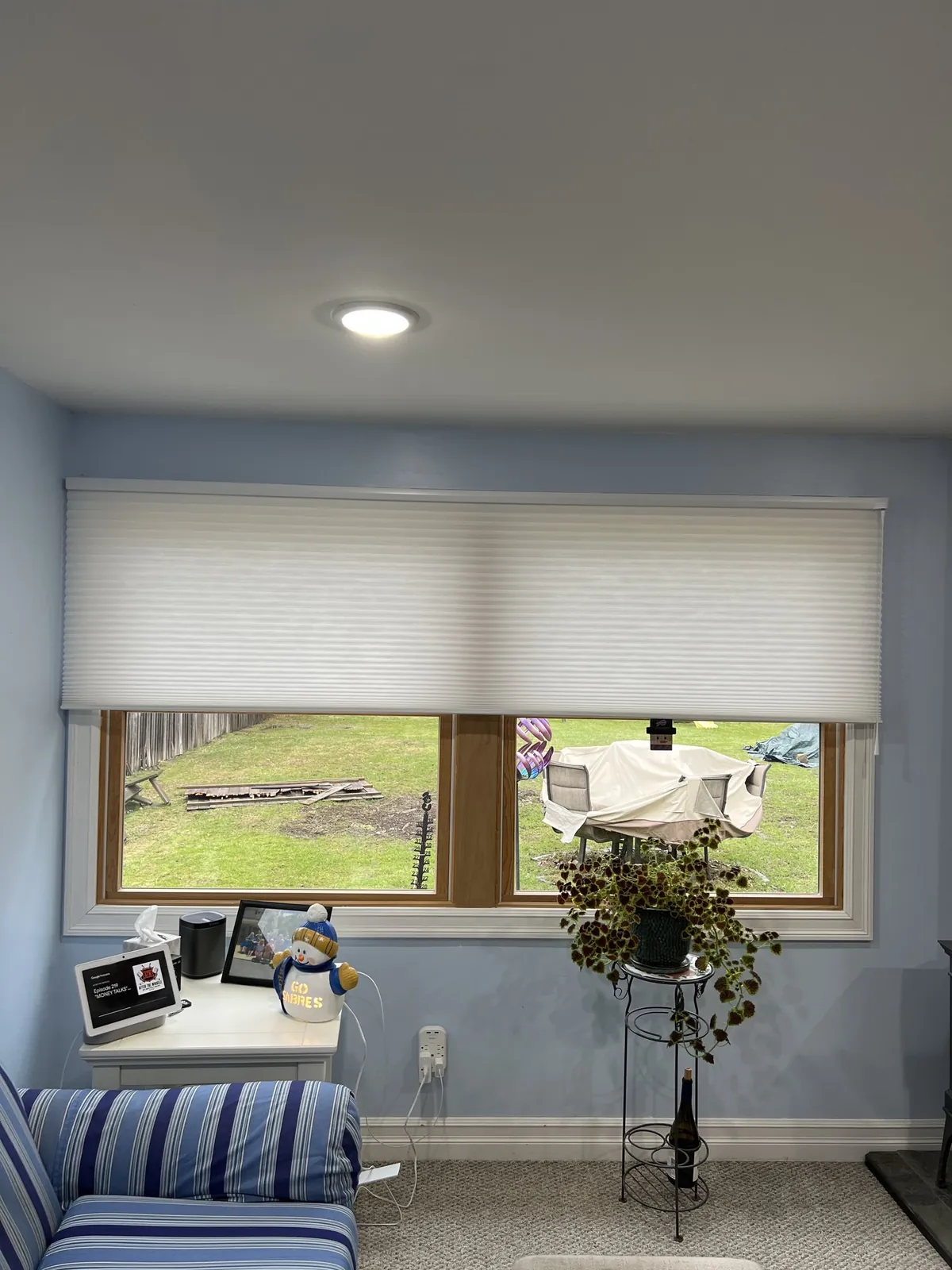
Two shores, two very different houses
Dennis is really two towns as far as windows go. Up on 6A in Dennis Village, the old captains’ houses stand square to the road with rows of matching sash across the front, a center door and tall rooms that were heated by fireplaces when they were built. Down in Dennis Port the lots shrink, and cottages and condominiums sit shoulder to shoulder a short walk from the sound. When we fit cellular shades in Dennis, the first question is which of those two houses we are standing in.
What they share is a cold pane of glass and a lot of months when nobody is home. Many houses here are opened in spring and closed in the fall, and some are lived in only on weekends. A window covering has to keep a room comfortable when you are there and protect it when you are not.
The bay side of town adds a third concern. Rooms facing north across the bay catch the low sun late in the day for much of the year, and that long, raking light fades fabric, rugs and wood faster than anything else a house is exposed to.
Honeycomb shades for both ends of town
These are the honeycomb options that come up most when we visit a Dennis house. We carry the full Hunter Douglas range of cellular shades in Dennis homes, and every one of these travels in our vans as a sample.
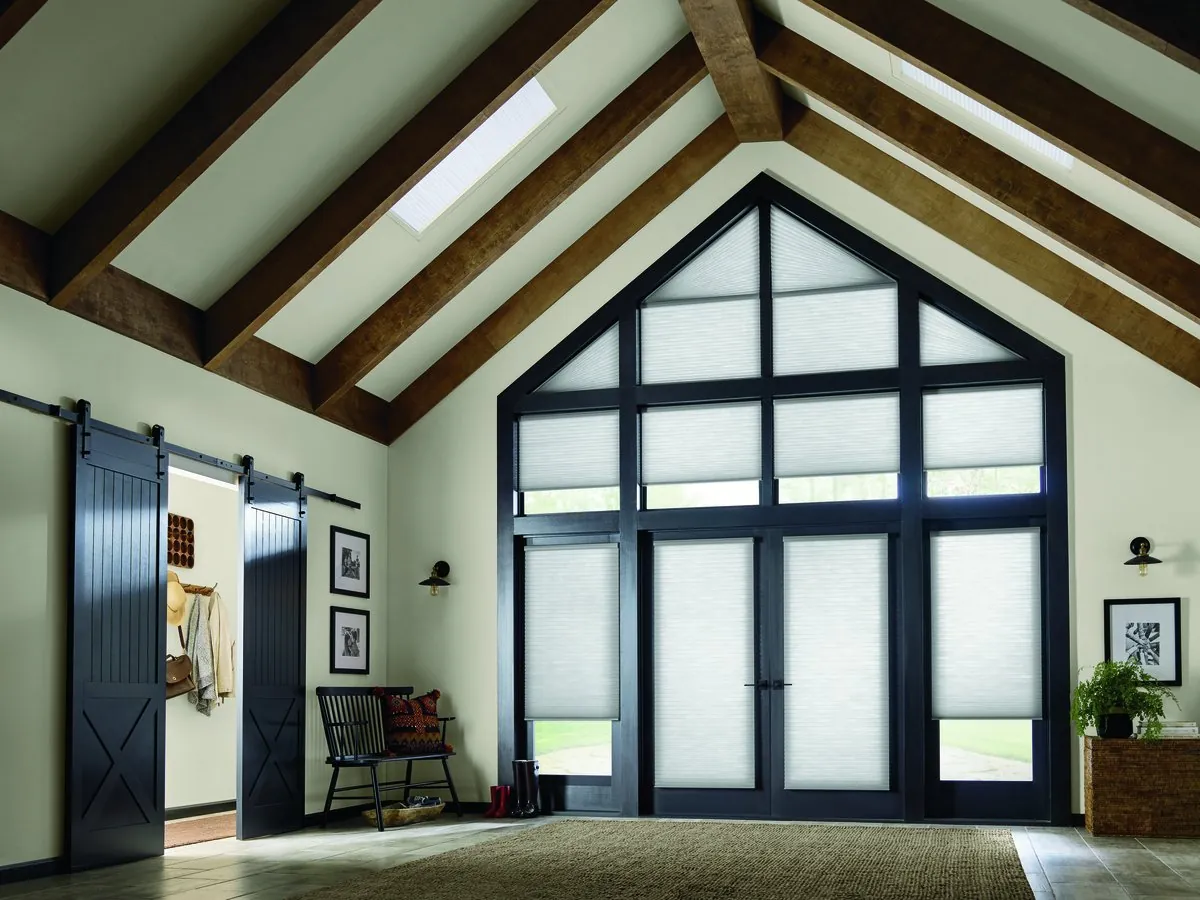
Duette for the captain’s house
The broadest honeycomb line, with the widest run of fabrics and the most lift systems. Its range suits a formal front room where the shade is on show from 6A.
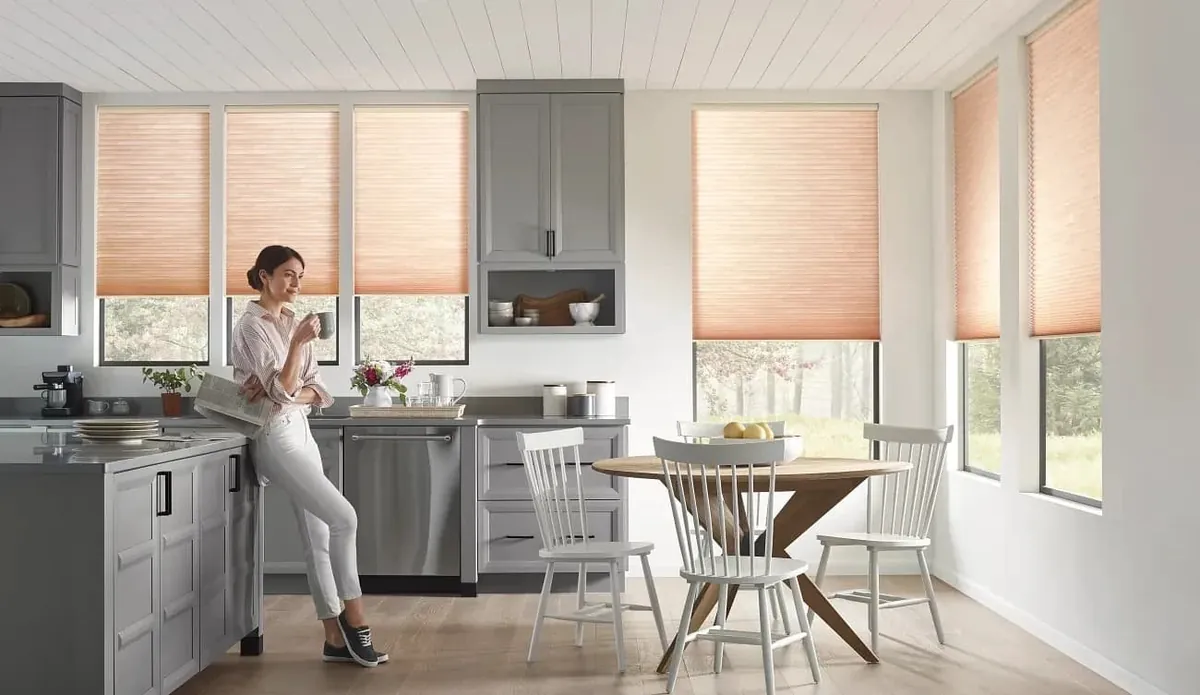
Applause for the cottage
Hunter Douglas’s second honeycomb line, with a palette of its own. A practical choice for a cottage kitchen, a condominium bedroom or a back room.
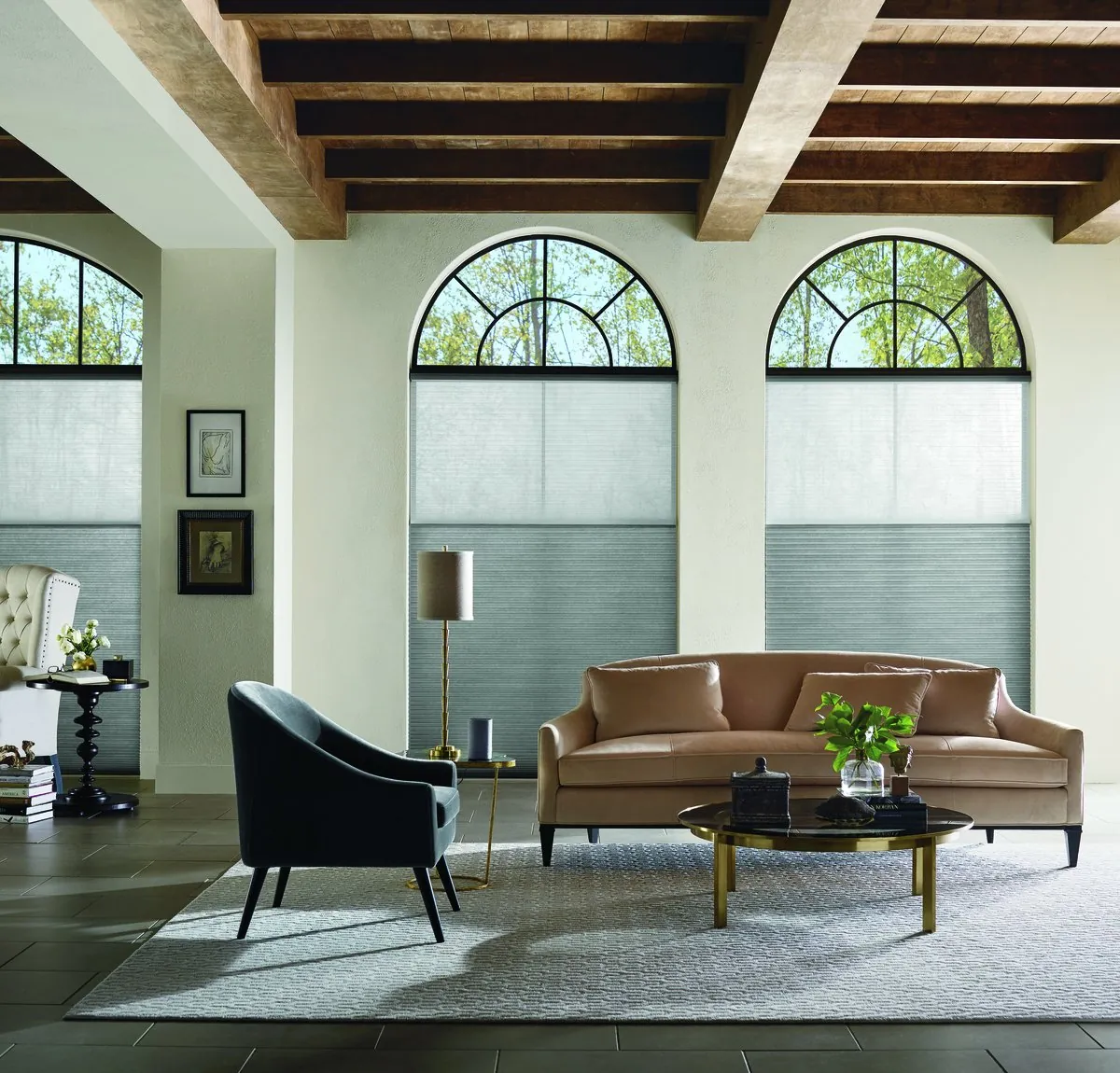
Top-down, bottom-up
Drop the shade from the top to bring in sky and keep the lower glass covered, so a Dennis Port window a few steps from the next cottage stays private.
Sliders onto the deck
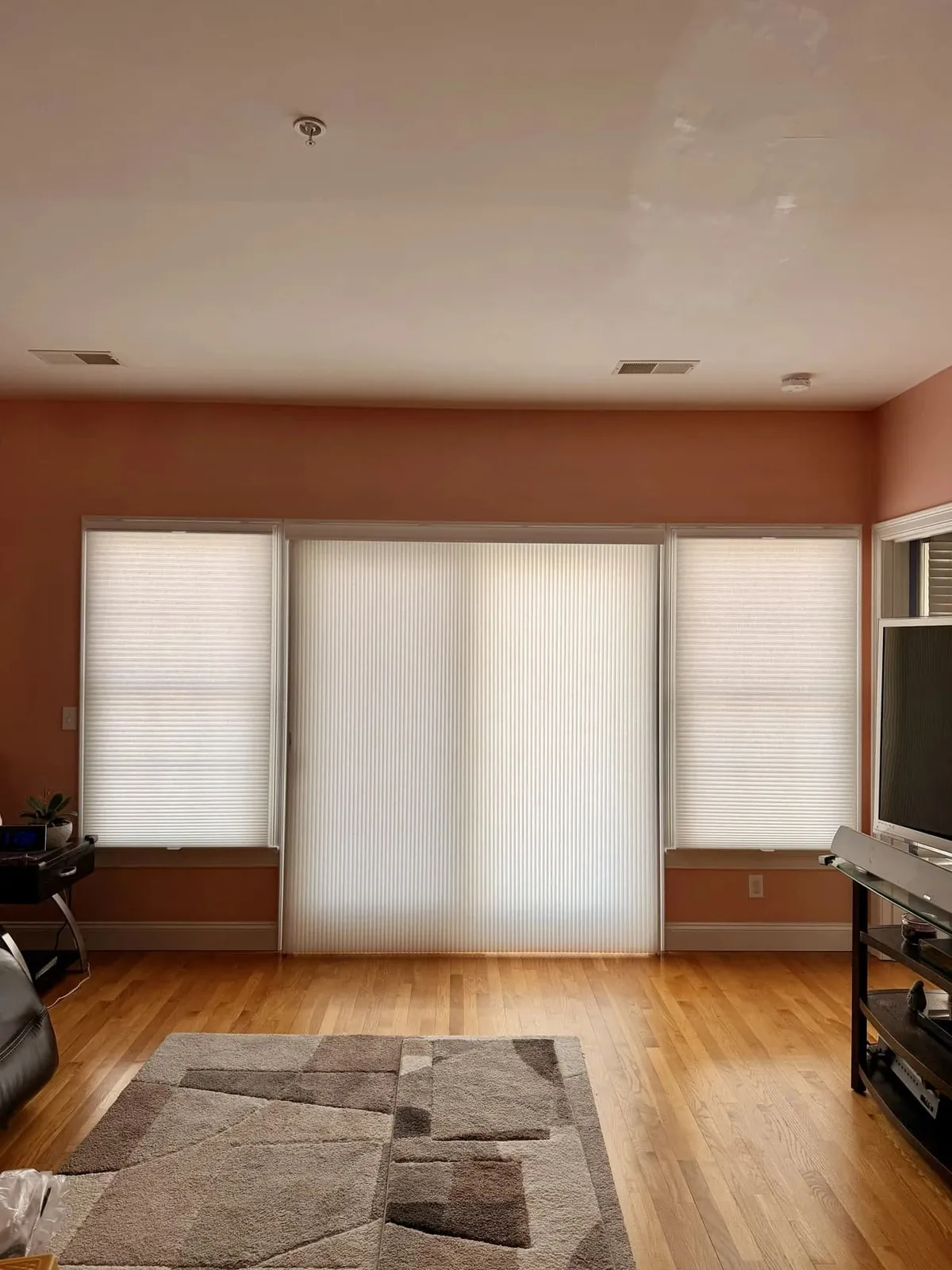
A vertical honeycomb shade crosses the door side to side and stacks out of the way, matching the windows beside it.

Light-filtering or room-darkening
A light-filtering fabric keeps a room bright and private; a room-darkening one holds a guest room dim on a summer morning. We bring both.
PowerView schedules
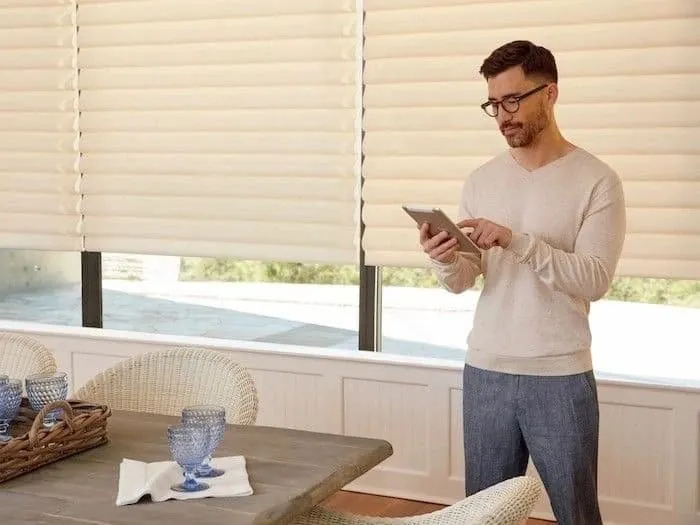
Motorized shades raise and lower on a timetable you set from the app, so a house that sits empty midweek is never left with its blinds wide open to the sun.
The captains’ houses on 6A
A sea captain’s house in Dennis Village is built to be seen from the road. The front is symmetrical, the windows line up floor to floor, and anything hung inside them shows from the street as plainly as the paint on the clapboards. That is the first thing we talk about in one of these houses: what the shade looks like from outside.
Honeycomb shades help here because they sit close to the glass and present a clean, even face. Raised, an inside-mounted shade tucks up into the head of the opening and almost disappears behind the top sash. Lowered, every window across the front reads the same, which suits a house whose whole design is about order and balance. We usually suggest one color facing the street for the whole front elevation, even if the rooms behind it want different fabrics.
Inside, these houses tend to have tall ceilings, deep window stools and original casings with layers of paint. The openings are rarely square after so long, and the old sash weights take up space in the frame. We check the depth at the top and the sides before we commit to an inside mount, and where it is too shallow we mount on the casing and say so plainly.
Why a cell holds the warmth of a tall front room
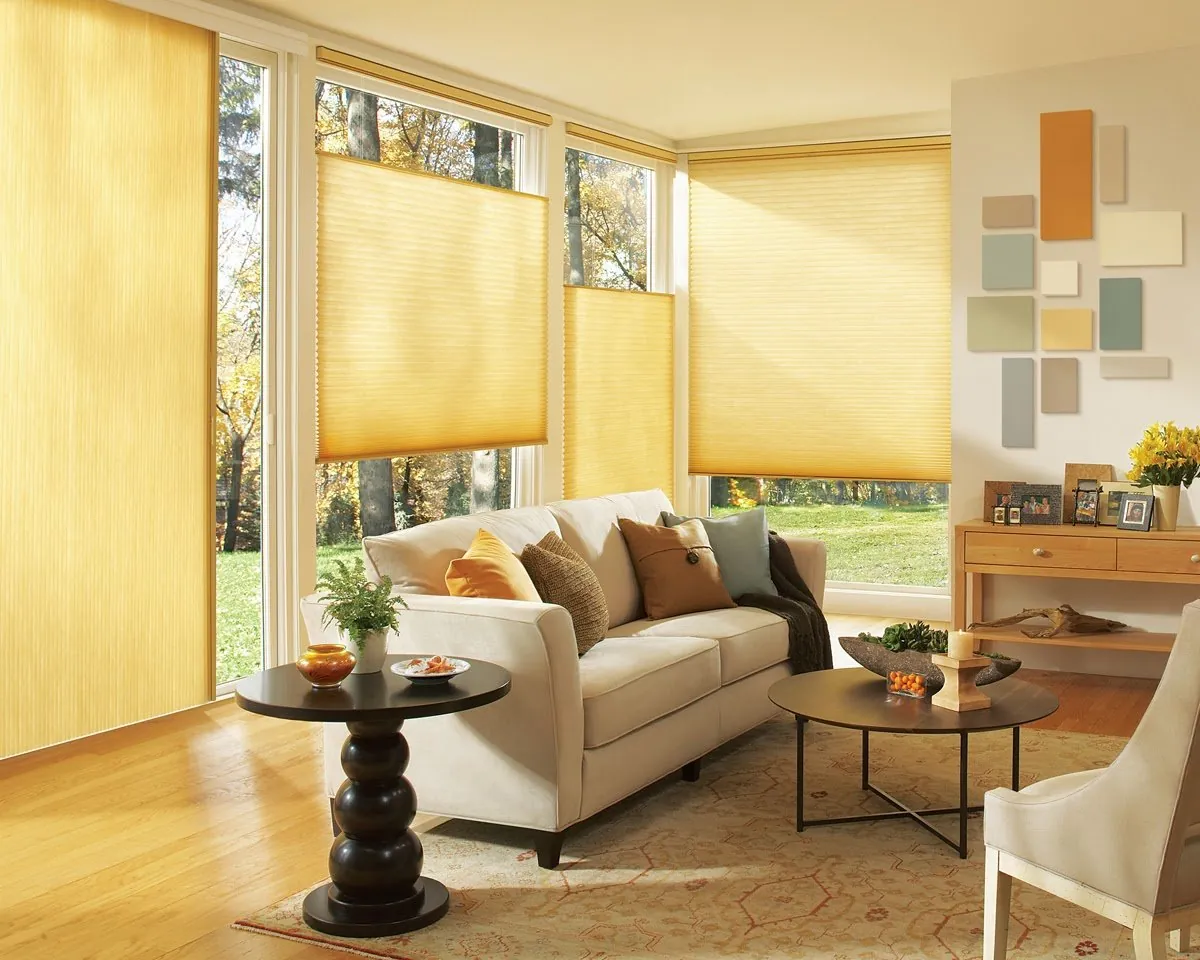
An old front parlor on 6A was designed around a fireplace, and the windows are where its warmth leaks away first. A honeycomb shade puts a layer of trapped air in that path. Each cell is a closed pocket running across the window, and because the air inside barely moves, it slows the cold coming off the glass and the heat drifting toward it.
You feel it as soon as you sit near the window on a January afternoon. Without a shade, a seat beside old glass feels cooler than the rest of the room. With one lowered, that chill fades. Double-cell fabrics stack two rows of pockets for a room that is especially cold, and we bring single and double side by side so you can compare the weight and the way each filters the light.
Our guide to cellular shades and winter heat goes further into how the cells work, and it is a useful read before a visit if the front rooms are the reason you are calling.
Dennis Port cottages and close-set neighbors
Head south toward the sound and the houses get closer together. A Dennis Port cottage may have a bedroom window that looks straight into the side of the next cottage a few steps away, and a kitchen that faces a shared drive. Here privacy matters as much as warmth.
A light-filtering honeycomb fabric is often the answer for these rooms. During the day it glows softly, so the room stays bright but nobody outside can see in. Add the top-down, bottom-up option and you can lower the top of the shade for sky and daylight while the part of the window at eye level stays covered.
Cottage windows also come in odd sizes. Additions put on over the years mean one wall may have a small original sash next to a larger modern window. Every honeycomb shade we order is made to the measurement of its own opening, so a tiny window and a wide one can still sit at the same height and match when they are raised together.
Bedrooms under the roof
Climb the stairs in either part of town and the windows change again. Many captains’ houses and cottages have bedrooms tucked under the roof, with dormer windows set deep into the slope and knee walls on either side. Those rooms run hot on a July afternoon and cold on a February night, because the roof above them takes the weather first.
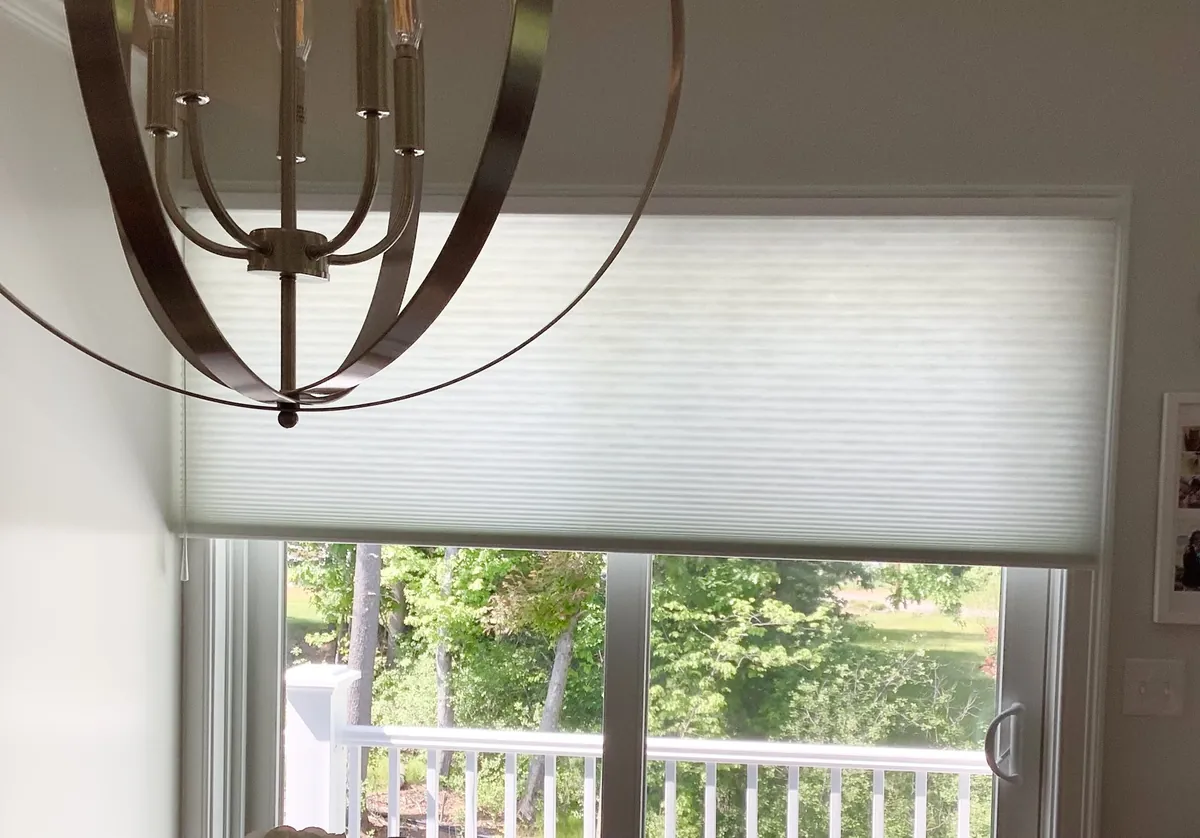
A dormer window is small, but it is usually set in a deep, boxed opening, which suits an inside-mounted honeycomb shade well. The shade sits within the dormer, leaves the trim clear and pulls down to cover the whole pane. A room-darkening fabric makes a guest room under the eaves far easier to sleep in when the sun is up early. On the gable ends, where a single window may sit high in the peak, a motorized shade saves climbing on a chair to reach it.
This is often where cellular shades in Dennis make the most noticeable difference, simply because the upstairs rooms have nothing else between them and the weather. We measure each dormer separately, since no two in an older house tend to be quite the same size.
Condominiums near the sound
Dennis Port’s condominium buildings bring their own considerations. Units often have a slider to a balcony or patio, a living room window on one wall only, and bedrooms that need darkness for guests who arrive for a week at a time. A vertical honeycomb shade handles the slider. Room-darkening fabric handles the bedrooms. A light-filtering fabric keeps the living room bright.
Some associations care about what shows from outside. If yours has a preference for the color facing out, check it before your consultation, and we will bring samples so you can see the street side as well as the room side before anything is ordered.
The bay side and the long low light
Rooms on the north side of town face the bay, and late in the day for much of the year the sun comes in low and long across the water. It reaches deep into a room, across the floor and onto the back wall, and it is the light that fades a sofa or a rug fastest.
A lowered honeycomb shade filters that light before it reaches anything you care about. Because the fabric spreads the light rather than blocking it outright, the room stays bright enough to enjoy the view at the edges. On a bay-facing window we often suggest a top-down, bottom-up shade so you can drop just the top section to catch the worst of the sun and still see the water below it.
The shade’s own fabric takes that sun every day, so color choice matters on these windows. Lighter, neutral fabrics hold their color better in hard, daily sun than deep shades, and we will point out which ones suit a bay window when you are choosing.
Opening and closing a seasonal house
A good share of Dennis houses sit empty for weeks or months at a time. That changes what a window covering is for. While you are away, the shades are the only thing standing between the sun and the furniture, and in winter they help an unheated room hold on to what warmth it has.
Here is how many seasonal owners set up their cellular shades in Dennis.
- Light-filtering fabric in the living spaces, so the house still feels bright when you arrive.
- Room-darkening fabric in the bedrooms, for guests and for long summer mornings.
- Top-down, bottom-up on any window that faces the bay or the street.
- PowerView motorization on the windows that take the strongest sun, set to lower during the hottest hours and raise again before evening.
- The rest left cordless, so closing up the house is a matter of walking round and pulling each shade down.
PowerView works from the app on your phone, so a schedule can run whether or not anyone is in the house, and you can change it from wherever you are. We plan how each motor is powered at the visit, window by window.
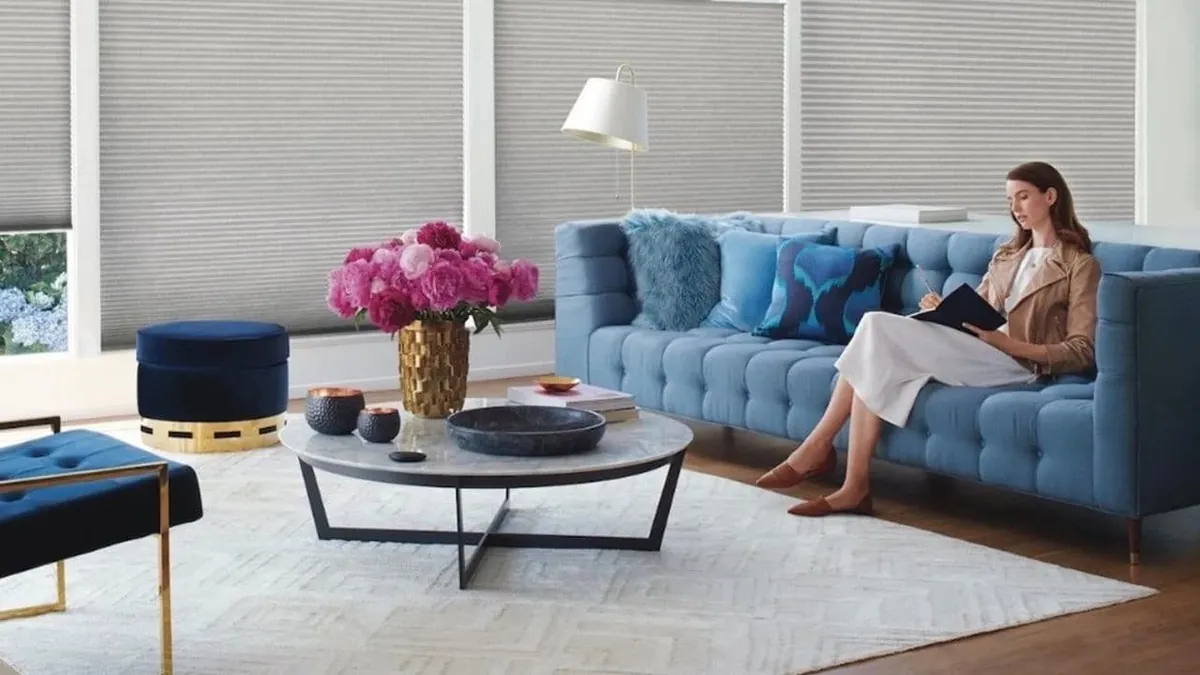
Choosing how each shade lifts
A captain’s house and a condominium rarely want the same lift on every window. The choices are simple once you see them at the window.
- Cordless. Push the bottom rail up or pull it down by hand. No cord at the side, which suits a cottage with children or pets.
- Top-down, bottom-up. Two rails, so the shade opens from either end.
- PowerView motorization. A remote, the app or a schedule does the lifting. Best on tall windows in a captain’s house and on any window that is hard to reach.
During the consultation we work through the house and suggest a lift for each window, based on how you use the room and how easy the window is to reach.
How we measure an old opening and a new one
Getting the size right is what makes a honeycomb shade look built in. On 6A that takes patience; in a newer condominium it is usually quicker, but we follow the same routine.
- We measure each opening’s width at the top, the middle and the bottom, and its height on both sides and the center.
- We check the depth where the headrail will sit and note any sash hardware, locks or cranks in the way.
- We confirm inside or outside mount for each window with you.
- We note which windows will be motorized and how each motor is powered.
- After the shades arrive, our certified Hunter Douglas installers mount them, level each headrail and show you how every lift works.
Duette or Applause for a Dennis house
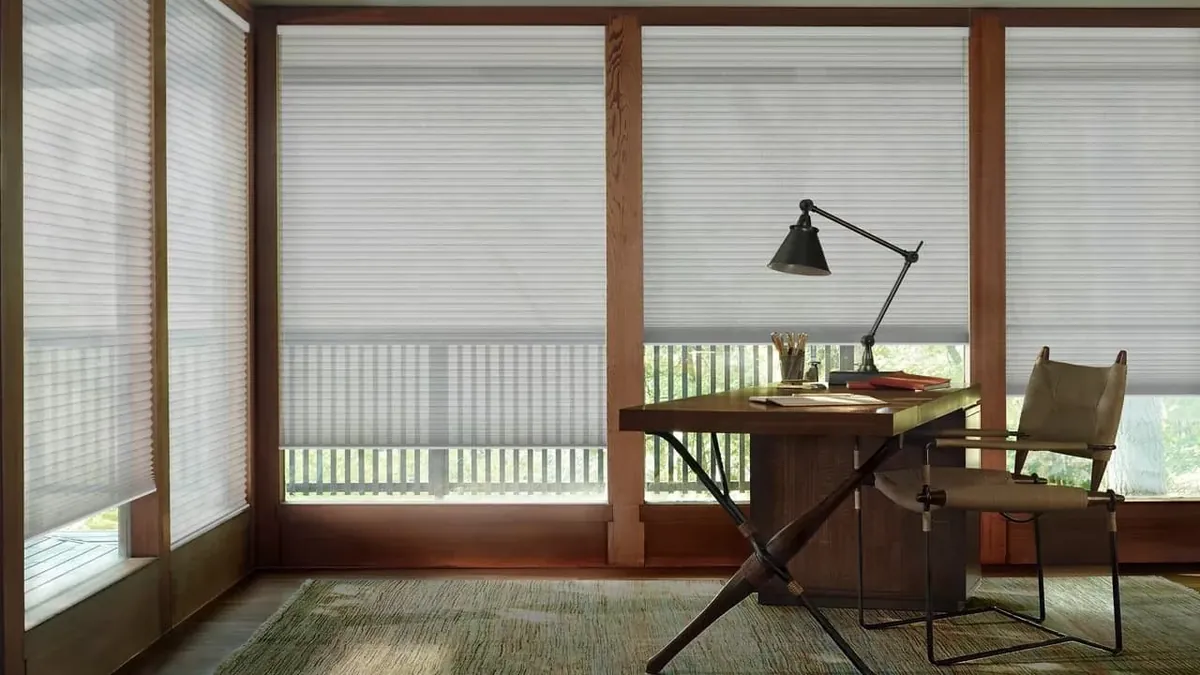
Both lines are true honeycomb shades, and both trap air in their cells the same way. Duette has the deeper range: more fabrics, more textures, special shapes and the vertical shade for sliders. Applause has its own selection and suits many standard openings well.
In practice, many orders for cellular shades in Dennis use both. A captain’s house might take Duette on the front rooms facing 6A and Applause in the kitchen and the back bedrooms. A Dennis Port cottage might be Applause throughout with one Duette vertical on the slider. Our pages on Duette and Applause describe each line, and the main cellular shades page shows the whole range.
Gallery dealer status, explained plainly
Hunter Douglas names dealers who meet its standards Gallery dealers, and Blinds & Designs is one. What that gives you is access to the whole honeycomb range from a single dealer, with the same people choosing the shades with you and putting them up.
Our installers hold Hunter Douglas certification, so each shade goes in the way the maker intends. If a shade needs attention later, we repair blinds and shades too.
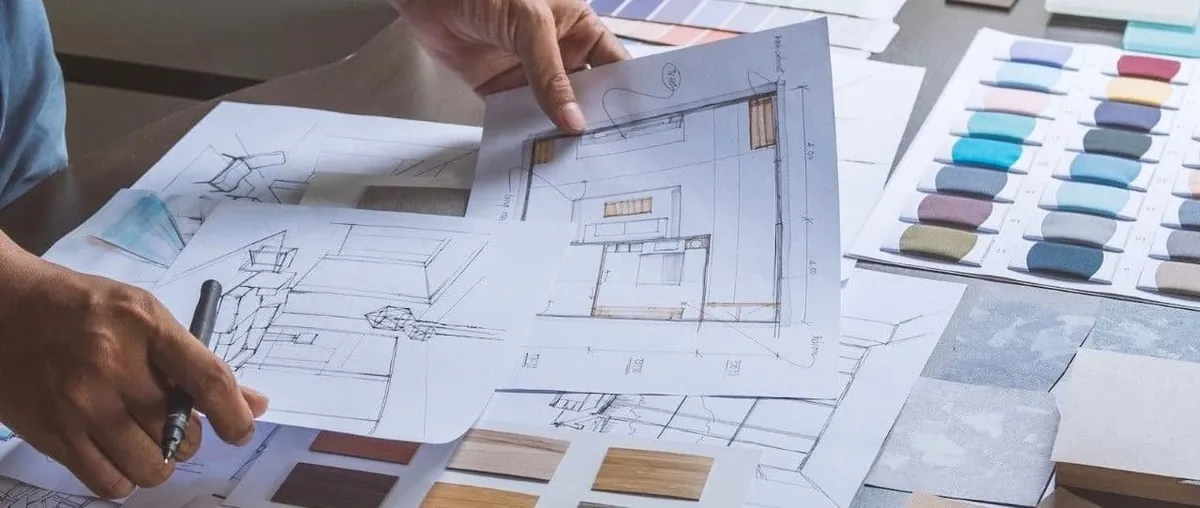
We also offer interior design consultations, which help when a captain’s house is being refurnished room by room. And because we carry Hunter Douglas blinds, shutters, roller and roman shades, you can look at more than one product at the same visit: see our plantation shutters in Dennis, our motorized blinds in Dennis, or everything on our Dennis page.
Sagamore is the nearest showroom
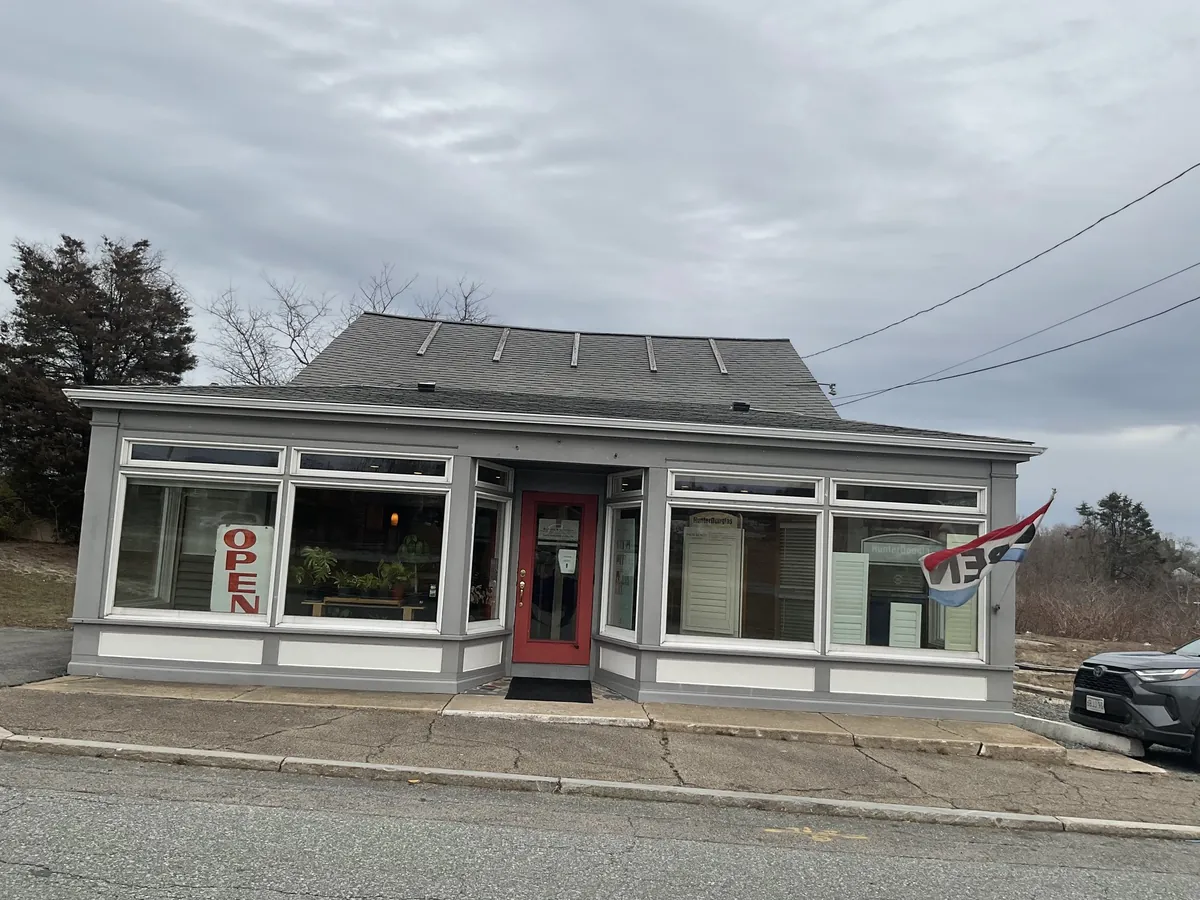
Most Dennis customers start at home, because a seasonal house is easiest to judge in its own light, and our vans carry the samples to you. If you would rather see the shades in person first, our Sagamore showroom is the closest to Dennis, by the canal at the start of the Cape.
Either way, the consultation ends the same: a measure of every window you are thinking about and a free estimate, with no pressure to decide that day.
Questions from Dennis
Will honeycomb shades suit the front windows of a captain’s house?
Yes. They sit close to the glass and give every window across the front an even look from the road. We check the depth of each old frame first, because original sash hardware sometimes leaves too little room for an inside mount. Where it does, we mount on the casing instead.
Can I keep my shades on a schedule while the house is empty?
With PowerView motorization, yes. You set the schedule in the app, and the shades lower and raise on their own whether or not anyone is home. You can change the timing from your phone.
How do I stop the bay-side sun fading my furniture?
Lower a light-filtering honeycomb shade during the strongest hours. It softens the light before it reaches the room. A top-down, bottom-up shade lets you cover just the top of the window and keep the view below.
Do you work with condominium units in Dennis Port?
We do. Sliders get a vertical honeycomb shade, bedrooms often take a room-darkening fabric, and we bring samples so you can check the color facing out against your association’s preference before you order.
Is there a charge for the estimate?
No. The estimate is free. We measure the windows you are considering and give you an estimate after the visit.
See the fabrics in a Dennis room
The quickest way to decide is to hold the samples up at your own windows, in a front room on 6A or a cottage bedroom near the sound. Request a consultation and we will bring the honeycomb range, measure each window and leave you with a free estimate. To talk first, use the call button, or visit us at the Sagamore showroom.