
Small sash, deep reveals and wooded lots
Drive the length of 6A through Brewster and the houses set the terms. Antique capes sit low under big roofs, and Federal houses rise two stories with a tidy row of windows across the front, most of them set well back from the road on deep, wooded lots. The sash in these houses is small and the walls are thick, so each window sits at the back of a deep reveal. That depth is good news when we fit cellular shades in Brewster, MA, because it gives a honeycomb shade a natural pocket to sit in.
Toward the bay flats the picture changes. Newer houses there were built for the view, with bigger panes, sliders and rooms that open toward the water and the tidal flats beyond.
Across both, a large share of houses are second homes, closed for months at a time. A shade in Brewster is often doing its work while nobody is there to see it: keeping the winter cold off the glass in an empty house and keeping summer sun off the floors.
Cellular shades in Brewster: what we bring to the house
Every option below travels in our vans as a sample, so you can try it in the window it is meant for. These are the honeycomb choices that suit Brewster’s mix of old and new.
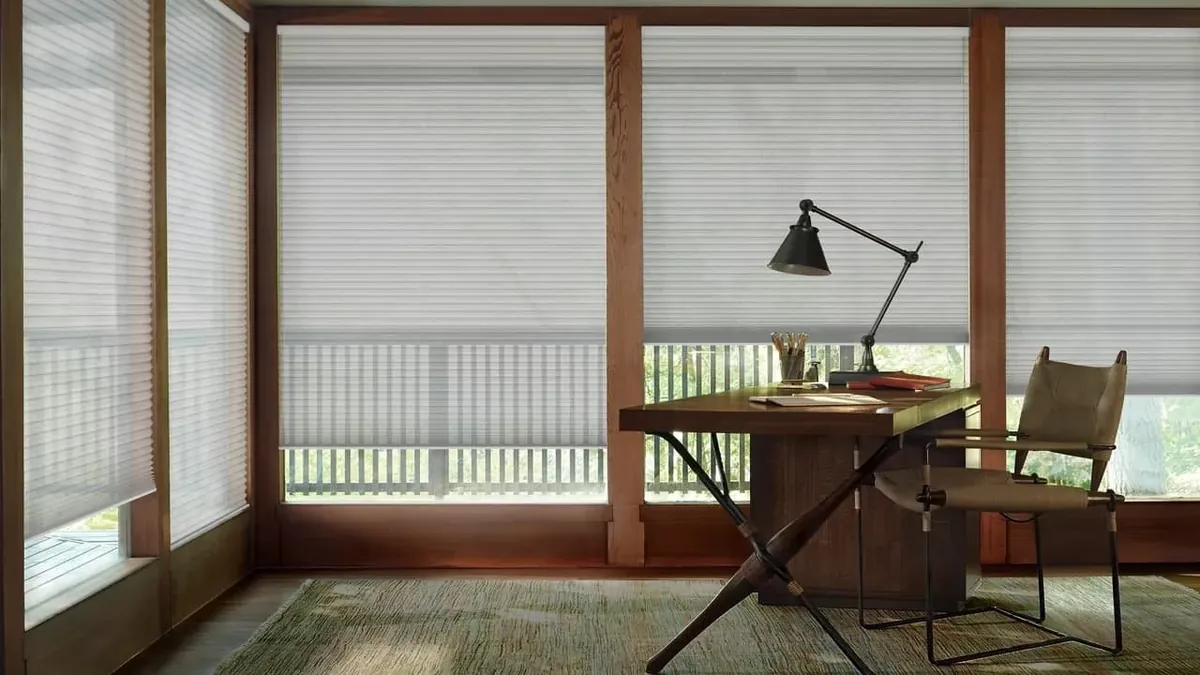
Inside-mount Duette
Duette’s wide range of fabrics and pleat sizes, made to sit inside a deep reveal so the old casing stays fully in view.
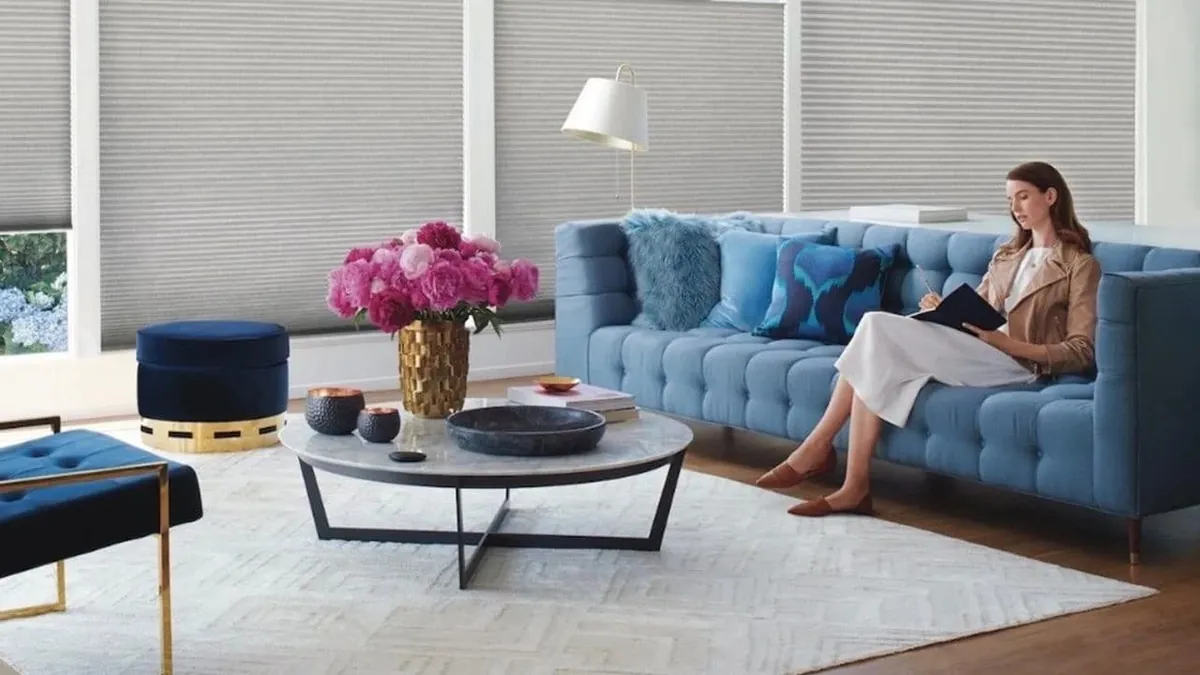
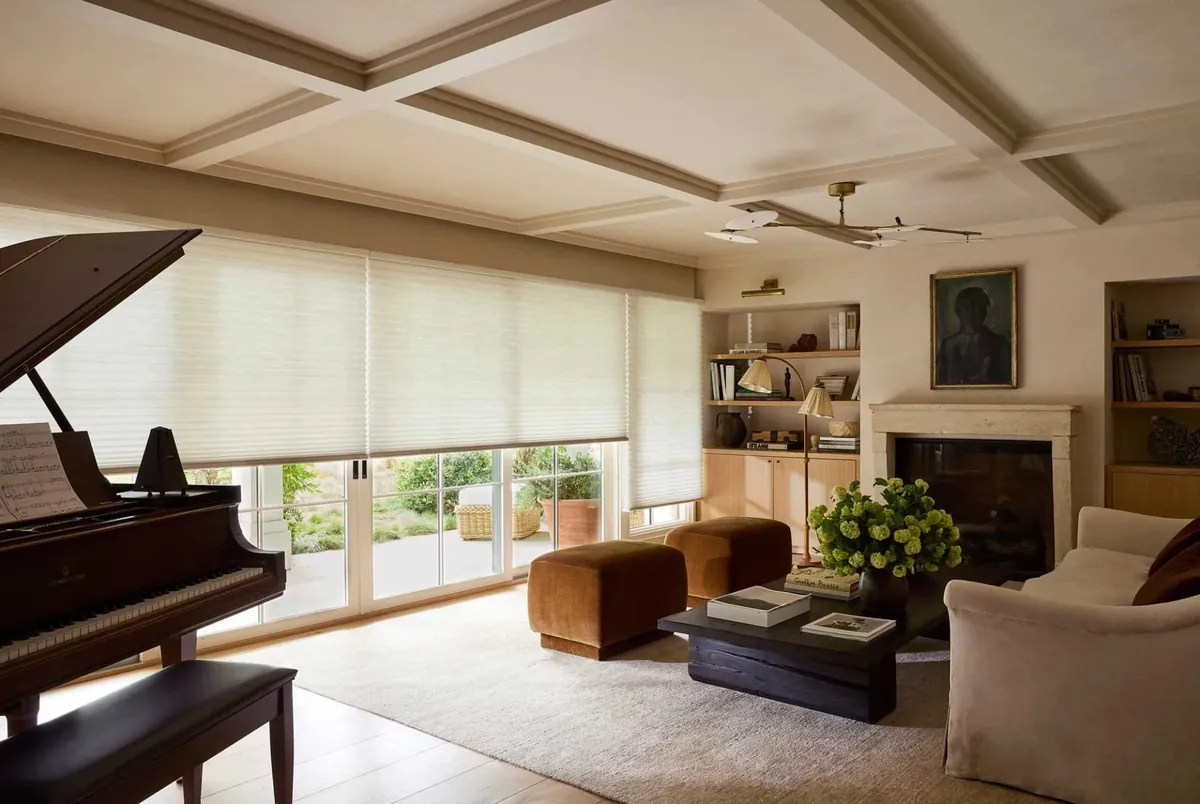
Applause through the house
Hunter Douglas’s other honeycomb line, often used in bedrooms and back rooms to finish a whole-house order.
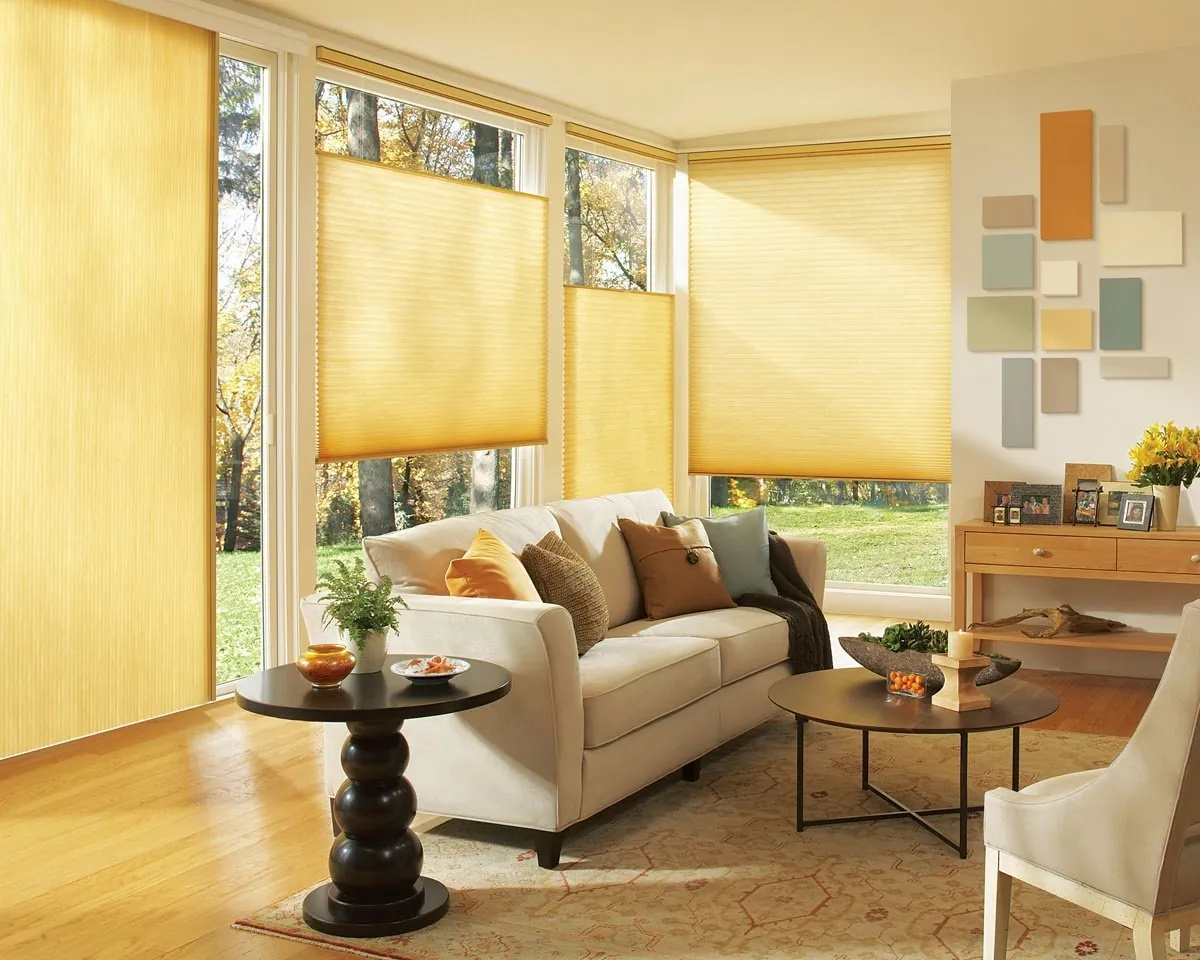
Shades for the newer glass
Corner windows, wide panes and sliders in the houses toward the flats, with a vertical honeycomb shade for the door.
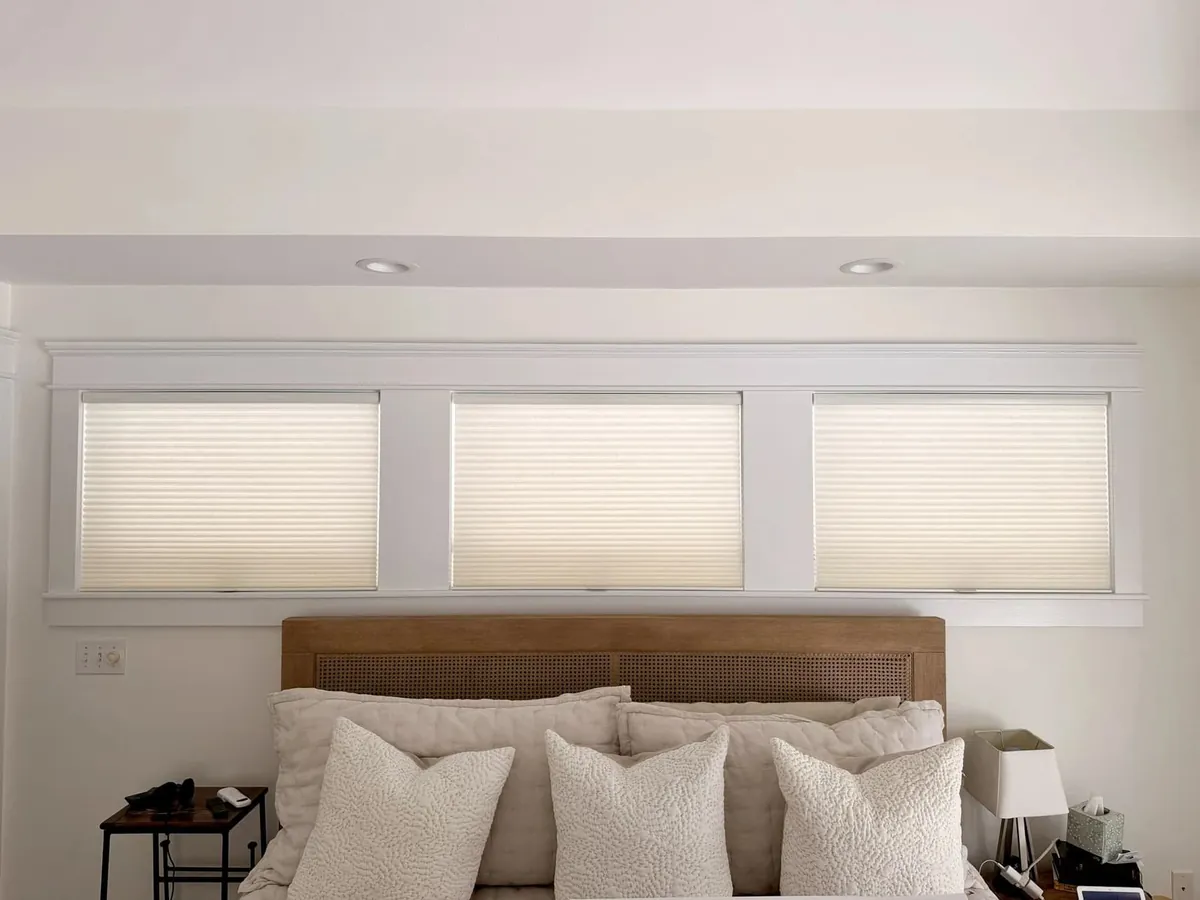
Darkening for upstairs rooms
Room-darkening honeycomb fabric for the bedrooms under a cape’s roof, where the early light comes straight in.
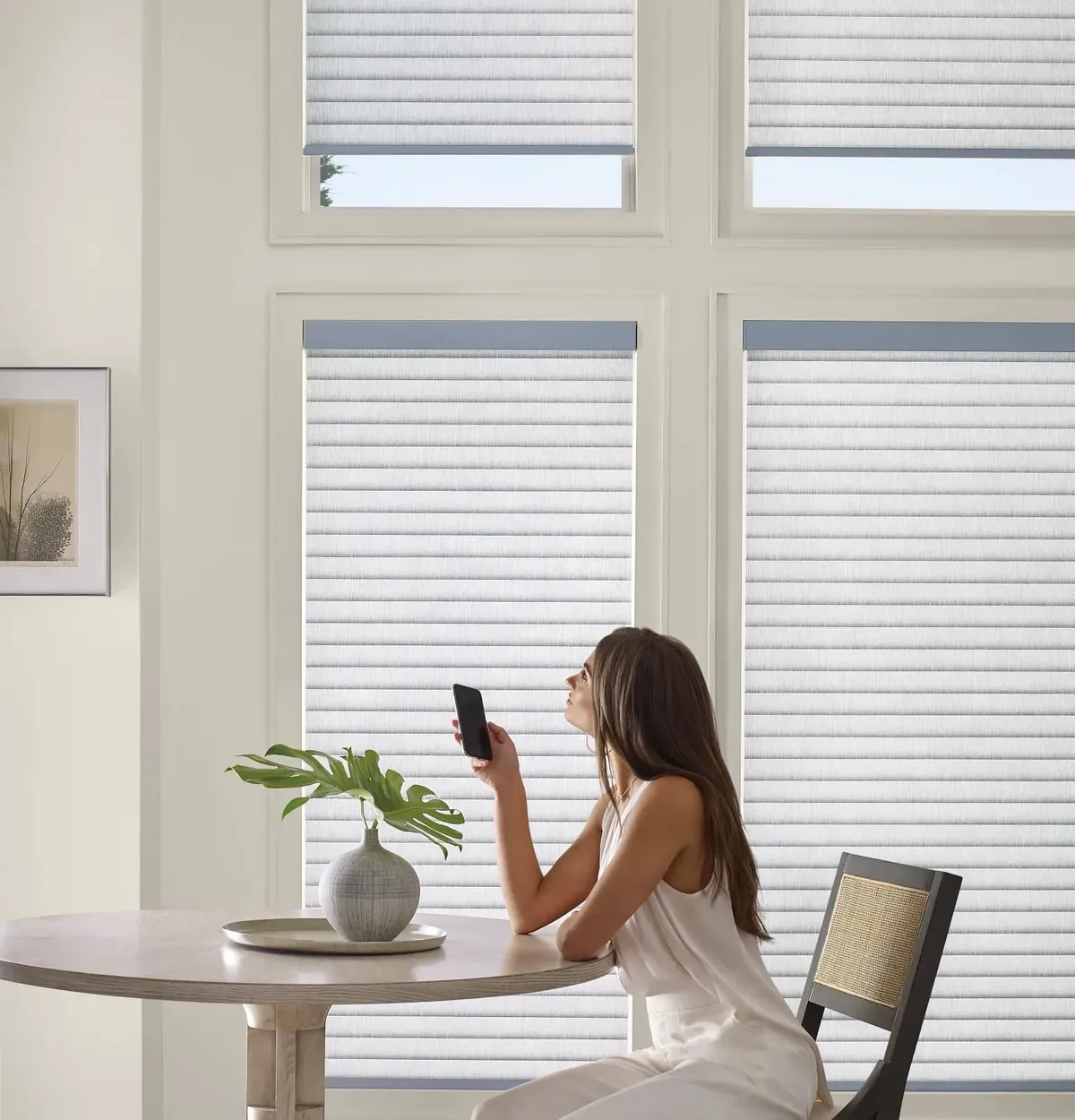
Motorized for a house you are away from
PowerView shades follow a schedule from the app, lowering in the strong sun and rising again, whether or not you are in town.

Help choosing
We bring the fabric books and lift options to your table, and we can offer an interior design consultation at the same visit.
What a deep reveal makes possible
In a lot of houses the depth of the window frame limits what you can hang inside it. Brewster’s older houses are often the opposite. Thick walls, plaster on lath and wide interior casings leave a generous recess between the face of the trim and the sash, and a honeycomb headrail fits neatly inside it.
An inside mount there has real advantages. Raised, the shade stacks up into the top of the opening and hides behind the head casing. Lowered, it fills the frame edge to edge with only a slim gap at the sides, which helps the cells do their job. The trim, which in many of these houses has been painted and repainted many times over, stays completely visible.
Old openings are rarely square, though. Settled frames and repaired sills mean the width at the top and the bottom can differ, and the reveal may be deeper on one side than the other. We take several measurements at each window before deciding on the mount, and if a frame is out of true enough to show a gap, we will tell you and suggest a mount on the casing instead.
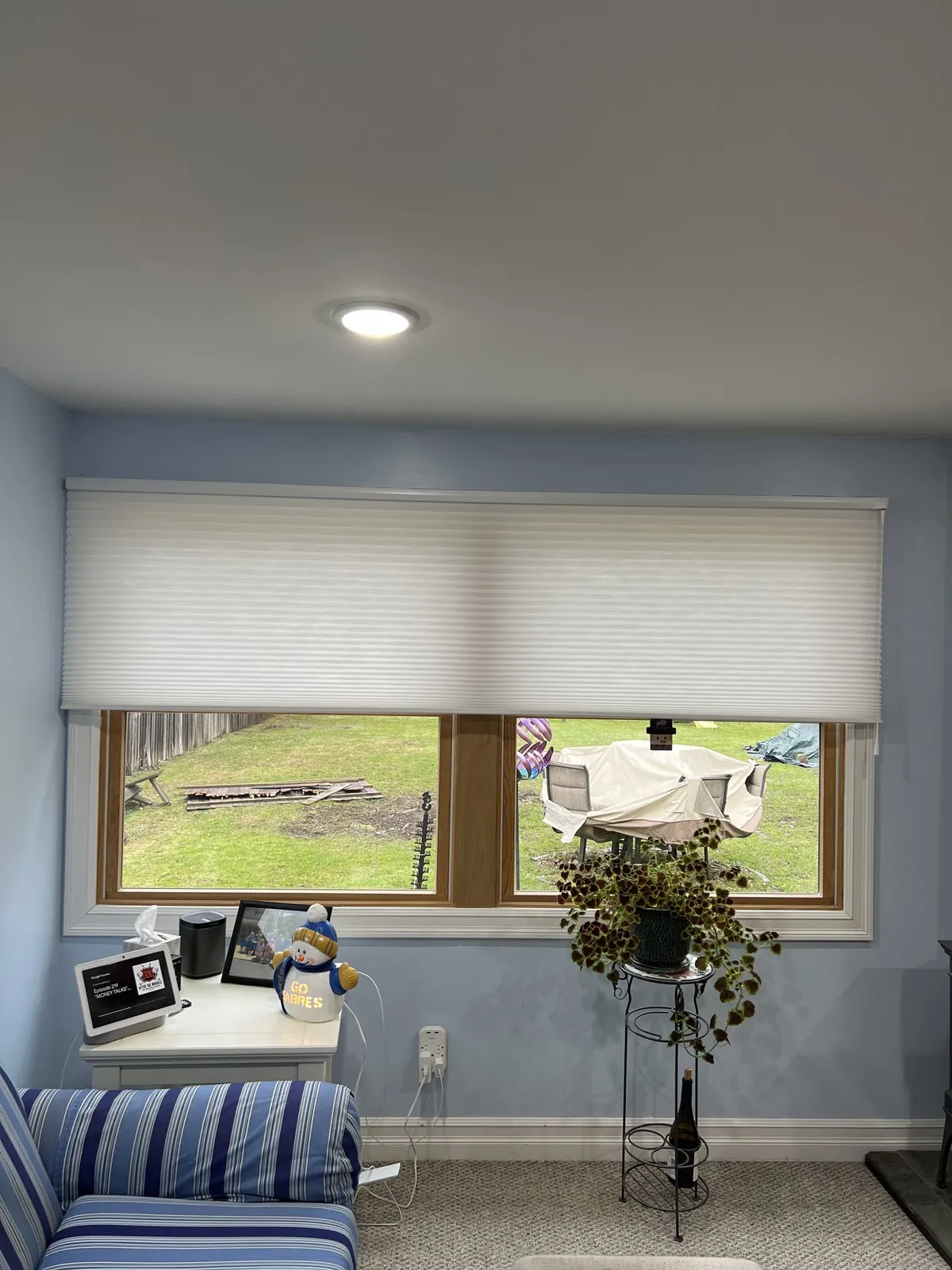
Antique capes along the old road
A Brewster cape usually has a center chimney, small rooms around it, and windows that are short and narrow by modern standards. The panes are small, the sash is often original or carefully restored, and the rooms upstairs sit under the slope of the roof with low knee walls.
Small windows suit a honeycomb shade better than most coverings. Because each shade is made to order, a narrow opening gets a narrow shade with the same proportions as the larger ones on the house. The fabric stacks very tightly when raised, so even on a short window you lose little of the glass.
Upstairs, the dormers and gable windows are where a cape loses heat in winter and gains it in summer. A honeycomb shade in a dormer reveal does more for those rooms than almost anything else you can add without touching the house itself.
Federal houses and their formal fronts
The Federal houses on 6A were built to look orderly from the road: evenly spaced windows, five across on the larger houses, with matching sash on both floors. Whatever goes in those windows shows from the street.
We usually suggest a single color across the front for these houses, so every window reads the same from outside, while the rooms behind can vary in opacity. A front parlor might take a light-filtering fabric and a bedroom above it a room-darkening fabric in the same color family, so the house still looks consistent from 6A.
The rooms in a Federal house are taller than in a cape, and the windows are taller with them. For the highest sash, PowerView motorization takes the reaching out of it, and for the rooms where you want light and privacy together, a top-down, bottom-up shade opens from the top.
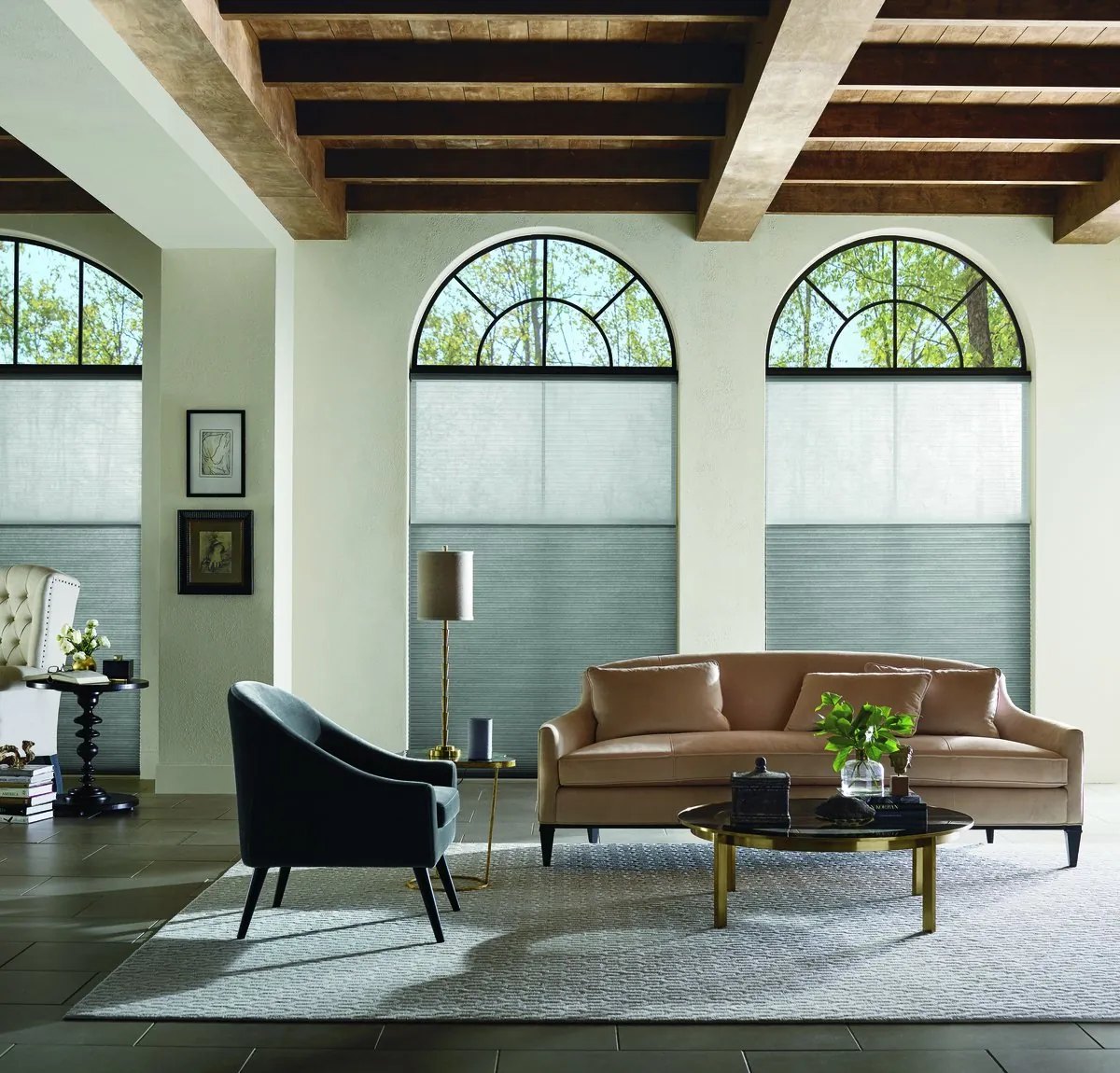
Light through the trees
Deep, wooded lots shape the light inside a Brewster house. Rooms behind the pines and oaks get dappled, shifting light for much of the day and can feel dim in winter even with the shades up. Here we steer toward fabrics that let as much light through as possible while still giving privacy, in lighter colors that glow rather than darken the room.
Where a room does catch direct sun, often a south-facing kitchen or a room that looks into a clearing, it tends to catch it all at once. A light-filtering shade softens that without making the room dark when the sun moves on.
Newer houses toward the flats
Closer to the bay, the newer houses take a different approach to windows. Living rooms open toward the water with wide panes, and sliders lead out to decks. The light here is bright and open, with the flats and the water reflecting it back toward the house.
These rooms need shades that work at a larger size: wide shades on a single headrail, split shades that move together on a long run of glass, and a vertical honeycomb shade on the slider that stacks to one side. A top-down, bottom-up shade lets you keep the lower part of the glass open for the view toward the flats while trimming the sun at the top.
Many orders for cellular shades in Brewster combine the two kinds of house in a single decision, because a family may have an antique cape near the road and want the same quality in an addition built at the back. Each window still gets its own size, so the old and the new can share a fabric and look like one house.
A house that sits empty for months
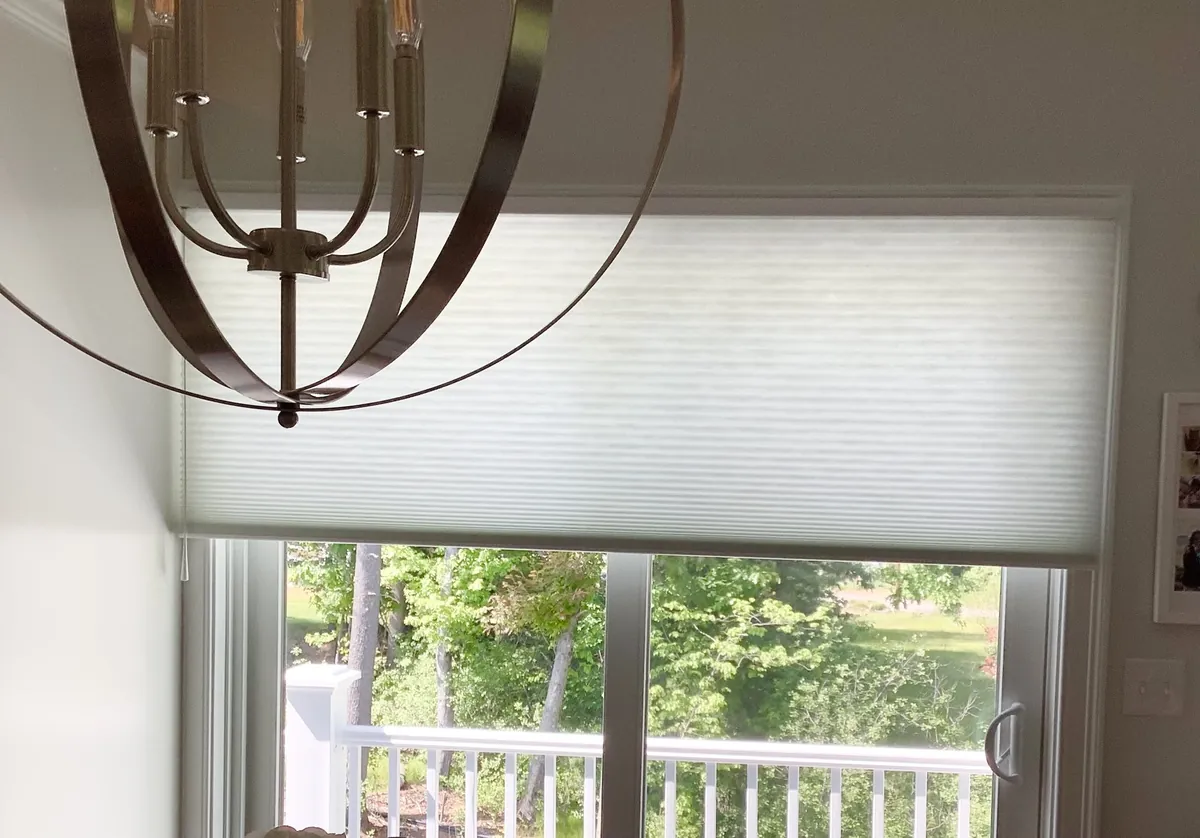
When a house closes at the end of the season, the shades become its main protection. In winter, a lowered honeycomb shade holds a layer of still air against the glass, which helps an unheated or barely heated room hold what warmth it has. In summer, while you are away, it keeps the sun off the floors and the furniture.
A few things make that easier.
- Cordless lifts, so closing up is quick: walk round and pull each shade down.
- PowerView schedules on the windows that take the most sun, so they lower in the middle of the day even when the house is empty.
- Lighter, neutral fabrics on the sunniest windows, because the shade’s own fabric takes the light every day.
With PowerView you set and change the schedule from your phone, wherever you are. We plan how each motor is powered at the visit.
The ell at the back of the house
Many of Brewster’s old houses grew backwards over time. A kitchen ell, a shed turned into a mudroom, a later bedroom wing: each was added when it was needed, with whatever windows were on hand. Walk from the front parlor to the back door and you can pass three or four different window sizes and styles, some original, some replacements, some casements in a newer addition.
That variety is easy to handle when every shade is made to measure. We size each window on its own, then set the shades so they line up where they can be seen together. In a kitchen ell, a light-filtering fabric keeps the room bright for cooking, and a cordless lift keeps cords away from the counter and the sink. In a mudroom or back hall, where the window is mostly about privacy from the drive, a top-down, bottom-up shade lets in light over the top while the lower glass stays covered.
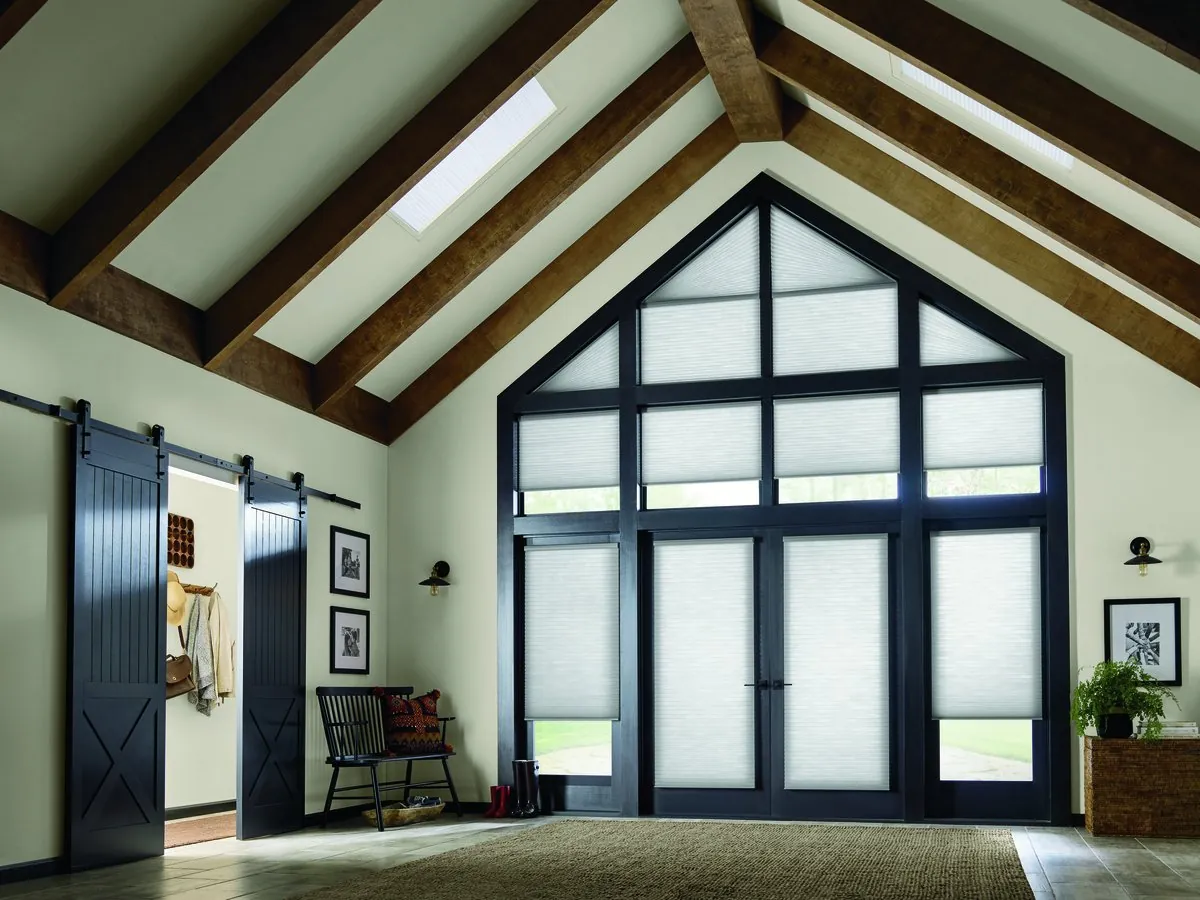
Replacement windows in these additions often have tilt latches or cranks on the frame. We note each one when we measure, so the headrail clears the hardware and the window still opens and closes as it should. Where an addition has a vaulted ceiling or a high gable window, we look at motorization for that opening too, since it is often the hardest one in the house to reach.
Lifts that suit a small window
On a short, narrow sash, the way a shade lifts matters more than you might expect. A long cord hanging beside a small window looks out of place, and a heavy stack at the top would hide a good part of the glass.
- Cordless is the usual choice for a cape. You raise and lower the bottom rail by hand, and nothing hangs at the side.
- Top-down, bottom-up works well on the front windows facing 6A, where you want daylight without the room on show.
- PowerView makes sense on the tallest Federal sash and on dormers you cannot reach without a step stool.
Because a honeycomb fabric folds so tightly, the stack on a small window stays slim, and most of the pane is clear when the shade is up. This is one of the main reasons we recommend cellular shades in Brewster capes, where every bit of glass counts in a small room.
How the cells keep a cold room warm
A honeycomb shade looks like a soft pleated shade until you see it from the side, where the cells show as rows of hollow pockets. When the shade is lowered, the air in each pocket stays nearly still. That still air sits between the cold glass and the room, so less of the cold gets in and less of the heat gets out.
In a cape with small original sash, the effect is easy to feel. The seat by the window stops feeling like the coldest place in the room. In a newer house with large panes, it helps with the summer side too, slowing the heat that comes through the glass on a bright afternoon. Double-cell fabrics add a second row of pockets, and our guide on cellular shades and winter heat explains the difference in more detail.
The consultation, room by room
Most Brewster customers start with an in-home consultation, because the light under the trees and the depth of each old window are easiest to judge in person. Here is the usual order of things.
- You request a consultation and we agree a time, including around the weeks you are in town.
- We arrive with the honeycomb samples, fabric books and lift options in the van.
- We start with the rooms that matter most to you, often the front rooms on 6A or the main living space toward the bay.
- You hold the fabrics up to your own windows and see how each one treats the light in that room.
- We measure every window, checking each reveal for an inside mount.
- You receive a free estimate for the shades you are considering.
You can read more about what happens at an in-home consultation before we arrive.

Duette, Applause, or some of each
Duette and Applause are both true honeycomb shades from Hunter Douglas. They hold air the same way; they differ in their fabric ranges, textures and some of the lift and size options. Duette has the broader range, including the vertical shade for sliders and the larger sizes the newer houses sometimes need. Applause has its own palette and fits many standard windows well.
In an antique cape, Duette often goes in the front rooms where the fabric is most on show, with Applause in the bedrooms. In a newer house toward the flats, Duette may handle the big glass and the slider. When you are choosing cellular shades in Brewster, we lay samples of both side by side so the decision is made at the window, not from a brochure. Our Duette and Applause pages say more about each, and the cellular shades page covers the full range.
Hunter Douglas Gallery dealer and certified installers
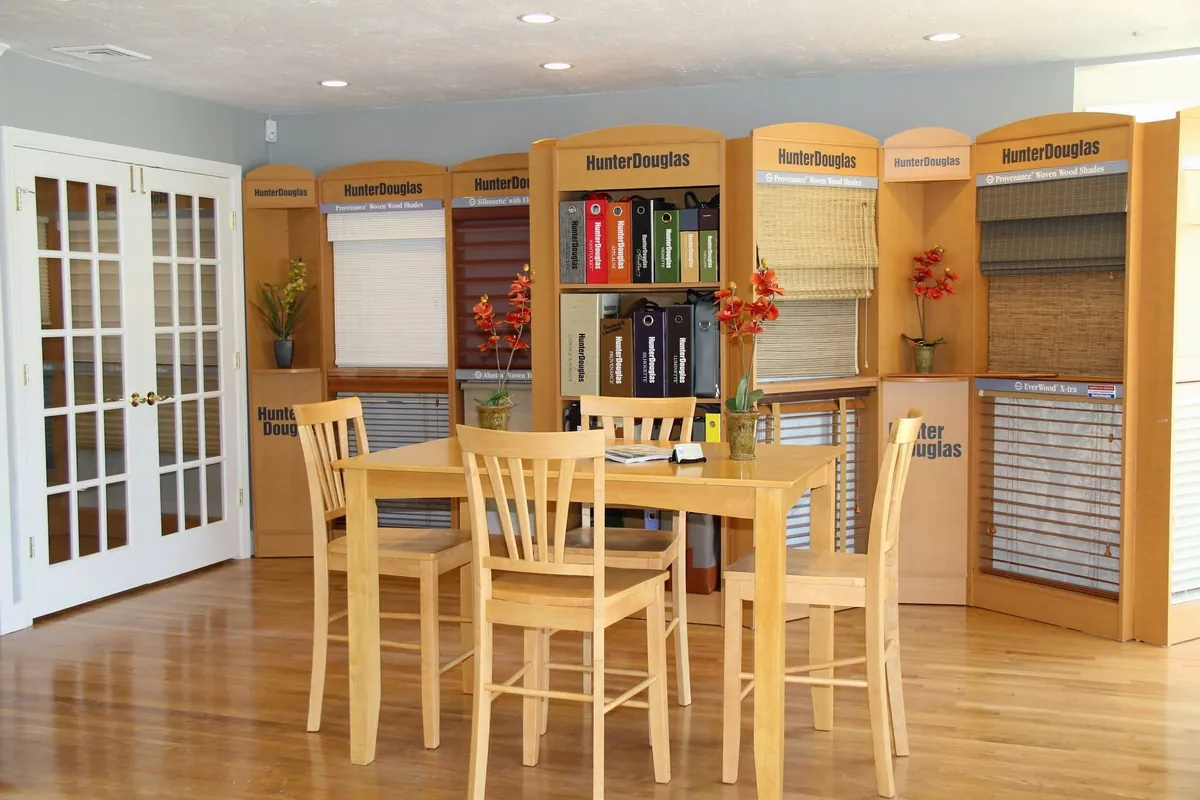
As a Hunter Douglas Gallery dealer, Blinds & Designs carries the complete honeycomb range, so one consultation covers every fabric, cell option and lift system for your house.
Our installers are certified by Hunter Douglas. They fit each shade level in its opening, check every lift and show you how it all works before they leave. We also repair blinds and shades, which matters in a house where coverings may stay in place for many seasons.
If other rooms call for something different, we carry Hunter Douglas shutters, blinds, roller and roman shades as well. See our roman shades in Brewster, custom blinds in Brewster, or everything we do on our Brewster page. If you would like to see shades before the visit, our Sagamore showroom is the nearest to Brewster.
Questions from Brewster
Will honeycomb shades fit the small windows in my antique cape?
Yes. Each shade is made to its opening, so even a narrow, short sash gets a shade in proportion. The deep reveals in many older Brewster houses usually leave room for an inside mount, which keeps the trim in view.
What should I choose for a room under the trees that already feels dim?
A light-filtering fabric in a light color. It gives privacy while letting the most daylight through, and it glows softly instead of darkening the room further.
Can the shades protect the house while it is closed for the season?
Lowered honeycomb shades keep the sun off floors and furniture and help a cold room hold its warmth. With PowerView, the shades can follow a schedule you set from your phone while you are away.
Do you handle the big windows and sliders in the newer houses near the flats?
We do. Wide panes can take a single wide shade or several that move together, and sliders take a vertical honeycomb shade that stacks to one side.
Is the estimate really free?
Yes. After we measure, you get a free estimate for the shades you are considering, with no obligation.
Start with the coldest room
If one room in your Brewster house is always colder than the rest, that is a good place to begin. Request a consultation and we will bring the honeycomb range to your door, measure each window and leave you with a free estimate. To talk it over first, use the call button, or stop by our Sagamore showroom.