
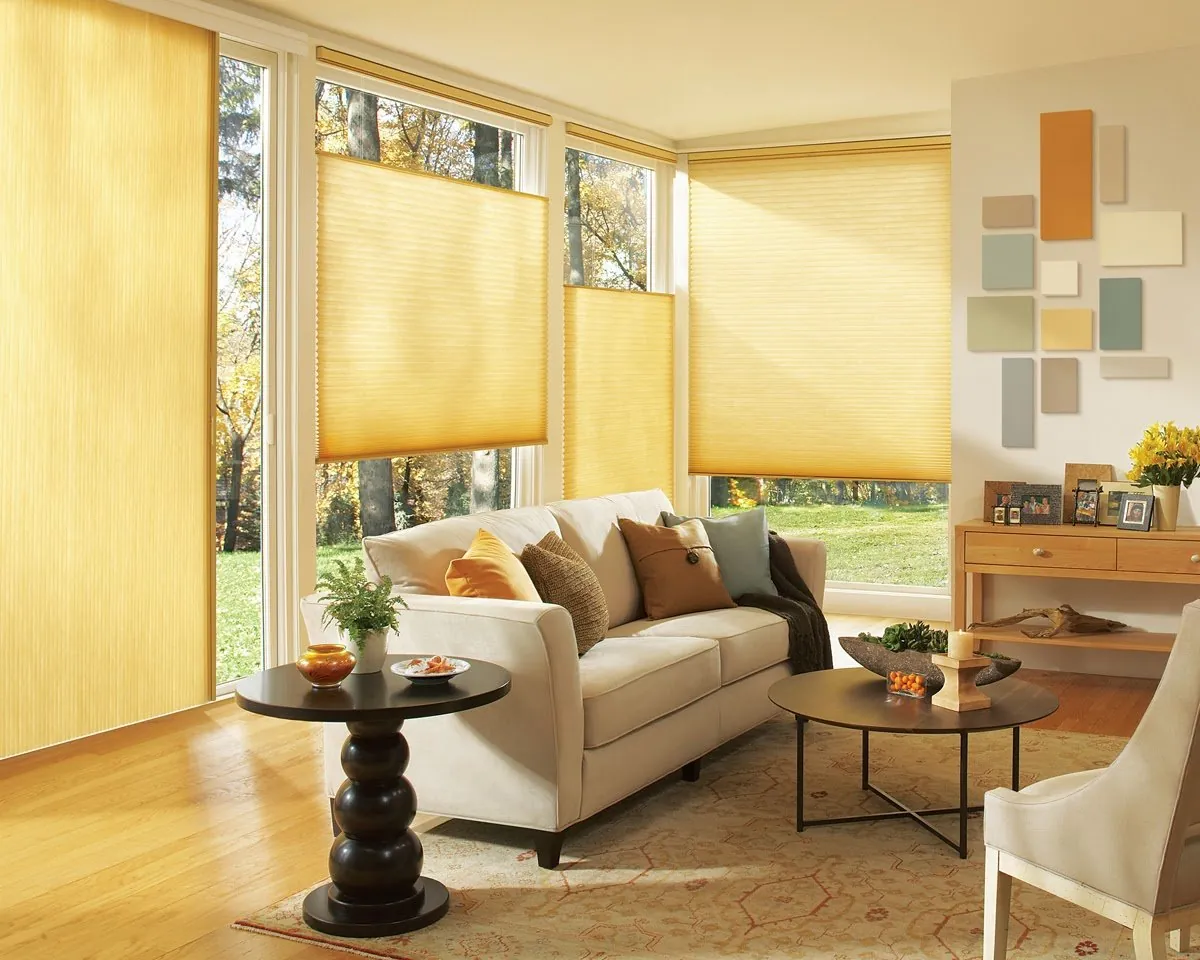
Glass walls by the water, steady windows inland
Harwich Port and the inland villages ask for two different kinds of shade. Near the harbor, the shingled houses face the sound with rooms that are almost all glass: wide picture windows, sliders, French doors and corner windows that meet with barely a post between them. Those rooms sit out in the open, catching the full force of the sun and the weather off the water. Inland, toward Harwich Center and East Harwich, the houses are post-war ranches and newer colonials with windows of ordinary, predictable sizes. Fitting cellular shades in Harwich usually means handling both, sometimes for the same family.
On the water side, the job is controlling a great deal of glass without losing the view the house was built for. On the inland side, it is keeping a whole house warm and consistent, room by room, with windows that are straightforward to measure and fit.
In both, a honeycomb shade does the same basic thing. It holds a layer of still air against the glass, and that air keeps a cold room warmer in winter and slows the heat coming through in summer.
Cellular shades in Harwich, from harbor rooms to inland bedrooms
We bring the whole Hunter Douglas honeycomb range to you as samples. These are the choices that come up most in Harwich houses.
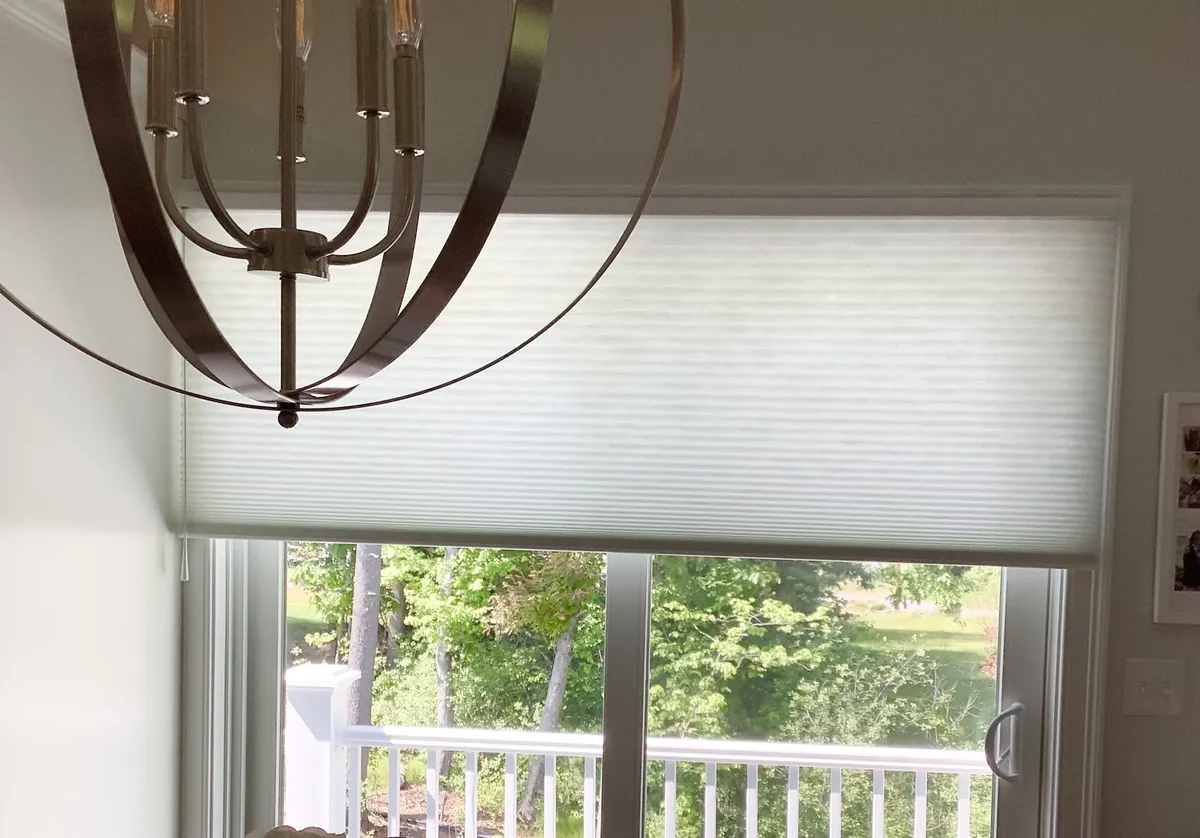
Vertical shades for sliders
The water-facing rooms in Harwich Port often lead out through sliders. A vertical honeycomb shade crosses the door and stacks neatly to one side.
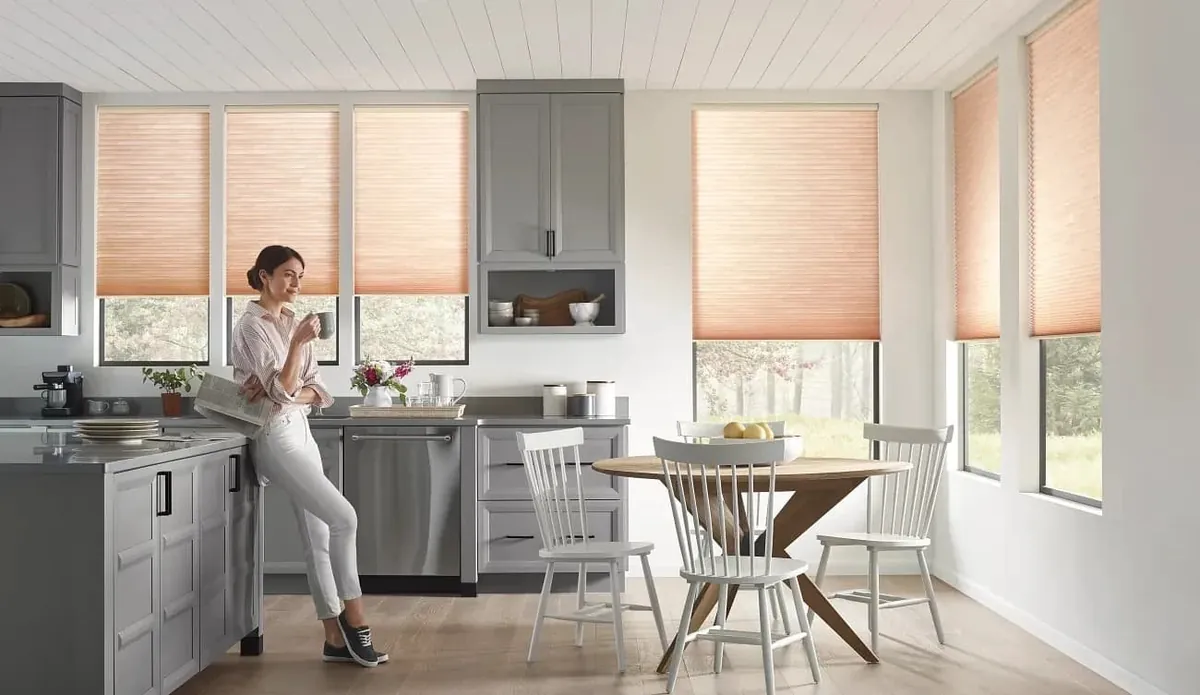
Applause in the kitchen
A light-filtering Applause fabric keeps a ranch or colonial kitchen bright, with a cordless lift away from the sink.
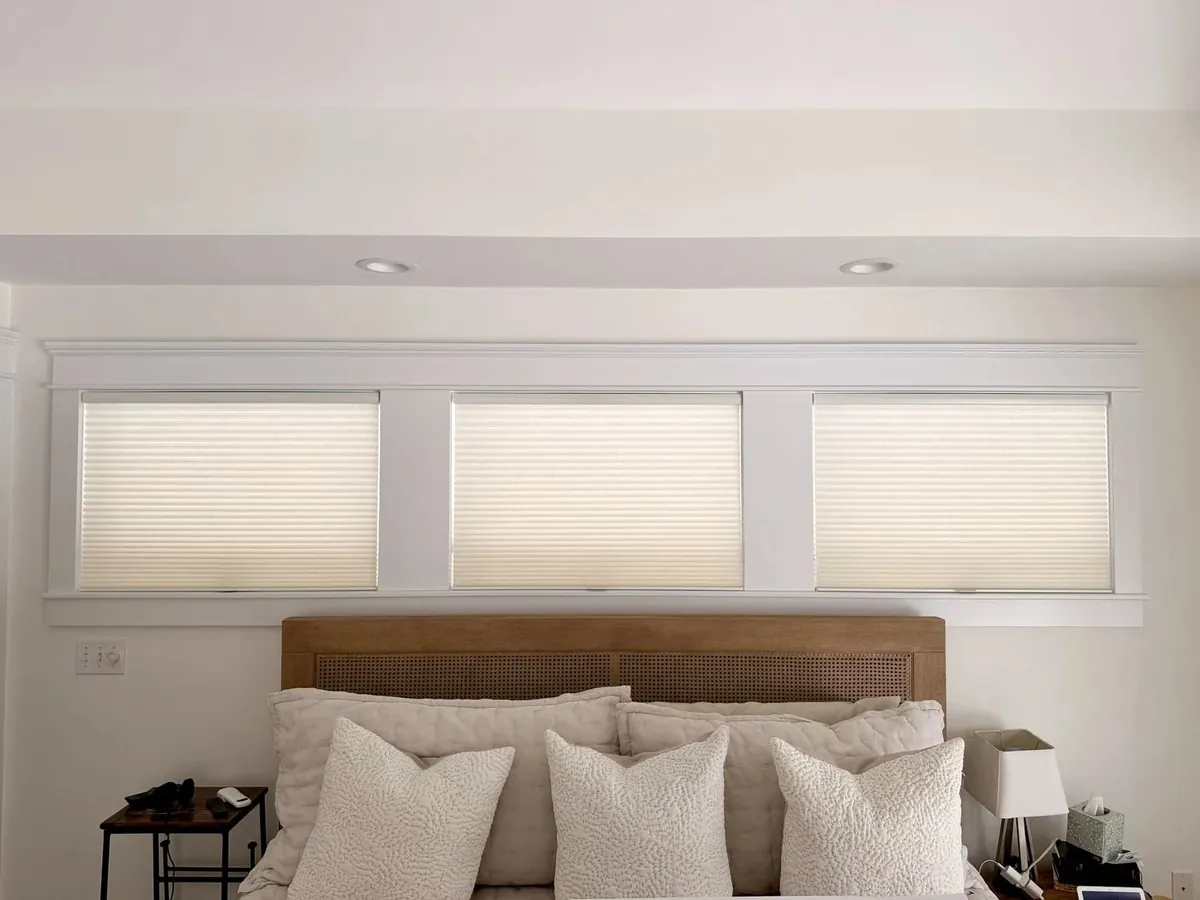
Room-darkening for bedrooms
For the bedrooms in a newer colonial or a cottage bedroom that takes the morning sun off the sound.
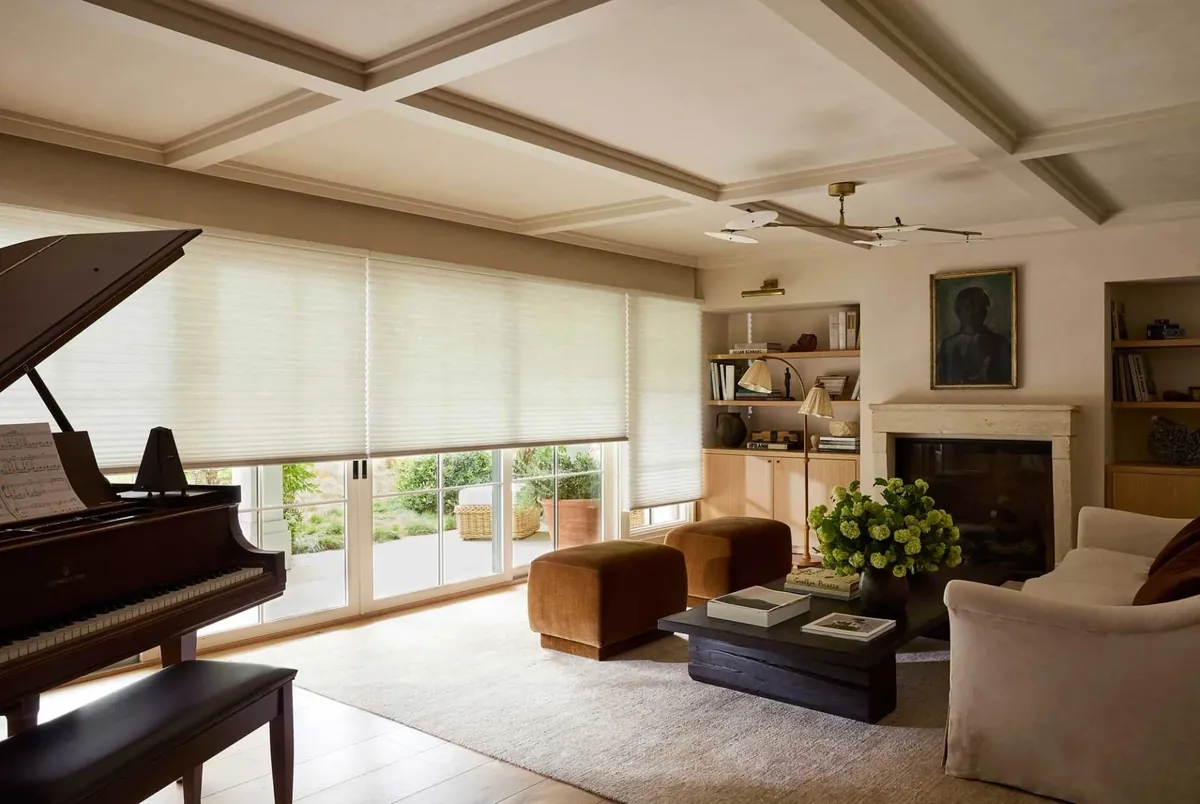
Duette on wide glass
Duette offers the larger sizes and the widest fabric range, which suits the big panes and French doors in a harbor-side living room.
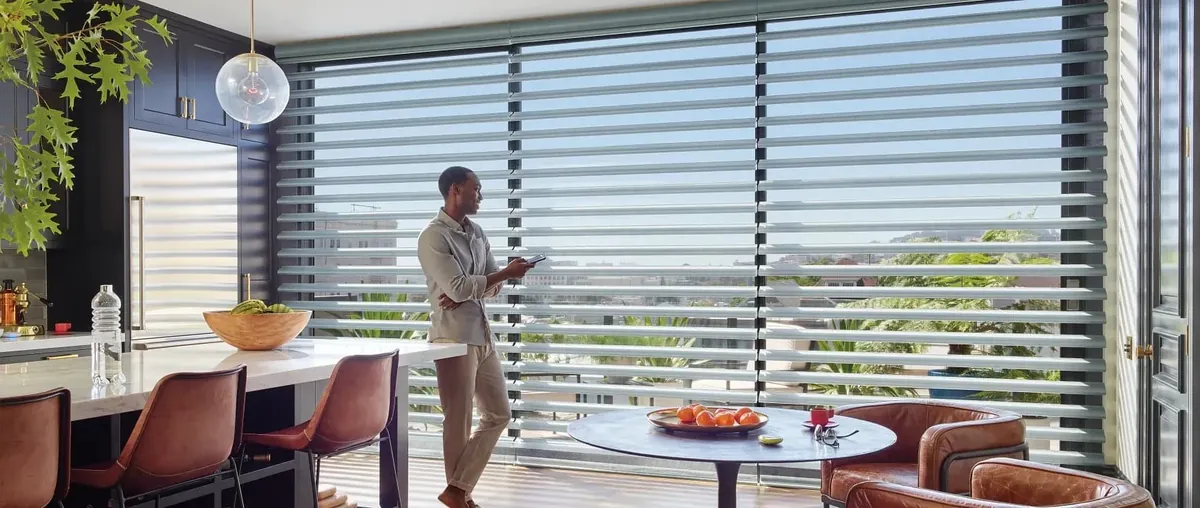
PowerView control
Move a long run of shades together from the app, or set them to lower when the sun swings round to the water side.
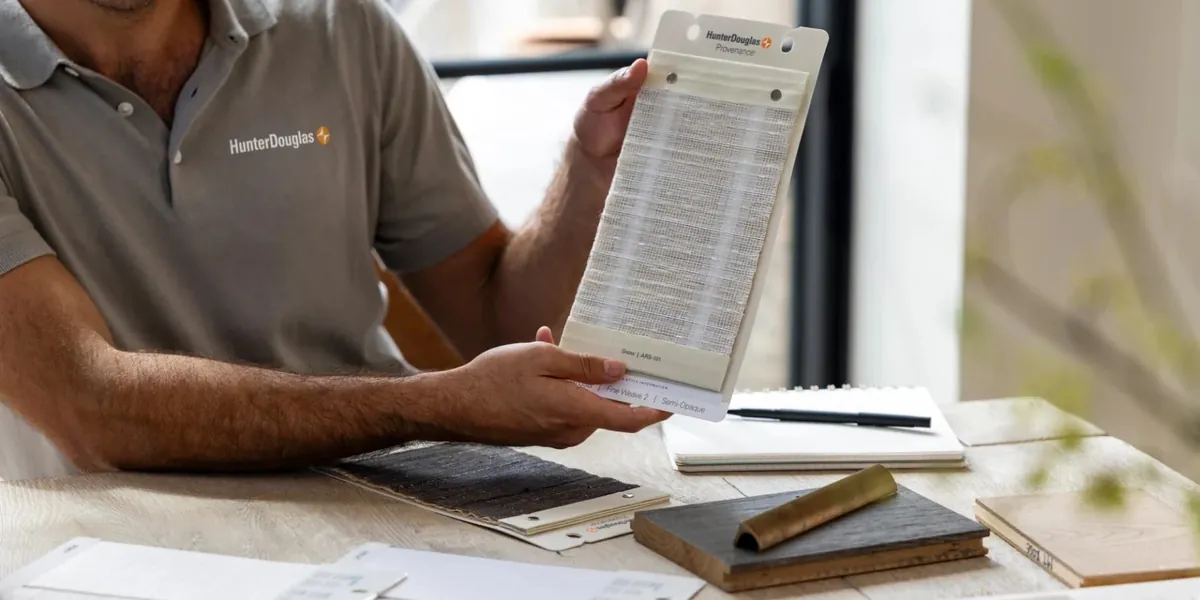
Choosing at your table
We lay the fabric books and lift samples out at your home so you can compare them in your own light.
Living with a wall of glass in Harwich Port
The shingled houses closest to the harbor and the sound were built, or rebuilt, around the water. Their main rooms often have glass on two or three sides, and the windows are large. That is wonderful for the view and hard on comfort. In January, a room with that much glass feels cold whatever the thermostat says. In August, the same room can turn into a greenhouse by early afternoon.
A honeycomb shade addresses both seasons. Lowered on a winter evening, the trapped air in the cells helps hold the warmth in. Lowered during a hot afternoon, it slows the heat coming in through the glass. Because many honeycomb fabrics filter light rather than block it, the room stays bright and you can still make out the water through a sheer or light-filtering fabric.
The trick in these rooms is to cover a lot of glass without making the room feel shut in. We usually suggest light, neutral fabrics that glow in the sun, top-down, bottom-up shades on the windows where the view sits low, and grouping shades on one headrail so a long run moves as one.
Exposure: wind, salt and sun from the open water
A house near the sound has very little between it and the weather. Sun reflects off the water for much of the day, and the wind carries salt onto every surface near an open window. Window coverings in these rooms take more punishment than anywhere else in town.
A honeycomb shade keeps most of its moving parts inside the headrail, out of the salt air. A cordless lift removes the cord and cord lock that would otherwise hang at the side. For the tallest glass, or windows behind furniture, PowerView motorization does the lifting without anyone reaching up, and we plan how each motor is powered on these exposed windows at the visit.
The sun matters for the fabric too. A shade on a south-facing window by the water sees strong light every day. Lighter colors keep their color longer in that position, and we will point out which fabrics suit a sunny, exposed window as you choose.
Corner windows and French doors
Many harbor-side rooms have corner windows that meet at a narrow post, or a pair of French doors set between two large windows. These spots need a little planning so the shades look like one treatment rather than a patchwork.
At a corner, we size the two shades so they meet neatly without overlapping or leaving a gap of light at the joint. On French doors, a shade mounted on each door moves with the door when you open it, and a slim headrail keeps it clear of the handle. Where a pair of doors sits between windows, we set every headrail at the same height so the whole wall lines up when the shades are raised.
Post-war ranches in the inland villages
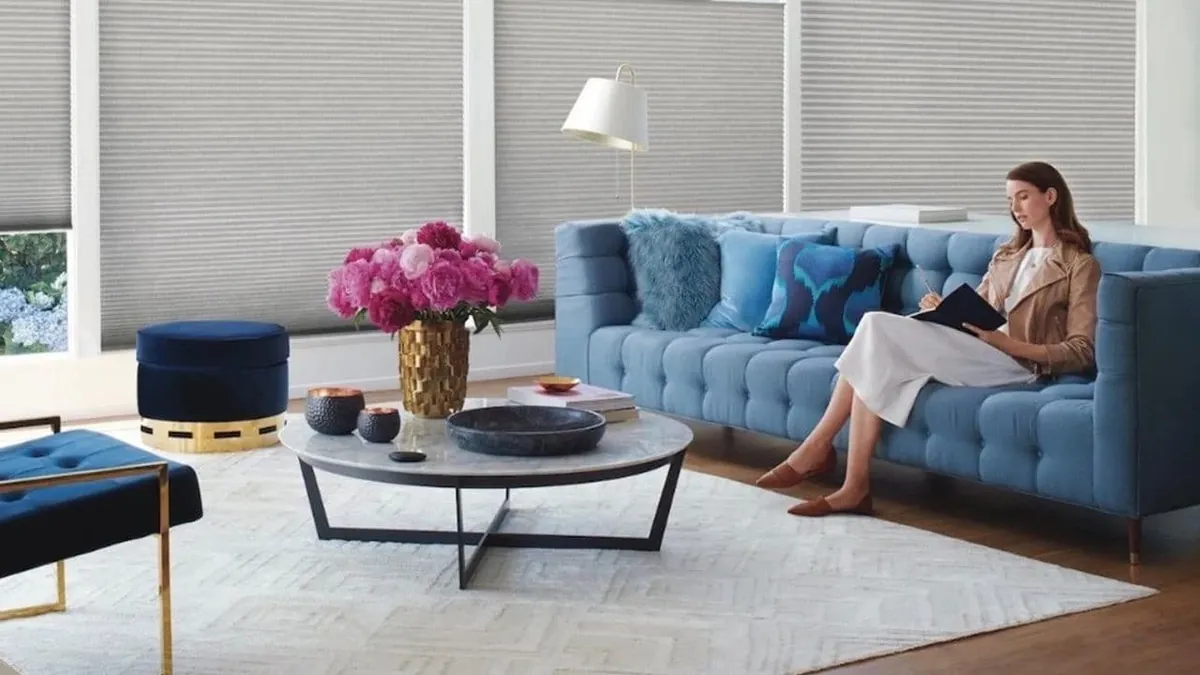
Away from the water, much of Harwich was built in the years after the war: single-story ranches with a picture window in the living room, a kitchen at one end, and bedrooms along a hall with smaller, matching windows. These houses are practical and easy to fit, because the openings are standard sizes and usually square.
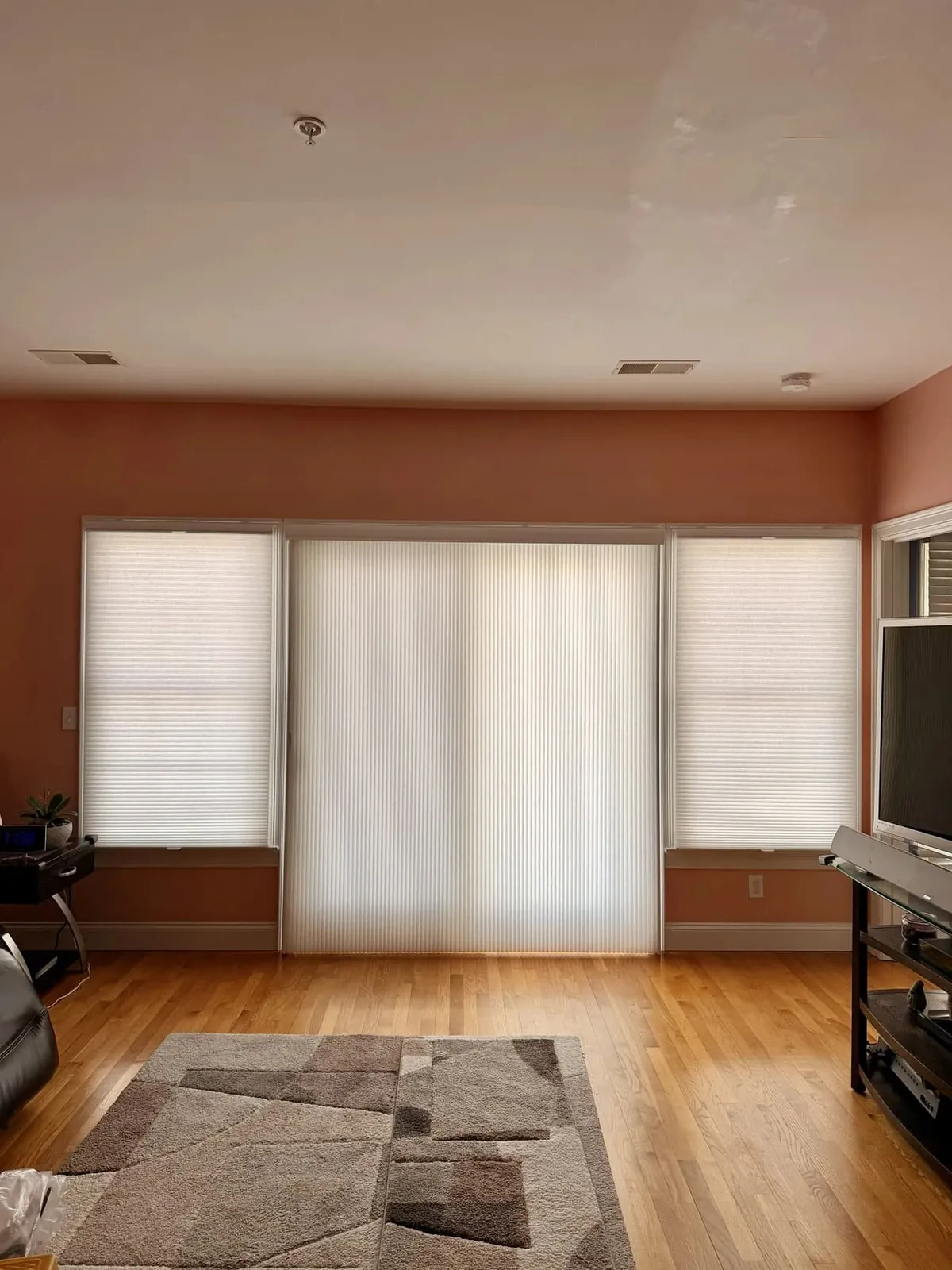
The living room picture window is the one that needs thought. It is wide and often the coldest spot in the house. We cover it with one wide shade or split it into two or three on a shared headrail. Bedrooms usually take room-darkening fabric. The kitchen takes a light-filtering one so it stays bright. Ordering cellular shades in Harwich for a ranch is often a whole-house decision made in a single visit, because every room has the same kind of window.
Many ranches have had their windows replaced over the years. Replacement windows tend to be shallower than the originals, and they often have tilt latches at the top of the sash. We check the depth and the hardware at each one, so an inside mount clears everything and the window still tilts in for cleaning.
Newer colonials and their bigger rooms
The newer colonials inland have two full stories, a family room off the kitchen, and often a two-story foyer with a tall window over the door. The windows are standard in size but there are more of them, and some are well out of reach.
For the high window in a foyer or above a stair, PowerView motorization saves a ladder every time you want to change the light. In the family room, a run of windows or a slider to the deck gets the same fabric as the kitchen next door so the open-plan space reads as one room. Upstairs, bedrooms take room-darkening fabric, and a home office may take a light-filtering one to cut glare on a screen. A finished room over the garage, common in these houses, often has a low ceiling and windows on three sides, and it is usually the room that needs the warmest shade in the house.
Privacy on the inland streets
The neighborhoods behind the villages were laid out with houses facing each other across the road, front lawns and driveways in between. A ranch’s living room window or a colonial’s front bedroom looks straight across at the house opposite, and at night, with the lamps on, a bare window shows the whole room.
A light-filtering honeycomb fabric solves most of that. In daylight it glows evenly, so the room stays bright and the street sees only soft fabric. After dark, a heavier light-filtering fabric or a room-darkening one keeps the room private. For a front room where you want daylight but not the view in, a top-down, bottom-up shade drops from the top to bring in sky while the lower half of the window stays covered.
Side windows matter as well. Where houses sit closer together, a bathroom or a stair window may face the neighbor’s kitchen a short way across the side yard. These small windows are easy to forget at the start of an order and are often the ones people mention first once the shades are in. When we plan cellular shades in Harwich houses inland, we walk every side of the house, not only the front, so no window is left bare.
How the honeycomb keeps a room warm
Look at a honeycomb shade from the side and you see rows of hollow cells running the width of the window. When the shade is down, the air in each cell stays almost still. That layer of still air sits between the room and the glass, so it slows both the cold coming in and the heat going out.
In a harbor-side room with a great deal of glass, that difference is easy to feel on a winter evening. In an inland ranch, it shows at the picture window, which stops being the cold side of the room. Double-cell fabrics add a second row of cells for rooms that need more help, and we bring single-cell and double-cell samples so you can compare them side by side. The guide to cellular shades and winter heat explains it in more detail.
Keeping the view, controlling the light
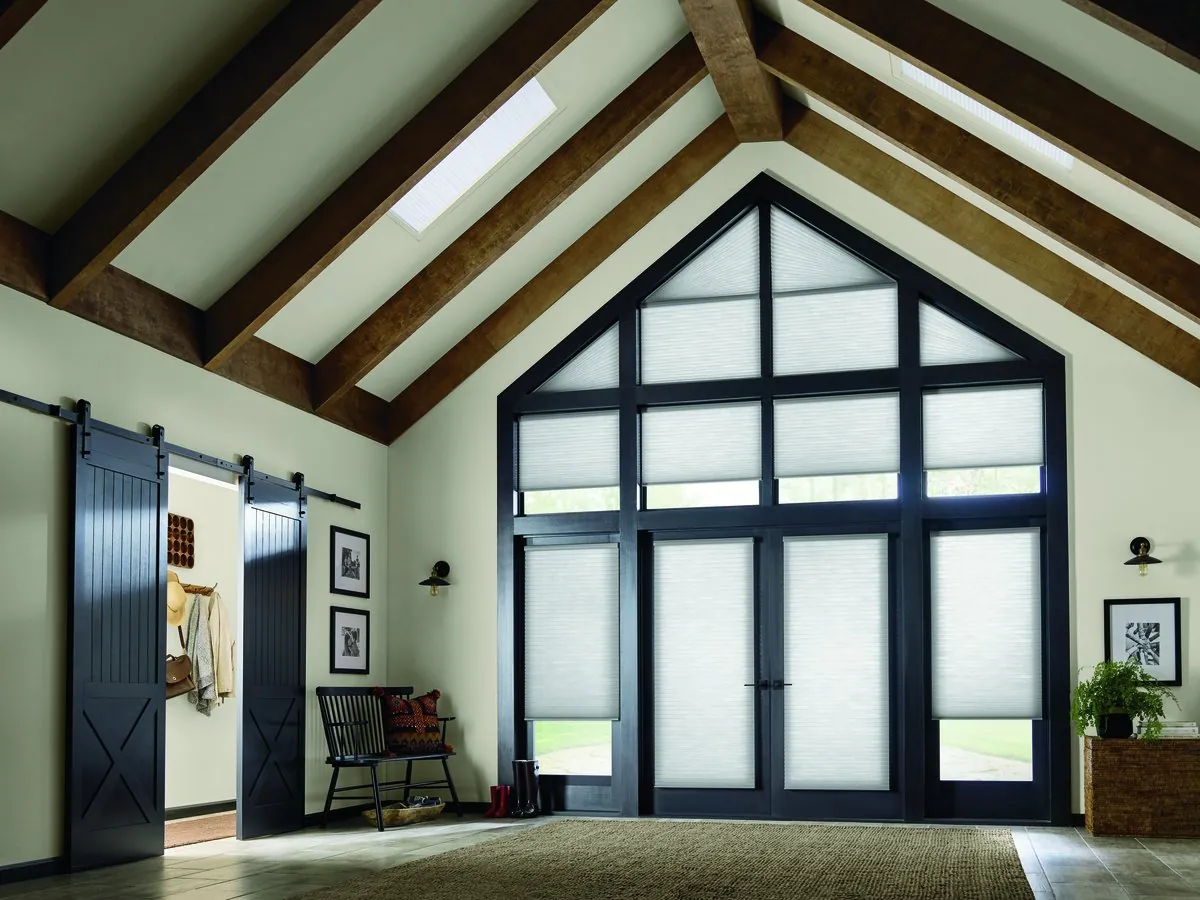
Most water-side rooms in Harwich Port are arranged around what you can see from the sofa. Nobody wants to lose that. A few honeycomb features help.
- Top-down, bottom-up. Lower the top of the shade to cut the sun high in the sky, and keep the lower glass open to the water.
- Light-filtering fabric. It softens hard reflected light without hiding the outline of the view.
- A slim stack. A honeycomb shade folds tightly, so when it is fully raised it takes up very little of the top of the window.
- Scheduled movement. PowerView can lower shades on the sunny side at the hottest point of the day and raise them in the evening when the light is gentle.
Inland, where the view is a back garden or the street, the same features tend to be used for privacy rather than view.
What happens when we visit
Most Harwich customers start with an in-home consultation. It is the only way to see a fabric in your own light, especially on the water side. Our vans carry the samples, so we bring the showroom to you.
- You request a consultation and we set a time that suits you.
- We arrive with honeycomb samples in a range of fabrics, colors and opacities.
- We walk through the house with you and talk about how each room is used and what bothers you about it: cold, glare, privacy or all three.
- You try the samples at your own windows on the sunny side and the shaded side.
- We measure every window, check the depth and note the hardware.
- You get a free estimate for the shades you are considering.
If you are furnishing a room at the same time, ask about our interior design consultations, and see what happens at an in-home consultation for more detail on the visit.
Duette and Applause in a Harwich order
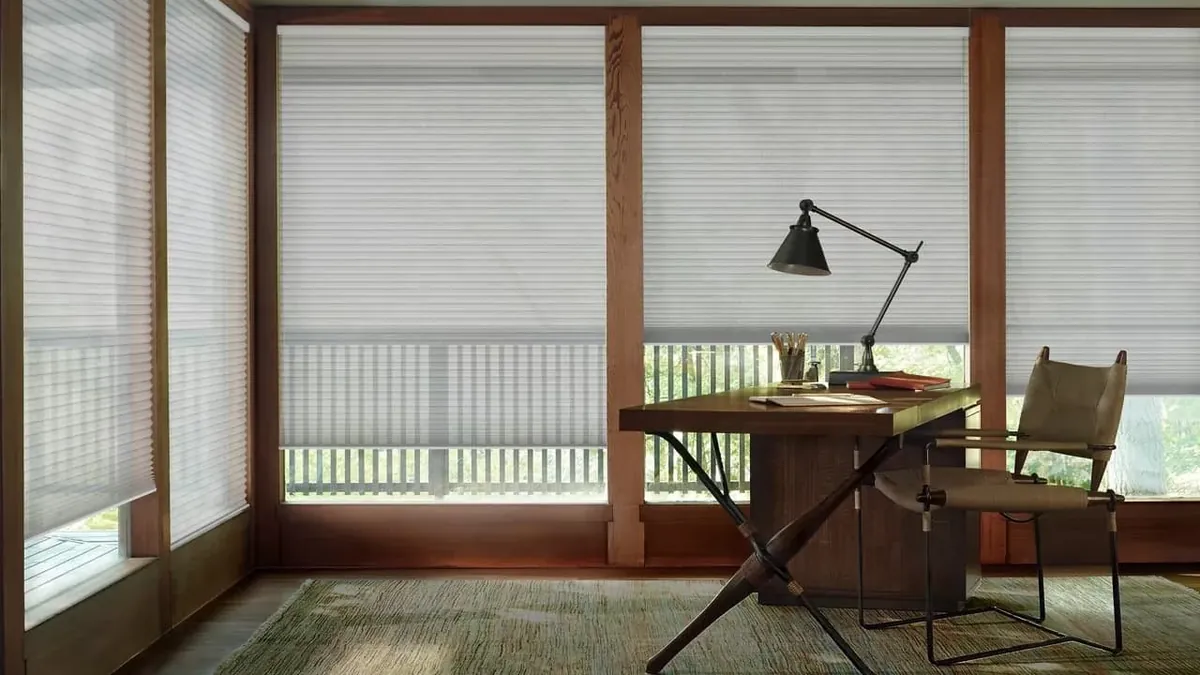
Both lines are true honeycomb shades, and both hold air in their cells the same way. Duette has the wider choice of fabrics and textures, the larger sizes, specialty shapes and the vertical shade for sliders. Applause has its own palette and suits the many standard windows in an inland ranch or colonial.
A harbor-side house might take Duette for the big glass and sliders and Applause in the bedrooms. An inland colonial might be Applause throughout, with Duette only on a tall foyer window. Many orders for cellular shades in Harwich end up with some of each. Our Duette and Applause pages explain each line, and the main cellular shades page has the full range.
Installation, start to finish
Our installers are certified by Hunter Douglas. On installation day they work through the house window by window.
- Each bracket goes into solid framing, which matters on a large shade that will be raised and lowered every day.
- Each headrail is levelled, so a row of shades lines up at the top.
- Every lift is tested, cordless, top-down or motorized.
- Any PowerView shades are paired to the app or remote and set to the schedule you want.
- You are shown how each shade works before we leave.
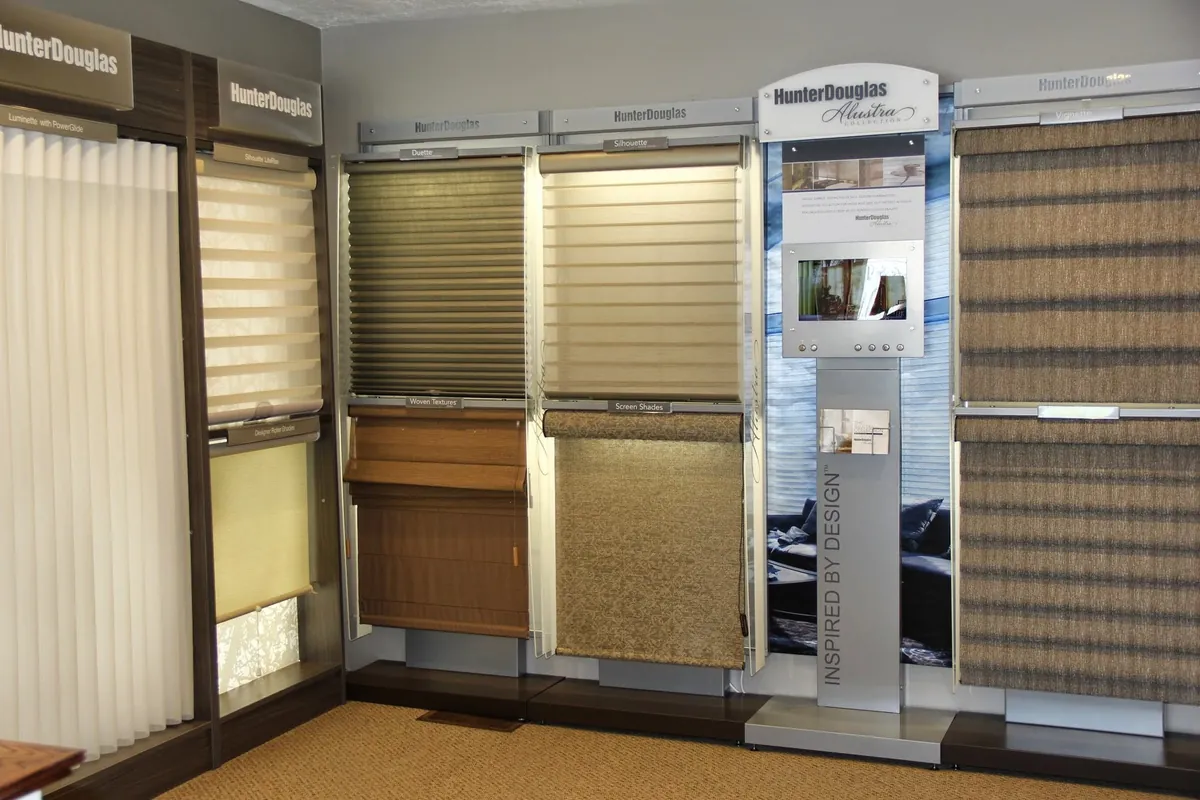
A Gallery dealer, from first sample to last bracket
Blinds & Designs is a Hunter Douglas Gallery dealer, a designation Hunter Douglas gives dealers who meet its standards. For a Harwich house that means one dealer for the full honeycomb range, including every Duette and Applause fabric, the vertical shades for sliders and PowerView motorization.
The same business that helps you choose the shades installs them with certified Hunter Douglas installers, and we repair blinds and shades if something needs attention later.
Other rooms may suit other products, and we carry Hunter Douglas shutters, blinds, roller and roman shades too. See our roller shades in Harwich, our Hunter Douglas dealer page for Harwich, or everything we offer on our Harwich page.
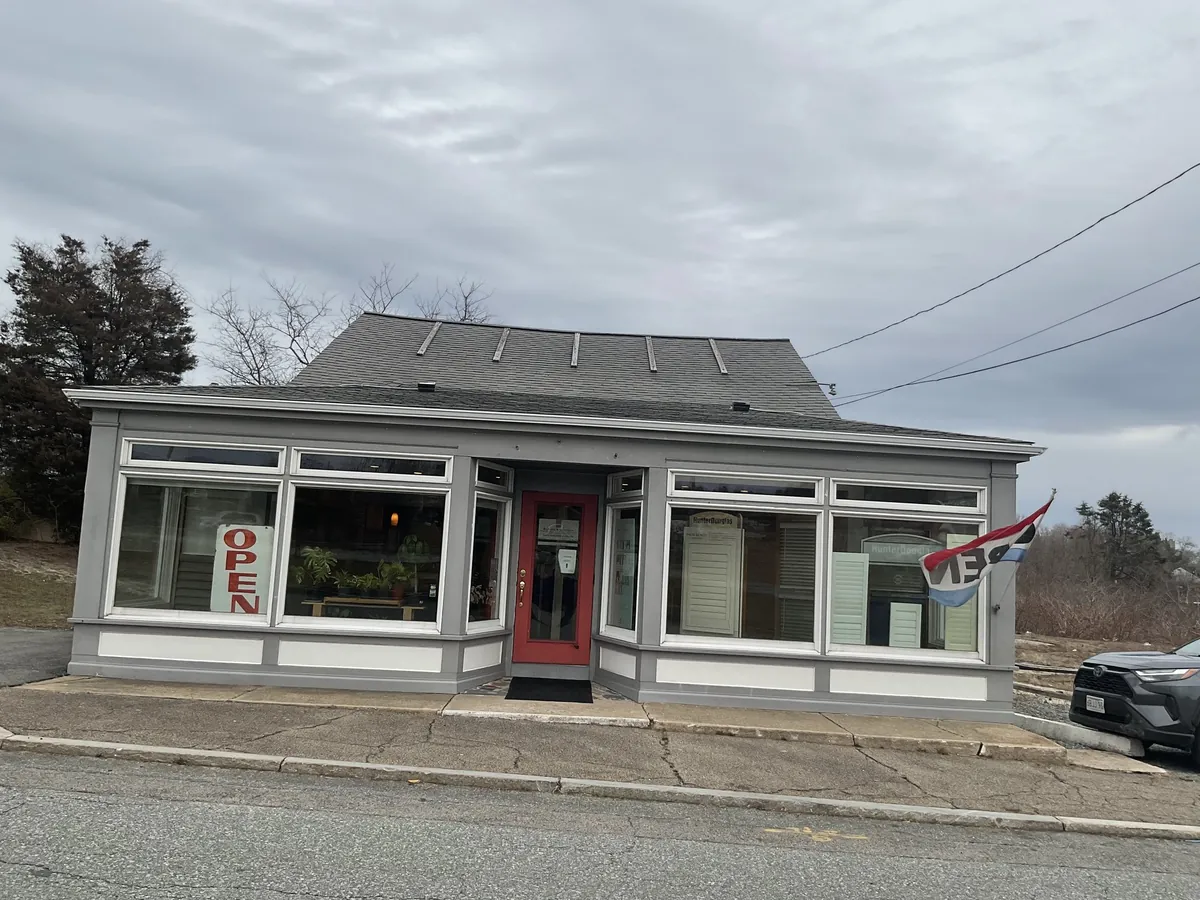
Samples at your door, Sagamore when you want it
A fabric looks different in every room, and nowhere more than in a glass-heavy room by the water. That is why we bring the honeycomb samples to Harwich and hold them up at your own windows.
If you prefer to see shades before the visit, our Sagamore showroom is the nearest to Harwich. Many customers do both: a look at the showroom, then a visit at home to measure and finish the choices.
Questions from Harwich
Can honeycomb shades handle a room that is nearly all glass?
Yes. We group shades on shared headrails so a long run moves together, use light fabrics that keep the room bright, and fit vertical shades on sliders. Top-down, bottom-up shades let you keep the lower glass open to the view.
Will salt air off the sound damage the shades?
A honeycomb shade keeps its working parts inside the headrail, so far less is exposed than with older corded blinds. A cordless or motorized lift removes the hanging cord. We also suggest fabric colors that hold up on a sunny, exposed window.
My inland ranch has replacement windows. Will an inside mount work?
Usually, yes. Replacement windows can be shallow and often have tilt latches, so we measure the depth and check the hardware at each window before choosing between an inside and an outside mount.
Can I control a whole wall of shades at once?
With PowerView, yes. Shades can be grouped in the app or on a remote so a whole wall moves together, or set on a schedule that follows the sun.
Do you charge for the estimate?
No. After we measure, you get a free estimate for the shades you are considering.
Book a visit for your Harwich windows
Whether you are covering a wall of glass in Harwich Port or every window in an inland ranch, the decision is easiest at the window itself. Request a consultation and we will bring the honeycomb range, measure each opening and give you a free estimate. To talk first, use the call button, or visit the Sagamore showroom.