
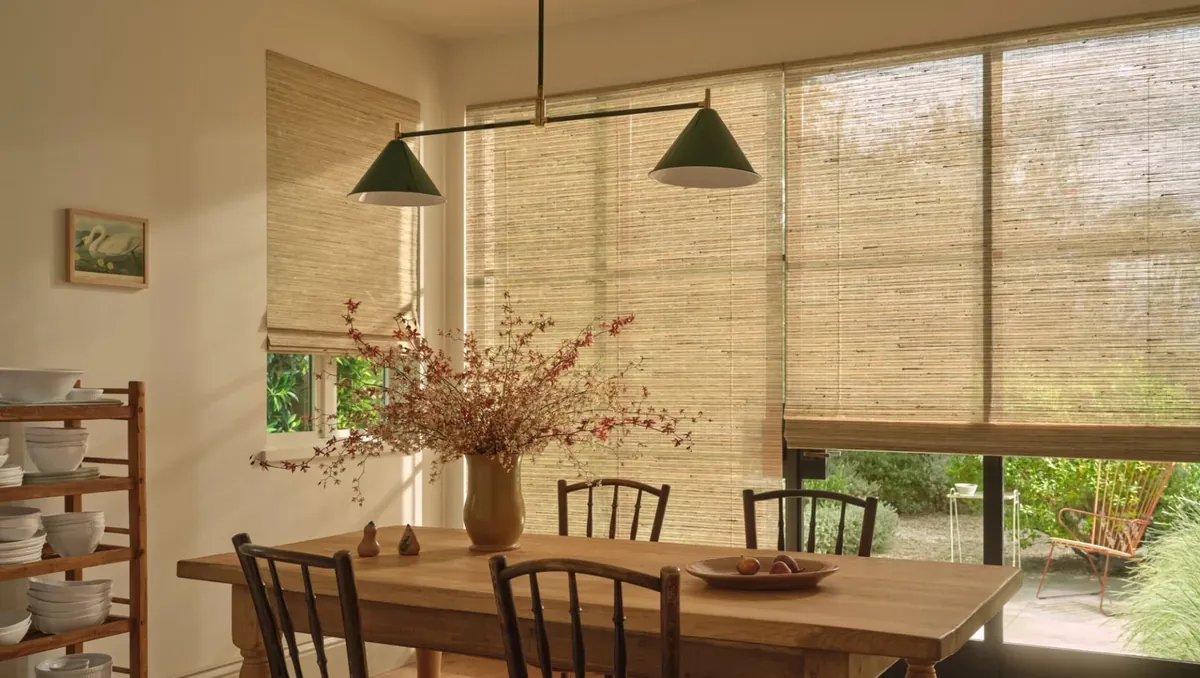
Rooms full of glass on the sound side
Harwich Port’s shingled houses crowd toward the harbor, and the rooms that face the sound are built around the view. They tend to have more glass than wall: runs of windows across a living room, a corner of glazing in a dining room, sliders out to a deck. On a bright day the light comes off the water from every direction at once. Planning roman shades in Harwich, MA, for a room like that is mostly about how to manage all that glass without losing the reason the windows are there.
Inland, the villages are a different story. Post-war ranches and newer colonials sit on ordinary streets with ordinary windows, standard in size and simpler to dress. The work there is about choosing the right cloth, lining and lift for each room rather than solving a hard window.
So a town of two halves needs two kinds of advice. We give both, and it begins at your own windows.
Roman shades in Harwich: folds, fabrics and linings
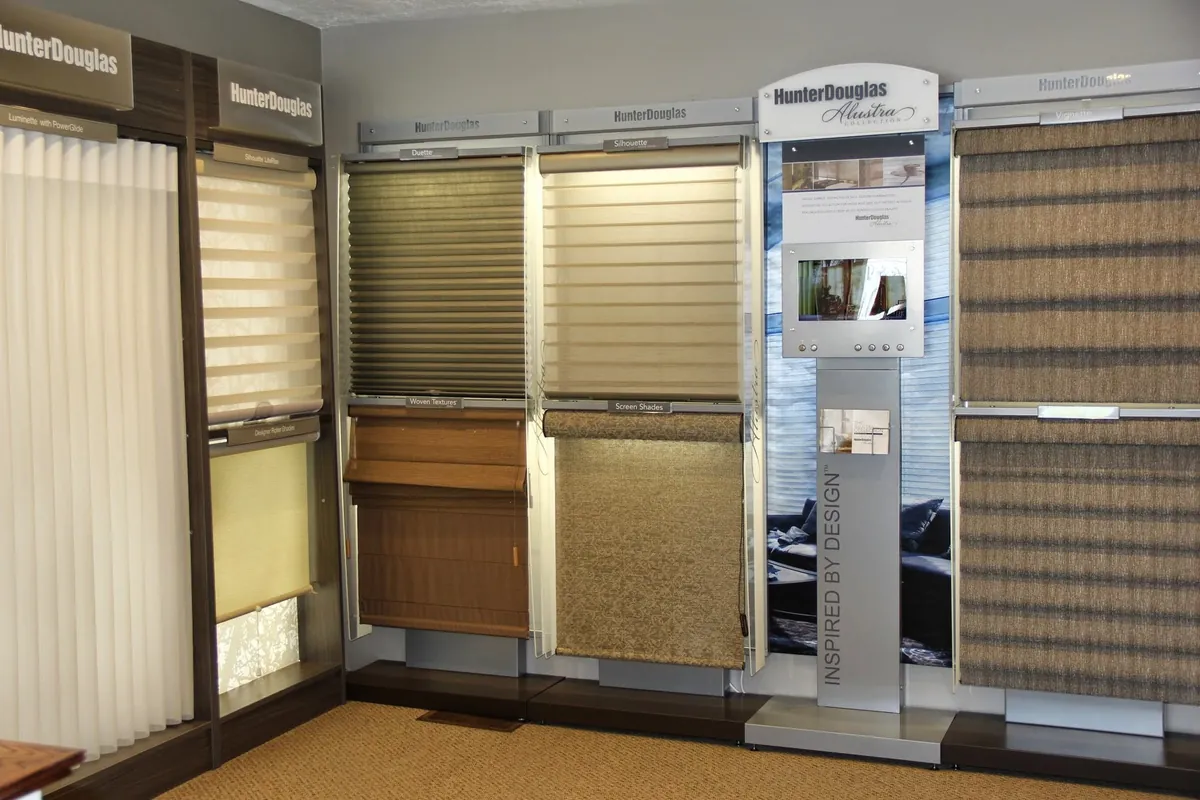
Hunter Douglas folded shades come in two families: Carole Fabrics, sewn to order in flat and folded styles, and Vignette, with uniform folds that roll away. These are the choices we are asked about most often in town.
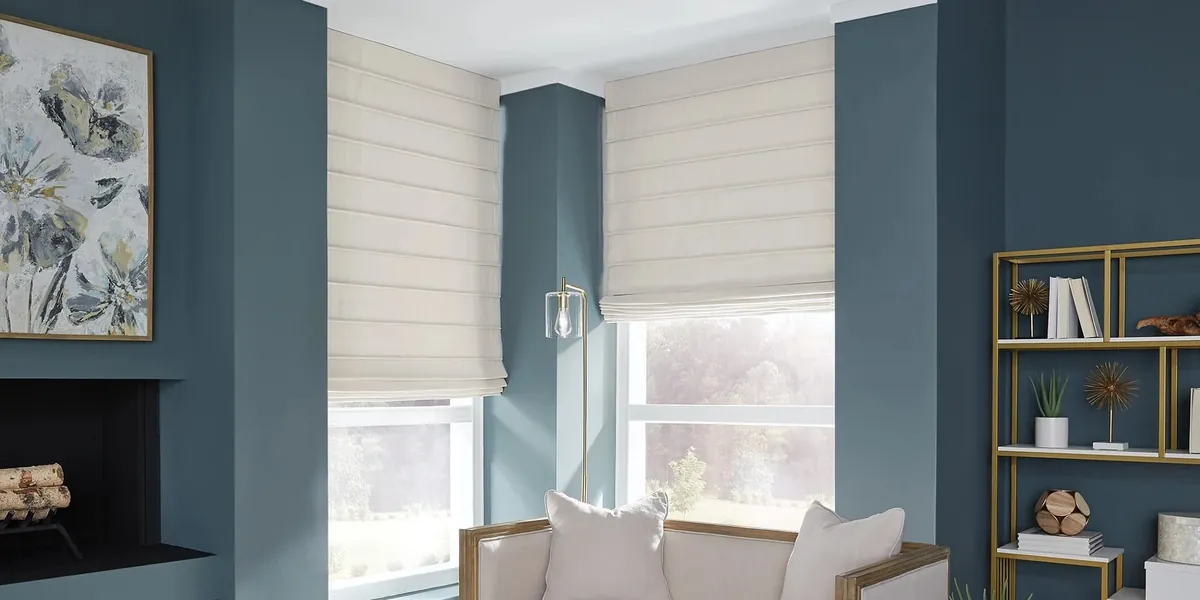
Flat folds
Clean pleats when raised, a smooth panel when lowered. The tidy choice for a colonial’s front rooms or a ranch living room.
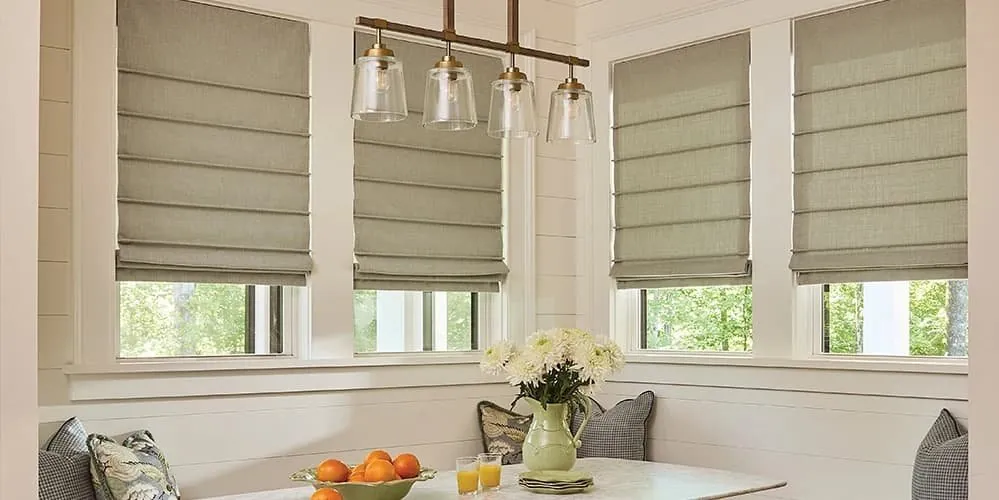
Soft folds
Gentle loops of fabric down the whole shade. Softens a long run of harbor-side windows and suits upholstered rooms.
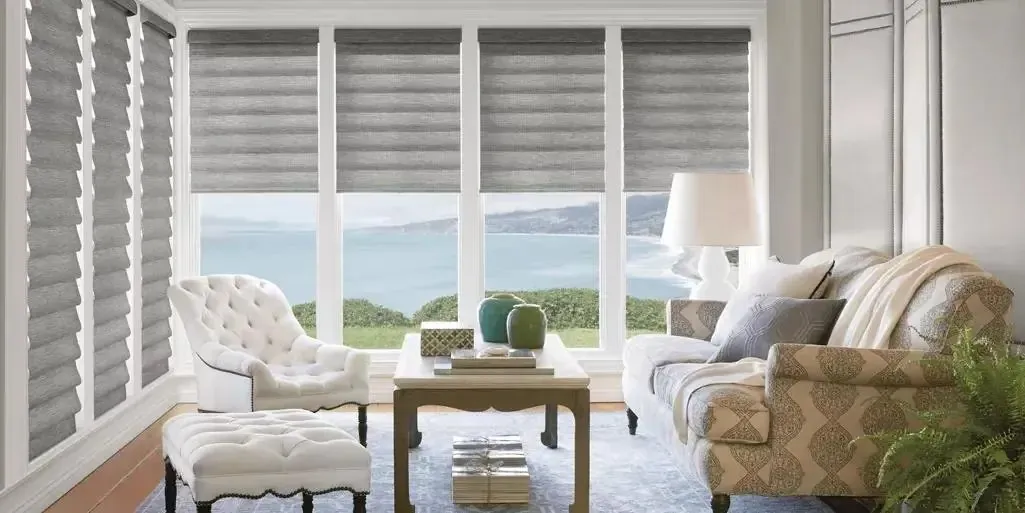
Vignette
Even folds that wind into the headrail when raised, so the top of the window stays clean. Good beside a view.
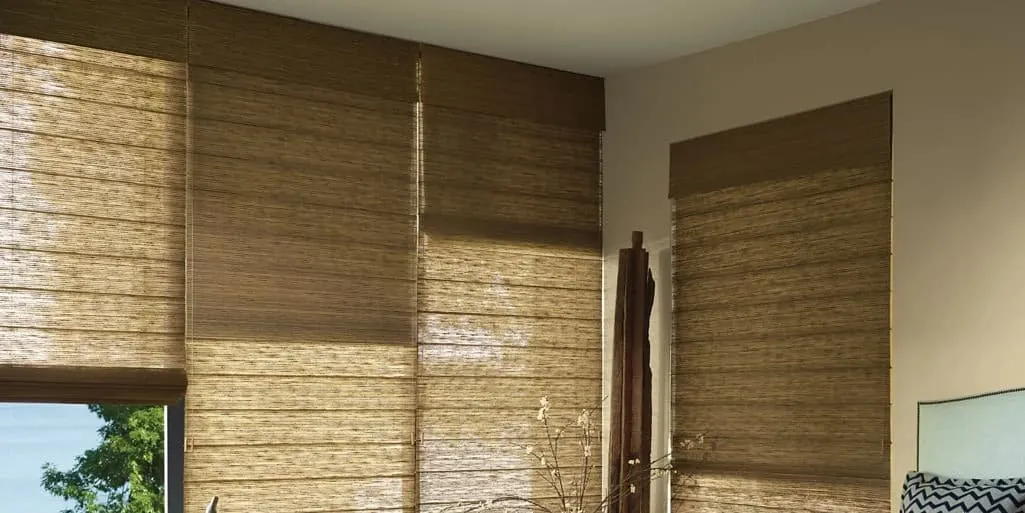
Light-filtering linens
Soften the glare off the water while keeping a room bright. The everyday choice for a sound-facing living room.
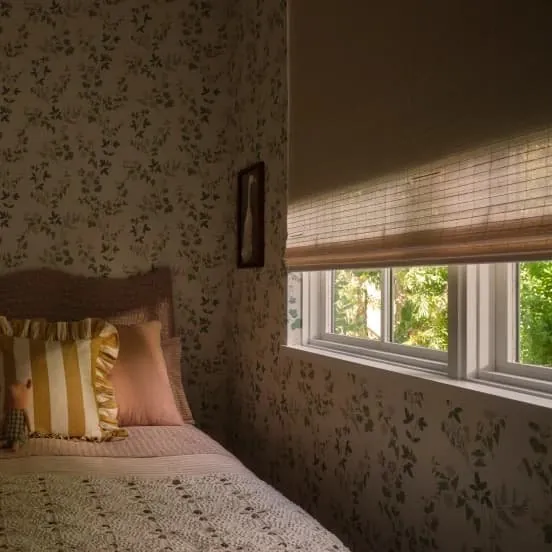
Room-darkening linings
For bedrooms that face the morning sun or a lit street. The lining also shields the face fabric from fading.
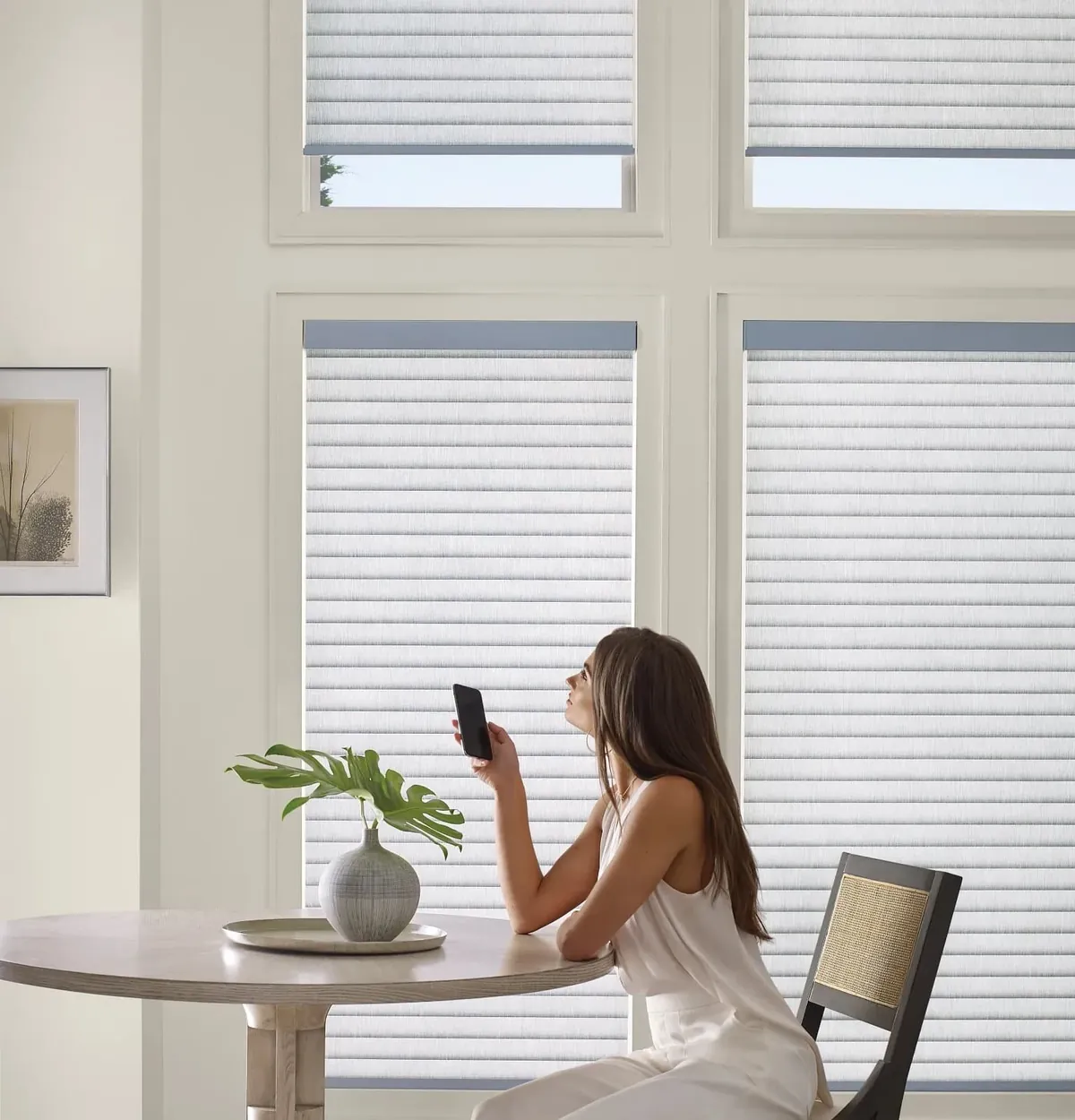
PowerView motorization
Move a whole wall of shades at once from a phone or a remote, or set a schedule for the brightest hours.
Harwich Port’s shingled houses near the harbor
The houses closest to the harbor have a particular look: cedar shingles weathered gray, white trim, porches and dormers, and rooms that were often enlarged over the years to make more of the water. Inside, that usually means a mix of window sizes in one house. An original double-hung window in a back hall, a wide band of newer glass in the living room, a pair of French doors, a little square window in a bathroom.
A folded shade handles that mix better than most coverings, because each one is made to its own opening but they can all share one fabric. Choose a single cloth and lining for the house and every window ties together, however different the sizes. From the street, where you see the backs of the shades, the house looks even and calm.
These houses also take the weather. Wind off the sound, damp air and salt are all part of life near the harbor. With a roman shade the lifting parts sit inside the headrail rather than out in the room, and a cordless lift removes the cord and its hardware altogether. For a window you open a lot in summer, that is the simplest arrangement. We fix the brackets into solid wood so the shade stays steady on a window that gets used.
Heavily glazed rooms facing the sound
The hardest windows in town are the big sound-facing ones. A living room with five or six windows in a row, or a corner where two walls of glass meet, gives you light from more than one side and a view you do not want to block.
There are a few decisions to make in a room like that.
One shade or several. A run of windows separated by mullions can take one shade per window, so each moves on its own, or wider shades that span two openings. Separate shades give you control: cover the window that takes the afternoon sun and leave the rest up. Wider shades give a cleaner, more continuous look when they are all lowered together.
Where they sit. Inside each opening, the shades frame the view and show off the trim between windows. Outside the openings, across the wall, they cover more glass and give the room a softer, more finished look when lowered.
How they lift. A wide, lined shade is heavier than a small one. A cordless lift suits most windows, a continuous cord loop takes the effort out of the biggest ones, and PowerView lets you raise a whole wall at once without walking from window to window.
Light from the water bounces off the surface and comes in low, so it gets under a partly raised shade. For a living room, a light-filtering fabric lowered most of the way is usually the answer: the glare softens, the room stays bright and you can still see out past the hem.
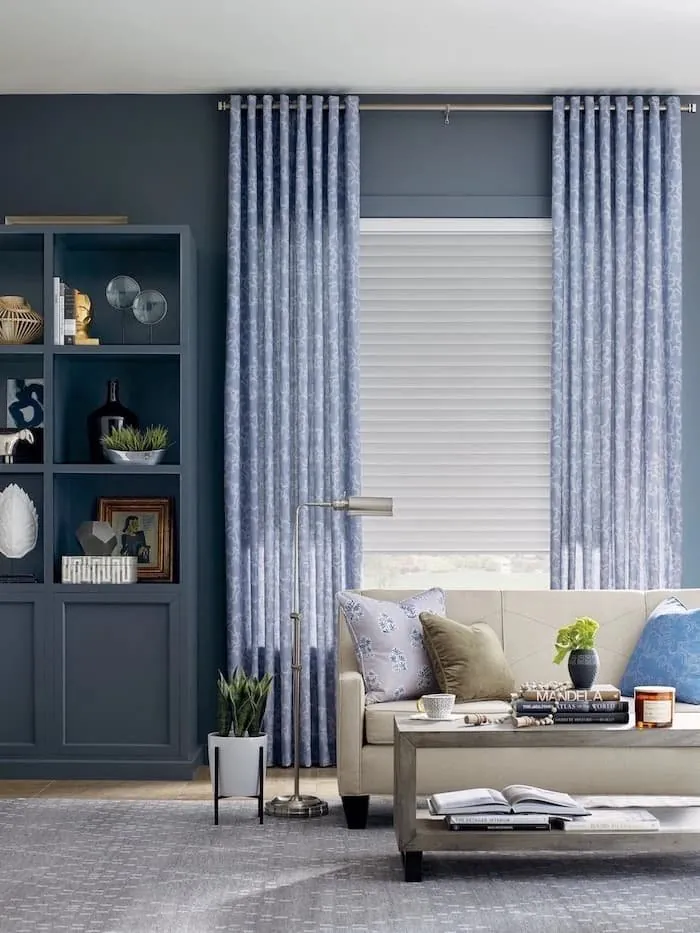
The inland villages: ranches and newer colonials
Away from the water, the houses are more regular. The post-war ranches have a living room picture window, long horizontal bedroom windows and often a kitchen window over the sink. The newer colonials have standard double-hung windows throughout, the same size on every floor, with sliders or a bay at the back.
That makes them simpler to fit, and it opens up more choice. With standard frames, most windows take an inside mount without any trouble, and a ranch picture window can carry one wide shade or two narrower ones side by side on one headrail.
The questions in these houses are mostly about the rooms. A colonial’s front living room may want a tailored Carole Fabrics flat fold in a cloth that matches the sofa. Its kitchen may want a light-filtering fabric that is easy to keep clean. The bedrooms usually want a room-darkening lining. A ranch, with everything on one floor, often works best with one cloth throughout so the house reads as a whole.
Roman shades in Harwich’s inland houses are also a good way to add softness to rooms that can feel plain. A flat fold in a linen or a stripe brings color and texture to a window without the bulk of full drapery.
From the first visit to the finished window
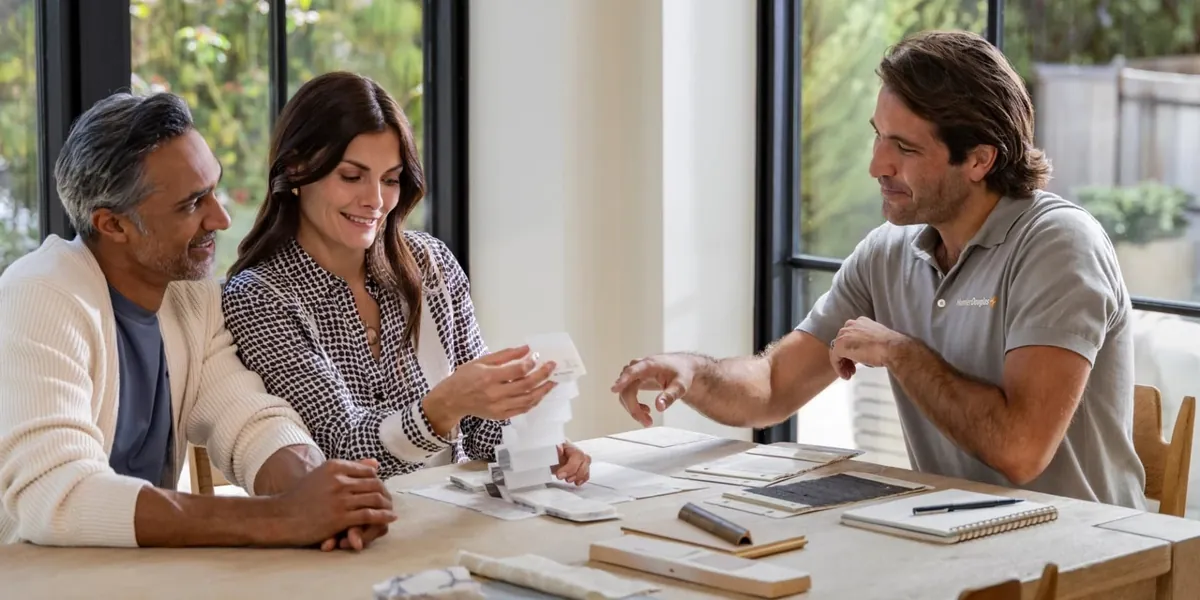
Our vans carry the Vignette and Carole Fabrics samples, so we bring the showroom to your house. Choosing at home means you see each cloth in your own light, against your own walls and floors.
- Booking. Use Request a Consultation or the call button and choose a time.
- The walk-through. We go room by room with you, beginning with the windows that give you trouble: the bright sound-side room, the bedroom that never gets dark.
- The samples. You hold fabrics and linings up to the glass and compare flat folds, soft folds and Vignette in each room.
- The measuring. We measure every opening, check depth and note anything that affects the mount, such as cranks, locks or trim between windows.
- The estimate. You get a free estimate listing each window, with no pressure to decide that day.
- The installation. Our certified Hunter Douglas installers fit every shade, check that each one hangs square and lifts smoothly, and show you how to use them.
You can read more about what happens at an in-home consultation before we come. And if you want help with the whole room, ask about our interior design consultations.
Keeping color in a sunny room
Fabric fades when it sits in strong light for long enough. The sound-facing rooms in Harwich Port take that light for much of the day, so it is worth planning for.
Lining is the first defence. A lined shade puts a layer of fabric between the glass and the decorative face, so the lining takes most of the sun. The second is color: paler, softer shades of cloth hold their look longer than deep, saturated ones. The third is habit. A shade lowered during the brightest hours protects itself and everything in the room behind it. PowerView can do that on a schedule, so the room is covered while you are at the beach.
Inland, where the windows face the street or a back garden and the light is less intense, there is more freedom to choose a stronger color or a bold pattern.
Carole Fabrics or Vignette
Both families make a soft, folded fabric shade, and both can be lined, made very wide or motorized. The choice usually comes down to cloth and stack.
Carole Fabrics is sewn from a huge fabric library and comes in flat folds and softer folded styles. If the shade needs to match something in the room, or you want a particular pattern, start here. When it is raised, the fabric gathers in pleats at the top.
Vignette has the same even fold all the way down and winds its fabric into the headrail when raised. Above a view that is a real advantage: the top of the window stays clear and the shade almost disappears. It also looks neat in a modern colonial.
Our Vignette and Carole Fabrics roman shades pages describe each line, and the main roman shades page covers the whole range.
Dormer bedrooms and half-story rooms
Many of the shingled houses near the harbor, and plenty of the inland capes and ranches with finished attics, have bedrooms tucked under the roof. Those rooms usually have dormer windows: small, set deep into a little alcove, with a sloped ceiling on either side and very little wall above the window head.
A dormer window is a good place for a folded shade, because it fits inside the alcove and keeps the room cosy, but it needs a compact stack. Vignette, which rolls its fabric away, is often the best fit. A light Carole Fabrics flat fold, mounted inside the frame, is the other good choice. In a bedroom, either one can carry a room-darkening fabric or lining.
Gable-end windows are the other common upstairs window. They are often a little larger than the dormers and may face straight onto the sound or the morning sun. A lined shade there makes the difference between waking at first light and sleeping in. We measure dormer and gable windows separately, because a shade that looks right in one can look heavy in the other.
Matching windows in a newer colonial
A newer colonial is the opposite of an old harbor house: the windows match. Every front window is the same size, lined up across two floors, and that regularity is part of the look of the house.
Roman shades in a Harwich colonial should keep that order. We set every front shade at the same height, with the same fold spacing and the same lining color facing the street, so the house looks finished from the road. Inside, each room can still have its own face fabric: a pattern in the dining room, a plain linen in the living room, a darker cloth in the study. Only the lining, which faces out, needs to match.
At the back of a colonial there is often a bay or a set of windows over a kitchen sink, where a folded shade in an easy-care, light-filtering cloth keeps the room bright and works well with the rest of the house.
Privacy on close-set harbor streets
Near the harbor the houses sit close together, and the windows on the side of one house may look straight into the windows of the next. In bathrooms and bedrooms that calls for a shade that gives privacy without turning the room dark.
A light-filtering fabric does that by day: light comes through, but the shape of the room behind it blurs. At night, with lamps on, a standard lining is what keeps a room private. Top-down, bottom-up operation, offered on many Carole Fabrics styles, lets you open the top of the window for daylight and keep the bottom covered from the house next door.
Enclosed porches and sunrooms
Plenty of the older shingled houses near the harbor have had a porch closed in at some point, turned into a sunroom with windows on three sides. Those rooms are lovely in the morning and hard to sit in by mid-afternoon, when the sun comes round and there is nowhere for the light to go but straight in.
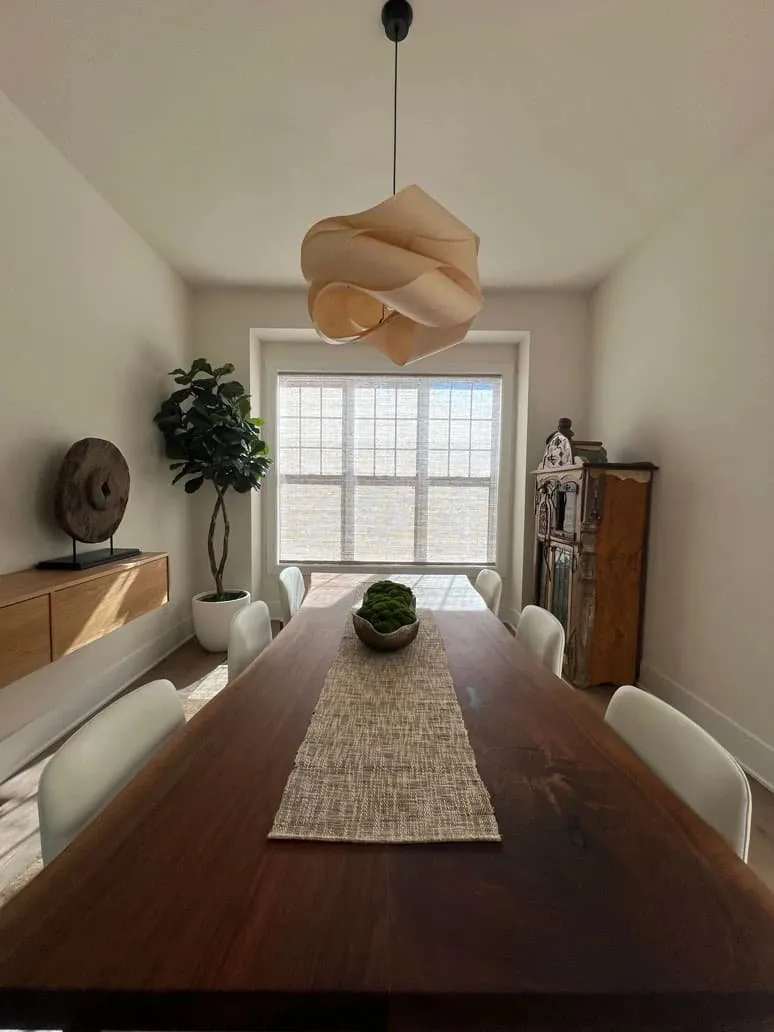
A sunroom is where folded shades earn their keep. Each window gets its own shade, so you can lower the ones on the sunny side and leave the shaded side open to the breeze and the view. A light-filtering fabric keeps the room bright and usable while it takes the heat out of the glare. A woven texture looks right in a room furnished with wicker and painted wood.
Sunroom windows are often a little uneven, because the porch framing was never built to hold glass. We measure each opening carefully and choose an inside or outside mount window by window, so the finished shades still line up when they are all lowered together. If the top windows are hard to reach over furniture, PowerView takes the stretching out of it.
Other windows in the same house
Not every window suits a roman shade. A slider to the deck often works better with a covering that moves side to side, and a damp bathroom may suit a shutter. If you are treating the whole house, see our cellular shades in Harwich, plantation shutters in Harwich or motorized blinds and shades in Harwich. Everything we do in town is on our Harwich page.
What a Gallery dealer means for you
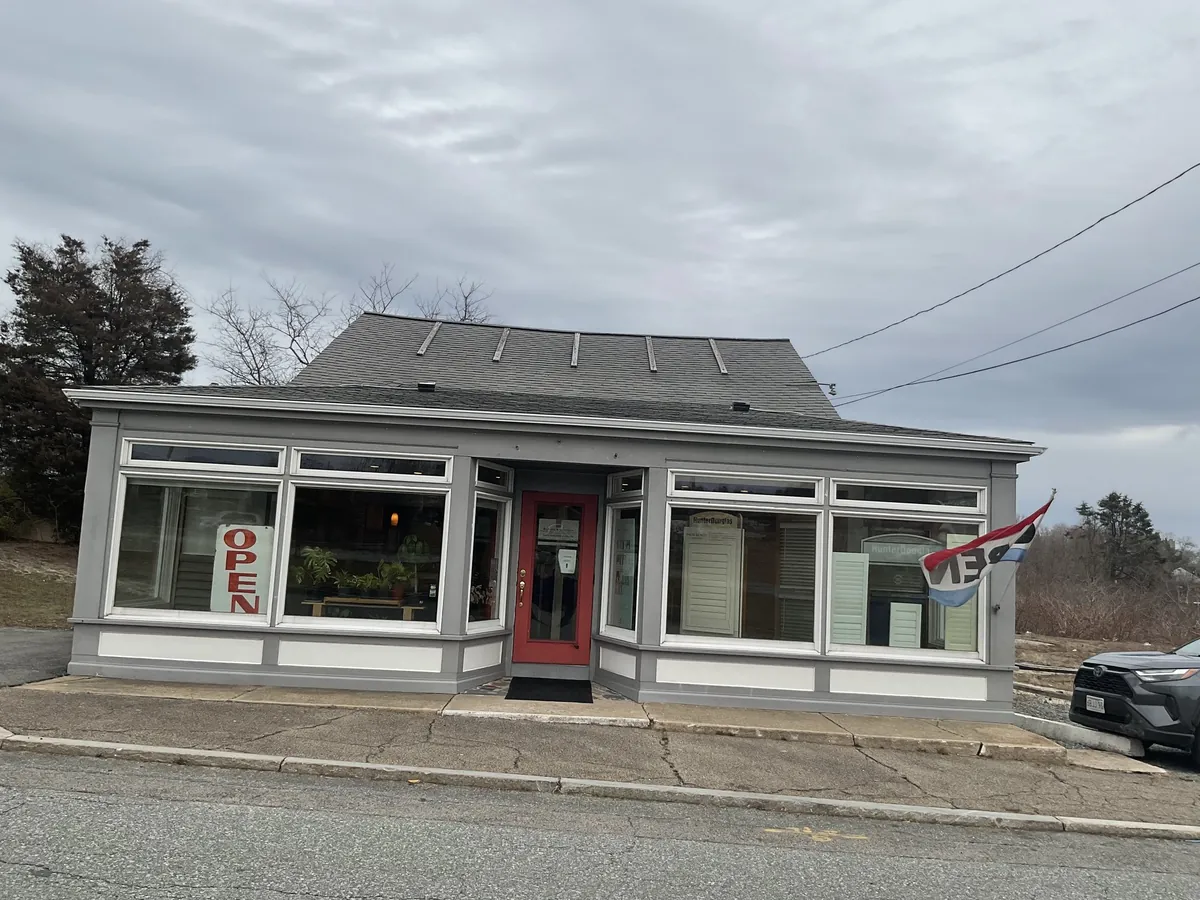
Blinds & Designs is a Hunter Douglas Gallery dealer, the designation Hunter Douglas uses for dealers who meet its standards. You get the full range of folded shades to choose from, with every Carole Fabrics cloth and every Vignette option, plus the lift systems and PowerView.
Our installers are certified by Hunter Douglas. On a wall of harbor-side windows, where the shades have to line up, hang level and move together, that care shows. We also repair blinds and shades you already own, and we offer interior design consultations.
The Sagamore showroom is our closest location, where you can try the shades in person. Or we can bring every sample to your door.
Questions from Harwich
What works on a whole wall of sound-facing windows?
Usually separate shades on each window in one fabric, so you can cover the bright end of the room and leave the rest open. PowerView can move them all together when you want.
Can I soften the glare and still see the water?
Yes. A light-filtering fabric lowered most of the way softens the light off the water while the view stays visible. Vignette also keeps the top of the window clear when it is raised.
Do roman shades suit a plain post-war ranch?
Very well. A flat fold in a linen or a stripe adds softness and color to a ranch’s picture window and bedrooms, and standard frames make the fit simple.
Will salt air bother the lifting system?
The lift sits inside the headrail, and a cordless lift has no exposed cord or hardware at all, so there is very little for damp air to reach.
Do you charge for the estimate?
No. We measure every window and give you a free estimate, room by room.
Bring the samples to the sound
The right roman shades in Harwich, MA, are the ones you have seen at your own windows, in the light you live with. Request a consultation and we will bring the full range, measure every opening and leave you a free estimate. You can also visit the Sagamore showroom, or use the call button with any question.