
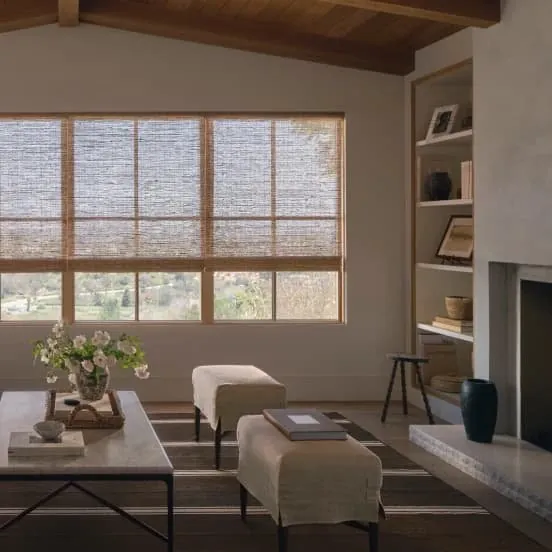
Hard, direct light and very tall glass
The light on the outer Cape is not like the light further up the arm. It is hard, clear and direct, with little to soften it between the sky, the water and your windows. In the newer houses out toward Nauset and Pleasant Bay, the glass that faces the bay often runs from the floor to the ceiling, so a living room can be flooded with that light from morning to evening. For roman shades in Orleans, MA, those tall windows are the biggest job in town.
Near the village center the houses are older and the windows much smaller. Antique capes sit low, with modest sash, low ceilings and simple painted trim. A folded shade there has a different task: soften the window, keep the room traditional, and leave as much of the small glass clear as it can.
Much of the town is seasonal, too. A house that stands empty for part of the year needs window coverings that protect it while nobody is home and that are simple to use when the family comes back.
Roman shades in Orleans: three folds to choose from
Every folded shade we fit comes from one of two Hunter Douglas families, Carole Fabrics or Vignette. In practice the choice usually starts with the fold.
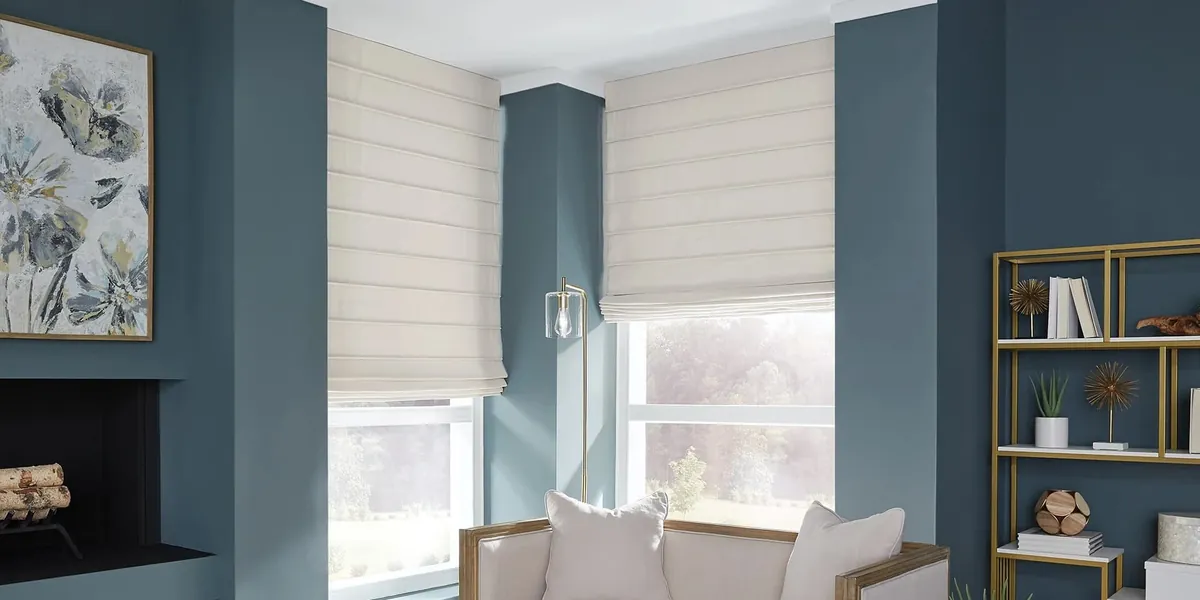
Flat fold
A Carole Fabrics style that hangs as one smooth panel and pleats crisply when raised. It shows a pattern well and suits a cape’s front room.
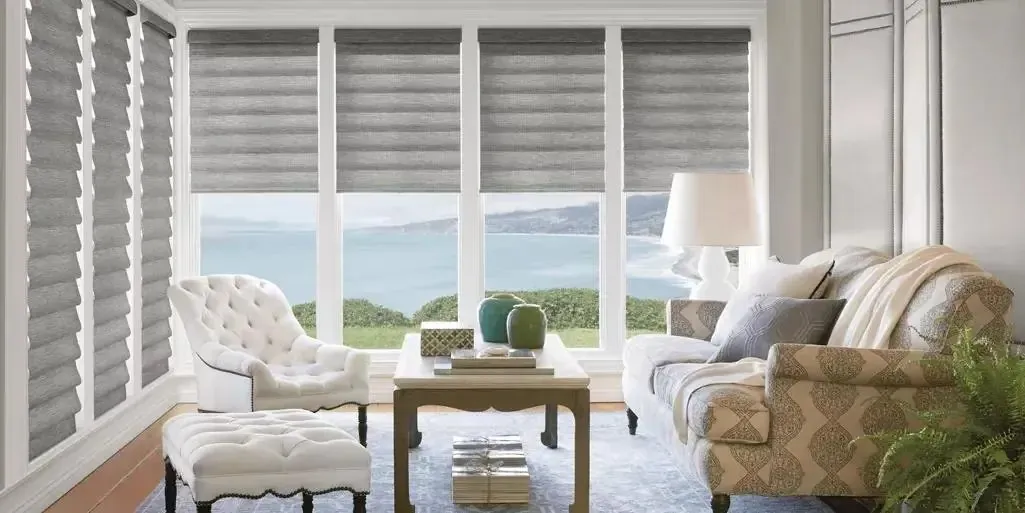
Soft fold
Loops of fabric that stay in place even when the shade is lowered. Relaxed and generous, and lovely on a tall bay-facing window.
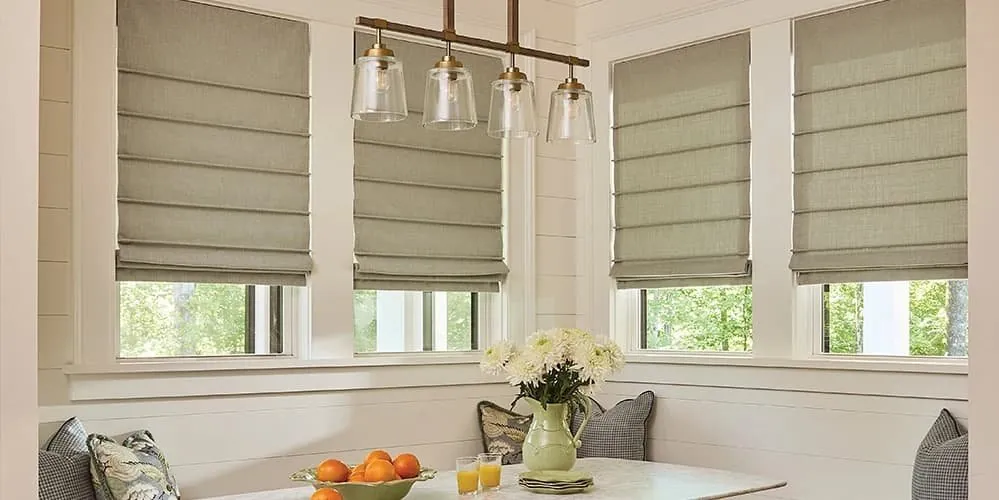
Vignette
Even folds from top to bottom that roll away into the headrail. The compact top keeps a view, or a small antique sash, clear.
Floor-to-ceiling glass toward the bay
The newer houses near Pleasant Bay and out toward Nauset are designed around the water. Walls of glass face the bay, often from floor to ceiling, sometimes two stories high in a great room. They are wonderful to live with for most of the day and very hard to live with when the sun is low and straight in your eyes.
A folded shade on a window that tall needs some planning.
Length and weight. A shade that runs from ceiling to floor carries a lot of fabric, and a lined shade carries more. A cordless lift suits many windows, but on the tallest and widest a continuous cord loop or PowerView motorization does the lifting far more comfortably.
Width. Very wide glass is usually best split into several shades, side by side, each covering one section of the window. They can share a fabric and line up perfectly when lowered, but each can be raised on its own, so the sunny section can come down while the rest of the bay stays in view.
The stack. A tall sewn shade folds into a deeper stack when raised. Mounted on the wall above the glass, that stack sits clear of the window and the view is uninterrupted. Where the glass runs right up to the ceiling, Vignette, which rolls its fabric away, is often the cleaner choice.
Reach. Nobody wants to climb to the top of a two-story window. PowerView lets you raise and lower each shade from a phone, a tablet or a remote, or set them on a schedule. We plan how each motor is powered at the consultation, window by window.
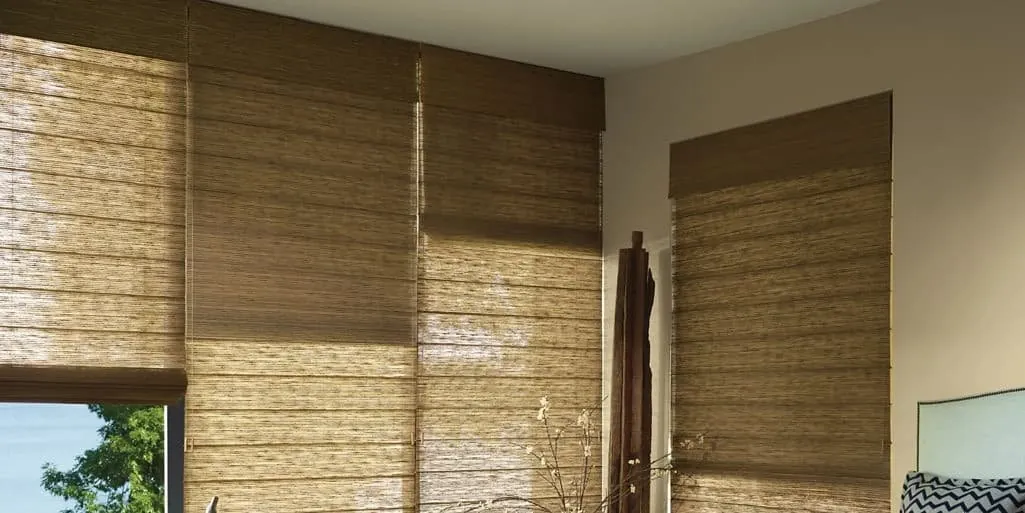
What to do with hard outer Cape light
Hard, direct light does three things in a room: it dazzles, it heats, and over time it fades whatever it lands on. A folded shade can help with all three if the fabric and lining are right.
For glare, a light-filtering fabric lowered across the brightest glass spreads the light evenly through the room instead of throwing a hard patch across the floor. You still see the shapes outside, and the room stays bright.
For fading, the lining matters most. Sewn to the back of the shade, it faces the glass and soaks up the sun, which keeps the cloth you chose closer to the color it was on the day it went up. Paler face fabrics, in sand, white, gray and soft blue, also hold up better than deep colors in a room that takes the sun all day.
For comfort, simply lowering the shades on the sunny side during the brightest hours makes a real difference to how a glass-walled room feels by late afternoon. PowerView can do that on a schedule, so the room is already shaded when you come in from the beach.
In bedrooms, the question is darkness. Bay-facing bedrooms in the newer houses often take the first light of the day, and a room-darkening lining is what lets you sleep past it.
Antique capes near the village center
The old houses around the village center are a different job entirely. An antique cape has small sash, often divided into many panes, set under a low ceiling with little wall above the window head. The casings are plain painted wood, and they have usually been there a very long time.
Two questions shape every shade in a house like that.
The first is depth. An inside mount, with the headrail tucked into the window opening, keeps the trim in full view and is almost always the better look. But old frames can be shallow, sash hardware takes some of the room, and interior storm windows take more. We measure each opening at several points before recommending where the shade should sit.
The second is the stack. A sewn shade gathers its folds at the top when raised, and on a short window that stack can cover the upper panes. Vignette rolls its fabric into the headrail instead, which leaves the glass clear. A light, unlined Carole Fabrics cloth is the other good answer, because thin fabric folds into a smaller stack.
Roman shades for Orleans capes look most natural in simple cloth: linens, cotton weaves, small checks and stripes. A flat fold keeps the window tidy in a kitchen or a bathroom; a soft fold suits a sitting room with upholstered chairs.
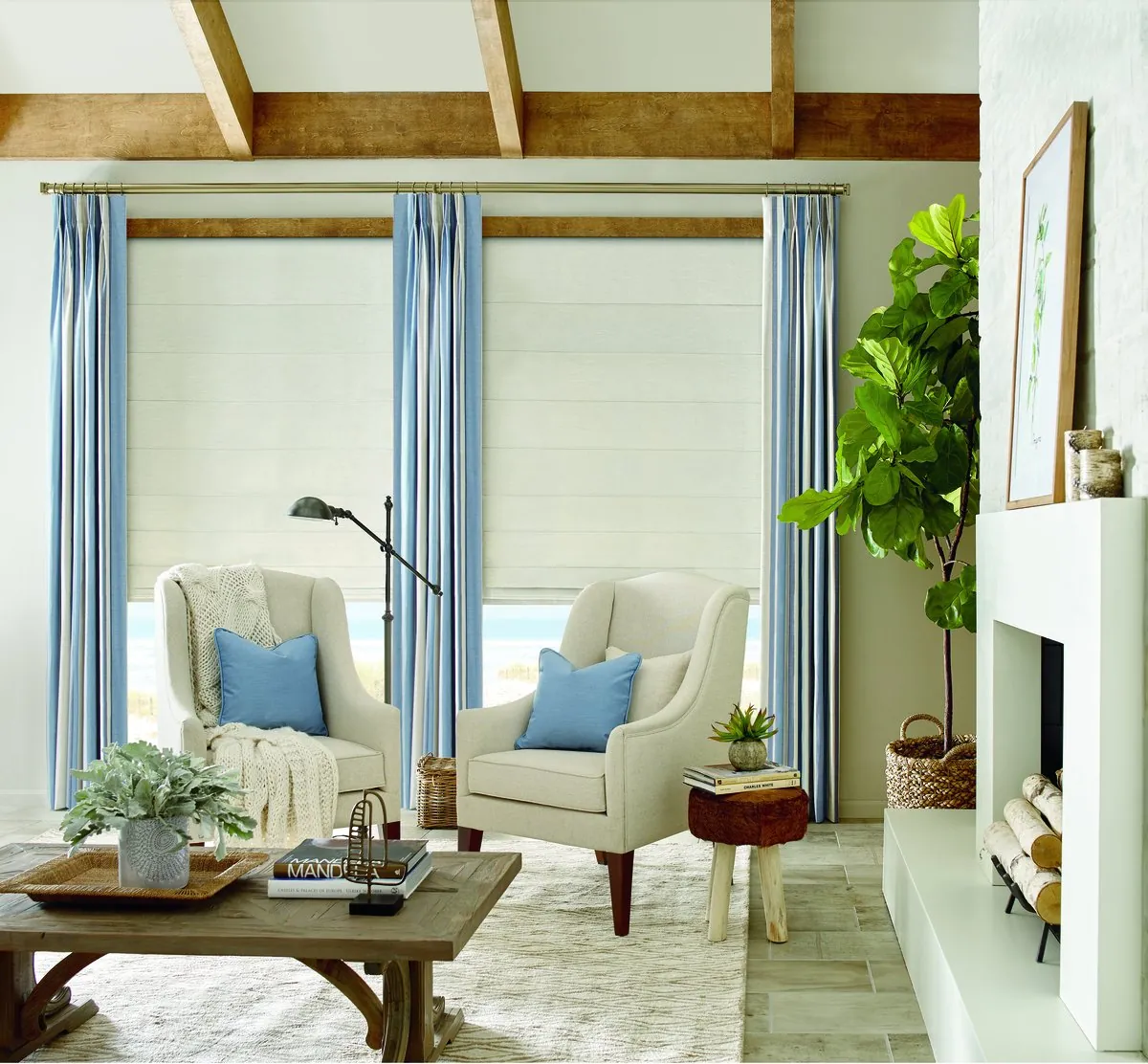
Houses that sit empty part of the year
A good deal of the housing in town is seasonal. Some houses are opened for summer and closed for the winter; others are used on weekends and holidays and stand empty in between. That changes what a good window covering needs to do.
When the house is closed, the shades are its face to the road. Lowered, they keep the rooms from looking empty and keep the low winter sun off floors and furniture. A lined roman shade does that well, especially on the bay side, where the light is strongest even in the colder months.
Cordless lifting suits an empty house: nothing to tie up before you leave and nothing hanging by the glass. PowerView goes further, raising and lowering the shades on a schedule while you are away, so the house looks lived in and the sunny rooms stay protected.
For a seasonal house, timing the project around your visits matters too. Tell us when you will next be down and we will plan the consultation for then, and arrange the installation around a later trip.
How a project comes together
Light this strong makes a swatch look different by the hour, so we choose fabrics in the house, not from a book in a shop. Our vans are stocked with the Carole Fabrics and Vignette ranges, which lets us bring the showroom to your door.
- Book through Request a Consultation, or tap the call button, and choose a day you will be in Orleans.
- The visit begins in whichever room is hardest to sit in, which is usually the one with the tallest bay-side glass.
- Swatches go up against the actual windows, so you judge each cloth, lining and fold in that hard outer Cape light rather than under a shop lamp.
- Every opening is measured. We record frame depth, any interior storms, and how the tallest shades should be lifted.
- A free estimate follows, itemised by window, and there is no rush to say yes before you head home.
- Once the shades are made, installers certified by Hunter Douglas hang them, square each one up, run every lift and walk you through the PowerView controls if you chose them.
Interior design consultations are available too, if the room needs more than shades. The page on what happens at an in-home consultation explains the visit in more detail.

Drapery and folded shades on tall windows
On a very tall window, a folded shade on its own can look a little plain. Many people pair it with drapery panels at the sides of the glass. The panels add softness, color and height, and frame the view; the shade does the daily work of light and privacy.
This works particularly well in a great room with a two-story window wall. The drapery hangs from near the ceiling to the floor, the shades cover the glass behind, and the room feels finished rather than glassy. We can plan both at the same visit, choosing cloths that work together.
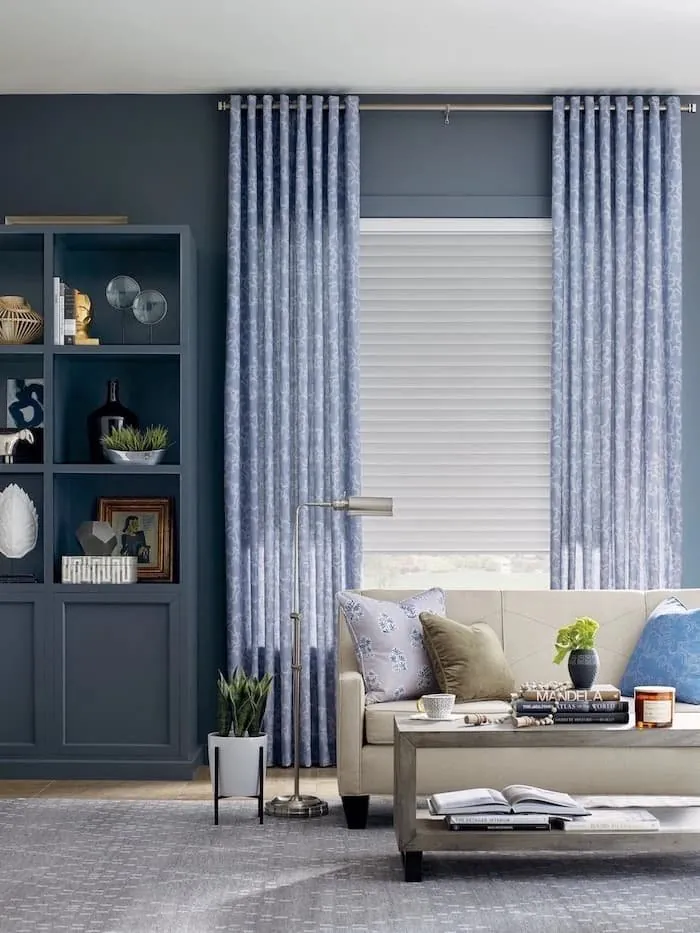
Sewn cloth or a shade that rolls away
Hunter Douglas gives you two ways to get a folded fabric window, and the outer Cape houses use both.
The first is Carole Fabrics. Each shade is sewn to your measurements from a deep library of cloth, so you can pick a linen to match a slipcovered sofa, a ticking stripe for a cape kitchen or a quiet plain for a bedroom. There is a choice of fold, from the tailored flat style to softer looped ones. Draw it up and the cloth collects in tidy pleats at the head of the window, which is lovely on a tall window and worth planning for on a short one.
The second is Vignette. Its folds are the same depth all the way down, and instead of collecting at the top it winds itself up out of sight. That is what makes it the usual pick for the tallest bay-facing glass, where you want nothing between you and the water, and for the little upstairs sash in an old cape, where every pane counts.
Put simply: start with Carole Fabrics when the cloth matters most, and with Vignette when the glass does. Read more about Vignette or the Carole Fabrics roman collection, or browse every folded style on our roman shades page.
PowerView in a glass-walled house
Motorization makes the most sense in the houses with the most glass. When a living room has six tall shades along one wall and a clerestory above, raising and lowering them by hand every morning and evening gets old quickly. With PowerView, one tap on a phone or one press of a remote moves the whole wall.
Schedules are where it really helps in this town. The shades on the bay side can lower themselves before the afternoon sun comes round and rise again at dusk for the sunset. In a seasonal house, they can follow the same routine while you are away. We set the schedules with you once the shades are fitted.
You can learn more on our window covering automation page, or see motorized blinds and shades in Orleans.
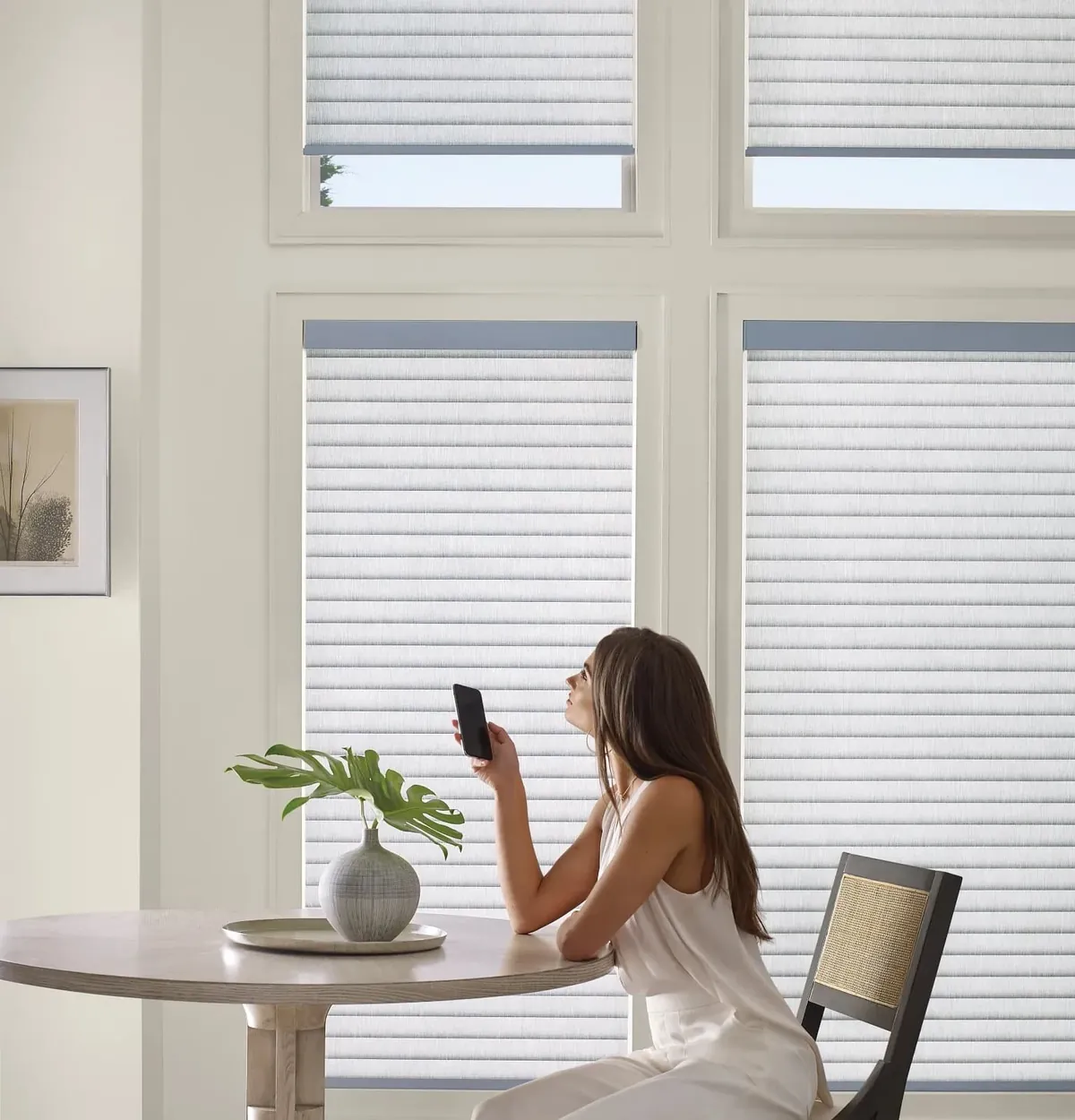
Upstairs in a cape: knee walls and gable ends
Climb the steep stair in an old cape near the village and you find bedrooms squeezed under the roof, with knee walls, sloped ceilings and windows set in the gable ends or in small dormers. The windows are short, and the ceiling often meets the top of the frame.
These rooms are where roman shades in Orleans capes need the most care. There is no wall above the window for a stack to sit on, so a sewn shade inside the frame has to be light, or the shade has to be a Vignette that rolls away. A room-darkening fabric or lining is usually wanted, since these bedrooms take the sun early and they are often the ones guests sleep in.
Dormer windows sit at the back of a little alcove, which is a gift for an inside mount: the shade hides in the recess and the room feels snug. Gable windows can be slightly larger and sometimes face straight at the morning light off the bay. We measure each one on its own and keep the shades in a house consistent in fabric, so the upstairs rooms feel of a piece with the floor below.
Bathrooms, kitchens and the smaller rooms
The smaller rooms in a house still matter. Bathrooms want privacy first: a sheer or light-filtering cloth keeps them bright while blurring the view in. Kitchens want an easy-care fabric that stays out of the way above the sink. Guest bedrooms in a seasonal house want a room-darkening lining so visitors are not woken by the sunrise.
If some windows suit a different covering, such as a slider or a steamy bathroom, see our cellular shades in Orleans or plantation shutters in Orleans. Everything we do in town is on our Orleans page.
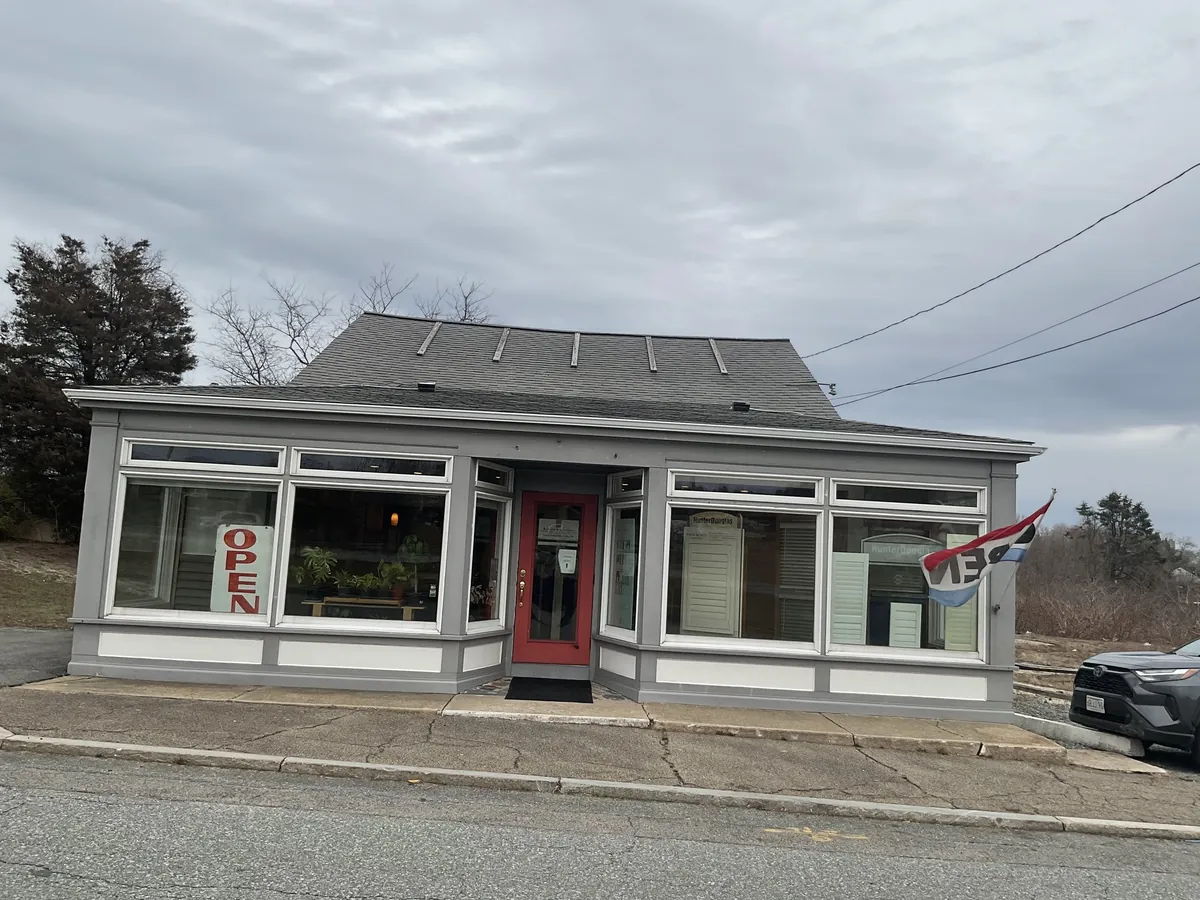
A Gallery dealer for the outer Cape
Hunter Douglas names dealers who meet its standards Gallery dealers, and Blinds & Designs is one. In practice that puts the entire folded shade line within reach for a house in Orleans: all of the Carole Fabrics cloths, all of the Vignette choices, every lift and the PowerView system.
Hanging a shade on glass that runs to the ceiling, or in a cape frame that settled long ago, takes skill. Ours are hung by installers with Hunter Douglas certification. Should an older blind or shade in the house need fixing, we take on repairs as well, and design help is there if you want it.
To try the shades with your own hands, the Sagamore showroom is closest. Otherwise the samples travel down to Orleans with us.
Questions from Orleans
How do you handle floor-to-ceiling windows?
Usually with several shades side by side, each covering a section of the glass, mounted above the window so the folds clear the view when raised. PowerView or a continuous cord loop handles the lifting on the tallest ones.
Will a folded shade cut the glare and still let me see the bay?
It will. Drop a light-filtering cloth across the brightest panes and the dazzle goes soft while boats, dunes and water stay in outline behind it.
Can a shade fit the small sash in my antique cape?
Usually. We check each frame for depth, and choose Vignette or a light cloth so a raised shade does not cover the upper panes.
Can you schedule the visit around my time at the house?
Yes. Tell us when you will be in town and we will plan the consultation and the installation around your visits.
Does the estimate cost anything?
No. Measuring and the written estimate are free, and the estimate lists each window on its own.
Your next step
Roman shades in Orleans, MA, are best judged on your own glass, in the outer Cape light that makes this town feel the way it does. Ask for a consultation and the swatches come to you, every window gets measured and you keep a free estimate to think over. You can also stop in at the Sagamore showroom, or press the call button if a quick question comes first.