
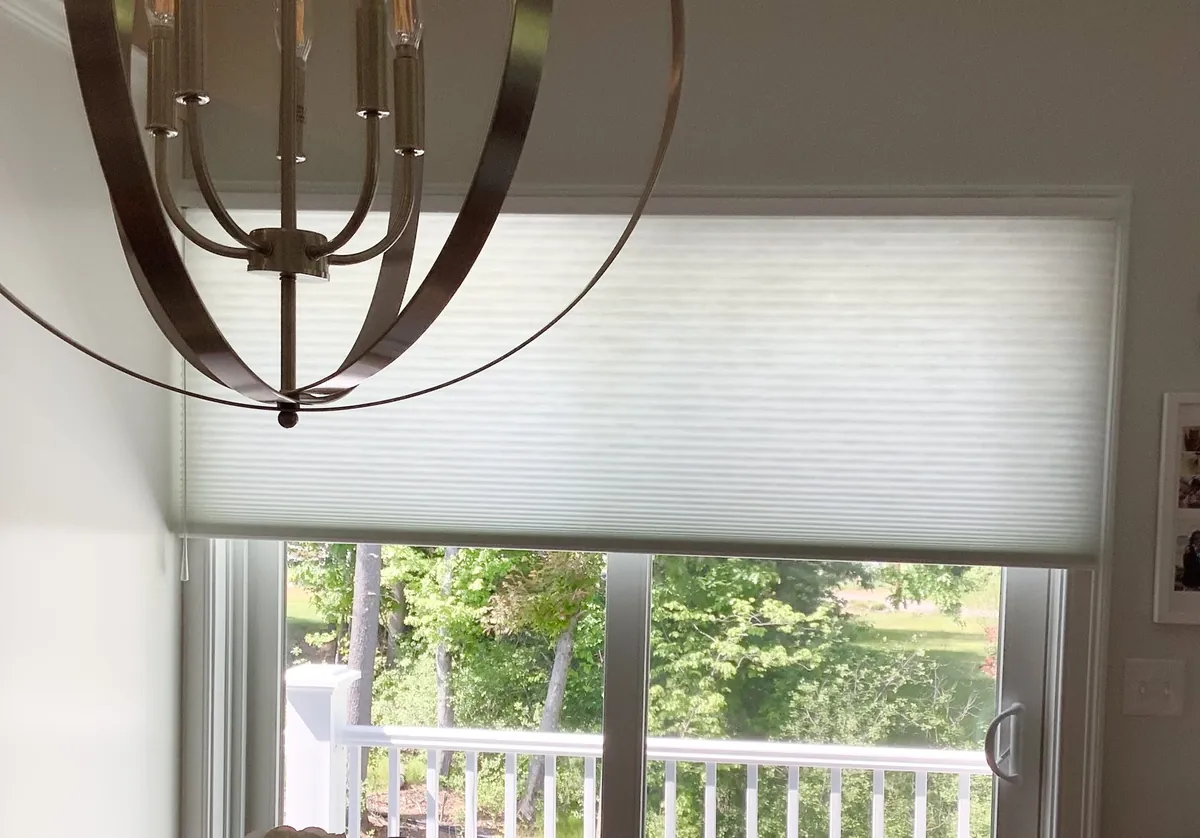
Summer cottages that became year-round homes
A lot of Wareham’s shore houses were never meant for January. The cottages in Onset and around Swifts Beach were built as summer places, with thin walls, small windows and rooms that opened straight onto a porch. Over the years many have been winterised and turned into year-round homes, and their owners find out in the first cold snap that the windows are where the heat goes. That is often the reason a call about cellular shades in Wareham comes in.
The rest of town is different again. Main Street’s village houses stand close to the sidewalk with taller, older windows, and the newer colonials inland have standard openings and modern glass.
Down on the shore streets, salt is part of daily life. It drifts in with every breeze off the bay and settles on anything near an open window, so what is hung in that window needs to cope with it.
Cellular shades in Wareham, matched to the house
The honeycomb options below all come in our vans, so you can try each one against your own glass. Here is what tends to suit Wareham’s mix of converted cottages, village houses and newer homes.
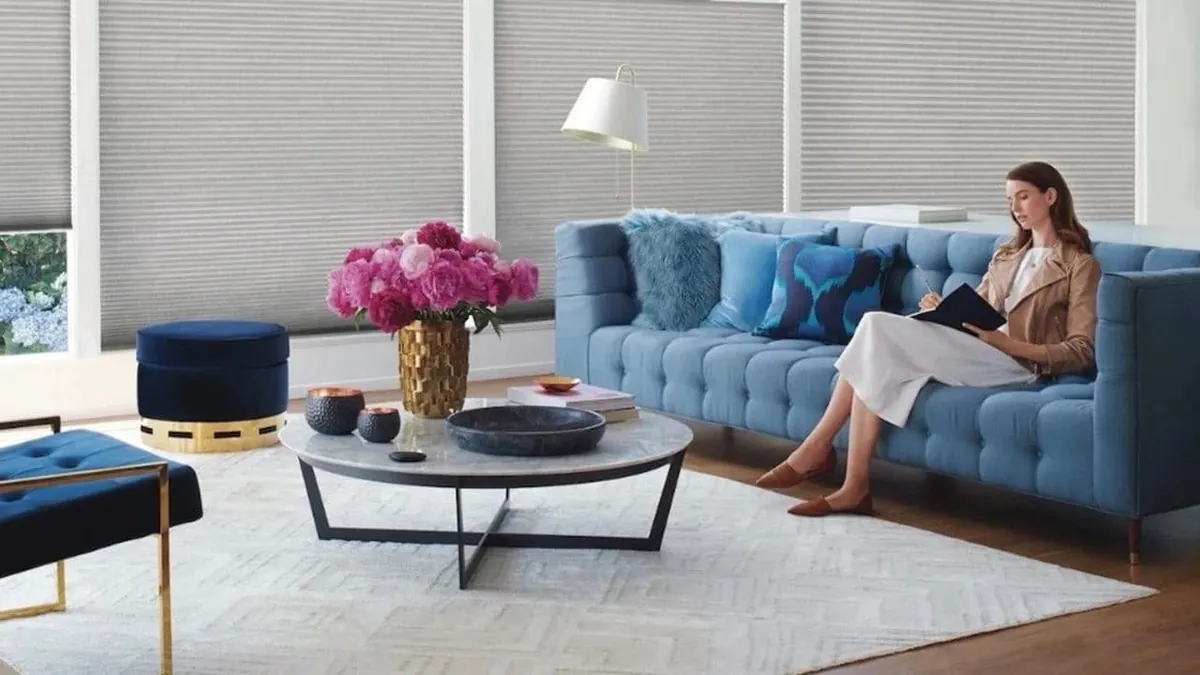
Small-window Applause
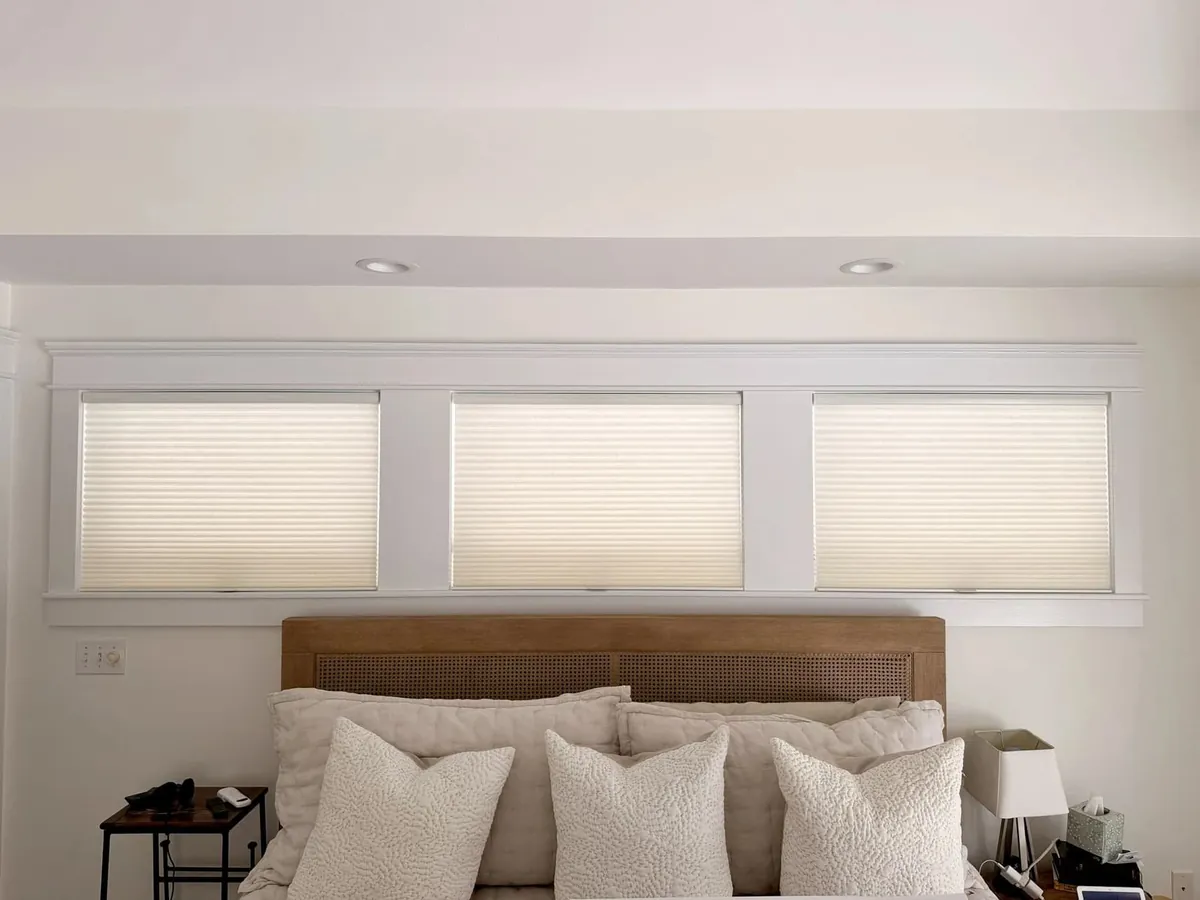
Applause honeycomb made to the exact size of a cottage’s small original opening, so a tiny window gets a proper shade.
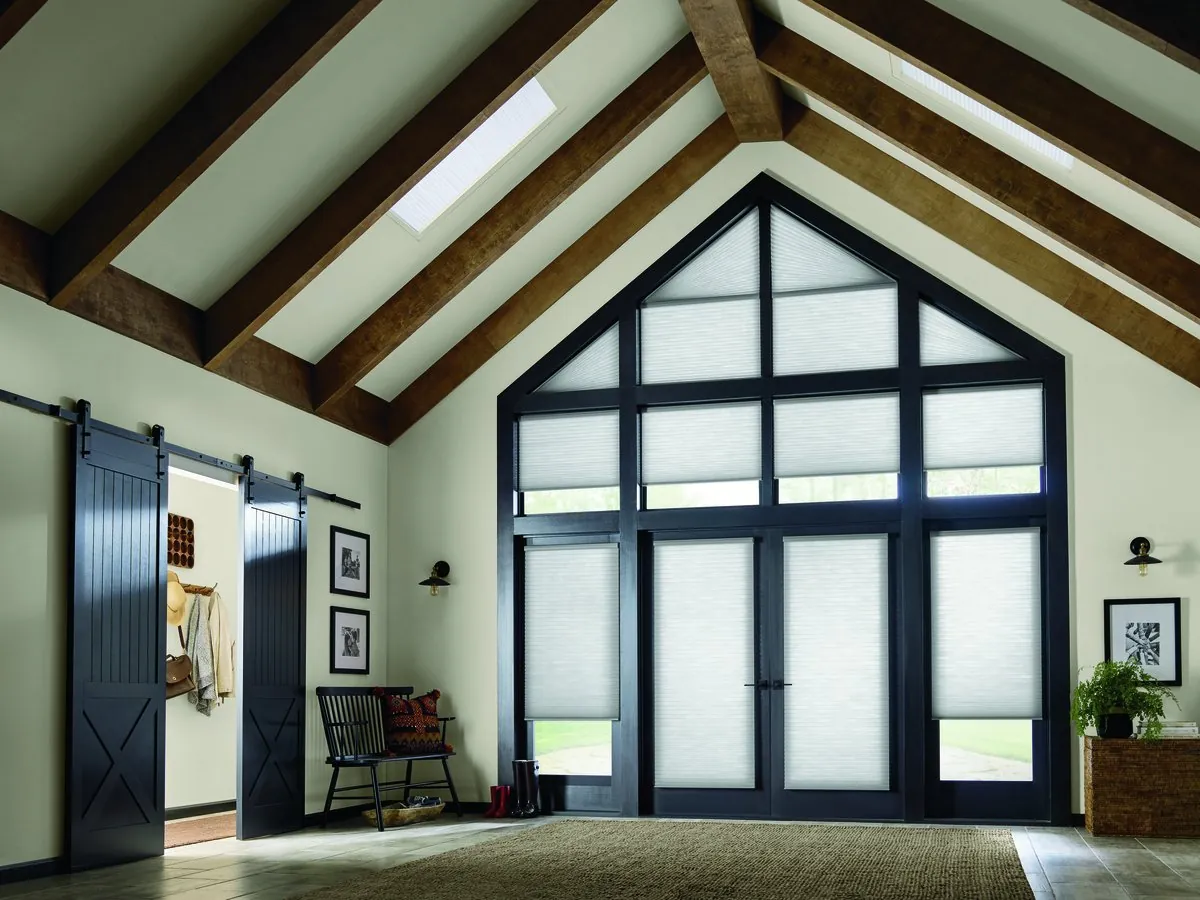
Duette for the main rooms
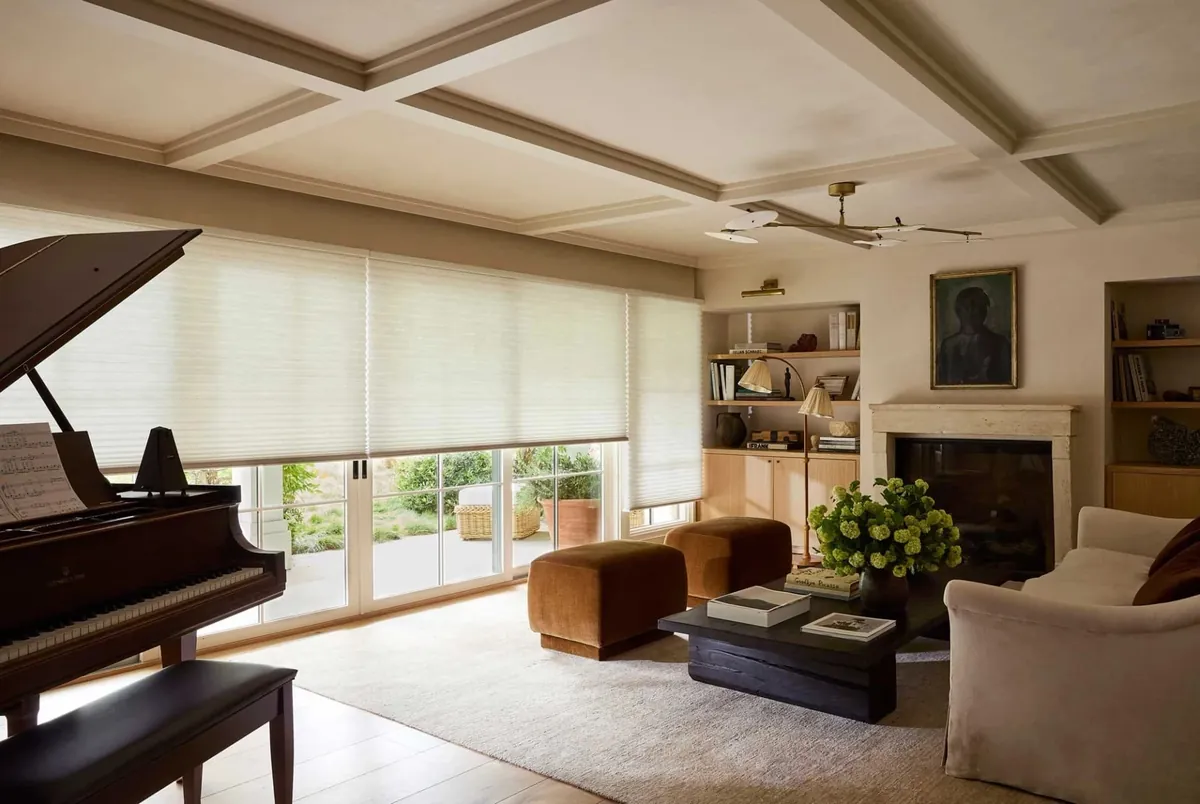
The broadest Hunter Douglas honeycomb line, for living rooms, tall village sash and anywhere the fabric is on show.
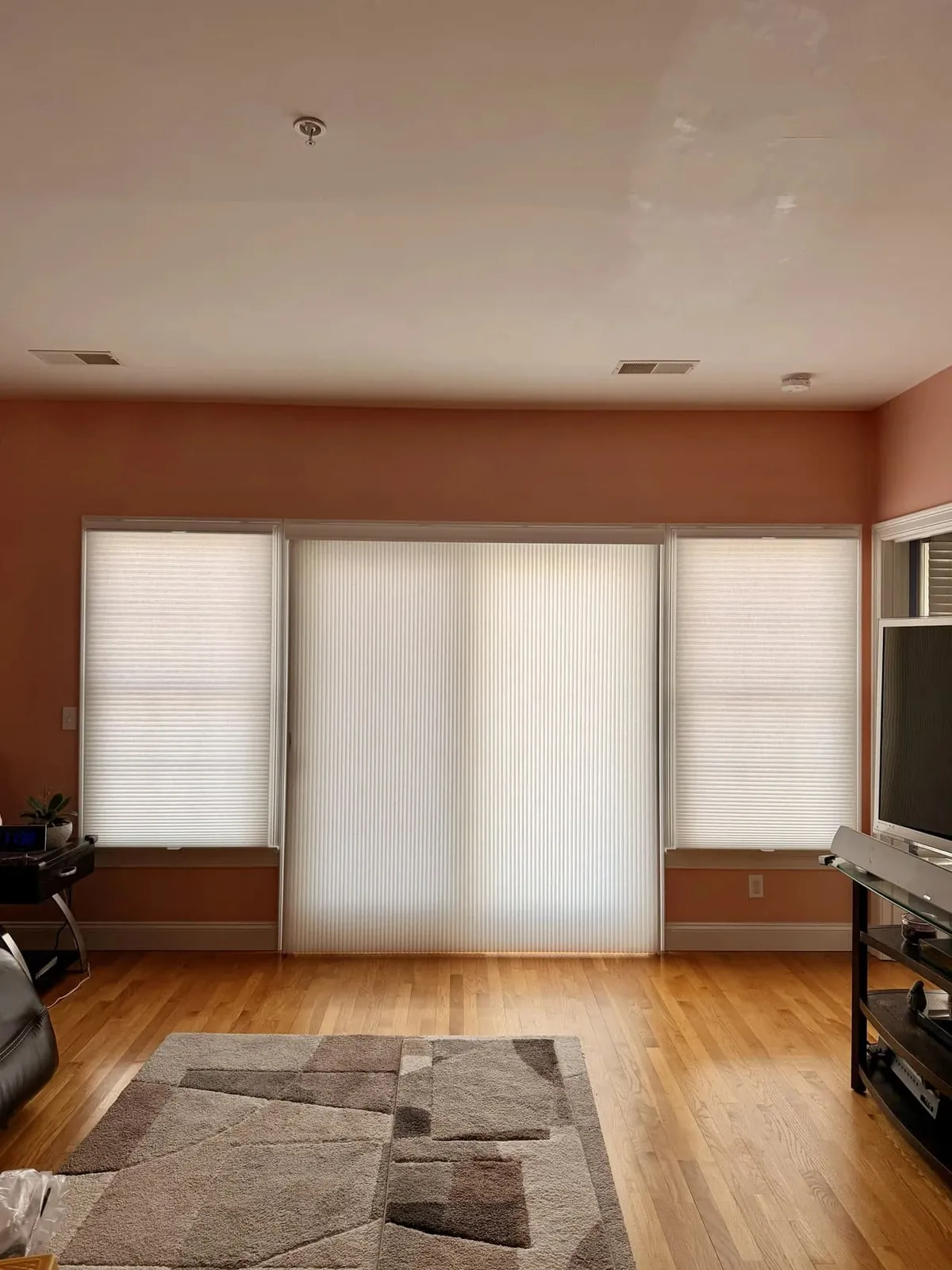
Sliders and porch doors
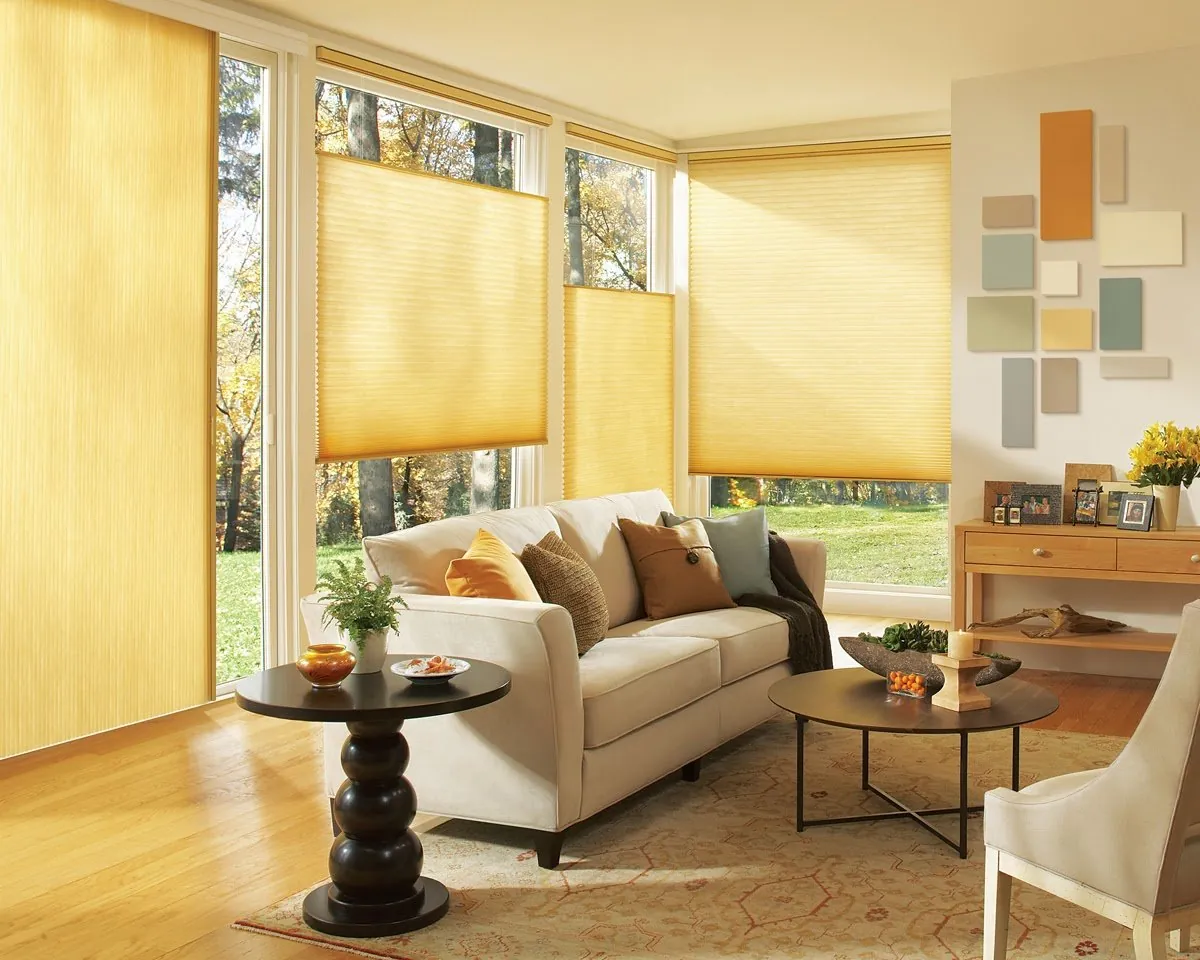
A vertical honeycomb shade for the slider that replaced an old porch door, stacking to one side when you step out.
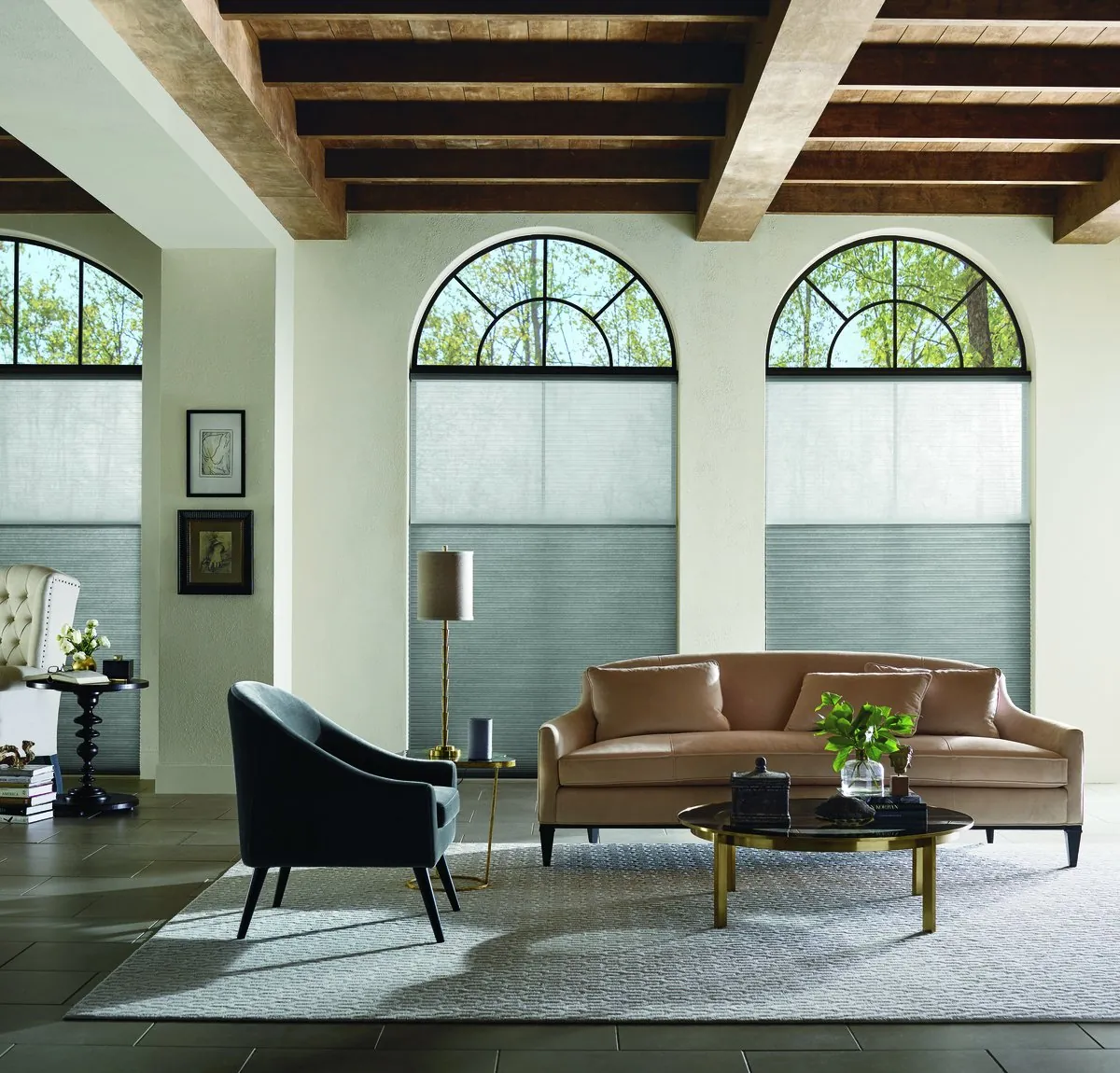
Top-down, bottom-up
Daylight over the top, privacy below, for a village window a few steps from Main Street.
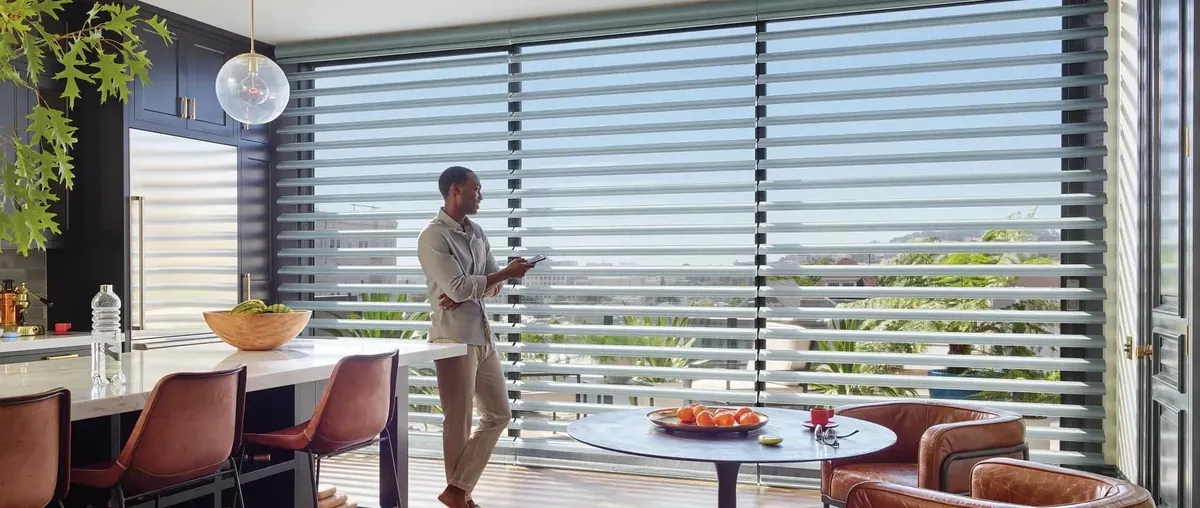
Motorized control
PowerView lets you raise and lower shades from your phone or a remote, or set them on a schedule.
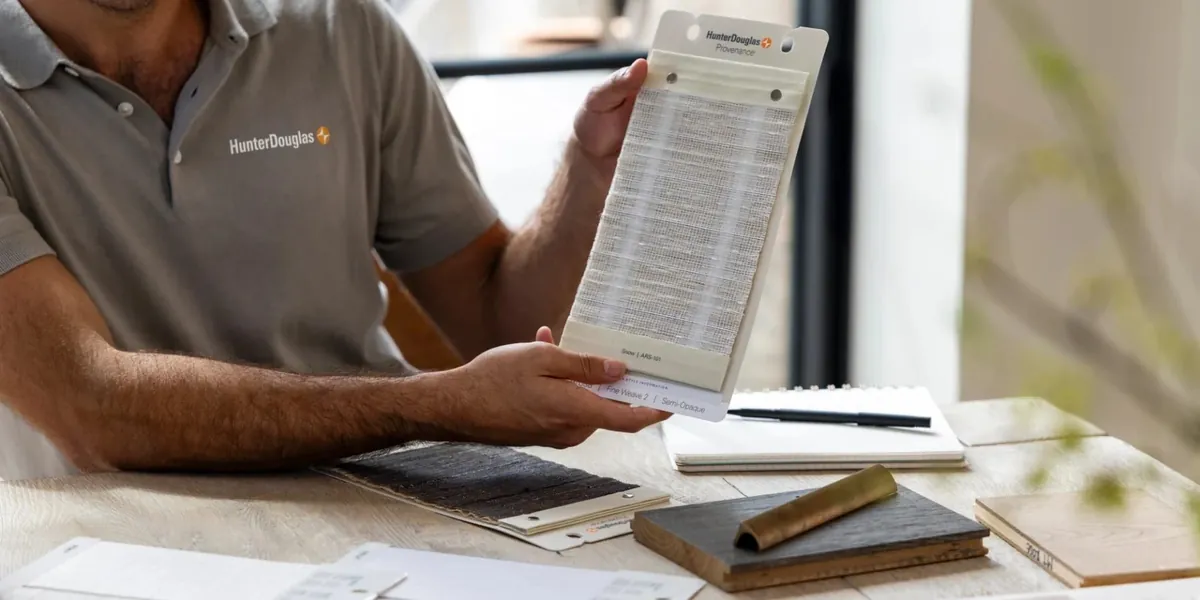
Sample books at home
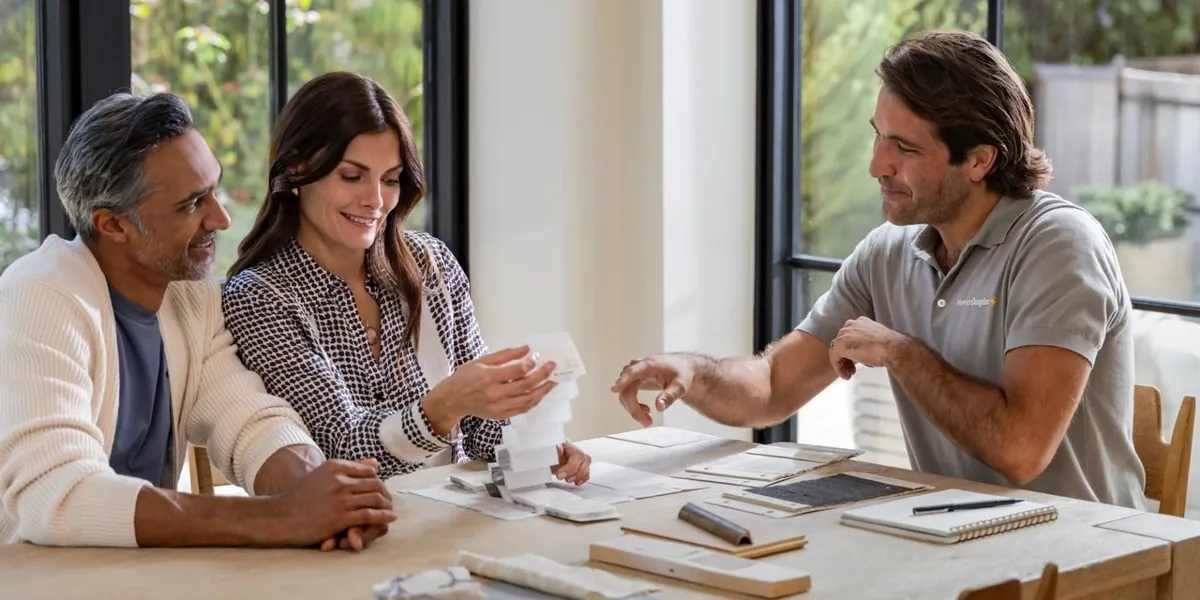
We bring fabric books and lift samples to your kitchen table, along with an interior design consultation if you want one.
The first winter in a converted cottage
A cottage built for summer and then insulated for winter often still has its original windows, or small replacement windows fitted into the old openings. The walls may now be warm, but the glass is not. Sit near one of those windows on a cold evening and you can feel the chill coming off it.
A honeycomb shade is one of the simplest ways to change that without touching the window itself. Each cell holds a pocket of still air, and when the shade is lowered that layer of air sits between the room and the cold glass. In a small cottage room, where nobody sits far from a window, the difference shows quickly. A double-cell fabric adds a second layer of pockets for the coldest rooms.
Because cottages were built quickly and changed often, their windows are rarely consistent. One wall may hold a tiny original sash next to a newer, larger window that went in when the porch was enclosed. Every shade we order is made to its own opening, so the small and the large can share one fabric and line up at the top.
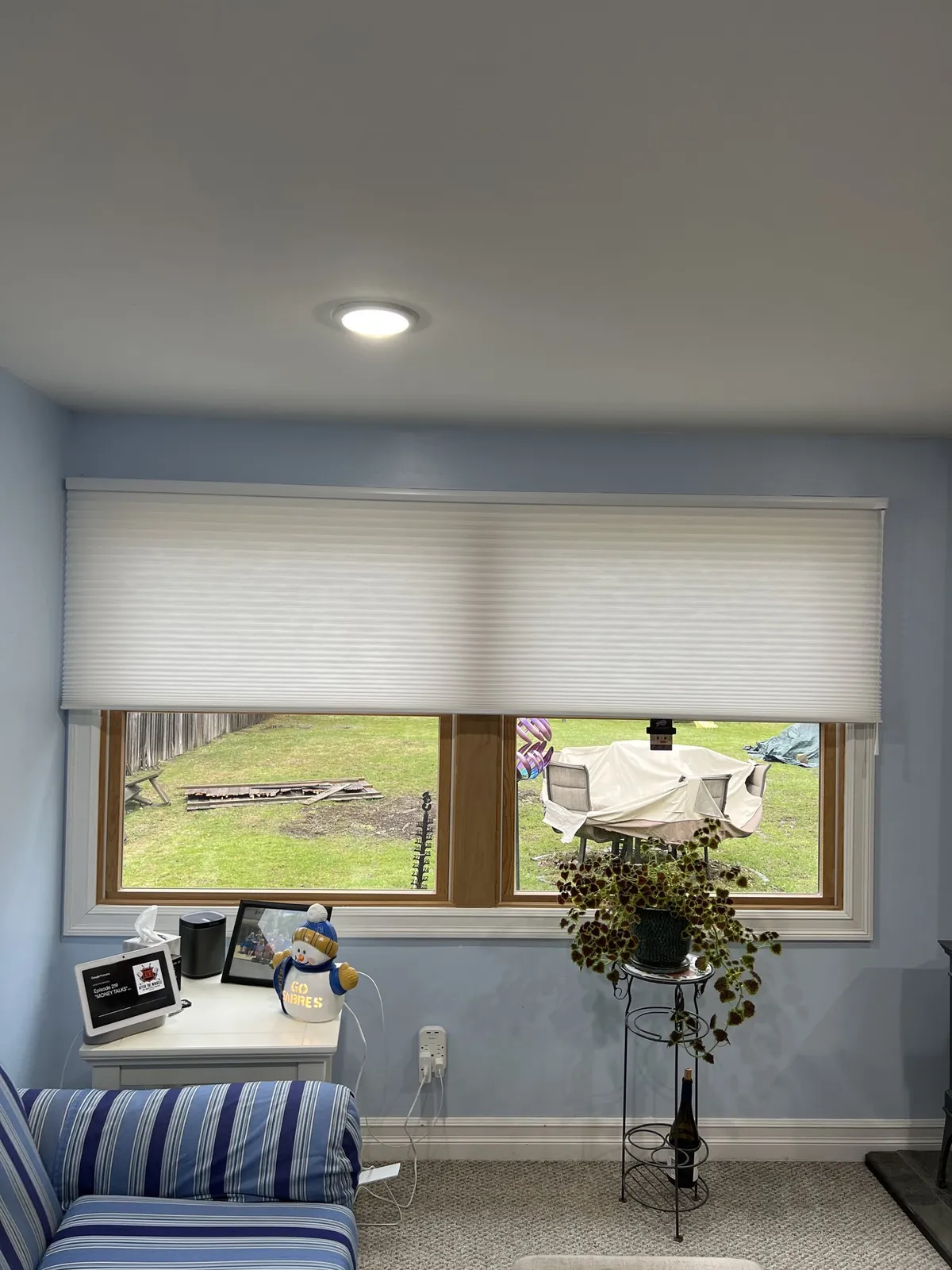
Small original openings in Onset
Onset’s cottages pack closely along streets that run down toward the water, and their windows are small. Some are just a single sash in a bedroom wall, some are narrow casements in a kitchen, and some are little square windows in a bathroom or under the eaves.
Small windows are where a made-to-measure shade earns its keep. An off-the-shelf blind on a narrow cottage window usually overhangs the frame or leaves a gap. A honeycomb shade is built to the width of the opening, so it fits inside the frame where the depth allows and looks as though it belongs there. Raised, the fabric folds into a slim stack and leaves most of a small window clear.
On close-set streets, privacy matters as much as warmth. A light-filtering fabric keeps a room bright while showing nothing from outside. In a bathroom or a bedroom that faces the next cottage, a top-down, bottom-up shade lets light in over the top while the lower glass stays covered.
Swifts Beach and the salt on the shore streets
Houses near Swifts Beach and along the other shore streets take salt air with every breeze, more so than the houses a mile inland. Over time it settles on any exposed metal near a window that is opened in warm weather.
A honeycomb shade keeps most of its working parts inside the headrail. That leaves far less exposed than an older corded blind, with its cord locks and long cords hanging at the side. A cordless lift removes the cord altogether: you raise and lower the shade by its bottom rail. For a window behind a sofa or over a counter, PowerView motorization does the lifting, and we work out how each motor is powered on these shore windows at the visit.
Our certified Hunter Douglas installers fix brackets into solid wood rather than plaster alone, so the shade stays level on a window that gets opened all summer.
Enclosed porches turned into rooms
Many shore cottages gained a room when their front or side porch was closed in. These rooms are usually long and narrow, with a row of windows on three sides and very little wall. They are bright and pleasant in spring and fall, and they get hot in July and cold in January.
A row of honeycomb shades makes a porch room usable for more of the year. Each window gets its own shade, sized to its own opening, and the headrails are set at the same height so the row looks tidy from inside and out. In summer, lowering the shades on the sunny side keeps the room comfortable. In winter, the cells slow the heat escaping through all that glass.
Porch windows were often added in stages, with whatever sizes were available. Measuring each one separately is the only way to get a row of shades that looks even.
Cottage kitchens and bathrooms
In a small cottage the kitchen and bathroom windows work hard. The kitchen window often sits right over the sink, where steam and splashes reach it, and the bathroom window may be a small high sash that faces a neighbor’s yard a few steps away. Both are easy to leave until last, and both are used every day.
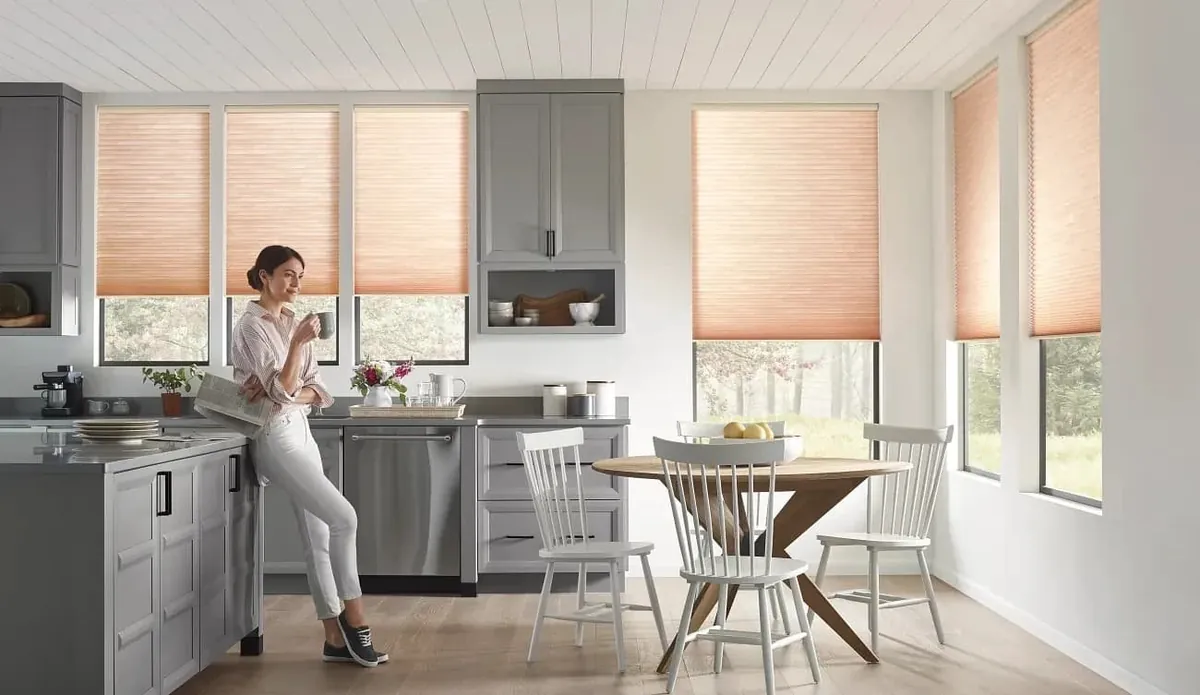
Over a sink, a cordless honeycomb shade is the tidy choice, because there is no cord to dangle into the basin and the bottom rail is easy to push up with one hand. A light-filtering fabric keeps the kitchen bright for cooking. In a bathroom, a top-down, bottom-up shade lets daylight in over the top while the lower glass stays covered, and a room-darkening fabric is rarely needed. Where a bathroom window sits too high to reach comfortably, a motorized shade takes care of it.
Converted cottages often have these rooms in the oldest part of the house, with the smallest and least regular openings. That is one more reason we measure each of them on its own when we plan cellular shades in Wareham cottages, rather than assuming two windows that look alike are the same size.
Village houses on Main Street
Main Street’s houses are older and more upright than the shore cottages: two stories, taller double-hung windows, and front rooms that sit a short distance from the sidewalk. Here the windows are bigger but the issues are similar: an older pane that runs cold, and passers-by who can see straight in.
An inside-mounted honeycomb shade keeps the casing on show and sits neatly within the frame. Before we commit to that, we check the depth at each window, because older sash hardware can take up space in the frame. Where it is too shallow, a slim outside mount on the casing is the better choice, and we say so.
For front rooms near the street, a top-down, bottom-up shade is usually the most useful feature. Lower the top for daylight and keep the bottom half covered. At night, a heavier light-filtering fabric keeps the lamps from showing the whole room.
Newer colonials inland
Away from the water and the village, Wareham’s newer colonials have standard window sizes, modern double-glazed sash and more rooms. That makes them straightforward to fit, and many owners treat the whole house in one order.
A typical colonial plan might take light-filtering honeycomb shades in the kitchen and family room, room-darkening shades in the bedrooms, a vertical shade on the slider to the deck, and PowerView on the tall window over the stairs or in a two-story foyer. Replacement-style windows often have tilt latches near the top of the sash, so we check each one to make sure an inside-mounted headrail clears them.
For cellular shades in Wareham colonials, the benefit is as much about summer as winter. Newer houses inland often take the full afternoon sun on their back walls, and a lowered honeycomb shade slows the heat that would otherwise build up through the glass.
Why trapped air keeps a room warm
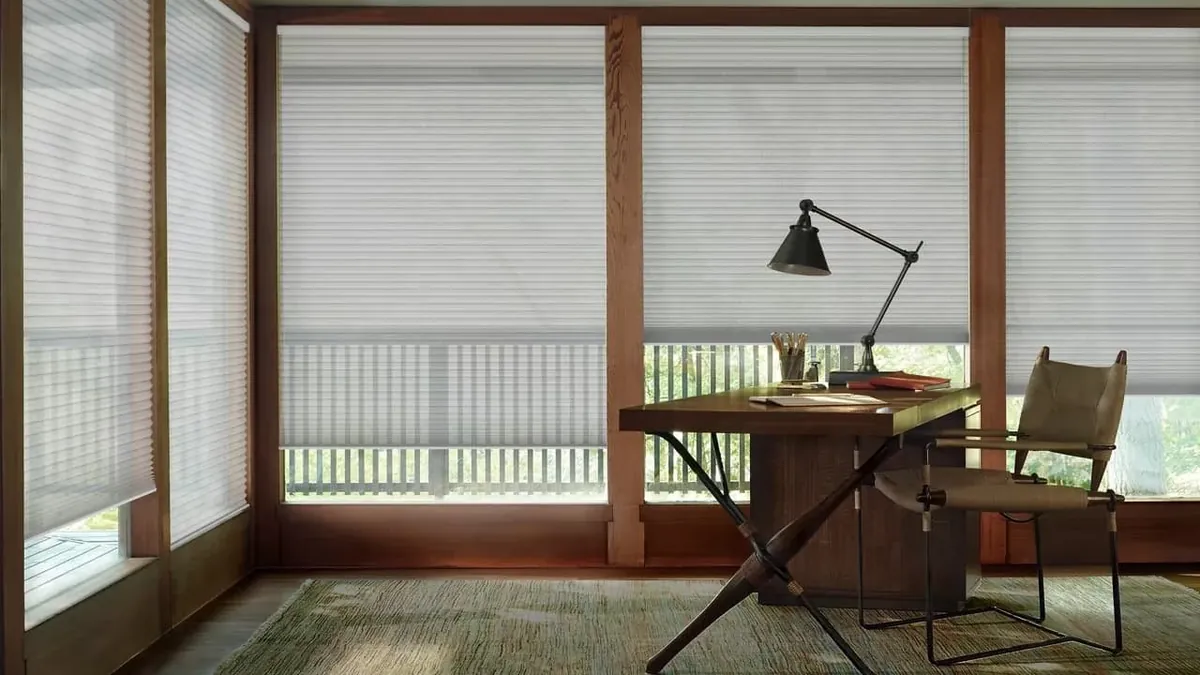
From the side, a honeycomb shade looks like a row of hollow tubes stacked one on top of the next. Lowered, every tube holds a pocket of air that hardly moves. Still air is a poor conductor of heat, so it slows the cold reaching the room from the glass and slows the warmth leaving the room for the glass.
In a converted cottage, where the windows are often the weakest part of the walls, that layer of air takes the edge off a cold room. In a newer colonial, it helps the big back windows in summer as well as winter. Our guide to cellular shades and winter heat goes into more detail on single and double cells.
Lifts for every kind of window
Wareham houses have everything from a small bathroom window to a two-story foyer, so lift choice changes window by window.
- Cordless. Lift or lower the bottom rail by hand. Neat on small cottage windows and safe around children and pets.
- Top-down, bottom-up. Opens from the top or bottom, for privacy on a busy street or a close-set lane.
- PowerView. The app, a remote or a schedule moves the shade. Ideal for high windows and for windows behind furniture.
We walk through the house with you and suggest a lift for each window based on how the room is used.
Picking fabric and opacity
Each room asks for something different, and opacity is the choice that matters most after size.
- Light-filtering for living rooms, kitchens and porch rooms: bright, soft, private.
- Room-darkening for bedrooms, especially in a cottage where the bedroom window faces the morning sun.
- Lighter colors for windows on the shore streets that take strong sun off the water.
- One color facing out across a village house’s front, so it looks consistent from Main Street.
We hold samples up at your own windows during the consultation so you can see each fabric in the light it will live in.
From the first visit to the finished window
Most Wareham customers start with a visit at home, which is the only way to judge a cottage’s small, odd windows properly. Our vans carry the samples, so we bring the showroom to you.
- Pick a time through Request a Consultation or the call button.
- We arrive with honeycomb fabrics, colors, opacities and lift options.
- We go room by room, starting with whatever feels coldest, brightest or most exposed.
- You test the samples at your own glass.
- We measure each window and check every frame’s depth and hardware.
- A free estimate follows, with no pressure to decide on the day.
You can read what happens at an in-home consultation for more on the visit.
Duette and Applause for a Wareham house
Duette and Applause are both genuine honeycomb shades, built around the same air-holding cell. The choice comes down to range. Duette goes wider, with more fabrics and textures, bigger and odd-shaped sizes, and the sideways shade for sliders. Applause offers its own color family and works well on ordinary windows.
A converted cottage might be Applause in most rooms with a Duette vertical shade on the slider. A village house might take Duette in the front rooms, where the fabric shows from the street, and Applause behind. Many orders for cellular shades in Wareham combine the two, decided window by window. Read more on the Duette and Applause pages, or see the whole cellular shades range.
Gallery dealer status and certified installation
Hunter Douglas recognises dealers who meet its standards as Gallery dealers, and Blinds & Designs is one of them. In practice, that gives a Wareham house access to the whole honeycomb range through one dealer, from the smallest cottage shade to the vertical shade on a slider.
Hunter Douglas has also certified our installers, so each shade is fitted to the maker’s standard. When a shade needs help later, we handle blind and shade repairs.
Beyond honeycomb shades, our range takes in Hunter Douglas shutters, blinds, roller and roman shades, so the rest of the house can be covered at the same visit. See our custom blinds in Wareham, plantation shutters in Wareham, or everything on our Wareham page.
Sagamore is just down the road
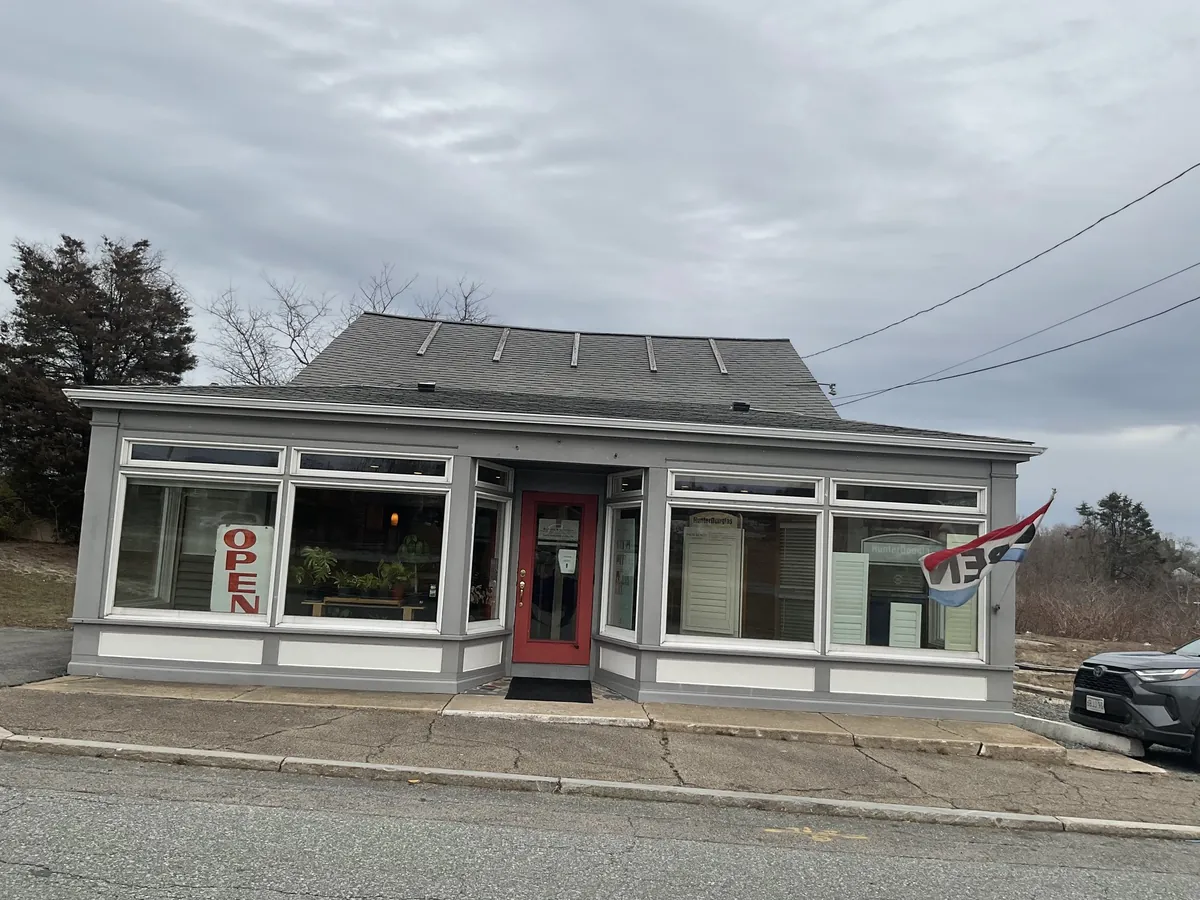
Our Sagamore showroom is the nearest to Wareham, a short drive across the canal. If you want to see shades before anyone comes to measure, start there.
Most Wareham customers, though, choose at home, where a cottage’s light and its small, uneven windows can be judged properly. We bring the samples, measure every opening and give you a free estimate at the end.
Questions from Wareham
Will honeycomb shades fit the tiny windows in my converted cottage?
Yes. Every shade is built to its own opening, so even a very narrow or small window gets a shade that fits it properly. Where the frame is deep enough, we mount it inside so the trim stays visible.
Do the shades cope with salt air near Swifts Beach and Onset?
Most of a honeycomb shade’s working parts sit inside the headrail, so far less is exposed than with older corded blinds. A cordless lift or PowerView motorization removes the hanging cord entirely.
My cottage is cold in winter. Will honeycomb shades help?
They help with the glass, which is usually the coldest surface in a converted cottage. The air held in each cell slows the cold coming off the window, and a double-cell fabric adds more.
Can you cover a whole enclosed porch?
Yes. Each window gets its own shade sized to its opening, and we set the headrails at the same height so the row looks even. Shades on the sunny side make the room usable on hot days.
What does the estimate cost?
Nothing. It is free, and we give it after measuring the windows you want covered.
Your Wareham windows, measured and quoted
Start with the room you notice most, whether that is a cottage bedroom that runs cold or a colonial family room that bakes in the afternoon. Request a consultation and our van will come to Wareham with the honeycomb range. We measure each opening and you receive a free estimate. You can also use the call button, or call in at the Sagamore showroom.