
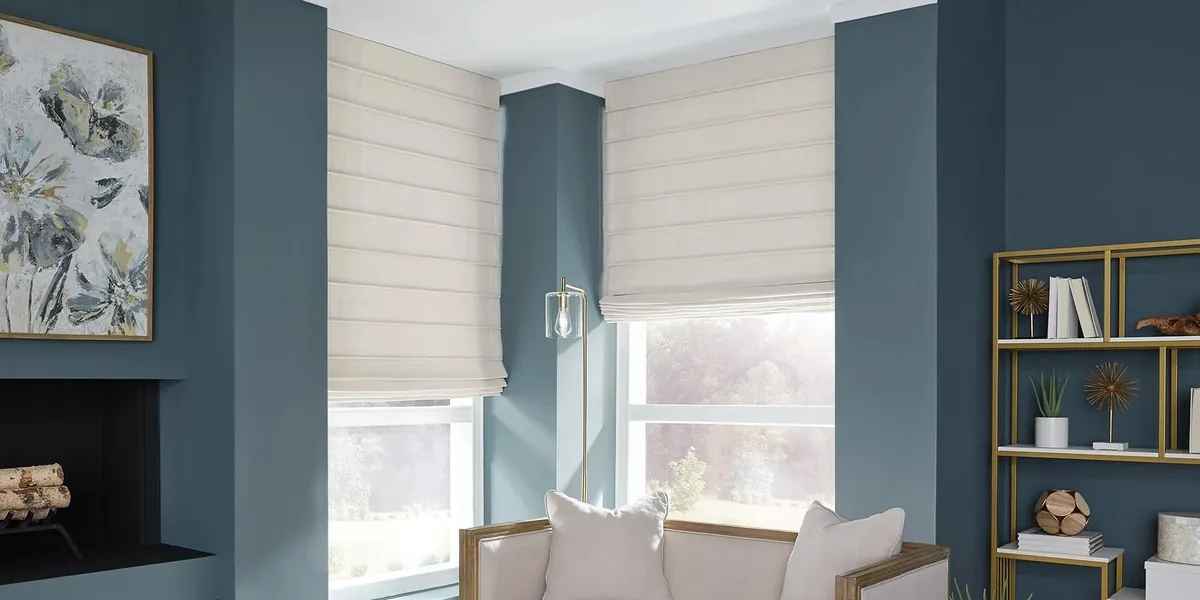
Old sash on Washington Street, walls of glass on Powder Point
Duxbury asks two very different things of a fabric shade. Along Washington Street and down toward the Nook, antique capes and Federal houses still have the small original openings they were framed with, often a handful of panes in a sash barely wider than your shoulders. Out on Powder Point the rooms that face the water are glazed heavily, with wide runs of glass meant to take in the bay. When we plan roman shades in Duxbury, MA, the first question is which of those two houses you live in, or whether, like plenty of houses here, you live in both at once.
A Federal house with a later addition at the back is a good example. The front parlor has small, deep openings where every inch of glass counts. The family room behind it may have a wide wall of windows toward the marsh or the water. A folded shade can suit both rooms, but not in the same fabric, fold or lift.
Inland, on the wooded lots, larger newer houses bring their own set of windows: tall great rooms, bedrooms over garages and kitchens with long runs of glass. Those are the easiest to fit, and the trees take some of the sun before it reaches the room.
Folded shades for Duxbury rooms
These are the three starting points we come back to most when we bring samples to a Duxbury house.
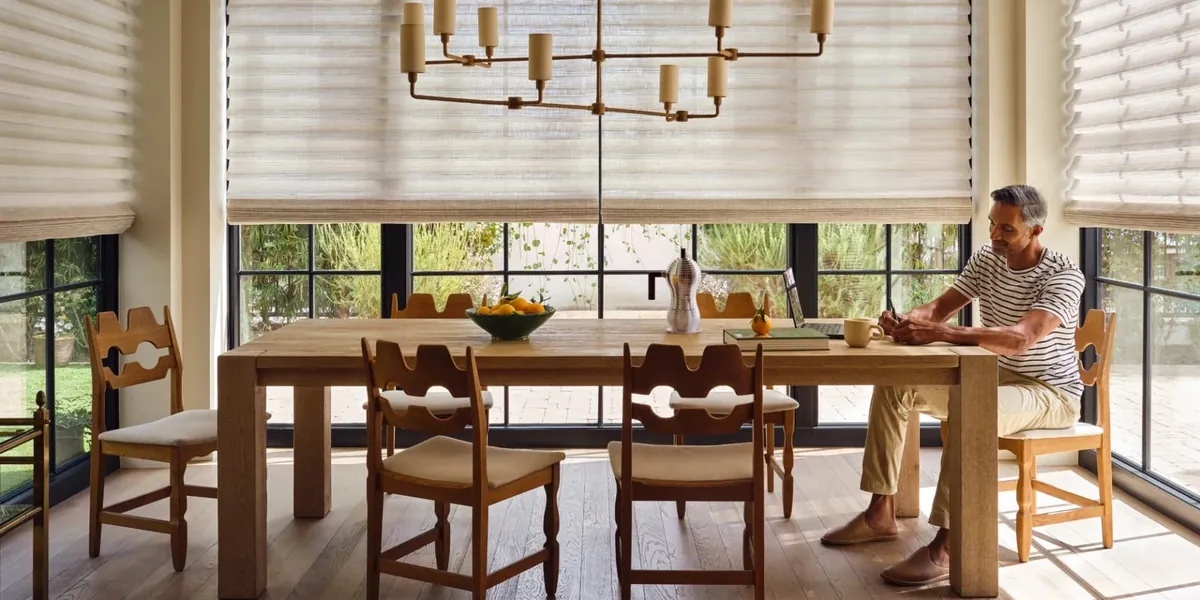
Carole Fabrics in the front rooms
Sewn to order from a decorator fabric you choose, in a crisp flat fold or a softer one. A natural partner for the painted trim and plaster walls of an antique cape or Federal house.
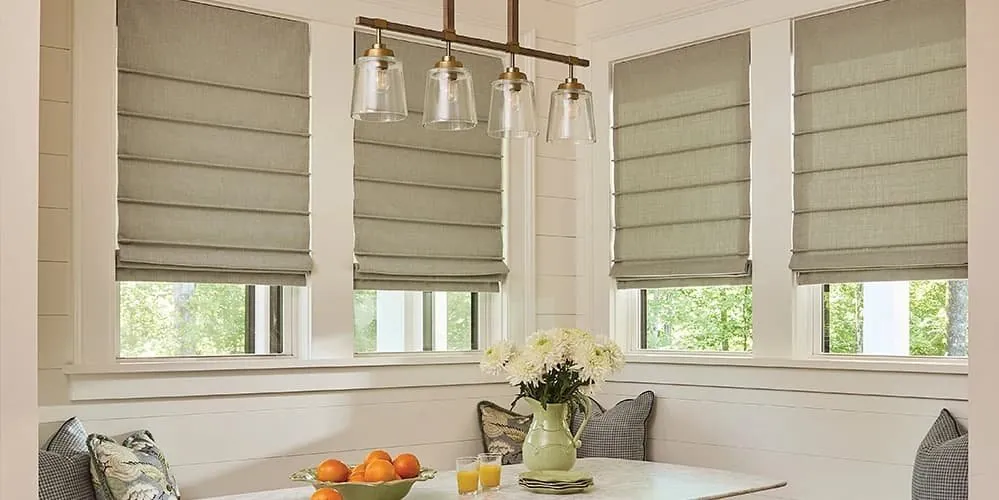
Vignette for the water side
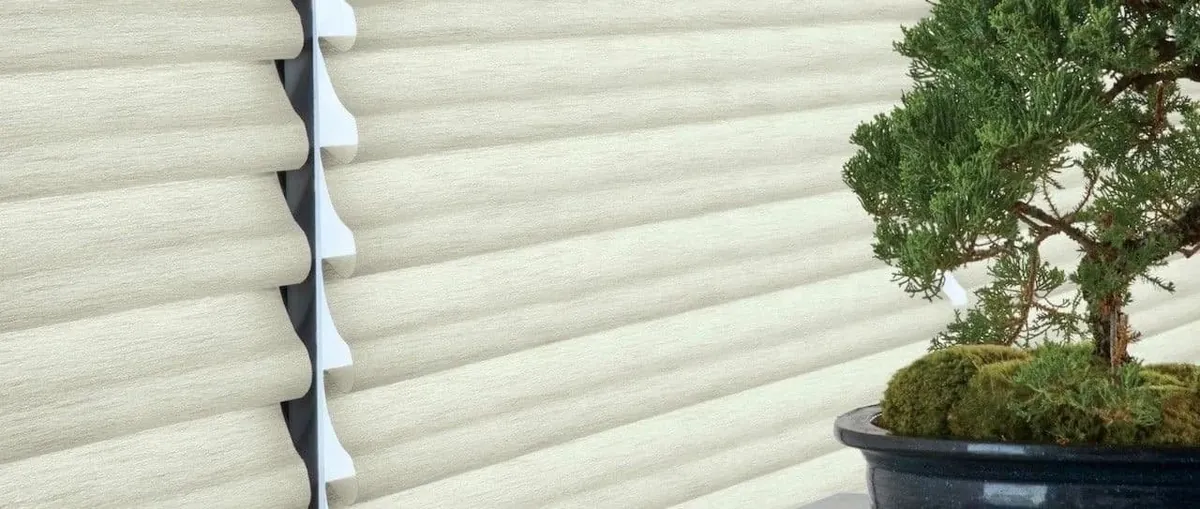
Hunter Douglas Vignette has its folds built into the fabric and no lift cords down the back. It rolls up into a slim headrail, which keeps a wide run of glass looking tidy from the room and from outside.
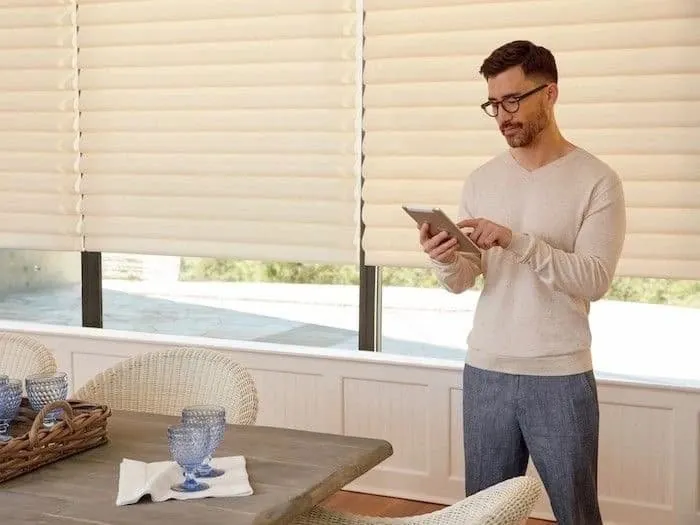
PowerView on high and hard-to-reach windows
For the upper windows in an inland great room, or a long run you would rather move all at once, PowerView lets you raise and lower shades from a remote, an app or a schedule.
Small original openings and how a fold stacks
The difficulty with a small antique window is not fitting the shade into it. A narrow sash is easy to measure and easy to cover. The difficulty is where the fabric goes when you raise it. A sewn roman shade gathers its folds at the top, and on a tall modern window that band of fabric is a small fraction of the glass. On a short antique sash it can take a real share of the daylight.
There are several ways round it, and we usually combine two or three. A lighter fabric folds into a thinner stack than a heavy one. Setting the headrail as high as the opening allows lets the gathered fabric sit over the head of the frame rather than over the glass. A flat fold stacks more neatly than a looped or relaxed one. And Vignette, which winds its fabric up around a roller inside the headrail rather than piling it in pleats, leaves more of a small window clear than any sewn shade can.
We bring both kinds of sample, so you can raise each one on your own window and see how much glass it leaves. On a cape where the front rooms are already dim, that comparison often decides the room.
Federal houses near the Nook
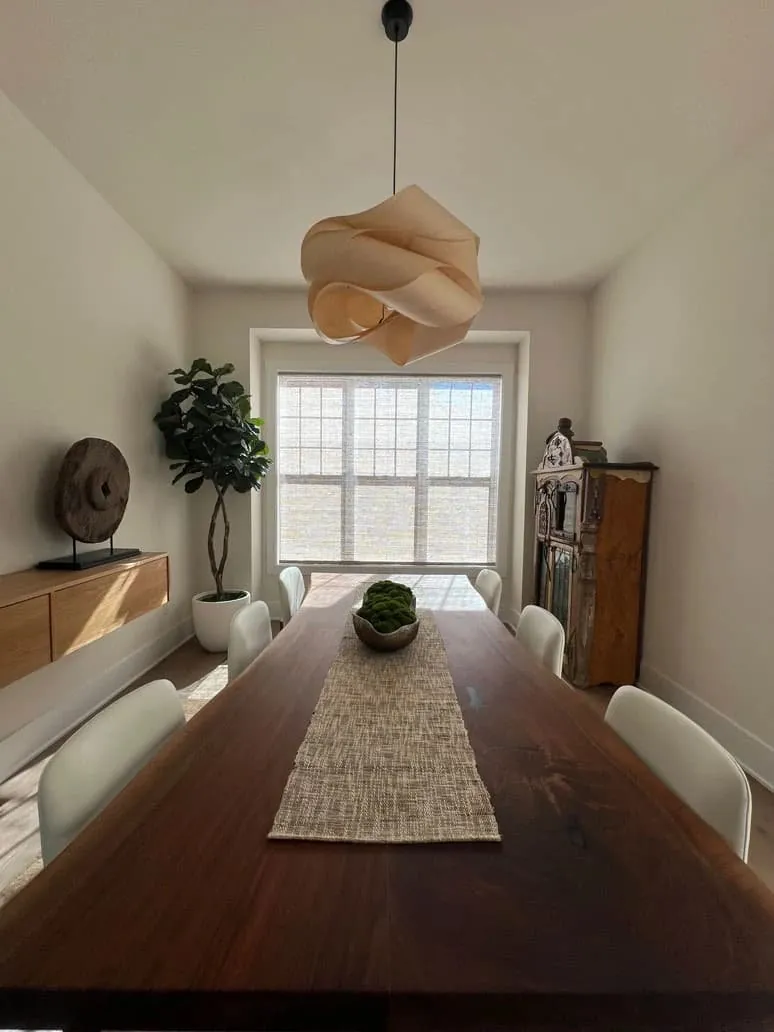
The Federal houses down toward the Nook tend to be more formal than the capes, with symmetrical fronts, taller rooms and careful interior trim. Their windows are still modest by modern standards, but the rooms are higher, so the window sits in a larger expanse of wall. That gives a folded shade more room to work, and it gives the fabric a bigger role in how the room looks.
Many of these houses have casings worth showing off. An inside mount keeps the headrail within the opening, so the casing stays fully visible and the shade reads as part of the window rather than a cover over it. Where the jambs are too shallow or too far out of square for that, a neat outside mount above the casing can work, and it also lets us lift the stack clear of the glass. We will tell you honestly which suits each window.
In a formal front room, a Carole Fabrics flat fold in a linen, a fine stripe or a small-scale print fits the period without looking like a costume. In a dining room, a fabric can pick up the color of the walls or the upholstery. These are decisions best made with the fabric in your hand against your own paint, which is why we bring the library to you.
Powder Point and the rooms that face the water
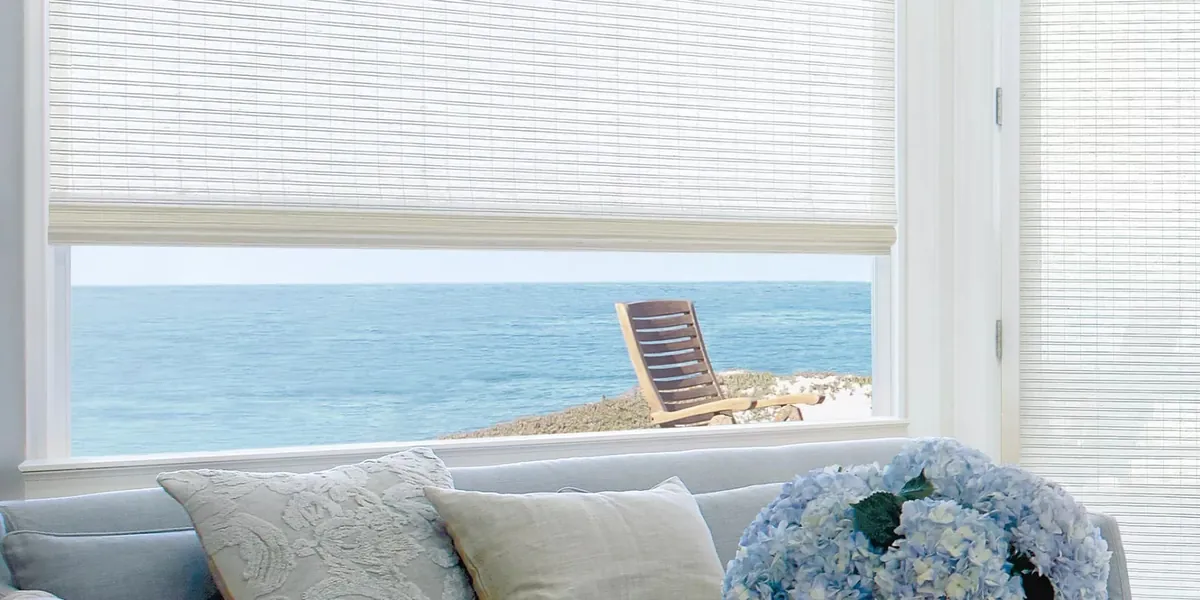
On Powder Point, the rooms that matter most are the ones built around the view. Long runs of windows look across the water, and the light that comes through them is strong for much of the day, partly from the sky and partly bounced up off the bay. Those rooms are a pleasure to sit in and a challenge to shade, because nobody wants to lose the view they paid for.
A folded shade helps in a few ways. Raised fully, it disappears into a compact band at the top of each window, and the view is untouched. Lowered part way, it cuts the high sun while leaving the lower part of the glass open to the water. In light-filtering fabric it softens glare without turning the room dark. Where a whole wall of windows faces the bay, matching shades set at one height make the room look calm even when the glass is a patchwork of sizes.
Wide openings are usually split into two or three shades on matched headrails, so each one stays light enough to lift and you can lower one end against the afternoon sun while the other stays open. On a run that long, PowerView is worth considering: one button moves the whole wall, and a schedule can bring the shades down before the late sun swings round.
Fabric that holds up in strong coastal light
Sun is the enemy of fabric color. A shade on a south or west window that also takes reflected light off the water gets more exposure in a summer than a north-facing shade gets in years. Strong, saturated colors fade fastest; lighter neutrals and natural tones hold their look much longer.
That is why the color conversation for roman shades in Duxbury starts with the compass. We note which way each window faces and whether it looks over water, lawn or trees, then steer the bright rooms toward cloths that age gently and save the richer colors for the shaded side of the house, where they will keep their depth.
A lining protects the face fabric, as well as changing how much light comes through. On the water side we usually suggest a lined Carole fabric or a Vignette fabric chosen for bright windows, in a color that will still look right after a few summers. In the inland houses, where trees shade much of the glass, you have more freedom to choose a deeper color.
Sea air is the other thing a Duxbury house near the water lives with. Vignette keeps its working parts inside the headrail, and a cordless lift on a sewn shade removes the cord lock at the side, so there is less exposed hardware near an open summer window.
Larger houses on wooded lots
Away from the water and the old village streets, Duxbury’s newer houses sit on wooded lots with long driveways and plenty of space between neighbors. They tend to have big, regular windows: a two-story entry or great room, a kitchen opening onto a deck, and bedrooms with wide double windows.
For these houses roman shades in Duxbury are mostly about style and comfort. The trees give privacy during the day, so many rooms want a light-filtering fabric that keeps the space bright. Bedrooms take a room-darkening lining. A great room with upper windows is a natural place for PowerView, because nobody wants a pole or a ladder to reach a shade high above the floor. You can read how it works on our motorized blinds and shades page.
Because these rooms are large, a folded shade can carry a bolder fabric than it could on a small antique sash. A textured weave, a wide stripe or a pattern pulled from a rug or a sofa can give a big room some warmth and scale.
Two Hunter Douglas lines, two kinds of room
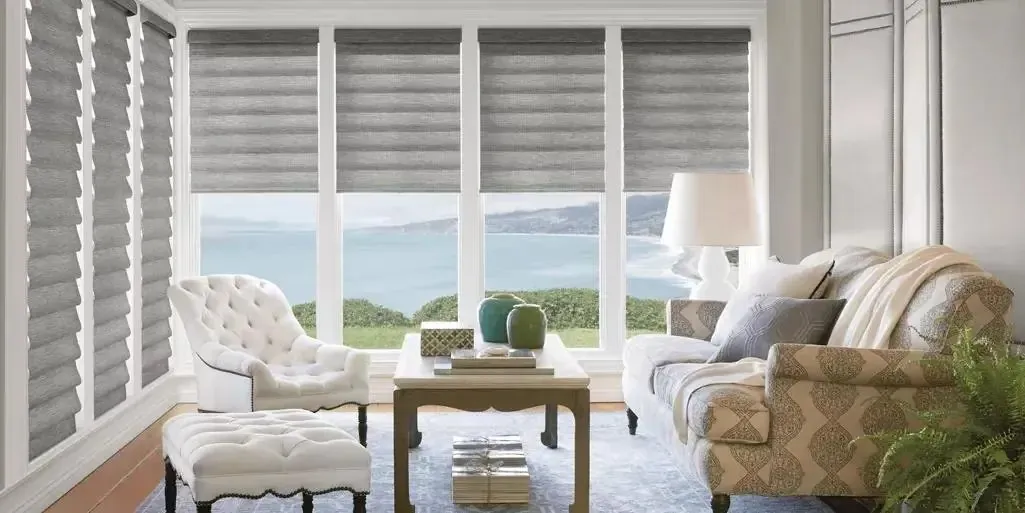
Hunter Douglas makes the two folded shades we fit most, and in Duxbury they tend to sort themselves by room.
Vignette behaves more like a roller than a sewn shade. Its folds are shaped into the fabric itself, so each one hangs at the same depth whether the shade is half down or fully lowered. There are no strings across the back to show through to the street, and the fabric rolls away inside a slim headrail instead of piling up. That makes it the natural pick for the family room toward the marsh, a kitchen where the shade goes up and down all day, or a tiny cape window where a sewn stack would steal too much glass. It also takes PowerView motors neatly.
Carole Fabrics shades are made up one at a time from a decorator fabric. A flat fold gives a tailored, almost architectural look; a softer fold drapes a little at each tier. Because the cloth is chosen from a large library rather than a fixed palette, the shade can match the curtains in the next room, a chair cover or a wallpaper. In a Federal dining room or a cape parlor with painted panelling, that freedom is usually what tips the choice.
So the front of an old house often gets Carole Fabrics and the newer back of it gets Vignette. Read more about each on our Vignette and Carole Fabrics roman shades pages, or start from the main roman shades page for the whole family.
Street side and water side
In this town the two faces of one house can need opposite things from roman shades in Duxbury, MA.
- Rooms facing Washington Street: the older houses sit near the road, so the front windows need cover in daylight. A light-filtering cloth lets the room stay bright while hiding it from the pavement, and once lamps are lit a lining does the rest.
- Rooms facing the bay or the marsh: nobody is looking in, but the sun is. Choose a fabric for glare and heat, keep it raised most of the day and drop it as the sun lowers.
- Bedrooms under the eaves: small dormer windows in a cape take a room-darkening lining and a short, neat stack.
- Kitchens and baths: pick a cloth that shrugs off a little steam, and a cordless lift worked from the bottom rail so nobody reaches over a sink for a cord.
Now and then a window is better served by something else, a glazed door or one very tall pane, for example. When that happens we show you the Hunter Douglas product that suits it, in a color that sits happily beside the folded shades elsewhere in the room.
How the home visit runs
Duxbury windows rarely match one another, even inside one house, so we would rather see them than guess. The sample vans let us bring the showroom to you.
- Book through Request a Consultation or the call button, at a time that suits your week.
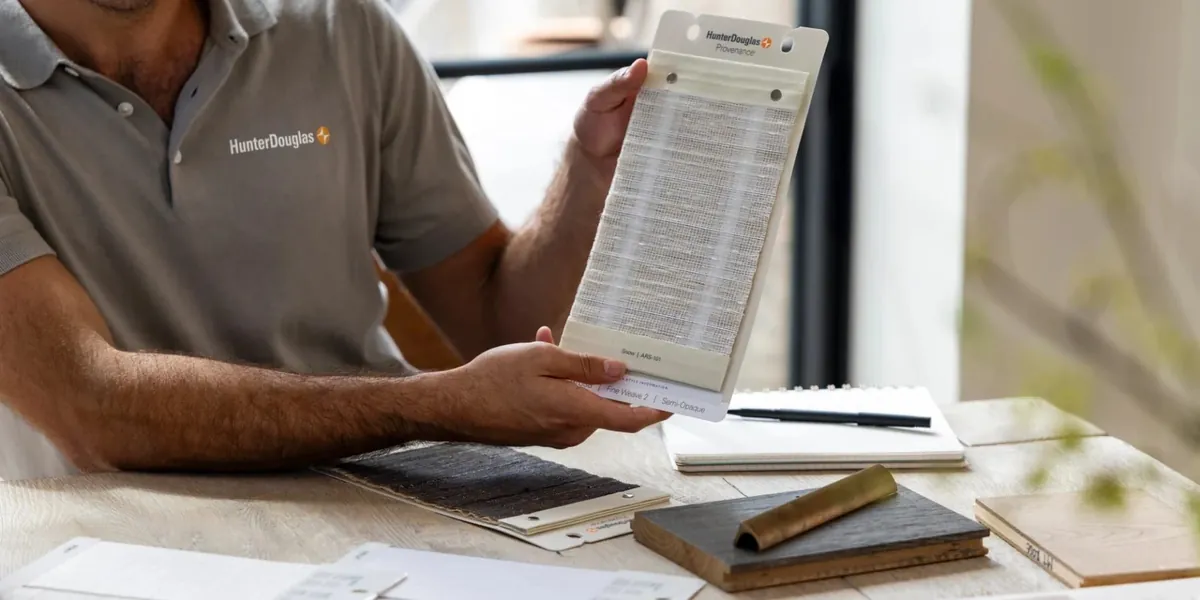
- We arrive with both lines: Vignette swatches and the Carole Fabrics books, in sheer, light-filtering and room-darkening weights.
- Together we go room by room, front parlor first, then the additions and the bedrooms.
- You hold the cloth up to each window, raise a working sample, and judge the stack against your own sash.
- Each opening gets measured top, middle and bottom, its jambs checked for depth, and the mount agreed with you.
- A free estimate follows for whatever you are weighing up, and nobody expects an answer on the doorstep.
Planning several rooms at once? Our interior design consultations can cover color and fabric for the whole house during the same appointment.
Fitting in an old frame and a new one
Hunter Douglas has certified the installers who fit our shades, and both kinds of Duxbury house keep them busy. Antique frames have usually moved, so each headrail is set level to the room rather than to a jamb that has dropped, with screws into sound timber and never into crumbling plaster. In a newer house the work is lining up long runs across wide openings and pairing any PowerView motors with your remote or phone. Our installation day page walks through what happens.
A Gallery dealer for every window in the house
Gallery status is the designation Hunter Douglas gives dealers who meet its standards, and Blinds & Designs holds it. In practice that means one appointment can cover Vignette in its full range of sizes, the whole Carole Fabrics library, and every lift and motor.
We also help with interior design, and we fix blinds and shades you already have. If other rooms need attention, see cellular shades in Duxbury, plantation shutters in Duxbury, or everything we offer on our Duxbury page.
Sagamore, the closest showroom
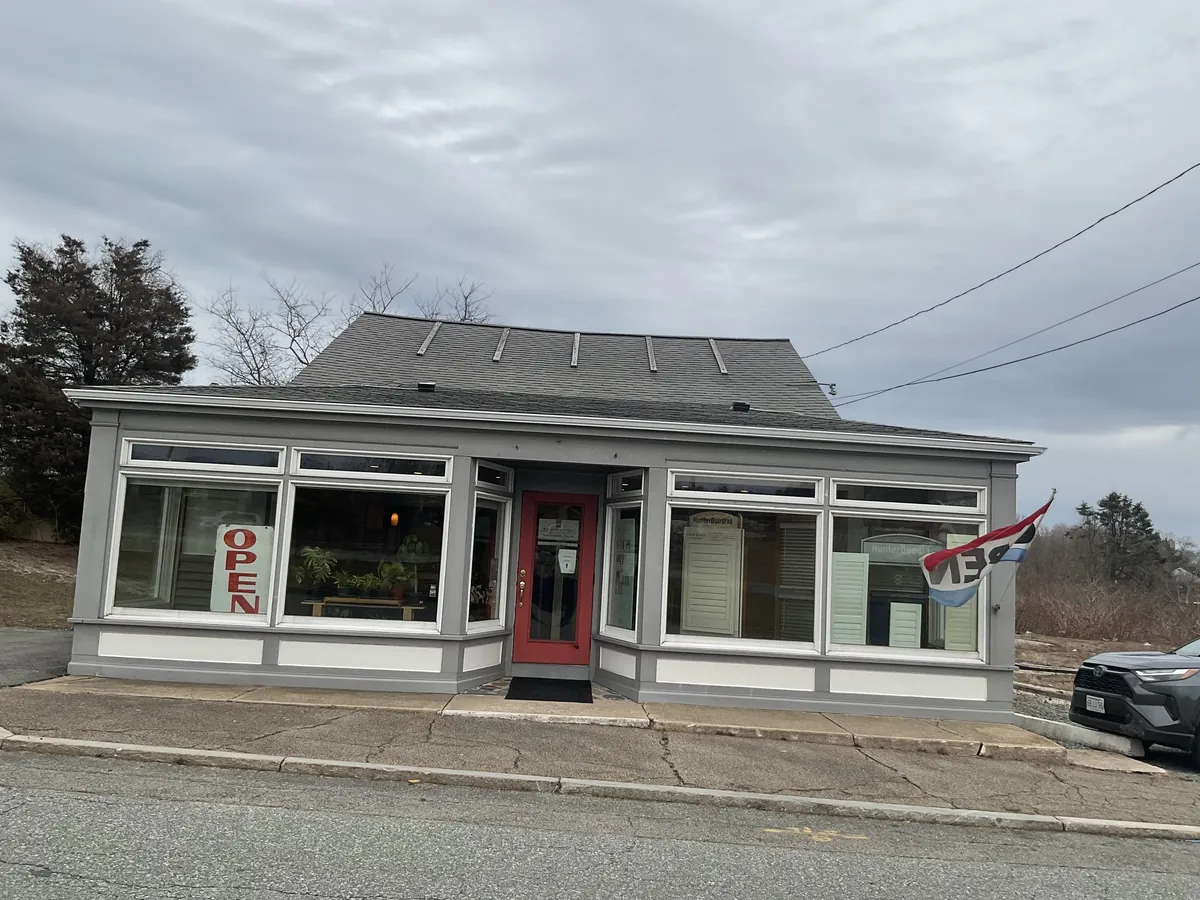
If you would like to work a folded shade with your own hands before deciding, the Sagamore showroom is the closest of our locations to Duxbury.
Plenty of Duxbury customers still settle the choice at home, because the light off the bay or filtered through the pines is the light each shade will live in. Both routes lead to the same fabrics.
Questions from Duxbury
My antique cape has very small windows. Will a roman shade block too much light when raised?
It can, so we plan the stack window by window. A lighter cloth, a flat fold and a headrail mounted high all help a sewn shade. Vignette rolls up into its headrail and leaves the most glass open.
Can I keep the view from our Powder Point living room?
Yes. Fully raised, the fabric tucks into a narrow band at the top. Half lowered, it blocks the high sun and leaves the lower glass looking out over the water.
Will an inside mount work on our Federal house windows?
Often, and it keeps the casing on show. We test the jamb depth and how square each frame is first; where the shade would not sit right inside, a slim outside mount is the better answer.
Should the whole house have the same shade?
There is no need. Carole Fabrics in the formal front rooms with Vignette in the family room, kitchen and bedrooms is a common mix, and a shared color family ties it together.
Is the estimate free?
It is. When every window has been measured we give you a free estimate for the shades you have in mind.
Start with a visit
Choosing roman shades for Duxbury, MA, houses goes best at the windows themselves, under the light each room really gets. Ask for a consultation and we will arrive with the samples, measure each opening and send a free estimate afterwards. The call button reaches us too, and the Sagamore showroom is there if you would rather come in.