
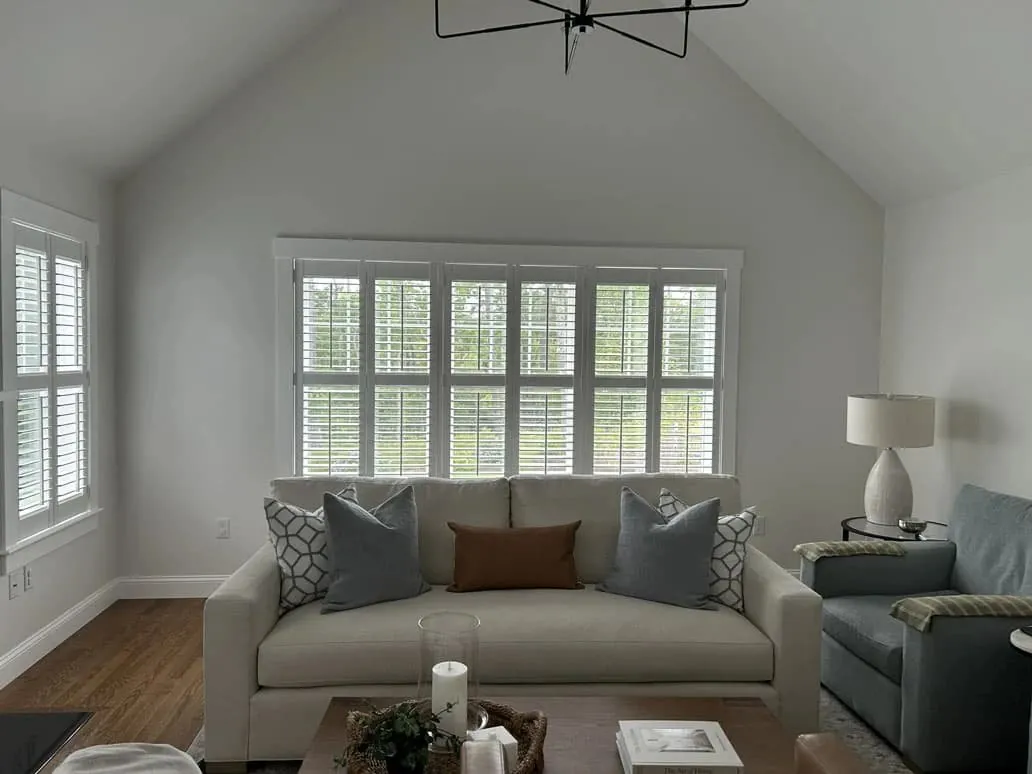
Tiny sash, tall glass and everything between
Duxbury asks more of a window covering than most towns. Along Washington Street and down through the Nook, antique capes and Federal houses still carry their first sash, and in the oldest of them the openings are very small: a few panes wide, set low under the eaves, framed by casings that someone has stripped and repainted with real care. A short drive away, Powder Point puts the opposite problem in front of you. Rooms there face the water, and they are glazed heavily, with big panes, French doors and sliders that take light off the bay for most of the day. Inland, on wooded lots, the houses are large and newer, with tall windows, open plans and rooms that rise more than one story.
No single product answers all three. That is why the choice of a Hunter Douglas dealer in Duxbury, MA comes down to range and fitting. Blinds & Designs is a Hunter Douglas Gallery dealer, so every Hunter Douglas family can be brought to the house, and our installation is certified by Hunter Douglas, so a shade made for a crooked antique opening goes in as carefully as one made for a modern slider.
Matching the Hunter Douglas range to a Duxbury house
Working as a Hunter Douglas dealer in Duxbury means switching between three very different kinds of house, sometimes on the same street. These are the families we reach for most often. Each card opens our page for that product in town, where you can read more before we visit.
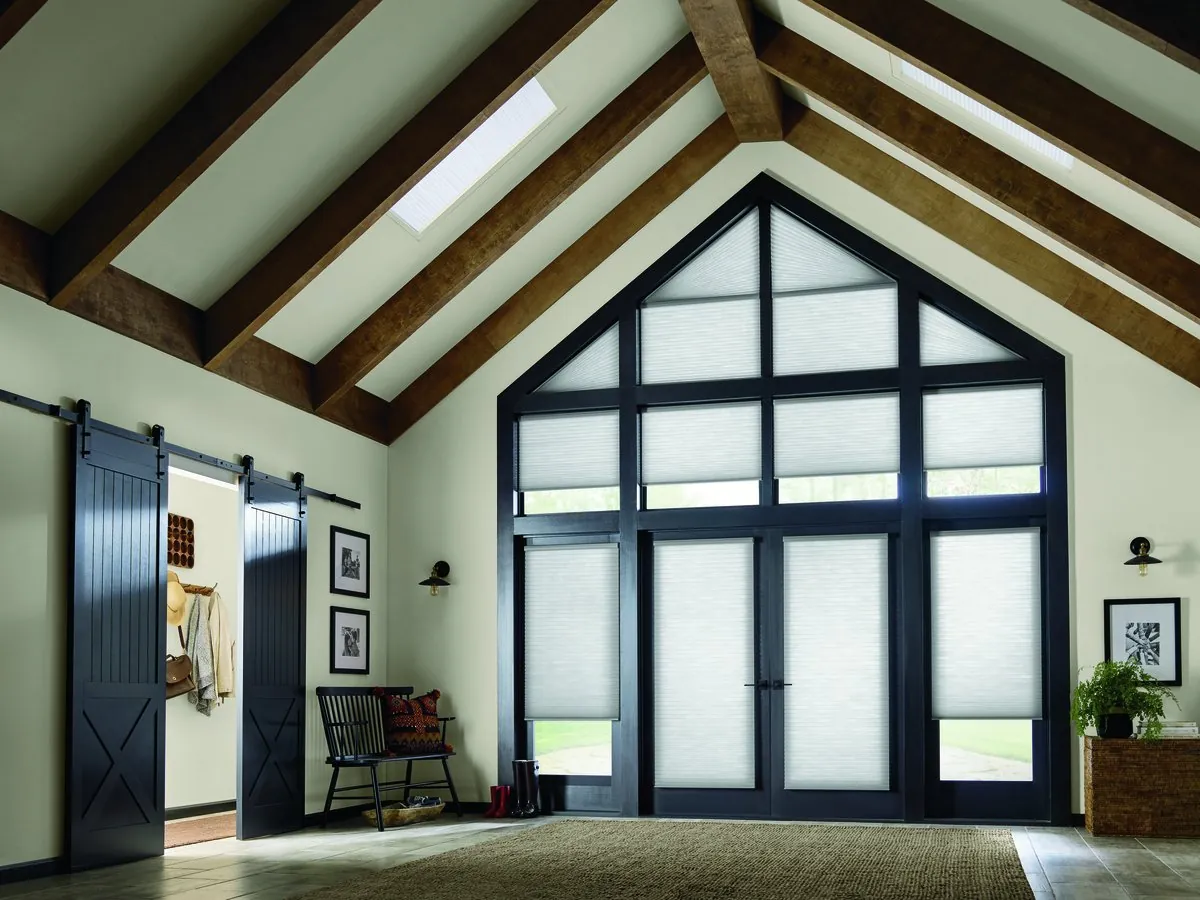
Honeycomb shades
Duette and Applause hold a layer of still air against the glass. They can be made narrow enough for the smallest cape window and tall enough for a gable wall.
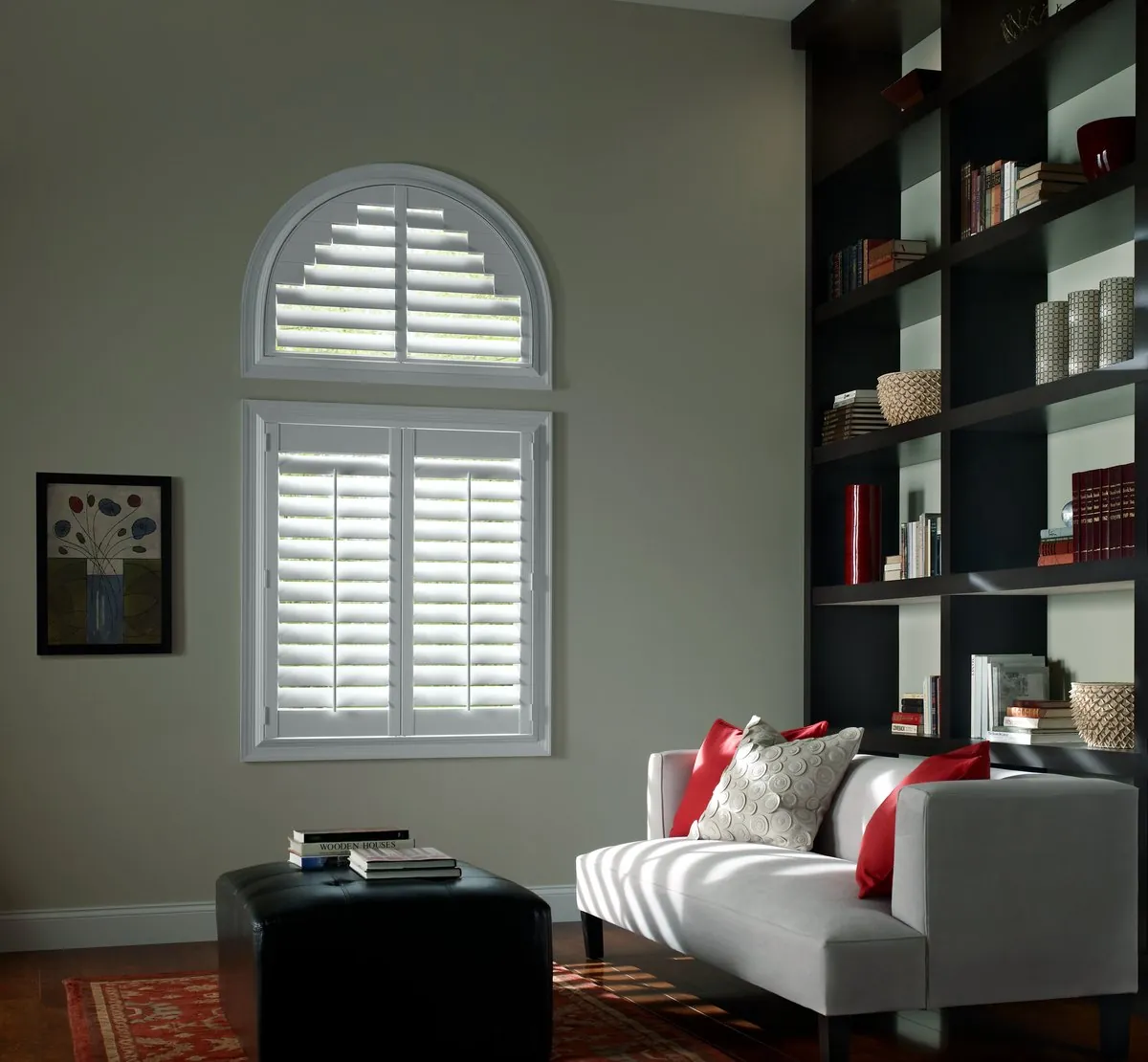
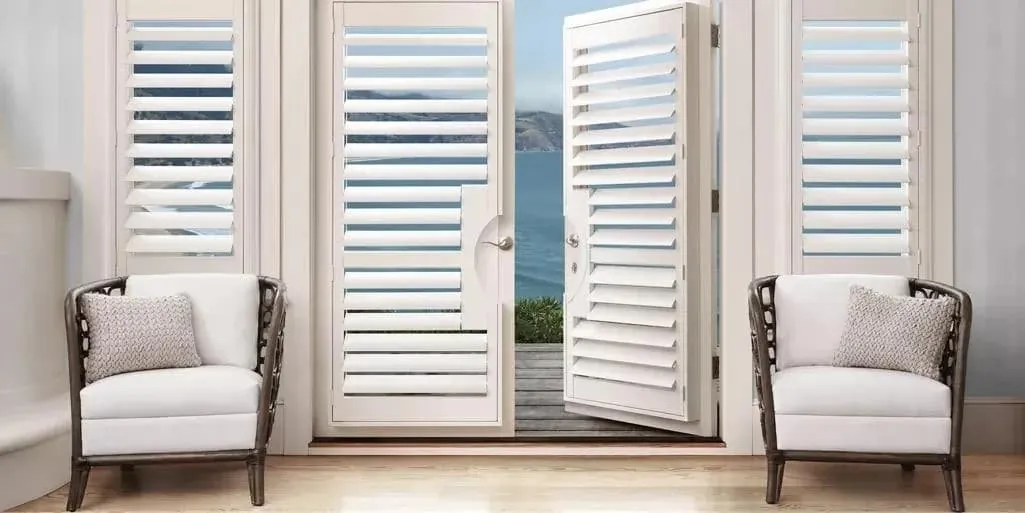
Shutters for old and new rooms
Heritance hardwood in a Federal parlor, NewStyle or Palm Beach where the room is newer or damp. Frames can be shaped for an arch.
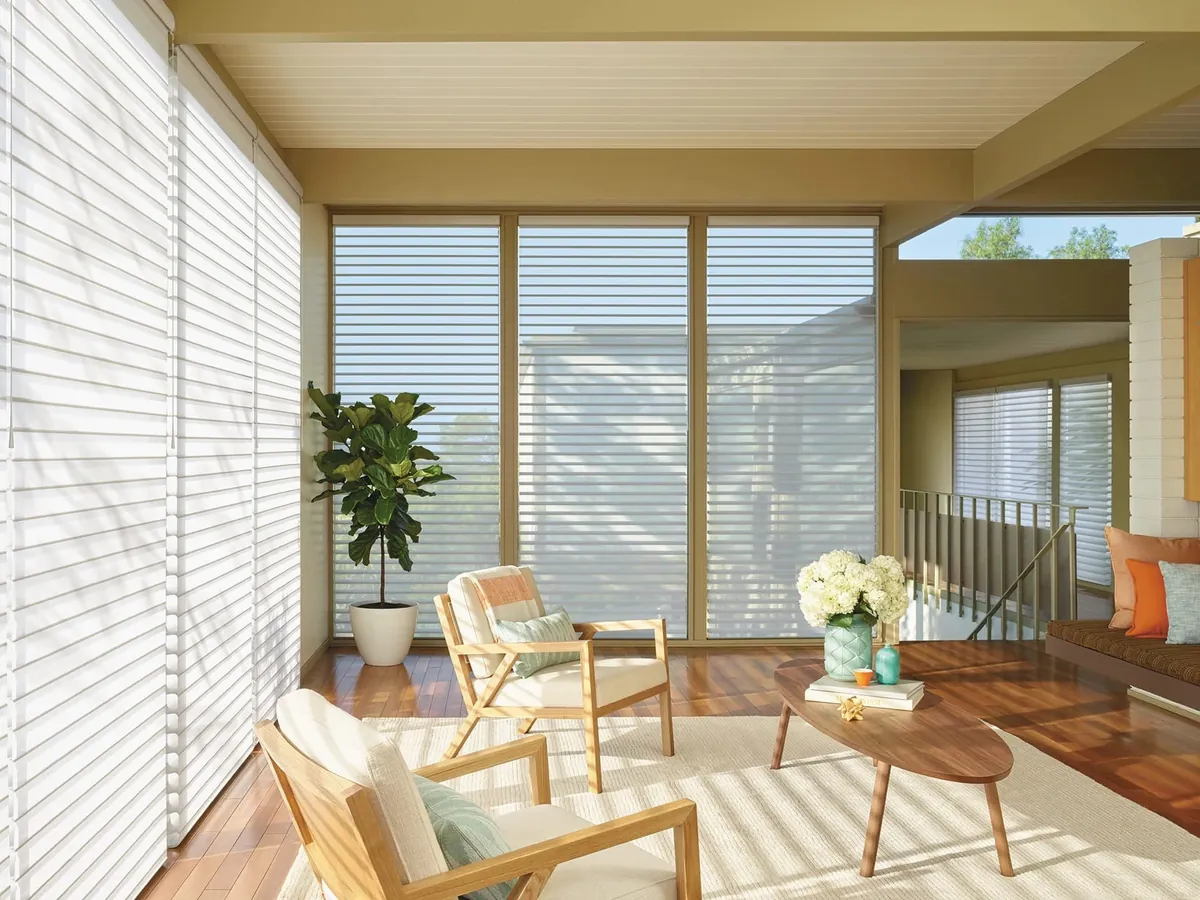
Sheer shades for the water view
Silhouette and Pirouette soften bright light off the bay while the view stays readable through the sheer facing.
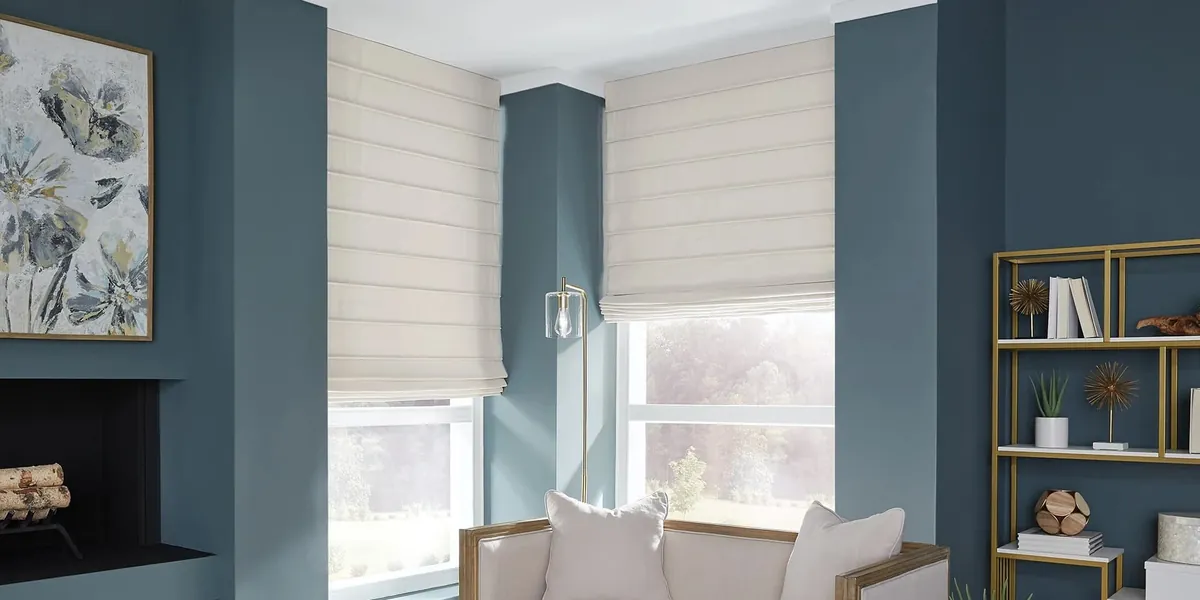
Roman shades in soft fabric
Vignette and Carole Roman shades bring fabric and folds to a dining room or a bay, and suit both a Federal house and a new build.
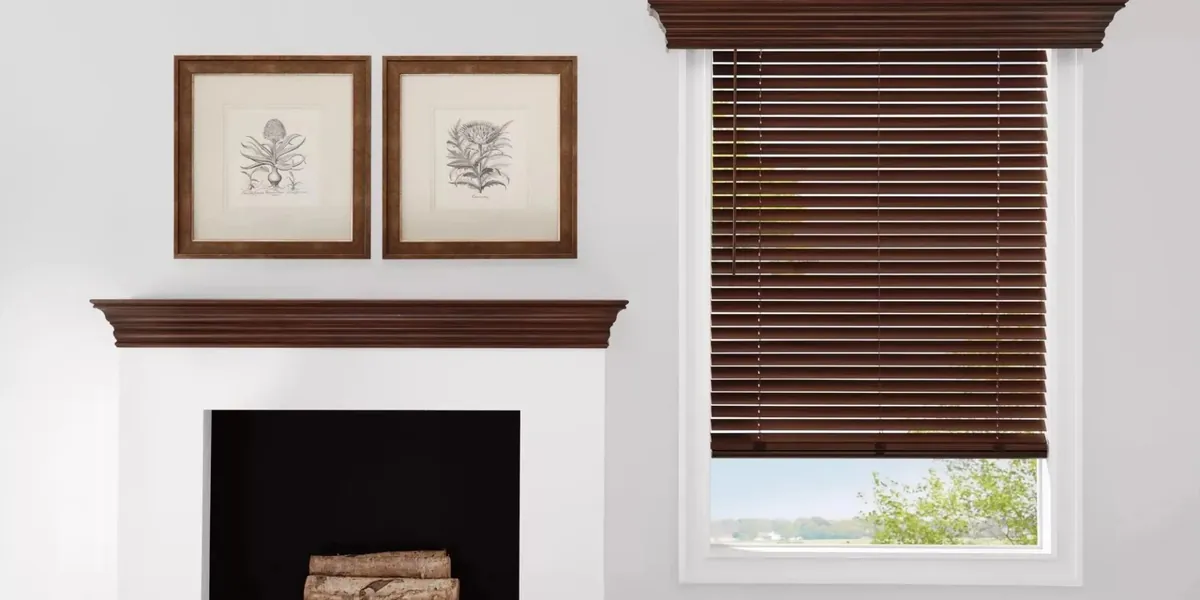
Wood and faux wood blinds
Parkland wood and EverWood faux wood give exact light control with tilting slats, and a stained finish can echo old pine floors.
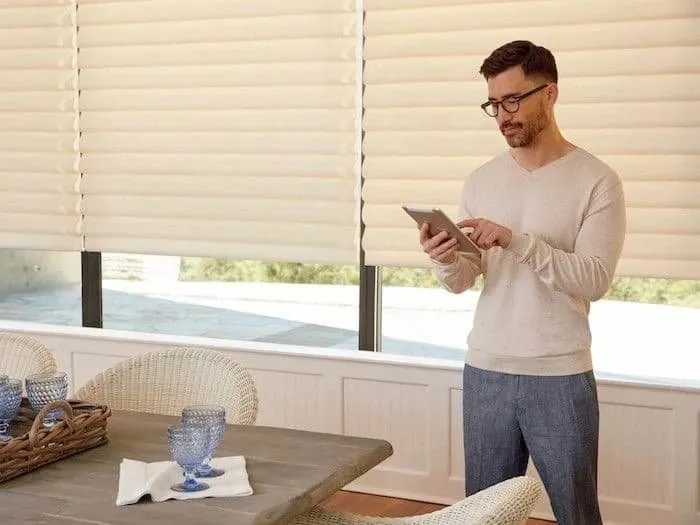
PowerView for high glass
Shades that move from a remote, a phone or a schedule, for the clerestory windows and tall walls of the inland houses.
Federal houses along Washington Street
The Federal houses on the old main road were built with a sense of order that still shows from the street: windows lined up in even rows, each one a little taller than a cape window, with slim muntins and fine trim. Inside, the rooms are generous and the windows sit in a regular rhythm along each wall. That rhythm is what you protect when you choose a window covering. Anything that looks heavy, or that sits at a different height from window to window, breaks the pattern the builders meant you to see.
Two things usually work. The first is a shade mounted inside the frame, so the casing stays visible and the shade vanishes into the top of the opening when raised. Honeycomb and Roman shades both do this well. The second is a hardwood shutter fitted to the opening, painted the color of the trim, so that it reads as part of the woodwork. Heritance is the line we bring for that kind of room, because real wood takes paint and stain the way old trim does.
What we check first in a Federal room is depth. The sash in these houses often has its pulleys and weights still in place, and the stops can be thin. If the frame is too shallow for a clean inside mount, we say so and suggest the neatest outside mount instead, rather than forcing a headrail into a space that will not take it.
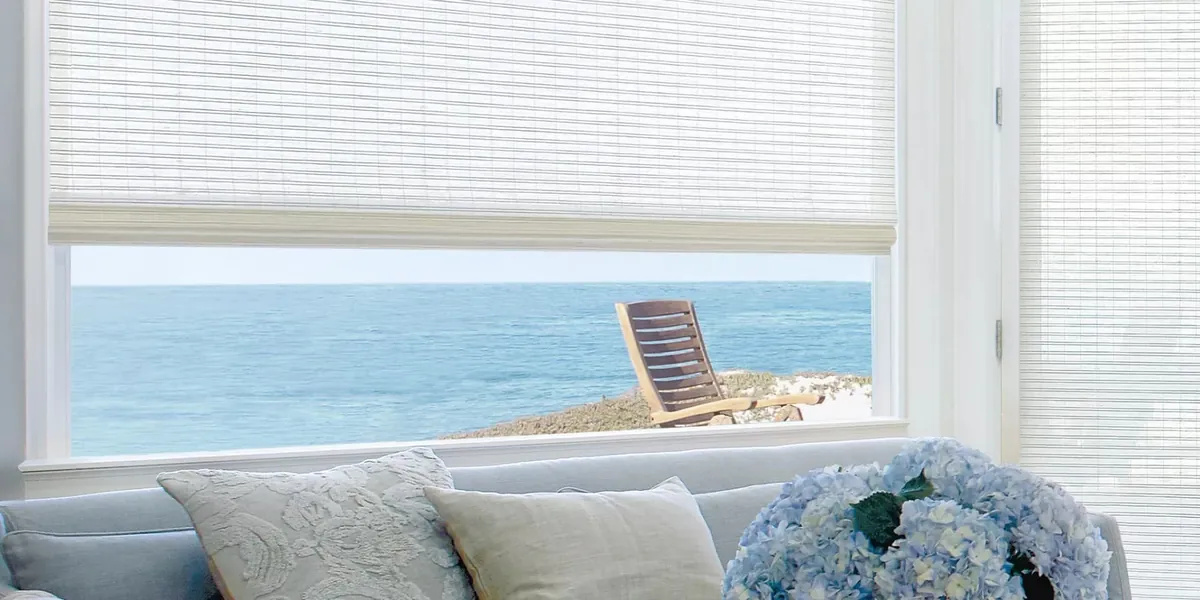
Antique capes and the very smallest openings
The capes around the Nook and along the older lanes are low, snug houses, and their windows are the smallest in town. Some upstairs windows sit right under the roof slope, only a little wider than a sheet of paper. Others flank a central chimney and have settled over the years so that the top of the frame is no longer level with the bottom.
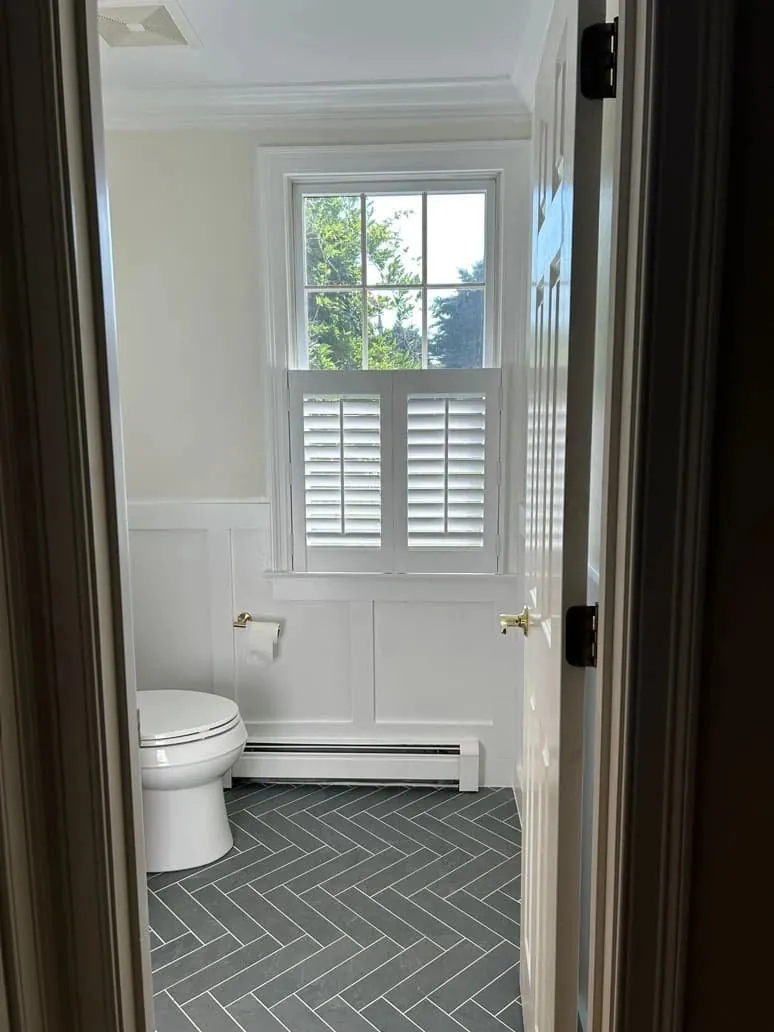
Small does not mean simple. A ready-made blind would leave a gap at the side of an opening like that, or hang crooked against a sloping head. Every Hunter Douglas product we sell is made to order, so we measure each cape window on its own, at the top, middle and bottom, and order to those figures. Honeycomb shades come in very narrow widths and stack into a slim band when raised, which keeps a little window from losing half its daylight to the fabric. Cafe-height shutters on the lower sash are another good answer for a cape kitchen or bath that sits close to the road: privacy where you need it, open glass above.
Upstairs bedrooms in a cape are often the hardest rooms to keep warm. Antique sash is thin, and the knee walls leave the window close to the bed. A room-darkening honeycomb shade does two jobs at once there, holding the dark in the morning and a band of still air against the glass on a cold night.
Powder Point and rooms built around the water
At Powder Point the house turns toward the bay, and the windows show it. Living rooms run whole walls of glass toward the water, French doors open to decks, and upstairs rooms have broad windows that frame the marsh and the bridge. The light there is strong and it moves: low and bright across the water in the morning, glaring off the surface in the afternoon, reflected back into the room even when the sun is not in the window.
Nobody who lives on that view wants to close it off. So the work is about softening the light while keeping the water in sight, and it is the part of the job where a Hunter Douglas dealer in Duxbury earns its keep, because the right answer is often a mix of products across one long wall.
- Sheer shades. Silhouette and Pirouette have fabric vanes between sheer layers. Tilt the vanes and the light dims while the outline of the shore stays visible.
- Screen shades. Designer Screen and Alustra screen fabrics cut glare and heat at the glass. A more open weave keeps more of the view, a tighter weave blocks more of the glare.
- Top-down, bottom-up. On a honeycomb or Roman shade, lowering the top lets sky and water in while the bottom stays covered from a neighbor or the road.
Heavily glazed rooms near salt water also need sensible materials. Fabric shades with their works inside the headrail have little metal exposed to damp air, and polysatin Palm Beach shutters stay straight in a room that is often opened up in summer.
Inland houses on wooded lots
Away from the water, much of Duxbury is newer building set back among the trees. These houses tend to be large, with two-story family rooms, kitchens open to the living space, and long runs of windows looking into the woods. Trees change the problem. A wooded lot gives you privacy without trying, and in summer the canopy filters a lot of the sun. In winter the leaves are gone, the low sun comes straight through, and the big rooms can feel bright and then chilly by late afternoon.
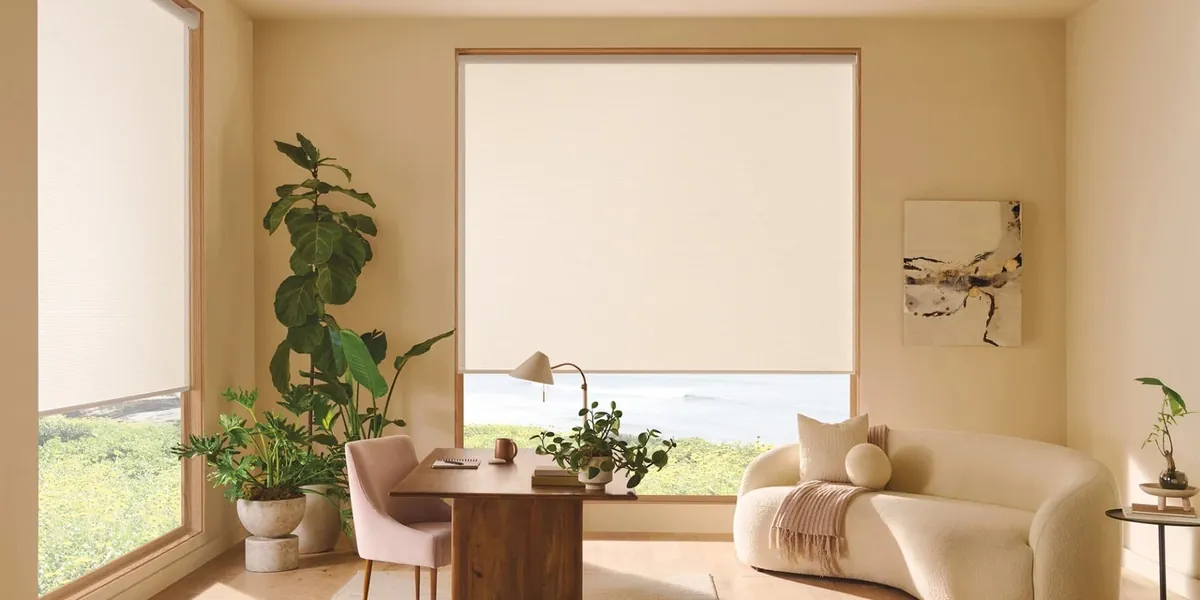
Here the question is usually reach and scale rather than fit. Tall windows and clerestory glass need a way to move without a ladder, which is where PowerView comes in. A wide wall of glass may take three or four shades side by side, and we plan them so the headrails and bottom rails line up as one clean line. For the family room, a light-filtering honeycomb or a Designer roller shade keeps the space bright through a winter afternoon and slows the chill coming off the glass after dark.
How a Duxbury consultation runs
Most projects here begin with a visit, because a fabric that looks right in a book can look very different against old painted trim or a wall of bay light. Our vans carry samples, so we bring the showroom to you. A typical visit goes like this.
- You ask for a time through Request a Consultation or the call button.
- We walk the house with you and hear what each room needs: warmth in an upstairs cape bedroom, glare control at Powder Point, height and reach in a two-story room inland.
- Samples go up at your windows, at the time of day you care about, so you see how each fabric and finish behaves in that light.
- We measure every opening, noting depth, squareness, sash hardware and anything else in the way of a headrail.
- You get a free estimate, and you decide in your own time.
If you want help pulling together color and fabric for a whole room, ask about our interior design consultations. Our guide to what happens at an in-home consultation covers the visit in more detail, and our page on shutters for older windows is worth a read before we see an antique house.
Keeping the street view consistent
In the older parts of town, how a house looks from the road matters, and windows are a big part of that. A row of Federal windows reads best when every covering is the same color from outside and sits at the same height. That is easy to arrange even when the rooms behind need different things.
The trick is to choose by line and color from the outside in. A house can carry room-darkening honeycomb in the bedrooms and light-filtering honeycomb downstairs in one shared color, so the street sees one even face. Shutters can be ordered in a single painted finish across old and new rooms, with Heritance in the original parlor and NewStyle in a later addition. We lay it out window by window at the visit so the plan holds together before anything is ordered.
Kitchens, baths and the rooms that work hardest
Steam, splashes and a lot of opening and closing are hard on any window covering. In a cape kitchen with a window over the sink, Palm Beach shutters or EverWood faux wood blinds are the dependable choice, because neither minds moisture and both wipe clean. In a bath, a cafe shutter covers the lower sash for privacy and leaves the top open to light. In a mudroom or back hall that takes wet coats and sandy feet from the beach, a simple roller shade is easy to live with.
For children’s rooms and any room where cords are a worry, cordless lift systems remove the hanging cord altogether, and motorized shades have none to begin with.
Bedrooms that face the morning
Many Duxbury bedrooms face east, toward the bay, and the first light comes in early and low. Room-darkening honeycomb is the usual answer, because the fabric blocks the glow and the cells still hold air against the glass. On the bigger bedroom windows of an inland house, a room-darkening roller shade behind a sheer gives a soft look by day and a dark room at night. PowerView can raise the shades on a schedule, so the room wakes up gradually instead of all at once.

What a Gallery dealer means for an old house
Gallery is the Hunter Douglas name for dealers who meet its standards. In practice it means we are not choosing from a short list. When a Federal parlor wants Heritance, a Powder Point living room wants Silhouette and an inland great room wants motorized Duette, all three come from the same dealer and the same visit.
It also means the people who measure and the people who fit are working to the same standard. Our installation is certified by Hunter Douglas, and on old houses that care shows in the details: a level headrail in a frame that is not level, a shutter that clears the sash lock, a narrow shade that sits square in a tilted opening.
You can see the brand as a whole on our Hunter Douglas page, and browse the shades, blinds and shutters families before we come.
Fitting day, window by window
On the day the order arrives, our certified installers fit each piece to the opening it was made for. On antique sash that means setting brackets into sound wood and adjusting each one until the headrail sits level, even where the frame has moved. On a wall of glass it means lining up several shades so the rails run in one straight line across the room. Every lift is tested, every motorized shade is paired and set, and we show you how each one works before we leave.
The relationship does not end there. If a shade needs attention later, we handle blind and shade repair on window coverings you already own, and we can add motorization to suitable shades in the future.
As your Hunter Douglas dealer in Duxbury we also carry Carole drapery for rooms that want a softer frame, and our page for custom drapery in Duxbury explains the options. Everything we do in town is on our Duxbury page.
The Sagamore showroom, our nearest
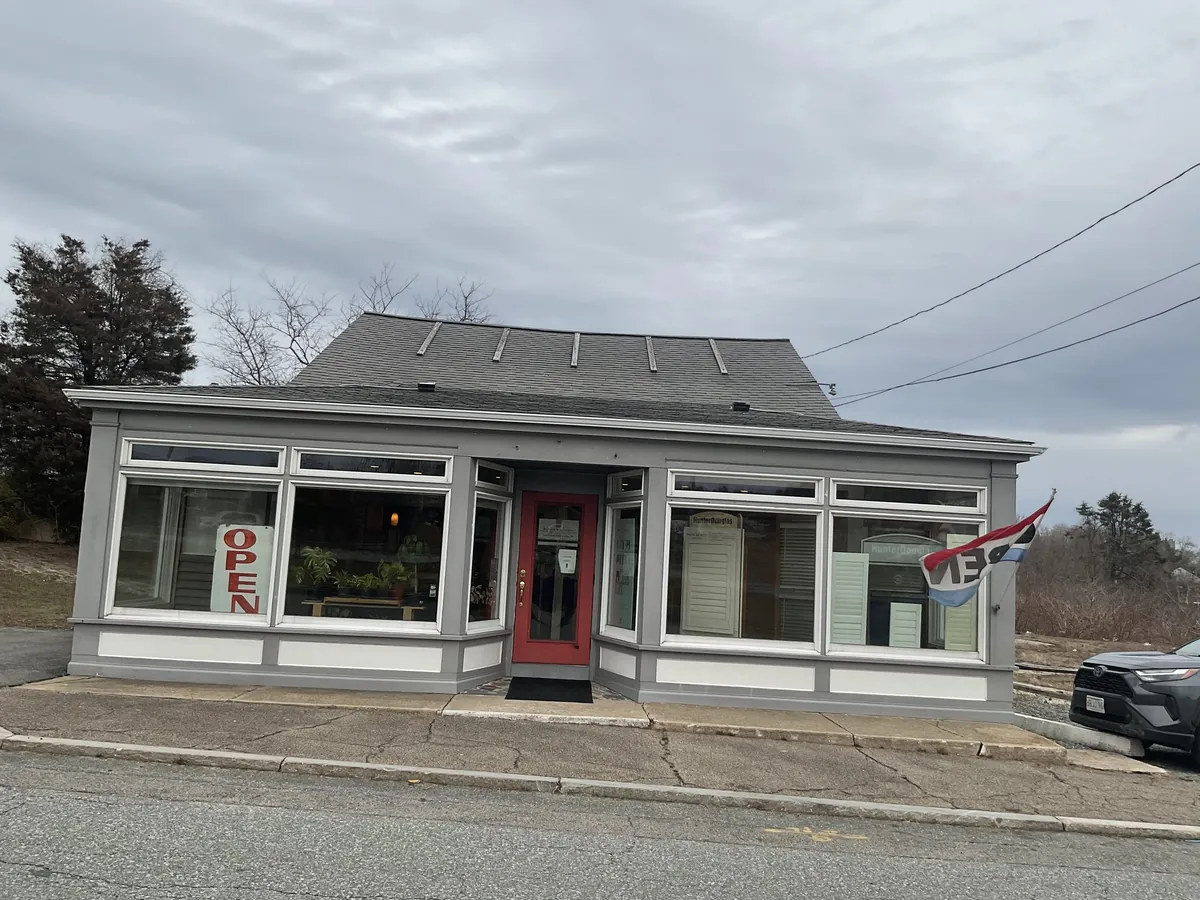
Sagamore is the closest of our showrooms to Duxbury. Some people like to see a product in person before we visit, and others prefer to start at home with samples at their own windows. Either way works, and the same people follow the project through to installation.
If you would rather talk it over first, the call button reaches the Sagamore showroom, and the showroom page lists its hours.
Questions from Duxbury
Can you fit shades in the very small windows of an antique cape?
Yes. Honeycomb shades can be made in very narrow widths and stack slim when raised, and shutters can be built for small openings. Because each window is measured on its own, a settled frame or a sloping head is accounted for before anything is ordered.
How do I cut the glare at Powder Point without losing the view?
A sheer shade with tilting vanes, or a screen shade with an open weave, softens the light while the water stays visible. We bring a few openness levels so you can compare them at your own glass.
Will a shutter suit a Federal parlor?
Often it is the best choice. A Heritance hardwood shutter painted to match the trim reads as part of the woodwork. If the frame is too shallow for an inside mount, we suggest a neat outside mount on the casing.
What works for clerestory windows in a newer house?
PowerView motorization lets those shades move from a remote, an app or a schedule, so high glass is as easy to manage as the rest. Shades across one wall can be grouped to move together.
Is the estimate free?
Yes. After we measure, you get a free estimate for what you are considering, with no obligation to go ahead.
Start with your own windows
The surest way to know what will work in your house is to see it at your own glass. Request a consultation and we will bring samples of the full range, measure every opening and leave a free estimate. If you have questions first, use the call button, or visit the Sagamore showroom. Whatever the house, your Hunter Douglas dealer in Duxbury, MA is ready to help.