
Houses that face the pond
Drive around the ponds and you notice how many Pembroke houses turn their best rooms toward the water. Post-war ranches and capes sit with their living rooms and kitchens angled at the shoreline, and the windows on that side are the ones the house was built around. Any shade on that glass has one job before all others: get out of the way of the view when you want it, and step in when the sun or the evening calls for it. That is the brief we start from with roman shades in Pembroke, MA.
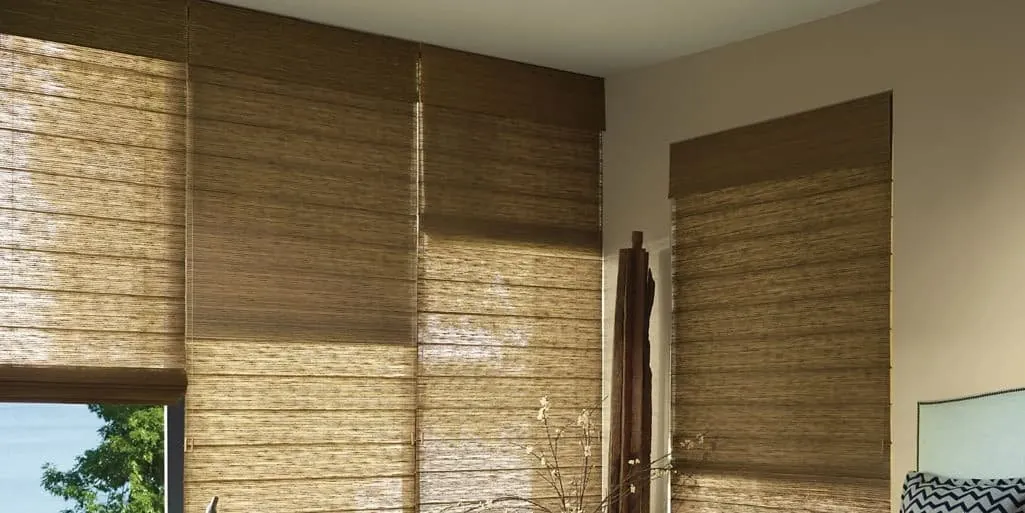
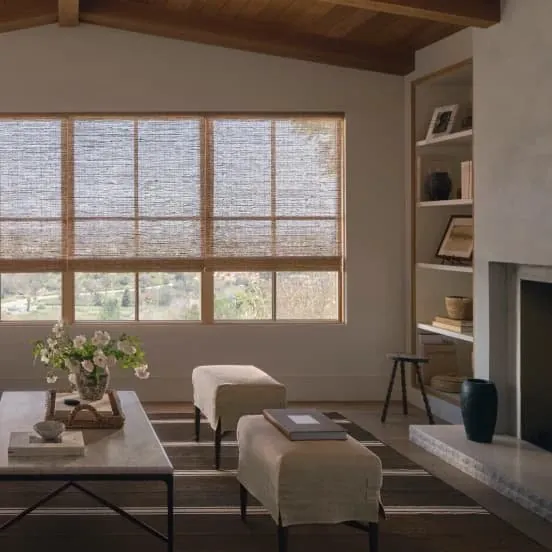
A folded fabric shade suits that brief well. Raised, it gathers into a short band along the top of the window and leaves the pond in full sight. Lowered, it gives the room a soft, finished look that a bare window or a plain blind does not. In between, it can sit at whatever height cuts the glare off the water without blocking the far shore.
The rest of Pembroke’s housing makes the planning easier, not harder. Most windows here are standard modern sizes, whether in a ranch near the ponds or in a newer colonial off Route 14 or Center Street. That frees the conversation to focus on fabric, fold and how you want each shade to work.
What a folded shade can do in a Pembroke house
Three ideas cover most of what we are asked for in town. Each one comes in both Hunter Douglas lines we carry.
Keep the view, cut the glare
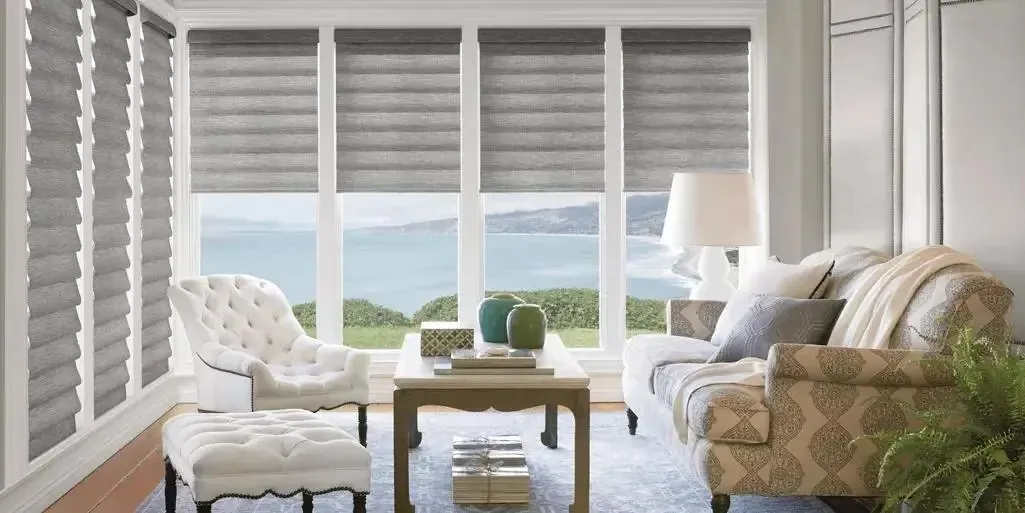
A light-filtering fabric lowered part way takes the bright patch off the water while the lower glass stays open to the shoreline.
A softer finish for plain windows
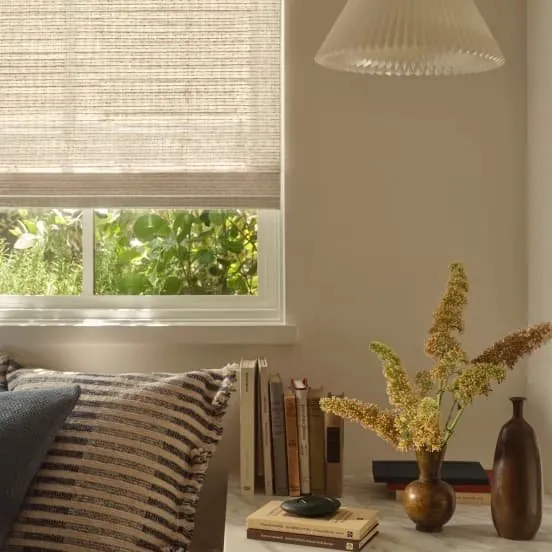
Standard double-hung windows in a ranch or a colonial gain texture and color from a sewn Carole Fabrics shade, without any heavy hardware.
Pairing with sheers on the pond side
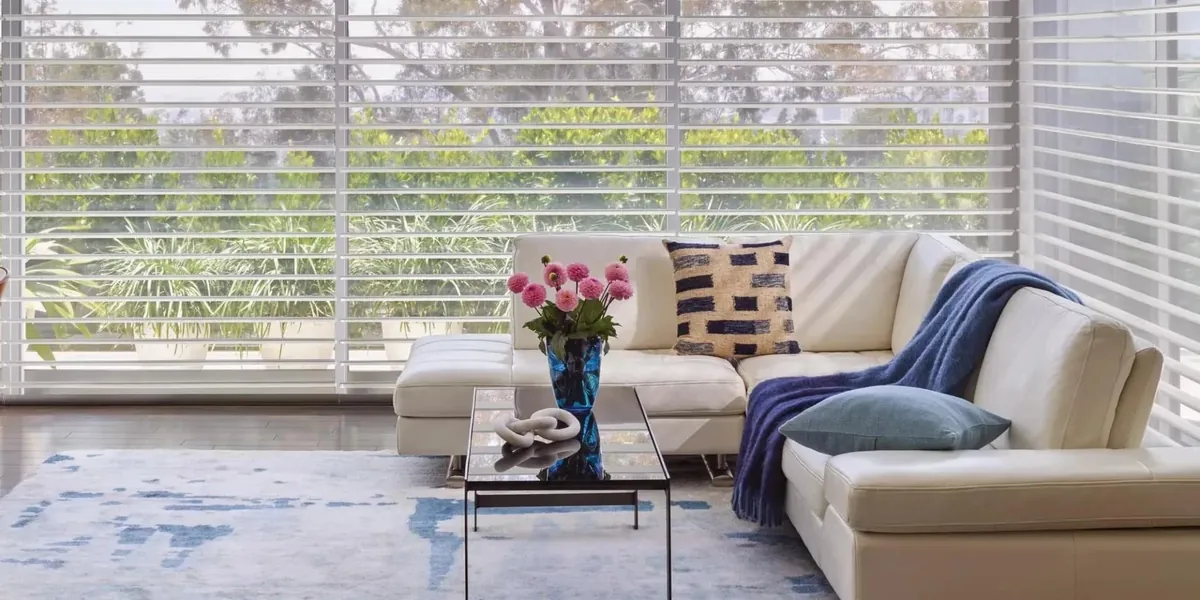
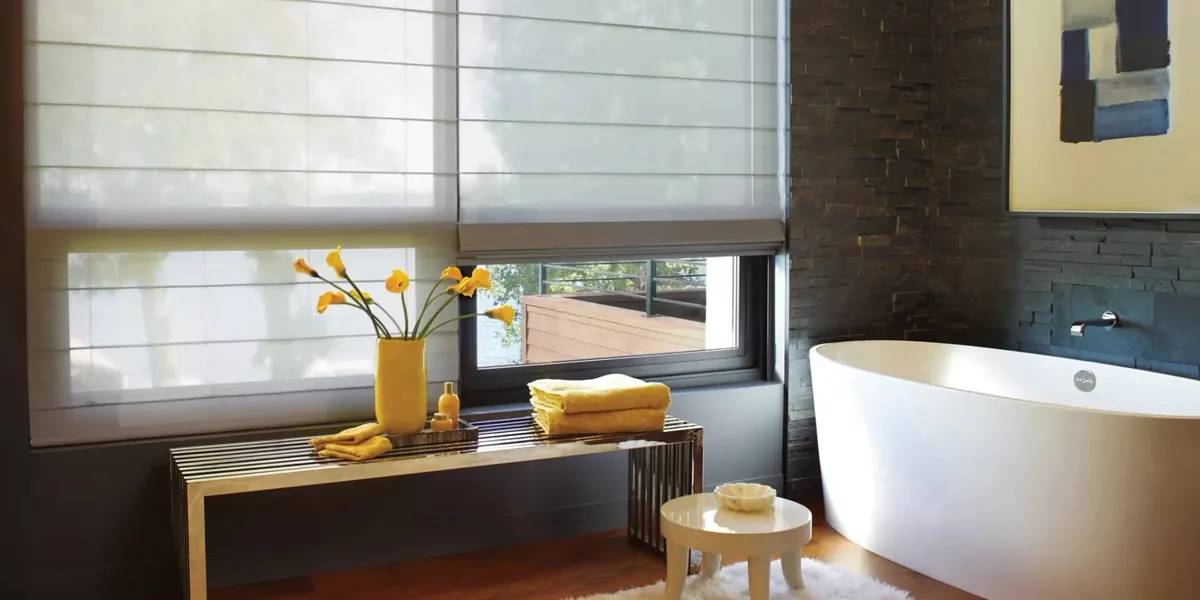
Some pond rooms take a sheer shade on the widest glass and matching roman shades on the side windows, sharing one color so the room reads as a single design.
Picture windows in a post-war ranch
The typical ranch near the ponds has one big window in the living room, often looking straight out at the water, flanked by narrower windows or with a single wide pane in the middle. It is the window everyone sits facing, so it carries a lot of weight in how the room feels.
A single roman shade across a very wide picture window is possible, but it becomes heavy to lift and it moves as one piece, so you cannot shade one end without shading the other. Two or three shades on matched headrails solve both problems. They line up along the top, they share a fold spacing, and each one can be raised on its own. On a summer afternoon you might drop the west end against the sun and leave the rest open to the pond.
Ranch bedrooms usually have wider, shorter windows set higher in the wall. A roman shade looks well proportioned on that shape, and because the stack sits at the top of a window that is already high, it rarely gets in the way. A room-darkening lining is the usual choice for a bedroom that catches the early light off the water.
Capes with dormers
Pembroke’s post-war capes bring a different mix: a pair of front windows either side of the door, a kitchen window over the sink, and small dormer windows in the upstairs bedrooms. The dormers are the ones that need thought. They are short, often set in a recess with sloping walls either side, and there is not much room above the glass for a stack.
On a dormer, an inside mount usually looks best, tucked into the recess so the sloped walls stay clean. A flat fold stacks tighter than a soft one, and Vignette, which rolls its fabric up rather than folding it into layers, gives back the most glass of all. In a child’s room or a guest room under the roof, a room-darkening fabric on a dormer makes a real difference on summer mornings.
Downstairs, the cape’s front windows face the road more often than the pond. Here a light-filtering fabric earns its place, giving privacy during the day while the room stays bright.
Layering with drapery in a colonial living room
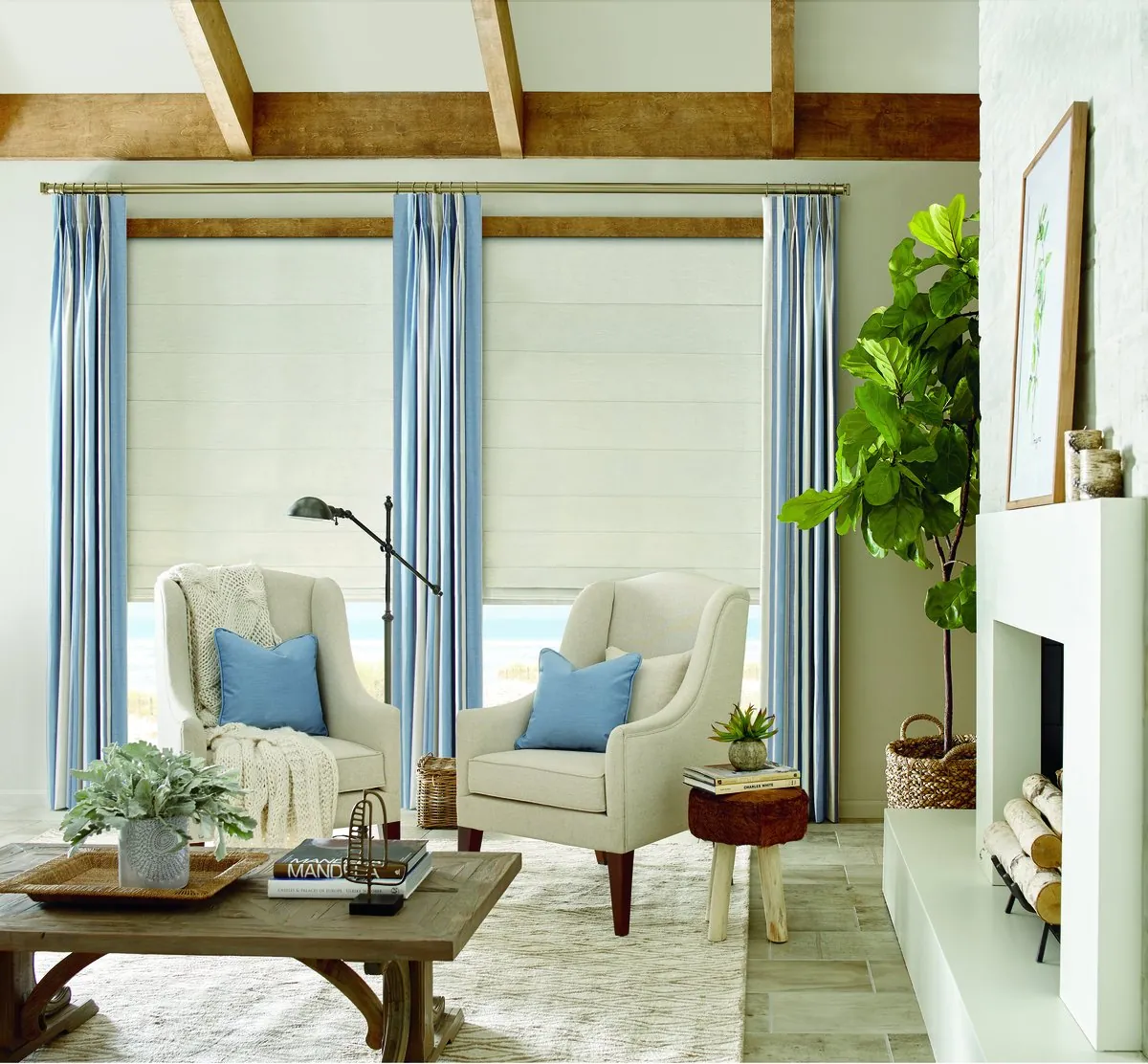
In the larger colonials, a formal living room often wants more than a shade alone. Pairing roman shades with side panels of drapery is a classic way to dress a tall double-hung window: the shade handles light and privacy, and the panels frame the window and add height and softness to the room.
The two need to be planned together. The shade is usually mounted inside the frame, so it moves freely behind the panels, and the drapery rod sits above and wider than the casing so the panels can hang clear of the glass when open. Color can match exactly, or the shade can be a quieter plain with the pattern carried in the panels. We bring fabric books for both so you can see the combination against your walls before you decide on roman shades for Pembroke rooms like these.
Kitchens, baths and the rooms you use most
The rooms that work hardest in a Pembroke house are often the ones that get the least thought when it comes to window coverings. A kitchen window over the sink is opened and closed constantly, splashed now and then, and reached across a counter. A bathroom window needs privacy at all hours and copes with steam every morning.
For the kitchen, a cordless lift you can push from the bottom rail, or a motorized shade, saves reaching over the sink for a cord. A fabric with a little texture hides the odd mark better than a flat, pale plain. In the bathroom, a light-filtering or sheer fabric with a privacy lining keeps the room bright while screening it completely, and a shade mounted inside the frame stays clear of the tub or vanity.
These smaller rooms are also where a Vignette shade earns its keep. With the fabric rolled away into the headrail and no cords on the back, it is simple to keep clean and easy to operate many times a day.
Colonials off Route 14 and Center Street
The newer colonials off Route 14 and Center Street are generous houses with regular, well-made windows: tall double-hungs in the main rooms, a wide window or slider in the kitchen, a bank of windows in a family room and plenty of bedrooms upstairs. Everything is square and true, so measuring is straightforward and inside mounts are almost always possible.
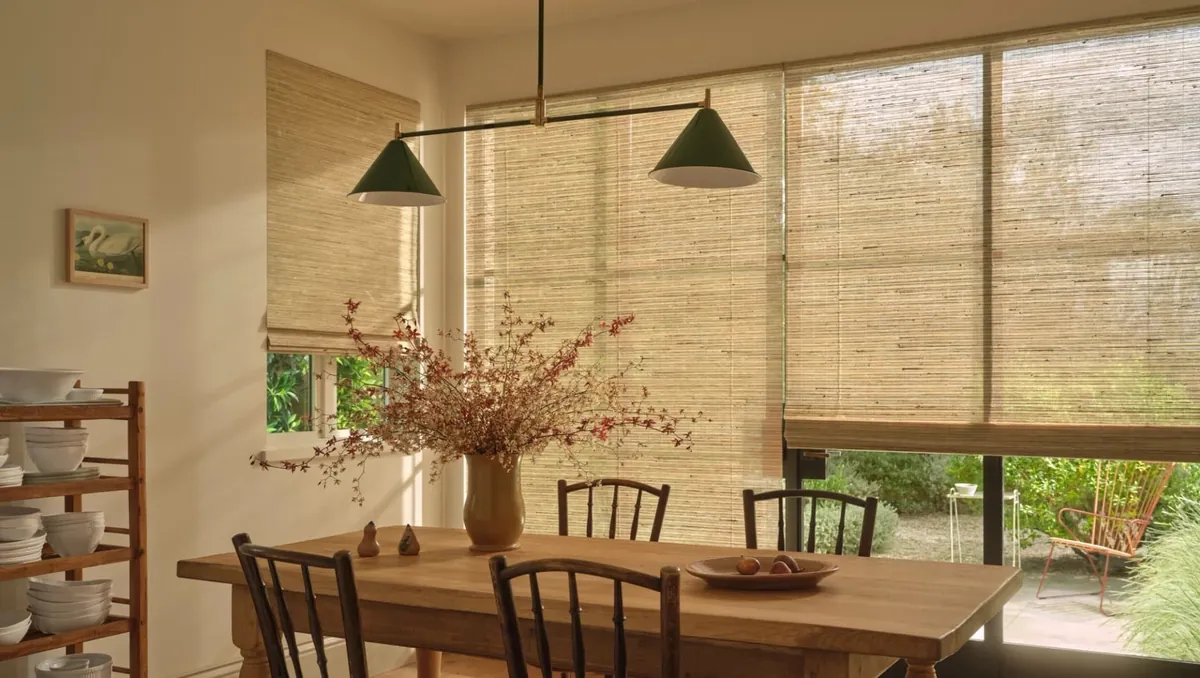
With fit taken care of, the choices are about style. A formal living or dining room can carry a patterned Carole Fabrics shade that picks up the upholstery or a rug. A family room with a run of windows often looks best with matching Vignette shades, all set at the same height. Upstairs, each bedroom can have its own color while still sharing a fold style with the rest of the house.
If you are fitting out a whole colonial, it is worth thinking about the house from the street as well. Matching linings, or at least matching lining colors, on every front window keep the facade looking tidy whatever fabrics you choose inside.
Standard window sizes and what they free up
When almost every window in a house is a standard modern size, nothing has to be squeezed or adapted. That leaves the decisions where they belong, on how the shade looks and how you will use it. For roman shades in Pembroke houses, the questions we spend most time on are these.
- Which fold? A flat fold is crisp and tailored. A soft fold has gentle loops at each tier. Vignette’s folds are rounded and even, with a cleaner, more modern feel.
- Which fabric weight? Sheer for gentle light, light-filtering for privacy with brightness, room-darkening for sleep.
- How will it lift? Cordless, where you push and pull the bottom rail. A continuous loop for larger shades. PowerView for a whole run, a high window or a schedule.
- Inside or outside? On modern frames an inside mount is usually the neatest. An outside mount can make a small window look larger by covering more wall.
We bring working samples of each, so you can feel the difference instead of guessing from a picture.
Reading the sun on a pond
A pond is a mirror. On a bright day, light comes into a waterside room twice: once from the sky and once bounced up off the surface. The reflected light comes in low, under the eaves, and lands on the ceiling and the far wall. It is lovely in the morning and hard to sit in by mid-afternoon, especially on the west side of a pond.
That reflected light is why we rarely suggest a dark, blackout shade for a pond room when planning roman shades in Pembroke. It would solve the glare but kill the room. A light-filtering fabric spreads the light instead of stopping it, so the room stays bright but nobody squints. Lowering the shade only as far as the reflection reaches keeps the view of the far shore while stopping the bounce.
Sun on that scale is also hard on fabric. Bright, saturated colors lose their depth fastest on a window that takes direct and reflected light every day. Lighter neutrals and natural textures hold their look much longer, and a lining protects the face fabric.
Lifting the shade every day
A pond-side window is one you will open and close often, chasing the sun as it moves round the house. So the lift deserves as much thought as the fabric.
A cordless lift is the simplest. You raise the shade by pushing up the bottom rail and lower it by pulling down. With no cord hanging at the side it is tidier and safer in a house with children or pets. On a larger or heavier shade, a continuous cord loop gives easier control.
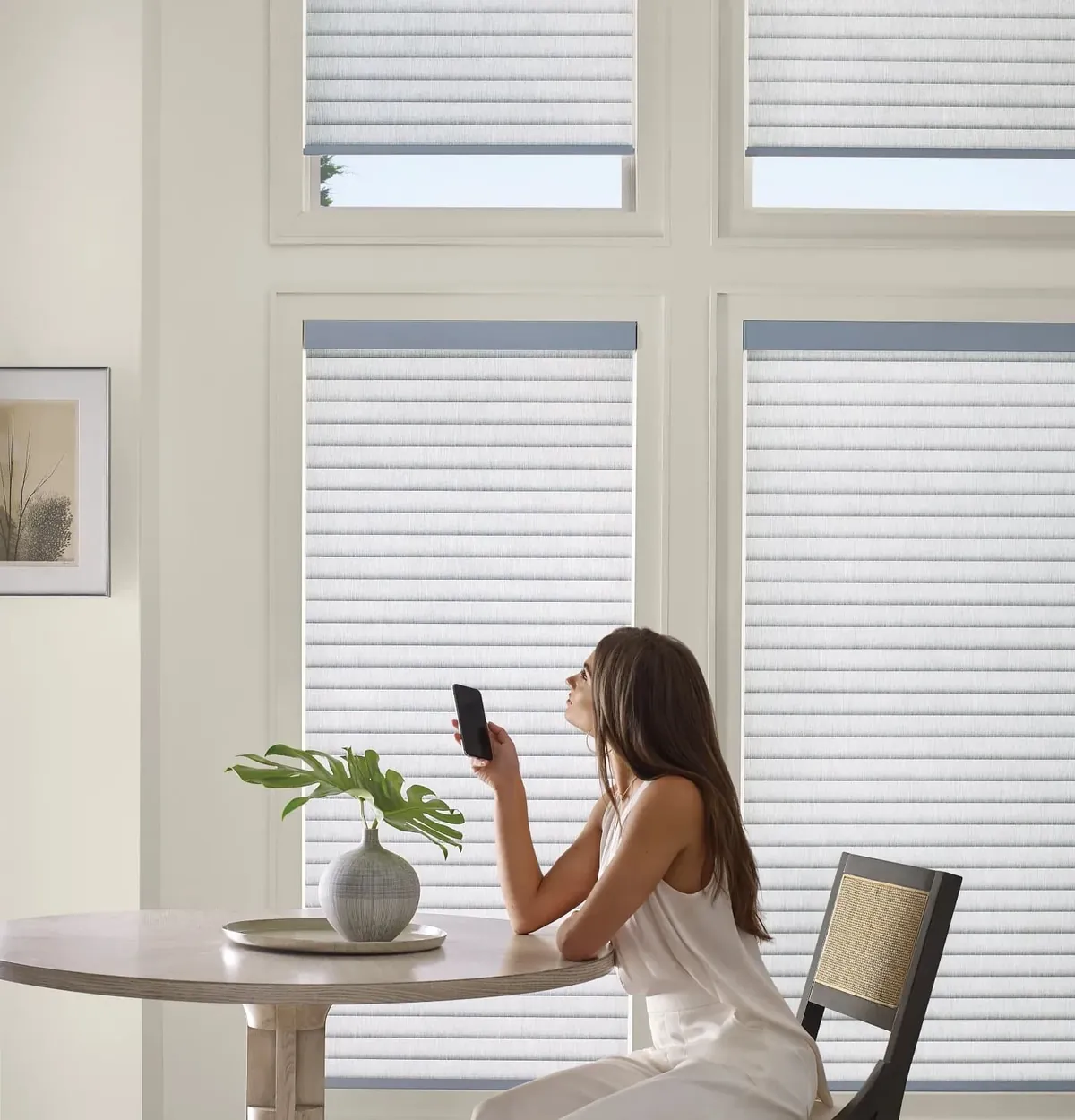
For the main pond windows, PowerView is worth a look. Every shade along the water can rise and fall together from a remote or your phone, and a schedule can lower them before the afternoon glare arrives and raise them again at sunset. If you are out on the water, they still move on time. Our motorized blinds and shades page explains the system, and we plan how each motor is powered at the visit.
Vignette or a sewn shade
Both lines come from Hunter Douglas, and both are true folded shades, but they are built differently.
Vignette’s folds are part of the fabric’s construction, so they stay even from top to bottom whatever height you stop at. Nothing runs down the back of the shade, which means the view from outside, from the pond or the road, is clean. It rolls up into its headrail, so the raised shade takes up less of the window. For pond rooms where the shade moves several times a day, that is a strong argument.
Carole Fabrics shades are made to order from a fabric chosen from a large decorator library. They give the widest freedom with pattern, weave and color, and they can be coordinated with drapery, cushions or upholstery. They suit living and dining rooms where the shade is part of the decoration rather than a working tool.
Many Pembroke houses split the difference: Vignette along the water, Carole Fabrics in the rooms facing the road. You can read more on our Vignette and Carole Fabrics pages and see the full family on the roman shades page.
Linings, explained simply
A lining is a second layer sewn behind the face fabric, and it changes three things at once. It decides how much light comes through, it protects the face fabric from the sun, and it controls how the shade looks from outside.
An unlined sheer shade lets the light glow through and shows the window’s shape softly from the street. A light-filtering lining keeps the room bright but stops anyone seeing in during the day. A room-darkening lining blocks most of the light for bedrooms. Choosing the same lining color across every window on one side of the house keeps the outside looking calm, which matters most on the road side of a colonial.
What happens at your consultation
Pembroke houses are straightforward to measure, so the visit is mostly about choosing. Our vans carry samples, so we bring the showroom to your living room.
- Ask for a visit through Request a Consultation or with the call button.
- We come with Vignette swatches and Carole Fabrics books, in flat and soft folds and in every lining weight.
- You show us the rooms, starting with the pond side if you have one.
- We hang samples at your windows at different times of day if you like, so you see them in the reflected light.
- We measure each opening and confirm the mount and lift for every shade.
- A free estimate arrives for whatever you are thinking about, and the decision is yours to make in your own time.
For a fuller picture of the appointment, read what happens at an in-home consultation. When the shades arrive, our certified Hunter Douglas installers fit each one, level the headrails, test every lift and show you how it all works.
Gallery status, in plain terms
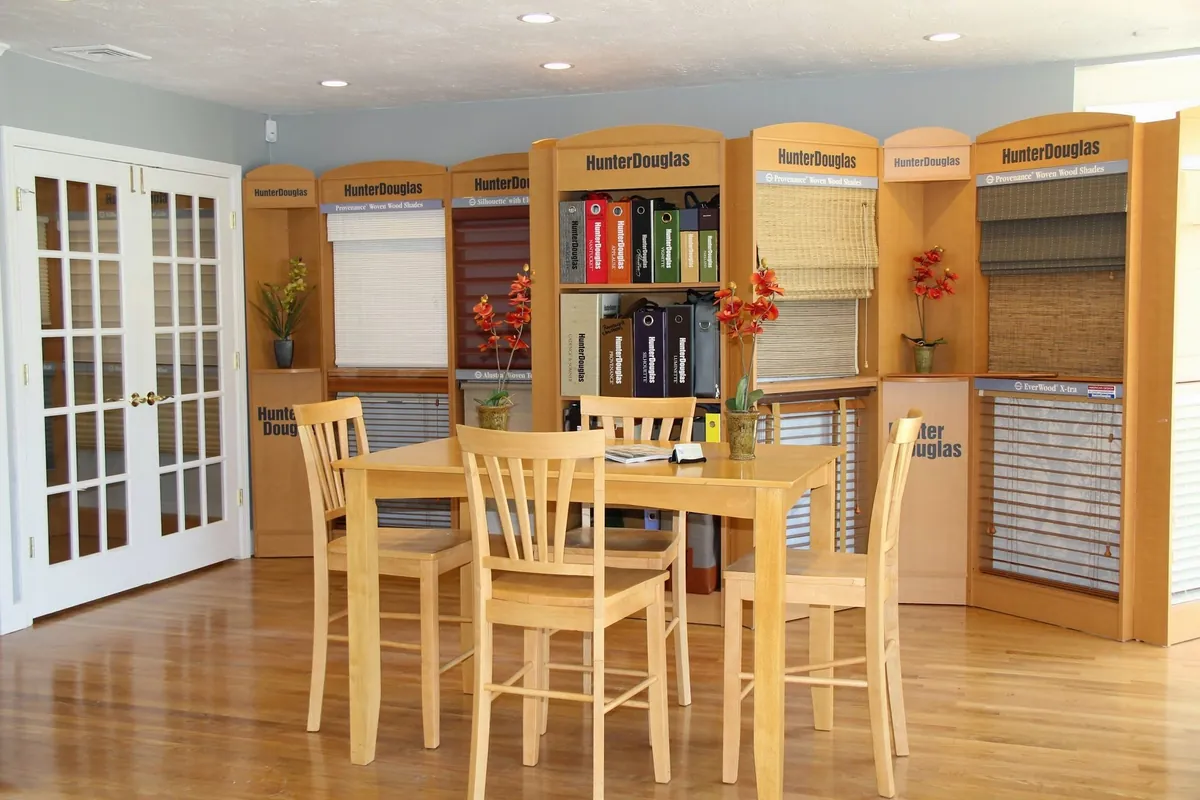
Hunter Douglas names dealers who meet its standards Gallery dealers, and Blinds & Designs is one of them. For a Pembroke house that puts the whole folded shade family within one appointment, Vignette and the Carole Fabrics library alike, along with every lift and PowerView.
Our installers carry Hunter Douglas certification, our interior design consultations can help you choose across a whole house, and we repair window coverings you already own. For other rooms, see cellular shades in Pembroke, motorized blinds in Pembroke, or all our services on the Pembroke page.

Samples at your own window
A swatch under shop lights tells you little about how a fabric will behave with sun bouncing off a pond. At home you see it in the right light, beside your own walls and furniture.
Prefer to try a working shade before anyone visits? Of our locations, the Sagamore showroom is the one closest to Pembroke.
Questions from Pembroke
Our living room faces the pond. Will roman shades block the view?
Only when you want them to. Fully raised, a roman shade sits in a compact band at the top of the glass. Lowered part way, it cuts the reflected glare while the shoreline stays in view.
Can one shade cover our wide ranch picture window?
It can, but two or three shades on matched headrails are usually better. Each is lighter to lift, and you can shade one end of the window while the other stays open.
What works on the small dormer windows upstairs?
An inside mount in the dormer recess with a flat fold or Vignette keeps the stack small. A room-darkening lining helps a bedroom under the roof on summer mornings.
Can the shades lower themselves before the afternoon sun?
With PowerView, yes. A schedule can bring the pond-side shades down at the time the glare starts and raise them again in the evening.
Do you charge for the estimate?
No. Once we have measured, you receive a free estimate for the shades you are considering.
Book your visit
Choosing roman shades in Pembroke, MA, comes down to seeing the fabrics in your own light, especially on the pond side. Ask for a consultation and the samples come to you; we measure each window and send a free estimate afterwards. The call button reaches us, and the Sagamore showroom is open if you would like to come in.