
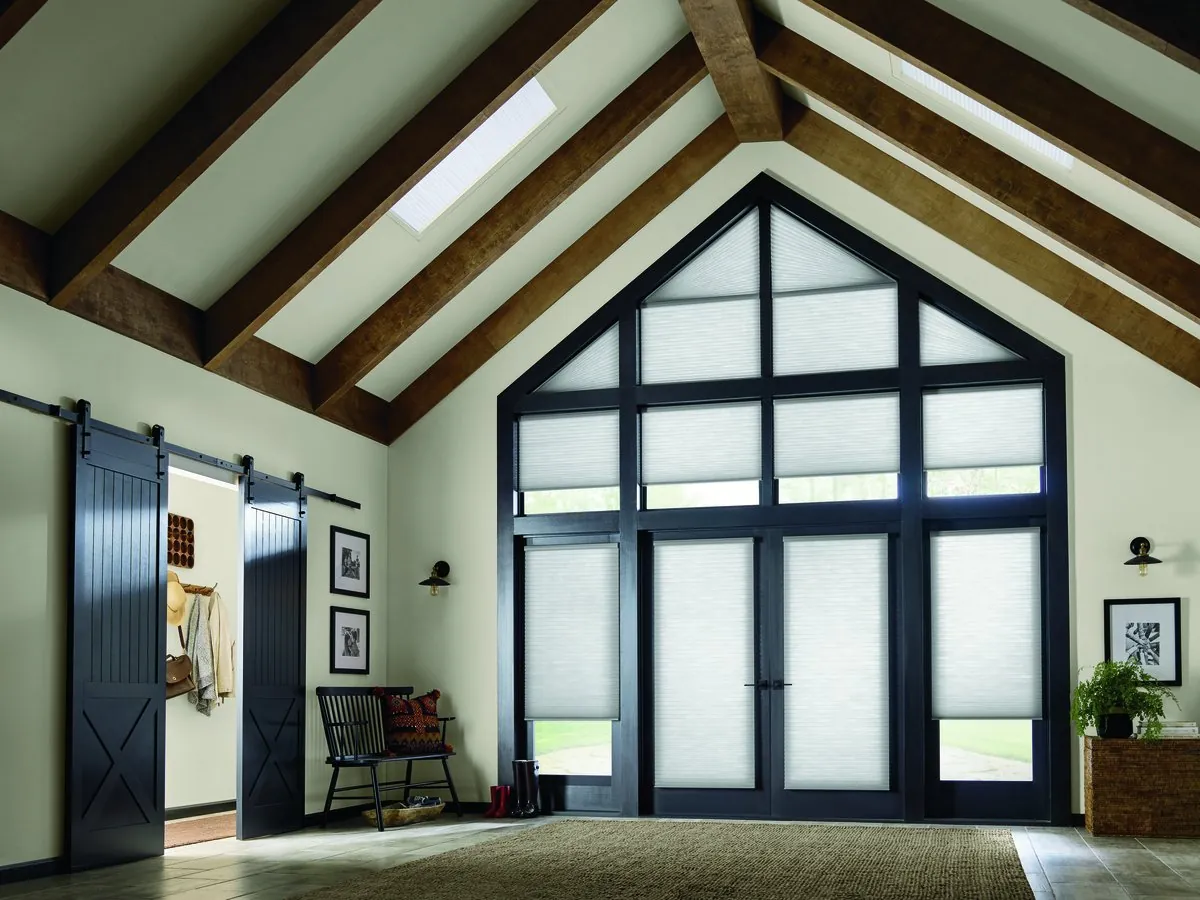
Two kinds of house, two different answers
Middleborough is a big town by area, and its houses split into two broad groups. Around the town center stand Victorians and Federal houses with tall, narrow sash windows, high ceilings and deep trim. Spread out across the rest of the land are post-war ranches and newer colonials, many in subdivisions off the country roads, with standard modern windows, sliders and open family rooms. A shade that is perfect in one group can be the wrong choice in the other, which is why we treat cellular shades in Middleborough, MA, as two separate conversations.
What both groups share is the reason to choose honeycomb at all. The fabric is folded into a row of hollow cells, and each cell holds a little air that barely moves when the shade is lowered. That layer of still air slows the cold coming off the glass in winter and the heat coming through it in summer. Of all the shades Hunter Douglas makes, a honeycomb is the one to choose when a room simply feels cold.
In the center, the challenge is fitting a shade to a tall old window without spoiling it. Out in the subdivisions, the challenge is choosing well among many good options for windows that are easy to fit. We bring samples for both.
Matching honeycomb shades to Middleborough houses
Three starting points cover most of the houses we see in town. Every one comes in our sample cases to your door.
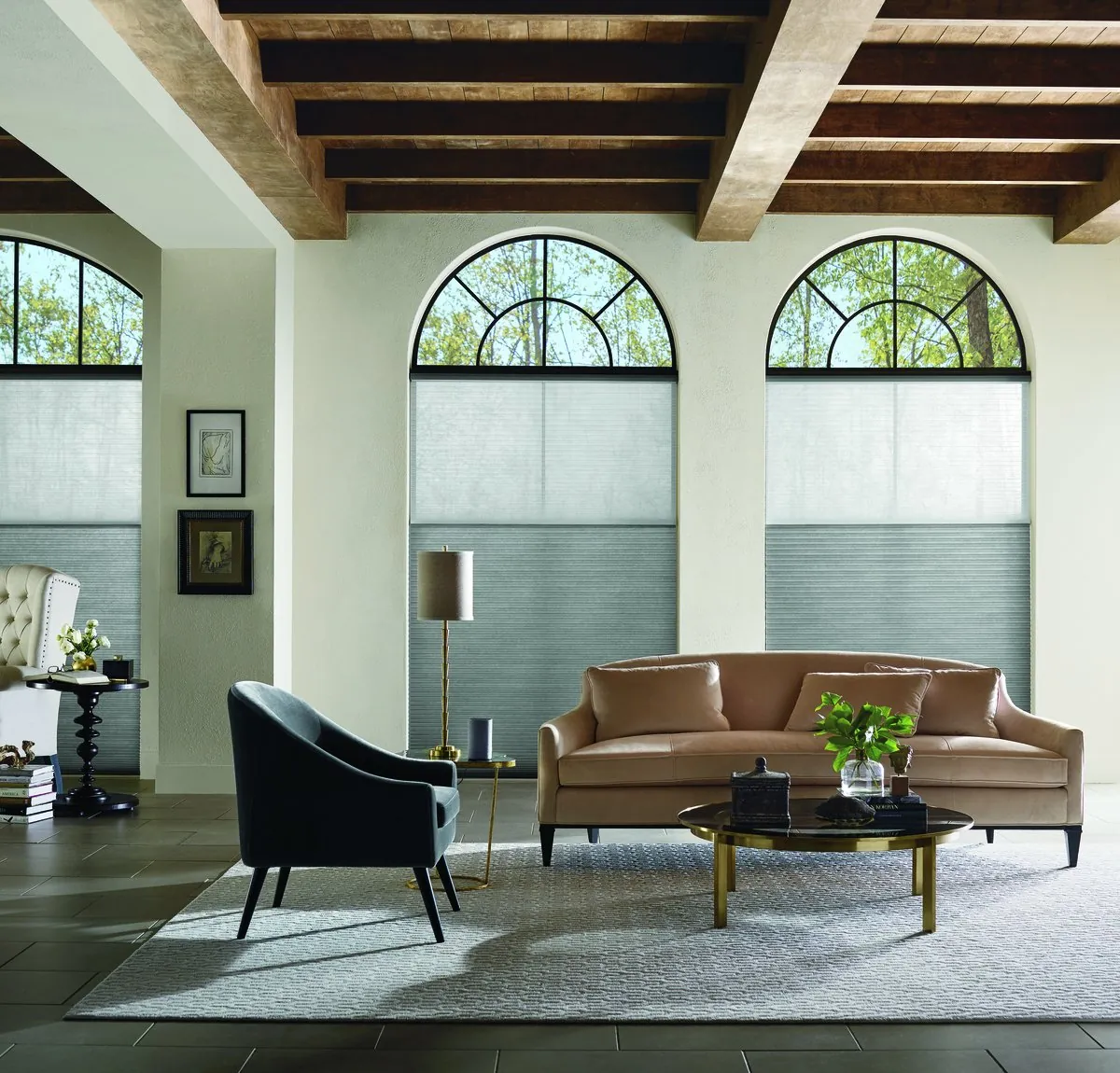
Tall sash in the town center
Duette made long and narrow, mounted inside the frame where the depth allows, with top-down lift for privacy without losing the daylight.
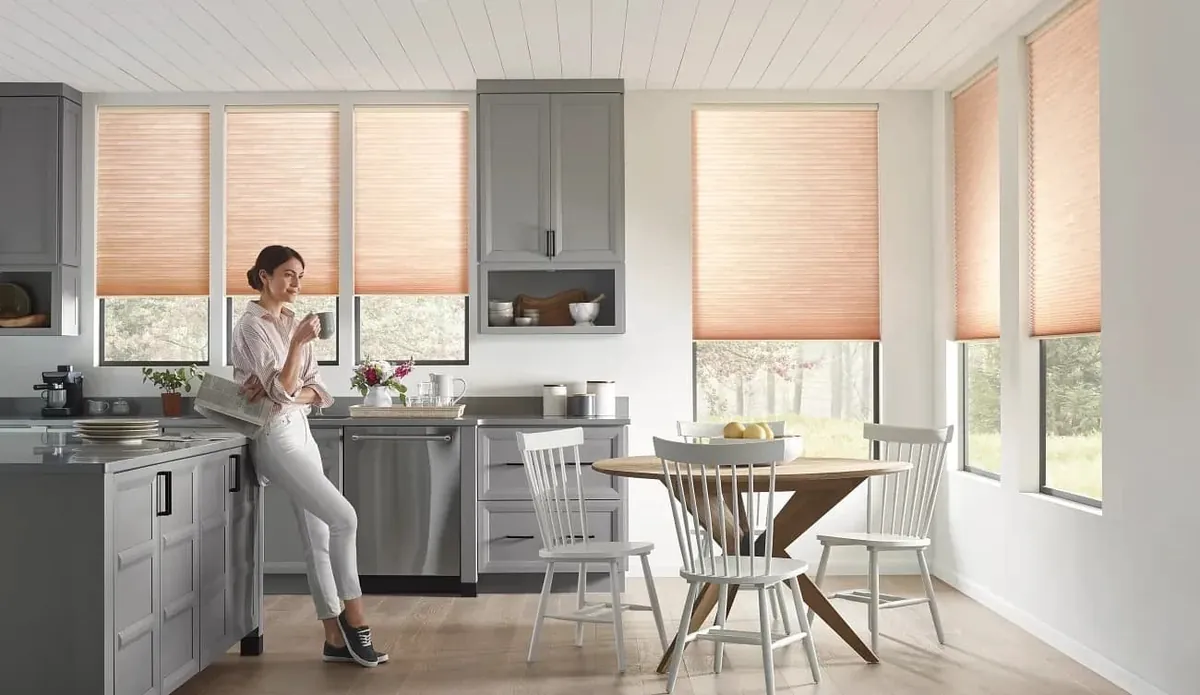
Ranches and colonials further out
Duette and Applause in matching sets for standard openings, with a vertical honeycomb shade for the slider to the yard.
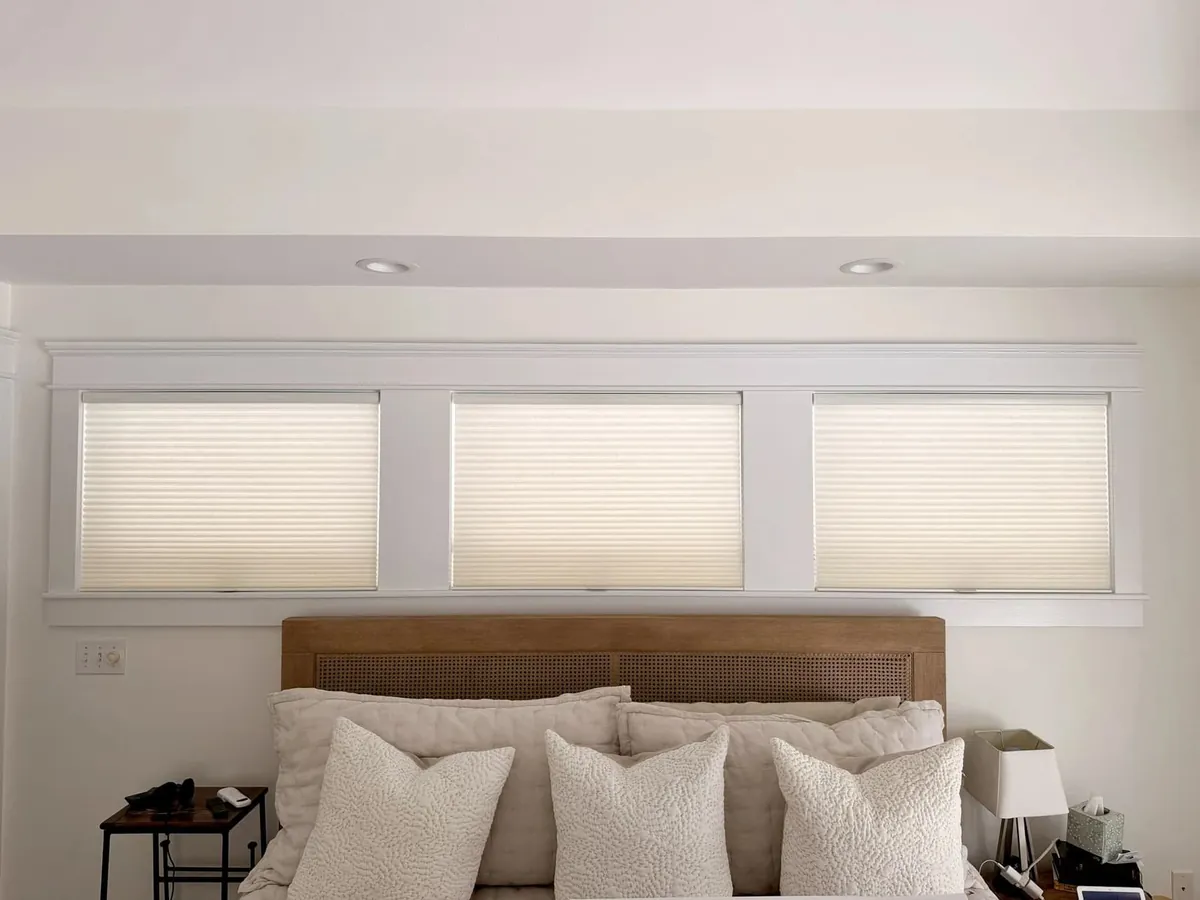
Bedrooms that need dark
Room-darkening honeycomb fabrics for bedrooms in either kind of house, still holding air in every cell.
The Victorian and Federal houses around the center
Walk the streets around the center and the windows tell you when each house went up. Victorians have tall, slender double-hung sash, sometimes paired, sometimes in a bay, often reaching most of the way from floor to ceiling. Federal houses are a little plainer and squarer, with evenly spaced windows and wide, flat casings. In both, the trim around the window is part of the room’s character, and covering it with a bulky treatment would be a loss.
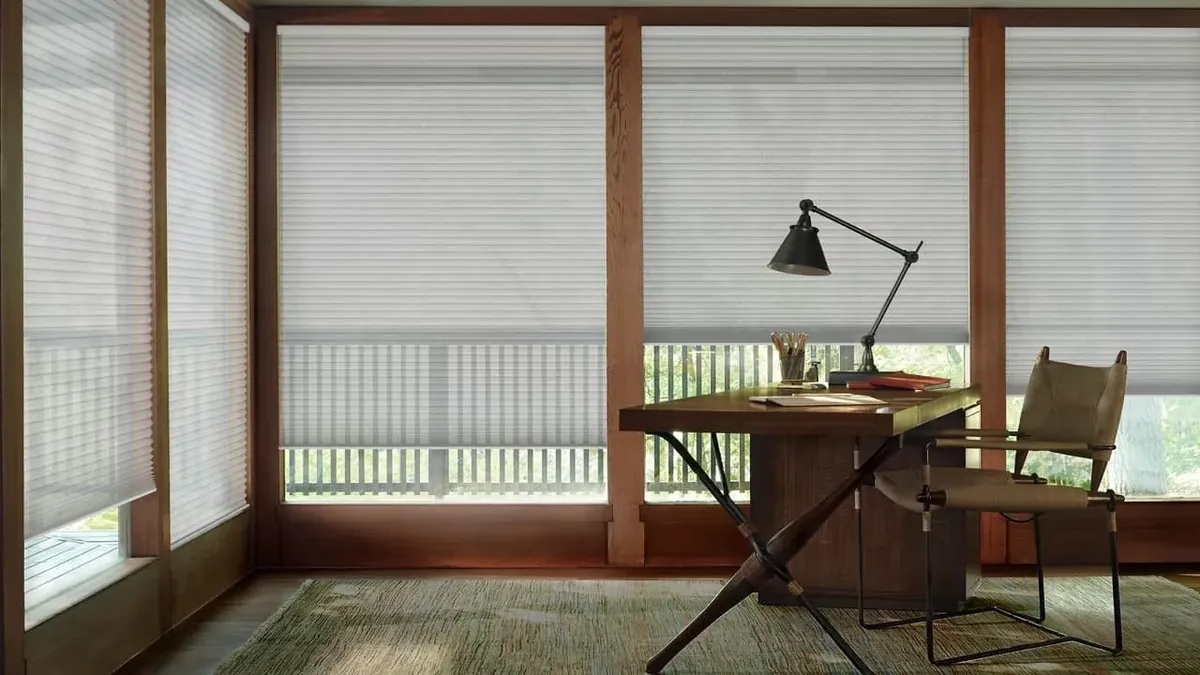
A honeycomb shade can be made tall and narrow enough to suit those openings, and when it is mounted inside the frame the casing stays in full view. Raised, a Duette shade stacks into a compact band at the top of the window. Lowered, it covers the full height of the sash with soft, even fabric.
The cold is the reason most center customers call. Tall single-pane sash, sometimes with old storm windows outside, lets a lot of warmth slip out on a winter night, and a high-ceilinged parlor has plenty of room for cold air to gather near the floor. Lowering honeycomb shades in the late afternoon puts a layer of still air in front of that glass and keeps more of the room’s warmth where you sit.
Mounting in an old frame
Old windows reward care. A frame that has stood for a long time has usually shifted, so the opening may be a touch wider at one end, or a little out of level. Sash cords, pulleys, stops and parting beads all take up space at the top of the frame, and that space is exactly where a headrail wants to go.
So we take more readings on an old window than on a new one. Width at the head, the meeting rail and the sill. Height down each side and the middle. Depth at the corners where the headrail will sit. If there is enough room, an inside mount keeps the trim visible. If there is not, a narrow outside mount fixed to the casing looks neat, and we will show you exactly where the headrail would sit before you decide.
In a bay, each window gets its own shade on its own headrail, lined up so the stacks match when they are raised. For the narrow sidelights beside a Victorian front door, honeycomb shades can be made slim enough to fit, with a fabric that lets light into the hall.
Privacy on a street in the center
Older houses around the center were often built near the road, their front parlors facing straight onto the sidewalk. Pair that with tall sash and there is a lot of glass at eye level. A top-down, bottom-up honeycomb shade is the most useful answer here: lower the top of the shade to bring in daylight from above, and keep the bottom section closed so the room is private from the street.
Light-filtering fabric helps by day as well: seen from the street it glows softly and hides the furniture behind it. After dark, with lamps on, a semi-opaque or room-darkening fabric keeps the front rooms private. We bring each opacity to the visit so you can see the difference at your own windows, day side and street side.
Ranches in the outer parts of town
Beyond the center, a lot of Middleborough’s housing is post-war ranches. They sit on their lots with the living room along the front, a picture window facing the road, bedrooms down a hallway, and often a slider or back door to the yard added later. The windows are standard sizes, and the shades fit them cleanly.
For a ranch the question is less about fit and more about the light and the way you use each room. The picture window usually takes two or three shades on a single headrail, raised together or separately. The bedrooms often face east or west and catch strong sun at one end of the day, which is where room-darkening fabric earns its place. A kitchen at the back may want a light-filtering fabric that brightens the room without glare on the counters. Where a ranch has had a sunroom added at the back, with windows on three sides, a single fabric across every pane keeps the room calm, and top-down lift lets the sky in while the lower glass stays shaded.
Newer colonials and their bigger rooms
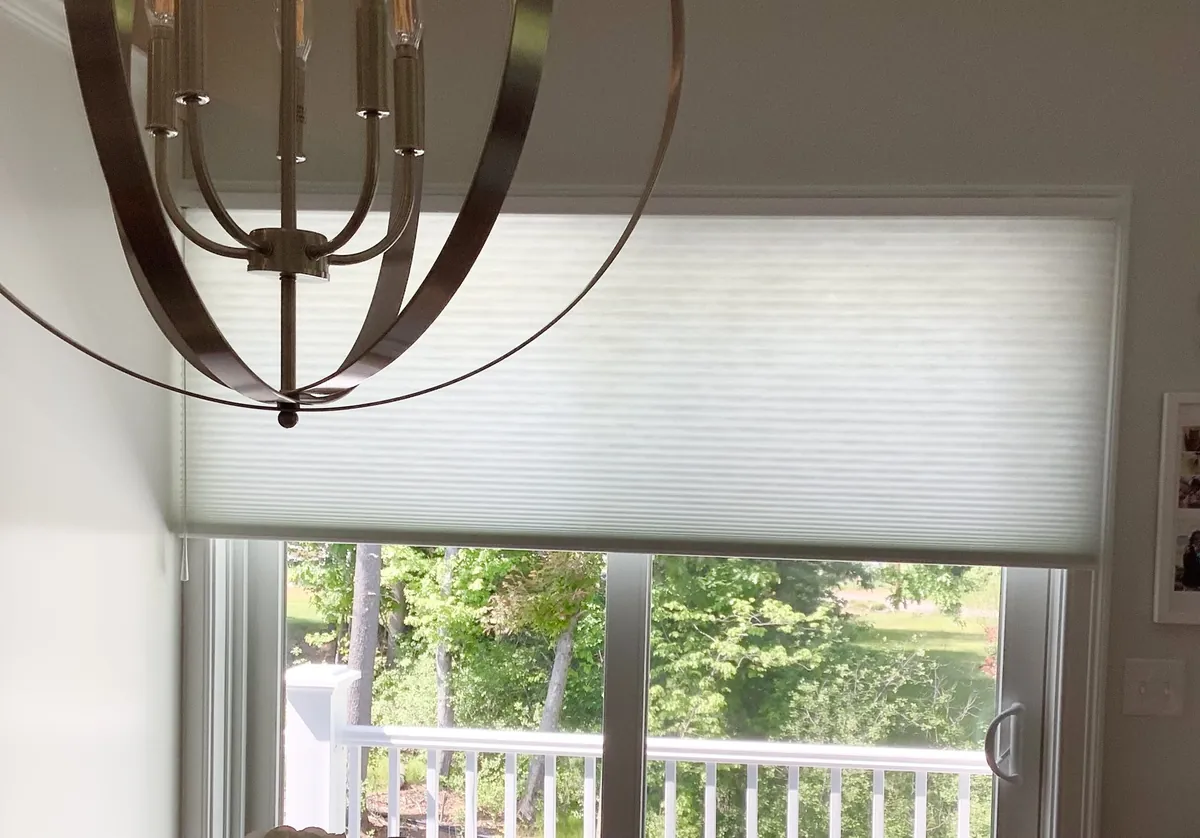
The newer colonials in the subdivisions bring two full stories, an open kitchen and family room, sliders to a deck or patio, and sometimes a two-story entry or a window above the stairs. They also bring more glass overall, and those bigger rooms take longer to warm on a cold morning.
Here cellular shades in Middleborough are often planned as a whole-house set. One fabric family across the front windows keeps the street view even. Inside, each room gets its own choice: light-filtering in the kitchen, something a little heavier in a family room that faces west, room-darkening upstairs. The slider gets a vertical honeycomb shade that matches the windows beside it and stacks neatly to one side.
High windows in the entry or stairwell are where PowerView comes in. A phone, a remote or a wall switch moves them, and a timer can close them each afternoon before the sun swings round.
What the cells actually do
Hold a honeycomb shade sideways and look at its edge. Instead of one flat layer of fabric, you see a chain of hexagons, each one a small closed tube that runs from one side of the shade to the other. Lower the shade and every one of those tubes fills with air that has nowhere to go. That trapped air is the whole point. Heat moves slowly through air that stays put, so a lowered shade puts a quiet buffer between a cold pane and a warm room.
In a tall Victorian parlor near the center, that buffer covers a lot of glass, and you notice it most in the chair closest to the window. In a ranch bedroom out in a subdivision, it means the room no longer cools down sharply after sunset. The effect is the same physics in two very different houses.
Hunter Douglas builds the cells in more than one way. Some fabrics carry a second, inner layer inside each hexagon, and some shades put two rows of cells back to back. More cells and more layers mean more pockets of trapped air. We bring each construction so you can compare them in your hand and at your glass, because they also differ in how much daylight they let through and how soft they look.
Summer uses the same buffer the other way round. On a west-facing room in July, lowering the shades for the hot part of the afternoon keeps much of the sun’s warmth at the window. With a light-filtering fabric the room still has enough daylight to read by.
Duette and Applause in practice
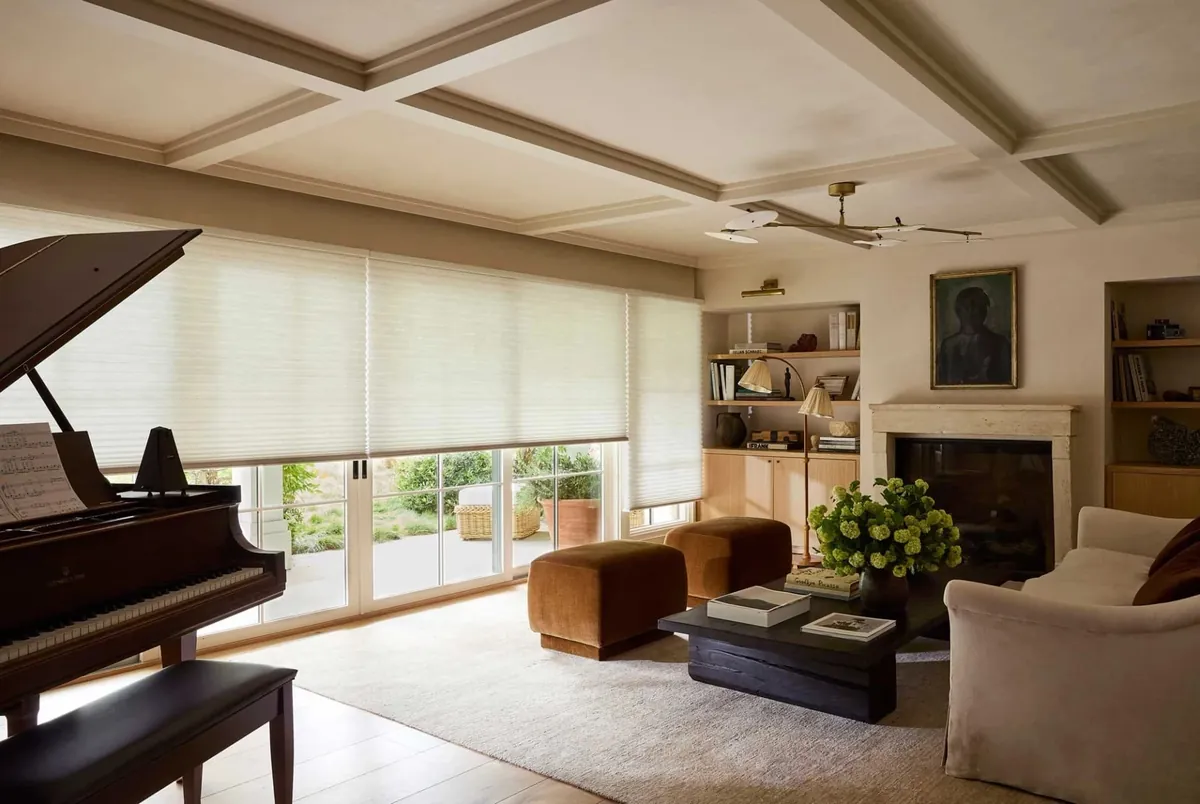
Hunter Douglas makes two honeycomb lines, and we carry both. Duette is the bigger collection, with more textures and pleat widths, the tallest and widest sizes, shaped shades for arches and angles, and a version that runs sideways across a slider. Applause is smaller but has a palette of its own, and it fits standard openings beautifully.
In a Victorian near the center, Duette usually goes on the tall front windows, where its sizes and fabrics matter most. In a ranch or colonial further out, Applause often covers the bedrooms and secondary rooms while Duette goes on the slider and the main living space. Choosing cellular shades in Middleborough room by room like this gives each window what it needs. Each line has its own page, Duette and Applause, and the whole honeycomb family is on our cellular shades page.
Fabric color against old woodwork and new walls
The older houses near the center often keep their original woodwork, either stained dark or painted many times over in a creamy white. A shade sits right against that trim, so its color has to get along with it. Against dark stained casings, a warm ivory or soft linen fabric usually looks settled, while a stark white can look too bright. Against painted trim, matching the shade to the trim color makes the shade almost vanish when it is raised.
Out in the subdivisions the walls and trim are usually newer and lighter, and the question becomes how the shades read from the street and how they sit with the furniture. Many owners keep every street-facing shade the same pale color so the house looks even, then pick something with more character for a family room or a bedroom at the back.
Daylight changes everything here, which is why we never choose color from a printed card. Seeing cellular shades in Middleborough against your own trim, at the time of day you use the room, settles the question faster than any catalog.
Lifting the shade: cordless, top-down and PowerView
How a shade moves is something you notice every day. Cordless lifts are the usual choice now: you raise or lower the shade by the bottom rail, with no cord hanging at the side of the window. Top-down, bottom-up shades add a second rail so the shade can open from the top as well. PowerView motorization lets you move one shade or a whole room from a phone, a remote or a wall control, and set schedules.
In the center’s tall-window houses, PowerView is especially handy on windows that are hard to reach behind furniture or above a radiator. In the outer subdivisions it suits the two-story windows and the family rooms where many shades need to move together. We plan how each motor is powered at the visit. Our motorized blinds in Middleborough page covers automation in more depth.

Samples brought to your house
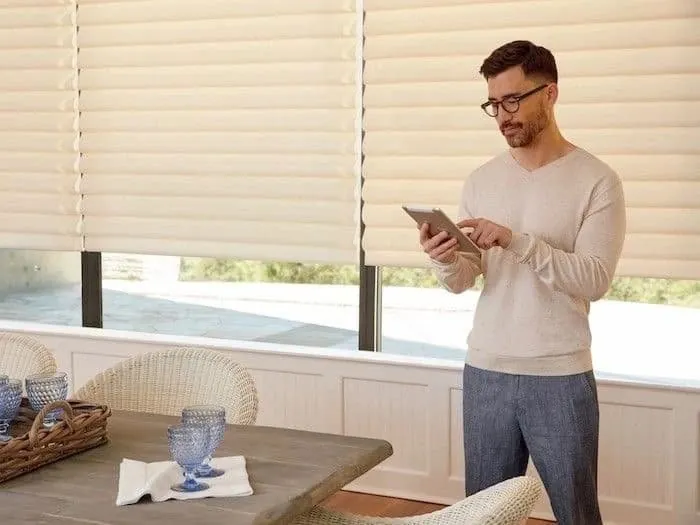
A town this spread out is a good reason to shop at home. Our vans carry samples, so we bring the showroom to you, whether you live a few streets from the center or out on a quiet road at the edge of town. This is the usual shape of a visit:
- Book online or through the call button, and pick a day that suits you.
- We look at the rooms that bother you most, whether that is a tall cold parlor or a bright west bedroom.
- You hold fabrics up to your own windows and compare the light, the color and the weight.
- We take the measurements each window needs and settle the mount and lift with you.
- We leave you a free estimate, room by room, to look over in your own time.
Color and fabric across a whole house can be part of the same visit through our interior design consultations. Our guide to what happens at an in-home consultation walks through it in more detail.

A Gallery dealer with certified installers
Hunter Douglas names a small group of its dealers as Gallery dealers, and Blinds & Designs is one. The title comes from the maker, and it means the full range of Duette and Applause fabrics, lifts, sizes and PowerView options is open to you through one visit.
Every installer we send is Hunter Douglas certified. On a tall old frame they set brackets into solid wood and level a headrail that the window itself may not match. On a newer colonial they hang wide and tall shades true and pair every motor before they leave. Should a shade need a fix down the road, our blind and shade repair service looks after it.
Honeycomb shades are one part of what we do in town. See our plantation shutters in Middleborough, roman shades in Middleborough or the full list on our Middleborough page.
Questions from Middleborough
Will honeycomb shades fit the tall, narrow windows in my Victorian?
In most cases, yes. Duette can be made long and narrow, and an inside mount keeps the original casing visible. Where sash hardware leaves too little depth at the top of the frame, a slim outside mount is the cleaner option, and we will show you both at the window.
My ranch has standard windows. What should I be thinking about?
Mostly light and use. Fit is straightforward in standard openings, so the choice comes down to fabric opacity, color and how each shade lifts. Bedrooms that catch early sun suit room-darkening fabric; a kitchen usually suits light-filtering.
Can I keep the front rooms private on a street near the center?
A top-down, bottom-up shade lets daylight in from the top while the lower part of the tall window stays covered. After dark, a semi-opaque or room-darkening fabric keeps the room private with the lamps on.
What about the window above the stairs?
PowerView motorization lets you raise and lower it from a phone, a remote or a wall control, and can run it on a schedule. Duette is also made in the taller sizes these windows often need.
Is the estimate free?
Yes. After the measuring, we write up a free estimate for each room you are thinking about, and you can take as long as you like with it.
The next step
Whether your house is a Victorian near the center or a colonial out in a subdivision, the best way to judge cellular shades in Middleborough, MA, is to see the fabrics against your own windows. Book a consultation and we will arrive with Duette and Applause samples, take the measurements each opening needs and write you a free estimate. Our nearest showroom is in Sagamore, if you would rather call or visit there first.