
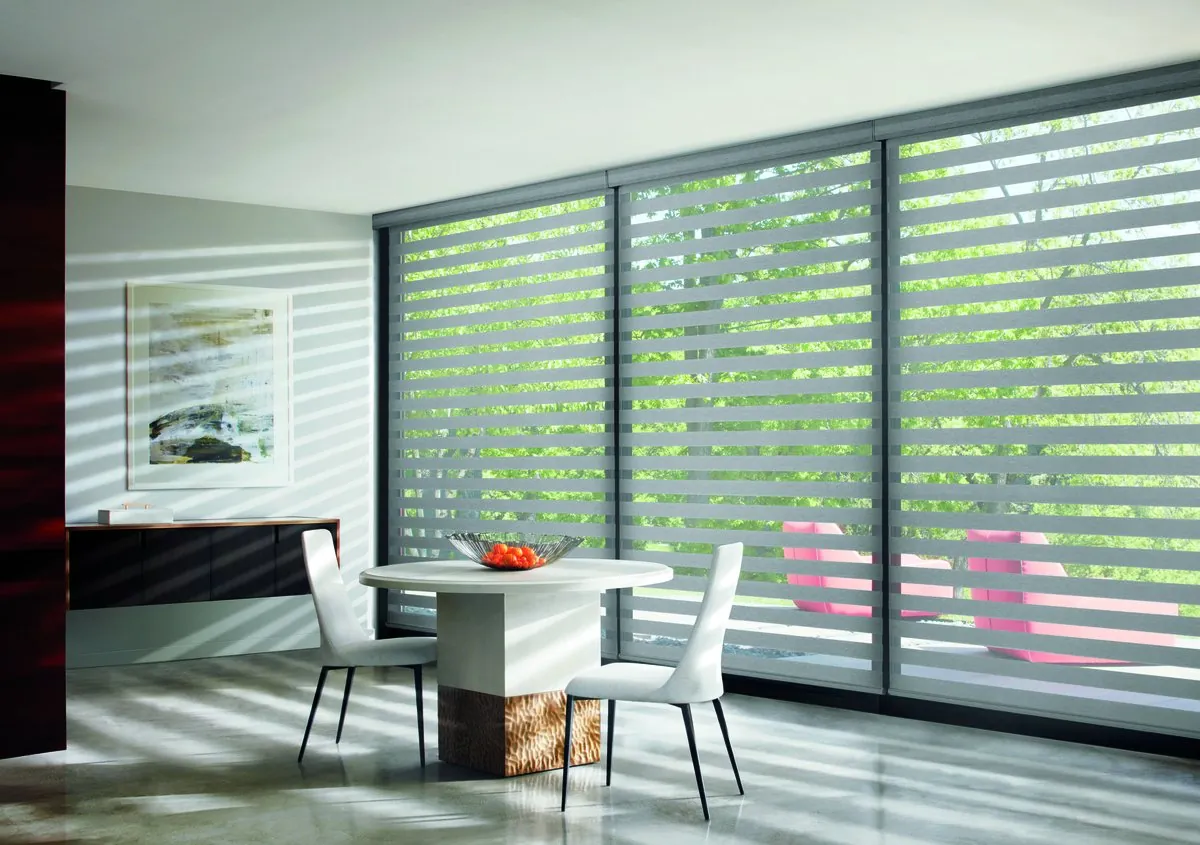
From the common outward
Bridgewater’s housing tells its story in rings. Close to the common and the college, colonials and Victorians stand on older, tree-lined streets, and many of them still have the tall sash they were built with. Move outward and the houses get younger: post-war ranches first, then newer subdivisions where colonials and split-levels line curving roads. Across all of it, standard modern openings are the rule, and the tall older windows near the center are the exception. That mix shapes how we approach roller shades in Bridgewater, MA.
With standard windows, fit is rarely the hard part. The real decisions are about each room: how much light it should have, who can see in, when it is used and what the sun is doing at that hour. A roller shade answers those questions through its fabric, and Hunter Douglas makes roller fabrics for every point between an open screen and full blackout.
For the older houses near the center, a little more care goes into the tall sash and the frames around it. We cover both below.
Three ways to dress a Bridgewater window
Every one of these is a Hunter Douglas roller, and samples of each travel in our vans.
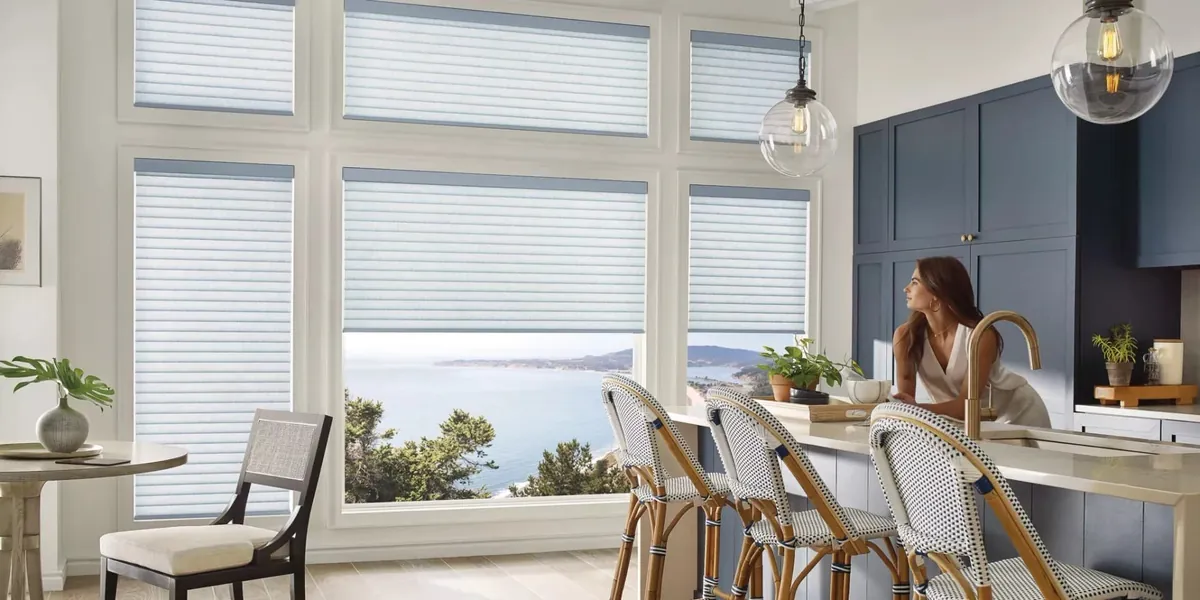
Plain light filtering rollers
Clean, bright and private, the workhorse fabric for kitchens, living rooms and studies.
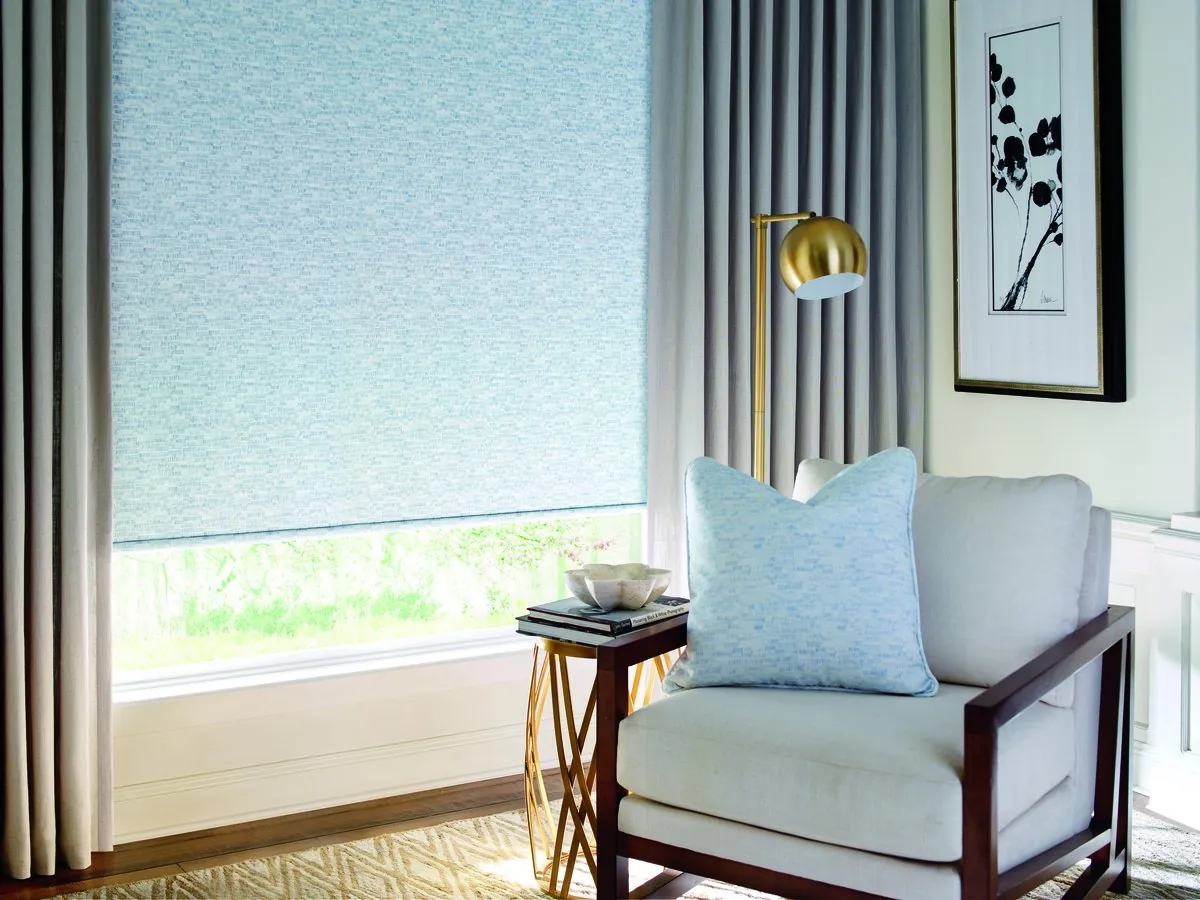
Patterned and textured fabrics
From the Alustra collection, for a Victorian front room or a dining room where the shade should add something.
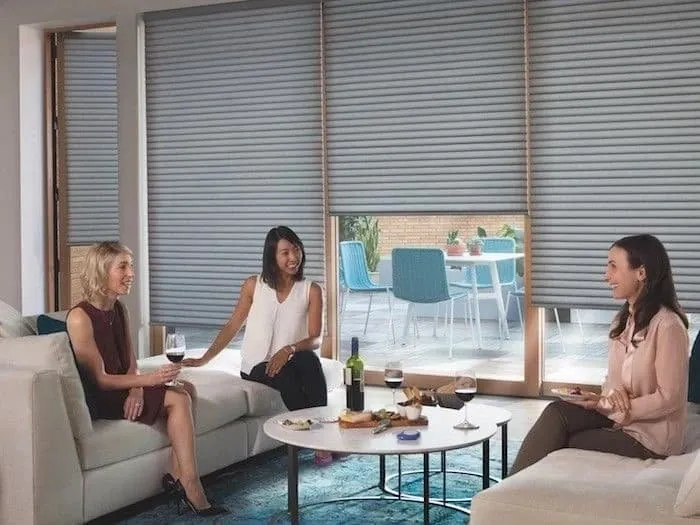
Cellular rollers
Sonnette rolls like a roller but has a softly curved cell, giving a fuller face to the window.
A room-by-room approach
In a house with standard openings, the most useful way to plan roller shades is to walk through it one room at a time. The same colonial can need four different fabrics, and getting each room right matters more than any single product choice.
The front living room
The front room usually faces the street, so privacy during the day is the first concern. A light filtering roller works well: when the sun is on it, the fabric glows and hides the room, while the light inside stays soft and even. In the evening, with lamps on, a light filtering fabric still blurs the view in, though a heavier weave does it better if the house sits close to the sidewalk.
The kitchen
Kitchens want light. A pale light filtering fabric or an open screen keeps the room bright while cutting glare on the counters. The window over the sink is the one most people struggle to reach, so a cordless lift that rises from the bottom rail, or a motor, is worth considering there.
The family room
In many newer colonials the family room runs across the back of the house with a slider and big windows. If it faces south or west, a solar screen keeps the afternoon sun off the television and the furniture while the yard stays visible. If the room is used for watching films, a room darkening fabric may suit better.
Bedrooms
Upstairs, darkness usually wins. Blackout or room darkening fabrics handle it, and an outside mount over the trim seals the edges.
A home office or study
A study needs glare off the screen without losing daylight. A screen with a fairly tight weave, or a light filtering fabric, keeps the room workable through the day.
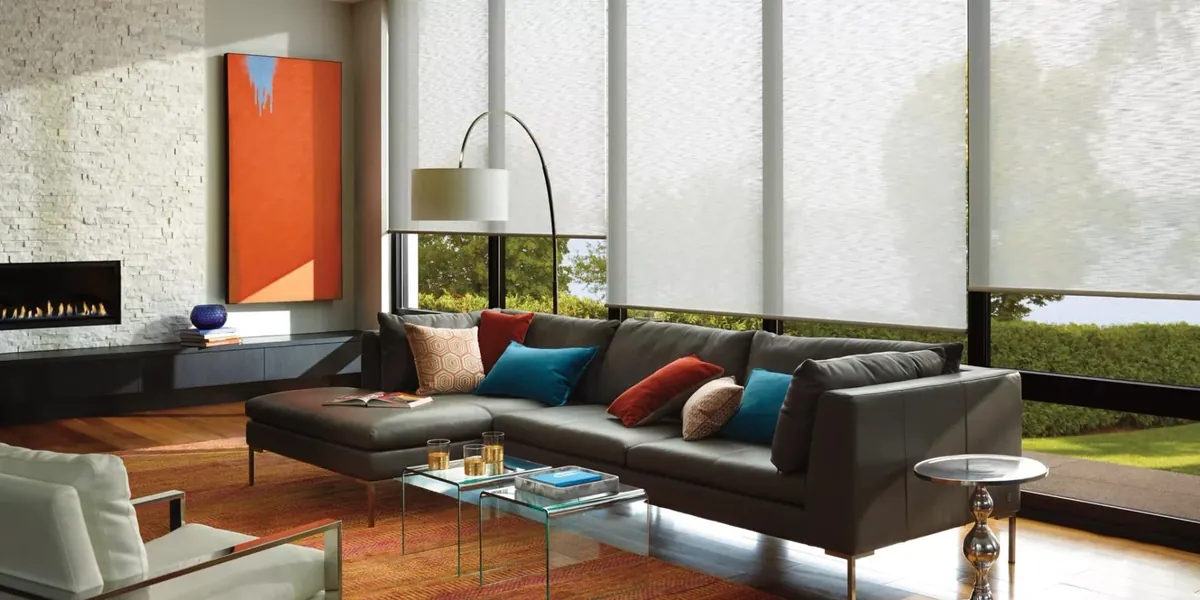
Older houses near the common and the college
The colonials and Victorians on the streets around the common were built with taller windows than anything in the newer neighborhoods. A Victorian parlor may have sash that reaches close to the ceiling, with deep casings and moulded trim. Those windows are worth showing off, and a roller shade is one of the least intrusive ways to cover them, because the fabric winds into a slim tube and a raised shade barely takes any of the glass.
The frames around older sash need a careful look. After many years, an opening may be a little out of square, and paint, weatherstrip and the window stops all take up space where a headrail would sit. We measure the width at the head, center and sill and the height on both sides and the middle, and we check the reveal depth along the top. The shade is made to the tightest measurement so it travels freely.
Where the reveal is deep enough, an inside mount keeps the casing in full view. Where it is not, mounting on the face of the trim gives a clean result and better coverage at the edges. We will recommend the one that suits each window, not the one that is easiest to fit.
For a colonial with matching windows across the front, we also keep every shade at the same height and showing the same color to the street, even if the rooms behind them use different fabrics. From outside, the house looks orderly. Inside, each room gets what it needs.
Ranches and the first ring of growth
The post-war ranches that ring the older center are among the easiest houses to fit. Their windows are square, standard and within reach, and most rooms are on one level. A typical ranch has a living room picture window, a kitchen window, a slider out back and bedrooms along a hall.
The picture window is the one to think about. It is often wider than a single shade should be, so we split it into two or three rollers that share one bracket and move together, or that work separately so you can let light in at one end and keep privacy at the other. Sliders can take a roller if there is space above the door and the handle sits clear of the fabric.
Because everything in a ranch is on one floor, the view between rooms is long. Choosing one color family for every shade, with opacity changing room by room, keeps the house feeling calm from end to end.
Newer subdivisions
Further out, the subdivisions built more recently tend to have more glass: larger windows, a two-story foyer, sometimes a vaulted family room with windows high in the gable. Standard sizes still dominate, which keeps measuring simple, but the high glass brings a new question: how to reach it.
For windows above head height, PowerView motorization is the practical answer. A quiet motor in the roller tube moves the shade from a remote, an app or a schedule. We cover that in more detail further down the page.
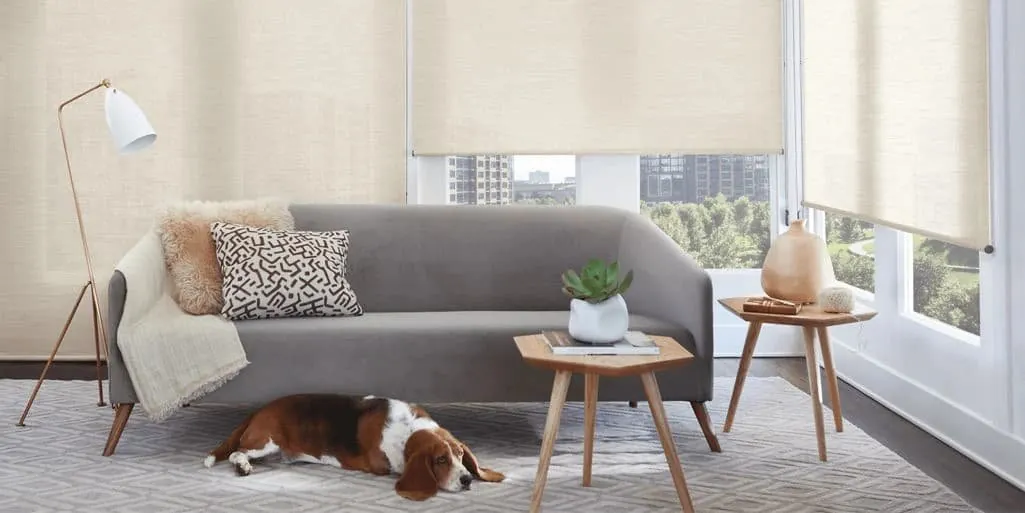
Split-levels and their half-flights
Some of the subdivisions have split-level houses, and they bring a layout all their own. The living room sits a few steps up from the entry, the bedrooms another half-flight above, and a family room tucked half below ground with shorter windows set high in the wall. Each level sees the light differently.
The upper living room usually has the house’s big front window, so it suits a light filtering roller that keeps the room bright and private from the road. The bedrooms above want darkness. The lower family room is the interesting one. Its windows are short and sit near the ceiling, so the room tends to be dim already, and a heavy fabric would make it darker still. A pale light filtering roller, or a screen, keeps what daylight there is while giving privacy from the yard. Because a roller winds away into a slim headrail, it leaves the whole of a short window clear when raised, which matters in a room that needs every bit of light it can get.
Sliders and French doors
Many Bridgewater houses have a slider or a pair of French doors out to a deck or patio. Each takes a slightly different approach. On a slider, a roller mounted above the frame can cover the whole opening, provided there is room above the door for the headrail and the handle sits clear of the fabric as the shade comes down. On French doors that swing open, a shade mounted on each door, with hold-down brackets at the bottom, moves with the door and stays put. We look at each door at the visit and suggest the approach that works best with the hardware you have. These are also the openings where roller shades in Bridgewater, MA, houses most often take a screen fabric, since the door usually faces the yard and the afternoon sun.
Openness factor, explained simply
Solar screens come up often in these houses, especially on south and west windows. A screen is a woven fabric with small open spaces, and the openness factor describes how much of it is open. That number is about one thing: the balance between view and glare.
A low openness blocks more of the sun’s glare and gives more privacy in daylight, but the view outside looks softer. A higher openness keeps the view sharper while still cutting the harsh brightness. Color matters too. Darker screens are usually easier to see through. Lighter screens look brighter from inside and send more sun back out through the glass.
Two cautions help. First, screens are for daytime; at night, with lights on inside, they let people see in. Second, a screen softens light rather than darkening a room, so it is the wrong choice for a bedroom. For a family room you use day and night, a screen paired with an opaque shade on a second bracket covers both needs, and a Designer Banded shade is another way to switch between open and closed.
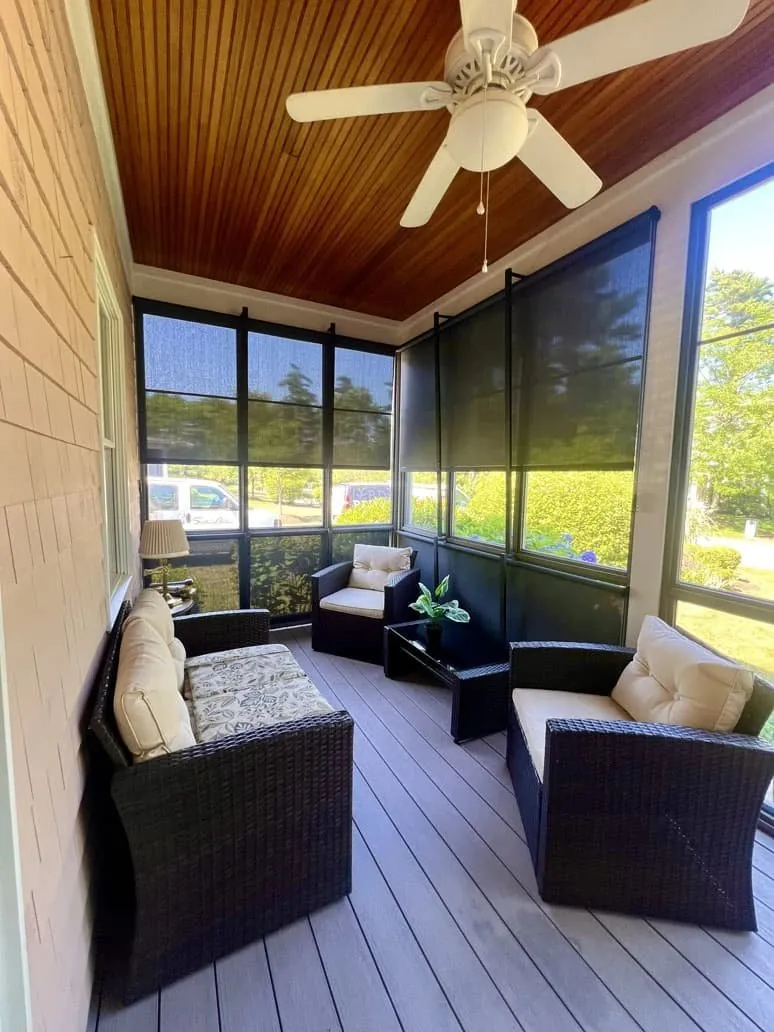
The consultation, step by step
Most people choosing roller shades in Bridgewater begin with a home visit. Fabric samples look very different in a store than against your own glass, so our vans carry them and we bring the showroom to you.
- Request a consultation online or using the call button, and pick a time.
- We walk through each room with you and ask how you use it.
- You compare screen, light filtering, room darkening and blackout samples at your own windows.
- We discuss mounts, lift options and whether any windows would benefit from a motor.
- We take careful measurements of every opening.
- You receive a free estimate for the shades you are considering, with no pressure to decide that day.
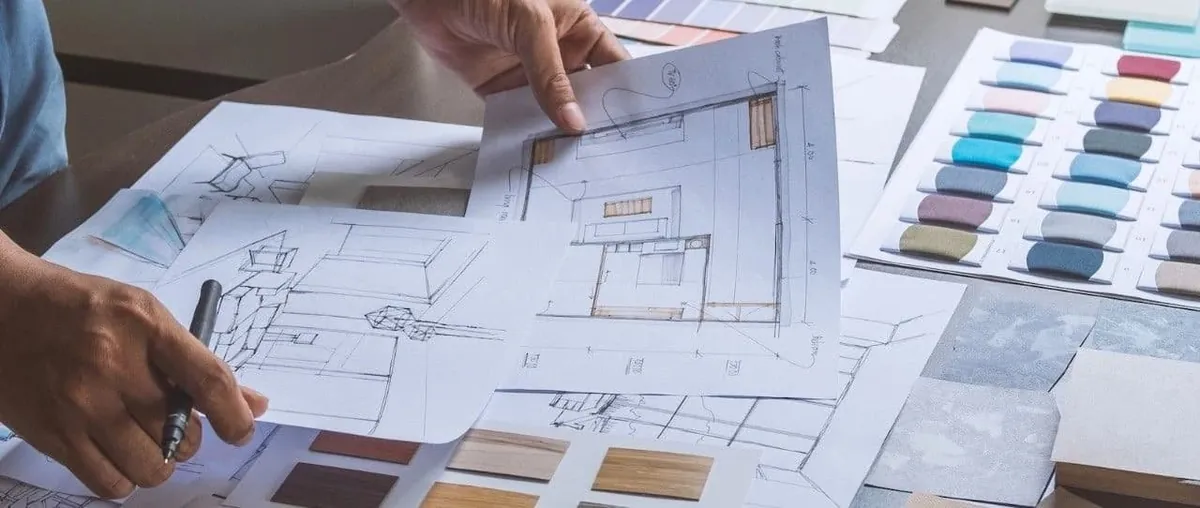
There is more detail on our page about what happens at an in-home consultation. If you would like advice on color, fabric and the room as a whole, our interior design consultations cover that.
Lifts and controls
How you raise and lower a shade matters as much as how it looks. Roller shades offer a few choices.
- Cordless. You lift or lower the bottom rail by hand. Nothing hangs at the side, which suits children’s rooms and keeps the window tidy.
- Continuous cord loop. A loop at the side turns the tube, which helps on larger, heavier shades.
- PowerView motorization. A motor in the tube moves the shade from a remote, an app or a schedule.
A house often uses all three: cordless in the bedrooms, a loop on a wide picture window, motors on the foyer glass. We help you match each window to the right lift at the visit.
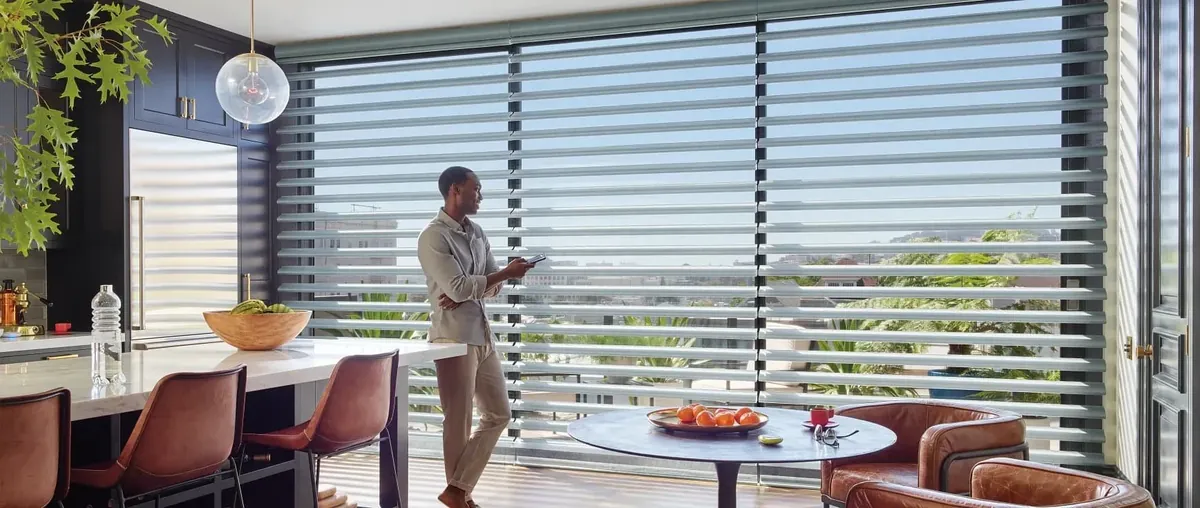
PowerView in practice
PowerView puts the motor out of sight inside the roller tube. You control the shades from a handheld remote, the PowerView app on your phone or schedules you set once and leave alone.
Groups move several shades together, so a family room wall of rollers stops at the same height in one tap. Schedules can lower the screens on a west wall in the late afternoon and raise them after sunset, or close bedroom shades at dusk. For a two-story foyer or a vaulted gable in a newer subdivision house, motorization is often the only sensible way to use the high glass at all.
We plan how each motor is powered at the visit and talk through which windows really benefit. Our page on motorized blinds in Bridgewater has more on the controls.
The roller lines we carry
Roller shades in Bridgewater, MA, can come from several Hunter Douglas lines. Designer Roller is the core range, with plain and textured fabrics in every opacity. Designer Screen is the solar screen family. Designer Banded has two sliding layers of sheer and solid stripes. Sonnette is the cellular roller. Alustra is the premium collection, with finer weaves, patterns and the Alustra Woven Textures roller.
Most houses use more than one. A Victorian near the common might take an Alustra fabric in the front parlor and Designer Roller everywhere else. A subdivision colonial might use Designer Screen in the family room and blackout Designer Roller upstairs. See the roller shades page for the whole range, or the Designer Roller page for the core fabrics.
Installation
The last step is the one that makes the shades look custom.
- We confirm every window’s mount, fabric, lift and roll direction with you before ordering.
- When the shades arrive, our certified Hunter Douglas installers fix the brackets into solid framing.
- Each headrail is levelled, and on an older frame that is not quite square, the shade is set to look straight.
- Every shade is tested through its full travel.
- We show you how the lifts work and set up any PowerView groups and schedules with you.
What a Gallery dealer brings
Blinds & Designs is a Hunter Douglas Gallery dealer, a designation Hunter Douglas gives dealers who meet its standards. That gives you access to every roller line in one place, plus Hunter Douglas blinds, shutters, cellular and roman shades and drapery.
Our installers carry Hunter Douglas certification, and we offer blind and shade repairs if anything needs attention later. Planning more than shades? See cellular shades in Bridgewater, roman shades in Bridgewater or everything we do in town on our Bridgewater page.
The fabrics, up close
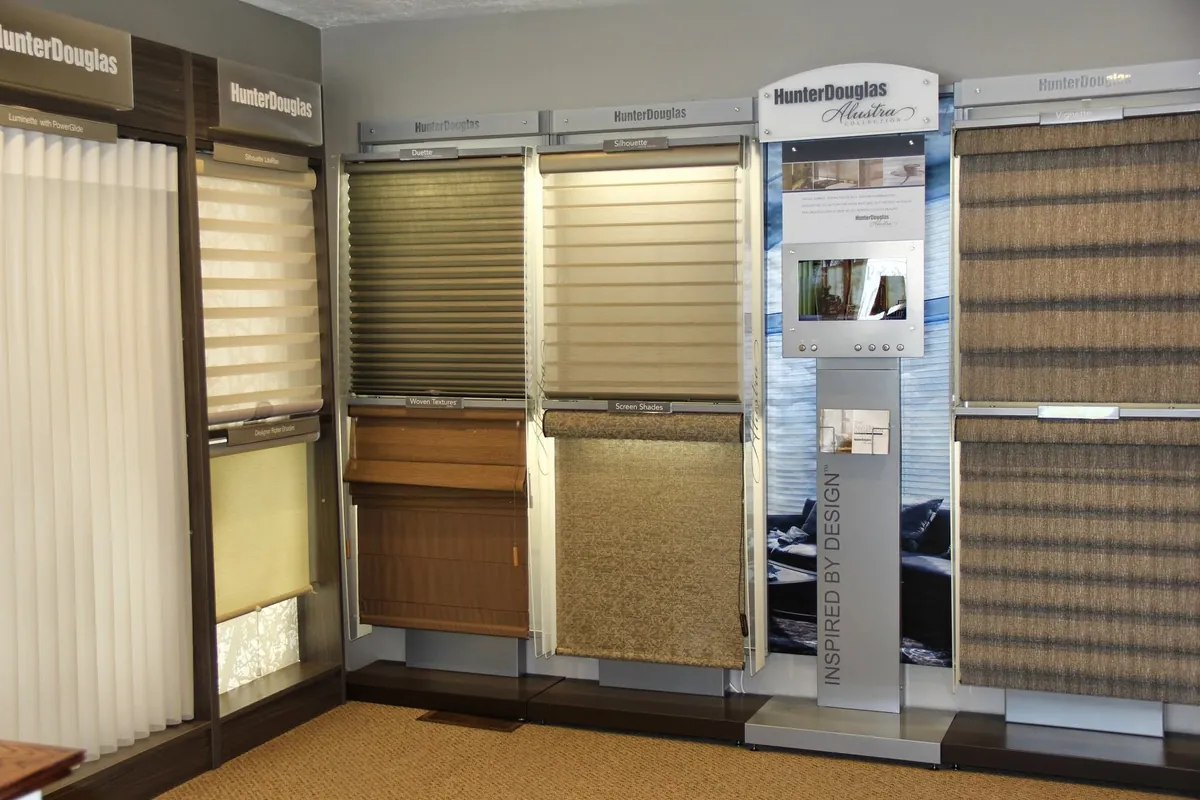
Seeing a roller shade move tells you things a flat sample cannot: how the fabric drapes, how the hem sits and how quietly it rolls. That is why we bring working samples to the visit along with the fabric swatches.
Bring your questions to the visit too: how loud a motor is, how a cord loop feels in the hand, how far a screen hem drops. Those are easiest to answer with a working shade in front of you.
Questions from Bridgewater
Do roller shades suit the tall sash in an older Victorian?
Yes. A raised roller winds into its tube, so very little of a tall window is covered when the shade is up. We measure each old frame carefully and choose an inside or outside mount depending on the depth of the reveal.
Which fabric is right for a home office?
Usually a screen with a fairly tight weave, or a light filtering fabric. Both cut glare on a computer screen while keeping daylight in the room. We can show you both at your desk window.
Can a roller shade make a bedroom properly dark?
Yes, with a blackout or room darkening fabric. An outside mount that overlaps the trim closes most of the light gaps at the sides.
What lift options are there?
Cordless, a continuous cord loop or PowerView motorization. Many houses use a mix, matched to each window’s size and how easy it is to reach.
Is the estimate free?
Yes. After we measure your windows, you receive a free estimate for the shades you are considering.
Start with a visit
The easiest way to plan roller shades in Bridgewater, MA, is to see the fabrics in each of your rooms, in your own light. Request a consultation and we will bring the samples, measure every window and give you a free estimate. Prefer to talk first? Use the call button, or visit our Sagamore showroom.