
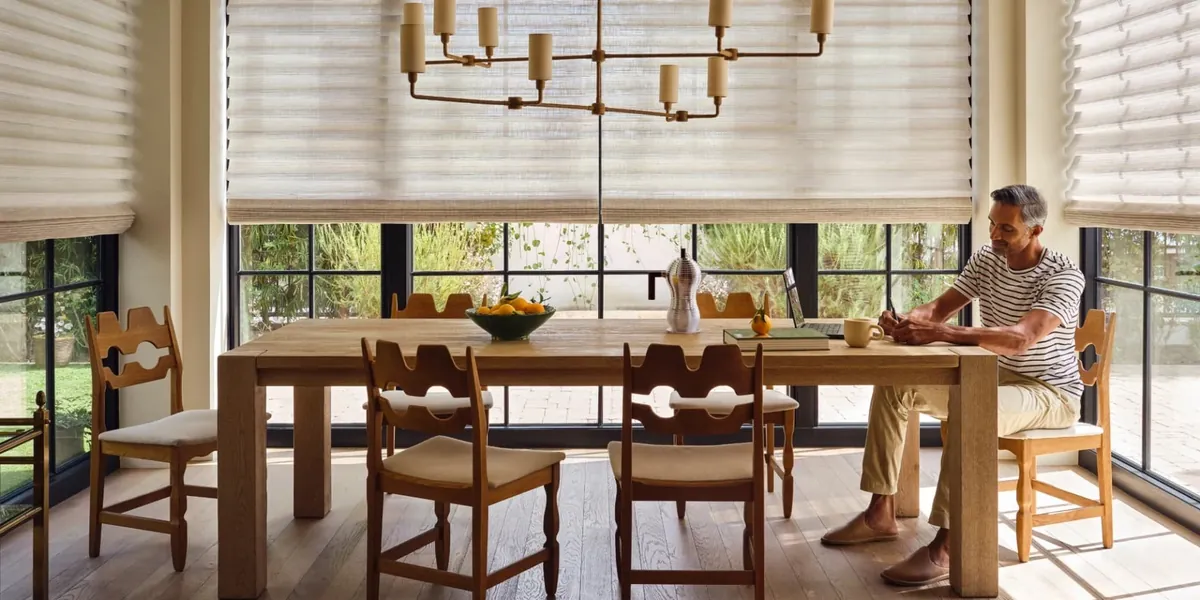
Around the common, and out past it
Near the common and the college, Bridgewater’s older streets are lined with colonials and Victorians, many with tall sash windows that reach toward high ceilings. Head outward and the houses change: post-war ranches first, then newer subdivisions with regular, modern windows in every room. Across most of town, standard modern openings are the rule, and the tall older sash is the exception you find around the center.
That mix shapes how we approach roman shades in Bridgewater, MA. In a newer house, fitting is simple and the decisions are about how each room is used: which fabric for the bedroom, which lift for the kitchen, how bright the living room should stay. In an older house near the common, the same room-by-room questions apply, with the added care that tall, aged frames need.
So rather than starting from the product, we start from your rooms. What do you do in each one, which way does it face, and what bothers you about the light or privacy there now?
Roman shades in Bridgewater, MA, room by room
Every room asks something different of a folded shade. These are the choices we suggest most often, room by room.
Living room
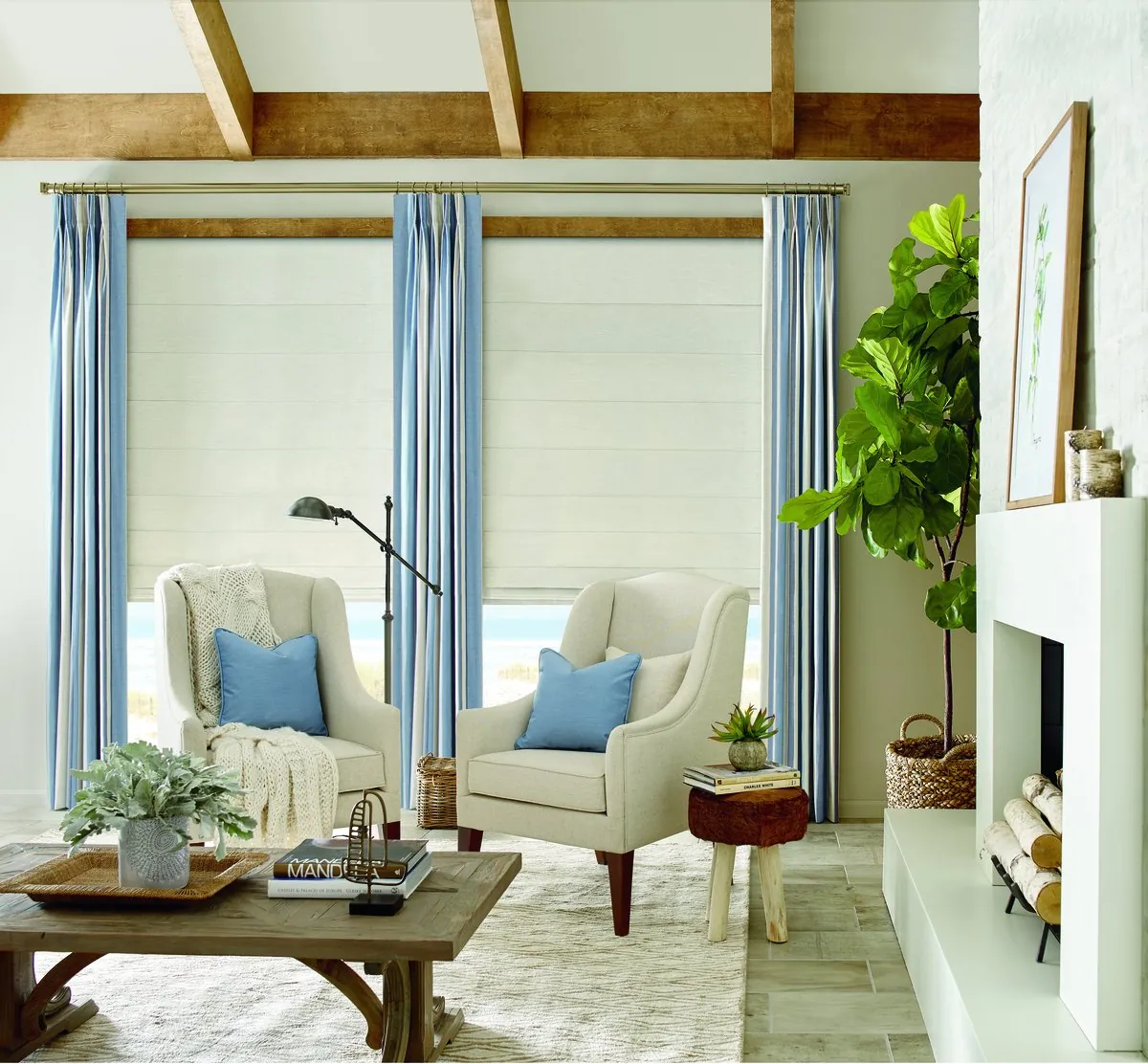
A light-filtering fabric keeps the room bright and private by day. In an older house, pairing the shade with drapery panels adds height to tall sash.
Dining room
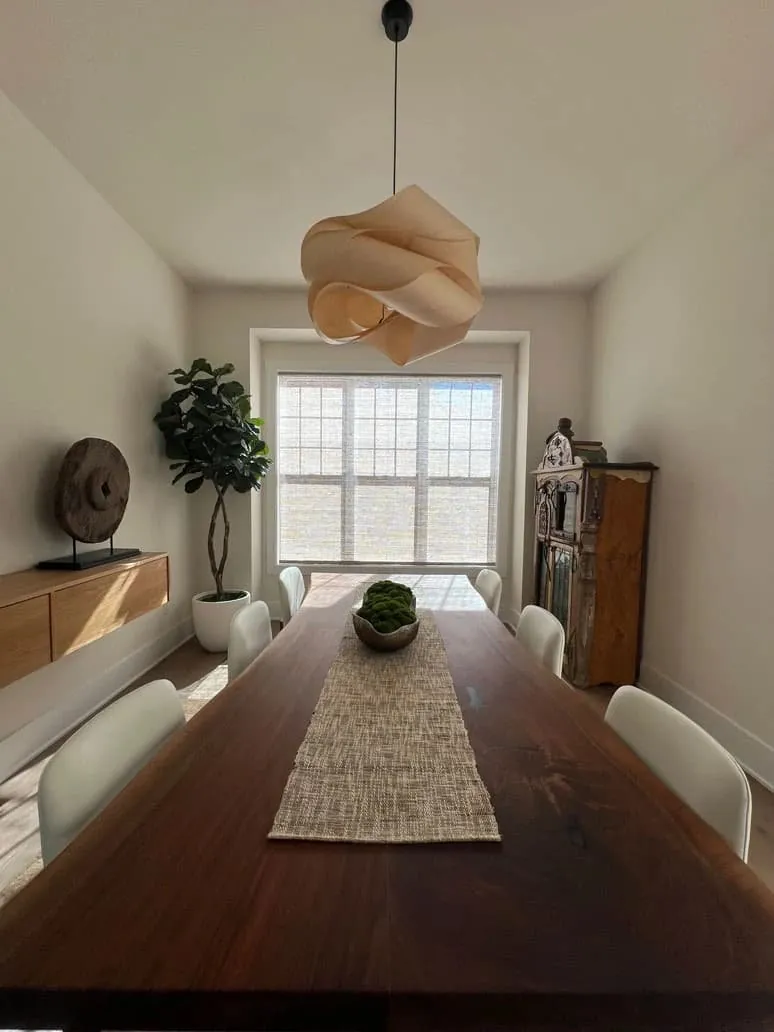
A natural texture or a patterned Carole Fabrics shade gives a dining room warmth, and evening privacy matters more than morning light here.
Kitchen
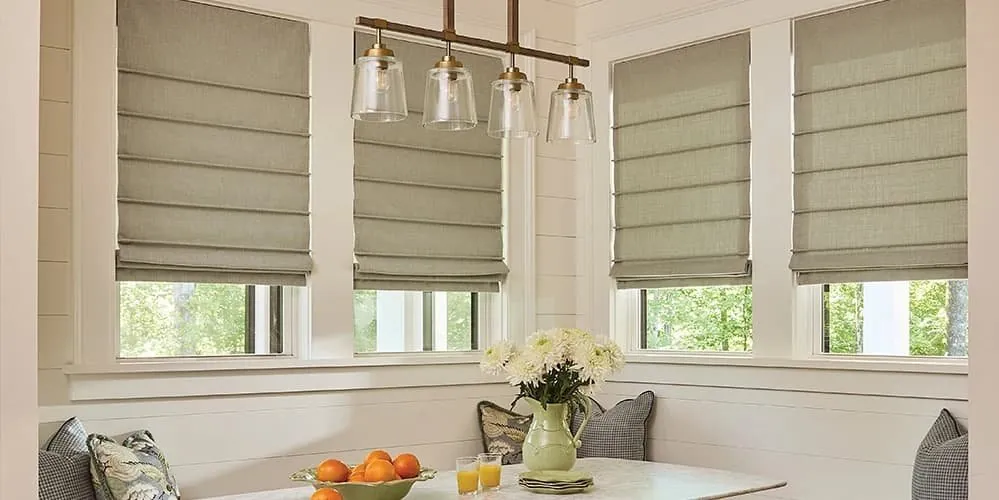
Vignette or a cordless sewn shade you work from the bottom rail, so nobody leans over the sink or counter to reach a cord.
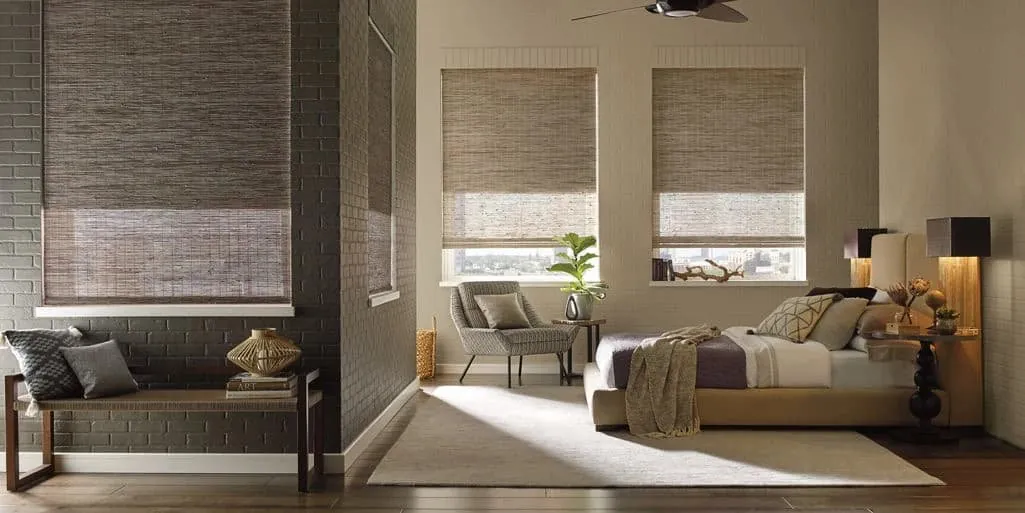
Bedrooms
A room-darkening lining for sleep, especially on the east side, with a fabric that suits the room by day.
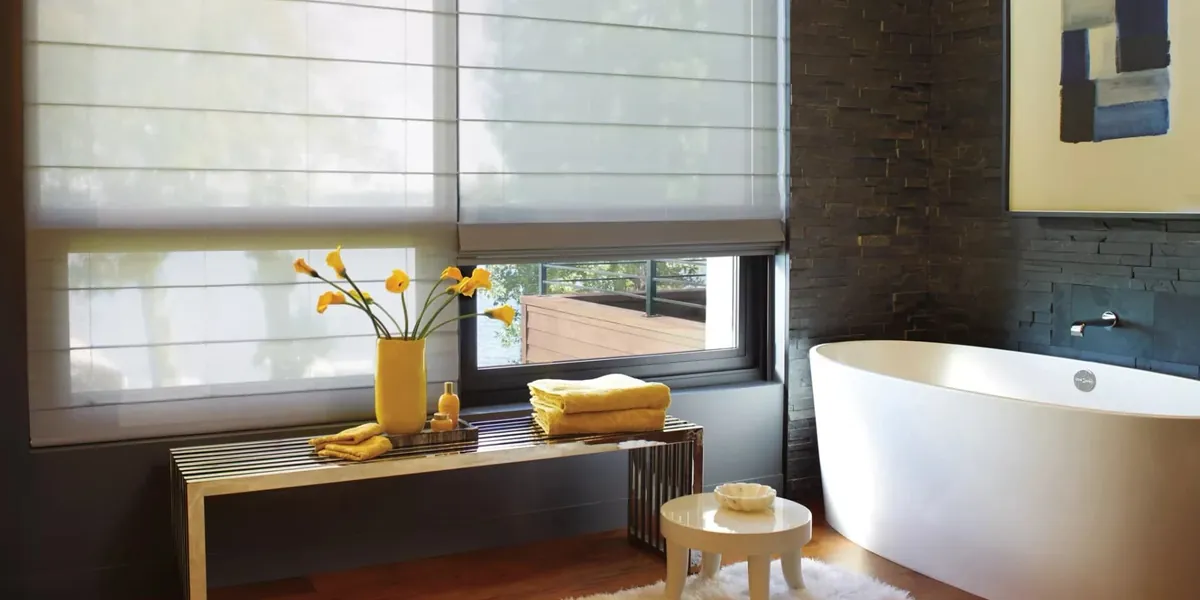
Bathrooms
A sheer or light-filtering face with a privacy lining keeps the room bright and screened at every hour.
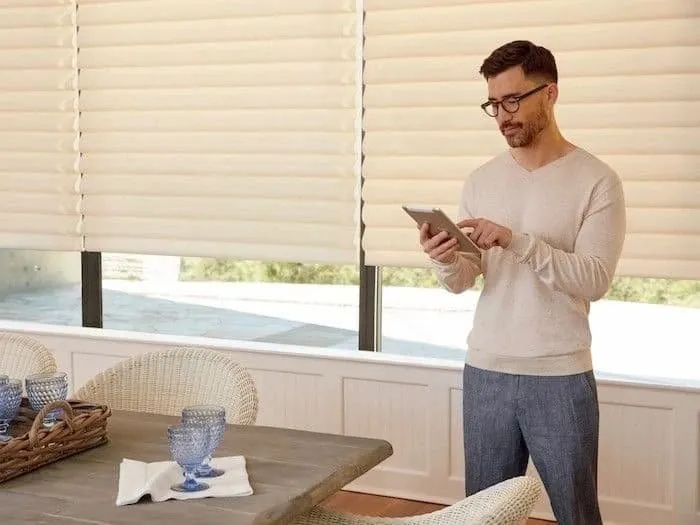
Home office
Glare on a screen is the problem to solve. A light-filtering shade lowered part way, or PowerView set to a schedule, keeps the light even.
Colonials and Victorians near the common
The houses closest to the common were built with the tall windows of their day. A Victorian front room might have sash windows well above head height, deep casings and a ceiling high enough to make a long shade look right. A colonial near the college may be more modest, with evenly spaced double-hungs and simpler trim, but its windows are still taller and narrower than those in the newer parts of town.
On these windows a roman shade looks at home. Lowered, it is a long, upright panel of fabric that suits the proportions of the room. Raised, its stack sits at the top of a tall window, so there is plenty of glass below it and the room keeps its light. A Carole Fabrics flat fold in a linen or a quiet stripe is the classic choice, and the fabric can be matched to the walls or the upholstery.
The older frames need careful measuring. Over many years, sash windows settle, jambs lean and openings that look identical from the street end up different sizes. We measure each window at the top, middle and bottom and check the depth at several points before recommending a mount. An inside mount keeps the casing on show; where the jamb is too shallow or out of square, a slim outside mount on the casing is the better answer.
Tall older sash and how high to mount
On a tall window, where the headrail sits makes a real difference. Set right at the head of the opening, the gathered fabric hides behind the upper sash’s top rail and barely touches the glass. Mounted a little higher, on the wall above the casing, the window looks even taller, and the raised shade clears the glass completely.
Reach is the other question. The top of a tall Victorian sash can be out of reach from the floor. A continuous cord loop lets you raise and lower a sewn shade without stretching. A cordless shade works on most windows, since you only need to reach the bottom rail. On a window that is tall and awkward to reach, such as above a staircase, PowerView lets you move the shade from a remote or your phone.
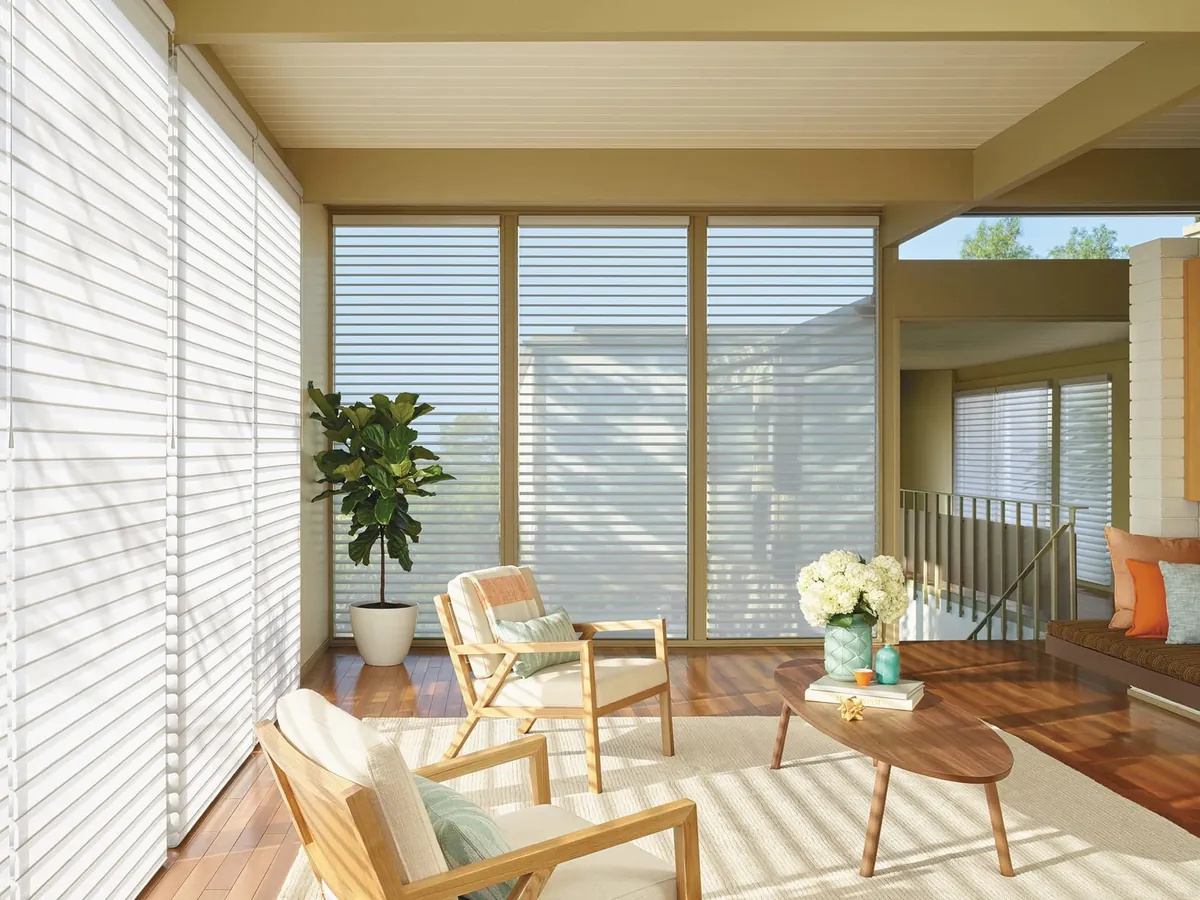
Post-war ranches further out
Beyond the older streets come the post-war ranches, single-story houses with a living room picture window, a kitchen at the back and bedrooms along one side. Their windows are lower and wider than those near the common, and they tend to take the sun across a broad stretch of glass.
A wide picture window is usually best split into two or three shades on matched headrails. Each one lifts easily on its own, and together they line up along the top so the window still reads as one. On a hot afternoon, you can lower the end that takes the sun and leave the rest open.
Ranch bedrooms have wide windows set high in the wall, which suits a roman shade well. The stack sits above eye level when raised, and a room-darkening lining keeps the room dim in the early morning. In the kitchen, a cordless shade or Vignette is easiest to live with over the sink.
Newer subdivisions and builder windows
The newer subdivisions further out have the most regular windows in town: modern double-hungs in every room, a slider or French doors to the back, and often a two-story entry or family room. Everything is square, so inside mounts are almost always possible and fitting is straightforward.
In a newer house, roman shades in Bridgewater are often a finishing step after moving in. Builder windows can feel bare, and a set of shades gives the rooms character without changing the architecture. Matching shades across every window in a family room or an open kitchen give a calm, consistent look, while each bedroom can carry its own color.
If you have tall windows in a two-story room, PowerView makes them practical, with each shade raised and lowered from a remote, an app or a schedule. The motorized blinds and shades page covers PowerView in more depth; powering each motor is something we work out with you during the visit.
Choosing fabric: weave, pattern and color
Fabric is where a roman shade gets its character, and it is the part most people enjoy choosing. Three things matter.
Weave. A smooth cotton gives a crisp, tailored look. A linen or a slub weave adds texture. A natural woven material brings warmth and an informal feel. Texture also hides small marks, which helps in kitchens and family rooms.
Pattern. A large pattern needs a big window, where the whole repeat has room to show. On a narrow older sash, a small repeat, a stripe or a plain reads better. A pattern that runs across the house, on every shade in an open plan, ties the space together.
Color. Sun is hard on color. Put a vivid cloth in a west-facing ranch living room and it will lose its punch sooner than it would on the shady side of the house. Softer neutrals and natural shades age more gracefully, and a lining behind the face cloth shields it from the worst of the sun.

How much light comes through
The lining, or the lack of one, decides how much light a roman shade lets in, and what the window looks like from outside.
- Sheer and unlined: soft, glowing light and a gentle view out. Good for living rooms where privacy is not a concern.
- Light-filtering: the room stays bright, but nobody can see in during the day. The usual choice for front rooms on a street.
- Room-darkening: blocks most of the light for bedrooms and media rooms.
- Privacy lining behind a sheer face: the look of a sheer with the screening of a lined shade, useful in bathrooms.
On the street side of a house, choosing the same lining color for every window keeps the outside looking tidy whatever fabrics you pick inside.
Lifts that suit each room
How a shade goes up and down matters most in rooms where you use it often.
- Cordless: push the bottom rail up, pull it down. Nothing hangs at the side, which is tidier and safer with children and pets.
- Continuous cord loop: easier on large or heavy shades, and on tall windows where the bottom rail is hard to reach.
- PowerView: remote, app and schedules. Best for high windows, long runs and rooms you want closed before you are awake.
Many houses mix them: cordless in bedrooms, a loop on a tall front window, PowerView on a two-story family room.
Which Hunter Douglas line for which room
We fit two families of folded shade, and in Bridgewater the room usually decides between them.
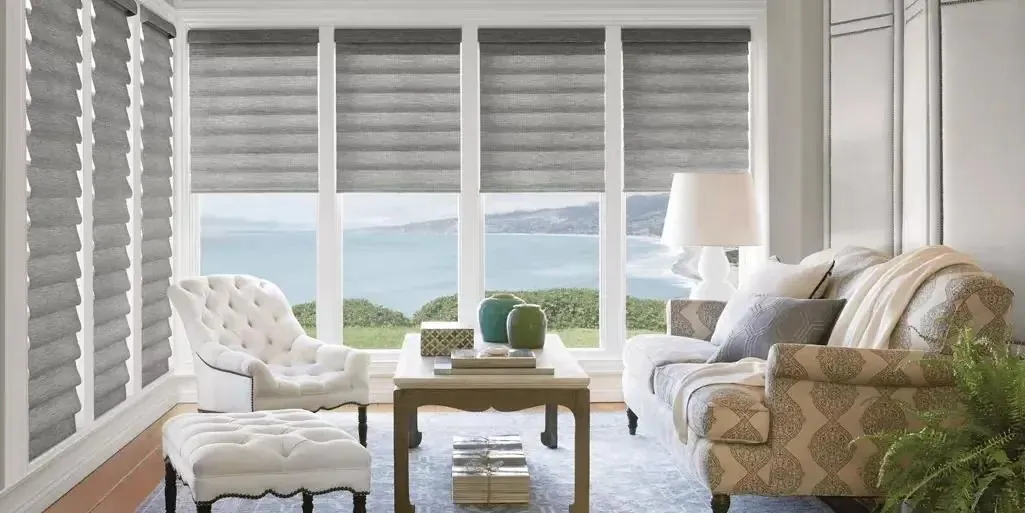
Think of Vignette as the low-maintenance one. Hunter Douglas shapes its pleats into the cloth, so the tiers stay uniform wherever you stop the shade, and because it winds up on a roller hidden in the headrail, the back is free of strings and the raised shade is compact. It is happiest in a busy kitchen, a child’s bedroom, a family room in a subdivision house, or anywhere a motor makes sense.
Carole Fabrics is the decorator’s choice. Each shade is cut and stitched to a single window from a cloth you pick, flat or softly folded, lined to whatever weight the room needs. Because the library is so broad, the shade can echo a sofa, repeat a wallpaper or sit quietly in a plain linen. Tall sash in a house by the common, a formal dining room or a front parlor all suit it.
Older houses near the center often take Carole Fabrics at the front and Vignette at the back; newer houses frequently run Vignette throughout with one sewn shade in the dining room. Each line has its own page, Vignette and Carole Fabrics roman shades, and the roman shades page shows the family together.
Front rooms close to the street
Many of the older houses around the common and toward the college sit near the pavement, with front windows only a few steps from passing traffic and walkers. In those rooms privacy is a daytime need as much as an evening one, and it has to be solved without turning the front parlor into a cave.
A light-filtering Carole Fabrics shade is the usual answer. By day the fabric glows softly from outside, so nobody sees in, while the room behind it stays bright. After dark, with lamps lit, the same shade still screens the room, and a heavier lining can be added where a window faces a streetlight. Lowering the shade only to the height of the lower sash keeps a band of sky visible above it, which helps a tall room feel open.
On a corner lot, where two sides of the house face the road, it is worth choosing one lining color for every window that shows to the street. From outside the house then looks consistent, even if the fabrics inside differ from room to room.
Matching a whole house without making it dull
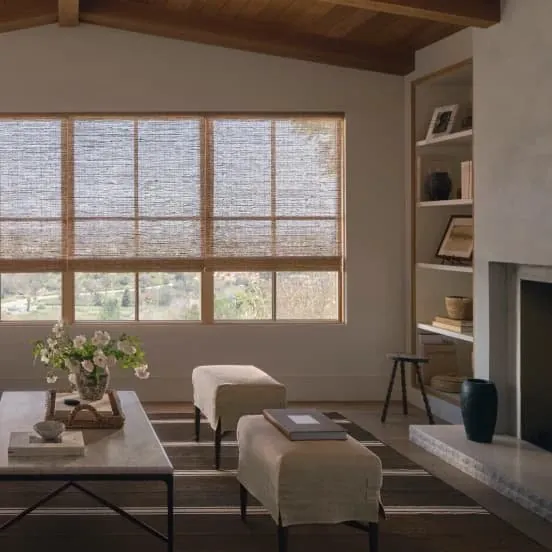
When every room gets roman shades in Bridgewater houses we visit, the worry is usually that the house will look repetitive. It need not. The trick is to keep one or two things consistent and let the rest change.
Keep the lining color the same on every street-facing window, so the outside of the house looks orderly. Keep the fold style the same within an open-plan space, so the kitchen, dining area and family room read as one. Then let each closed room have its own fabric: a pattern in the dining room, a calm plain in the main bedroom, something brighter in a child’s room. The house hangs together, and every room still has character.
How the visit goes
Choosing room by room is far easier standing in the rooms themselves, and because our sample vans carry the range, the showroom can come to your front door.
- Use Request a Consultation or the call button and pick a time.
- We carry in both lines with every lining weight and the lift systems, so nothing has to be imagined from a brochure.
- Starting wherever the light bothers you most, we go round the house and talk about each room’s use.
- Fabrics go up against your own glass, next to your own paint and furniture.
- Old frames are measured at several points, newer ones checked for square, and a mount and lift agreed for every shade.
- Afterward we send a free estimate for the rooms you are thinking about; take as long as you like over it.
Color and fabric across several rooms can be tricky, and our interior design consultations can cover that in the same appointment. Curious about the details first? Read what happens at an in-home consultation.
Installation
Certified by Hunter Douglas, our installers return once the shades are made. Near the common they anchor every bracket in timber, square each headrail to the room even when a jamb has dropped, and keep tools well clear of old casings. Out in the subdivisions they set matched shades to one line across a room and link any PowerView motors to your remote or phone. Before leaving, they run every shade up and down and hand the controls to you.

Why buy from a Hunter Douglas Gallery dealer
Gallery is the title Hunter Douglas gives dealers who meet its standards, and it is ours. That puts the whole folded-shade family in reach through one appointment: Vignette, all of Carole Fabrics, each lining and lift, and PowerView.
Add Hunter Douglas certified installation, interior design help and repairs to window coverings you already have. For the rest of the house, see cellular shades in Bridgewater, plantation shutters in Bridgewater, or everything we do on our Bridgewater page.
Closest showroom: Sagamore
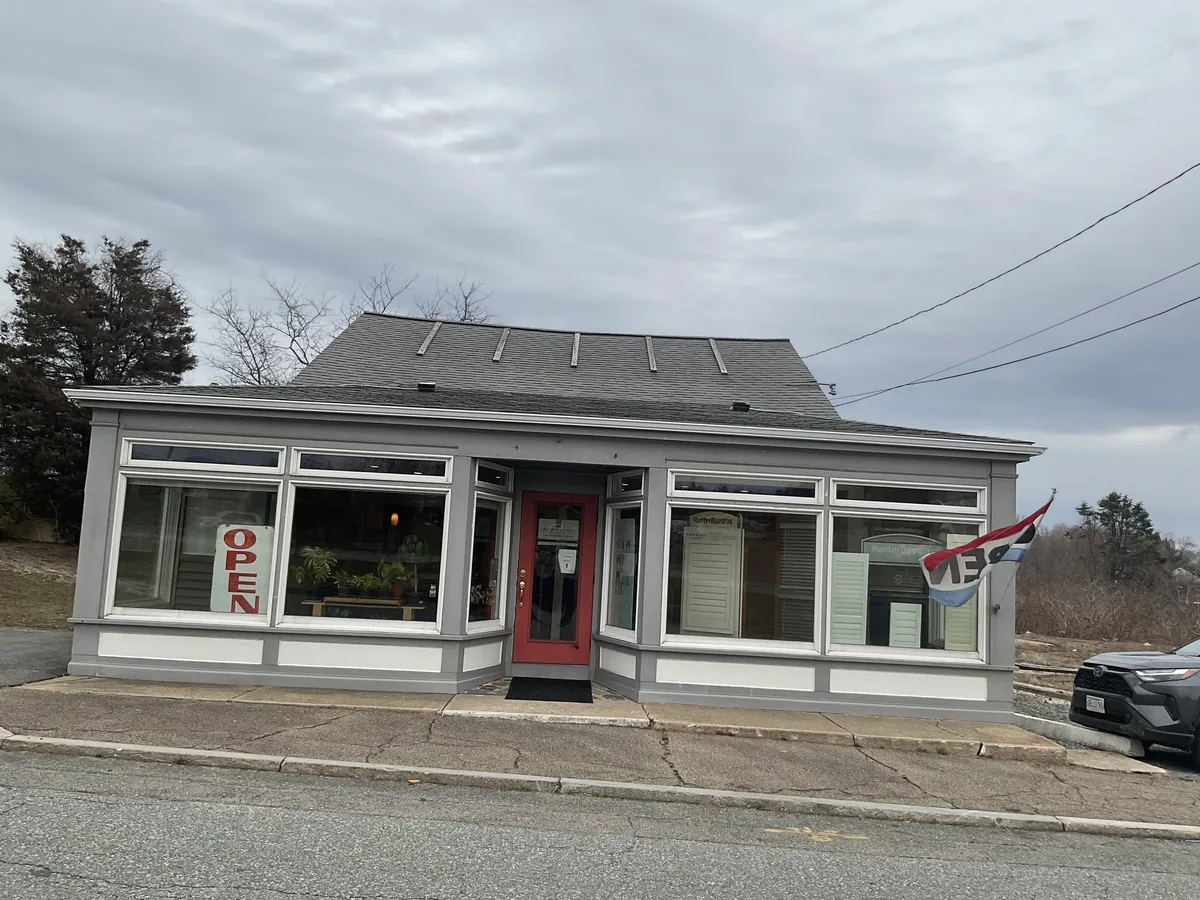
Of our locations, Sagamore is the one nearest Bridgewater, and you can drop by to try a shade for yourself.
Most room-by-room decisions still come easiest at home, though, where a swatch sits beside your walls in your own daylight.
Questions from Bridgewater
Our Victorian near the common has very tall windows. Will roman shades look right?
They suit tall sash well. We match the fold spacing to the drop and mount the headrail high, so the raised shade sits above the glass rather than across it.
What is the easiest shade to use over a kitchen sink?
Either a cordless sewn shade worked by its bottom rail or Vignette, with nothing on the back. If the window is out of reach, PowerView handles it.
Our newer house has plain builder windows. Can roman shades dress them up?
Very much so. A textured or patterned cloth gives a plain room character, and matched shades across a room make it look finished.
Do you have an option for a two-story family room?
Yes. PowerView raises and lowers high shades from a remote, an app or a schedule, and we plan how each motor gets its power at the visit.
Does the estimate cost anything?
Nothing. When the windows are measured, we send a free estimate for the shades on your list.
When you are ready
Settling on roman shades in Bridgewater, MA, is easiest with the fabric in your hand at your own window. Book a consultation and we will arrive with samples, measure each room and send a free estimate. Prefer to talk first? Use the call button, or call in at the Sagamore showroom.