
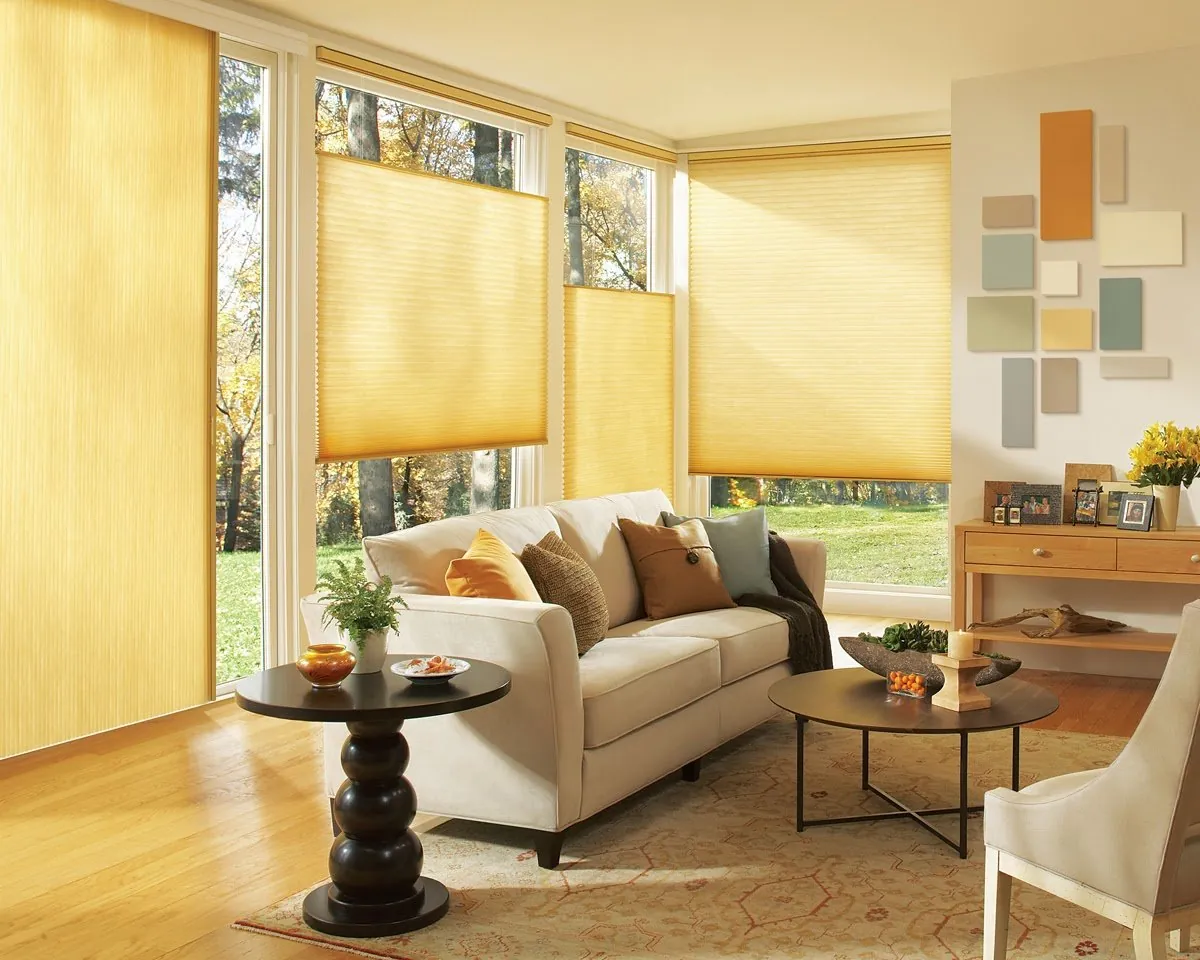
Rooms with light on more than one side
Halifax houses tend to have room around them. Capes and ranches sit on larger lots near Monponsett Pond, newer colonials stand back from the road off Plymouth Street, and with so few close neighbors the builders could put windows wherever they liked. The result is a lot of rooms that take light from two or three sides: a living room with windows front and back, a corner bedroom, a kitchen with a window over the sink and a slider to the yard. Those rooms are bright and pleasant, and they also lose warmth on more than one wall. That is the starting point when we plan cellular shades in Halifax, MA.
A honeycomb shade answers both sides of that. Its fabric folds into cells, and the cells fill with air that stays still when the shade is down. That still air is a buffer between the glass and the room, so a corner room with cold glass on two walls feels warmer on a winter night. On a summer afternoon the same buffer keeps some of the sun’s heat at the window.
Because the light arrives from more than one direction, these rooms also need a plan for glare. A shade that suits the east window at breakfast may not suit the west window at supper, and we look at both before suggesting a fabric.
Three honeycomb options for Halifax rooms
These three cover most of what we fit around the pond and in the newer neighborhoods. All come in our sample cases.
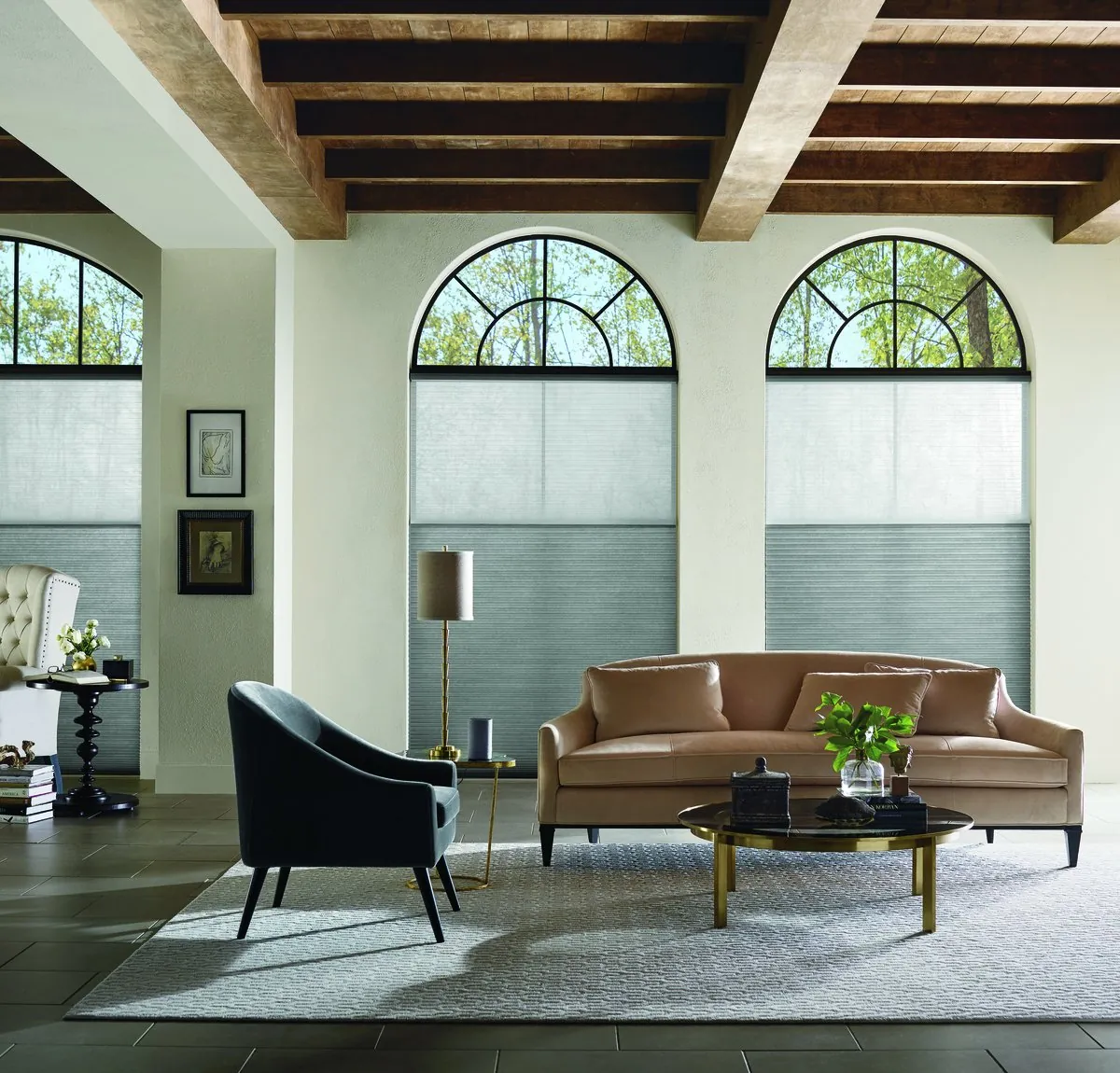
Top-down, bottom-up
Lower the top of the shade to keep the treeline or the pond in view while the lower glass is shaded.
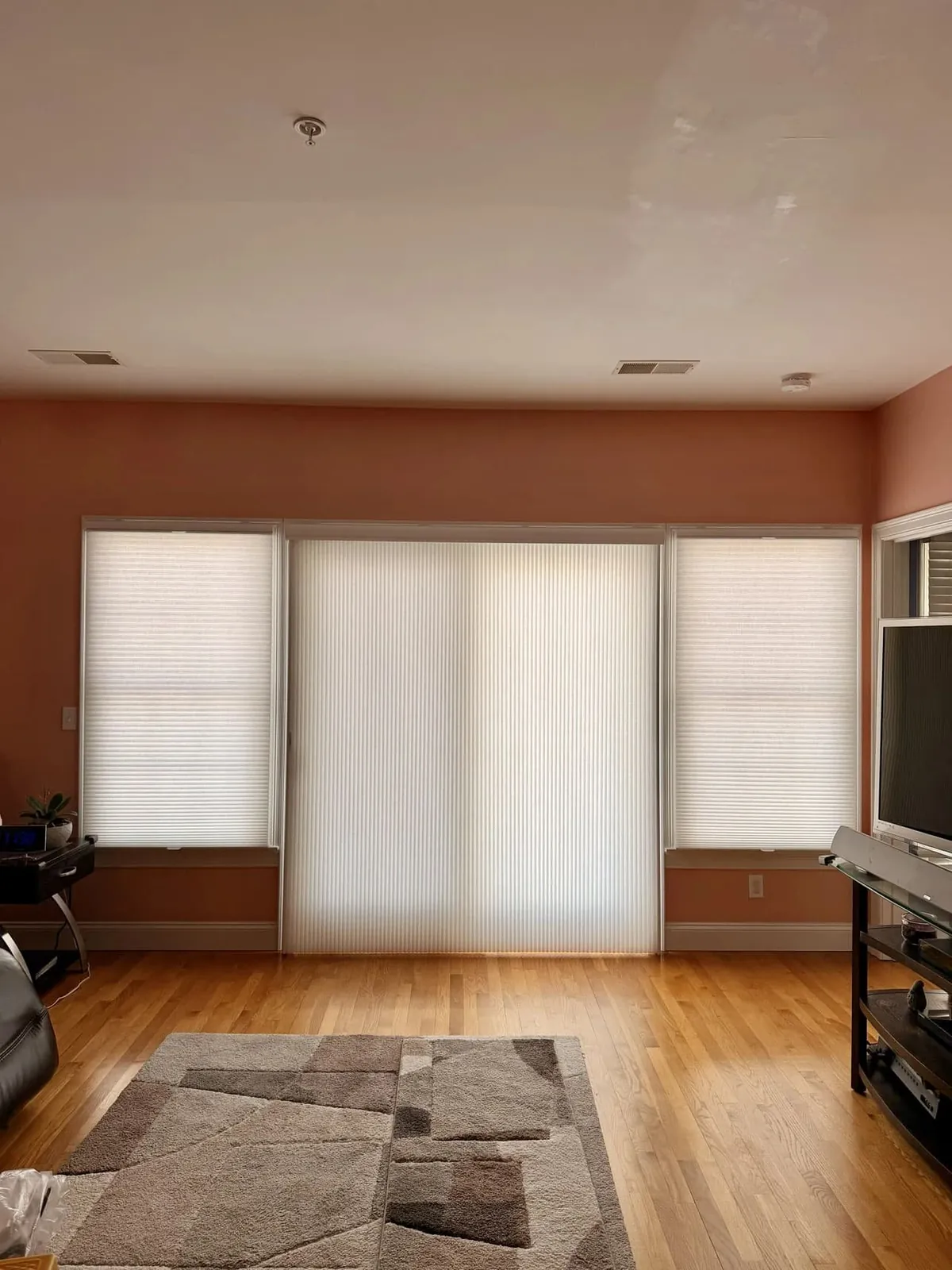
Vertical honeycomb for the slider
A honeycomb that crosses the slider sideways and gathers at one edge, so the door matches the windows beside it.
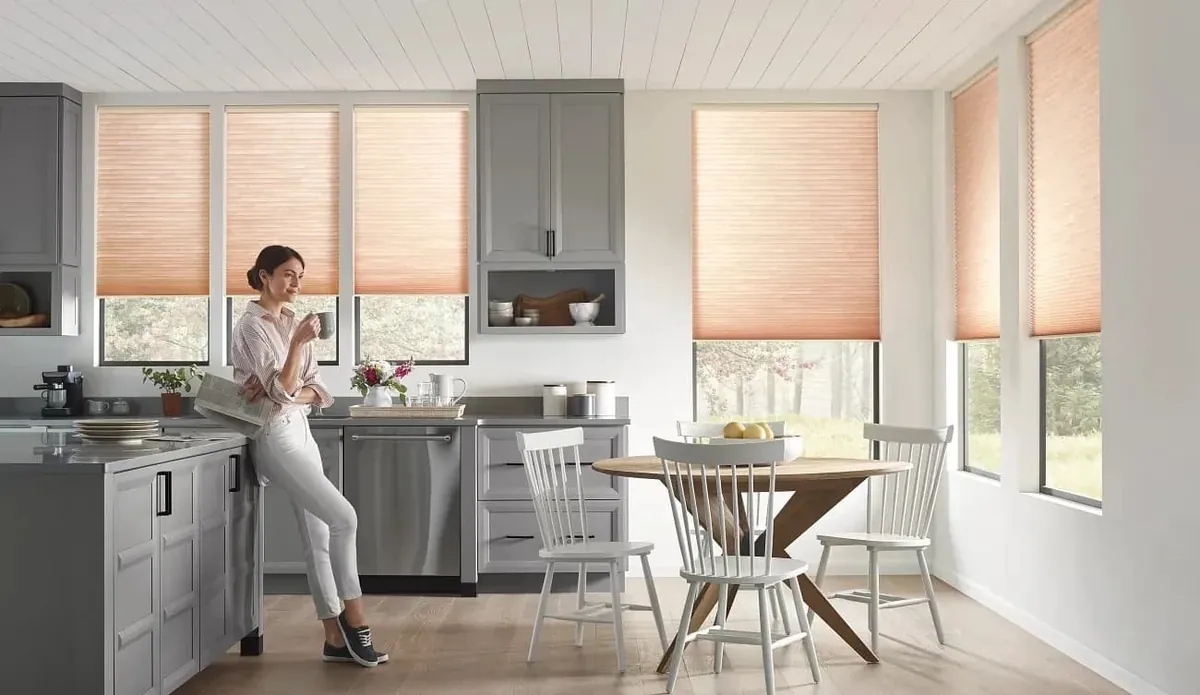
Light-filtering fabric
Turns hard sun into an even, soft light, ideal in a kitchen or living room with windows on several walls.
Balancing a room lit from two or three sides
A room with windows on one wall has one kind of light. A room with windows on three walls has three, and they change through the day. The east windows are bright and low in the morning, the south ones strongest at midday, the west ones hot and golden in the late afternoon. Treat every window in that room the same way and one of them will always be wrong.
The usual answer is to keep the fabric the same across the room, so it looks calm and connected, and vary how each shade is used. In the morning the east shade comes down from the top to cut the low sun while the west shades stay open. In the afternoon it is the other way round. A light-filtering fabric throughout keeps the room bright whichever shades are down.
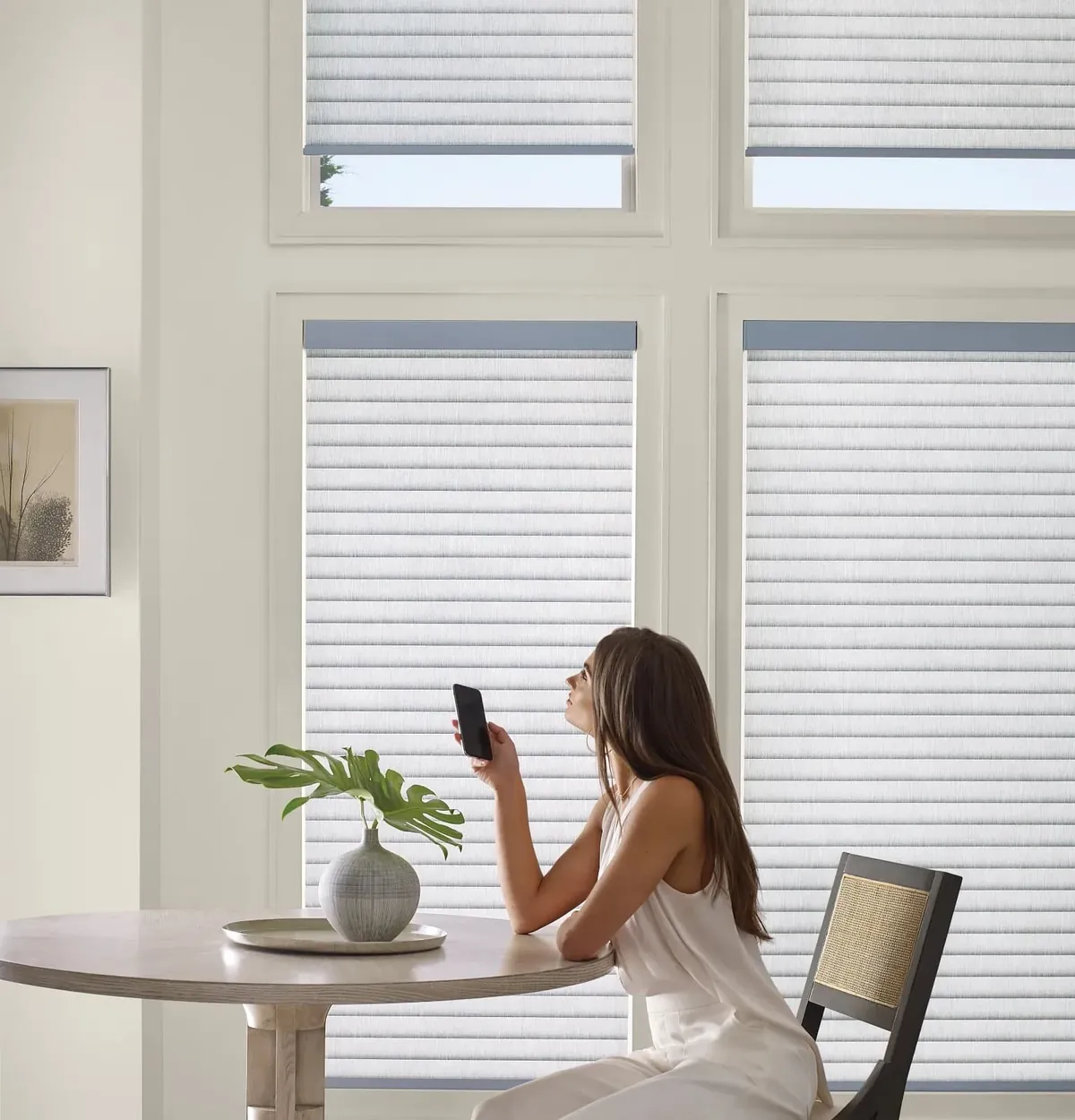
PowerView makes this easy. Each shade can be grouped by wall, so one tap lowers the west side while the east side stays as it is, and schedules can follow the sun around the room every day without anyone touching a shade.
Corner windows need a little extra care at the fitting stage. Where two windows meet at a corner, we line up the headrails so the shades meet neatly and stack to the same height when raised.
Capes and ranches around Monponsett Pond
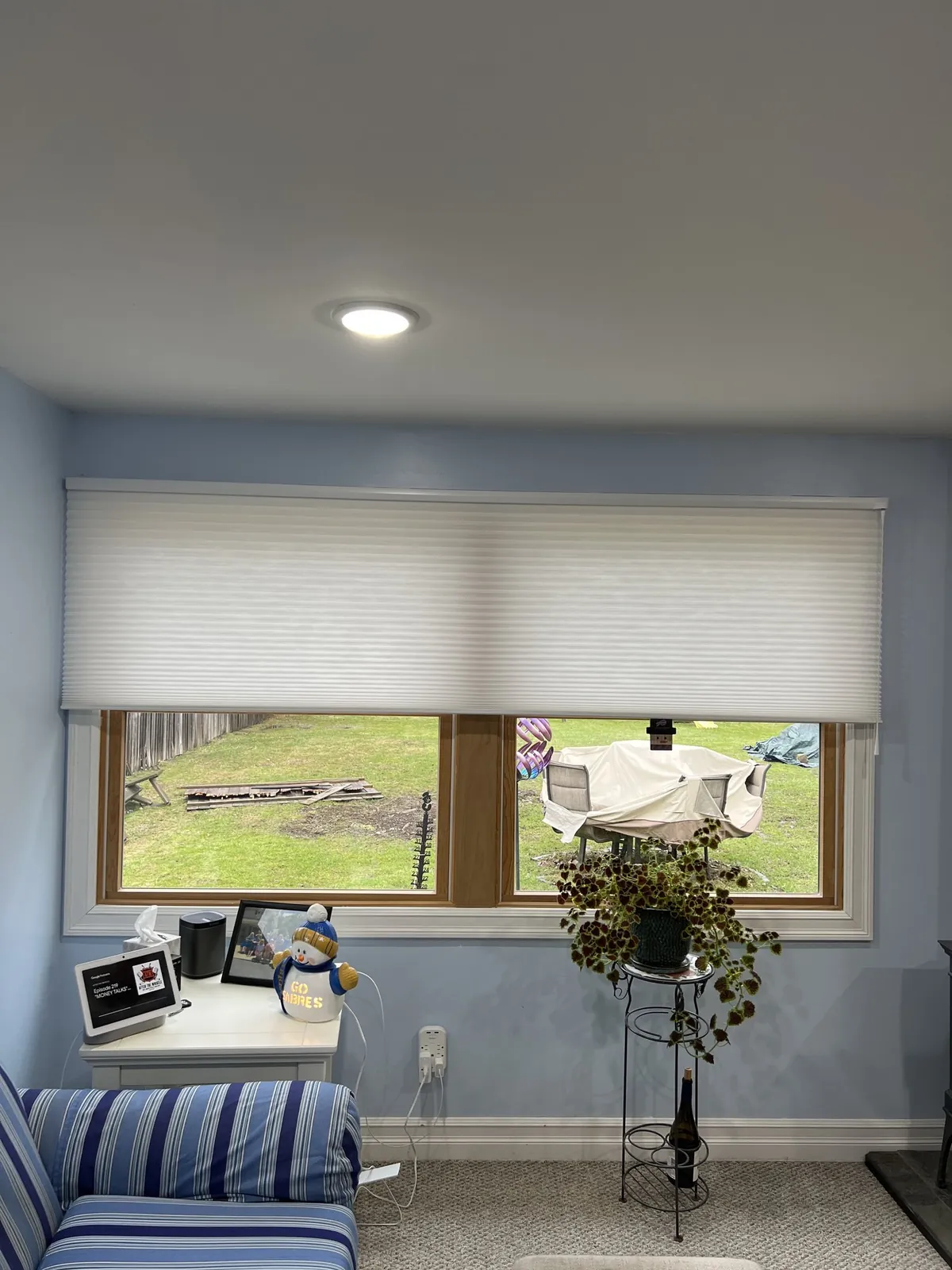
The houses closest to Monponsett Pond are mostly capes and ranches, set on larger lots with the water on one side. A ranch here usually has its living room facing the pond, with a picture window or a slider, and bedrooms at the other end of the house. A cape has a living room and kitchen downstairs and bedrooms tucked under the roof, lit by dormers.
Pond-facing rooms are the reason many of these houses were built where they are, so the shades have to respect the view. Top-down, bottom-up shades let you see the water over the top of the shade while the lower glass is covered from the sun. A light-filtering fabric keeps the view softly visible even when the shade is fully lowered.
Pond frontage also means reflected light. A bright afternoon on the water throws extra glare into a west-facing room, and that is where a slightly denser fabric or a well-timed shade can make the room comfortable again.
In a cape, the dormer bedrooms are often the coldest rooms in winter and the warmest in summer. Dormer windows are usually small and set in a recess, and an inside-mounted honeycomb shade fits them neatly. Since a dormer room sits right under the roof, the trapped air in the cells makes a difference you can feel in both seasons.
Low density and what it changes about privacy
On a crowded street, the main reason for a shade is often privacy from the house next door. Much of Halifax is not like that. With larger lots and fewer close neighbors, many rooms face trees, fields or the pond rather than another window.
That changes the brief. In these rooms privacy is less pressing, and the shade’s main jobs are warmth, glare and sleep. So we often suggest light-filtering fabrics in living spaces, where daylight matters most, and room-darkening fabrics in bedrooms, where morning sun across an open lot can be very bright very early.
Where a house does sit near the road or faces a neighbor across the pond, top-down, bottom-up shades and semi-opaque fabric give privacy where you need it while leaving the rest of the house open to the light.
Color when a room has a lot of windows
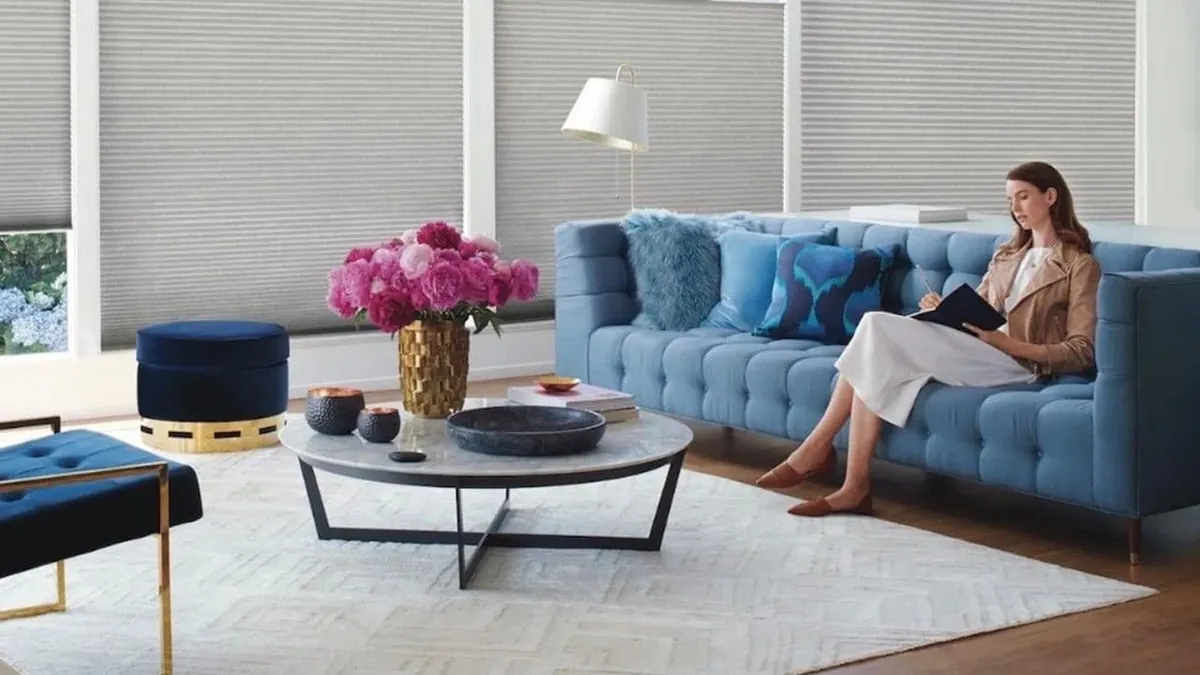
A color that looks lovely on one small window can feel heavy when it covers three walls. In the rooms Halifax houses have plenty of, the ones with windows on two or three sides, a lowered set of shades becomes a large part of the room’s surface, so color matters more than usual.
Soft whites, creams and warm grays keep a many-windowed room feeling light and open, and they let the most daylight through. If you want more color, it often works best on a single wall or in a smaller room such as a study or a child’s bedroom. From outside, a pale fabric on every window keeps the house looking even from the road and from the pond.
We bring a spread of colors to the visit and hold them up on more than one wall, because the same fabric can look quite different on the north side of a room from the south. Picking cellular shades in Halifax for a room with light all around is about how the whole room feels, not one window on its own.
Newer colonials off Plymouth Street
The newer colonials off Plymouth Street bring two stories, bigger rooms and a lot more glass. Family rooms open off the kitchen with sliders to a deck, the primary bedroom may have windows on two walls, and some houses have a tall window over the stairs or the entry.
For cellular shades in Halifax colonials, a whole-house plan works well. One fabric family across the front keeps the house even from the road. Inside, the kitchen and family room share a light-filtering fabric so the long run of windows and the slider read as one. Bedrooms upstairs get room-darkening fabric, especially on the east side. The tall window over the stairs gets PowerView, so it can be lowered on a hot afternoon without a ladder.
Windows in these houses are standard modern sizes, which means the shades fit closely and evenly. The decisions that matter are the fabric, the lift and how each room is used.
How the cells keep a room warm
Look at the edge of a honeycomb shade and you see a row of hexagons, each a closed tube of fabric running across the window. Lower the shade and every tube holds a band of air that cannot move far. Air that cannot move is slow to carry heat, so the cold coming off the glass reaches the room more slowly, and the warmth in the room reaches the glass more slowly too.
In a corner room around the pond, with cold glass on two walls, that slowdown is easy to feel. In a cape bedroom under the roof, it helps the room hold its warmth through the night. In a newer colonial with a big slider, it means the family room is not the cold end of the house in January.
Some fabrics have a second layer inside each cell, and some shades stack two rows of cells. Both add more trapped air. We bring each type so you can compare the fabric weight and the way it handles your light.
The kitchen window over the sink
On a larger lot the kitchen window often looks straight out over the yard, and it is the window people open, close and look through most often. It is also the hardest to reach, with a sink and a counter in the way. A cordless honeycomb shade with top-down, bottom-up lift lets you lower the top just enough to bring in the sky and cut the glare, without leaning across the sink. Where even that is awkward, a PowerView shade can be raised from a remote kept by the stove.
A light-filtering fabric suits most kitchens, keeping the room bright on a dark winter morning while taking the hard edge off the afternoon sun on the counters.
Sliders, decks and the yard
Larger lots mean a lot of Halifax houses have a deck or patio and a slider to reach it. A slider is a big pane of glass, and in winter it can be the coldest part of a room. A vertical honeycomb shade covers it with the same cells as the windows and slides to one side when you want to go out. When it is closed, the door holds warmth like the rest of the room. When it is open, the shade stacks compactly at one edge.
For a family room with windows and a slider on the same wall, we match the fabric across both so the wall looks like one piece. A top-down shade on the windows and a vertical honeycomb on the door give you full control over light at each end.
Rooms that open onto the deck
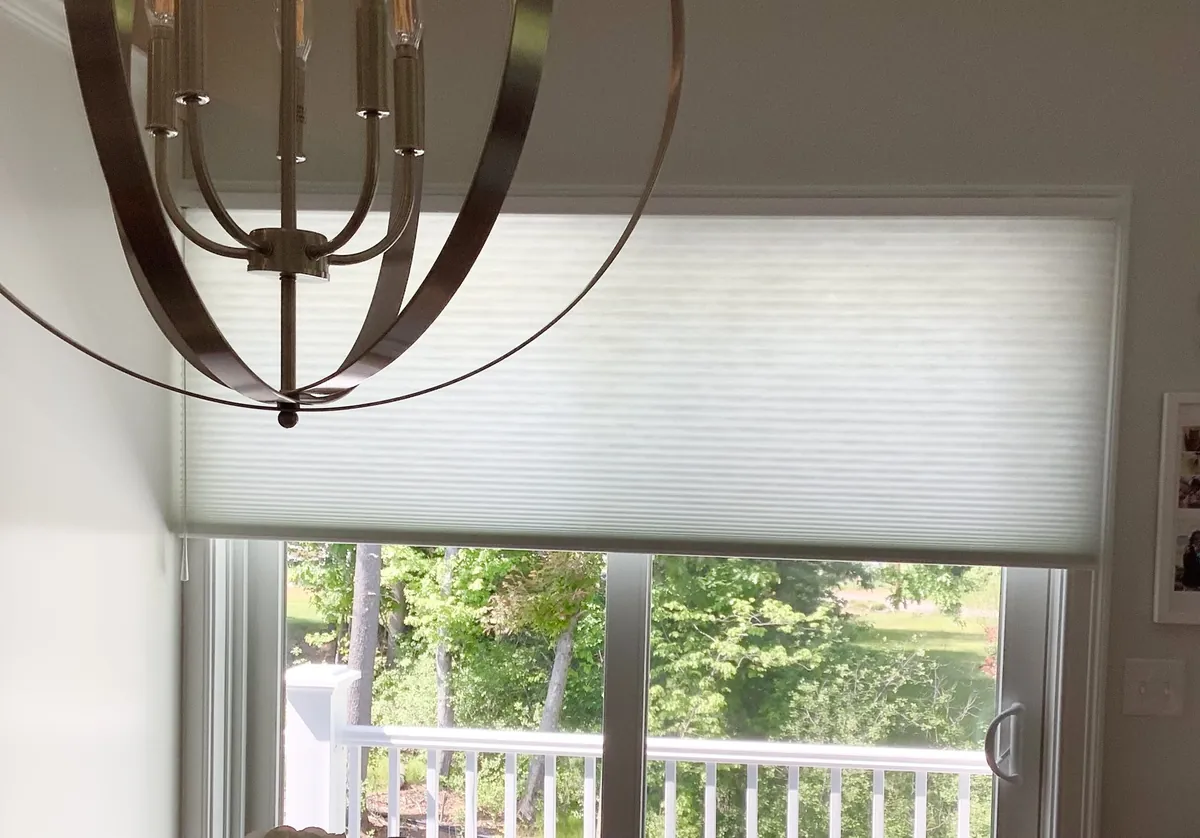
A slider to the deck is one of the busiest openings in the house, used many times a day in summer and almost never in January. The shade has to suit both.
In summer, a light-filtering fabric lowered across the door softens the afternoon sun while still letting you see out to the yard. In winter, with the shade drawn fully across, the cells hold air against the big pane and the room loses less warmth. When you need to walk through, the vertical honeycomb shade slides open in one easy movement and stacks to the side, clear of the door handle.
We measure sliders carefully, checking the space above the frame and to each side so the stack sits clear of the opening when the shade is open.
Duette and Applause for Halifax houses
Hunter Douglas makes two honeycomb lines, and we bring samples of both. Duette is the larger range, with more fabrics, more pleat sizes, specialty shapes and the vertical shade for sliders. Applause has its own color collection and suits the standard windows found throughout most Halifax houses.
A pond-side ranch might take Duette on the living room window and the slider, and Applause in the bedrooms. A colonial off Plymouth Street might use Applause throughout the upstairs and Duette in the family room. We help you choose room by room. Read more about Duette honeycomb shades, Applause honeycomb shades or the full cellular shades range.
The visit, step by step
Choosing cellular shades in Halifax is easiest at home, because a room with light from three sides has to be seen in person. Our vans carry samples, so the visit comes to you.
- Book online or with the call button and choose a time.
- We stand in each room with you and look at where the light comes from, and when.
- You hold fabrics to the glass on each wall and see how each one handles the light.
- We measure every window and slider and settle each mount and lift.
- You receive a free estimate for the shades you want, with time to think it over.
If you want help with color and fabric across the house, ask about our interior design consultations. Our page on what happens at an in-home consultation explains the visit in more detail.
Measuring and fitting on the day
Every shade is made for its own window, so the measuring is where a good fit begins.
- We measure each opening across the top, the middle and the bottom, and down both sides and the center.
- We check the frame depth, the space above each slider and anything that could get in the way of a headrail.
- Each fabric, color, lift and mount is agreed with you before the order is placed.
- On fitting day, certified Hunter Douglas installers fix the brackets, line up corner shades and level every headrail.
- They test each lift, pair and group any PowerView shades by wall and show you how everything works.

Hunter Douglas Gallery dealer
Blinds & Designs holds Hunter Douglas Gallery dealer status, a title the maker gives dealers who meet its standards. For a Halifax house that means every Duette and Applause fabric, the specialty shapes, the vertical shade for sliders and PowerView, all through one consultation.
Your shades are fitted by certified Hunter Douglas installers. They fix brackets into solid framing, line up corner shades, level every headrail and pair any motors before they leave. If a shade ever needs fixing, our blind and shade repair service handles that too.
We also fit other window coverings in town. See roller shades in Halifax, motorized blinds in Halifax or the full list on our Halifax page.
Questions from Halifax
My living room has windows on three walls. Should every shade be the same?
Keep the fabric the same so the room looks calm, then use each shade differently through the day. Lower the east side in the morning and the west side in the afternoon. PowerView can group the shades by wall and run them on a schedule.
Will a shade spoil my view of the pond?
A top-down, bottom-up shade lowers from the top, so you keep the water and sky in view while the lower glass is shaded. Light-filtering fabric keeps the view softly visible even when the shade is fully down.
What works in a cape’s dormer bedroom?
An inside-mounted honeycomb shade fits a small, recessed dormer window neatly. Room-darkening fabric suits a bedroom, and the trapped air in the cells helps a room under the roof in both winter and summer.
What do you put on a slider?
A vertical honeycomb shade. It crosses the door sideways, holds air in its cells like the window shades, and stacks to one side when you open the door.
Is the estimate free?
It is. We measure during the visit and leave you a free estimate for the shades you are considering.
See it in your own light
Request a consultation and we will bring the honeycomb range to your house, look at the light on every wall, measure each window and slider and give you a free estimate. Choosing cellular shades in Halifax, MA, takes far less guesswork with the samples in your own rooms. Our nearest showroom is in Sagamore, if you would rather call or visit first.