
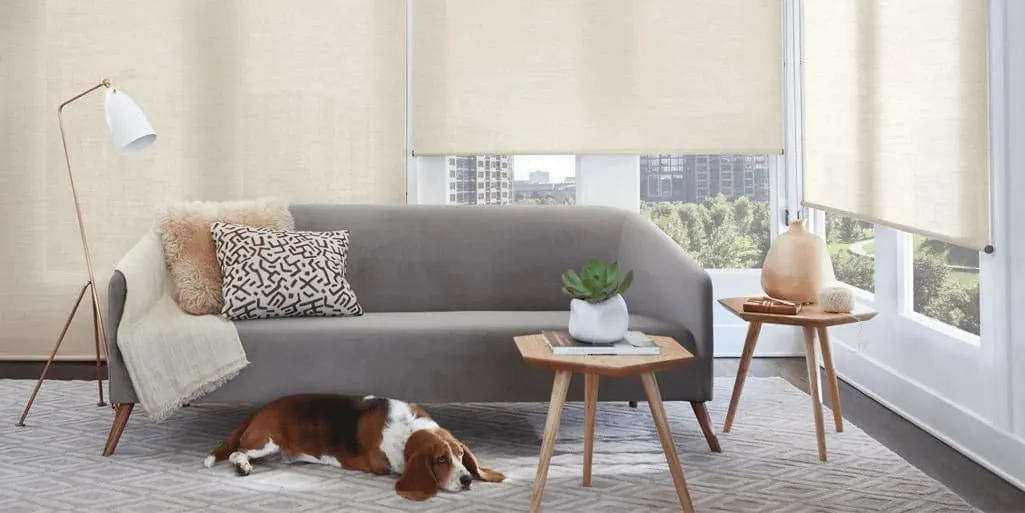
When the fit is easy, the fabric decides
Most of Hanson was built in the years after the war and since: capes and ranches on generous lots, then newer colonials off Main Street and around Maquan Pond. Almost everywhere in town the windows are standard sizes, square and true, with the sort of frames a shade fits into without a fight. That changes the conversation about roller shades in Hanson, MA. With fit rarely in doubt, the choices that matter are the material the shade is made from and the way it operates day to day.
Those two choices are easy to underrate. A fabric that looks lovely on a sample card can be too bright on a west window or too dull in a north room. A lift that seems fine in the showroom can be awkward on a kitchen window you reach across a counter every morning. Getting them right is what makes a shade pleasant to live with for years.
So this page spends less time on measuring tricks and more on the two questions every Hanson house raises: what should each shade be made of, and how should it move?
Fabric families for Hanson rooms
All of them Hunter Douglas, all of them in our vans as samples.
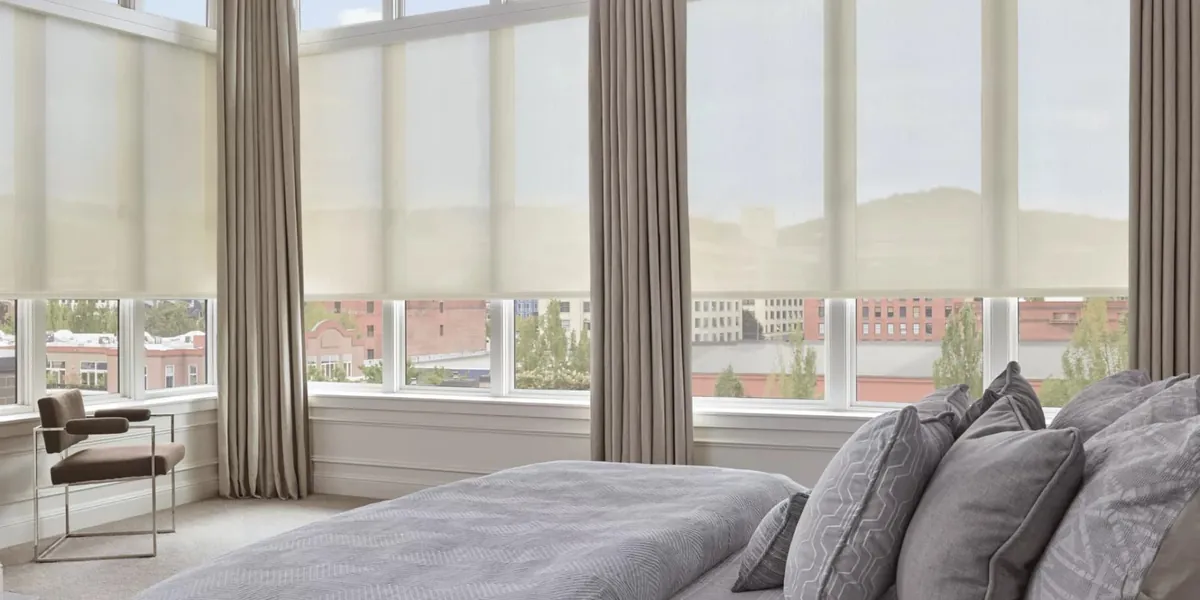
Open weave screens
Designer Screen keeps the yard or the pond in view while cutting glare. The openness factor sets the balance.
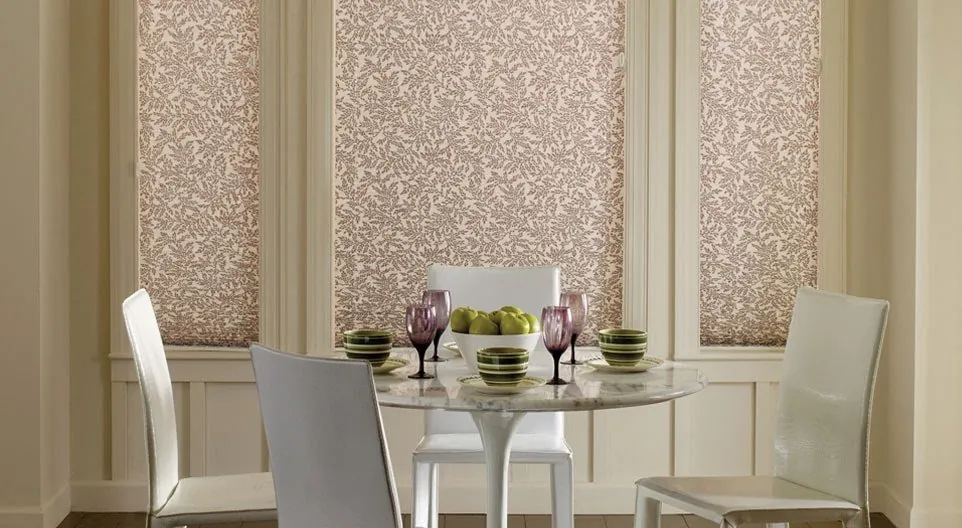
Stripes and texture
Patterned, printed and textured fabrics, many from the Alustra range, for rooms where the shade is part of the look.
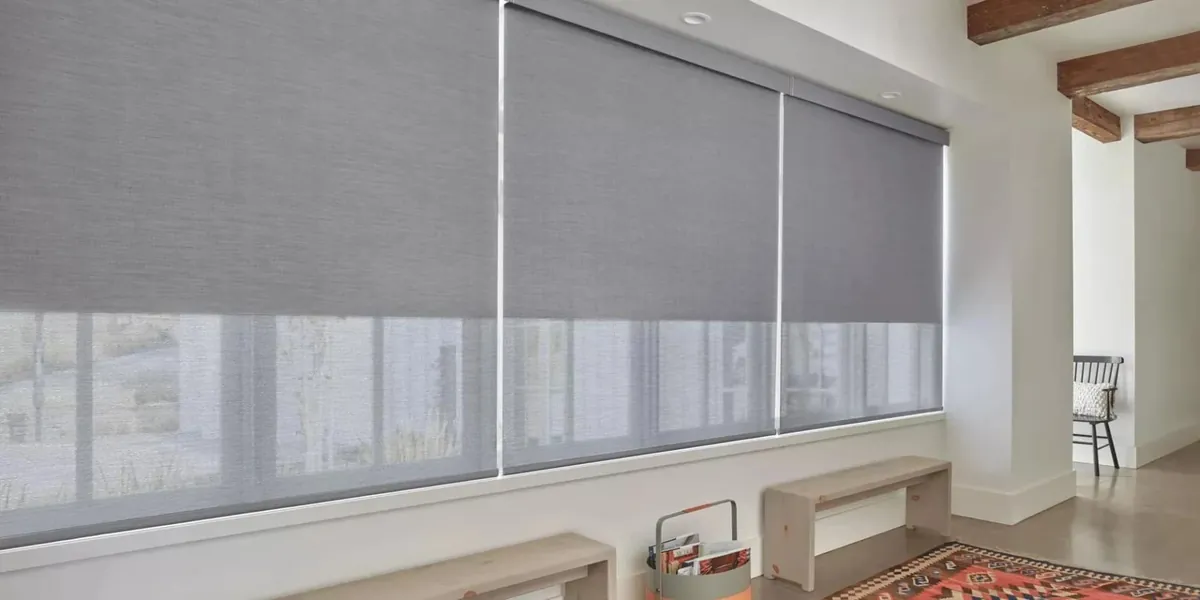
Full darkness
Blackout Designer Roller fabric for bedrooms and media rooms, where you want no light through the cloth.
Material first: what the fabric is doing
Every roller fabric in a Hanson house answers three questions at once. How much light gets through? How much can you see out? How much can others see in? Different fabrics answer them differently, and the right answer depends on the room.
Screens are woven with small open spaces. They are the only roller fabric that keeps a real view out during the day. The openness factor tells you how much of the weave is open: a tighter weave controls more glare and gives more daytime privacy, a more open weave keeps the view sharper. Screens give little privacy at night with the lights on inside.
Light filtering fabrics are solid cloth that lets light through without showing the room behind it. They glow when the sun is on them, so the room stays bright, and they give privacy all day. At night, with lamps on, they blur shapes rather than hiding them completely.
Room darkening fabrics let a little light through, enough to see your way around but dim enough for an afternoon nap or a film.
Blackout fabrics stop light passing through the cloth itself. They are the choice for bedrooms where you want real darkness.
Beyond opacity, there is the look. Plain fabrics suit a clean, modern room. Textured weaves add depth and soften the flat face of a roller. Patterns and prints make the shade a feature. Color matters too: a pale fabric reads bright and airy from inside, while a deeper one feels warmer and, in a screen, is usually easier to see through.
Operation: how each shade moves
The second question is how you raise and lower the shade, and there are several good answers.
Cordless
A gentle push or pull on the hem bar raises or drops the shade, and it holds wherever you let go. There is no cord at the side of the window, so the window looks tidy and there is nothing for small children or pets to reach. Cordless suits most standard bedroom and living room windows, which is exactly what Hanson houses have plenty of.
Continuous cord loop
Pulling a beaded loop at one side turns the tube inside the headrail. It gives you more leverage than a cordless lift, so it suits larger or heavier shades, such as a wide living room picture window, and windows where you cannot easily reach the bottom rail. The loop is held taut by a fitting fixed to the wall or frame.
PowerView motorization
A quiet motor inside the tube moves the shade from a remote, the PowerView app on your phone or a schedule. It is the easiest choice for windows that are hard to reach, for a run of shades you want to move together and for shades you would like to lower and raise on their own at set times.
Most houses end up with a mix. A bedroom might be cordless, a picture window on a cord loop, the foyer glass motorized. At the visit we go through each window with you and match the lift to how you use the room.
Capes on generous lots
A Hanson cape usually has its living room and a second room either side of the front door, a kitchen and family room at the back and bedrooms upstairs under the roof, often lit by dormers. The windows downstairs are standard double-hung sash, and the dormers are smaller.
Downstairs, a light filtering roller is often the natural choice for the front rooms, giving privacy from the road and keeping the rooms bright. If the family room at the back opens onto a deck through a slider, a screen there handles the afternoon sun off the yard.
Upstairs, dormer bedrooms want darkness. A blackout roller, cordless for simplicity, does the job, and an outside mount over the trim closes the slim gaps at the sides that an inside mount leaves. Where the dormer reveal is deep enough and a little light at the edges is fine, an inside mount keeps the dormer neat.
Ranches spread along one floor
A ranch puts everything on one level: a living room with a picture window at the front, a kitchen, a slider or back door and a hall of bedrooms. With the rooms in a line, you can see from one end of the house to the other, so keeping every shade in related colors keeps the house calm even where the opacity changes room by room.
The front window gets the most attention. Wide picture glass is usually better served by a pair or a trio of narrower rollers sharing a single bracket, which can travel as one or be worked one at a time. A continuous cord loop or a motor makes a wide shade easy to work. The bedrooms usually take cordless blackout, and the kitchen a light filtering fabric that keeps the morning bright.
Kitchens and bathrooms
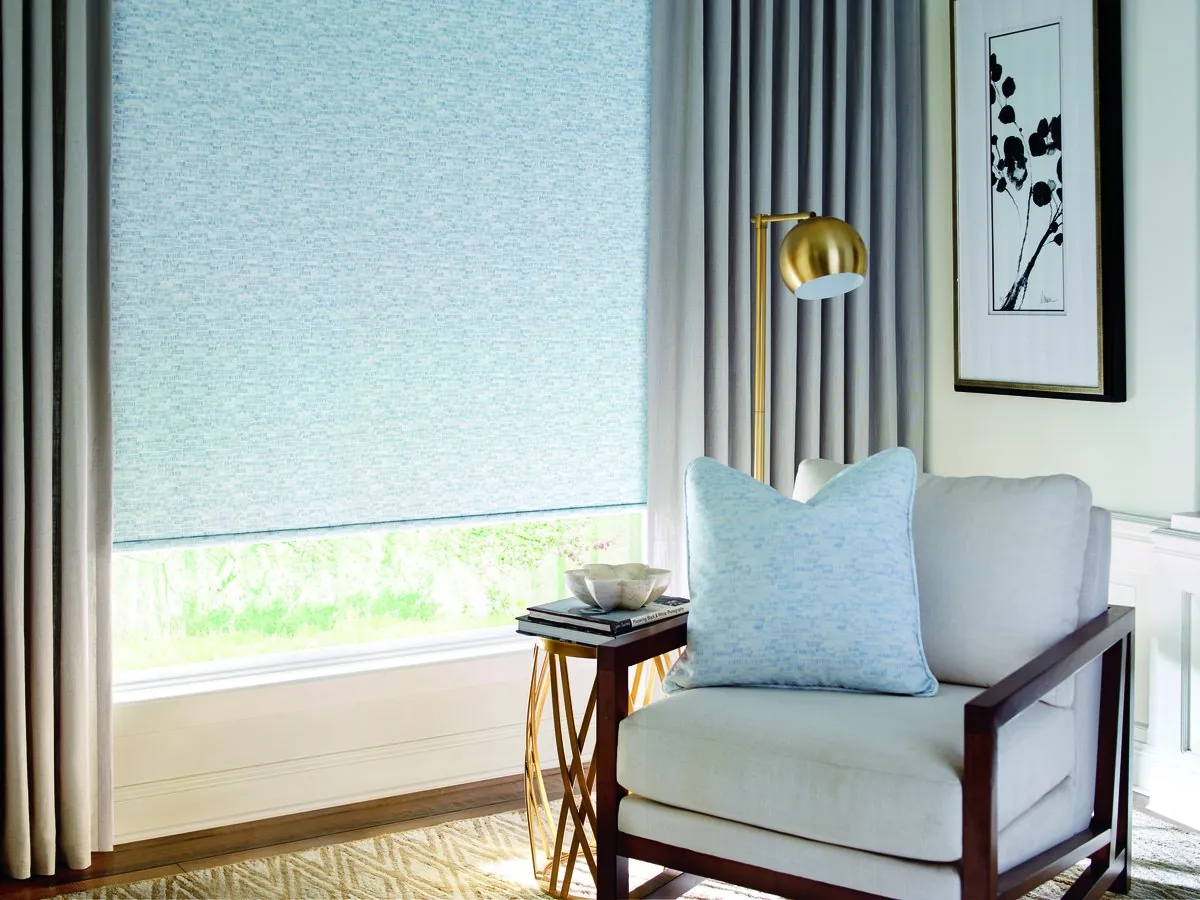
Two rooms in every Hanson house put the material question to the test. Over a kitchen sink, the shade is splashed, steamed and reached for across a counter several times a day, so a light filtering cloth that is easy to keep clean and a cordless or motorized lift are the sensible pairing. In a bathroom, privacy comes first and steam second: a light filtering or room darkening fabric hides the room completely in daylight, and a raised roller leaves a small bathroom window almost entirely clear. When we plan roller shades in Hanson, MA, kitchens and baths, we usually choose those two rooms last, once the fabric for the rest of the house is settled, so they match it.
Newer colonials off Main Street
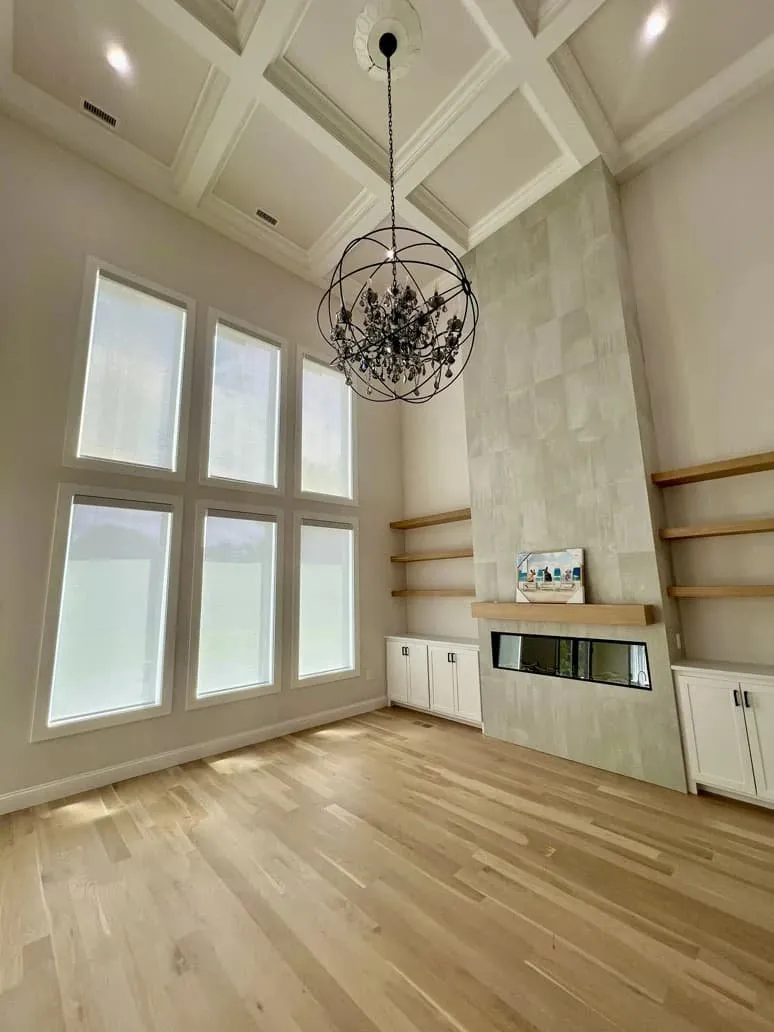
The colonials built off Main Street follow the familiar modern plan: a front room, an open kitchen and family room across the back, bedrooms upstairs and often a two-story foyer. The windows are larger and more numerous than in the capes and ranches, but still standard sizes.
The open back of the house works best with one fabric along the whole run of windows and doors, so the kitchen and family room read as a single room. A light filtering fabric is a common choice, with a screen on any windows that face west. Upstairs, children’s rooms take cordless rollers, and the main bedroom often takes blackout. The foyer glass, high above the front door, almost always calls for PowerView.
Around Maquan Pond
The houses near Maquan Pond have a view to protect. Rooms on the water side are often where people spend most of their time, and the pond reflects the afternoon sun back up into the house.
On those windows, a solar screen is the usual answer, because it is the only roller fabric that keeps the water in view while cutting the glare. A darker screen color tends to give the clearest view out. We bring several openness factors and colors so you can compare them at your own window, ideally in the late afternoon when the reflection is strongest.
A pond-side room used in the evening may also need night privacy, since a screen lets people see in once the lights are on. A second, opaque roller on its own bracket behind the screen, or a Designer Banded shade that can close fully, covers that.
Roll direction and the top of the shade
Two smaller choices finish a roller and are worth a moment at the visit.
Roll direction decides which side of the tube the fabric drops from. A standard roll hangs the fabric close to the glass, behind the tube. A reverse roll drops it from the front of the tube, which helps it clear a window crank, a lock or a deep sill. On standard Hanson windows, a standard roll is usually right, but a kitchen window with a crank handle may be the exception.
The top of the shade can be left as a bare roll, which suits a clean modern room, or covered by a fascia or a cassette that hides the roll and gives a finished line across the top of the window. In a room with crown moulding and painted trim, a covered top often looks more at home.
A Hanson visit, in order
Fabric and lift are both things you need to touch and try, which a website cannot do for you. Our sample vans let us bring the showroom to you instead.
- Book through Request a Consultation, or ring us from the call button, and pick a day that suits.
- Show us round. For each room we ask what it is used for, when it gets sun and what you would like to see from it.
- Try the swatches at the glass: a screen, a light filtering cloth, a dimming fabric and a blackout, side by side.
- Work the lifts. We bring a cordless shade and a cord loop so you can feel both, and we explain how a PowerView shade is controlled.
- We note the mount, roll direction and top style for each window, then measure.
- A free estimate follows for whatever you are weighing up. Deciding is entirely on your timetable.
Our page on what happens at an in-home consultation covers the visit at more length. Where you would like a second eye on color and pattern for a room, an interior design consultation can run alongside.
Motorized operation with PowerView
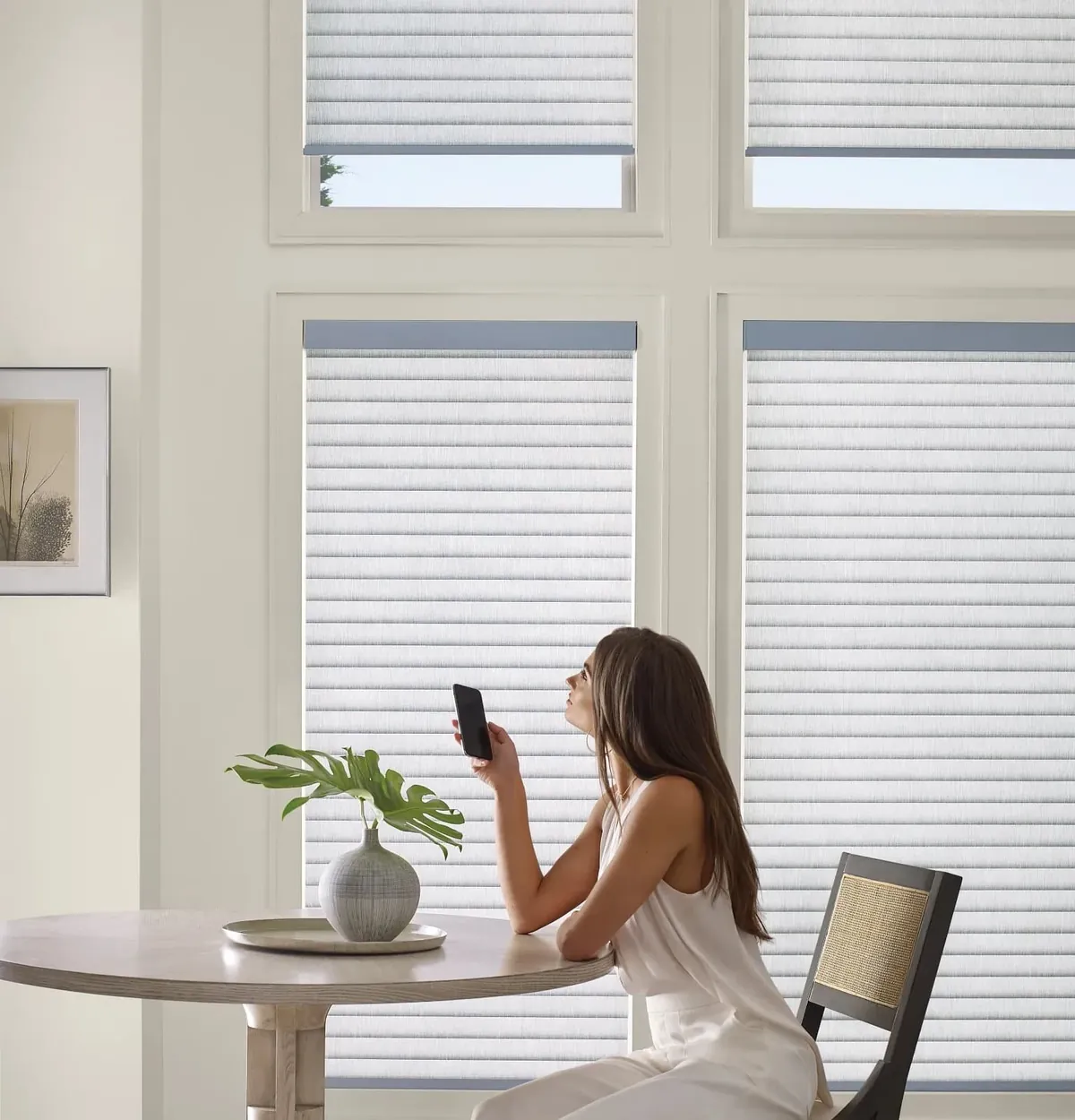
A PowerView roller hides its motor in the tube, so from the room it looks exactly like any other roller. The difference is in your hand: a small remote, your phone or a timetable you program once. Shades can be paired into scenes, for instance a morning scene that opens the kitchen and family room and an evening scene that closes the whole ground floor. A west window can drop by itself before the late sun gets low.
How each motor gets its power is something we work out window by window during the visit, along with which openings are actually worth motorizing. In a Hanson house, that is often the foyer, the pond-side or west-facing windows and any picture window wide enough that a manual lift feels like work. More on the controls is on our motorized blinds in Hanson page.
Which Hunter Douglas line
We can supply roller shades in Hanson, MA, from any Hunter Douglas roller line, and the names are worth knowing before the visit. Designer Roller covers most everyday needs, from sheer to blackout. Designer Screen holds the solar screens. Designer Banded is the stripe shade. Sonnette pairs the roller format with a curved cellular face. At the top end, Alustra brings richer cloth, prints and a woven option.
A whole-house order often uses two or three: Designer Roller through most rooms, Designer Screen on the sunny or pond side, maybe an Alustra fabric in the dining room. See the full roller shades range, or the Alustra Woven Textures roller for a natural look.
Measuring and installation
Square, standard frames make this stage quick, but quick is not the same as careless.
- Each opening gets its width, height and reveal depth recorded.
- Before anything is ordered, you sign off fabric, mount, lift and roll direction for each window.
- On fitting day, Hunter Douglas certified installers screw the brackets into the framing behind the trim and check every headrail with a level.
- Cord loop fittings are anchored so the loop stays taut, and each shade runs top to bottom a few times.
- Before leaving we walk you through the lifts and program any PowerView scenes with you.
Standard sash also means that if you add rooms later, matching roller shades in Hanson houses like yours is simple: the next order lines up with the first.
Why a Gallery dealer
Gallery status is how Hunter Douglas marks out dealers who meet its standards, and Blinds & Designs holds it. The practical upshot for a Hanson house: the complete roller range, screens to Alustra to PowerView, from a single dealer that also handles Hunter Douglas blinds, shutters, honeycomb and roman shades and drapery.
Fitting is done by installers Hunter Douglas has certified. Should a roller, or any blind you already own, need fixing down the road, repairs are part of what we do. For other rooms, look at cellular shades in Hanson, custom blinds in Hanson or every service on our Hanson page.
Fabrics you can touch
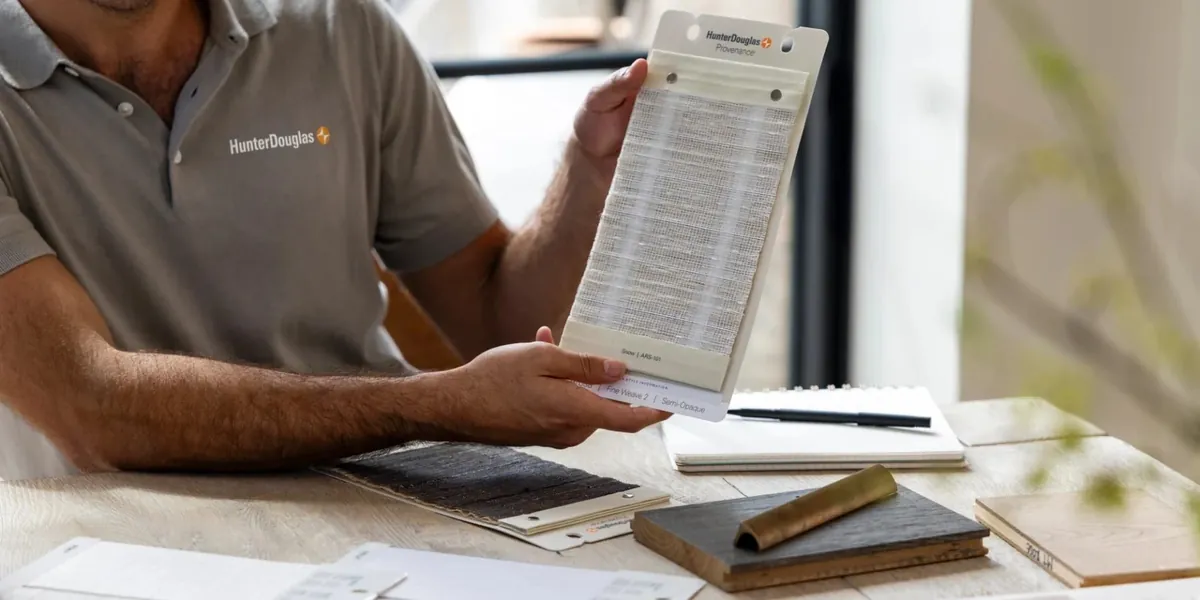
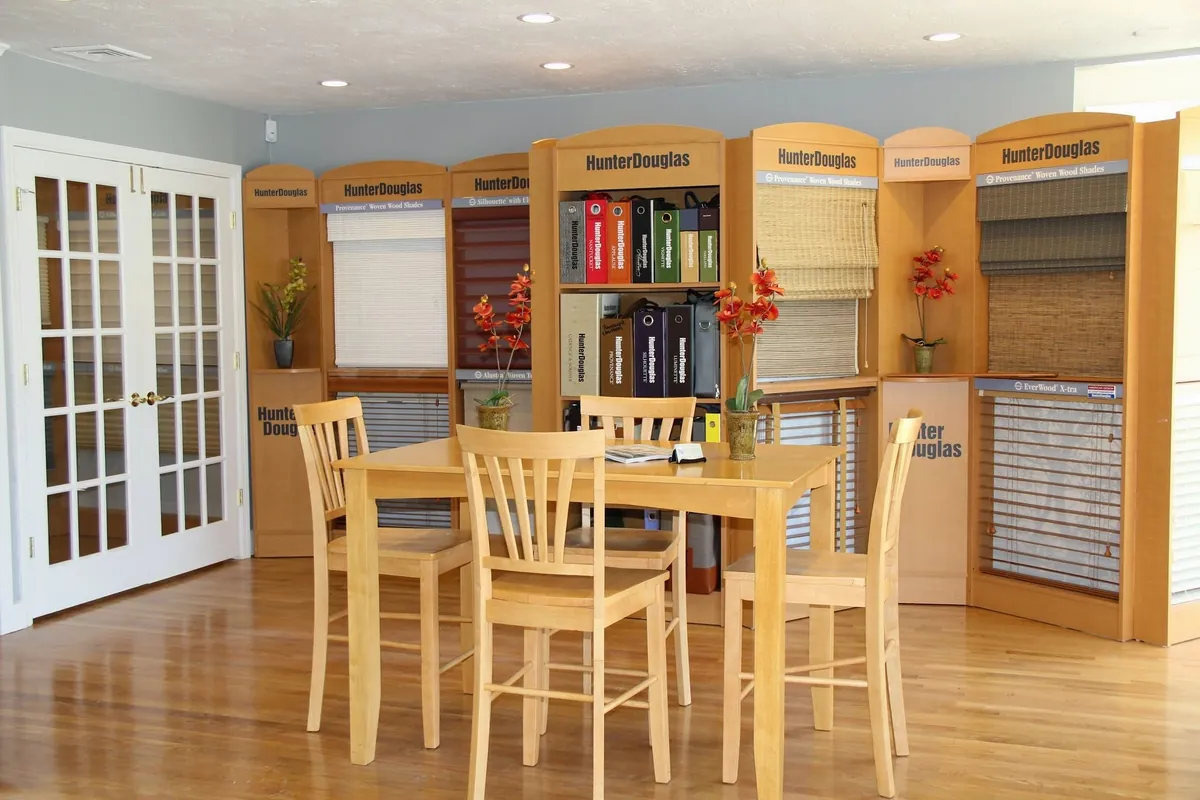
A fabric’s weight, texture and the way it handles light are much easier to judge in your hand than on a screen. That is why we bring sample books and working shades to every visit, so you can feel the difference between a screen, a light filtering weave and a blackout cloth.
Holding a blackout cloth up to a sunny window, then a light filtering one, shows the difference in a second, which no description on a page can match.
Questions from Hanson
My windows are standard sizes. Does that make choosing easier?
Yes. With fit rarely an issue, the choices come down to the fabric and how the shade operates. We spend the visit on those, room by room.
Which lift is best for a child’s room?
A cordless roller, which you raise and lower by the bottom rail with no cord at the side. PowerView motorization is the other cord-free choice.
What is a reverse roll?
The fabric drops from the front of the tube instead of the back. It helps the shade clear a crank, lock or deep sill. Most standard windows use a standard roll.
Can I keep my view of Maquan Pond and cut the glare?
Yes. A solar screen softens the reflected light while you still see the water. A darker screen color usually gives the clearest view, and we bring several to compare.
What does the estimate cost?
Nothing. Estimates are free, and you get yours once the windows have been measured.
Book your visit
Picking roller shades in Hanson, MA, is really two decisions per room, cloth and control, and both are easiest at your own windows. Request a consultation, and the samples, the tape measure and a free estimate come to you. Or tap the call button, or head to Sagamore to look in person.