
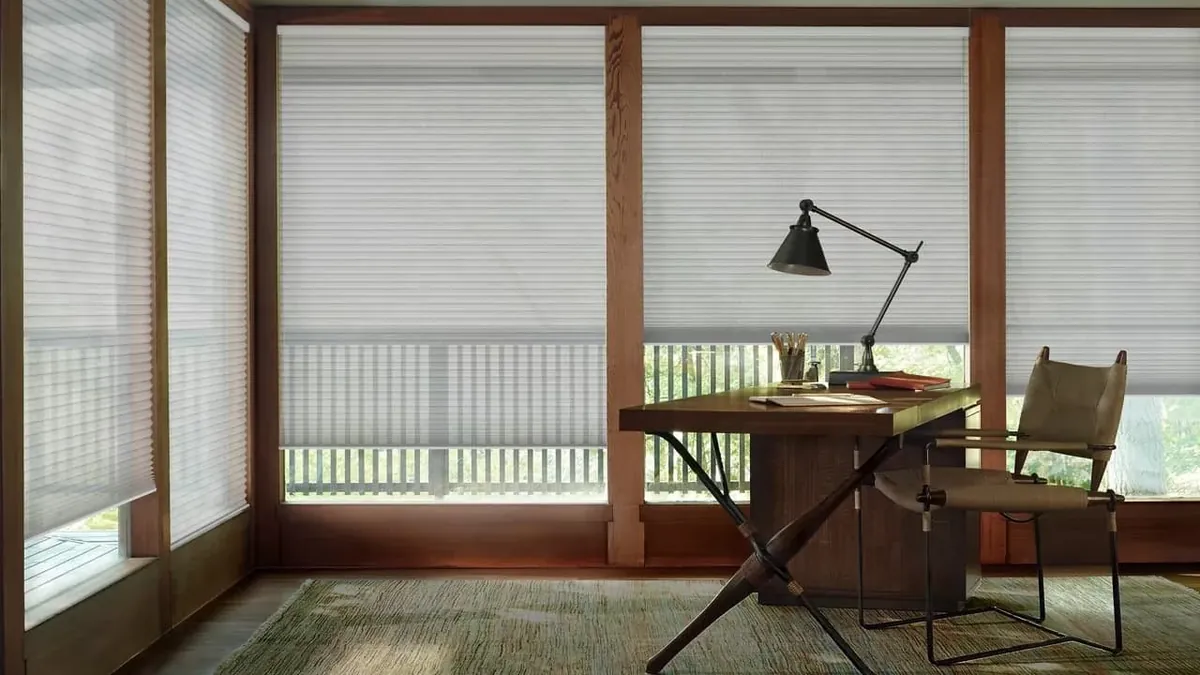
Summer cottages that now see every winter
Many of the houses along the shore at Brant Rock and Green Harbor started life as summer cottages. They sit close together on small lots, a few steps from the sea wall or the beach, and over the years most have been converted to year-round use. The conversion usually brought heating and insulation, but the windows often stayed small and original, and those shore streets take the full weight of coastal weather. A cottage that was perfect for July now has to hold its warmth through a February nor’easter. That is often where we begin with cellular shades in Marshfield, MA.
Honeycomb shades help because of the way they are built. The fabric is pleated into a row of cells, and when the shade is down each cell holds a small amount of air that hardly moves. That still air forms a barrier between the cold pane and the room. On a small cottage window facing the water, it takes the bite out of the draught you feel when the wind is blowing onshore.
Inland, the picture is different. Larger, newer houses sit on bigger lots with taller windows, sliders and open family rooms. They need the same warmth from their shades, but on a much larger scale, and we cover those further down.
Honeycomb shades suited to the shore cottages
Three choices come up more than any others in the converted cottages. All three are in our sample cases.
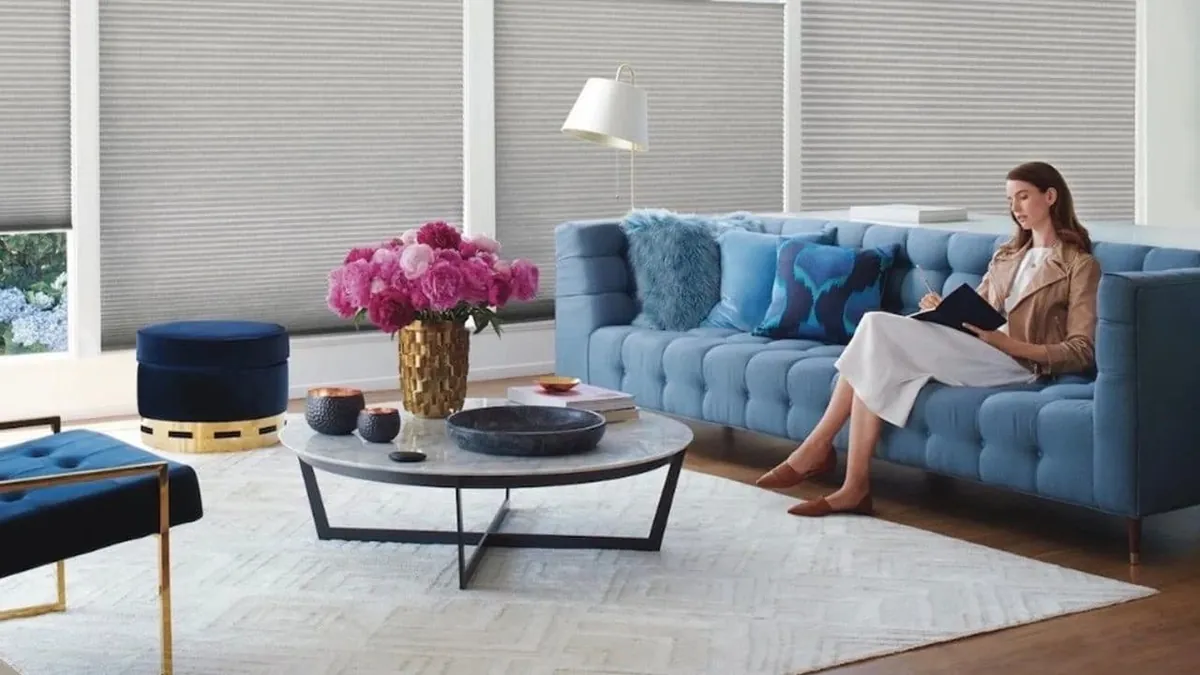
Duette for small openings
Made to the exact size of a small original window, with a compact stack that leaves most of the glass clear when raised.
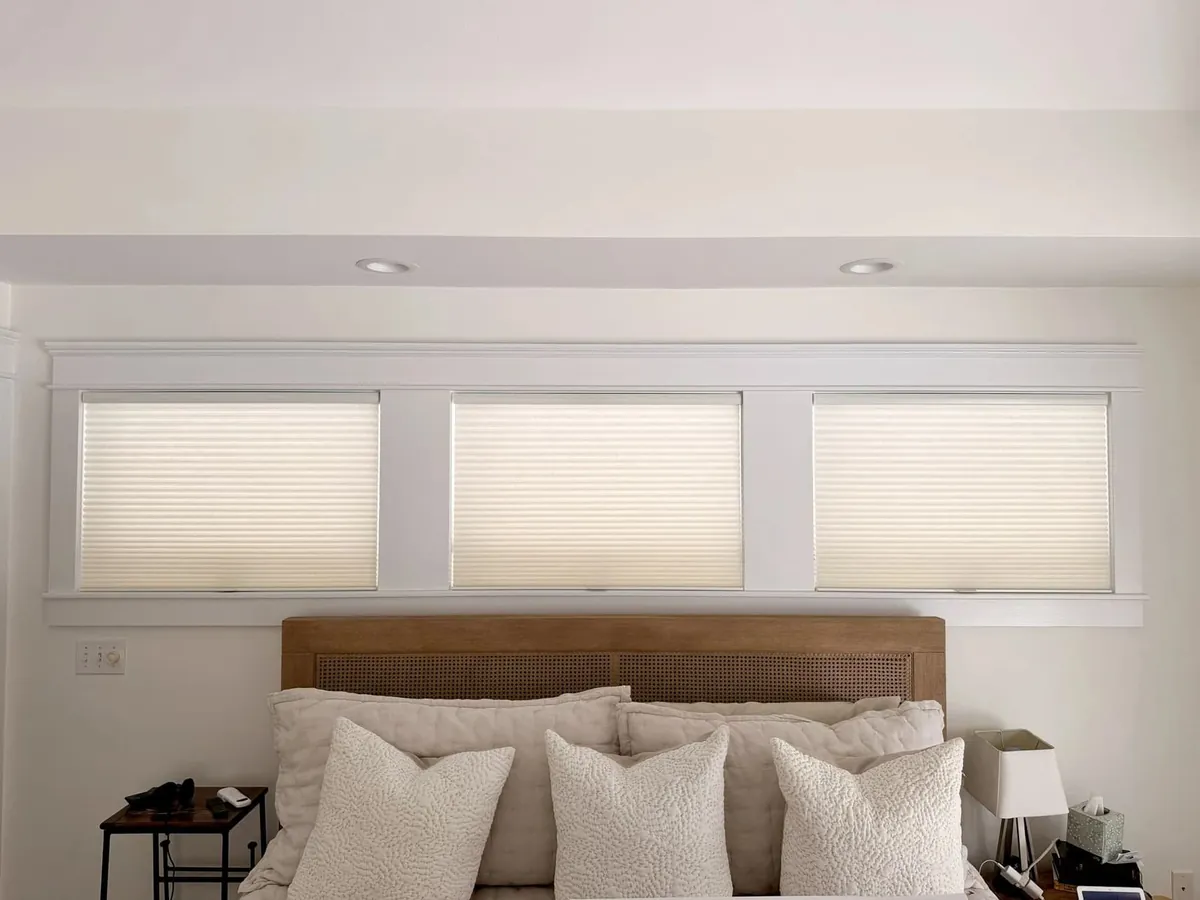
Room-darkening for cottage bedrooms
For bedrooms where a streetlight, a neighbor’s porch light or the early sun off the water comes straight in.
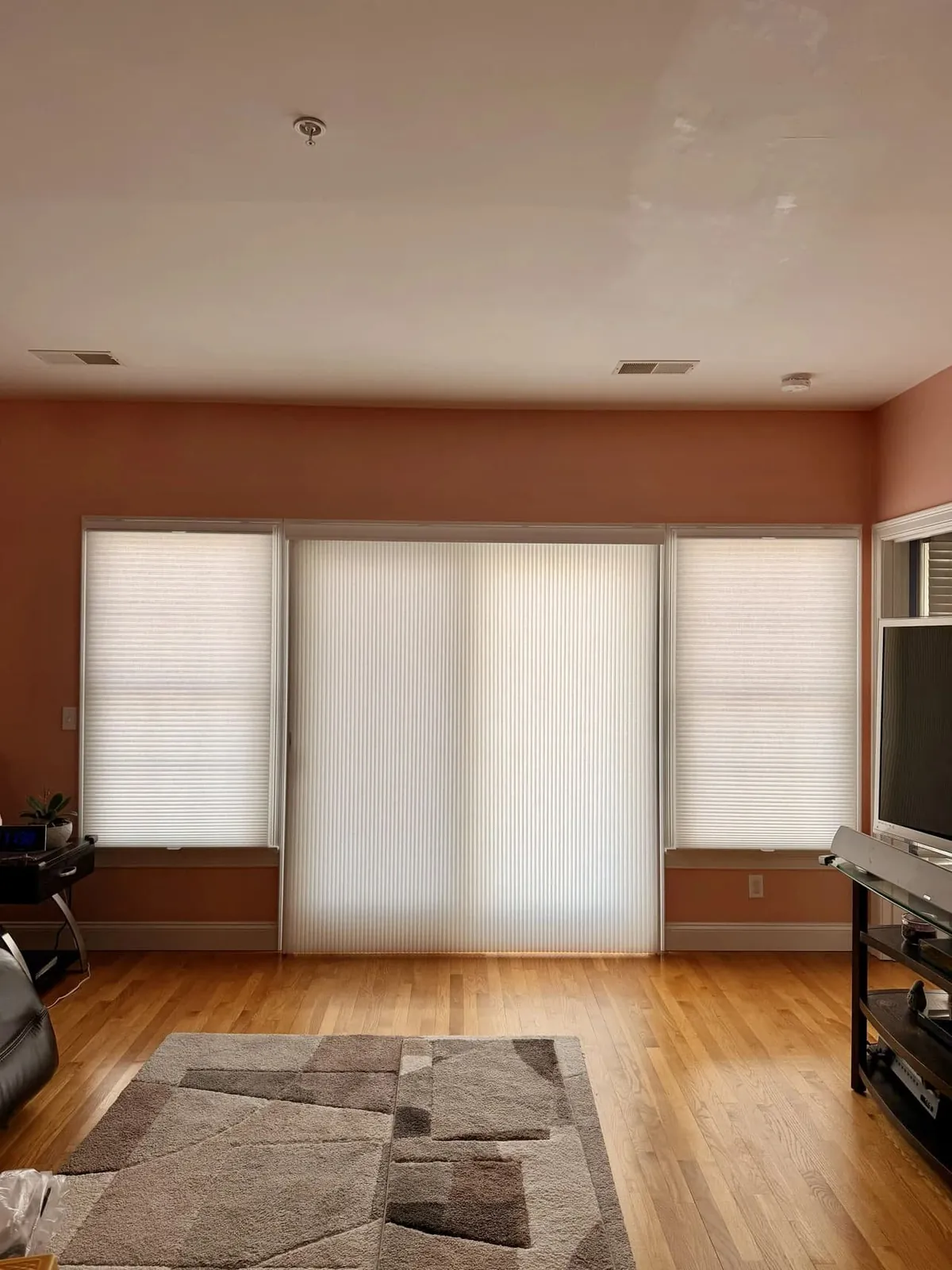
Vertical honeycomb for the deck door
Where a cottage has a slider to its deck, this shade travels sideways across it and stacks at one edge.
Small original openings in the cottages
A beach cottage was built to be simple. The windows were small, often single or paired double-hung sash, sometimes awning or casement windows that crank outward. Many cottages still have those original openings even after the rest of the house has been updated.
A small window can be harder to dress than a big one. A bulky shade overwhelms it, and a standard size rarely fits. Honeycomb shades are made to measure, so each one is built to its own opening, and Duette in particular can be made in small sizes that still look in proportion. Mounted inside the frame, the shade leaves the trim visible and stacks into a narrow band at the top when raised.
Cottage frames are not always square, especially where a house has settled on sandy ground near the beach. We measure each opening at several points across and down, check the depth at the top of the frame, and look for crank handles or locks that might get in the way of a headrail. If an inside mount will not sit cleanly, mounting on the face of the casing is the better answer, and we will show you how it would look.
Low ceilings and little room above the window
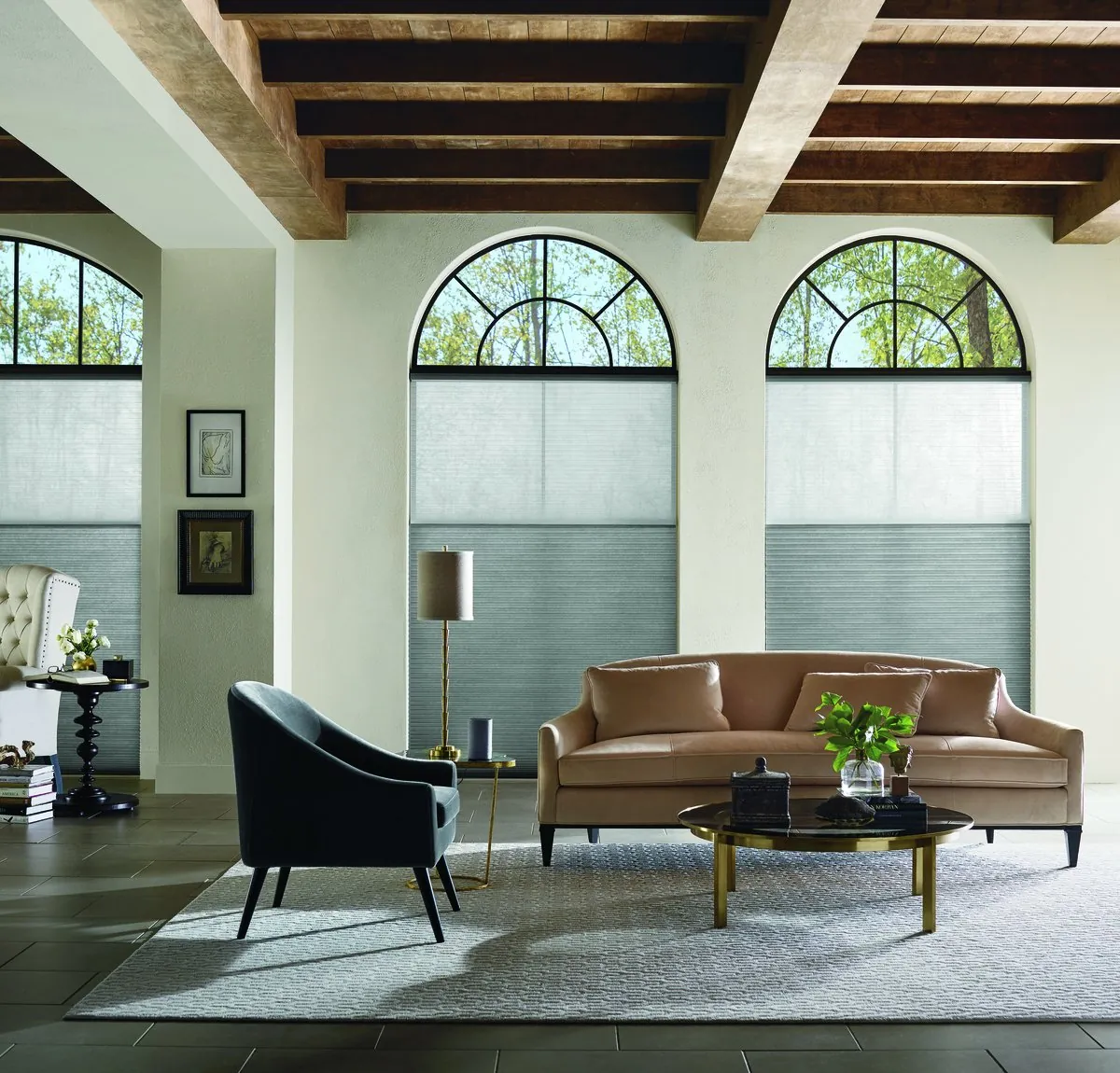
Cottages were built with modest ceiling heights, and the head of a window often sits only a short way below the ceiling. That leaves little wall space above the frame for a bulky headrail or a stack of fabric. A honeycomb shade suits these rooms because its headrail is slim and its stack is compact. Mounted inside the frame, the whole shade lives within the opening and nothing projects onto the wall or the ceiling.
When raised, a honeycomb shade folds into a band only a few pleats deep, so very little of a small window’s glass is lost to the stack. That matters in a cottage where every bit of daylight counts, especially on the side of the house that faces another cottage rather than the water.
Close neighbors and privacy
Cottages at Brant Rock and Green Harbor were set close together, so a side window often faces a neighbor’s side window only a few steps away. Privacy matters in those rooms as much as warmth.
A top-down, bottom-up honeycomb shade handles that well. Lower the top to let light in from above, keep the bottom covered, and the room stays bright without anyone seeing in. A light-filtering fabric also gives daytime privacy, glowing softly from outside rather than showing the room. After dark, a semi-opaque or room-darkening fabric keeps the room private with the lamps on.
Bedrooms in a close-set cottage often get room-darkening fabric. It keeps out a neighbor’s porch light or a streetlight at night and the early sun off the water in the morning. Where the side window is the only window in a small room, a light-filtering fabric on a top-down shade is often kinder, keeping the room private while still letting the day in over the top.
Coastal weather on the shore streets
The shore streets take the full force of what the ocean sends: hard onshore wind, driving rain, salt spray and cold that cuts straight through a thin pane. Windows on the water side of a cottage feel it most, and in a converted cottage those are often the rooms you use most, because they have the view.
A honeycomb shade does not stop the weather, but it changes how the room feels when the weather is bad. With the shade down, the layer of trapped air between the glass and the room slows the cold, and the chair by the window becomes comfortable again on a raw evening. Double-cell shades, with two rows of cells, give the air more places to stay still, and we bring both single-cell and double-cell samples so you can compare them.
Salt air is hard on exposed metal. A honeycomb shade keeps almost all of its working parts inside the headrail, and with a cordless lift there is no cord lock hanging at the side of the window, so far less is exposed to the salt that comes in through an open window in summer.
A year-round cottage also tends to have its heating working hard on the windiest nights, with radiators or baseboard heaters set right under the windows. A honeycomb shade lowered at dusk keeps more of that warmth in the room rather than letting it run straight up the cold glass. We check where the heaters sit when we measure, so the bottom rail clears them and the shade hangs straight.
Small kitchens and baths in a converted cottage
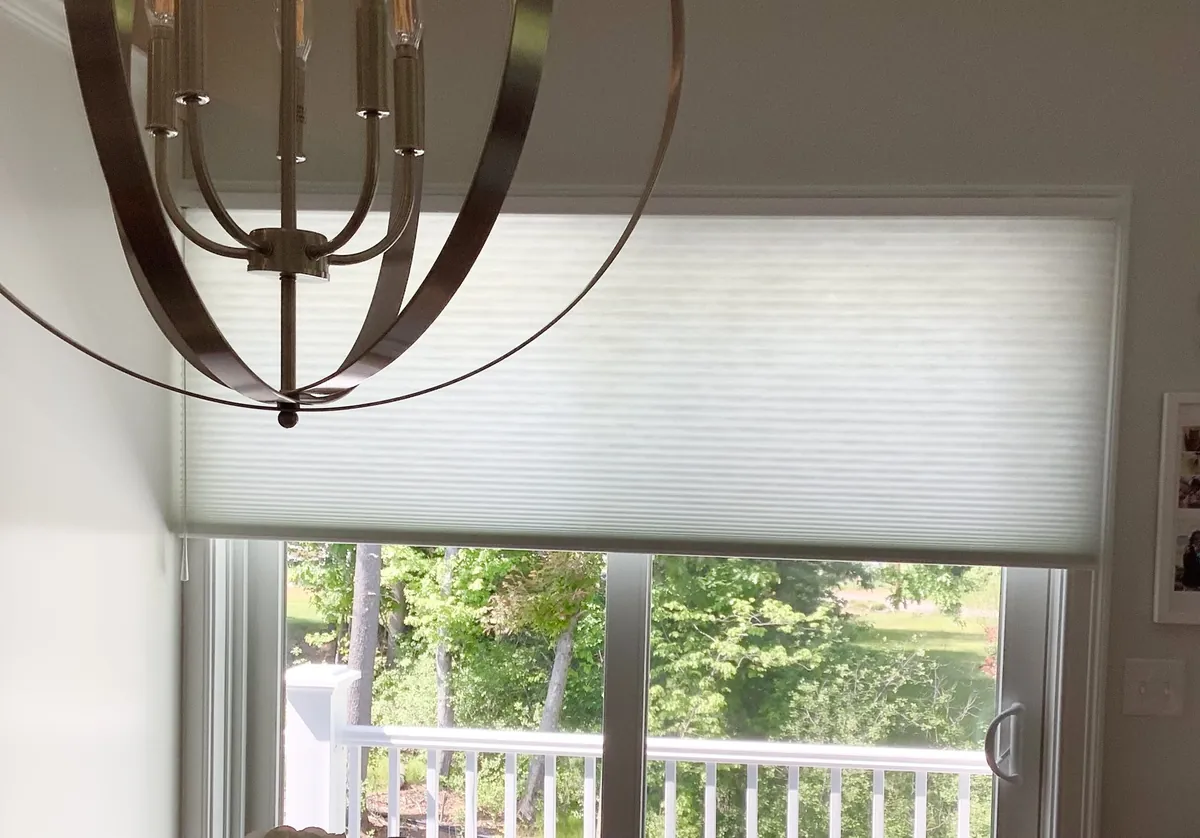
Kitchens and bathrooms in a converted cottage are usually small, and the window is often right over the sink or beside the tub. A shade here has to be easy to use without leaning over a counter, and it has to give privacy in a room that may face the cottage next door.
A cordless top-down, bottom-up honeycomb shade does both. Lower the top for light and keep the bottom covered for privacy, and adjust it with one hand on the rail. A light-filtering fabric keeps a small kitchen bright on a dull winter morning, which can make a compact room feel bigger. In a bathroom, a semi-opaque fabric gives more privacy once the lights are on.
Larger newer houses inland
Away from the shore, Marshfield’s newer houses are larger, with bigger rooms and bigger windows. A typical house has an open kitchen and family room with a slider to a deck, a two-story entry or a tall window over the stairs, and bedrooms with wide windows on two walls.
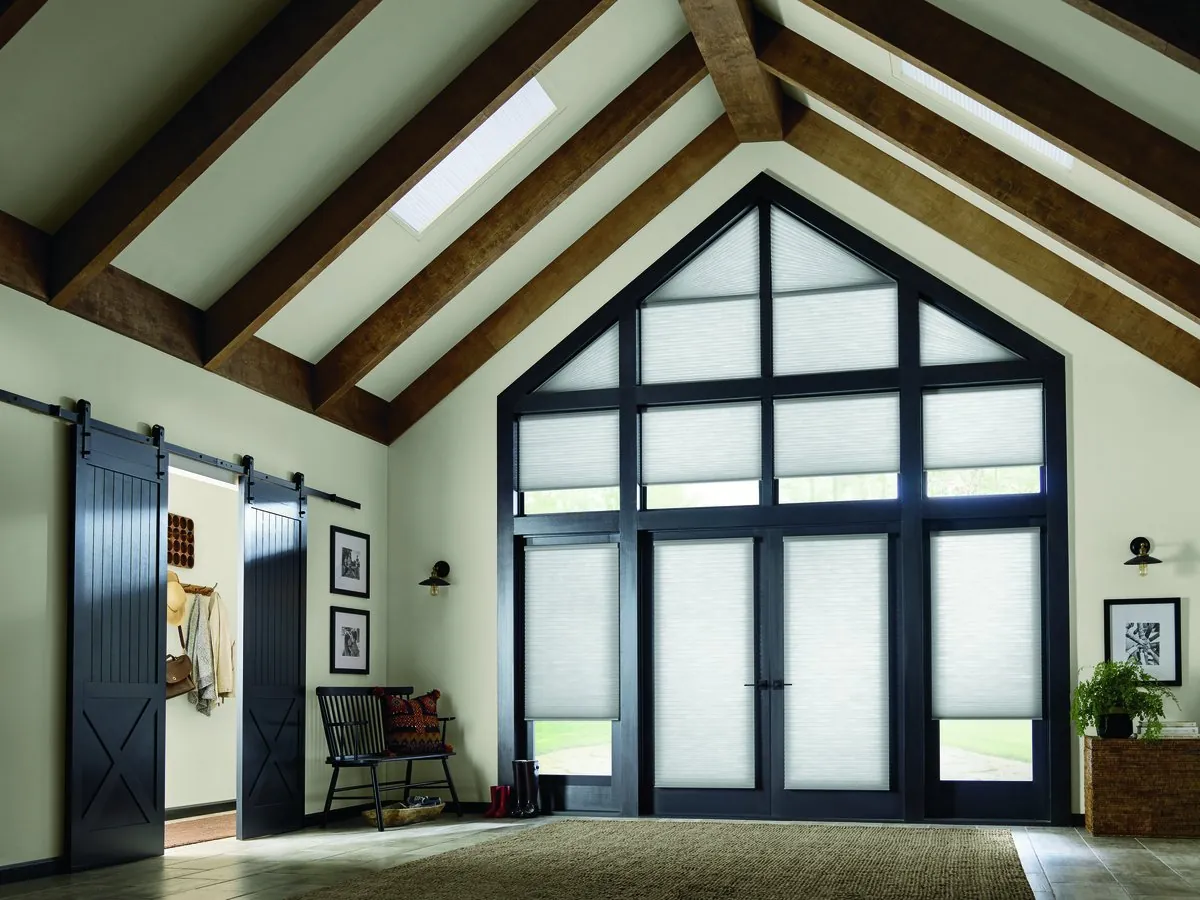
The trapped air in a honeycomb shade works the same way here, but the windows are much bigger. Duette can be made in very wide and very tall sizes, and specialty shapes cover arched or angled tops. A vertical honeycomb shade covers the slider and stacks to one side when you step out.
For cellular shades in Marshfield houses inland, a whole-house plan usually works best. Matching shades on the street side give the front of the house a calm, finished face. Behind it, an open kitchen and family room usually share a single light-filtering fabric so a long run of glass looks like one surface, the bedrooms take a room-darkening fabric, and any high stairwell pane is motorized so nobody needs a stepladder.
Bedrooms and studies in the bigger houses
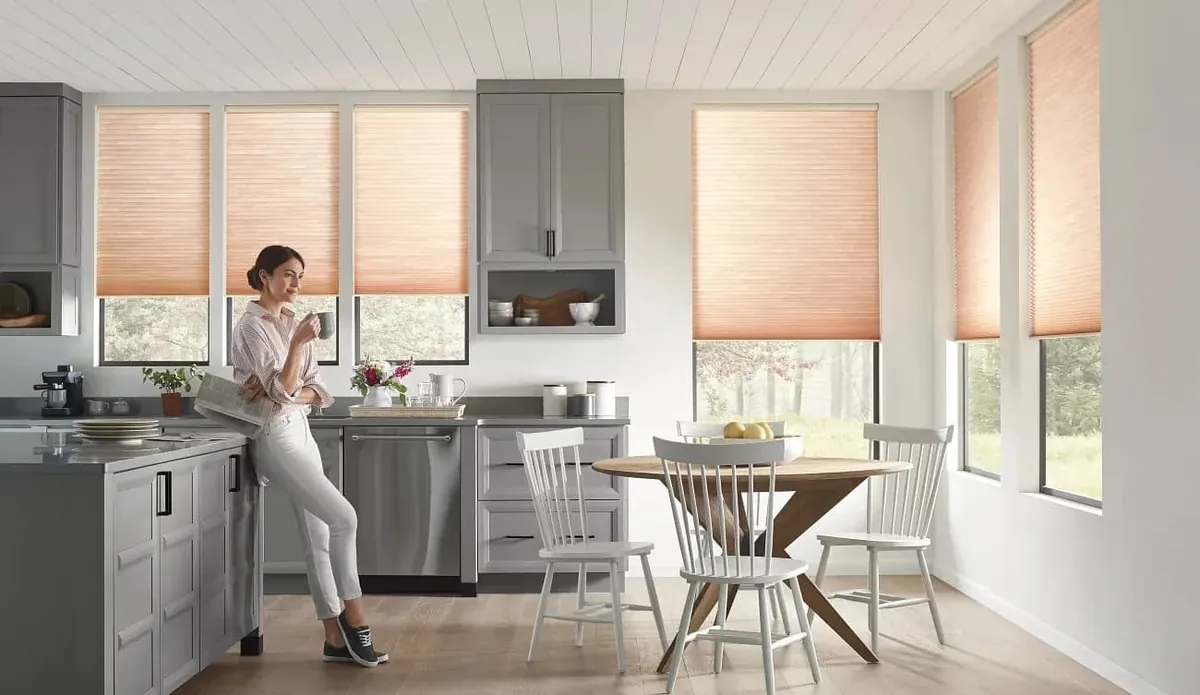
Inland bedrooms are usually larger, with windows on two walls and sometimes a window seat or a bay. The primary bedroom often faces east or south, and the morning light can be strong long before anyone wants to be awake. Room-darkening honeycomb fabric holds that back, and because the shade fits closely inside the frame, very little light leaks around its edges.
A home office in one of these houses needs the opposite: plenty of daylight, but no glare across a screen. A light-filtering fabric spreads the light evenly through the room, and a top-down shade lets you shade only the top of the window when the sun is high. When you plan cellular shades in Marshfield for a newer house, these two rooms often end up with quite different fabrics, and that is exactly as it should be.
Light off the water
On the shore, light reflects off the water and the sand and comes into the house from more than one angle. A water-facing room can be very bright in the morning or the late afternoon, depending on which way it faces, and the glare on a sunny winter day can be harder to live with than in summer.
A light-filtering honeycomb fabric softens that glare into an even glow while keeping the room bright. Dropping a top-down shade a hand’s width at a time lets you block the low sun exactly and keep everything below it open. Strong daily sun off the water is also hard on fabric color, so pale neutral fabrics usually hold up best on the windows that face the sea.
PowerView, on the shore and inland
PowerView motorization lets you raise and lower shades from a phone, a remote or a wall control, and set schedules that move them for you. In a cottage it means the small windows look as clean as possible, with no cord at all. Inland it solves the tall window over the stairs and the family room full of shades that need to move together.
Schedules are especially useful on the shore. You can set the water-side shades to lower before the afternoon glare arrives and rise again in the evening, or lower every shade in the house at dusk when the lamps come on. We plan how each motor is powered at the visit. Our motorized blinds in Marshfield page covers automation in more detail.
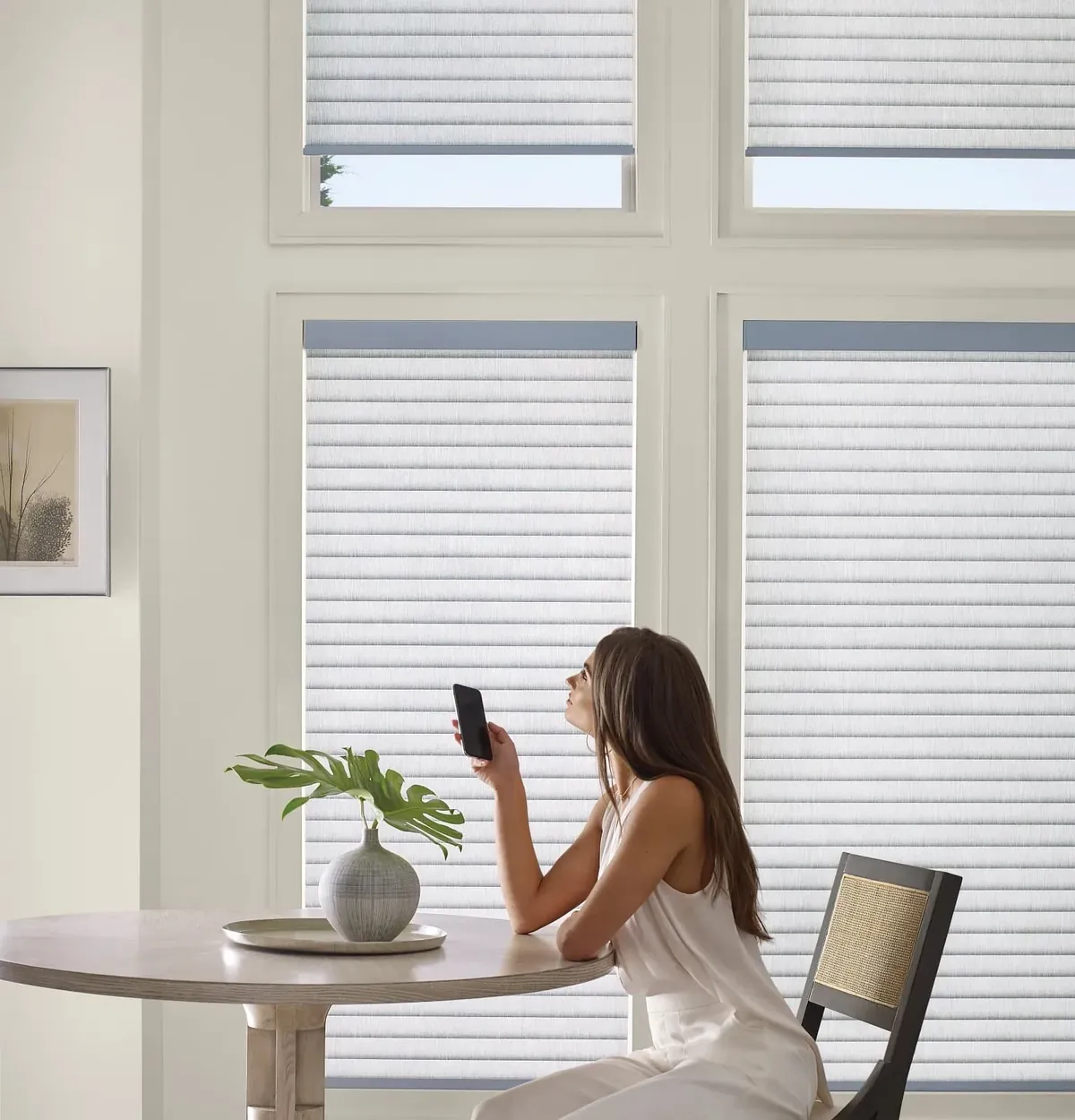
Duette and Applause
Of the two honeycomb collections Hunter Douglas offers, Duette is the one with the extremes: the smallest and the largest sizes, shaped shades, and the sideways version for doors, along with the longest list of fabrics. Applause is a tighter collection with colors of its own and sits well in ordinary openings.
In a converted cottage, Duette usually goes on the small original windows, where its sizes matter. In a newer house inland, Applause may cover the bedrooms while Duette takes the slider and the family room. Read more on the Duette and Applause pages, or see the full cellular shades range.
How fitting works in a cottage and a newer house
Every shade is made for its own window, and the fitting is where that care shows.
- We check each shade against its window before anything is fixed.
- Brackets go into solid wood, which in an older cottage can mean finding the framing behind newer finishes.
- Every headrail is set level, even where the frame itself has moved.
- Each lift is tested, top-down shades included, and PowerView shades are paired and grouped.
- You are shown how everything works, and the room is left as we found it.
The result is cellular shades in Marshfield that look made for the window, whether the window is a small cottage sash at Brant Rock or a tall pane in a new house inland.

Certified Hunter Douglas installation
Blinds & Designs is a Hunter Douglas Gallery dealer, a title Hunter Douglas gives to dealers who meet its standards. What that means at your windows is access to the complete honeycomb range, from tiny cottage sizes to tall inland panes, plus PowerView.
Our installers are certified by Hunter Douglas, so the shades go up the way the maker intends. If a shade ever needs attention later, we offer blind and shade repair as well. Our interior design consultations are there if you want a hand pulling colors together across a whole house.
We fit more than honeycomb shades in town: see plantation shutters in Marshfield, roller shades in Marshfield or the full list on our Marshfield page.
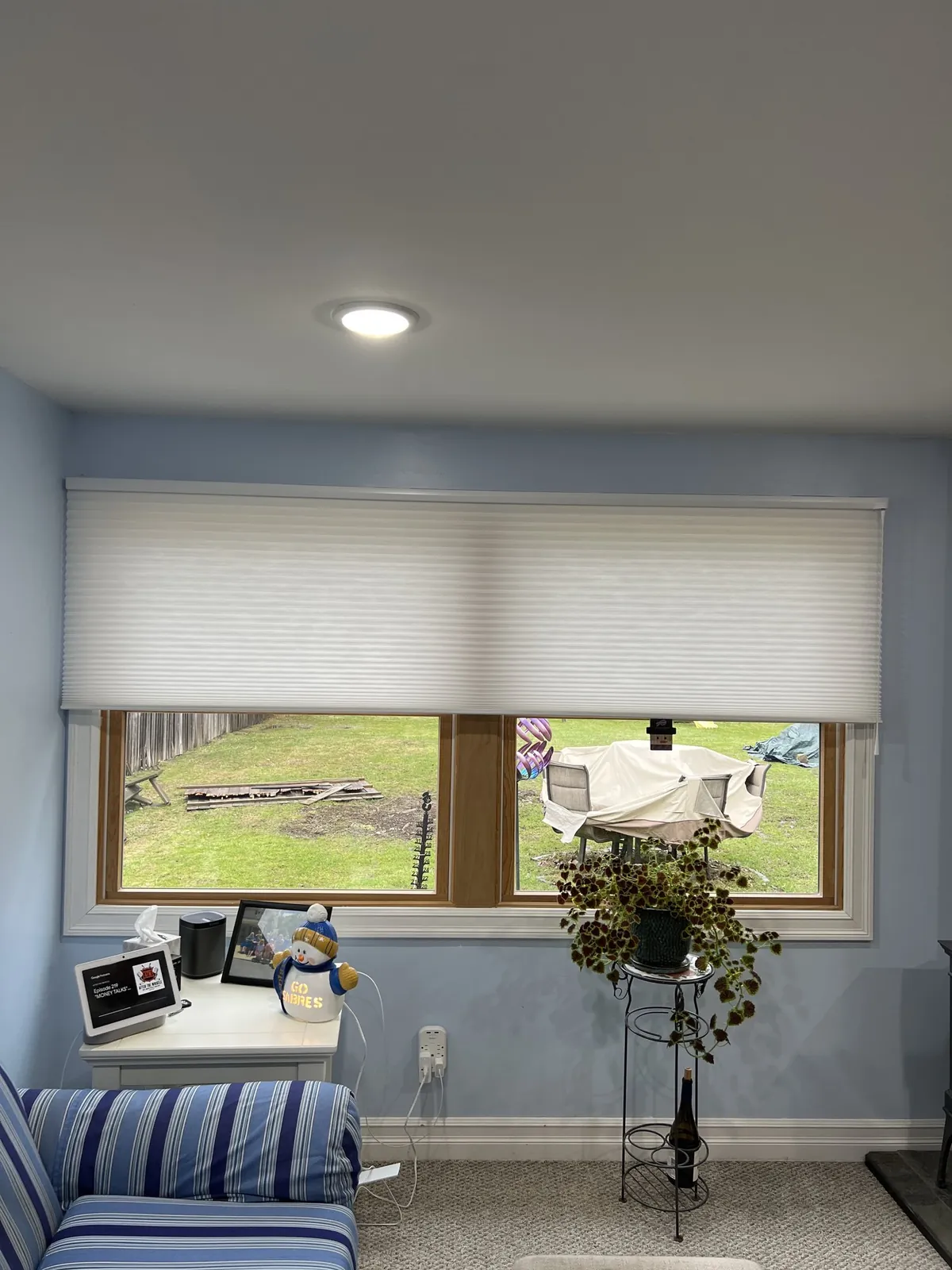
Samples at your door, from the shore to inland
A small cottage window facing the sea and a wide family room window inland need to be seen in their own light. Our vans carry samples, so we can bring the showroom to you.
- Ask for an appointment on the website or by the call button.
- Together we walk the rooms, cottage bedrooms and water-side windows first.
- Swatches go up against the actual glass, so light, privacy and color can be judged where they matter.
- Each opening is measured, and the mount and lift for it are settled with you.
- A free estimate follows, and the decision stays yours to make whenever you are ready.
You can read more about what happens at an in-home consultation before we come. Our nearest showroom is in Sagamore.
Questions from Marshfield
Can you fit honeycomb shades to the small windows in a converted cottage?
Yes. Every shade is made to measure, and Duette can be built in small sizes that still look in proportion. We check each frame for depth and square, and for crank handles that might get in the way, before recommending an inside or outside mount.
Will a shade help in a room that faces the sea in winter?
It helps the room feel warmer. With the shade down, the air trapped in the cells sits between the cold glass and the room. Double-cell shades add a second row of cells.
How do I keep privacy when my neighbor’s window is a few steps away?
A top-down, bottom-up shade lets light in from the top while the lower glass stays covered. Light-filtering fabric gives privacy by day, and a semi-opaque or room-darkening fabric does the same at night.
Do honeycomb shades stand up to salt air?
Most of the working parts sit inside the headrail, and a cordless lift has no cord lock at the side, so far less is exposed than with older corded blinds.
Is there a charge for the estimate?
No. Measuring is part of the consultation, and the estimate we leave with you is free. You can cover the coldest rooms first and the rest later.
Your next step
Whether you live in a converted cottage at Green Harbor or a newer house inland, the best way to judge cellular shades in Marshfield, MA, is with the fabrics at your own windows. Book a consultation and we will arrive with Duette and Applause swatches, measure each opening, sea-facing or not, and write a free estimate. Or call or visit our Sagamore showroom, our nearest.