
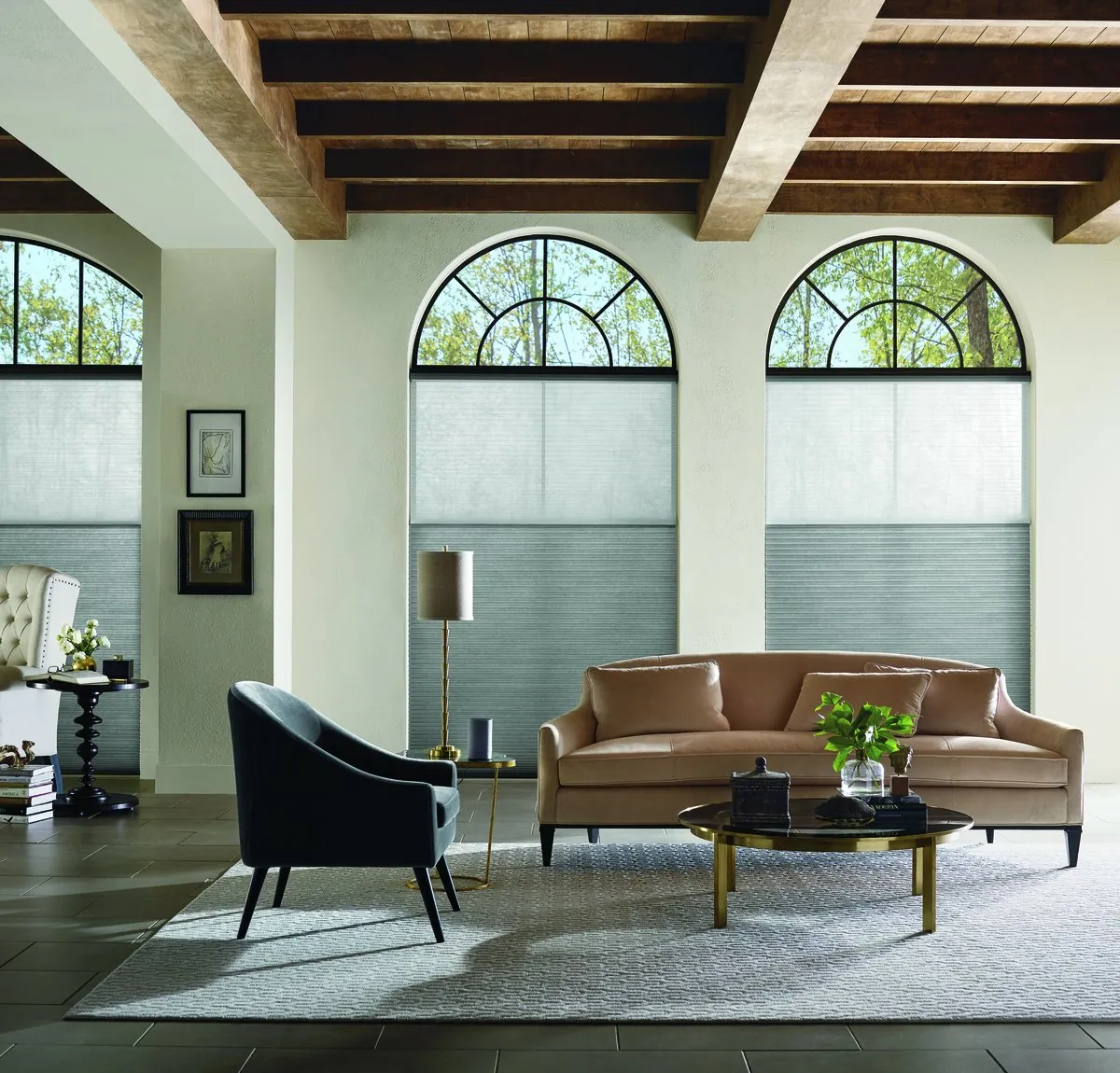
Shingle, salt and a view worth keeping
Along the harbor and out toward Minot and Peggotty Beach, Scituate’s houses are shingled, weathered and turned toward the water. Their best rooms are built around the view, with wide windows facing the harbor or the open sea, and they sit on one of the most exposed stretches of the South Shore. When a northeast storm comes through, those water-facing rooms feel it first. Inland, the newer colonials stand among trees and are far more sheltered, with a different set of windows and a different set of needs. Both ends of town are part of planning cellular shades in Scituate, MA.
The honeycomb shade is the right starting point for a cold room because of how it is made. Its fabric folds into hollow cells, and when the shade is down the cells hold air that barely moves. That still air sits in front of the glass and slows the cold reaching the room. On the harbor side, where a big pane faces the wind, the difference is easy to feel in the chair by the window.
The challenge on the water is doing that without losing the view the house was built for. Inland, it is about matching shades across a larger house and getting the light right room by room. We bring samples for both.
Honeycomb choices for Scituate houses
These six come up most often between the harbor and the inland roads. Each one is in our sample cases.
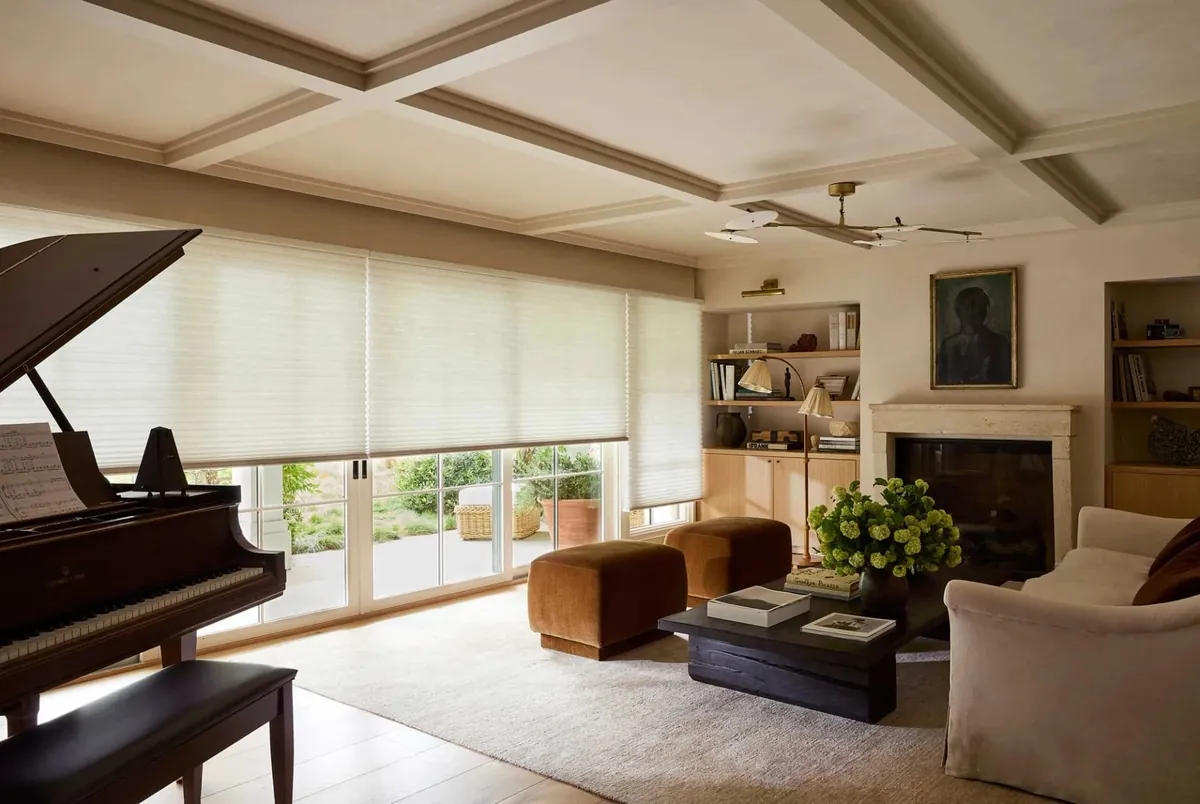
Duette honeycomb shades
The widest honeycomb range from Hunter Douglas, with the sizes and shapes that wide harbor windows often need.
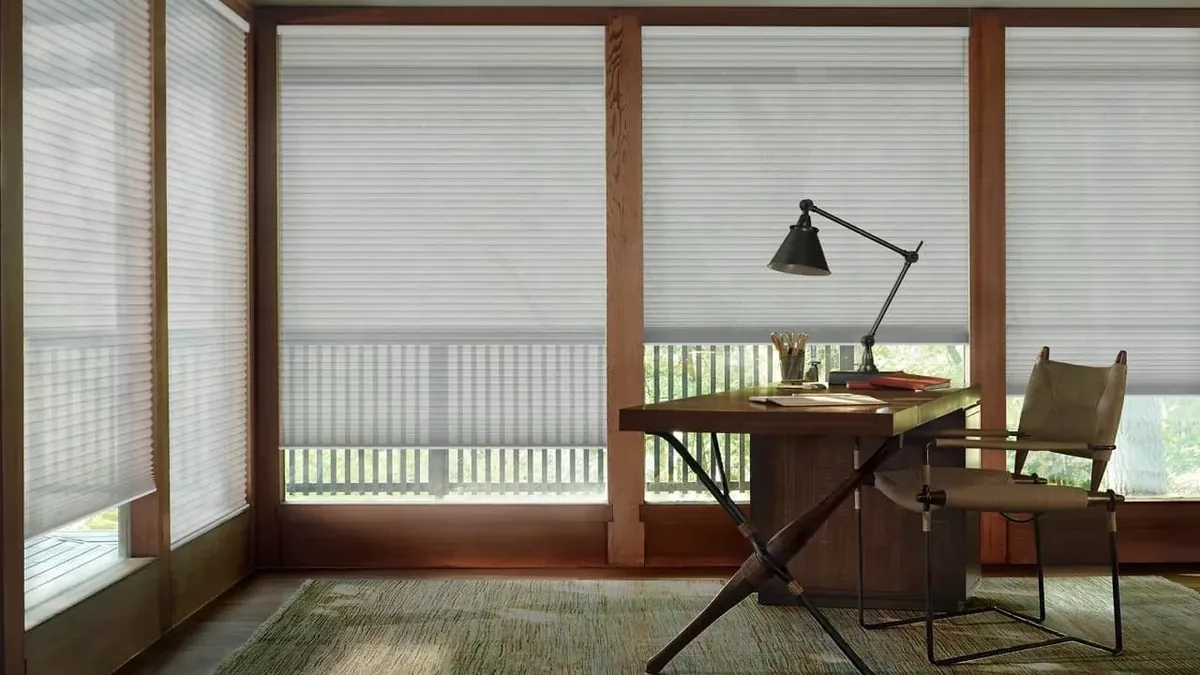
Applause honeycomb shades
Hunter Douglas’s other honeycomb, its colors chosen separately, and at home in the regular openings of an inland colonial.
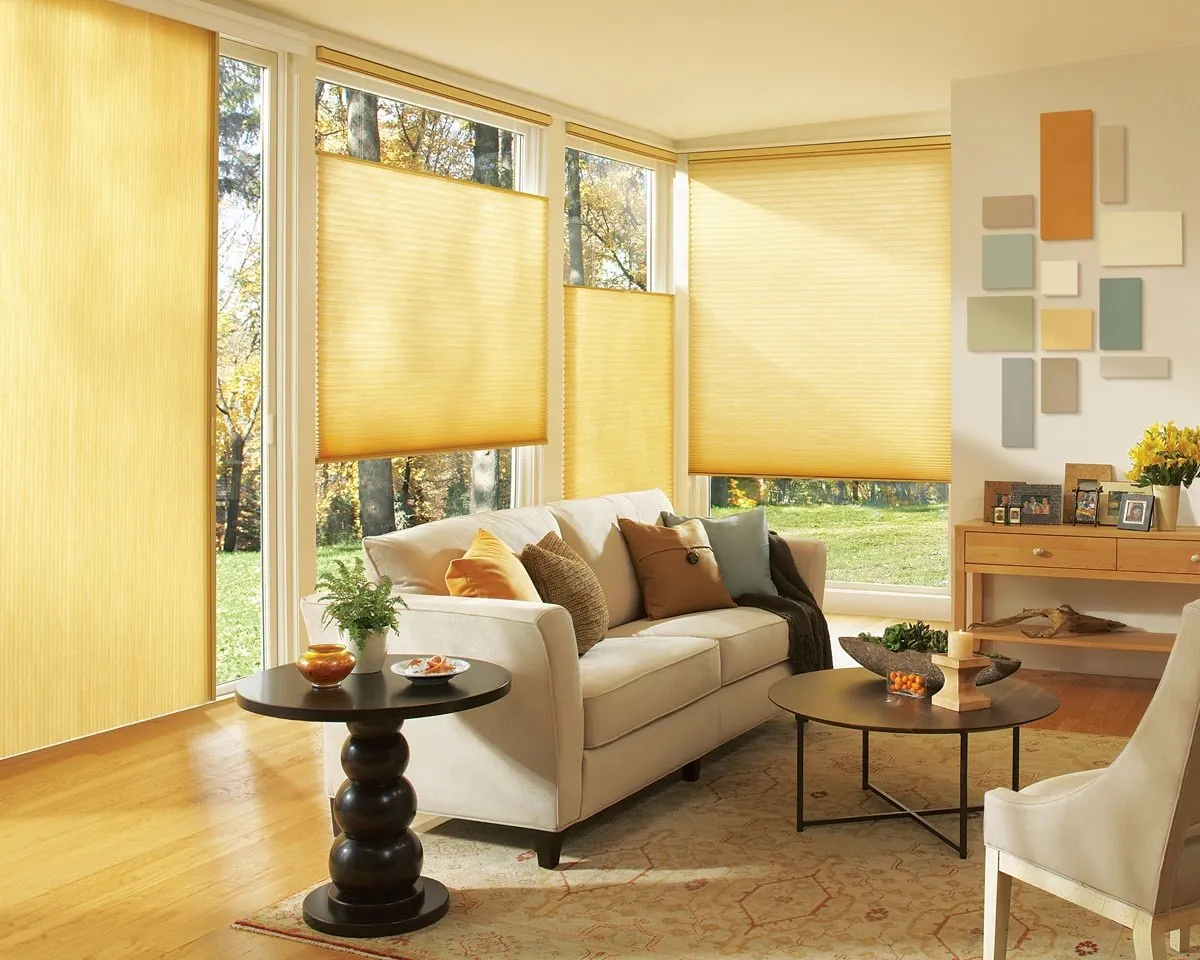
Top-down for the view
Lower the shade from the top so the horizon stays in sight while the lower glass is covered.
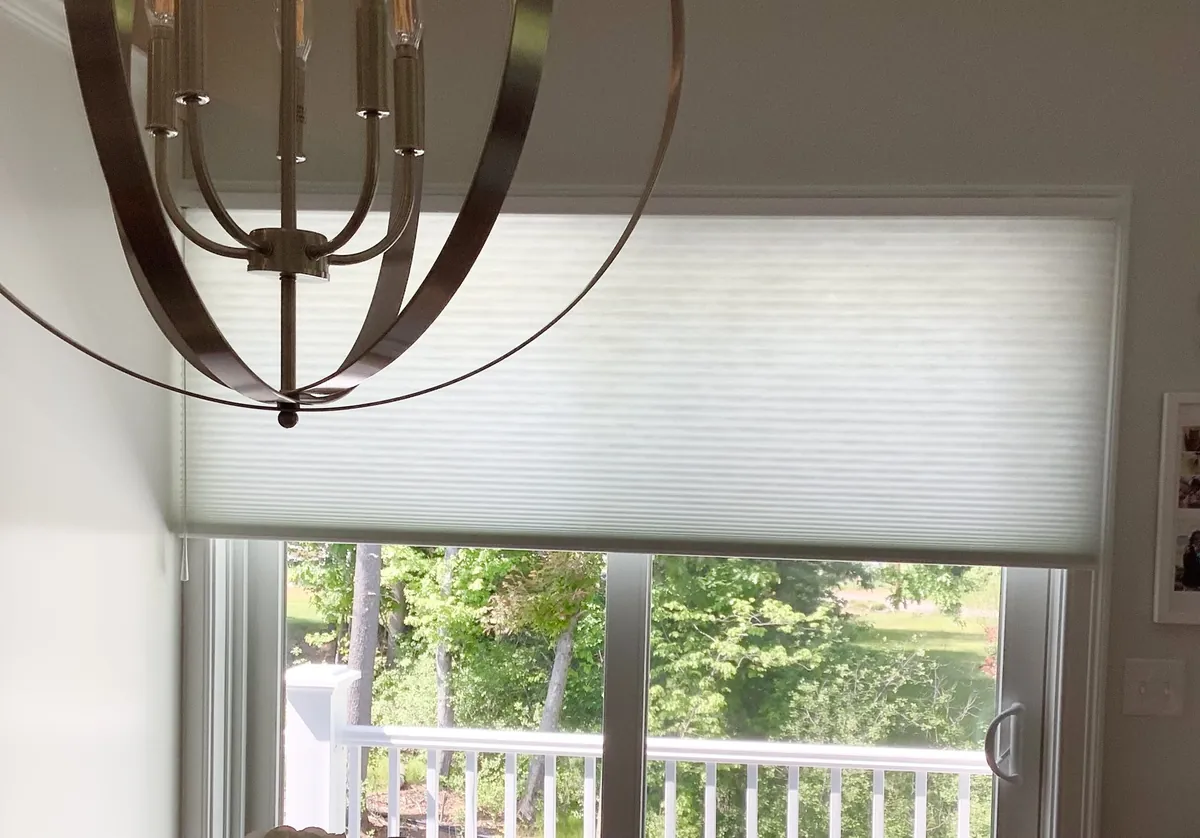
Sliders to the deck
A vertical honeycomb shade that crosses the slider and stacks at one side when you go out.
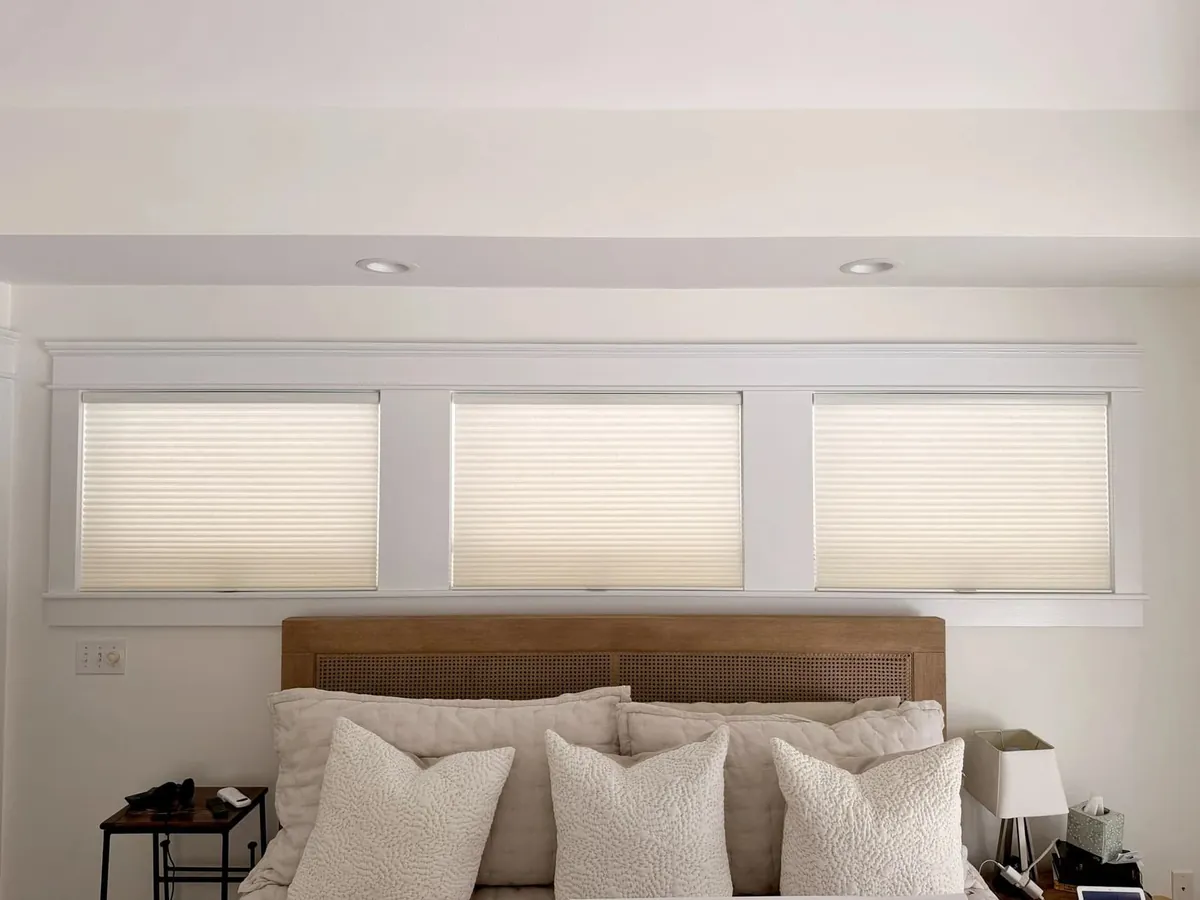
Room-darkening bedrooms
Holds back the early light off the water, while the cells still trap air against the glass.
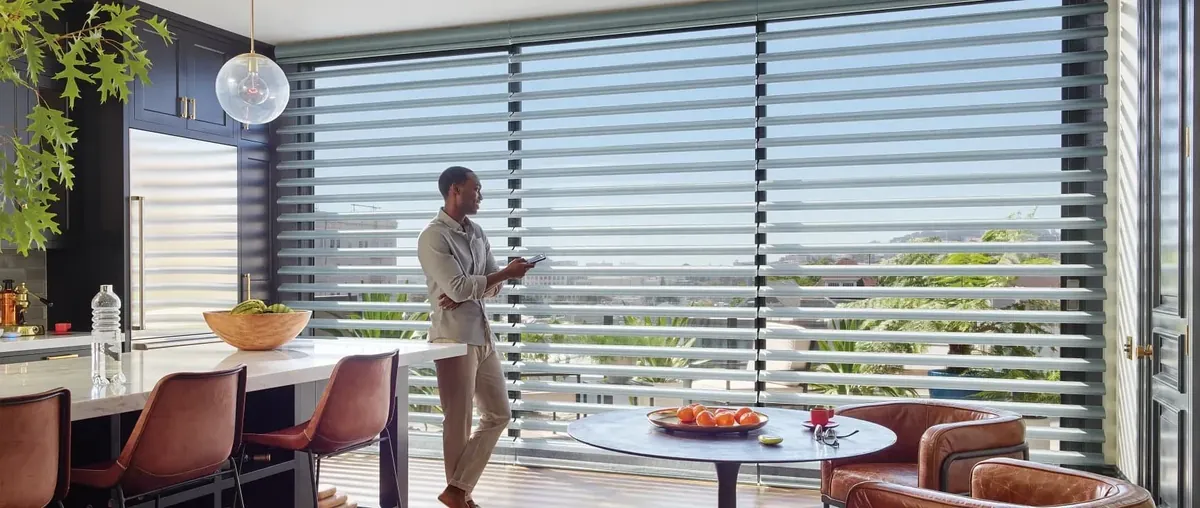
PowerView motorization
One shade or a whole wall, moved by app, handheld remote or wall switch, or left to a timer.
Harbor rooms built around the view
The shingled houses along the harbor were designed to look at it. Living rooms, kitchens and primary bedrooms face the water, often with a wide picture window, a bank of double-hung windows or a set of French doors. Covering that glass with anything heavy would undo the reason the house is where it is.
That is why top-down, bottom-up shades are the most common choice in harbor rooms. Lower the shade from the top, and the band of sky and water stays visible while the lower part of the window is covered from the street or the boat traffic. Reverse it in the evening and cover the whole window for privacy. A light-filtering fabric keeps the view softly visible even when the shade is fully down.
For wide picture windows we build several shades on one headrail, moving together or separately, so you can treat the sunny end of the room differently from the shaded end. Where windows wrap a corner, the headrails line up so the shades meet neatly.
Out toward Minot and Peggotty Beach
Further out, toward Minot and Peggotty Beach, the houses face open water with little to break the wind. This is one of the most exposed parts of the South Shore, and the water-side windows take wind, salt spray and driving rain straight on through the winter.
No window covering holds back a nor’easter, yet the room behind the glass can still be a gentler place during one. Draw the honeycomb shades at dusk and every cell becomes a cushion of air sitting against the pane, so the sofa nearest the sea is no longer the spot everyone avoids. For the most exposed rooms, a shade with two layers of cells gives that cushion more depth; the samples we carry include both kinds, and the difference is clearest when you feel the two side by side.
Spray finds its way indoors whenever a beach-side window is left open on a summer day, and it is unkind to bare metal. Here the honeycomb design helps: the lifting mechanism is enclosed in the headrail, and a cordless shade has no cord lock or tassel hanging out in the damp air.
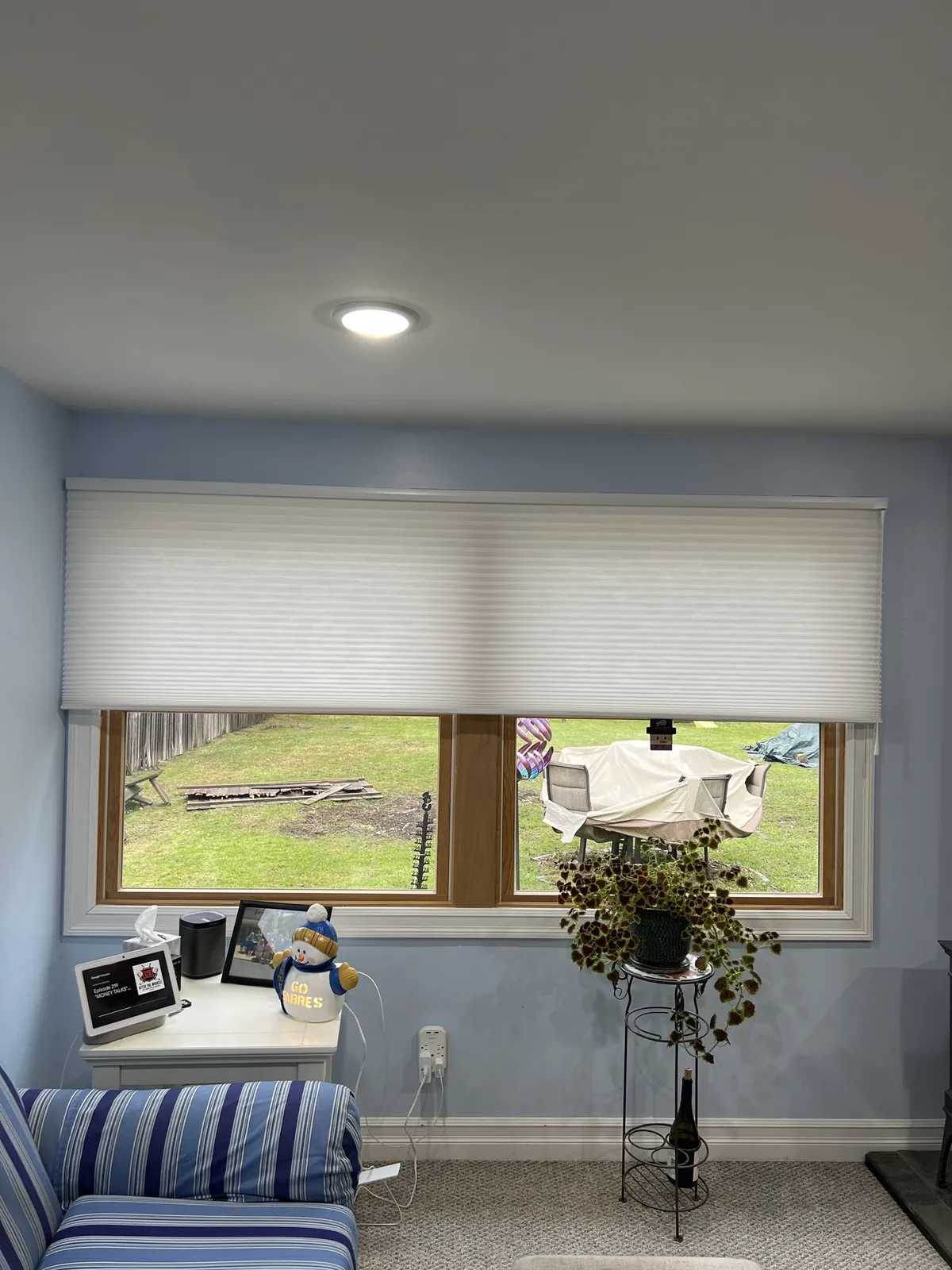
Light off the open water
Water reflects light, and a house facing the open sea gets it from above and below. On a bright winter morning the low sun off the water can fill an east-facing room with glare, and on a summer afternoon a west-facing harbor room can be hard to sit in.
Light-filtering honeycomb fabric turns that glare into a soft, even glow and keeps the room bright. A top-down shade can be eased down from the top until it just catches the low winter sun, with the view below left clear. In bedrooms that face the water, room-darkening fabric keeps out the first light, which comes early in June.
Strong daily sun off the water is also tough on fabric color. Pale neutrals, soft whites, creams and light grays, hold up best on windows that face the sea, and they look tidy from the water too, which matters on a house that is seen from the harbor and the beach.
Shingled houses and their windows
Many of the shingled houses near the water are older, and their windows vary. Some have small original sash, others have been updated with larger units facing the view, and many have a mix. The frames in an older house have often moved over time, especially on the side that takes the weather.
So an old harbor window gets more than one tape reading. We take it wide at the head and the sill, tall at either jamb, and deep at the corners where the headrail will be fixed, since sash weights and stops eat into that space. With room to spare, the shade sits within the opening and the weathered trim stays on show. Without it, the headrail goes on the casing instead, and we mark exactly where before anything is ordered.
Bay windows and dormers are common in these houses too. In a bay, every window takes a separate shade, set so that all of them rise to the same line. Dormer windows, often small and recessed, take an inside-mounted shade with a cordless lift that is easy to reach.
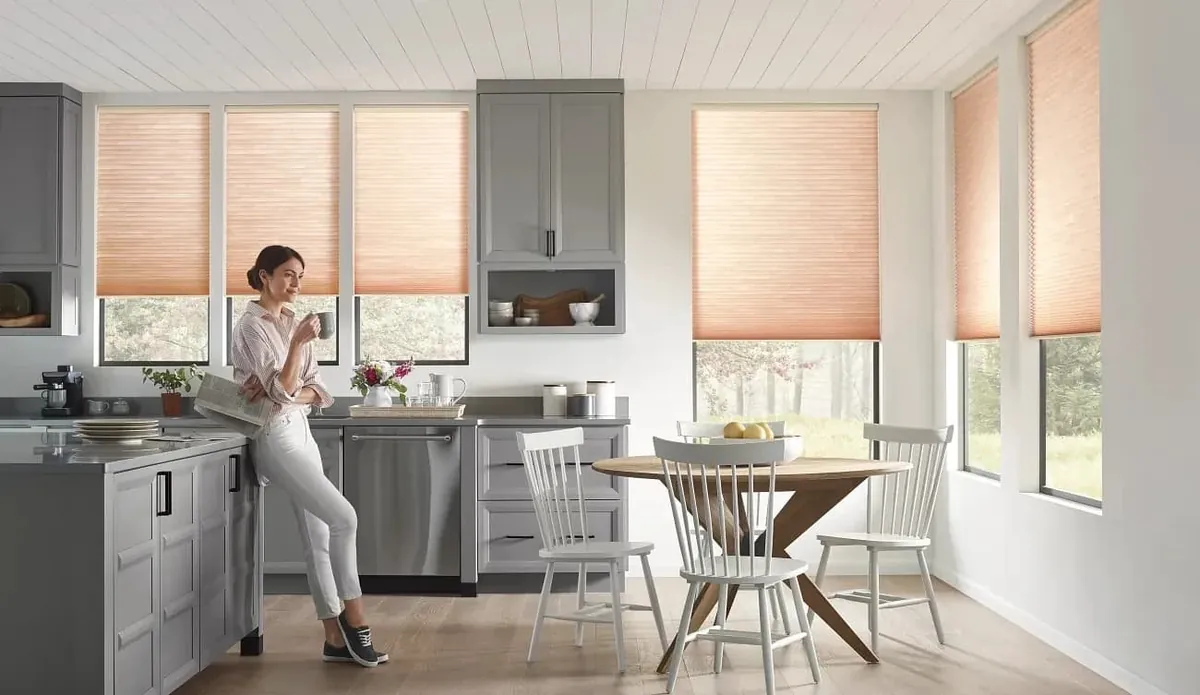
Harbor kitchens and the morning light
In many of the shingled houses the kitchen sits on the water side, so breakfast comes with a view of moorings and the harbor mouth. It also comes with the brightest light of the day, bouncing off the water straight onto the counters. The window over the sink is the one you look through most and reach least, with a faucet and a counter between you and the glass.
A cordless top-down, bottom-up honeycomb shade is made for this spot. Ease the top down a little to take the glare off the counter while the lower glass, and the view, stays open, then bring it back up when the sun has moved round. If the window is out of easy reach, a PowerView shade can sit on a schedule and drop for the first hours of morning without anyone touching it.
Newer colonials inland
Away from the water, Scituate’s newer colonials sit among trees and are much more sheltered. They have two stories, matching double-hung windows across the front, a kitchen that runs into the family room and a slider out to the deck, and sometimes a tall window over the stairs.
These houses suit a whole-house plan. Matching the street-side shades gives the front of the house a calm, even face. Inside, each room gets the fabric it needs: light-filtering in the kitchen and family room, room-darkening in the bedrooms, something in between for an office. The slider gets a vertical honeycomb shade in the same fabric as the windows next to it.
Trees change the light through the year. A bedroom that is dim and green in summer can be bright once the leaves come down. Choosing cellular shades in Scituate for an inland house means thinking about both seasons, and a fabric that works in November as well as July.
Why a honeycomb is the warm choice
Most window coverings are a single layer: a slat, a sheet of fabric, a louver. A cellular shade is two faces of fabric joined into a chain of pockets, so when it is lowered it is less like a curtain and more like a thin quilt hung in the window. Each pocket closes around some air, and that air, unable to circulate, is slow to pass heat along in either direction.
It is the reason Hunter Douglas’s honeycomb shades are its warmest. A harbor room in January keeps its warmth after the sun goes down instead of giving it up to the glass. An inland bedroom stays comfortable through the night when the thermostat is turned back.
Summer reverses the flow but not the idea. A west-facing room on the harbor, shaded through the late afternoon, keeps much of the sun’s heat out at the window, and light-filtering fabric leaves it bright enough to enjoy.
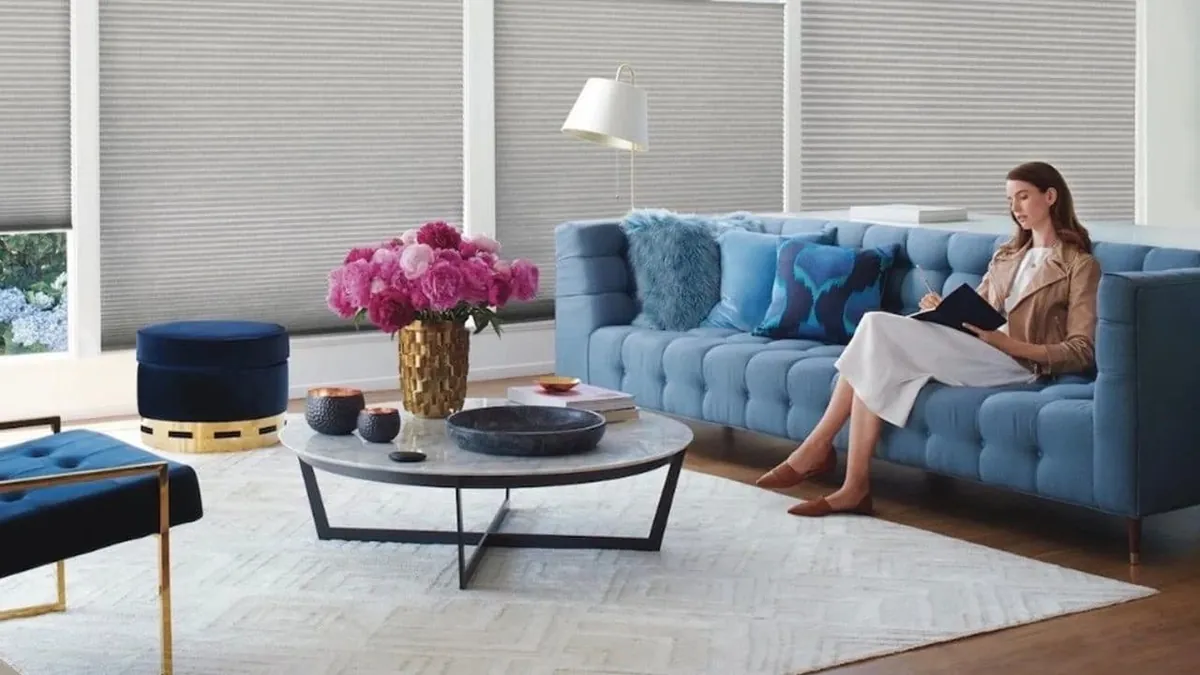
PowerView on a house full of windows
A harbor house can have so many water-facing panes that adjusting them all by hand becomes a chore nobody keeps up with, and an inland colonial usually has one stairwell window that no one can reach at all. PowerView answers both. Shades answer to an app, a handheld remote or a switch by the door, and a whole wall of them can be set to move as one.
Schedules are especially useful on the water. Set the harbor-side shades to lower before the afternoon glare and rise again in the evening for the sunset, or lower every shade at dusk. Powering each motor is worked out with you when we visit. More on automating a whole house is on our motorized blinds in Scituate page.
Duette or Applause
Both Hunter Douglas honeycomb collections travel in our vans. Duette is the bigger family: the greatest choice of textures and cell widths, sizes for the broadest view windows, shaped shades for arches, and a sideways shade for doors. Applause is more compact, with a palette all its own that sits comfortably in standard frames.
On the harbor, Duette usually takes the wide view windows and the sliders, where its sizes matter. Inland, Applause often covers the bedrooms and secondary rooms. Many orders for cellular shades in Scituate use both. Each collection has its own page, Duette and Applause, and both sit within our cellular shades range.
The visit
A harbor room and an inland bedroom need to be seen in their own light, so we come to you. Our vans carry the samples.
- Ask for a visit online or with the call button.
- We walk through the house with you, starting with the water-side rooms or the coldest ones.
- Swatches go against the glass so the view, the glare and the privacy can be judged in place.
- Each opening and slider is measured, and how it mounts and lifts is agreed.
- A free estimate arrives with no deadline attached.
If you want help with color across the whole house, ask about our interior design consultations. Our guide to what happens at an in-home consultation sets out the visit step by step.

From order to fitting
Every shade is made to its window, so the work at the start pays off at the end.
- Each opening is read three ways across and three ways down, with the frame depth noted at the corners.
- Fabric, color, lift and mount are agreed window by window, with the water-side rooms settled first.
- When the shades arrive, certified Hunter Douglas installers set brackets into sound wood, which in a weathered harbor house can take some finding.
- Each headrail is levelled by eye and by tool, so a long row of shades lines up along the view.
- Every shade is run up and down, motorized ones are linked and grouped, and you are shown how it all works.
Fitted like this, cellular shades in Scituate sit tight in the frame on the windiest side of the house, and the line of headrails along a harbor window looks deliberate rather than added.

Gallery dealer status and certified installation
Only leading Hunter Douglas dealers are named Gallery dealers, and Blinds & Designs is among them. In a house on the harbor that matters, because view windows often call for the widest sizes and the less common options, and a Gallery dealer can order all of it.
Hanging them is left to Hunter Douglas certified installers, whose job on a harbor house is to make a long row of shades look as though it grew there, and on an inland colonial to leave every motor answering your phone. Shades that need mending later are looked after through our blind and shade repair service.
Other rooms may suit other treatments: our plantation shutters in Scituate and roman shades in Scituate pages cover two favorites, and the Scituate page lists everything we do here.
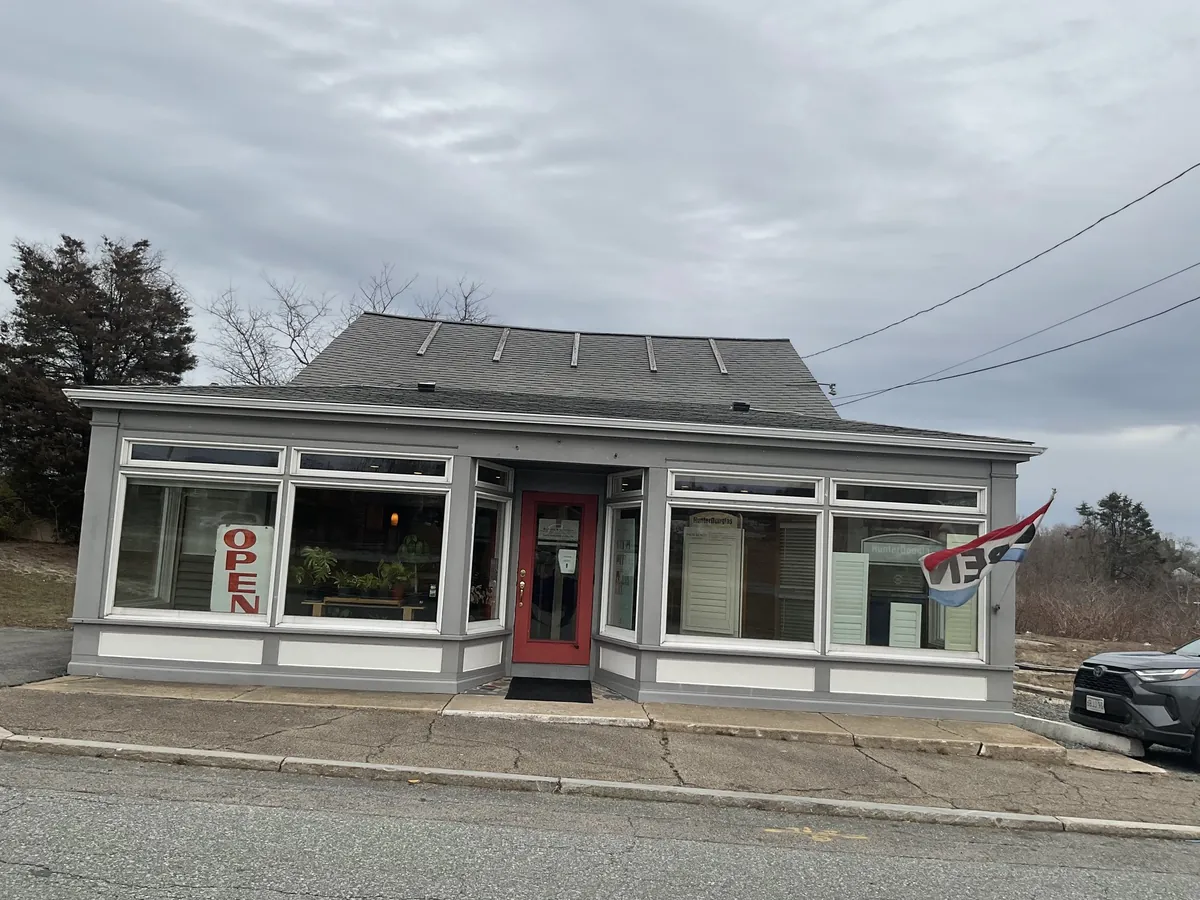
The Sagamore showroom
Our nearest showroom to Scituate is in Sagamore. You will find where it is and when it opens on the Sagamore showroom page.
Even so, a Scituate project usually begins in the house itself. A harbor room’s light and view cannot be judged from anywhere else, and the samples answer most questions within minutes at your own windows.
Questions from Scituate
How do I keep my harbor view and still cover the window?
Choose a top-down, bottom-up shade. Lower it from the top to keep the sky and water in view while the lower glass is covered, and lower it fully in the evening for privacy. Light-filtering fabric keeps the view softly visible even when the shade is down.
Will honeycomb shades help in a room facing the open sea?
They make the room more comfortable. A lowered shade hangs a layer of still air between the pane and the room, and a two-layer cell construction deepens it for the most exposed windows.
What holds up best near salt water?
The mechanism is enclosed in the headrail, and a cordless shade has nothing metal dangling in the damp air. For the fabric, pale neutrals cope best with strong sun reflected off the water every day.
Can you match shades across a newer colonial?
Yes. The windows that face the road can share a single fabric and shade of color, while each room behind them gets the opacity it needs.
Is the estimate free?
It is. Measuring happens at the visit, and the estimate that follows costs you nothing.
Book a visit
Choosing cellular shades in Scituate, MA, gets simple once the fabrics are in your hands at your own windows, whether they face the harbor or the trees. Ask for a consultation and we will come with Duette and Applause swatches, measure from the harbor windows to the back bedrooms, and write a free estimate. Our Sagamore showroom is the nearest if you would like to call or stop in first. Either way, the first step can be taken today.