
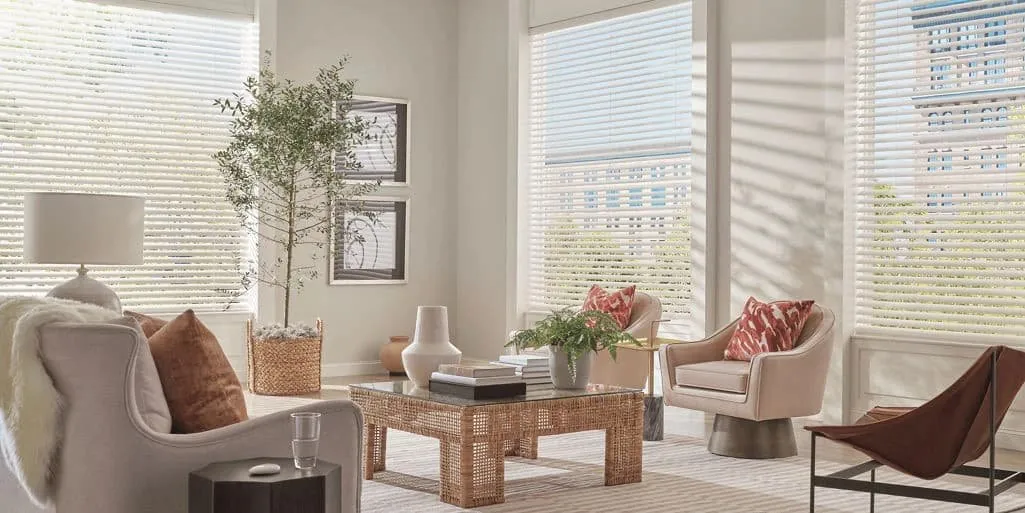
From small sash to soaring glass in Norwell
Norwell’s housing runs to two extremes. Along Main Street the antique colonials keep their original sash, small openings divided into little panes, set in thick walls under low ceilings. Off Route 123 the newer houses go the other way: large footprints on wooded lots, long driveways, and family rooms where the glass climbs two stories toward the treetops. Plenty of streets have both within sight of each other.
A blind that suits one of those windows rarely suits the other. That is the whole reason to order custom blinds in Norwell, MA, rather than pick something off a shelf. Each blind is built to one opening, so the tiny antique window gets a blind scaled to its panes and the tall modern window gets one that can handle its height and its sun.
The generous lots matter too. Houses set well back from the road, screened by trees, are seldom overlooked during the day. Light control, glare and the way a room looks from inside usually come before privacy here, and that changes which blind we suggest.
Four kinds of blind, built to each opening
Hunter Douglas makes horizontal blinds in real wood, faux wood and metal, plus vertical blinds for doors and wide spans. Here is where custom blinds in Norwell usually land, house by house, and what else is worth a look.
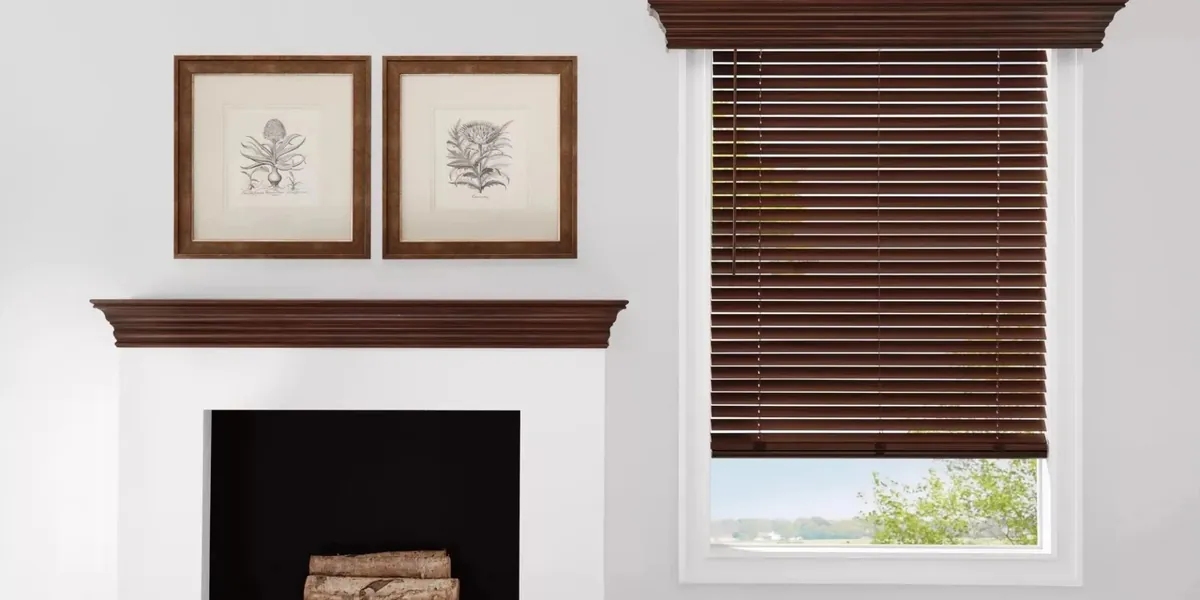
Parkland wood blinds
Solid hardwood slats in stains and paints. A natural partner for the wide pine floors and painted panelling of a Main Street colonial.
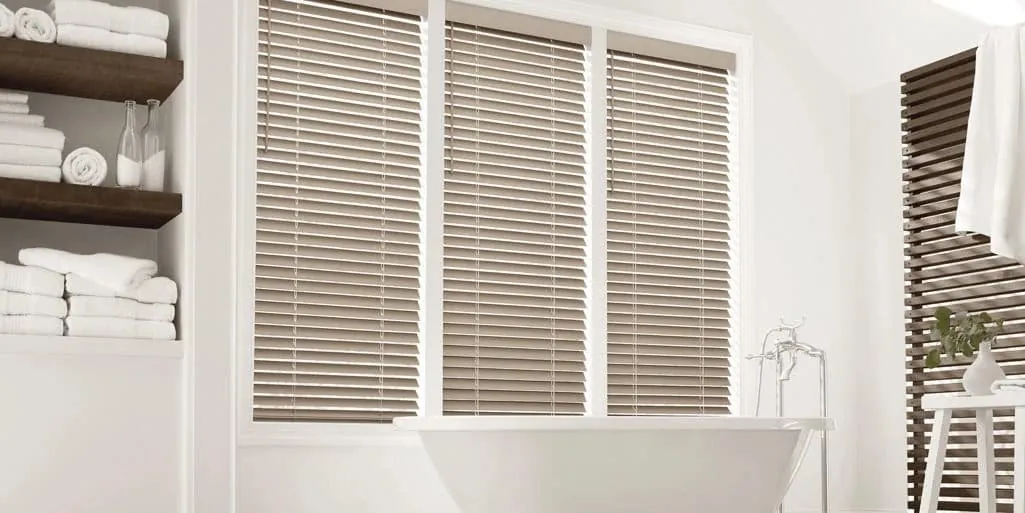
EverWood faux wood blinds
The look of painted wood in a material that shrugs off steam. Built for baths, kitchens and the mudroom by the garage.
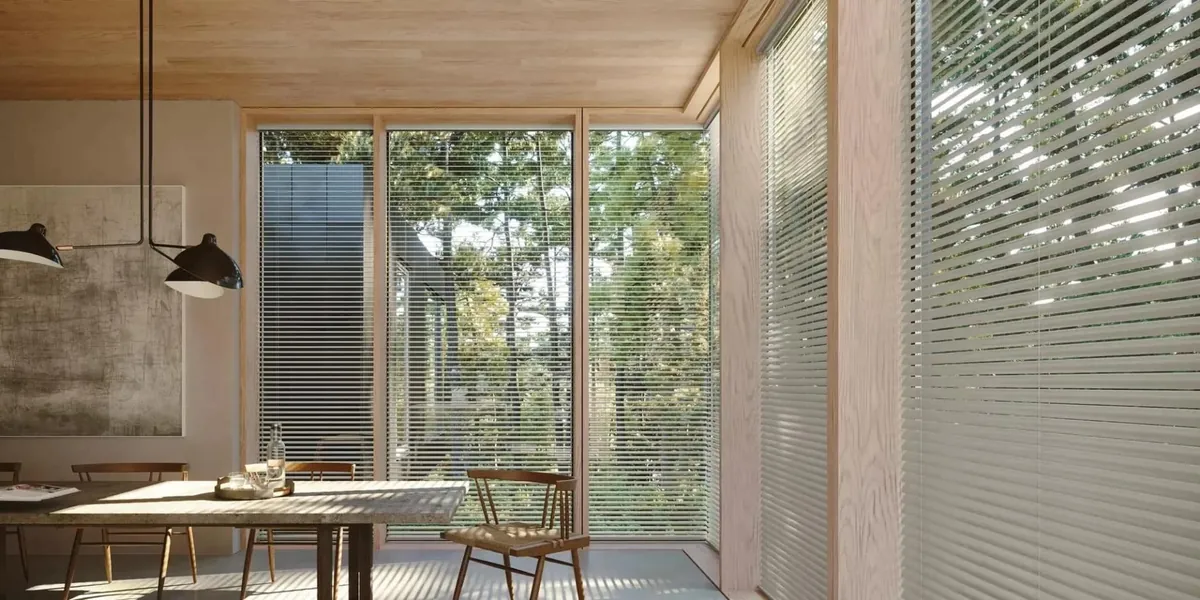
Metal blinds
Slim aluminum slats with a compact headrail. Handy where an antique frame leaves little depth, and clean-lined on modern glass.
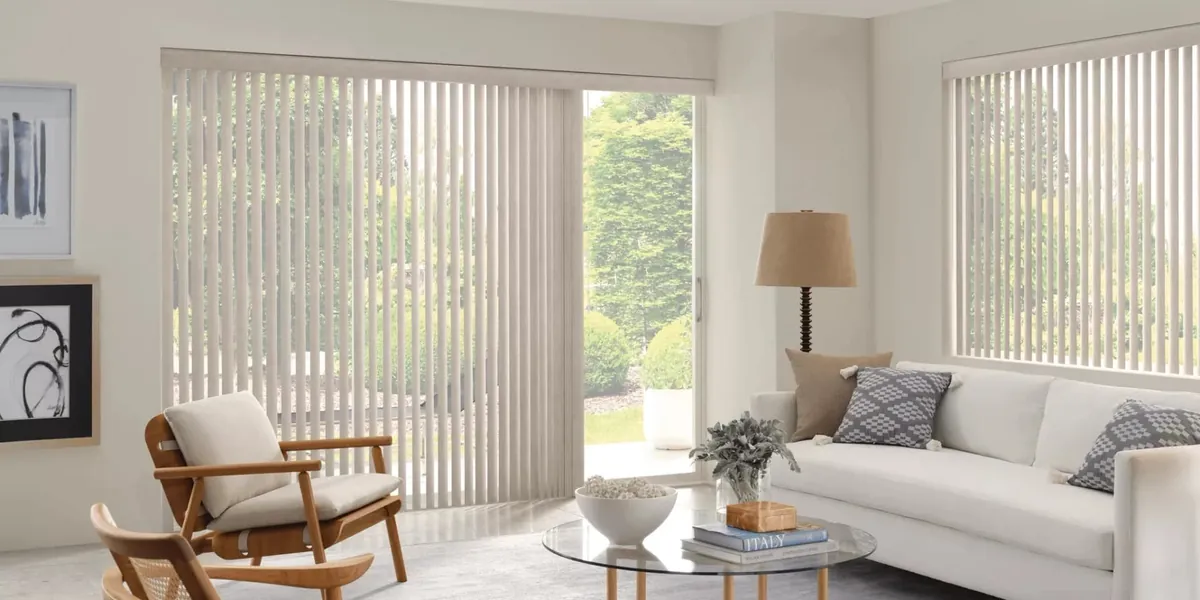
Vertical blinds
Vanes that hang from a track and draw to one side, for the slider out to the patio or a wide run of glass.
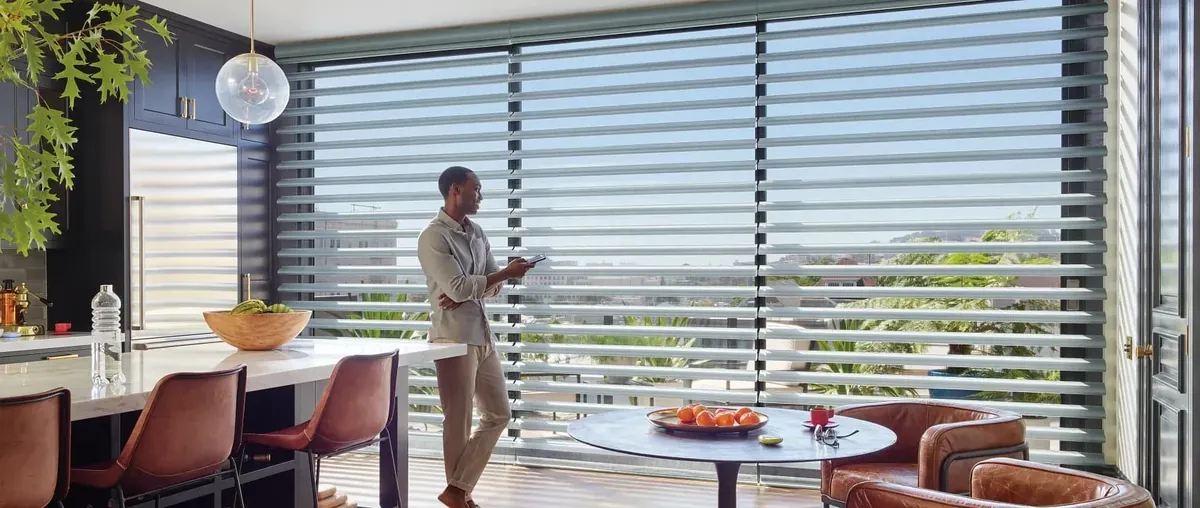
Motorized blinds in Norwell
PowerView lets the high windows of a two-story room tilt and lift from a phone, a remote or a schedule.
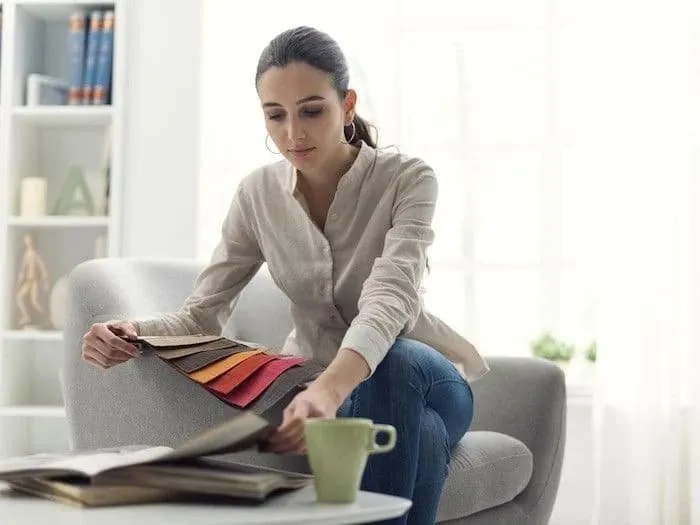
Cellular shades in Norwell
Where a cold antique window needs a soft, insulating fabric instead of slats, honeycomb shades are the alternative we bring along.
Main Street colonials and their original sash
The colonials along Main Street were framed long before standard window sizes existed. Each opening was made to suit its wall, so two windows in the same parlor can differ by a noticeable margin, and a frame that has carried a house through many New England winters is seldom perfectly square anymore. A blind bought by the size printed on a box will gap on one side and bind on the other.
We measure every antique opening in three places across and three places down, then build to the tightest reading. For an inside mount, where the blind sits within the frame and leaves the casing exposed, we also check how deep the frame is at each corner. Old sash often has stops, weights or a storm-window track that eats into the space a headrail needs.
When a wood headrail will not fit, a metal blind usually will. Its slimmer profile tucks into shallow frames that nothing else clears. Where even that is too tight, mounting on the face of the casing is the honest option, and we would rather tell you so at the window than have a blind that never quite closes.
Scale counts on small glass. A narrow slat matches the size of the little panes, looks right from the street, and gathers into a short stack when you raise it, so you lose very little of a window that was never large to begin with.
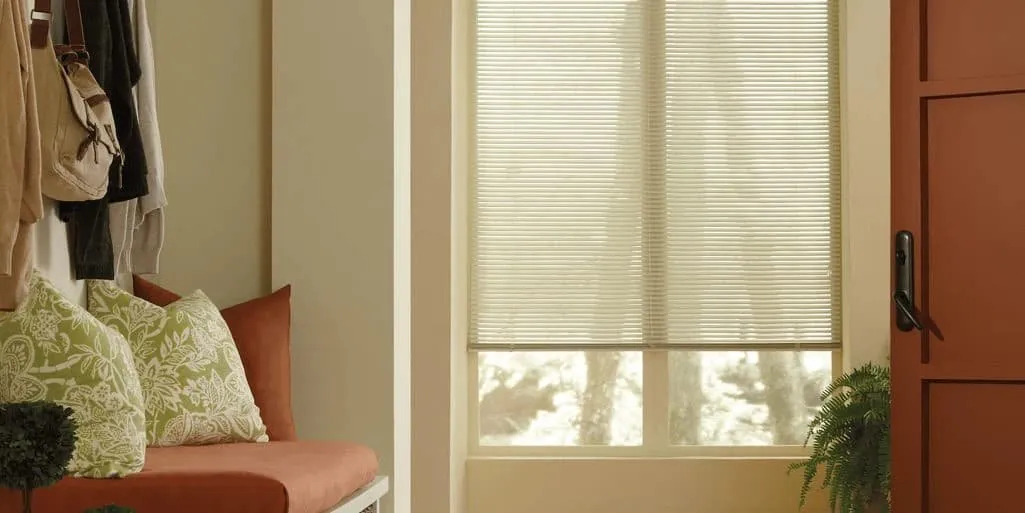
The big glass off Route 123
Drive out along Route 123 and the houses grow. Many were built around a great room with a cathedral ceiling, a wall of windows facing the back of the lot, and sometimes a row of transoms or a half-round at the top. It is a lovely room until the sun comes round to that wall on a summer afternoon.
For a room like that we usually split the job in two. The lower windows, the ones you can reach, get horizontal blinds you tilt by hand, in a color picked to sit quietly against the frames. The upper glass is a separate question. Some people leave it bare and enjoy the trees. Others find the high windows pour in heat and glare, and that is where PowerView motorized blinds earn their place, grouped with the lower blinds so one scene on the phone sets the whole wall.
Shaped glass at the very top, an arch or a sloped trapezoid, is normally left uncovered. Blinds go on the rectangles below, which keeps the architecture of the room intact.
Why tilt beats open and shut under tall trees
Wooded lots give Norwell rooms a light that changes all year. In June the canopy closes over and a family room can feel shaded by mid-morning, apart from one bright shaft that finds a gap in the leaves and lands on the coffee table. In January the branches are bare and the low sun reaches deep into rooms that sat in shade all summer.
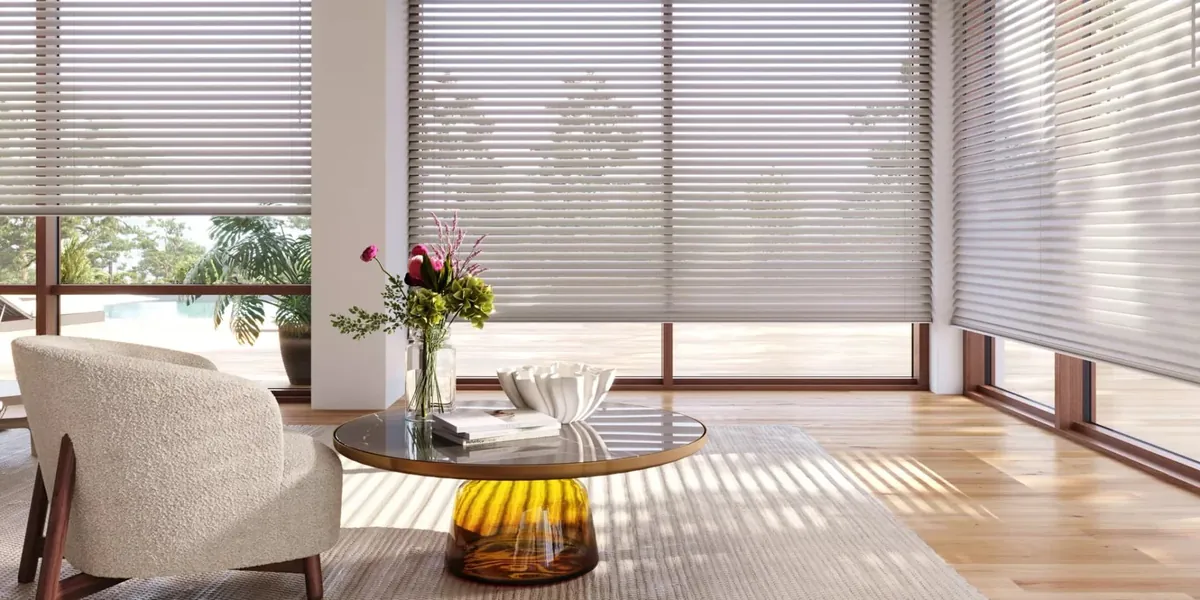
A horizontal blind copes with that better than a shade that is simply up or down. You turn the slats rather than lowering anything. Angle them slightly upward and direct sun bounces off the ceiling, spreading across the room instead of striking your eyes. Open them flat and you get the full green light from the trees. Close them in the evening and the room turns private.
This is one of the main reasons custom blinds in Norwell tend to favour wood and faux wood horizontals in living spaces. They give you a fine degree of control, and a warm slat color suits a room whose view is trunks, leaves and stone walls.
Picking a slat color that suits the house
On an antique colonial, the trim is often an aged white, a cream, or a historic color someone matched with care. A brilliant white blind can look too new against it. We bring several whites and off-whites so you can hold them against your own casing in daylight and pick the one that disappears.
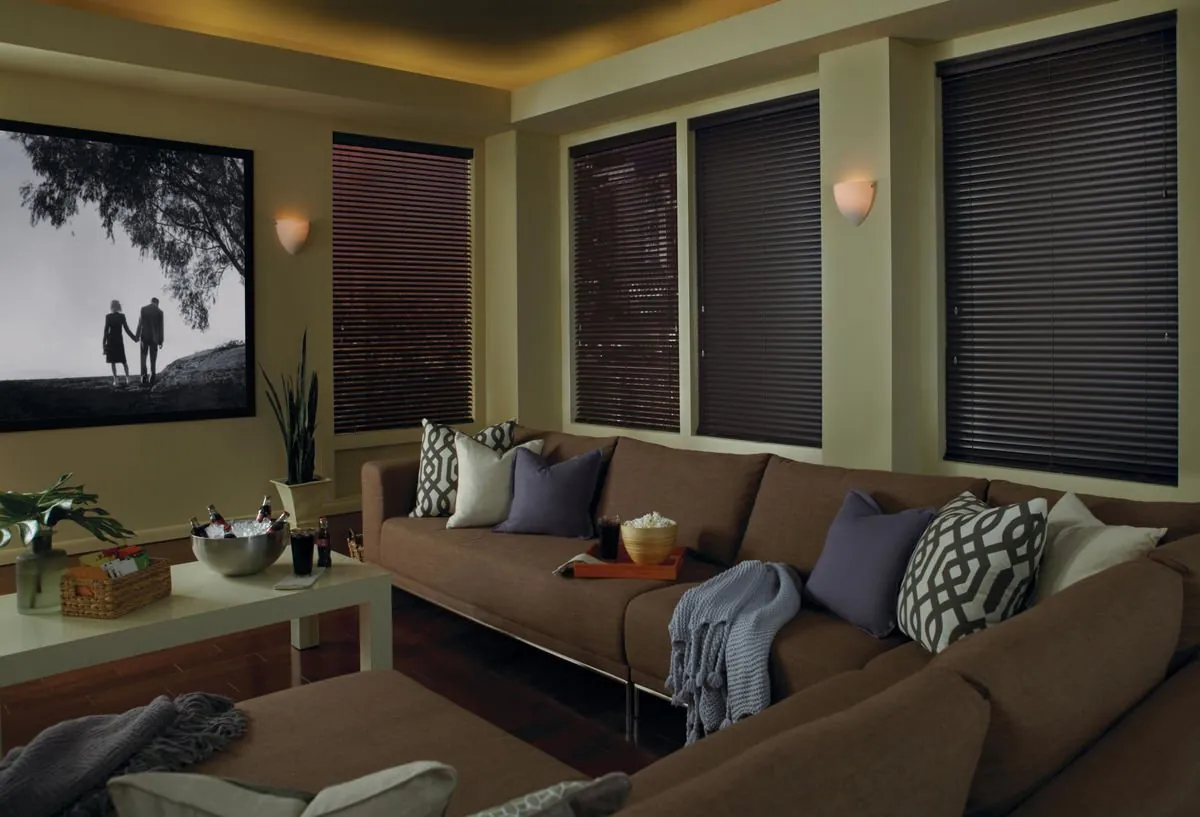
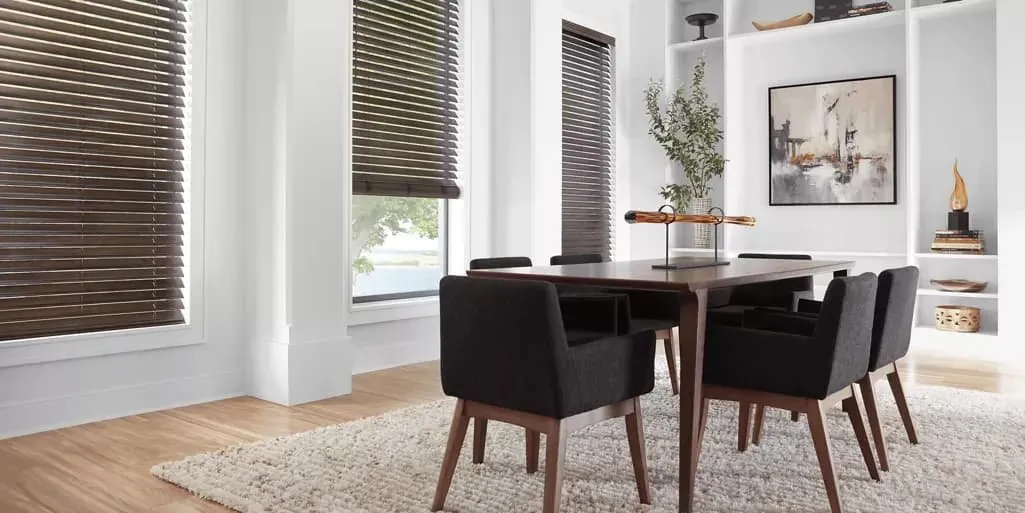
Stained wood is the other route. A Parkland slat in a mid-brown or a honey tone picks up old floorboards and beams, and it looks at home in a house with dark-stained doors. In the newer houses, grays and soft taupes suit painted trim and modern kitchens, while warmer stains pair with timber ceilings and stone fireplaces.
With deep setbacks, the front of a Norwell house is seen as a whole from the road. Keeping one color across the street-facing windows gives it a calm, finished look. The back of the house, facing the woods, can change room by room.
Wood, faux wood, metal or vertical: matching material to room
Every material has rooms where it works hardest, and most houses use more than one.
- Real wood for the main rooms. Parkland slats in the living room, dining room and bedrooms, where warmth and grain show off and humidity stays even.
- Faux wood where it gets damp. EverWood in bathrooms, kitchens, laundry rooms and the back entry, where steam or wet boots would trouble a real wood slat.
- Metal for shallow frames and doors. Aluminum blinds where depth is tight, on glass set into doors, and in a home office that wants a crisp, modern line.
- Vertical for sliders and wide spans. A vertical blind on the deck slider draws fully clear, so the door opens without anything in the way.
A typical large house off Route 123 might end up with wood in the great room and bedrooms, faux wood in the kitchen and baths, a vertical blind on the slider, and motorized blinds on the high glass. An antique colonial may be simpler, with wood throughout and metal on two or three shallow frames. Our custom blinds page covers each range in more depth, including wood blinds.
Kitchens, baths and the walkout level
The big houses on wooded lots often have a finished lower level that opens onto the back yard, with a slider, a pair of daylight windows and sometimes a bathroom or a gym. Those rooms sit closer to the ground, take on more damp, and see more traffic from muddy shoes and wet dogs than anything upstairs.
That is faux wood territory. EverWood slats keep their shape when the air is humid and wipe clean with a damp cloth, so they suit the walkout bathroom, the laundry and the back entry as well as the main kitchen. A vertical blind on the lower slider draws fully aside for the trip out to the yard, and its vanes turn to block low sun coming across the lawn in the late afternoon.
In the antique colonials the damp rooms are different but the rule holds. A kitchen added to the back of an old house, or a bathroom carved out of a former bedroom, gets faux wood in a color matched to the wood blinds in the front rooms. From the road the whole house reads as one, even though the material changes behind the glass. Planned that way, custom blinds in Norwell, MA, handle the steam of a bathroom and the sun of a parlor without looking like two different orders.
Lift, tilt and cord choices
How a blind works day to day matters as much as what it is made of. A cordless lift lets you raise and lower the bottom rail by hand, with nothing hanging at the side of the window, which keeps a small antique opening uncluttered and is a sensible choice in a house with children or pets. A tilt wand turns the slats without touching the lift.
Routeless slats skip the small holes that lift cords normally run through, so a closed blind lets no pinpricks of light through. That is a good detail for a bedroom facing east over the woods, or a home office where a screen picks up every speck of glare. In a nursery or a guest room it means the room stays properly dim for an afternoon nap.
On windows no one can reach, motorization replaces the cord and the wand altogether. PowerView blinds can tilt open at sunrise and close at dusk on their own, or follow a tap on your phone. We plan how each motor is powered at the visit, window by window.
Measuring and installing, start to finish
Here is how custom blinds in Norwell, MA, go from first visit to finished window.
- You choose a time through Request a Consultation or the call button.
- We arrive with wood, faux wood and metal slats in many colors, vertical vanes, and each lift and tilt option.
- We walk the house with you, starting with the room that bothers you most, and talk about light, glare and how each room is used.
- You try samples against your own trim, in your own light.
- We measure every opening, with extra checks on antique frames and on glass above head height.
- You receive a free estimate, and you decide in your own time.
- When the blinds arrive, our certified Hunter Douglas installers fit them, level each headrail, test every tilt and lift, and show you how they work.
On an old house, fitting means fixing brackets into sound wood without marking original trim. On a big new house it can mean ladders and planning for high windows. Either way, the blinds are made to the measurements we took, so they sit snugly in each opening.
Bringing the samples to wooded Norwell lots
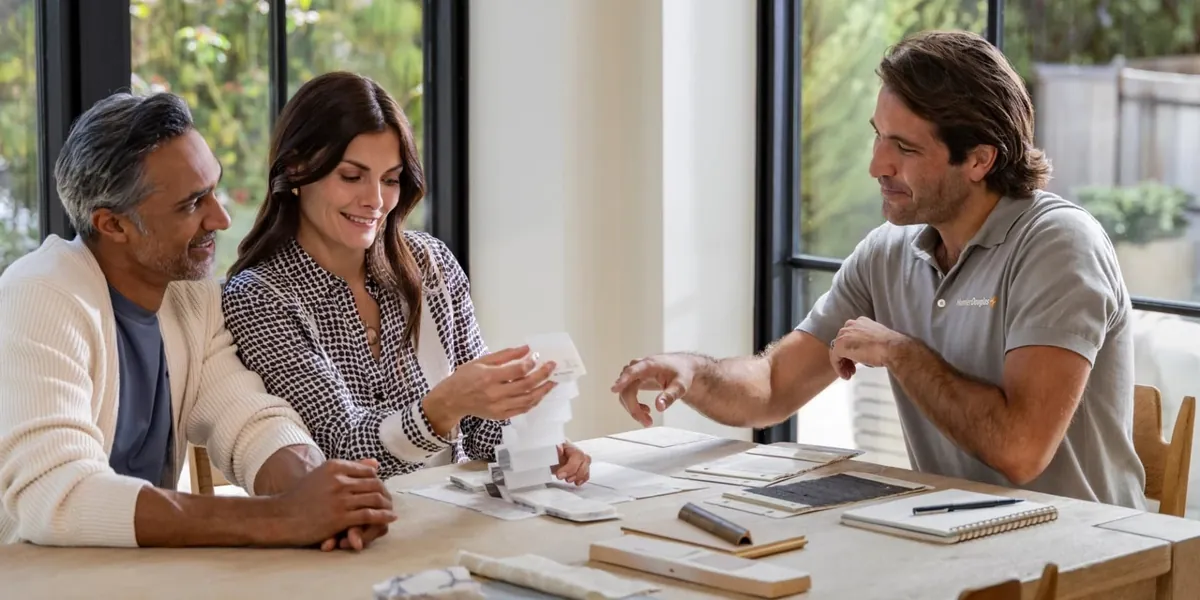
A slat sample under shop lighting tells you little about how it will look on a north-facing colonial window in late afternoon, or against two stories of glass full of trees. That is why most Norwell visits start at home. Our vans carry the samples, so we can bring the showroom to you, however long the driveway.
If you want help with more than blinds, we offer interior design consultations as well. We can talk through color, fabric and the other window treatments in a room during the same visit. Read about what happens at an in-home consultation before we arrive, or see our in-home consultations page.
A whole house, planned in one visit
A big wooded-lot house can have a surprising number of windows once you count the bonus room, the stair landing and the basement walkout. Doing them a few at a time tends to leave a mix of colors and slat sizes. Planning them together gives a consistent look inside and from the road, and a single installation.
We go room by room and note which way each window faces, whether it can be reached from the floor, whether it gets steam, and how often it is opened. The plan that comes out of that is simple: wood here, faux wood there, metal on the shallow frames, a vertical on the slider, motors on the high glass. For a Main Street colonial the list is shorter, but each original opening still gets its own measurement.
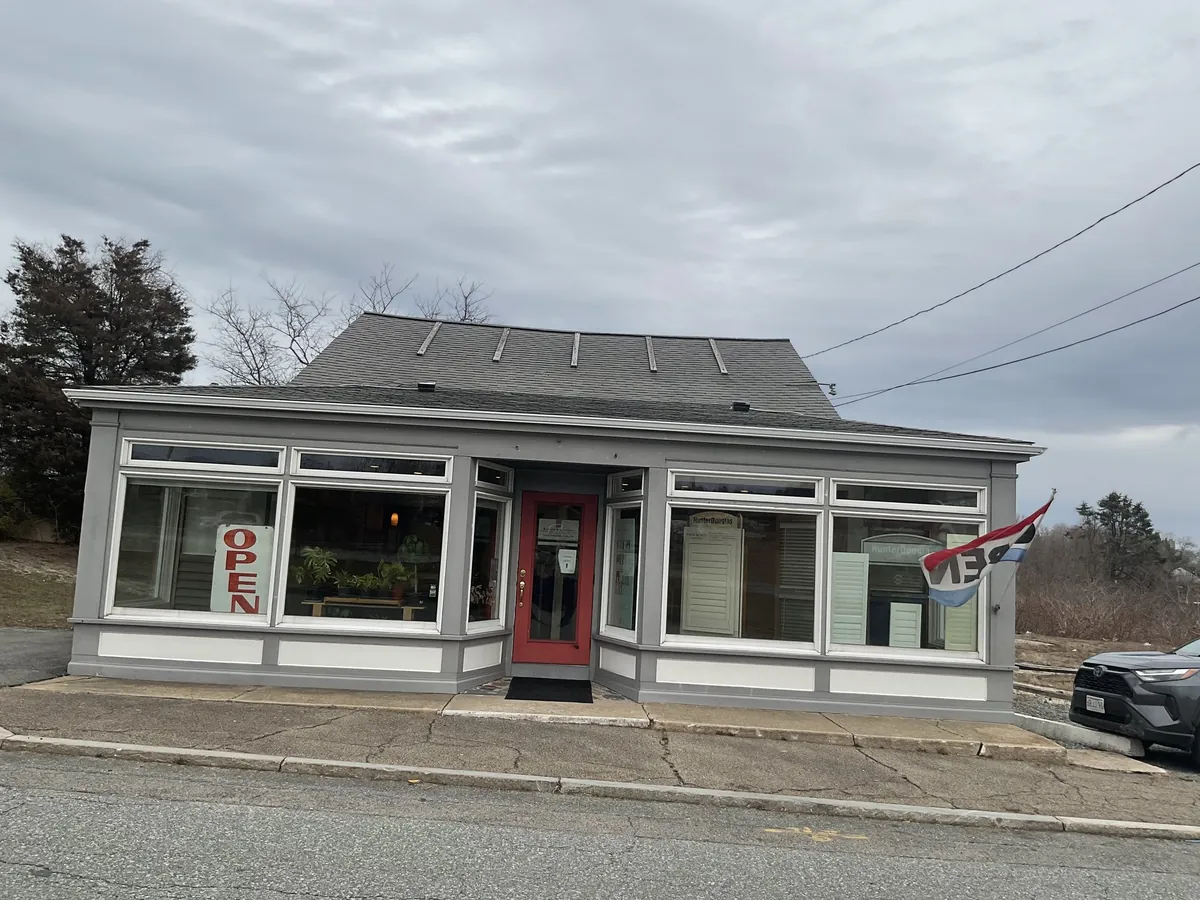
See the range at our Sagamore showroom
Our nearest showroom to Norwell is in Sagamore. It suits anyone who likes to see the blinds in person before booking a visit at home. The address and opening hours are on the Sagamore showroom page.
Blinds & Designs is a Hunter Douglas Gallery dealer, and our installers are certified by Hunter Douglas. If a blind ever needs attention later, we handle blind and shade repairs too. For the rest of the house, see our roman shades in Norwell, plantation shutters in Norwell or everything we do on the Norwell page.
Questions from Norwell
Will a blind fit the shallow frames of my antique colonial?
Often, yes. We measure the depth of each frame at the corners. If a wood headrail is too deep, a metal blind with its slimmer profile usually fits inside. If nothing fits inside, we mount on the casing and tell you why.
What do people do with the windows at the top of a two-story room?
Some leave them uncovered. If the high glass brings in too much sun, PowerView motorized blinds can cover it and be controlled from a phone, a remote or a schedule, along with the blinds you can reach.
Is real wood a good idea in a bathroom?
We suggest EverWood faux wood there instead. It looks like painted wood and copes with steam, and it can be matched in color to the Parkland wood blinds in the rest of the house.
Our lot is wooded. Do blinds still make sense?
They suit wooded lots well, because the light under trees changes through the day and the year. Tilting the slats lets you follow it, from full green light to soft bounced light to closed for the night.
What does the estimate cost?
Nothing. Once we have measured, the estimate is free, and there is no pressure to go ahead.
Ready when you are
The surest way to choose is to hold real slats against your own windows. Request a consultation and we will bring the Hunter Douglas blind range to your house, measure each opening and give you a free estimate. You can also use the call button, or stop in at the Sagamore showroom.