
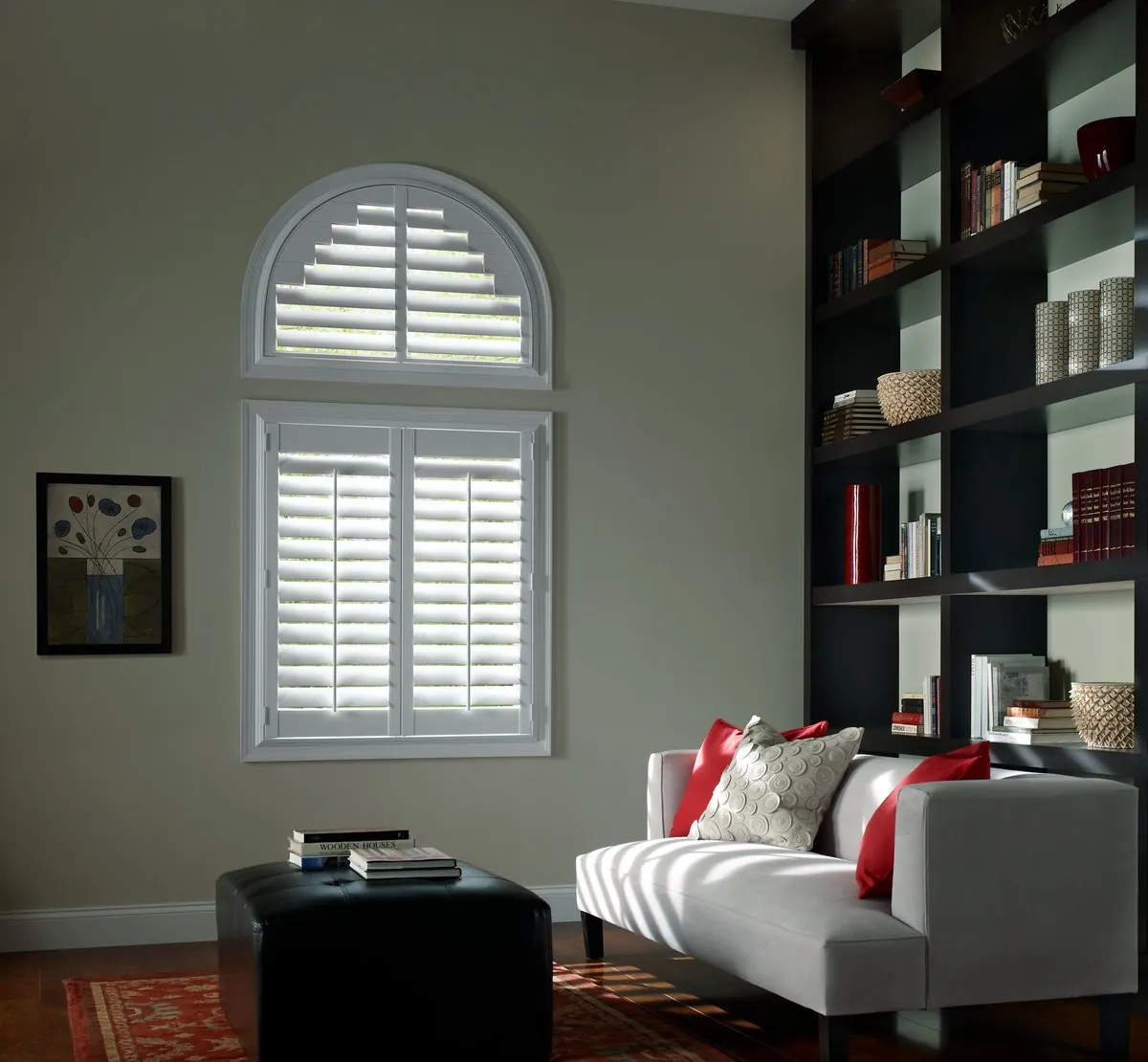
From Main Street sash to Route 123 glass
Norwell asks a shutter to do two very different jobs. On Main Street the antique colonials keep their original sash, and some of those openings are small enough that a standard panel would swallow the glass. Off Route 123 the newer houses stand well back on wooded acreage, and their family rooms often rise two stories behind a wall of modern windows. Fitting plantation shutters in Norwell, MA, means being comfortable at both ends of that scale, sometimes inside one house that has been added on to.
The generous lots change what a shutter is for. When the nearest road is a long driveway away, screening passers-by is rarely the reason to choose one. Owners on those lots tend to want something else: a way to steer sunlight that arrives through tall trees, a bedroom that stays dark at dawn, and a frame that makes a plain new opening look finished.
On the older streets the brief is closer to restoration. A shutter there should respect hand-planed casings and wavy old glass, sit quietly inside the opening, and never look like it arrived from a catalog.
Three collections for plantation shutters in Norwell, MA
Every shutter we fit comes from one of three Hunter Douglas collections. They share the same louver sizes and frame styles, so a house can mix them room by room and still read as one set from the hall.
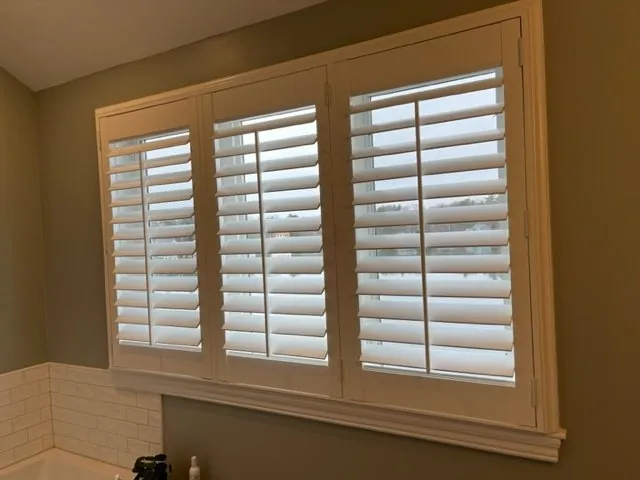
Palm Beach polysatin
Solid polysatin all the way through, with no wood core to swell. The one we suggest for baths, a mudroom off the garage and the window above the kitchen sink.
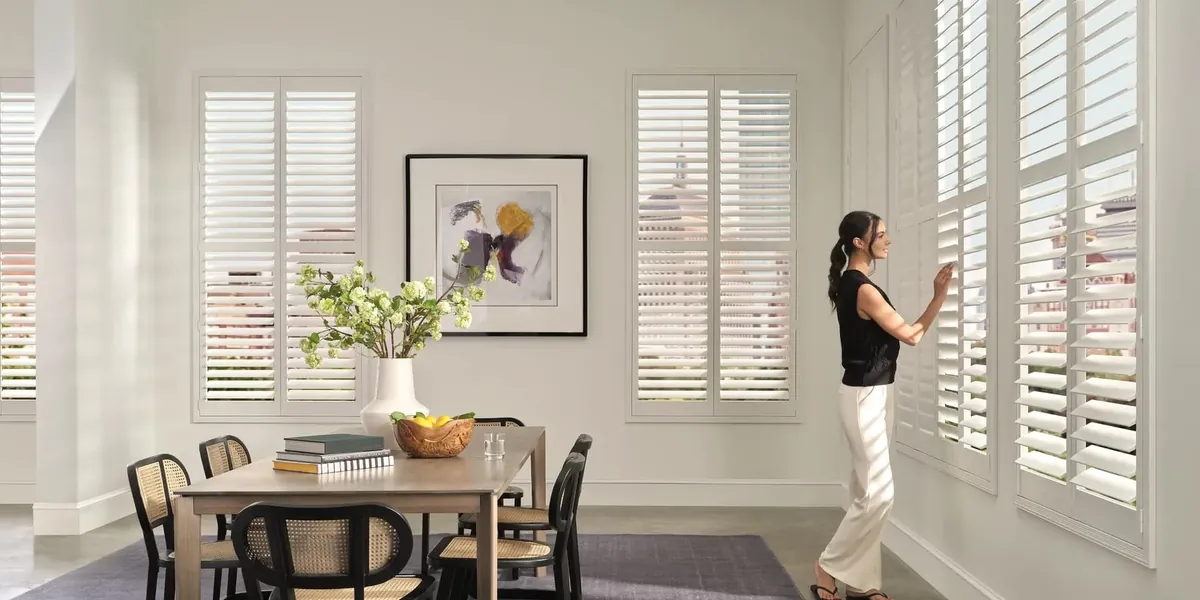
NewStyle hybrid
A hybrid built to look like painted wood while staying straight across wide panels. A strong all-rounder for bedrooms, offices and large family rooms.
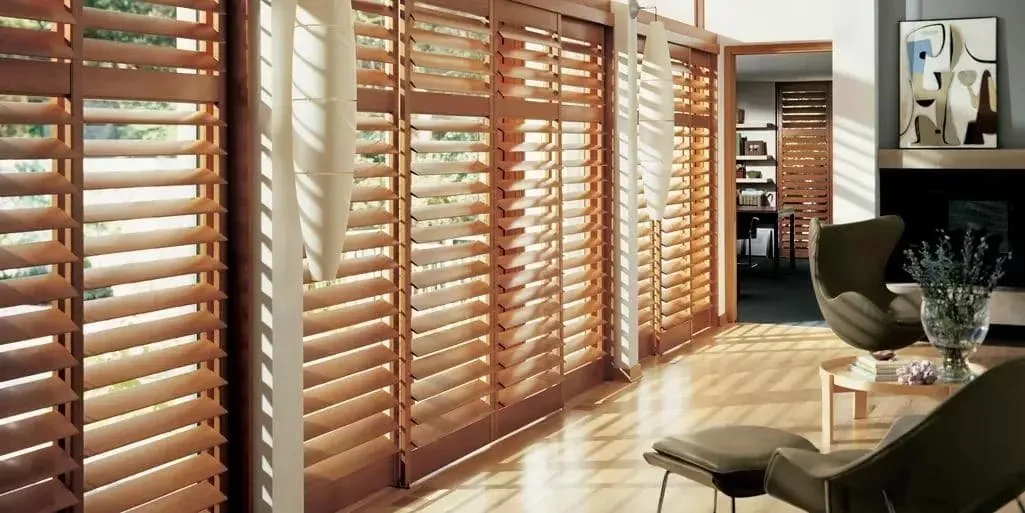
Heritance hardwood
Real hardwood, painted or stained, with the broadest finish range. The natural partner for an antique room with original wood trim.
Small panes in the Main Street colonials
The oldest houses along Main Street were framed long before standard window sizes existed. Upstairs, under the slope of the roof, you can find sash only a little taller than it is wide. Downstairs the openings are larger, but the casings are deep and the jambs are often slightly out of plumb after so long on their sills.
A small opening punishes a heavy shutter. Thick stiles and a chunky frame leave very little glass showing, and the room goes dim. So on these windows we work from the inside out: the narrowest frame that will carry the panel, the slimmest louver the collection offers so there are enough blades to look right, and a single hinged panel instead of a pair where the opening is too narrow for two. With one panel there is no center seam running down the middle of an already small view.
Old jambs also taper. We take the width at the top, middle and bottom, check both diagonals and read the depth at several points around the reveal. The frame is then built to take up the difference, so the panel swings shut evenly even when the window itself leans. Where sash locks or a storm window frame would catch the louvers, a frame that stands the panel slightly forward solves it. Our page on shutters for older windows goes deeper into those choices.
Tall glass in the newer houses off Route 123
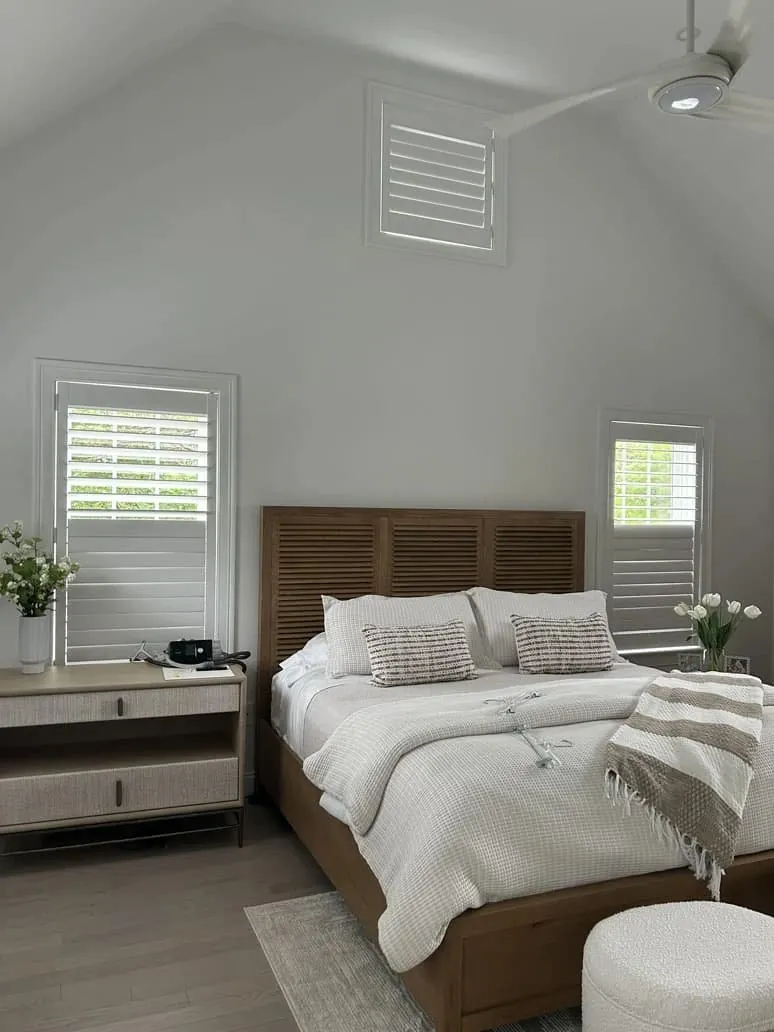
The houses built on the wooded lots off Route 123 tend to save their biggest windows for the back of the house. A great room with a cathedral ceiling, a two-story foyer with a window over the door, a primary suite with a run of glass looking into the trees: these are the rooms that need the most thought.
A tall window is rarely one shutter. We divide it into tiers, a lower row of working panels you can open and tilt from the floor, and an upper row above it. Where the top row can be reached from a balcony or a landing, it can open and tilt too. Where it cannot, the upper louvers are set at one angle at install, enough to cut direct sun while still letting daylight through, and they never need touching again.
Lining the tiers up matters as much as the shutters themselves. We place the break between rows at a mullion or a meeting rail so the panel edges sit behind existing lines in the window rather than crossing the glass in a new place. From inside the room the shutters then follow the window’s own geometry.
The foyer window over a front door deserves its own mention. It is usually wide, sometimes topped with an arch or a half-round, and it faces the driveway. A shaped panel can follow the curve with louvers fixed at an angle, while the rectangular glass below takes ordinary working panels. Planned together, these become plantation shutters in Norwell, MA, that look made for the house rather than added to it.
Sun through the trees
Deep woods filter light in a way an open street never does. In summer the canopy turns the light green and soft, and a south room can feel dim by mid-afternoon. In winter the leaves are gone and a low sun reaches all the way across the floor.
Louvers are the most precise tool for that swing. Open flat, wide blades let in as much light as the window can take on a gray January day. Tilted a few degrees downward, they block the sun above the horizon while you still see the lawn and the tree line. Tilted upward, they bounce light off the ceiling and spread it evenly across the room without a hard patch on the rug.
On a lot where nobody can see in, many owners leave the louvers open most of the day and only close them at night or when the sun lands on the sofa. That is a very different way of living with plantation shutters than in a town center, and it shapes our advice on louver size.
Picking a louver width
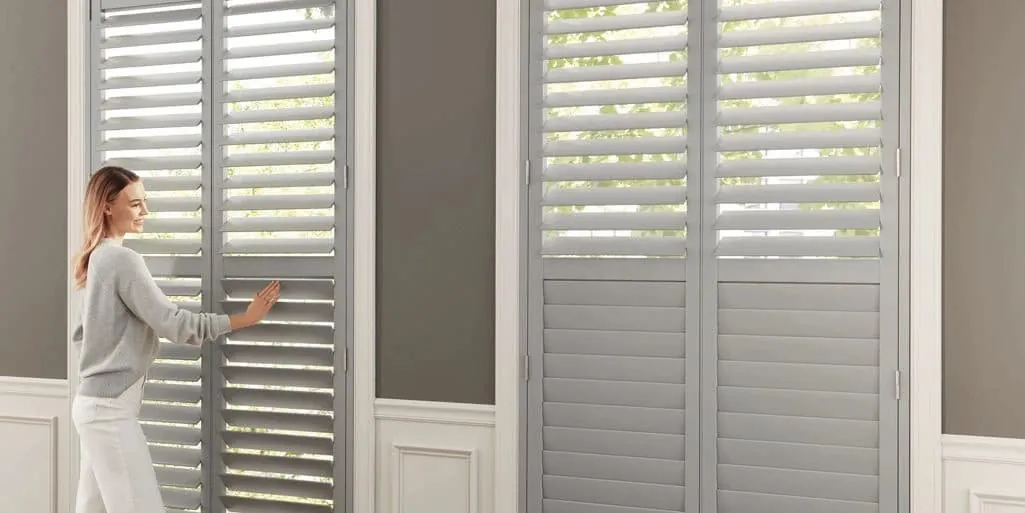
Louver width decides how much view you keep and how the shutter suits the room. As a rough guide for Norwell houses:
- Slim louvers keep the proportion right on small antique sash, where wide blades would leave only a few slats across the opening.
- Medium louvers suit standard bedroom and office windows in either kind of house and are a safe choice when you want one size throughout.
- Wide louvers belong on the tall glass of the newer houses, because fewer blades means more open space between them and a clearer look out to the woods.
You can mix widths, keeping slim louvers in a restored front parlor and wider ones in a family room addition at the back, and the house will still feel consistent if the color matches. We bring sample panels in each size so you can stand at your own window and look through them.
Frame styles that suit each opening
The frame is the part of the shutter you notice least once it is right. It holds the hinges, fills any gap between the panel and the window, and sets how the shutter meets the casing.
For an antique colonial with deep reveals and good original trim, an inside mount keeps the frame within the opening and leaves the casing completely visible. A low-profile frame is often enough. For a newer house with shallow modern jambs, a frame with a small decorative edge can sit on the face of the opening and give the window a finished border it did not have before. On a window where the depth is too shallow for the louvers to clear the glass, an outside mount on the casing is the honest answer.
We look at every window before suggesting a frame, because a house that has been extended over the years can have three kinds of opening on one floor.
Your consultation, step by step
Most Norwell projects start at home, where you can see samples against your own trim and in your own light. Our vans carry shutter samples in each collection, louver size and finish, so we can bring the showroom to you.
- You request a consultation online or with the call button and we agree a time.
- We walk the house with you, starting with the rooms that matter most or catch the hardest light.
- You hold sample panels against your windows and compare louver widths, colors and tilt styles.
- We measure each opening, check its depth and squareness, and note anything that would affect the mount.
- We go through collection choices room by room, Palm Beach for the wet rooms, NewStyle or Heritance elsewhere.
- You receive a free estimate, and you take as long as you need to decide.
If you would like a fuller picture of a visit before booking, our page on what happens at an in-home consultation walks through it.
Tilt rod or hidden tilt
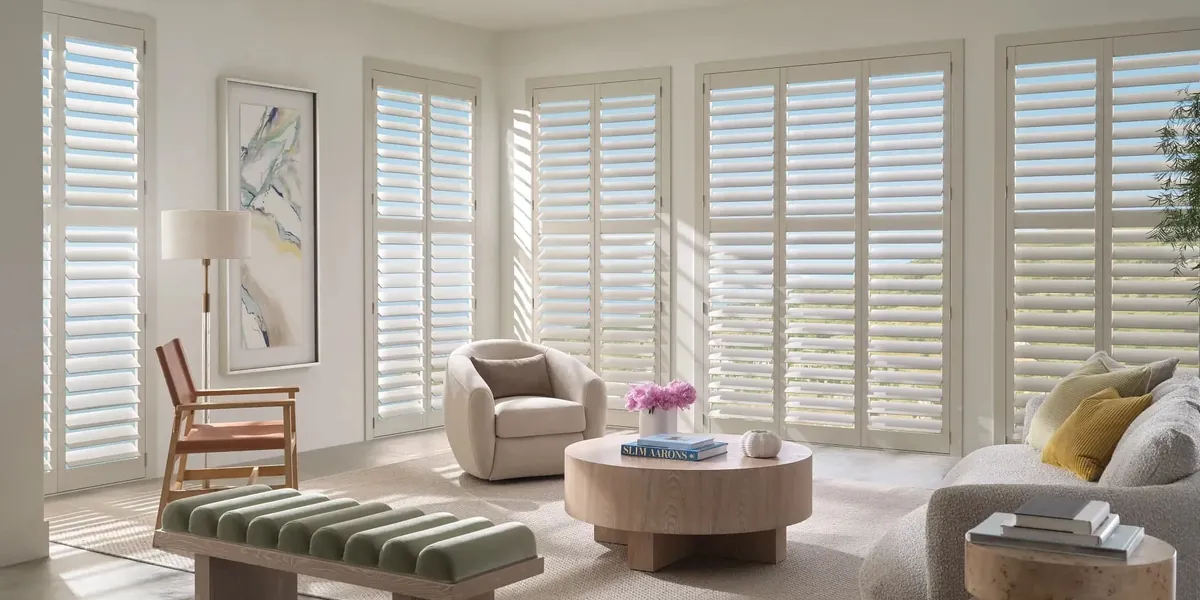
How you move the louvers changes the look of the panel. A traditional tilt rod runs down the front of each section and moves every blade together. It suits the antique colonials well, because it is what a shutter in an older house is expected to look like.
A hidden tilt moves the louvers from a mechanism at the edge of the panel. The face of the shutter stays clean, and when the blades are open there is nothing in the middle of the view. In a newer great room facing the woods, that clear face is often the reason people choose it.
Either system works with a divider rail, a horizontal bar that splits a tall panel into an upper and lower section so each can tilt separately. On a tall bedroom window, closing the lower louvers while the upper ones stay open gives privacy and daylight together.
Additions and older wings
A good number of Main Street houses have grown over the years, with a newer kitchen, family room or primary suite added at the back. The old part keeps small sash and deep casings; the new part has modern openings and wider glass. Owners often ask how to treat both without the join showing.
The answer is to hold the color and the frame style constant and let the louver width change. The front rooms take slim louvers to suit their small panes; the addition takes medium or wide louvers for its larger windows. Painted in the same white, the two halves read as one house. Where the old rooms have stained trim, a Heritance stain in the front and a painted shutter in the addition can also work, as long as the transition happens at a natural break such as a doorway.
Living with shutters in a wooded setting
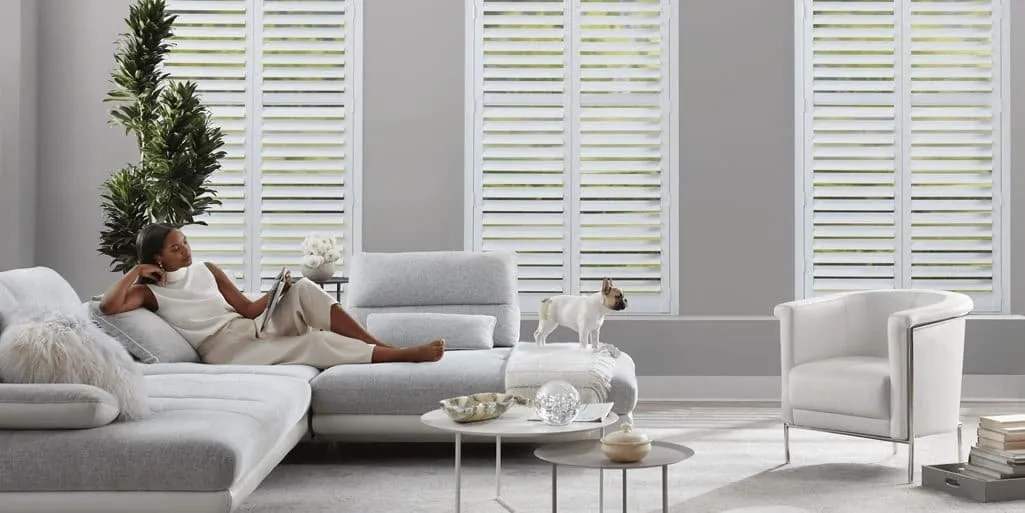
Shutters are low upkeep, which matters in a house where pollen and leaf dust drift in each spring and autumn. A soft duster or a damp cloth along the louvers is usually all they need. Palm Beach handles a wipe with a little more water, which is one more reason it goes in the bathrooms and the laundry.
Because the panels hinge, you can also swing them fully open on a fine day for an unobstructed window, then close them again in the evening. On a big wooded lot many owners do just that, using the shutters as a light control most of the time and as a full covering only at night. If you start your plantation shutters in Norwell with one or two rooms and add more after living with them through a season, keep a note of the finish, louver width and frame style you chose. A later order can then match the first exactly, even if a different collection goes into a bath or a laundry.
If you would like a motorized option for windows nobody can reach, our page on motorized blinds in Norwell covers the shades that pair well with shutters.

Why choose a Hunter Douglas Gallery dealer
Blinds & Designs is a Hunter Douglas Gallery dealer, a designation Hunter Douglas gives dealers who meet its standards. For your house it means all three shutter collections, every louver width and the full color and stain range, chosen with someone who works with them every day.
Our installers are certified by Hunter Douglas, so frames are fitted true even in an antique opening that has settled. We also handle repairs on window coverings you already own, and we offer interior design consultations when a room needs more thought than one window.
We fit shades, blinds and drapery too, which lets you treat a whole house in one plan. You can compare everything we offer on our Norwell page, or look at cellular shades in Norwell for rooms where warmth matters more than louvers.
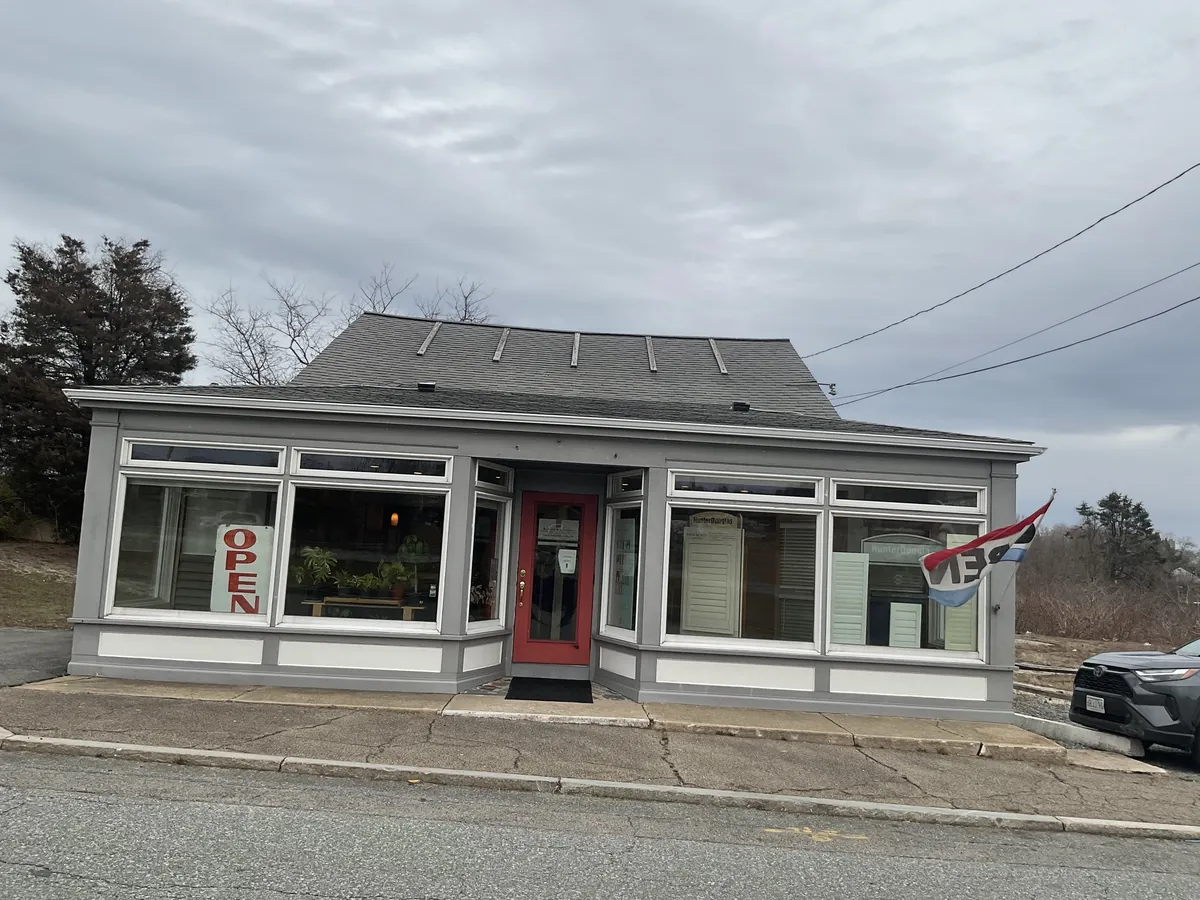
Samples at your door, or the Sagamore showroom
A color chip under shop lights tells you little about how a shutter will look beside very old trim or against a wall of glass and green leaves. That is why so much of our work begins at the house. The samples come to you, and you judge them where they will hang.
If you prefer to see shutters before we visit, the Sagamore showroom is our nearest location to Norwell. Either way, the measuring and the fitting happen at your house.
Questions from Norwell
Can shutters fit the very small sash in an antique Main Street house?
Yes, in most cases. We use a single panel with slim louvers and the narrowest frame that will hold it, so the glass stays as open as possible. We measure the reveal at several points first, because older openings often taper, and the frame is made to take up any lean.
How do you handle a two-story window that nobody can reach?
We split it into tiers. The lower panels open and tilt from the floor. The upper panels either open from a balcony or landing, or have their louvers set at one angle at install so they let in light and cut direct sun without ever needing adjustment.
Which collection should go in a bathroom?
Palm Beach. It is polysatin throughout, with no wood inside, so steam and splashes are not a concern. It can match the color and louver width of the NewStyle or Heritance shutters in the rest of the house.
Are shutters worth it on a lot where nobody can see in?
Many owners on wooded lots choose shutters for light control rather than privacy. Tilting the louvers lets you aim sunlight that changes with the seasons, and closed louvers darken a bedroom well. The fitted frame also gives a plain modern opening a finished edge.
Is the estimate free?
Yes. After we measure your windows you get a free estimate for the shutters you are considering, room by room. Request a consultation to set a time for us to come to your house with samples.
Ready when you are
The best way to choose plantation shutters in Norwell, MA, is to stand at your own windows with real panels in your hands. Request a consultation and we will bring the three collections to your house, measure every opening and give you a free estimate. To talk it over first, use the call button, or stop by the Sagamore showroom. The main plantation shutters page compares the collections side by side if you want to read ahead.