
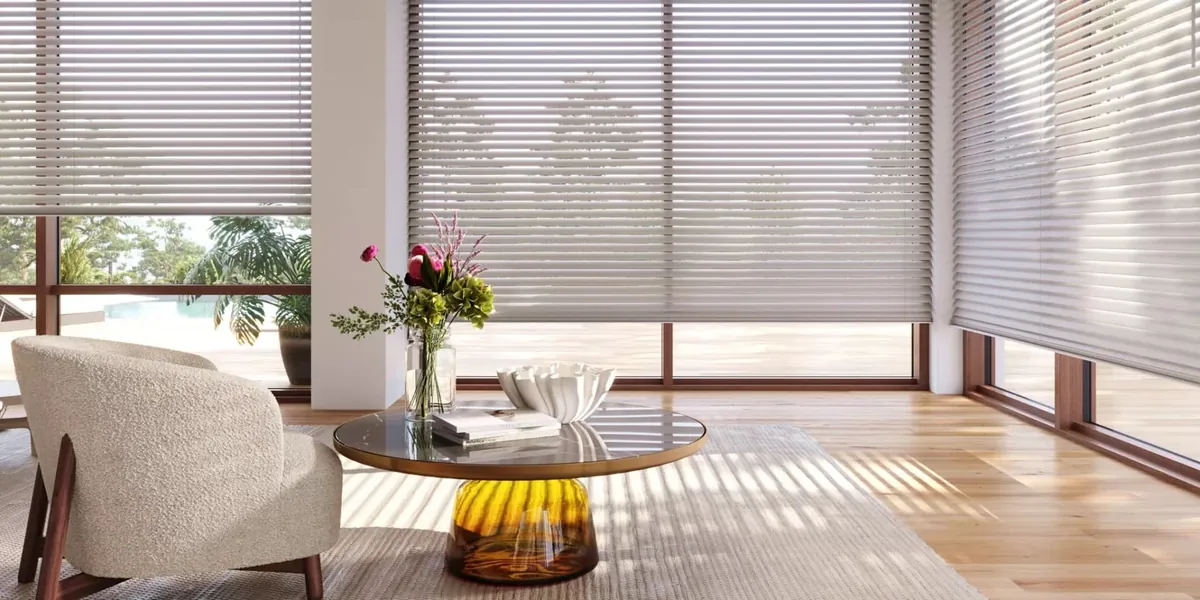
What Hanover capes, ranches and colonials ask of a blind
A good share of Hanover was built after the war: tidy capes with dormers tucked into the roof, single-story ranches with a broad front window, and later the larger colonials that fill the streets off Washington Street and the roads fanning out from the Four Corners. Most sit on wooded lots with a proper setback from the road.
What these houses have in common is their windows. They are mostly standard modern openings, square and true, with frames deep enough for a blind to sit neatly inside. That makes the job straightforward in one way and easy to get wrong in another, because a run of identical windows shows every small mismatch in color or height. Ordering custom blinds in Hanover, MA, is about getting a whole house of near-identical openings to look like one considered set.
The trees and the setbacks shape the rest. Rooms take filtered, moving light rather than a blast of open sun, and with the road some distance away, the blinds are mostly there to manage light and to close the house up at night.
A blind for every room in a Hanover house
Instead of a product list, here are the rooms that come up most when we plan custom blinds in Hanover, MA, and the Hunter Douglas blind that usually answers each one.
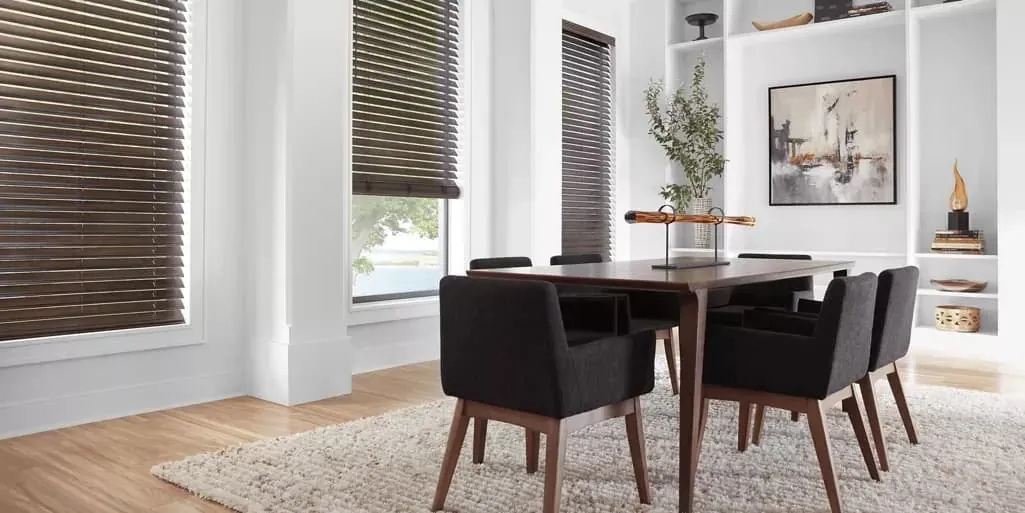
Dining room: wood blinds
Real wood slats in a stain that picks up the table and floor, for the room where the windows are on show.
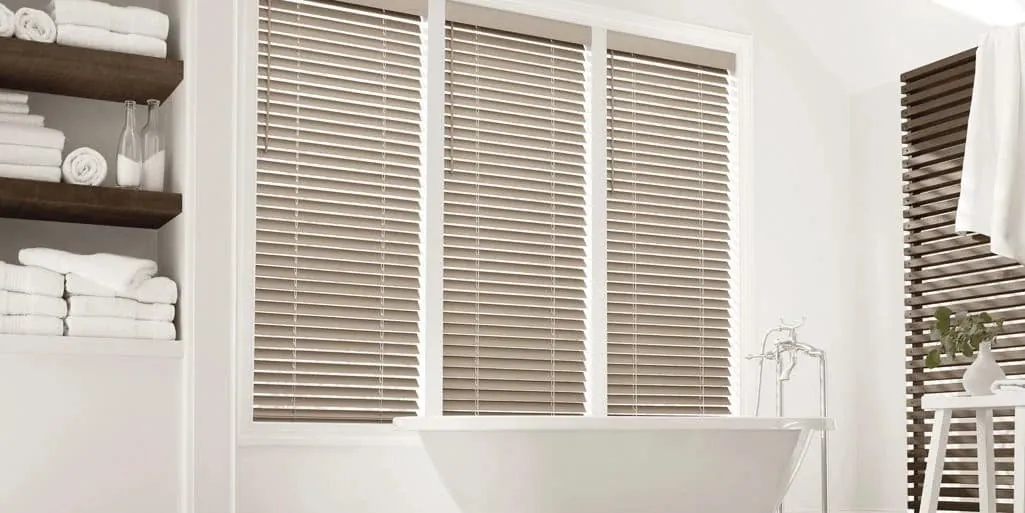
Bathroom: EverWood faux wood
A painted-wood look that stays straight in steam, for the upstairs bath in a cape or the main bath in a colonial.
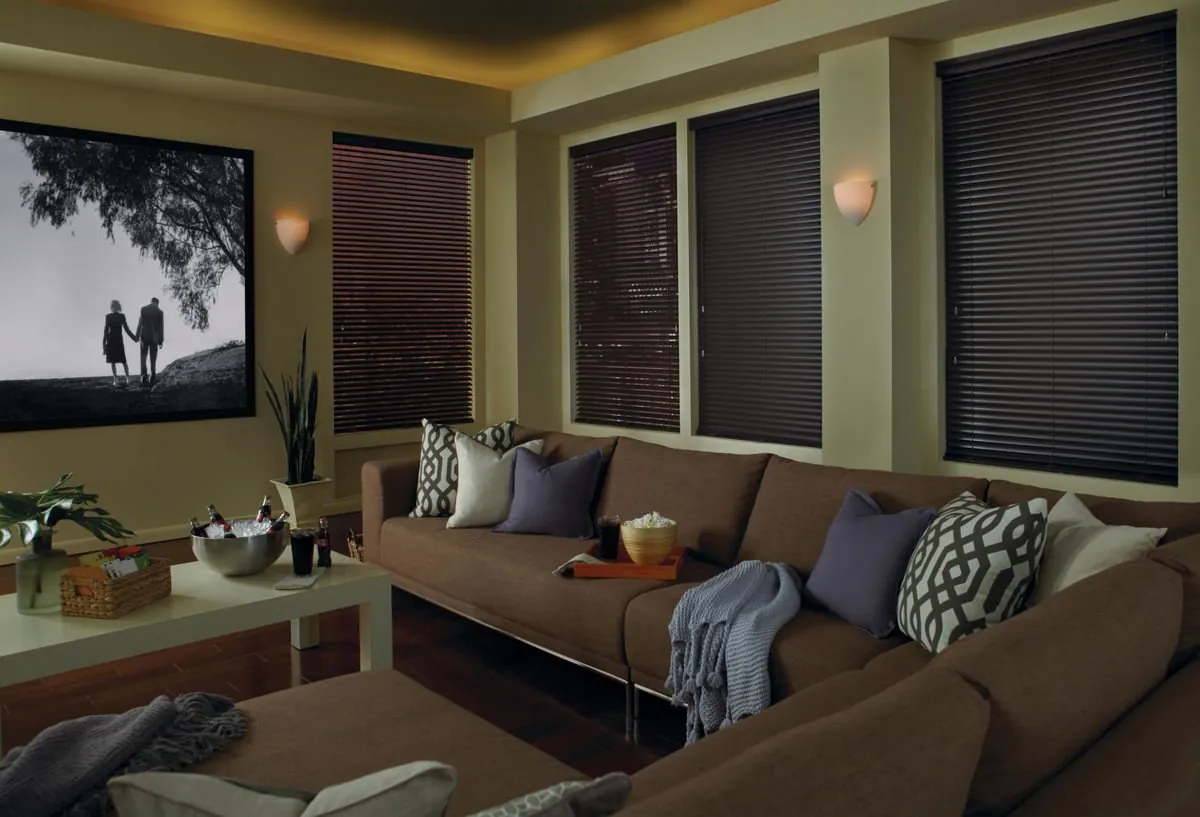
Den or bedroom: dark slats
Closed tight in a deep color, horizontal blinds give a TV room or a bedroom a dim, even light.
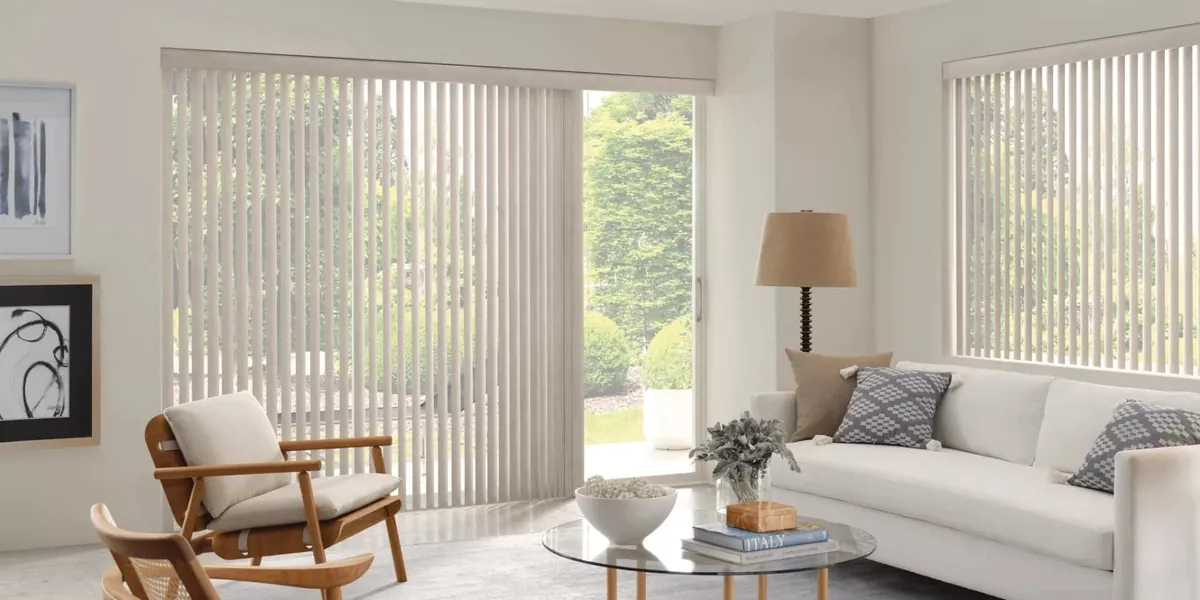
Patio slider: vertical blinds
A track-mounted blind that clears the door completely, for the slider off a ranch’s family room.
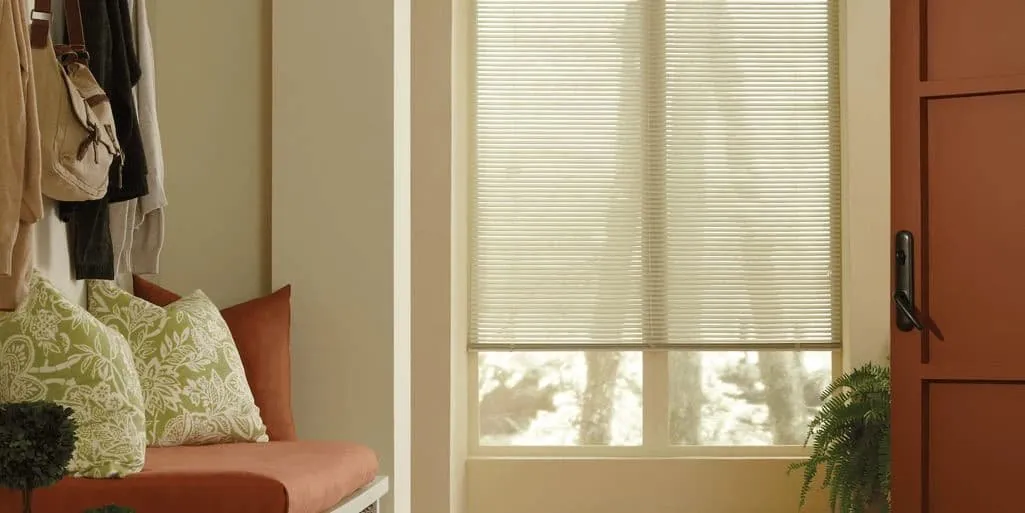
Back door glass: metal blinds
Slim aluminum slats that sit close to the glass, for a half-light back door or a narrow side window.
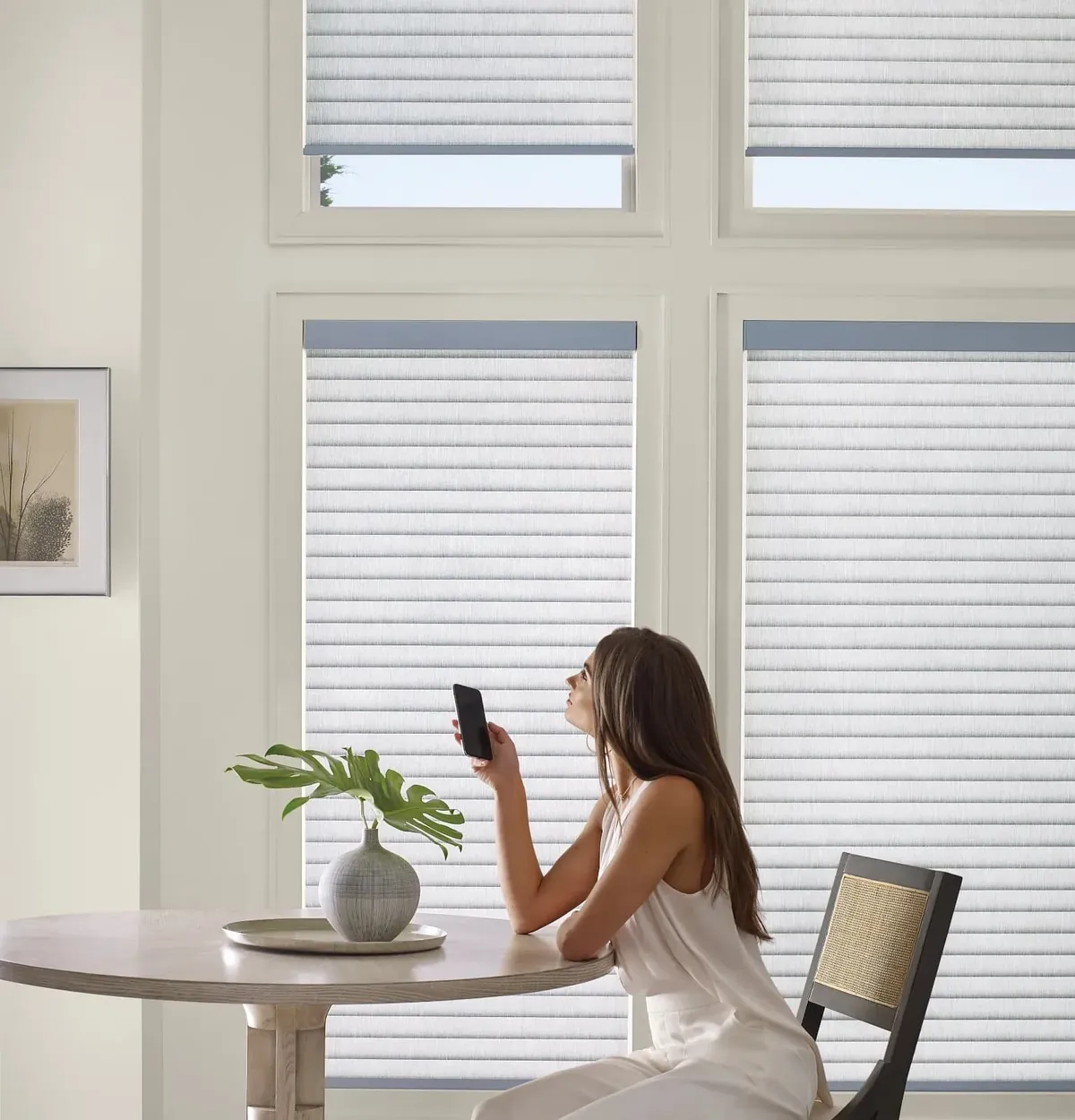
Hard-to-reach windows: motorized blinds in Hanover
PowerView control from a phone or remote, for a stair window or a high window over a tub.
Standard windows, still made to measure
It is fair to ask why a house with standard windows needs anything custom at all. The answer is in the detail. A window that is nominally the same size as its neighbor is often a little different once the trim, the paint build-up and years of settling are taken into account, and a stock blind chosen by the nominal size leaves light leaking at the edges or a headrail that has to be forced in.
A made-to-measure blind is built to the opening it will live in. We measure each window across the top, the middle and the bottom, and down the left, the center and the right, and the blind is made to the smallest of those readings so it drops cleanly without scraping. Because the frames in most Hanover houses are deep enough for an inside mount, the blind sits within the opening and leaves the window trim fully on view.
The other benefit is consistency. When every blind in a colonial’s front elevation is made at the same time, from the same material and color run, with the headrails set at the same height, the house looks finished from the road. That is harder to achieve when blinds are bought a few at a time.
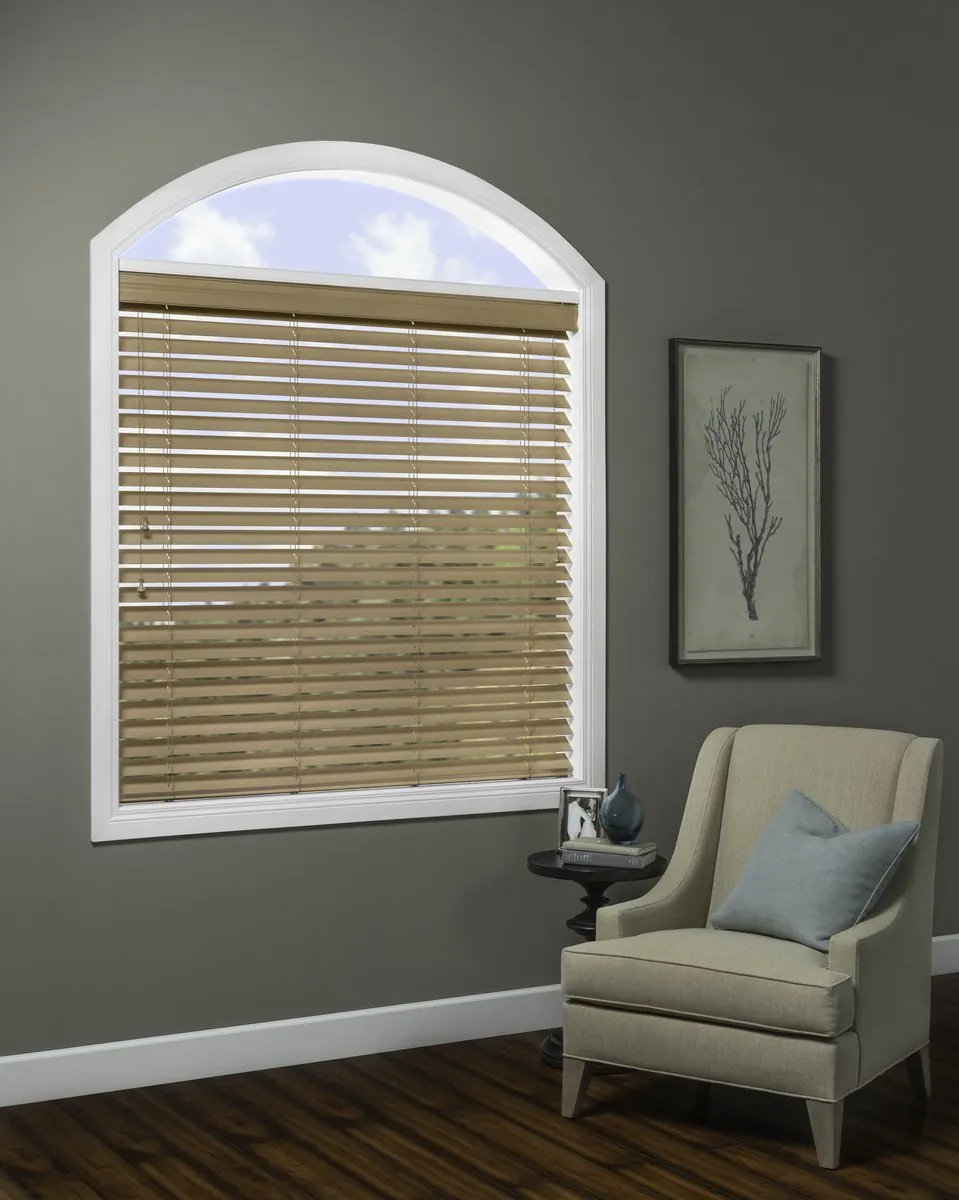
Cape dormers and sloped ceilings
The classic Hanover cape puts its bedrooms upstairs under the roof, lit by dormer windows. A dormer sets the window back into a small alcove, with sloping walls on either side and often a low ceiling. Space is tight, and anything that sticks out into the alcove makes the room feel smaller.
An inside-mounted horizontal blind is a tidy answer. It sits flush in the frame, raises into a compact stack, and leaves the little alcove clear. A cordless lift keeps cords off the sill, which matters in a child’s room. Upstairs rooms in a cape also get warm in summer, because they sit right under the roof, so a slat color light enough to reflect the afternoon sun can make a difference to how the room feels by evening.
Bathrooms tucked into a cape’s second floor often have a small window close to the shower. EverWood faux wood handles the steam and is easy to wipe down.
Ranch picture windows and family room sliders
A post-war ranch tends to have one big window at the front, often a picture window flanked by two narrower ones, and a slider or a pair of doors off the kitchen or family room at the back. The front window is the face of the house; the back door is the one that gets used.
For the front group we usually suggest three separate blinds on matched headrails, so the center and the sides can be raised together or on their own. A single very wide blind can be heavy to lift and is harder to keep level, while three in a row look tidy and are easy to work. Wood or faux wood slats in a soft color suit most ranch living rooms.
At the back, a vertical blind on the slider is the practical choice. The vanes draw aside so the door opens fully, and you can turn them to let in light while keeping the room screened from the yard. Picking the same color family as the window blinds keeps the room coherent.
Newer colonials around the Four Corners
The larger colonials off Washington Street and around the Four Corners carry more windows on every side: a formal living and dining room at the front, a family room at the back, bedrooms upstairs on all four elevations. Many have a two-story foyer with a tall window over the front door.
On houses like these, a little planning goes a long way. We usually suggest real wood or faux wood in a single color on every street-facing window, so the front of the house reads as one, then vary the material and color room by room at the back. The tall foyer window is often the one people forget. If it can be reached safely from the stairs, a manual blind works; if not, PowerView lets it tilt and lift from a phone or a wall remote. When we work on custom blinds in Hanover for a full colonial, we map each of those decisions in one walk-through so nothing gets missed.
Choosing one color for a run of matching windows
Because so many Hanover houses repeat the same window size over and over, color does more work than usual. Eight identical openings across the front of a colonial, or a row of bedroom windows down the side of a ranch, will show any difference in shade straight away, and from the road they are seen as one long line.
White and off-white remain the most popular picks, and for good reason: they sit quietly against white trim and let the windows read as part of the house. The catch is that whites differ. A cool, bright white can look stark against a warm cream trim, and a creamy white can look yellow beside a crisp modern frame. We bring several so you can hold them against your own casing in daylight before choosing, and we look at them again on the shaded side of the house, where the same white can turn gray.
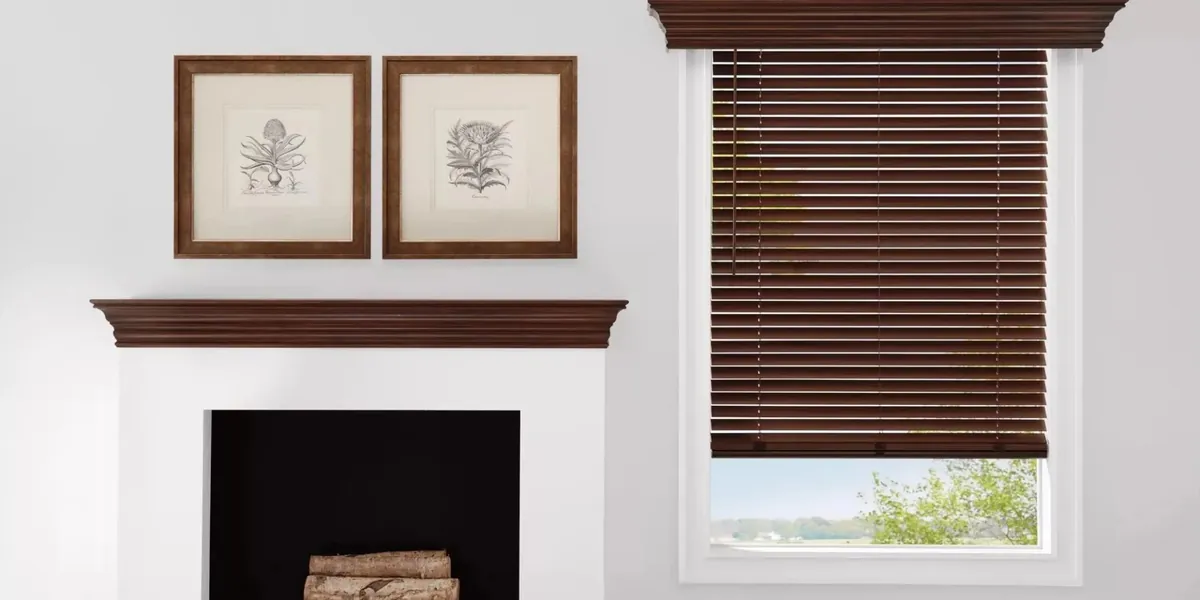
Stained wood is the other strong option, especially in a dining room or den with wood floors. A mid-tone stain on Parkland slats warms a room and hides the small marks of everyday use. In that case we often suggest the stained blinds in the formal rooms and a matching painted color elsewhere, so the outside of the house still looks consistent.
Closing up the house at night
With a deep setback and trees between the house and the road, daytime privacy rarely worries anyone in Hanover. Evenings are different. Once the lamps go on, a living room with bare windows glows like a lantern against the dark yard, and every movement inside can be seen from the street or the house behind.
Horizontal blinds close completely with a turn of the wand, so the change from open and bright to private takes seconds. Routeless slats, made without the small holes the lift cords normally pass through, keep a closed bedroom blind free of pinpricks of light from a porch lamp or a passing car. On a large colonial with many windows, a PowerView schedule can close every blind at dusk without anyone walking room to room. Custom blinds in Hanover set up this way look after the evening routine on their own.
Light under the trees
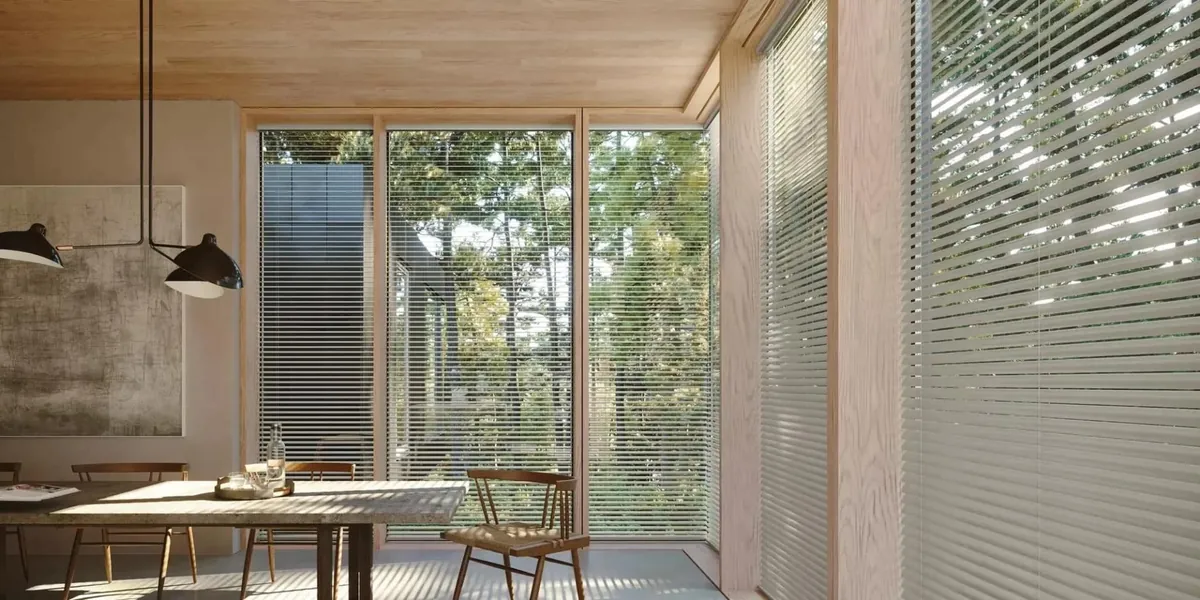
The wooded lots that frame so many Hanover houses do much of the work of a window covering in summer. Leaves screen the strongest sun, and rooms stay pleasantly shaded until a gap in the canopy sends a bright patch across a floor or a screen. In winter the trees are bare, the sun is low, and the same rooms can take strong light deep inside.
A horizontal blind is made for that. You change the angle of the slats rather than the height of the blind. Tilting them up a little sends direct sun toward the ceiling, where it spreads evenly. Opening them flat brings in all the soft light from the trees. Closing them shuts the room for the night. The control is fine-grained and quick, which is why horizontal blinds remain the first choice for so many living rooms and kitchens here.
Comparing the four materials
All four types of blind we fit are made to measure by Hunter Douglas. The material decides where each one belongs.
Real wood (Parkland). Hardwood slats, painted or stained, with natural grain. At home in living rooms, dining rooms and bedrooms where the air is steady. Read more on Parkland wood blinds.
Faux wood (EverWood). A wood look built to resist moisture and warping. The usual pick for kitchens, bathrooms, laundry rooms and the mudroom.
Metal. Aluminum slats with a slim headrail. Useful for door glass, shallow frames and rooms that want a lighter, more modern line.
Vertical. Vanes on a ceiling or wall track, drawn to one side. Built for sliders and very wide windows.
Our main custom blinds page walks through each range in more depth, with links to every Hunter Douglas line we carry.
Many Hanover houses use three of the four. A ranch might take faux wood throughout for an easy-care look, with a vertical blind on the slider. A colonial might have wood in the formal rooms, faux wood in the kitchen and baths, and metal on the door glass.
Controls that fit the way you live
Every blind needs a way to lift and a way to tilt. Cordless lifts are the tidy, child-safe option: you push the bottom rail up or pull it down by hand and it stays where you leave it. A wand tilts the slats. On a window you open and close several times a day, that combination is quick and simple.
For windows that are awkward to reach, such as over a kitchen sink, behind a bed or at the top of a foyer, motorization is worth considering. PowerView blinds can follow a schedule, tilting open in the morning and closing at sunset, or respond to a remote or an app. We look at each window and plan how its motor will be powered during the visit.
The visit, start to finish
Choosing at home makes sense in a house with so many matching windows, because you can see one sample against the whole run.
- Pick a time through Request a Consultation or the call button.
- We come with the van, carrying wood, faux wood and metal slats, vertical vanes, and the lift and tilt controls.
- We walk the house together and talk about each room’s light, use and view.
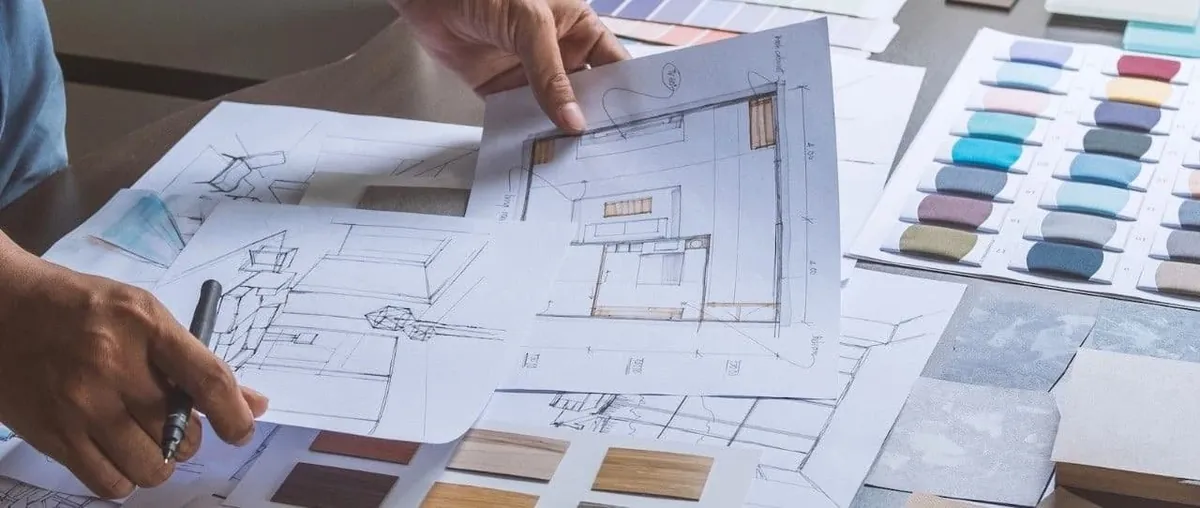
- You hold samples to your own windows, front and back, morning and afternoon side.
- We measure every opening and confirm the mount for each.
- You get a free estimate to take your time over.
- Once the blinds are made, our certified Hunter Douglas installers fit and level them and show you how each one works.
If you would also like a second opinion on paint, fabric or the other treatments in a room, ask about our interior design consultations, which can happen in the same visit. Our page on what happens at an in-home consultation covers the visit in more depth.

Why buy from a Hunter Douglas Gallery dealer
Blinds & Designs is a Hunter Douglas Gallery dealer, a designation Hunter Douglas gives dealers who meet its standards. For a Hanover house that means the full range of blinds is available through one consultation: every wood and faux wood color, metal and vertical blinds, and PowerView motorization.
Our installers are certified by Hunter Douglas, so each blind goes up the way it was designed to. When a blind needs attention years from now, we carry out blind and shade repairs as well. Thinking beyond blinds? See our cellular shades in Hanover, roller shades in Hanover, or all our services on the Hanover page. Ordering custom blinds in Hanover, MA, through a Gallery dealer keeps the whole house with one team.
The Sagamore showroom
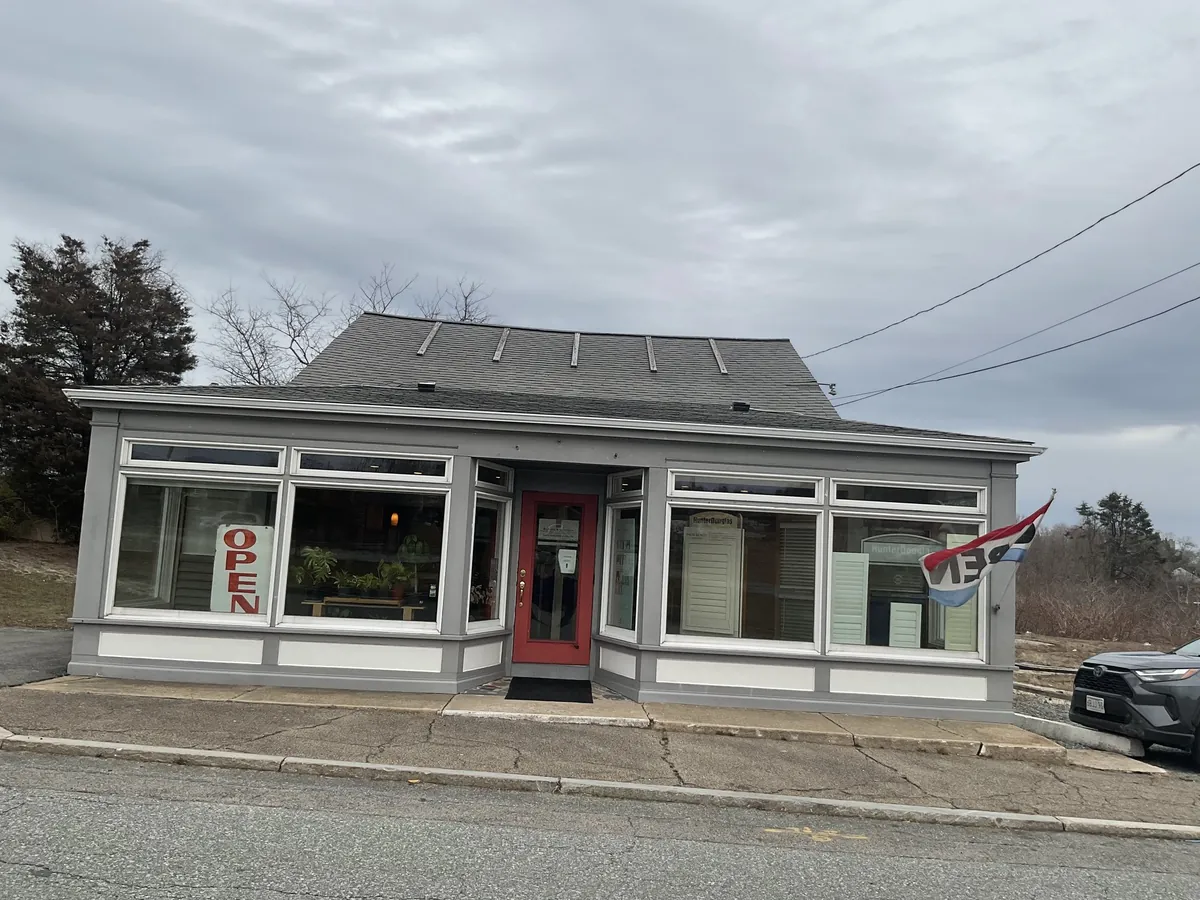
Sagamore is the closest Blinds & Designs showroom to Hanover. If you would like to see blinds before anyone comes to the house, it is a good place to start. You will find the address and hours on the Sagamore showroom page.
Most Hanover customers simply book a visit and let the samples come to them. Our vans carry the range, so we can bring the showroom to you.
Questions from Hanover
My windows are all standard sizes. Do I really need custom blinds?
Custom blinds are made to each opening, so they fit edge to edge and drop without catching. Standard-size windows still vary slightly once trim and paint are taken into account, and matched made-to-measure blinds look tidier across a run of identical windows.
What works in a cape’s dormer bedroom?
An inside-mounted horizontal blind with a cordless lift. It sits flush in the frame, stacks small when raised, and keeps the alcove clear.
What goes on the slider off the family room?
A vertical blind is the usual choice. It draws to one side so the door opens fully, and the vanes turn to control light and privacy. We match its color to the window blinds in the same room so the back of the house looks planned rather than patched together.
Can blinds in the kitchen and bathrooms match the wood blinds elsewhere?
Yes. EverWood faux wood comes in colors that sit alongside Parkland wood, so the damp rooms can carry the same look as the rest of the house.
Is there a charge to measure and quote?
After we measure, you receive a free estimate. There is no obligation to order.
Take the next step
Seeing real slats against your own windows is the quickest way to decide. Request a consultation and we will bring Hunter Douglas blinds to your Hanover house, measure each opening and give you a free estimate. You can also use the call button, or visit the Sagamore showroom.