
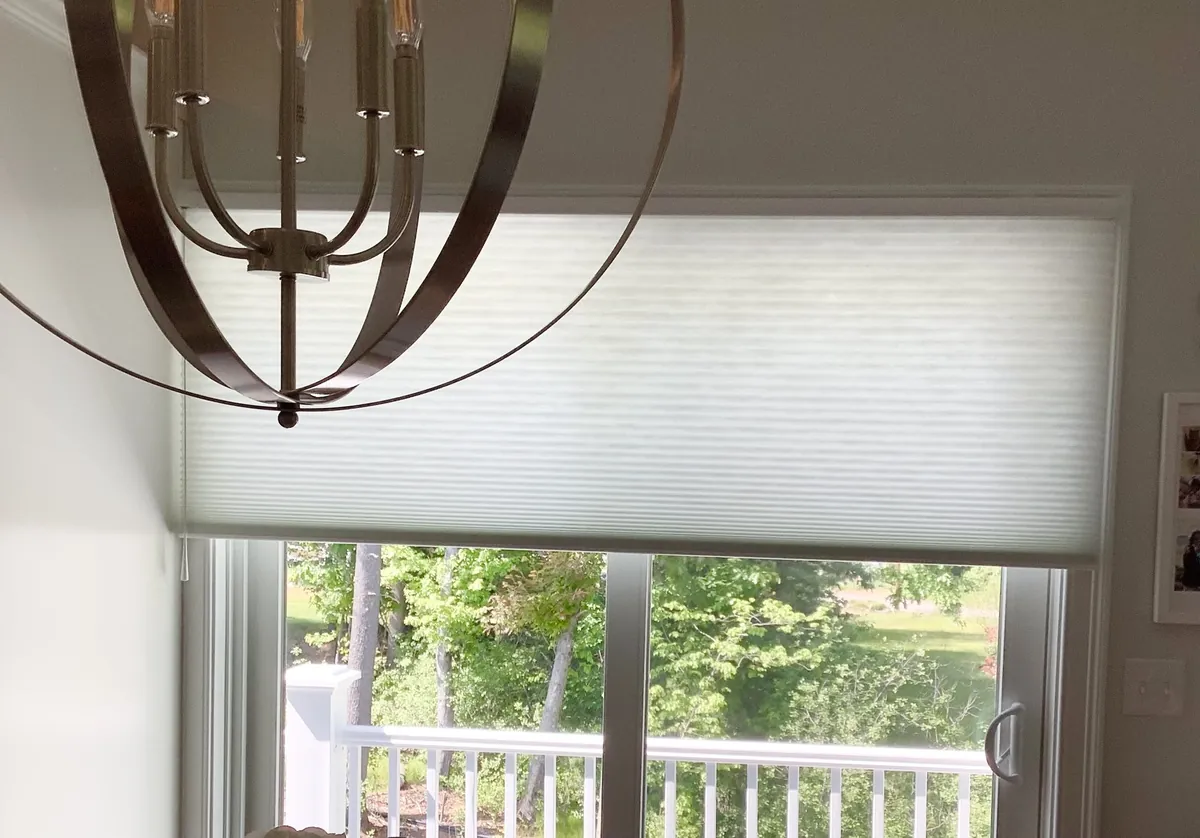
The capes, ranches and colonials of Hanover
Drive off Washington Street or around the Four Corners and the houses tell a clear story. Post-war capes with dormers poking out of the roof. Single-story ranches with a picture window in the living room and a slider out the back. Then the newer colonials, two full floors with a center hall and windows lined up in neat rows. Almost all of them have standard modern openings, and most sit on wooded lots with a real setback from the road. That combination makes cellular shades in Hanover, MA, a straightforward and satisfying job.
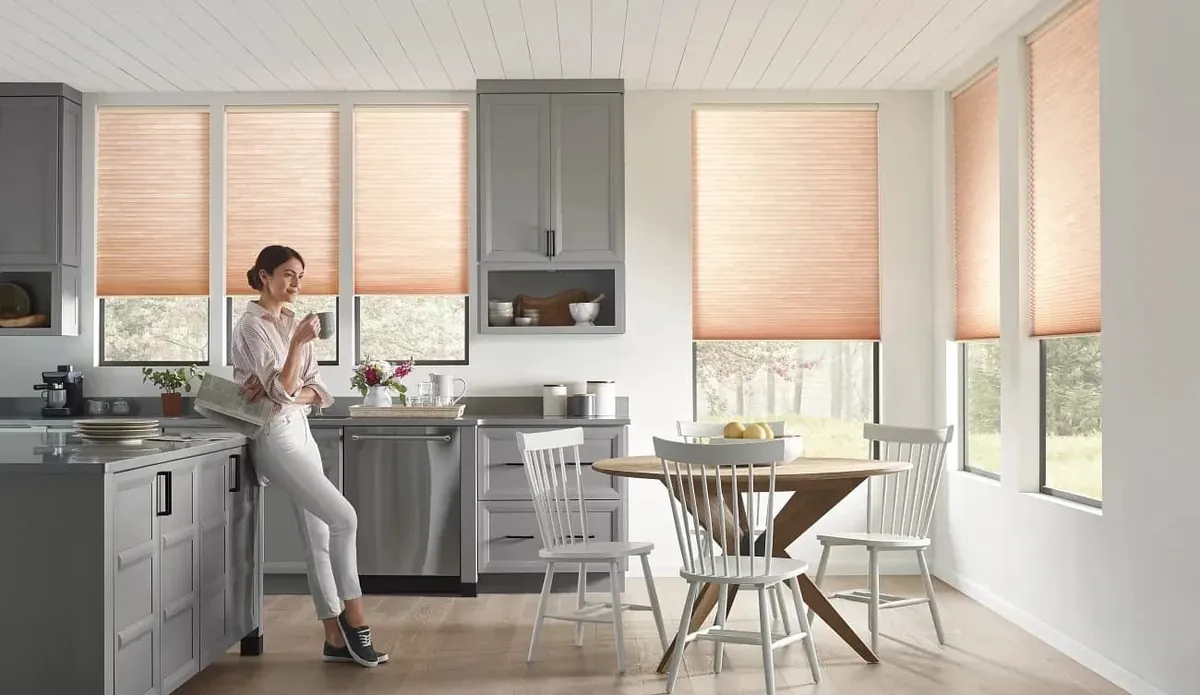
Standard openings are good news. The frames are square, the depths are consistent and an inside mount is usually possible on every window in the house. That means honeycomb shades that sit neatly inside each frame and line up across the front of the house when you raise them.
The challenge is comfort. A cape’s upstairs bedrooms sit right under the roof, and a ranch’s picture window is a big single area of glass. Both feel the weather. A honeycomb shade holds a layer of still air in its cells, between the glass and the room, which is why it does more against the cold than any other soft window covering.
What we fit in a Hanover house
Most homes here need a mix. These six are the choices we bring up most often, and every one of them travels in the van as a sample.
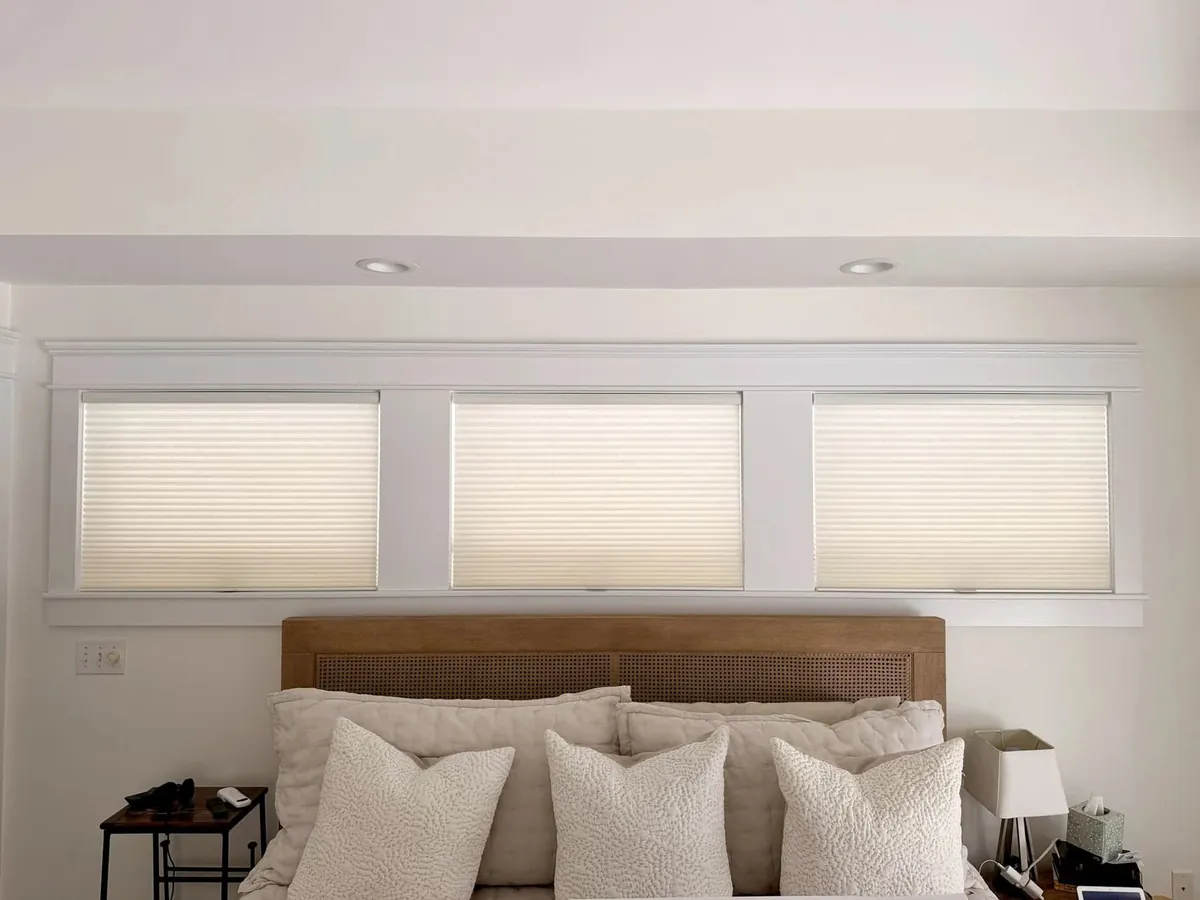
Cape dormer bedrooms
Room-darkening honeycomb for the small dormer windows upstairs, where the room runs hot in summer and cold in winter.
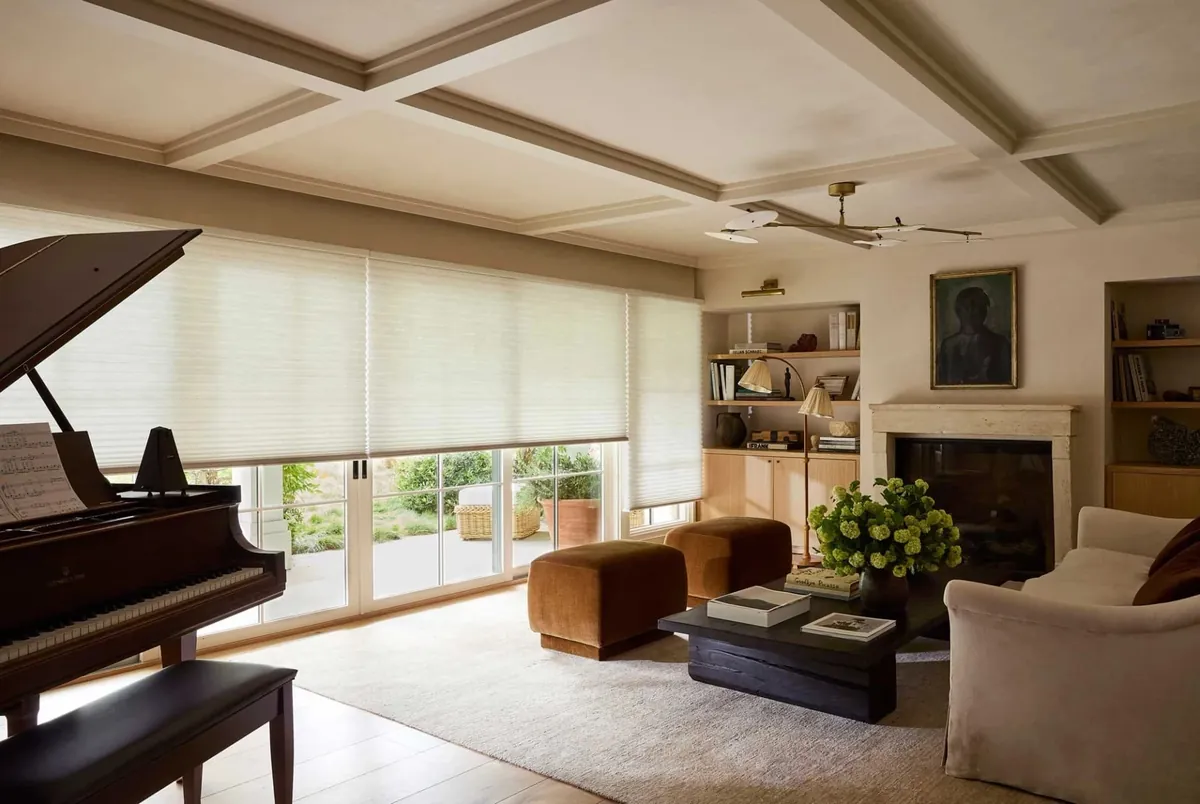
Ranch picture windows
Several shades on one headrail across a wide living room window, moving together or one at a time.
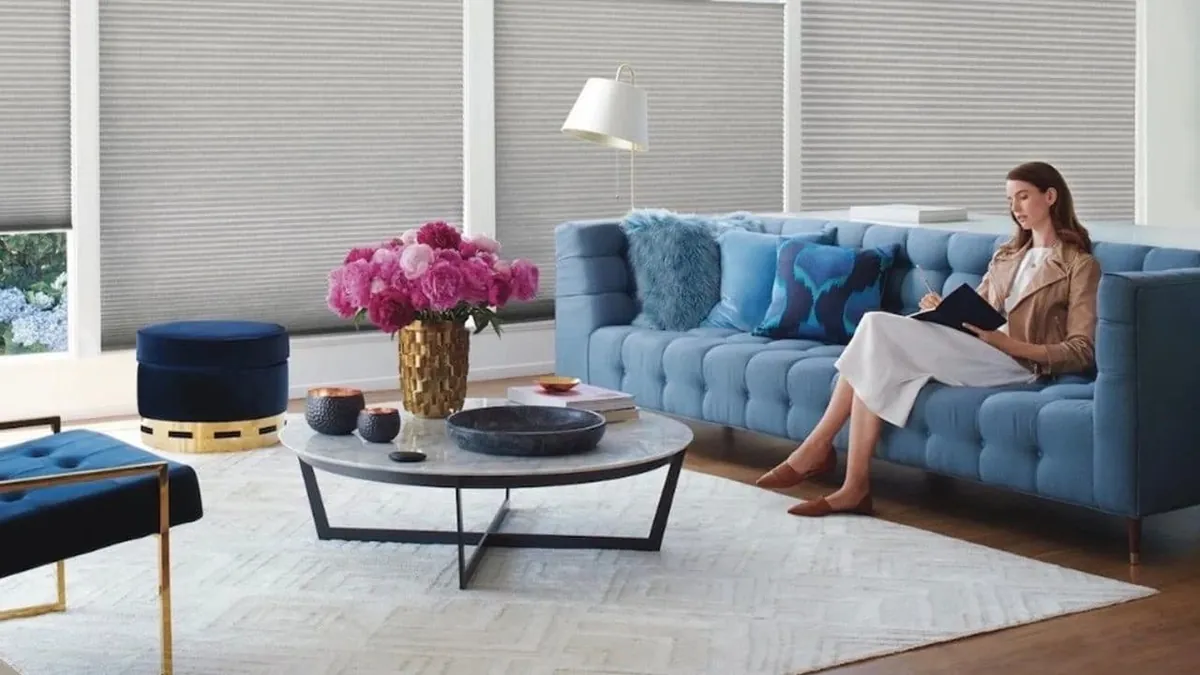
Colonial front rooms
Matching inside-mount shades on every front window, so the house looks orderly from the street.
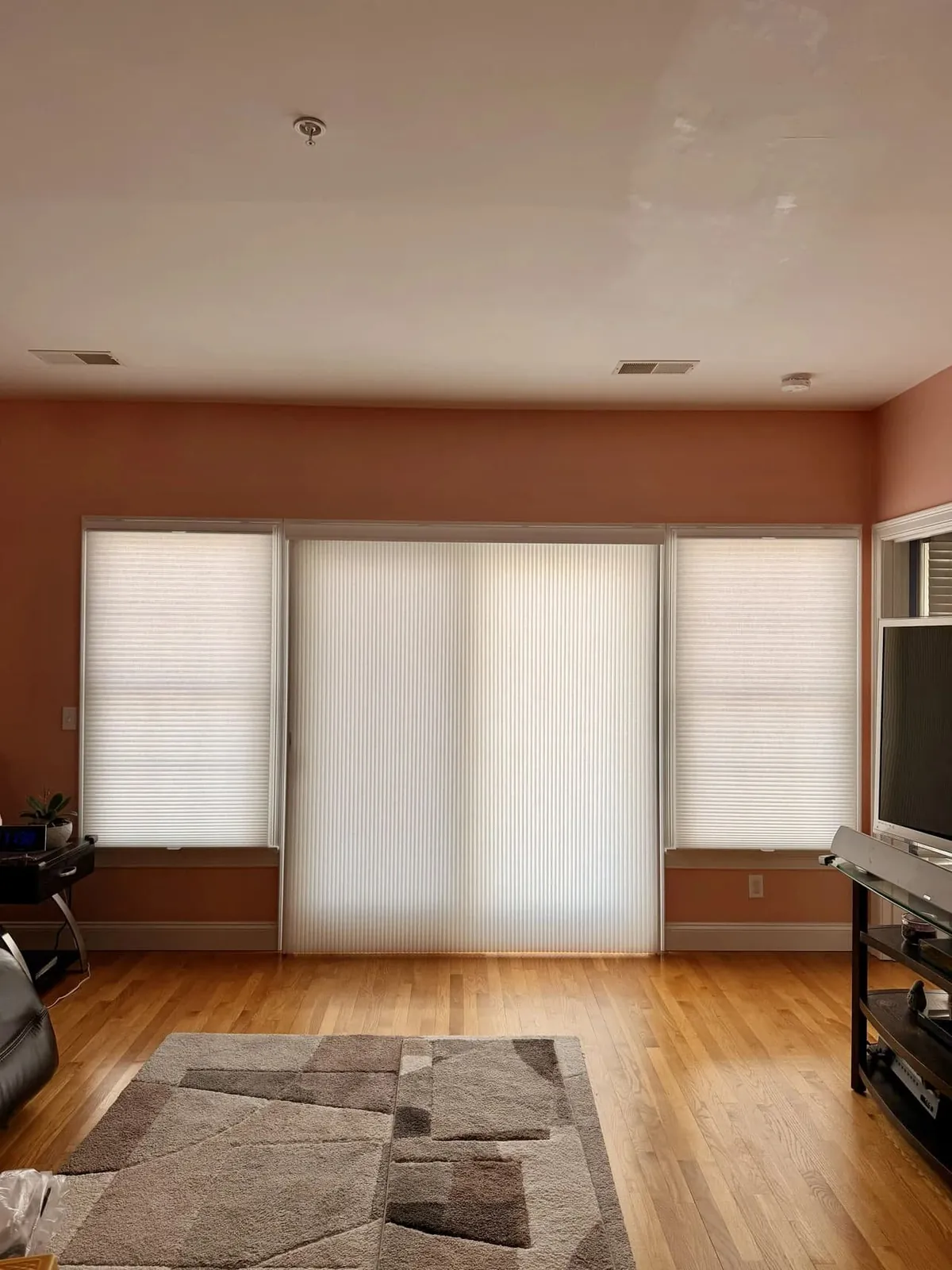
Sliders to the deck
A vertical honeycomb shade that slides sideways and stacks out of the way of the door.
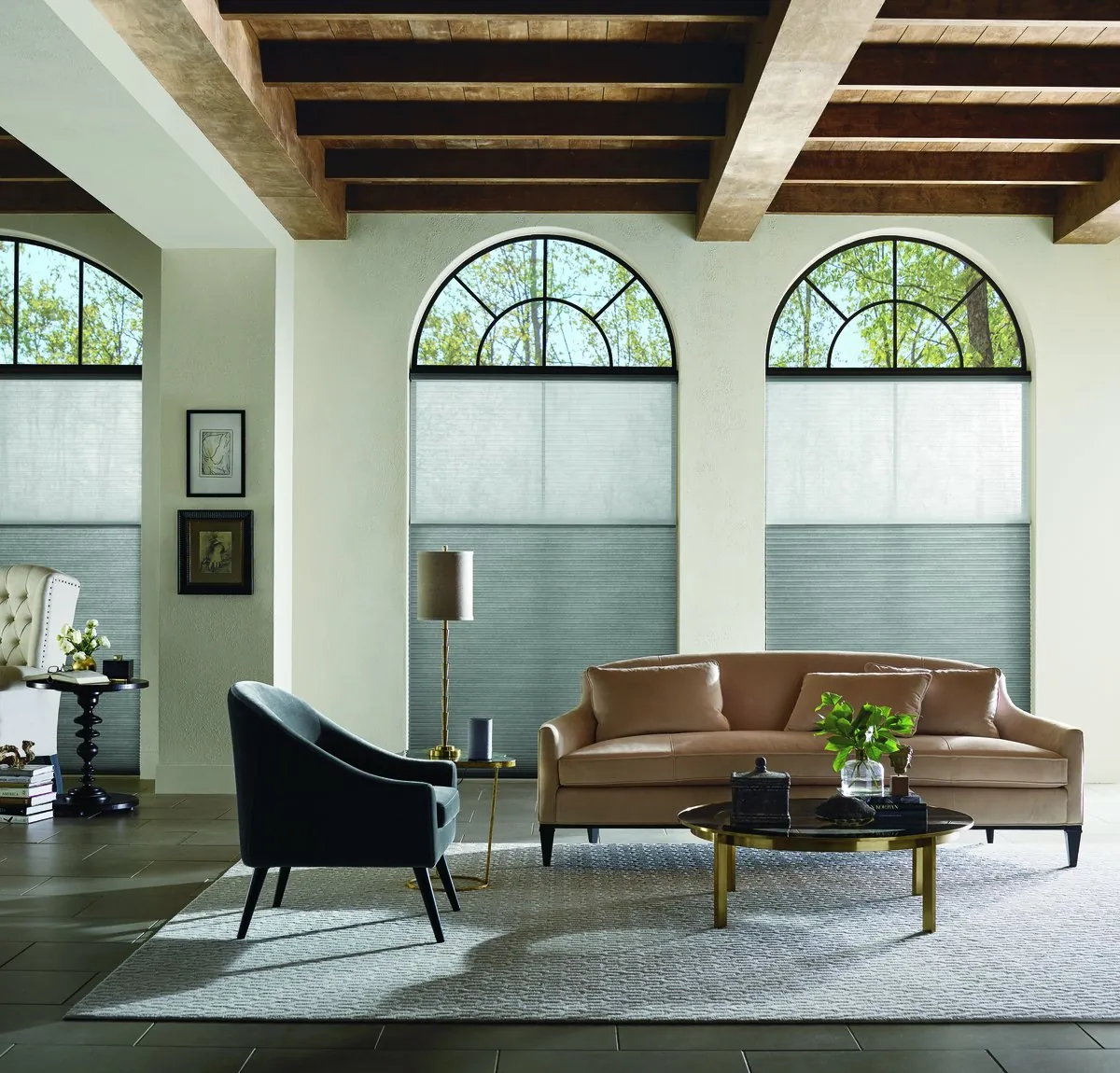
Top-down, bottom-up
Open the top for light and sky while the bottom stays covered. Useful on a first-floor bedroom or bathroom.
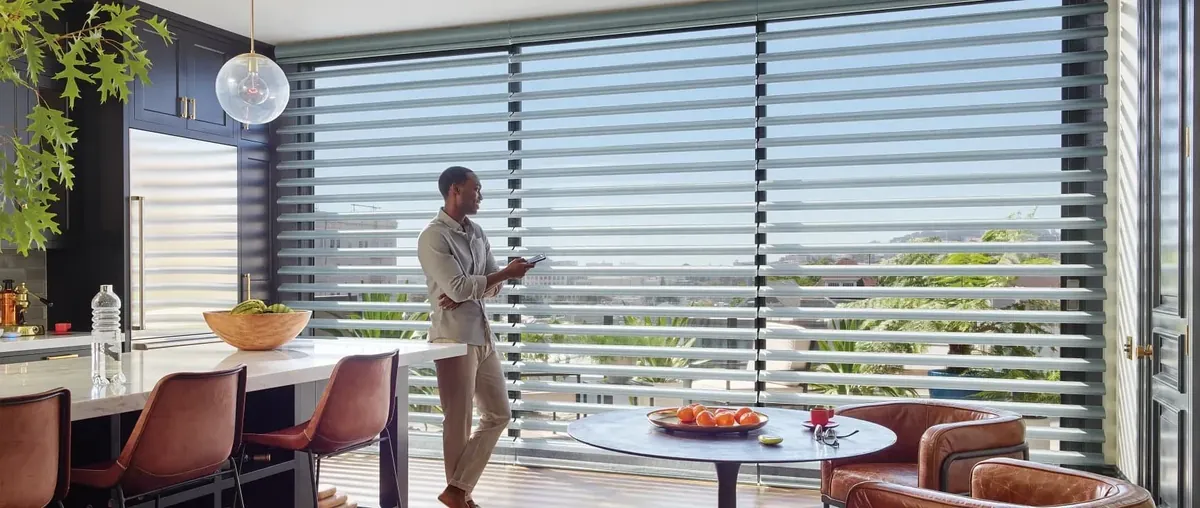
PowerView control
Shades that open and close from your phone, a remote or a daily schedule.
Upstairs in a post-war cape
A cape’s second floor is a clever use of space and a hard one to keep comfortable. The bedrooms tuck under the slope of the roof, the knee walls are short, and the windows are usually small dormers set into the roofline. The sun hits that roof all day in summer, and the cold finds every gap in winter.
Honeycomb shades are a good match. The dormer windows are standard sizes, so each one takes a neat inside-mount shade. A room-darkening fabric keeps the early summer light out of a child’s bedroom, and the cells slow the heat that builds up under the roof in the afternoon. In winter the same shade, lowered at dusk, takes the chill off the glass so the room holds the warmth from the radiators or the heating vents.
Dormers also tend to be set deep into the roof, with a little alcove in front of each window. That depth is useful: it hides the headrail completely, and the shade disappears when raised. We check the depth on each one, because some dormers were trimmed out differently when the house was finished, and it is common to find two that look alike from outside but differ inside.
The ranch and its big front window
Ranches put most of their glass in two places: the living room picture window and the back of the house, where a slider usually leads to a deck or patio. A picture window may be one fixed pane flanked by two that open, or a single wide unit. Either way it is the biggest single source of heat loss in the room.
For a window like that we usually split the width into two or three honeycomb shades. They can share one headrail and move as one, which looks clean and simple, or they can be set to move independently so you can block the sun on one side and keep the view on the other. A light-filtering fabric is a popular choice here because it keeps the living room bright without the hard glare off a car in the driveway or snow on the lawn.
The slider at the back gets a vertical honeycomb shade. Instead of lifting, it draws sideways across the door and stacks at one edge, so you can walk out onto the deck without fighting a shade. It brings the same insulating cells to the door that the windows already have, which matters because a slider is often the coldest spot in the house.
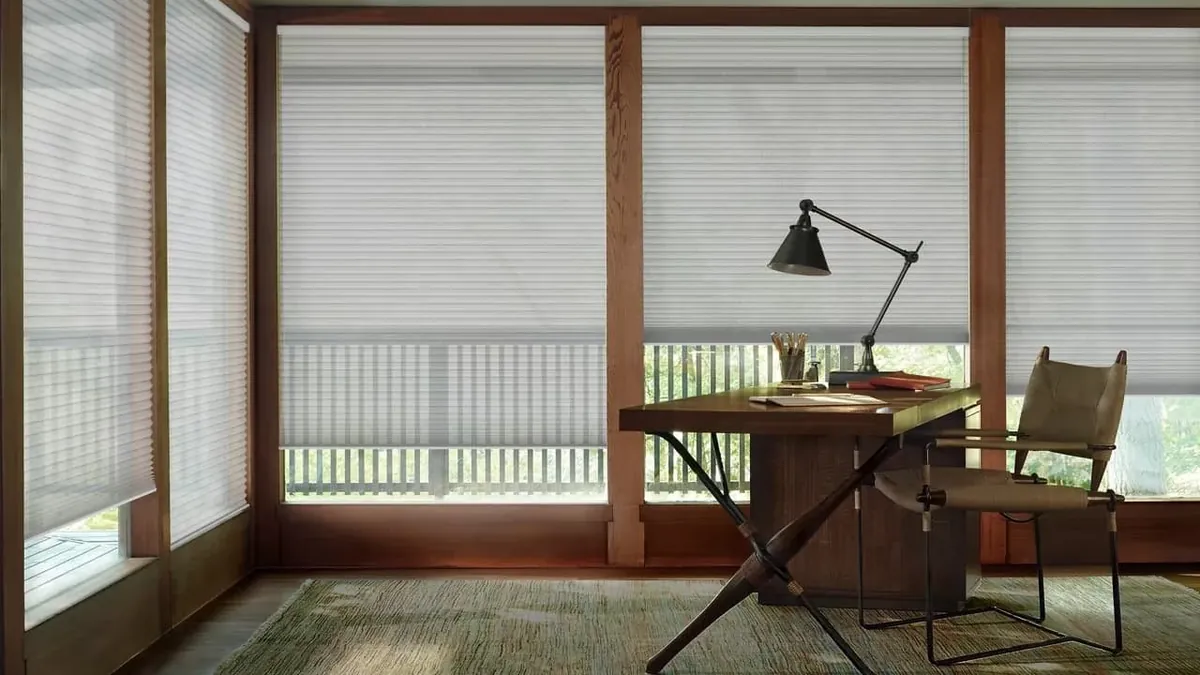
Newer colonials off Washington Street
The newer colonials are the easiest houses in town to fit, and the ones where a careful plan shows the most. Their windows are regular and repeated: the same size across the front, the same size down each side. That regularity rewards a consistent choice. When every front window carries the same fabric and color, and every shade is mounted at the same height, the house looks finished from the street.
Inside, a colonial gives each room its own job. A formal living room may want a soft, light-filtering fabric that glows in the evening. A family room at the back may want a top-down, bottom-up shade so you can see the yard from the sofa. The bedrooms upstairs usually want room-darkening fabric. A home office over the garage may want something in between, so a screen is not washed out by glare. We help you plan the house as a whole, so each room gets the fabric it needs while the outside stays uniform.
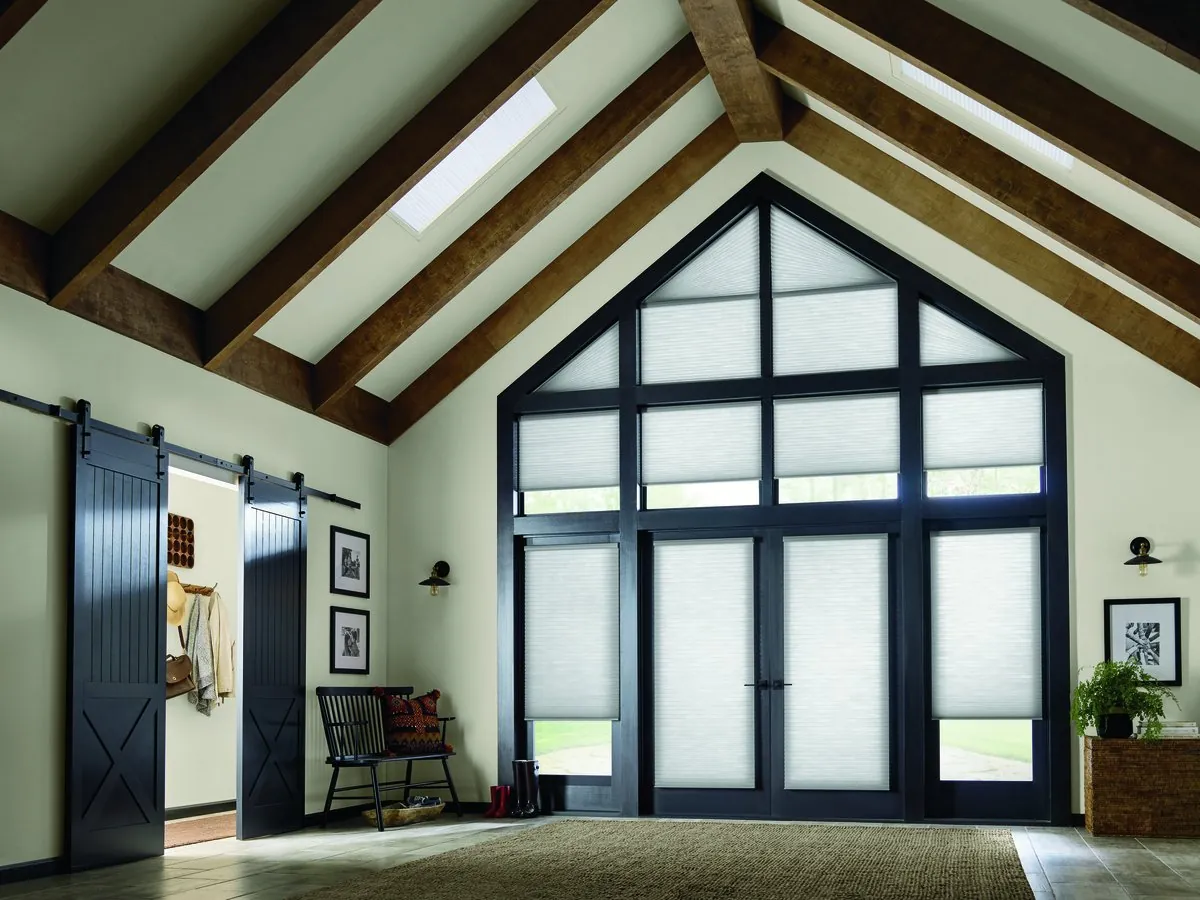
Many colonials also have a stairwell window or a tall window on the landing that is awkward to reach. That is a natural place for a motorized shade.
Wooded lots and real setbacks
Most Hanover houses sit back from the road with trees around them. Privacy from the street is rarely the main concern, but light changes a great deal through the year. Under full summer leaves, rooms can be dim, and a heavy fabric would make them darker still. Once the leaves drop, low winter sun comes straight in.
That is why we lean toward light-filtering and sheer honeycomb fabrics in the living spaces. They keep a room bright while still holding air in their cells. A top-down, bottom-up shade adds flexibility: you can drop the top in winter to stop sun glancing off a screen or the dining table, and raise it fully in summer to bring the most light in.
The setback also means a long view of the yard from many rooms. Nobody wants to lose that. A shade that opens from the top, or a fabric light enough to see the trees through, lets you keep the outlook while still taking the chill off the glass.
How the cells work, in plain terms
Turn a honeycomb shade on its side and you see a row of hollow tubes running the width of the window. When the shade is down, each tube holds air that barely moves. Moving air carries heat. Still air slows it. So the shade puts a band of slow-moving air between your warm room and the cold glass.
Some Duette fabrics place a second, smaller cell inside the first, and some shades stack two rows of cells. Either gives the air more places to stay still. In the coldest rooms of a Hanover house, often the upstairs of a cape or a north-facing bedroom in a ranch, a double-cell fabric is worth considering. We bring single and double cells so you can feel the difference.
Fit matters as much as fabric. A shade that leaves wide gaps at the sides lets air slip around it. An inside mount, measured carefully to a standard opening, keeps those gaps narrow, which is one more reason the square frames in Hanover’s houses are an advantage.
The home visit, from start to finish
We find most decisions about cellular shades in Hanover are easiest made in the room itself. Our vans carry samples, so we can bring the showroom to your kitchen table.
- Book a time through Request a Consultation or the call button.
- We arrive with honeycomb samples in a spread of colors, textures and light levels, and the different lift options.
- Together we walk the house, upstairs and down, and you tell us how each room is used and what bothers you about it.
- You see the samples against your own windows, in your own light, at the time of day that matters.
- We measure each opening and confirm the mount.
- You get a free estimate and the time to think it over.
You can read more about what happens at an in-home consultation before we arrive.
Two honeycomb lines, one house
Hunter Douglas builds its honeycomb shades in two families, and either will hold air against your glass. Where they part ways is the menu. Duette is the deeper catalog: more textures and colors, more pleat sizes, extra-wide panels for a ranch picture window, and the sideways version for the deck slider. Applause keeps a tighter collection of its own, which many people find easier to choose from for an ordinary bedroom or a kitchen.
So a Hanover order often splits along the floor plan. In a ranch, the living room glass and the back slider might go Duette while the bedroom wing goes Applause. In a colonial, the street-facing rooms might share one Duette fabric and the back rooms another line entirely, because nobody sees both at once. If you want to read ahead, there is a page each for Duette and Applause, and an overview of all cellular shades we carry.
Starting with one cold room
Not every project is a whole house. Plenty of calls start with a single problem: the dormer bedroom nobody wants to sleep in during January, the slider that leaks cold across the family room floor, the picture window that bakes the sofa every afternoon. Starting there is perfectly sensible. We measure that room, show you the fabrics that suit it, and give you an estimate for just those windows.
If you later want to carry the look through the rest of the house, the fabric and color are on record, so the next rooms can match. Because the openings in most Hanover houses repeat from room to room, a later order lines up easily with the first. Many people find that once the coldest room has cellular shades in Hanover winters, they want the same comfort elsewhere, but there is no need to decide that on the first visit.
How the house looks from the road
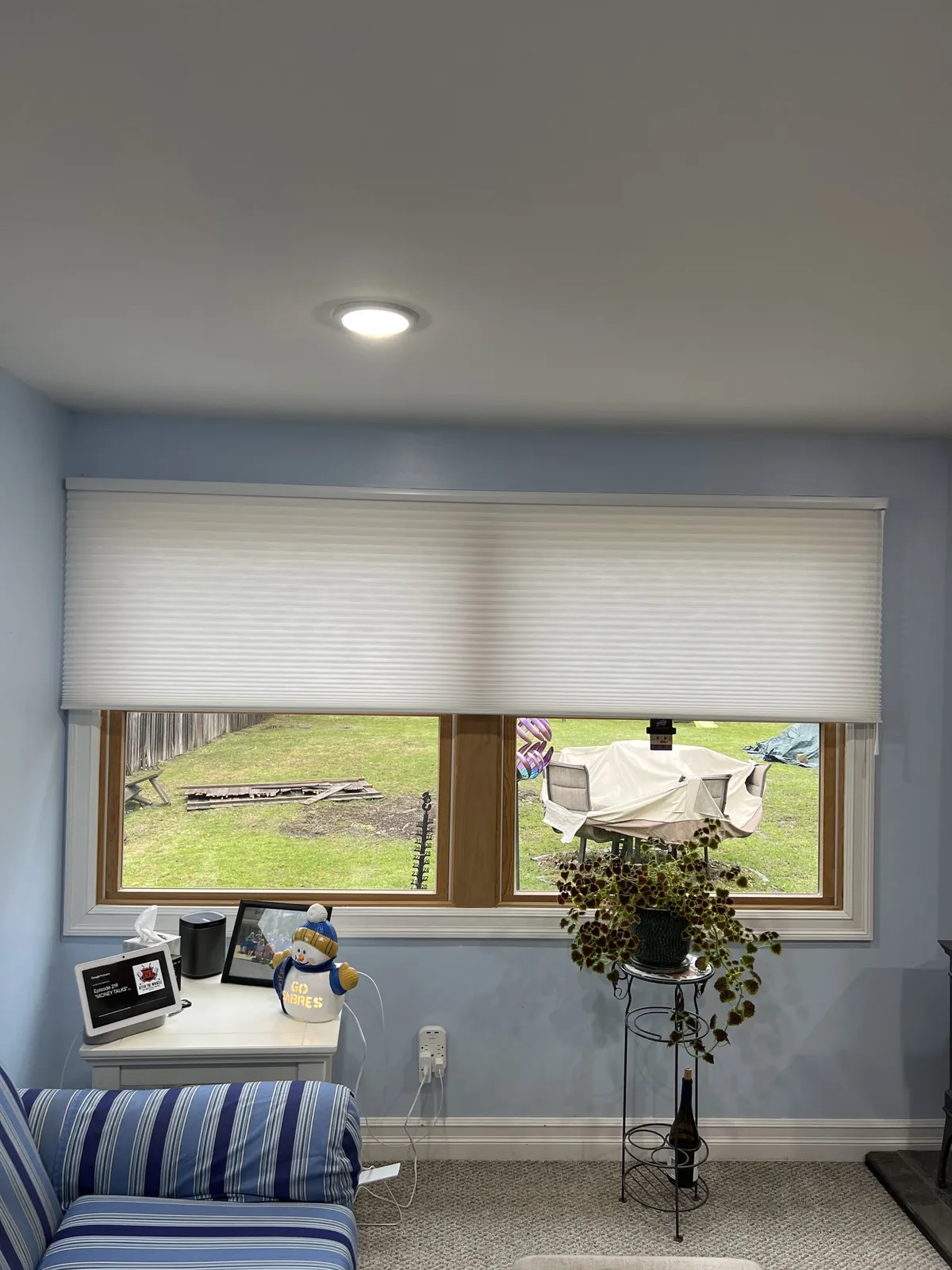
Even with a long driveway, the front of the house is what neighbors and visitors see first, and window coverings play a bigger part in that than people expect. Mismatched shades, some raised and some lowered, different colors behind each pane, can make a tidy colonial look unfinished.
Well-planned cellular shades in Hanover, MA, help here, because the side facing the glass can be a single neutral color while the room side matches your décor. Choose a white or soft ivory street side and every window looks the same from outside, even if the living room shades are a warm taupe and the bedroom shades are blue. Mounted at the same height and raised to the same level, they give the front of a cape or colonial a calm, consistent look.
Cordless, corded or motorized
Most families now choose cordless lifts, especially with children or pets in the house. You raise or lower the bottom rail by hand and it stays where you leave it. A continuous loop suits a larger shade that would be heavy to lift by hand. PowerView motorization removes cords entirely and lets you run the shades from a phone, a remote or a schedule. We plan how each motor is powered at the visit.
A schedule is especially handy in a house set back among trees, where nobody passing can see in but the light moves from room to room through the day. Set the bedroom shades to close at dusk and open at a gentle hour, and the house simply takes care of itself.
Measuring and fitting
- We measure each opening for width and height in several places, even on standard windows, because a small difference shows on a shade made to fit inside the frame.
- We check the depth of each frame for the headrail.
- We agree the mount, the lift and the fabric for every window with you.
- When the shades arrive, our certified Hunter Douglas installers fit them, level each one, test every lift and show you how they work.
Buying from a Hunter Douglas Gallery dealer
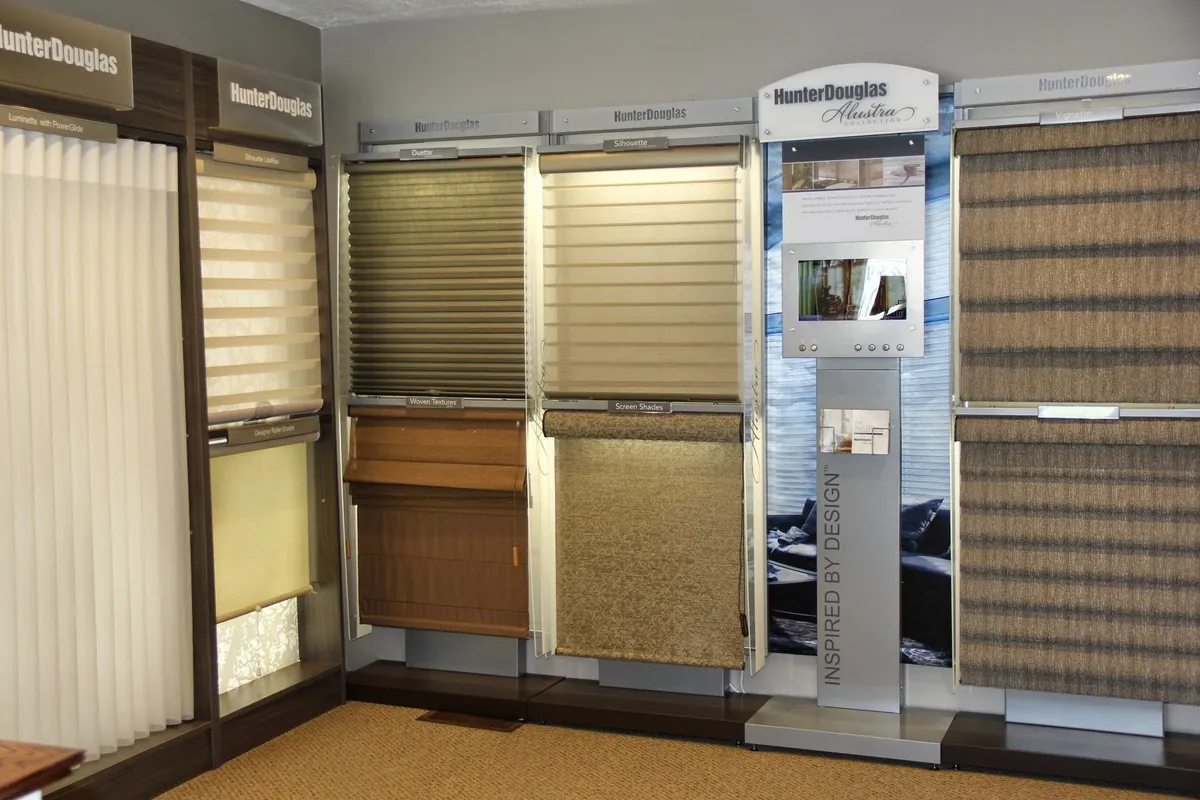
Gallery is a status Hunter Douglas reserves for dealers who meet its standards, and Blinds & Designs holds it. In practical terms you are not limited to a sample book of best sellers: every honeycomb fabric, every lift option, the sideways shades for doors and PowerView motorization are open to you.
The people who hang the shades are certified Hunter Douglas installers, and they work for us. If a shade you already own breaks down, from us or from anyone else, we repair blinds and shades as well.
For rooms that call for something else, look at our custom blinds in Hanover and roller shades in Hanover, or see every service in town on the Hanover page.

Sagamore, or your own living room
Our nearest showroom to Hanover is in Sagamore, and its page has the address and hours. Many customers start there; many more never need to, because the consultation comes to them.
Either way, the samples you choose from are the same. At home, you get the advantage of seeing each fabric against your own trim and furniture. We can also help with color and fabric across the house through our interior design consultations.
Questions from Hanover
My windows are all standard sizes. Do you still need to measure them?
Yes. Even standard openings vary slightly, and a shade made to fit inside the frame needs to be exact. We measure every window in several places so each shade fits neatly with narrow gaps at the sides.
What suits the upstairs bedrooms of a cape?
A room-darkening honeycomb fabric in an inside mount. It keeps out early light, slows the heat that builds under the roof in summer, and holds warmth in on winter nights. Dormers usually have enough depth to hide the headrail completely.
Can one wide picture window take more than one shade?
Yes. We often split a picture window into two or three shades on one headrail. They can move together or separately, so you can block sun at one end and keep the view at the other.
Will cellular shades make my wooded-lot house darker?
Not if the fabric suits the room. Light-filtering and sheer honeycomb fabrics let daylight through. A top-down, bottom-up shade gives you more control as the light changes from summer to winter.
How do I get a figure for my house?
Request a consultation. We measure your windows and give you a free estimate for the shades you are considering.
Book your visit
The simplest way to see what cellular shades in Hanover, MA, will do for your rooms is to hold the samples up at your own windows. Request a consultation and we will bring the honeycomb range, measure every opening and leave you with a free estimate. Prefer to talk first? Use the call button, or stop in at our Sagamore showroom.