
Salt air, harbor light and old shingles
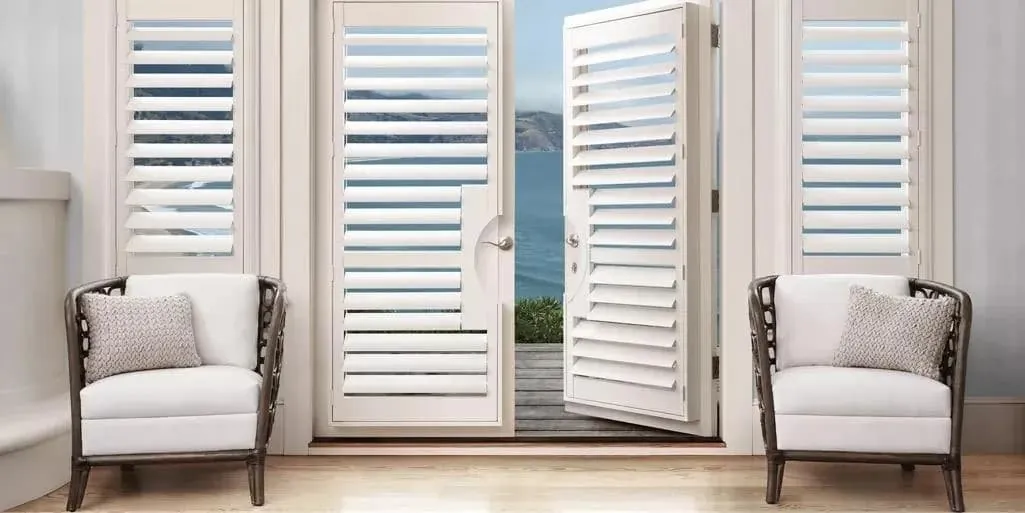
Sippican Harbor shapes almost every window decision in Marion. The shingled captains’ houses in the village were built to face the water, with rows of small-paned sash looking toward the moorings. Out toward Converse Point the newer houses go further, with whole walls of glass turned to the bay. In both, the air carries salt, the light bounces off the water, and the rooms on the harbor side take more sun and more weather than the rest of the house. Those three things guide how we plan plantation shutters in Marion, MA.
Salt is the quiet one. It settles on everything near an open window through the summer, and any covering with exposed metal or a finish that softens in damp air will show it in time. That pushes us toward materials that shrug off moisture and toward hardware that sits within the shutter frame.
Light off the water is the loud one. It comes in low and bright, twice over, once from the sky and again reflected from the harbor, and it reaches far into a room. Louvers you can aim are one of the best answers to it.
Plantation shutters in Marion, MA, by collection
Hunter Douglas makes three shutter collections, and in a harbor town the choice between them matters more than usual. Each card links to that collection’s own page.
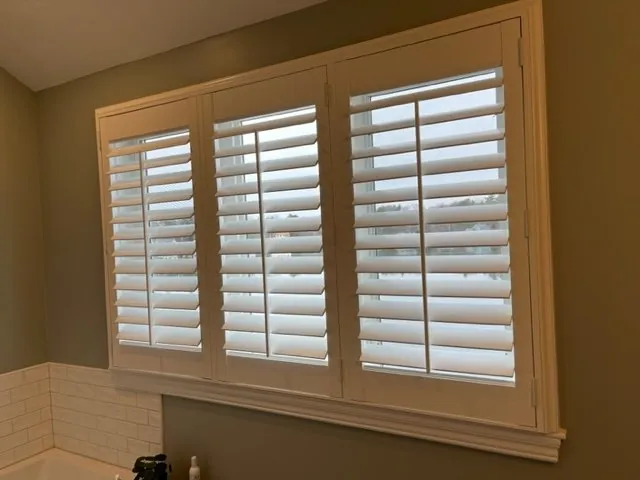
Palm Beach for the water side
Polysatin through and through, with nothing in it that swells or warps in damp air. Our usual choice for harbor-facing rooms, baths and anywhere salt spray reaches.
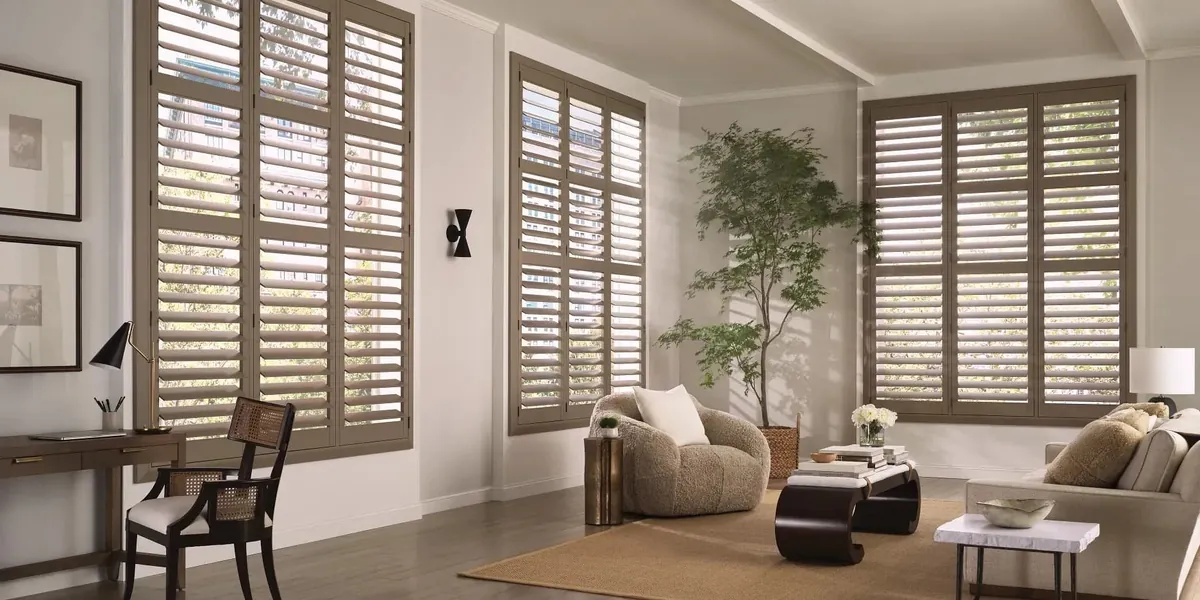
NewStyle for the inland rooms
A hybrid with a painted-wood look and stable, wide panels. It suits bedrooms and studies on the sheltered side of the house.
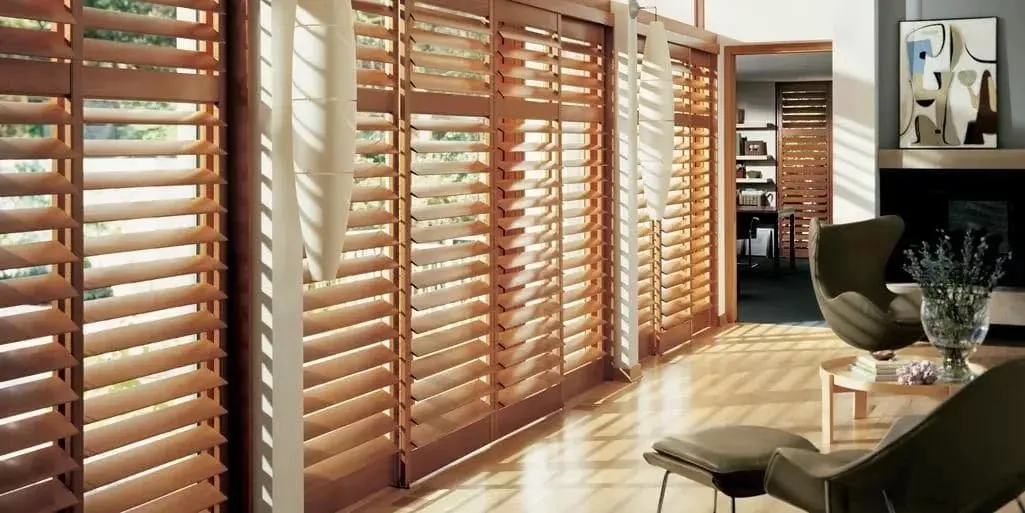
Heritance for formal rooms
Real hardwood, painted or stained. A good match for the panelled front rooms of a village house, away from the harbor windows.
Captains’ houses around the village
The shingled houses near the harbor and along the village streets were built with care and have been kept that way. Their windows are often divided into many small panes by wooden muntins, set in deep casings with original trim. Some have narrow side lights by the door and a fanlight above it. Others have a single window high in a gable end, looking out over the roofs to the water.
A shutter in a house like that should look as if it might always have been there. We usually suggest an inside mount, with the frame tucked within the opening so the casing stays fully on show. The louver width follows the pane size: on a window divided into small lights, slim or medium louvers keep the proportions right, where wide blades would look out of scale. Where the window is divided by a strong horizontal rail, we line a divider rail in the shutter up with it, so the two read as one design.
Old openings settle. We measure each one at several points across its width and height, and check how square it is, before suggesting a mount. If the reveal is too shallow for the louvers to clear the muntins when they tilt, a frame that stands the panel forward, or an outside mount on the casing, is the better route. Our guide to shutters for older windows explains those trade-offs.
Glass walls toward Converse Point
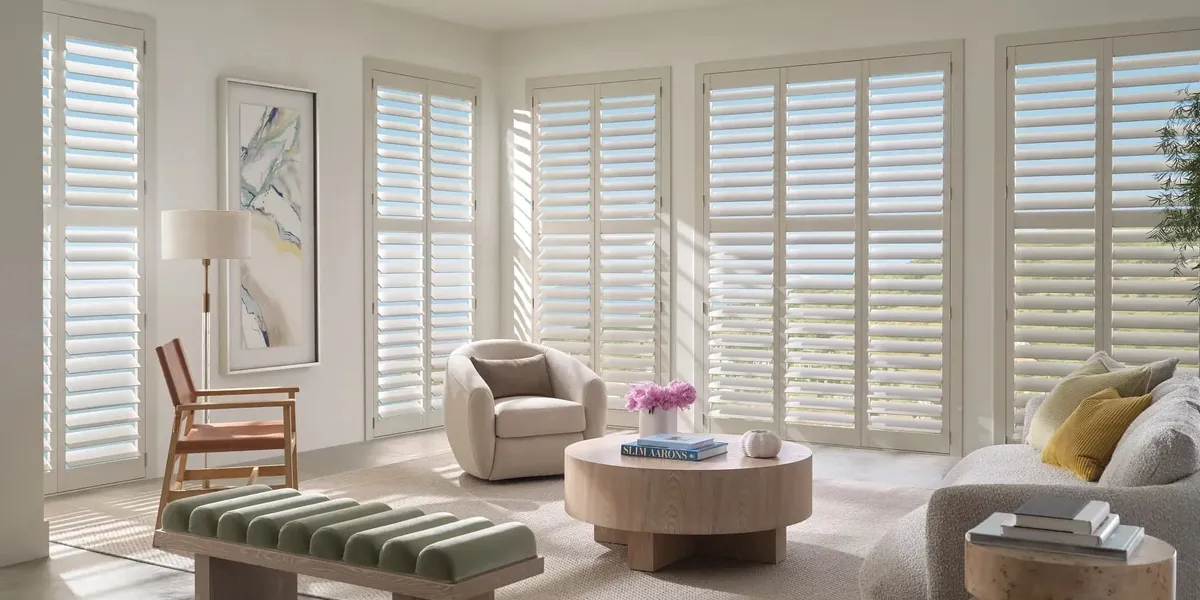
The newer houses out on the point and along the shore roads are built around the view. A living room may have floor-to-ceiling glass on two sides, with doors opening to a deck, and the bedrooms upstairs often look straight across the bay. These rooms are glorious in the morning and hard to sit in by mid-afternoon on a bright day.
Wide louvers are the natural fit. Open flat, they leave the most clear space between the blades, so the water stays in view. Tilted slightly, they block the sun as it drops while you still look out across the harbor. Closed, they shut out both the glare and the heat. Because each panel moves on its own, you can close the panels taking the direct sun and leave the rest open.
Large glass walls are usually divided into tiers or panel groups that follow the window frames. Lower panels open fully to the deck; upper panels above head height can have their louvers set at one angle at install. On the doors themselves, shutters mount directly to each door so they swing with it.
Why polysatin earns its place by the water
The harbor-facing side of a Marion house works hard. Windows are opened on every warm day, sea air drifts in, and condensation forms on cold glass in winter. Over time, those conditions are tough on any material that takes up moisture.
Palm Beach is made from polysatin, a solid material with no wood core. It does not swell in damp air, it holds its shape across wide panels, and it wipes clean with a damp cloth. For the rooms that face the water, along with every bath and the laundry, it is the collection we lean toward. Its hinges and tilt mechanism sit within the shutter itself rather than out in the open, so there is little for the salt to find.
The rest of the house does not have to match in material, only in look. NewStyle in the inland bedrooms and Heritance in a formal front room can be painted the same white and given the same louver width, so the house reads as one set from the hall.
Shutters with drapery in a formal village house
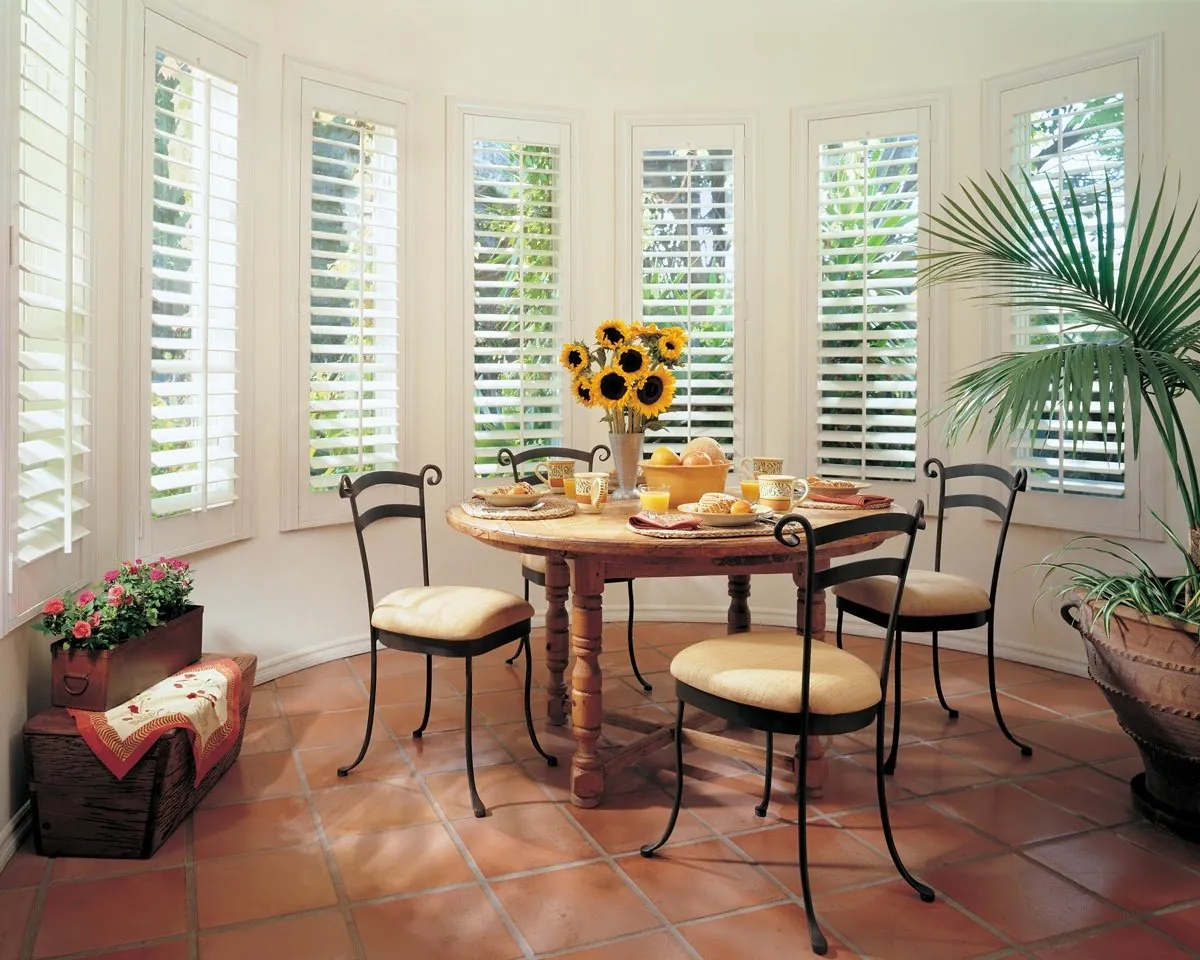
In some of the more formal village houses, drapery is part of the look of the main rooms, and nobody wants to give it up. Shutters and drapery work well together. The shutter sits inside the opening and does the daily work of light and privacy; the drapery hangs on the wall outside the casing as a frame, adding color, softness and a finished, traditional feel.
When we plan the two together, the shutter frame needs to leave room for the drapery hardware above and to the sides of the window, and the panels should open without catching on the fabric. Inside-mounted shutters with a low-profile frame are the usual answer. A stained Heritance shutter can look handsome under a rich drapery fabric in a panelled dining room; a painted one suits a lighter sitting room.
If you are planning drapery as well, ask about it during the visit and we can look at both at once. We also offer interior design consultations for rooms where several elements need to come together.
Plantation shutters in Marion for bright bedrooms
East-facing bedrooms on the harbor side catch the first light off the water, and in midsummer that comes very early. Closed louvers darken a room well, far more than a sheer or a light-filtering shade, and a divider rail lets you open the upper half later in the morning while the lower half stays closed.
For a bedroom that faces west across the bay, the problem is the evening sun, low and orange, landing on the bed just when you want to rest. Tilting the louvers upward keeps the light on the ceiling instead. In both rooms, a hidden tilt keeps the face of the panel clean, which many owners prefer in a bedroom.
How the in-home visit goes
The only way to see how a shutter handles harbor light is to see it in your own rooms. Our vans carry samples of all three collections, louver widths and finishes, so we can bring the showroom to you.
- You request a consultation online or by the call button and we settle on a time.
- We tour the house with you, starting on the harbor side where the light is strongest.
- You try sample panels at your windows, tilting the louvers to see how each width handles the glare.
- We talk through which rooms suit Palm Beach and where NewStyle or Heritance would work.
- We measure every opening, checking depth and squareness, and note any drapery hardware.
- You receive a free estimate and take whatever time you need.
To read more first, see our page on what happens at an in-home consultation.
Sunrooms and enclosed porches
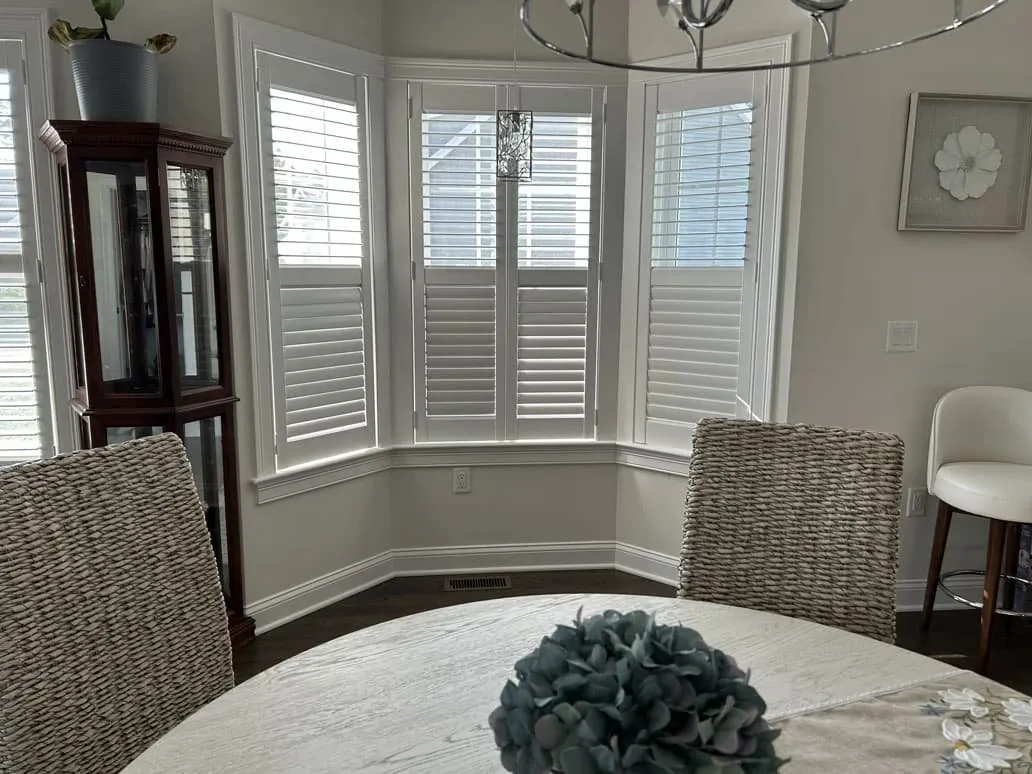
Plenty of harbor houses, old and new, have a room that is mostly glass: an enclosed porch added to a captain’s house, a sunroom on the water side, or a breakfast bay that juts out toward the view. These are the rooms people use most from spring to autumn, and they are the ones that overheat first.
A room with windows on three sides needs a covering that can do different things on each side at the same moment. Shutters can. Close the panels on the side taking the afternoon sun, leave the harbor side open, and tilt the third side to throw light onto the ceiling. Each panel works on its own, so the room never has to be all open or all closed.
In a porch that still gets damp air from the water, Palm Beach is the collection we suggest, for the same reasons as the other harbor rooms. If the porch has a run of narrow windows, a shutter per window keeps the frames neat and lets each one open fully for a breeze. For many owners this is the room where plantation shutters in Marion, MA, make the biggest difference to how often it gets used.
Doorways, side lights and fanlights
The front entrance of a village house often has narrow side lights flanking the door and sometimes a fanlight above it. They let light into the hall but also show the inside of the house to anyone at the door.
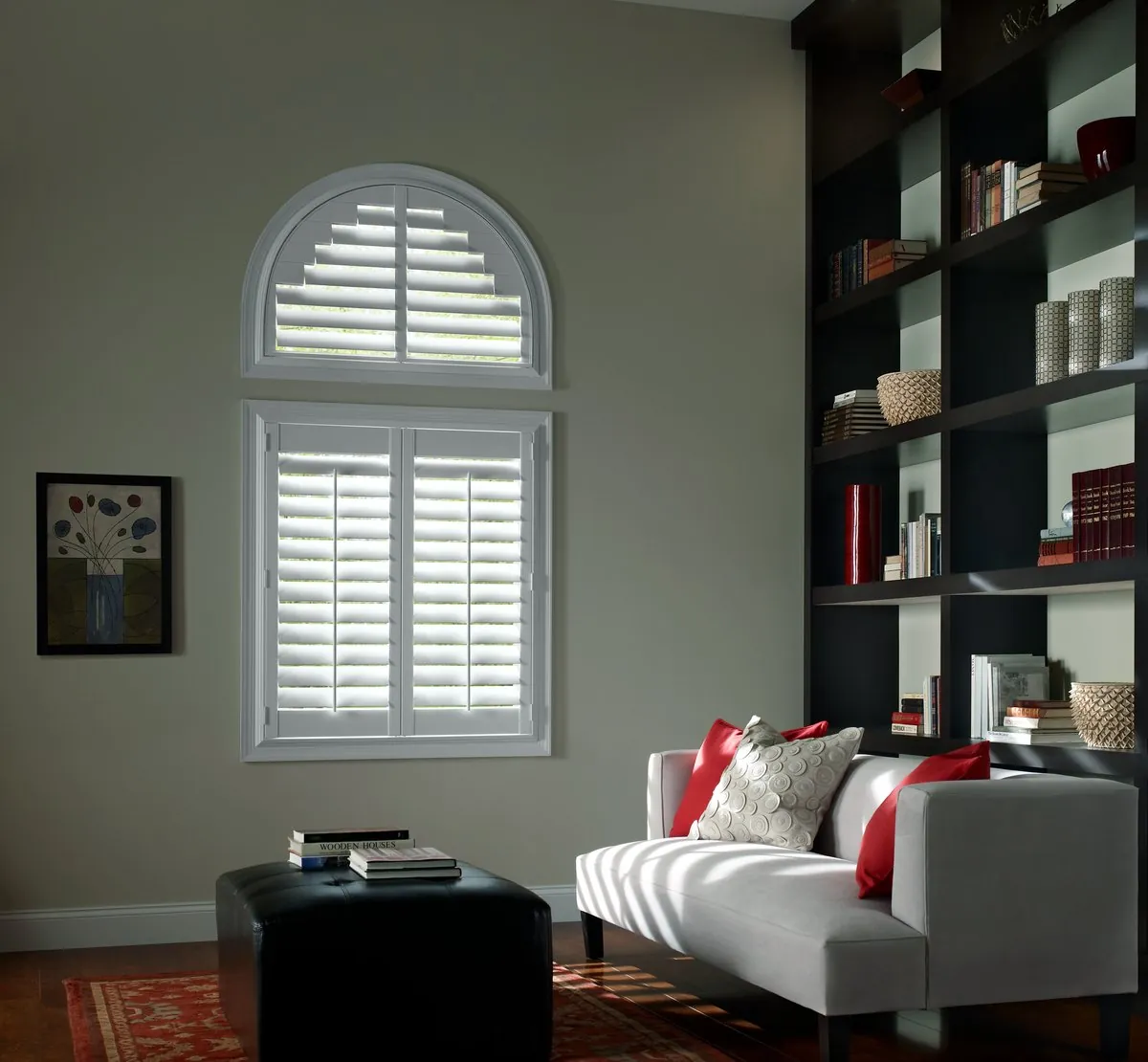
Narrow side lights take a single slim panel each, hinged so it can swing open for cleaning, with slim louvers to suit the width. A fanlight can take a shaped panel that follows its curve, with the louvers set at one angle, or it can be left open for light while the side lights are covered. On the harbor side, a pair of French doors can carry shutters mounted to each door, so the doors open fully to the deck.
Louver widths for small panes and big views
A Marion house can need two different louver widths under one roof, and that is fine.
- Slim or medium louvers suit the small-paned sash of the captains’ houses, where the shutter should feel as fine-grained as the window behind it.
- Wide louvers suit the glass walls and picture windows of the newer houses, where every blade you remove is more of the harbor you can see.
- One color throughout ties it together, so an old front room and a newer harbor-side addition still feel like one house.
We bring sample panels in each width, and the difference is obvious once you hold them up at your own window.
Frames, rails and tilt
A shutter frame finishes the opening and carries the hinges. On a captain’s house with good trim, a slim inside-mount frame keeps the casing visible. On a newer house with plain modern jambs, a frame with a modest decorative edge can give each window a finished border.
Divider rails split tall panels into two sections that tilt separately, and on a divided-light window we line them up with the window’s own horizontal bar. Tilt can be by a traditional front rod, which suits the village houses, or hidden at the edge of the panel, which suits the clean lines of a glass-walled room.
Care in a coastal house
Shutters need very little looking after, which suits a house near salt water. A soft duster along the louvers keeps them clean week to week, and a damp cloth deals with the fine film that salt air can leave on any surface by the end of the summer. Palm Beach handles a wipe with more water than wood would, which is one more reason it goes in the harbor rooms. In the off season, when a summer house is closed up, shutters left with their louvers tilted shut keep the sun off floors and furniture until you open the house again.
If a shutter, or any other window covering, ever needs attention, we repair the window coverings people already own.

A Hunter Douglas Gallery dealer on the harbor
Blinds & Designs is a Hunter Douglas Gallery dealer, a designation Hunter Douglas reserves for dealers who meet its standards. That means the full shutter line, all three collections in every louver width, color and stain, along with advice on which material belongs on which side of a coastal house.
Every shutter is fitted by our certified Hunter Douglas installers, who set frames square in an old opening and true across a wide glass wall. We offer interior design consultations as well, and we carry shades, blinds and drapery so a whole house can be planned together.
See every service we offer in town on our Marion page, or read about roller shades in Marion for glass that needs a lighter covering.

See shutters at Sagamore or at home
Most Marion projects are chosen at home, with the harbor light coming through the window as you hold up each sample. We bring the samples to you, measure while we are there and talk through every room.
If you would like to see shutters first, the Sagamore showroom is the nearest one named for this area. The visit, measuring and fitting all happen at your house.
Questions from Marion
Which shutter copes with salt air?
Palm Beach. It is made of polysatin with no wood core, so damp sea air does not make it swell or warp, and it wipes clean easily. We usually suggest it for harbor-facing rooms and every bath, with NewStyle or Heritance on the sheltered side of the house.
Will shutters suit the small-paned windows in a captain’s house?
Yes. We use slim or medium louvers to match the scale of the panes, and an inside mount so the original casing stays visible. If the reveal is shallow, a frame that stands the panel forward lets the louvers tilt clear of the muntins.
Can I keep my drapery and add shutters?
Yes. The shutter sits inside the window opening and the drapery hangs on the wall around it. We plan the frame so it leaves room for the drapery hardware and so the panels open without catching on the fabric.
How do shutters deal with glare off the water?
You aim the louvers. Tilted slightly, they block the sun as it drops while you still see the harbor. Wide louvers give the clearest view when open, and each panel moves on its own, so you can close only the ones taking direct sun.
Is the estimate free?
Yes. Once we have measured, you get a free estimate for the shutters you are considering. Request a consultation and we will come to your house with samples.
Take the next step
Harbor light is easiest to judge with real panels at your own windows. Request a consultation and we will bring all three collections, measure each opening and give you a free estimate for plantation shutters in Marion, MA. If you would like to ask a question first, use the call button, or visit the Sagamore showroom. The main plantation shutters page compares the collections in more depth.