
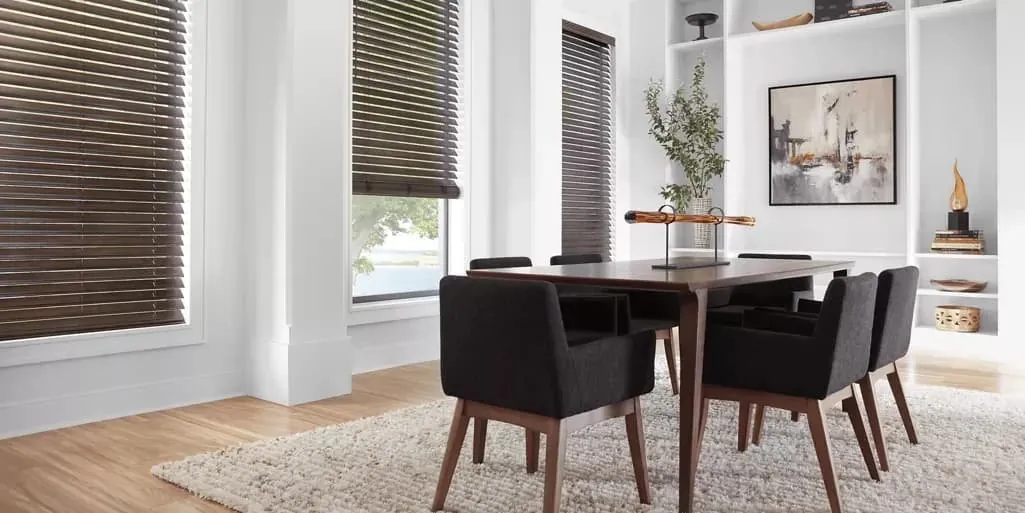
Close neighbors and tall sash in central Milford
The streets through the center of Milford are lined with Victorians and two-family houses, built tight to one another in the granite era. Their windows are tall and narrow double-hung sash, often several to a wall, and the side windows of one house can look almost straight into the side windows of the next. Front rooms sit a few steps from the sidewalk.
Further out, the housing opens up. Post-war ranches and newer colonials sit on bigger lots with more space between them, and the windows are wider, lower and more standard. The question changes from who can see in to how to manage the sun.
Most requests for custom blinds in Milford, MA, start with privacy at street level and next door. Horizontal blinds are well suited to it, because you can let daylight in while keeping a view blocked, simply by the angle of the slats. Getting them to fit those tall, narrow, older openings is the other half of the job.
Custom blinds in Milford, MA, matched to each window
Here are the windows we are asked about most in Milford, and the Hunter Douglas blind that usually suits each one.
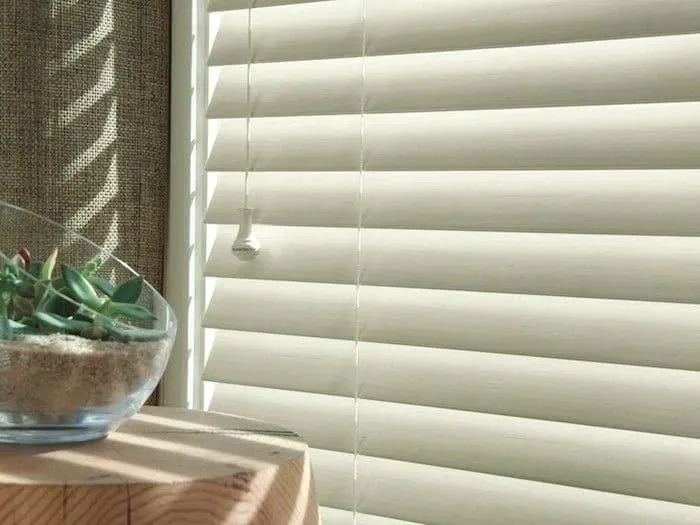
Tilted slats for side windows
Tilt horizontal slats upward. Daylight comes in over the top of each slat, while a neighbor’s window at the same height sees only the slat faces.
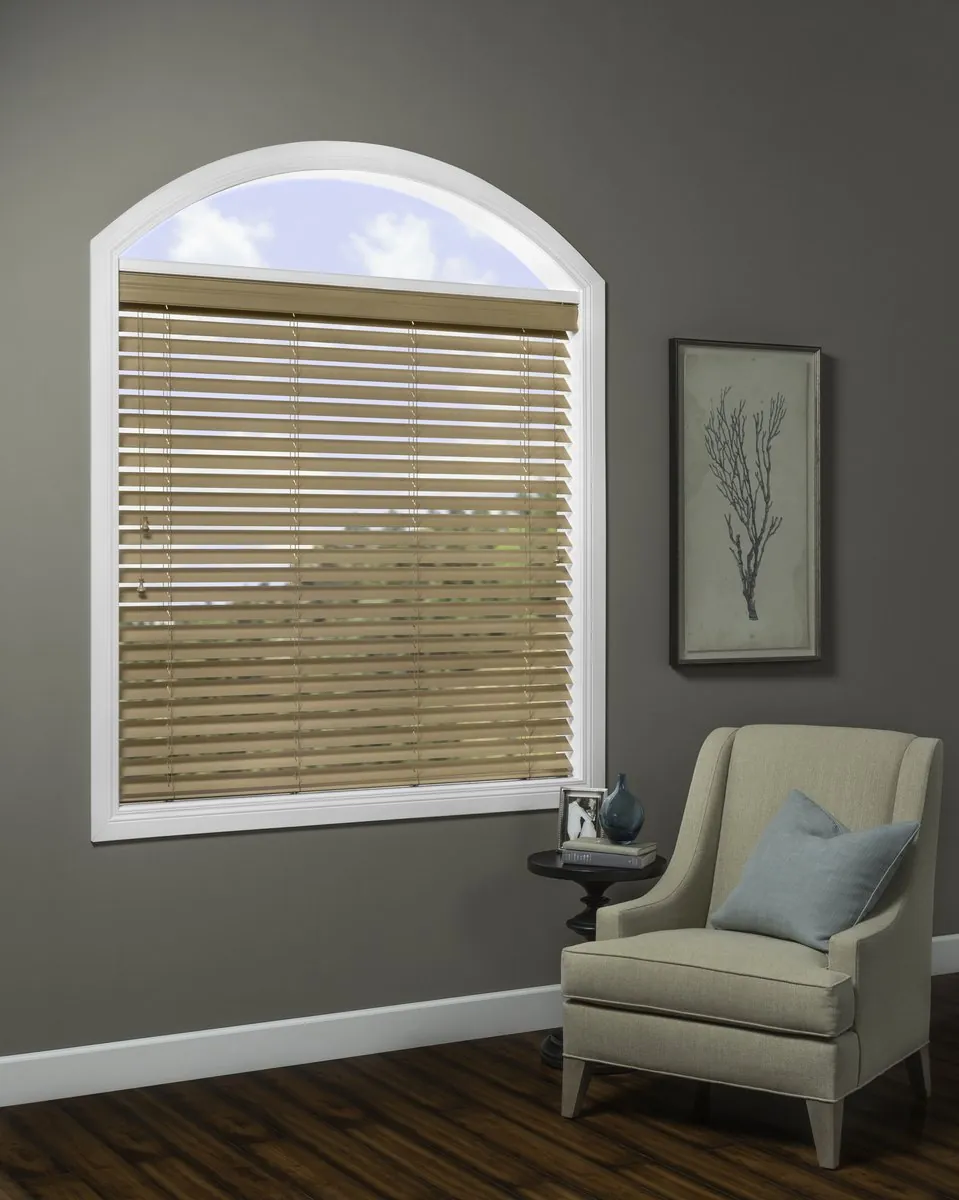
Wood blinds for tall sash
A wood blind made to the full height of the sash, with a cordless lift so a tall blind stays easy to raise.
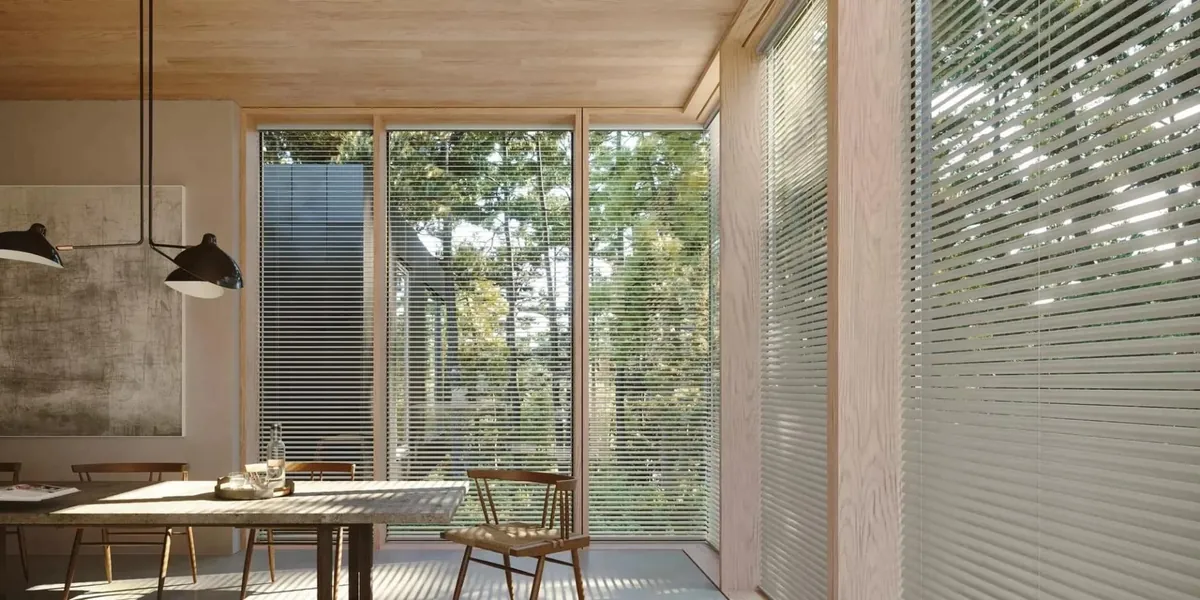
Metal blinds for door glass
Metal blinds sit close to the glass with a slim headrail, so a door still swings freely.
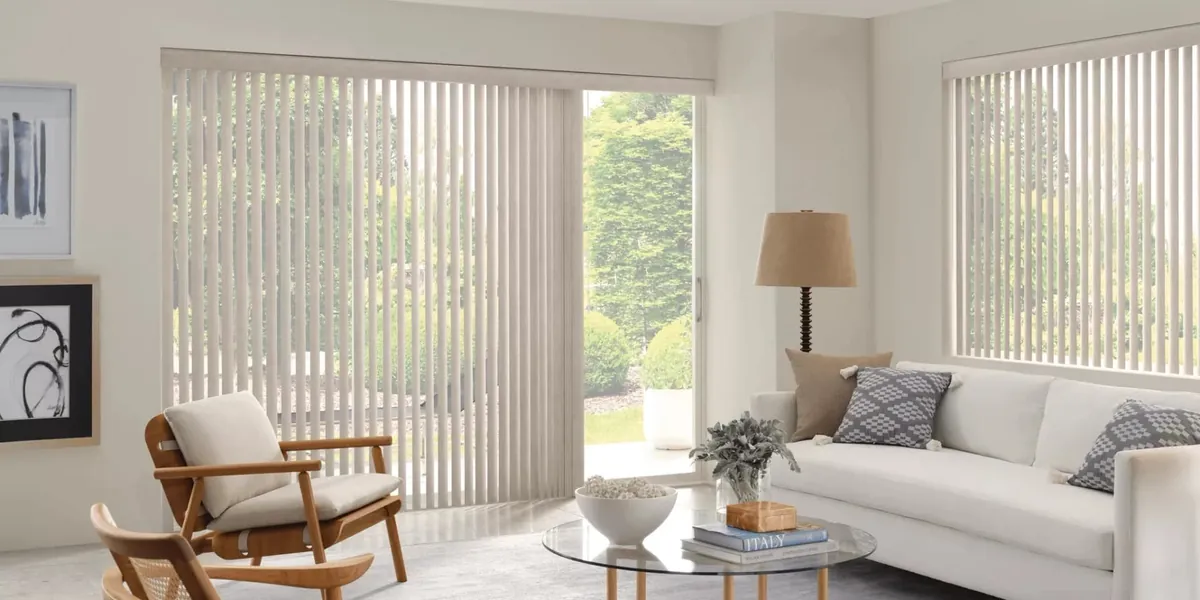
Vertical blinds for ranch sliders
Vertical blinds draw clear of the door and turn to screen the yard behind.
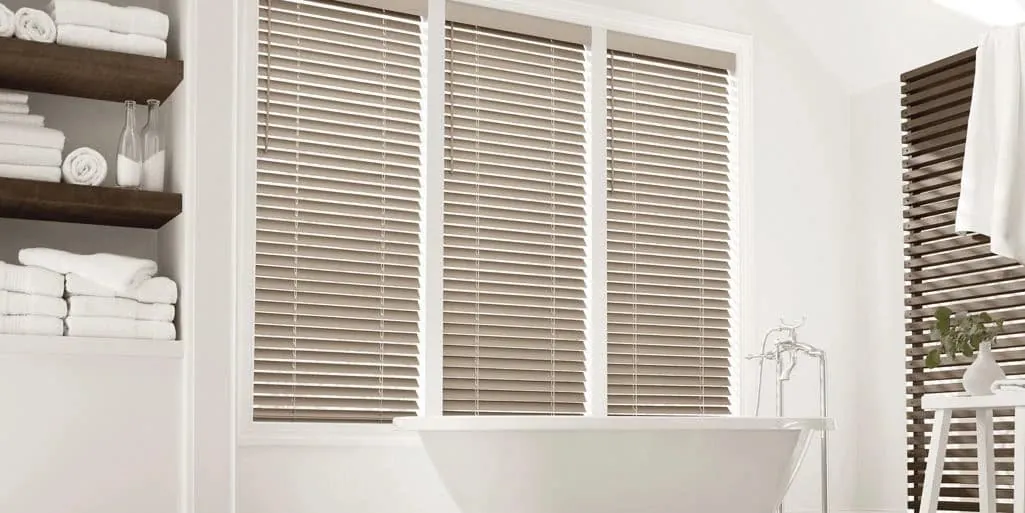
EverWood faux wood blinds for baths
EverWood faux wood keeps its shape in humid rooms and wipes clean.
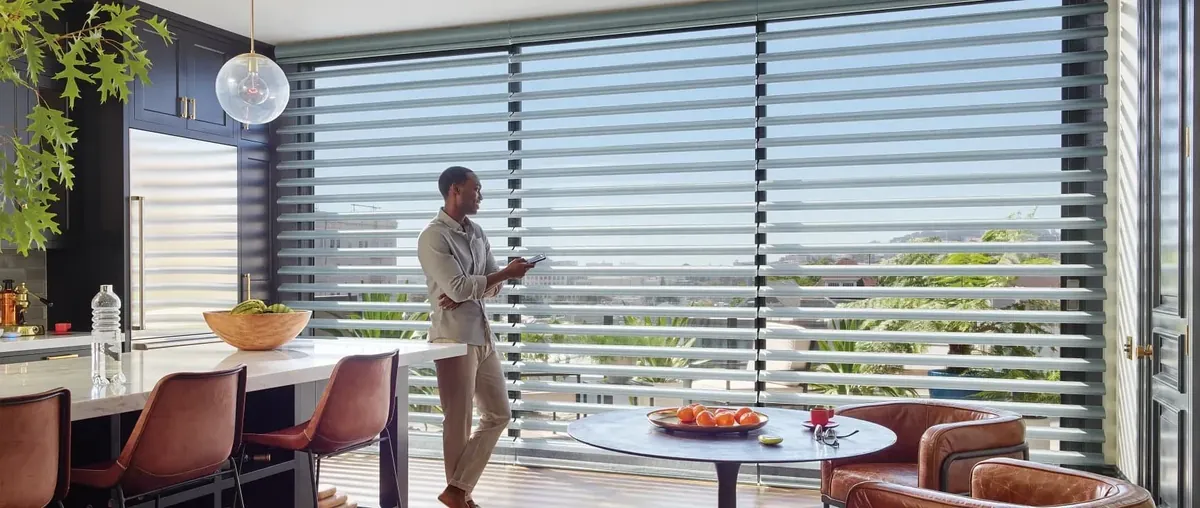
Motorized blinds in Milford
PowerView motorized blinds follow a schedule or a tap on your phone.
Tall, narrow double-hung sash
The Victorians and two-families in the center were built with height in mind. Ceilings are generous and the windows reach most of the way up the wall, narrow and tall, usually in pairs or threes. They bring in good light, but they are not standard sizes, and in a house of that age two windows side by side may differ by more than you would guess.
A made-to-measure blind deals with that by being built to each frame. We measure the width at the top, the middle and the bottom, and the height on the left, center and right, then build to the tightest reading so the blind runs without catching. We also check the depth of the frame, because an inside mount, where the blind sits within the window opening, needs room for the headrail behind the stops.
Height brings its own consideration. A tall blind has more slats to lift, and a cordless lift makes it easy to raise by hand from the bottom rail without a long cord pooling on the sill. On windows you rarely raise, a blind that stays down and simply tilts is often the most practical arrangement, and it keeps the stack from blocking the top of the glass.
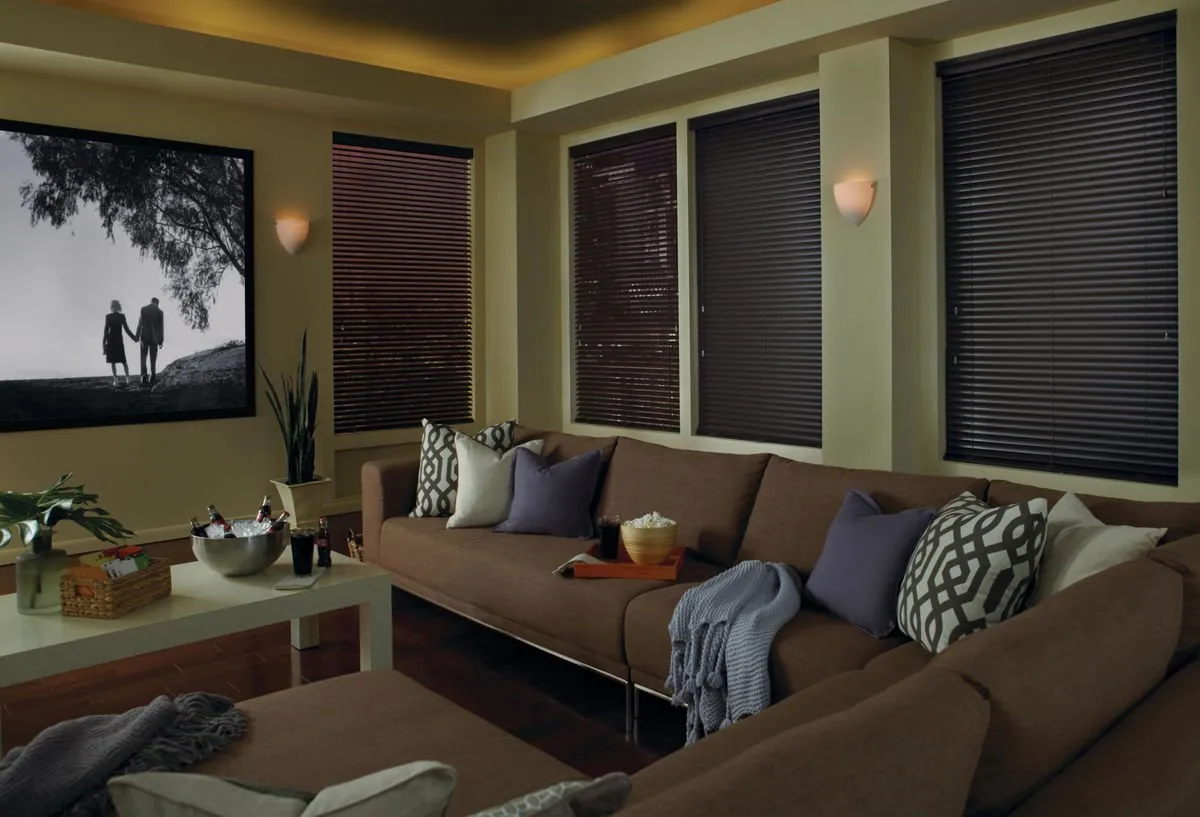
Front rooms a few steps from the sidewalk
In the center, a Victorian’s front parlor or a two-family’s front room often sits just above the sidewalk, separated from it by a small yard or a porch. People walk past all day, and cars stop at the corner. The room needs daylight, but no one wants to feel on display while reading or working at a desk.
Here the downward tilt is useful. Angle the slats so the curved face points toward the street, and someone on the sidewalk below looks up into the slat faces, while you can still see out across the porch. Because the slats block the low line of sight from the street, the room stays bright without feeling exposed. In the evening, closing the slats fully turns a lit front room private in a moment.
Many front rooms in the center are also where the best woodwork is: moulded casings, a mantel, original doors. A wood blind mounted inside the frame, in a color that matches the trim, sits quietly within the opening and leaves all of that on view. It is the most common choice we make for custom blinds in Milford in these front parlors, and from the sidewalk the house keeps its period face.
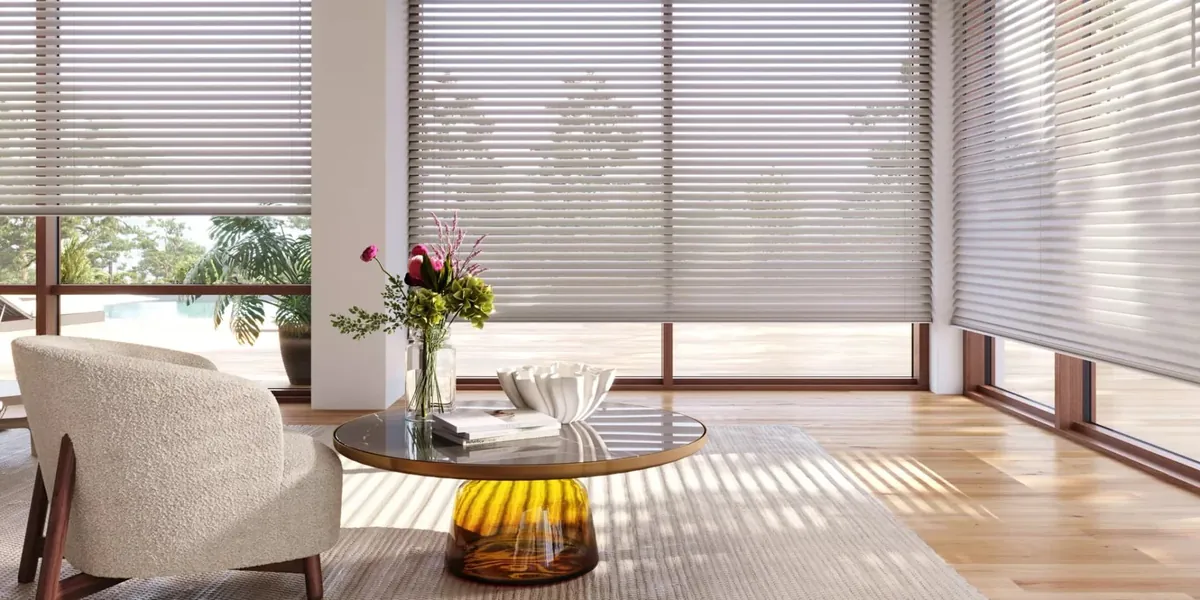
The house next door, a few steps away
In the close-set streets of the center, the side of one house is often only a driveway’s width from the side of the next. Kitchen windows face kitchen windows. Bedroom windows look across at a neighbor’s stair landing. Even with the best intentions on both sides, you want to choose when you are seen.
Horizontal blinds are good at this because privacy and light are separate controls. Tilt the slats upward, so the curved face points into the room, and anyone looking across from the same height sees only the backs of the slats, while daylight still reaches you over the top edge of each one. Tilt them down and you see out toward the yard while the room above eye level stays covered. Close them fully at night and the room is private.
For the narrow side windows of a two-family, which often sit in a stairwell or a hallway, a slim metal blind is a neat fit. In the kitchen, a faux wood blind handles steam from the stove. Choosing custom blinds in Milford for a close-set house is mostly a matter of matching the tilt and the material to what each window faces.
Two-family houses, floor by floor
A two-family usually stacks the same layout on each floor, with matching windows above and below, and often a front porch on each level. From the street the front of the house is seen as one, even though the floors are separate homes.
If you are planning blinds for a whole two-family, matching the color and style on the street side of both floors keeps the house looking tidy and cared for. Inside, each floor can then make its own choices for the rear rooms. If you are doing just your own floor, we can match a color already used on the other floor so the front still reads as a set.
Porches add their own small windows and glass doors. Metal or faux wood blinds suit those, since a porch room tends to be cooler and damper than the rest of the house.
The back of a two-family is often where the kitchens and back stairs are, with small windows over sinks and narrow ones lighting a stairwell. Those windows face the yard and, very often, the back of another house across a shared fence. A faux wood blind over the sink copes with steam and splashes, and a slim metal blind fits the shallow stairwell frames. Both can be tilted for light while keeping the view from across the fence blocked. Because the back stairs are shared space in many two-families, a cordless lift keeps cords off the treads and landings, which is simply tidier and safer.
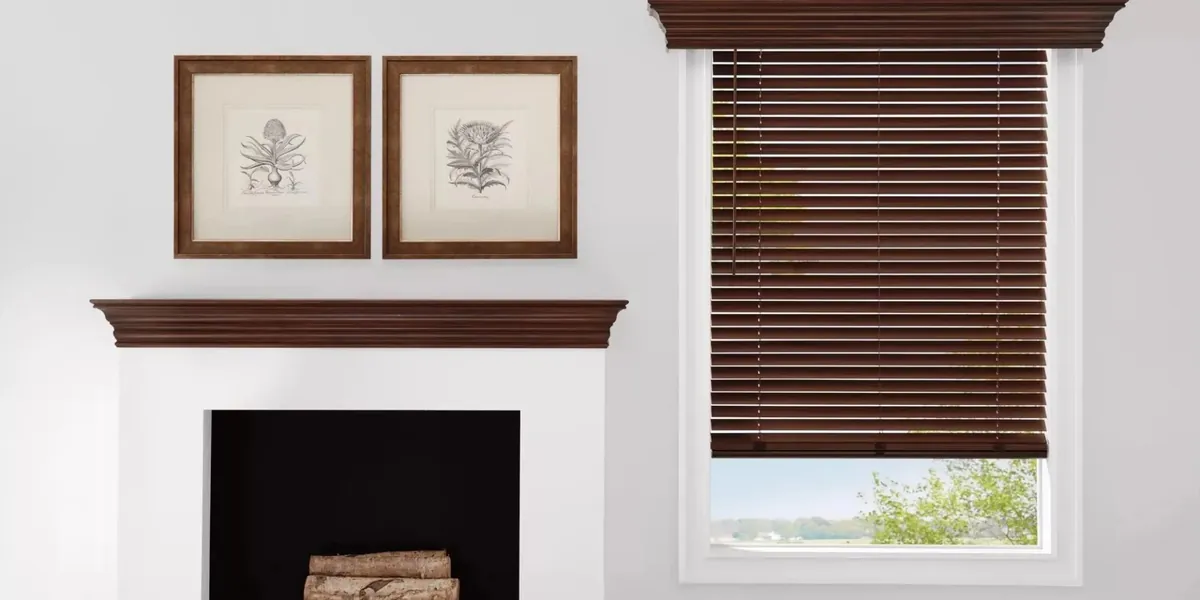
Bays, transoms and Victorian detail
Many of Milford’s Victorians have a bay on the front or side: three or more tall windows set at angles, sometimes with a small transom above each. A bay is a lovely place to sit and an awkward place to cover well.
We treat each window in the bay as its own blind, measured individually, mounted inside each frame and set with the headrails level across the bay. When you raise them together, the bottom rails line up. Transoms above the sash are often best left bare, letting light in high where no one can see in. If one needs covering because of afternoon sun, we can fit a small fixed blind or suggest motorizing it.
Inside mounts are the usual choice in a Victorian because they leave the moulded casings on show. Where an old frame is too shallow, a metal blind’s slimmer headrail often fits, and when even that will not, we mount on the face of the trim and explain why.
Ranches and colonials further out
Away from the center, Milford’s housing becomes post-war ranches and newer colonials on larger lots. The windows here are wider, more standard in size and easier to fit, and neighbors are further away. The emphasis shifts from screening the house next door to handling the sun on a big front window or a south-facing kitchen.
A ranch’s living room often has a picture window with narrower windows either side. Three separate blinds on matched headrails are easier to work than one very wide blind, and they line up neatly. A slider at the back gets a vertical blind. In the colonials, the formal rooms at the front often take wood blinds, the family room and kitchen faux wood, and the bedrooms whatever suits each room’s light.
With more space around these houses, sun matters more than neighbors. A south-facing kitchen in a newer colonial can be dazzling at lunchtime, and a west-facing family room can bake in late afternoon. Horizontal blinds let you angle the slats to throw the sun up onto the ceiling, so the room stays bright without glare on a screen or a counter. Darker slats in a bedroom keep the room dim for sleeping. When we plan custom blinds in Milford, MA, for a ranch or colonial, we note which way each room faces before suggesting a color or a material.
The four materials, compared
Each Hunter Douglas blind we fit is made to measure. Material decides where each one works best.
- Parkland wood. Real hardwood, stained or painted. Warm and handsome in Victorian front rooms and dining rooms.
- EverWood faux wood. A wood look that copes with moisture. Kitchens, baths, porch rooms and laundry rooms.
- Metal. Slim aluminum slats. Door glass, stairwell windows and shallow old frames.
- Vertical. Vanes on a track, drawn to the side. Sliders and wide windows in the ranches and colonials.
A central Victorian might use wood in the parlor and dining room, faux wood in the kitchen and bath, and metal on the door and stair windows. A ranch might keep it simple with faux wood throughout and a vertical blind on the slider. See our main custom blinds page for more on each range.
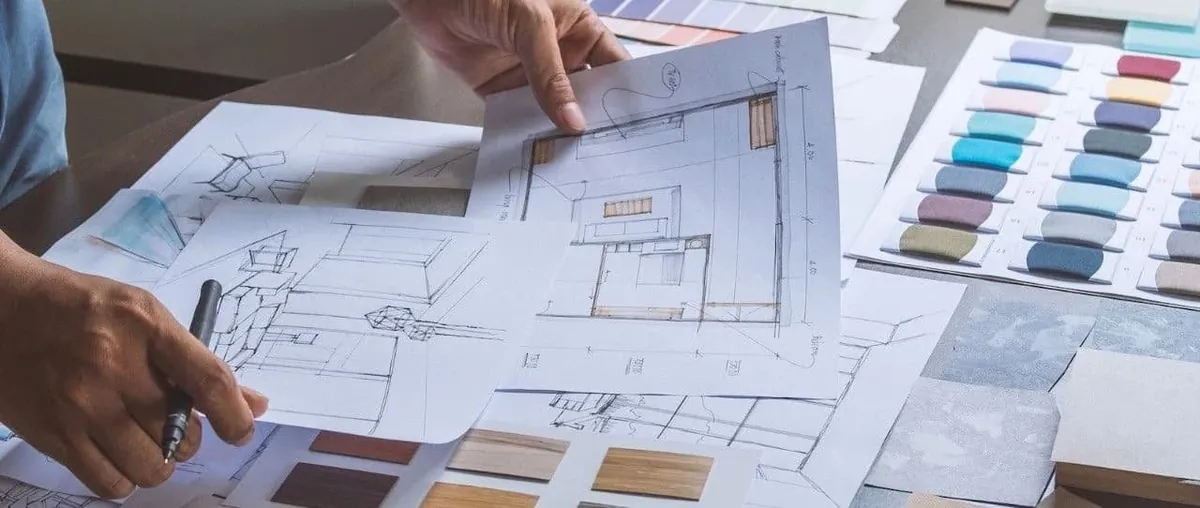
Color on a close-set street
On a street of Victorians and two-families, the front windows are seen up close, from the sidewalk and from across the road. Matching the blind color to the window trim, usually a white or cream, makes the blinds recede and lets the architecture show. A contrasting color on the street side tends to look busy when the houses sit so close together.
Inside, you have more freedom. Stained wood in a dining room, a soft gray in a modern kitchen, a darker tone in a bedroom that needs to stay dim. We bring a range of whites and stains, because a white that looks right in a sunny front room can look gray on the shaded side of a house that sits in its neighbor’s shadow for half the day.
Controls for everyday use
How you raise and tilt the blinds matters on windows you use daily. A cordless lift is tidy and safe around children and pets, with nothing hanging from the headrail. A wand tilts the slats. Routeless slats, which have no holes for lift cords, block the small dots of light from a streetlamp or a neighbor’s porch light, useful in a bedroom on a busy street.
On a tall window over a kitchen counter, or a window behind a bed, PowerView motorization saves a stretch. It can also close every blind at dusk on its own, a simple way to give a close-set house its evening privacy. We plan how each motor is powered at the visit.
How measuring and fitting work
At the consultation we bring the samples to you, help you choose, and measure every window. Our vans carry wood, faux wood and metal slats in many colors, vertical vanes and each control, so you see them against your own trim and in your own light. You receive a free estimate and take your time over it. When the blinds are made, here is how we fit them.
- We check each blind against the window it was made for before anything goes up.
- Brackets go into sound wood, taking care with old trim that may have been painted many times.
- Each headrail is set level, even where an old frame has settled out of true.
- Every lift and tilt is tested, and bay windows are lined up so the bottom rails match.
- We show you how each blind works, including any PowerView scenes.
Our installers are certified by Hunter Douglas. A careful fit is what makes custom blinds in Milford, MA, sit snugly in each frame and work smoothly for years.

What a Hunter Douglas Gallery dealer brings
Blinds & Designs is a Hunter Douglas Gallery dealer, a designation Hunter Douglas reserves for dealers who meet its standards. For your house it means the full blind range in one visit: Parkland wood, EverWood faux wood, metal and vertical blinds in every color, plus PowerView motorization. Our installers hold Hunter Douglas certification, and we repair blinds and shades too.
We also offer interior design consultations if you want help with color or the other treatments in a room. Read about what happens at an in-home consultation. For other rooms, see our roman shades in Milford, cellular shades in Milford, or everything we offer on the Milford page.

Our Franklin showroom
The Franklin showroom is the closest Blinds & Designs location to Milford. It is a good first stop if you want to compare wood and faux wood slats in person before booking a visit. You can find the address and hours on the Franklin showroom page.
Questions from Milford
How do blinds give privacy from the house next door without making the room dark?
Tilt the slats upward. Someone looking across from the same height sees the slat faces, while daylight still comes in over the top edge of each slat.
Will blinds fit my tall, narrow Victorian windows?
Yes. Each blind is made to the frame, measured in several places. A cordless lift keeps a tall blind easy to raise, and a metal blind fits where a frame is too shallow for wood.
Can I match the blinds on both floors of a two-family?
Yes. We can match a color already used on the other floor, or plan both floors together, so the street side looks consistent.
What should go in the kitchen and bathroom?
EverWood faux wood. It copes with steam and wipes clean, and its colors sit well beside real wood blinds in other rooms.
Does it cost anything to get an estimate?
No. After we measure, the estimate is free and there is no obligation.
Getting started
Holding real slats up at your own windows, with the house next door in view, makes the choice clear. Request a consultation and we will bring Hunter Douglas blinds to your Milford house, measure each opening and give you a free estimate. You can also use the call button, or visit the Franklin showroom.