
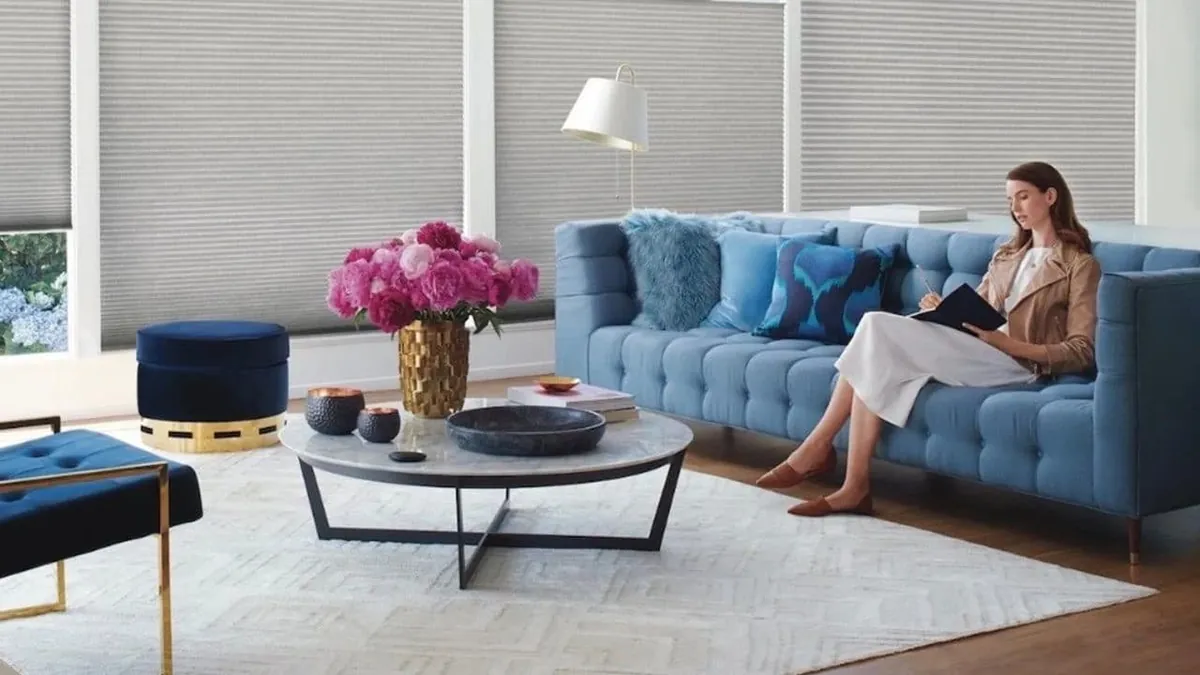
Single-hung sash, sliding windows and a cold winter
Along Route 106 and South Street, Plainville’s housing is mostly post-war capes and ranches on modest lots, with some newer colonials mixed in. Inside, the windows follow a familiar pattern: single-hung sash where only the bottom half moves, and horizontal sliders that open side to side. That makes cellular shades in Plainville, MA, a practical, well-understood job, and one where small details make a real difference.
Before any fabric is chosen, we look at the windows themselves. These are honest, hard-working houses, and many still have the windows they were built with or straightforward replacements in the same openings. The glass is where the warmth goes on a cold night, and on a modest lot the side windows often look toward the house next door.
A honeycomb shade handles both. Its pleats are hollow cells, and each one holds a layer of still air between the glass and the room, which slows the cold. The fabric you choose decides how much light and privacy you get. It is a simple product that suits a simple, well-built house.
Honeycomb shades for every window in the house
Six situations come up in nearly every Plainville house we visit. We bring a sample for each, so you can try them at your own windows.
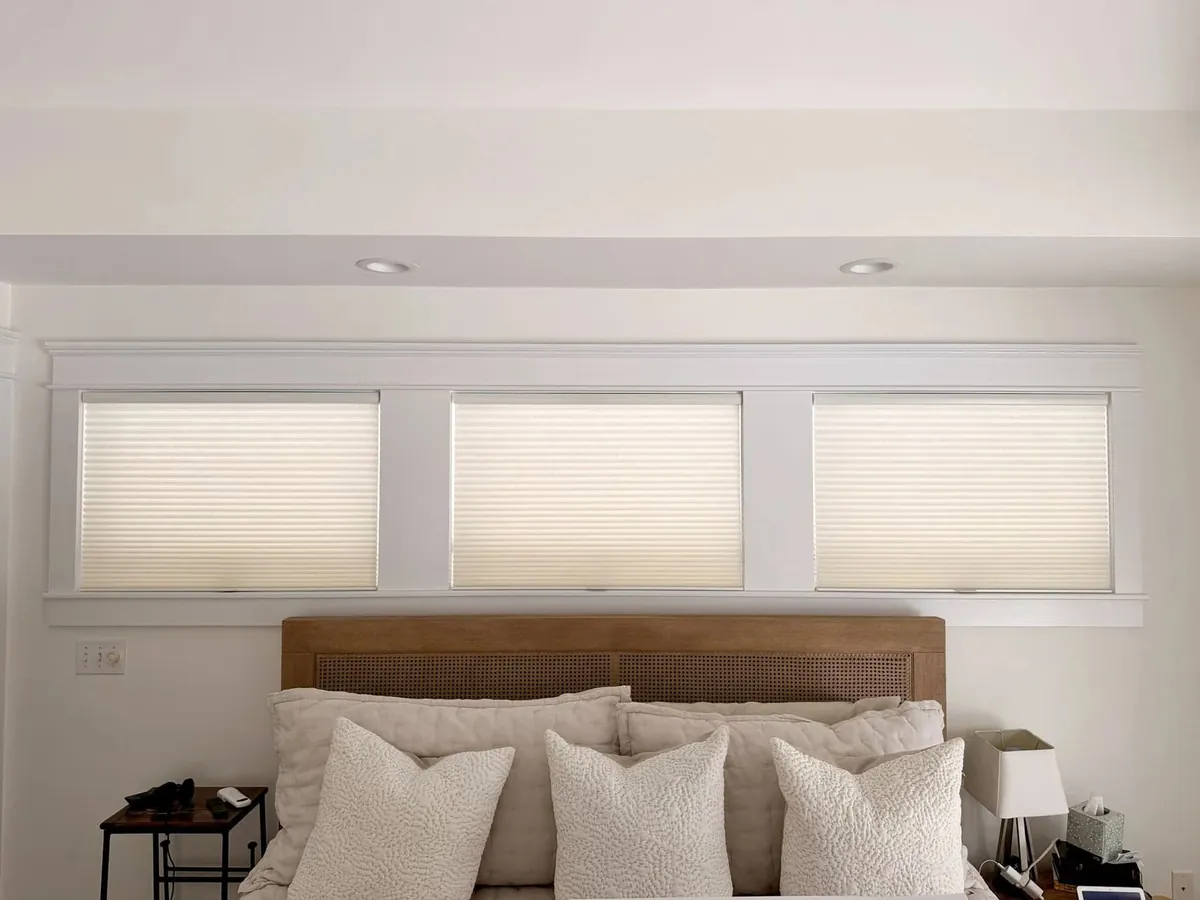
Single-hung bedroom windows
Room-darkening honeycomb mounted inside the frame, sized to the sash so the window still opens freely behind it.
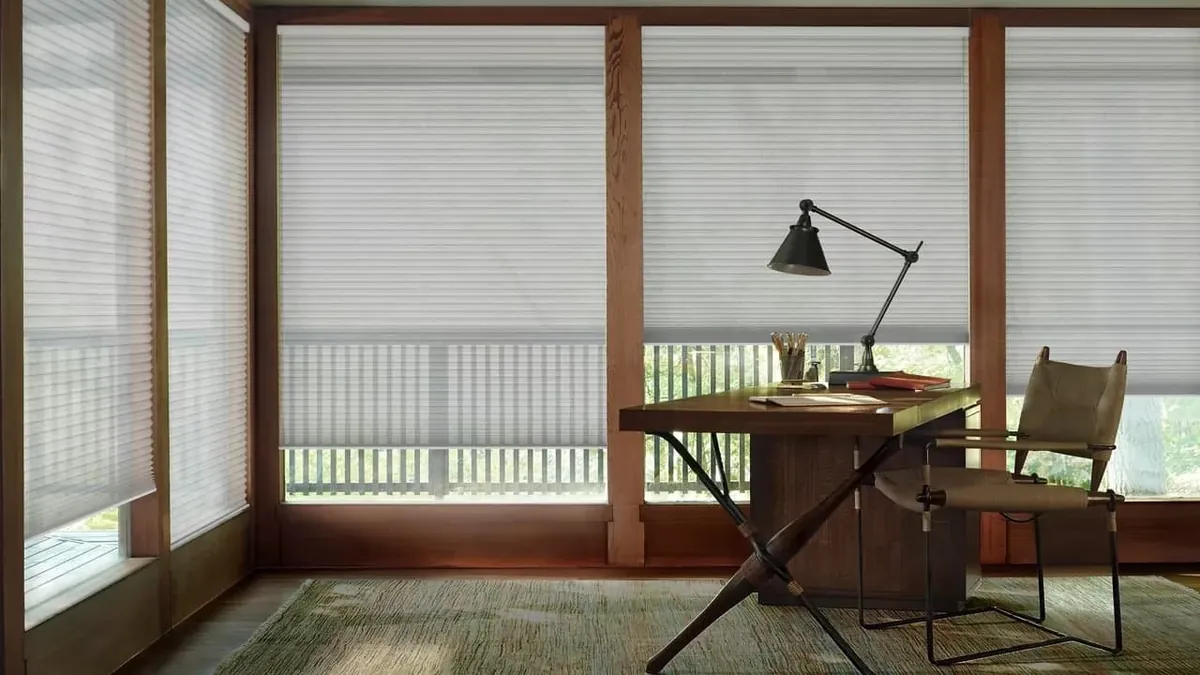
Horizontal sliding windows
Wide, shorter shades for windows that open side to side, often in kitchens, dens and bedrooms.
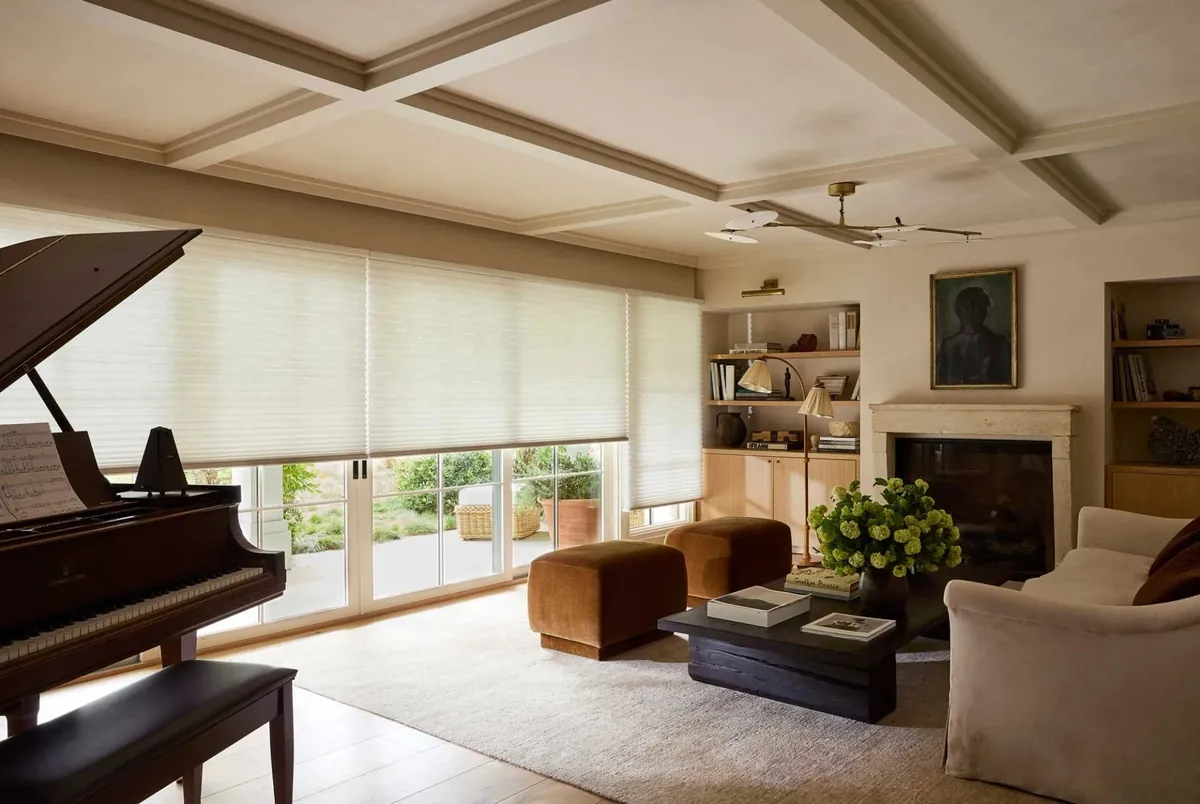
Duette across the ranch picture window
Two or three shades on one headrail across the main front window, moving as one or separately.
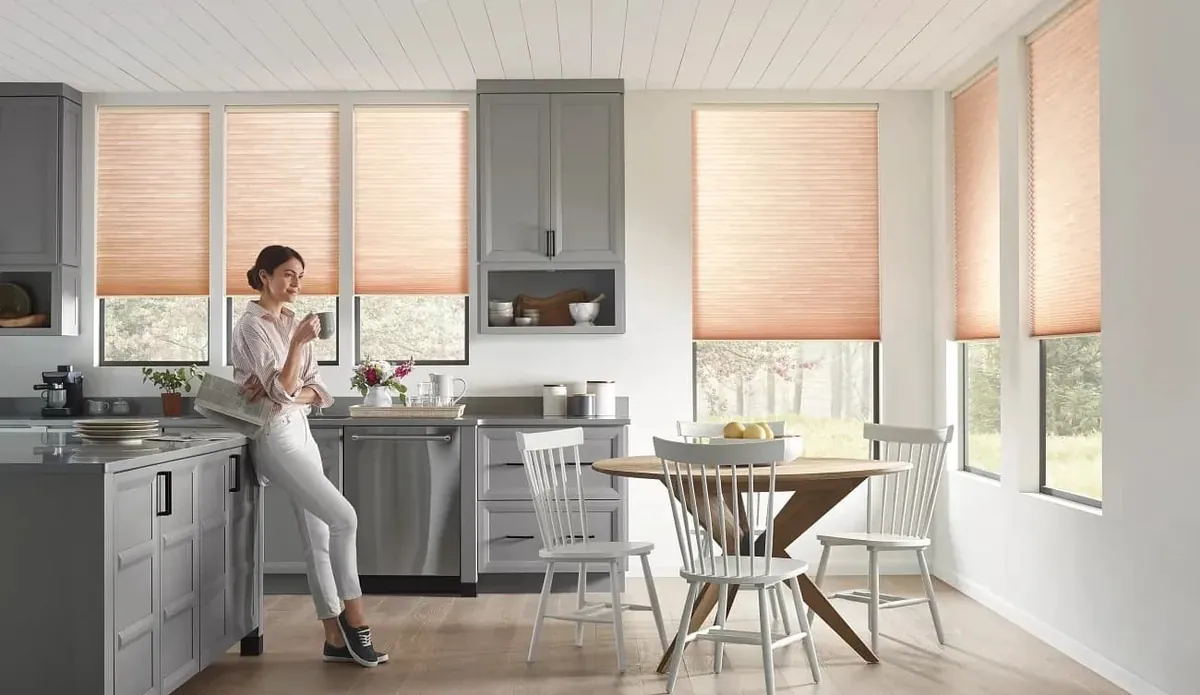
The window over the sink
A cordless light-filtering shade you can lift with one hand across the counter.
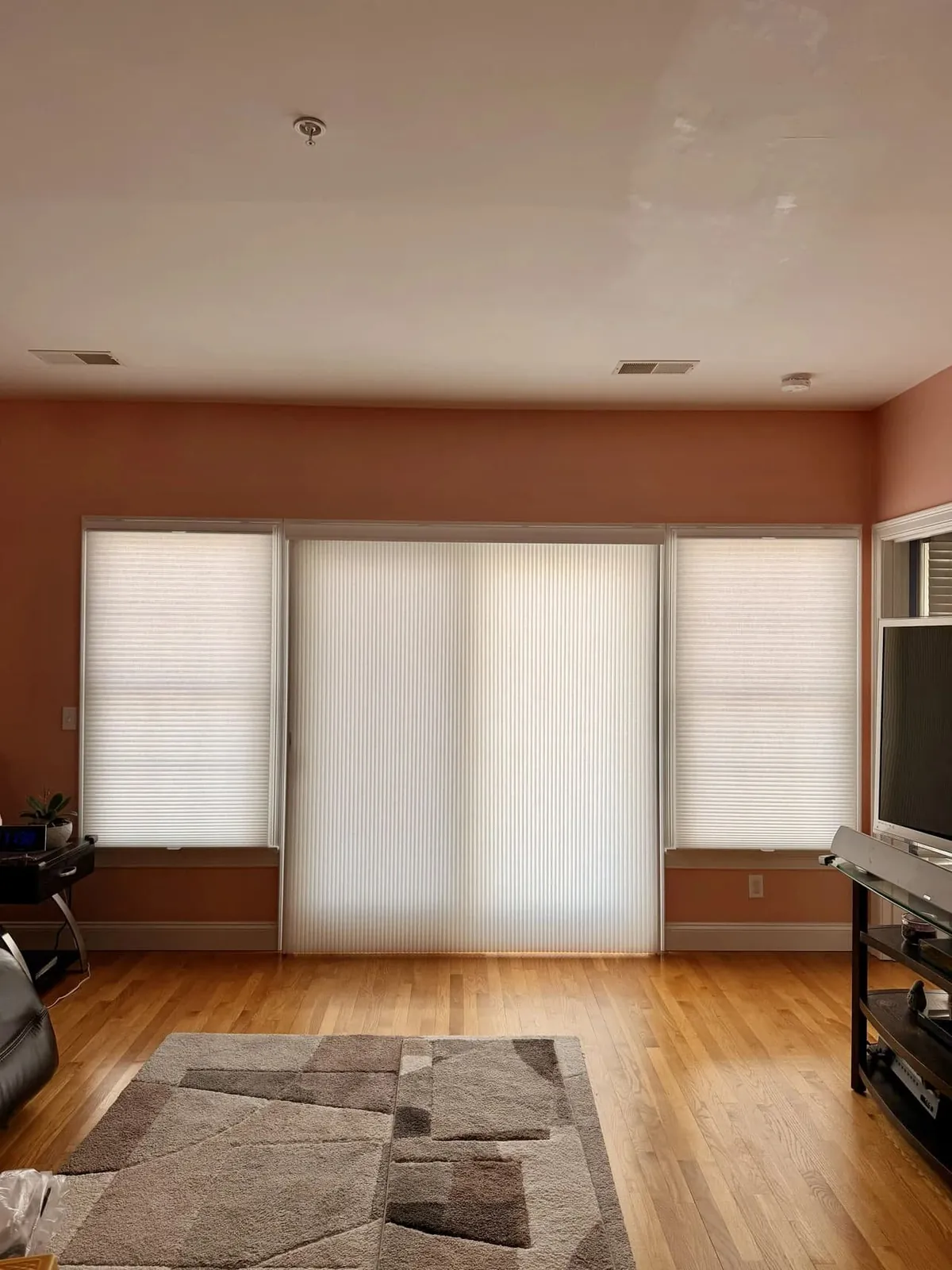
The patio door
A sideways honeycomb shade on a track, so the door opens without a fight.
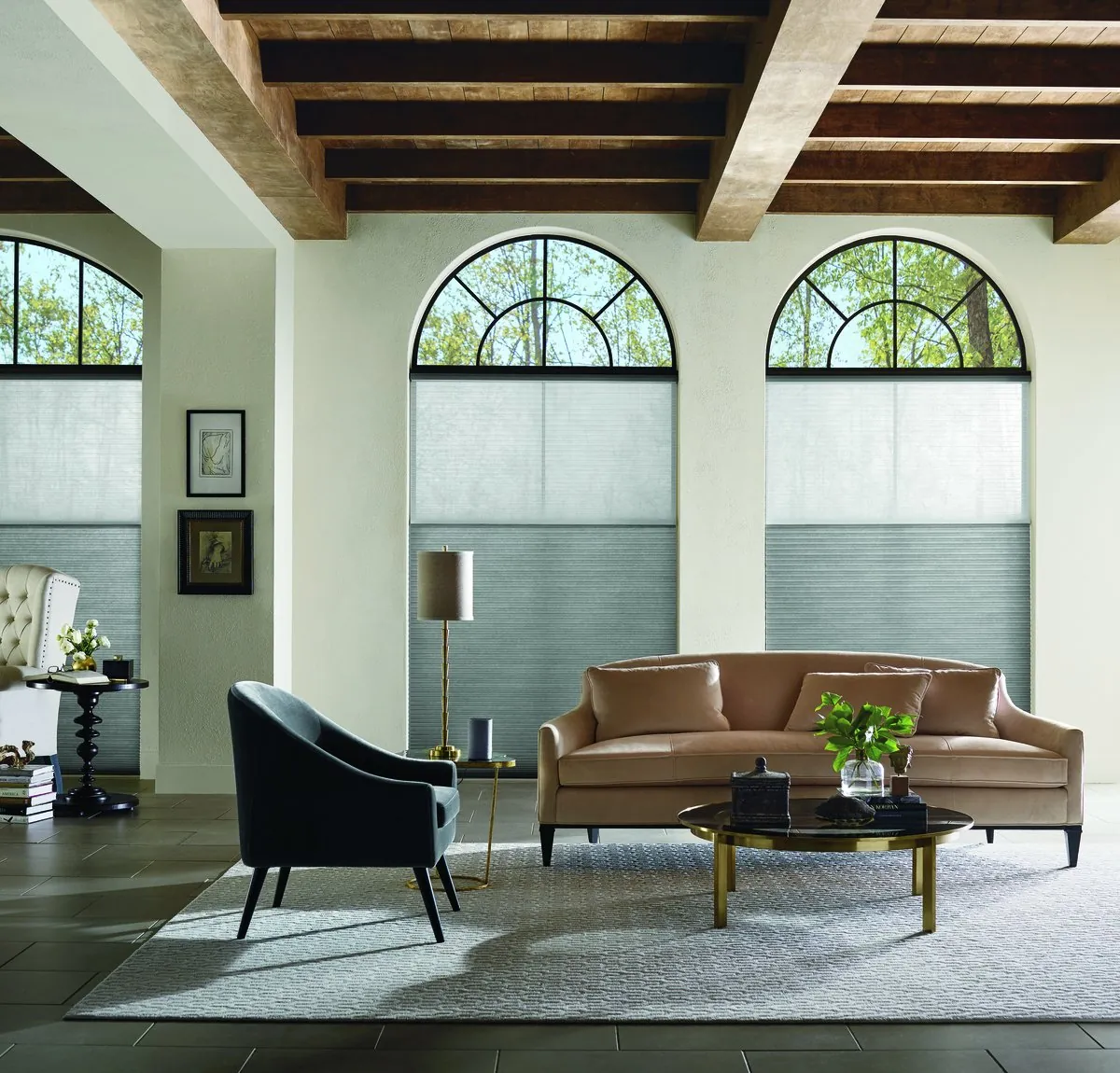
Top-down, bottom-up
Privacy on the lower glass and daylight through the top, for side windows that face a neighbor.
Getting single-hung windows right
A single-hung window looks just like a double-hung from across the room, but only the bottom sash slides. The top sash is fixed. That matters for a shade, because the bottom half is the part you open in spring and close in autumn, and the shade has to stay out of its way.
An inside mount handles this neatly. The headrail sits inside the window frame, above the top sash, and the shade drops down in front of both sashes. When you want to open the window, you raise the shade, lift the sash and leave the shade up or lower it to where it clears the sash lock. Because honeycomb shades fold into such a slim stack, very little glass is lost when the shade is raised.
We check the depth on every single-hung frame. Many post-war windows have plenty of room for a headrail, but replacement windows fitted into the old openings sometimes leave less depth than you would expect. Where a frame is too shallow, a mount on the face of the trim does the job well.
Horizontal sliding windows
Sliders are common in Plainville’s ranches and capes, especially in kitchens, dens and back bedrooms. They are wider than they are tall, and the sash slides sideways on a track. People sometimes assume a slider needs a vertical treatment. It does not. A standard honeycomb shade that lifts and lowers works very well on a horizontal slider, because the shade sits in front of the whole window and you simply raise it when you want to slide the sash open.
The shape of a slider does affect the choice. A wide, short shade is light to lift, so a cordless lift suits it well. If the window is wider than a single shade should be, we split it into two shades on one headrail. And because a slider often sits higher on the wall than a single-hung, for example over a bed or a counter, we think about how easily you will reach the bottom rail before recommending a lift.
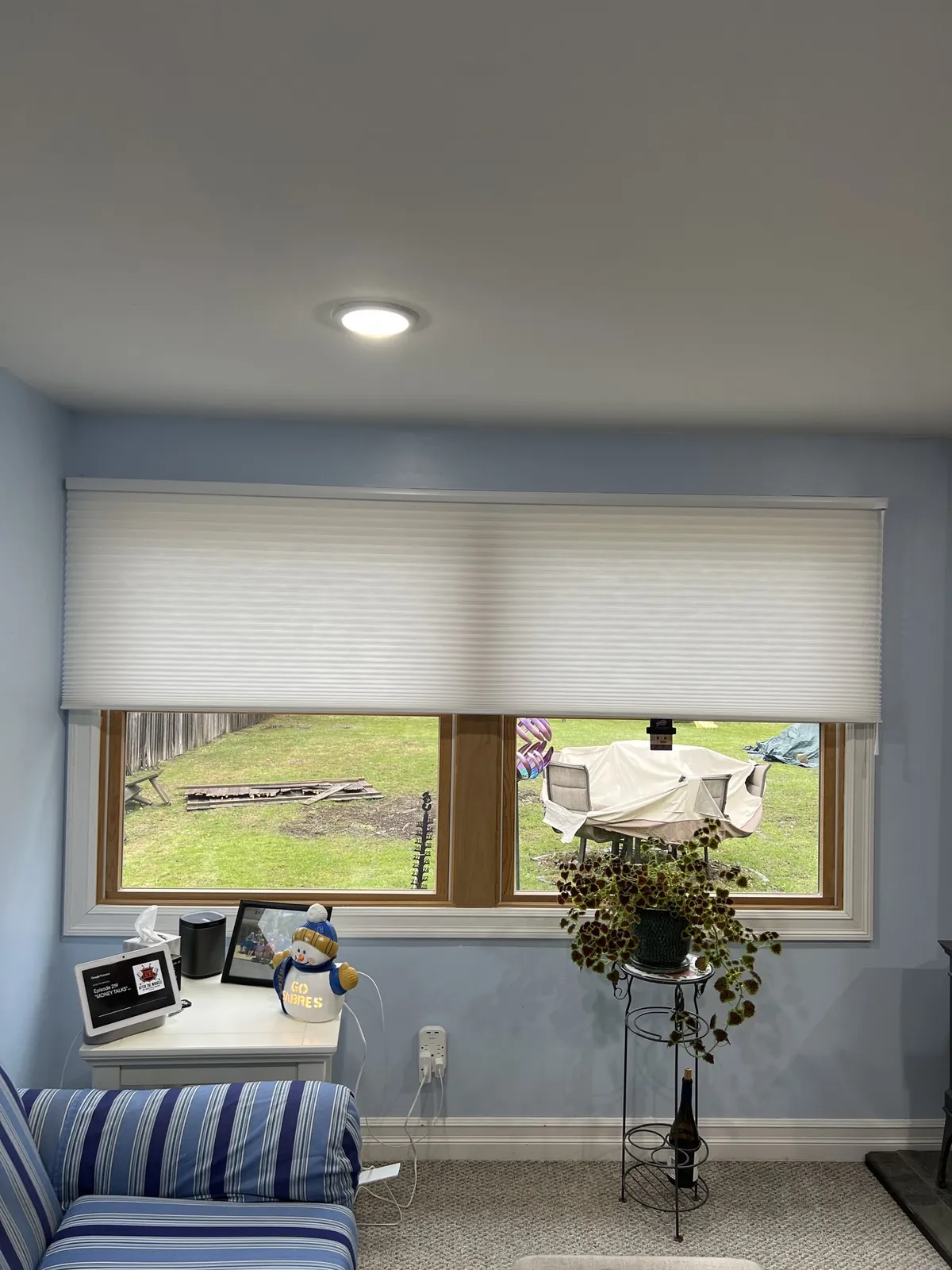
Capes along South Street
The post-war capes in town have a compact layout: a living room at the front, a kitchen at the back, a bedroom or two downstairs and, in many, bedrooms upstairs under the roof with dormer windows. The upstairs rooms in particular feel the seasons, because the roof above them takes the full weather.
Most dormers hold an ordinary single-hung sash recessed well back from the room, so an inside-mount shade fits there easily and the recess keeps the headrail out of sight. A room-darkening fabric upstairs keeps long summer evenings out of a child’s room and slows the heat that gathers under the roof on hot afternoons. On winter nights, the cells hold a layer of air against the glass and the room keeps more of its warmth.
Downstairs, a cape’s front living room usually has two or three windows facing the street. A light-filtering fabric is a good choice there: the room stays bright, and from the sidewalk you see an even glow rather than the room inside.
Ranches along Route 106
The ranches put everything on one floor, and they put the biggest window in the living room. That picture window, often a fixed center pane between two that open, is the largest single area of glass in the house. It is also where the house loses the most heat on a winter night.
One very wide shade is possible, yet splitting the window into a pair or a trio of honeycomb shades on a common rail usually works better. Linked, they rise and fall together; unlinked, you can drop the end that catches the late sun and leave the middle open to the street. Light-filtering fabric keeps the living room bright and takes the glare off a sunny driveway or a snowy front lawn.
At the back, most ranches have a kitchen window over the sink and a sliding door or patio door to the yard. Both get the same honeycomb insulation as the front of the house, so the whole place feels warmer, not just the front room.
Modest lots and the house next door
On a modest lot, the side windows of one house often face the side windows of the next across a driveway or a narrow yard. In the front rooms that is not much of an issue, but in a bathroom, a bedroom or a dining room it is something you want to solve without living in the dark.
Top-down, bottom-up honeycomb shades are the usual answer. You lower the shade from the top and raise it from the bottom, so the lower part of the window, the part at eye level with the neighbor’s window, stays covered, while daylight comes in through the top. In a bathroom, a light-filtering fabric does the same job and keeps the room bright.
At night, with the lights on, a light-filtering fabric still gives good privacy, and a room-darkening fabric gives complete privacy. We usually recommend one or the other for each room based on which way it faces and how close the neighbor is.
Kitchens, dens and the back rooms
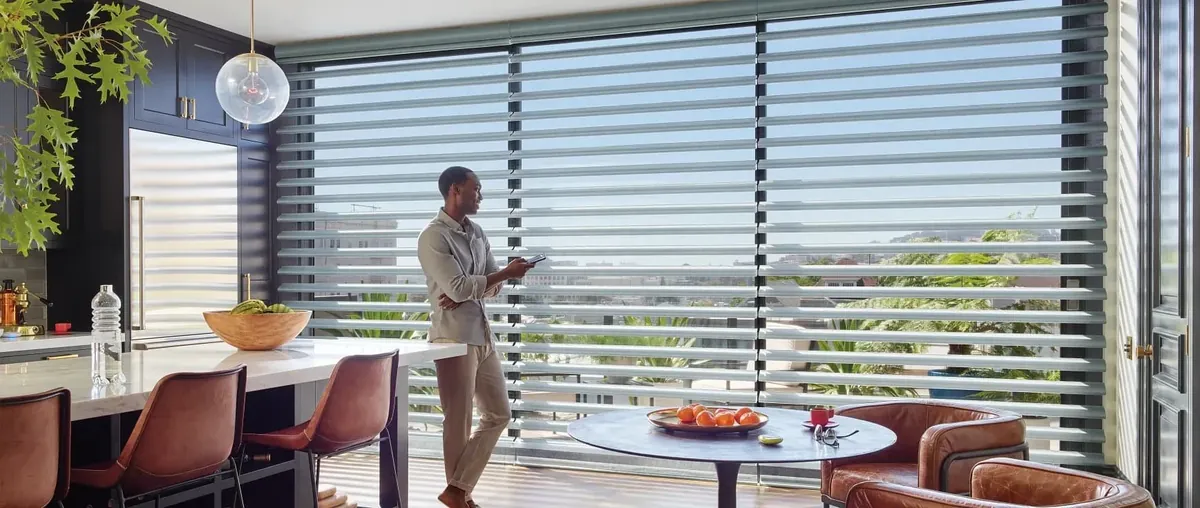
The rooms at the back of a Plainville cape or ranch work hardest and get the least attention. The kitchen window sits over the sink, usually a slider or a short single-hung, and takes splashes, steam and the morning sun. A den or family room added on at the back may have a slider of its own and a patio door, and often faces the yard where the afternoon sun lands.
Honeycomb shades suit those rooms better than people expect. A light-filtering fabric over the sink cuts glare on the counter without making the kitchen gloomy, and the fabric can be wiped down. A cordless lift is easy to reach across the counter. In the den, the same fabric across the windows and the patio door ties the room together, and lowered on a cold evening it holds back the chill that otherwise pools near the glass.
These are also the rooms people tend to treat last, after the front of the house is done. There is no reason to wait. Starting with the room you use most, even if nobody sees it from the street, often makes the biggest difference to how warm the house feels day to day.
The newer colonials
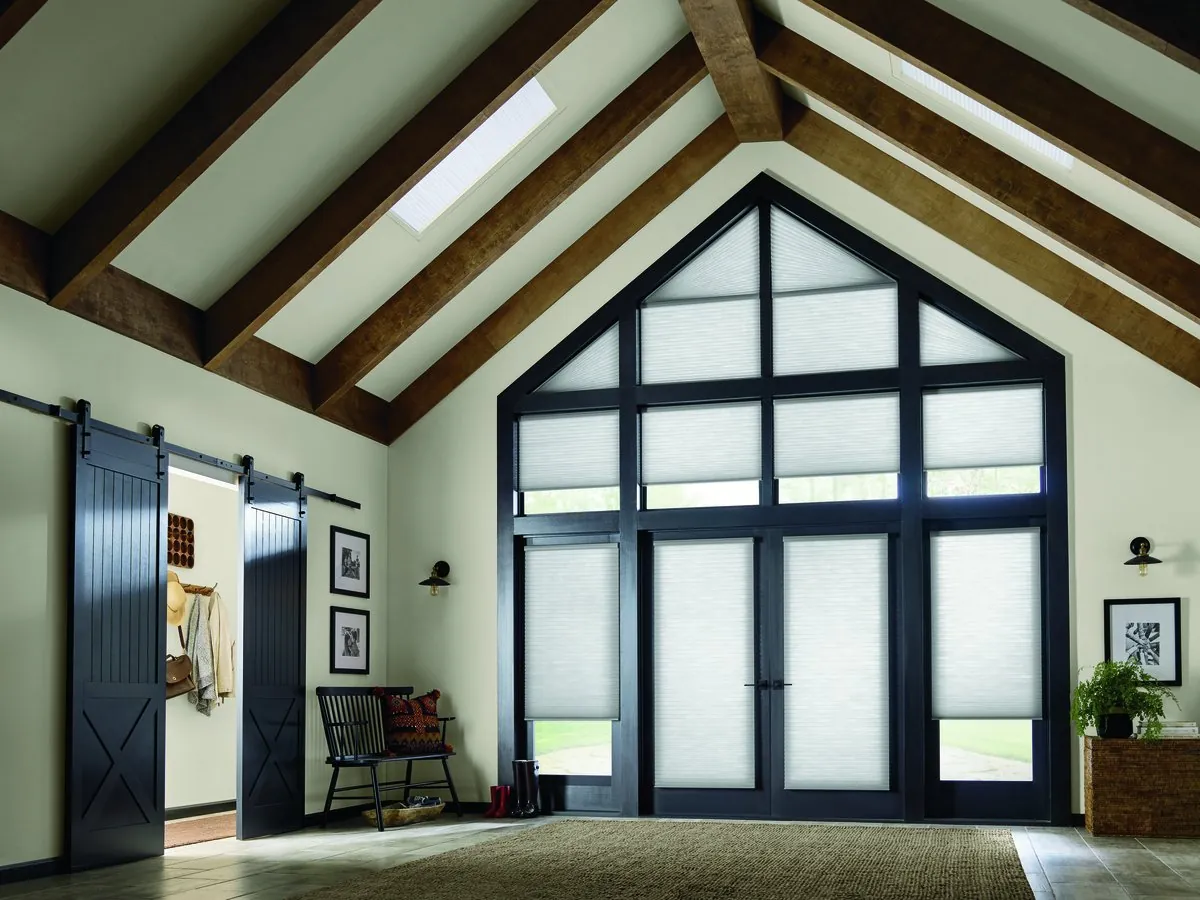
The newer colonials mixed in with the older housing have more space and two full floors, but their windows follow the same pattern: standard single-hung sash and a slider or patio door at the back. The openings are square and consistent, which makes an inside mount easy throughout.
In a colonial, a consistent look from the street is worth planning, and cellular shades in Plainville make that easy. Honeycomb shades have a neutral color on the side that faces the glass, so even if every room inside has its own color, the house looks uniform from outside. Raise them all to the same height and the front of the house looks finished.
Upstairs, many colonials hide a window halfway up the stairs, above the drop, where nobody can stretch safely. A motorized shade is made for exactly that spot.
What makes a honeycomb shade warm
Inside every honeycomb shade is a row of hollow cells. Lowered over a window, each cell holds air that hardly moves, and still air is slow to pass heat along. So the cold from the glass reaches the room more slowly, and the warmth from your heating stays in the room longer.
A number of Duette fabrics hide a smaller cell within the larger one, and double-cell shades stack a second row. That adds more trapped air, which helps in the coldest rooms of a Plainville house, often a north-facing bedroom or an upstairs room in a cape.
Fit matters as well. A shade that fills the window opening edge to edge, with only a narrow gap at each side, holds more air against the glass than one that hangs loosely. That is one reason we measure every window, even standard sizes.
Choosing cordless, corded or motorized
Ask a room full of parents what they want hanging beside a window and the answer is nothing at all. That is why cordless lifts have become the usual choice for cellular shades in Plainville houses with toddlers, grandchildren or a curious cat. A gentle push or pull on the bottom rail moves the shade, and it holds wherever you let go.
For an extra-wide shade, say across a ranch picture window, a continuous cord loop takes the effort out of lifting the extra fabric. And for the window you can never quite reach, over a tub or high on a stair landing, PowerView does away with cords altogether: tap your phone, press the handheld remote or let a daily timetable run it. Power for each motor is something we sort out with you, window by window, during the visit.
What happens when we visit
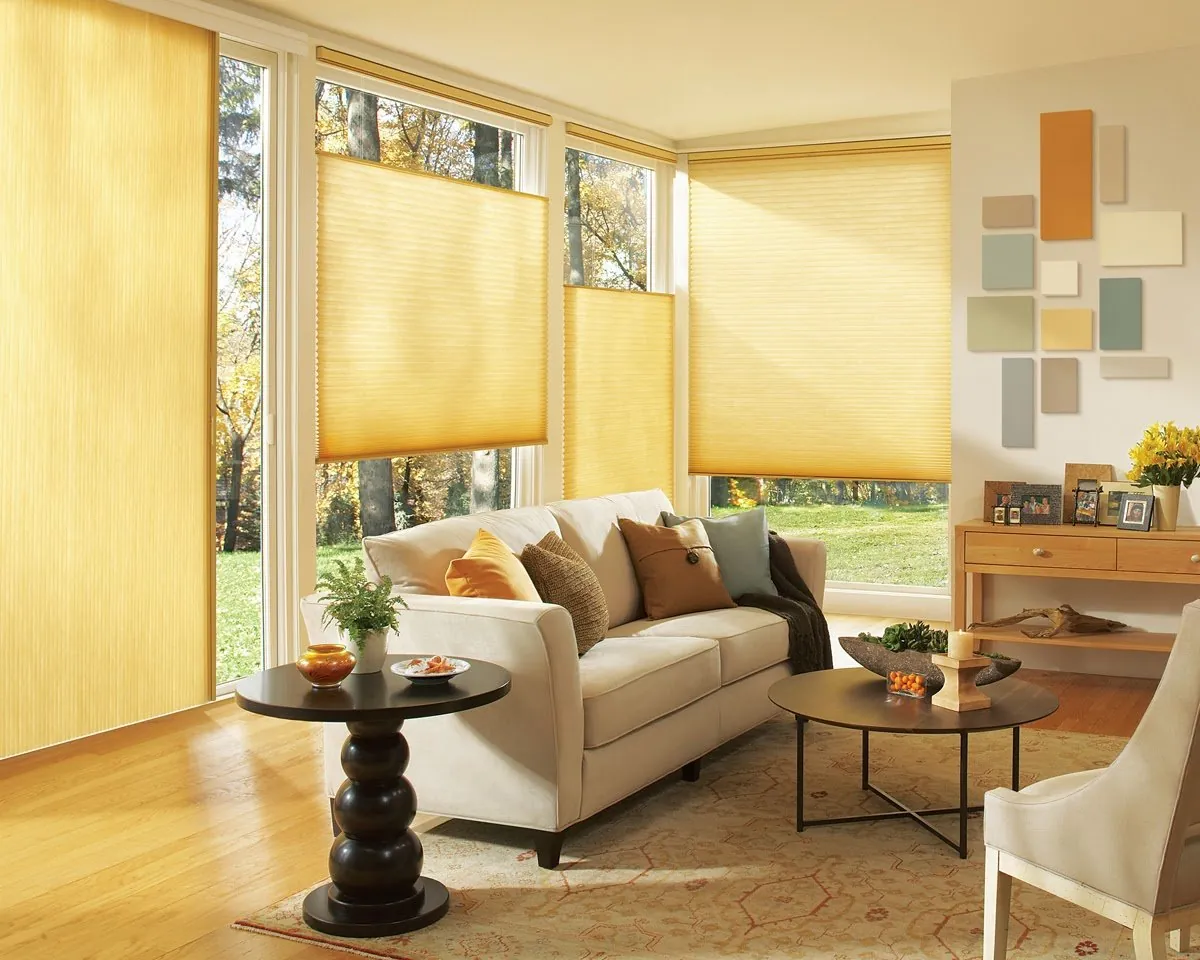
Plainville houses are easy to plan in person, room by room. The fabrics come with us in the van, which means you choose against your own walls, your own floors and your own daylight.
- Ask for a visit through Request a Consultation, or use the call button.
- We bring honeycomb fabrics from sheer to room-darkening, in a spread of colors, and show you the lift choices.
- You show us the rooms that bother you most: the cold bedroom, the bright kitchen, the side window by the neighbor.
- We try the samples at those windows, and at the sliders and single-hung sash, so you can see how each one opens and closes.
- We measure everything.
- You get a free estimate for the shades you have chosen to consider, and decide in your own time.
If you like to know the drill in advance, our page on what happens at an in-home consultation walks through it.
Duette and Applause
Both are Hunter Douglas honeycomb shades, built around the same cell. Duette has the wider range, with more fabrics, opacities and sizes, the sideways shade for patio doors and options for very wide windows. Applause has its own collection and suits standard single-hung and slider openings very well.
Many Plainville houses mix the two: Duette on the picture window and patio door, Applause on the bedroom and kitchen windows. The Applause page explains that line, and the cellular shades page covers the full range.
Installation
Our certified Hunter Douglas installers fit every shade we sell. They check that each one clears the sash lock on single-hung windows and the track on sliders, level every headrail, test each lift and show you how everything works before they leave. On a replacement window set into an older opening, they also confirm the screws find solid framing rather than just the trim, so the shade stays put through daily use.
Seeing samples at home
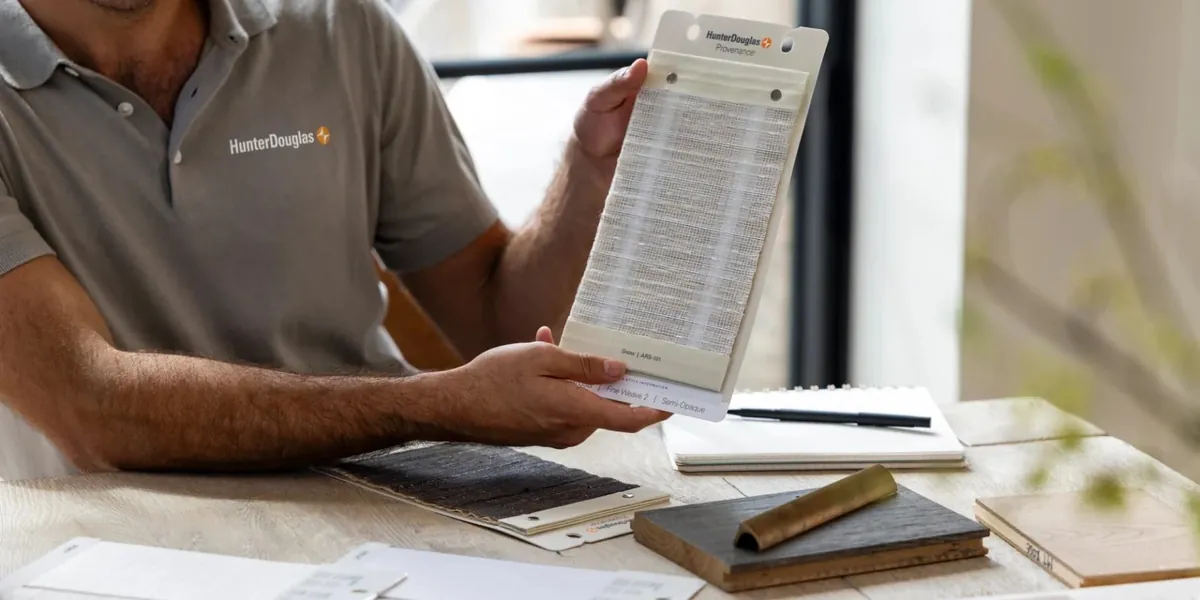
For cellular shades in Plainville, a visit to your house is the simplest place to start. You see how each fabric handles your own light, next to your own walls and furniture, and we measure while we are there.
The visit works for a single room or the whole house. If you would like help with color and fabric beyond the shades, ask about our interior design consultations at the same time.

Our Franklin showroom is close by
The nearest Blinds & Designs showroom to Plainville is in Franklin. The showroom page lists the address and hours.
Blinds & Designs is a Hunter Douglas Gallery dealer, with certified Hunter Douglas installation and repairs for blinds and shades you already own. For other rooms, see our custom blinds in Plainville, motorized blinds in Plainville or everything we do in town on the Plainville page.
Questions from Plainville
Will a honeycomb shade get in the way of opening my single-hung window?
No. The shade mounts above the sash and you raise it when you want to open the window. Because the raised stack is slim, very little of the glass is covered when the shade is up.
Can I put a lifting shade on a horizontal slider?
Yes. A standard honeycomb shade works very well on a slider. You raise it, slide the sash open, and lower it again when you are done. A very wide slider can be split into a pair of shades.
What helps with a side window that faces the neighbor’s?
A top-down, bottom-up shade. Keep the lower glass covered and open the top for daylight. In a bathroom, a light-filtering fabric gives privacy with a bright room.
Are cordless shades sturdy enough for a busy house?
They are. The lift mechanism lives inside the headrail, and with no cord to yank, there is less for small hands or paws to damage. You move the shade by its bottom rail.
What does the estimate cost?
There is no charge. Estimates are free, and you get yours once every window has been measured.
Book your consultation
Choosing cellular shades in Plainville, MA, comes down to seeing a handful of fabrics on your own sash and sliders. Book a consultation, and we will turn up with the honeycomb collection, measure each window and hand you a free estimate before we go. To talk things through first, press the call button, or drop in at the Franklin showroom.