
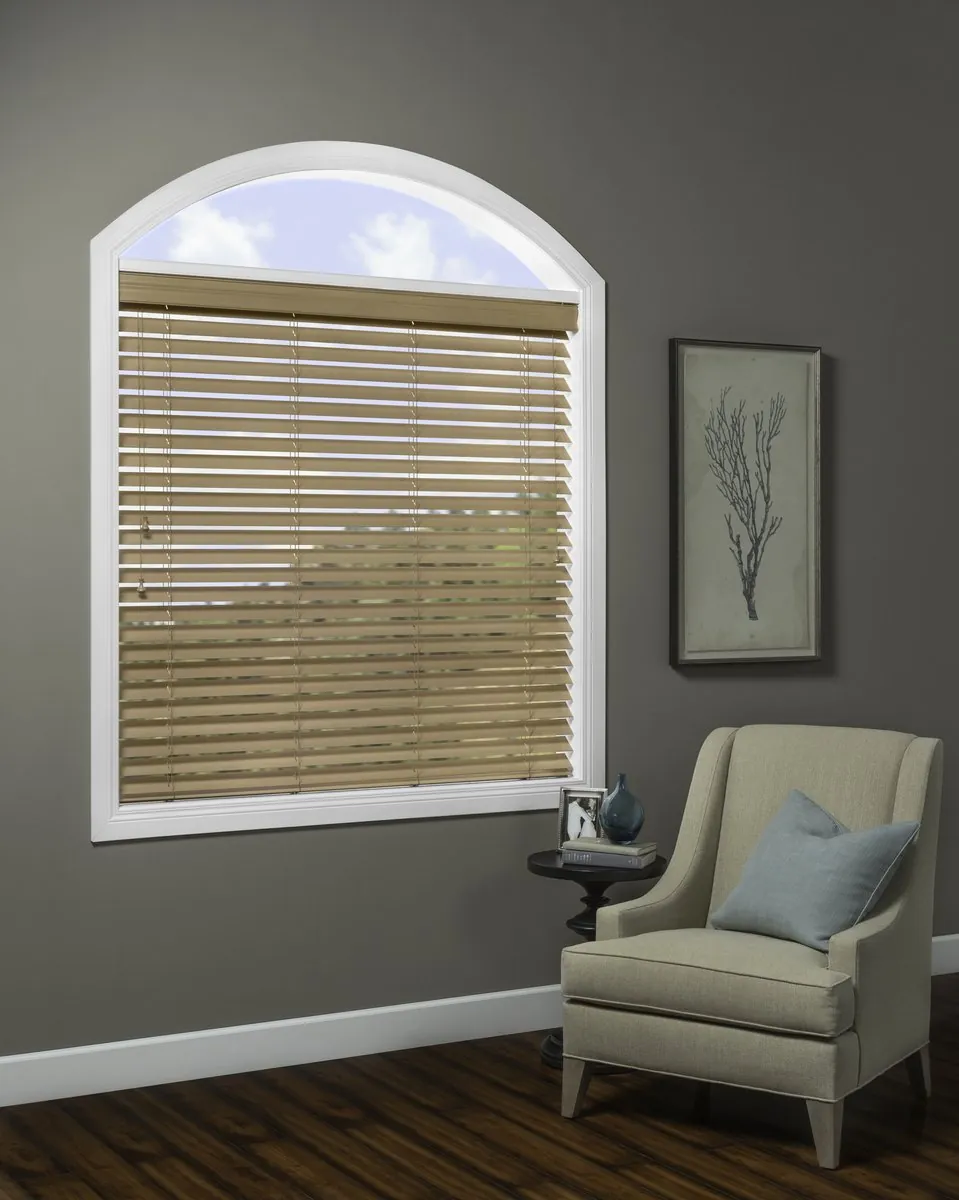
Small, tall sash in the old company village
The Draper mill village was laid out as company housing, and it still reads that way from the sidewalk: rows of houses set close together, each with original narrow sash that is small across and tall from sill to head. Those openings were sized for the way the houses were built, not for anything you can buy off a shelf, which is why so many requests for custom blinds in Hopedale, MA, begin in the village.
Around Hopedale Pond the picture changes. The houses are larger, the rooms are bigger and many windows look out over the water rather than across at a neighbor. Here the work is more about handling bright, reflected light than about who might be looking in.
Both kinds of house share one thing. No two windows are quite alike, even on one wall, so every blind is built for the single opening it goes into.
Blinds for the village and the pond
Hunter Douglas makes horizontal blinds in wood, faux wood and metal, plus vertical blinds for wide openings and sliders. These three come up most often here, and our vans carry samples of all of them to your door.
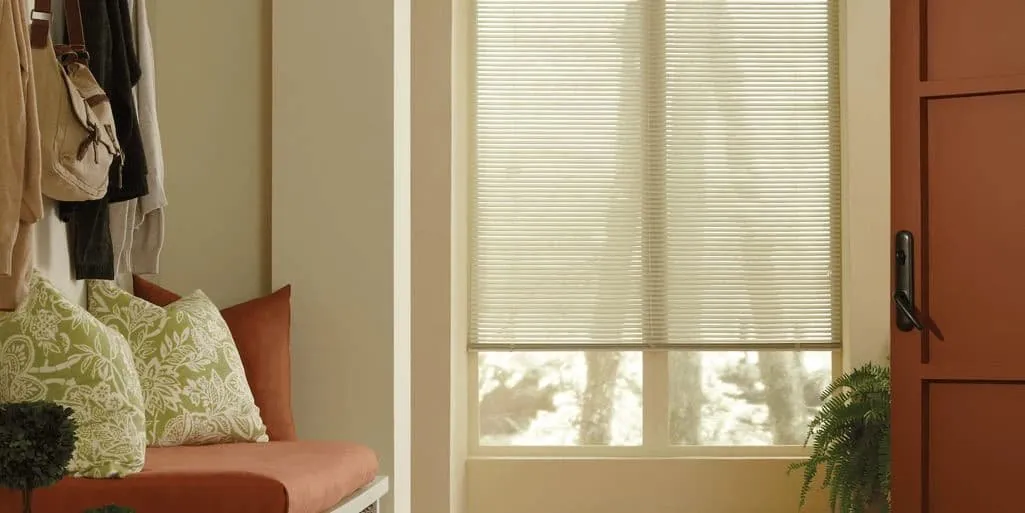
Metal blinds for narrow frames
A slim aluminum blind needs little depth to mount, which suits the shallow frames many village houses still have.
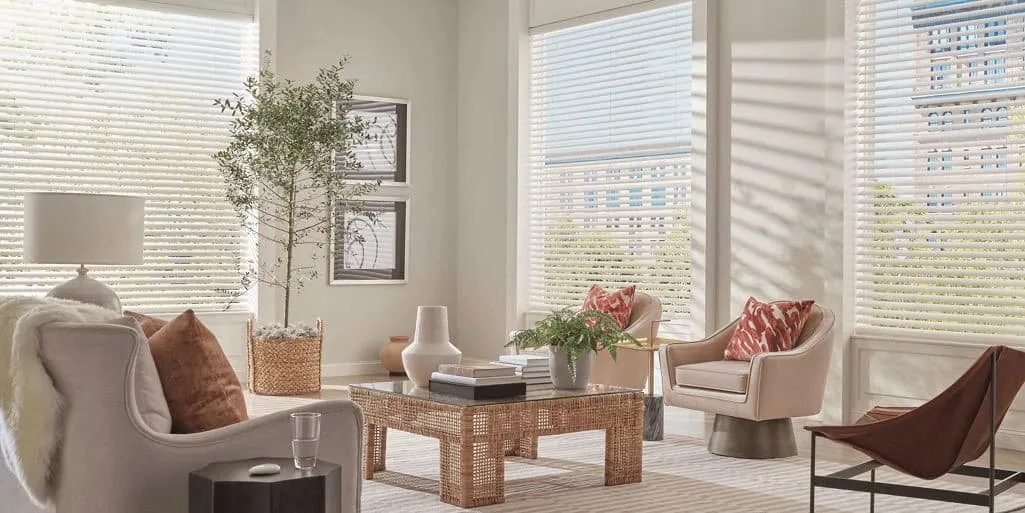
Wood blinds for the front rooms
Real wood slats, painted to match old casings or stained to suit the floors, built as tall as the sash needs.
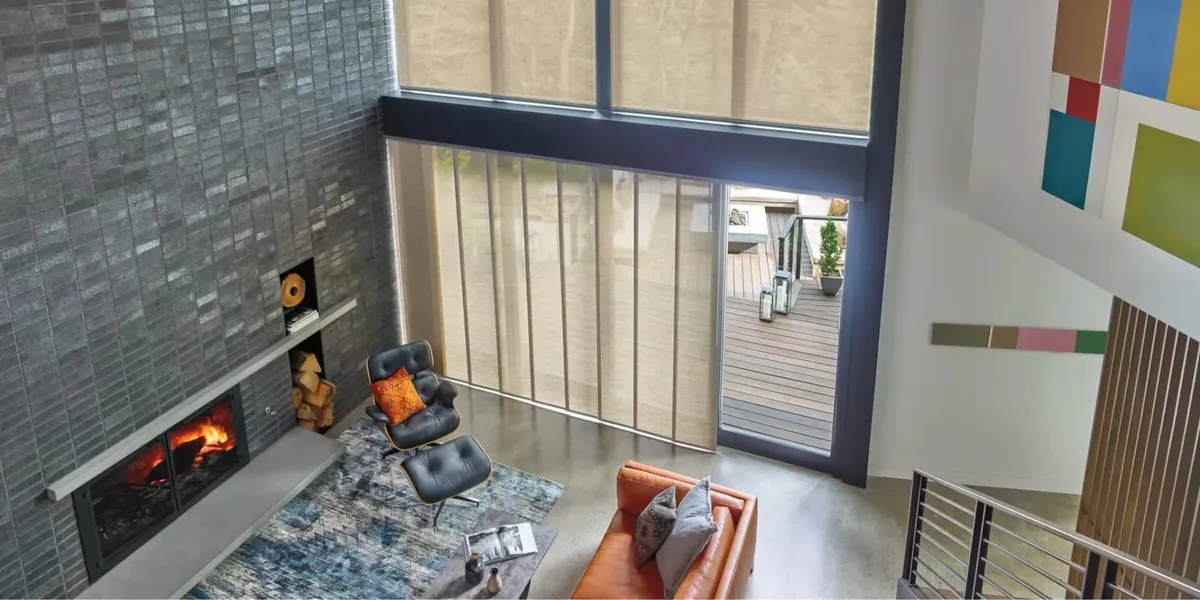
Vertical blinds for pond-side sliders
Vanes that gather at one end of a wide door to the deck or yard, and turn to cut the glare off the water.
Why custom blinds in Hopedale start with a tape measure
A narrow window is less forgiving than a wide one. On a big picture window, a blind that falls a little short of the frame on each side barely shows. On a village sash only a hand or two wider than a headrail, the same shortfall leaves a bright stripe down both edges and makes a small window look smaller still.
So each opening gets its own measurements. Width is taken high, in the center and low; height on the left, in the middle and on the right. Old houses settle, and a frame that looks square often is not. We build to the tightest of those readings so the blind rises and falls without rubbing the jamb.
Depth decides the mount. An inside mount, with the headrail tucked up within the opening, keeps the old casing visible and lets a raised blind almost vanish. It needs room between the glass and the front edge of the trim. Where that room exists, we use it. Where it is short, the low-profile headrail of a metal blind often fits when wood would not, and if even that is too tight, the blind goes on the casing itself and you hear the reason before anything is ordered.
A tall, narrow blind carries many slats for its width, and when raised they bunch into a stack at the head of the window. On a short sash that stack can hide a fair share of the glass. We ask whether a window is one you open up every morning or one that mostly stays lowered and simply tilts, because the answer changes what we suggest.
Living close to the next house in the mill village
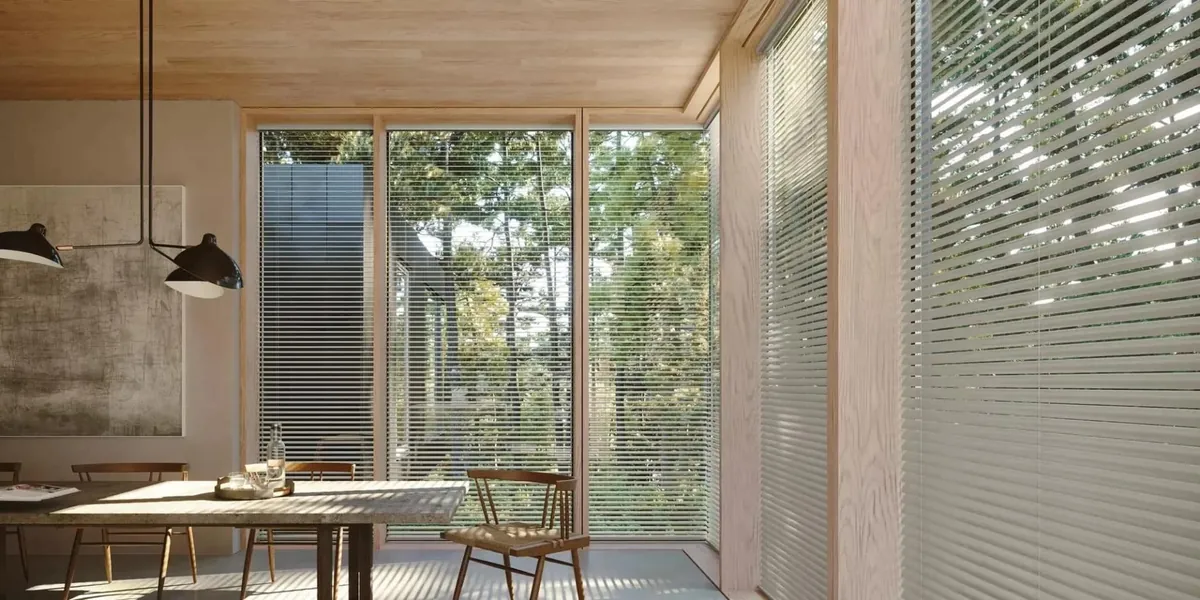
In the village, a house’s flank often faces its neighbor’s flank across a narrow strip of grass or a shared drive. Kitchen glass looks at kitchen glass. A bedroom looks at a stair window. Nobody minds the closeness at noon, but after dark, with the lamps on, a bare window feels very public.
Horizontal blinds are well suited to this, because light and view can be handled separately. Rotate the slats so the edge nearest you points up, and anyone across the way at eye level is looking at solid slat, while daylight keeps reaching the room past the upper edge of each one. Rotate them down and you can see out into the yard. Shut them completely in the evening and nobody sees anything.
On the road side, the front rooms of the village houses are near the sidewalk. Angle the slats downward toward the street and a passer-by looking up meets a closed face, while you still keep a view out. It is a small adjustment that makes a front room usable all day without feeling watched.
The front rooms of a company house
The front room in a village house is usually the one with the most original trim left: casings, a door with its old hardware, sometimes a built-in cupboard. It is also the room seen from the road. A wood blind fitted within the opening, in a color close to the trim, often suits it best, since it sits quietly in the frame and leaves the woodwork on show.
Because the village houses went up as a group, a row of them can look much alike from the road. Some owners like their front windows to stay in keeping with the street; others want their house to look clearly their own. Both are easy with a range of whites, off-whites and stains, and we bring enough of each to hold against your trim in daylight.
Kitchens, baths and back entries in the village
Behind the front room, a village house tends to have a compact kitchen, a small bath and a back door with glass in it. These are the hard-working windows. The sink window wants daylight on the counter while still blocking the view from the house behind. EverWood faux wood is often chosen for kitchens and bathrooms, and tilted halfway it lets in light without opening the room up.
A back door with a glass panel is a good place for a metal blind. Its headrail is slim enough to sit on the door without catching the frame as it swings. A small bath window, frosted or not, can take a faux wood or metal blind closed tight, which keeps the room private and still lets a little light through the gaps when tilted.
Larger houses around Hopedale Pond
Up from the village, the houses near Hopedale Pond tend to be bigger, with wider windows, more of them on each wall, and rooms laid out toward the water. Privacy is rarely the first concern. Light is.
Water throws light back up at a house. On a clear afternoon the shine off the pond can come in low, under the edge of a porch roof, and land straight on a television, a laptop or a dining table. A horizontal blind steers that light rather than stopping it. Turn the slats so they slope up toward the glass and the glare is thrown onto the ceiling, which keeps the room bright with none of the dazzle.
Wide openings near the pond often suit a run of matched blinds on separate headrails rather than one long one. Separate blinds are lighter to raise, line up neatly at the top, and let you shade one end of a room while the other end keeps its view. For the slider out to a deck or lawn, a vertical blind gathers to one side of the door and turns to block the sun as it moves round.
When we plan custom blinds in Hopedale for a room facing the pond, we look at which way it faces before we talk about color.
Wood, faux wood, metal and vertical compared
Every Hunter Douglas blind we fit is made to order for its window. Material decides which room each one belongs in.
- Parkland wood blinds. Real wood, painted or stained. The warm choice for front rooms, dining rooms and studies, and the one most often matched to old trim.
- EverWood faux wood blinds. The look of a painted wood blind in a different material, often chosen for kitchens and bathrooms.
- Metal blinds. Slim aluminum slats on a low-profile headrail. Shallow village frames, door glass and small upstairs windows.
- Vertical blinds. Vanes hung from a track and gathered to one side. Sliders and wide openings in the pond houses.
Plenty of houses mix them. A village house might take wood in the front room, faux wood over the sink and metal on the little upstairs windows. A pond house might run wood through the main rooms and put a vertical blind at the slider. Our custom blinds page covers each range, including Parkland and EverWood.
Corner rooms and long walls by the water
Many of the pond houses have a main room with windows on two or three walls, so the light shifts round the room through the day. A corner where two windows meet is a good test of a blind plan. If the blinds on both walls share one color and their headrails sit at one height, the corner reads as a single, tidy window treatment rather than two separate ones fighting each other.
Long walls of windows get the same thought. Several matched blinds side by side, each on its own headrail, can be raised to the same line so the tops of the stacks match across the wall. On a summer afternoon you might keep the blinds on the water side tilted against glare while the ones on the shaded wall stay open for the view. Separate blinds make that easy; one long blind cannot do it.
Lifting and tilting
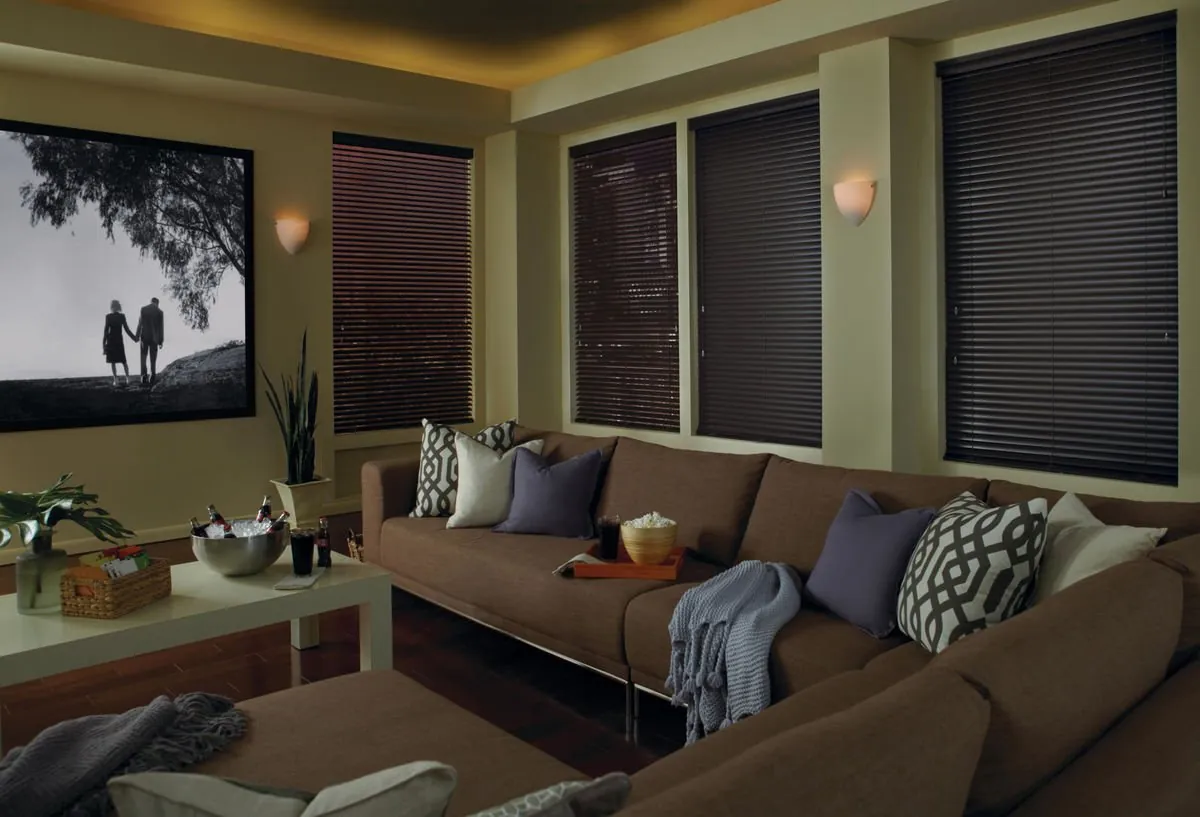
On a window you use every day, how the blind works matters as much as how it looks. With a cordless lift you raise or lower it by the bottom rail and nothing dangles, which keeps the sill clear and is the tidier choice where there are small children or pets. A wand turns the slats.
For the tall sash in the village and the high windows in some pond houses, PowerView motorization saves reaching. Raise, lower and tilt from a remote or the app, have blinds close at sunset, or open the east rooms each morning on a schedule. How each motor gets its power is something we work out with you at the visit. There is more on motorized blinds in Hopedale.
Doing a whole village house at once
Because the company houses are compact, a whole house is a manageable project, and many owners choose to do every window in one go. That has a practical upside: one visit, one measure, one fitting, and a house where every blind belongs with the others.
We usually start with the street side, since that is what everyone sees, and settle on one color for every front window. Then we work back through the house room by room. The kitchen and bath often switch to faux wood in a matching shade, small upstairs windows to metal, and the front room keeps its wood. From outside the house looks consistent; inside, each room has the blind that suits its job.
If you would rather go one room at a time, that works too. We keep a note of what was chosen, so a later room can be matched to the first.
Upstairs, under the eaves
Many village houses have small windows upstairs, set low under the roofline or high in a gable. They are easy to forget until early sun comes through one straight onto a pillow. A darker slat turned fully shut keeps a bedroom dim, and a metal blind suits the small, shallow frames these windows usually have. In a child’s room, a cordless lift keeps things simple.
In the pond houses, bedrooms are usually larger, and the main question is orientation. A bedroom facing east over the water catches first light; one facing west takes the late sun. We note that room by room so the color and slat chosen make sense where they hang.
How a visit and fitting run
Choosing well depends on seeing samples against your own windows and your own light, so the process begins in your house.
- You request a consultation and we agree a time to come to you.
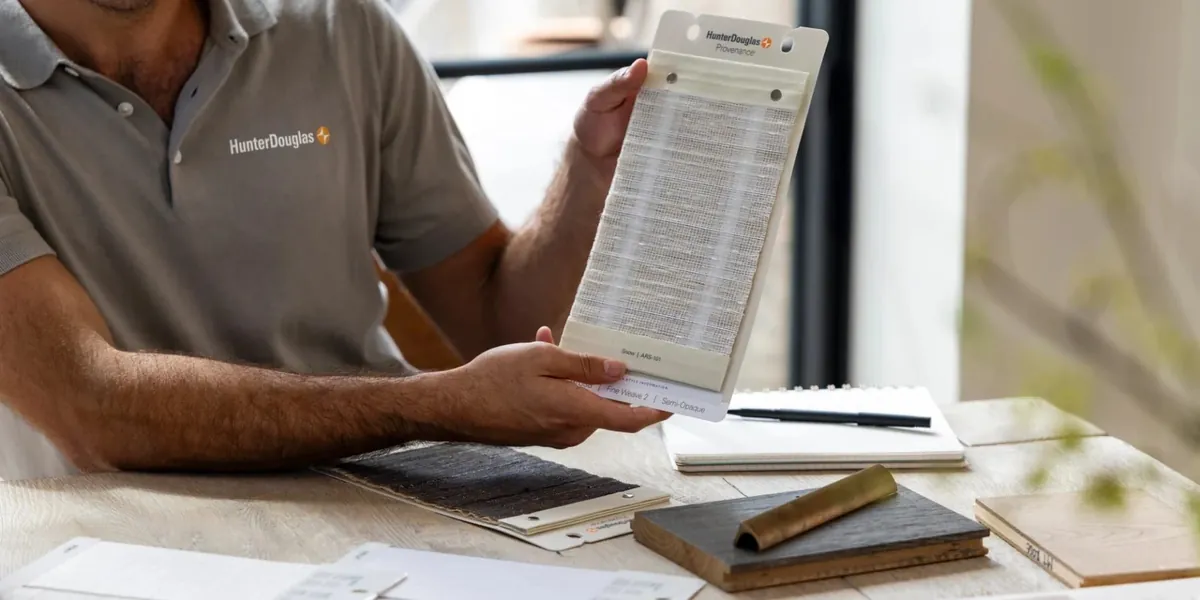
- The van comes stocked: wood, faux wood and metal slats in a spread of colors, vertical vanes and the different controls.
- We walk each room with you, talk about light and privacy, and measure every window at several points.
- You receive a free estimate and decide in your own time.
- Once the blinds arrive, certified Hunter Douglas installers put each one up, set it true and try every lift and tilt.
- Before leaving, we run through how everything works, including any PowerView schedules.
That level of care is what lets custom blinds in Hopedale, MA, sit cleanly inside a narrow old frame and run without catching. You can also read what happens at an in-home consultation.
Working with a Hunter Douglas Gallery dealer
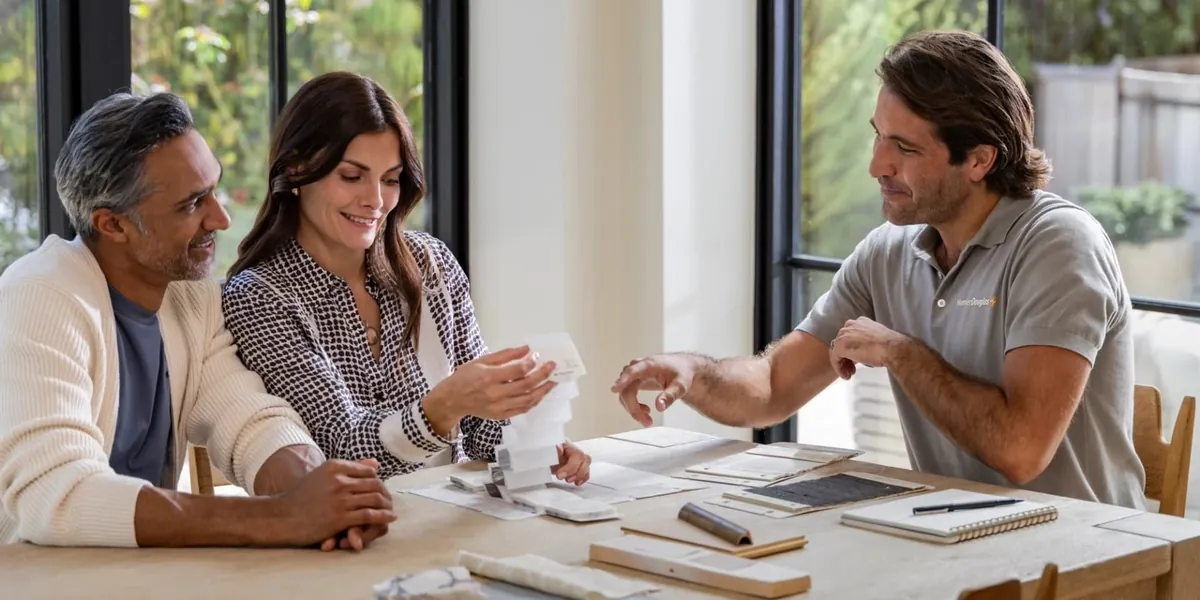
Blinds & Designs is a Hunter Douglas Gallery dealer, so the full blind range is open to you in one visit: wood, faux wood, metal and vertical, every color and control, and PowerView motorization. Installation is carried out by Hunter Douglas certified installers. Interior design consultations are available too, for help with color or with the rest of a room, and we fix blinds and shades that need repair.
If the house needs more than blinds, look at cellular shades in Hopedale, roman shades in Hopedale or plantation shutters in Hopedale, or see everything on the Hopedale page.
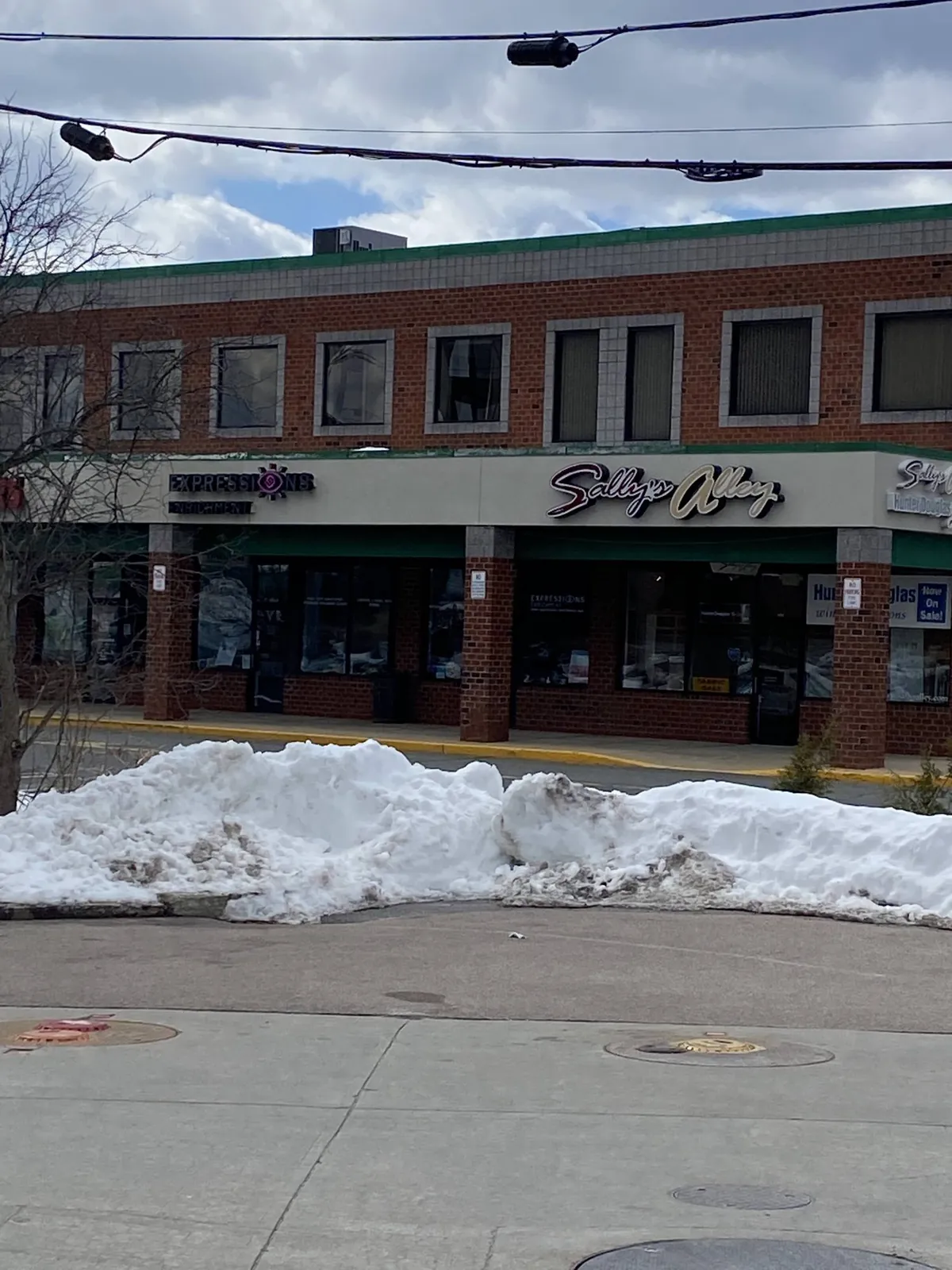
The Franklin showroom, the nearest to Hopedale
Of our showrooms, Franklin is the closest to Hopedale. If you would like to call in before or after an in-home visit, its address and opening hours are listed on the Franklin showroom page.
Questions from Hopedale
My village windows are very narrow. Can a blind still look right?
Yes. Each one is built to its own frame, so it fills the opening with no stripe of light at the sides. Where the frame is shallow, a metal blind’s low headrail often fits inside it.
How do I keep the house next door from seeing in without losing daylight?
Rotate the slats so the edge nearest you points up. Someone across the way is looking at solid slat, and light still reaches you past the upper edge of each one.
What helps with glare off the pond?
A horizontal blind with the slats sloping up toward the glass throws the light onto the ceiling, so the room stays bright without the glare on a screen or table. Separate blinds across a wide opening let you treat the sunny end differently from the shaded end.
Can I mix materials in one house?
Yes, and it is common. Wood in the front rooms, faux wood in the kitchen and bath, and metal on small upstairs windows is a mix we see often. Keeping one color across the street-side windows ties the house together from outside, whatever the material in each room.
Does the estimate cost anything?
No. Once we have measured every window, the estimate is free, and you can take it away and think it over before deciding anything.
Your next step
Real slats held up at your own windows make the choice easy. Ask for a consultation and we will bring samples to your door, measure every opening and leave a free estimate for custom blinds in Hopedale, MA. The call button works too, or call in at the Franklin showroom.