
Small sash, close neighbors, and the pond
Walk the streets of the old Draper mill village and the pattern is easy to see. The company housing was built close together, one house a short step from the next, and many still have their original narrow sash. Those openings are small and tall, more like a slot of glass than a picture window. When someone asks us about plantation shutters in Hopedale, MA, this is usually the kind of window they are standing in front of.
A small opening is not a simple one. There is less glass to work with, so every part of the shutter shows: the width of the frame, the size of the louvers, where a rail falls. Get those proportions wrong and the shutter looks heavy and swallows the window. Get them right and it looks as if it was always there.
The larger houses around Hopedale Pond ask for something different. Their windows are bigger, the rooms are wider, and in many of them the view across the water is the reason the house was bought. There the shutter has to open wide and get out of the way.
So one town gives us two quite separate jobs, and this page walks through both.
What we plan for village houses and pond houses
Six of the choices that come up most often on a Hopedale shutter project, from the narrowest village sash to the widest pond-facing window.
One panel on a slim opening
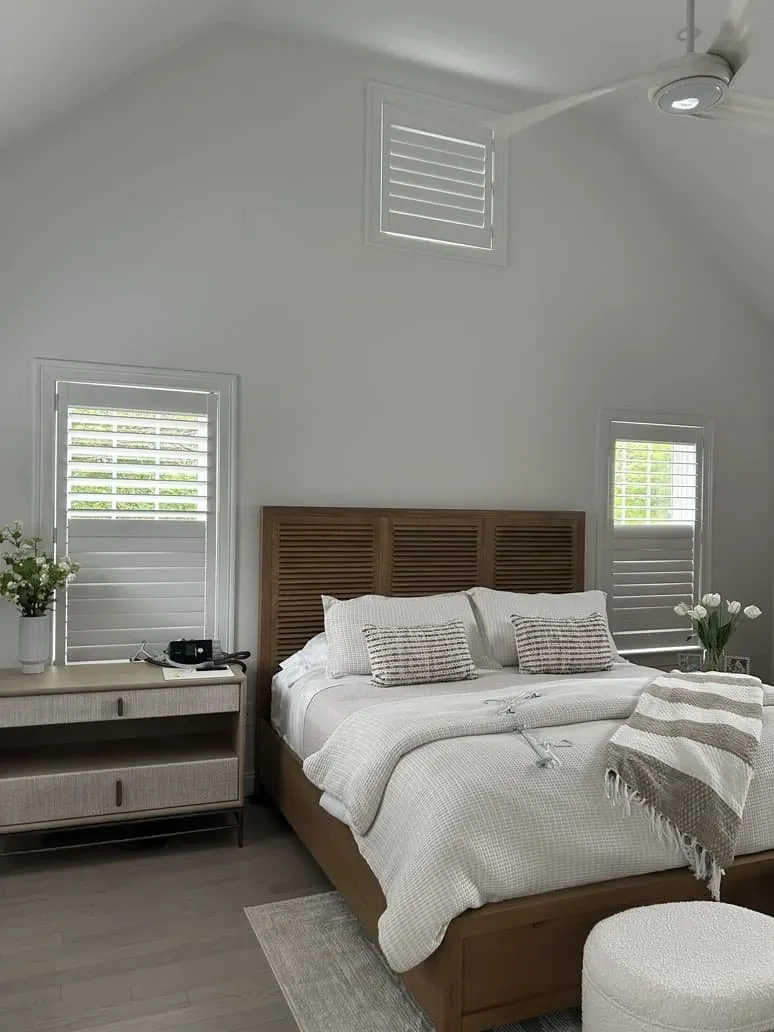
On a very narrow sash, a single hinged panel usually looks better than a split pair and leaves more clear glass when it swings open.
A rail where the sash meets
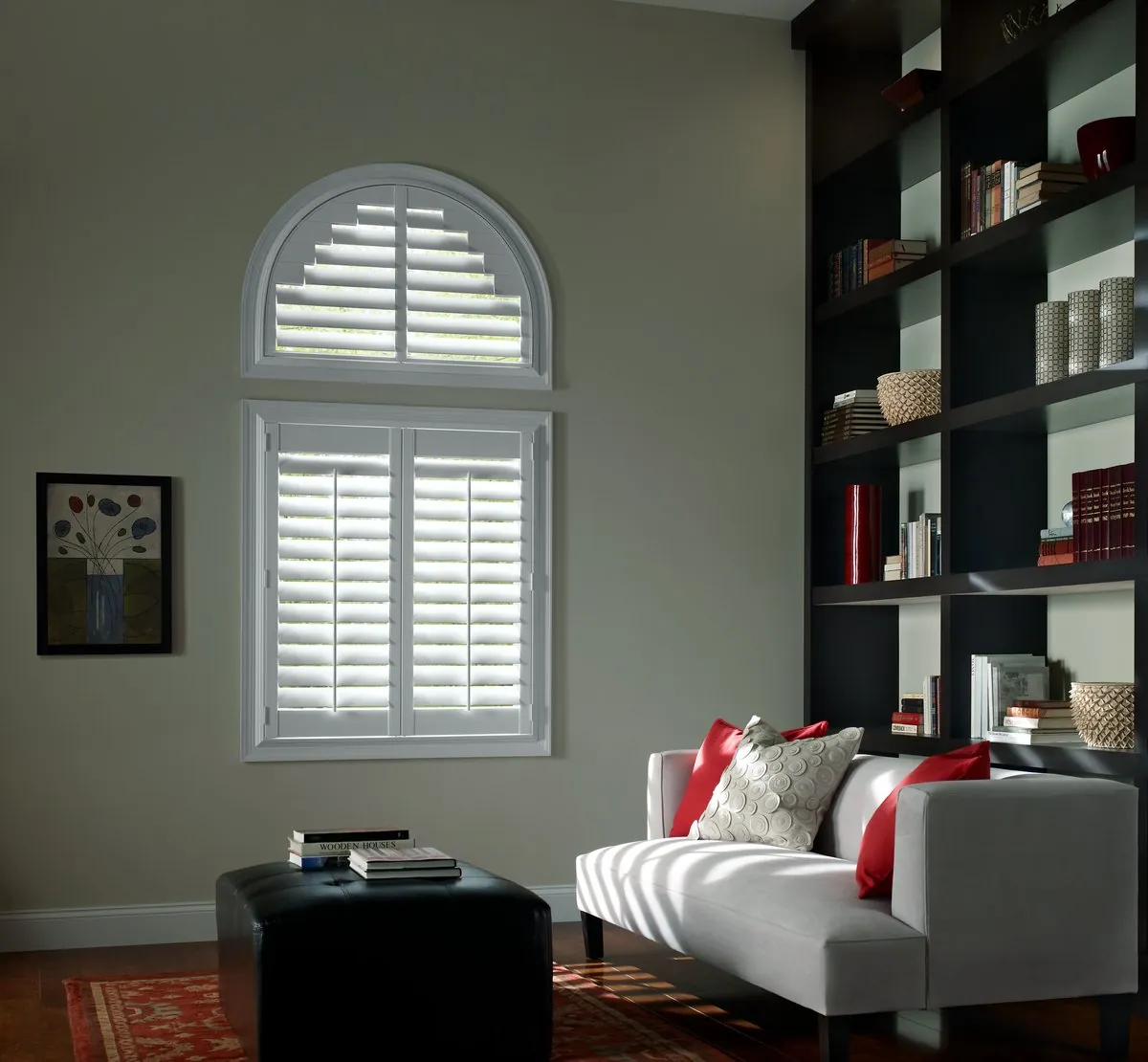
A rail set level with the meeting rail of the window lets the top and bottom louvers work apart, so you can screen the street and keep the sky.
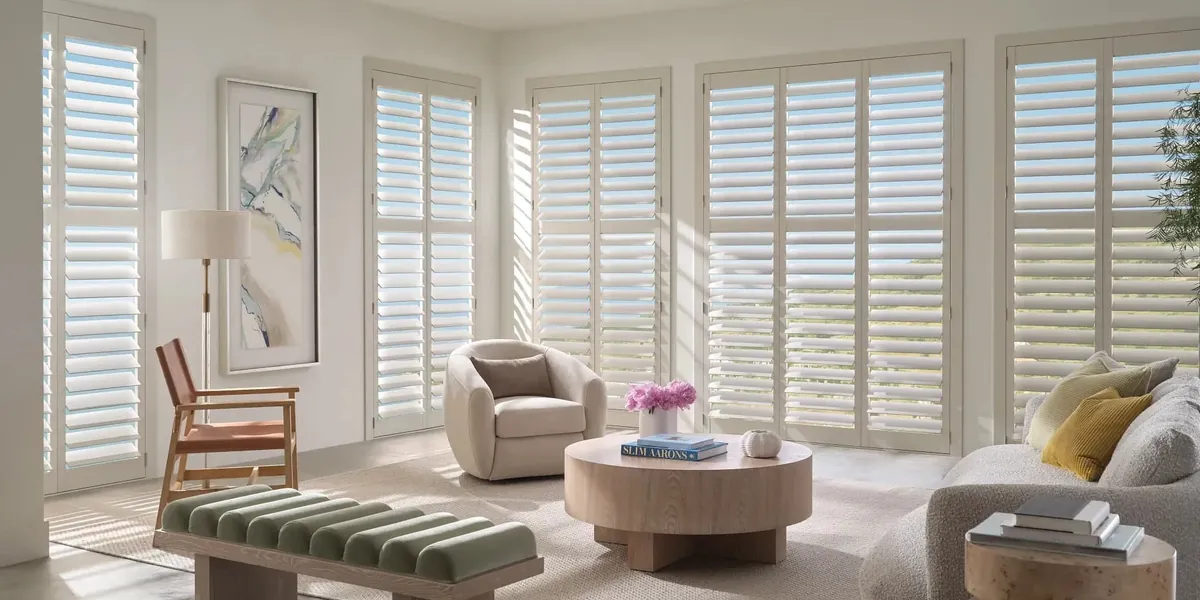
Palm Beach for daily rooms
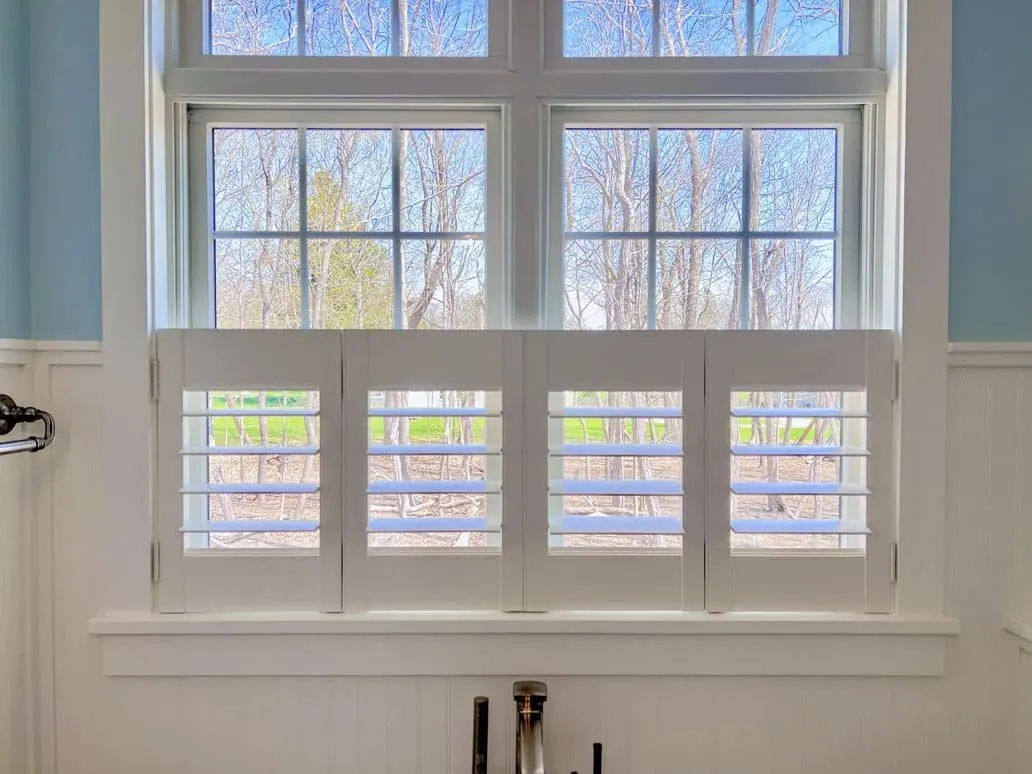
Kitchens and baths on the side of a village house face the neighbor all day. Palm Beach is one of the three collections we bring to try there.
NewStyle on the long runs
A row of pond-facing windows reads best when every panel matches. NewStyle is often the collection we compare first for a wide run like that.
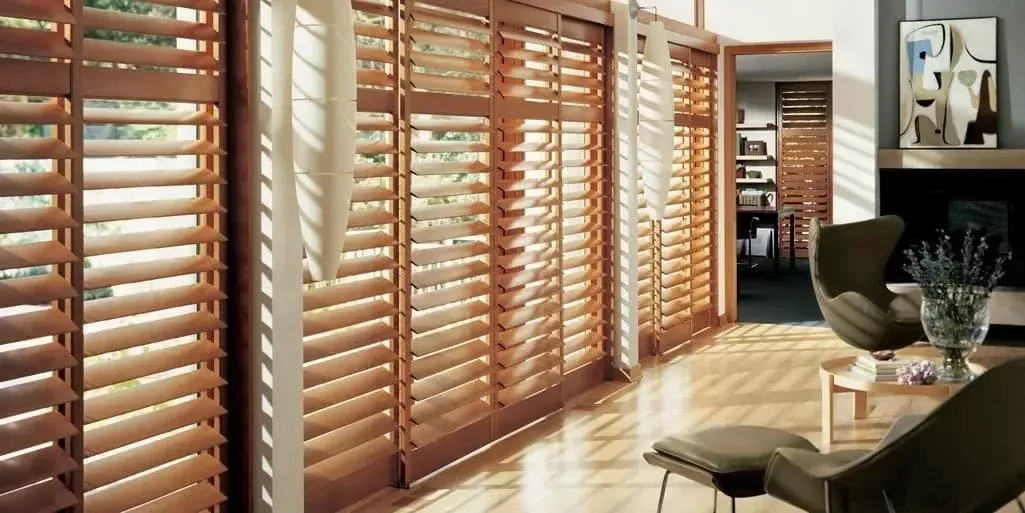
Heritance against old trim
Rooms that still have original woodwork are where Heritance finishes get held up against the casing most often.
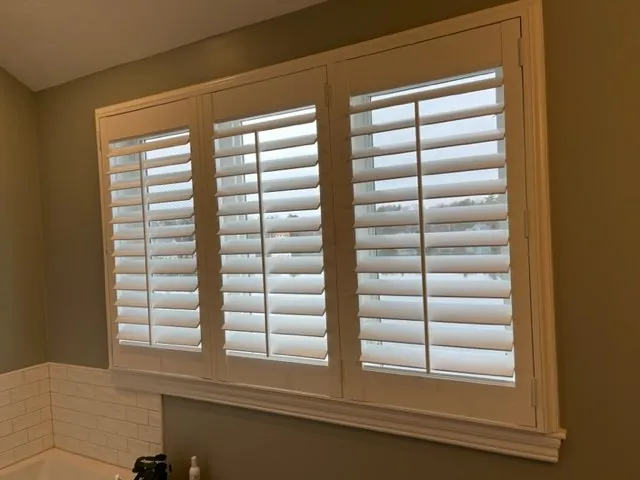
Baths that face next door
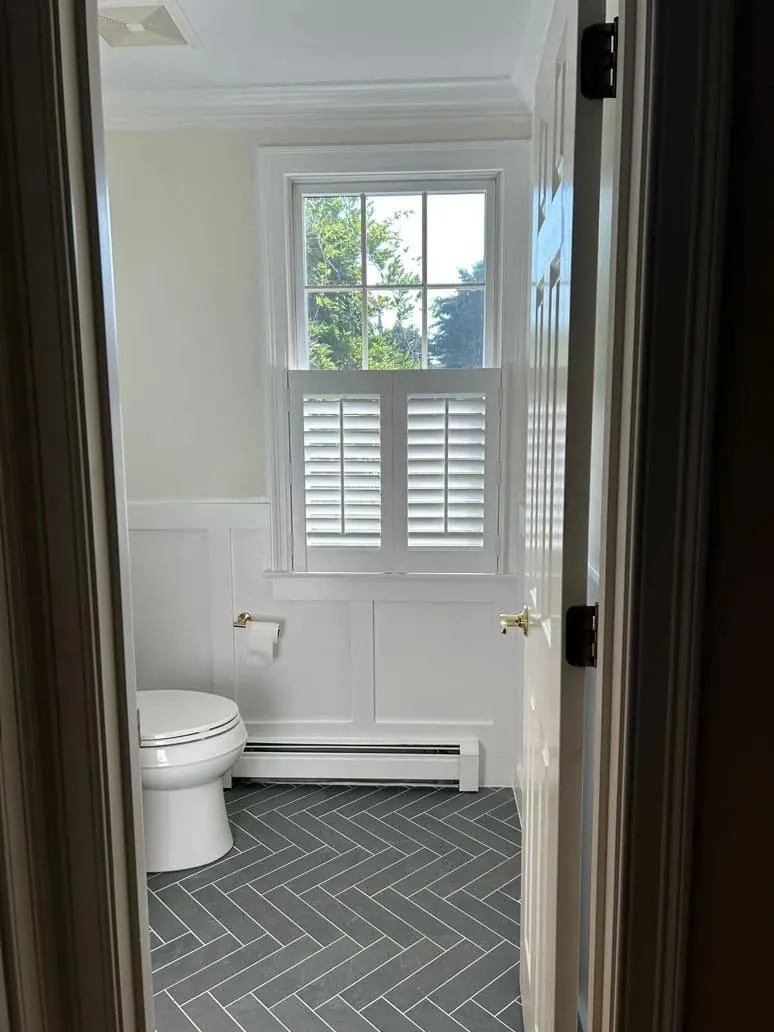
Bath windows in close-set houses often look straight at the house next door. Closed louvers when you need them, tilted louvers the rest of the day.
Proportion on a narrow window
The first question on a village sash is how many panels. Most shutters on a typical window are hung as a pair that meets in the middle. On the slim Hopedale openings a pair can leave each panel so narrow that the louvers look stubby and the two stiles in the center block a strip of the view. A single panel, hinged on whichever side lets it swing clear of furniture, often solves both problems.
The second question is louver size. On a small opening, a wide louver means only a handful of blades from top to bottom, and the shutter can start to look like a few planks across the glass. A slimmer louver gives more blades and a finer face, which suits the scale of the company houses. We bring sample panels in more than one louver size so you can see the difference at your own window instead of guessing from a brochure.
The third is the frame. A frame that is too deep or too wide eats into the little glass there is. On the village houses we look closely at how much room the opening gives us and choose a frame style that sits neatly inside it, or one that sits over the casing if the opening is too shallow. You see both options before anything is ordered.
Living a few steps from the next house
Close-set housing means side windows that face side windows. A kitchen looks into the kitchen next door; a stair landing looks at a neighbor’s siding. Shades handle that by coming down, and when they come down the light goes with them.
Louvers let you split the job. Tilt them so the blades slope down toward the room and someone outside at ground level looks straight into the face of a blade, while daylight still bounces in. Tilt them the other way to block an upstairs window across the gap. Add a rail partway up the panel and the lower louvers can stay shut while the upper ones stay open, which is often the arrangement a side kitchen or a bath settles into for good.
The front windows of the company houses face the sidewalk at close range too, so the same split works there. Many people end up with the lower louvers closed on the street side for most of the day and tilted open only when they want to see out, then closed again once the lamps go on.
Windows on the pond
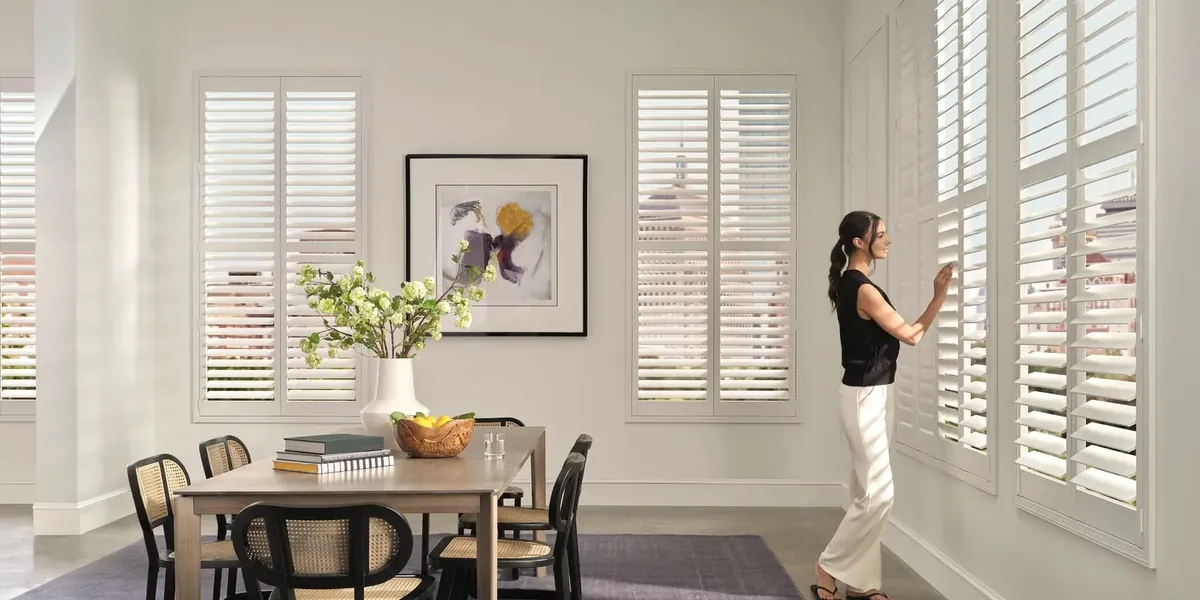
Around Hopedale Pond the problem flips. Here the glass is larger and the outlook is the point. A shutter on a pond window has to do two things: give you a clear view when you want it and still close for privacy or glare when the sun comes low across the water.
Wider louvers help with the first. When they are tilted fully open, a wide blade leaves bigger gaps between blades, so the view reads more clearly. Hinged panels help even more: on a bright afternoon you can swing the whole panel back against the wall and have nothing but glass between you and the pond.
Larger openings often get divided into several panels on one frame. We line the panel breaks up with the window’s own divisions, so the mullions and the shutter stiles fall in the same place and the view is not cut twice.
Stairs, halls and the second floor
The upstairs of a village house is where the tightest spacing shows. A landing window, a narrow hall window and a bedroom window on the side wall may all look across the same gap at the same neighbor. None of them gets much direct sun, yet all of them need privacy at some hour of the day.
A landing window is a good place for a rail, with the lower louvers closed and the upper ones open, so the stairs stay lit without putting anyone on show. A small hall window often needs nothing more than louvers set at one angle and left there. Bedroom windows on the side wall are the ones that get closed completely at night. Because these upstairs openings are often the same size from front to back, ordering plantation shutters in Hopedale for a whole side elevation at once keeps them matched, and one visit covers the lot.
Louver size at a glance
Louver size is the choice people find hardest to picture, so here is how it usually falls in town.
- Original village sash: slimmer louvers, so a small, tall opening carries enough blades to look balanced.
- Bedrooms and baths in the company houses: a slim or middle size, chosen with the panel count, because a single panel and a slim louver suit each other.
- Larger rooms in the pond houses: a middle or wide louver, which opens up more of the outlook when tilted flat.
- Picture and pond-facing windows: wide louvers, with panel breaks lined up on the window’s own divisions.
If a house ends up with two sizes, keeping one color throughout means the change is hard to spot.
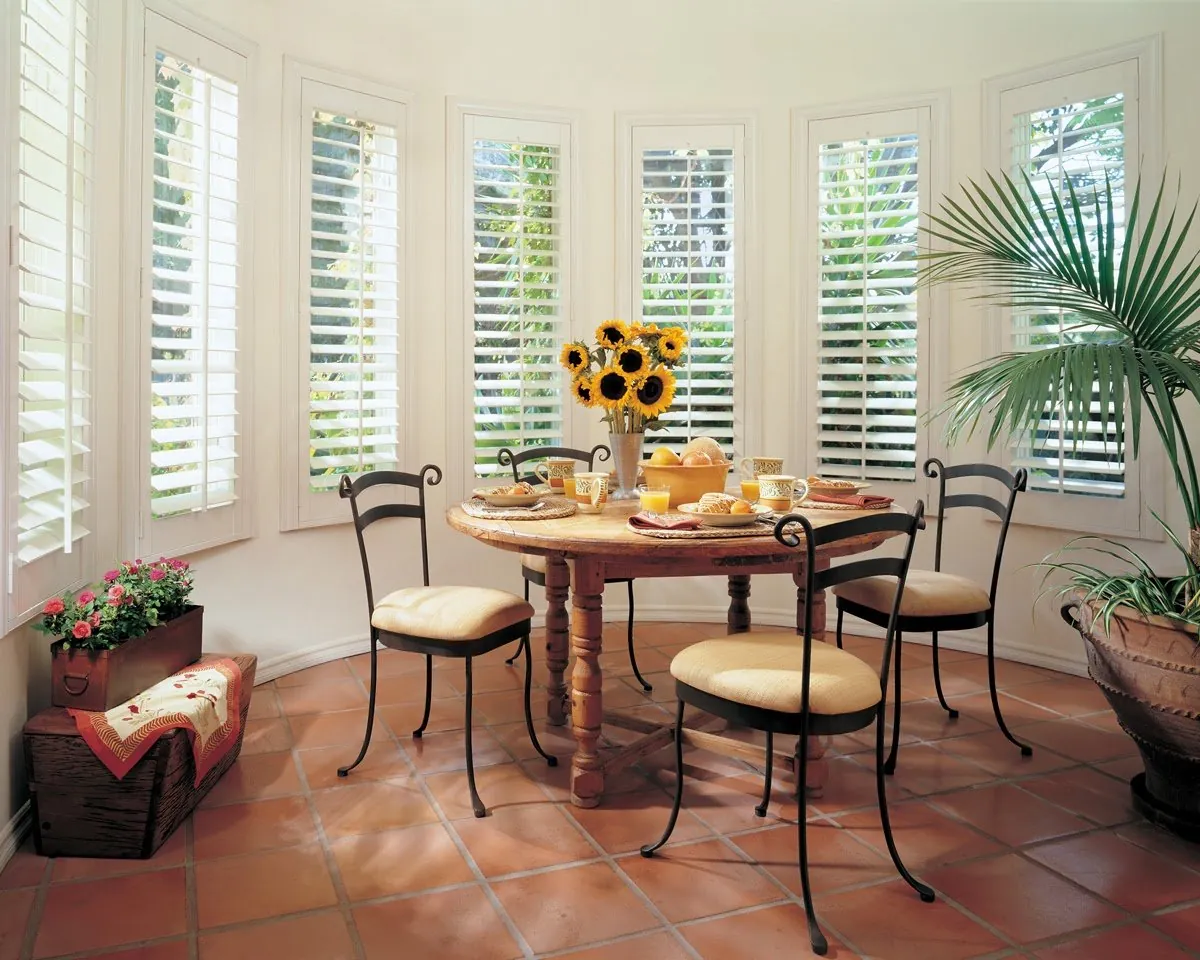
Choosing between the three collections
Every Hopedale project gets the same three Hunter Douglas collections to compare: Palm Beach, NewStyle and Heritance. Each has its own look and finish, and the only fair way to choose is with samples at your own windows in your own light.
In practice, the decision often splits by room. A small bath or a kitchen on the side of a village house may go one way, and a pond-facing living room with good trim another. There is no rule that a house must use one collection throughout. What matters more is that the windows seen together, such as the front of the house from the street, match in color and louver size.
You can read more on each collection on its own page: Palm Beach, NewStyle and Heritance.
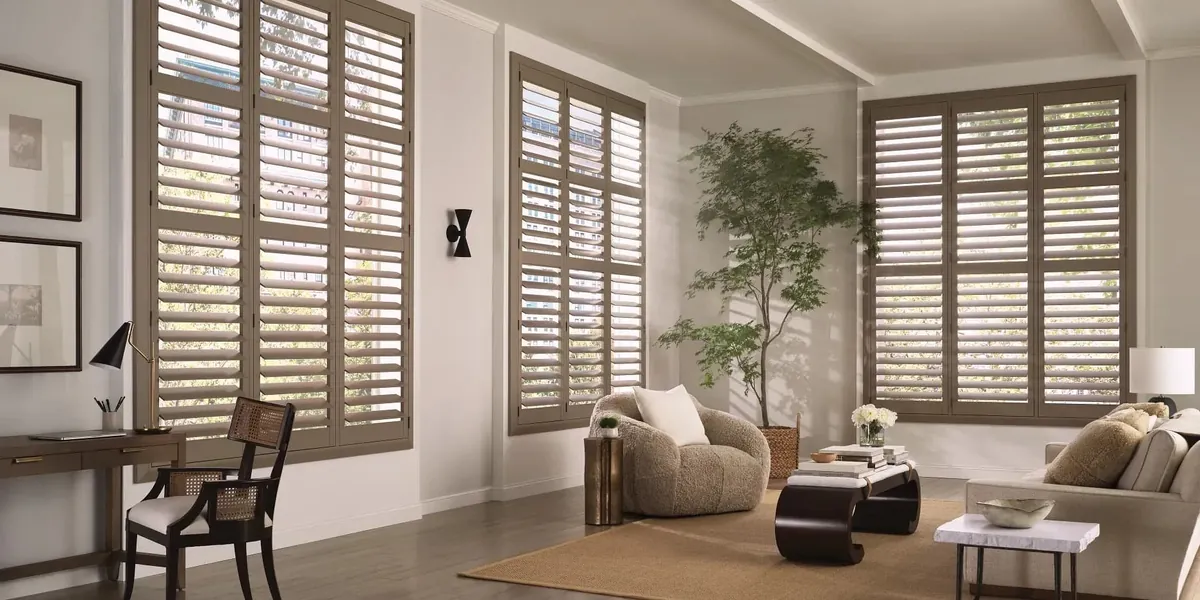
Front rooms in the larger houses
The houses around the pond were built with more room inside, and their front rooms often have deeper window openings and more generous trim than the village houses. That depth helps a shutter. With enough room inside the opening, an inside mount lets the louvers tilt freely and leaves the casing fully on show, which is usually what people want when the trim is good.
These rooms also tend to have more than one window on a wall, sometimes three or four in a row. Lining up the rails at one height across all of them, and keeping the louver size the same, makes the wall read as one piece. When we plan plantation shutters in Hopedale for a room like this, we draw the rail heights from the window sash itself rather than picking a number, so the shutters follow the house.
Old openings rarely come square
Company housing has had a long time to settle, and the window openings have moved with it. A sash that looks true from across the room can measure differently at the top, middle and bottom, and the corners may not quite meet at right angles.
That matters for shutters more than for most coverings, because a shutter is a rigid frame and rigid panels. We measure each opening at several points and check it corner to corner. The frame is then planned to take up whatever difference we find, so the panels close evenly against it. If you want the longer version, our page on shutters for older windows explains how we approach a tired opening.
Original trim deserves the same care. Many village houses still have their old casings, and an inside mount keeps them in full view. Where the opening is too shallow for the louvers to tilt inside it, the frame can sit on the casing instead. You decide which matters more once you have seen both at the window.
A consultation at your house
Shutters are a decision you make standing at the window. That is why most Hopedale projects start with an in-home consultation, with a van full of samples so we can bring the showroom to you.
- You request a consultation online or tap the call button, and we agree a time.
- We start in the room that bothers you most, usually a side window facing the house next door.
- You hold sample panels up to the glass and try louver sizes, rails and tilt.
- We measure every opening on your list and note its depth and squareness.
- We talk through the collections room by room and which windows should match.
- You get a free estimate and take as long as you like to decide.
There is more about the visit on our in-home consultations page.

Color on a street of matching houses
On a street of company houses built to the same few plans, the windows facing the road are part of a shared look. A shutter that reads cleanly from the sidewalk keeps the front tidy. White is the common choice, but a softer white often sits better against old glass and painted trim.
Inside, rooms can be more personal. A front room with its original woodwork may suit a stained finish chosen against the casing; a bright back kitchen usually suits white. If you want the front and back to differ, we plan where the change happens so it is never seen from one spot.
For plantation shutters in Hopedale that face both the street and the pond, as some corner and waterside lots do, we usually match the street side first and let the pond side follow.
When it is time to fit them
Once you have chosen and the shutters are made, our certified installers fit them at your house. The frame goes in first and is set so the panels hang true in the opening. The panels are hung, the hinges adjusted, and every louver is tilted through its range to check that it moves freely and closes fully. We show you how the panels open and how the rail works before we leave.
Our page on what happens on installation day covers the day in more detail.
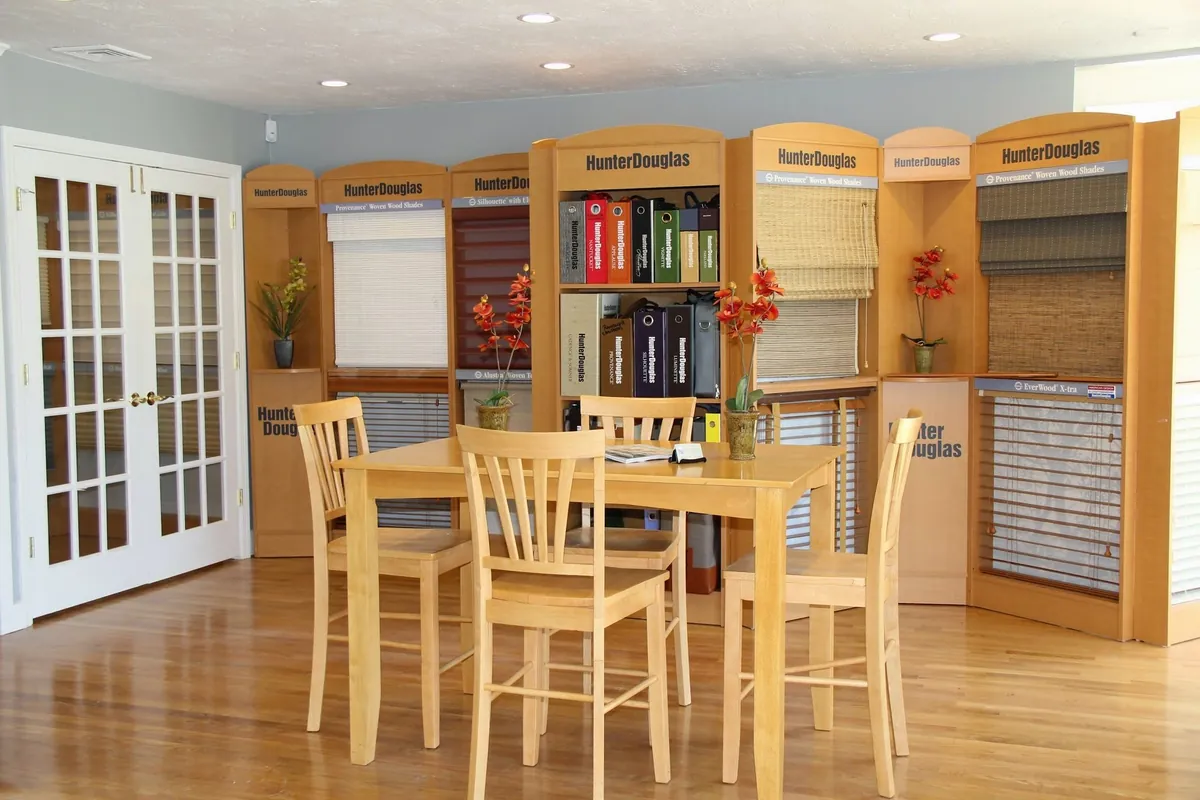
Why a Gallery dealer does this work
Blinds & Designs is a Hunter Douglas Gallery dealer. For you that means all three shutter collections, every louver size and finish we can offer, and people who plan shutters around awkward old openings as a matter of routine.
Our installers hold Hunter Douglas certification, so the shutters are fitted the way Hunter Douglas intends. Estimates are free. If the room needs more thought than one window, we also offer interior design consultations, and we repair the blinds and shades you already own.
Shutters are only one part of what we do in town. See the Hopedale page for everything else, including cellular shades in Hopedale for the rooms where holding heat matters more than louvers.
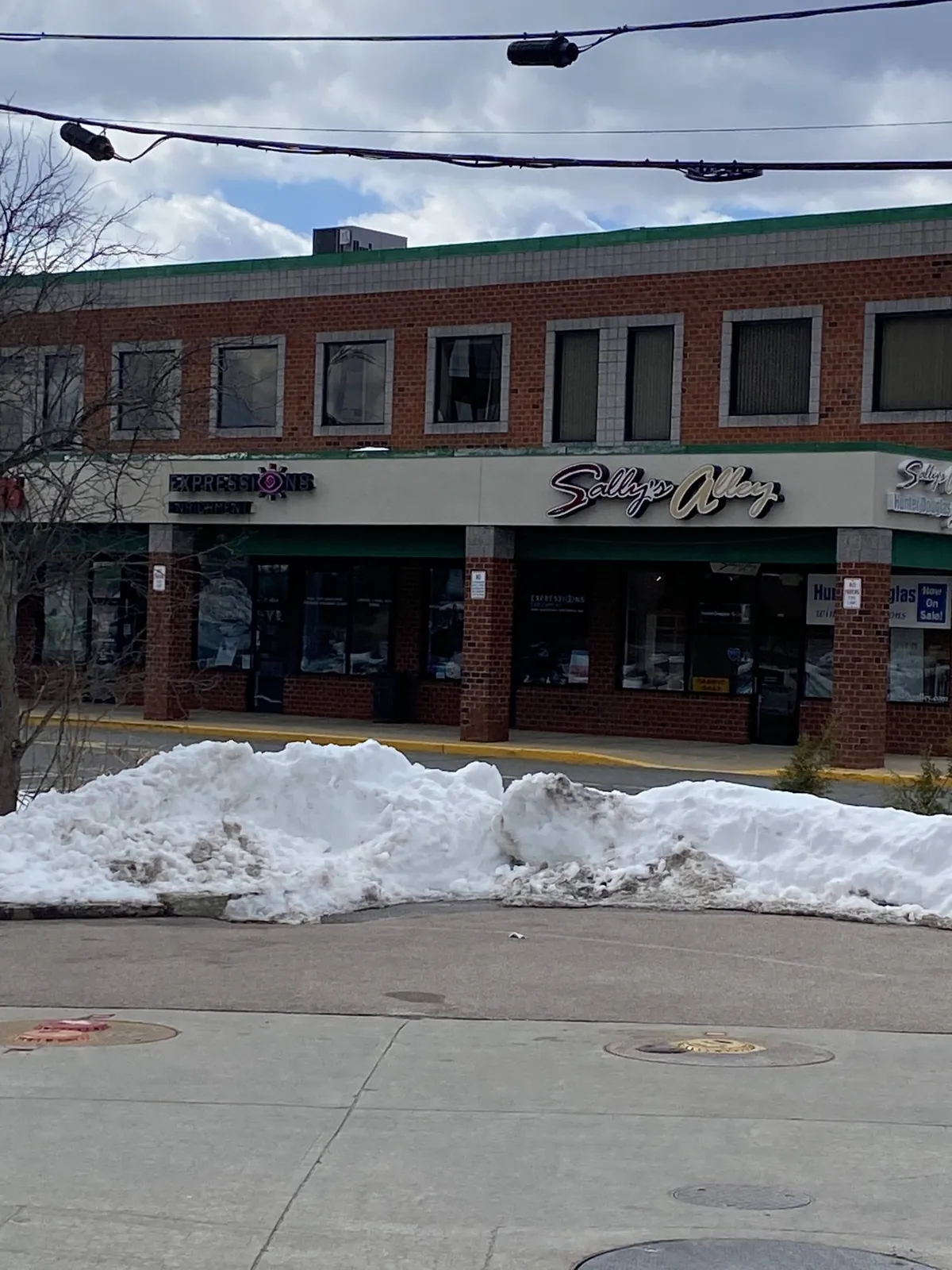
Franklin is our nearest showroom
Our Franklin showroom is the closest to Hopedale if you would like to see shutters there first. Many people still prefer to choose at home, because a sample held against your own sash tells you more than anything else.
Wherever you start, the measuring and the fitting happen at your house.
Questions from Hopedale
Can shutters fit the small, narrow sash in the mill village?
Yes. On a slim opening we often use one hinged panel instead of a pair and a slimmer louver so the face looks in proportion. We measure the opening at several points and plan the frame around what we find.
Should a pond-facing window get the same louver size as the rest of the house?
Not necessarily. A wider louver keeps the view clearer on a big pond window. If those windows are seen together with others, we plan the change so it does not look odd.
How do I keep the neighbor’s view out of a side kitchen without losing light?
A rail partway up the panel lets you close the lower louvers and leave the upper ones open. Tilting the blades so they slope down toward the room also blocks the view from ground level.
Can I keep my original window trim on show?
Usually. An inside mount sits within the opening and leaves the casing visible. If the opening is too shallow for the louvers to tilt, the frame can sit on the trim instead.
What does the estimate cost?
Nothing. After we measure, you get a free estimate for the shutters you have chosen.
Your next step
Shutters look different at every window, so the most useful thing you can do today is see real panels at yours. Request a consultation and we will bring Palm Beach, NewStyle and Heritance samples, try them on your sash, measure and leave you a free estimate. If you would rather talk first, use the call button, or start at the Franklin showroom. Whichever you choose, your plantation shutters in Hopedale are planned around your own windows. The main plantation shutters page has more on all three collections.