
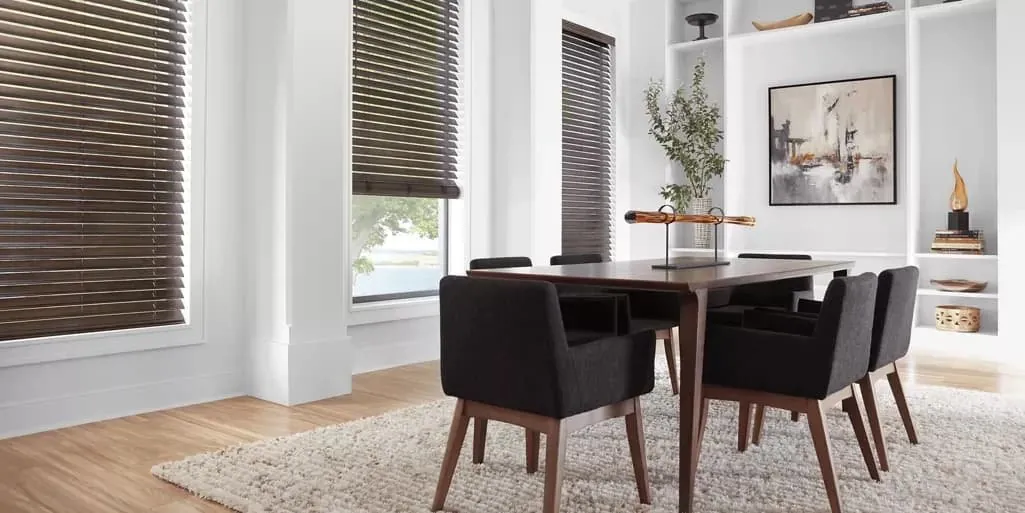
Open land and deep-set sash on Main Street and Hartford Avenue
Drive Main Street or Hartford Avenue and the houses stand well apart: antique colonials and farmhouses on very large lots, with fields and lawns between them, and newer houses scattered in the gaps. It is a setting most towns lost long ago, and it shapes what a window covering has to do. With nothing close by to screen them, these houses take the sun on every side, from dawn to dusk, and their lit windows show a long way across open ground at night.
The antique houses add a second twist. Their sash is small and set deep into thick walls, so the window sits back in a recess rather than flush with the room. That depth is a gift for anyone fitting custom blinds in Mendon, MA, because it gives a blind somewhere to tuck away.
Put those together and the brief is clear: blinds that control strong, unshaded light, give privacy from the road after dark, and sit neatly in a deep old opening.
Six ways we fit custom blinds in Mendon, MA
These are the requests we hear most from Mendon houses, old and new. Whatever the age of the house, custom blinds in Mendon have to cope with open light and deep or wide openings. Each card links to the range behind it, and every one comes out to you as a sample.
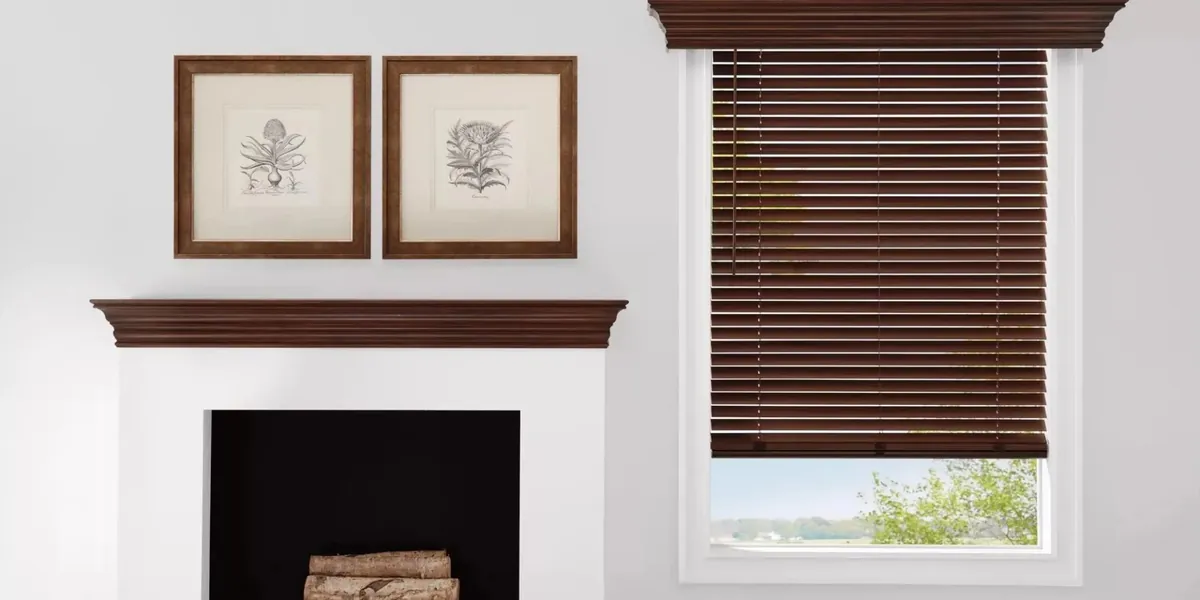
Wood blinds in a deep recess
A stained or painted wood blind mounted inside the thick frame of an antique house, so the casing and sill stay in view.
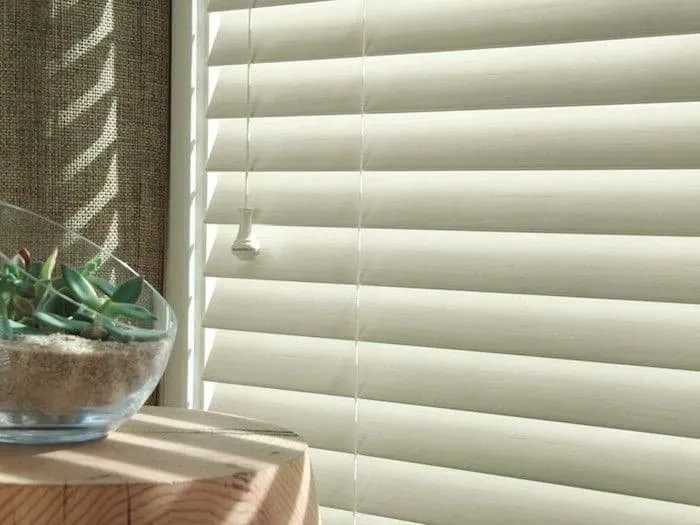
Parkland wood blinds
The Hunter Douglas real-wood line, in a choice of stains and paints to sit beside old pine floors and painted trim.
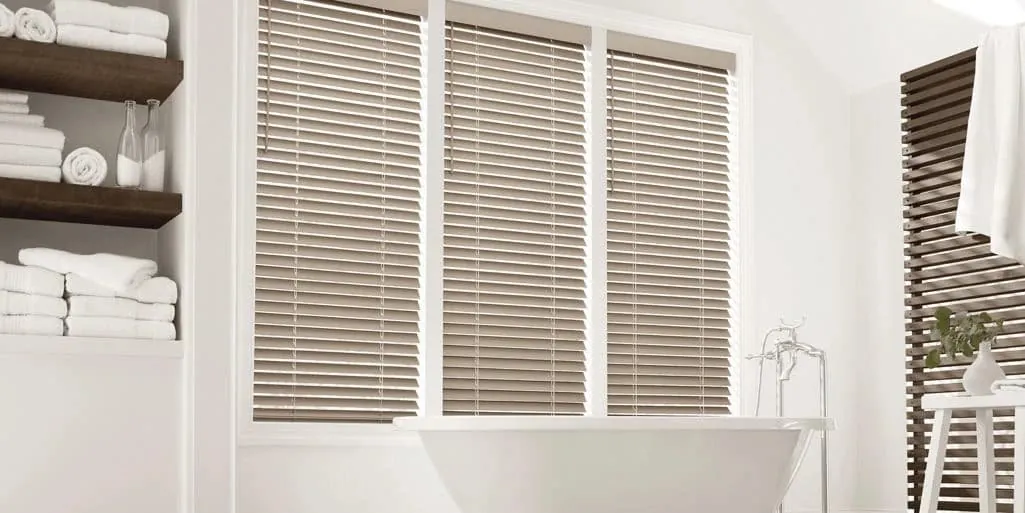
EverWood faux wood blinds
A painted-wood look in another material, often picked for the kitchen and bath of a farmhouse or a newer house.
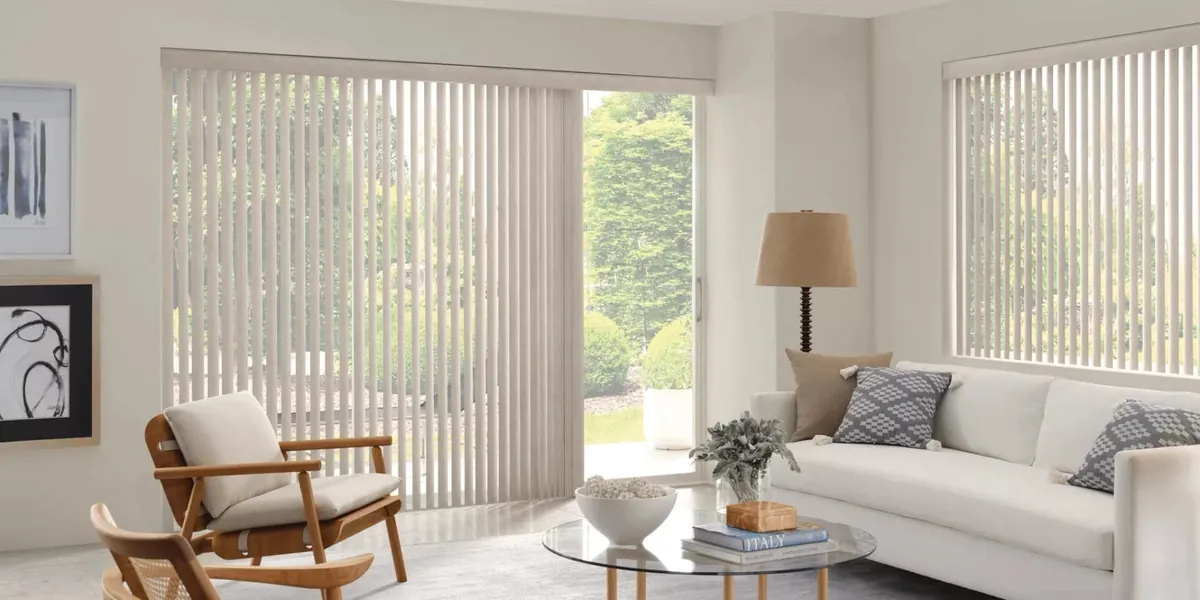
Vertical blinds
For the sliders and wide back windows of the newer houses, where a door opens onto a big lawn with full sun.
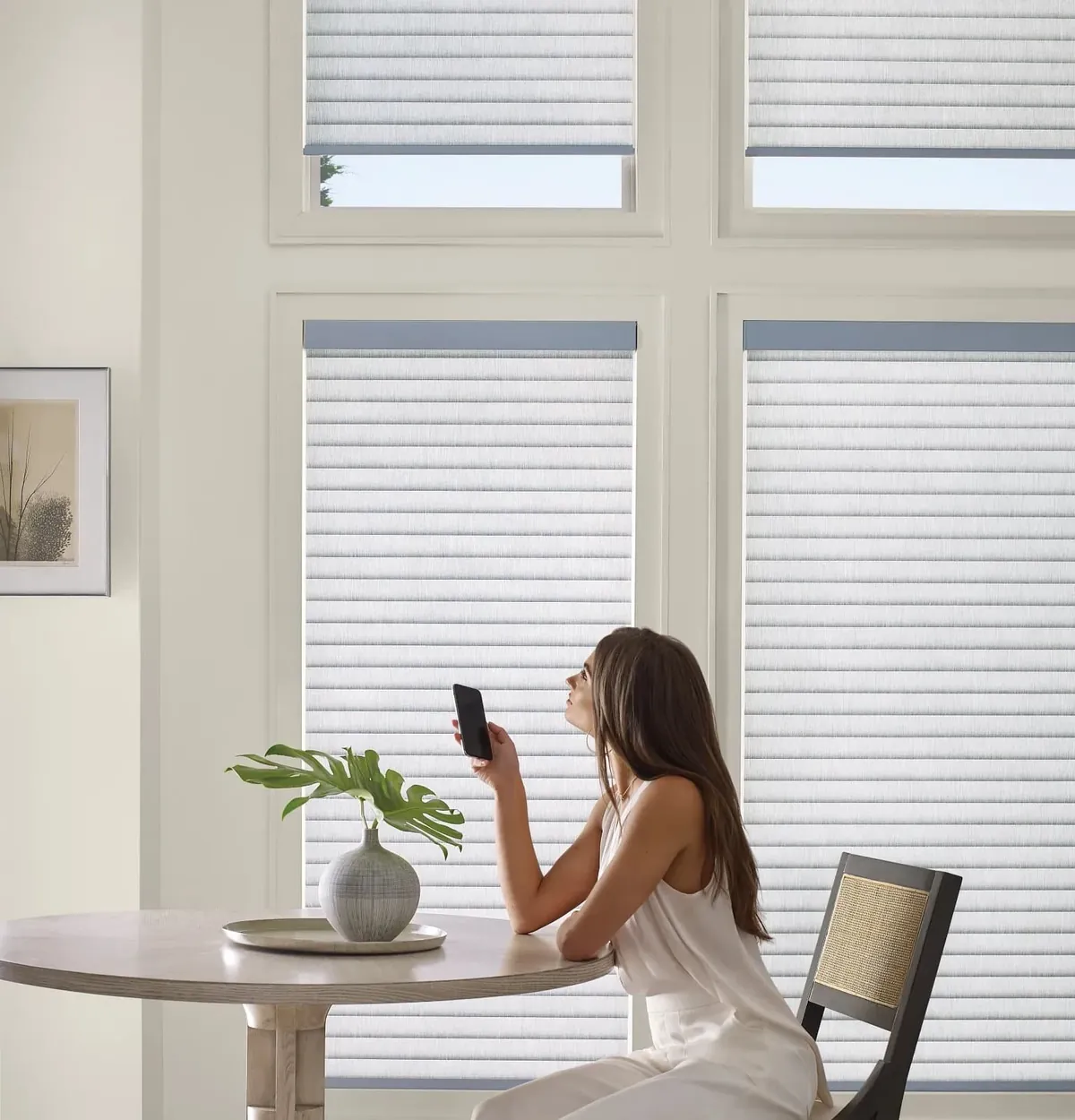
Motorized blinds in Mendon
PowerView lets you close every blind in the house at dusk, from a phone or on a schedule.
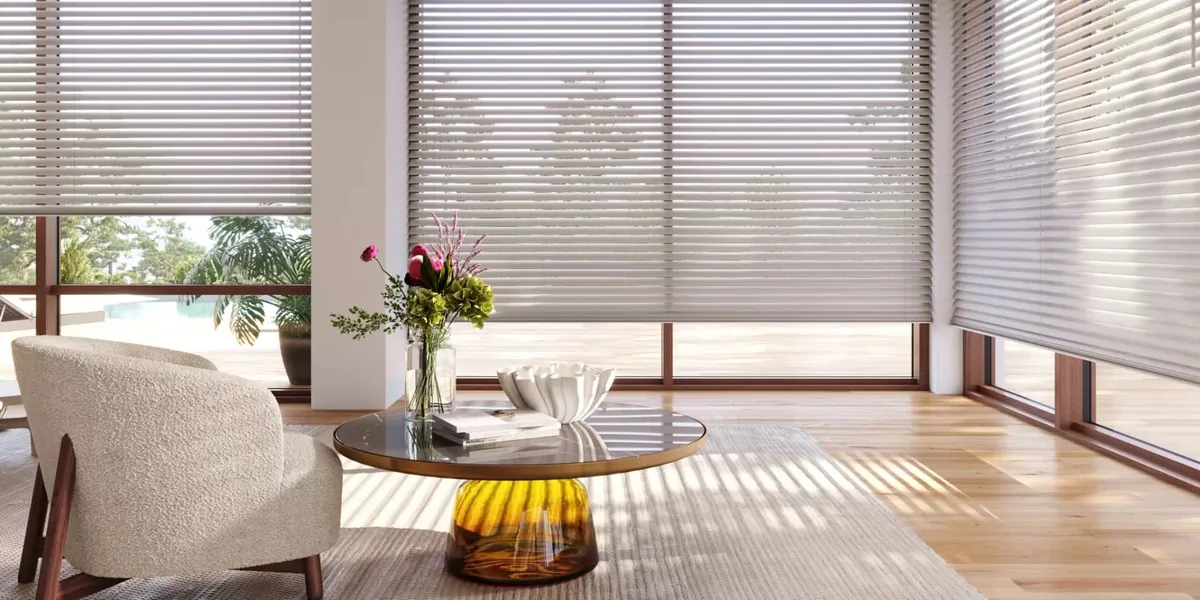
Metal blinds
Slim aluminum slats for small windows, door glass and anywhere a lighter headrail helps.
Why deep-set sash suits an inside mount
In a timber-framed antique house, the window sash sits well back from the room. Between the glass and the inner face of the wall there is often a generous box of wood: the jambs, the head and a wide sill. That box is where an inside-mounted blind lives.
An inside mount fixes the headrail to the underside of the head, within the opening. When the blind is lowered it fills the recess; when it is raised it gathers into a short stack at the top, still within the frame. Nothing hangs over the trim, so the old casings, often hand-planed and many coats of paint deep, keep their outline. In a house where the woodwork is part of the reason you bought it, that matters.
Depth alone does not settle it. An antique frame is rarely square, and the jambs on a single window can lean in different directions. We measure across the head, the middle and the sill, and up both jambs and the center. The blind is built to the narrowest point so it travels freely the full height. Where a frame has moved enough that an inside mount would leave an awkward wedge of light, we say so, and talk about an outside mount on the casing instead.
Small sash brings one more consideration. When a blind on a short window is raised, its slats collect at the top and take up a share of the glass. In a deep recess, some of that stack can sit above the visible glass, which keeps more of the view. We check where the stack will fall on each window before we suggest a slat size or a material.
Sun with nothing in its way
Most houses have something between them and the sun for part of the day: a neighbor’s roof, a row of trees, a building across the street. Many Mendon houses on large open lots have very little. The sun reaches the east windows early, works round the south side through the middle of the day and comes in flat and low on the west in the evening.
Horizontal blinds are good at this because you control the angle, not just the coverage. Tilt the slats so they slope upward toward the glass and direct sun is thrown up onto the ceiling. The room stays bright, but the glare is lifted off the table, the floor and any screen. As the sun moves round, a turn of the wand changes the angle. On a south wall in midsummer, closing the slats partway keeps a room from overheating without making it dark.
West rooms get the hardest light, because the evening sun comes in beneath any porch roof or eave. A darker slat, closed fully for the last hour of the day, takes the edge off. In bedrooms facing east, a dark wood or faux wood slat closed tight keeps out the earliest light. We look at each wall’s orientation when we plan, so the color and the blind fit the light that wall gets.
Winter brings its own version of the problem. The sun sits lower, so it reaches further into the room, and on a bright morning after snow, the light coming off open ground can be as hard on the eyes as a summer afternoon. The same tilt that lifts summer sun onto the ceiling works here too. Because a blind can be turned in seconds, the room can follow the light through the seasons without anything being taken down or swapped out.
Privacy from the road after dark
During the day, distance gives an open-lot house all the privacy it needs. At night that changes. A lit room on a dark country road is visible from a long way off, and with no hedges or neighbors in between, every uncovered window on the road side shows clearly to passing cars.
Blinds turn that around at the touch of a wand. Closed fully, the slats overlap and the room is hidden. For the hour around dusk, when you want light in but no view in, slats tilted downward toward the road block the line of sight from outside while you can still see the last of the light over the fields.
On a house with many road-facing windows, closing them all each evening becomes a chore. This is where PowerView motorization earns its place. You can lower and close every blind from a phone or a remote, or set a schedule so they close at sunset by themselves, whether you are home or not. How each motor is powered gets settled with you at the visit.
Keeping the view you moved here for
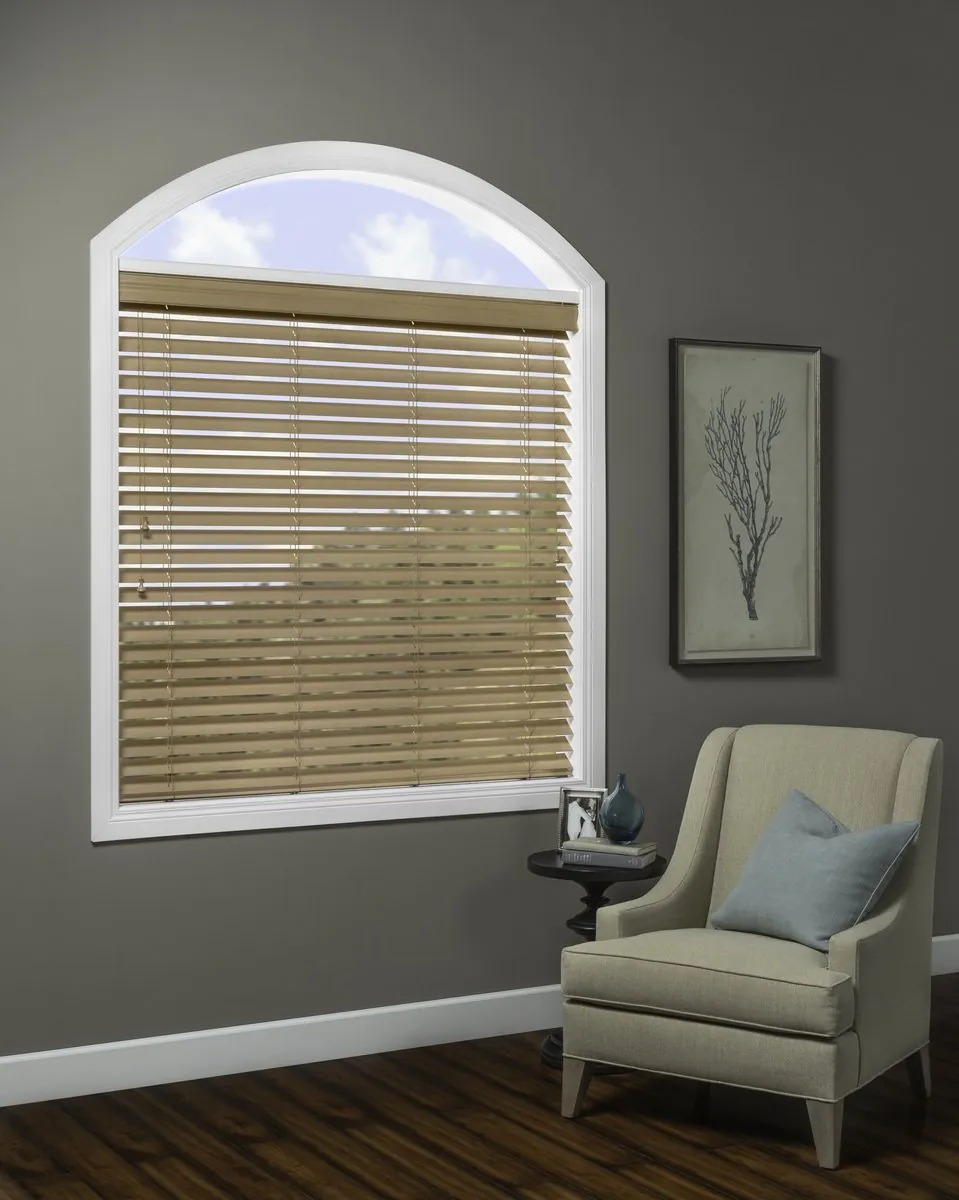
A house on open land usually comes with a view worth keeping: a field running down to a tree line, a long lawn, a stretch of sky. Covering windows like these is a balance. You want the glare and the night-time exposure handled without walling yourself off from the reason the house sits where it does.
Horizontal blinds help because they need not be all or nothing. During the day the slats can be fully open, edge-on to the glass, so the view comes through between them with only thin lines across it. Raised fully, a blind on a deep-set antique window can tuck most of its stack into the recess above the glass, leaving nearly the whole pane clear. On the newer houses, splitting a wide window into separate blinds lets you leave the middle section open to the view while the sunny end is tilted.
In the evening the same blinds close for privacy. It is the flexibility of a blind, more than any one setting, that suits a house with land around it.
Colonial and farmhouse rooms, one at a time
An antique colonial tends to have a formal front: a center hall with a room either side, each lit by a pair of small deep-set windows on the front and more on the gable end. Those rooms usually take wood blinds, in a color close to the trim so they read as part of the house from the road. Stained wood suits a room with dark old floors; painted white suits one where the trim is white.
The farmhouse plan is looser. A kitchen at the back, often enlarged over the years, may have newer windows of different sizes alongside the originals. A mud room or back entry has a door with glass. An ell or attached barn may have been turned into a family room with wide modern windows. Here faux wood tends to go in the kitchen and bath, metal on the door glass, and wood or vertical blinds in the family room, depending on its windows.
Upstairs, the antique windows are often smaller still, tucked under the eaves or set low by the floor in an older second story. A small metal or faux wood blind, mounted inside the deep frame, keeps those rooms tidy and lets them darken properly at night.
The newer houses between the old ones
Between the antique houses, Mendon has newer houses on large lots of their own. They have their own window plan: wider windows, more glass on the back of the house, sliders onto a deck or patio, and often a big family room open to the kitchen. Frames are square and standard in size, so fitting is simpler, but the open setting is the same, and so is the strong, unshaded sun.
For these, the usual pattern is wood or faux wood blinds across the front rooms and bedrooms, faux wood in the kitchen and baths, and a vertical blind on any slider. Wide windows split into two or three blinds on separate headrails are easier to raise than one big blind, and let you shade one part of the window while leaving the rest open to the view of the yard.
If your house is newer and sits beside an antique one, the choices can still be made to suit the street. Matching whites on the road-facing windows keep a group of houses looking settled together, whatever their age.
Choosing between wood, faux wood, metal and vertical
Material is the first decision, and in Mendon it often follows the age of the room.
- Wood. Real wood slats in stains or paints. Suited to the formal rooms of an antique house, where it sits with old floors and casings.
- Faux wood. A wood look in another material, often used in kitchens, baths and mud rooms, and across the newer houses.
- Metal. Thin aluminum slats with a slim headrail. Small upstairs sash, door glass and shallow frames.
- Vertical. Vanes on a track that gather to one side. Sliders and wide back windows.
Our custom blinds page covers each range in more depth.
Controls and slat size
Beyond material, there are smaller choices that make a blind easy to live with. A cordless lift raises and lowers the blind by its bottom rail, with no cords hanging down, which is tidy on a deep sill and simpler around children and pets. A wand tilts the slats. Wider slats give a more open view when tilted open and suit larger windows; narrower slats suit the small antique sash, where a wide slat would look heavy and take up more of the glass when raised.
Color is worth seeing in your own light. A white that looks crisp in a sunny south room can look gray on a north wall, and a stain can read darker in a room with low windows. We bring a range of each so you can hold them against your trim.

What happens when we come to the house
Seeing samples against your own windows is the reason we come to you. Our vans carry them, so we bring the choices to the house rather than asking you to imagine them.
- Request a consultation online or with the call button, and we set a time.
- We arrive with wood, faux wood and metal slats in many colors, vertical vanes and each type of control.
- Room by room, we talk about light, privacy and how you use each space, and measure every window, checking depth on the antique frames.
- You receive a free estimate to consider at your own pace.
- When the blinds are ready, certified Hunter Douglas installers mount, level and test each one.
- We show you how each blind operates, and set any PowerView schedules with you.
You can read more on what happens at an in-home consultation. For an antique house in particular, this careful measuring is what makes custom blinds in Mendon sit snugly in their old frames.
Why a Hunter Douglas Gallery dealer
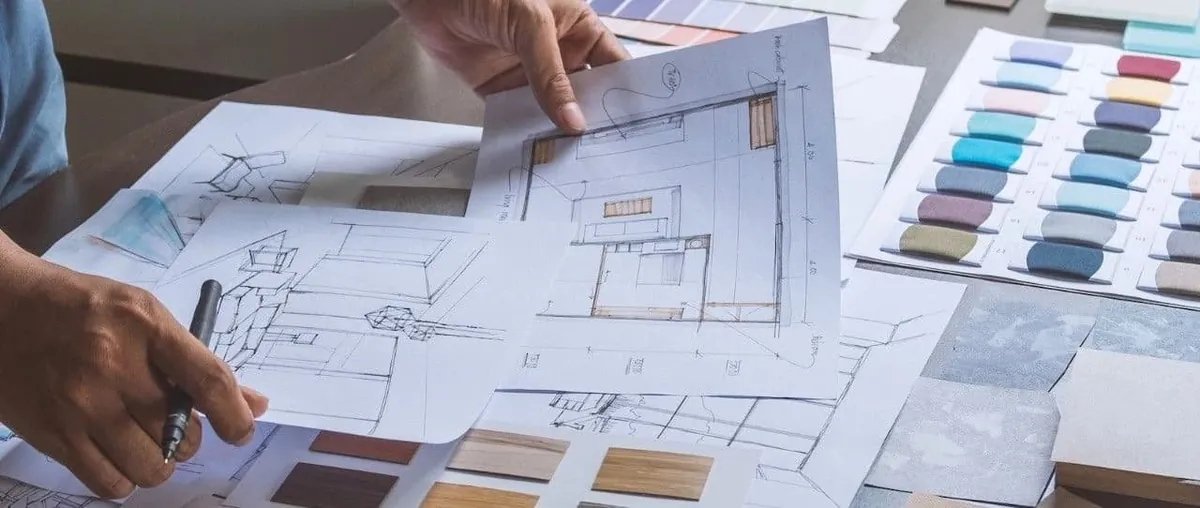
Blinds & Designs is a Hunter Douglas Gallery dealer. For a Mendon house, that means every blind in the Hunter Douglas range in one consultation: real wood, faux wood, metal and vertical, every color and control, and PowerView motorization. Each blind is put up by Hunter Douglas certified installers. We offer interior design consultations for help pulling a room together, and we repair blinds and shades as well.
For other windows in the house, see cellular shades in Mendon, roller shades in Mendon, plantation shutters in Mendon, or the Mendon page for everything we offer in town.

Our nearest showroom is in Franklin
Franklin is the Blinds & Designs showroom closest to Mendon. You are welcome to call in; its address and hours are on the Franklin showroom page.
Questions from Mendon
My antique windows are set deep in the wall. Is that a problem?
It is usually an advantage. A deep recess gives an inside-mounted blind plenty of room, so it sits within the frame and leaves the old casing visible. We measure each frame at several points because antique openings are rarely square.
Our house gets sun on every side. What helps most?
Horizontal blinds let you angle the slats to lift direct sun onto the ceiling, keeping the room bright without glare. Darker slats in east bedrooms and west rooms help at the start and end of the day.
How do I stop the house showing at night across open land?
Close the slats fully and the room is hidden. With PowerView, every blind can close at sunset on a schedule, so the road-side windows are covered whether you are home or not.
Can my newer house match the antique one next door?
Yes. Matching whites on the road-facing windows keep a group of houses looking settled together, and inside each room can have what suits it.
Do you charge to measure and quote?
The estimate is free. We measure every window at the consultation and give you a written estimate to consider.
Starting with your windows
The best way to decide is with real slats in your own light. Request a consultation and we will bring samples to the house, measure each window and give you a free estimate for custom blinds in Mendon, MA. You can also use the call button, or stop by the Franklin showroom.