
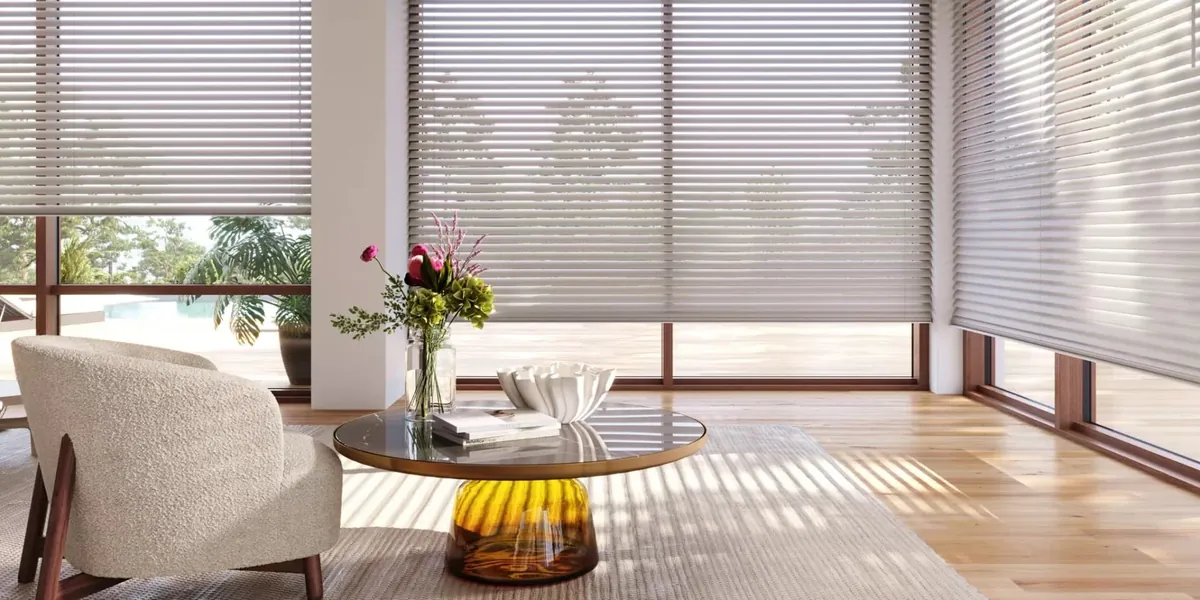
Down by the river, up on the hill
Blackstone is a town of two levels. Along the river, the mill-era houses stand close together, with original narrow openings and very little space between one wall and the next. Climb the steep streets and the housing changes to post-war capes and ranches spread across the hillsides, with more glass, more sky and long views back down the valley.
Those two settings ask different things of a window. Down in the village, the job is privacy without darkness, in rooms where the neighbor’s window may be close enough to touch. Up the hill, it is light: strong sun on an exposed slope, and views you want to keep. Requests for custom blinds in Blackstone, MA, come from both, and the answer is rarely the same twice.
What links them is the slope itself. On a steep street, the road is often above one house and below the next, which changes the angle from which anyone can see in. That angle is the first thing we look at.
Blinds for both halves of town
Most custom blinds in Blackstone, MA, come down to one of three ranges below, from narrow river-level sash to hillside picture windows. Each links to more detail, and all three travel to your house as samples.
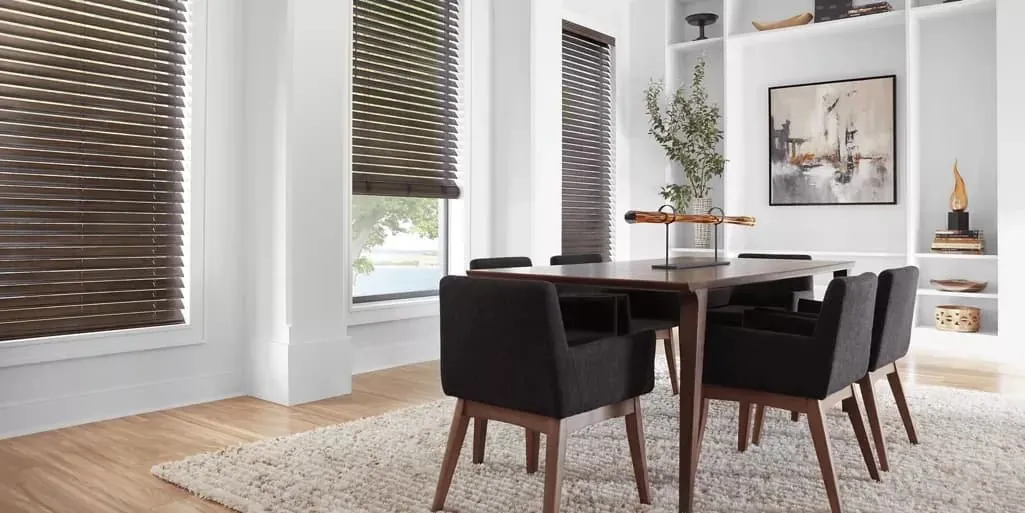
Wood blinds for mill-era rooms
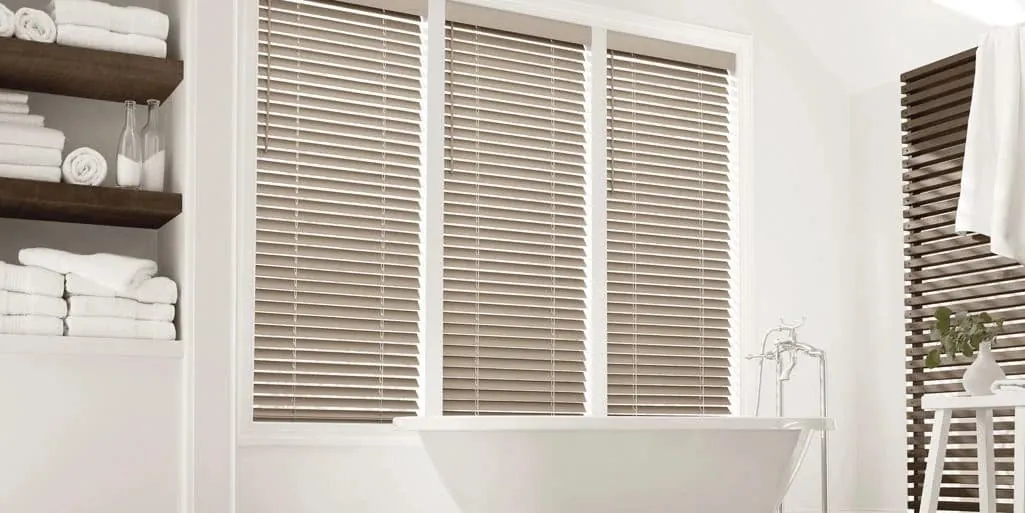
Real wood, made to the exact height and width of a narrow old opening, in a stain or paint to suit the room.
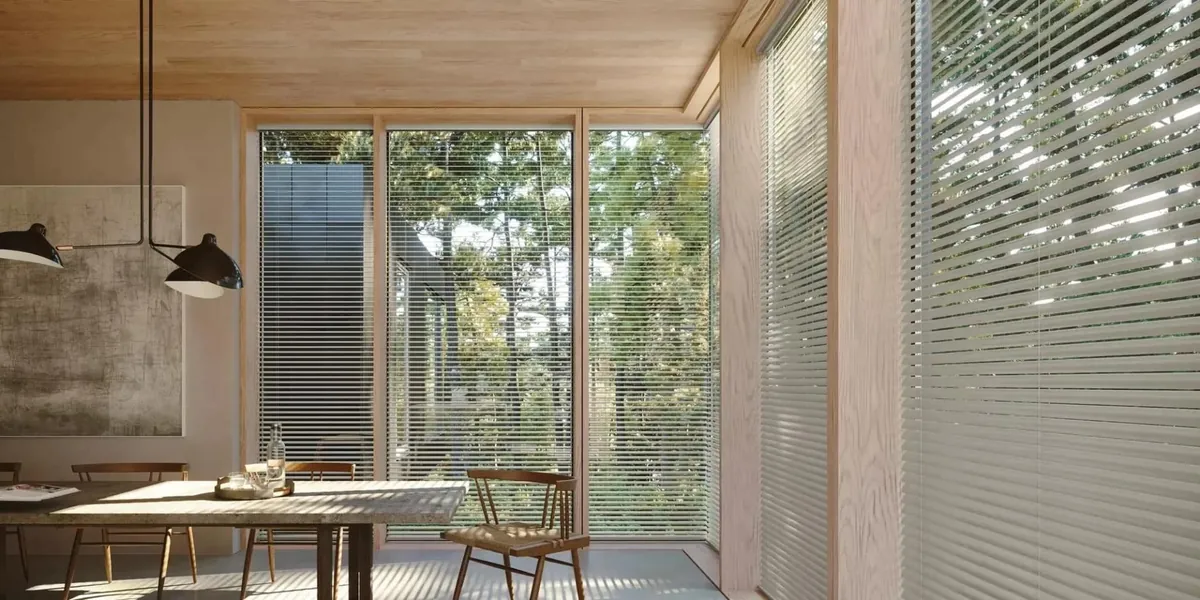
Metal blinds for big hillside glass
Slim slats that almost vanish when opened, so a view down the valley stays clear while the glare is managed.
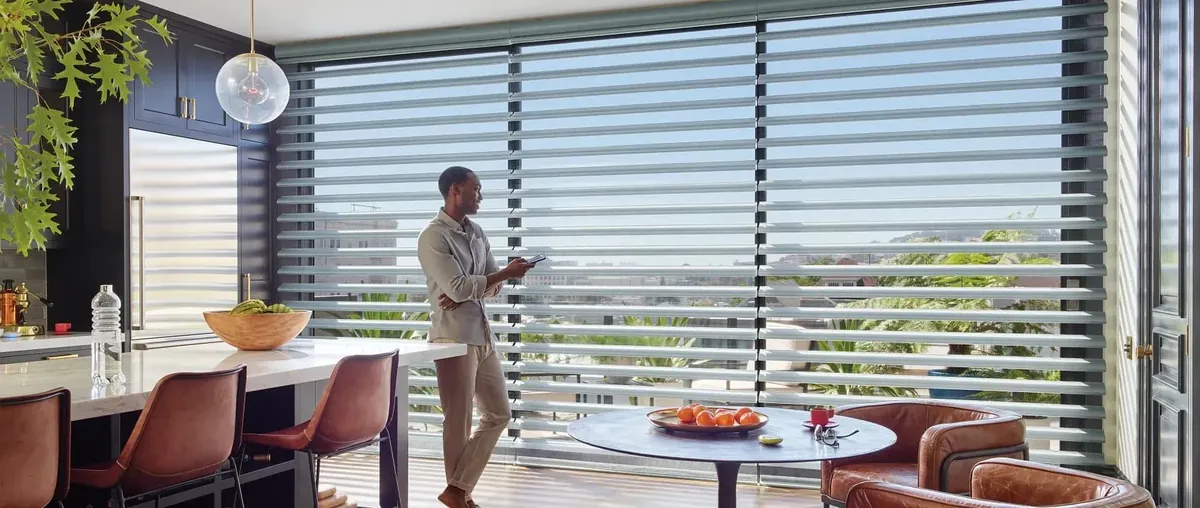
Motorized blinds in Blackstone
PowerView control from a phone or remote, for many windows at once or blinds that close themselves at dusk.
Steep streets and the angle of view
On flat ground, someone passing a house sees into it at roughly eye level. On Blackstone’s steep streets that is often not so. A house set below the road has its front windows looked down into from the sidewalk. A house set above the road has its windows seen from below, from cars and people climbing the hill. And houses built into the slope can have one floor at street level and another a full story above or below it.
Horizontal blinds are well suited to this because the slat angle can be set against the direction of the view. If the road is above you, tilt the slats so their room-side edge points down; the slats then present a closed face to anyone looking down from above, while light still comes in from the sky. If the road is below you, tilt them the other way, edge up, and anyone looking up from the street meets solid slat, while you can still look out and down. The same blind does both, depending on which way you turn the wand.
For houses built into the slope, the floors may need different settings. A ground-floor room level with the road wants privacy at eye height. A room a story above the street might only need its blinds closed at night. We look at each window with this in mind, because the slope decides what a blind has to do.
Narrow openings in the river-level houses
The mill-era houses along the river were built with original narrow openings, tall rather than wide, and the frames have had a very long time to settle. Two windows side by side in one wall can measure differently. A frame can be wider at the head than at the sill, or lean slightly out of plumb.
A made-to-measure blind deals with that. We take the width at three heights and the height at three points across, and build to the smallest reading so the blind runs freely. We also check how deep the frame is. An inside mount, with the headrail fitted up inside the opening, keeps the old casing on show and is the neatest result in a narrow window. If the frame is shallow, a metal blind’s slim headrail often fits where wood will not. If neither fits, an outside mount on the face of the casing is the honest answer, and we explain the choice before anything is ordered.
A narrow window also gives you less glass to play with. When a blind is raised, its slats gather at the top, and on a short narrow window that stack can cover a good part of the pane. For windows you rarely raise, it can make more sense to leave the blind down and simply tilt it, using the slat angle to set light and privacy.
Close neighbors in the village
Down by the river, the houses sit close together, often only a narrow passage or driveway apart. Side windows look straight across at side windows. In daylight this is just village life; after dark, with lights on, a bare window is an open view into a room.
Blinds solve this without shutting out the day. Turn the slats so the room-side edge points up, and someone looking across at the same height sees only slat faces, while daylight still comes in over the top. At night, close them fully and the room is private. In a kitchen or a bathroom facing the house next door, a faux wood blind tilted halfway lets light onto the counter while keeping the view blocked.
Because the village houses are so close, their side windows are often in the darker parts of the room, lighting a stair, a hall or the back of a kitchen. A lighter slat color there helps the room feel brighter, since the slats reflect more of the light that does come in.
Uphill rooms and downhill rooms
A house on a hillside does not get the same light on every side. The rooms facing downhill look out over open air, often with sky right down to the horizon and nothing to slow the sun. The rooms facing uphill look into the slope, a bank of lawn or the back of the next house up, and can be dim even at midday.
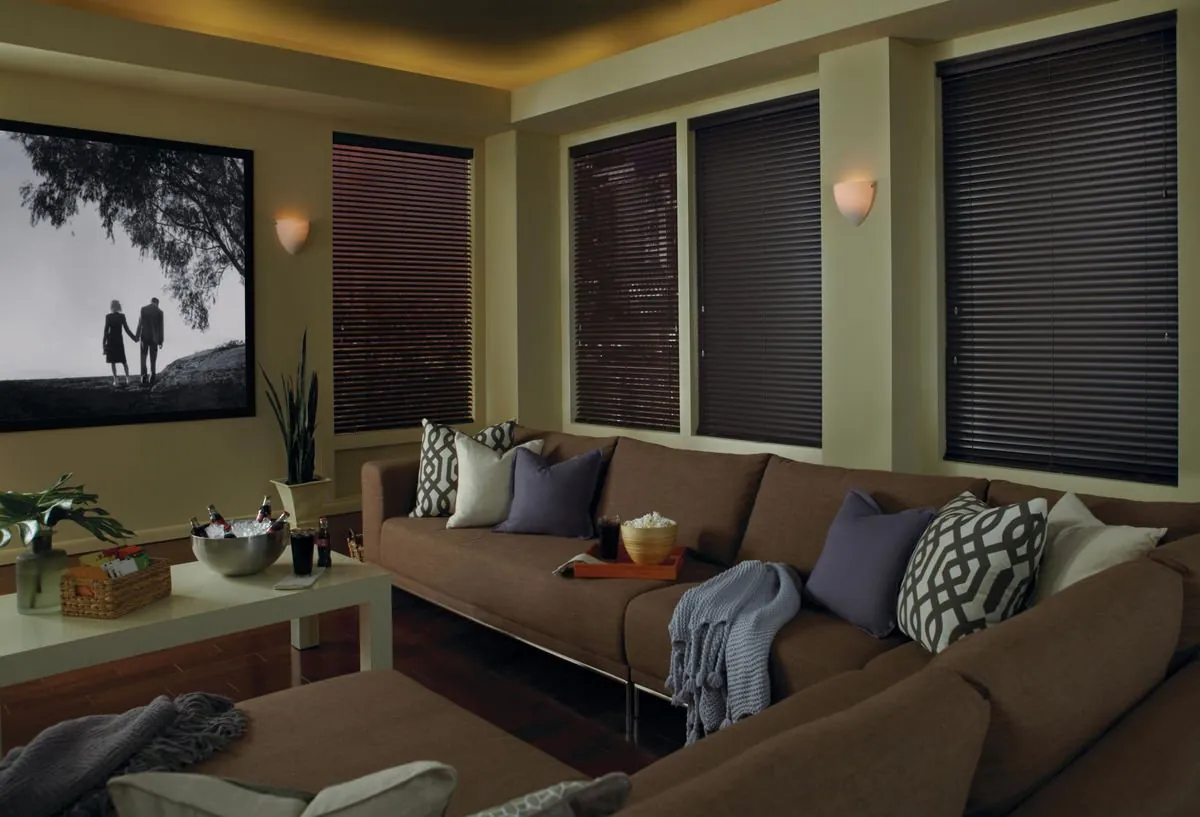
That difference should change the blinds. On the downhill side, the work is managing glare and heat, so a blind you can tilt against the sun matters most, and darker slats are an option where a room overheats in the afternoon. On the uphill side, the aim is to keep every bit of daylight, so a light slat color that reflects light back into the room, kept open most of the day, is usually the better pick. Sometimes the uphill windows hardly need covering at all in daytime, only at night.
We walk round the house with you and note which rooms fall on which side, because on a slope the same street can hold houses with completely different light.
Capes on the hillside
Above the village, post-war capes sit along the hillsides, usually with a pair of windows either side of the front door and dormers upstairs under the roof. Their windows are more standard in size than the mill-era sash, which makes fitting more straightforward, but the slope and the exposure bring their own needs.
The front rooms of a cape on a hillside often look out over the street to the valley, with sun on them for much of the day. A wood or faux wood blind in a light color suits these rooms, tilted to lift the sun off the floor while keeping the view. Upstairs, dormer windows are small and set into sloping ceilings. They catch the morning sun and are right beside the bed in many cape bedrooms. A darker slat, closed fully, keeps those rooms dim early in the morning, and a cordless lift means no cords dangling in a tight dormer.
Kitchens at the back of a cape usually face the yard, which on a hillside lot may rise steeply behind the house. That yard can put the kitchen windows almost at ground level outside, so a faux wood blind tilted against the view from the yard keeps the room private.
Ranches and their bigger glass
The hillside ranches tend to have a large picture window in the living room, often facing out over the slope, plus wider bedroom windows and sometimes a slider to a back deck. These houses take more sun and more sky than anything down in the village.
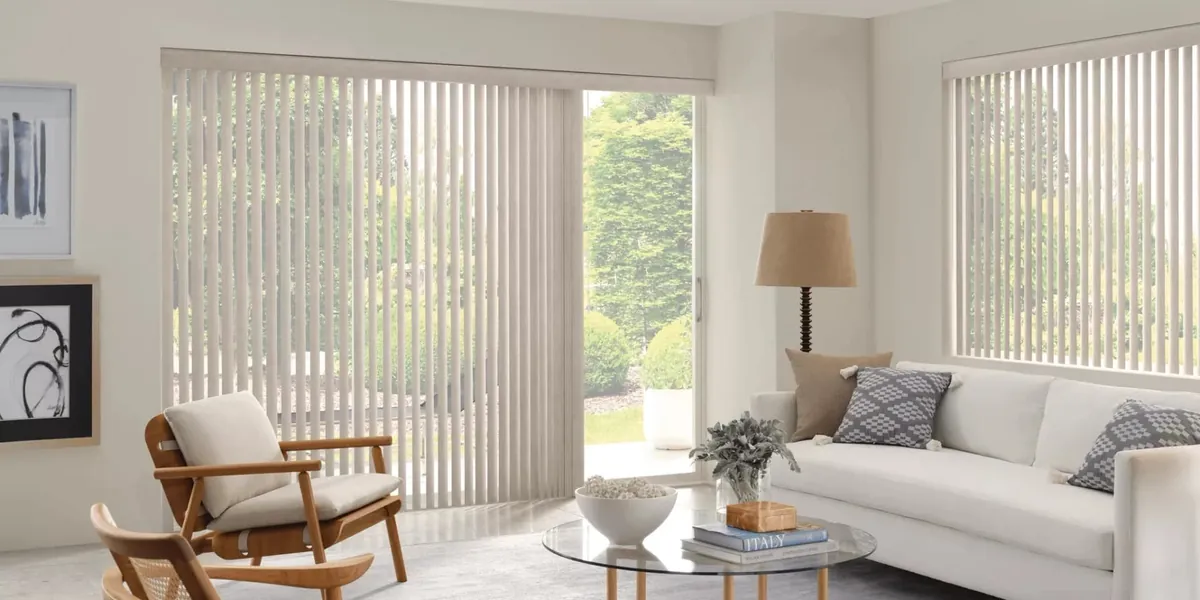
A big picture window is easier to manage as several blinds on separate headrails than as one wide blind. Each is lighter to raise, and you can set them differently, closing the one that takes the afternoon sun while leaving the others open for the view. For a view you want to keep, a metal blind’s thin slats almost disappear when open. A wood blind gives a warmer look in a living room. For the slider, a vertical blind draws to one side so the door opens fully, and its vanes turn to block sun without stopping light altogether.
Ranch bedrooms usually sit along one side of the house, with wider, lower windows. These take a darker slat if you want the room dim for sleep, or a light one in a guest room that needs to feel bright.
Material by room
Each Hunter Douglas blind we fit is made to order. Here is how the four materials are typically used across Blackstone houses.
- Wood. Real wood slats in stains or paints. River-level front rooms with their original trim, and ranch living rooms.
- Faux wood. A wood look in another material, often chosen for kitchens and baths, including those facing a close neighbor.
- Metal. Thin aluminum slats on a slim headrail. Shallow old frames, door glass and big hillside windows where the view matters.
- Vertical. Vanes on a track that draw aside. Sliders onto decks and wide openings in the hillside houses.
Our custom blinds page has more on each, including faux wood blinds and vertical blinds.
Working the blinds day to day
A cordless lift lets you raise and lower a blind from its bottom rail, with no cords at all hanging down. It keeps sills clear and is the safer choice in a house with small children or pets. A wand turns the slats, which on a steep street you may adjust more often than elsewhere, as the sun moves and the angle of view changes.
PowerView motorization takes that a step further. Blinds can be raised, lowered and tilted from a phone, a remote or on a schedule. For a ranch with many windows facing the slope, or a village house where you want every side window closed at dusk, a schedule does it automatically. We plan how each motor gets its power at the visit.
One room, one floor or the whole house
Some Blackstone houses get their blinds all at once; others a room at a time as budgets and projects allow. Both work. If you start with the front of the house, we suggest settling on one color for every street-facing window, since on a steep street those windows are seen from above and below as well as straight on. Later rooms can then follow that lead, or go their own way inside.
For a whole house, one visit covers every window, and the plan can mix materials room by room: wood where the trim is worth showing off, faux wood in the kitchen and bath, metal on the small and shallow frames, vertical at the slider. We keep a record of what each room chose, so if you add custom blinds in Blackstone to another room later, they match the first.
How we measure and fit
We come to you because blinds are best chosen at your own windows, in your own light, with the neighbor’s house or the valley in view.
- You request a consultation, and we arrange a visit.
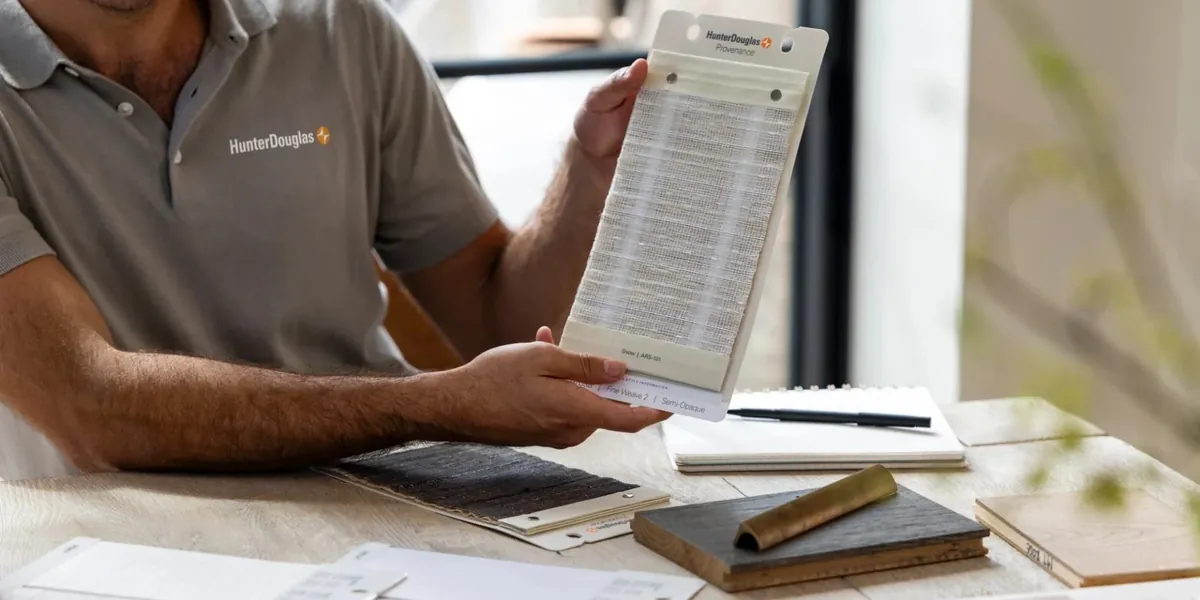
- Our van brings wood, faux wood and metal slats in many colors, vertical vanes and each type of control.
- We go through the house with you, room by room, noting light, privacy and the angle of the street.
- Every window is measured at several points, with the depth checked on the older frames.
- You get a free estimate and take your time with it.
- Certified Hunter Douglas installers put up each blind, set it level even in a frame that has settled, and test it.
Care at that last step is what lets custom blinds in Blackstone sit properly in old narrow frames. You can read more about what happens at an in-home consultation.
Color on a hillside street
On a steep street, houses are seen from more angles than usual: from above, from below, and from across the valley. Front windows that share one color, usually a white or off-white close to the trim, keep a house looking settled from every side. Inside, you can choose differently room by room: a stained wood in a living room, a soft gray in a kitchen, a dark slat in a bedroom.
We bring enough colors to try against your own trim in daylight, because a white that looks bright in a south-facing hillside room can look flat in a shaded river-level kitchen.
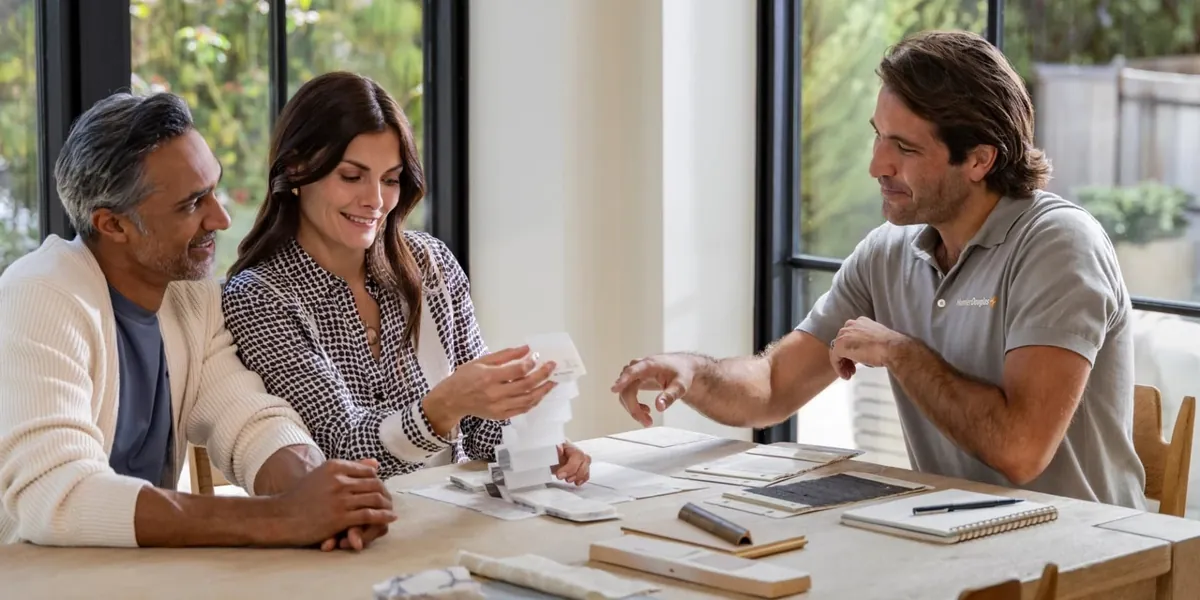
Why work with a Hunter Douglas Gallery dealer
Blinds & Designs is a Hunter Douglas Gallery dealer, with the full blind range available in one visit: wood, faux wood, metal and vertical, every color and control, and PowerView motorization. Our installers are Hunter Douglas certified. We also offer interior design consultations and blind and shade repairs.
To look at other windows in the house, see cellular shades in Blackstone, roman shades in Blackstone, plantation shutters in Blackstone, or the Blackstone page for all our services in town.
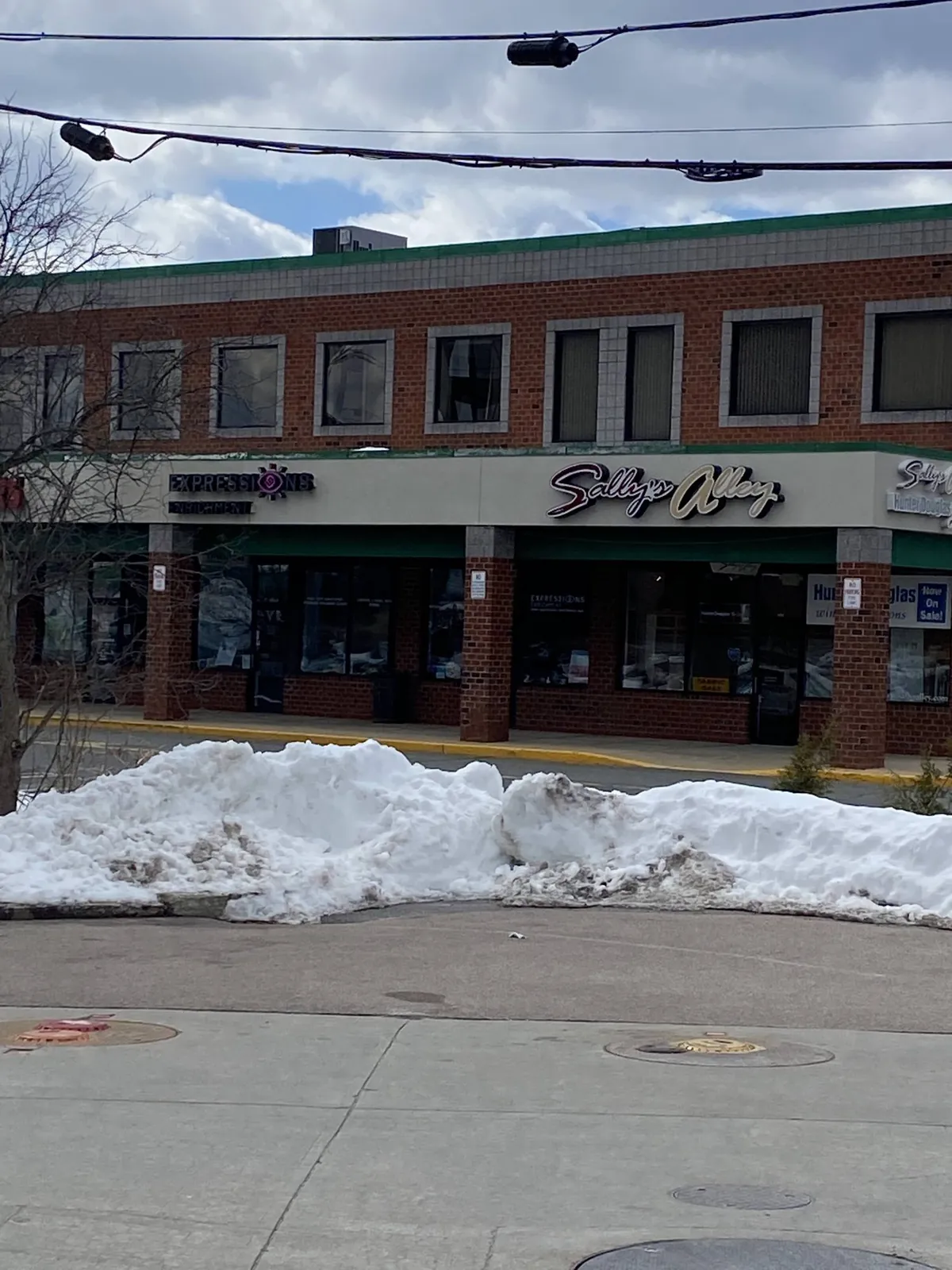
Franklin, our closest showroom
The Franklin showroom is the nearest Blinds & Designs location to Blackstone. Its address and hours are on the Franklin showroom page, if you would like to call in.
Questions from Blackstone
Our house sits below the street. Which way should the slats tilt?
With the road above you, tilt the slats so the room-side edge points down. Anyone looking down from the sidewalk meets a closed face, while light still comes in from the sky.
Will a blind fit our narrow, older river-level windows?
Yes. Each blind is built to its own frame, measured in several places. Where the frame is too shallow for wood, a metal blind’s slim headrail often fits inside.
What works on a big picture window facing the valley?
Several blinds on separate headrails, so you can set each one differently. Metal blinds keep the view clearest when open; wood gives a warmer look.
Can blinds help a cape’s dormer bedrooms stay dark in the morning?
Yes. A darker slat closed fully keeps the early sun out, and a cordless lift keeps a small dormer tidy. Because dormer frames are often small, each blind is built to its own opening.
How much does the estimate cost?
Nothing. The estimate after measuring is free, and it covers every window we looked at, so you can compare rooms and decide what to do first.
Book a time to see samples
Holding real slats at your windows, with the street or the valley in view, makes the choice straightforward. Request a consultation and we will bring samples, measure each opening and leave a free estimate for custom blinds in Blackstone, MA. You can also use the call button, or visit the Franklin showroom.