
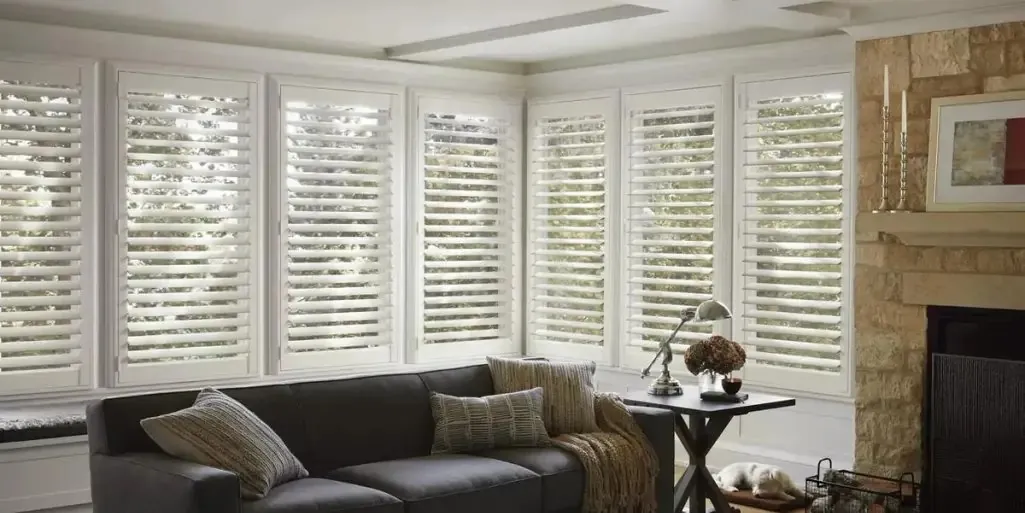
River houses below, hillside houses above
Blackstone is built on two levels. Down by the river the mill-era housing stands close together, with original narrow window openings and streets that climb away from the water at a steep pitch. Up on the hillsides, post-war capes and ranches sit on their own lots, looking out over the rooftops below.
Those two levels set two different problems for a window. In the close-set village stock, the house next door is near and the sidewalk is often above or below your sill rather than level with it, so people passing can look down into a room or up into it. On the hillsides, the windows are standard sizes and the challenge is more often sun and outlook than privacy.
Most calls about plantation shutters in Blackstone, MA, come down to one of those: a narrow mill-house window that needs privacy from an awkward angle, or a hillside room that needs the light managed without losing the view down the valley.
Shutters handle both well, because louvers can be angled to block a line of sight from above or below, and opened flat when the view is what you want.
Shutter layouts we use across town
From the tightest river street to the hillside ranches, these are the arrangements that come up most.
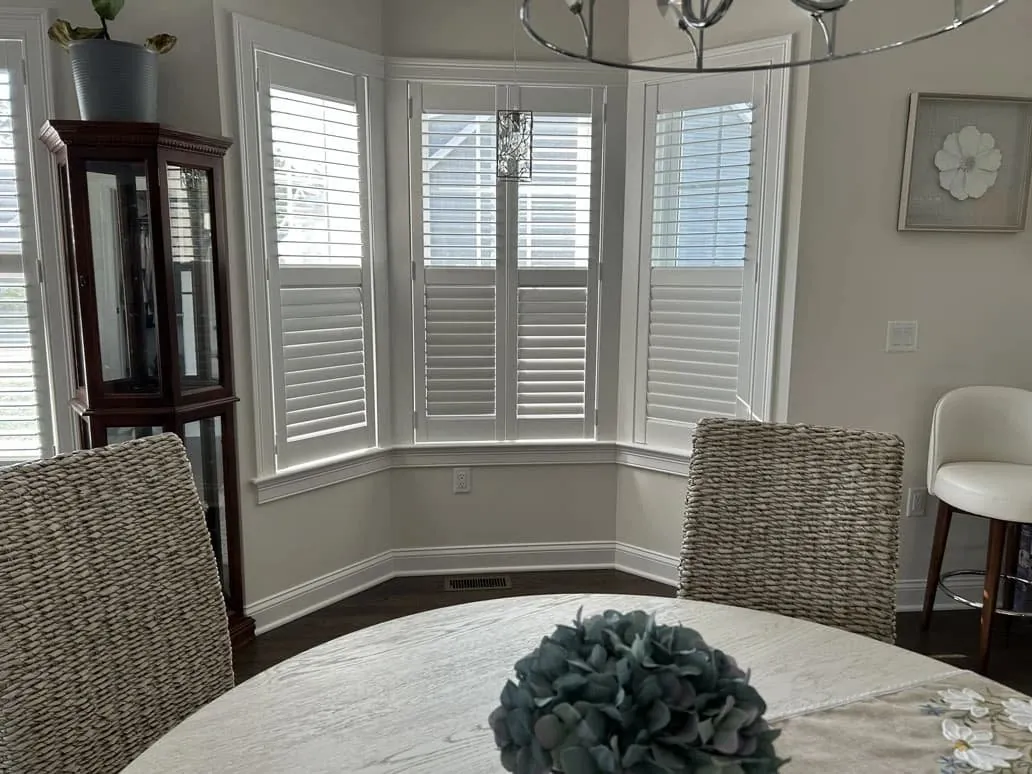
Lower-half panels on a sidewalk window
Where the sidewalk runs close to the lower glass, panels on the bottom half screen it and leave the top open to the sky.
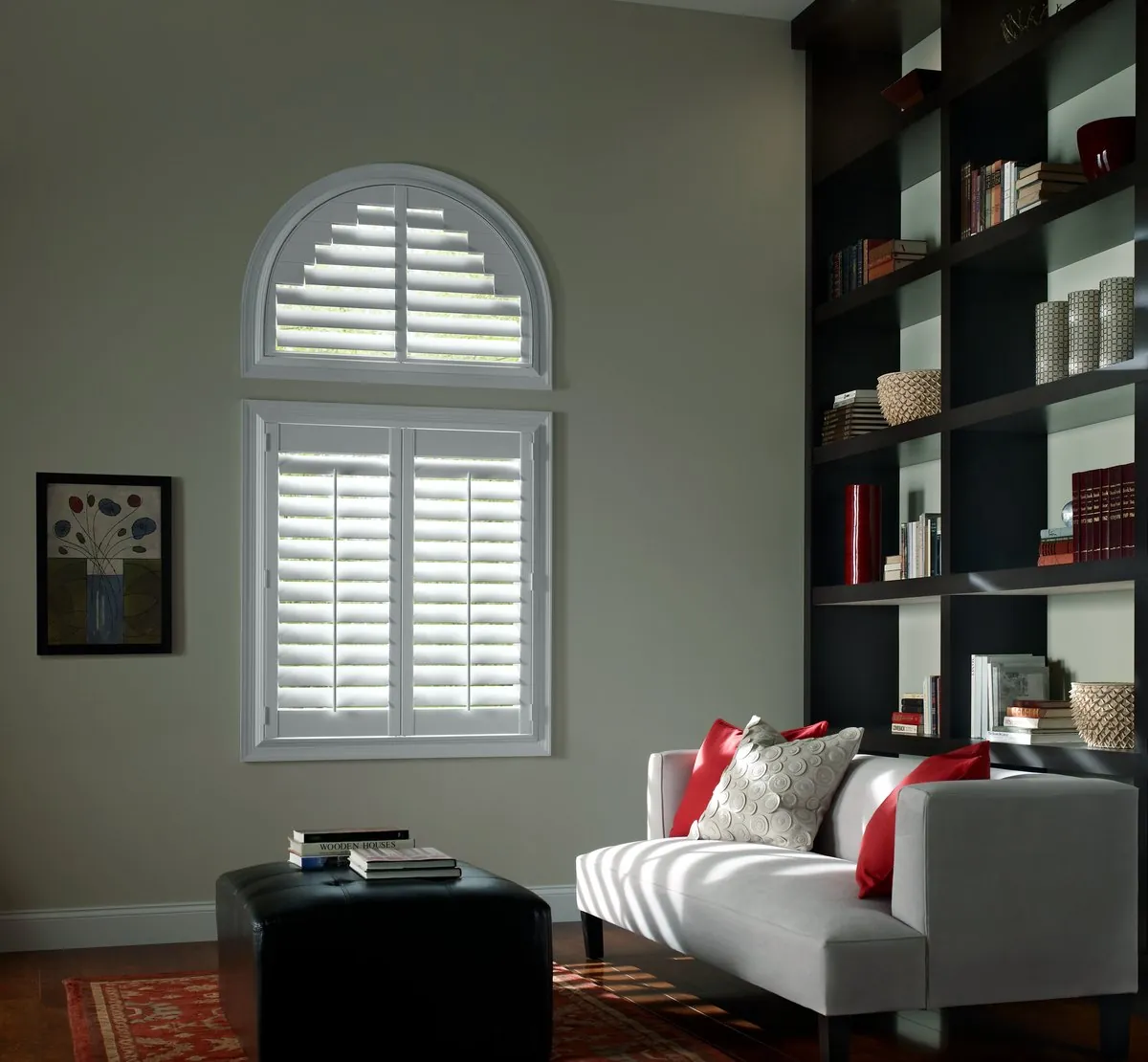
A rail on a tall narrow opening
A rail across the panel lets the top and bottom louvers tilt separately, which is the key to privacy on a mill-house window.
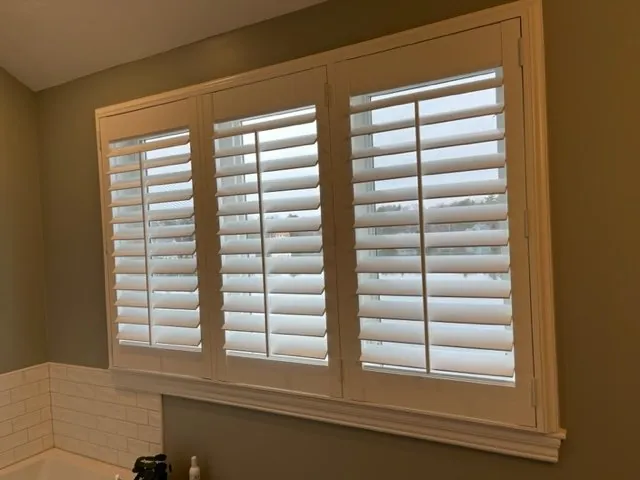
Baths beside the neighbors
A bath window facing the next house across a narrow gap keeps its louvers shut most hours. Palm Beach is one collection to compare there.
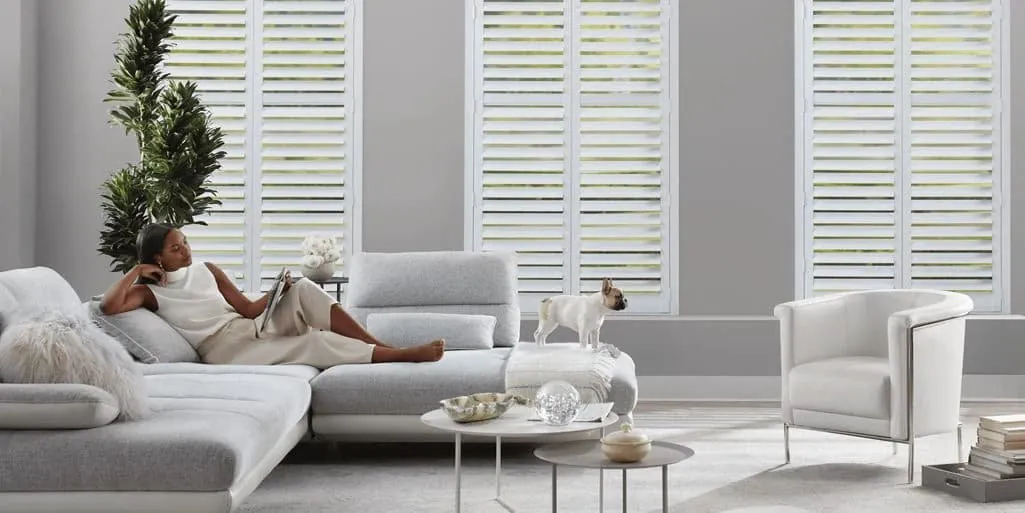
Ranch living room windows
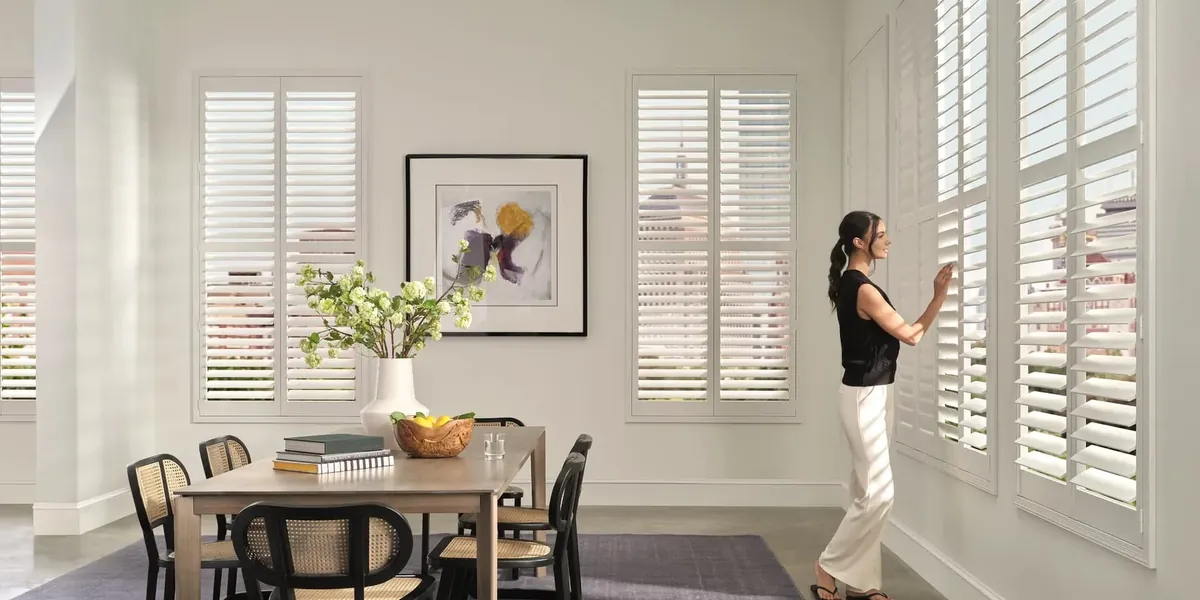
A broad hillside window is shuttered as a row of panels in one frame, joined where the window’s mullions already fall.
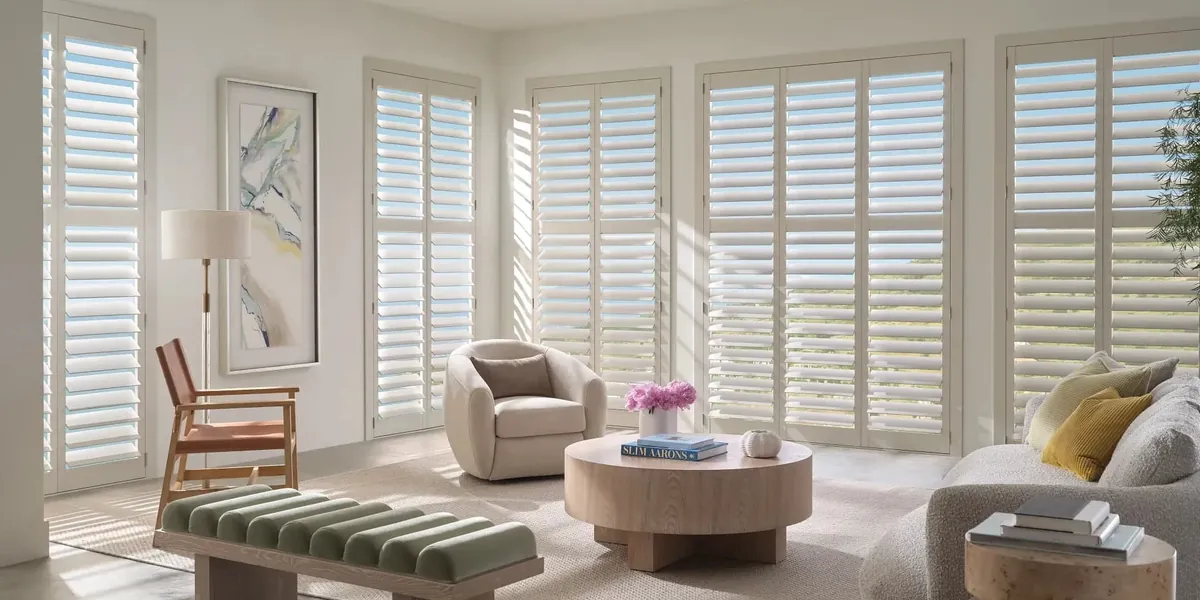
A run of matched windows
Three or four windows on one wall look calmer when every rail sits at the same height and every louver is the same size.
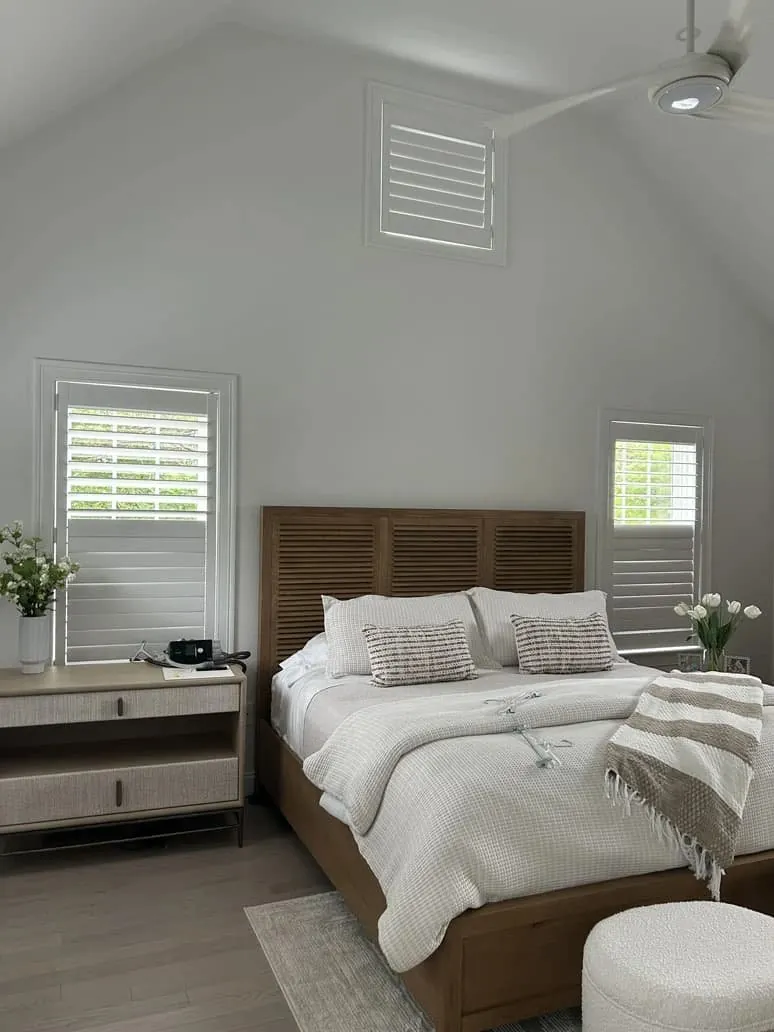
Upstairs bedrooms in a cape
Bedrooms tucked under a cape roof often have gable or dormer windows that need closing at night and opening by day.
Privacy on a steep street
A level street makes privacy simple to picture: someone walks past at roughly the height of your window. A steep street does not. On the river streets, one house may sit with its front windows a little below the sidewalk while the house across the road looks down on it from higher ground. A room can be overlooked from above and from the side at once.
Louvers deal with this better than most coverings, because you can choose which direction to block. Angle the blades with their room-side edge lower and a person looking up from the street sees only the blade faces. Tilt them so they slope up toward the room and they block the view from a higher window or a raised sidewalk across the street. Either way, light still gets in around the blades.
When a window is overlooked from more than one direction, a rail partway up lets the lower and upper louvers face different ways. It sounds fussy, but once it is set most people leave it alone for months.
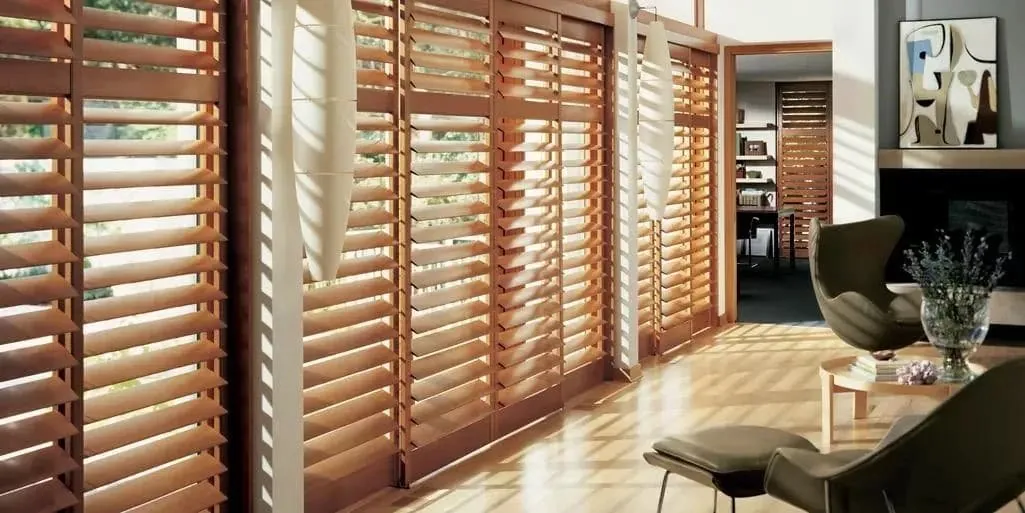
Original narrow openings by the river
The mill-era houses near the water kept many of their original window openings, and those openings are narrow. A shutter on a narrow window has to be planned with care, because every part of it shows.
Panel count comes first. A pair of panels meeting in the middle can leave each one so slim that the louvers look short, and the two stiles block a strip of glass that the window cannot spare. On the slimmest openings one panel, hinged at the side, looks lighter and swings clear of all the glass.
Louver size follows. A slimmer louver puts more blades on a small panel, so the face looks finer and better matched to the window’s scale. On a slightly wider mill-house window, a middle size may suit. The difference between sizes is obvious in person and hard to judge from a picture, so the vans carry panels in several.
Then the frame. The original openings may not be deep, and they are rarely square after so long. Each one is checked for width and height in more than one place, and the frame is then drawn up to suit, sitting inside the opening or on the face of the trim. Our guide to shutters for older windows explains the thinking.
Capes on the hillside
The post-war capes above the river were built to simple, practical plans, and their windows are mostly standard sizes. Downstairs, that makes shutters straightforward: square openings, consistent sizes and a front elevation that looks tidy when every window matches.
Upstairs is where a cape gets interesting. Bedrooms under the roof often have windows in the gable end and, on some houses, in dormers, and those openings can be small or set into a sloped ceiling. A shutter frame has to clear the slope and the panels have to open without hitting it. We look at each one in person, since two capes on the same street may have been finished quite differently inside.
Hillside capes also tend to catch more sun than the river houses below, because nothing upslope shades them. Front bedrooms facing the valley can be bright early. Closed louvers take a lot of that light out of a room, and a rail lets the top stay open on a gray morning.
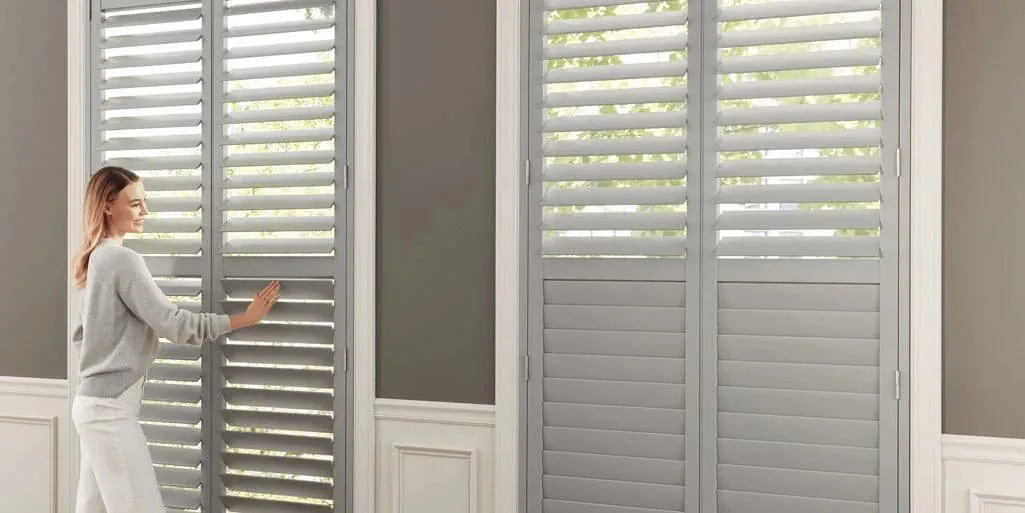
Ranches and the view down the hill
A ranch on a hillside lot usually puts its living room toward the view, with a wide picture window looking out over the valley. That window is the one most people ask about first, and it is the one where shutters have to work hardest at getting out of the way.
Wide louvers suit it. When they are tilted flat, a wide blade leaves bigger gaps and the view reads more clearly between them. Such a window is normally shuttered as a row of panels sharing one frame, and the joins between them are placed over the mullions so no new lines cross the valley view. On a sunny afternoon you can tilt the louvers against the glare; on a clear evening you can swing the panels back and leave the glass bare.
For plantation shutters in Blackstone on a hillside ranch, the bedrooms and baths along the back usually follow the living room’s louver size and color, so the whole house reads as one from outside.
Back rooms that face the bank
Build a house into a steep slope and its back rooms end up facing something close: the hill itself, a retaining wall, or the foundation of the house above. Those rear windows get little direct sun, and what light they do get comes in at a low, gray angle off the bank. The last thing they need is a covering that steals more.
Shutters can still work in rooms like this, as long as they are planned for light first. A wider louver opens up more of the glass when tilted flat, and a light color throws what daylight there is back into the room. Many river-street kitchens at the back of a house keep their louvers open almost all day and only close them after dark. When we plan plantation shutters in Blackstone for a back room like this, we usually suggest hinged panels too, so the whole window can be cleared on the dullest days.
Side windows across a driveway
On the river streets, the gap between houses is often just a driveway. Side windows look straight across it at the neighbor’s side windows, sometimes at the same height, sometimes a half story up or down because of the slope. Dining rooms and bedrooms on these walls need privacy at night and daylight during the day.
A rail placed at the height of the window’s meeting rail is the usual fix. The lower louvers stay angled against the window opposite; the upper ones open for light. Where the neighbor’s window sits higher than yours, the upper louvers can be the ones that close. Because these side windows tend to repeat down the length of a house, ordering plantation shutters in Blackstone for a whole side wall at once keeps every one matched.
One room now, more later
Not every project covers the whole house at once. Plenty start with the one window that bothers someone most, often a bath or a front room overlooked from the street, and grow from there. That works well with shutters, provided the first room is planned with the rest in mind.
So even on a one-room job we look at the windows around it. We note the louver size, frame style and color chosen, and think about how the next rooms would follow. That way the front of the house still matches when the second and third rooms are added. It also means the next visit starts with the earlier choices already written down, so nobody has to guess what went in the first time.
How we measure a Blackstone window
Shutters are rigid frames and panels, so the measuring has to be careful. Here is the order we work in at your house.
- We look at the window from inside and out, and note which directions it is overlooked from.
- We measure the width at the top, middle and bottom of the opening.
- We measure the height on both sides and check the diagonals to see whether it is square.
- We check the depth of the opening to see whether the louvers can tilt with the frame set inside it.
- We note any sash locks, handles or sloped ceilings the panels need to clear.
- We confirm the panel count, louver size and rail height with you at the window.
This all takes place on an in-home consultation. The samples travel with us in the van, which is what we mean when we say we can bring the showroom to you, and you are left with a free estimate at the end. Read more on our in-home consultations page.

Picking a collection
We bring Palm Beach, NewStyle and Heritance, the three Hunter Douglas shutter lines, to every Blackstone visit. Holding them up together in a river-house window, then again in a hillside room, shows quickly which finish and color range suits which part of the house.
Many houses use more than one. A bath in a river-street house might go one way and a hillside living room another. The thing to keep consistent is what is seen together, such as every window on the street side.
Read up on Palm Beach, NewStyle or Heritance before the visit if you like.
Choosing a louver size
- Narrow mill-house openings: the slimmest louver, which keeps the face fine on a thin panel.
- Cape bedrooms and baths: whichever size suits the panel count, often the middle one.
- Standard downstairs windows on the hillside: a middle size is the safe choice.
- Picture windows facing the valley: wide louvers, for the clearest view when tilted open.
Mixing sizes between floors is fine; a single color hides the switch.
Color on the front of the house
On the river streets, the outside face of your shutters is seen at close range by everyone who passes, and from above by the houses uphill. A crisp white reads cleanly and suits most trim. Behind old glass, a softer white often looks more at home.
On the hillside, the houses are seen from further away, so the shade matters less outside than in. Inside, a front room with stained woodwork might suit a stained finish; a kitchen usually suits white. We bring finish samples so you can see them against your own walls in daylight. When people plan plantation shutters in Blackstone for the whole front of a house, matching those windows is the one thing we always recommend.

Fitting day
Installation is done by our own Hunter Douglas certified installers. On a river-street house that has settled, shimming the frame so it stands plumb inside a crooked opening is most of the job; once that is right, the panels swing and latch as they should. Each louver section gets tilted open and shut as a final test, and you get a walk-through of the rail and the hinges at the end. There is more on our page about what happens on installation day.
Why choose a Gallery dealer
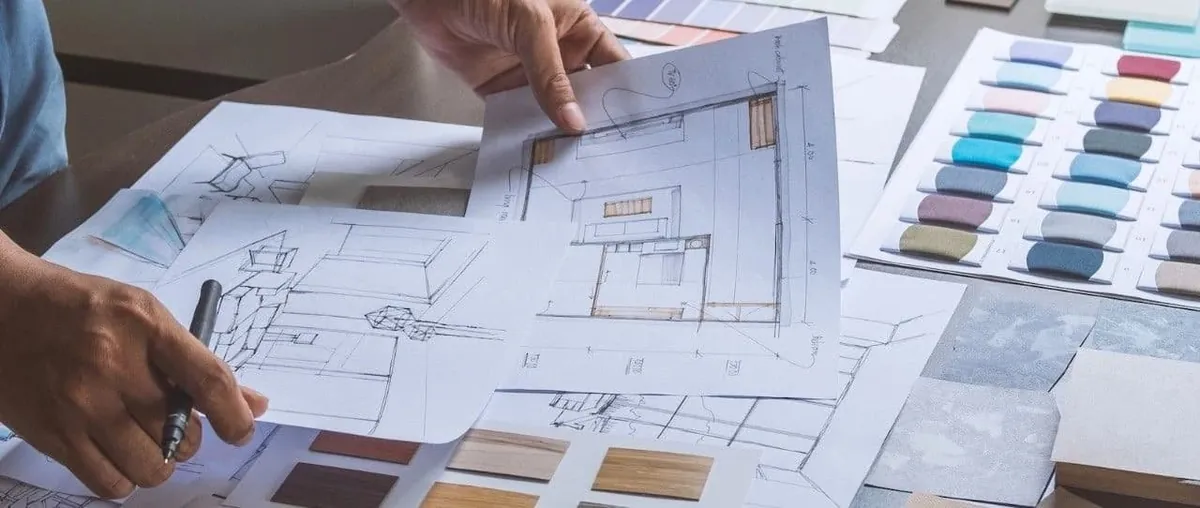
Hunter Douglas names Blinds & Designs among its Gallery dealers. In practice that puts every shutter collection, louver size and finish within reach, with planning from people used to narrow old openings and houses cut into a slope.
Installation is certified by Hunter Douglas and estimates are free. Interior design consultations are there for rooms that need wider thinking, and repairs are available for the coverings already in your house.
The Blackstone page lists everything we do in town. For rooms where a slat suits better than a louver, see custom blinds in Blackstone.
Seeing shutters before the visit
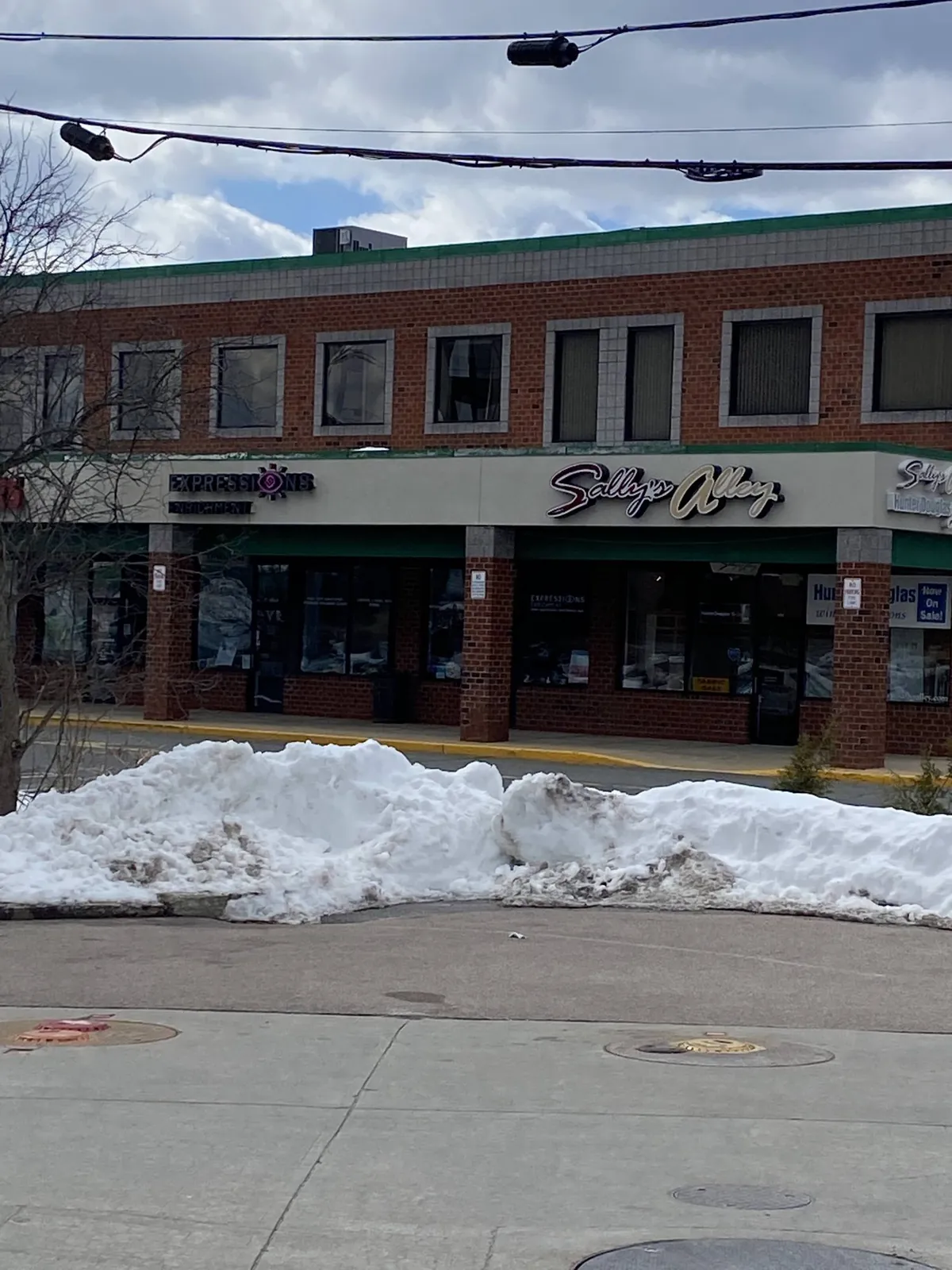
From Blackstone, our nearest showroom is in Franklin. Stop by the Franklin showroom if you would like a first look at shutters before anyone comes to the house.
Even so, the choice usually gets made at home. A panel looks one way under shop lighting and another in a narrow river-street window with a neighbor’s wall a few feet away, and it is the second view that counts. Measuring and fitting are always done on site.
Questions from Blackstone
My house sits below the sidewalk. Can shutters stop people looking down into the room?
Yes. Tilt the louvers so the blades slope up toward the room and they block a view from above, while light still gets in around them. A rail lets the top and bottom louvers face different ways.
Will shutters suit the narrow original windows in a mill house?
They will, with the right proportions. A single hinged panel and a slimmer louver usually look best on a narrow opening, and we plan the frame around the opening as we measure it.
Can you fit shutters in a cape bedroom with a sloped ceiling?
Often, yes. The frame and panels have to clear the slope, so we look at each window in person and plan how the panels open.
What louver size works on a hillside picture window?
Go wide. Broad blades give the cleanest outlook when tilted flat, and the panel joins can sit over the mullions you already have.
Is the estimate free?
Yes. Estimates cost nothing. Once the windows are measured, we write one up for the panels and collection you picked.
Take the next step
Most shutter questions settle quickly once a sample panel is standing in the actual window. Ask for a consultation and the three collections come to you, along with a tape, a notebook and a free estimate once the measuring is done. You can also use the call button for a quick question. Franklin is the closest showroom if you want to look first. For background on all three lines, start at our plantation shutters page.