
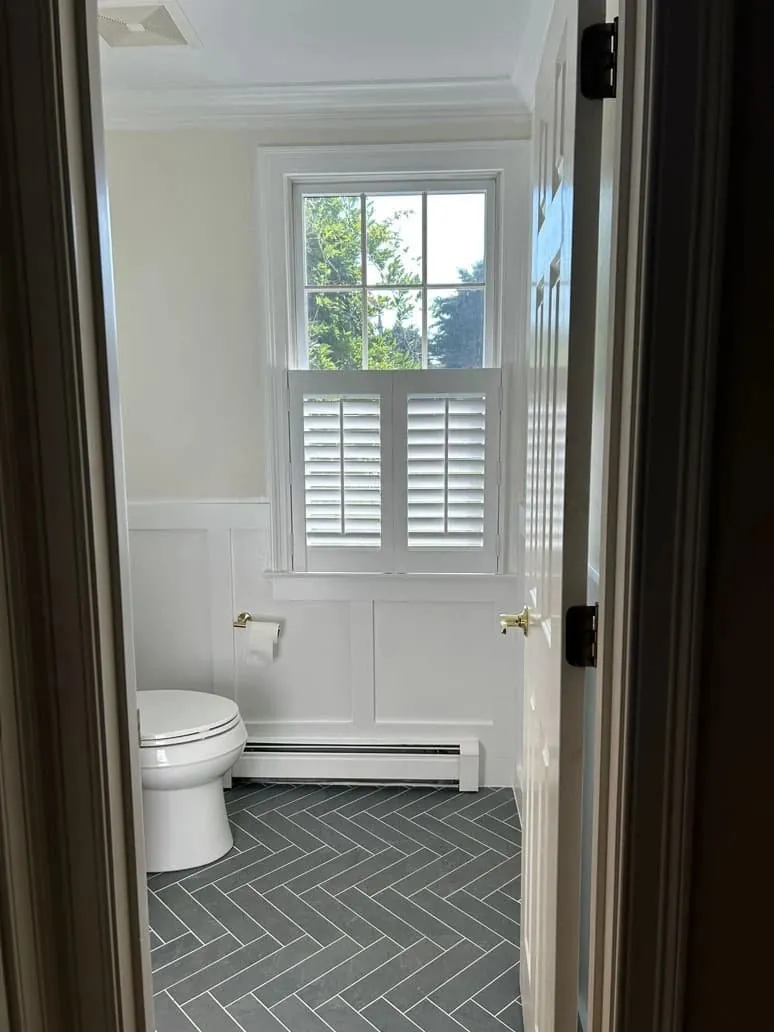
Whitinsville sash, close to the sidewalk
In Whitinsville, the mill village at the heart of Northbridge, the company housing was set out in tight rows. The houses stand near the street and near each other, so a front window may be only a few strides from the sidewalk and a side window may face the next house across a narrow gap. Many still have their original sash, and that sash is tall and narrow.
Put those facts together and the brief for a window covering writes itself. It has to give privacy from people walking past at close range, privacy from the house next door, and it has to do that on a window that is much taller than it is wide, without making a dim room dimmer. That combination is exactly where louvers earn their place.
Most of the conversations we have about plantation shutters in Northbridge, MA, begin in one of these village houses, usually in the front room. Further out, on the edges of town, the newer colonials give us a much easier opening and a different set of questions, and we cover those lower down.
A shutter can be closed at the bottom and open at the top, and it can be angled to block a view from one direction while letting light in from another. On a street like this, that flexibility is the whole point.
Three common requests in the village and beyond
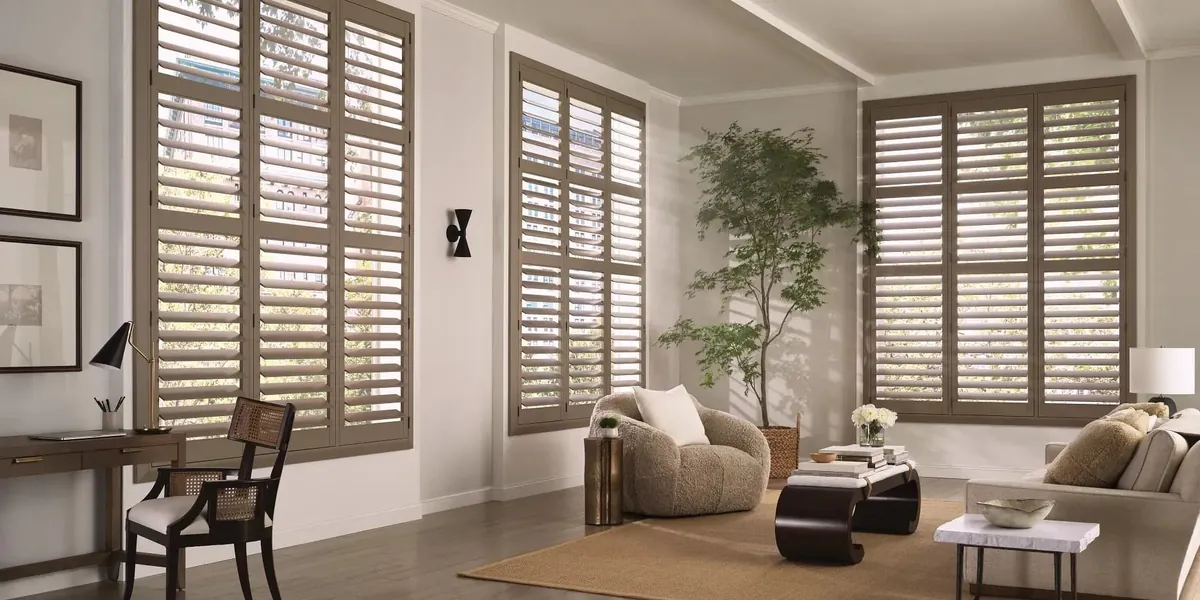
The front room on the sidewalk
A tall front window a few strides from the sidewalk wants its lower louvers closed by day and its upper louvers open to the sky.
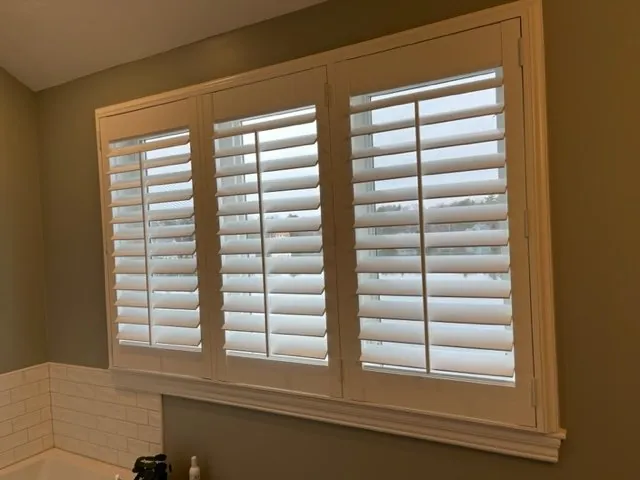
A bath facing the next house
Side baths in the company houses look across a narrow gap. Palm Beach is among the collections we hold up at those windows.
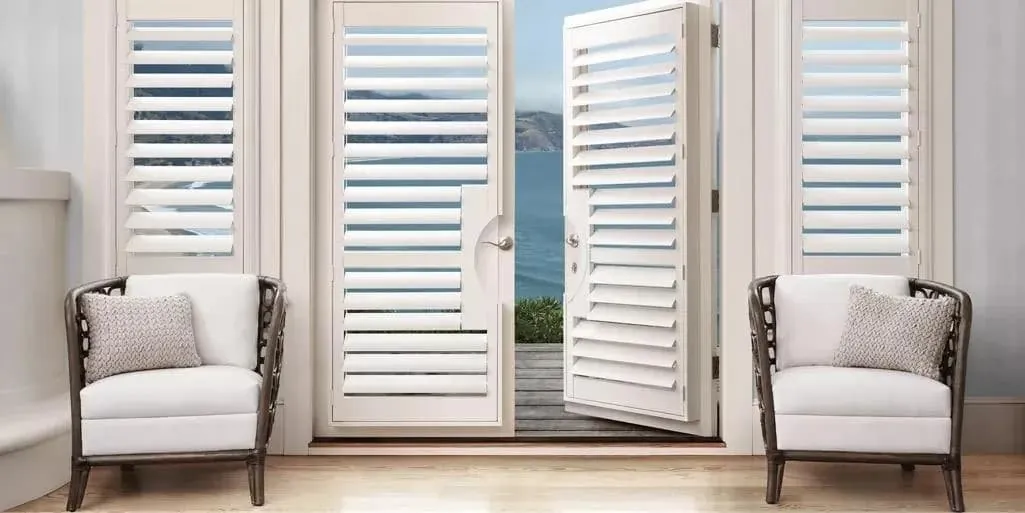
A colonial on the edge of town
Standard, square openings on the newer houses make for an easy fit, so the choice comes down to louver size and color.
Where the rail goes on a tall, narrow sash
The single most useful part of a shutter on a Whitinsville window is the divider rail, the horizontal bar that splits a panel into an upper and a lower section, each with its own louvers. Without one, all the louvers on a tall panel tilt together, which is not much help when you want the bottom closed and the top open.
Where the rail sits matters as much as having one. On original double-hung sash, the neatest place is level with the meeting rail, the bar where the upper and lower sashes overlap. Placed there, the shutter rail hides behind the window’s own line and the whole window looks orderly from inside and out. Placed a little higher or lower, it can look like an afterthought.
On some front windows the privacy line is not at the meeting rail. If the sidewalk sits higher than the floor, or a porch rail sits at an awkward height outside, the rail may need to move so the closed lower louvers cover the line of sight. We look at both from inside the room and from the sidewalk before settling it, and we show you where it would fall with a sample panel at the glass.
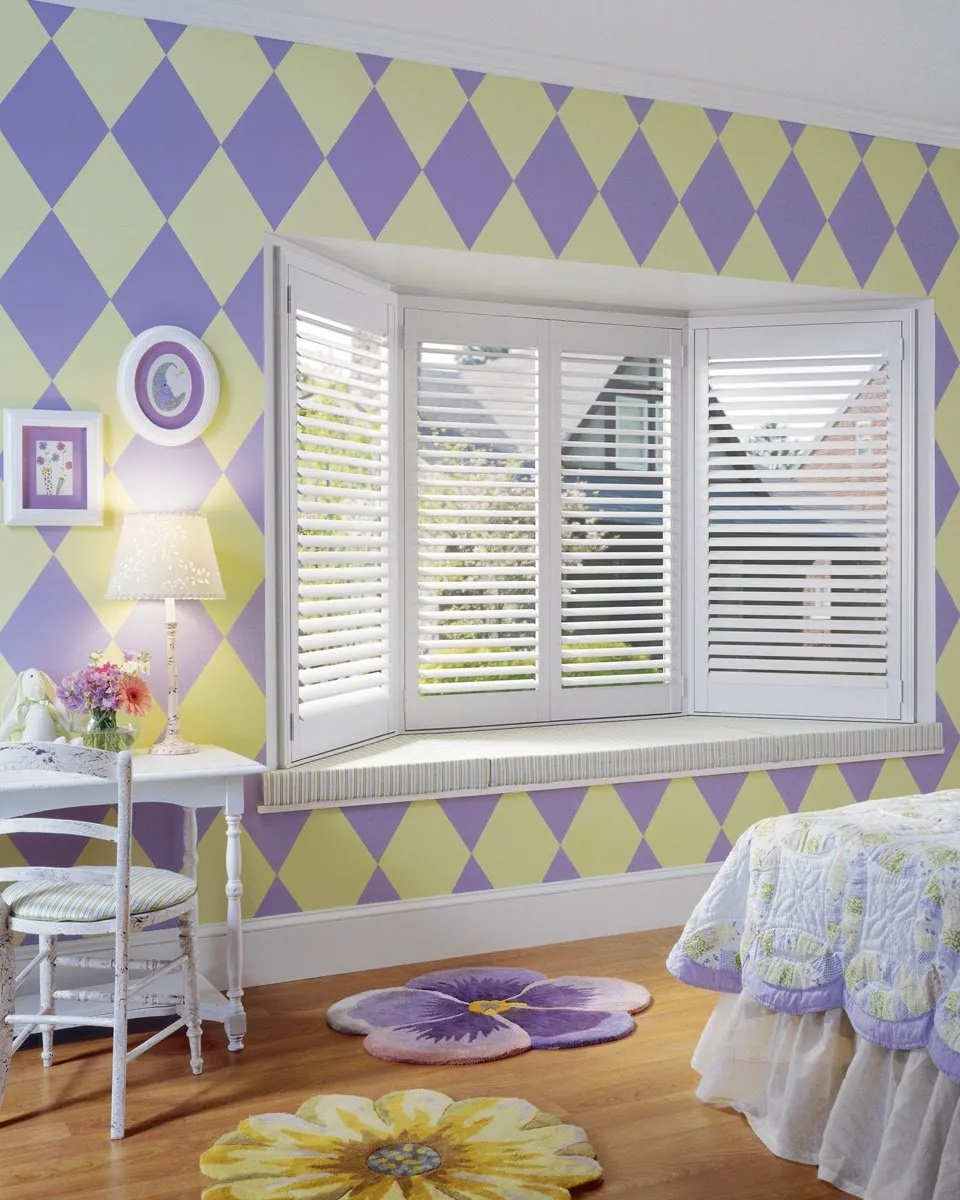
A few strides from the sidewalk
Village front rooms are on show more than most. Someone walking past is close enough to see in at eye level, and in the evening, with lamps on, the room is lit up for the whole street. A shade solves that by coming down, and then the room loses its daylight too.
With louvers you can be more precise. During the day, tilt the lower louvers so the blades slope down toward the room. Anyone outside looks into the blade faces, while light still reflects in. Keep the upper louvers open and the room stays bright. At dusk, close both sections. If you want the window clear for a while, open the whole panel and fold it back.
Panels on the lower sash only, sometimes called cafe height, are another option for a front window. They screen the sidewalk and leave the whole top of the window bare. They suit a kitchen or a dining room facing the street especially well, where the view out above eye level is part of the room’s appeal.
Between one company house and the next
The gaps between the village houses are narrow. A dining room, a stair window or a bedroom on the side wall can look straight into the matching room next door. These windows rarely see much direct sun, yet they need privacy at all hours.
On the side walls, closed lower louvers with open upper louvers are the usual answer, the same split as at the front. Where a neighbor’s window sits higher than yours, as it can where the ground rises between houses, the upper louvers can close instead and the lower ones open. Because side windows on a company house often repeat in size down the length of the wall, it makes sense to order shutters for the whole side elevation together so they match.
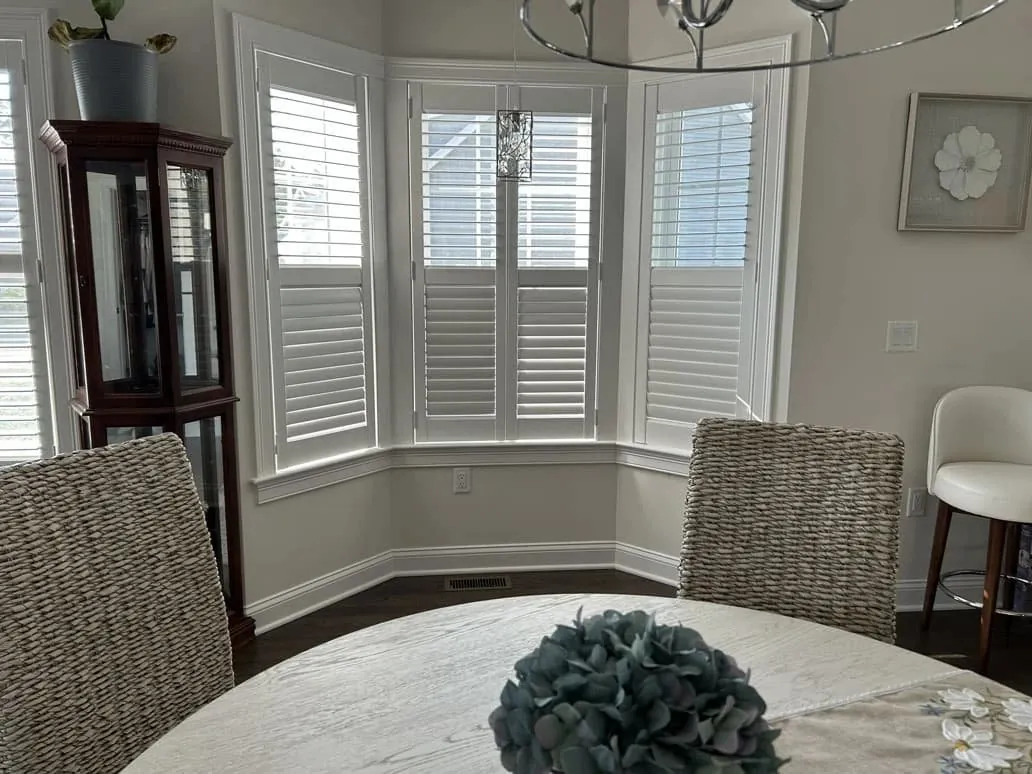
Single panel or a pair?
On an ordinary window, shutters are often hung as a pair of panels that meet in the middle. On a tall, narrow sash, a pair can leave each panel thin, with short louvers and two stiles crowding the center of the glass. A single panel, hinged to the side that swings clear of furniture, usually looks better and opens to leave the full width of the window clear.
Height brings its own consideration. A very tall single panel looks better proportioned when it has a rail, and on the tallest sash a second rail is worth trying. We test rail heights at the window with you, because the right answer depends on how the window is used day to day.
Louver size follows from the panel. A narrow panel with wide louvers looks like a few planks across a slot. A slimmer louver gives more blades and a finer face, which suits the tall proportions of the village sash.
Old sash, old frames
The Whitinsville houses have stood for a long time, and their openings have settled. A tall window is especially prone to being a little out of square, because any lean in the frame shows more over a greater height.
Shutters are rigid, so this is handled at the measuring stage. We take the width at several heights and the height on both sides, compare the diagonals, and check the depth of the opening to see whether the frame can sit inside it with room for the louvers to tilt. The frame is then planned to take up the difference, and the panels close evenly against it. For a fuller explanation, see shutters for older windows.
When the original casing is worth keeping on view, an inside mount does that. If the opening is too shallow, the frame can sit on the face of the trim. You see both options before choosing.
Kitchens at the back of the village houses
Kitchens in the company houses are usually at the rear, with a tall window over the sink or beside the table that looks onto a small yard and, often, the back of the next row of houses. The view is close, and the window is used constantly.
Low panels covering just the lower sash suit a sink window well. They screen the yard at counter height and leave the top of the tall window bare, so the kitchen keeps its daylight. Beside a table, a full-height panel with a rail does more: lower louvers angled against the yard, upper louvers open, and the whole panel closed in the evening. When we plan plantation shutters in Northbridge for a village kitchen, we check which way each panel should swing so it never blocks the tap, the counter or a cupboard door.
Matching a run of front windows
Many village houses present two or three tall windows to the street on each floor. From the sidewalk, those windows read as a set, and any difference in louver size, rail height or color shows straight away.
So even if you start with one room, the front windows deserve planning together. We set one rail height that suits every front window, one louver size and one color, and write them down for any rooms done later. It is a small discipline that makes plantation shutters in Northbridge look as though they were always part of the house.
The colonials on the outskirts
Away from the village, newer colonials sit on bigger lots on the edges of Northbridge. Their windows are standard sizes, square and consistent, and the houses are far enough apart that privacy is mostly a matter for bedrooms and baths.
On these houses the planning is about looks. A colonial’s front elevation is usually symmetrical, and it looks best when every window facing the road carries the same louver size, color and rail height. Larger rooms at the back, such as a family room facing the yard, can take wider louvers so the outlook stays clear when they are open. The fit itself is usually straightforward, which means more of the visit goes on choosing.
For plantation shutters in Northbridge on a newer colonial, many people start with the front rooms and the main bedroom and add the rest later. If so, we note the choices made so the next rooms match.
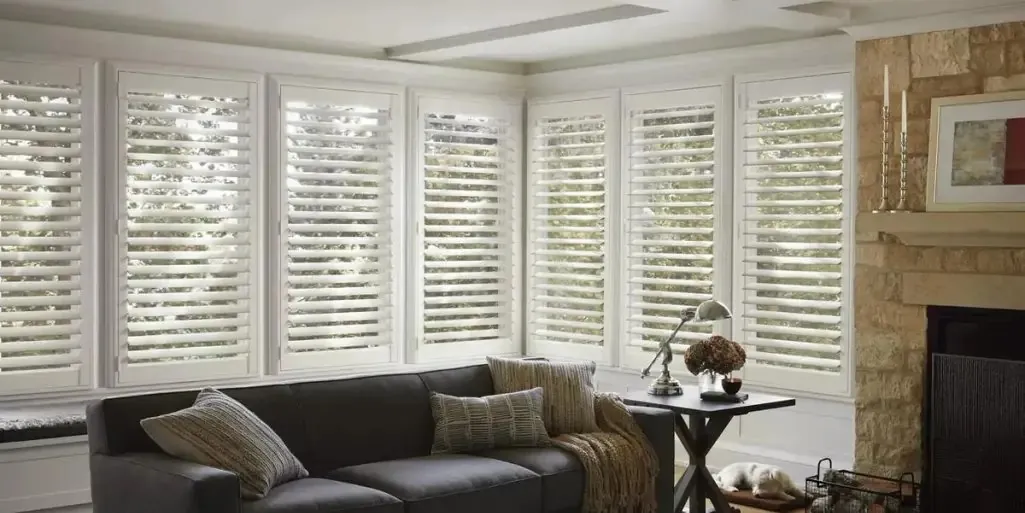
Palm Beach, NewStyle and Heritance
We bring all three Hunter Douglas shutter collections to every Northbridge visit. They have different looks and finishes and different color ranges, and the easiest way to compare them is in your own window light, at the window you are actually shuttering.
People often end up mixing them by room. A side bath in a company house might suit one, a front room with original woodwork another, and a colonial’s family room a third. What should stay consistent is anything seen together: the street-facing windows above all. You can read more about each on its own page: Palm Beach, NewStyle and Heritance.
A visit, start to finish
Shutters are best chosen at the window, so we come to you. Our vans carry samples of every collection, louver size and finish, so we can bring the showroom to you.
- Book online or with the call button and pick a time that suits.
- We start in the room that bothers you most, usually the front room on the sidewalk.
- You see sample panels at your tall sash, with the rail set at different heights.
- We look at the window from the street side too, to check the privacy line.
- Every opening is measured for width, height, depth and squareness.
- We go through collections and colors room by room, and you receive a free estimate to consider at your own pace.
The in-home consultations page describes the visit in more detail.

Color on a village street
The outside face of a shutter is part of the street scene in Whitinsville, where the houses stand in rows. A clean white reads well from the sidewalk and keeps a run of front windows looking orderly. Behind old glass, a softer white often sits more comfortably than a bright one.
Inside, color can follow the room. Original woodwork may suit a stained finish chosen against the casing, while a kitchen usually suits white. We bring finish samples to compare against your trim in daylight. When people choose plantation shutters in Northbridge, MA, for a village front room, color is often settled last, once the rail height and louver size are agreed.
Upstairs in a company house
Bedrooms in the village houses often sit under a sloping roof or have one tall window on the front and another on the side. The side window faces the house next door at close range, so it needs to close fully at night. The front window faces the street and its upstairs neighbors across the road.
A rail works upstairs just as it does down: lower louvers closed, upper louvers open by day, everything closed after dark. On a window close to a sloping ceiling, we check that a panel can swing open without catching it, and if not, we plan a layout that works within the space.
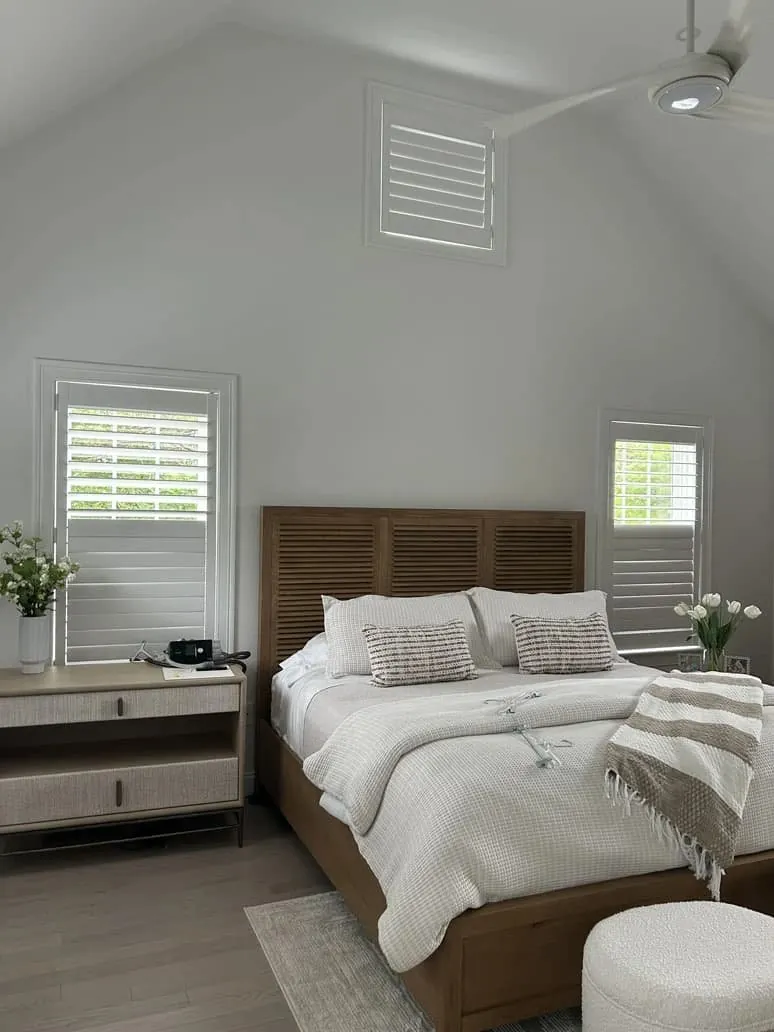
When the shutters are fitted
Our own Hunter Douglas certified installers fit your shutters at the house. On a tall village sash, getting the frame plumb in an opening that has leaned over time is the careful part. Once it is right, the panels hang and swing evenly. Every louver section is tested through its tilt, and you are shown how the rail and the panels work. See what happens on installation day for more.
The Franklin showroom
Our nearest showroom to Northbridge is in Franklin. The Franklin showroom is a good place for a first look if you want to see shutters before booking a visit.
Still, a tall Whitinsville sash with a sidewalk a few strides away is a very particular window, and most people make up their minds with a sample standing in it. Measuring and fitting are done at your house.

A Hunter Douglas Gallery dealer
Blinds & Designs is a Hunter Douglas Gallery dealer. For a Northbridge house that means every shutter collection and the full range of louver sizes and finishes, planned by people who are used to tall old sash and close-set streets.
Installation is certified by Hunter Douglas, and estimates are free. We also offer interior design consultations for rooms that need more than a window covering, and we repair the blinds and shades you already have.
Our Northbridge page lists everything else we do in town. For rooms where a fabric shade suits better than louvers, look at roman shades in Northbridge.
Questions from Northbridge
Where should the rail go on a tall Whitinsville window?
Usually level with the meeting rail of the sash, so the shutter follows the window’s own line. If the sidewalk or a porch rail sets a different privacy line, we move it so the closed lower louvers cover the view.
Is one panel or two better on a tall, narrow sash?
Often one. A single hinged panel avoids two thin panels and a crowded center, and a rail keeps a tall panel in proportion.
Can I block the view from the sidewalk and still have daylight?
Yes. Close the lower louvers, or angle them down toward the room, and leave the upper ones open. Panels on the lower sash only are another way to do it.
Do the newer colonials on the outskirts need the same approach?
Not usually. Their windows are standard and square and the houses are further apart, so the choice is mostly about louver size, color and keeping the front consistent.
Is there a charge for the estimate?
No. Estimates are free once we have measured at your house.
Book a visit
The best way to choose shutters for a tall sash on a busy village street is to see a sample in it, with the rail at the right height. Request a consultation and we will bring all three collections, look at the window from inside and out, measure and leave you with a free estimate. If you have a quick question first, the call button reaches us, and the Franklin showroom is our nearest. More on all three collections is on the main plantation shutters page.