
Three eras of house in one town
Few towns pack as much housing history into one map as Uxbridge. Down along the Blackstone, mill-era houses keep their original narrow openings. Out on the farther roads, antique farmhouses sit on their land much as they always have. And off Route 16, newer colonials bring square frames and standard windows. Three eras, three kinds of window, often within a short drive of each other.
That variety is the reason a single answer never fits. A narrow mill-house opening needs a blind built to the last fraction. A farmhouse may hold tiny original sash and a modern addition under one roof. A newer colonial has dozens of windows in a few repeated sizes and wants a consistent look across all of them. Asking for custom blinds in Uxbridge, MA, really means asking which of the three houses you live in.
Whichever it is, the work starts the same way: at your windows, with samples in hand and a tape measure.
Blinds that suit every era
These three ranges do most of the work across Uxbridge houses, old and new. Each card links to more detail, and each comes to your door as a sample.
Wood blinds for the oldest rooms
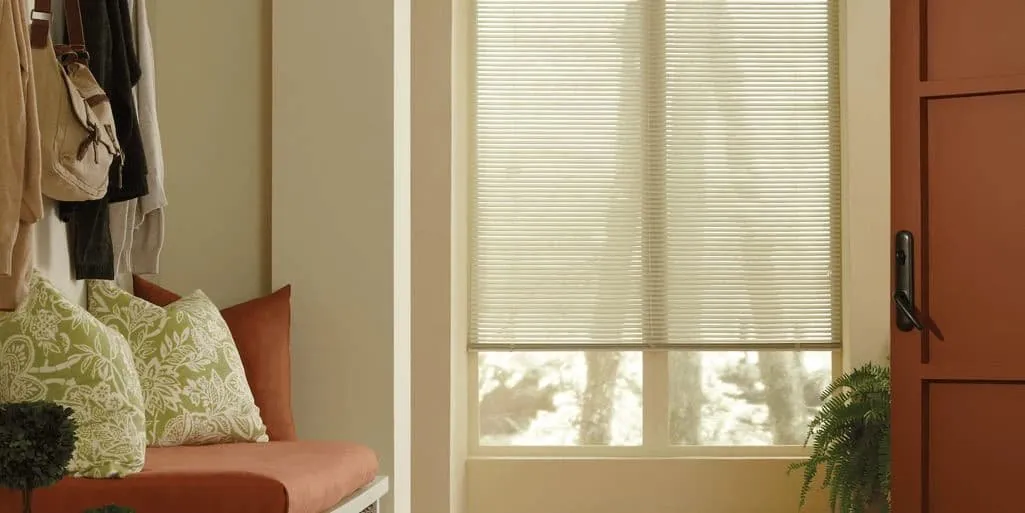
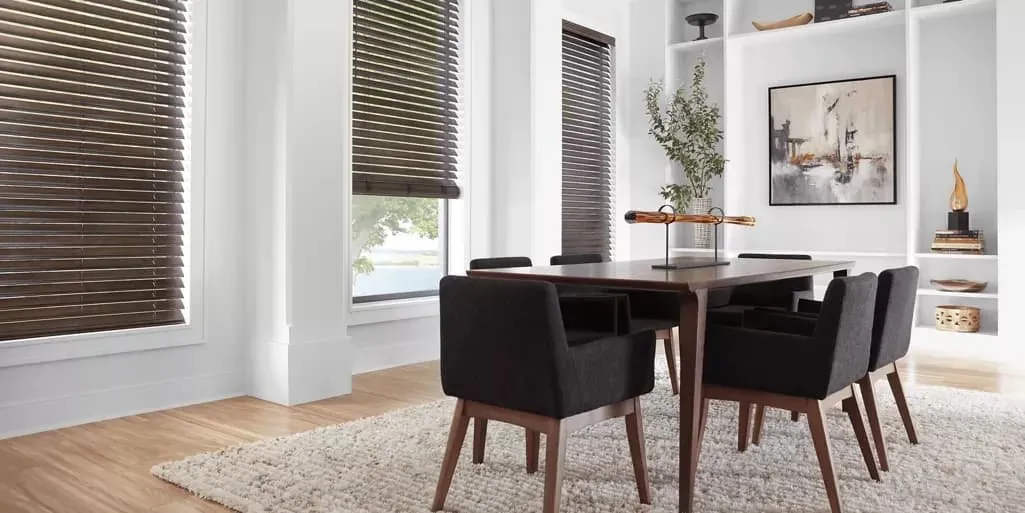
Real wood in paints and stains, the natural match for original casings in a mill house or farmhouse.
Parkland wood blinds
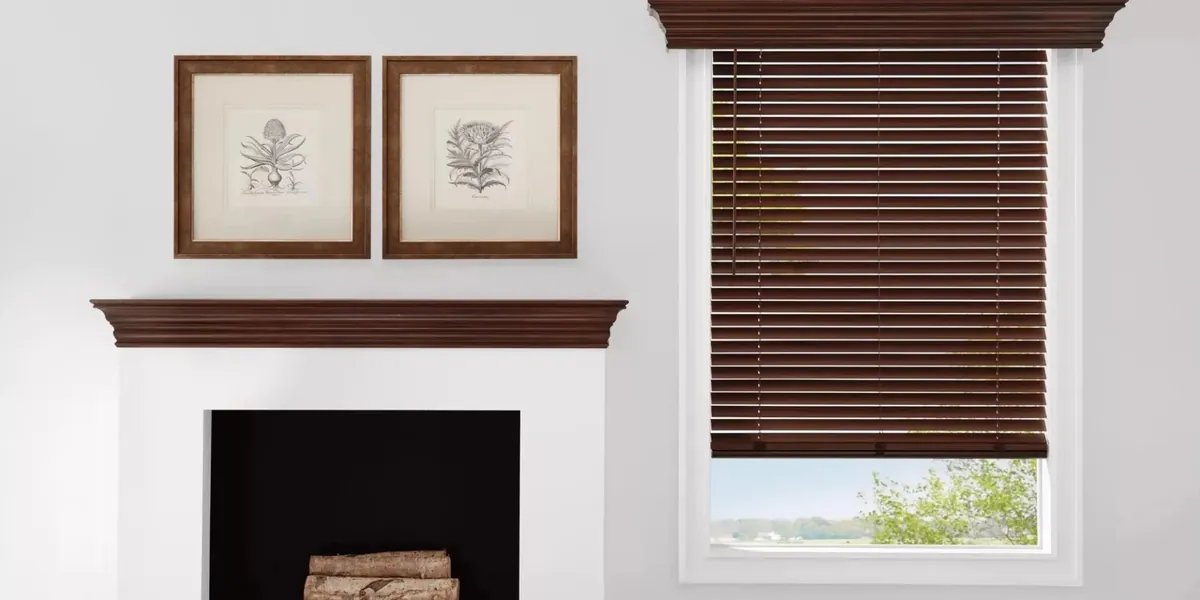
The Hunter Douglas real-wood collection, often chosen for formal rooms in the colonials off Route 16.
Vertical blinds
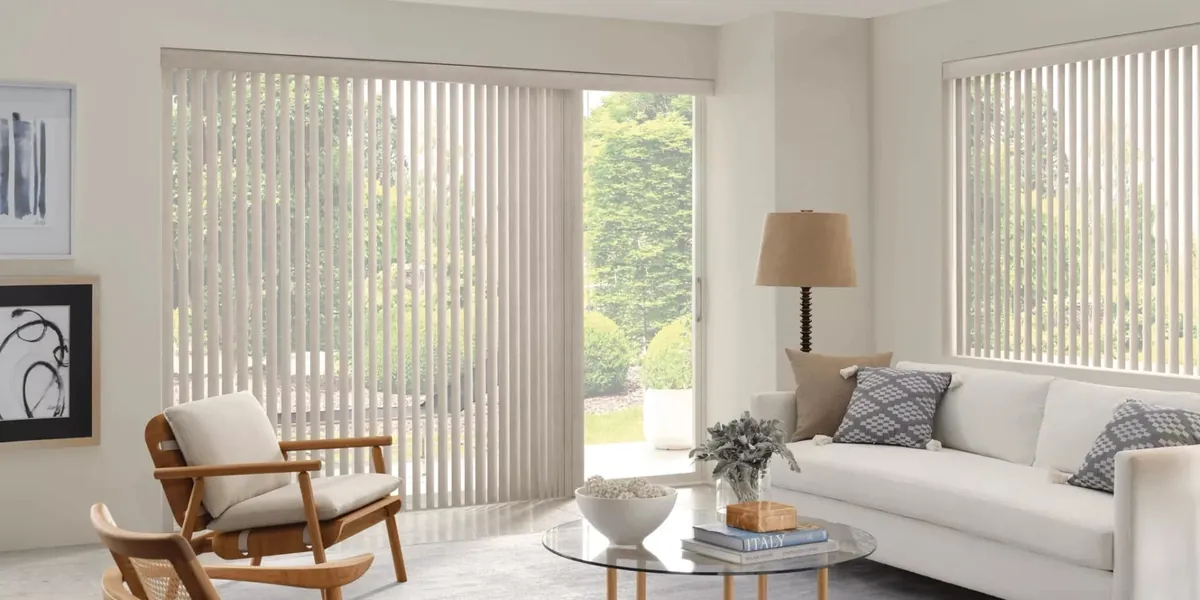
For sliders and broad back windows, with vanes that gather at one side and swivel to manage the sun.
The mill-era houses along the Blackstone
The river shaped the oldest part of Uxbridge, and the housing built for its mills still lines the streets nearby. These houses tend to sit close to the road and close to one another, and their original narrow openings are taller than they are wide.
Fitting a narrow opening
A narrow opening is unforgiving. A blind a little too small leaves a visible line of light at each edge; one a little too big rubs and sticks. Old frames rarely help, having shifted over the years so that a window can be wider at its head than at its sill. We measure the width at three heights and the height at three points across, and build to the tightest reading. The blind then runs cleanly and fills the opening from one jamb to the other.
Where the frame has the depth, the headrail goes inside the opening and the original trim stays fully visible. Many mill-house frames are shallow, though, with the sash and stops leaving little to spare. There, a metal blind’s slender headrail often fits where wood would not. If even that will not go, we mount on the face of the casing and tell you why first.
Privacy at close quarters
With neighbors a short distance away and the street just outside, the mill houses need privacy that still lets the day in. Horizontal slats do that well. Angled down toward the sidewalk, they show a closed face to anyone walking by while you keep a view out. Angled up toward the glass, they block a level look from next door and let light in over the top. At night, closed fully, they shut the room off completely.
Stair and landing windows
Mill houses often light their stairs with a single narrow window on the side wall, sometimes facing the neighbor’s house at close range. It is easy to overlook until someone notices the view straight in from next door. A slim metal or faux wood blind made to that one opening, with a cordless lift so nothing trails onto the treads, closes the gap neatly while leaving the stair bright by day.
Antique farmhouses on the outer roads
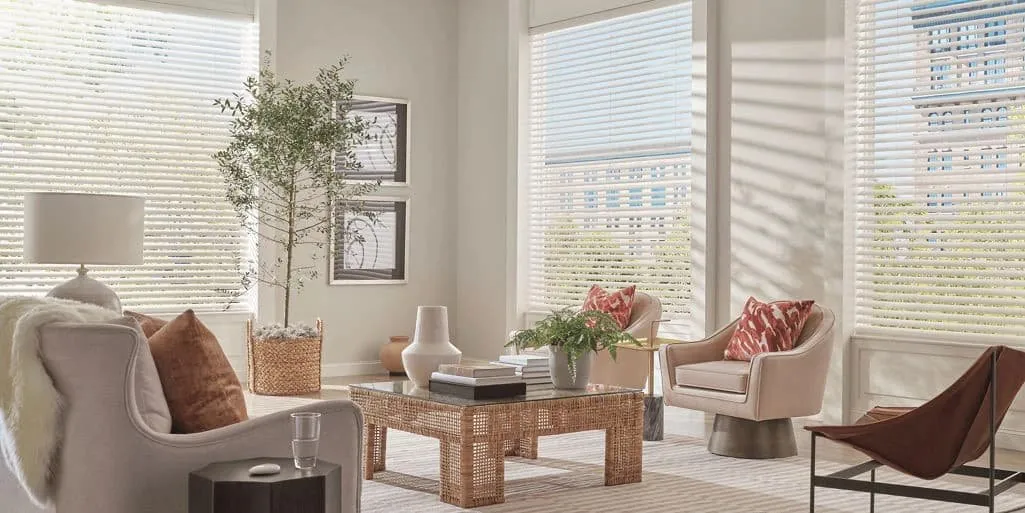
Head out of the center and the houses spread out. The antique farmhouses on the outer roads stand on their own land, often well apart from any neighbor, with thick walls and windows that sit back in deep frames.
Deep frames, small sash
That depth is useful. A blind mounted inside a deep frame sits in a recess, out of the way, with the casing and sill left as they are. When raised, much of its stack can tuck into the recess above the glass, which matters on the small original sash these houses often have. A narrow slat keeps a blind in scale on a small window and makes a shallower stack.
Old farmhouse frames can also lean. Each one is measured on its own, and where an inside mount would leave an awkward gap because a frame has moved too far, we say so and suggest a mount on the casing instead.
Open light and a lit window at night
With few neighbors close by, privacy is less of a daytime concern on the outer roads than in the village. Light is the bigger question. A farmhouse with open ground around it takes sun on several sides. Slats tilted so their outer edge rises throw that sun onto the ceiling, so a room stays bright without the glare. At night, a lit farmhouse window shows a long way down a dark road, and closing the blinds is the simple fix.
Additions and odd sizes
Farmhouses have usually grown over time, with an ell, a newer kitchen or a converted porch. Each addition tends to bring different windows: some original, some modern, some in between. A made-to-measure blind for each one, all in the same color, ties those parts of the house together so the rooms feel like one home.
Newer colonials off Route 16
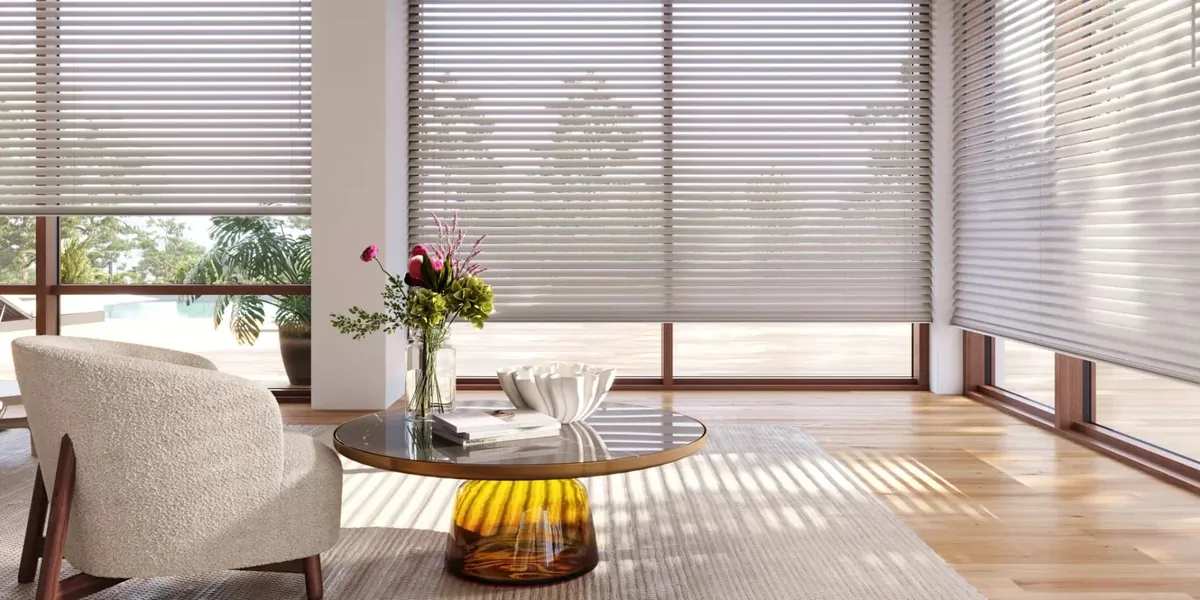
The newer colonials off Route 16 are the most straightforward to fit. Frames are square, windows come in standard sizes, and the house has a familiar plan: formal rooms at the front, a family room and kitchen at the back, bedrooms upstairs. What they have most of is windows, often many of the same size.
A whole-house plan
That repetition suits a plan that covers the whole house in one go. A common approach is wood or faux wood in the front rooms and bedrooms, faux wood in the kitchen and bathrooms, and a vertical blind at the family room slider. Keeping a single color on every window that faces the road gives the front of the house a finished look.
Wide windows, like a family room’s main window, are easier to manage as two or three blinds on separate headrails than as one very wide blind. They are lighter to lift, and you can tilt the sunny section while leaving the rest open.
Reaching the high ones
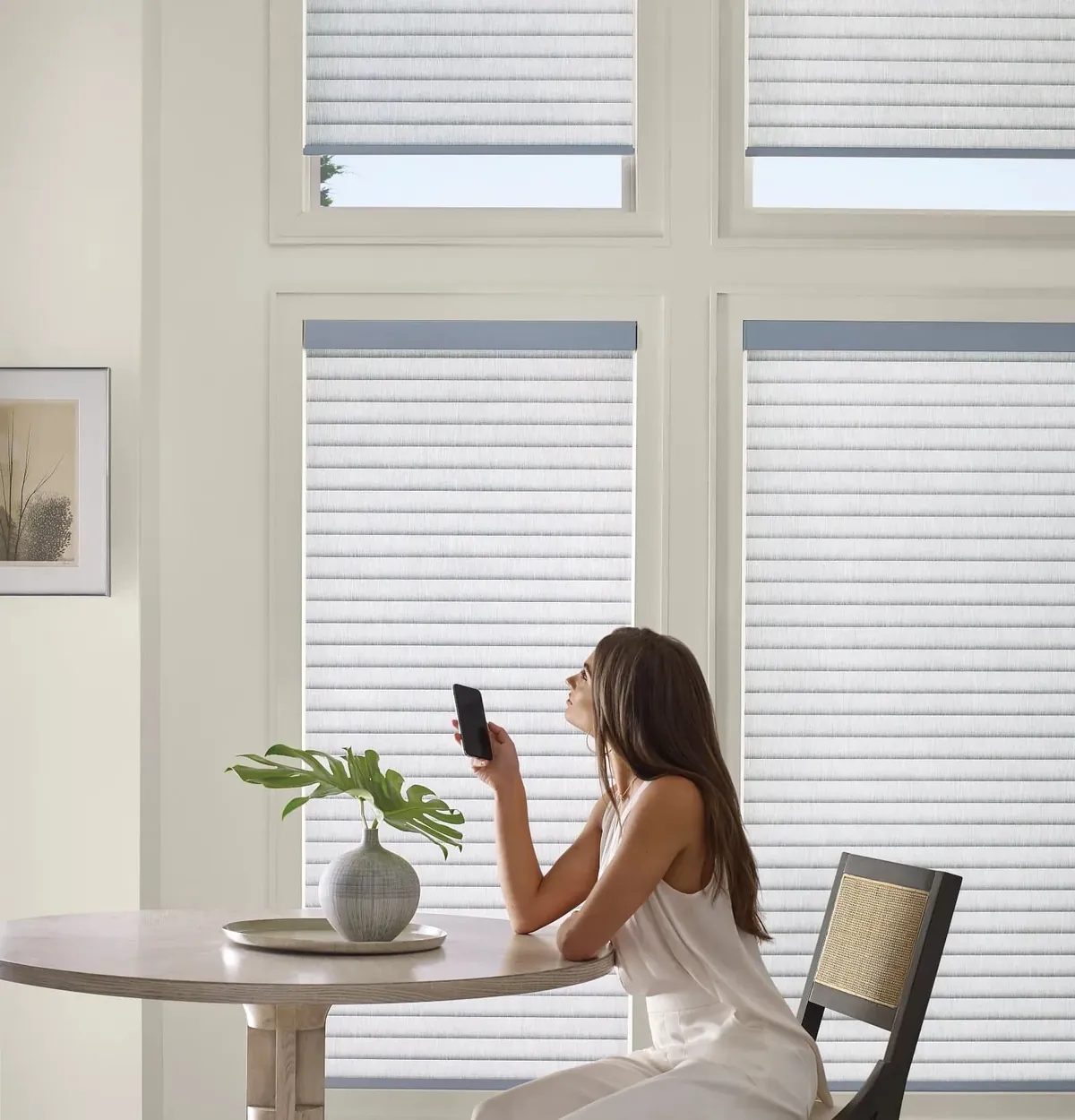
Many colonials have a tall entry or a window above the stairs. These are awkward to reach, and PowerView motorization lets you raise, lower and tilt them from the floor with a phone or a remote. It can also put every blind in the house on a schedule.
How the four materials divide the work
Every blind we fit is a Hunter Douglas blind, built to order. Across Uxbridge’s three eras, material usually follows the room.
Real wood, painted or stained, goes where the trim is worth showing: a mill house’s front room, a farmhouse parlor, a colonial’s dining room. Faux wood gives the same painted look in a different material and is the usual choice for kitchens and bathrooms in houses of any age. Metal, with its fine aluminum slats and slender headrail, handles shallow mill-house frames, small upstairs sash and glass doors. Vertical blinds, hung from a track with vanes that slide aside, belong at sliders and wide openings, which are most common in the colonials and in farmhouse additions.
Our custom blinds page explains each range, and metal blinds and EverWood faux wood blinds have pages of their own.
Operating your blinds
Most blinds we fit in Uxbridge are cordless: you lift and lower them by the bottom rail, and no cord hangs down. That keeps a deep farmhouse sill or a narrow mill-house sill clear, and it is the safer choice with small children or pets in the house. A wand sets the slat angle.
PowerView motorization adds remote and app control, and schedules. In the village, a schedule can close every street-facing blind at dusk. On a farmhouse, it can close the windows facing the road at night. In a colonial, it reaches the high windows. Powering each motor is planned with you during the visit.
Kitchens and baths through the eras
The kitchen tells you a lot about which era a house belongs to. In a mill house it is usually at the back, compact, with a window over the sink looking toward the next house or a small yard. In a farmhouse it has often been rebuilt or moved into an addition, so it may have newer, larger windows than the rest of the house. In a colonial off Route 16 it is open to the family room, with a window over the sink and often a slider beside the table.
Faux wood is the usual choice in all three. Half open over a sink, it lights the counter and breaks the view in. In a bathroom, faux wood or metal closed tight gives privacy and can be opened a crack for daylight. Picking one color for the kitchen and the bath that sits well with the rest of the house keeps things simple. When we plan custom blinds in Uxbridge for a kitchen that opens onto a family room, we look at both rooms together, so the slider’s vertical blind and the window blinds suit each other.
Entries, side lights and glass doors
Every era has its own kind of entry. A mill house often has a side or back door with a glass panel close to the neighbor’s yard. A farmhouse may have a mud room door with a window beside it. A colonial usually has a front door with narrow side lights and a door through to the garage.
Glass in a door suits a metal blind, whose slim headrail stays clear of the frame as the door swings. Narrow side lights beside a front door can take a slim blind of their own, made to the exact height and width of each one, so the entry gets privacy at night without losing its daylight.
Bedrooms in each kind of house
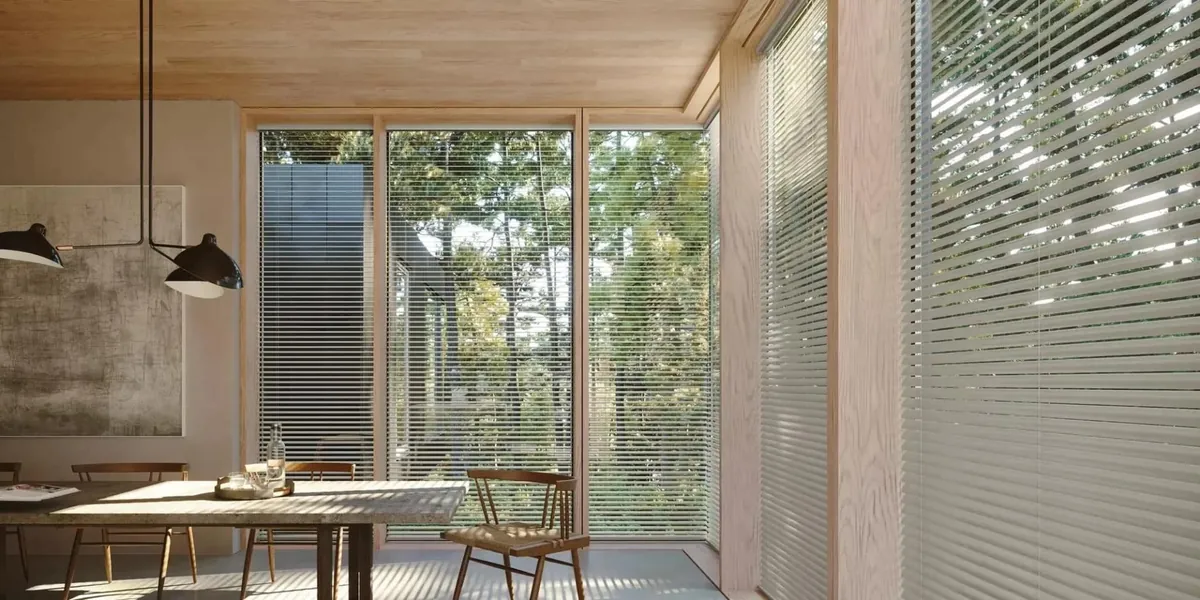
Bedrooms are where a blind’s ability to close tightly matters most. In a mill house, upstairs bedrooms often have the same narrow sash as downstairs, close to the neighbor’s windows; a darker slat closed fully gives sleep and privacy together. In a farmhouse, the bedrooms may have very small original windows under the eaves, where a metal blind’s fine slats stay in proportion. In a colonial, bedrooms have standard windows, often in pairs, and a wood or faux wood blind in a deeper color, mounted inside the frame, keeps out the early light.
When eras share a street
In parts of Uxbridge, a mill-era house, an older farmhouse and a newer colonial can stand within sight of each other. Each has its own windows and its own trim, but they are seen together from the road. Front windows dressed in a color matched to each house’s own trim help every house look settled in its spot, whatever its age.
For a house that has been updated over time, with original windows at the front and newer ones at the back, the same idea applies inside. Matching the blinds across old and new windows hides the joins. That is often the most useful thing custom blinds in Uxbridge, MA, can do for a house with a long history: make it read as one home.
Color, room by room
The trim is usually the starting point. In a mill house or farmhouse with original woodwork, a blind matched to the casing lets the window be the feature. Where the trim is stained, a stained wood blind can follow its tone. In a colonial, the front windows set the color seen from the road, and the inside rooms can vary.
We bring a range of whites, creams and stains, because the right one depends on your own paint and on the light each room gets.
What to expect at the consultation
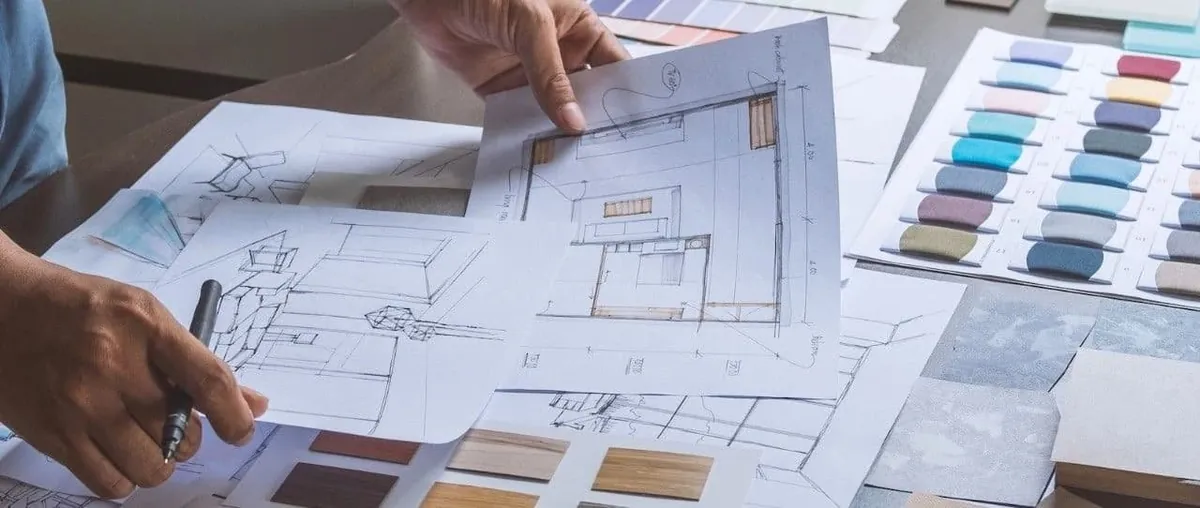
We come to the house so every choice is made at your own windows, in your own light.
- Ask for a consultation through the form or the call button, and we will settle on a time.
- Our van brings wood, faux wood and metal slats in many colors and slat widths, vertical vanes and each control.
- We look at each room with you and talk about what every window faces: a street, a neighbor, a field or a yard.
- Each window is measured at several points, with extra care on the oldest frames.
- A free estimate follows, for you to think over at your own pace.
- Once the blinds are made, certified Hunter Douglas installers mount, level and test each one.
There is more on what happens at an in-home consultation. That attention to measuring is what lets custom blinds in Uxbridge fit a narrow mill opening, a deep farmhouse frame and a standard colonial window equally well.

Why a Hunter Douglas Gallery dealer
Blinds & Designs is a Hunter Douglas Gallery dealer, which brings the whole Hunter Douglas blind range to one consultation: wood, faux wood, metal and vertical, every color, every control and PowerView motorization. Each blind is fitted by Hunter Douglas certified installers. Interior design consultations are available if you would like help with a room, and blind and shade repairs are welcome too.
For other windows, look at cellular shades in Uxbridge, roman shades in Uxbridge, plantation shutters in Uxbridge, or the Uxbridge page for all our services in town.
The showroom nearest Uxbridge
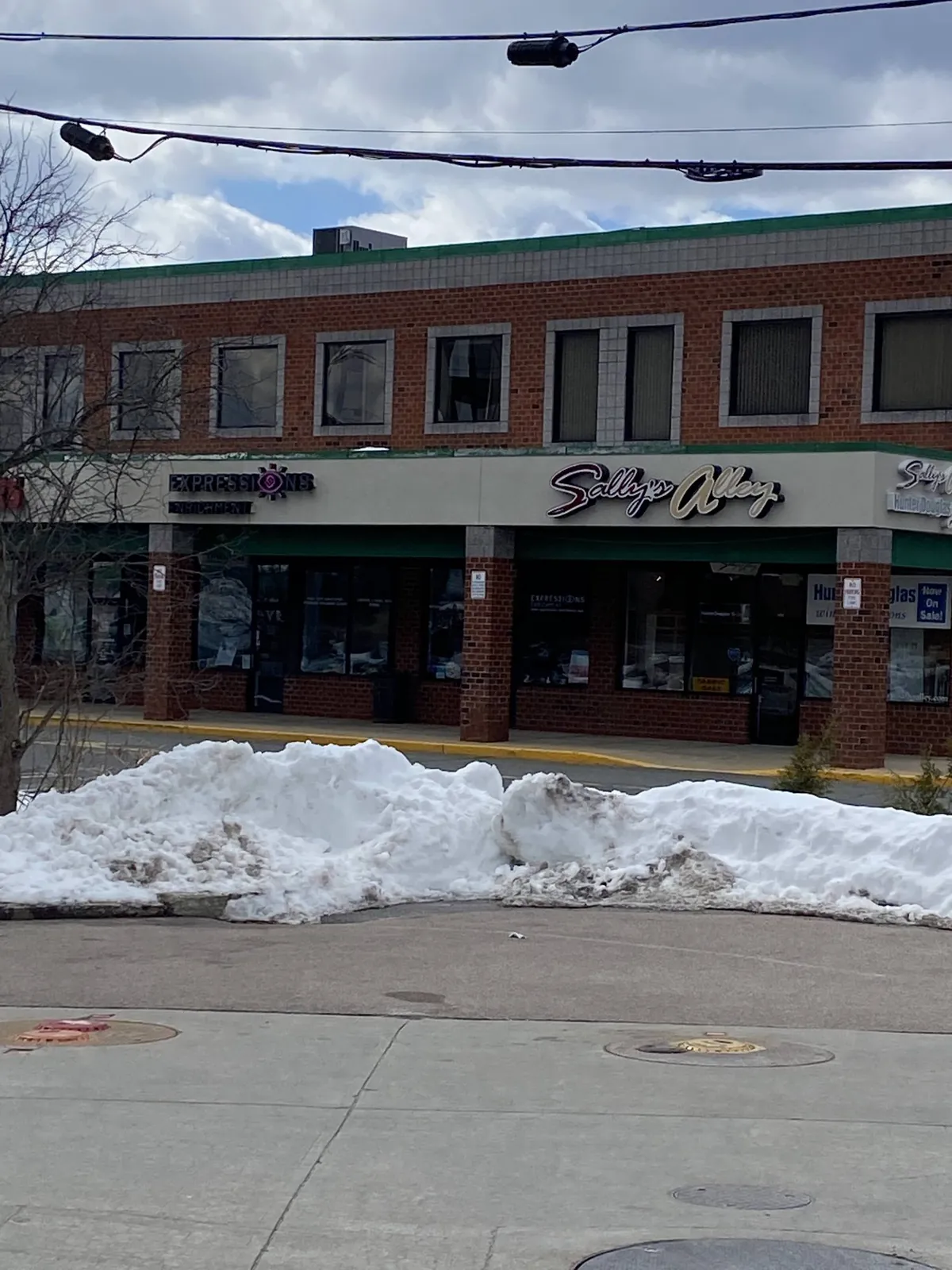
Our Franklin showroom is the closest to Uxbridge. Its opening hours and location are on the Franklin showroom page.
Questions from Uxbridge
We live in an older mill house near the river. Will blinds fit the narrow openings?
Yes. Each blind is built to its own frame from measurements taken at several points, so it fills a narrow opening without light at the edges. Shallow frames often take a metal blind.
Our farmhouse has original windows and a modern addition. Can the blinds match?
Yes. Every window gets a blind made for it, and using the same color throughout ties the old rooms and the new ones together.
Is a whole-house plan sensible for a colonial off Route 16?
Usually. With many windows in a few standard sizes, one visit covers them all and the house gets a consistent look. You can still choose a different material room by room, such as faux wood in the kitchen and baths.
How do I handle glare in a farmhouse with sun on every side?
Tilt the slats so their outer edge rises. The sun is thrown onto the ceiling, and the room stays bright without glare.
Do you charge for the estimate?
No. The estimate is free once we have measured, and it covers every window we looked at, so you can decide whether to do the whole house or start with a few rooms.
Book your consultation
Whichever era your house belongs to, real samples at your windows make the decision easy. Request a consultation and we will bring them, measure each window and give you a free estimate for custom blinds in Uxbridge, MA. The call button works too, or you can visit the Franklin showroom.