
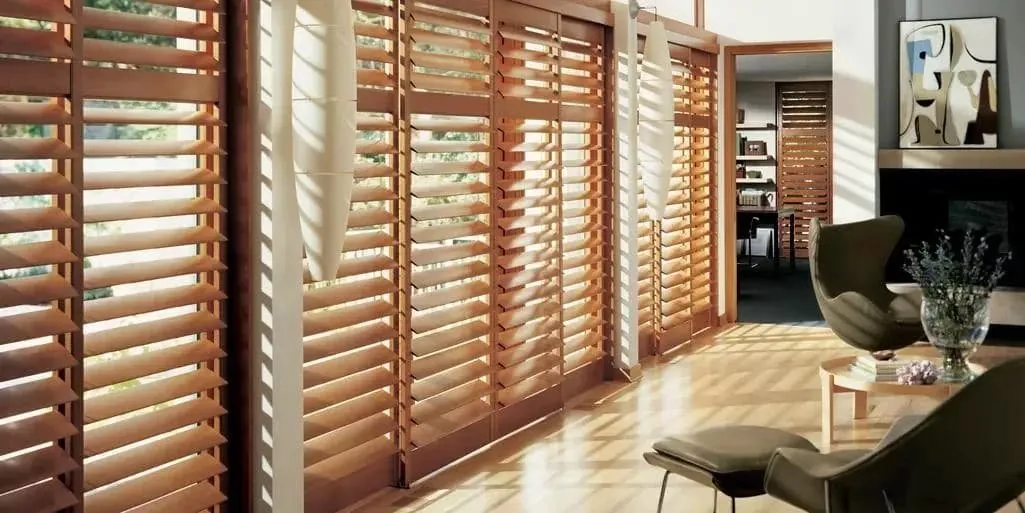
Three eras of house in one town
Uxbridge has three distinct eras of housing, and each has its own kind of window. Along the Blackstone River stands the mill-era housing, built close together with original narrow openings. Out on the rural roads are antique farmhouses, older still in many cases, set on open land. And off Route 16 are the newer colonials, with standard windows that repeat neatly from room to room.
That variety is what makes plantation shutters in Uxbridge, MA, an interesting job. A shutter that looks perfect in a Route 16 colonial would be out of scale in a narrow river-house sash, and the louver size that suits a farmhouse parlor may feel cramped across a modern family room window. The same three Hunter Douglas collections serve all of them, but the details change with the era of the house.
So rather than one set of advice for the whole town, this page takes each kind of house in turn, then covers what they share: choosing a collection, the visit, color and installation.
Whichever era you live in, the starting point is the same. We look at the windows you have, not the windows a catalog assumes.
One town, three starting points
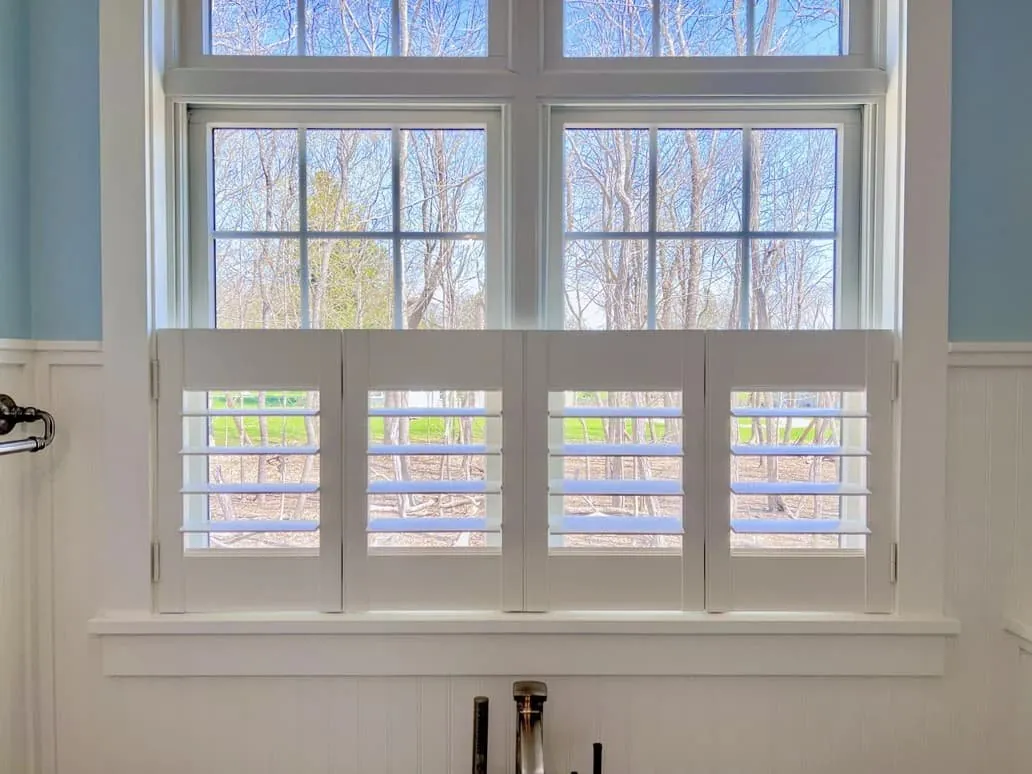
Mill-era houses by the river
Narrow original openings and close neighbors. Privacy is the first job, and proportion is the second.
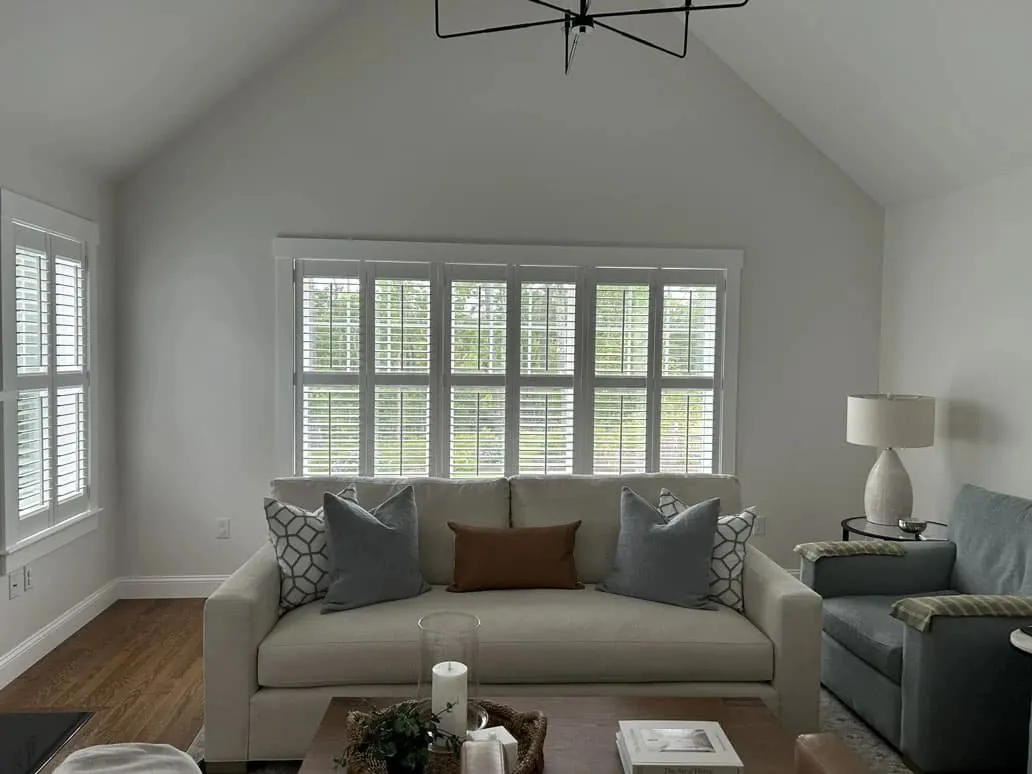
Farmhouses on the outer roads
Antique openings on open land. Light and how the shutter sits in an old opening matter more than privacy here.
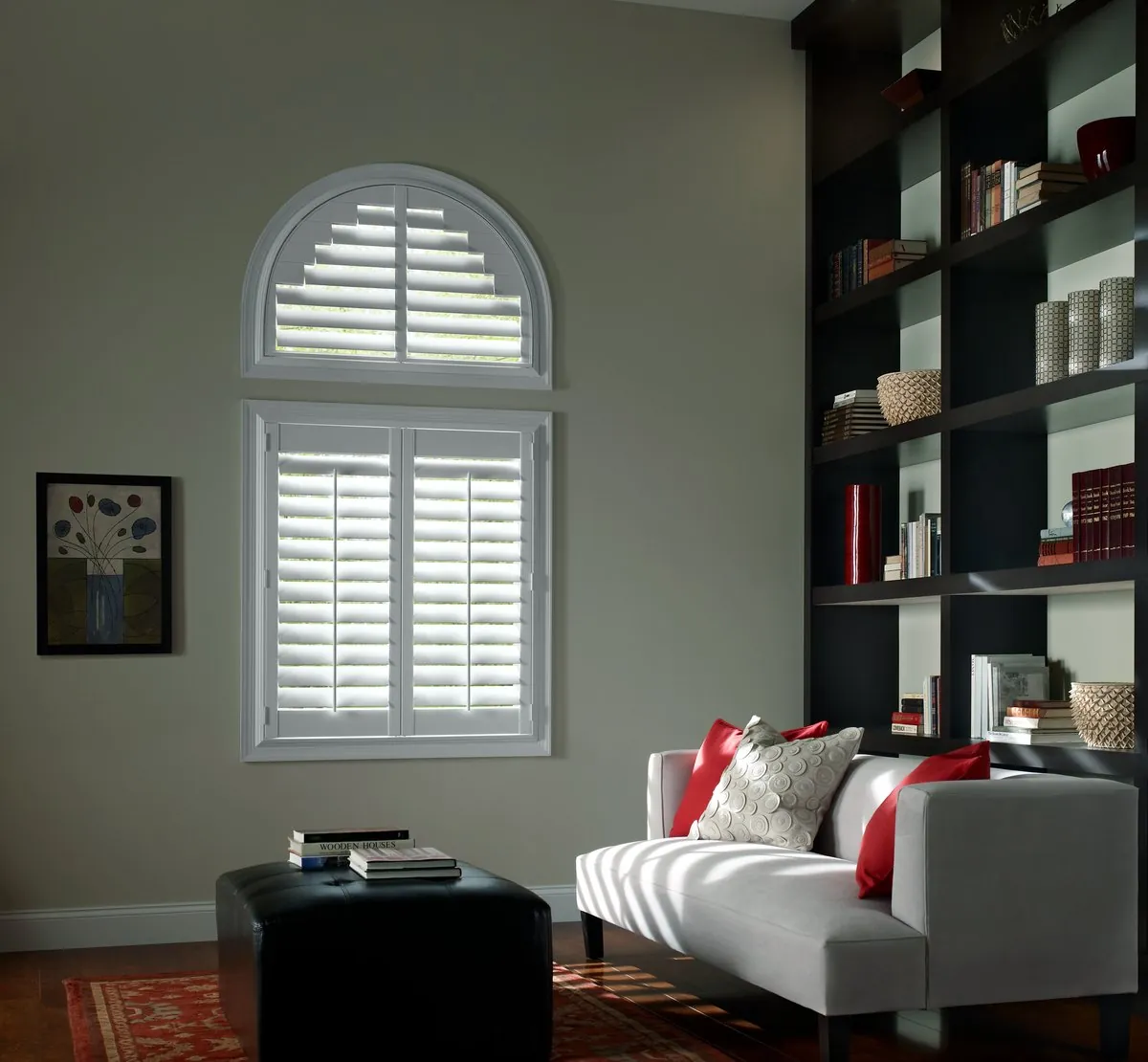
Colonials off Route 16
Standard sizes and square openings. The planning is about a consistent look across a lot of windows.
Era one: the mill housing along the Blackstone
The houses nearest the river were built for the mills, close to the work and close to one another. Many keep their original narrow window openings. Side windows face side windows across small gaps, and the front windows sit near the street.
Privacy shapes the plan in these houses. A shade has to come down to block a view, and with it goes the light. Louvers can do better. Angle the blades so their inner edge points toward the floor, and someone outside at ground level sees only the slats, while daylight still bounces in off the upper surfaces. A rail across the panel lets you keep the lower section shut and the upper section open, so the room stays bright and screened at once.
Proportion is the other concern. On a narrow opening, a pair of panels can leave each one too thin, with stubby louvers and a crowded center. One panel hinged at the side often looks cleaner and swings back to leave all the glass clear. A slim louver gives the narrow panel enough blades to look balanced from top to bottom.
These openings have also had a long time to shift. We measure each at several heights, compare the diagonals and plan the frame so the panel shuts evenly, even where the window has moved. Our shutters for older windows page explains how we handle a tired opening.
Not every window in these houses faces a neighbor. Where a house sits near the water, its back windows may look out toward the Blackstone instead, and that outlook is worth keeping. On those windows the plan flips: a wider louver than the front rooms carry, panels that fold right back on a clear day, and privacy saved for the evening. It is one more reason we walk the whole house before suggesting a single louver size, since the front and back of a river house can want quite different things.
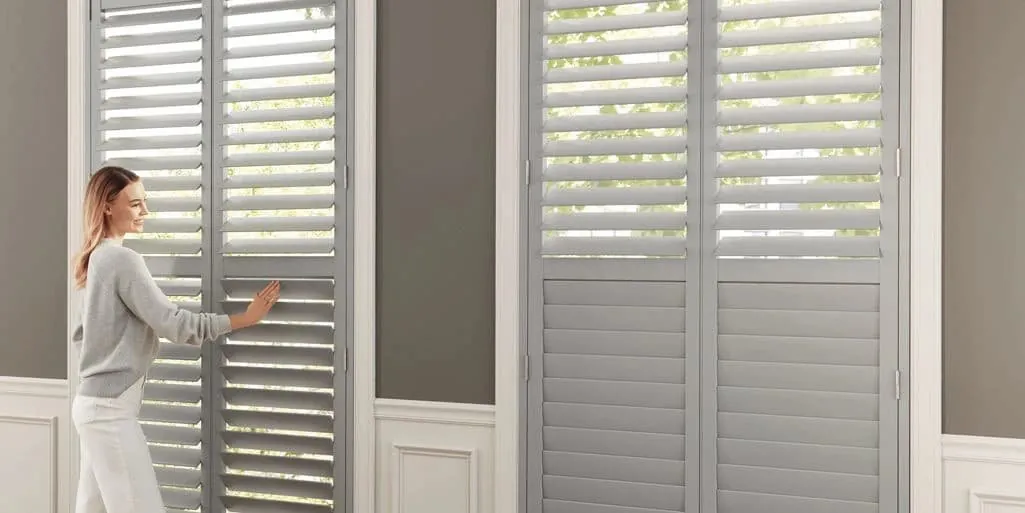
Stair landings and front parlors by the river
Two rooms in the river houses come up again and again. The first is the stair landing. A narrow stair often has a single tall window halfway up, looking straight at the house next door, and it is passed a dozen times a day. Louvers set at one angle and left alone suit it well: daylight reaches the stairs, and nobody on the stairs is on display. If the window is tall, a rail lets the lower section close while the upper section stays open.
The second is the front parlor. It usually has one or two narrow windows facing the street, close enough to the sidewalk that passers-by can see in. Here the shutter has to give privacy without making a small room feel smaller. A light color, a slim louver and a rail set level with the sash’s crossbar keep the room bright and the street out. In the evening, both sections close.
Because front parlors and landings are seen from the street at night, matching their louvers and color to the other front windows keeps the house looking orderly from outside.
Era two: farmhouses on the outer roads
Head out of the center and the houses thin out. Antique farmhouses stand on the outer roads with fields and yard around them and few neighbors in sight. Their windows are original openings in old walls, often small and set deep, and the light reaches them from wide open sky.
Here the shutter’s job changes. Privacy matters in bedrooms and baths, but in the main rooms the questions are about sun and about looks. A west parlor on an open lot can take strong late-day sun; louvers tilted a little turn it up toward the ceiling, so the room stays bright without the glare across the floor. A rail lets the top and bottom sections be set differently through the day.
The look matters a great deal in these houses. Original trim is often the finest thing in the room, and many farmhouse owners want it left visible. A deep opening allows an inside mount, with the frame set within the recess, the louvers free to tilt and the casing on show. Heritance is the collection people most often hold against old woodwork, comparing finishes until one sits right with the trim.
For plantation shutters in Uxbridge farmhouses, we spend more time on frame choice than anywhere else in town, because an old opening shows every decision.
Farmhouse bedrooms and early light
With open fields around them, farmhouse bedrooms often catch the sun the moment it clears the horizon. There may be no trees, no neighboring house and no hill to soften it. An east bedroom can be bright long before anyone wants to be awake.
Closed louvers cut a great deal of that light, and a rail gives you a choice on duller mornings: top open, bottom closed. On a small, deep farmhouse window, a single panel that folds right back also lets the summer air in and leaves the little glass there is completely clear. Upstairs rooms under the roof may have openings near a sloped ceiling; we check that each panel can swing freely before suggesting a layout. When we plan plantation shutters in Uxbridge for an old farmhouse, the bedrooms are often where the louver size for the whole house gets settled.
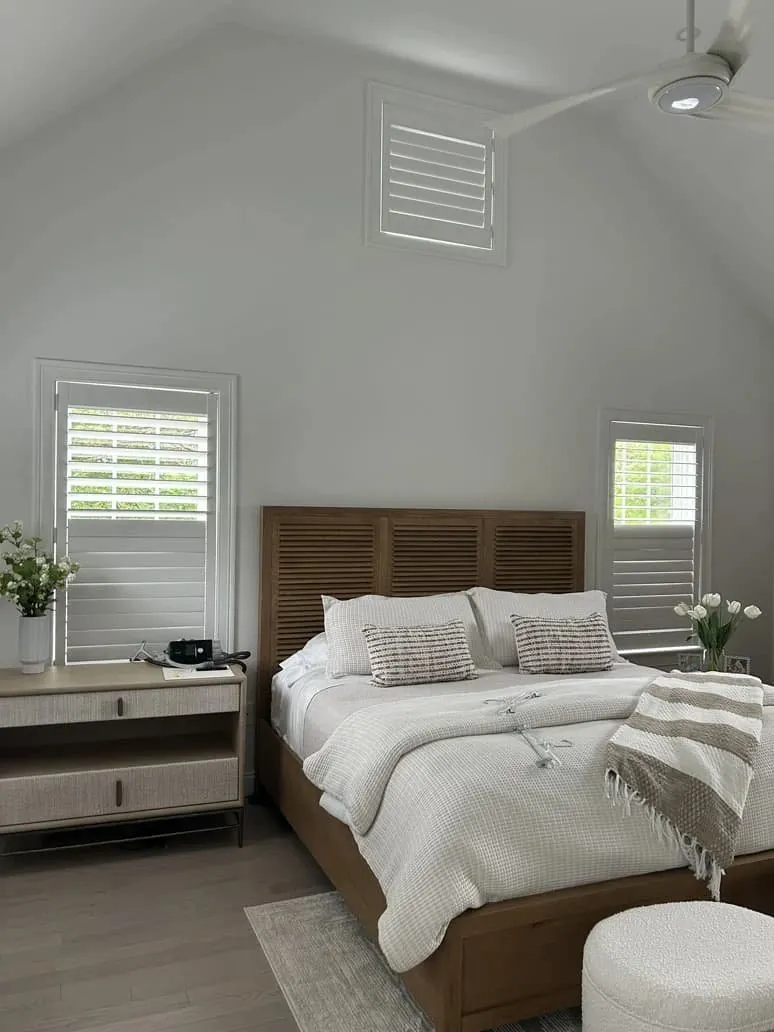
Era three: colonials off Route 16
The newer colonials off Route 16 are the simplest houses in town to shutter. The openings are square, the sizes repeat and the walls usually leave enough depth for the frame to sit inside the opening. Fitting is straightforward, so the time goes on choosing.
Consistency is the main goal. A colonial’s front is usually symmetrical, with windows lined up on two floors, and it looks best when every one of them carries the same louver size, color and rail height. That can slip when rooms are done over several years, so we plan the front windows together even if only some are ordered at first. The choices are written down at that first visit, so a bedroom shuttered later still lines up with the living room below it when you look at the house from the drive.
At the back of these houses, family rooms and kitchens tend to have the largest glass, facing the yard. Wide louvers keep the outlook clear when tilted open. Bedrooms upstairs can match the front or not, as long as the windows on the road side agree.
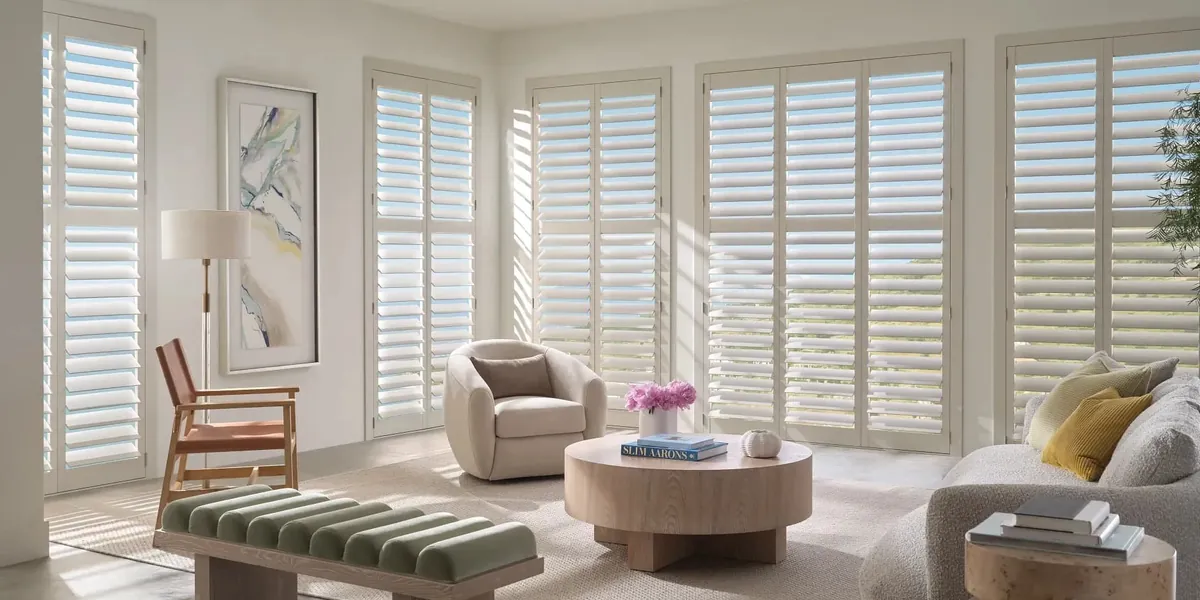
Kitchens and family rooms in the colonials
The back of a Route 16 colonial is where the house opens up: a kitchen with a window over the sink, perhaps a pair of windows by the table, and a family room with the biggest glass in the house facing the yard. These rooms get used all day and see the sun shift across them.
At the sink, panels on the lower sash only cut glare across the counter while keeping the upper glass open. By the table, full-height panels with a rail let you angle the lower louvers against the afternoon sun. In the family room, wide louvers and panels lined up with the window’s own divisions keep the outlook across the yard as clear as possible. Since these rooms often run into one another, one louver size and color across all of them makes the space feel connected.
Houses that mix eras
Some Uxbridge houses carry more than one era inside them: an older house with a newer kitchen at the back, or a farmhouse with a modern addition. The original rooms have narrow or small openings; the new rooms have standard ones.
Shutters can make the two halves feel like one house. The openings differ, so the panels will differ, but the louver size, color and frame style can stay the same throughout. Where an old room opens into a new one, we pay particular attention to rail heights so they line up across the doorway. Plantation shutters in Uxbridge for a mixed house are usually planned floor by floor, so the old and new rooms are decided together.
Choosing between Palm Beach, NewStyle and Heritance
Every visit in town brings the same three Hunter Douglas shutter collections. They differ in look, finish and color range, and they are easiest to compare at your own window rather than in photos.
The era of the house often nudges the choice, though your own eye decides:
- Mill-era houses: baths and kitchens on the side walls are where people often compare Palm Beach first.
- Farmhouses: rooms with original woodwork are where Heritance samples come out most.
- Route 16 colonials: long runs of matching windows are where NewStyle is often looked at.
Mixing collections by room is fine. Keep the windows seen together alike, especially the ones that face the road.
Louver size, era by era
The simplest rule is to match the louver to the window’s scale.
- Narrow river-house openings: the slimmest louver, so a thin panel carries enough blades.
- Small, deep farmhouse openings: slim or middle, chosen with the panel count and the depth of the recess.
- Colonial bedrooms: a middle size suits most.
- Colonial family rooms and picture windows: wide louvers, for the clearest outlook.
If one house uses two sizes, one color throughout hides the change.
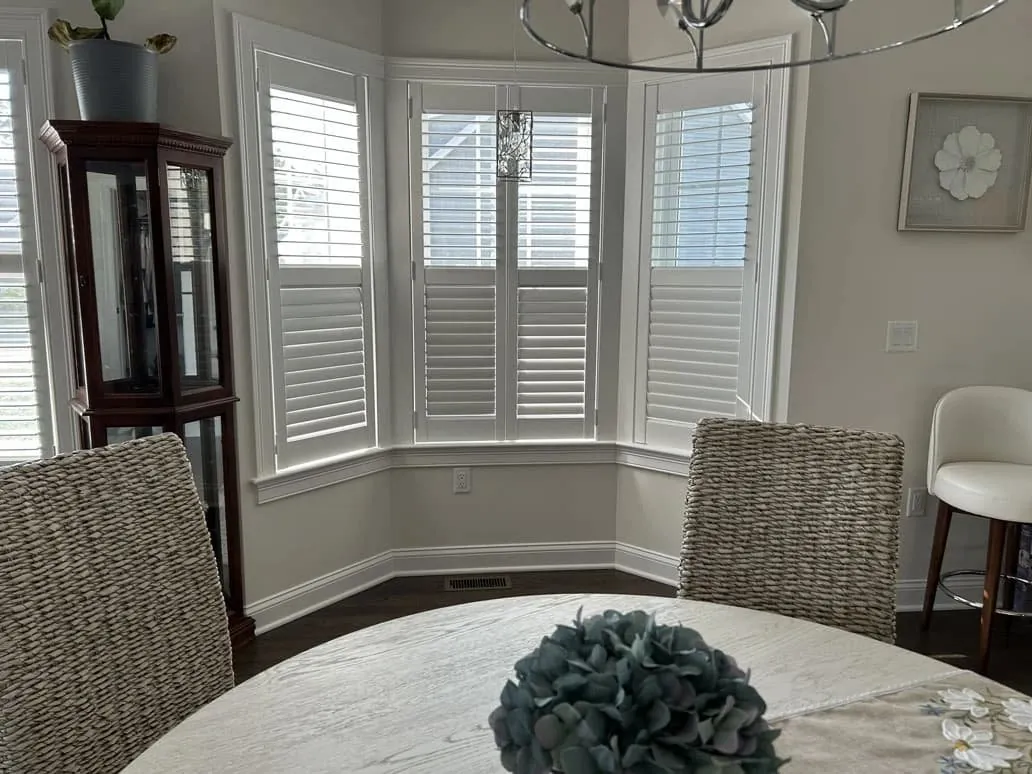
How the consultation works
We come to you, with samples of every collection, louver size and finish in the van, which is how we bring the showroom to you. A typical Uxbridge visit goes like this.
- Request a consultation online or with the call button, and choose a time.
- We walk the house with you and work out which era each room belongs to, especially in a house with an addition.
- Sample panels go up at your windows so you can see louver sizes and frame styles in place.
- Each opening is measured for width, height, depth and squareness.
- We agree which windows must match, starting with the street side.
- You get a free estimate and decide in your own time.
More on what to expect is on our in-home consultations page.

Color across three eras
Color choices follow the house. In a mill-era home on a close street, the outside face of the shutters is seen by everyone passing, and a clean white keeps the front tidy. In an antique farmhouse, trim painted many times over often suits a softer white, and stripped woodwork may suit a stain. In a Route 16 colonial with crisp new trim, bright white almost always works.
Inside any of them, a room can be more personal than the street side. We bring finish samples to compare against your own trim in daylight. When plantation shutters in Uxbridge, MA, are planned for a whole house, the front windows are matched first and the other rooms follow.
Installation day
Once the shutters are made, our Hunter Douglas certified installers fit them at your house. In the older houses, setting the frame plumb in an opening that has moved is the careful part; in a colonial it goes quickly. Panels are hung, hinges adjusted and each louver section tested through its tilt. You are shown how the rail and panels work before we leave. Our page on what happens on installation day has the details.
Why a Gallery dealer
Blinds & Designs is a Hunter Douglas Gallery dealer. That gives you every shutter collection and the full range of louver sizes and finishes, chosen with people who shutter old river houses, antique farmhouses and new colonials alike.
Our installers are certified by Hunter Douglas, and estimates are free. Interior design consultations are available when a room needs more than its windows sorted, and we repair blinds and shades you already own.
The Uxbridge page gathers everything else we do in town, and motorized blinds in Uxbridge covers the rooms where you would rather control the light from your phone.

Franklin, our nearest showroom
From Uxbridge, the closest showroom is in Franklin. Visit the Franklin showroom for a first look at shutters if you like.
Even so, the house’s own era decides a lot, and that is easiest to judge at home with a sample in your window. Measuring and fitting are always done at the house.
Questions from Uxbridge
Do shutters suit the narrow windows of the mill houses near the river?
Yes. A single hinged panel and a slim louver usually look best, and a rail lets you close the lower louvers for privacy while the upper ones stay open.
Can I keep the original trim visible in an antique farmhouse?
Usually. Deep farmhouse openings often allow the frame to sit inside the recess, leaving the casing on show. Where the opening is too shallow, the frame can sit on the trim.
My colonial off Route 16 has a lot of windows. Do they all need to match?
The ones seen from the road should. Rooms at the back can differ in louver size or collection if you prefer.
My house has an old part and a newer addition. Can the shutters match?
They can. The openings differ, but the louver size, color and frame style can stay the same throughout.
Is the estimate free?
Yes. After measuring at your house, we give you a free estimate.
What to do next
Whichever era your house belongs to, the quickest way to choose shutters is with samples at your own windows. Request a consultation and we will bring all three collections, measure every opening and leave a free estimate. Use the call button for a quick question, or start at the Franklin showroom. The main plantation shutters page has more on each collection.